Feeds:
Posts
Comments

Today we worked out the whole rest of the media training plan and who would facilitate what parts. Everyone is taking on different roles according to their strengths and knowledge, and we’ll facilitate in pairs or teams. We spent the afternoon trying out the cameras, testing mics, etc., and then Anthony took us through the editing process in the evening.

Mercy told us that there will be an induction ceremony in Kwale Town for a man who will become an elder. There are both cultural and political connotations to his induction and the whole area will turn out for the celebration and ceremony. Wajuhi suggested that we film it as practice, so we took the afternoon to plan out how we would do that, what stories we would catch from which perspectives, and who would interview and film whom/what. We worked together on the interview questions for men, women, youth, children. It should be pretty interesting.

The manager from the center where we’re staying stopped in and hooked up the internet so that is great!

The first day of training went by pretty smoothly. We had present Mwendar, the Community Based Organization (CBO) Chairman of Mwangaza, the community we’ll be working in, Ali a local artist and CBO secretary from Msambweni, Mercy the district information officer who’s also studied participatory video, Rama a university student from the area who’s studying media and communications, Madzo, who is involved with a youth environmental organization, and Anthony, Wajuhi and me from Plan. In the evening, Ali K, another youth also joined us.

It’s been really interesting seeing how Anthony and the Plan Kenya team have worked hard to ensure that the project is really fully integrated and tied into the existing work and programs so that it’s not seen as a parallel project. It is being integrated into the community planning process, and grounded by the recent child rights based situation analysis that was done in all the Plan Kenya work areas. It’s also linked in with the community radio project and informed by the existing community ICT programs.

We spent the morning getting set up and trying to get a generator since Thursday’s is “no power” day in Kwale. The generator came but it didn’t work, so we had to manage without electricity. It wasn’t too big of a deal since both laptops we are using have good battery life. The main things we covered were introductions, expectations, a project overview, and child protection and ethics. Merci also gave an explanation of participatory video.

We discussed with the community chairman how to manage/handle any issues of potential conflict if they came up. Having the CBO chairman is really valuable because working together, youth and CBO, will limit potential conflicts around topics that might be addressed. Wajuhi and Anthony are really stressing the importance of community ownership, the ways that video and photos and art can be used to catalyze discussions in the community, and the importance of the follow up and documentation process. We discussed ethics, and the use of the community’s name in case possible difficult subjects, and child protection in terms of possible implications of discussion particular topics. The chairman said that it would be fine to use the community name, but that in the case of sensitive or taboo topics, it would not be right to identify certain persons. He suggested that those types of issues be dealt with using drama instead so that the topics would still be raised by in a less conflictive way. In the end, he also said, this is a joint project with the youth and the community, so the topics would be agreed upon by all, even if they were addressed from the youth’s own perspective.

Wajuhi told today about a video project she had worked on in the past where one of the participating children was orphaned and had been mistreated in the community, stigmatized, called names, etc. The youth did a drama film based on her story. It was shown to several CBOs at once. The CBOs from other communities began asking, “is that how you treat orphans in your community?” And the discussion led to “What about us? Do we treat orphans any differently?” On that came the question “Why are there orphans in our communities” and the answer: because of HIV/AIDS. So the community began planning efforts to deal with HIV as well as the situation of orphans.

The first step in the project process is mapping the community. Since Ali had experience doing community mapping, he led us through a practice mapping exercise at the end of the day to get a concrete idea of how community mapping can be a tool for identifying resources and assets, talking about community history and the community’s uniqueness, bringing up child rights issues (both where rights are being realized and where not), and making plans for what to film and photograph. Ali, the artist, is also a CBO member in his own community. It was great to hear him really focus in on ownership of the community’s challenges and not expecting others to come in to resolve things.

Someone mentioned that there was a dye factory that used to provide jobs, but that had closed. Ali asked if it was in the community, and said that if not, then we shouldn’t be putting it on the map. That we should deal with things in the community. Wajuhi added that because this project is about empowerment and advocacy, that when the youth had built up all the skills that we hope to strengthen within the project, that they could then look at issues that had causes outside the community, and get the support of the community as a whole to address them with anyone outside the community with power to make change on a particular issue.

YETAM Kenya

So I’m off to Kenya tonight – just about ready to head to the airport…. We’ll be training in the Kwale Program Unit district with about 20 high school aged youth from one of the nearby communities. They have to go back to school on May 3, and we weren’t able to negotiate any additional time with them, so we will have to fit the 2 week training into just about 9 days — we’ll see how that goes. I’m pretty stressed right now about it actually… but normally it all works out.

I’ll fly from Boston to Nairobi and then take a short flight to Mombasa, stay over night there, and then will be picked up in the morning to go to the training center. I’ll meet with the Plan Kenya staff to prepare, and then Thurs-Sat we’ll have the facilitator’s training and work out all the details for the following week with the youth. We have a basic outline that just needs fleshing out. We’ll also check over all the equipment, etc. and be sure we’re ready. We’ll start the training with the youth on Sunday Apr 26 and run through May 3, and then I’ll stay a few extra days to finish up.

I’m going to try tweeting from there to see how that goes…. could be interesting to use the YETAM twitter account for the youth to post what is going on during the training and the project, but we’ll see if they are interested and if we have a good enough connection….

Home Again Home Again

Whew. Got home yesterday right on time with no hitches. I’m soooo tired though. I spent the whole day today cleaning and catching up on housework. Well, and I also did my taxes, so my tax refund is that much closer and that’s a relief. Tomorrow back to catching up on all my work stuff that was pending last week. I know that I have a lot to do because I was checking email last week, just not able to reply or manage any real work because the internet was not reliable…. It will be a busy week now!

Our meeting started on Tuesday. Our challenge for the week was to pull together a regional communications strategy. We had lots of presentations on the different aspects and did all kinds of group work and analyses to come up with a good strategy that works for each individual office and then also builds up into a cohesive regional strategy. We looked both at the PR aspect of communications as well as the program/social communications aspect, at the different child and youth media programs, and also at advocacy and our different campaigns. I did a presentation on social media to stimulate thoughts on how we could use it in Plan both at the office level and in our work with youth and communities. The workshop and the whole week was really educational for me, and also exhausting. I leave tonight around 11.45 and will be home tomorrow around 5 p.m.

OK so I took all this video when I visited the YETAM project. Went back to the hotel, opened it and looked at it all. It was going to be turned into an amazing few testimonials about the project and its impact on the kids and community, to go with the annual report.

Then I was at the second community and my phone was full, so I figured, I’ll just delete the footage from yesterday since I already copied it to my laptop. WRONG. I looked at it but never moved it to the laptop. As I was deleting it I had this funny feeling, which I talked myself out of. But that feeling was right. I ended up deleting all the footage from the YETAM project!! Argh.

So I guess the lesson is – never try to manage stuff like that when you’ve had no sleep and are jetlagged! wah. 😦

I had dinner last night with those who had arrived for the meeting and then crashed. My luggage came around 3 a.m. so I had to go down to the lobby half asleep to get it! But yay!
Today we went out to the community were we had dropped the radio equipment off yesterday. First we went to a meeting at the Plan office. It was really interesting to hear their strategy which is centered around the concept of Child Friendly Communities. The cool thing is that they work with the community to define a set of indicators that the community is in agreement with. Then they measure where the community is at currently (baseline). Then they work with the community to improve their indicators. The interesting thing is that I have never seen it where the community is involved with setting and tracking indicators of their own development. Really really cool. We heard all the theory about it in the morning when the country director and program manager gave us an overview.
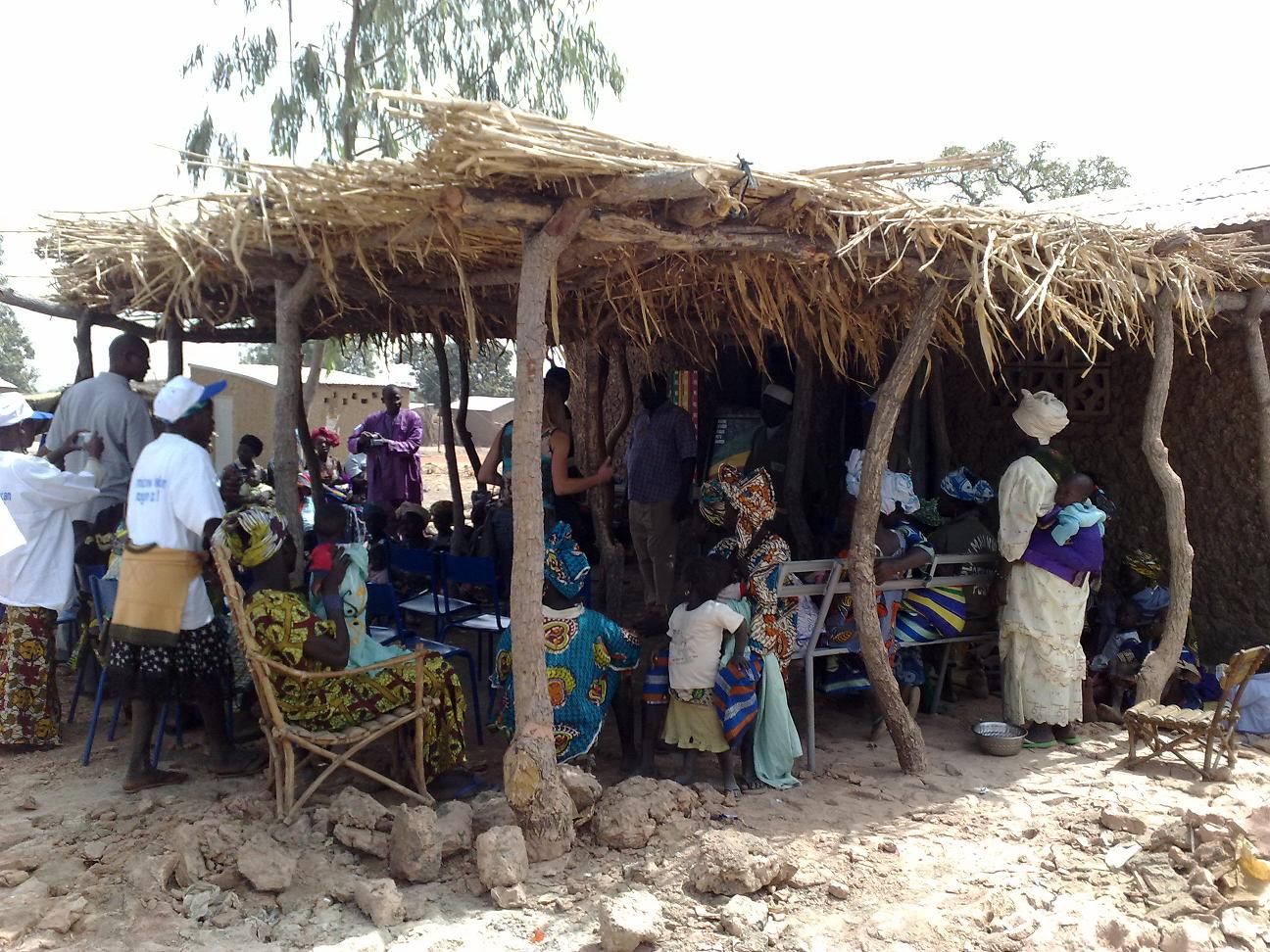
Then we all drove out to the village where the community representatives went through all their community indicators and explained where they were with them. So things like how many mothers are exclusively breastfeeding. How many kids are attending school. Percentage that have good hygiene habits. Etc. etc. We saw a few projects in the community – the early childhood care and development center, the nutrition center, and the women’s village savings and loan project. It was really interesting to see how they work, the impact the projects are having on the health and education of the kids, and also all the work that the women are doing to improve their community.
Photo: Community nutrition center where they weigh children to track their growth. They also work with the mothers to show them how to use locally available ingredients like sorghum, peanuts, herbs that grow in the area, to make high protein, high calorie porridge. The program is based on the concept of positive deviance — where the mothers who manage to have well nourished children are studied to find out how they do it, and then their habits are replicated/taught to the other mothers.
Stefanie asked the women in the savings and loan group what the men did, because she had seen mostly women doing all the work in all the projects. That really got a good laugh out of the women. The way the development process seems to work is that the men make the decisions about which projects and initiatives that their wives can participate in. Custom allows multiple wives. The men see the advantage of the improved health and education of their children, and the improved financial status of their wives. Mostly the men work in the fields and do the heavy work for project that require manual labor. Interesting dynamic though – when Stefanie asked her question there was a super long and animated conversation among several of the women and the men from the partner local organization that manages the project. None of this was translated for us! Then Thiekoro from Plan Mali just made a very quick summary. Stefanie asked for clarification later….and I’m not sure the real story was revealed then either.
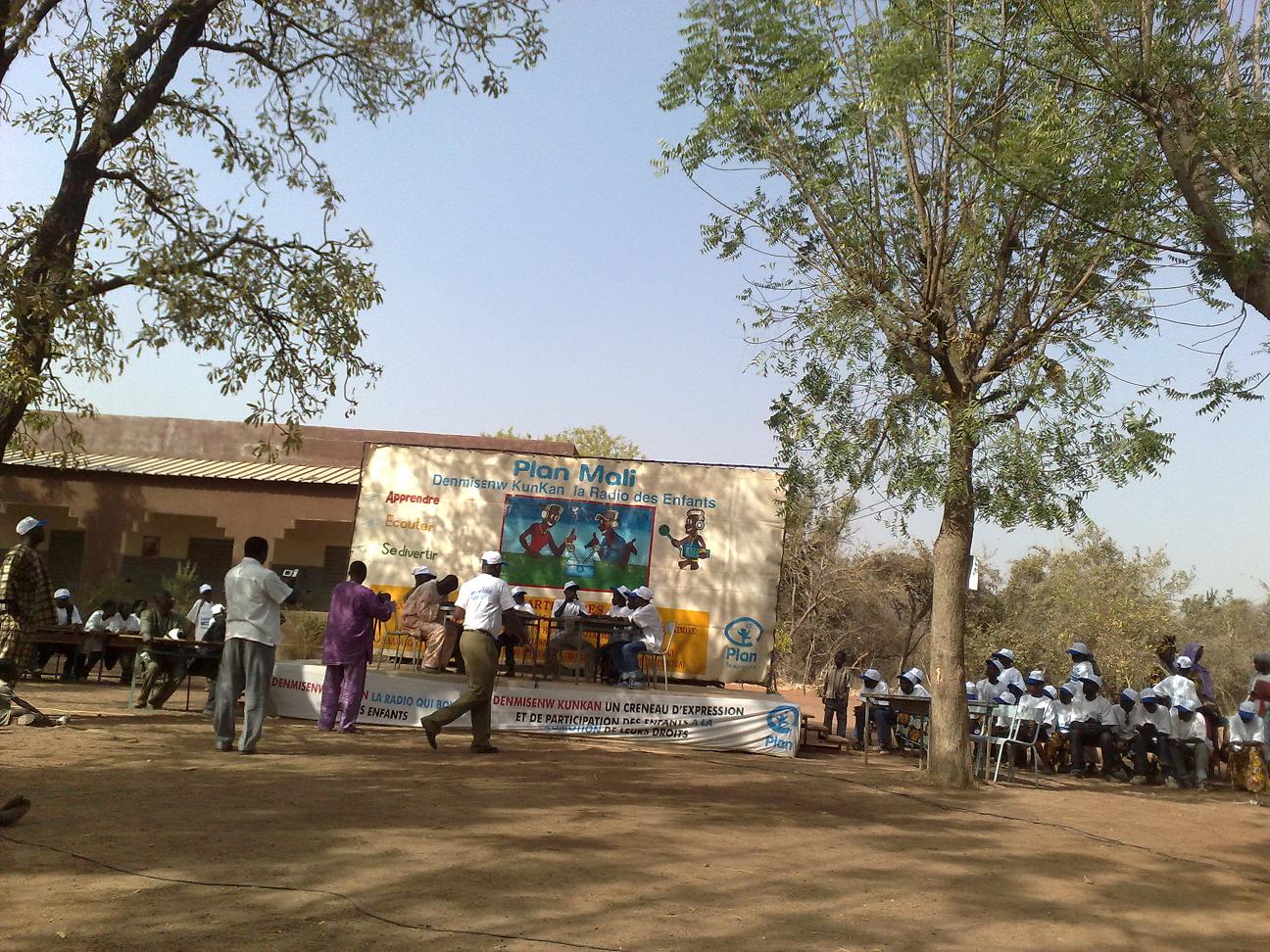
After we talked with all the project groups, the radio project crew – Kids Waves – did a live radio show. The radio project moves from community to community, training the kids and then the develop a half-hour radio show on different topics. They were covering the issue of Violence in Schools. They had invited the local mayor and the director of the school to ask them about the issue and what they planned to do about it. When will children stop being beaten in schools? The officials assured them that they would not beat children any more. Many of the children laughed at that. I didn’t understand much of what was happening because the radio show is conducted in Bambara, the local language. But the kids and the community really really got a kick out of it, and the kids were great. Self assured and really professional.

Photo: Kids Waves radio program.

We stayed until around 4 and then drove back. We arrived quite late due to traffic and I was soooo tired by then. I went out for pizza with a few of the others, Messan from Togo, Carmen from Benin and Francoise from Burkina. Messan and Francoise had participated in the Kenya Social Media for Social Change workshop, and it was great to see them again. One of the best things about working for Plan is when you have a chance to see colleagues again and develop nice friendships and working relationships.

YETAM Mali visit!

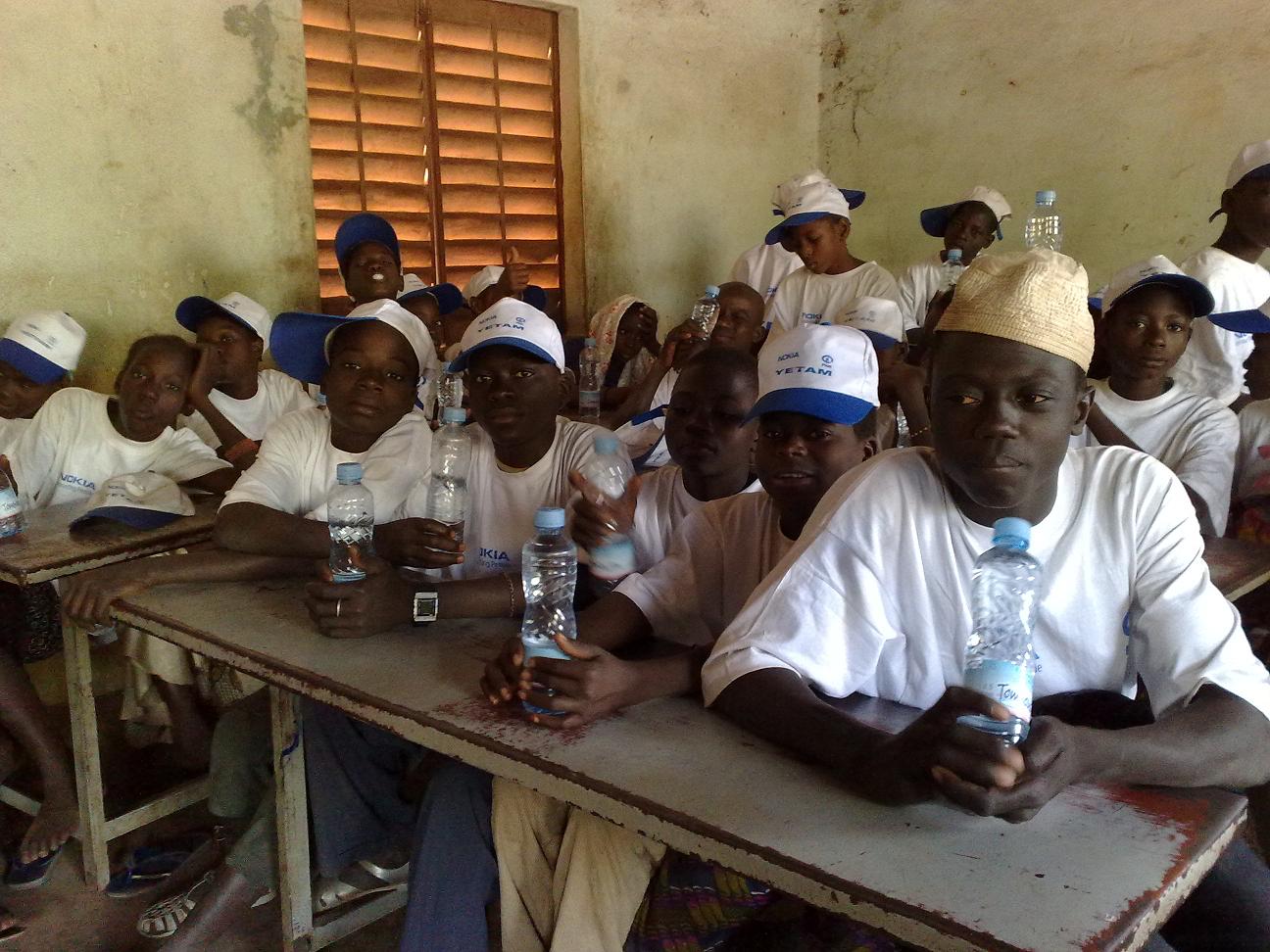
I got myself up around 7 and showered. Put my same clothes back on and called Bedo. He and the guys from the Kids Waves radio program came to get me about 8 and we drove about an hour and a half out to the community. We dropped the radio guys off first in one community where we will visit tomorrow and where they will do a live Kids Waves show. The YETAM community was a decent drive down a pretty dusty road, but not really too bad. The kids were all in the school house. They had a whole program planned where they showed the theater and songs that they had made up during the project and since then. They also showed me the photos that they’d taken as part of the project. I took a bunch of video with my phone so that I could make some short testimonials for Nokia about the project. I was really impressed with the kids and the topics they chose – they did one play about female genital cutting, one about the dangers of selling bad meat in the community, and had a song motivating people to go out and vote. Really relevant stuff for community awareness and motivation.

Photo: kids who are participating in the YETAM project.
About 2 we finished the community program and they served lunch. It was rice with meat – goat I think. So as usual I was faced with the vegetarian’s dilemma (as opposed to the omnivore’s dilemma, ha) of how to avoid being rude. In the end I just ended up eating the rice with all the goat ‘juice’ on it. People crowd up and share a big platter of food. They wash up and then each person squats around the platter and uses their right hand to scoop out some rice and form a ball with it, and then eat it along with some of the meat and vegetables. It’s nice to have a communal plate like that. I’ve seen it in many countries and it really feels more like you are sharing the meal rather than each eating from your own private space. I just wasn’t sure how the meat juices and grease would settle since I haven’t eaten meat for so many years…. I was feeling a big woozy by the time we got back, but mainly due to lack of sleep and water since I didn’t drink any water all day and it was pretty hot. (Didn’t want to have to go to the toilet!)

Travel Snafu. Ugh.

After pizza we tried to watch Madagascar 2, which Clare’s husband had brought back from Morocco, but Dalila and I were falling asleep so we crashed early and slept for what seemed like forever… but which was actually about 8 a.m.! Had a morning coffee with the girls and took off for the airport for my 2.30 flight. Was sorry to leave. Maybe someday I’ll move to Amsterdam.

My flight out was delayed because of snow in Paris, and then the Paris flight was delayed too. We sat on the runway for 4 hours waiting to leave! Argh. So I didn’t get into Bamako (Mali) until about 3.00 in the morning. My luggage was lost of course (Air France seems to be notorious for that) so I had to report it, so I didn’t get to the hotel even until about 4. Bedo from the YETAM project is coming to get me tomorrow at 8…. Thinking twice about actually going. I kind of have to, but right now it seems like an impossible feat…. I’m just sooo exhausted.

Clare and Dalila

I went over to the Plan office by bus/train this morning. I love the public transportation system in Holland and all the bicycles. Such a difference from most places that are all about cars! I met first with Chris and Klaas about the “Sponsorship 2.0” or now know as “Plan Live” concept. Klaas is really into coffee and had bought a new coffee maker, which was really noisy….

At 11 I met with this great youth group called Child Rights Watch that Plan Netherlands supports. They’ve made a quiz for organizations and elected officials that determines, according to the Convention on Child Rights (CRC), what their child friendliness is by how they assign budget and attention to children’s issues. They are really geared up and want to help re-connect with the different youth groups and child/youth advisory boards within Plan. I’m going to link them up with the team at Plan US so that they can get something going together.

In the afternoon I met with Maud from the grants team to talk about potential youth media projects we’re working on in West Africa to see if they may be interested in working on any funding for the region.

Around 4 I took the train over to War Child where my friend Clare works. War Child’s office is in this totally cool part of Amsterdam in an old church. I met Clare in Brazil at the World Congress on Child Sexual Exploitation (WC3) when we worked together on the Child and Adolescent Participation Commission. She’s totally cool and we really bonded. Clare gave me a quick tour and we walked over to pick up her daughter Dalila who is around 7, and Dalila’s friend Sammy. From there we walked to Clare’s little apartment, freshened up and went out for pizza. Such a great neighborhood! And I love that we could walk everywhere.
Photo: Clare and Dalila on this cool blue and white steep staircase