Feeds:
Posts
Comments

Posts Tagged ‘development’

I had a chance to meet with Plan Cameroon’s Program Technical Team today (including those that look at Monitoring and Evaluation, Health, Education, Sponsorship, Child Protection, Water and Sanitation, Gender and the overall Program Support Manager) to give a quick brief on the ICT4D research and training that Plan Finland is supporting with Plan offices in 8 countries in Africa (Mali, Senegal, Cameroon, Ghana, Togo, Mozambique, Kenya and Uganda).

We are working with Hannah Beardon, who wrote Plan’s Mobiles for Development guide (available in both English and French) and building on that towards some more focused and concrete ideas for ICT use in these 8 countries. We’ll share the research with staff during 2-day workshops to brainstorm and gather ideas on information and communications needs, as well as available tools that could be used or adapted to local situations.

The 2-day workshops are planned for Aug and Sept. Hannah, Mika (Plan Finland) and I are developing the methodology and will make a training DVD to send ahead of time to each country (apparently complete with our selves doing presentations!) since we don’t have funding to do face-to-face training. We’ll have a staff person in each country as the main facilitator, and 10-12 key staff, from management to frontline, will attend. Mika or I will beam in by skype to support if needed. We’ll use the Frontline SMS demo video that Mika and crew did also, (see my earlier post about this from a few months ago), show how Nokia Data Gathering Software works, share the Common Craft Social Media videos, among other things. Hannah’s methodology will also come in for thinking about how ICTs could enhance existing efforts.

The idea is to both learn about new tools as well as look at current programs and see if there are ways to use ICTs to improve impact, and how to begin tailoring them to the programs and local settings. We’re also doing research on government policies and how Plan’s work links there. I hope that we can also look at partnering with local developers and ICT4D innovators in each country….

The idea of ICT4D was a bit new to some of the Plan Cameroon staff and not at all new to others. One interesting idea they shared was using SMS in anti-malaria programs to periodically remind people to retreat their bednets. There was some concern about literacy rates if one relies on SMS, and interest in using voice response, but given the number of languages in Cameroon, voice could also be a bit of a challenge. I’ll have to try to find out if/how that’s overcome in other places. Another concern was ‘scamming’ and how to avoid that happening. But it seemed that the issue of scamming is not something that Plan alone would face, but something in general that is faced with mobile phones.

The program support manager was really keen on using mobiles for program monitoring as that is something that can always improve and be more efficient with ICT, he said, and wants to test some ideas. The ICT manager also said he wanted to write something up. The sponsorship manager suggested trying out some data collection or quicker communications tools for linking with community volunteers. And as mentioned earlier, child media and child protection are areas that can be greatly enhanced and supported via ICTs (help lines, SMS incident reporting, social media and mobile reporting).

After the 2-day workshop, we should have something really nice to go forward with.
Read Full Post »

Jonathan Mativo, whom I first met in Kenya in December at our Social Media for Social Change workshop was one of our core FrontlineSMS trainers last month. In January, Mativo left Plan to found his own organization called ICT4D Kenya which operates in the Kilifi and Machakos districts in the Southern Coast of Kenya. He was motivated to move beyond the commercial ICT sector to ICT4 community development by his 4 years of work at Plan. “Previously I didn’t have any background on ICT4D. I only looked at ICT from the operational point of view but Plan really inspired me to work with children to see them realize their full potential.” ICT4D Kenya envisions young children confident in participatory media, children that see ICTs as enablers for development rather than just tools to perform work. “We also foresee a changed community – people who are socially together.”
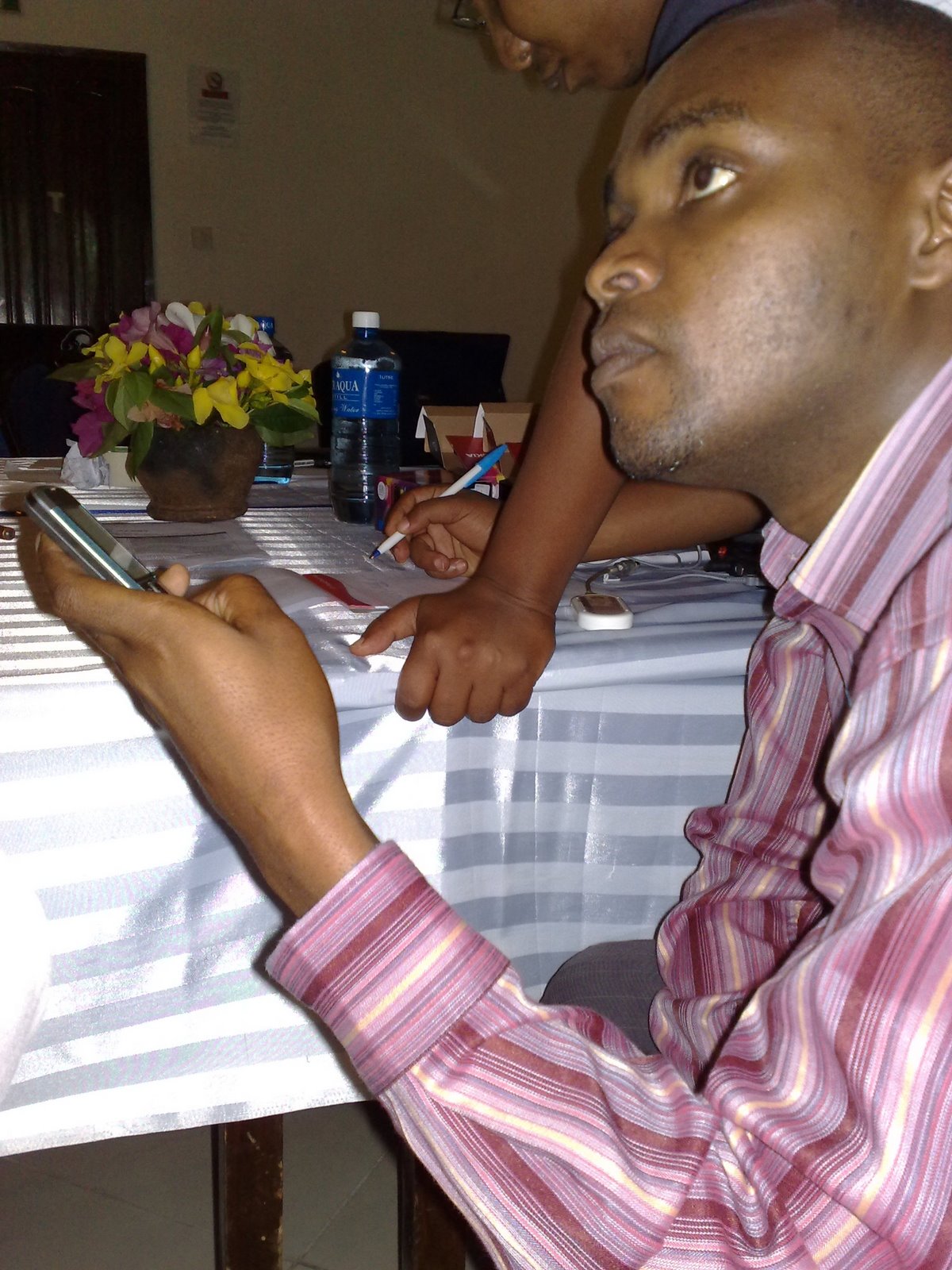
Photo: Mativo is the founder of ICT4D.

ICT4D Kenya targets communities and schools, with the aim of building the capacity of youth, men and women through community ICT resource centers to introduce them to new ways of learning. ICT4D Kenya is also experimenting with interactive learning. “Normally students learn by rote. They basically take notes extracted from text books.” In their free time children expected to study, but “they are just revising materials from textbooks that have been copied into their notebooks…. They are hardly concentrating on what they are doing.” Mativo wants to introduce interactive learning materials in schools so children will be more attentive in class. He’s also planning some school linking projects where students in different districts can communicate to share culture and motive each other to improve school performance. Photo: Wajuhi and Mativo at Plan’s training on mobile data gathering in Kwale, Kenya

We’re not talking old, slow computers though. “One thing about Africa is that we are used to free things. That’s why we are congesting our country with refurbished things.” Mativo believes that to take ICT ahead in Africa, schools need access to the technology that they would get in the real market. “Often we get old computers, slow, hard to maintain and without proper e-waste solutions. We should be looking at affordable technology and ways to get ICTs to Africa rather than just dumping refurbished equipment.” So what about refurbished/donated phones? “Small gadgets are a different story. If you look at the features of a mobile, as long as it can send an SMS, it’s fine. SMS is one thing we are really looking at for social change.”

Mativo has worked with one school to install FrontlineSMS (http://www.frontlinesms.com/) in order to communicate with parents. This year there was a teachers strike. Most schools sent their children home. But this school got all the parent/caretaker contact information. “Within 2 days we had all the mobile numbers.” They keyed them into FrontlineSMS and the head teacher used the software to send an SMS to all the parents and asked if they should send the children home or not. “We got 237 out of around 400 messages back from parents on the first day saying ‘don’t send our children home’ and the rest said to send them home.’” So the head teacher kept the children at school, and when a parent questioned the decision at a parents’ meeting later in the year, he used the SMS he had saved to explain the reasons.

Now the school is using the software for all kinds of things. On annual Prize Day instead of the normal low turn-out, they had 75% turnout for the first time this year. “Parents said you communicated with us in due time by SMS and kept communicating with us over time to remind us.” Normally students are given newsletters during holiday times and parents don’t remember key dates when they finally roll around.

Mativo sees his role as demystifying ICTs and finding the best way possible to ensure people understand ICTs from a non technical point of view. “When I have to explain what a computer is, I always refer it as ‘that box there’ so that people don’t look at it as too delicate. In most cases I open the CPU for people to understand that it’s just an empty box that they shouldn’t be too afraid of.” Mativo says that many people believe it’s not possible to change their communities’ way of thinking, especially people who are working in commercial ICTs. “They need to internalize what community development is all about and that ICT can be downgraded to reach out to people in communities regardless of their skills, their background and their exposure. ICT and community development is real.”

Photo: Simplifying ICTs for people.

Related posts on Wait… What?

7 (or more) questions to ask before adding ICTs

Read Full Post »

I had dinner last night with those who had arrived for the meeting and then crashed. My luggage came around 3 a.m. so I had to go down to the lobby half asleep to get it! But yay!
Today we went out to the community were we had dropped the radio equipment off yesterday. First we went to a meeting at the Plan office. It was really interesting to hear their strategy which is centered around the concept of Child Friendly Communities. The cool thing is that they work with the community to define a set of indicators that the community is in agreement with. Then they measure where the community is at currently (baseline). Then they work with the community to improve their indicators. The interesting thing is that I have never seen it where the community is involved with setting and tracking indicators of their own development. Really really cool. We heard all the theory about it in the morning when the country director and program manager gave us an overview.
Then we all drove out to the village where the community representatives went through all their community indicators and explained where they were with them. So things like how many mothers are exclusively breastfeeding. How many kids are attending school. Percentage that have good hygiene habits. Etc. etc. We saw a few projects in the community – the early childhood care and development center, the nutrition center, and the women’s village savings and loan project. It was really interesting to see how they work, the impact the projects are having on the health and education of the kids, and also all the work that the women are doing to improve their community.
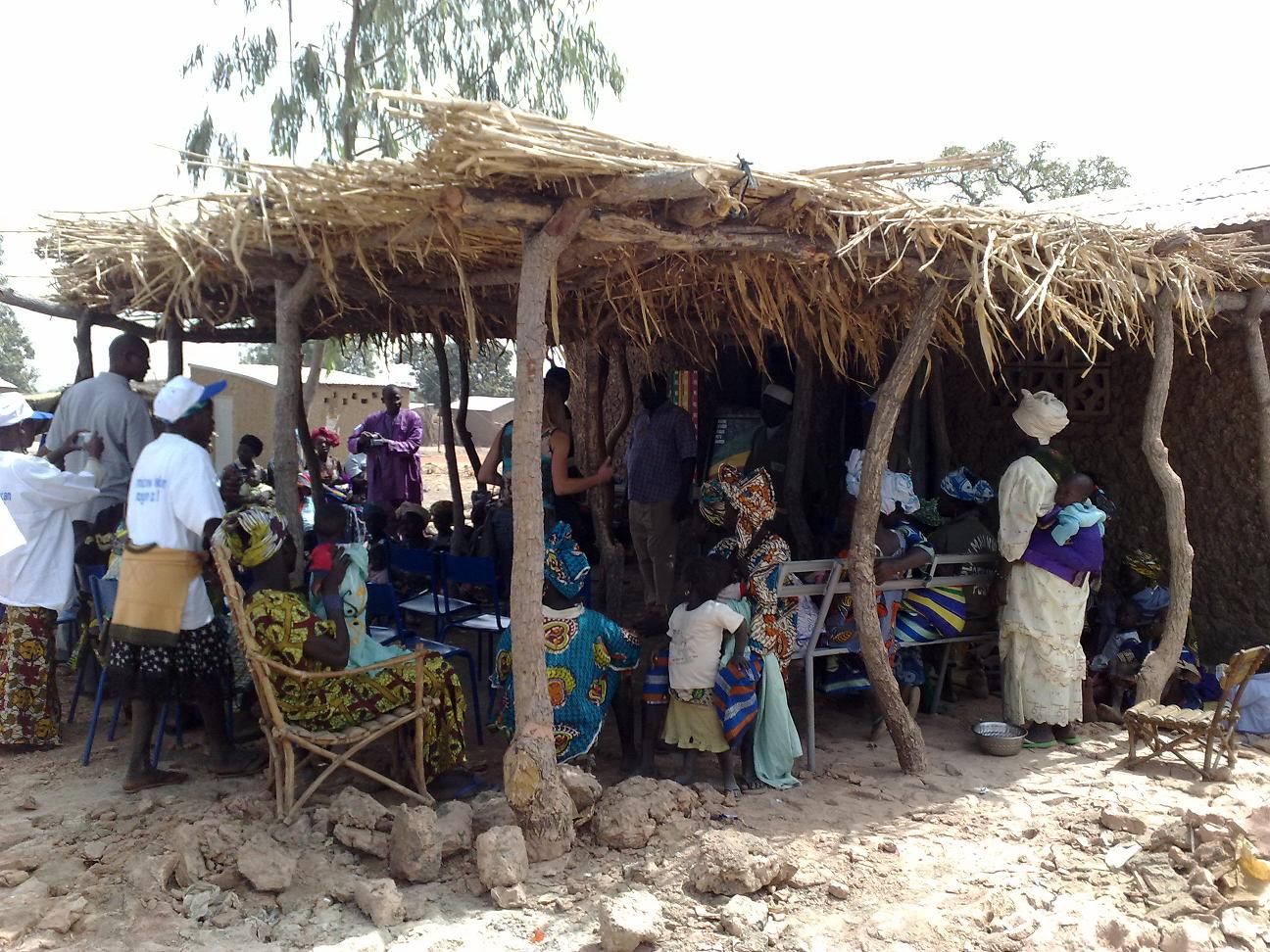
Photo: Community nutrition center where they weigh children to track their growth. They also work with the mothers to show them how to use locally available ingredients like sorghum, peanuts, herbs that grow in the area, to make high protein, high calorie porridge. The program is based on the concept of positive deviance — where the mothers who manage to have well nourished children are studied to find out how they do it, and then their habits are replicated/taught to the other mothers.
Stefanie asked the women in the savings and loan group what the men did, because she had seen mostly women doing all the work in all the projects. That really got a good laugh out of the women. The way the development process seems to work is that the men make the decisions about which projects and initiatives that their wives can participate in. Custom allows multiple wives. The men see the advantage of the improved health and education of their children, and the improved financial status of their wives. Mostly the men work in the fields and do the heavy work for project that require manual labor. Interesting dynamic though – when Stefanie asked her question there was a super long and animated conversation among several of the women and the men from the partner local organization that manages the project. None of this was translated for us! Then Thiekoro from Plan Mali just made a very quick summary. Stefanie asked for clarification later….and I’m not sure the real story was revealed then either.
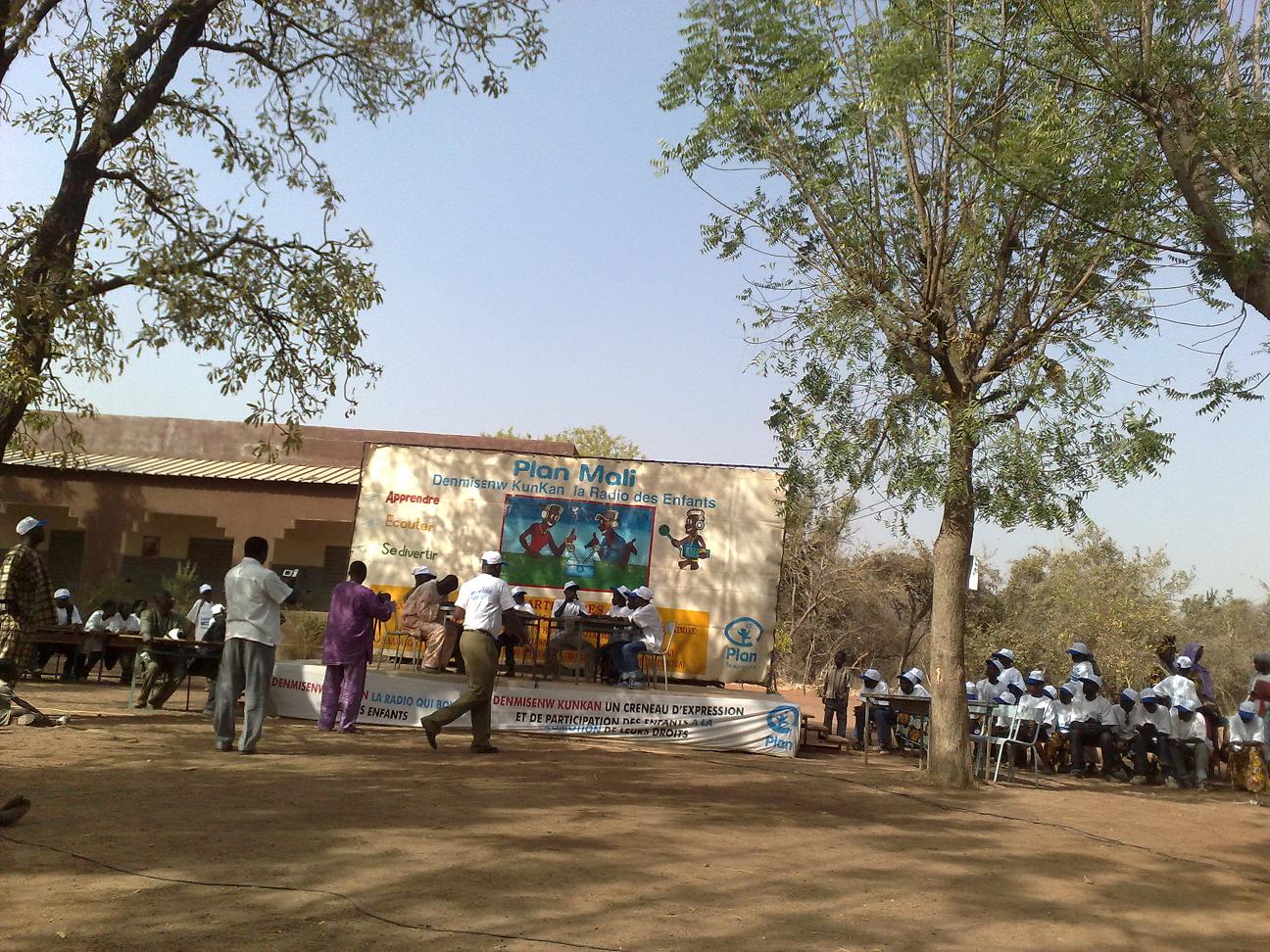
After we talked with all the project groups, the radio project crew – Kids Waves – did a live radio show. The radio project moves from community to community, training the kids and then the develop a half-hour radio show on different topics. They were covering the issue of Violence in Schools. They had invited the local mayor and the director of the school to ask them about the issue and what they planned to do about it. When will children stop being beaten in schools? The officials assured them that they would not beat children any more. Many of the children laughed at that. I didn’t understand much of what was happening because the radio show is conducted in Bambara, the local language. But the kids and the community really really got a kick out of it, and the kids were great. Self assured and really professional.

Photo: Kids Waves radio program.

We stayed until around 4 and then drove back. We arrived quite late due to traffic and I was soooo tired by then. I went out for pizza with a few of the others, Messan from Togo, Carmen from Benin and Francoise from Burkina. Messan and Francoise had participated in the Kenya Social Media for Social Change workshop, and it was great to see them again. One of the best things about working for Plan is when you have a chance to see colleagues again and develop nice friendships and working relationships.

Read Full Post »

« Newer Posts