Feeds:
Posts
Comments

Posts Tagged ‘Cameroon’

The 55th Session of the Commission on the Status of Women is taking place this week in New York City, with the core theme of: “Access and participation of women and girls to education, training, science and technology, including for the promotion of women’s equal access to full employment and decent work.”

Some of the girls that we’re working with in our programs are participating, including Fabiola and Shira from Cameroon. I met them both last July when we worked together on the Youth Empowerment through Technology, Arts and Media (YETAM) project. The YETAM coordinator in Cameroon, Judith Nkie, is also attending the CSW as the girls’ chaperone. She certainly also has a lot to contribute on girls, women and ICTs. Judith once said to me “This project is a catalyst in my body.” Judith is awesome.

Girls from the YETAM project worked to prepare the interviews, film and videos below. Each girl interviews another girl from the community about the role of ICTs in their lives. The videos are worth watching as the questions and the responses of the girls are very insightful.

The interviewee in the first video says ICTs help you find out what is happening around the world. She comments that she found out about what just happened in Egypt (the February revolution) because of ICTs. Some of the other things I found most interesting in the videos are:

  • The girls’ recognition of the importance of information for making good decisions
  • The technologies that girls have most access to (mobile phone!)
  • The first time the girls encountered a mobile phone (a few years ago, at a local call box for one, and via an uncle who brought one back from travels for the other)
  • Why it is hard for girls to use ICTs in the community (lack of ICT devices, cost, parents don’t allow girls to learn about ICTs, at school the computers are few – you will see at least 20 persons per computer – and half are broken, the boys are very powerful and they fight us to occupy the computers, girls’ illiteracy, girls don’t continue in school)
  • How often the girls use ICTs (mobiles are used every day, there is only one place to access Internet in the community)
  • What they like most about ICTs (ICTs help me to know what is happening in other countries, I came to know about what happened 2 days ago in Egypt via communication technologies, many youth have been able to be employed through their mobile phones)
  • What they like the least about mobile phones and Internet (scamming, its easy to tell lies by mobile)
  • How can ICTs be helpful to girls (in my community a girl was able to borrow a phone from a friend to report that she was to be married at the age of 12, and the marriage was stopped)
  • Can ICTs be used to hurt girls? (yes, the girls who can afford their own mobile phones are those who are wealthy, when the poor girls see the wealthy girls with their phones, they go into competition, they can go into prostitution to have money to get a phone; but on the other side, girls are also self-employed through the phones, so the mobile phone hurts but it also helps girls)
  • How the communities use the Internet to sell their products (most people in the community use ICTs to communicate to find buyers for their products)
  • What girls would like parents, community leaders and government to do regarding ICTs (improve our access to ICTs, bring in programs and projects that can support youths to use ICTs and learn to use them better, educate parents to help them to see that girls also should be allowed to access this type of training and technology)
  • What hurts most about this ICT thing (when those who are really privileged and who can use the Internet don’t put their talents and privileges to good use, they go there to scam, to do robbery, not to do good; if these youth have the time and this privilege they should not do harm but they should do good.)
Kirby, one of the girls from the US, edited together portions of the videos above with video footage from the rest of the girls in the group, and they used the video to kick off their ‘Girl Led Side Event’ today. The turnout was great. They will continue throughout the rest of the week getting their ideas and messages across in different events and panels. You can follow their thoughts and impressions on the Plan Youth Tumblr or by following @plan_youth on Twitter. My colleague @KeshetBachan is also blogging from the CSW at the Girls Report blog.

Read Full Post »

Forget that show “Off the Map.”  Real live on the map is way more interesting.

Last July via the Youth Empowerment through Arts and Media project, we did some GPS and Open Street Map (OSM) training with Ernest Kunbega in Bamenda, Cameroon. I left for Kenya to attend a similar training with Map Kibera, and Ernest continued working with staff, local partners and youth in Ndop, Okola and Pitoa over the next several months to make maps of the 3 areas where the project is being implemented.

I got an email this week from Ernest and I was thrilled to hear that maps of the 3 areas have been completed. They did a fab job, too. Check these out.

This is what you used to find when you looked for Ndop on Open Street Map, and what you will still find on Google Maps (eg., not much):

and this is what you’ll find now if you look for Ndop on Open Street Map (close up):

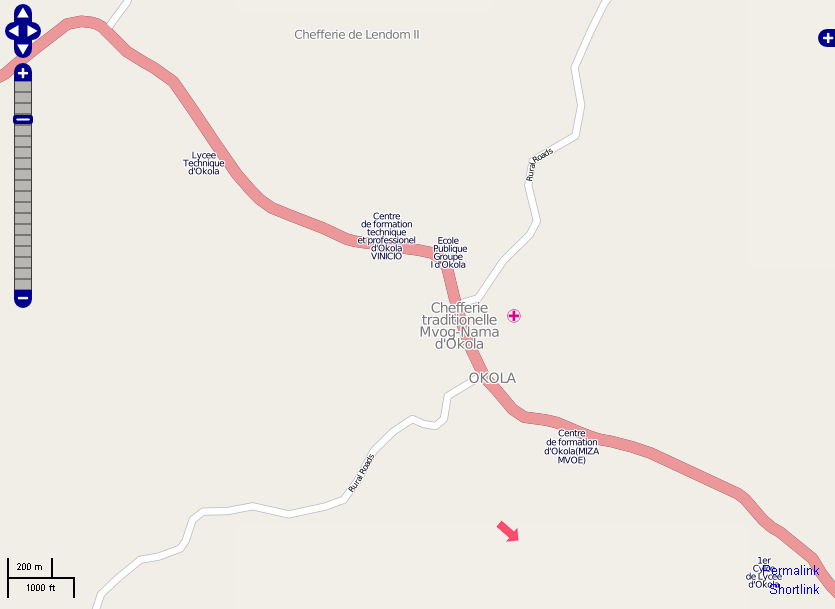
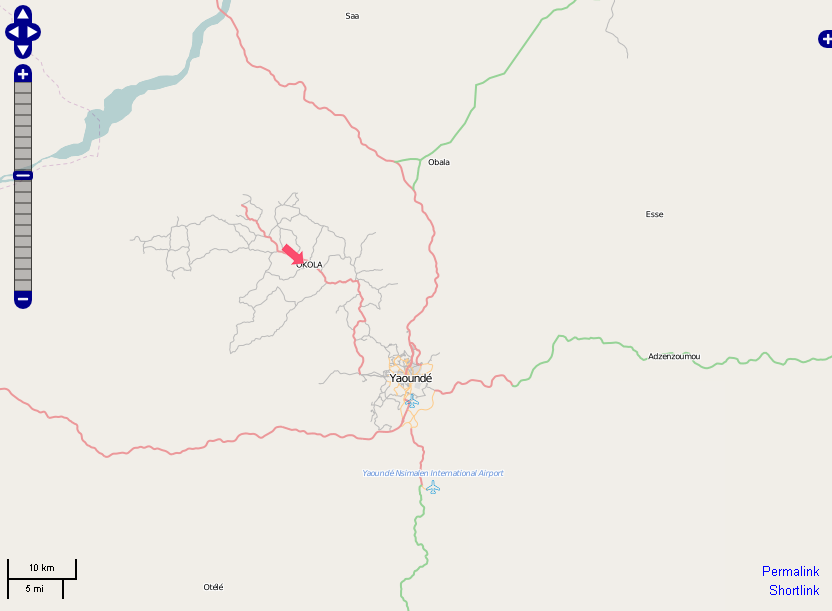
This is what Okola looked like before on OSM, and what you will currently find on Google maps:

And what Okola looks like now on OSM (close up):

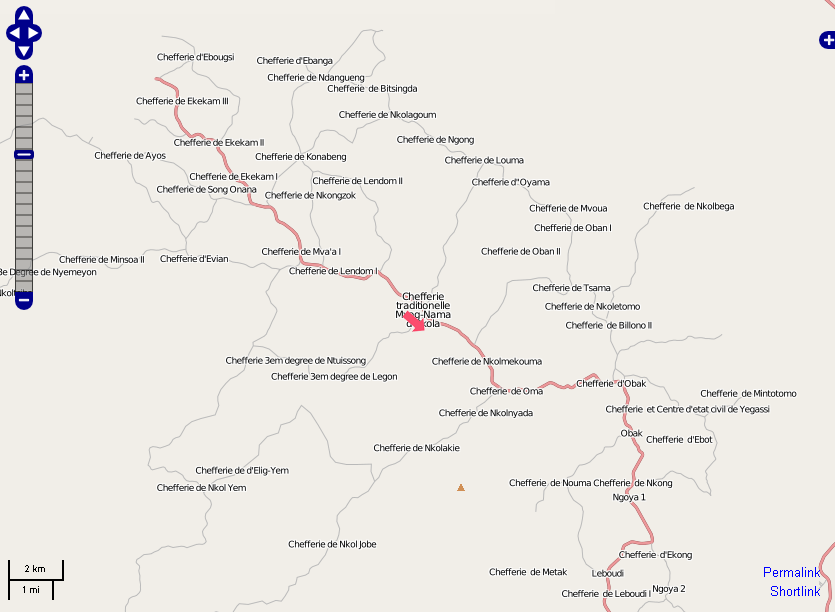
But in addition, they mapped out the chefferies in the larger Okola area:

And I’m pretty sure this is the youth’s work because nothing else around is mapped in this level of detail:

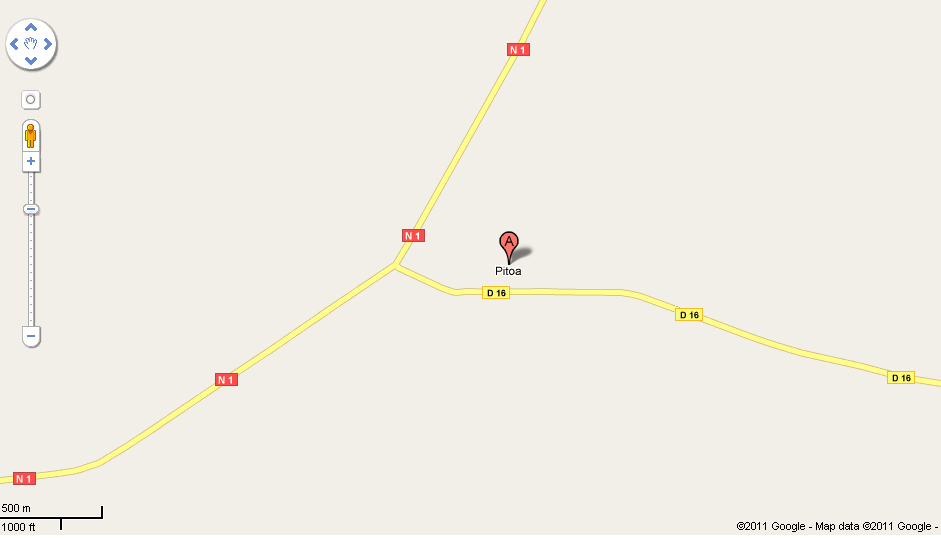
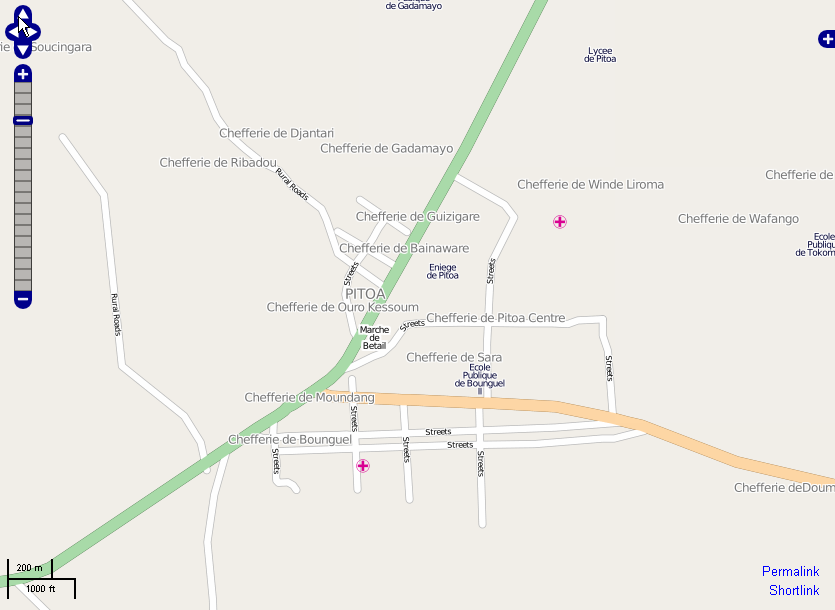
And lastly we have Pitoa as it is on Google/was on OSM:

And Pitoa after Ernest and the youth mapped it on OSM (close up):

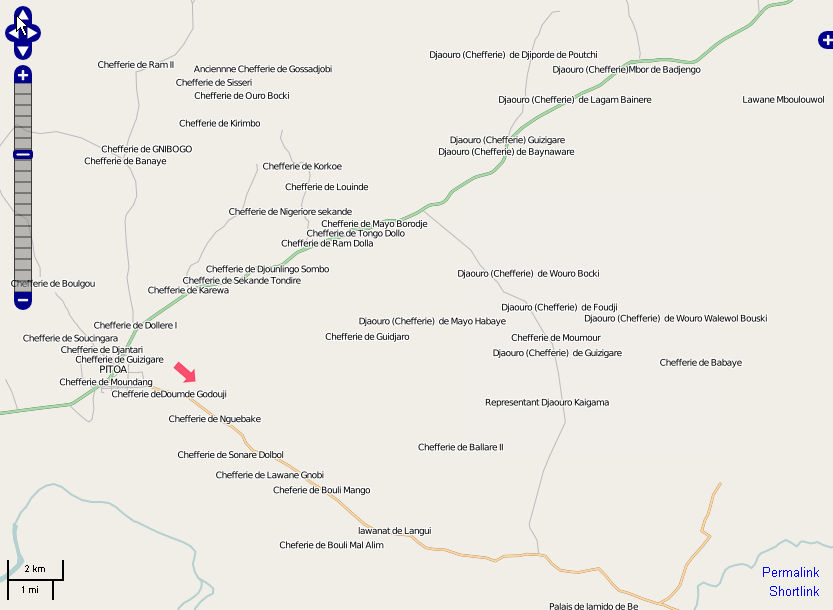
And the chefferies in the whole area of Pitoa:

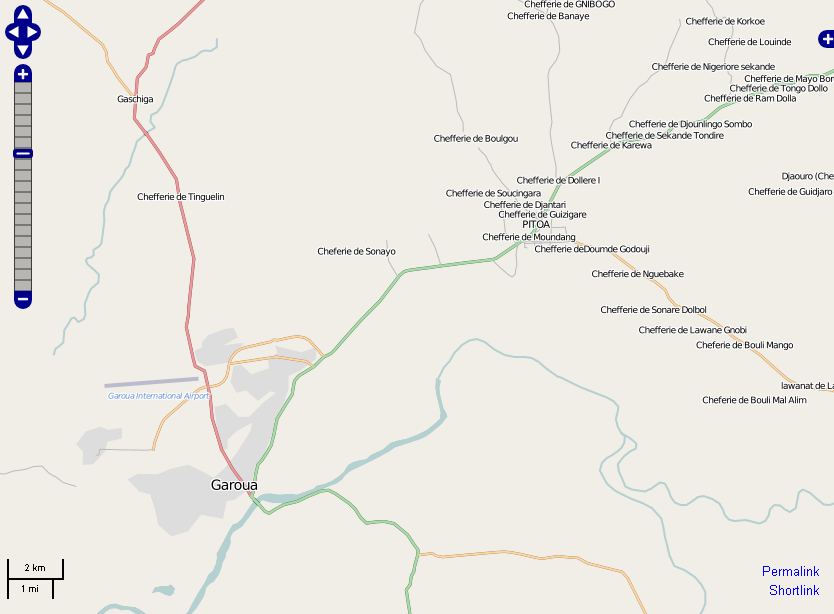
And Pitoa (on the right) compared to Garoua (lower left):

For more background on the training in Cameroon, check out this post: A catalyst for positive change.

Read Full Post »

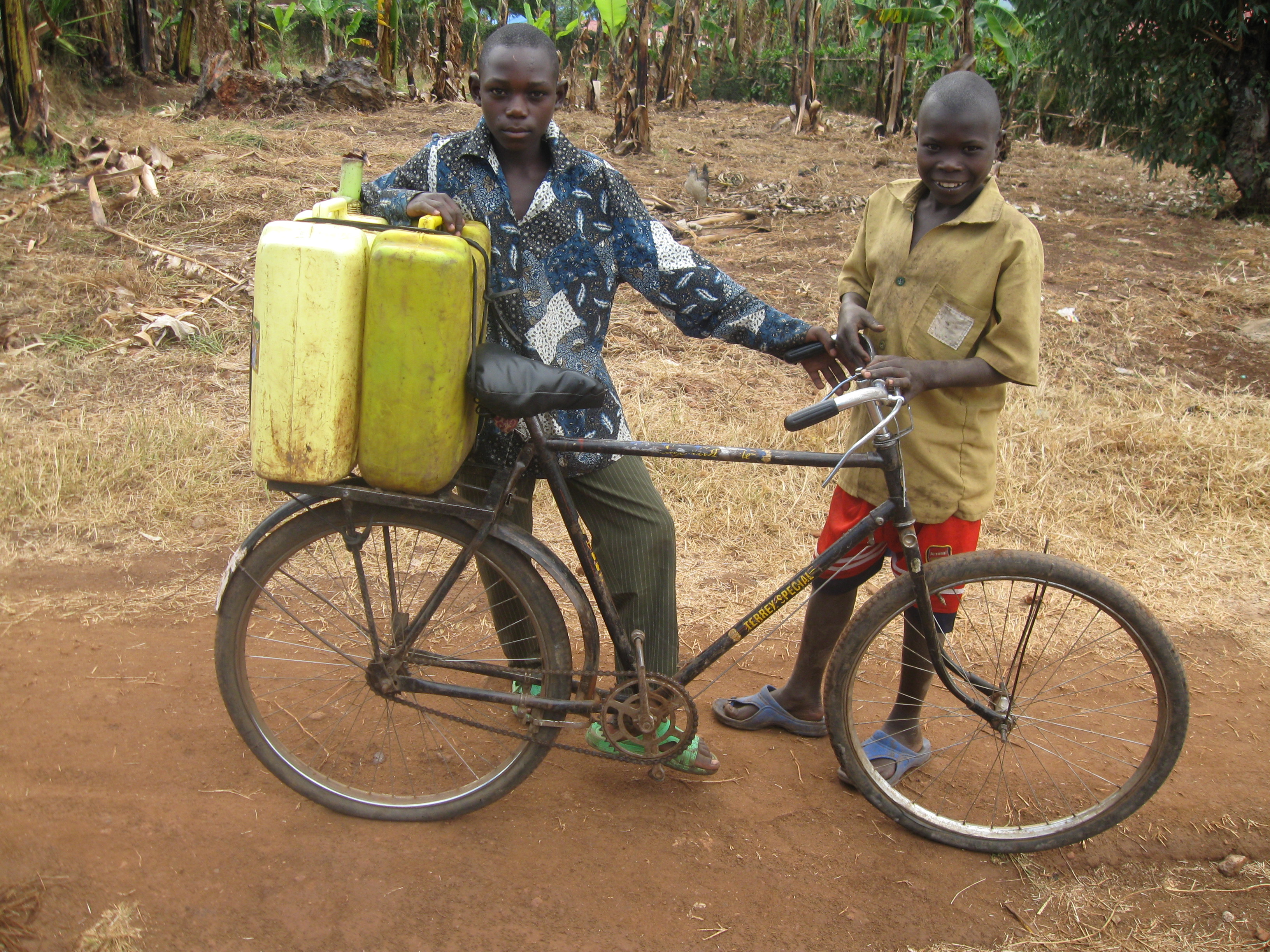
One of the main programs I support is a youth arts, technology and media program called ‘YETAM‘.  The program supports youth to identify and raise issues that they consider important, and then helps them engage their communities to resolve the issues they’ve raised. The youth have talked a lot about water in most of the places where I’ve been working in the past couple years, probably because children and youth tend to be the ones responsible for carrying water.

As part of the project in Okola District in Cameroon last year, youth mapped their community and prioritized their issues. One of their top issues was water. They made this film together about the water problem and shared it with the community adults and local authorities.

Probleme d’eau Potable – The Potable Water Problem (for subtitles, click on the arrow on the bottom right hand side of the video player and then click on the red ‘cc’ button)

Spurred on by the project and the organized youth, a few months later the community got to work fixing one of their water sources. They put in some resources and so did our local office.

La quete d’eau potable – Lack of Potable Water part 2.

Here are a couple other videos about water filmed by youth….

The Community Water Tank from El Salvador about what happens when water sources are not kept up (click on link as it’s not available on YouTube yet)

Djiko: l’eau potable a song youth wrote to remind communities about water scarcity in Mali

Water – Amazi where youth interview a rural family about water scarcity in Rwanda

Related posts on Wait… What?

A catalyst for positive change

Youth empowerment through tech, arts and media

Meeting in the middle

An example of youth-led community change in Mali

Read Full Post »

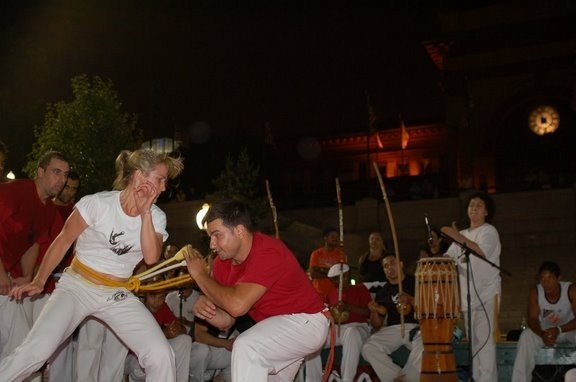
Capoeira is ‘the Brazilian martial art of dance fighting’ if you believe Dustin Hoffman’s character in the movie Meet the Parents. That’s one way of putting it, I suppose. But the old masters of capoeira describe it a bit differently…

Capoeira is everything the mouth eats.  ~Mestre Pastinha

Capoeira is a game, it is dance, it is fight, it is of war and it is of peace, it is of culture, of music, it is a piece of things. ~Mestre Suassuna

The impossibility of one person completely capturing capoeira, yet its potential to be touched by anyone are part of the balance of power and beauty of this magical art. ~Mestre Acordeon

Capoeira has always been rich and beautiful. We find everything in capoeira: life philosophy, self-defense, art and culture. We find part of religion in capoeira if we seek it. The word religion means ‘to re-link oneself,’ so everything to which we link ourselves would be a religion. We shouldn’t learn capoeira in order to cause trouble with it, but instead use it in the hour of defense when necessary. After all, in its life philosophy capoeira is love, celebration, and also joy. ~Joao Pequeno

For about 5 years now, I’ve been playing capoeira. I even have a capoeira name: Jaguatirica, which means ocelot. I’m not great at it, but I keep training faithfully and improve little by little. Training is about the only time that everything leaves my head and I live right in the moment. It’s my meditation, my yoga. So in spite of capoeira being challenging and demanding, it’s also the one thing that frees my mind.

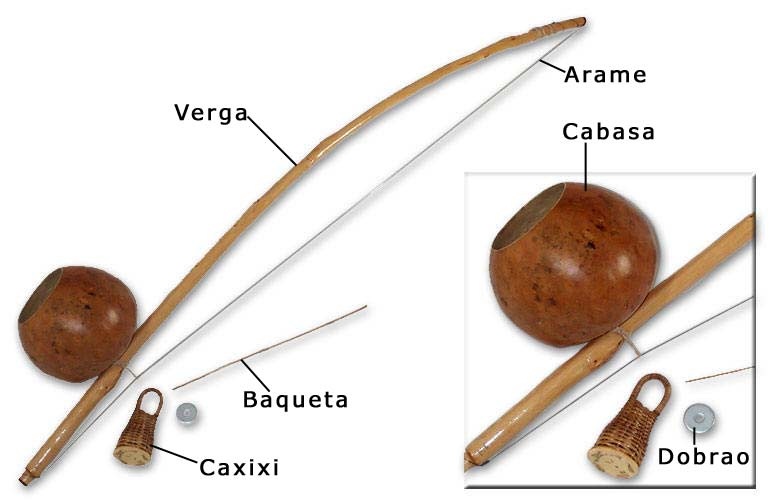
I train 3 times a week when I’m not traveling. We train as a class, and training involves a combination of exercises to improve strength, balance, flexibility, playfulness, precision and control. It also involves playing the pandeiro (tambourine), the berimbau (a bow-like instrument) and the atabaque (drum) and singing in Portuguese. Capoeira music is one of the main things that drew me in.

berimbau

What I love about capoeira is its mix of music, history, strategy, gaming, balance, strength, flexibility, creativity, daring, control, spirituality and community. Playing capoeira you learn to better understand where you begin and end. You learn how to interact with people in a physical and mental conversation that happens inside the roda (the circle) while the rest of your capoeira community claps and sings beautiful songs, building a ring of energy around you. There are different games within capoeira – some slow and beautiful, some fast and aggressive, and some devious and tricky. Each capoeira group has its own look and style within the different games of capoeira.

my son Daniel (aka 'Moska' meaning 'fly') is a quick and graceful capoeirista

My  18 year old son plays capoeira too. He started a couple years after I did, and plays a million times better than I do. It is one of the things that binds us, something that we do together, and a place where we share experiences and friends. So capoeira has become a part of our family and community life as well.

The history of capoeira is a bit fuzzy.  Some say that it was how the chained slaves taken to Brazil from Africa fought their masters.  Other say it was how slaves trained in secret to overthrow their masters – they disguised their fighting as a dance. Yet others say that the game came from Africa to Brazil and morphed there as a result of the many cultures and traditions that were mixing and mingling, including the native populations of the area.

Capoeira was an underground thing until the 1920s. It was outlawed and people were imprisoned, whipped or beaten for practicing it. Now things are quite a bit different. Capoeira is Brazil’s national sport and people of every social class and color play, in about every country of the world.

There’s a beautifully thorough and interesting book (if you’re into history) called Capoeira: the Jogo de Angola from Luanda to Cyberspace by Gerard Taylor. It traces the roots of capoeira from various countries in Africa through the slave trade to Brazil and onward. Not enough is yet known and proven about where capoeira actually comes from and how it changed over time to the game it is today.

There is some thought that the game comes from Angola. There is a traditional dance there called N’golo that has some of the same characteristics. There are words used in capoeira such as mandinga that can be traced back to northern Africa, and which were originally used to describe magic and magicians. In capoeira mandinga is the magic and craftiness that a player brings to the game. There are similar yet distinct games found in Cuba and Cape Verde. There are still questions about where the instruments used for capoeira come from and at what point each instrument became part of the capoeira orchestra that we use today.

I do quite a lot of traveling in different parts of Africa, and I’m always on the look-out for pieces of capoeira. In Togo, I saw Evala, where young men wrestle and women sing and egg them on. I wondered if there was any connection. In Togo and Benin I heard about voudoun, the basis for condomble, the religion that many of the early (and some current) capoeiristas practice(d) in Brazil.

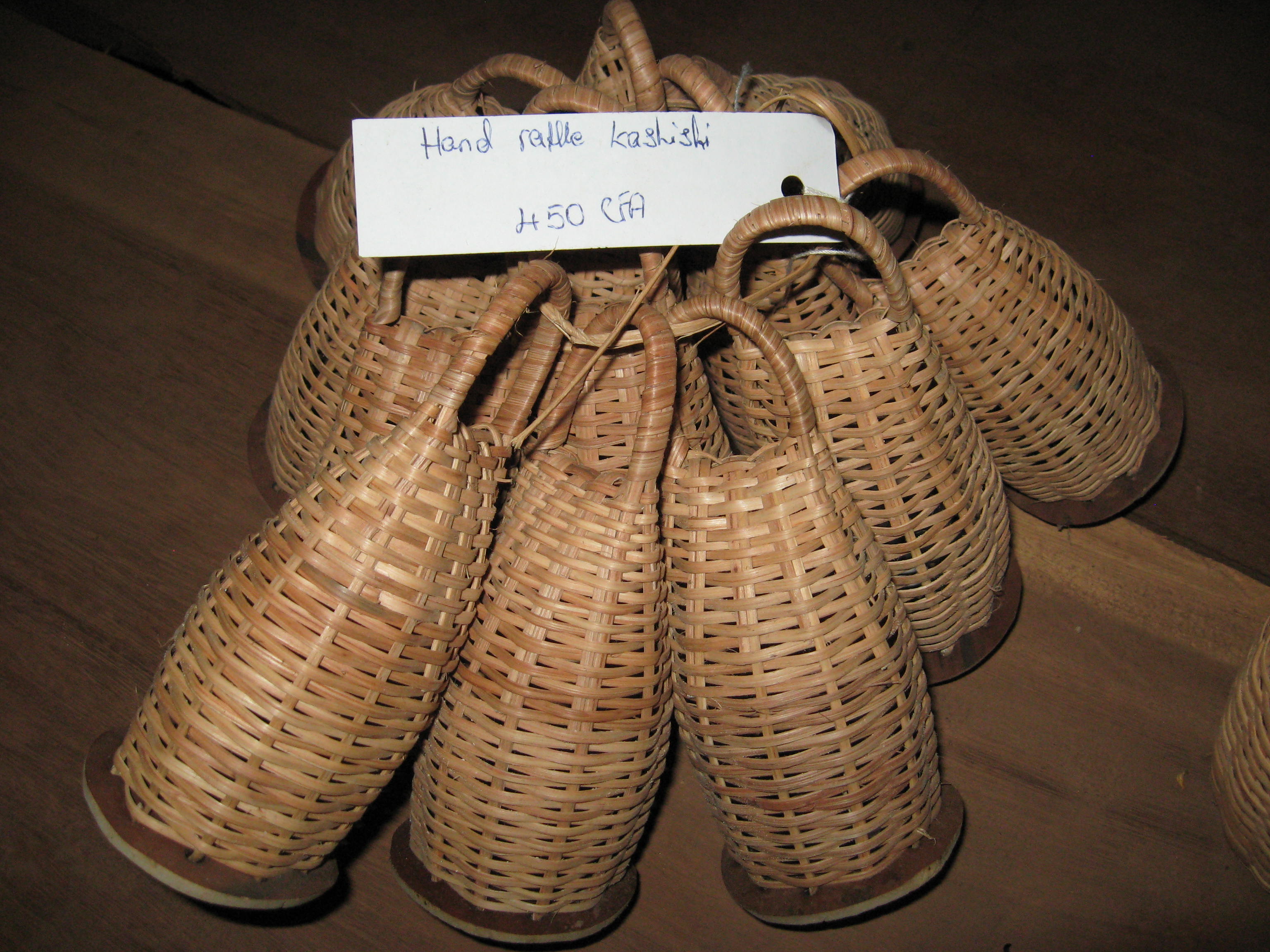
kashishis in Ndop...

Last week I was out in Ndop, Cameroon, with a group of local kids who are working on an arts and media project. They were filming a local pottery business. I was wandering in the craft shop, and what do I see but a bunch of little hand rattles. I recognized this hand rattle as a caxixi from capoeira. There was tag on a group of them saying ‘hand rattle kashishi’. These kashishis are made in exactly the same style as the caxixis that we use in capoeira when playing the berimbau, and we always get them in Brazil, and I don’t remember ever hearing about any strong connection between Cameroon and capoeira.

I see drums all the time when traveling, and I’ve seen different musical bows, but to now I hadn’t seen a caxixi.

So now I’m wondering. How did the kashishi get to Cameroon and when?  And who took it to Brazil? Was it people living in what’s now Cameroon or Nigeria during the days of the transatlantic slave trade? Or was it the Portuguese moving back and forth in African countries who passed the kashishi around in Africa and then in Brazil?

I suppose I’ll have to do a little research now, and maybe I’ll never know, but it felt like a little piece of home, seeing those caxixis there on the shelf of the craft store, all the way out along a back road in Cameroon. It made the world seem a little smaller and connected. It made me homesick for capoeira.

Related posts on Wait… What?

That thing you said I’d get

Read Full Post »

HSBC Ad Campaign

If you’ve done any international travel lately, you’ll likely have seen the HSBC Ad Campaign on the walkway as you get on your plane. You know the one. It has 3 identical photos, each with one word or phrase written on it, showing different perspectives.

Well, last week in Ndop, Cameroon, I had a random and cool experience that I was a tiny bit hesitant to post about.  But thanks to HSBC Advertisements, I figured something out. (Note, I still really don’t know who HBSC is or what in particular they do nor do I have any intention of using their bank).

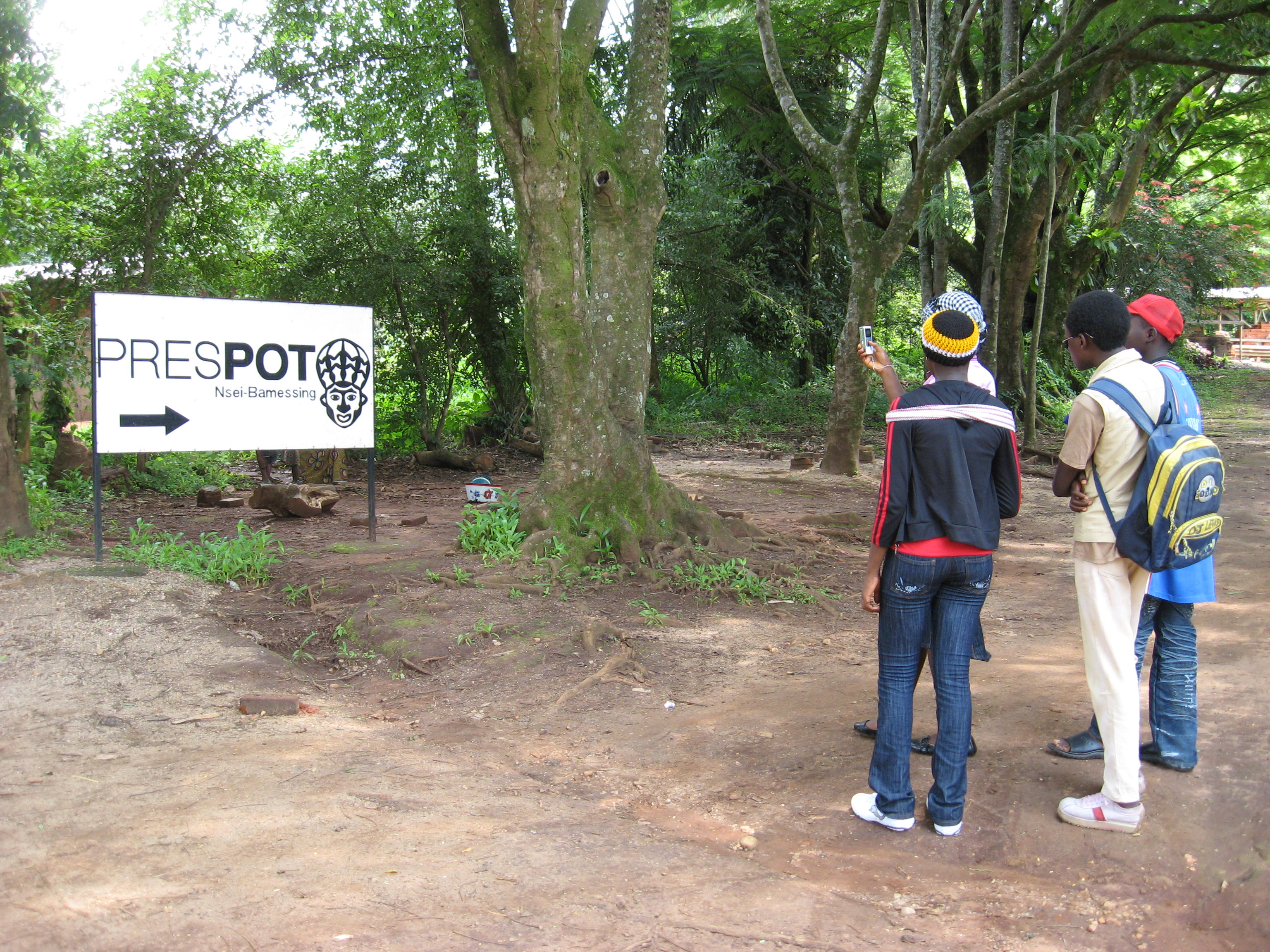
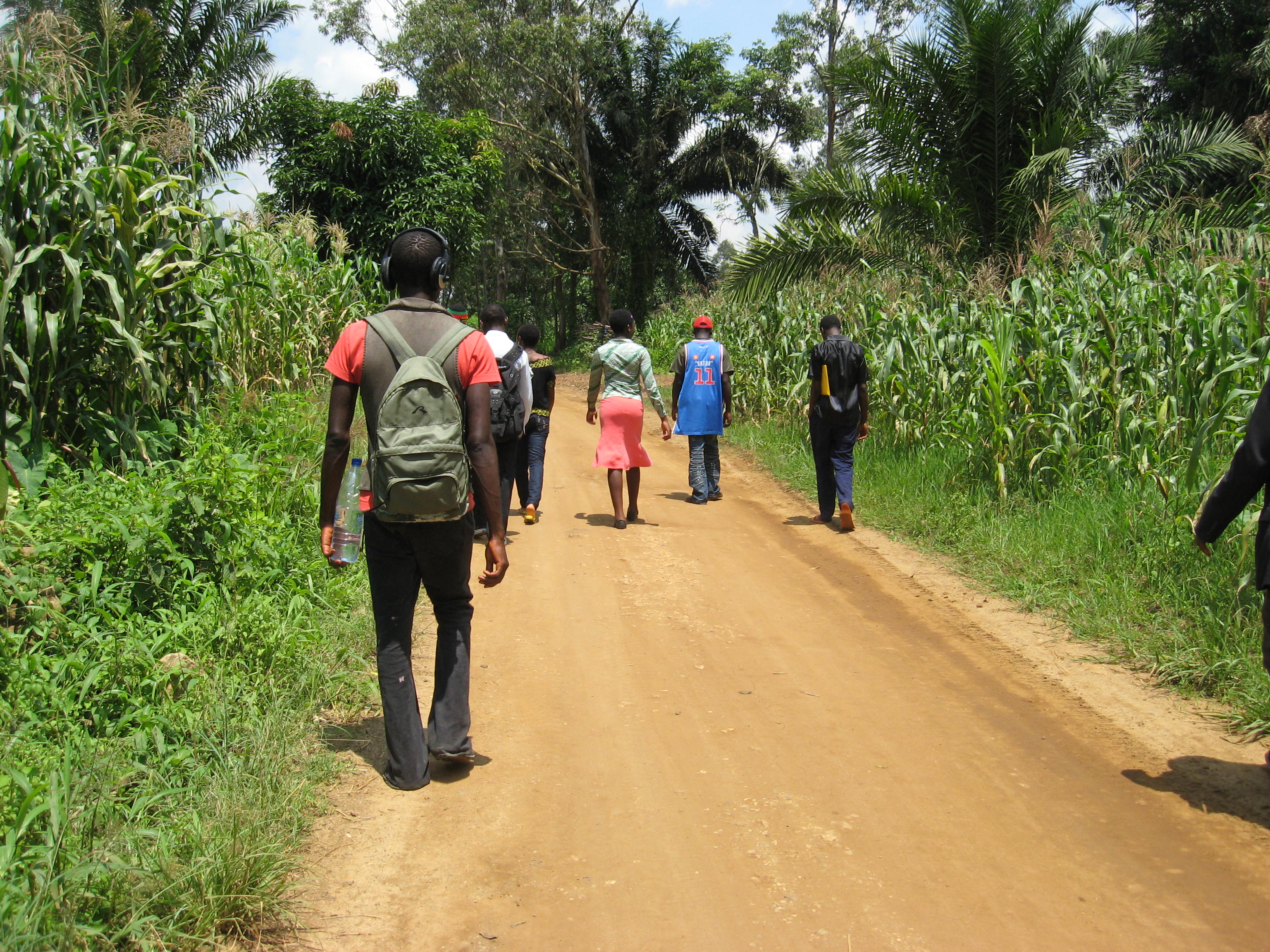
I was with some of the youth participating in the YETAM project, filming at a local craft shop called PresPot. When we’d finished filming, we walked down the road towards the local Fon’s (King’s) Palace to meet another group that was filming there. The plan was to eat our packed lunch together.

There were more people than normal out on the road we were walking on, so it seemed to me that something was up. Then one of the kids pointed down the road to show the reason why.

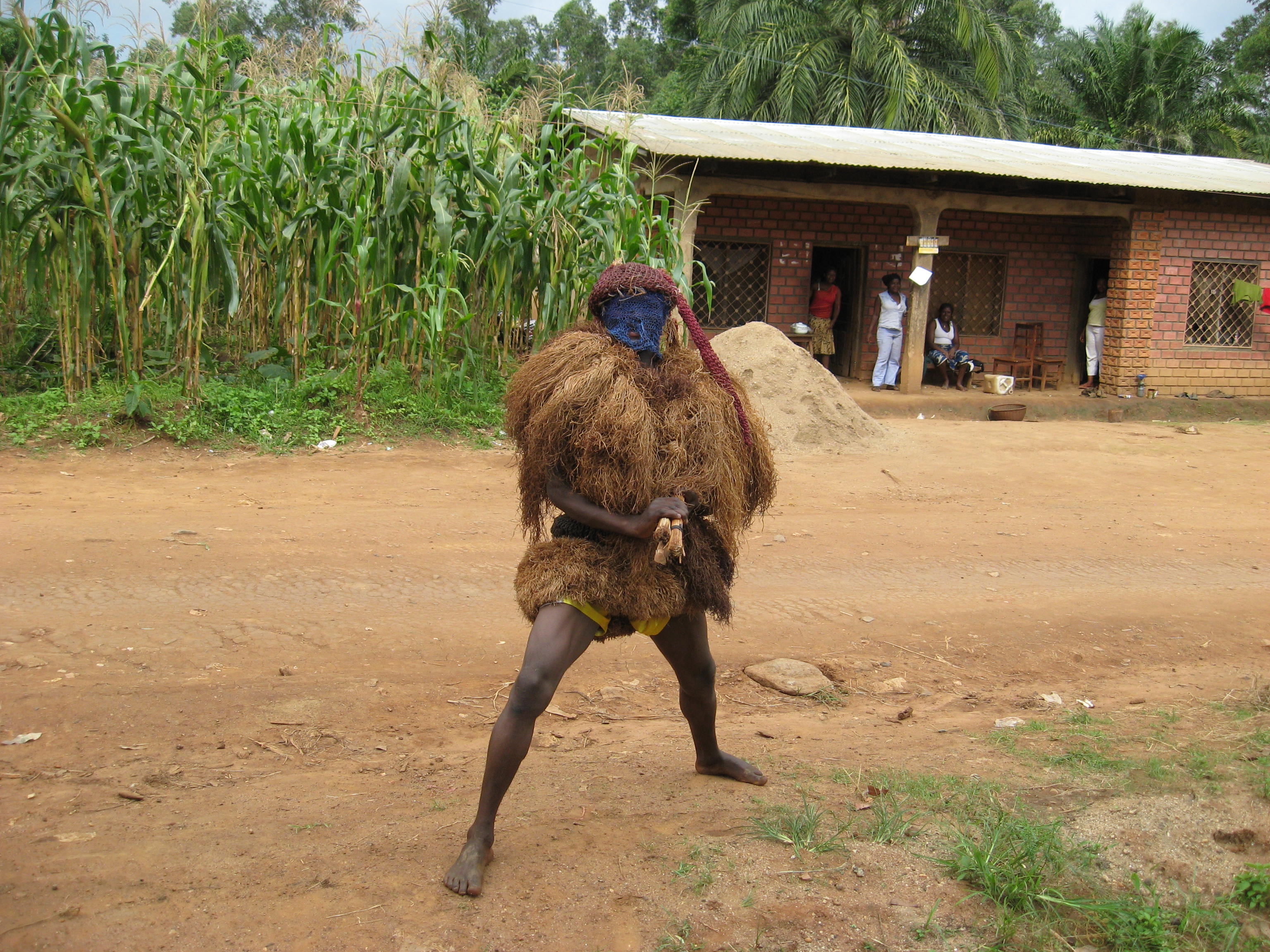
The Ndobo were coming. ‘Ndobo?’ I asked? I could make out what looked like small group of people, some of them dressed in brown grass skirts.

Ndobo

As they got closer, I remembered a blog post (perhaps ScarlettLion’s or maybe a link she posted?) a few months back, where someone had taken shots of people in different places – I think mostly in Africa and in Haiti – wearing similar types of costumes to the ones the Ndobo were wearing. In any case, the Ndobo were definitely something to behold, and since I’d seen that post, they were now sitting within some kind of broader framework for me.

[Update: Thanks to Meghan for her comment below, with this link to the blog post I am referring to with the stunning photos. They are by Phyllis Galembo and on exhibit at the Tang Museum: “These portraits of masqueraders build on Galembo’s work of the past twenty years photographing the rituals and religious culture in Nigeria, Brazil, Cuba, Jamaica and Haiti, as well as the homegrown custom of Halloween in the United States. Organized by Ian Berry, Malloy Curator of the Tang Museum, in collaboration with the artist.”]

‘So what are we supposed to do?’ I asked.  ‘Are the Ndobo scary? Are we supposed to run away? Stay here? Get off the road? Bow down?’

‘Just watch them when they come,’ one of the girls told me. ‘They will ask you for some coins and you just give them some.’ ‘Are we allowed to film?’ I asked. ‘Yes, once you give them some coins they will be happy and you can film.’  I dug around in my bag to find some coins.

There were about 6 Ndobo, all teen-aged boys and young men, and a bunch of excited younger boys with them.  They moved in a way that was part stealth, part walking and part dancing as they approached. Someone played flutes as they moved along.

‘Why are they here? Why today? Who are they? What do they represent?’ I wanted to know. The kids had all kinds of different answers. ‘They come out to announce the corn harvest season is here.’ ‘They are just looking for money, so they make those shirts and clothing at home, and then they become Ndobo.’

‘In my village,’ said one of my co-trainers, ‘only certain of the young men are allowed to be Ndobos.’ ‘No,’ said one of the girls. ‘here any boy who wants to can just make his clothing and go out. My brother, when he became that age, he made that clothing and went out just to get some coins.’ Another of the kids said ‘They come out when there is a town hall meeting to ask for money.’ ‘Ha, it’s an income generation project for the youth,’ said one of the other co-trainers.

Meanwhile the Ndobo were approaching, and everyone was waiting and kind of excited to see what they would do. It was one of those amazing and random moments that make me love life. It was not scheduled purposely so that a white person could see some ‘local traditions’. It was not a tourist show. There were no tables with locals performing for respected visitors. It would have happened regardless of me being there or not. In my line of work, those moments can be rare and I was savoring this one.

We stood off the road in a clearing, and watched the Ndobo arrive, their entourage of overexcited sparkly eyed young boys with them watching us from a distance, flicking their eyes at me regularly. Maybe they wanted to know what I was going to do also, how I was going to react to the Ndobo and vice versa. I wondered also if it was going to be somehow weird because I was there. I was thinking how surreal it was, and how cool their ‘costumes’ were, remembering that blog post about young men in similar dress with photos that seemed to be from some kind of museum exhibit… thinking that this was real life, not a museum…. Then thinking about how in museums things from Africa are often called ‘handicrafts’ or ‘anthropological exhibits’ whereas things from Europe are called art…. Wondering what the difference really is.

The Ndobo  took their stance for a moment in front of us. They were carrying little sticks and whips made of grass and palm. They surrounded us and started lightly thrashing me and my colleague Georges with their sticks and whips in a vaguely threatening way, but not one that caused any fear. The feeling was someplace between theater and in-your-face reality. I found my coins again, and several hands came forward to collect them. The kids with us were watching and laughing, the little boys accompanying the Ndobo were giggling.

After I’d given out my coins I looked behind me and saw that one of the Ndobo had a stick against the back of Georges’ neck and another was holding his grass whip against Georges’ shins. Georges rolled his eyes and dug around to find some coins for them, also laughing. He dropped the coins into the outstretched hands and the Ndobo let him go. One of them stood in front of us to get his picture taken, and then they moved off down the road. We carried on towards the Fon palace.

When we arrived to the Fon palace, the other group of youth asked ‘did you see the Ndobo?! They came here and danced right in front of us! We took pictures and films!’  They were pretty animated too, so I felt less like a silly foreigner, getting excited about seeing ‘local tradition’.

We sat on the steps of the local council’s building and started in on lunch – boiled plantains and koki bean. The rest of the day, all the kids could talk about was the Ndobo. I kept thinking that the Ndobo reminded me of Halloween… harvest time festival, costumes to hide your identity, playing tricks and asking for treats.

I posted a picture of the Ndobo on Twitter. But I hesitated before doing it. A colleague saw it and said something about Africa stereotyping. So she had the same reservations.

I held off on the blog post… but then HSBC came to the rescue.

African Tradition

African Stereotype

African Entrepreneur

It’s interesting how uncomfortable ‘Africa’ can make us. But I guess so can anything, anyone or anyplace that is complex and involves human behavior and culture… I guess you could say the Ndobo are a small piece of a much larger ball of string, just like high heeled shoes, plastic surgery, tattoos and henna, and shaved heads. Ask HSBC.

Read Full Post »

PresPot

While I was in Cameroon last week, I had a chance to go out to film with one of the youth groups. Earlier in the week they had worked together to map out their community and look at local resources, and one of those resources was PresPot, a local business that makes different types of clay products. It’s part of a larger initiative, supported by Presbyterians (get it? PresPot?).

the road to PresPot

The PresPot is a pretty cool place.  It’s located down one of the roads leading off the highway near Ndop, the main town in the area of Bamenda where we were working.

PresPot Manager

The kids had their storyboard and their interview already prepared, and they got going by first asking the manager for permission and his consent to film and do some interviews. They explained that they were not doing a film for commercial purposes but as part of a project they were working on.

The manager gave them an overview of the work area, gave staff permission to be interviewed, and then went through the shop where they sell their things, explaining each product in detail.

Clay waiting to be formed into something

The clay used comes from the area nearby, It’s one of the highest quality clays. A ton of different items are made here out of the clay.

Builds up some nice arm and back muscles

Making zebras for a Noah's Ark

There’s everything from tiny trinkets, carved by hand to big pots using the potters wheel. One guy explained that he was making a lot of Noah’s Arks. He was carving little zebras using a knife.

Spinning by foot and making a pot

I watched another guy spinning a pot. He uses his foot to spin the wheel. He mentioned that PresPot also has a guest house, and that lots of foreigners come to visit and rest there. I asked if they also do pottery classes but he didn’t seem to get what I meant.

(I know some people who would love to go to the beautiful mountains of Ndop, and spend a week learning to throw pottery….)

The workshop gets really warm with the ovens going

After the pieces dry, they are fired.  It was pretty hot in there.

Forming the roof tiles

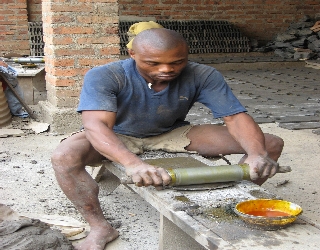
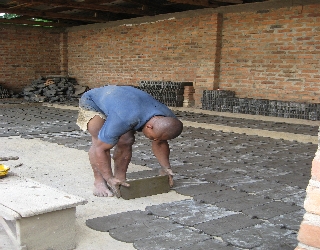
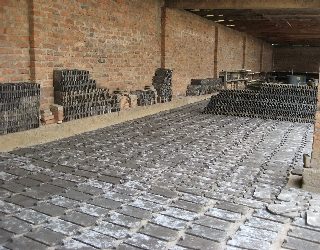
Out back, away from the firing ovens, one guy was making clay roof tiles. He said he makes 150 tile per day and they take 2 days to dry and then they fire them. He works Monday through Saturday.

Laying the tiles to dry

150 per day

Adding final touches

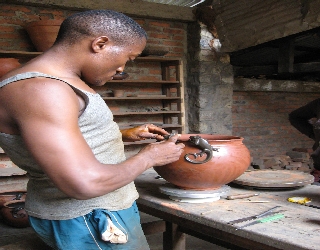
Another guy was adding little figures to the pots that the other guy was spinning. He was using glue to attach them.

and this guy finishes them up

And another one was finishing the pots up.

Final products

the PresPot Shop

The shop has all kinds of clay products as well as products that come from 2 other regions that work with wood and with fibers, bamboo and palm.

There is a shipping area where their items go out to the whole world.

I kept wondering if this little business was really sustainable, or if a Presbyterian NGO or church was supporting and it was barely profitable like many of the little craft businesses I’ve seen people try to fund.

The kids were doing the questioning, not me, and so I didn’t butt in to ask. It does seems like this small business is thriving. It’s nice to see that this exists in the community, and it will be cool to see the kids’ video on it.

I also think it’s interesting that the kids chose to show the PresPot as one of their community resources, but they didn’t mention any of the small business/ market sellers lining the streets of Ndop.

Walking down the main road in Ndop, there are people selling fresh boiled peanuts, roasted corn, and palm wine.  There are mechanic shops, and places to get your hair done and fabric shops. There are corner stores and taxis and bars.  Maybe the kids will do a piece on the market as the project goes on.

If you ever get out to the Bamenda area, I’d suggest checking out PresPot and maybe staying there to kick back for a couple days. Maybe they will teach you to throw some pots….

Read Full Post »

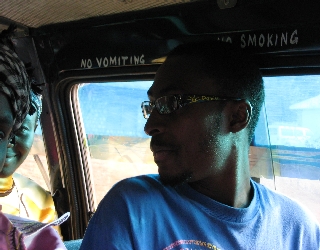
I recently wrote about how difficult I find it to know what the etiquette is when riding in a car with a hired driver. So I was happy to see that the owner of this van, hired to take the youth out to film in Ndop, Cameroon, last week, had the good sense to clearly inform passengers of the rules.

No fighting.

Don't send your head or hands outside.

Sit down when the car is moving.

The driver is not responsible for any unpaid load.

No discussion with the driver when the car is moving.

No vomiting. No smoking.

Read Full Post »

Bafut portraits

I’m traveling for about a month in Cameroon and Kenya with a couple days’ stop off in between in Amsterdam. Yesterday morning I got an email from my mom saying ‘For some funny reason I don’t feel like you are having a great African birthday. I hope I am wrong.’

Moms are funny, that way they can sense things. And when your birthday is on July 4 (US Independence Day) you grow accustomed to a lot of fanfare. I’m not into Americana but I like the familiarity of spending my birthday in humid Indiana summer, eating watermelon, home made potato salad and cook out food, having red-white-and-blue frosted birthday cake with sparklers instead of candles on top, and sitting out in lawn chairs on the grass in the front yard, watching fireworks and slapping mosquitoes…. When I spend my birthday out of the US, I feel like I am missing something more than just my birthday.

The day ended up being very cool though.
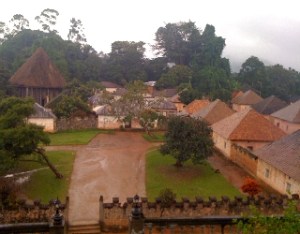
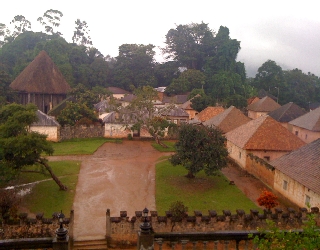
Bafut palace

Instead of eating cake and watching fireworks with my family, I spent the day in the Bafut palace (where the Fon of Bafut lives) with my colleagues Judith and Roland, and with Maa Rose, one of the Fon’s wives. A Fon is a traditional king, and this palace has been around since around 1300 AD. It’s about a 30 minute drive from Bamenda town. (See Fon of Bafut on Wikipedia).

The original palace buildings were made from bamboo and reed, but after the Germans arrived to Bafut, they were reinforced on the outside with burned bricks and tile roofs. The only truly original remaining part of the palace is the sacred place, the Achum (you can see it in the far back left side of the photo).

It was pouring rain when we arrived to the palace grounds. Roland, who was driving us, was in gorgeous all white traditional clothing. He hadn’t been to the Palace before, so he found an umbrella and went with us, holding his white pantlegs up the whole way to avoid getting them all wet and muddy.

Judith is married to a man from Bafut whose grandmother was a Bafut Queen. She was known as the ‘3 time wife of the Fon’ because her first Fon husband died, his son inherited her, he also died, and so his son inherited her and she stayed with him until her death. Judith’s 9 year old daughter is named after this grandmother and insists that she doesn’t want to be the wife of the Fon.

Wooden statue of a Bafut Queen

We arrived late afternoon and Maa Rose came out to meet us. She is the 4th wife of the current Fon, who’s been in power since 1968 when he was about 13. Having several wives is common for a Fon, but the current Fon is a modern kind of guy, educated at the University of Yaounde, and instead of taking 159 wives (or was if 152?) as his father did, he’s settled with 8. He ensures that they all are provided for and get their education.

Maa Rose showed us the old talking drum outside of the palace that calls the village when something important is happening.  She said she would tell us about the Bafut history, and that they worship their ancestors, ‘but we are Christians too.’

She shared the meaning of the waist-high stone pillars scattered around (they mark where the heads of those who have died in battle lie). She took us over to see a pair of large stones where adulterers were punished (they were tied to the stones and pieces of their bodies were chopped off until they expired, and if they were still alive in 7 days, boiling water was poured on them). She explained about the 2 forked sticks planted in the ground (they mark the place where children used to be sacrificed to ward of any deaths as people got crazy during the annual dance celebrations).

Maa Rose said it was the task of the notables (not the common people or prisoners as in some other cultures) to select and give up a child for sacrifice in the name of community safety. This act also allowed a notable to grow in stature. When the Germans came in the late 1800s, ‘they taught us that this was bad, so now goats are killed instead.’ The custom of tying adulterers to the stones has also been discontinued, and now they are simply exiled.

After we saw the exterior of the palace, we went into the courtyard ‘which is set up for our children to play’ and then saw the sacred place, the Achum, where the Fon goes to pray and to do things which are secret. The Achum was erected over a lake and has been there since the beginning of the Fon palace. (We saw pictures from the late 1800’s and the place looks almost the same; the Achum is on the list of the 100 most endangered world cultural heritage sites). Each year on grass-cutting day, everyone in the village gathers grass and makes bundles to repair the roof of the Achum.

After seeing the Achum (only from the outside) we followed Maa Rose through a meeting room. The children who live in the palace were watching a movie, and ‘The First Noel’ Christmas song was playing in the background. Maa Rose told us, ‘In the older times, decisions were only made by men, but now in these times, decisions cannot be made without women too. So this is the room where we meet to make decisions. If there are decisions that must be made without women, the Fon and his notables make them in a secret society.’
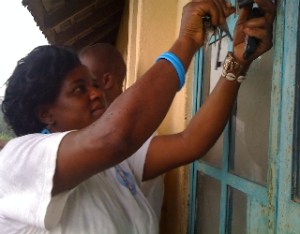
Maa Rose opening up the museum

From there, we visited the Bafut Museum, located in a big mansion that the former Fon lived in. The roof of the mansion was taken off, though, because the ancestors were not happy that he was living there, and he moved back to live in the Palace. The house has been restored and converted into a museum with German funding. Entrance fees are ‘sent to the German coffers’ to keep up the museum up.

Maa Rose took us through museum after hours as a favor to Judith (who has Bafut connections) and said she wasn’t sure how to turn on the lights. Unfortunately I forgot my camera with a flash and had to use my iPhone which doesn’t function well in the dark, plus we weren’t supposed to take photos she later told us.

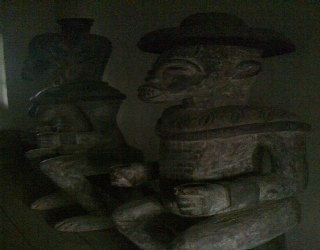
She gave us a full-on explanation for each of the items in the museum, starting with the carved statues of the first German to arrive in Bafut and his wife. The coolest thing about these statues to me is that they represent Germans, but the Germans are dressed and portrayed in old Bafut style — naked and with traditional jewelry and ornaments. Maa Rose said that of course the Germans weren’t naked in those times, and that the Bafut had just carved them in their own style.
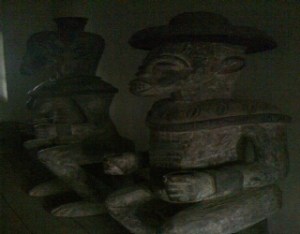
wooden statues of first Germans to arrive to Bafut

We moved along to a carved statue of a Bafut Queen. In the past, said Maa Rose, ‘Our queens were na-ked!’ They wore cowry shells to show that they were a Fon’s wife here, around the waist.’ The cowry shells on the statue dangle in front of the pubic area. ‘Today of course a Fon’s wife is not naked, ha! So if I would wear my cowry there, no one could see them. So we wear them here around the wrist.’

The cowry shells are a sign of Fon royalty.  ‘The Fon, if needed, can turn himself into an animal, like a bull or an elephant, and escape into the bush. You will see his cowry shells though. So if a hunter tries to kill him, he will just bow like this, and you will see the shells, and you will know it is a Fon and you cannot kill him.’

In addition to a lot of amazing wooden statues, rooms with old Fon royalty items, including the last elephant to be killed in the area (over 200 years ago — his foot, tusks and skull are in the museum) we saw a lot of gorgeous masks. ‘Before cameras, if you really loved someone, you could ask someone to make a carving of them.’

In the room made to look like a traditional Fon’s room, there was a bed with a lion skin on it and elephant tusks on the floor. Maa Rose said that before the Germans came, it was tradition that a Fon’s feet could never touch the floor, so he would wake up and stand on top of a person. ‘The Germans taught us that it is not right to treat a human like that, so now the Fon does not do that.’

In the museum there are also weapons that had been given to the different Fons by the Germans who were colonizing, and we heard the story of the Fon’s grandfather (the one who was married to Judith’s husband’s grandmother) who spent 1 year in jail in Limbe for refusing to surrender to the Germans.

There is also a case with some common looking German porcelaine. ‘This is the slavery room,’ Maa Rose told us. ‘It is said that for one of these, you could get two slaves. The Fons did slavery before.’ In the slavery room there are also beaded calabazas and a pair of beaded shoes that are said to have belonged to the first German to arrive to Bafut, and which were given to the Fon. ‘This German wore eye glasses, and people thought they were his actual eyes. He used to take them off and set them down, and the people would work hard there because they thought his eyes were still there, watching them.’

The Fons loved to fight, she said. ‘They would go to fight in the very front with their notables.’ (Wish we had that going on today in more places, things would likely be quite different). We saw the room of a former Fon Queen with all her things. A basket for going to farm, her cooking utensils, her bed. I like the idea of the queens cooking and farming. Judith told me later that the current Fon also has a farm, and he takes his children there with him to farm. The Fon’s current wives, also queens, nowadays have jobs. Maa Rose is a teacher.

We saw statues of ghosts. Maa Rose said that it is believed that the ancestors come to visit the current Fon to tell him what to do or how to behave. When they are upset, they come in a certain form and you know that everything is not OK. The former Fon used to beat his wives, for example. ‘Even the wives that he inherited from his father.’ So the father who was missing (‘we don’t like to say a Fon is ‘dead’ we only say he is missing’) came to tell him to stop beating his wives, and that if he didn’t stop he would be really sorry.  The cane he used to use to beat his wives is there in the museum.

When a Fon goes missing, there will be those wearing a particular mask and dress that go around to all the villages to advise them that something has happened. They will know then that they must go to prepare their things, because when it is announced that the Fon has gone missing, they will not be able to do anything for 2 months. The cannot collect wood or visit their farms. So they have to prepare.

By the time we finished our tour of the dark museum, the sun was setting.  Maa Rose invited us over to her small house within the palace complex to see her handicrafts. ‘Here we sell these small things to buy whatever the Fon can’t buy us, like our little soaps and oils and things.’ I bought a bamboo salt shaker and a wind chime, and paid a small sum for the museum and Maa Rose’s wonderful historical orientation.

She asked us to come meet 7 of her 9 children (the other 2, her eldest girls, are away at university). They were all sitting around the fire, in the small kitchen across from where we’d looked at the handicrafts, getting the oil fried to start cooking their dinner.

The kitchen is cozy and simple, with blackened walls from fire smoke. Some guinea pigs were skittering around in one corner and chickens were roosting in another. In the rafters, above the cooking fire, there were some tiny onions, strung on thin sticks, drying and smoking to be added to food later on.

Maa Rose said that next time we should come much earlier, so that we could share a meal and talk more.  She apologized for the rain and mud and that she couldn’t get the lights on in the museum or in her house so we could see things better.

I left feeling pretty sure that Maa Rose is the most beautiful Queen I’ll ever meet.

Read Full Post »

I wrote last week about Mambe Churchill Nanje and his work with Village Diary in Cameroon. But Village Diary is not Churchill’s whole story. The other part is his company Afrovisiongroup.com and the company he was keeping when we met up for a Malta and some Castels. Photo: Churchill and Steveslil.

AfroVisioN is Churchill’s IT firm, based out of Buea, Cameroon. AfroVisioN helps local businesses build their on-line presence, and aims to help Cameroon in general realize the potential of the web. “I was in the process of trying to get a nice paying job in IT, and someone told me: ‘Don’t get a job, create jobs instead!’ so that’s what I set out to do. I wanted to show people in Cameroon that there is more online than email.”

AfroVisioN invests in research and development to cut down costs of technology to serve the local markets. They provide affordable websites and web solutions, building software packages and automated operations to facilitate management and efficiency.

Although he can’t be more than 24 years old, this is not Churchill’s first venture. In 2006, at age 20 he invested all his time and money in building up a portal to allow students to see their GCE scores online. He purchased the GCE scores from the GCE board and published them for free on a site called passgce.com. The site was promptly shut down by the GCE board. Churchill recognized that there are potential disadvantages to having the scores on the internet (an error in programming logic could show the wrong results or someone could hack into the system and change the results), but that these are easily overcome with standard security measures. He’s sure the site was closed for other reasons. “Imagine building all your hopes on something and it gets shut down….”

Not one to give up, Churchill moved on to doing small IT projects that led him to his current business model at AfroVisioN. “Our market and its people don’t have huge financial backings, but they need technology in order to make their businesses more profitable,” so the business model builds on making a web presence affordable.

But Churchill’s goal doesn’t end there. “I kept wondering, why am I exporting software and my schoolmates and family are exporting cocoa… and not earning any money through their hard work.” So Churchill’s broader goal is to make a name for himself, to earn trust and credibility so that he can attract investment to help others to progress. In addition, he’s looking for ways that IT, especially internet, can be used to gain access to information to improve farms and local businesses so that they can earn more.

As we sipped our drinks and then rode in a crowded taxi from one side of town to the other, Churchill’s friends Steveslil and Peter also talked about their aspirations. Photo: Steveslil, Peter and Churchill.

Steveslil is an up and coming R&B singer – check out his website (powered by AfroVisioN) athttp://www.steveslil.com/flashsite.swf. He was appointed CEO of CoreSouth Records in 2005 and put out his debut album “Play my Tambourine,” fostered by Churchill, who also directed 2 of Steveslil’s videos. Steveslil is now on the BEI (Bebum Entertainment Industry) label out of Washington DC, founded in 2002 by Cameroonian-American businessman Esapa Sebastien.

Peter (@foch4T) studied at university with Churchill and they currently call on each other when there is work to be done on websites or other IT projects. Peter’s dream is to start a tour company to bring people to Cameroon. “Cameroon is the center of the world. It’s the heart of Africa. Here you have every climate, every type of thing that can be found in Africa, but all in one place.” Peter wants to bring people to Cameroon to experience the country’s beauty and culture in the most real way possible, giving them custom made tours.

Some impressive guys, to say the least. And to me, it was most heartening that not one of them talked about wanting to leave Cameroon to try to succeed elsewhere, but rather building up their country’s own potential and their own people.

Read Full Post »

I had a chance to meet with Plan Cameroon’s Program Technical Team today (including those that look at Monitoring and Evaluation, Health, Education, Sponsorship, Child Protection, Water and Sanitation, Gender and the overall Program Support Manager) to give a quick brief on the ICT4D research and training that Plan Finland is supporting with Plan offices in 8 countries in Africa (Mali, Senegal, Cameroon, Ghana, Togo, Mozambique, Kenya and Uganda).

We are working with Hannah Beardon, who wrote Plan’s Mobiles for Development guide (available in both English and French) and building on that towards some more focused and concrete ideas for ICT use in these 8 countries. We’ll share the research with staff during 2-day workshops to brainstorm and gather ideas on information and communications needs, as well as available tools that could be used or adapted to local situations.

The 2-day workshops are planned for Aug and Sept. Hannah, Mika (Plan Finland) and I are developing the methodology and will make a training DVD to send ahead of time to each country (apparently complete with our selves doing presentations!) since we don’t have funding to do face-to-face training. We’ll have a staff person in each country as the main facilitator, and 10-12 key staff, from management to frontline, will attend. Mika or I will beam in by skype to support if needed. We’ll use the Frontline SMS demo video that Mika and crew did also, (see my earlier post about this from a few months ago), show how Nokia Data Gathering Software works, share the Common Craft Social Media videos, among other things. Hannah’s methodology will also come in for thinking about how ICTs could enhance existing efforts.

The idea is to both learn about new tools as well as look at current programs and see if there are ways to use ICTs to improve impact, and how to begin tailoring them to the programs and local settings. We’re also doing research on government policies and how Plan’s work links there. I hope that we can also look at partnering with local developers and ICT4D innovators in each country….

The idea of ICT4D was a bit new to some of the Plan Cameroon staff and not at all new to others. One interesting idea they shared was using SMS in anti-malaria programs to periodically remind people to retreat their bednets. There was some concern about literacy rates if one relies on SMS, and interest in using voice response, but given the number of languages in Cameroon, voice could also be a bit of a challenge. I’ll have to try to find out if/how that’s overcome in other places. Another concern was ‘scamming’ and how to avoid that happening. But it seemed that the issue of scamming is not something that Plan alone would face, but something in general that is faced with mobile phones.

The program support manager was really keen on using mobiles for program monitoring as that is something that can always improve and be more efficient with ICT, he said, and wants to test some ideas. The ICT manager also said he wanted to write something up. The sponsorship manager suggested trying out some data collection or quicker communications tools for linking with community volunteers. And as mentioned earlier, child media and child protection are areas that can be greatly enhanced and supported via ICTs (help lines, SMS incident reporting, social media and mobile reporting).

After the 2-day workshop, we should have something really nice to go forward with.

Read Full Post »
« Newer Posts - Older Posts »