Feeds:
Posts
Comments

Posts Tagged ‘Cameroon’

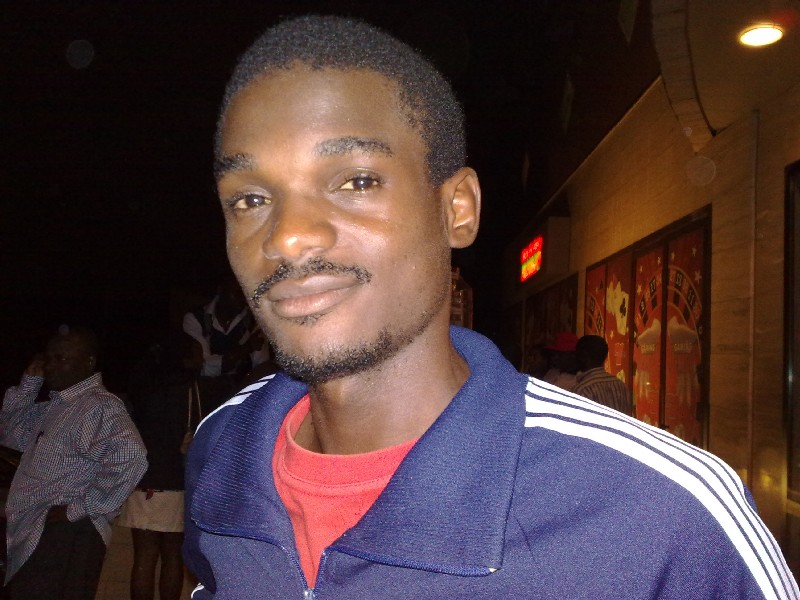
Before I left for Cameroon, I had started doing a little of my own research via blogs and Twitter to learn a bit more about ICT4D in the Cameroonian setting. I wanted to get a feel for what the situation was so I’d be more in tune and also to see if there were any potential partners or people on the ground who I could learn from or link with Plan Cameroon. In the end, I was able to meet with Mambe Churchill Nanje the founder of http://www.afrovisiongroup.com/ and a partner on http://www.villagediary.org/, a project of the LINK-UP development group. Photo: Mambe Churchill Nanje of AfroVisioNgroup.

Since I’m coming from a non-profit and child rights background (at Plan International), and since we are looking into ICT4D as an enabler and facilitator for existing program work, and since much of our work centers on HIV/AIDS, memory books, birth registration, participation and child protection, I especially like the idea behind village diaries. This is some really interesting stuff on several fronts. The mission of the Village Diary project (summarizing from their website here) is “to enhance access to legal, social and health services for orphans, vulnerable children and widows experiencing different forms of abuses. It also serves as a platform to track the cultural and historical background of families and villages.”

By supporting the establishment of marriage licenses, birth certificates and last wills and testaments and providing secure access to digital backups of these documents to authorized case workers, Village Diary aims to alleviate the problems that arise after the death of a leading family member. Village Diary also collects stories by women and children to provide a forum for making change and at the same time offers a window into community life.

Village Diary does this by operating an online database that documents and shares cases of abuse of women and children for education, research and advocacy purposes, establishing institutional partnerships to enhance legal, social and health services and facilitate access of such services to orphans and women, strengthening existing support networks for women in the community, and recording cultural, environmental and historical changes of the people and villages involved in the project.

So on top of being involved in some very cool projects, Churchill is also a very cool guy and it was great to have the chance to hang out with him and a few friends on Saturday in Yaounde. Thanks, Twitter (and ourman, billzimmerman, and downeym!). I’m looking forward to seeing where this guy is in a few years, as he has some fantastic ideas for IT in Cameroon.

Read Full Post »

Mid week the first week of the community youth training, the youth chose what they wanted to do: arts or video/photos, and they split into groups for more focused training. The media group further split into 6 small groups of 4-5 people (one for each set of equipment) to then develop their interviews and ideas for their short films, based on the list of topics that had been created earlier by the youth and community members. The arts group chose topics from the list also to develop out. Photo: Some of the arts group.

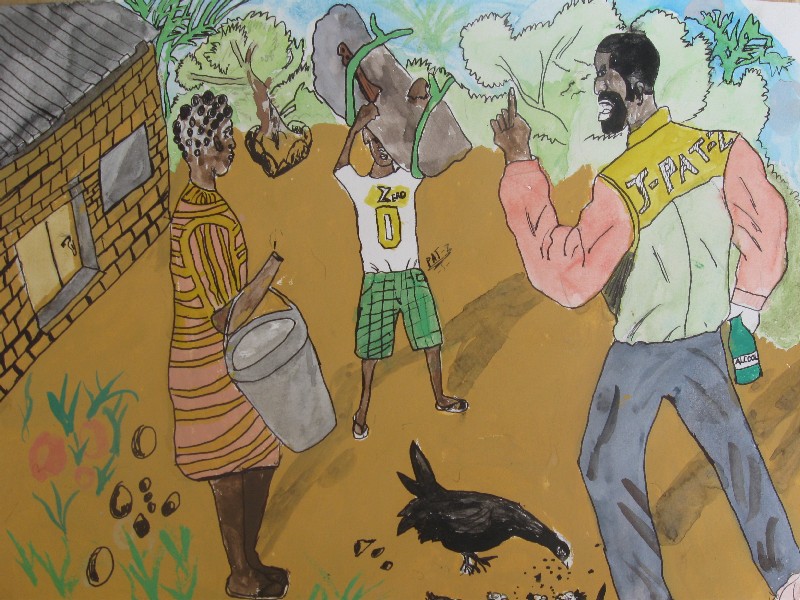
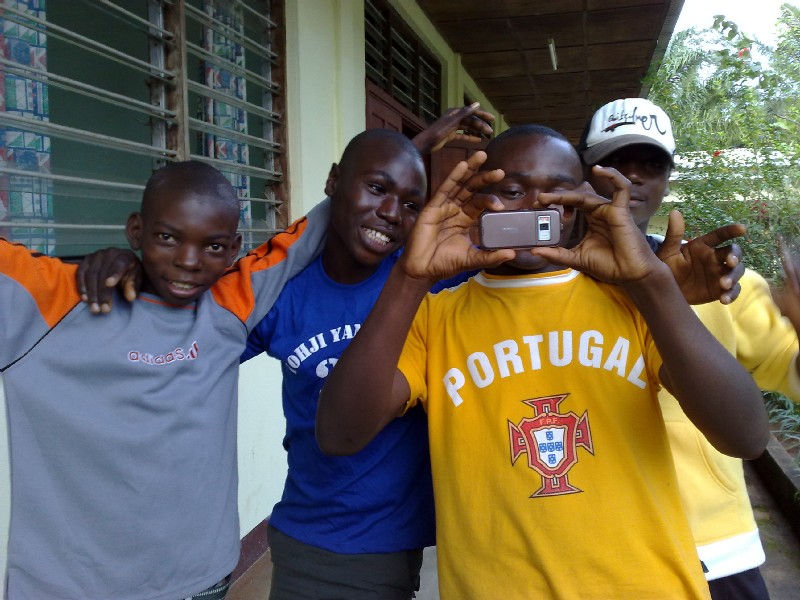
The first Saturday (after 4 days of theory and practice) we did a community field visit to get a better sense of what to film and to make appointments with resource people for interviews. The arts groups did rough sketches of the things they wanted to draw. On Sunday the groups started filming and working more closely on their chosen drawings. We filmed for about 3 days in small groups, and by the 2nd day had some groups stay back to learn editing, then switching and going to film in the afternoons while another group stayed back to edit. The arts group worked in watercolor and gauche to finalize their works. By the end of the week we had 15 films and about 12 really nice drawings! Photo: Filming on Birth Registration

The films that we finished included:

· Meeting Places/Community Resources

· Alcohol Abuse

· A quick trip around the rural areas

· Forest resources

· Universal Birth Registration (and issue of not declaring births)

· History of Mva’a

· Installation of the church in Mva’a

· Water

· How mud houses are constructed

· The market

· Raising pigs

· The long walk to school

· Relationships between parents and children

· Agriculture

The drawings were really powerful, touching on themes that went deeper than the films, due to the nature of the two media. Drawing topics included Alcohol Abuse, A family losing their home to high winds/storms, Church, Long walk to school, Education, Hunting, Distance to health centers, People working on Sundays instead of attending church, Water, People not using latrines, Dangers of transport means, Recreation, Well/water sources, and Child abuse/Child labor

We closed out with a community film showing where the Mayor and community members and parents were invited to see the work of the youth. The youth, teachers and community members worked on an action plan to determine how they will follow up via concrete activities in the coming 6 months. Plan Cameroon is hoping to expand the program to additional communities, so it was important that the Mayor’s office attended as maybe they would have funds to support project expansion….

Read Full Post »

We started the YETAM training with the youth on Tuesday morning, after an official launch. The mayor of Okola attended as well as some of the Plan staff from the Country Office in Yaounde.

Since the youth had already had training via Plan and IRONDEL on the Rights of the Child, and some had worked with Plan’s Kids Waves radio show, they were really well equipped for moving onto video and arts work. They started with their community map where they had detailed, along with the community organization members, everything in their community.

The youth presented the map and everyone worked in groups to organize and flesh out the information from the map in 4 categories: community history, community description, community resources, and the situation of child rights and protection. Photo: youth presenting the map.

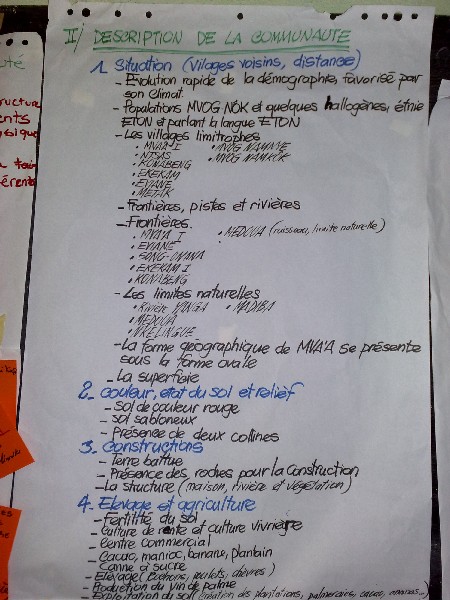
They wrote their ideas on note cards which were posted on flipcharts and then sorted to come up with final categories. These formed the basis for all the upcoming work. Photos: flipcharts with the different topics for filming and arts work.

After the map work, we went into introductions to the different things that we’d be doing: photography, film and drawing/painting. We had a bit of a struggle within the team getting facilitators to move from too much theory onto practical work. They kept going back to presentations and lots of long flipcharts and technical descriptions. Photo: The arts group re-drew a nicer version of the community map later in the week.

We realized later in the week that we didn’t all have the same understanding of the project methodology. Some thought that we were doing 1 week of theory, and 1 week of practice, and then afterwards would start making some videos, when in reality the idea is that we would not focus too much on theory because the media equipment is very simple to use, and we can use practical, hands-on exercises to build the technical skills.

The idea is to quickly get hands on during the first week, and then start making a first round of arts and videos near the end of the first week, continuing through the second week, and then getting into editing by the middle of the 2nd week. In the evenings we’d look at the footage as a whole group, and participants would talk about what looked good, what didn’t and how to improve. Once that got cleared up things moved on splendidly. Photo: Practice and group reflection is the best teacher.

Read Full Post »

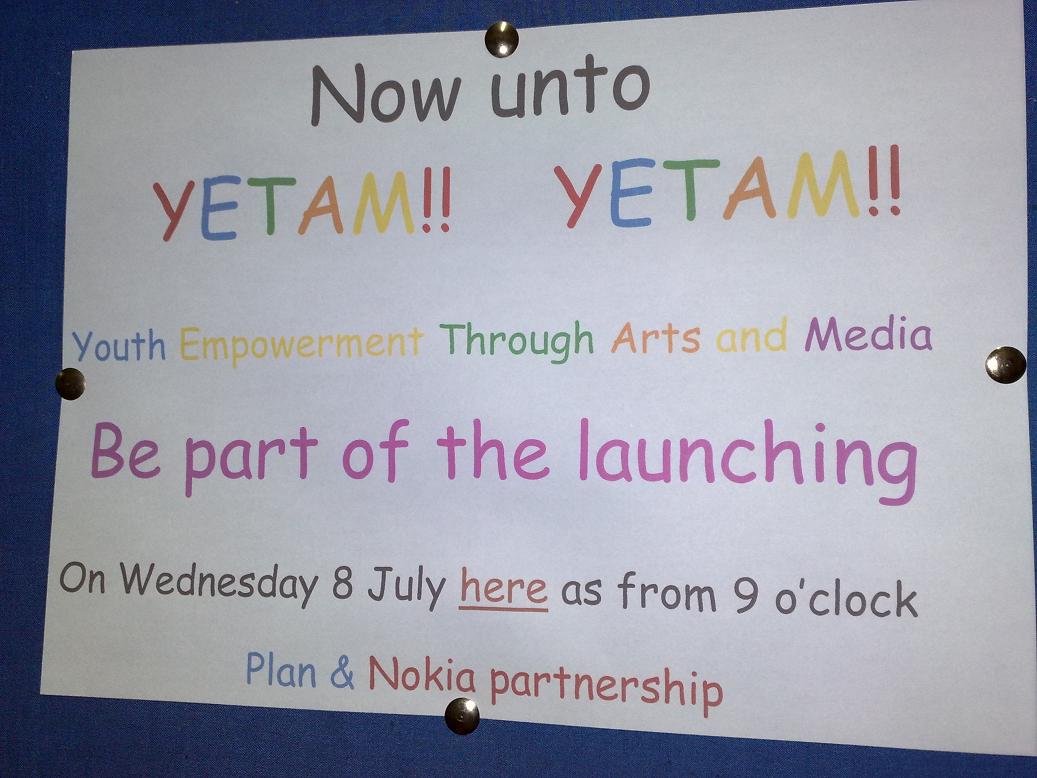
The Youth Empowerment through Arts and Media project (YETAM) kicked off on Wednesday with a press event, and then a training of trainers until Friday. At the press launch, I had to give an overview of social media and the YETAM project. The focus was on how social media can serve as a tool for community development, social change and augmenting participation, because it is based on some of the same principles and approaches as good community development work: partnership, ownership, collaboration, sharing, openness, communication, voice, power sharing, accountability, transparency, and democratic processes. I was bit afraid to use any examples of human rights/election monitoring or mention how social media is forcing the media business to change and impacting on social ‘revolutions’, not knowing if it could be threatening to the government and media attending, so it seemed better not to bring it up! Photo: YETAM launch announcement hanging in the lobby at Plan Cameroon.

For me the most interesting part of the 3-day workshop was listening to the participants debate about whether arts/media are tools or products. People said that they really learned something from the debate, that it really sparked their thinking about what is art and what is media and what both are for. They concluded (as I had hoped) that arts and media can be tools that help youth (in our case) research and deepen their understanding of themselves and their communities during the creation process. Yet arts and media are also products that are ‘consumed’ afterwards, catalyzing more debate and dialogue (sometimes via more arts and media) and if successful, eventually lead to some kind of positive social change. And the cycle goes around and around. Photo: Press event for the closing of the training of trainers.

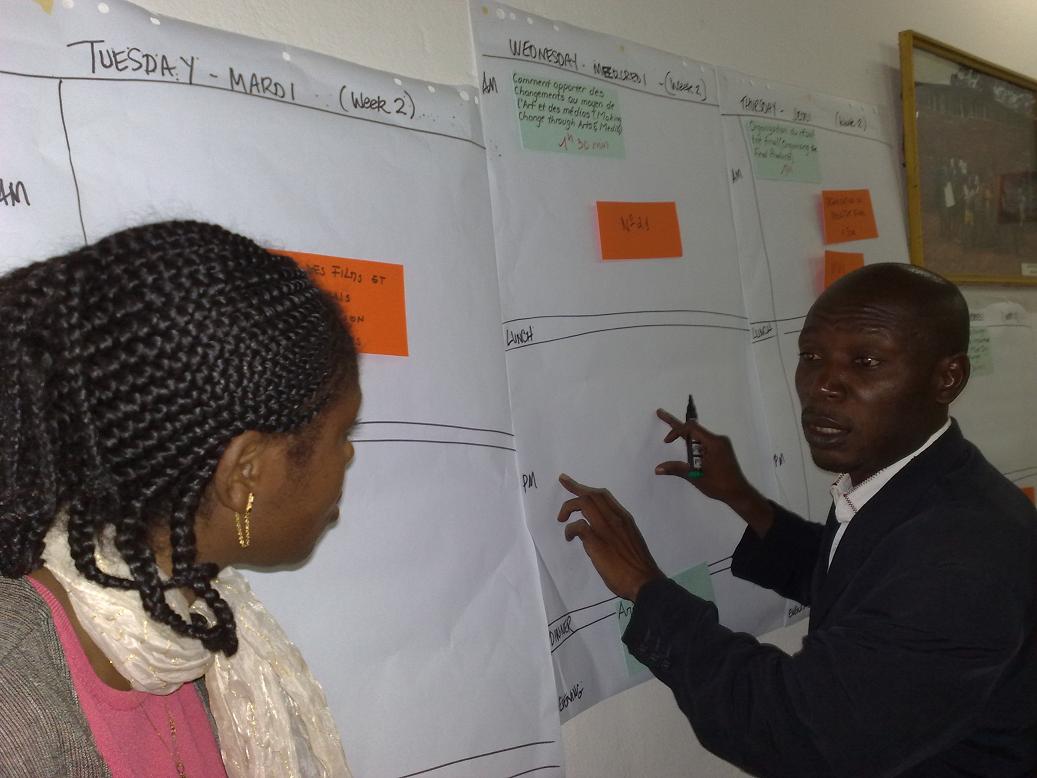
The idea of tool vs product can be a struggle sometimes when we start work on YETAM and the concept of participatory video or social media for social change and working with rural communities. Sometimes people think that we want fancy commercials or television spots or 30 minute professional documentaries or fiction films, or they don’t believe children/youth will have the capacity to make their own videos or edit their own films, or that people from rural communities can learn to use the equipment. It can be hard to explain that we don’t need to write long scripts and set up scenes with lights and big media teams with large expensive cameras, and that if we bring the technology down to simple language and hand over the camera, it’s very doable. We don’t need a week of theory before we allow the kids to touch the cameras or to paint something, that the media and the art are the means for having the discussions and theorizing about the issues as well as the end for continuing on with the discussions. And we don’t need to disrupt the community and or have ‘outsiders’ doing it for the media or art to matter. Local people can make their own media and it can be even more meaningful that way. Photo: Plan and partner staff working on the agenda for the youth training that starts on Monday.

Read Full Post »

« Newer Posts