Feeds:
Posts
Comments

Archive for the ‘accountability’ Category

the giant and unsinkable ship....

It seems like so long ago that the aid and development blogosphere was up in arms about Jason Sadler’s One Million Shirts initiative. Unfortunately the 60-year-old aid and development giant, World Vision USA, is engaged in a similar effort – the donation of 100,000 NFL t-shirts to 4 countries. This is something World Vision USA has been doing for the past 15 years, even though the benefits of this type of program are very questionable in terms of whether they actually contribute effectively to World Vision’s overall vision and mission. Several aid workers have called them out on this; you can see the list of posts here. Talesfromthehood has given some recommendations on what would need to happen to move things forward and stop this kind of ‘bad aid.’

A day or so after the peak of the 1 million shirts outrage last May, I wrote the post below, titled “The elephant in the room“. Most of it is still valid, so I’m re-posting it. Maybe next year, around this time, I could post something that indicates that NGOs and the aid and development community in general are moving forward on some of these items.

Though there are some pretty interesting things happening in the aid and development world (for example, the “Smart Aid” initiative) and some circles that are focusing on aid transparency and related aid practice improvements (some of the folks leading these efforts are listed in the post below), it still feels like we are in much the same place we were last year. Shifting the course of the giant aid machine is very slow work.

The elephant in the room, from May 2, 2010

One of the best things about the Great Tshirt Debate has been the variety of voices and perspectives that are weighing in.  This one potentially misguided project was able to catalyze a huge discussion on the nature of ‘aid’.  Once again the power of social media to engage people in debate and dialogue was demonstrated.

There are a lot of angles to follow up on from last week’s blow up. There’s a lot to unpack and it goes much deeper than a conversation about t-shirts.  One thread I find particularly interesting is the use of social media and ICTs (information and communication technologies) for bringing greater accountability and generating input and dialogue around ideas for aid and development.

Christopher FabianOwen Barder and @Morealtitude wrote about this specifically in relation to the Tshirt Debate; and Duncan GreeneOwen BarderAidwatch,  Tim Ogden, and others in a broader debate about accountability, aid and development. Certainly there are many posts and discussions out there on this topic.

Some things that stand out for me in the aftermath of the tshirt discussion:

Broadening perspectives.

It’s easy to forget that we all mean something different when we use the terms ‘aid’ and ‘development.’ There is a big difference between emergency aid and longer-term development.  And there are countless theories and approaches and understandings of both of those terms  (Alanna Shaikh and Talesfromthehood have both written on that).  This was really apparent throughout the discussion last week and in the on-going commentary.

I’m still trying to sort out in my own mind the difference between the various aid and development theories, the perspectives of the ‘aid bloggers’ that I follow, and the frameworks of other people who were involved in the Tshirt Debate. People’s views are intimately linked with cultural, political, economic and religious worldviews, and varying levels of snark (which I have to say can be very intimidating) making it even more interesting.  Before Twitter and the blogosphere, I certainly didn’t have daily exposure and access to such an array of thoughts.  Score one for social media.

The elephant in the room.

All this access to all these perspectives and on-line debate and open participation is great for me. And for you. Because we read English and have access to the internet.

But there is a really big elephant in the room.  One that was lurking on the global conference call hosted by Mobile Active on April 30 and that is still standing around quietly as the discussions continue.  I’m talking about the voices and perspectives of the people that the 1millionshirts project was aimed at helping.

I would bet money that some of those voices would have said “I want a tshirt.”

There are a lot of possible outcomes when ‘beneficiaries’ and ‘donors’ actually talk to each other.  Like donors wanting to give t-shirts and people wanting to receive them.  Then what?  Most of those involved in aid and development and work with local economies can and have listed a myriad of reasons why handouts are not a good idea, but most also believe in listening to voices of ‘beneficiaries.’   It seems paternalistic to say that NGOs or businesspeople know best what people need.  What will happen when more donors and beneficiaries are using social media to talk to one another?  And what if NGOs or governments or business people trying to improve ‘developing country’ economies don’t agree?  Then what?  That’s going to be pretty interesting. For a taste of this can of worms, read this post and related comments.

Development education.

This brings me to thinking about the educational processes that contribute to good development results.  Around the world, people have been presented with hand-out and silver bullet ideas around development and aid for a long time. Donors need to be educated about effective aid and development, but communities do also.  People have been trained to gravitate towards one-off donations and charity mentalities, and need to learn why that isn’t actually very helpful in the long term. They’ve been taught that there is a silver bullet we just need to find. People have also been trained to take hand outs and see themselves as victims and need to re-learn how to take the reins and do for themselves.  This is true everywhere – people look for the easy way out. Consider how many people in the US for example prefer to get plastic surgery or take miracle diet pills and medications over adopting healthier lifestyles involving a good diet and exercise.  Complicated situations require integrated approaches and often need cultural shifts and behavior changes.  Those take time and effort and are hard to explain.  How does social media impact on or shift this in terms of aid and development, and in which direction is it shifting?

Barriers to social media participation.

Both #1millionshirts and Kiva were held up to a huge amount of scrutiny online via social media.  But again, who was scrutinizing, and who had access to the tools and means to participate in these widespread discussions?  It was not the people getting loans from Kiva or the eventual t-shirt wearers.  It was donors and ‘experts’.  I would hope that there are plenty of discussions happening about Kiva programs at local levels, in person, in meetings and in local media or newspapers. But these don’t normally make their way to the internet.

I don’t know Kiva’s programs well, but I would also hope that Kiva staff and/or partners, for example, are listening to that local input and using it to improve their programs on the ground to make them more useful to participants.  And I would hope that those discussions take place within a longer term education, training and relationship building process as with many NGOs.  This kind of input from and dialogue with program participants is every bit as important for adapting and improving programs and initiatives, and maybe more important, than all the public discussions on the internet…. as long as it’s being listened to and responded to, and as long as local offices are taking these messages up the chain within the organization, and as long as local offices also are being listened to and carry weight within the organization. What might be the role of social media there to move those offline discussions further within organizations and to educate, inform and engage the broader public and ensure that responses and changes are forthcoming and everyone learns from it?

There are still huge barriers to social media participation for many people in communities all over the world… not having electricity, computers, smart phones and internet, to start with. There are also barriers like language, literacy, age and gender based discrimination, hierarchies and cultural norms that limit participation in general by particular groups in discussions and decision making.  When working face-to-face, good organizations are in tune with the barriers and find ways to gather input from those typically left out of the discussion.  How can organizations use what they know about engaging more marginalized populations and apply it to a more creative use of social media to ensure that all voices are heard?  What resources and ICT tools would be needed to do that effectively?

Offline to Online to Offline

And how could more of the discussions that happen on the ground with communities, when programs are being designed, implemented, evaluated and re-designed; be shared in the open by those who are involved – whether participants, local bloggers, citizen journalists, NGO workers or others?  And how can the debates happening online make their way back to communities that are not connected? It would be amazing if more program staff and community workers were blogging and sharing their work and their challenges and accomplishments.  And if more organizational decision makers were listening to what their community workers or other staff who are blogging and tweeting are saying. And if more people participating in programs could share their viewpoints via the internet.  This would be useful to the global commons and would also help the fields of aid and development to improve.

How can we support more communities to have access to social media and ICTs as tools to participate more broadly? And how can community members be the owners and drivers of this discussion and input. How can we help bring voices from the grassroots to a broader public and also bring these broader public debates back to communities.  How can the access, language, literacy and cultural barriers be addressed?  There are some programs out there doing this, for example Global Voices RisingMIT’s Department of Play at the Center for Future Civic Media, and the Manenoplatform, but we really need more of it.

Youth.

I think as connectivity becomes less of a challenge, we will see the younger generation claiming spaces in this way. More organizations should be working to engage more young people in the development process and supporting them to access ICTs and social media.  When a consultation with children and youth was done after the Haiti earthquakes, for example, young people did not say that they wanted hand outs.  They said that they wanted to participate. They wanted to play a stronger role in the recovery and the reconstruction.  They said they wanted education, a voice in how things were to be done, decentralization.

Staff that I’ve worked with on youth and ICT programs in several countries have said that ICTs and community media are excellent tools for engaging youth in the development process and maintaining their interest, for supporting youth-led research and collecting opinions about community processes.  With advances in technology, these voices can reach a much broader and public audience and can be pulled into donor communications as well as used as input in the resource and problem analysis, program design,  program monitoring and evaluation processes.  Youth can access information previously unavailable to them which broadens their own views and helps in their education processes. They can also contribute information and images of themselves and their communities to the online pool of resources so that they are portraying themselves to the world in their own image as opposed to being shown by and through the eyes of outsiders.

In addition to the Tshirt Debate stirring up questions about good donorship, I really hope it stirs up the debate about the value of more local ‘beneficiary’ voices in aid and development discussions, and that it fuels more efforts to use, adapt, and develop social media tools and ICTs to support these voices to join the debate.

What about you?  What do you think?

Related posts on Wait… What?

Children and young people’s vision for a new Haiti

It’s not a black and white photo

Meeting in the Middle

Mind the gap

Putting Cumbana on the map: with ethics

Read Full Post »

In the past couple years, social media combined with traditional media has allowed people all over the world to feel they are supporting and participating in very visible revolutions (think Iran, Tunisia, Egypt). There is also a slow and steady revolution happening as more and more communities around the world access the tools to tell their own stories in their own words from their own perspectives.

I came across the Mathare Valley blog this weekend. It’s beautiful, artful and powerful.

Prayer of a slum dweller from the Mathare Valley blog

According to the ‘about’ page, the authors of the blog:  Simon Kokoyo, Ivyonne Tiany and Jeff Mohamed, grew up in or around Mathare. They are now involved in community programs there, including the Map Mathare Initiative.

Jamie Lundine, who works at MapKibera and who’s supporting some community mapping in Mathare, wrote an excellent post about integrating participatory community development work and digital mapping in Mathare, showing how development and tech folks can combine their expertise and work together with communities to strengthen local development processes.

In my last post, I wrote about how communications (and ICTs) should be ‘built in, not bolted on‘ to development initiatives. The Mathare Initiative looks like a good example of that, with community members taking a strong lead.

Read Full Post »

I was in a global strategy meeting at the organization where I work last week. We had people from various disciplines present from across the organization and the goal was to chart a path to 2015 and beyond.

For the first couple days it seemed like a lot of talk and a lot more talk. We had very bright, very capable people representing different aspects of our work in the room. This can make things quite messy and tiring, and it can feel like everyone is talking in circles because there are so many perspectives and angles and factors that need to be considered in finding shared ground. Sometimes we are so participatory and complicated that we get in our own way. But by the 3rd and final day the perspectives had come together into a much clearer view of where the organization is headed, and we had the beginnings of a shared plan for how to get there.

We worked in a few main groups, and I participated in the Communications group. Much of our discussion centered around integrating better communication in all aspects of our work rather than seeing the role of Communications (and the Comms Team) as designing one-way messages out to the public. One colleague described this as ensuring ‘built in’ rather than ‘bolted on’ communications.

For me the discussions and end decisions were great, because there was a shared push in the group to move the organization towards things that I think are very important.

Some of the aspects we talked about included:

Communicating within programs

  • the critical role of Communications within programs – eg., Communications shouldn’t only happen at the end of a program (press releases, events or media work to share what was done); rather communication is a critical tool within programs to help reach program and development goals at various levels
  • the role of information and communications tools (new and old ones, high and low tech) at the community level to improve impact, efficiency, reach, engagement, decision-making, transparency and accountability
  • the need to strengthen our ability to better integrate information and communication tools into program efforts, measure the impact of different tools and efforts, and share experiences around this
Communicating with ‘the public’ (our ‘stakeholders’)
  • ensuring consistency in what we do and how we talk about what we do
  • space for children and young people to tell their own stories both behind the camera and in front of the camera, as producers of media not as objects of or consumers of media
  • reaching people through the ‘heart’ (which we are quite good at) as well as the ‘head’ (which we need to get better at)
  • communicating evidence of impact as well as anecdotal and personal stories
  • using different information and communication tools to communicate at varying levels of complexity and technicality to different ‘audiences’
  • using various kinds of media to tell a deeper and more complex story than is currently told
  • finding the sweet spot between a) talking to ourselves in boring technical language and b) over-simplifying or ‘dumbing down’ the complexity of people’s lives and the work that we’re involved in
  • having a strong and unified global goal so that each team or office can move towards that shared goal, but allowing the flexibility to take the path that makes the most sense locally
  • good communication at every level — community, district, national, global, ‘North’ and ‘South’, internal and external, networked — to involve people (including ‘beneficiaries’, ‘supporters’, ‘advocates’ and any other ‘stakeholder’) in community development work and in achieving child rights
  • opening the channels and lessening hierarchical controls on communications so that staff can feel more confident about communicating and using social media both internally and externally
  • using a combination of communication channels to reach our goals; eg., community radio enhanced by SMS; television programs enhanced by use of web and vice versa
  • new communications technology to facilitate connections among the network of people we reach (the ‘participants’ and the ‘supporters’ and all those in between)
Communicating for decision-making and accountability
  • the role of communications in knowledge sharing and knowledge management, internally and externally
  • creating better feedback and accountability loops to enable communities and the children and youth that we work with to have more of a say about the work we are doing and how we talk about it
  • using new technology to better organize, share and use the information that we already have, both internally and externally
  • using info-graphics to visualize information so that we can make better decisions about programs and to be more accountable to the public and to program participants
Even more important than ‘talking about’ the topics above, we worked on plans to actually do them…!
Note: this is not an official meeting report but rather my own take-aways from the workshop.

Read Full Post »

My experience trying to get to and from beautiful and restful Costa Rica for a family holiday using Orbitz has been entirely depressing. Flying these days is akin to trudging across a barren desert full of rattlesnakes and mirages, only made mentally and emotionally possible by holding firmly in your mind the hope that you might finally reach your destination. It didn’t used to be this way.

What used to be the ‘friendly skies’ is now more commonly referred to by most of my peers and colleagues as ‘airport purgatory’. I can remember back when you were treated like a paying customer. Nowadays once you enter airport purgatory you’re treated like a potential criminal/potential terrorist and a burden that needs to be schlepped from one side of the world to the other as cheaply as possible without much regard to your own comfort. It’s sad. If I could get to where I need to go by horseback, train, bus, bicycle, boat or foot in a reasonable time I certainly would.

Before entering airport purgatory, you have to spend some time in the ‘antechamber of airport purgatory’: purchasing tickets. Oftentimes, due to weather or some other issue, you have to make changes to the ticket, and you go swiftly from the antechamber, to airport purgatory, to full on travel hell where you have to deal with ‘customer service’. You wish you could stab yourself in the eyes with a corkscrew rather than be held there listening to hideous music, pre-recorded messages, attempts to up-sell you something, and travel hell agents who don’t really help you with anything.

For the past 10 years or so, I’ve allowed Orbitz to guide me through the antechamber of airport purgatory. I’ve gotten my tickets through them. It’s been fine as long as nothing out of the ordinary happens — eg, if the weather is fine, there are no delays, plans don’t change, and I don’t miss any connections. Unfortunately, things out of the ordinary do happen, and increasingly it seems I’m spending a lot of time with Orbitz in travel hell. That’s what happened on this last trip.

I can only remember 2 other instances that I’ve felt as dis-empowered and pent-up angry as I did when dealing with Orbitz this time around:  1) when visiting someone in prison and 2) when working with immigration officials in a country under a military dictatorship. (Coming in a close third is being on the phone with Dell’s customer service about a faulty computer….)

This recent experience in full on travel hell with Orbitz, combined with lesser annoyances throughout the past couple years has me so totally done with the airline system and its intermediaries that I do anything in my power not to fly. Unfortunately that impacts on my ability to do my job so I’m not always successful at avoiding it. Not even the environmental movement has been able to move me as emotionally far towards flight avoidance as the airline system and all its corollary parts.

Since I’m still really pissed off at being royally screwed by Orbitz, I thought I’d write down a few things that I wish I had done to avoid the pain of travel booking with them. I just sent off a long email to Orbitz and will be contacting them on paper too, so I will spare you the details. It’s probably not productive anyway to re-hash it all. I’d rather try to make something positive out of this to add this to my ‘Travel Tips for my Female Friends‘ post as an additional tip from someone who spends a lot of time traveling and arranging travel logistics.

The problem with Orbitz:

1) Orbitz doesn’t seem to keep any record of their interactions with customers. This means that every time you call, you have to re-explain your whole story. I used to work in customer service and we had a system where we stored notes and details on each call so that if a person called a second or third time, there was a record on file and anyone on the team could help. I’m blown away that each time I called Orbitz, they said they had no record of anything and I had to start over explaining from zero.

2) Orbitz treats the customer as if the customer is always wrong. They try to make it seem as if they are actually helping you on the phone, when in actuality you could do the same thing for yourself by calling the airlines directly. In the process, they keep saying they are ‘very sorry’ but never actually resolve anything for you. If you press them, they actually become rude. When I worked in customer service, and even back in high school when I was working retail at the mall, we were not allowed to deal in a less than friendly way with customers unless they were yelling or swearing at us. It’s bad for business. We were trained to be calm and polite. Not the case with Orbitz. I was not yelling or swearing or being unreasonable, and I spent no less than 14 hours on the phone with them in the past few months trying to resolve different aspects of the same tickets (not to mention time on emails, time wasted in airports and the night my kids and I slept on the cold floor at the entrance of the San Jose airport). That plus the fact that I have had an Orbitz account for over 10 years and I book tickets through them several times a year should flag me as a customer to treat with care. Apparently none of that matters to Orbitz. They were still rude to me.

Prepare for my trip? You mean the one that was cancelled back in October?

3) Orbitz’ systems are not synced with what is actually happening with your tickets and the airlines. With this one trip from Boston to Costa Rica, lack of synchronization caused me major problems and ended up quadrupling the cost of my trip – something I was not prepared for but didn’t have any way around by the time I was stuck with 2 kids in San Jose on New Year’s Day. First, I was informed by automated email repeatedly in August and September that my tickets were being refunded due to an airline going out of business. Each time I called customer service about it I was told that only one leg of my trip was being cancelled and refunded and not to be concerned with the other portion, it was still good. I was advised to purchase a one-way ticket to make up for the portion from the airlines that went bankrupt. This in the end was not true, the round trip ticket had actually been cancelled and refunded, and I ended up with the 3 one-way return tickets I had purchased and no outbound flights [Note: this happened while the tickets were under the auspices of http://www.cheaptickets.com. I found out, after going up the ‘customer service’ ladder and being referred over to Orbitz, they are owned by and share ‘customer service’ with Orbitz]. Orbitz subsequently seemed to get this all worked out. But then they continued to send “Prepare for your Trip” emails for cancelled tickets on the same flight path, same date and same airline as my valid tickets, causing confusion over what our actual flight time was. Due to this confusion, we showed up at the airport for a flight that had been cancelled and refunded months ago instead of for the earlier flight we were supposed to be on, and Orbitz was not willing to do anything to help us get on another flight unless we bore the total cost and waited up to 3 days for available flights on the original airline.

My recommendations of how to avoid getting screwed by Orbitz:

1) Don’t ever try to fix anything via Orbitz after you buy your ticket. You will call Orbitz expecting them to help you since you paid them a fee already for booking. They will put you on hold and call the airline and tell you the same thing the airline would. Sometimes the airline can actually do something for you that Orbitz can’t. So just book directly with the airline and deal with the airline directly. You may not get any better service but at least you are working directly with the company not an intermediary. Don’t bother with Orbitz. Be sure to have the international number of the airline with you when you travel.

2) Use Orbitz to find flights but never book via Orbitz. Once you book, Orbitz will pass everything over to the airline anyway, but then the airline can blame Orbitz for screw ups, Orbitz blames the airline, and you get stuck in the middle. It’s probably better to deal directly with the airlines as they have more information anyway about their own flights, and may want to retain you as a customer.

3) Just skip Orbitz altogether and find flights on Kayak, then book directly with the airline or via a real live travel agent in your area who you can hold accountable. Pay the travel agent the $30 instead of Orbitz. You’ll be helping the local economy and you know who they are when things go screwy. It kills me to say that since I do everything online and it’s so easy to find a ticket and click “purchase” but I’m realizing it’s worth the extra time at the beginning to save the time and increased costs later.

4) If you ever have a question or a claim for Orbitz, talk to them by chat and save a copy of the chat session. Then when they tell you something different each time, you can let them know that you actually have a copy of what was discussed as backup, and that you’re happy to share it with them to prove your point. This has gotten me further than working by phone where you have no way to keep a record of what they are telling you.

In the end, air travel will probably continue to be some variation of hell. The ticket wars are heating up lately as Delta and American Airlines are pulling their flights off of sites like Orbitz, and Expedia has fought back by allegedly making American flights difficult to find on their site.  They all purport to be ‘thinking of consumers,’ but that seems like a load of bull to me. They are thinking of their own piece of the pie. Maybe they could think about offering a decent experience to travelers and drawing in customers that way?

In 2011, I predict that purchasing airline tickets and getting to your destination will continue to suck. But maybe you can make it a little better by taking a few of the precautionary steps above.

Update: Ahhh, wonderful response from Orbitz to my lengthy email and a generous $50 voucher for my troubles. They say that I contacted the airlines directly (not true) and that “Orbitz was never notified of these cancellations, and therefore, was unaware.” That’s funny, considering the email below:

Uh huh... "Orbitz was never notified of these cancellations, and therefore, was unaware."

Update #2: Ah lovely lovely Orbitz. After appearing that they were going to help me and getting my hopes up, they’ve come back now and “for my confusion” they are giving me three $100 vouchers to use on, yes you guessed it, Orbitz. They “deeply regret each of my disappointing experiences.” I feel oh so much better. Not.

Related post on Wait… What?

Travel tips for my female friends

Read Full Post »

I spent a few days in Nairobi early last week with our education and our ICT staff from Ghana, Uganda, Senegal, Mozambique, Kenya, Egypt and a few other folks, including the brilliant Mika Valitalo from our Finnish office and people from regional and headquarters levels. We were looking at goals and challenges in our education programs and thinking about where ICTs might play a role.

The process was really interesting. Starting a few months back, each country shared their education context analysis onto a wiki. In a second round they narrowed down to a specific area in education, looked at the information and communication flow and gaps, and identified areas where there might be an ICT solution. They focused mostly on mobiles, but in many cases mobiles were supported by computers, servers and laptops as well as non-digital information and communication tools and also solar technologies. Each country team met by Skype with Mika and an external consultant to discuss the concepts and get ICT advice and support. Then they updated their concepts and got additional feedback. For the third round, they added rich pictures to show what the specific ICT solutions might look like. Everyone had an opportunity to give input into everyone else’s ideas via the wiki.

At the meeting in Nairobi, we spent a day sharing the concepts with each other for clarification and focused input. Colleagues shared the broader education context in their countries and specifically in the communities where they are working. Then they illustrated the specific education issues and the ICT solutions that they were suggesting and/or the places they felt ICTs could help. Some of the ICT solutions focused on a very specific technology or device. Others showed how different types of ICTs could be integrated at different points in the process. Others required development of a totally new ‘solution’.

Some of the areas where colleagues thought ICTs could support education included: teacher training for those working in remote communities, adult literacy (especially literacy retention post literacy training), improving exam scores, livening up and improving in-class curriculum, and transparency and accountability in education. We spent 2 days then working in different small groups on the concepts, cross-pollinating ideas and deciding which of the concepts were most relevant to all 6 countries (in order to make it more possible to scale them) and which were most feasible and do-able.

The ideas were all a good fit with our global education strategy (see page 9) which focuses on service delivery (in partnership with local governments and communities); organizing and empowering rights holders; and grassroots participatory advocacy to influence education policies, financing and practice. The strategy prioritizes actions around equal access to education, quality of education, and education governance (see page 10).

Accountability and transparency in education

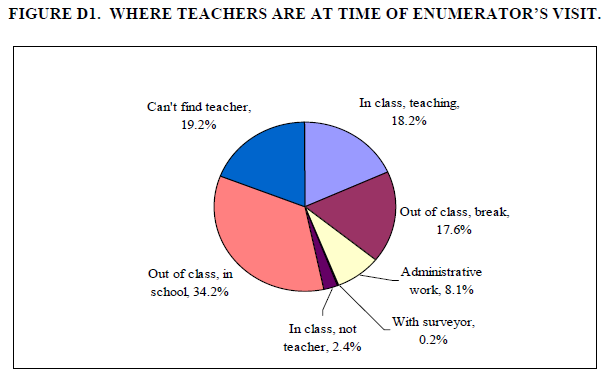
One of the concepts that captured the most interest from the whole group was that of using ICTs to improve accountability and transparency in education. Education is one of the areas where “Quiet Corruption” is often found. ‘Quiet corruption, which can take the form of absenteeism among teachers or doctors, the distribution of fake drugs, or the sale of diluted fertilizers to poor farmers, is having a damaging effect on people in Africa, according to the African Development Indicators report released by the World Bank….’ (March 18, 2010 article)

It's time for class.... where is the teacher to be found?

Edison, Charles and Erik, our colleagues from Uganda, did a short skit illustrating the different points in the primary education system where corruption happens. Their points correlated well with this summary of quiet corruption in education from a July 5, 2010 article in the Independent:

‘Early this year, the Transparency International (TI) Africa Education Watch Programme report: Africa Education Watch: good governance lessons for primary education showed that the government’s perception that massive enrollment is a sign of success of the UPE [universal primary education] programme must be revised to address the problem of overcrowding in classrooms, studying under trees, poor financial management, illegal fees, and lack of school inspection. The report exposes irritating embezzlement of UPE funds and abuse of authority by head-teachers who charge illegal fees, make students offer labour on teachers’ projects, sexual harassment, and systematic teacher absenteeism. The report noted that 85% of schools surveyed had either deficient accounting systems or none at all. In most cases, financial records were either unavailable or incomplete. The survey found limited financial documentation at district education offices and at schools. Most people who handle school grants had no training in basic finance management.

Another survey titled, The Efficiency of Public Education in Uganda, conducted in 2007 by the Ministry of Education to determine efficiency in provision of education services found an average rate of teacher absenteeism of 27% in Uganda, compared to other countries like Zambia (17%), and Papa New Guinea (15%). The aggregate loss caused by this absenteeism constituted 19% which translates into Shs 53 billion out of the Shs276 billion of the Education ministry’s wage bill.

In a swift headcount at the beginning of this year, the Education ministry established that the number of pupils listed in primary school registers was 25% higher than those actually studying. Similarly, the report established that the number of students in lower secondary schools had been exaggerated by 12%. For instance at Amaji Primary School last year, the school register had 816 pupils. But when the headcount was conducted the school administration could not account for 302 pupils.

It is reported that many districts’ chief administrative officers have failed to show proper accountability for the UPE and USE funds.’

The Uganda team also explained that:

  • Parental interest in education is very low because since Universal Primary Education launched, parents feel it’s the government’s responsibility. Some youth we were working with in Kenya last year made a short film about poor performance in primary schools covering the same issue  (see below).
  • Teachers’ salaries are paid directly to their bank accounts, and there is no way to punish them if they don’t show up.
  • There are mechanisms to ensure that donor funds go from the national level to the district level and then on to the school, but no accountability mechanisms to ensure that they get from the school to the classroom and are translated into quality education for children.
  • District level government authority and accountability ends when they transfer funds to the schools; school directors can report to them that they have received funding and that everything is going fine when it’s really not.
  • Local school committees are often made up of people who are not neutral and who do not have the best interest of the children in mind. In some cases, school committee positions are used for personal gain and to launch individual political careers and political campaigns.
  • Lack of parental and community involvement in the education process and in school governance means that no one is demanding accountability from teachers and schools.
  • Sexual and physical violence in schools is very common and underreported. When it is reported, often nothing is done about it.
(Start playing the video, then click the small ‘cc’ button to turn on captions in English)

Colleagues from the other countries face the same challenges in their work and in their own children’s education.

Can ICTs play a role?

What is the solution then? Colleagues suggest that motivating parents and the community to get more involved in school governance and demanding transparency and accountability can begin to change the situation. This obviously requires a lot more than ICTs. So several different actions would be taken to engage and motivate parents and the community to take a bigger role in their children’s education. Then ICTs can be integrated into and support the process for sharing education information with parents, such as student absenteeism, grades, parent-school meetings, exam dates and scores, etc. Parents and students would also be able to report when teachers do not show up or suspected corruption. Students could also report abusive teachers, absent teachers, and other issues they are not happy with at the school. A neutral party would manage and hold the information that flows in and out to protect students from reprisal and to protect teachers from any abuse of the system in case fraudulent or incorrect information is reported. Commitment from those responsible for overseeing education to respond to the issues raised and take serious action is also needed, and this may be the biggest challenge overall. Plan can play a role there, leveraging existing relationships with local and national governments and Ministries.

The idea needs quite a bit of further work, a closer look at feasibility, and more research and input from local communities and parents. As mentioned, the ICTs are actually a small, but potentially very important, part of a much larger initiative to get parents and communities involved in school governance to demand transparent, accountable and quality education and budget spending.

Challenges in the process

Some of the challenges that we had to manage well during this initial piece of the longer process included:

  • We needed to ensure that we were starting with the context and the need for better information and communications, not starting with the technology and devices and building initiatives around them. Yet we also had to avoid getting lost in the overall context and missing the opportunity to pinpoint potential ICT solutions at specific places within the context. Role play and flip chart illustrations of the  ‘problem’ and the ‘solutions’ were very useful for getting more concrete (“So, Kofi is here in his community and he wants to …. So he uses xxx to do this, and then this happens and then….).
  • Though we wanted to specifically look at places that mobiles and other ICTs could support, it was important to list out all the factors that needed to be in place in order for the ICTs to work and to think clearly about the constraints we might face during implementation. One good question to help with that was, after seeing an idea or ICT solution presented, to ask “What needs to be in place in order for that to happen?” Then you start to remember critical things like community motivation, government interest to actually resolve a problem, electricity, someone to set up and manage a server, a strong enough network to download multimedia content, mobile versions of websites, educational content re-design for mobiles, teacher training on how to integrate ICTs in the classroom, limitations of SMS for doing something other than rote learning, higher versions of a mobile operating system, a smart phone, etc.
  • We had input from a potential corporate partner during the process. We learned that corporations are thinking several years ahead to what will be coming down the line; however non-profit are normally working within existing constraints and trying to find solutions that work here and now in the resource poor places where we work or ways to get around those constraints. Multi-level solutions seemed to be a good possibility; eg., ideas that can rely on SMS today, but have potential to expand as networks expand and data enabled mobiles become more available.
  • A corporation tends to think in terms of vendors, results, timelines, launch dates, price points, return on investment whereas a non-profit (at least ours) tends to think in terms of community members, organizations, process, participation, local context. Our facilitator even told us that a corporation normally does a presentation by starting with the solution, and then spending the rest of the presentation showing why that is the right solution. A non-profit usually starts a presentation by sharing all the context and background, and showing the process that led to eventually reaching the potential solution, including every step along the way, how ownership was achieved in the process, why different decisions were made and who participated in them. So keeping corporate vs non-profit cultures and languages in mind is also important when working on joint initiatives.
  • We need to remember to establish measurable indicators of success so that we can tell if this new type of intervention has a different/ better/ greater / lesser impact than carrying out a similar process without ICTs or with a different set of ICTs. This is something we will address once the full idea is developed. Impact measurement is very important to both corporate partners and development organizations.
  • This was the first time many were involved a process of this kind, so keeping the balance between technology and development goals was a constant challenge. We sometimes veered too far towards focusing on all the details of the context and then back to focusing too much on that piece of the context where a potential technology solution was seen. I think we were moving toward a pretty healthy mix of both. The process is nowhere near complete, and as we continue to work on the ideas and look at feasibility and actual implementation, we should find the sweet spot.
The work above was guided by Plan Finland’s recent publication ICT Enabled Development – Using ICT strategically to support Plan’s work.  On the whole, it was a great learning process for everyone involved, and we came up with some good ideas that we will flesh out in the coming months. Having the opportunity to patiently and carefully think through areas and ways that ICTs can support program goals around education and discussing the ideas at length with colleagues was a capacity strengthening exercise for all involved and will mean that we will be more prone in general to thinking about incorporating ICTs in our work going forward.

Resources

ICT-Enabled Development

Plan’s Education Strategy 2010-2013

African Development Indicators Report by the World Bank

Africa Education Watch: Good Governance Lessons for Primary Education by Transparency International

The Efficiency of Public Education in Uganda by the World Bank

Learn without Fear Report on School Violence by Plan. Summary and Full Report (also available in French and Spanish).

Painful lessons: the politics of preventing sexual violence and bullying at school by the Overseas Development Institute

Expel violence! A systematic review of interventions to prevent corporal punishment, sexual violence and bullying in schools by the International Observatory on Violence in Schools

School violence in OECD countries by Karen Moore, Nicola Jones and Emma Broadbent

Update: Owen Barder published an interesting post called Development 3.0 – is social accountability the answer, which refers to social accountability in education in Uganda and links to 2 other quite interesting papers: Fighting corruption to improve schooling: evidence from a newspaper campaign in Uganda; and a 2007 paper by the Center for Global Development challenging the findings of that paper: Putting the Power of Transparency in Context: Information’s Role in Reducing Corruption in Uganda’s Education Sector

Related posts on Wait… What?

Community-based child protection

New Plan report on ICT-enabled development


Read Full Post »

« Newer Posts