Feeds:
Posts
Comments

Archive for the ‘children’ Category

At the Technology Salon hosted by the UN Foundation’s Technology Partnership with Vodafone Foundation on Jan 28, 2010, some folks from the DC area (and beyond) will gather to share experiences around girls and ICTs.

This conversation is an important one, given that gaps exist around discussion, practice and research.  The information and ideas shared at the Technology Salon will feed into the contents of the Girls and ICTs chapter for Plan’s upcoming 2010 “Because I am a Girl” Report (currently in the works).

There are a few points that I hope will be considered in the Technology Salon discussion:

Tension between participation and protection.

There are many examples of ICTs being used for increased participation and connection:  mobile phones for citizen journalism;  Twitter revolution in Iran; girls using mobiles to ask questions about sexuality and to get information to help them improve their sexual and reproductive health; girls married off early or those living in protective societies using mobile phones to maintain contact with friends; new media tools opening up possibilities for youth engagement in important conversations that normally they would be shut out of.

However, due to the very real problems of on-line child pornography, child trafficking, child harassment, and cyber bullying, there is also a strong push for more control, more restrictions on on-line use in the name of protecting children.  The tension between child participation and child protection is a very real one.

As we look at how technology and international development communities can support girls’ development, I hope it’s kept in mind that the more knowledge that girls have about the internet and ICTs in general, the more practical use they are allowed, the more coaching to help them understand implications of their actions, then the better prepared they will be to navigate these realms and to keep themselves safe.  Increasing their knowledge, abilities and desire to protect themselves may be more effective than setting strict external limitations.

Actively engaging girls in this as part of an educational process can be better than restricting their use – and being open to young people’s own ideas and ways of using ICTs is critical.  Adult involvement in this area is important, but it is probably more worthwhile to coach than to control.  Good communication and trust between children, youth and their adult mentors and guides is critical in this process. (Excellent resources on Child Online Protection (COP) for children, youth, educators and parents came out on October 2009 and are well worth the read.)

Online behavior mirrors offline behavior.

I remember getting an obscene phone call when I was around 8 years old.  My mother did not blame the telephone, however. She blamed the pervert that was calling.  She made sure to teach me how to be prepared in case it happened again. She emphasized not giving out information on the phone and hanging up immediately if I felt uncomfortable or didn’t know who was calling.  She did not prohibit me from ever touching the phone again or blame me, but she was vigilant for awhile.

In the same way, new ICTs themselves cannot be blamed for negative and twisted behaviors.  ICTs are tools that exacerbate and extend already existing human behaviors, and the blame lies with those who are using ICTs for child trafficking, cyber bullying and the other evils associated with the internet. It’s important to address underlying behaviors. Research shows that kids who are bullied offline are often also bullied online.  Girls who are vulnerable offline are likely also vulnerable online.  Online is a manifestation of offline, and the root causes of girls’ vulnerabilities online cannot be blamed only on the ICT tools themselves.

I have my own daughter now, and have discussed with her many times how to keep herself safe online and on the phone.  It’s important for her to know this before something happens, not during or after.  She will probably be using the internet and the phone for the rest of her life, so prohibiting them is not an option, and the benefits of using these tools obviously outweigh the risks.  My own involvement and use of social networking sites, texting, etc. is an excellent way for me to know how these sites are used and what security holes there are for my children on the sites. How can parents and teachers in areas with limited use of ICTs be involved and engaged to serve as coaches and leaders in on-line protection together with children?  How can communities help identify existing vulnerabilities in girls (or young people in general) that might manifest themselves online and offer support to prevent exploitation?

Digital gender divide.

There are some amazing examples of ICTs helping women and girls to improve their livelihoods; for example, women selling mobile telephone services; birth attendance being improved by using mobile phones to connect women to midwives, ambulances and other medical services; educational content being  expanded using internet; youth media and youth radio programs bringing girls voices and gender topics into the mix for community discussion and dialogue.

However, in places where boys and men dominate women and girls, boys and men likely also dominate the use of available ICTs.  Men may control the family’s mobile phone and take it with them, or monitor women’s calls. In places where boys are more favored, their confidence to try new things is higher meaning they may rush in to use mobiles, cameras, radio equipment in projects while girls shy back.  In some cases girls report that boys hog and monopolize the computers and equipment, and access is denied.  I’ve seen boys criticize, scorn and ridicule girls who are using equipment for the first time, and girls become too timid to try again.  In many developing countries, just getting girls to attend school is difficult.  If girls are assumed to be less intelligent or less worthy than boys, and their secondary school attendance (where ICT training might be offered) is not a priority, girls will have a very difficult time ever accessing and using ICTs.

Underlying issues surrounding girls’ participation in general need to be addressed.  We need to think about how ICTs can be used to help girls’ inclusion, participation and self esteem increase in general.

Girls involvement in developing and designing ICT solutions for their own needs.

Studies in several countries have shown that girls and boys use technology in different ways and for different things.  What specific ICT needs do underprivileged girls in ‘developing’ countries have? Is anyone asking? What processes or solutions already exist that take girls’ ICT needs into account?  What environments are necessary for girls to engage in defining, deciding and creating ICT solutions? Where are they already engaging, and how can communities, schools, organizations and businesses support and recreate those environments?  How can processes and products be designed together with girls?

Tech is still a field heavily dominated by males.  In the US, for example, some women in tech have pulled together to question this and to advocate for more opportunities for women to break into the male dominated worlds of publication owners, conference speakers, businesses, well known innovators, and “best of” lists.  There have been protests against prominent companies for promoting “Booth Babes” and in one case last year, strippers, at tech conferences.  This brings the question – in places without female tech role models and respectful environments, how can girls see themselves as leaders in this field?

Specific research on girls and ICTs.

There is not a lot of information on the impact of ICTs on the lives of girls in ‘developing’ countries, especially studies that go beyond establishment of computer centers.  There is  anecdotal evidence of positive impact of mobile phones on women. There are studies on the digital gender divide for women; on child trafficking and other negative aspects of the internet; and on use of internet and technology among youth in the US, UK, Australia, etc.  It’s been difficult to find a lot of information on the use of ICTs by girls in the “South.”  It would be interesting for more research to be done on girls and ICTs in the “South” and for some good practices to be shared. Hopefully someone at the Technology Salon will be able to share some insight on this.

Read Full Post »

In early 2005, following the Tsunami, I collaborated with a cross-section of people at the organization where I work to put together a summary of lessons learned and some short guidelines for working with children and communities in emergencies.

All of us had been directly responsible for supporting and/or coordinating disaster response with communities, staff, local and national governments, international and national NGOs, children, youth, schools and teachers, or some combination of the above, in the countries where we lived and worked.  We discussed preparedness as well as relief and recovery phases. We talked about how child focused community development organizations, like the one where we worked, should look at children’s survival, development, participation and protection in a disaster situation and we created some internal guidelines.

Some of the most important things that stayed with me from the weeks we spent talking with each other, with peer organizations, and with our colleagues who were dealing with the 2004 Tsunami are related to the importance of child participation and protection during emergencies.  These recommendations can be applied now to the crisis in Haiti.

  • Don’t assume children or their families can’t do anything for themselves. Local coping mechanisms are often overlooked and underestimated by central governments or aid organizations, creating unnecessary dependency.  Participating and taking control of their situation can actually help people return to normal sooner. I clearly remember an example of an IDP camp where all the services (food, water) were at first centrally coordinated by the municipal government.  A manager from our organization was able to convince the government to engage camp ‘residents’ and organize children and youth into smaller groups who handled particular responsibilities. Suddenly the trash in the camp was picked up and time spent in the food line went from 2 hours to 20 minutes, tempers lowered and people relaxed a bit and got on with things.  The Children and Participation: Research, Monitoring and Evaluation with Children and Young People by Save the Children is a general guide that can help staff think through and orient participation of children and young people in emergencies.  Child-Oriented Participatory Risk Assessment and Planning (COPRAP): A Toolkit developed by the Center for Disaster Preparedness (CDP) in the Philippines is another excellent resource. Both were adapted and used by Plan during the conflict in Timor Leste, for example.
  • Child protection is critical during an emergency and after. During a disaster the typical social patterns and groupings that protect children may be challenged or broken. Children can be further harmed, abused and exploited by those who take advantage of the chaos.  Unaccompanied children can be preyed on if mechanisms are not established quickly.  Personal information about children is often shared or published widely in the interest of helping find parents or relatives or find missing persons, yet it can also help unscrupulous people to identify unaccompanied children and prey on them, especially now when published on the internet.  Birth registration and restoration of lost identity and other civil registration documents are critical to halt trafficking, as is close coordination among organizations, governments, communities and local agencies/staff.  Community members and the affected population can play a strong role in protecting their children, as can older children themselves.  The Interagency Guiding Principles on Unaccompanied and Separated Children, put together by the International Committee of the Red Cross, International Rescue Committee, Save the Children UK, United Nations Children’s Fund (UNICEF), United Nations High Commissioner for Refugees (UNHCR), and World Vision, gives an excellent overview of protection.  Further resources are available at Better Care Network’s website which has materials on separated children in emergencies, how to prevent separation through good relief and response efforts, registration, documentation and tracing, emergency care arrangements, verification and family reunification.
  • Unaccompanied children should not be given up for foreign adoption during the emergency phase. Experience in many past emergencies and conflicts has shown that this is just not the way to go.  In the emergency phase there is no way to ascertain which children are orphans with no other family at all, versus children who might be orphaned but have family somewhere who could take them in.  Taking children out of the country to feed them without a long-term, sustainable plan for them can end up being more complex than finding a way to feed and care for them in country.  Supporting removal of children from their own country during a time of upheaval can also engender a negative reaction among the affected population, who may come to see every external face that comes into the community or camp as someone coming to steal their children.  Interim and emergency care should be consistent with the long-term goal of family reunification.  More background on this can be found at the International Foster Care Association’s website.
  • Participation and protection go hand in hand. The greater the amount of knowledge and ownership that children, youth and their families and communities have, the safer they will be and the sooner they will recover. When the affected people have more input in the relief, recovery and reconstruction, efforts are more successful.  This means linking and coordinating with existing community organizations and structures, local government mechanisms, local non-governmental organizations.  Though it may appear that everything is wiped out in a major disaster, leaders will emerge and regroup.  Plan’s publication “After the Cameras have Gone:  Children in Disasters” offers some examples and insights on protection and participation in disaster situations.
  • Report ethically. The media will undoubtedly look for the ‘best’ story in the interest of raising the most funds possible for the emergency.  In media-speak, unfortunately, that often means the hardest hitting story, the most emotional story, and some journalists/media folks will go extremely far to get it.  However, journalists and agencies bringing journalists to affected communities should obviously not further harm children or take advantage of affected persons in their drive to get the best story.  Journalists should not ask children to relive traumatic experiences or to make them tell stories that upset them just to get a shot of a child crying.  The golden rule applies – how would you like it if that were you or your child?  Children or other community members may be too polite or unsure of whether they can say ‘no’ to a journalist, especially if that journalist is foreign or comes with an aid agency or entity that is linked with emergency aid.  Those working regularly with children and their families should ensure them that they can refuse to talk, they can halt an interview, or not have their picture taken. Local staff managing media visits should feel empowered to intervene on behalf of children in these cases. UNICEF’s “Child Rights and the Media” Guidelines for Journalists and Media Professionals, published by the International Federation of Journalists, gives a background and guide for ethical reporting on children in general.  These guidelines include things like striving for sensitivity when reporting on issues involving children and avoiding use of stereotypes and sensational presentation to promote journalistic material involving children, and they should apply in emergency situations as well.

Read Full Post »

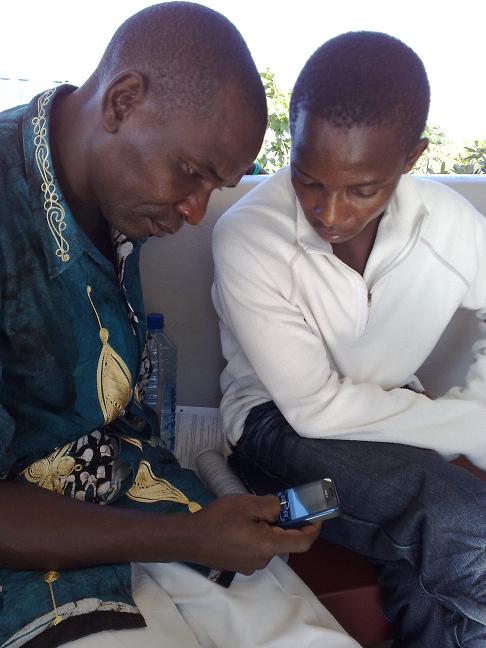
As part of our mobiles for outreach and data gathering training last week, we went out to a community about 20 minutes away from the hotel today to hear Silla, the district civil registrar, talk about a project that Plan Kenya is supporting that aims to modernize the birth registration process. Plan Kenya is looking incorporating mobile data gathering and outreach into the project, so it was a good opportunity to test data gathering. We tested the Nokia Data Gathering Software using a form that the team had created earlier in the week based on the paper forms that the District Registrars office uses. It all worked just fine. Photo: Silas from Kwale District, and Petri, Director of the Nokia Research Center in Manaus, Brazil.

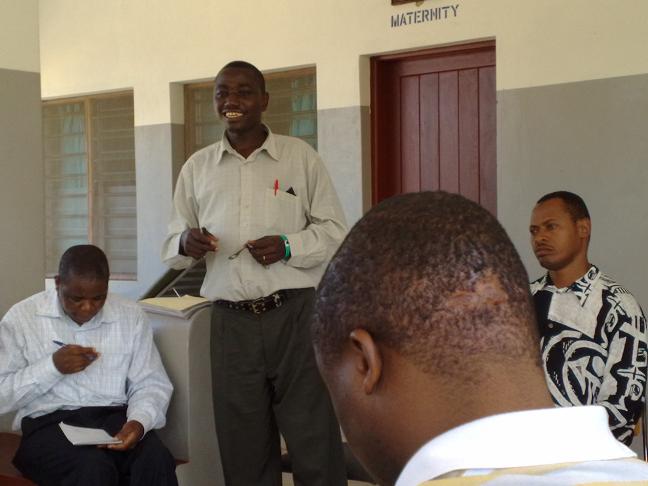
Silla is really an expert on birth registration and anything that has to do with it. He can quote you just about any law related to the subject in great detail. Currently, for registering births, people have to go to the sub-registrar/assistant chief’s office which can be quite far. Once there, sometimes there are not enough actual registration forms and they just give the registration information to someone who writes it in a school notebook. Later when they have more forms, the information is transposed to the official form, and sent along for processing. It can take awhile for processing, and people have to return to the sub-registrar’s office personally if they want to find out if it’s ready. The district is quite large, so they may have to travel up to 100 kms sometimes to go into check, and the certificate may not even be ready yet. Photo: Silla schools us on civil registration and explains why the district wants to modernize the process.

I talked to Ali M and Ali K (‘the Ali’s’ as we call them, since they are pretty much inseparable) who both work with Community Based Organizations (CBOs) that are participating in the birth registration project. (They were both at the video training with me last month here also). They explained some of the main reasons that not having a birth certificate makes life difficult:

If children don’t have birth certificates, they cannot get passports obviously, but that is the least of the issues. They cannot attend secondary school without one, nor can they benefit from any type of social service or insurance. Kwale district has a very high incidence of child marriages, yet if there is no birth certificate there is no way to prove in court that a girl is too young to be married. Other kinds of abuse also cannot be proved as child abuse. Without proper registration, the district does not get its fair share of the national budget because it’s not clear how many people are actually there. Photo: Ali K and Ali M – real leaders and innovators in community development.

As the Ali’s explained, if Kwale District is successful in incorporating SMS’s, mobile data gathering, and mobile outreach into the birth registration process, not only will they be the first district in Kenya to do it, but Kwale will be the first to even computerize the birth registration process. A couple ways they want to use mobiles are to provide a phone number that people could SMS their registration number to and find out if their certificates are ready or not, thus avoiding a long trip into the district office for nothing. They are also thinking of shifting the actual data gathering from hand written (carbon paper with several copies) to mobile data gathering and computerized data storage. In any case, a full project is being developed and piloted that will automate much of the current time consuming processes.

I remember when I lived in El Salvador and the municipality changed from hand written logs to computers. You used to have to go really early in the morning and wait in a huge line to get a number. Then you waited again till they called your number, went up and gave someone your information. That person would give your information to someone else who would look up the name/date, etc. and after an hour or 2, they’d call you and give you a little piece of paper with your record number on it. From there you would go wait in the cashier line to pay a fee for the copy of the certificate. Then you would go to another line at another window and give that number to someone else and sit down again for another few hours while that person would go into the archives books (bound books of hundreds of records) and find your certificate for you (birth, death, marriage, etc.). They’d make a copy and then it had to go to an official somewhere to authorize the copy before they’d give it to you. So basically you had to get there around 7 a.m. if you wanted to get it the same day, and it was a whole day affair.

Around 2000, they got a computer system in and modernized the process. I went in to get a copy of a document, and I clearly remember the security guard laughing at me because I looked at the certificate twice in shock when I paid my fee and was handed the actual certificate after about 30 minutes.

If the Ali’s and the Kwale District are able to get the equipment and set the project up, it could mean huge time savings for people and translate into greatly increased numbers of parents getting birth certificates for their children. The Ali’s have already taken the idea to a national level meeting and have other districts interested in their idea. Hopefully Kwale pulls it off and the model can be nationalized once any kinks are worked out! Photo: Mwenda and Ali, Kwale district CBO members.

Read Full Post »

« Newer Posts