Feeds:
Posts
Comments

Archive for the ‘social media’ Category

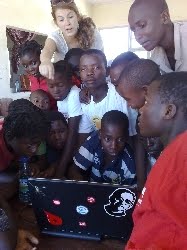
We’ve completed our first week of arts and media training with around 55 youth in Cumbana, a coastal community some 450 kms north of Maputo, the capital of Mozambique.  If you ever tried to Google Cumbana, you’d find information about a photographer with the same last name or links to tourist hotels at the nearby beaches in Maxixe or Inhambane, and not much else.  We actually did this as part of our Tuesday session on Internet with the youth.  Googling New York was another story.  But why?

We turned it around to the youth. Why is there no information on Cumbana?  The conclusion was you only find things on internet that someone puts there, and  no one had bothered, no one had ever really uploaded anything about Cumbana.  And that meant that this group of youth has a big responsibility, because they are going to be the ones to put Cumbana on the map. Photo:  After Cumbana, the top Google search among our small population was, of course, Michael Jackson.

What does that mean?  Aside from producing arts and media to raise issues that affect them and engage their communities in jointly finding solutions, the youth will be the ones to define Cumbana.  As Lauren (the Peace Corps volunteer who’s been teaching at the school for the past 2 years) said:  “Did we find anything about you all in Cumbana now on the internet?  No.  When will there be something about Cumbana?  When you make the effort to put it there.”  Photo: Mobile phone connections are much more likely than computers in the near future, so we trained on internet also using mobiles.

Access to internet whether by laptop using mobile internet or directly on a phone is a huge hit with the kids, 75% of whom had never been online before.  Our 2 hour session could have gone on all day for all they cared. The idea of putting yourself on the map seems to have appeal in the same way that having a Facebook page does.  It’s about self publishing and creating an identity. Photo left: Anthony the local Peace Corps Volunteer supported with the internet and is working with the theater group.  Photo below: Lauren, Peace Corps Volunteer, is working with the multimedia group.
But as we are seeing more and more, citizen journalism has its downfalls (think Fort Hood).  So it was great to see the debates about ethics in journalism that also happened last week.  Jeremias from Radio Mozambique facilitated a great session. He was excited to be part of the workshop because, as he said, “I’m a journalist.  I want to groom more young people from right here in the community where I came from to follow in my profession, and this is a great chance for all of us.”

During Jeremias’ session on ethics, the kids hotly debated the question of whether you should show the face of someone caught stealing.  Many felt that this would punish the thief as well as protect the community. Jeremias countered, “In Mozambique, whose job is it to determine guilt or punishment? Eh?  It’s not the role of the journalist. It’s the role of the judicial system. Like it or not, that’s how it is.”  He talked about the basic rules in journalism to protect people, about divulging information and objectivity. “When you leave here, to do work out there in the community, you need to be sure to hear all sides.  You need to protect the good name of people.  This is our responsibility.  This is ethics.  You cannot condemn someone until the judicial system has determined that they are guilty.”

I sat there wishing every self-appointed citizen journalist followed those rules, and self-examining whether I always do.  But it also got me thinking about how when you are not in a free state, your judicial system is totally non functional, or there is corruption within the journalism profession or media houses, things are not nearly so clear.  Sometimes things need to be filmed to get something to happen, whether they’ve been proven or not.  What are the rules and ethics then?  (I’m sure I can Google this and find a debate!)
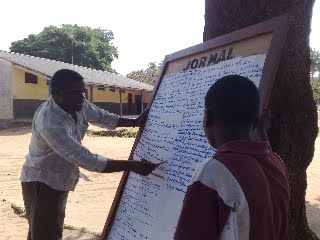
The youth were cautioned to leave aside sensationalism.  “Often wanting to be the first to get the news out makes us less careful as journalists” Jeremias said.  If we drop the bomb, we’re likely to see the next day that we are the ones being processed, accused of not being ethical.” Photo: Jeremias and a youth participant share ideas.

“The ethics of a journalist come from within us,” he said.  Sometimes even a journalist’s own employers may ask him do things that are not ethical.  Or others want a certain story to come out and they try to bribe a journalist.  This makes it really difficult to be a journalist. A journalist needs to have high and strong ethics and maintain objectivity,” he told the kids.

“So you see, journalist is under constant pressure. It’s REALLY easy to get a recorder, to make a story.  It’s more difficult to think through what the consequences of publishing that story might be.  As a journalist, your goal is not to get famous; it’s to transmit information, so get the idea of fame right out of your head.”

Jeremias is a wise man and we are really lucky to have him training our group of journalists.

Cumbana is the only secondary school (it covers to 10th grade) in the entire district, with 3 sessions a day, serving some 4000 students (if the teacher I asked is correct). The opportunity to participate in a program like YETAM is huge for students and teachers alike.  In addition to the journalist group, there is theater, music and dance, multimedia, and painting.  For the kids, it’s like a 2 week summer camp where they strengthen leadership skills, improve their studies, get organized to address community challenges facing youth, and think about careers outside of the norm.  For the teachers, it’s an opportunity to engage with students in a different way, to strengthen their teaching methodologies and improve their ICT skills.  For the partners, it’s an opportunity to give back to the community and, of course, to discover new talent for their professions.

Related posts:
On Girls and ICTs
Being a Girl in Cumbana
Is this map better than that map?
Read Full Post »

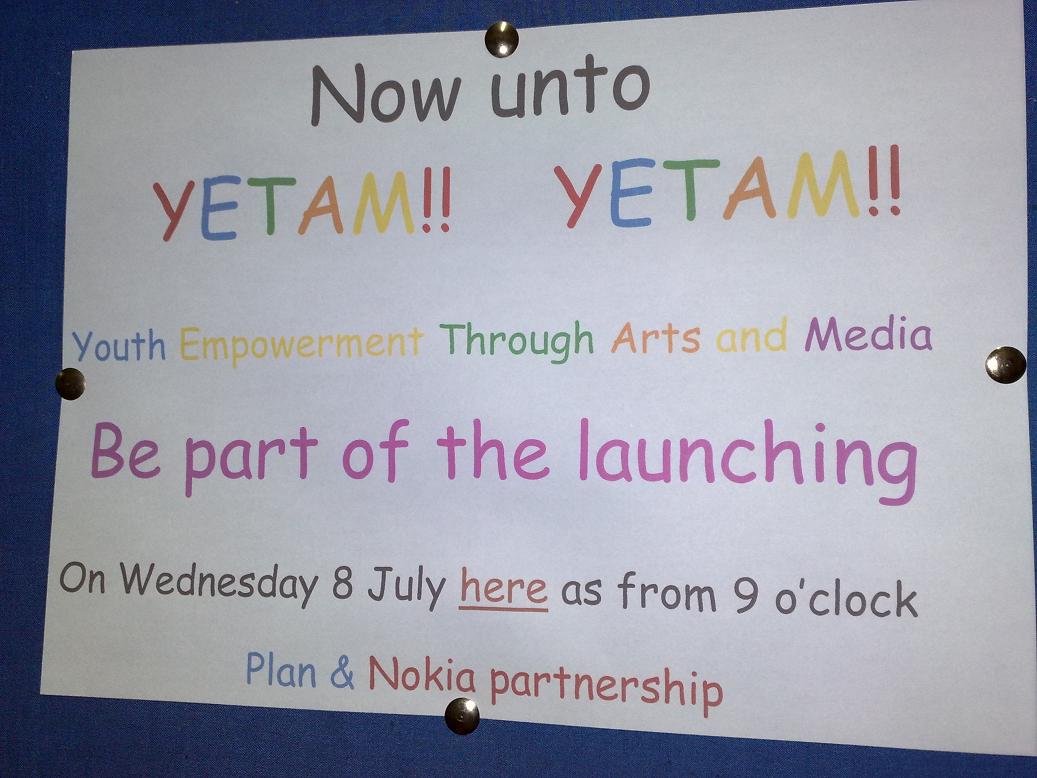
The Youth Empowerment through Arts and Media project (YETAM) kicked off on Wednesday with a press event, and then a training of trainers until Friday. At the press launch, I had to give an overview of social media and the YETAM project. The focus was on how social media can serve as a tool for community development, social change and augmenting participation, because it is based on some of the same principles and approaches as good community development work: partnership, ownership, collaboration, sharing, openness, communication, voice, power sharing, accountability, transparency, and democratic processes. I was bit afraid to use any examples of human rights/election monitoring or mention how social media is forcing the media business to change and impacting on social ‘revolutions’, not knowing if it could be threatening to the government and media attending, so it seemed better not to bring it up! Photo: YETAM launch announcement hanging in the lobby at Plan Cameroon.

For me the most interesting part of the 3-day workshop was listening to the participants debate about whether arts/media are tools or products. People said that they really learned something from the debate, that it really sparked their thinking about what is art and what is media and what both are for. They concluded (as I had hoped) that arts and media can be tools that help youth (in our case) research and deepen their understanding of themselves and their communities during the creation process. Yet arts and media are also products that are ‘consumed’ afterwards, catalyzing more debate and dialogue (sometimes via more arts and media) and if successful, eventually lead to some kind of positive social change. And the cycle goes around and around. Photo: Press event for the closing of the training of trainers.

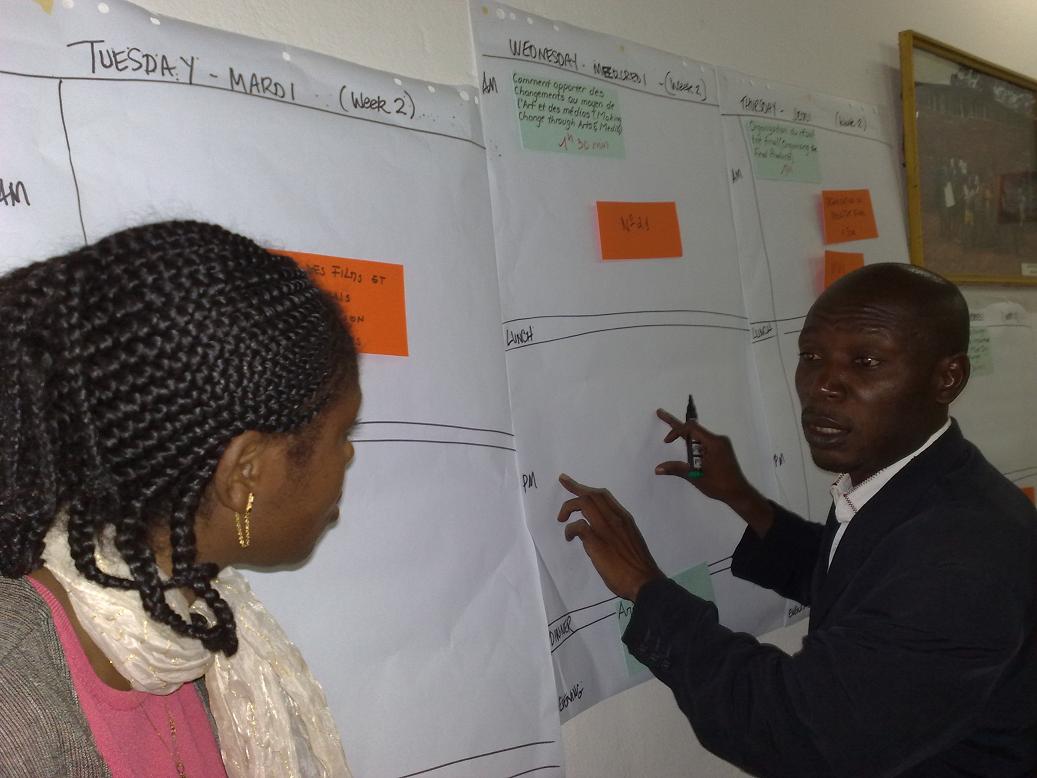
The idea of tool vs product can be a struggle sometimes when we start work on YETAM and the concept of participatory video or social media for social change and working with rural communities. Sometimes people think that we want fancy commercials or television spots or 30 minute professional documentaries or fiction films, or they don’t believe children/youth will have the capacity to make their own videos or edit their own films, or that people from rural communities can learn to use the equipment. It can be hard to explain that we don’t need to write long scripts and set up scenes with lights and big media teams with large expensive cameras, and that if we bring the technology down to simple language and hand over the camera, it’s very doable. We don’t need a week of theory before we allow the kids to touch the cameras or to paint something, that the media and the art are the means for having the discussions and theorizing about the issues as well as the end for continuing on with the discussions. And we don’t need to disrupt the community and or have ‘outsiders’ doing it for the media or art to matter. Local people can make their own media and it can be even more meaningful that way. Photo: Plan and partner staff working on the agenda for the youth training that starts on Monday.

Read Full Post »

The main thing that we did today was to go back to the map to see what the different issues in the community are, and what kind of stories could be told about the issues. How can we tell stories that touch the heart? That move people to action? That are real and relevant and educational? The personal examples that went behind the stories were super interesting. I hope the youth will capture a lot of these stories in their videos… I also hope that we’re able to produce videos that work to stimulate dialogue in the community, and that also are interesting to an external audience. That is one of the big challenges in this project.

Some stories that came out:

“There is a story about old men that go to the farms w/their tools but they don’t actually have to work, the spirits come to do the work for them; so a woman wanted to see the ghosts and she came up with a scheme to watch. When the spirits discovered the woman had seen them they stopped working and the men were angry and made women work tilling the fields ever since.”

“There is the story of witchcraft in the community. If people see someone progressing they perform some witchcraft rituals that make them go crazy or take them down.”

“Girls are being targeted for harassment; it’s a real story. It happens often. Even beyond this harassment there are threats of physical harm and sometimes charms/witchcraft. But the community is responding and these people are being arrested now.”

“A story about the way girls are married. They are married very early and marriage is an obligation. They stop attending school. Because girls are not allowed to inherit anything, they don’t see a purpose in education or in community development because they never have any decision making power. Bride price contributes to harassment. If you get married and get 12 cows as a dowry, then the family just equates you to that – 12 cows.”

“Sometimes girls come to school on opening day for boarding school, parents say that school is supposed to be free, so they haven’t even provided the girls with anything. The matatu (public transportation minibuses) drivers take advantage of them and then deny that they’ve had anything to do with them.”

“There is a belief that only basic education is important and that anything beyond is not necessary. So even if a girl/boy qualify for university, parents won’t support them. Some parents don’t believe in white collar jobs, if you aren’t a soldier or watchman which is something they can understand, if you don’t have a practical skill like carpentry, the parents don’t feel it’s a job. They are only willing to pay for an education for a skill that they can understand.”

“There is a belief the disabled children should not be allowed to live. Sometimes they are killed or they are kept out of sight and in bad conditions. Sometimes if someone has a disabled child, it’s seen to be related to the fact that they have some wealth and they’ve traded their family for wealth.”

Read Full Post »

YETAM Kenya

So I’m off to Kenya tonight – just about ready to head to the airport…. We’ll be training in the Kwale Program Unit district with about 20 high school aged youth from one of the nearby communities. They have to go back to school on May 3, and we weren’t able to negotiate any additional time with them, so we will have to fit the 2 week training into just about 9 days — we’ll see how that goes. I’m pretty stressed right now about it actually… but normally it all works out.

I’ll fly from Boston to Nairobi and then take a short flight to Mombasa, stay over night there, and then will be picked up in the morning to go to the training center. I’ll meet with the Plan Kenya staff to prepare, and then Thurs-Sat we’ll have the facilitator’s training and work out all the details for the following week with the youth. We have a basic outline that just needs fleshing out. We’ll also check over all the equipment, etc. and be sure we’re ready. We’ll start the training with the youth on Sunday Apr 26 and run through May 3, and then I’ll stay a few extra days to finish up.

I’m going to try tweeting from there to see how that goes…. could be interesting to use the YETAM twitter account for the youth to post what is going on during the training and the project, but we’ll see if they are interested and if we have a good enough connection….

Read Full Post »

Our meeting started on Tuesday. Our challenge for the week was to pull together a regional communications strategy. We had lots of presentations on the different aspects and did all kinds of group work and analyses to come up with a good strategy that works for each individual office and then also builds up into a cohesive regional strategy. We looked both at the PR aspect of communications as well as the program/social communications aspect, at the different child and youth media programs, and also at advocacy and our different campaigns. I did a presentation on social media to stimulate thoughts on how we could use it in Plan both at the office level and in our work with youth and communities. The workshop and the whole week was really educational for me, and also exhausting. I leave tonight around 11.45 and will be home tomorrow around 5 p.m.

Read Full Post »

It’s been a bit of a crazy month, spent doing some budget scenarios for different projects. For this year it looks like we’ll be doing YETAM in Kenya (April) and Cameroon (July). I’ve been working with the countries on getting our reports from last year in as well as our forward planning for 2009. We have the project point persons selected now for Kenya and Cameroon. They are both really excited about the project. We’ll continue to seek funds for Mozambique and Ghana.

My next big challenge will be to put together a training pack for the new countries. We weren’t able to include a face-to-face meeting in the budget for the YETAM coordinators, so I’ll plan to arrive in each country a little ahead of time to work with the staff and partners, and we’ll do as much by email and skype as possible.

The past month I’ve been trying to get a feel for Twitter and how it could be useful to us. It seems to be a great tool for sharing ideas and learning, sharing links and initiatives. Hopefully I can keep it to a manageable level so that I can keep up with all the stuff being shared! The ‘follow me on twitter’ function on blogger is nice too.

So it’s been a pretty cool and exciting month learning and tech wise. I’ll meet with Plan’s Innovations Manager in Amsterdam next week, and then all the regional communications people and some from headquarters will be in Bamako (Mali) for the meeting starting Tuesday. I’ll get a chance to visit the YETAM Mali project on Sunday and another one on Monday before we start the meeting on Tuesday…. looking forward to this year. 🙂

Read Full Post »

So back to work for a whole week. Someone told me about Techcrunch. How did I not know about that before?!

Yesterday I met with a very very old friend — Renato — whom I worked with in El Salvador. I pretty much cut my teeth on children’s media work with Renato so it was really cool to meet back up with him. He’s now working as Plan’s Latin American coordinator for Child Media projects. We shared visions and seem to be on the same track even though we haven’t worked together for almost 10 years.

We agreed that he’d put some of the stuff they are doing into the same framework (Global Youth Engagement framework) that we are using so that we can begin to harmonize. They can feed into the YETAM project easily since they are also doing a lot of video in 12 countries there.

The interesting point though, and where I see the field changing and evolving, is on this question: Whose Media? When I upload something to YouTube, do I title it “Plan” i.e. Plan Rwanda Videos, or is it media that belongs to the community where we supported the project and should be titled Gatsibo, Rwanda Videos. Something I struggle with. I’m struggling a bit with this concept of ownership of the media. Is it the organization or funder’s media or are they the community’s videos? Are we mainly supporting kids with access to ICTs and media tools, or is our main goal for them to engage around certain topics and create videos to promote behavior change around those topics? I hope with time that we can look more at this and unpack it a little as social media becomes more widespread.

With Renato we talked about that issue. We talked about how he can incorporate more social media and mobile technology into the Latin American work. I shared with him about Frontline SMS and Ushahidi and Citizen Journalism and all the things we covered in the SM4SC workshop and he was super excited about building that in and having a similar approach in Latin America to what we’ve been exploring in African countries. Many organizations keep saying that children don’t have a space in media, but I was thinking, space in Which Media? If you look at internet, isn’t it more that since participation in traditional media is owned by corporations/governments and closed off to kids and most adults as well, that kids and young people have pretty much taken over new media? So basically if they have access to the tools (mobiles, internet, etc.), they DO have space in media, just not television, radio, newspapers. So how do we support that access then. Of course that isn’t everywhere, there are huge access issues, but at some point maybe it will be….

And also as regards Which Media — how, based on the goals we are trying to achieve, do we select the best form of media? Sometimes organizations make the mistake of starting a project from the point of view of which media form — . Let’s do a children’s radio project. Let’s start a video project. Let’s use social media. Let’s train them on theater. Etc. But more and more it’s clear that organizations could start with a broader framework. Such as our Global Youth Engagement (GYE) framework, which we pulled out from consultations with youth who told us that they are basically working in 4 areas and reaching out/trying to influence 4 populations: other organized youth, their families and communities, decision makers, and Plan itself. And they want to do it at the local-district-national-regional-and global levels. So for each group that they want to influence, we could start from the point of which media is the most appropriate based on the audience (other youth, families/ communities, etc.) and also based on whether it’s local, national, global, etc. So that could become a way for the youth media programs to evolve. Maybe the best media for local/families is theater. Maybe for youth/national influence it’s cartoons or large events, maybe for global it’s internet, etc.

And then we talked also about the other main question for me: Media for What? I first started thinking about that after I heard this amazing child media guru (pardon the word) guy from India named Shonu Chandra talking at a child media conference. “So kids can make media. So What!? It’s what they DO with that media that matters.” So then with all the media being done in our projects, the next step is that. What social change are we able to support kids to create with their media. There are some great examples of this. I hope we can also be really strong on this with YETAM as it continues.

So that leads us back to the idea of Social Media for Social Change. I know this has all been thought about before, but it’s becoming more clear each time I think it through.

Renato and I agreed that we’d follow up on 3 main points. 1) We’d try to have a small meeting of the minds to develop out some of these ideas somewhere. We’d use open space technology to make the agenda upon arrival. 2) he will see if they have funds to do a SM4SC workshop in Latin America 3) We will see how to collaborate on the YETAM idea across regions.

Now the one thing we forgot to do was get the standard photo of him and me so that I could post it into this blog!!

Read Full Post »

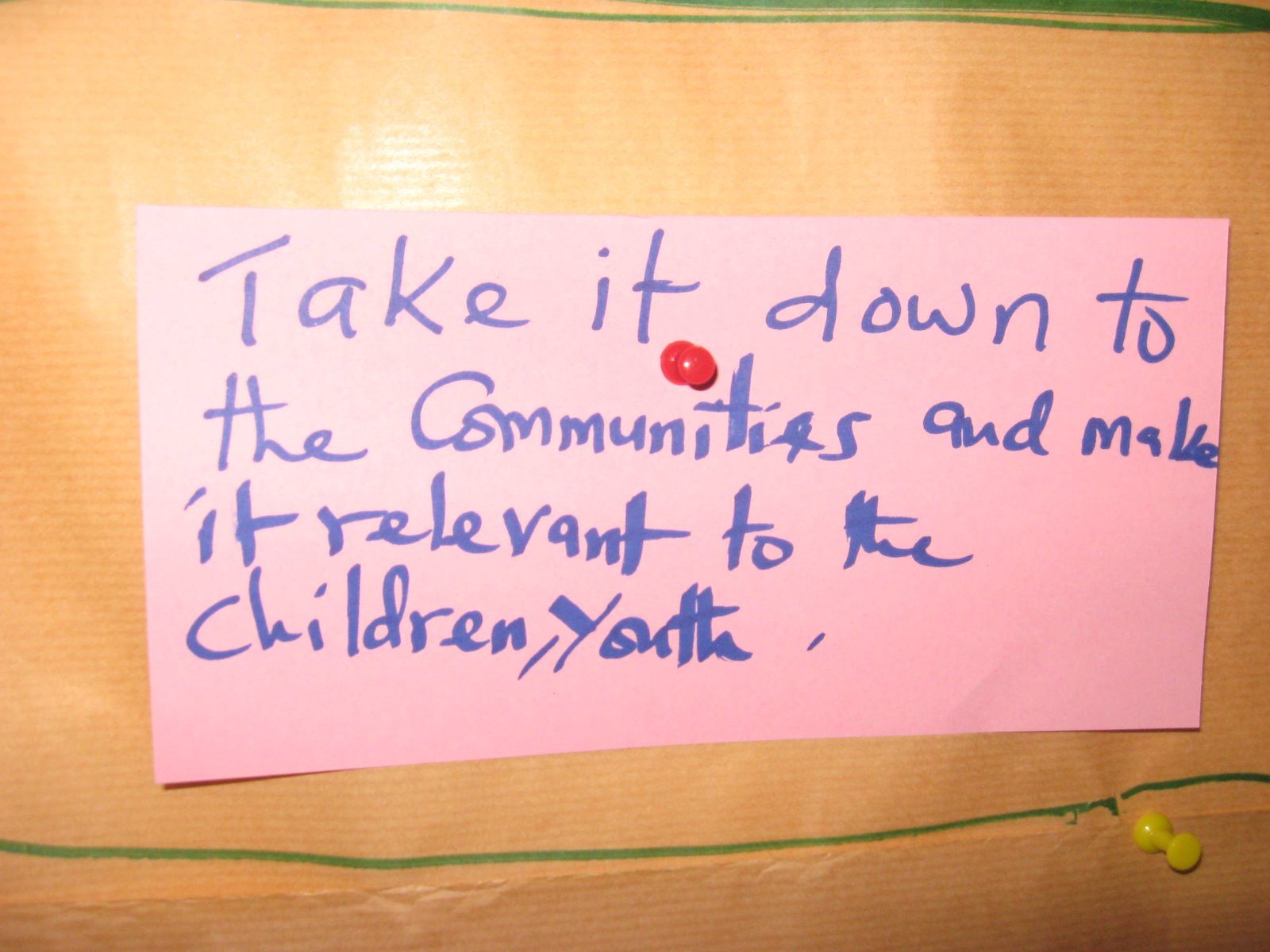
Wow what a week. My head is spinning from all the discussions and possibilities from our workshop in Kenya. So it’s 3 a.m. and I’m back home, and here I am again at the computer. My New Year’s resolution is to work less, but it’s not New Year’s yet… and I’m still on Kenya time, so fell asleep at 6 and woke up at 1.30. So why not grab my coffee and get going. Photo: one of the ‘take aways’ on the last day.

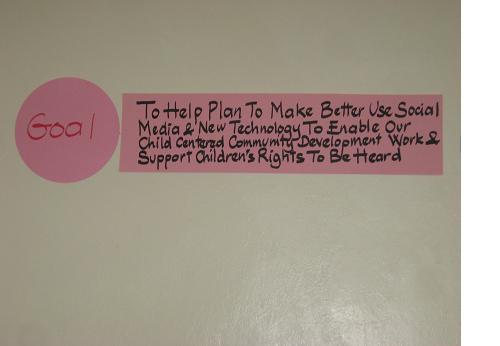
I have a zillion ideas and things to think about. How to support the different people and offices present at our workshop to build in more social media and technology to improve our programs and reach/impact.
The last couple days were amazing, with presentations by/about youth and how they are using blogging, mobiles and other technology for health and learning. We talked about citizen journalism and thought about how to apply it to our programs and communications. And there was a LOT of discussion about how organizations need to open up to embrace new kinds of media or they will become irrelevant.
One key thought (originally stated by Ken Banks from FrontlineSMS.com and then taken up by everyone) was that it’s easier to ask for forgiveness than for permission. That people should just do it, just try things, instead of asking for permission to innovate and be creative.
We learned from one participant how blue tooth was used during the Kenya election crisis to get information out to the public… and at the airport on the way home heard about arrests of activists in Nairobi and increasing media censorship.
We talked about how organizations need to modernize and open up new ways to engage the public in their work based on concepts of social media. We used SMS to send messages and talked through specific ways we could use Frontline SMS (http://www.frontlinesms.org/) to make it easier for children to get birth certificates and access their rights at citizens. Imagine instead of having to trek miles to the district capital if mobiles could help communicate and ease that process. We looked at specific existing projects and thought about how to use SMS and other social media to improve them.
We presented and discussed the YETAM project, and heard things like “every country should do this” and got great feedback for making the project more relevant and to increase its impact from the local level upwards. I had a lot of time to brainstorm with Mimi (the link between YETAM and Nokia via Plan Finland) for once about the project and to start working out the action plan for next year. Photo: Me and Mimi

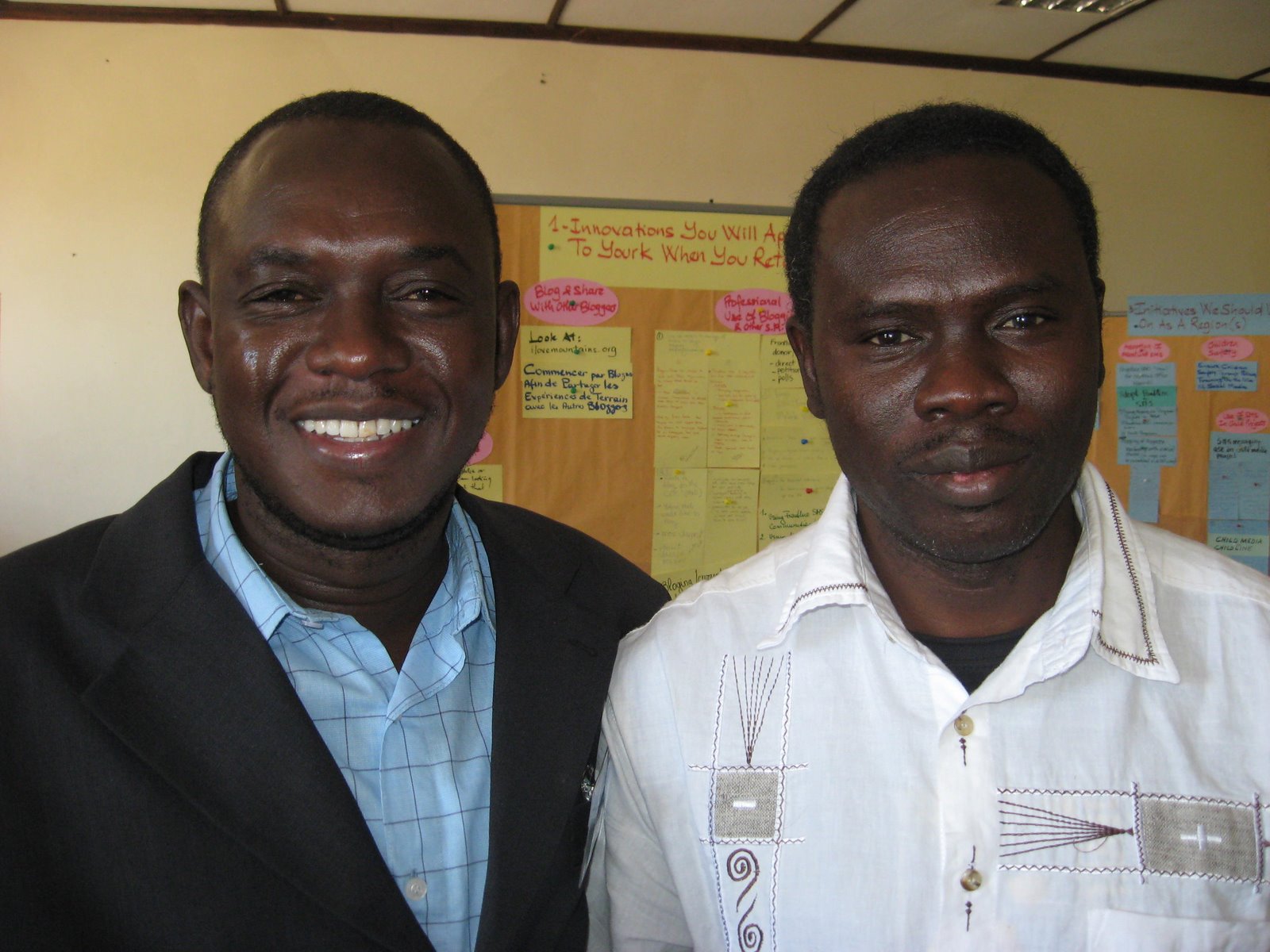
We heard so many opinions from everyone, and the French translation and bi-lingual nature of the workshop meant that we heard from everyone there, whereas often those who speak French keep quiet since English is the ‘official working language’. Photo: PapaSidy and Bedo.

Our external experts stayed with us the whole week and added so much to the conversation.
Really an amazing time. We tracked the workshop on a collective blog (http://sm4sc.maneno.org/eng/) so people could practice, and posted photos on Flickr http://www.flickr.com/photos/whiteafrican/sets/72157610896848364/.
Now Mika and I will do the report. We asked people to state a few concrete ways they will follow up on the workshop and then our job along with the different offices involved is to support their work and help address any challenges or obstacles that come up. Photo: the fearless Mika!
(And we had a “Bush Dinner” with a fire and music the last night”)
So our work is cut out for us next year…. and it’s about 90% sure that I’ll get to extend my secondment for another year to focus on YETAM’s next countries and SM4SC follow up.
Yippeee!

Read Full Post »

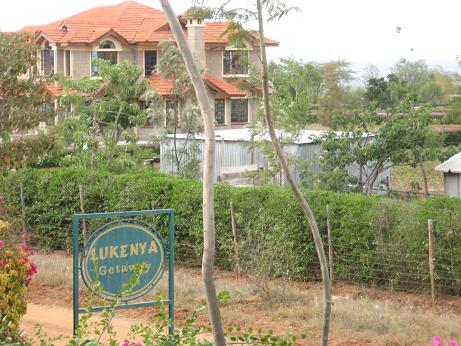
I’m back from Brazil and in Kenya now for the Social Change for Social Media workshop. There are about 25 of us here and the first day was really really good. I learned tons of stuff from everyone here. It’s about 6:00 and most everyone is still here in the workshop room, doing email and stuff. We are going into “Bar Chats” in a few minutes – where people can just suggest topics that they want to discuss and form groups to do it. Photo: Lukenya Getaway

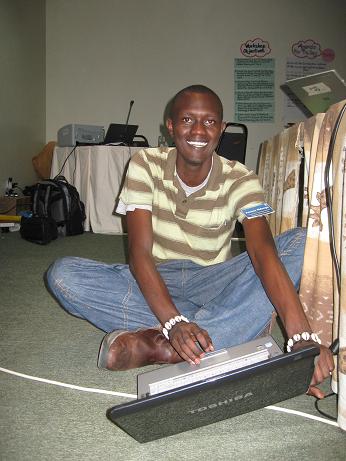
We have tried live broadcasting some of the talks – some worked some didn’t. And we’re testing a blog on a site called Maneno. The link is http://www.maneno.org/. Under SM4SC workshop you can find it…. I couldn’t get my photos to post there so I thought I’d revert to here to put some up. Photo: Tonee from Wazimba blogging. Erik from White African/Ushahidi and Mativo and Anthony from Plan Kenya.

Will post more this week.

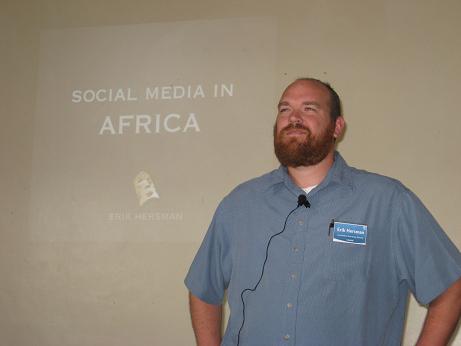
Photo: Erik starting his talk.

Read Full Post »

We got the hang of it now and Ayla’s amazing. So we have about 10 videos up on YouTube now, linked to the subtitles that we did on dotsub.com. She’s going to tackle google earth overlays and youth film festival submissions next week when she’s all done subtitling and uploading the Rwanda videos.

Meanwhile the Brazil Congress has me tearing my hair out! It’s been difficult to organize with so many moving pieces. I’m sure it will all be worth it when we all arrive and the preparatory conference with the kids starts, and they have a chance to voice their opinions in the Congress sessions.

We have provisional approval for the YETAM project next year so I’ve been working a lot on planning for that as well as finalizing this year.

The Kenya meeting on the horizon finally. I’m really looking forward to that. We’re almost done with the agenda and I’m really excited about that week and everything we’ll share and discuss.

But it’s hard to believe the year is almost over. I’ll be in Brazil for 10 days, back for 5, in Kenya for 7, back for 5 and then off to Los Angeles to finally have a break with my whole family for Christmas holidays. I hope I can stay off email and actually relax because there is another insane year ahead….

Read Full Post »

« Newer Posts - Older Posts »