Feeds:
Posts
Comments

Archive for the ‘youth media’ Category

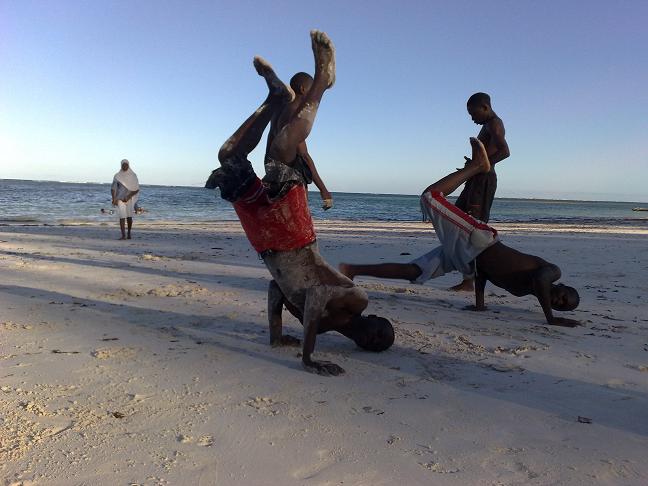
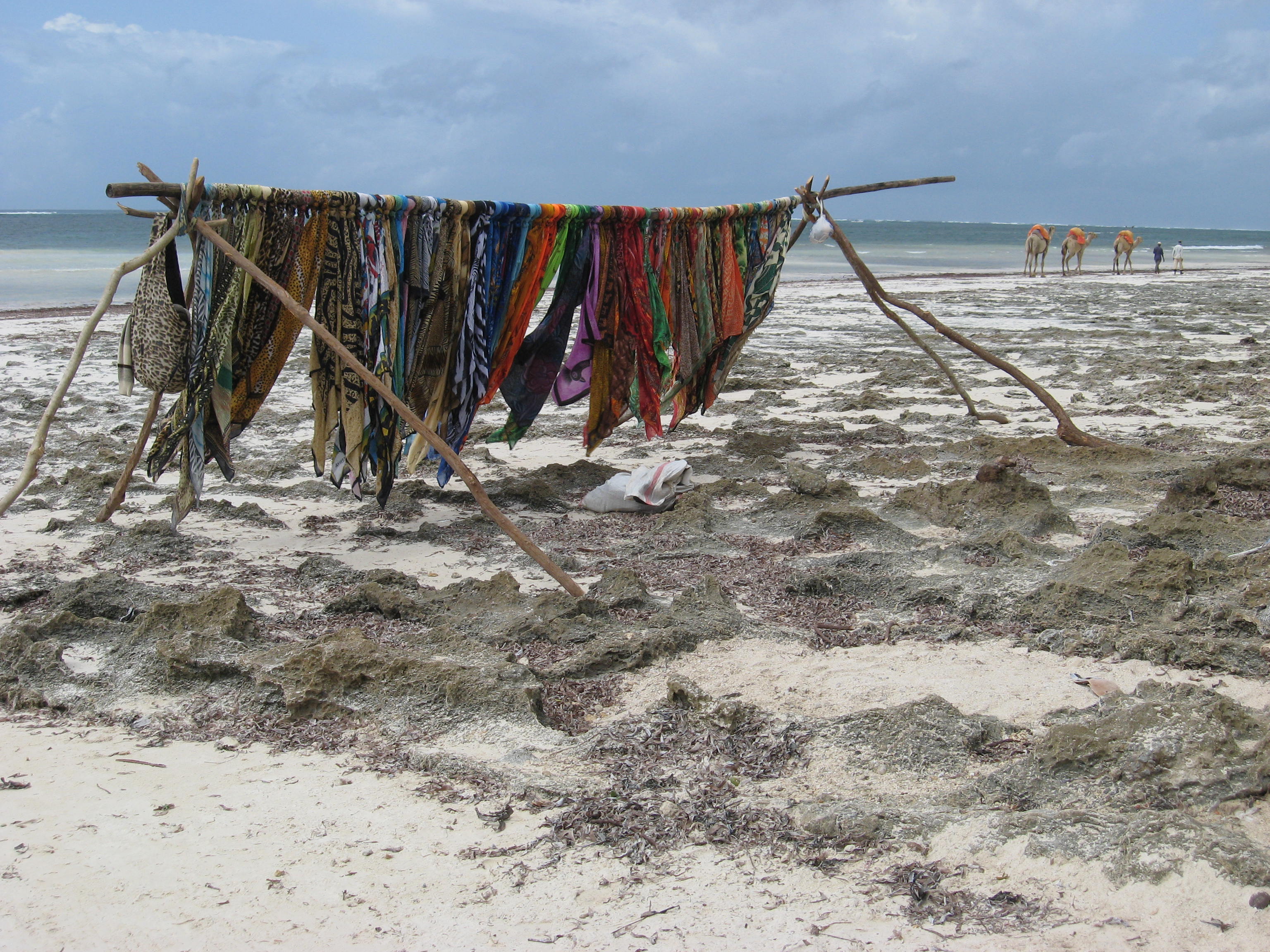
Nothing to do with the topic of this post, but the Kwale coast is gorgeous.

Last week I was in Kwale, at a Plan Kenya hosted workshop as part of the Youth Empowerment through Technology, Arts and Media program. The team at Plan Kwale has been pointedly using ICTs in their community development programs since 2003 (not counting email and Internet of course) when they began working with radio and video as tools for raising awareness about children’s rights.

It’s really impressive to see how they’ve moved forward with very strategic ideas for integrating ICTs to help reach programmatic and development goals, especially in the areas of youth and governance, universal birth registration, and child/youth-led advocacy around rights and protection issues.

Over the 6 day workshop, the main things we wanted to do were:

  • look at the development context in Kwale, Kinango and Msambweni Districts (South Coast areas where Plan operates via the Kwale Office)
  • better understand the perspective of youth in the 3 districts
  • remind ourselves of rights-based approaches to community development
  • discuss youth issues, governance, advocacy, violence against children and gender within the local context
  • look at the ICTs currently being used by youth, communities and Plan in the Kwale Development Area
  • share and discuss new social media and ICT tools and ways they can be used
  • practice using new social media and ICT tools and see if they can be useful and sustainable in the 3 districts
  • determine next steps for integrating social media and new ICTs in specific local initiatives and plan for how to build on them in Plan Kenya’s overall work

Some elements that made the week positively brilliant:

workshop participants

Engaged and committed stakeholders

We were a group about 20, including staff and university student interns from Plan’s Kwale and Kilifi District Offices and Plan’s Country Office in Nairobi; Government District Youth Officers (‘DYOs’) from the Ministry of Youth, Sports and Culture; Youth Council members from Kwale, Kinango and Msambweni; 2 staff from Map Kibera and 2 youth mappers from Kibera.

This mix meant that we had a variety of perspectives and opinions, including those of youth from local communities, partner organizations, local government, frontline staff, protection and governance technical advisors, ICT managers, and senior level program managers. This helped to ensure that we were grounded in reality, technically and thematically sound, able to cross-pollinate and integrate new ideas with solid experience and practice, and take decisions immediately forward to a higher level.

Local partners and youth-youth networking

Peer-peer learning and exchange among all the participants was a big plus. Plan and Map Kibera have very similar visions and values, yet each has its own area of specialized technical expertise and experience.  The youth participants from local councils from the 3 South Coast districts and the youth mappers from Kibera brought different perspectives into the workshop which enriched the discussions.  We all learned a lot from each other. Combining expertise as partners brought the workshop to a whole new level, and will help to ensure that the efforts are sustainable and can be built on and expanded. The youth in Kwale can now extend their skills to more youth in their communities, the youth mappers from Kibera can take home new ideas to improve their work, the university-level interns gained practical experience, and the buy-in from the local government’s District Youth Officers (who manage government funds) in the 3 participating districts can help provide the necessary support to broaden the efforts.

Flexible workshop methodology

We had certain goals that we wanted to achieve and we were clear on that, but we let the agenda flow. We started by taking a deep look at the local context and resources. We heard from local experts in the areas that we wanted to focus on (youth and governance, child protection) as well as community youth and local authorities. We spent time getting to know some new tools and discussing the pros and cons of using them.

Hands-on with FrontlineSMS

Hands On Work

We had practical sessions and hands-on work on blogging, FrontlineSMS, Ushahidi, Map Kibera, and mGESA (a local application of the mGEOS mobile platform co-developed by Plan Kenya, Plan Finland, University of Nairobi and Pajat Management and being piloted in Kilifi).

This was important for helping participants feel confident about doing some of the work once the training team was gone. I imagine however that more practice will be needed during some follow up sessions, as most of the participants don’t have regular computer and Internet access for enhancing their skills on a daily basis with additional practice and exploration.

We spent one day mapping our Hotel on Open Street Maps, and another day in Kinango, mapping specific points in 4 teams.  Lessons learned during hands-on work included the importance of engaging and involving the community ahead of time, so that rumors about why people are mapping the community don’t fly. In my group, for example, we were moving around with George the District Youth Officer from Kinango. Someone that he ran into joked to him “Oh, now Kinango is going up for sale!”  A joke, but nonetheless if people don’t know why we were mapping, this or other rumours can quickly spread. (See the video about mapping in Kinango at this link and the background blog post here.)

End goals + new tools + back again

By starting with people’s expectations for the workshop, analysis of the local context, and an understanding of the goals that youth and staff wanted to achieve together, we could be sure that we stayed true to where we wanted to end up. At the same time, by learning about new tools, things that weren’t possible before became imaginable and people started to innovate and mix their existing knowledge and experience with some new ideas.

Combining the two, and having a good variety of perspectives in the room and a lot of space for discussion and practice means that next steps will be more achievable and sustainable, because people are clear and agree about where they want to go, and they feel capable of incorporating some new tools and ideas to get there.

The tools

We explored a number of new(ish) tools at the workshop. They had been identified over the past couple years due to their use by Plan or other organizations in areas such as: community development work, violence tracking, advocacy, governance and social auditing.  We talked about mobile phones, email, Internet, Facebook, Hi5, Google search and Google maps. We did a quick overview of Voice of Kibera, use of GPS, Open Street Maps, FrontlineSMS, Ushahidi, the YETAM project, the PlanYouth website, and a Plan pilot project in Benin using SMS to track violence against children.

The first day, the context analysis was very focused on youth and governance, transparency and social auditing, so we pulled out the 10 Tactics video by Tactical Technology Collective (which @hapeeg had given to me a couple days earlier). This video series talks about 10 tactics for turning information into action. It really sparked ideas among the participants for how they could use social media and ICTs in social accountability work and human rights/child rights work.  Map Kibera partners also shared a tool developed by SODNET (SMS for social auditing of the Constituency Development Fund).

We talked about the use of mapping and SMS in child protection work. One of the main child protection issues in the south coast area is the distance that a child, girl, family has to travel in order to report an abuse. Women’s lack of economic power, inability to own property and the importance of marriageability also mean that often women and girls feel unable to speak out or protest abuse when it’s happening. It’s still not certain what role ICTs can play in this context given the risks involved to those who report, but Plan’s child protection point person, Mohammad, is planning to host a series of meetings with local child protection authorities to discuss possible ways forward.

Digital mapping was immediately cataloged as an important tool for identifying resources, advocating for services and holding government accountable through social auditing. It was also recognized as a potential income generator once areas, shops and local businesses could be added to an on-line map, or if youth could purchase GPS units with funding from the District Youth Office and charge for their GPS services. George, the District Youth Officer for Kinango talks in this video about how mapping can be useful to the Kinango community, even if most members don’t have access to computers and broad band. (Click the link or watch below)

Information and communication gap analysis –> ICT integration plans

ICT integration for youth and governance program

Early on in the workshop, we worked in 2 groups to analyze the goals for the Youth and Governance and the Child Protection programs that Plan is supporting in Kwale. The groups discussed the information and communication gaps that needed to be filled in order to move towards the goals of the 2 initiatives. We looked at what ICT tools might best help reduce the gaps, from existing traditional tools (like meetings, face-to-face advocacy, drama, town criers, radio) to those new(ish) tools that we had discovered (see above paragraph) that might be useful to try out given the goals in the 2 key areas. The groups revisited this gap analysis on the last day after having had more hands-on use of the different tools and turned the gap analysis into an action plan.

ICT integration for child protection programs

Management buy-in and leadership

While the 2 groups worked on local action plans for integrating ICTs into their work, senior management from Plan’s Kenya office created their own action plan for how to build on the workshop experience, engage mid-level managers and other key staff in ICT integration, further develop partnerships and solidify cross-cutting incorporation of ICTs into Plan’s work in Kenya. The Kwale and Kilifi program units have been innovators within Plan for several years. Learning from, supporting and building on concrete work that they are doing on the ground allows for a solid and feasible country strategy based on reality. Having a strategy built from the ground up and with solid support and buy-in from national management means that there is less risk of donor led ICT funding, and more probability that new resources mobilized for ICT work go towards real needs and have better results.

Related posts on Wait… What?

Youth mappers: from Kibera to Kinango

Salim’s ICT4D advice part 1: consider both process and passion

Salim’s ICT4D advice part 2: innovate, but keep it real

Is this map better than that map?
ICT4D in Uganda: ICT does not equal computers

Read Full Post »

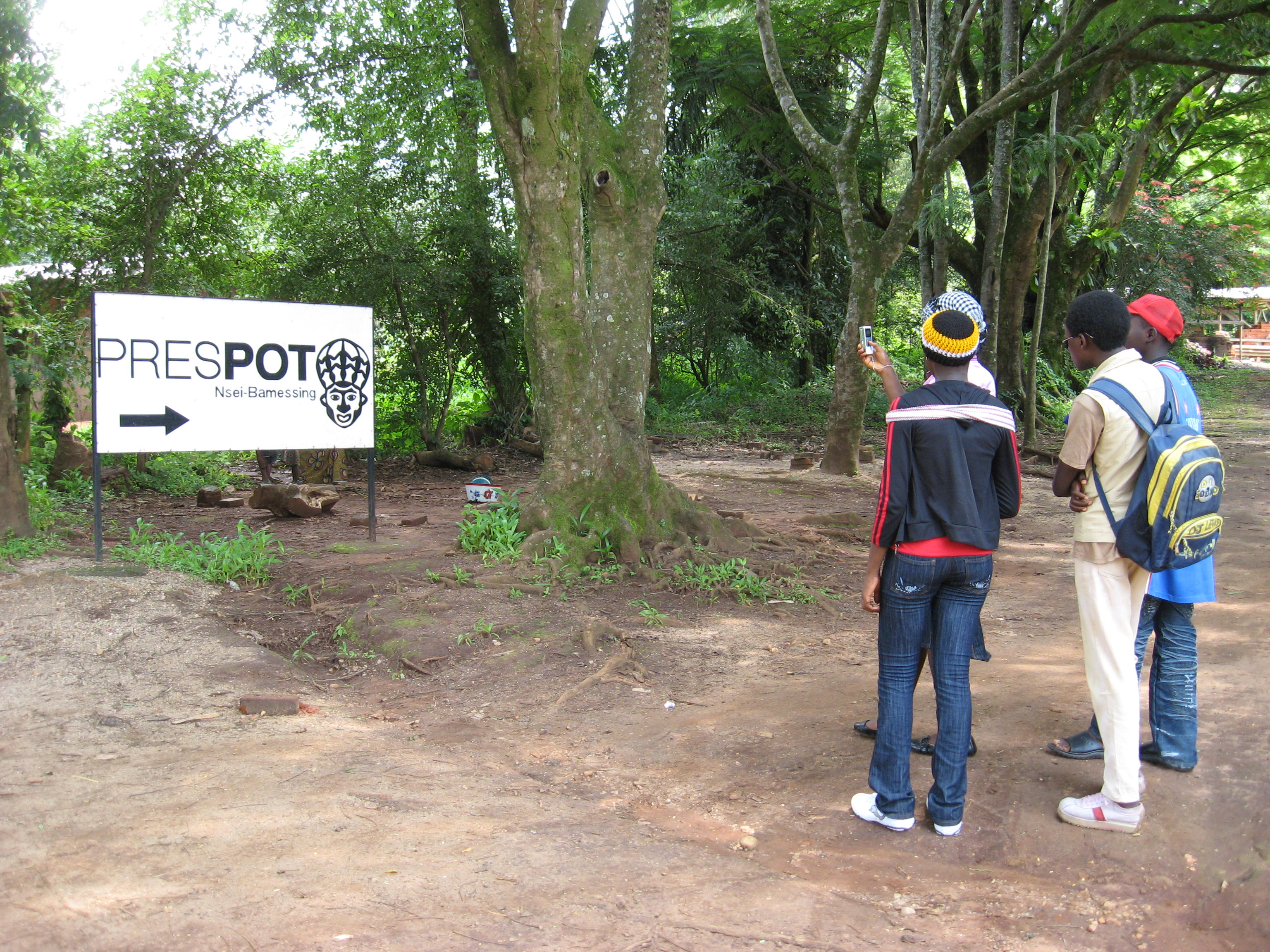
PresPot

While I was in Cameroon last week, I had a chance to go out to film with one of the youth groups. Earlier in the week they had worked together to map out their community and look at local resources, and one of those resources was PresPot, a local business that makes different types of clay products. It’s part of a larger initiative, supported by Presbyterians (get it? PresPot?).

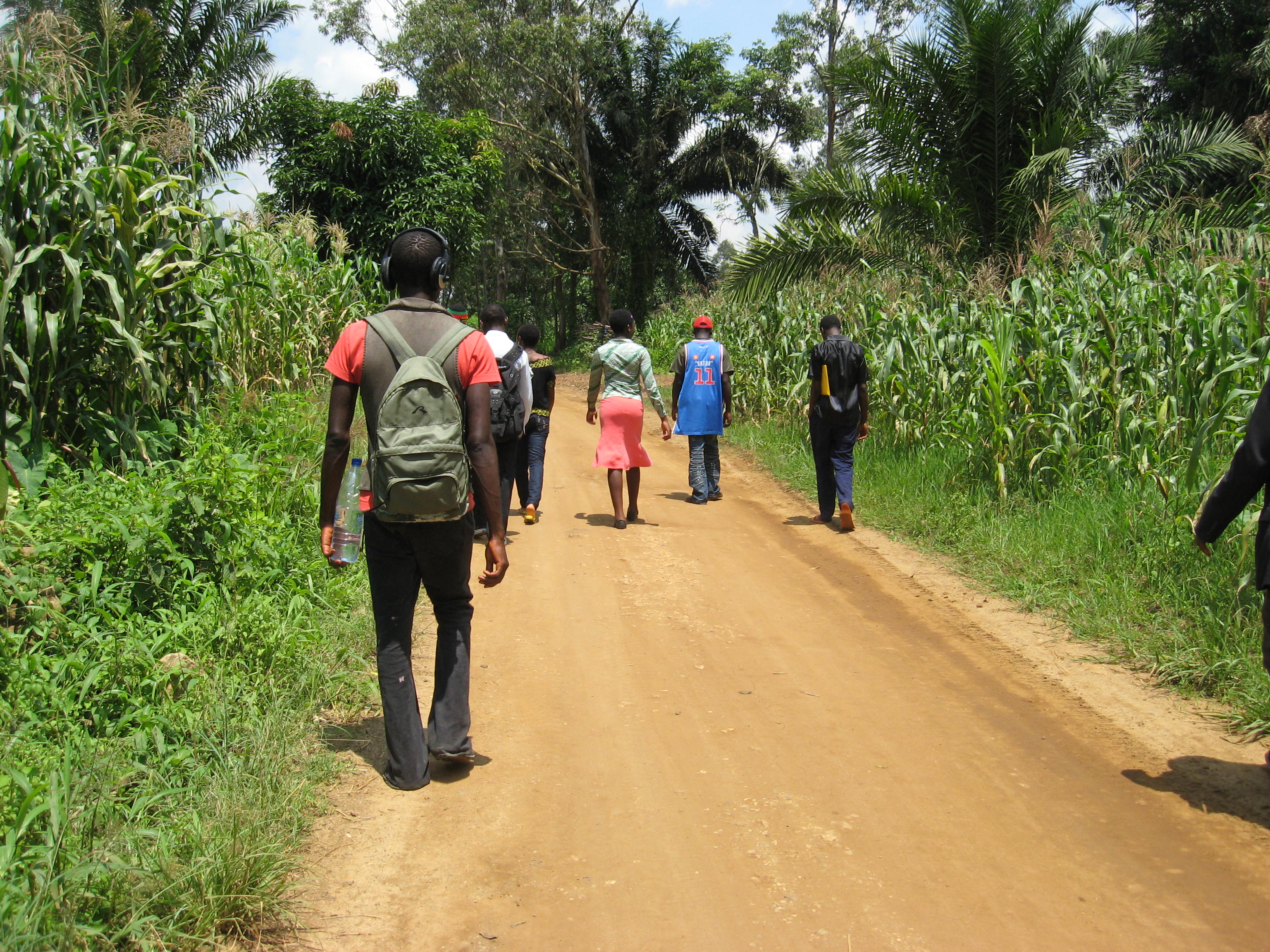
the road to PresPot

The PresPot is a pretty cool place.  It’s located down one of the roads leading off the highway near Ndop, the main town in the area of Bamenda where we were working.

PresPot Manager

The kids had their storyboard and their interview already prepared, and they got going by first asking the manager for permission and his consent to film and do some interviews. They explained that they were not doing a film for commercial purposes but as part of a project they were working on.

The manager gave them an overview of the work area, gave staff permission to be interviewed, and then went through the shop where they sell their things, explaining each product in detail.

Clay waiting to be formed into something

The clay used comes from the area nearby, It’s one of the highest quality clays. A ton of different items are made here out of the clay.

Builds up some nice arm and back muscles

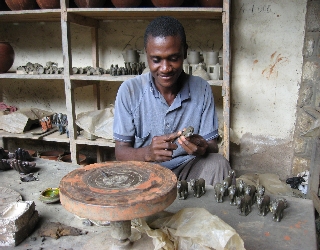
Making zebras for a Noah's Ark

There’s everything from tiny trinkets, carved by hand to big pots using the potters wheel. One guy explained that he was making a lot of Noah’s Arks. He was carving little zebras using a knife.

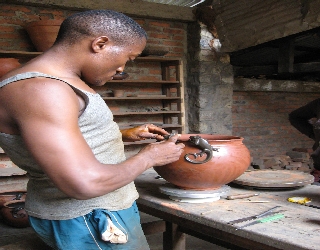
Spinning by foot and making a pot

I watched another guy spinning a pot. He uses his foot to spin the wheel. He mentioned that PresPot also has a guest house, and that lots of foreigners come to visit and rest there. I asked if they also do pottery classes but he didn’t seem to get what I meant.

(I know some people who would love to go to the beautiful mountains of Ndop, and spend a week learning to throw pottery….)

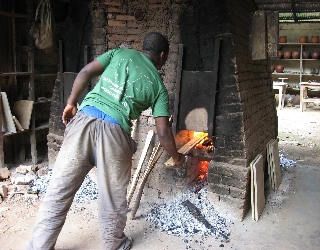
The workshop gets really warm with the ovens going

After the pieces dry, they are fired.  It was pretty hot in there.

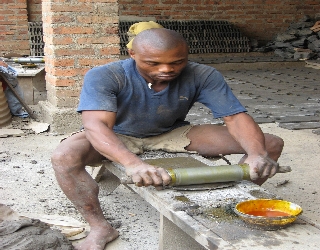
Forming the roof tiles

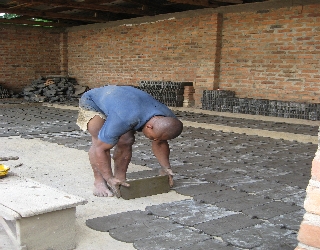
Out back, away from the firing ovens, one guy was making clay roof tiles. He said he makes 150 tile per day and they take 2 days to dry and then they fire them. He works Monday through Saturday.

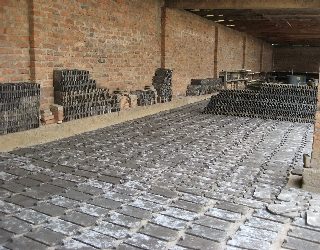
Laying the tiles to dry

150 per day

Adding final touches

Another guy was adding little figures to the pots that the other guy was spinning. He was using glue to attach them.

and this guy finishes them up

And another one was finishing the pots up.

Final products

the PresPot Shop

The shop has all kinds of clay products as well as products that come from 2 other regions that work with wood and with fibers, bamboo and palm.

There is a shipping area where their items go out to the whole world.

I kept wondering if this little business was really sustainable, or if a Presbyterian NGO or church was supporting and it was barely profitable like many of the little craft businesses I’ve seen people try to fund.

The kids were doing the questioning, not me, and so I didn’t butt in to ask. It does seems like this small business is thriving. It’s nice to see that this exists in the community, and it will be cool to see the kids’ video on it.

I also think it’s interesting that the kids chose to show the PresPot as one of their community resources, but they didn’t mention any of the small business/ market sellers lining the streets of Ndop.

Walking down the main road in Ndop, there are people selling fresh boiled peanuts, roasted corn, and palm wine.  There are mechanic shops, and places to get your hair done and fabric shops. There are corner stores and taxis and bars.  Maybe the kids will do a piece on the market as the project goes on.

If you ever get out to the Bamenda area, I’d suggest checking out PresPot and maybe staying there to kick back for a couple days. Maybe they will teach you to throw some pots….

Read Full Post »

Youth in Ndop, Cameroon

For the past few years I’ve been supporting the Youth Empowerment through Technology Arts and Media project (YETAM) in several countries in Africa.  The last few weeks I was in Cameroon, where the initiative is expanding to new communities, based on learning from last year’s work in Okola.

The project

The project uses technology, arts and media to spur youth engagement in the community development process and youth-led actions around challenges youth identify in their communities. In the process they think about their personal and community strengths and resources, develop skills for problem solving, team work, research and investigation, and get training on how to use some different ICTs (information and communication technologies). They also build confidence and self esteem and learn how to bring up different issues in their communities and involve their peers, families, local authorities and local leaders in actions to address them.

Audience

The main ‘audience’ for the arts and media is the communities where the youth live and nearby communities. Some of their teachers, parents and local leaders also take part in the project and related training. This helps youth to build up support for their agenda. The arts and media is aimed at engaging communities in dialog and discussion that eventually leads to positive change.  Youth often have opportunities to participate in and use their new skills and their arts and media to advocate at national levels as well. Via the Internet, the youth’s voices are amplified to also reach their global peers and decision makers. For example, the YouTube site for the project has over 100 videos made by youth over the past 2 years.

Youth drawing on issue of water

Actions

Last year, the youth in Okola identified poor quality drinking water as a key challenge. They got the community moving to restore a damaged and contaminated spring bed and improve the water quality (without external funding).  This year we’ve incorporated a stronger focus on prevention of violence and gender discrimination because those were the themes that emerged most heavily across all the participating countries in the past 2 years of the project.  We hope the youth will improve their analytical skills around these areas and begin to look at these issues in more depth, strengthen their understanding of the causes of violence and gender discrimination, and develop strategies for overcoming them.

Process

The whole process starts when staff begin discussions about the project and its goals with interested local communities and youth. It’s a dialog and negotiation process, aimed at building local ownership and partnership for the initiative. Staff identify local partners skilled in the areas of technology, arts and media to accompany and support the process.

Staff and partners learning to use GPS for Open Street Mapping

TOT

A 1-week training of trainers (TOT) ensures that everyone is on the same page with regard to the project objectives.The TOT also helps deepen staff and partners’ understanding of some of the issues such as gender and violence, and is an opportunity to build skills on new ICTs that can be used in the project.  This year, for example, we had a session on GPS and OpenStreetMap because we want to add digital mapping to the toolbox to complement hand-drawn mapping, since both are of value to the work we are doing. (Shout out to @billzimmerman and @mikel for pointing us in the direction of Ernest, our fabulous GPS and OSM trainer from Limbe).

Critical questions

At the TOT, we discuss some of the critical questions in a project like this, such as:

Whose media? The arts and media created in the project should belong to the community, not to the funding organization or the arts and media partners. This has connotations then in how it is attributed and copyrighted, and who keeps copies of it, and what it is used for. The best way to manage this seems to be to see organizations and funders as ‘sponsors’ of the project and to ‘brand’ the media as such (this project was funded by xxx and does not represent official positions of xxx).

My personal bias is that the media and any web associated with the project should not carry an institutional logo or be hosted on an institution’s website, but should be established and managed locally using free tools like WordPress and YouTube with support from partner organizations.  I think that we should be looking at these kinds of initiatives as youth and community capacity building not as an institutional branding opportunity.

A middle ground could be that the media is ‘owned’ by all the involved partners and all can use it to promote their own objectives, or that some of the media supports an institutional position and that media is put on an institutional site, and other media can be created by the community for its own purposes, and hosted/posted on free sites like the ones I mentioned. This aspect can still be a little bit tricky, if you ask me.

Whose agenda? The agenda should be built by and belong to the youth and the community. They are not making promotional materials for us or the local partners. We also should not be censoring media.  This is an issue sometimes when the position of the community does not follow institutional positions.  This can be addressed by resolving the issue of ‘whose media’.

Which media? The project aims at building skills in various media forms. The primary audience is local, and so we help youth learn to select their media form by thinking about the primary audience’s access and media habits or traditions. Often painting, drama, newsletters, comedy, poems and singing, radio, and video are more effective than say YouTube and blogging for getting a message across to local community members who may not have electricity and/or Internet. Digital media serves a purpose, but for a different audience, normally at the national or global level.  In addition, sometimes one tool is better than another for addressing a particular topic, for example, violence may be difficult to portray on a film without identifying the person who was mistreated and putting them at risk of retaliation.

At the same time, the thing that draws a lot of the youth into the project is the opportunity to learn computer skills, to manipulate and manage a camera, to go onto the Internet. So we bring these tools in as well to build those skills in young people, even though they may not have Internet access on a daily basis. We also ensure that youth have access to the tools and equipment they need to continue making digital media and accessing the Internet and computers by working with schools and partners on an agreement for owning and managing the equipment and supporting youth to use it.

Media for what? We all know that kids can make amazing arts and media and that they can learn to use computers and cameras and mobile phones without a problem. So what? The goal of the project is what children and youth learn in the process of making that media, what skills they build, and then what they actually do with their skills and their art and media that counts, what changes do they achieve for themselves and in their communities? How do they generate dialog while making the arts and media and/or how do they use their final ‘products’ to push for positive change.

Adapting to the local setting

During the TOT, partners and staff create a detailed plan for how they will train the 60 or so participating youth on technology, arts and media over a focused 2-week period and beyond through refresher training and hands-on work. We’ve set the goal of 30% theory and 70% practice to help guide partners and facilitators as they prepare their sessions. The goal is not training professional artists, journalists and technologists – it’s using arts, media and technology as tools for youth participation, action and advocacy.

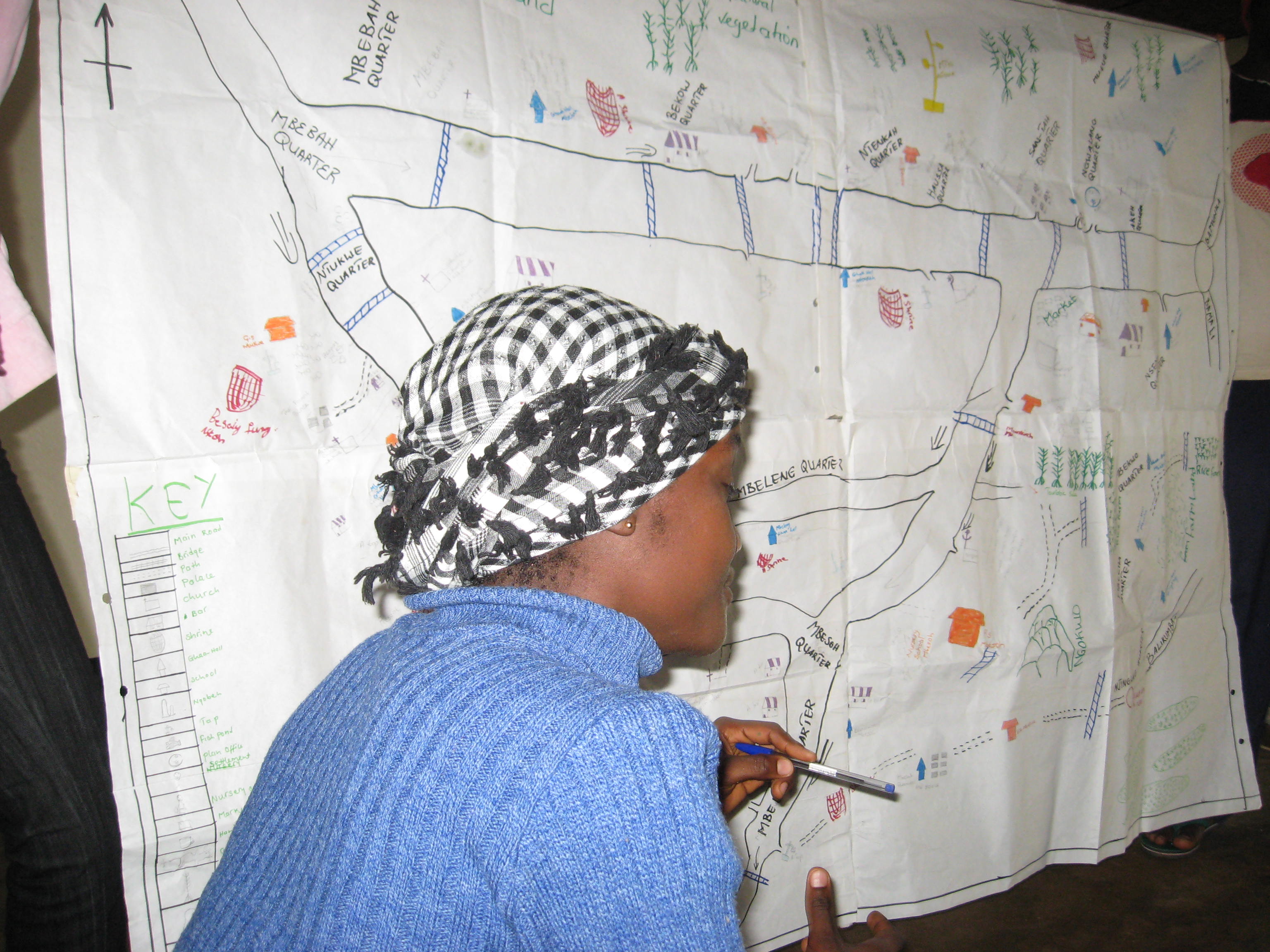
Mercy presents the youth's map

Mapping

To identify the themes that the youth will focus on, we facilitate a participatory mapping process. The youth create a base map of their community and discuss the community’s history and what makes it unique – they create their community profile.

Then they identify community resources and risks based on the 4 categories of child rights:  survival, development, participation and protection. In other words, they identify what exists currently in the community that supports children to survive and develop, and how the community currently protects children, and what spaces children currently have to participate.  They then look at where those 4 categories are not doing so well, and where children are at risk.

Youth, parents and local authorities discuss the map

The map is shared on the first day of the youth workshop and discussed with participating teachers, local authorities and parents in order to generate additional input and to get buy-in from the adults.  In small groups and plenary, they together prioritize the issues and decide which ones they will focus on during the workshop and beyond, using arts and new media tools. In follow up sessions, they will also make a digital map of their area for uploading to the Internet, and their arts and media work will be uploaded as points on that digital map. The digital map and the hand drawn map bring distinct benefits to this kind of process.

I love mapping. It’s a really interesting process, because when you start by looking at resources and when you are working with youth, so many things come out that would not come up if you came in and asked about needs or problems and only worked with adults. Communities are used to NGOs coming in to ask them what they need, to train them to see only their problems and to feel like victims, and to then expect the NGO or external agent to ‘resolve things.’ If you start by identifying only needs and problems, there are so many things in a community that will be missed. I notice that youth are not as well-trained as their parents in playing the victim. They are much better at talking about their community and what it means or holds for them than their parents are. When I show up as an outsider, they often want to show me beautiful places, special places, things they have and are proud of, not their needs and problems.

Some of the challenges youth identified and will work on

The real work

After the workshops comes the real work.  The partner organizations, staff, teachers and community leaders who are involved support the youth over time to continue their learning in the different areas, to do refresher training in areas they didn’t fully catch during the first round, to generate dialog in the community around the themes youth have identified, and to work on the issues they have identified through organized youth-led actions and advocacy at different levels and engaging decision makers at the local, but also district and national, and sometimes even global levels.

This is where the real change happens and is the real heart of the initiative.

My Cameroonian colleague told me one day ‘This project is like a catalyst in my body.’ It has motivated and driven her to learn new skills and take on new challenges, to push herself to new levels to achieve the goals set out. I’ve seen it have the same effect on the youth and on myself as well. In the end, that is what we want to achieve — motivated and engaged people, working together to make positive change in their communities and beyond.

Resources

This morning I came across this toolkit ‘A Rights-Based Approach to Participatory Video Toolkit’ by Insight, and I absolutely love it. It pretty much spells out what we are doing (though we had nothing to do with writing it up), and confirms a lot of the hunches and ideas that we’ve had while developing the program. I highly recommend it if you are working on rights and media.

Read Full Post »

Sometimes being a girl is no piece of cake.  For the Youth Empowerment through Arts and Media (YETAM) workshop we hoped to have 50% girls participating, and we ended up with about 15 girls and 40 boys.  The boys raised this on the 3rd day of the workshop (through no prompting by the facilitators).  “Why aren’t there more girls here? And the girls who are here, they never talk, they just sit there.” “They don’t have the ambition or the drive to improve themselves so they don’t even come to workshops like this when they have the opportunity”. Photo: Painting the mural.

Most of the girls listened to this criticism without responding.  “Girls – what do you have to say about this?” asked one of the facilitators.  Silence.  “See, even now they just sit there and don’t defend themselves,” complained the boys. More silence.  Finally one girl spoke up “You don’t know what it’s like.  We can’t get permission to come. It’s very difficult for us. Our parents don’t trust us. They think we are just coming to play. They want us to stay at home to do work during our school break.”  “But you have the same letter from the school that we do! Why can’t you learn to negotiate with your parents like we do?”  More silence.  The discussion turned to effective negotiation skills to communicate with and convince parents to allow both girls and boys to participate. “Our parents and grandparents are not ignorant donkeys; they are just from another time. They have never had the opportunity to participate in projects and workshops or even to go to school. They don’t know why we think it’s important.  We need to become better at talking with them, to counsel them and help them to see what we are doing so that they will allow us to join in these efforts.”

Being a girl isn’t only an obstacle to participating in workshops.  In the community over the past 3 weeks, I saw and heard about the challenges girls face to achieve an education, avoid unwanted advances, including from teachers, and avoid early pregnancies.  Most of the time there is no space for these issues to be discussed openly among both boys and girls, and with adults.  Plan’s two campaigns, Learn without Fear and Because I am a Girl, seem extremely relevant to the context.

A Conquista

The hottest debate of the 2 weeks was not “poverty” or “lack of water” or anything typically thought of as a “development” issue.  It was “a conquista” or the process of getting a girl/being wooed by a boy.  It was nice to see the girls getting more vocal as we got further along into the workshop. “We try to talk to girls and they don’t respond.  They just ignore us! So it makes us angry,” said one of the guys.  A girl countered “We are afraid when someone approaches us, because if we don’t agree, a boy or a man may get angry and they can find us and take out their aggression on us, they can rape us.”  “Sometimes if girls talk to one of us, and then talk to another of us also, what boys do then is to join together and show her that she can’t play with us, show her she can’t act like that,” said one of the boys. “It’s true,” said a girl, “We are afraid because they get mad if we don’t talk to them.”  “You should talk to us then!” interrupted a boy.  “What, can I give myself to every single male in the village just because he wants me?” exclaimed one of the girls.  This forum was incredibly important for guys and girls to have a time and a place to hear each other out, see each others’ points of view and try to understand each other.  There is a lot of room for awareness building on gender violence.  I even heard one teenage girl in one of the nearby communities say “if it’s just one man, it’s not really a rape…. it has to be 3 or 4.”

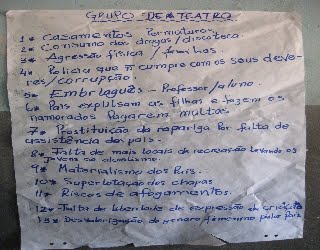
So I was really happy that the theater group decided to do their play about the things that girls face, even more so because there were only about 4 girls in the theater group, and the 3 facilitators were male.  (There are not many female teachers and facilitators to work with). Now that we had divided into small group and we’d been working together for several days, the girls’ voices were much louder. Photo: the issues chosen by the theater group included early marriage, drug abuse, physical aggression in families, corrupt police, professors/student fights, lack of value placed on girls within families.

Community Showcase

The groups had their showcase on Nov. 20, coinciding with the celebration of the 20th Anniversary of the Convention on the Rights of the Child (CRC). Some 300 people from nearby primary schools and communities attended the event.The painting group’s mural greeted people as they came into the school grounds. Under giant orange tarp (which pretty much ruined any chance of getting good photos/videos since everything had a very strange light) the music group sang 2 songs about education and HIV prevention and performed a traditional dance.  The media group showed 6 of their videos, on life in the community, the importance of the river, trash in the market, the discotheque, and the local cinemas.  The journalism group shared their community newspaper, and the theater group performed their play.

On being a girl…

The storyline in the play is of a girl whose father marries her off for money; she is taken off to her new husband’s place and becomes pregnant. Her husband is abusive, alcoholic and brings other women home. He beats her, but her mother finds out and they report it to the police.  The police come to take a report, admonishing the husband and telling him that he is going to jail.  No matter, nothing a little private conversation and bribe won’t solve.  So the tables turn with the policeman admonishing the girl that she should not treat her husband badly and she deserves what she got.  As soon as the police leave, he beats the girl again, shouting as her father had shouted at her mother “In this house it’s the man who’s in charge!” He throws her out on the street. A friend tries to convince her to prostitute herself and make good money and she refuses.  The play ends as she looks at the audience, carrying the small bundle of her child, and asks “Why will people say this is my fault?”  The other actors come out one by one, calling on governments, parents, friends, school, teachers to see the situation clearly and to take on their responsibilities to change this scenario.  I have to say it was one of the best theater pieces I’ve ever seen, and it was written entirely by this group of 9th and 10th graders. Photo: Theater group closing out after a day of rehearsing.

The best tools to get the message across

Each different art or media form carried the messages on issues that the youth want to raise and change in their communities.  Once more it was a reminder that it’s the communication objectives and impact on the audience that matter, and the choice of the tools should be secondary, based on the outcomes to achieve.  We are not “doing media projects”, but helping kids to use different tools, including media, to dig into their realities and then use those tools as effective means of communication to make change in their communities.  What may be a great topic for a video, may not work so well as theater, and vice versa. In the process of discussing the issues and the media forms that would be best to make change in the community, both boys and girls learn new personal skills and improve their self esteem as well as their own communication skills.  They also have an opportunity to openly and deeply discuss issues among themselves and to understand each other better.  The discussion around gender issues and how the same challenges may affect girls and boys differently is one of the most important that they can have.

Related posts:
On Girls and ICTs
An example of youth led community change in Mali
Breaking it down: Violence against Children
Stories that touch the heart

Read Full Post »

Next week I’ll have the honor of (wo)manning the expo table for Plan at the Clinton Global Initiative (CGI) Exchange [the networking event after the actual CGI meeting]. It’s Plan’s first year at the CGI, which is exciting for us as an organization. The project that we’ve committed to is a convergence of many of the things that Plan has been getting deeper and deeper into in the past few years – youth engagement, youth employment, participatory media, social media, ICTs, youth voice, youth-led advocacy, and last but not least, girl power. I’ll be supporting the project with some training around social media and ICTs based on experiences in past projects such as the Youth Empowerment through Arts and Media project.

Our commitment, Vocational Skills and Media Training for Adolescent Girls in Ghana, is a three-year project that combines job skills training for girls with media production by girls.  The combination of these two elements will give girls key skill sets for employment opportunities while also creating public platforms for girls to raise awareness and advocate on issues affecting them. Through the project 140 adolescent girls will participate in training on media production and journalism, including citizen journalism/social media.  Of those, some will go on to participate in an internship program to do hands-on work in media.  The girls will be trained on how to use diverse types of media, including traditional as well as new media, to advocate against gender discrimination.  Adult journalists will participate in Plan’s training program on child rights and gender respect in media.  In the process, the project will engage the public through radio, television and web communication around the challenges that adolescent girls face in West Africa at the community, national, and regional levels. Participating girls will also have opportunities to meet and share experiences with each other and their female Ghanaian journalist mentors.

I really like this project because it brings so many critical elements into one initiative.  More and more Plan is supporting this type of work in Africa, and it really makes a difference in the youth themselves in terms of skills, self confidence, team work, and learning how to communicate issues of importance in a confident and respectful way.  It helps them access information and new skills that help them find employment. It also has an impact on communities who see their youth in a new light and who become more open to dialogue with youth around issues that youth want to discuss but may not be able to bring up in existing forums.  The media produced by children and youth can raise awareness and encourage dialogue at the national level, and it can be presented in global meetings to bring youth voices and a dose of reality into high level discussions. It can be shared on the internet to engage and involve people in other parts of the world, and to break down stereotypes about Africans. I also think one outcome will be that the participating girls and women will contribute to modernizing the field of journalism in Ghana because they will be trained on new media tools and they will likely think seriously about how girls are portrayed by the media in the future.

Plan’s research “Because I am a Girl: The State of the World’s Girls” came out in 2007, highlighting the urgency for us to focus more programs on girls as key players.  Out of this report, a decision was made to make girls Plan’s key focus over the next several years, and the Because I am a Girl Campaign was launched.  Since then, two in depth studies have highlighted specific issues: Because I am a Girl: In the Shadow of War (2008), and Girl’s Economic Empowerment (coming out later this month).

Come by our table to say hi if you happen to be at CGI exchange!

Related posts:

On Girls and ICTs

Being a girl in Cumbana

An example of youth-led community change in Mali

Read Full Post »

We started the YETAM training with the youth on Tuesday morning, after an official launch. The mayor of Okola attended as well as some of the Plan staff from the Country Office in Yaounde.

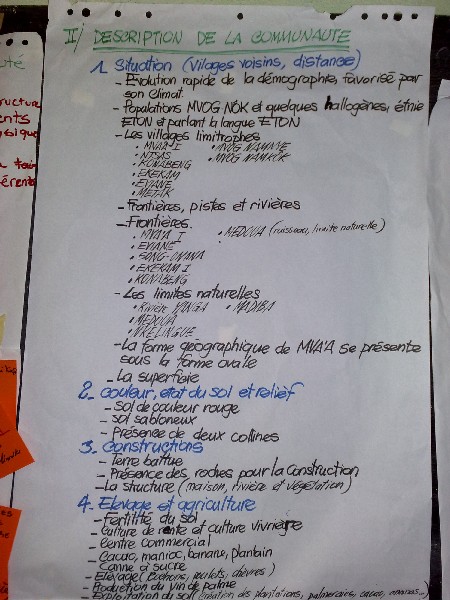
Since the youth had already had training via Plan and IRONDEL on the Rights of the Child, and some had worked with Plan’s Kids Waves radio show, they were really well equipped for moving onto video and arts work. They started with their community map where they had detailed, along with the community organization members, everything in their community.

The youth presented the map and everyone worked in groups to organize and flesh out the information from the map in 4 categories: community history, community description, community resources, and the situation of child rights and protection. Photo: youth presenting the map.

They wrote their ideas on note cards which were posted on flipcharts and then sorted to come up with final categories. These formed the basis for all the upcoming work. Photos: flipcharts with the different topics for filming and arts work.

After the map work, we went into introductions to the different things that we’d be doing: photography, film and drawing/painting. We had a bit of a struggle within the team getting facilitators to move from too much theory onto practical work. They kept going back to presentations and lots of long flipcharts and technical descriptions. Photo: The arts group re-drew a nicer version of the community map later in the week.

We realized later in the week that we didn’t all have the same understanding of the project methodology. Some thought that we were doing 1 week of theory, and 1 week of practice, and then afterwards would start making some videos, when in reality the idea is that we would not focus too much on theory because the media equipment is very simple to use, and we can use practical, hands-on exercises to build the technical skills.

The idea is to quickly get hands on during the first week, and then start making a first round of arts and videos near the end of the first week, continuing through the second week, and then getting into editing by the middle of the 2nd week. In the evenings we’d look at the footage as a whole group, and participants would talk about what looked good, what didn’t and how to improve. Once that got cleared up things moved on splendidly. Photo: Practice and group reflection is the best teacher.

Read Full Post »

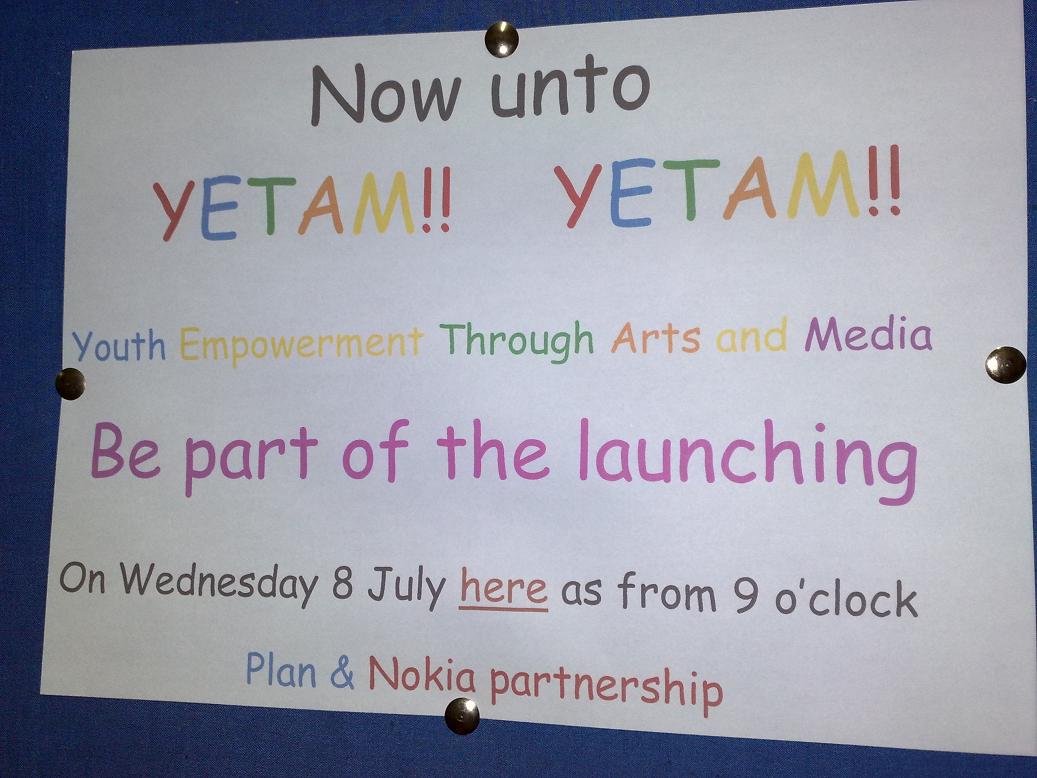
The Youth Empowerment through Arts and Media project (YETAM) kicked off on Wednesday with a press event, and then a training of trainers until Friday. At the press launch, I had to give an overview of social media and the YETAM project. The focus was on how social media can serve as a tool for community development, social change and augmenting participation, because it is based on some of the same principles and approaches as good community development work: partnership, ownership, collaboration, sharing, openness, communication, voice, power sharing, accountability, transparency, and democratic processes. I was bit afraid to use any examples of human rights/election monitoring or mention how social media is forcing the media business to change and impacting on social ‘revolutions’, not knowing if it could be threatening to the government and media attending, so it seemed better not to bring it up! Photo: YETAM launch announcement hanging in the lobby at Plan Cameroon.

For me the most interesting part of the 3-day workshop was listening to the participants debate about whether arts/media are tools or products. People said that they really learned something from the debate, that it really sparked their thinking about what is art and what is media and what both are for. They concluded (as I had hoped) that arts and media can be tools that help youth (in our case) research and deepen their understanding of themselves and their communities during the creation process. Yet arts and media are also products that are ‘consumed’ afterwards, catalyzing more debate and dialogue (sometimes via more arts and media) and if successful, eventually lead to some kind of positive social change. And the cycle goes around and around. Photo: Press event for the closing of the training of trainers.

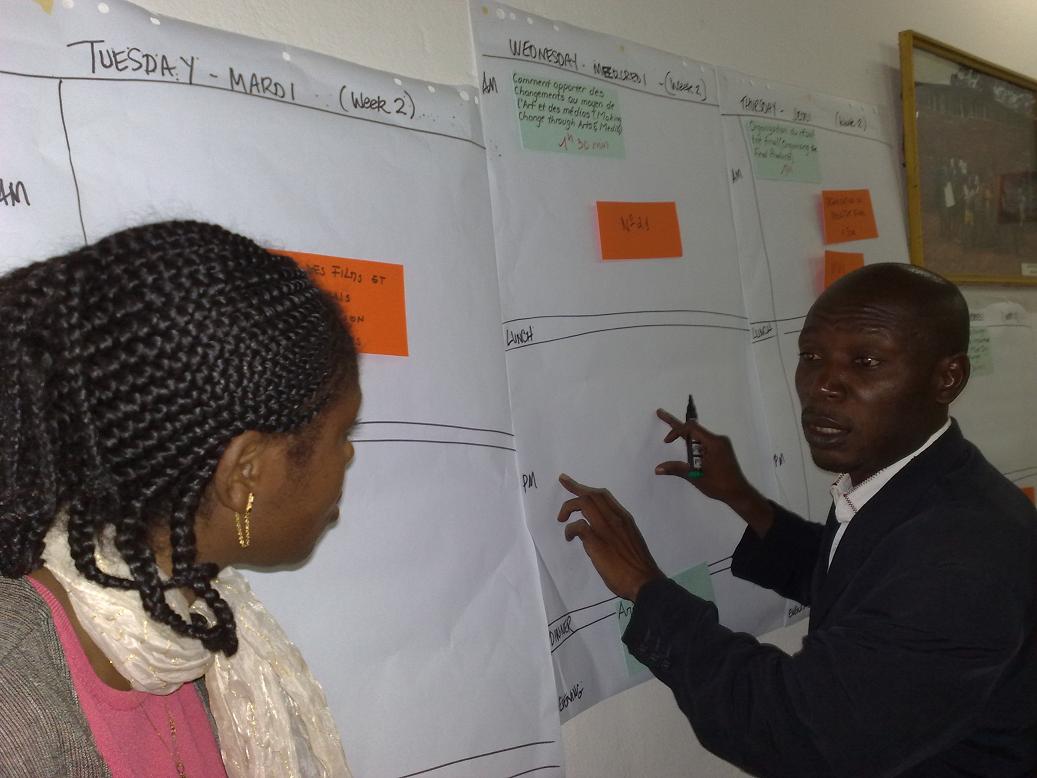
The idea of tool vs product can be a struggle sometimes when we start work on YETAM and the concept of participatory video or social media for social change and working with rural communities. Sometimes people think that we want fancy commercials or television spots or 30 minute professional documentaries or fiction films, or they don’t believe children/youth will have the capacity to make their own videos or edit their own films, or that people from rural communities can learn to use the equipment. It can be hard to explain that we don’t need to write long scripts and set up scenes with lights and big media teams with large expensive cameras, and that if we bring the technology down to simple language and hand over the camera, it’s very doable. We don’t need a week of theory before we allow the kids to touch the cameras or to paint something, that the media and the art are the means for having the discussions and theorizing about the issues as well as the end for continuing on with the discussions. And we don’t need to disrupt the community and or have ‘outsiders’ doing it for the media or art to matter. Local people can make their own media and it can be even more meaningful that way. Photo: Plan and partner staff working on the agenda for the youth training that starts on Monday.

Read Full Post »

Yippee!!! Mika and his colleague Ville at Plan Finland have been working on a tutorial video for using Frontline SMS since our Social Media for Social Change (SM4SC) workshop in December. They just posted it and it’s really helpful to better understand how mobile data gathering works in general.

http://frontlinesms.ning.com/video/video/show?id=2052630%3AVideo%3A11014

We’ll be having a workshop coming up in June in Kenya to see how to use Nokia’s Mobile Data Gathering Software, so soon I hope I’ll have a good understanding of how this whoe thing works so that we can train others to use it.

For YETAM we are looking at how we can use mobile data gathering software to do follow up monitoring in the communities following the YETAM workshops. The idea is that during the arts and media workshops, the kids are discussing issues most important to them. Then they make videos, photos, arts, etc. to investigate the issues, and bring them out, and to generate dialogue in their communities on the issues in order to try to bring about positive change by engaging peers, community at large, decision makers, and Plan (in case Plan hasn’t been aware of the particular issues the youth are looking at). But how are we monitoring afterwards to see what is happening at the individual youth level, and at other levels? How are the youth able to measure their impact on the issues they’ve chosen?

So we are planning to work with them to develop mobile surveys related to the changes they hope to create in the communities, and then they could monitor their progress on the issues through the surveys. They would also make videos/photos, etc. to show their progress, but in addition now they would have some data as well to help them shape their approach and measure their impact.

Sounds cool to me!

Read Full Post »

Jetlagged


Ali K, Ali M, Rama, Wajuhi and I went to a second hotel to work for the last 3 days on editing final versions and translating from local languages (Digo, Duruma) into Swahili. We didn’t have enough time to get them into English so I have to follow up on that from home. We worked from 9 a.m. till sometimes 2 a.m. and eventually finished 9 short videos on the themes of:

  • Coconut as an economic activity
  • Disability and traditions part 1 and 2
  • Overcoming disability to succeed
  • Traditional healer
  • Poor performance in school
  • Amina’s Story
  • Women’s group
  • Tuff Gong Town Cleaners

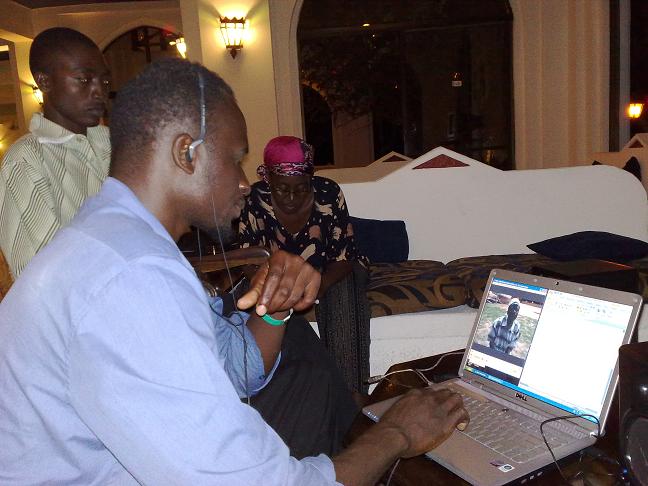
My favorite surreal night was sitting in a lounge area near the hotel bar with our laptops and headphones, etc. Outside near the pool was a tourist show of Maasai comedians, leading into Maasai singing/dancing. Amazing music, but not sure how I felt about the location of it — not quite the same as it might have been in situ. Following that, they put on 80s German techno music. When that was over, we watched Wrestlemania’s 25th anniversary in the background until around 2, slapping mosquitoes and yawning while Ali M and Ali K transcribed videos. Ali K asked me if it was real.

The flights home were uneventful but long…. and I’m so jetlagged! I was supposed to go to a capoeira event Friday night and then all day Saturday but forget it! Am hanging out with the kids and getting caught up on housework instead!

Read Full Post »

We ended up taking a nice break Saturday afternoon to go to the beach. Really nice. Took tons of photos. Ended up trading acrobatic tricks with the guys so that was fun – everyone showing different moves and people trying it out. I only had like 2 things I could do – this one capoeira move – queda de rins and a headstand where you push up into a handstand — but it was fun showing them how to do it. I think we all needed a break.

Anthony and some of the guys stayed up till like 4 a.m. getting rough cuts of 12 videos done since that was the goal for the week. I stayed up sorting photos, but not till 4!

Sunday we had a light morning. We did the evaluation by asking what was the most significant change they had experienced at the personal level during the workshop, and what change did they want to see in the community. This led into a selection of the issues that the kids want to address in the community going forward. What really came out was poor performance in school – especially for girls, early marriages/early pregnancies, disabilities/the community attitude towards those people with special needs (the community still practices exposure and infanticide if children are born with any type of disability), and youth participation/youth action to make these changes in the community. They will work on their action plan this coming week including how they will use these and other videos they will make, along with any skills they’ve learned this week to bring about some changes in the community in those areas.
Summary of some expressions during the evaluation:

“I’ve learned that change comes from within and not from outside.” Community Chairman

“I would like to work on the issue of disability because the community needs to know that every child has a right to life and disability is not inability.” Ali
“Now I’m viewing arts and media in a very different perspective – as a vital tool in sharing and disseminating ideas/issues thereby transforming the lives of people around the world” Ali K
“The workshop has changed my attitude so I feel that I can do something better for my community.” Vincent
“I’ll make a change of early pregnancy in the community and I will stay with all girls and discuss the way girls get pregnant when they are at school and how they get it easily.” Violet

“Before I joined the workshop I didn’t have an ambition, but after I joined I was taught how to use camera, to edit, to interview people and now my ambition is to become a journalist.” Samira
“I discovered my responsibilities as a youth and a technique that I can use to convince people in the community towards positive attitudes. As a youthI will make sure that the young generation is given a chance to participate in the community.” Dickson

“I would like to work on the issue of early pregnancies. It really touches my heart as it makes most of the girls in my community not fully acquire the right to education.” Chimoche

“I have come to know how to sort out problems from the community through friendly negotiation and I have developed empathy to some things.” Bomaz
“It has helped me to look at things from a broader perspective and I am in a better position to reflect on the different situations that I come across and make necessary adjustments… I would like to use of the skills I have acquired to help the community reflect on their situation so that it changes for the better.” Rama

“I’ve been introduced to the method of looking at things/issues at different levels hence identifying the consequences and impact they may have in the community.” Zainab (teacher)

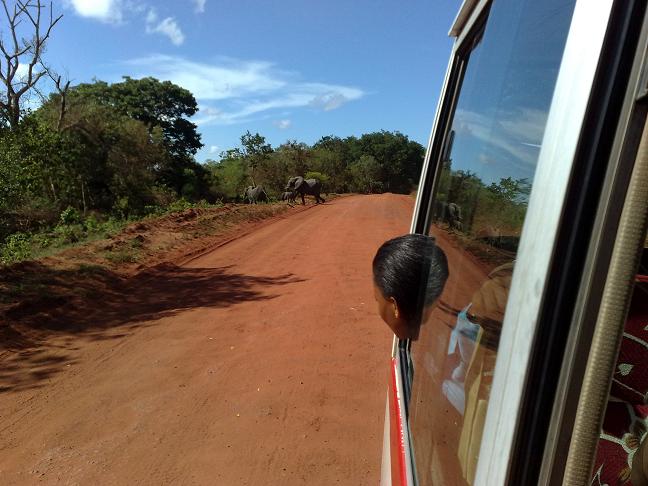
We all got on the bus around 2.30 to drive everyone back to their communities, including the 2-3 kids who lived in other communities. The door fell off the bus last night as we were coming back from the beach, so the bus was really breezy. We drove around through really lush green areas where the national park and elephant sanctuary is first (and saw a herd of 4 elephants!) and then through a very arid place, and then back to a different hotel right on the beach where Wajuhi, Ali K and Ali M, and Rama and I will put the finishing touches on the videos, do the transcriptions and translations, and wrap it all up before we go home on Wednesday. There was Arabic music playing in the bus and the guys got going singing all these songs in Swahili on top of it. Maybe some of it will be nice for background music on the videos?

We got to our hotel around 6.30. It’s really nice – gorgeous floors and wood staircases, white washed, beautiful gardens, right on the beach. Since it’s low season Plan Kenya gets a good discount price. But I guess it’s geared to the older tourist. They were having bingo at 9.15 last night! I checked out the beach this morning and it’s not that great of a beach because it’s not flat and there is a lot of seaweed washing up, but nice for a solitary walk in the early morning.

Read Full Post »

« Newer Posts - Older Posts »