Feeds:
Posts
Comments

HSBC Ad Campaign

If you’ve done any international travel lately, you’ll likely have seen the HSBC Ad Campaign on the walkway as you get on your plane. You know the one. It has 3 identical photos, each with one word or phrase written on it, showing different perspectives.

Well, last week in Ndop, Cameroon, I had a random and cool experience that I was a tiny bit hesitant to post about.  But thanks to HSBC Advertisements, I figured something out. (Note, I still really don’t know who HBSC is or what in particular they do nor do I have any intention of using their bank).

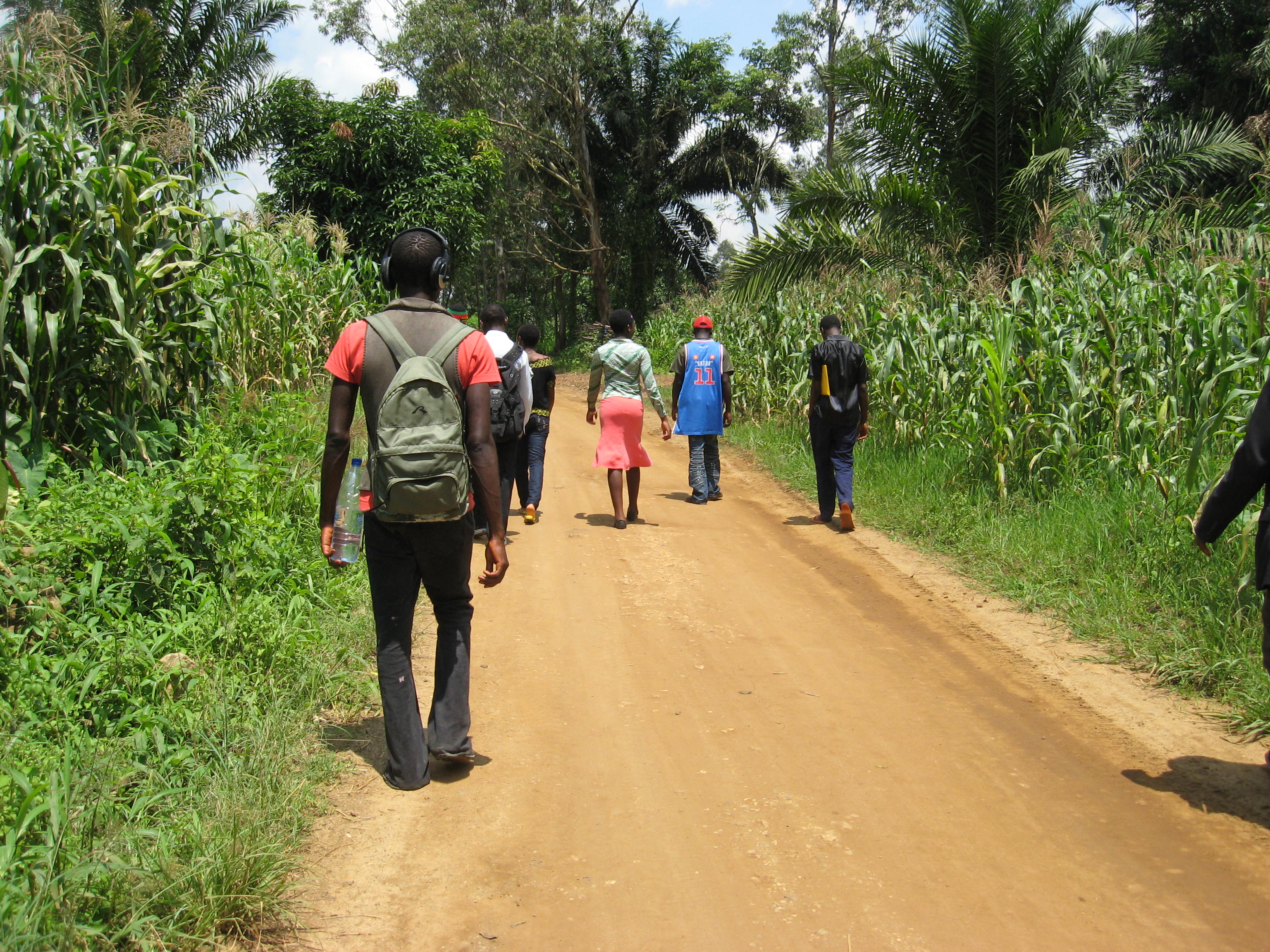
I was with some of the youth participating in the YETAM project, filming at a local craft shop called PresPot. When we’d finished filming, we walked down the road towards the local Fon’s (King’s) Palace to meet another group that was filming there. The plan was to eat our packed lunch together.

There were more people than normal out on the road we were walking on, so it seemed to me that something was up. Then one of the kids pointed down the road to show the reason why.

The Ndobo were coming. ‘Ndobo?’ I asked? I could make out what looked like small group of people, some of them dressed in brown grass skirts.

Ndobo

As they got closer, I remembered a blog post (perhaps ScarlettLion’s or maybe a link she posted?) a few months back, where someone had taken shots of people in different places – I think mostly in Africa and in Haiti – wearing similar types of costumes to the ones the Ndobo were wearing. In any case, the Ndobo were definitely something to behold, and since I’d seen that post, they were now sitting within some kind of broader framework for me.

[Update: Thanks to Meghan for her comment below, with this link to the blog post I am referring to with the stunning photos. They are by Phyllis Galembo and on exhibit at the Tang Museum: “These portraits of masqueraders build on Galembo’s work of the past twenty years photographing the rituals and religious culture in Nigeria, Brazil, Cuba, Jamaica and Haiti, as well as the homegrown custom of Halloween in the United States. Organized by Ian Berry, Malloy Curator of the Tang Museum, in collaboration with the artist.”]

‘So what are we supposed to do?’ I asked.  ‘Are the Ndobo scary? Are we supposed to run away? Stay here? Get off the road? Bow down?’

‘Just watch them when they come,’ one of the girls told me. ‘They will ask you for some coins and you just give them some.’ ‘Are we allowed to film?’ I asked. ‘Yes, once you give them some coins they will be happy and you can film.’  I dug around in my bag to find some coins.

There were about 6 Ndobo, all teen-aged boys and young men, and a bunch of excited younger boys with them.  They moved in a way that was part stealth, part walking and part dancing as they approached. Someone played flutes as they moved along.

‘Why are they here? Why today? Who are they? What do they represent?’ I wanted to know. The kids had all kinds of different answers. ‘They come out to announce the corn harvest season is here.’ ‘They are just looking for money, so they make those shirts and clothing at home, and then they become Ndobo.’

‘In my village,’ said one of my co-trainers, ‘only certain of the young men are allowed to be Ndobos.’ ‘No,’ said one of the girls. ‘here any boy who wants to can just make his clothing and go out. My brother, when he became that age, he made that clothing and went out just to get some coins.’ Another of the kids said ‘They come out when there is a town hall meeting to ask for money.’ ‘Ha, it’s an income generation project for the youth,’ said one of the other co-trainers.

Meanwhile the Ndobo were approaching, and everyone was waiting and kind of excited to see what they would do. It was one of those amazing and random moments that make me love life. It was not scheduled purposely so that a white person could see some ‘local traditions’. It was not a tourist show. There were no tables with locals performing for respected visitors. It would have happened regardless of me being there or not. In my line of work, those moments can be rare and I was savoring this one.
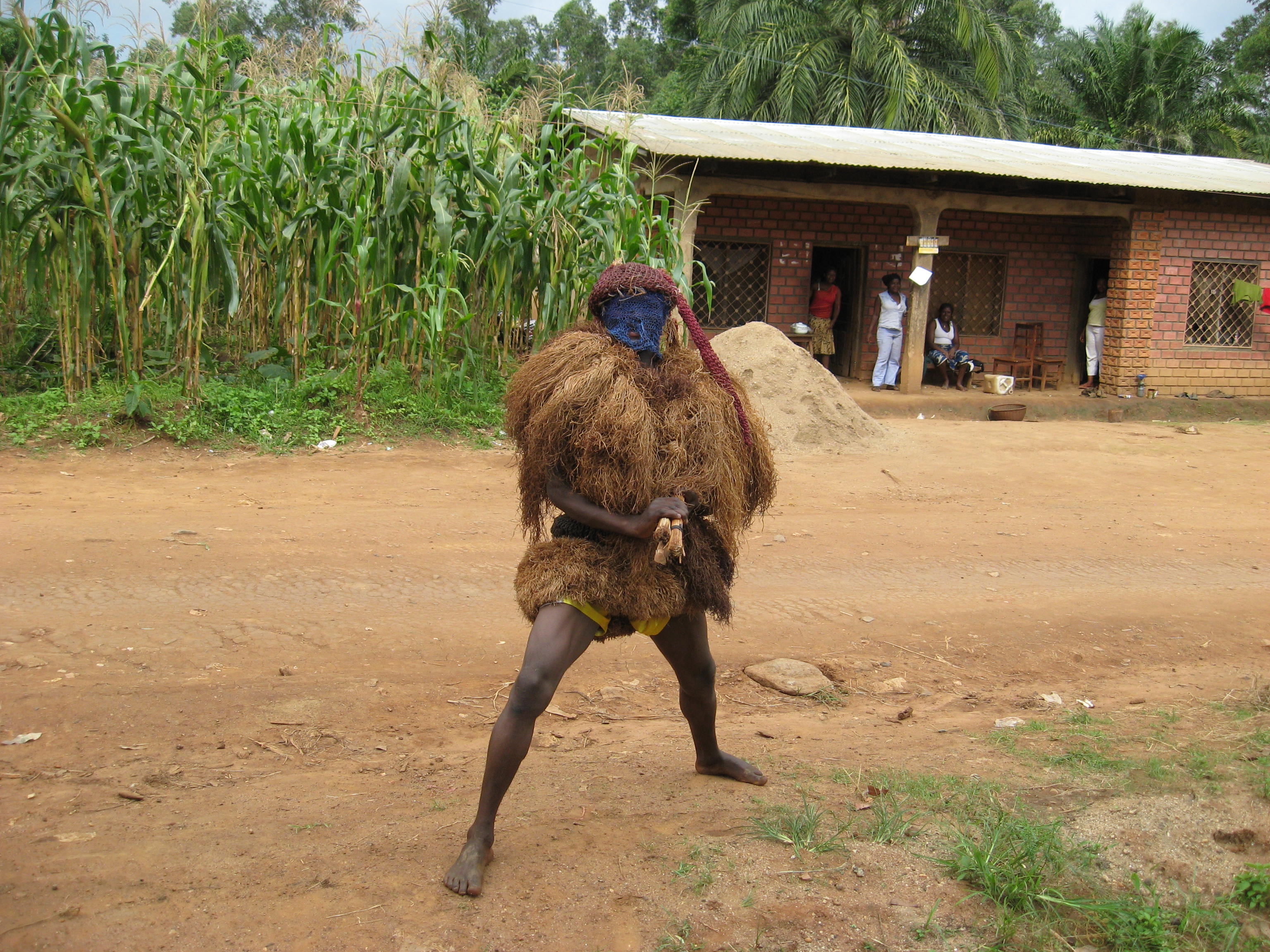
We stood off the road in a clearing, and watched the Ndobo arrive, their entourage of overexcited sparkly eyed young boys with them watching us from a distance, flicking their eyes at me regularly. Maybe they wanted to know what I was going to do also, how I was going to react to the Ndobo and vice versa. I wondered also if it was going to be somehow weird because I was there. I was thinking how surreal it was, and how cool their ‘costumes’ were, remembering that blog post about young men in similar dress with photos that seemed to be from some kind of museum exhibit… thinking that this was real life, not a museum…. Then thinking about how in museums things from Africa are often called ‘handicrafts’ or ‘anthropological exhibits’ whereas things from Europe are called art…. Wondering what the difference really is.

The Ndobo  took their stance for a moment in front of us. They were carrying little sticks and whips made of grass and palm. They surrounded us and started lightly thrashing me and my colleague Georges with their sticks and whips in a vaguely threatening way, but not one that caused any fear. The feeling was someplace between theater and in-your-face reality. I found my coins again, and several hands came forward to collect them. The kids with us were watching and laughing, the little boys accompanying the Ndobo were giggling.

After I’d given out my coins I looked behind me and saw that one of the Ndobo had a stick against the back of Georges’ neck and another was holding his grass whip against Georges’ shins. Georges rolled his eyes and dug around to find some coins for them, also laughing. He dropped the coins into the outstretched hands and the Ndobo let him go. One of them stood in front of us to get his picture taken, and then they moved off down the road. We carried on towards the Fon palace.

When we arrived to the Fon palace, the other group of youth asked ‘did you see the Ndobo?! They came here and danced right in front of us! We took pictures and films!’  They were pretty animated too, so I felt less like a silly foreigner, getting excited about seeing ‘local tradition’.

We sat on the steps of the local council’s building and started in on lunch – boiled plantains and koki bean. The rest of the day, all the kids could talk about was the Ndobo. I kept thinking that the Ndobo reminded me of Halloween… harvest time festival, costumes to hide your identity, playing tricks and asking for treats.

I posted a picture of the Ndobo on Twitter. But I hesitated before doing it. A colleague saw it and said something about Africa stereotyping. So she had the same reservations.

I held off on the blog post… but then HSBC came to the rescue.

African Tradition

African Stereotype

African Entrepreneur

It’s interesting how uncomfortable ‘Africa’ can make us. But I guess so can anything, anyone or anyplace that is complex and involves human behavior and culture… I guess you could say the Ndobo are a small piece of a much larger ball of string, just like high heeled shoes, plastic surgery, tattoos and henna, and shaved heads. Ask HSBC.
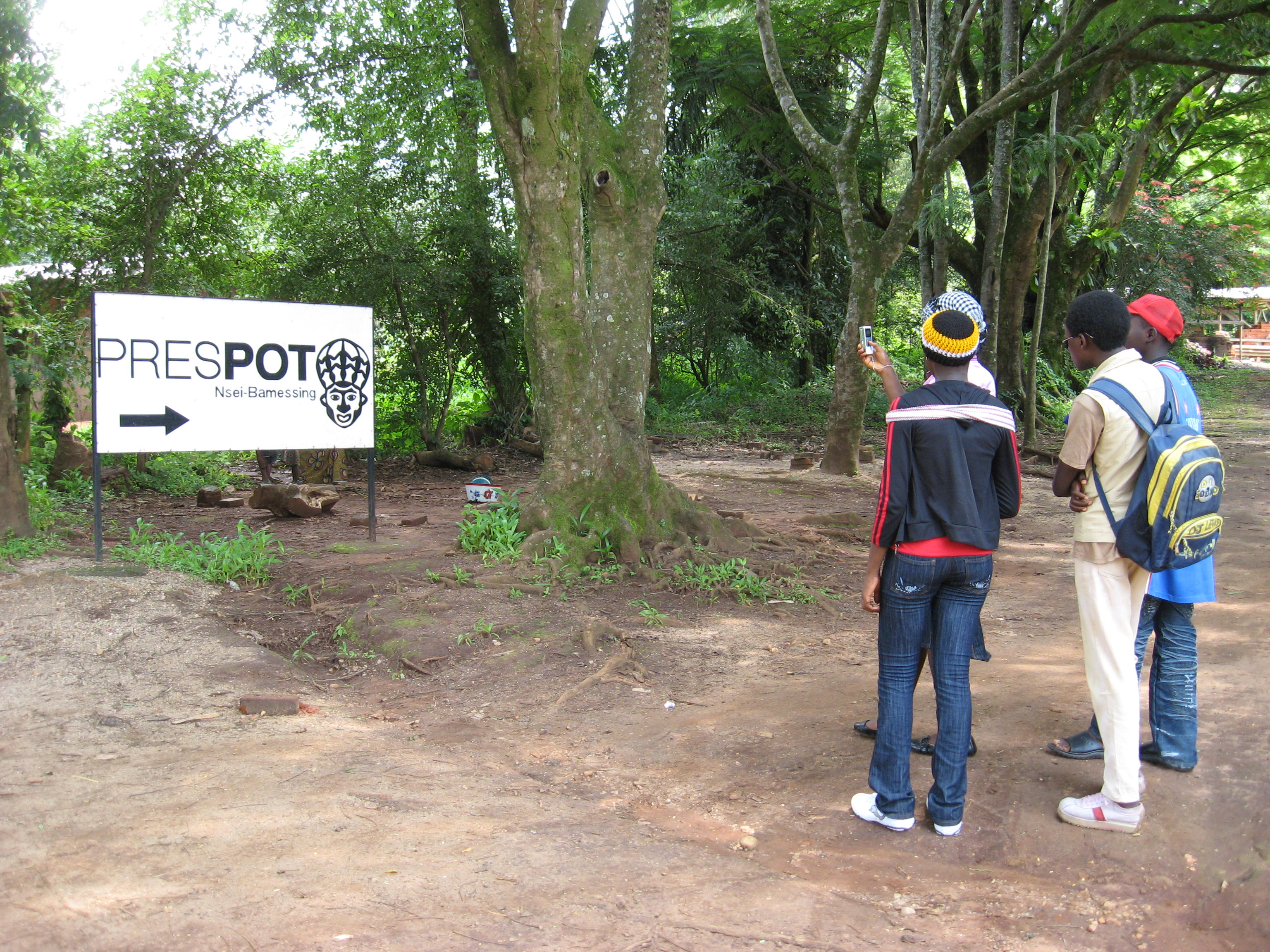
PresPot

While I was in Cameroon last week, I had a chance to go out to film with one of the youth groups. Earlier in the week they had worked together to map out their community and look at local resources, and one of those resources was PresPot, a local business that makes different types of clay products. It’s part of a larger initiative, supported by Presbyterians (get it? PresPot?).

the road to PresPot

The PresPot is a pretty cool place.  It’s located down one of the roads leading off the highway near Ndop, the main town in the area of Bamenda where we were working.

PresPot Manager

The kids had their storyboard and their interview already prepared, and they got going by first asking the manager for permission and his consent to film and do some interviews. They explained that they were not doing a film for commercial purposes but as part of a project they were working on.

The manager gave them an overview of the work area, gave staff permission to be interviewed, and then went through the shop where they sell their things, explaining each product in detail.

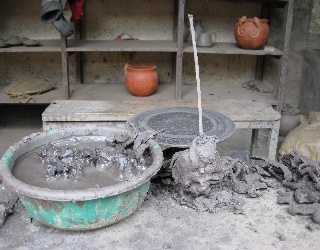
Clay waiting to be formed into something

The clay used comes from the area nearby, It’s one of the highest quality clays. A ton of different items are made here out of the clay.

Builds up some nice arm and back muscles

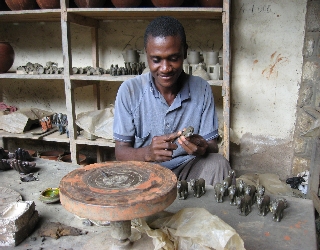
Making zebras for a Noah's Ark

There’s everything from tiny trinkets, carved by hand to big pots using the potters wheel. One guy explained that he was making a lot of Noah’s Arks. He was carving little zebras using a knife.

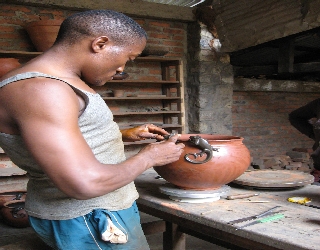
Spinning by foot and making a pot

I watched another guy spinning a pot. He uses his foot to spin the wheel. He mentioned that PresPot also has a guest house, and that lots of foreigners come to visit and rest there. I asked if they also do pottery classes but he didn’t seem to get what I meant.

(I know some people who would love to go to the beautiful mountains of Ndop, and spend a week learning to throw pottery….)

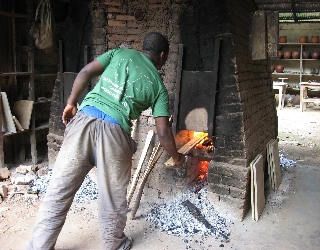
The workshop gets really warm with the ovens going

After the pieces dry, they are fired.  It was pretty hot in there.

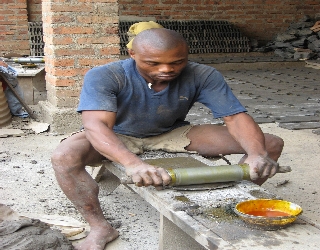
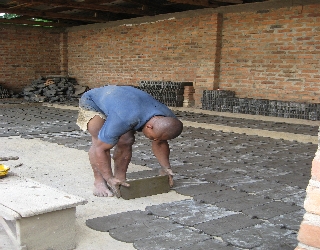
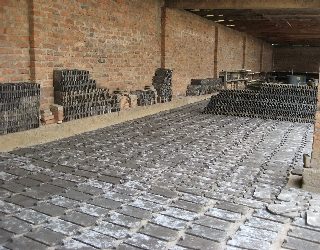
Forming the roof tiles

Out back, away from the firing ovens, one guy was making clay roof tiles. He said he makes 150 tile per day and they take 2 days to dry and then they fire them. He works Monday through Saturday.

Laying the tiles to dry

150 per day

Adding final touches

Another guy was adding little figures to the pots that the other guy was spinning. He was using glue to attach them.

and this guy finishes them up

And another one was finishing the pots up.

Final products

the PresPot Shop

The shop has all kinds of clay products as well as products that come from 2 other regions that work with wood and with fibers, bamboo and palm.

There is a shipping area where their items go out to the whole world.

I kept wondering if this little business was really sustainable, or if a Presbyterian NGO or church was supporting and it was barely profitable like many of the little craft businesses I’ve seen people try to fund.

The kids were doing the questioning, not me, and so I didn’t butt in to ask. It does seems like this small business is thriving. It’s nice to see that this exists in the community, and it will be cool to see the kids’ video on it.

I also think it’s interesting that the kids chose to show the PresPot as one of their community resources, but they didn’t mention any of the small business/ market sellers lining the streets of Ndop.

Walking down the main road in Ndop, there are people selling fresh boiled peanuts, roasted corn, and palm wine.  There are mechanic shops, and places to get your hair done and fabric shops. There are corner stores and taxis and bars.  Maybe the kids will do a piece on the market as the project goes on.

If you ever get out to the Bamenda area, I’d suggest checking out PresPot and maybe staying there to kick back for a couple days. Maybe they will teach you to throw some pots….

Youth in Ndop, Cameroon

For the past few years I’ve been supporting the Youth Empowerment through Technology Arts and Media project (YETAM) in several countries in Africa.  The last few weeks I was in Cameroon, where the initiative is expanding to new communities, based on learning from last year’s work in Okola.

The project

The project uses technology, arts and media to spur youth engagement in the community development process and youth-led actions around challenges youth identify in their communities. In the process they think about their personal and community strengths and resources, develop skills for problem solving, team work, research and investigation, and get training on how to use some different ICTs (information and communication technologies). They also build confidence and self esteem and learn how to bring up different issues in their communities and involve their peers, families, local authorities and local leaders in actions to address them.

Audience

The main ‘audience’ for the arts and media is the communities where the youth live and nearby communities. Some of their teachers, parents and local leaders also take part in the project and related training. This helps youth to build up support for their agenda. The arts and media is aimed at engaging communities in dialog and discussion that eventually leads to positive change.  Youth often have opportunities to participate in and use their new skills and their arts and media to advocate at national levels as well. Via the Internet, the youth’s voices are amplified to also reach their global peers and decision makers. For example, the YouTube site for the project has over 100 videos made by youth over the past 2 years.

Youth drawing on issue of water

Actions

Last year, the youth in Okola identified poor quality drinking water as a key challenge. They got the community moving to restore a damaged and contaminated spring bed and improve the water quality (without external funding).  This year we’ve incorporated a stronger focus on prevention of violence and gender discrimination because those were the themes that emerged most heavily across all the participating countries in the past 2 years of the project.  We hope the youth will improve their analytical skills around these areas and begin to look at these issues in more depth, strengthen their understanding of the causes of violence and gender discrimination, and develop strategies for overcoming them.

Process

The whole process starts when staff begin discussions about the project and its goals with interested local communities and youth. It’s a dialog and negotiation process, aimed at building local ownership and partnership for the initiative. Staff identify local partners skilled in the areas of technology, arts and media to accompany and support the process.

Staff and partners learning to use GPS for Open Street Mapping

TOT

A 1-week training of trainers (TOT) ensures that everyone is on the same page with regard to the project objectives.The TOT also helps deepen staff and partners’ understanding of some of the issues such as gender and violence, and is an opportunity to build skills on new ICTs that can be used in the project.  This year, for example, we had a session on GPS and OpenStreetMap because we want to add digital mapping to the toolbox to complement hand-drawn mapping, since both are of value to the work we are doing. (Shout out to @billzimmerman and @mikel for pointing us in the direction of Ernest, our fabulous GPS and OSM trainer from Limbe).

Critical questions

At the TOT, we discuss some of the critical questions in a project like this, such as:

Whose media? The arts and media created in the project should belong to the community, not to the funding organization or the arts and media partners. This has connotations then in how it is attributed and copyrighted, and who keeps copies of it, and what it is used for. The best way to manage this seems to be to see organizations and funders as ‘sponsors’ of the project and to ‘brand’ the media as such (this project was funded by xxx and does not represent official positions of xxx).

My personal bias is that the media and any web associated with the project should not carry an institutional logo or be hosted on an institution’s website, but should be established and managed locally using free tools like WordPress and YouTube with support from partner organizations.  I think that we should be looking at these kinds of initiatives as youth and community capacity building not as an institutional branding opportunity.

A middle ground could be that the media is ‘owned’ by all the involved partners and all can use it to promote their own objectives, or that some of the media supports an institutional position and that media is put on an institutional site, and other media can be created by the community for its own purposes, and hosted/posted on free sites like the ones I mentioned. This aspect can still be a little bit tricky, if you ask me.

Whose agenda? The agenda should be built by and belong to the youth and the community. They are not making promotional materials for us or the local partners. We also should not be censoring media.  This is an issue sometimes when the position of the community does not follow institutional positions.  This can be addressed by resolving the issue of ‘whose media’.

Which media? The project aims at building skills in various media forms. The primary audience is local, and so we help youth learn to select their media form by thinking about the primary audience’s access and media habits or traditions. Often painting, drama, newsletters, comedy, poems and singing, radio, and video are more effective than say YouTube and blogging for getting a message across to local community members who may not have electricity and/or Internet. Digital media serves a purpose, but for a different audience, normally at the national or global level.  In addition, sometimes one tool is better than another for addressing a particular topic, for example, violence may be difficult to portray on a film without identifying the person who was mistreated and putting them at risk of retaliation.

At the same time, the thing that draws a lot of the youth into the project is the opportunity to learn computer skills, to manipulate and manage a camera, to go onto the Internet. So we bring these tools in as well to build those skills in young people, even though they may not have Internet access on a daily basis. We also ensure that youth have access to the tools and equipment they need to continue making digital media and accessing the Internet and computers by working with schools and partners on an agreement for owning and managing the equipment and supporting youth to use it.

Media for what? We all know that kids can make amazing arts and media and that they can learn to use computers and cameras and mobile phones without a problem. So what? The goal of the project is what children and youth learn in the process of making that media, what skills they build, and then what they actually do with their skills and their art and media that counts, what changes do they achieve for themselves and in their communities? How do they generate dialog while making the arts and media and/or how do they use their final ‘products’ to push for positive change.

Adapting to the local setting

During the TOT, partners and staff create a detailed plan for how they will train the 60 or so participating youth on technology, arts and media over a focused 2-week period and beyond through refresher training and hands-on work. We’ve set the goal of 30% theory and 70% practice to help guide partners and facilitators as they prepare their sessions. The goal is not training professional artists, journalists and technologists – it’s using arts, media and technology as tools for youth participation, action and advocacy.

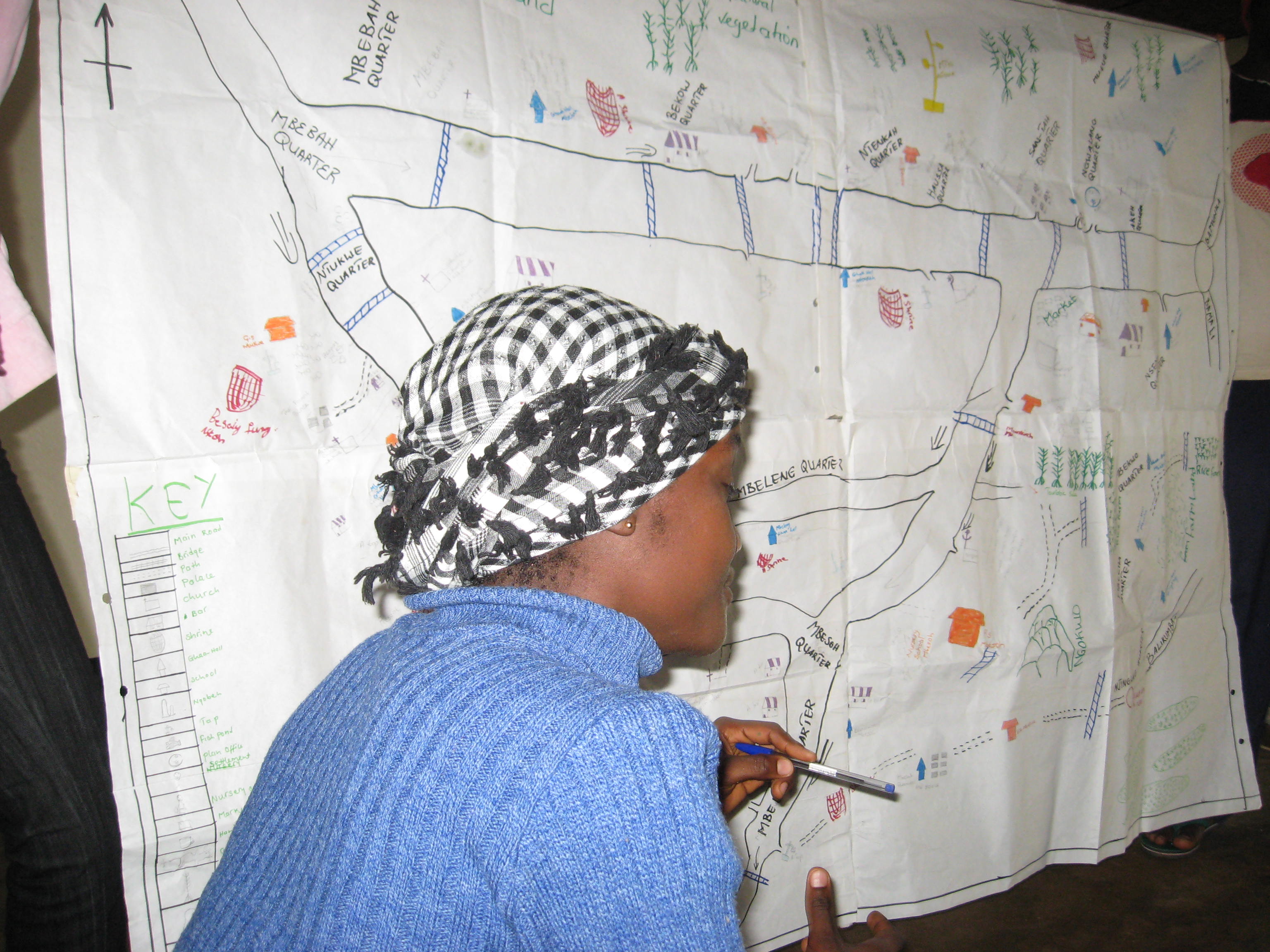
Mercy presents the youth's map

Mapping

To identify the themes that the youth will focus on, we facilitate a participatory mapping process. The youth create a base map of their community and discuss the community’s history and what makes it unique – they create their community profile.

Then they identify community resources and risks based on the 4 categories of child rights:  survival, development, participation and protection. In other words, they identify what exists currently in the community that supports children to survive and develop, and how the community currently protects children, and what spaces children currently have to participate.  They then look at where those 4 categories are not doing so well, and where children are at risk.

Youth, parents and local authorities discuss the map

The map is shared on the first day of the youth workshop and discussed with participating teachers, local authorities and parents in order to generate additional input and to get buy-in from the adults.  In small groups and plenary, they together prioritize the issues and decide which ones they will focus on during the workshop and beyond, using arts and new media tools. In follow up sessions, they will also make a digital map of their area for uploading to the Internet, and their arts and media work will be uploaded as points on that digital map. The digital map and the hand drawn map bring distinct benefits to this kind of process.

I love mapping. It’s a really interesting process, because when you start by looking at resources and when you are working with youth, so many things come out that would not come up if you came in and asked about needs or problems and only worked with adults. Communities are used to NGOs coming in to ask them what they need, to train them to see only their problems and to feel like victims, and to then expect the NGO or external agent to ‘resolve things.’ If you start by identifying only needs and problems, there are so many things in a community that will be missed. I notice that youth are not as well-trained as their parents in playing the victim. They are much better at talking about their community and what it means or holds for them than their parents are. When I show up as an outsider, they often want to show me beautiful places, special places, things they have and are proud of, not their needs and problems.

Some of the challenges youth identified and will work on

The real work

After the workshops comes the real work.  The partner organizations, staff, teachers and community leaders who are involved support the youth over time to continue their learning in the different areas, to do refresher training in areas they didn’t fully catch during the first round, to generate dialog in the community around the themes youth have identified, and to work on the issues they have identified through organized youth-led actions and advocacy at different levels and engaging decision makers at the local, but also district and national, and sometimes even global levels.

This is where the real change happens and is the real heart of the initiative.

My Cameroonian colleague told me one day ‘This project is like a catalyst in my body.’ It has motivated and driven her to learn new skills and take on new challenges, to push herself to new levels to achieve the goals set out. I’ve seen it have the same effect on the youth and on myself as well. In the end, that is what we want to achieve — motivated and engaged people, working together to make positive change in their communities and beyond.

Resources

This morning I came across this toolkit ‘A Rights-Based Approach to Participatory Video Toolkit’ by Insight, and I absolutely love it. It pretty much spells out what we are doing (though we had nothing to do with writing it up), and confirms a lot of the hunches and ideas that we’ve had while developing the program. I highly recommend it if you are working on rights and media.

Group work at a regional consultation

Children and adolescent’s participation in decisions that affect them is key. More and more, decision makers are realizing that they need to consult with children when they are making decisions about children, meaning that children have more opportunities to weigh in on issues that impact on their lives.

Not knowing how to manage a good participation process or not listening to past lessons learned, however, can make it difficult for children and adolescents to take advantage of opportunities offered them to input into these decisions.

Children’s rights to participate

A child is anyone under the age of 18.  According to the UN Convention on the Rights of the Child (UN CRC), in addition to survival, development and protection rights, children also have participation rights.

  • Children have rights to be listened to, to freely express their views on all matters that affect them, and to freedom of expression, thought, association and access to information.
  • Participation should promote the best interest of the child and enhance the personal development of each child.
  • All children have equal rights to participation without discrimination.
  • All children have the right to be protected from manipulation, violence, abuse and exploitation

from the “Minimum Standards for Children’s Participation 10th draft”, written by Helen Veitch,*drawing on Articles 2, 3, 12, 13, 17, 19, 34 and 36 in the UN Convention on the Rights of the Child

What are the principles of participation? (Summarized from the above document)

An ethical approach: transparency, honesty and accountability

Adults involved need to follow ethical and participatory practices and put children’s best interests first. Because there are power and status imbalances between adults and children.  An ethical approach is needed in order for children’s participation to be genuine and meaningful.

A child friendly environment

The atmosphere should be safe, welcoming and encouraging.  Because in order for children to feel comfortable participating they need to feel safe and supported.

Equality of opportunity

Space should be ensured for those groups of children who typically suffer discrimination and are often excluded from activities. Because children, like adults, are not a homogeneous group and participation should be open to all.

Participation promotes the safety and protection of children

Child protection policies and procedures are an essential part of participatory work with children. Because organisations have a duty of care to children with whom they work and everything should be done to minimize the risk to children of abuse and exploitation or other potentially negative consequences of their participation.

Child participation in national, regional and global consultations

Children’s right to participate is key. However in practice, a safe and open environment for child participation at national, regional and global events can be difficult to ensure. It requires resources as well as a great deal of preparation.

Over the past several years, I’ve participated in some disappointing events where:

  • lessons learned about effective child participation and child protection were ignored
  • those tasked with ensuring child participation and protection were powerless to influence event organizers to ensure quality and safe participation
  • those organizing the event or sending children to it simply had no idea that there are standards and protocols and plenty of lessons learned that they should have taken into consideration.

Minimum standards for child participation

For example, back in 2005, several organizations in East Asia and the Pacific* collaborated to produce minimum standards for child participation in national and regional consultation events. These were initially developed for the UN Study on Violence against Children.

They offer a comprehensive overview of how to manage child participation and can be used as a guide for other national, regional or global events where children participate.  They should be considered whenever organizing, hosting or participating in an event where children are being consulted or their participation is desired.

You can have the most amazing and wonderful children present and the very best intentions, but fall very short of your goals of quality child participation because logistics and organization are poor and/or child participation and protection protocols are not followed.

What often goes wrong?

Child participation holds tremendous value, but when it’s not properly facilitated or supported; results can be negative on many levels, including:

  • Children are tokenized or used
  • Poor organization gets in the way of participation
  • Important opportunities are missed
  • Children become frustrated
  • Children are put at risk
  • Money and time are wasted

Oh, the things I’ve seen…

Mistakes those new to organizing events or supporting child participation in events often make:

  • Having singing and dancing in traditional costumes be the main role for children
  • Setting up totally new groups to participate in an event rather than working with existing groups
  • Not understanding the concept of ‘representativity’ and not ensuring democratic and fair selection processes of those children who participate
  • Not realizing (for global events) that the visa application process takes a very long time, and requires visa invitation letters and appointments in advance
  • Forgetting to get children their required vaccines
  • Not realizing that children may not have birth certificates or passports, meaning the visa process takes even longer
  • Not preparing children well for visa interviews, including the possibility that their visa request will be denied
  • Not allocating time and budget for travel necessary to obtain visas, permission from parents who do not live with the child (child trafficking laws often require this now) and other documentation
  • Not obtaining permission slips, medical histories, media releases from parents and/or not obtaining travel insurance for children
  • Not getting the above materials translated into a language parents can understand
  • Not having child protection policies in place and adhering to them
  • Not doing background checks on people who will be working with children
  • Thinking it’s OK to send children overseas without a chaperone, not budgeting for chaperones
  • Forgetting that not all children speak a major language like English, Spanish, Portuguese or French and will require translation of all materials before the event as well as constant translation during the event, and support following the event if they will continue to participate in event follow up

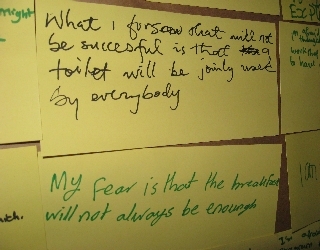
Children's responses on what they feared at an event.

Mistakes that even experienced child participation facilitators make:

  • Influencing too much on what children will say
  • Using children to promote the sponsoring organization or INGO’s agenda
  • Having children represent an NGO or INGO rather than representing themselves, their own groups or their communities
  • Having children wear NGO/ INGO t-shirts, caps and other branded items
  • Asking children from some countries (usually those from countries deemed ‘exotic’) to bring traditional costumes and share their culture, but not asking the same from other countries
  • Creating/building up ‘professional’ child participants and creating child star speakers
  • Relying on the same children all the time to represent because they have passports or visas or prior experience
  • Only bringing children who speak a major language or live in the capital to events
  • During sessions, not organizing group work in ways that facilitate communication across different languages
  • Sending any adult as a chaperone, rather than sending the best or the right adult as a chaperone
  • Not planning ahead on how children will be supported when they get back home to continue inputting into global networks and processes
  • Not ensuring a space for children to share their experiences with home offices and groups
  • Making children work long hours to fit everything in
  • Not giving children pocket money so that those with less means can also purchase small things for themselves or for family members
  • Housing children in fancy hotels with fancy food that they may not be used to; (not cooking enough good quality rice at lunch and dinner!)
  • Not realizing children may need to be shown how to use things like hotel showers, air conditioning, toilets
  • Not realizing that children may not want to sleep alone in a room
  • Not providing additional warm clothing for children if the conference climate is colder than their own
  • Not realizing that a trip overseas creates culture shock, children may feel lonely for their families
  • Not ensuring that children have the means to call home as soon as they arrive to an event and periodically during their stay
  • Not realizing that those facilitating child participation or working on child protection may not have the power to influence event organizers, especially if events are being organized in hierarchical ways with governments and high level committees involved
  • Not establishing at what point enough is enough, and children shouldn’t participate because conference organizers simply haven’t created favorable conditions, and children are put at risk or their participation will not be of good quality or have any real impact

Mistakes I’ve seen conference and event organizers repeat over and over:

  • Focusing on number of children participants rather than quality of participation
  • Not providing information with enough lead time for it to be translated and shared with children, or for good planning and selection processes to be done
  • Segregating children in parallel events where they don’t interact with adults
  • Not giving children space to lead sessions or engage with adults; offering them the last spot in the opening /closing speeches, and giving them a small percentage of the time that the adult speakers are given; or reducing children’s participation time because adults have gone over their allotted time
  • Patronizing children by clapping every time a child says something, or saying “oh that’s such a great idea!” not treating children respectfully as equals
  • Encouraging adults to get their photos taken with ‘exotic looking’ children in costumes
  • Not balancing the number of local participants and global participants
  • Not understanding that they need certain conditions to be available to fulfill child protection protocols (eg., children and adults need separate rooms; boys and girls as well as older/younger youth need to have separate rooms; the venue selection needs to have a measure of safety/security to prevent outsiders from taking advantage of any of the participating children, etc.)
  • Packing too many activities into the day and leaving children no time to rest
  • Not allowing any time for sight-seeing or recreation
  • Thinking all children have access to internet and computers to fill out registration forms, etc. and to participate in networks post conference
  • Not realizing that they need to listen to child participation and protection committees and adjust their ideas for their event so that children can effectively participate and are not put at risk
  • Thinking they can hire just anybody to manage child participation at the event
  • Not including a child participation/child protection point person in the organizing committee

So, what then?

I do honestly believe that children should participate and have a say in these issues, and that only by listening to children can decision-makers ensure that they are coming to the best decisions that benefit, resonate with, or have the best impact on children’s lives.

However unless proper organization, logistics, preparation and care are taken, these opportunities can be frustrating or a waste of an opportunity for everyone involved, and the validity of the efforts can easily be questioned.

Child participation needs to be taken seriously, not as an add-on or nice to have or cute to have. Unless and until regional and global events can ensure that this is happening, it might be a better investment to work with children at local and national levels.

Event organizers and child participation facilitators need to look at existing protocols, documentation, minimum standards and lessons learned and use them. Organizations shouldn’t be coming up with the same ‘lessons learned’ after every event and repeating the same mistakes at the next one. Surely we can do better than that.

What guidelines does your organization have? What mistakes have you made and learned from? What recommendations can you give? How can we get it right? Please share your thoughts in the comments section…

Download

Minimum Standards on Child Participation

Protocols and documents to use to help ensure good quality participation

*The following organizations participated on the steering committee that elaborated the Minimum Standards: UNICEF East Asia Pacific Regional Office, World Health Organisation, Office for the High Commissioner for Human Rights, ILO IPEC Asia and the Pacific, NGO Advisory Panel on the UN Study on Violence Against Children, Save the Children Alliance, Child Workers in Asia, ECPAT International, World Vision International APRO, Plan International, Terre des Hommes Germany, ASEAN Foundation.

Related posts on Wait… What?

Child protection, the media and youth media programs

Children and young people’s vision for a new Haiti

Van etiquette

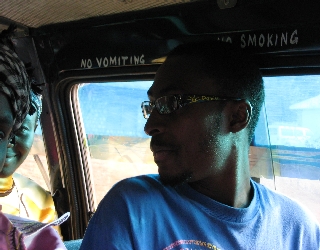
I recently wrote about how difficult I find it to know what the etiquette is when riding in a car with a hired driver. So I was happy to see that the owner of this van, hired to take the youth out to film in Ndop, Cameroon, last week, had the good sense to clearly inform passengers of the rules.

No fighting.

Don't send your head or hands outside.

Sit down when the car is moving.

The driver is not responsible for any unpaid load.

No discussion with the driver when the car is moving.

No vomiting. No smoking.

Of what value is a computer if you don’t have regular access to it? If you don’t have an operating system, some programs, virus protection, electricity, and increasingly, internet? Of what value is a school building without caring and qualified teachers, a relevant curriculum, engaged parents, students who desire an education, families that see the value in education for their children, and a community that is willing to take a lead in ensuring that the above happens?

Hardware without software is pretty much a waste of resources.

Child protection systems follow the same logic.  For example, a legal framework or a free, national helpline or an SMS-based system for child abuse reporting can be set up, and the government can express great support for it. But if there are no resources to manage it, no one answers the phone, operators or administrators are not trained, there is no response after reporting an incident, laws protecting children are not operationalized or enforced, there is corruption within the governmental systems, authorities are the actual abusers, the population is unaware that the laws or helpline exist or has had negative experiences with them, or people do not think violence is worth reporting or ending, it is like having a computer without any software, an old impractical machine that eats up resources with slow or nil results, or a device with a virus or corrupted files.

One of the areas where I’m currently supporting colleagues with ICTs (information and communication technology) is prevention of violence against children. In many cases, we are working in countries with weak government support and systems, making it very difficult to rely on government child protection services. Even in places where there is a reasonably strong national system, child protection services cannot rely only on official channels and systems managed by government duty bearers.  Communities, traditional leaders and authorities, families and children themselves need to be involved and active in their own protection.

In the organization where I work, we’ve had a lot of internal discussion, taking a strong look at our interventions and programs, talking with children, youth, communities, civil society, local and national authorities, and really challenging ourselves to find the best way to work with and strengthen local, district and national child protection efforts.

I was really happy when my colleague in Ghana shared with me a review titled “What Are We Learning about Protecting Children in the Community: An Interagency Review of Evidence on Community-Based Child Protection Mechanismswritten by Mike Wessells, and commissioned by several agencies. I might be coming late to the party, as it was published in 2009, but better late than never.

Community-based child protection mechanisms, the report explains, “are at the forefront of efforts to address child protection in emergency, transitional, and development contexts worldwide. The mobilization of such grassroots groups has become a common programming response in many settings, particularly in areas affected by armed conflict or displacement. For international agencies, they are a favoured approach in places where local and national government is unable or unwilling to fulfill children’s rights to care and protection.”

Community-based child protection groups “are a vital means of mobilizing communities around children’s protection and wellbeing. Organised with care and in a contextually appropriate manner, they make it possible to:  identify, prevent and respond to significant child protection risks; mobilise communities around child protection issues; and provide a base of local support and action that can be taken to scale through links with other community groups and with national child protection systems.

According to the report, not enough is known about how these groups operate, how effective they are, and how they could be strengthened, so this review was commissioned to pull together existing learning and evidence. A stated limitation of the report is that it is highly focused on initiatives started or supported by external agencies.  I’m looking forward to the second phase of the review which will focus on groups initiated and run by local communities without external support. It should offer up even more interesting information.

Another stated limitation of the review is the absence of a strong evidence base on community-based child protection groups. Not having sufficient evidence of what works and what doesn’t means that potential remains high for unintended harm caused by child protection efforts. Potential risks have been identified when agencies excessively target particular categories of children, impose external concepts which can create community backlash, and disregard existing local practices that protect children.  This will also be addressed in Phase 2.

7 things that make child protection groups more effective

The review was able to identify 7 factors that influence the effectiveness of a community-based child protection group (I encourage you to check out the full report here):

1)      Community Ownership: as in most situations, the higher the community ownership, the more effective.

2)      Building on existing resources: a concerning tendency was for external agencies to start new groups without finding out what child protection mechanisms already exist in the community; some programs seemed to disrespect and marginalize local culture and didn’t do enough to build on positive existing practices.

3)      Support from leaders: engaging traditional leaders is tricky and necessary, especially when child rights and child protection run counter to traditional practices.

4)      Child participation: in most cases child participation in community based protection groups was not high quality; when it was present it improved quality and impact.

5)      Management of issues of power, diversity and inclusivity: the more effective groups were the more diverse and inclusive ones that invested great time and effort in ensuring power issues were managed.

6)      Resources: to be effective, groups needed both human and material resources; however, external agencies should carefully think through how much and what they resource to avoid creating parallel systems or undermining existing systems and community ownership.

7)      Linkages: links to both formal and non-formal systems and structures were beneficial.

The document goes on to look at scale and sustainability, concluding that community-based child protection groups are a scalable model of benefiting significant numbers of at-risk children. It lists 3 different models for scale that have worked especially for HIV and AIDS related work.  Sustainability of both outcomes and processes were a challenge for most of the initiatives studied for the review, and community ownership was the most important enabler in terms of sustainability. Unpaid local volunteer groups, which drew on existing community organizations and which worked in partnership with local traditional and religious leadership seemed to be the most sustainable.

Six significant challenges were identified for agencies supporting community-based child protection systems: strengthening the evidence base; better enabling community groups; improving sustainability by looking at long-term outcomes rather than short-term funding efforts and avoiding parallel systems created by external agencies; having more respect for community values, processes and capacities; facilitating community ownership even in emergency situations; changing donor and agency practices around community-led child protection groups, including the tendency for short-term injections of high amounts of funding, and stigmatizing certain ‘categories’ of children by excessive targeting.

A series of recommendations for practitioners and donors is listed in the review based on the above challenges and gaps.

This is already quite a useful document for practitioners, agencies and donors working in the area of child protection or other types of community-based protection and support groups. Phase 2 should shed even more light on what makes for successful community-led and community-based protection services.

The author of the review is Mike Wessells. Agencies participating in the review include USAID Displaced Orphans and Children’s Fund, Oak Foundation, Save the Children, UNICEF and World Vision International.  The review summary is available at this link, and the full report (.pdf) is available here.

Related posts on Wait… What?

Fostering a new political consciousness on violence against children

7 (or more) questions to ask before adding ICTs

Finding some ICT answers in Benin

Tweaking: SMS violence reporting system in Benin

Child Protection: from emergency support to a sustainable mechanism

Child protection, the media and youth media programs

An example of youth-led community change in Mali


Bafut Queen

Bafut portraits

I’m traveling for about a month in Cameroon and Kenya with a couple days’ stop off in between in Amsterdam. Yesterday morning I got an email from my mom saying ‘For some funny reason I don’t feel like you are having a great African birthday. I hope I am wrong.’

Moms are funny, that way they can sense things. And when your birthday is on July 4 (US Independence Day) you grow accustomed to a lot of fanfare. I’m not into Americana but I like the familiarity of spending my birthday in humid Indiana summer, eating watermelon, home made potato salad and cook out food, having red-white-and-blue frosted birthday cake with sparklers instead of candles on top, and sitting out in lawn chairs on the grass in the front yard, watching fireworks and slapping mosquitoes…. When I spend my birthday out of the US, I feel like I am missing something more than just my birthday.

The day ended up being very cool though.

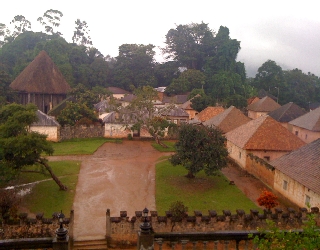
Bafut palace

Instead of eating cake and watching fireworks with my family, I spent the day in the Bafut palace (where the Fon of Bafut lives) with my colleagues Judith and Roland, and with Maa Rose, one of the Fon’s wives. A Fon is a traditional king, and this palace has been around since around 1300 AD. It’s about a 30 minute drive from Bamenda town. (See Fon of Bafut on Wikipedia).

The original palace buildings were made from bamboo and reed, but after the Germans arrived to Bafut, they were reinforced on the outside with burned bricks and tile roofs. The only truly original remaining part of the palace is the sacred place, the Achum (you can see it in the far back left side of the photo).

It was pouring rain when we arrived to the palace grounds. Roland, who was driving us, was in gorgeous all white traditional clothing. He hadn’t been to the Palace before, so he found an umbrella and went with us, holding his white pantlegs up the whole way to avoid getting them all wet and muddy.

Judith is married to a man from Bafut whose grandmother was a Bafut Queen. She was known as the ‘3 time wife of the Fon’ because her first Fon husband died, his son inherited her, he also died, and so his son inherited her and she stayed with him until her death. Judith’s 9 year old daughter is named after this grandmother and insists that she doesn’t want to be the wife of the Fon.

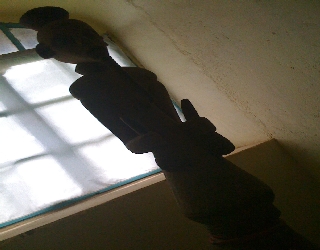
Wooden statue of a Bafut Queen

We arrived late afternoon and Maa Rose came out to meet us. She is the 4th wife of the current Fon, who’s been in power since 1968 when he was about 13. Having several wives is common for a Fon, but the current Fon is a modern kind of guy, educated at the University of Yaounde, and instead of taking 159 wives (or was if 152?) as his father did, he’s settled with 8. He ensures that they all are provided for and get their education.

Maa Rose showed us the old talking drum outside of the palace that calls the village when something important is happening.  She said she would tell us about the Bafut history, and that they worship their ancestors, ‘but we are Christians too.’

She shared the meaning of the waist-high stone pillars scattered around (they mark where the heads of those who have died in battle lie). She took us over to see a pair of large stones where adulterers were punished (they were tied to the stones and pieces of their bodies were chopped off until they expired, and if they were still alive in 7 days, boiling water was poured on them). She explained about the 2 forked sticks planted in the ground (they mark the place where children used to be sacrificed to ward of any deaths as people got crazy during the annual dance celebrations).

Maa Rose said it was the task of the notables (not the common people or prisoners as in some other cultures) to select and give up a child for sacrifice in the name of community safety. This act also allowed a notable to grow in stature. When the Germans came in the late 1800s, ‘they taught us that this was bad, so now goats are killed instead.’ The custom of tying adulterers to the stones has also been discontinued, and now they are simply exiled.

After we saw the exterior of the palace, we went into the courtyard ‘which is set up for our children to play’ and then saw the sacred place, the Achum, where the Fon goes to pray and to do things which are secret. The Achum was erected over a lake and has been there since the beginning of the Fon palace. (We saw pictures from the late 1800’s and the place looks almost the same; the Achum is on the list of the 100 most endangered world cultural heritage sites). Each year on grass-cutting day, everyone in the village gathers grass and makes bundles to repair the roof of the Achum.

After seeing the Achum (only from the outside) we followed Maa Rose through a meeting room. The children who live in the palace were watching a movie, and ‘The First Noel’ Christmas song was playing in the background. Maa Rose told us, ‘In the older times, decisions were only made by men, but now in these times, decisions cannot be made without women too. So this is the room where we meet to make decisions. If there are decisions that must be made without women, the Fon and his notables make them in a secret society.’

Maa Rose opening up the museum

From there, we visited the Bafut Museum, located in a big mansion that the former Fon lived in. The roof of the mansion was taken off, though, because the ancestors were not happy that he was living there, and he moved back to live in the Palace. The house has been restored and converted into a museum with German funding. Entrance fees are ‘sent to the German coffers’ to keep up the museum up.

Maa Rose took us through museum after hours as a favor to Judith (who has Bafut connections) and said she wasn’t sure how to turn on the lights. Unfortunately I forgot my camera with a flash and had to use my iPhone which doesn’t function well in the dark, plus we weren’t supposed to take photos she later told us.

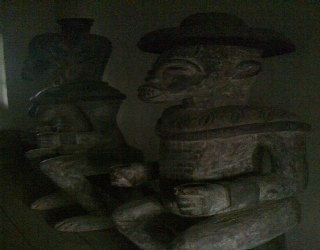
She gave us a full-on explanation for each of the items in the museum, starting with the carved statues of the first German to arrive in Bafut and his wife. The coolest thing about these statues to me is that they represent Germans, but the Germans are dressed and portrayed in old Bafut style — naked and with traditional jewelry and ornaments. Maa Rose said that of course the Germans weren’t naked in those times, and that the Bafut had just carved them in their own style.

wooden statues of first Germans to arrive to Bafut

We moved along to a carved statue of a Bafut Queen. In the past, said Maa Rose, ‘Our queens were na-ked!’ They wore cowry shells to show that they were a Fon’s wife here, around the waist.’ The cowry shells on the statue dangle in front of the pubic area. ‘Today of course a Fon’s wife is not naked, ha! So if I would wear my cowry there, no one could see them. So we wear them here around the wrist.’

The cowry shells are a sign of Fon royalty.  ‘The Fon, if needed, can turn himself into an animal, like a bull or an elephant, and escape into the bush. You will see his cowry shells though. So if a hunter tries to kill him, he will just bow like this, and you will see the shells, and you will know it is a Fon and you cannot kill him.’

In addition to a lot of amazing wooden statues, rooms with old Fon royalty items, including the last elephant to be killed in the area (over 200 years ago — his foot, tusks and skull are in the museum) we saw a lot of gorgeous masks. ‘Before cameras, if you really loved someone, you could ask someone to make a carving of them.’

In the room made to look like a traditional Fon’s room, there was a bed with a lion skin on it and elephant tusks on the floor. Maa Rose said that before the Germans came, it was tradition that a Fon’s feet could never touch the floor, so he would wake up and stand on top of a person. ‘The Germans taught us that it is not right to treat a human like that, so now the Fon does not do that.’

In the museum there are also weapons that had been given to the different Fons by the Germans who were colonizing, and we heard the story of the Fon’s grandfather (the one who was married to Judith’s husband’s grandmother) who spent 1 year in jail in Limbe for refusing to surrender to the Germans.

There is also a case with some common looking German porcelaine. ‘This is the slavery room,’ Maa Rose told us. ‘It is said that for one of these, you could get two slaves. The Fons did slavery before.’ In the slavery room there are also beaded calabazas and a pair of beaded shoes that are said to have belonged to the first German to arrive to Bafut, and which were given to the Fon. ‘This German wore eye glasses, and people thought they were his actual eyes. He used to take them off and set them down, and the people would work hard there because they thought his eyes were still there, watching them.’

The Fons loved to fight, she said. ‘They would go to fight in the very front with their notables.’ (Wish we had that going on today in more places, things would likely be quite different). We saw the room of a former Fon Queen with all her things. A basket for going to farm, her cooking utensils, her bed. I like the idea of the queens cooking and farming. Judith told me later that the current Fon also has a farm, and he takes his children there with him to farm. The Fon’s current wives, also queens, nowadays have jobs. Maa Rose is a teacher.

We saw statues of ghosts. Maa Rose said that it is believed that the ancestors come to visit the current Fon to tell him what to do or how to behave. When they are upset, they come in a certain form and you know that everything is not OK. The former Fon used to beat his wives, for example. ‘Even the wives that he inherited from his father.’ So the father who was missing (‘we don’t like to say a Fon is ‘dead’ we only say he is missing’) came to tell him to stop beating his wives, and that if he didn’t stop he would be really sorry.  The cane he used to use to beat his wives is there in the museum.

When a Fon goes missing, there will be those wearing a particular mask and dress that go around to all the villages to advise them that something has happened. They will know then that they must go to prepare their things, because when it is announced that the Fon has gone missing, they will not be able to do anything for 2 months. The cannot collect wood or visit their farms. So they have to prepare.

By the time we finished our tour of the dark museum, the sun was setting.  Maa Rose invited us over to her small house within the palace complex to see her handicrafts. ‘Here we sell these small things to buy whatever the Fon can’t buy us, like our little soaps and oils and things.’ I bought a bamboo salt shaker and a wind chime, and paid a small sum for the museum and Maa Rose’s wonderful historical orientation.

She asked us to come meet 7 of her 9 children (the other 2, her eldest girls, are away at university). They were all sitting around the fire, in the small kitchen across from where we’d looked at the handicrafts, getting the oil fried to start cooking their dinner.

The kitchen is cozy and simple, with blackened walls from fire smoke. Some guinea pigs were skittering around in one corner and chickens were roosting in another. In the rafters, above the cooking fire, there were some tiny onions, strung on thin sticks, drying and smoking to be added to food later on.

Maa Rose said that next time we should come much earlier, so that we could share a meal and talk more.  She apologized for the rain and mud and that she couldn’t get the lights on in the museum or in her house so we could see things better.

I left feeling pretty sure that Maa Rose is the most beautiful Queen I’ll ever meet.

Bamenda, Cameroon

Based on my last couple of posts, apparently this week I’m a little hung up on privilege and position.

I’m in Cameroon to support staff and partners with some training. Today we drove from Bamenda out to the community where we’ll be working. We needed to do the last bit of the arrangements, greet the community notables and school principal, and see the center where we would be having the training to get a sense of how we would set things up for Monday.

Ride out to the community, near Bamenda Town

The community is about an hour’s drive out on roads that curve through green mountains that cover over with clouds and fog from dusk until the sun burns them off mid morning. This part of Cameroon has got to be one of the richest, most fertile places I’ve ever been to.

Our meeting was at the school, and I knew once we drove up and I got a peek through the school windows, that I was going to have to sit up front on the stage at the important people’s table and give a speech. Damn. There was no way around it.

This is what it feels like when you have to sit up there:

On the plus side, experience tells me that after a couple days at the training it will feel more like this:

The kids and the community are super excited about the workshop.  The youth sang a choir style welcome song that gave me chills. It took me back to the days when I used to spend a lot of time accompanying foreign delegations to communities. This welcome was one of the finest. It’s easy to see why visitors feel so special when they go to communities in places like Cameroon.

On the drive back we stopped along the road, near the palm wine huts and kola nut sellers, for fresh boiled peanuts in the shell and roasted corn. The sun set and the fog settled in for the night as we carefully made our way back to Bamenda in near zero visibility.

I can’t wait till Monday when we move from town out to stay in the community at the training center.

On days like today I wonder what, exactly, we are talking about when we say ‘development’.

On the surface it sure seems like people up in these mountains have it pretty good.

Related posts on Wait… What?

Shotgun

Privilege

It’s not a black and white photo

Shotgun

I never know where to sit when I get into a car driven by a hired driver.  Do I sit in the front seat? The back? What does it mean when I sit in one place versus another?

And then there are those times when the driver’s side is on the right instead of the left like I’m used to, and I wait stupidly next to the driver’s door until he says ‘Oh, you want to drive, eh?’

I realize I have issues if these are the things I worry about, but the only drivers I’ve ever hired are street taxi drivers, and I’ve always just sat in the back unless the taxi was exceptionally crowded.

When I’m traveling and it comes to a riding in a vehicle with someone who’s hired by an organization and whose full-time job it is to drive, I’m never quite sure what to do. Do I sit in the front seat because I believe we are equals despite our position in the hierarchy? Or is that being ridiculously silly and American? And actually, which seat actually holds more status? The back or the front? And if I sit in the front, do I end up just embarrassing the poor guy with familiarity and friendliness when he’d rather I sit in the back so he can just do his job and go home? Or is it rude to hop in the back? And in the end, does the driver even care?  I  am probably being self-important to think it matters. Visitors come and go.

I Googled “where to sit hired car driver,” to try to find out, and nothing. What’s a girl to do?

And what about when there are more people than just me and the driver? What then?

Sometimes when traveling in different countries where my organization works, people offer me the front seat, but I never totally know what that means. Do they think I expect it because I’m a visitor, or from the US, or working with the regional office, or all of the above? If I don’t take the front seat, am I offending people by not accepting a gesture of respect and welcome?

Other times I end up in the back seat with 2 or 3 other women. I imagine it crosses all of our minds to try at least a little to avoid the cramped middle seat. Or we wonder if we should secretly engineer it so that a female colleague we want to show gratitude or respect to can have a window seat while we suffer with no legroom.

I don’t think I’m the only one that notices, because normally there is some kind of banter about who’s sitting where and whether they are fat or skinny and whether we all fit.

This afternoon was tricky because it was just the driver, a female colleague and me.  She said ‘Oh please, do sit in front!’ I said ‘Oh no, it’s fine, let me just sit here!’  She got in the front and I sat in the back seat, on the right hand side. Since she’d earlier been identified as my sister, because she had just gotten her US Passport, I thought it would be OK to ask her about car etiquette.

Of course, it turns out that there is etiquette. The higher status person should sit in the front, just like in the US, where parents or people being shown respect get the front seat.  (I forgot to ask if it’s common to yell ‘shotgun’ on the way to the car when everyone is of equal status to determine who gets the front seat….)

My colleague told me that in some parts of Cameroon, men always get the front, ‘because women are just getting to a place where they might think about sitting there’. Sometimes though, someone will offer you the front seat as a gesture, in which case you should take it.

She explained that if the owner of a car has a hired driver, the owner normally sits in the spot where I was sitting (right hand side, back seat). ‘This lets everyone know that he is the owner of the car…. If he’s a big man, his bodyguards will then sit in the front seat and to the left of him in the back…. And if you are riding with a group of people, you might ask or wait to be instructed where to sit so as to ensure you are not sitting in the owner’s spot or offending anyone.’

Makes total sense.

In the end, I suppose there will be slight variations to car etiquette, but it’s pretty much the same everywhere, and I should just go with my gut feeling.

But I still don’t know if I’m supposed to get in the front or the back when it’s just the driver and me, and he doesn’t indicate by nodding or opening a door.

Help.

Privilege

I’m in Bamenda, a beautiful, cloudy and cool, mountainous area of Cameroon, to support some training this week. On the drive out, my colleagues revealed that they’d booked me into ‘a very nice hotel’, whereas they would be staying at the ‘Family Hotel’. I asked why we were staying at different places and it became clear that they’d be staying with relatives and friends or at hostels they didn’t think I could handle to save their per diem. The nice hotel is indeed nice – not fancy, but brand new with clean, quiet rooms, fluffy white comforters, decent pillows, a hot water shower and most importantly – there are no mosquitoes. I would have protested, but my luggage didn’t arrive and I don’t have my mosquito net for at least another couple of nights, so I let it go.

I went down to breakfast this morning and there were a couple of older guys, maybe in their 60s, waiting to be served. We greeted each other with typical pleasantries. They said they were in Bamenda to recruit students for a school they run in the UK. I waited for about 15 minutes for some acknowledgement from hotel staff that there was going to be some kind of breakfast, but nothing. Pretty soon a few obviously wealthy Cameroonians affiliated with the 2 UK guys came in. They were clearly not used to waiting and began berating the kitchen staff to hurry up and get us all some breakfast. I apologized and asked for just some hot water to take to my room to make coffee, as the driver was going to arrive shortly.

Tonight I went down to dinner. I am not a soccer fan but thought I’d watch the Brazil-Chile World Cup match since I didn’t have anything else to do, mobile internet was slow, and there was a TV on in the bar area. I ordered a Guinness and asked if there was any dinner. The hotel is pretty much food made to order based on what’s available in the kitchen since there are very few customers. The cook I had bonded with over the soccer match and my dinner selection last night suggested he stir fry up some eggplant and zucchini with garlic and ginger. Fabulous. I timed my order so that I could eat at half time. Then I realized that I was making him miss the whole first half of the game because he was cooking my meal. And I don’t even care about soccer.

My 2 UK hotel-mates from breakfast arrived back to the hotel just as I started eating, and set up at the bar. Friendly chatting ensued about my meal. The first UK guy said he’d bring his own food and spices next time and cook his native Indian food in the kitchen since hotel staff were so slow. There was a young Cameroonian woman with the second UK guy. He was tickling her in a suggestive way. The finely dressed Cameroonian guy with them said to the first UK guy “Don’t worry, your ‘drink’ will be here in 30 minutes. You know what I mean, your ‘drink’?” How obvious.

Brazil was dominating at 3-0, but I decided to wait around in the bar for the game to be over just to see how old this guy’s ‘drink’ happened to be. I was glad to see that at least she was clearly over 18. Makes me wonder what kind of ‘school’ these guy are involved with. I suppose if you were a poor family in Bamenda and some wealthy looking guy from the UK offered to take your son or daughter to study over in the UK, you’d be cool with it. Or maybe I’m reading into things.