Feeds:
Posts
Comments

Posts Tagged ‘ICT4D’

I’ll be speaking on a panel called ICT4D, Innovations and the MDGs next week during UN Week in New York and another on Girls and Mobiles hosted by Mobile Active. So, I’ve been putting together my thoughts around girls, child rights, ICTs and the MDGs.  The angle I’m taking is not from the large donor, top down, huge institutional program side, but instead, looking at examples from the work I’ve been closest to over the past few years at the community and district level, mostly focused on child and youth participation in the development process. Check my MDGs through a child rights lens post for more background.

My last post (3 ways to integrate ICTs into your development organization) uses Hannah Beardon’s framework to discuss how organizations can integrate ICTs into their work. Hannah suggests that ICTs can be integrated directly(providing access to ICTs), strategically (using ICTs as tools to support development processes) and indirectly (using ICTs to improve efficiency and communication within the organization).

To complete that post, I’m listing below 5 ways that ICTs can facilitate accountability and transparency, citizen engagement, and public debate, all of which are necessary to bring about development improvements and achieve the MDGs. Obviously these are not the only ways ICTs can support the MDGs, but this post would have been miles long if I’d listed all the initiatives that are out there.
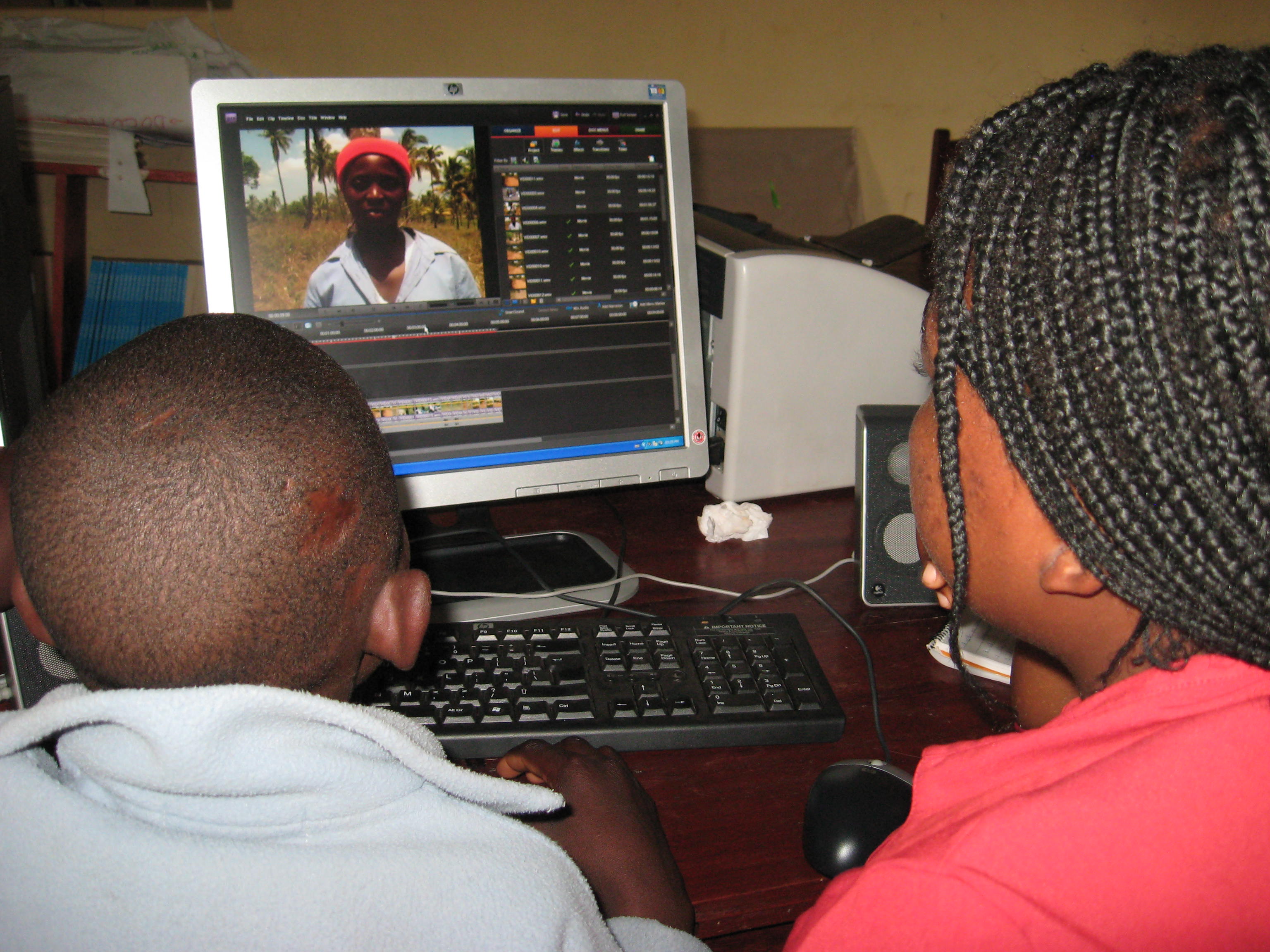
1) Engaging children and youth in the development process

An engaged and active population is a key ingredient for good development programs. Children and youth have much to offer, are directly targeted in the MDGs and many other development initiatives, offer valuable ideas and energy, and make up around half the population in many of the countries that are lagging in reaching the MDGs. ICTs can help children and youth engage in the development process and bring their ideas, opinions and voices alive at the community, district, national and global level. ‘Using new technology, new media, children and youth can claim a space that they didn’t have before. They can influence certain things, advocate on particular issues that are important to them, take ownership in communities and in leadership. ICTs excite them and encourage them to be more involved and engaged.’ Anthony Njoroge, Plan Kenya Community ICT Manager.

ICTs empower young people with skills that make them more confident and more involved at the community level.‘Using ICTs, children and youth have become more responsible because they are not waiting for adults to come in with something. Now they are designing it themselves, they are creating space for themselves and bringing their agenda to adult meetings instead of waiting to be invited in or having to work within the agenda of the adults. It used to be that you’d start working with 20 youth, you’d invite them into a community meeting. You’d see the number go down to 10, to 4, to 3, because they didn’t see any relation to themselves in the topics and the goings on. With integration of technology and the arts however, youth have a high level of interest. It’s really bringing in their opinions, their thoughts and ideas to join their voices with parents. Now they use arts and media to promote communication, dialogue on their issues and look for ways to resolve them. Before they were totally missing from the discussion, but now they are here.’ Judith Nkie, Plan Cameroon Youth Empowerment through Arts and Media Project Coordinator.

Arts and ICTs were used in the above-mentioned project as tools for youth engagement, mapping and prioritizing, research and community dialog. The media produced with the ICT tools was shared first within the community and then outside at the district, national and global levels as a way of engaging decision makers and the public in the youths’ agenda.  For more on how arts and ICTs are being used in the above-mentioned project, see this post. Watch 100 videos made by youth in 6 African countries on topics they are passionate about.

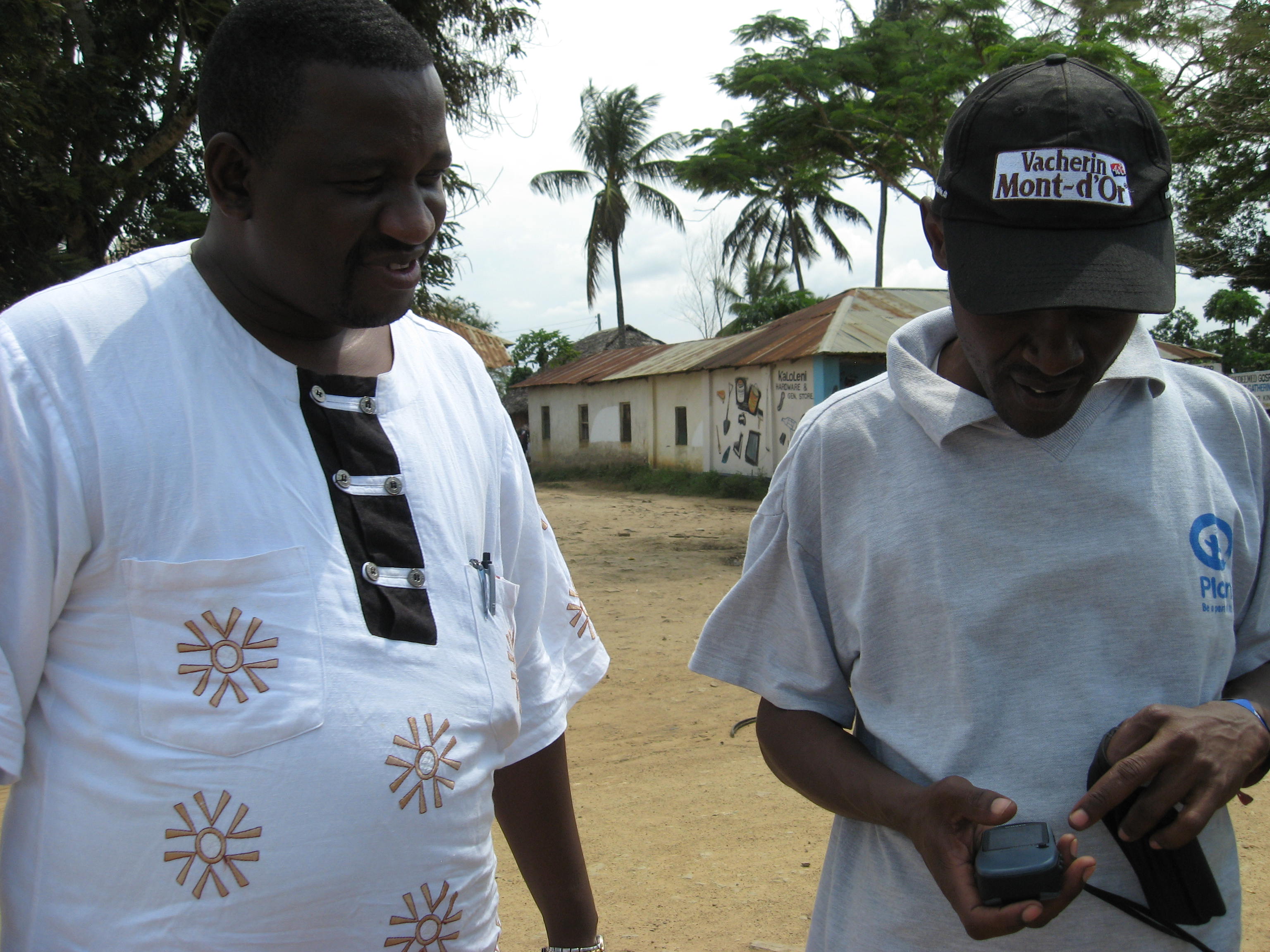
GPS work in Kwale, Kenya

2) Identifying resources and mapping patterns for better decision-making

Tracking and visualizing information is an excellent way to improve decision-making capacity. The advent of simpler and open source participatory digital mapping tools allows community members to map their communities digitally and to have more ownership of the information. Mapping helps identify patterns that may not have been visible before. Local maps shared on-line allow local people to provide their own information from their own perspective, and that information serves multiple purposes at the local level and beyond.

Digital mapping can be helpful when governments decentralize. Municipalities are mapping resources as well as projects and interventions. District authorities can track their own initiatives and those by local and international organizations to avoid duplication of efforts and wasted resources. When maps are public, the population can better demand answers about where resources are being allocated and why. Maps can help with disaster risk reduction and tools such as Ushahidi can help during emergency response. Mapping information is also useful for holding up a mirror to the population to ask them questions about themselves and their behaviors and for showing the direct consequences of actions; for example in a Community Total Led Sanitation mapping project, the community faces its realities about where their own waste is entering food and water sources.

Map Kibera is a good example of participatory digital mapping. mGEOS is a mobile mapping tool developed to help Plan Kenya staff to gather and share data needed for their daily work. Map Kibera and Plan Kenya are collaborating in Kwale on youth and governance work, and in Mathare to work on Community Total Led Sanitation using digital mapping tools (see July 27th entry). In this video, a district youth officer in Kenya talks about why digital mapping is useful for his community.
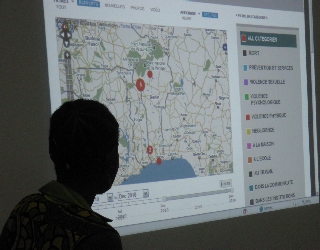
Mapping Violence against Children in Benin

3) Pulling in quick information to guide further investigation, response, or advocacy; pushing out information for targeted actions

ICTs can be used to gather quick information from a broad population. This can be useful in a variety of situations and themes, including those outlined in the MDGs. For example, SMS are being used to report on whether teachers are showing up at school, where violence against children and women is happening, where help is needed in the aftermath of a disaster, and for tracking endangered wildlife. Crowd sourced information can help governments and agencies get preliminary information so that further investigation and support can be provided in a particular area. Another example is the use of mobiles in different health initiatives, including:  child-birth care; HIV and AIDS prevention and treatment programs; support for volunteer community healthcare workers; and bed net treatment reminders. Most of the ICT and development world is also already familiar with the work of two organizations:  Ushahidi and FrontlineSMS who have been combining SMS with digital mapping.

A program that I’m closely involved with is SMS reporting of violence against children in Benin, where local communities, government agencies and NGOs are collaborating to improve the child protection system. This type of program shows promise if heed is paid to the pros and cons of collecting information by SMS, and if those implementing are clear about the type of information that will be gathered, privacy implications, and how the system will complement existing systems. (Here is one document that outlines some considerations). Increasing controls by governments and mobile phone companies, including SIM card registry and Mozambique’s recent government shut down of SMS services during the bread riots are good examples of how quickly the ICT landscape can change, and how flexible and agile those working in the area of ICTs need to be.

Checking info on constituency development fund

4) Supporting accountability and transparency

ICTs are useful to support accountability and transparency, necessary for attempts to track and ensure good use of funding for different efforts, including those related to the MDGs and other aid and development programs. Making information more available to the public by mobile is one such way.  SODNET’s budget tracking tool, for example, informs Kenyans of how much funding is allocated by the Constituency Development Fund to different municipalities in different categories. Combined with mapping, as outlined in this post, the budget information can help constituents to track where their funds are actually being spent.  Other interesting examples of how ICTs can be used for transparency and accountability can be found at TacticalTech’s Info Activism site and at Technology for Transparency.
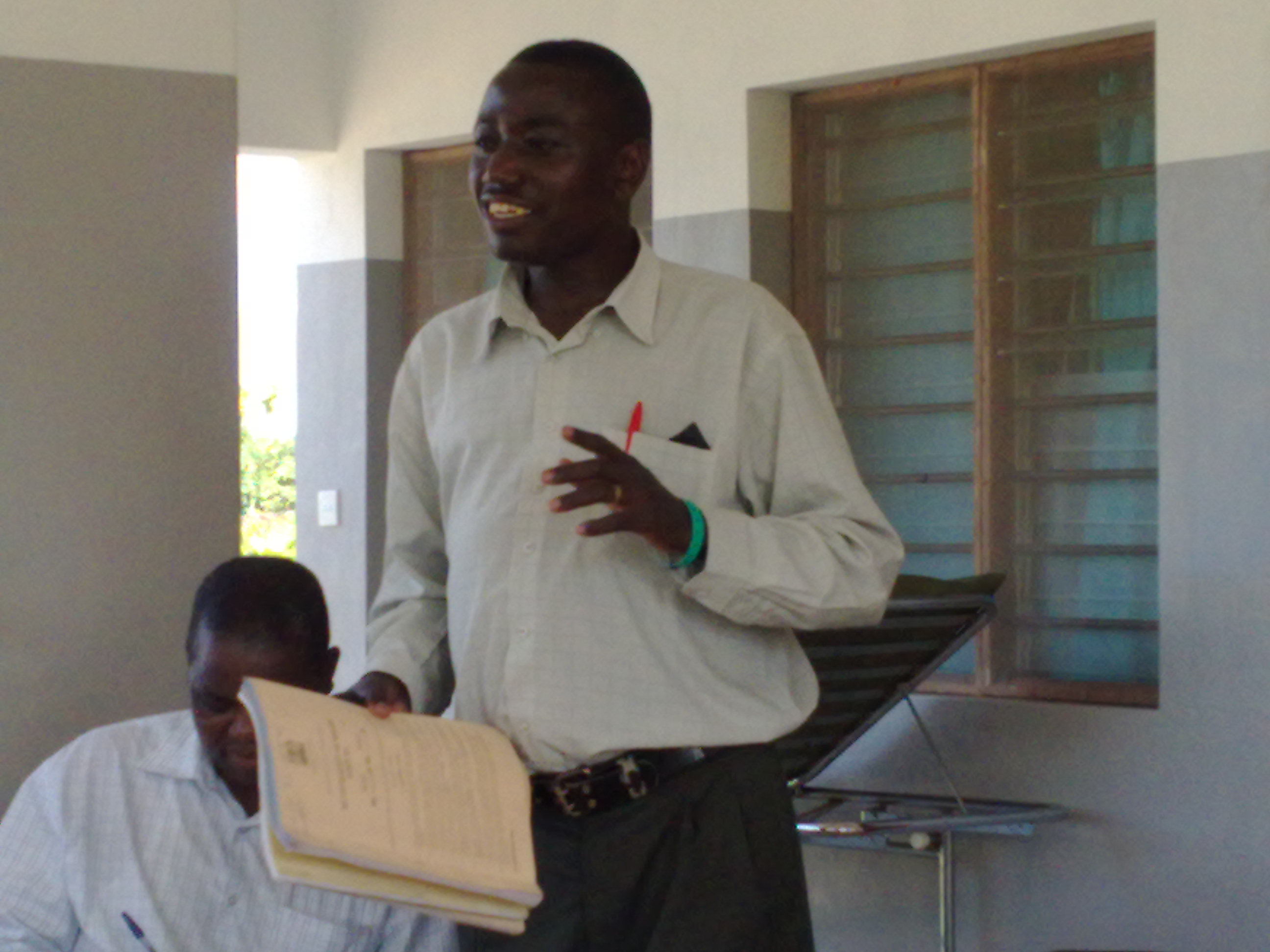
Paper forms will soon be digitized….

5) Improving municipal services and information management

Civil registration documents, especially a birth certificate, are a precursor to demanding any number of rights or accessing a wide array of services. Without a birth certificate a child may not be able to sit for school exams, receive immunizations or free health care or claim rights to inheritance or legal protection in courts of law. Proof of age is critical in successfully prosecuting perpetrators of crimes against children such as child trafficking, sexual offenses, early recruitment into the armed forces, child marriage and child labor. ICTs are being used to digitize civil registry in Kenya, for example. Not only are records being digitized, but mobile phones are used to make it more convenient for the population to know when their documents are ready. This saves people time and money and means that more parents will register their children.

But wait, there’s more!

These are only a few examples of ways that ICTs are being used at the grassroots level to improve participation, transparency, accountability, debate and ownership of the development process.  The MDGs are lofty, but informed local community participation and ownership is key in efforts to reach them and in ensuring that marginalized populations can also be included.

Please add your examples of ways that ICTs can support development and ICTs in the comments section!

Related posts on Wait… What?

3 ways to integrate ICTs into development work

11 concerns about ICTs and ‘social media for social good’

I and C, then T

MDGs through a child rights lens

7 (or more) questions to ask before adding ICTs
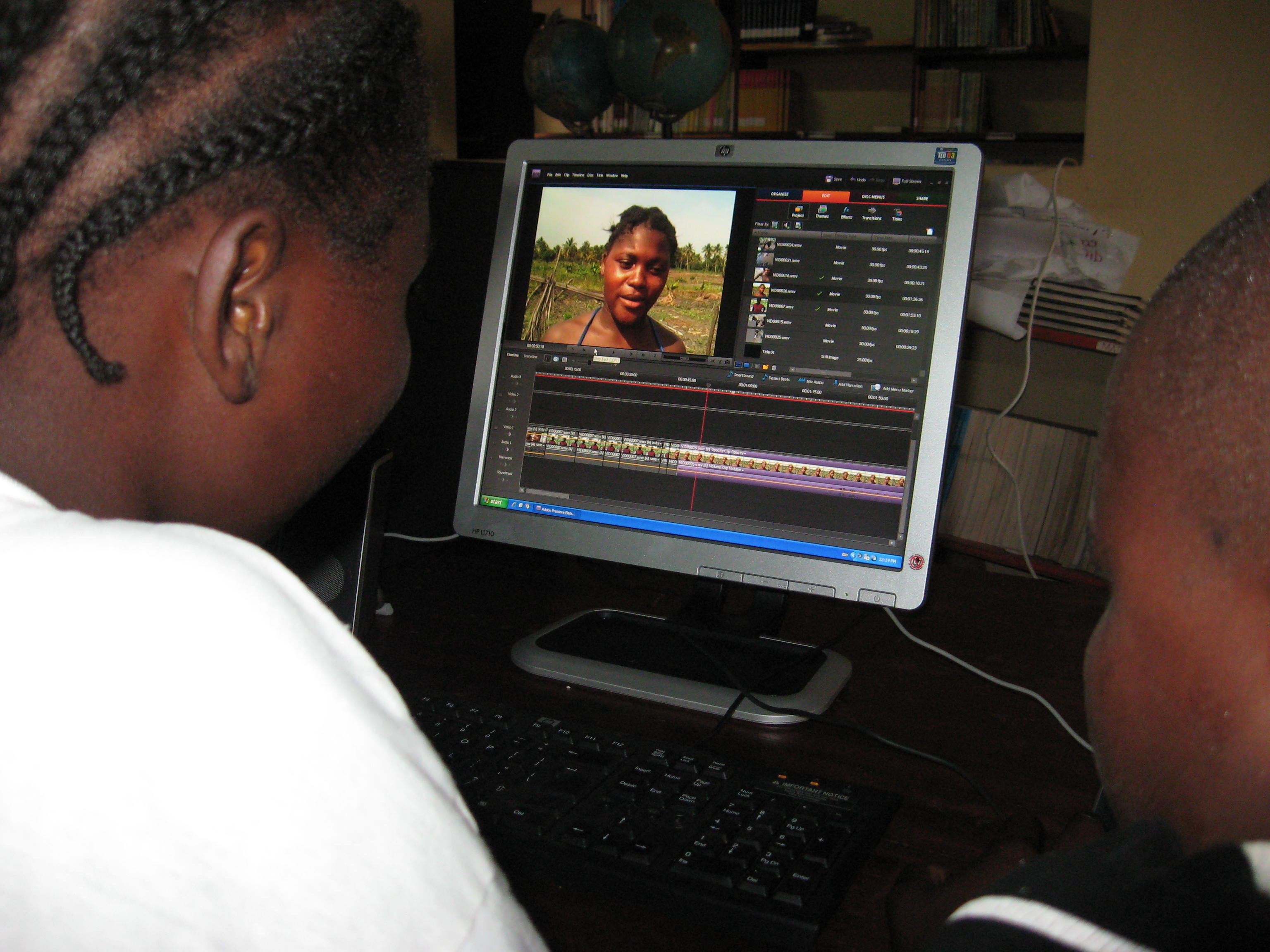
A positively brilliant ICT4D workshop in Kwale, Kenya

The road to Wa is paved

Read Full Post »

Continuing on with the Millennium Development Goal (MDG) related posts…. I’ll be on a panel on Sept 21st talking about how ICTs can contribute to the MDGs. My perspective is less from a top down, big business, giant project point of view. In my work, I look at ICTs (Information and Communication Technologies) as tools that children and young people can use to create and access information and to advance their own agendas locally and beyond, and ICTs as tools that organizations (big and small, local or not) can incorporate into their work to improve their efforts to attain development goals (such as the MDGs).

ICTs can be helpful tools for enhancing accountability, transparency, citizen engagement, public debate, participation and local ownership of the development process — all of which help with achievement of the MDGs. (See my post on MDGs through a child rights lens for more reasons why). ICTs and social media can also help organizations do more efficient, effective, engaging and high quality work.

ICTs are not silver bullets or magical elements, however; and they will not solve anything on their own. They need to be well-integrated into programs, and well-contextualized.

One framework I especially like to use for thinking about how organizations can integrate ICTs into their work comes from Hannah Beardon. Hannah suggests that ICTs can be integrated directly, strategically and indirectly:

Directly (Providing Access to ICTs): Mobiles and other ICTs have an immediate and striking impact at the family and community level, connecting people for personal, business and community reasons. Mobile devices save individuals time and money and are indispensable in emergencies and for connecting people to the larger world, such as for remittances and commodity pricing. Mobiles and ICTs can help people access information, improve their education, maintain social networks, participate in governance and community, and generate income.

Providing equipment directly is one way to think about ICTs in development programs. This includes ICT tools such as computers, mobile phones, video cameras, digital cameras, radio equipment, electricity, and Internet access. Often direct ICT support is considered for education programs and efforts focused primarily on ICT training or media projects. Computer centers and classrooms are an example, as is supplying mobile phones to project participants or GPS units for mapping projects or equipment for health programs. If this equipment and the information it collects are managed at the community or local organization level, it can enable people to assess and respond to local development needs in a powerful way.

The availability of ICTs is obviously a pre-cursor to using them in different programs and projects. However I’m not much in favor of development organizations coming in and giving away mobile phones (unless it’s some type of extreme emergency or crisis, I suppose). I’m also wary of external NGOs setting up computer centers or giving large equipment donations because of sustainability and capacity concerns. Care needs to be taken that a non-profit organization is not assuming the role that local businesses or government institutions should be playing. Working in good partnerships with local and national government institutions and local businesses and keeping clear agreements on the roles of all actors, including the community, can help to reduce these risks and make programs more sustainable. Programs that directly provide equipment also need to think carefully about what other elements are required for success (purpose of the equipment, training to use it, ongoing maintenance and repair, electricity/power, a place to keep the equipment safe, local involvement in defining the type of equipment, etc). (See 10 Worst Practices in ICTs in Education).

In thinking about providing direct access to ICTs, one place for NGOs to focus energies is keeping an eye on government ICT policies and plans and strengthening civil society to pressure government to ensure that ICTs (including Internet) are accessible to the population now that more and more information is shared via ICTs. Article 17 in the Convention on the Rights of the Child outlines children’s right to information, including access to information and material from a diversity of national and international sources, especially those aimed at the promotion of a child’s social, spiritual and moral well-being and physical and mental health. States Parties are obliged to (a) Encourage the mass media to disseminate information and material of social and cultural benefit to the child and in accordance with the spirit of article 29; (b) Encourage international cooperation in the production, exchange and dissemination of such information and material from a diversity of cultural, national and international sources; (c) Encourage the production and dissemination of children’s books; (d) Encourage the mass media to have particular regard to the linguistic needs of the child who belongs to a minority group or who is indigenous; (e) Encourage the development of appropriate guidelines for the protection of the child from information and material injurious to his or her well-being, bearing in mind the provisions of articles 13 and 18. The 2005 World Summit on the Information Society’s Tunis Agenda also provides a useful platform for thinking about advocacy around rights to information and ICTs.

Making a film on birth registration, Cameroon

Strategically (Using ICTs as tools to support development processes): Beyond directly providing ICTs, new technologies can be used in a myriad of ways to support the broader development process. Starting from larger program goals, defining the roles that information and communication play, looking closely at the local context, and then researching existing tools that could be supportive is a good way to start when planning concrete initiatives. (Forthcoming is a second publication by Hannah outlining a good process for local contextualizing and ICT integration into specific programs). If there are no existing tools, a case can be made for developing or building onto a tool or an application.

Mobile phones, as tools for effective and timely dissemination of information, have real potential to strengthen the design and delivery of programs, for example in health, education, household economic security, disaster risk reduction and response, emergency and crisis management, HIV and AIDS prevention and treatment, child protection, youth-led advocacy, and water and sanitation. ICTs should be an integral part of local, country-level and broader strategic planning processes and they should be incorporated, where appropriate and relevant, into programs where they can add value, keeping a close eye during monitoring and evaluation on whether their purported benefits are real.

On-going capacity building and exchange at various levels is critical to help program staff become aware of advances in the field of ICTs and to help ICT advisors better understand programs, staff needs and community realities. Conversations across sector and silo boundaries are also critical to ensure that ICT integration is successful. ‘Bridge figures’ are helpful — those persons with good knowledge of both programs and ICTs — to help these processes along. In the absence of someone to serve as a bridge figure, well-structured teams with expertise in both areas should work closely together to take advantage of their specific expertise and to learn from one another.  ICT tools should be selected based on local needs and contexts as well as program priorities, starting with information and communication needs, rather than starting with new ‘breakthrough’ technologies. (Though other sectors often start with the cool technology and see if/how it can be useful). During strategic planning processes, program staff should be analyzing program information and communication needs and working with ICT staff to incorporate technology that may add value and help reach program goals in a higher quality and more effective way. Again, ‘bridge figures’ can be helpful in that process. Monitoring and evaluation are important along the way to check whether adding ICTs is actually helping. Sometimes things work perfectly fine without new ICTs.

Indirectly (Using ICTs to improve efficiency and communication within the organization): The wealth of knowledge and information that a development organization generates and uses needs to be documented, shared and communicated effectively in order to improve impact. Advances in knowledge management and on-line collaboration, including blogs, wikis and other social media tools and feedback mechanisms can bring immediate access to information and real-time discussion. Lower cost technology, notably in the areas of digital mapping, GPS, mobile mapping, mobile internet can help staff to carry out their daily work and improve information sharing and decision-making across departments and to engage and inform the public. Engagement with donors can also be heightened through ICT tools and social media, always taking into consideration the additional burden 24/7 demands can add to staff’s workload, and the child protection and other risks posed by more direct access to communities.

ICTs and social media can help make aid and development organizations more participatory, more agile, and able to pull in information from variety of sources and process it faster. This in turn can help pull people out of their silos and force them to consider new ideas and ways of working and thinking about challenges. Mobiles especially are helpful for better communication with community members and local organizations. Forward thinking organizations should be taking advantage of these new tools to gather direct feedback from those that they are supporting, for better dialog to improve their work, and for devolving helpful information to community members. Mobile data collection, for example, in addition to being a strategic tool for program implementation, can also be a way of improving the quality of data collection and increasing ownership by community members of their own data which support them to take back management of their own development processes from external agents. Mobiles are also a great tool for gathering data quickly from a broad subset of the population; data which can shape rapid responses and emergency interventions.

Twitter and blogging and other web-based services can serve as a springboard for deeper discussions and coordination among different development actors, government agents, institutions and the private sector. Social media is a way to share and discuss lessons learned and challenges faced, and to diffuse information about new ICTs and how they are being used by different agencies and individuals. Global partnerships can easily be initiated, developed and nurtured on-line. Organizations can provide on-line training opportunities to staff and save time and money by using new technologies such as forums, blogs for sharing and reporting, Skype and chat tools, and social networking. These same tools can be used to improve relationships with donors and with partners and staff working in disperse offices. However, in order for any of the above to happen, command and control practices that are common in large institutions and organizations need to be abolished so the tools can be most useful.  Here is an excellent post on use of social media tools in humanitarian work.

3-fold path

Using those three categories to think about ICT integration in an organization’s work can help clarify and strategize. Some initiatives may include all three categories and some may be more focused on one particular category.

In a follow-up post, I’ll share some examples of tools that I find interesting and helpful for organizations working at the grassroots level to achieve broader programmatic goals and to improve local community participation and ownership of the development process.

—–

MDG related posts on Wait… What?

MDGs through a child rights lens

5 ways ICTs can support the MDGs

ICT related posts on Wait… What?

11 concerns about ICTs and ‘social media for social good’

I and C, then T

Innovate but keep it real

ICT4D in Uganda — ‘ICT’ does not equal ‘computers’

Mind the gap

7 (or more) questions to ask before adding ICTs
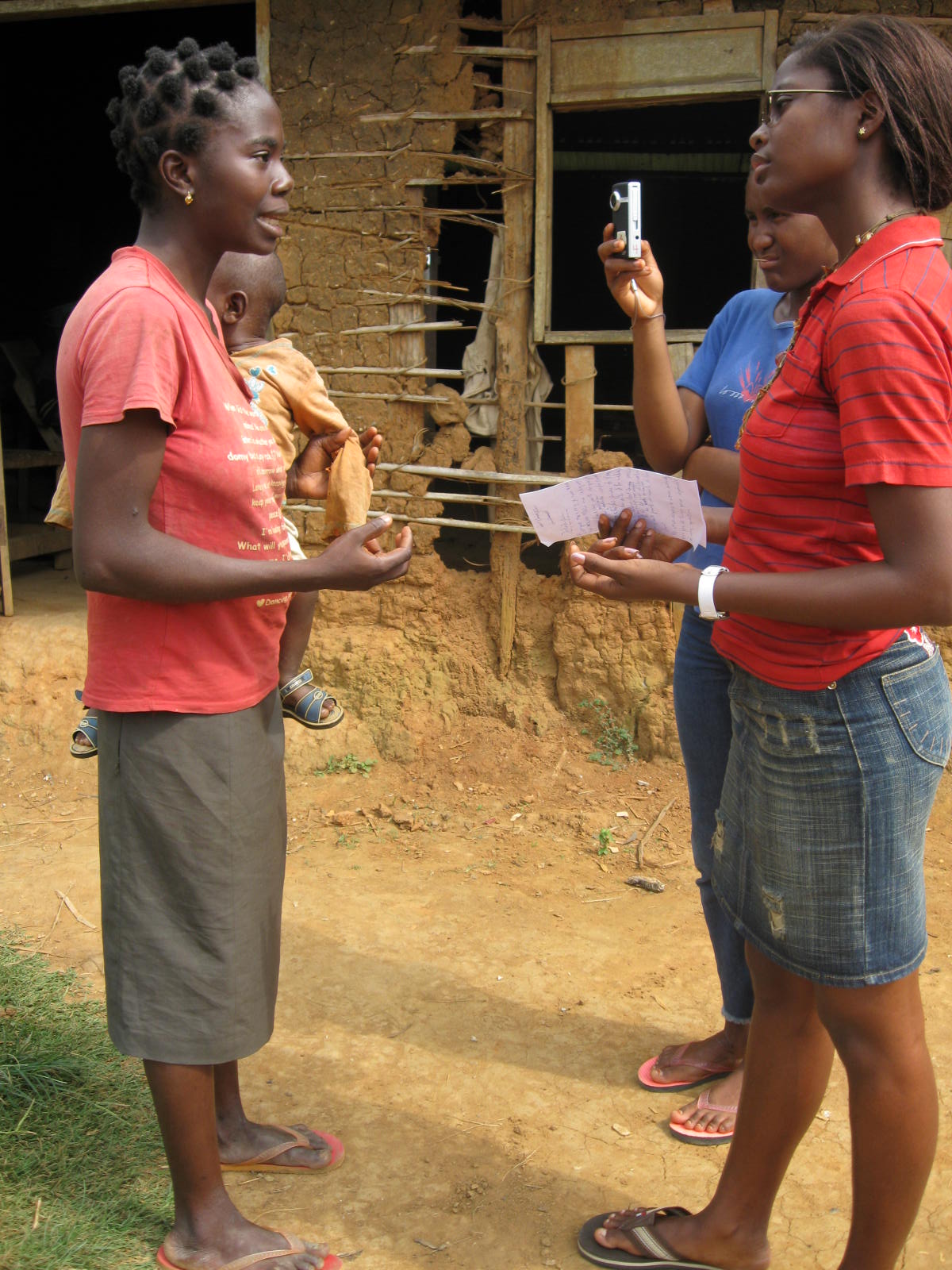
It’s all part of the ICT Jigsaw: ICT workshop in Mozambique

Read Full Post »

Praia Vermelha, Rio de Janeiro, Brasil

I’m on vacation for a week. In Rio de Janeiro. On a supposed social media break. But I’m on-line right now instead of on-thebeach; in stealth mode, secretly reading Tweets and Google Reader over morning coffee while my fellow vacationers sleep on and sun pours in the huge open window in the apartment we’re sharing in Copacabana.

I was supposed to quit social media and email for the week, but I’m at that point where I question whether I really wanted to go offline at all, and why…. being addicted to Twitter isn’t really a bad thing, is it? If you’ve ever tried to quit smoking or go on a diet and failed, you’ve been here.

I’m sneaking peaks, but not conversing and sharing. Pretending I’m not online, because supposedly I need a social media break (and because being addicted is somewhat embarrassing). But the truth is that my vacation is awesome and I enjoy being online, probably similar to how some people enjoy reading the Sunday paper.

Some highlights I discovered and didn’t share during last week’s feigned Twitter hiatus…

Aid and development

Loved @lrakoto’s great piece on some of the current big dilemmas/discussions in aid…. Aid is about the people, right?

Read @morealtitude’s intense and harrowing World Humanitarian Day series part 1part 2, and part 3. Wow. Watched OCHA’s beautifully done world humanitarian day video (and couldn’t help but wonder how much it cost to make it). Felt sad that humanitarian aid needs so much marketing lately to be seen as good. Went back and forth as usual, reading this week’s pros and cons of how humanitarian/international aid work needs a total overhaul and how it’s vital work in many places.

Saw Pakistan continue to get less attention than Haiti even as the situation gets worse and worse. Read an interesting piece from a colleague on how women and girls and culture are being impacted by the floods. Saw another colleague, @warisara, (experienced communicator who worked on the ground during the Asian tsunami and who’s now arrived to Pakistan) questioning why aid organizations have to keep showing graphic, horrifying visual images in order to draw any attention to a crisis, and wondering if each disaster has to be worse than the last in order to get the public to care. What an unfortunate dilemma — how to avoid undignified, disrespectful images and still manage to raise any funds.

Saw a sad exchange after my employer posted an appeal for Pakistan… Someone argued that we should not help Pakistanis because ‘they wish to see us dead’. They based their reasoning on ‘Christian principles’. What was heartening at least were all the other comments arguing against that view, arguing for helping Pakistan after the devastating floods, and seeing past religions and hatred and fundamentalist behavior.

Was flattered to get listed in the Activist Writer’s top 10 blogs along with aid bloggers I really admire. Discovered @aaronausland’s blog Staying for Tea.

ICT4D and m4D

Enjoyed the debate started by @Kiwanja on the need for an active mobile community for addressing fundamental, deep questions and thinking, and bridging the gap between development folks and technology folks. (Something I encounter and write about often, such as here and here). Liked this Venn Diagram on the intersection of m4D, apps4D and ICT4D.

Noticed that @mambenanje got himself a copy of an article about him in Brussels Airlines in-flight mag (also incuded Erik Hersman, Ethan Zuckerman). Remembered how cool it was being on that flight to Kenya, opening up the in-flight magazine, and seeing names of people I know.

Saw that @wayan_vota has a beautiful new baby girl.  And that miraculously he’s been able to re-follow me on Twitter after months of his account auto-unfollowing me time and time again (though he’s explained it also happens when he tries to follow @billeasterly…. weird – and really not sure what I have in common with the esteemed Professor that makes Wayan’s account consistently unfollow us both….).

Pakistan and the ‘Ground Zero mosque’

Due to my self-imposed Twitter ban and bet with @ernstsuur that I could really stay off Twitter for a week, I reverted to posting on Facebook and managed to upset the good folks back home in the heartland (Indiana) when I posted a link about the so-called ‘Ground Zero Mosque’. Normally I don’t post political stuff on FB because of the variety of people that I’m connected to there — it’s hard to not offend at least someone. Facebook has become everything and nothing, pretty much.  I also re-posted an article on the ‘mosque’ and elitism (and thought it would be pretty fun to see Palin and @talesfromthhood debating elitism) and a link to the Daily Show giving it to Fox News. This provoked pretty emotional and strong comments (see below) from someone I was very good friends with in high school, but who’s gone down quite a different path than I have… eg, the military:

“So lets encourage all of our moderate Muslim friends to fulfill their religious duty. If they beleive (sic) that the extremist versions of Jihad and Sharia are incongruent with the teachings of Mohammed, then it is their responsibility to wage Jihad (lets let them pick the definition) against the extremists. When have created a predominantly tolerant Islam, I will finance a Catholic church in Saudi Arabia and will bless the establishment of a mosque anywhere in the U.S.

Until then, me and others like me will continue to spread AND DEFEND the basic rights that everyone in America, including the Muslim Americans who want to build this Mosque, enjoy. I invite all do-gooders everywhere to stand shoulder to should with me and my Soldiers in those countries where Muslims are not tolerant under Sharia……Saudi Arabi, Sudan, Iran, Pakistan, Nigeria (Muslim areas), Egypt, Buhrain, Azerbaijan, Yemen, Oman, UAE, Algeria, Mauritania, Somalia, etc., etc. “

Rather than get into a debate, I went with that whole “let’s agree to disagree” thing.  But seriously.  I can’t wait to get back to Twitter.

Pao de Azucar, Rio de Janeiro, Brasil

Rio de Janeiro

Luckily I’m not actually spending all my time in front of my computer. I’m mixing in a lot of other good stuff, like deep philosophical conversations with my 18 year old son, capoeira with him at Grupo Capoeira Senzala Cultural Center in Bairro Botafogo, naps, beach, pictures from the top of Pao de Azucar, and late night samba and caipirinhas at Rio Scenarium and other great places with good friends, old and new….

Read Full Post »

Salim (left) with Solomon in Kinango community.

As I mentioned in my previous post, Plan’s Kwale District office in Kenya has been a role model for Plan on how to integrate ICTs into community-led programming to help reach development goals and improve access to children’s rights.

I talked with Salim Mvurya, the Area Manager in Kwale, last week and asked him for advice for the tech community (0.15), corporations (1.19) and development organizations (1.57) who want to build in ICTs for moving towards development goals. He also comments on the importance of realizing that development is changing (4.43). You can watch the video below or at this link. If you’re not patient enough to watch a 6 min video (often I’m not!) or don’t have a strong connection, see the transcript below.

You can also view Part 1 of the video, where Salim gives some background on how Plan Kwale has been using ICTs in their programs since 2003 (1.11), shares ideas about the potential of new ICTs (3.42) and talks about some key lessons learned (5.03). Or you can read the Part 1 transcript here.

Transcript Part 2

ICTs and Development Part 2: advice for tech community, corporations and development organizations

My name is Salim Mvurya, I’m the Area Manager for Plan in the Kwale Development Area.

What advice can you give to outside tech people who want to develop something for a place like Kenya?

I think that to get an idea externally is a good thing, but that idea has to be blended with grassroots. It has to be contextualized, because there are very many good ideas which may not be appropriate at the community level. So I think my advice, for people who have ideas, who have never been to Kenya or Africa or in the field, is to leave the process to be home grown, so that the ideas that are coming from outside are building on existing issues, so that the ideas are also looking at what kind of skills and what can be done on the ground, and looking also at issues of sustainability. So it’s very important for somebody from outside the country to be sensitive to local conditions, local context, local skills and also looking at putting ideas that can be self-sustaining.

What is your advice for corporations who want to support the use of ICTs in development?

Corporate organizations who are interested in making a contribution to ICT for development, I think it is important that they foster and have partnerships with grassroots organizations that can really give them the issues because, OK, most corporations are very innovative, but working with grassroots NGOs and civil society that can give them the practical sense of those ideas, I think would be a good thing to do.

What is your advice for colleagues trying to successfully integrate ICTs into their programs?

One thing for organizations that are thinking of utilizing ICT is that you need local capacity. Like, if you have a field office, for example, Plan has development areas, in development areas, particularly for Plan, the ICT technical people should also have an opportunity to lead the ICT for development. What I have seen in the few years that I have been trying this is that it requires also the ICT function to be more available to communities. It requires the ICT function to also work around the program issues that the team is thinking, so it’s not just about looking at systems, looking at computers, but looking at how can all these ICT skills be able to help to develop programs. How can the ICT function be able to support innovations that are also going to enhance problem solutions at the community level. How can we use ICT to strengthen our interventions in the community?

And I must say from experience, that the ICT coordinator for Kwale has been more of a ‘program’ person, and I think that is why we are seeing all these gains.  I remember when we were designing the community-led birth registration one afternoon, we sat together and we were thinking, how can we put all these ideas together and include ICTs in it, so I think it’s about having an ICT function that is responsive to the program issues on the ground and not necessarily sitting somewhere and looking at softwares. You know, even designing a software that would be more responsive to what is happening on the ground, like looking at issues of child protection and seeing how can ICT help the response mechanism. Looking at issues of accountability and seeing how ICT can make a contribution to accountability processes in community.  So I think that is the kind of ICT that would be appropriate in the field, but also an ICT function that can learn. You know, learning from other people, but bringing the lessons closer home to see what can work, and what can’t work.

Any last advice for development organizations around integration of ICTs?

The message that I would want to give to stakeholders and development organizations is that a lot is happening in the world in terms of ICT.  Also recognizing that development is changing… ICT is providing opportunities for greater advocacy and accountability, and I think getting the interest for looking at all this and trying to say ‘what does this mean for development’ I think is very very critical. The youth constituency is emerging as very critical and they have interest in ICT. I know in Kenya youth have been trying different things, different groups, but I think ICT is providing an opportunity for them to strengthen accountability but also to be able to get skills that they can use as individuals that can also make a contribution in economic development.

Related posts on Wait… What?

Salim’s ICT4D advice part 1: consider both process and passion

Youth mappers: from Kibera to Kinango

A positively brilliant ICT4D workshop in Kwale, Kenya

Is this map better than that map?

Modernizing birth registration with mobile technology

Read Full Post »

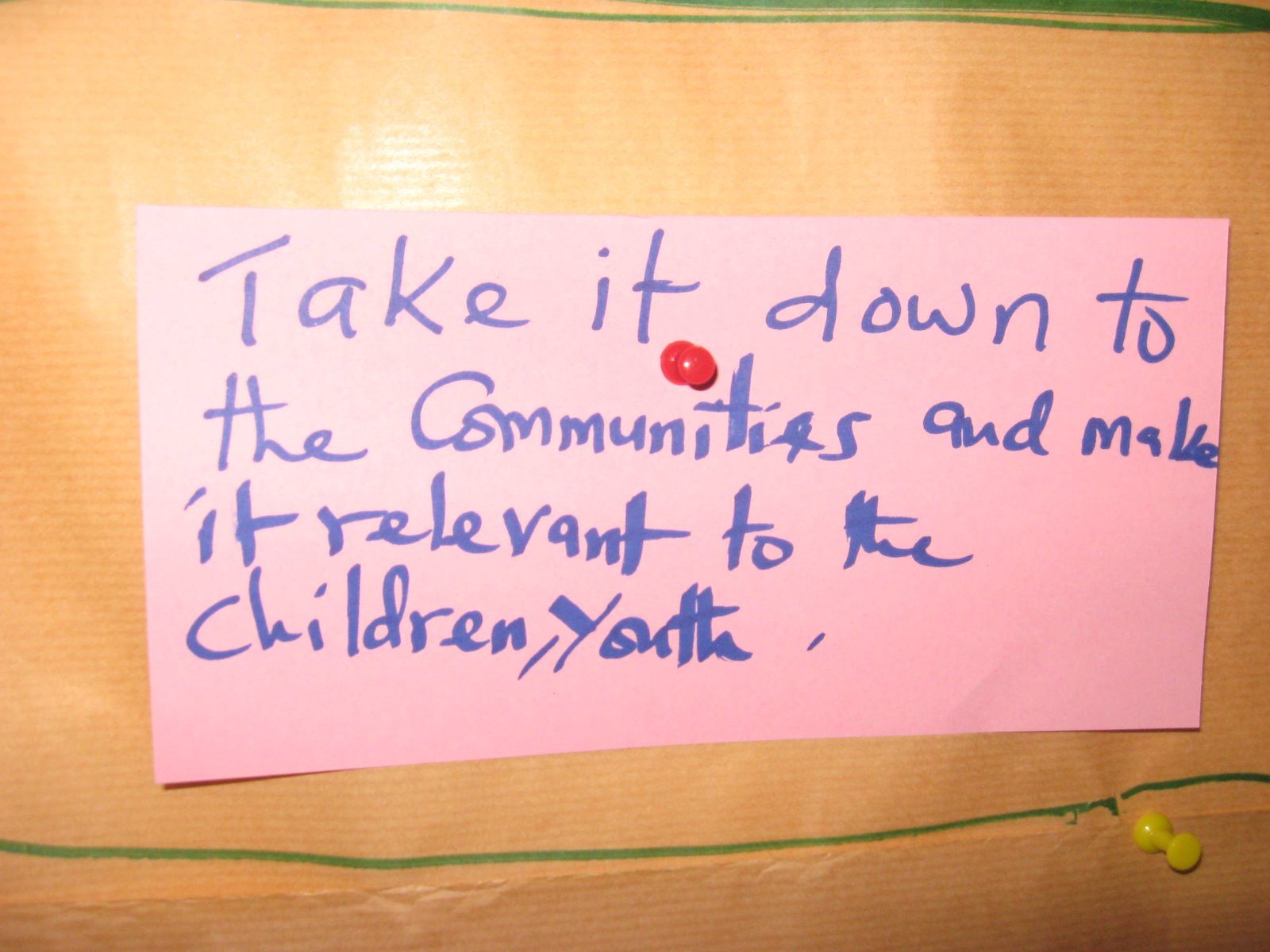
Wow what a week. My head is spinning from all the discussions and possibilities from our workshop in Kenya. So it’s 3 a.m. and I’m back home, and here I am again at the computer. My New Year’s resolution is to work less, but it’s not New Year’s yet… and I’m still on Kenya time, so fell asleep at 6 and woke up at 1.30. So why not grab my coffee and get going. Photo: one of the ‘take aways’ on the last day.

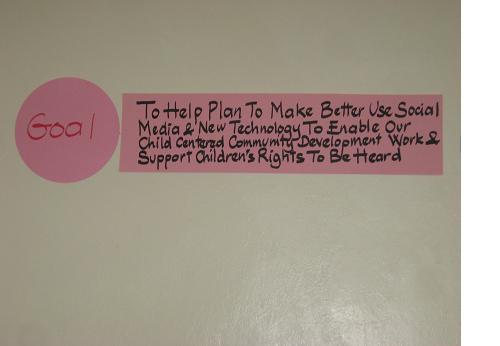
I have a zillion ideas and things to think about. How to support the different people and offices present at our workshop to build in more social media and technology to improve our programs and reach/impact.
The last couple days were amazing, with presentations by/about youth and how they are using blogging, mobiles and other technology for health and learning. We talked about citizen journalism and thought about how to apply it to our programs and communications. And there was a LOT of discussion about how organizations need to open up to embrace new kinds of media or they will become irrelevant.
One key thought (originally stated by Ken Banks from FrontlineSMS.com and then taken up by everyone) was that it’s easier to ask for forgiveness than for permission. That people should just do it, just try things, instead of asking for permission to innovate and be creative.
We learned from one participant how blue tooth was used during the Kenya election crisis to get information out to the public… and at the airport on the way home heard about arrests of activists in Nairobi and increasing media censorship.
We talked about how organizations need to modernize and open up new ways to engage the public in their work based on concepts of social media. We used SMS to send messages and talked through specific ways we could use Frontline SMS (http://www.frontlinesms.org/) to make it easier for children to get birth certificates and access their rights at citizens. Imagine instead of having to trek miles to the district capital if mobiles could help communicate and ease that process. We looked at specific existing projects and thought about how to use SMS and other social media to improve them.
We presented and discussed the YETAM project, and heard things like “every country should do this” and got great feedback for making the project more relevant and to increase its impact from the local level upwards. I had a lot of time to brainstorm with Mimi (the link between YETAM and Nokia via Plan Finland) for once about the project and to start working out the action plan for next year. Photo: Me and Mimi

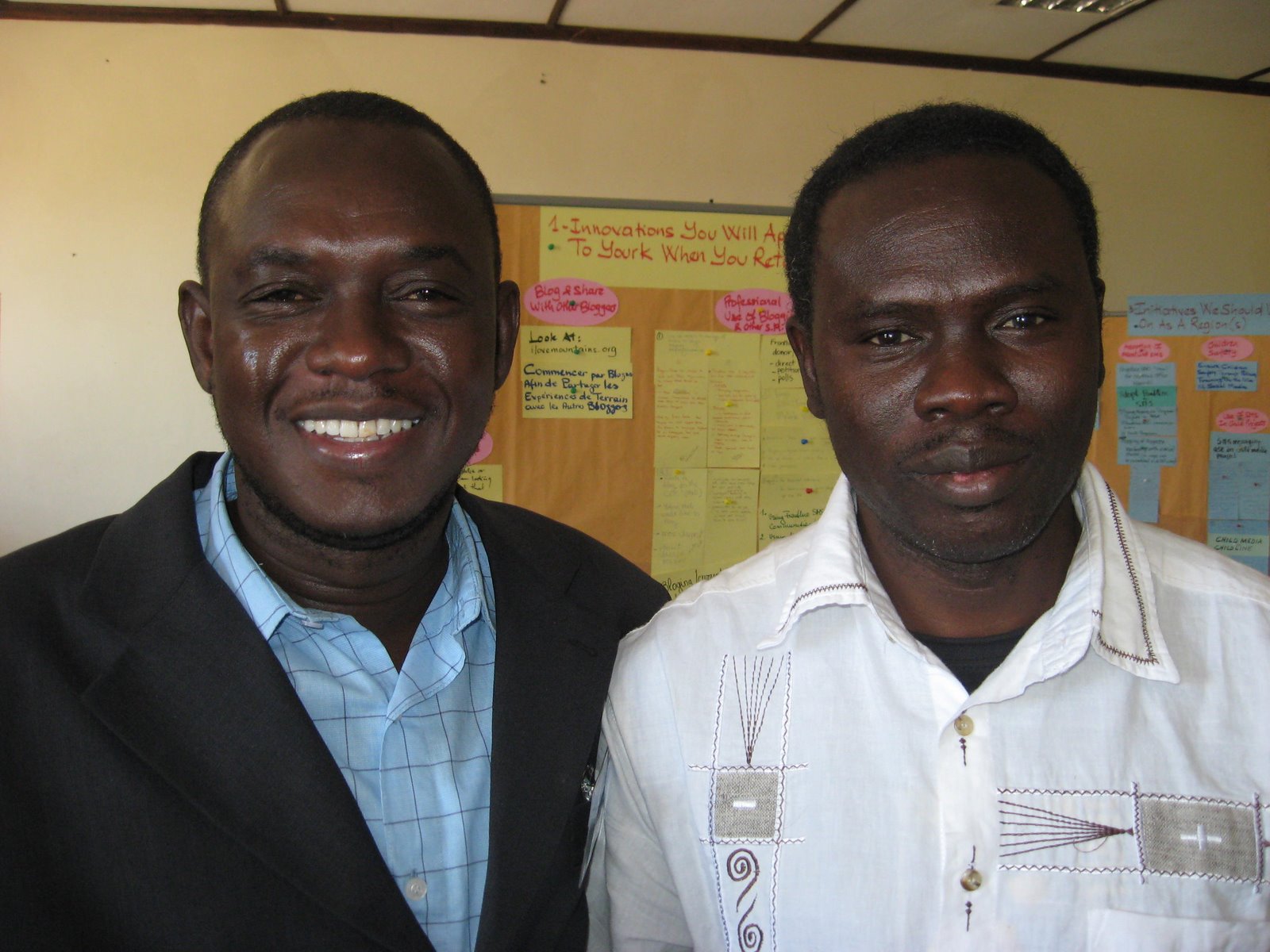
We heard so many opinions from everyone, and the French translation and bi-lingual nature of the workshop meant that we heard from everyone there, whereas often those who speak French keep quiet since English is the ‘official working language’. Photo: PapaSidy and Bedo.

Our external experts stayed with us the whole week and added so much to the conversation.
Really an amazing time. We tracked the workshop on a collective blog (http://sm4sc.maneno.org/eng/) so people could practice, and posted photos on Flickr http://www.flickr.com/photos/whiteafrican/sets/72157610896848364/.
Now Mika and I will do the report. We asked people to state a few concrete ways they will follow up on the workshop and then our job along with the different offices involved is to support their work and help address any challenges or obstacles that come up. Photo: the fearless Mika!
(And we had a “Bush Dinner” with a fire and music the last night”)
So our work is cut out for us next year…. and it’s about 90% sure that I’ll get to extend my secondment for another year to focus on YETAM’s next countries and SM4SC follow up.
Yippeee!

Read Full Post »

I’m back from Brazil and in Kenya now for the Social Change for Social Media workshop. There are about 25 of us here and the first day was really really good. I learned tons of stuff from everyone here. It’s about 6:00 and most everyone is still here in the workshop room, doing email and stuff. We are going into “Bar Chats” in a few minutes – where people can just suggest topics that they want to discuss and form groups to do it. Photo: Lukenya Getaway

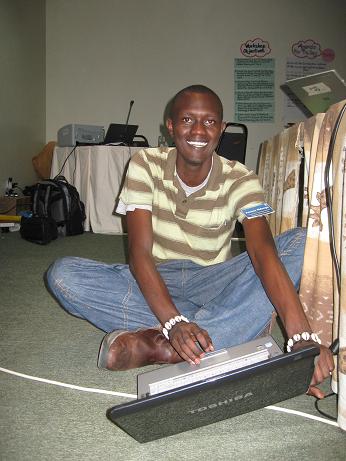
We have tried live broadcasting some of the talks – some worked some didn’t. And we’re testing a blog on a site called Maneno. The link is http://www.maneno.org/. Under SM4SC workshop you can find it…. I couldn’t get my photos to post there so I thought I’d revert to here to put some up. Photo: Tonee from Wazimba blogging. Erik from White African/Ushahidi and Mativo and Anthony from Plan Kenya.

Will post more this week.

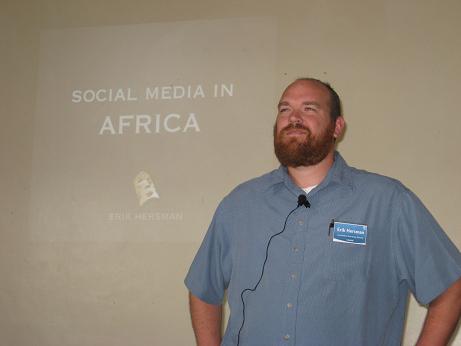
Photo: Erik starting his talk.

Read Full Post »

« Newer Posts