Feeds:
Posts
Comments

Archive for the ‘development’ Category

Our June 20 Salon in New York City tackled the topic of digital jobs for African youth. Lead discussants were Lauren Dawes, who leads the GSMA’s Mobiles for Employment team, and Lillian Chege from the Rockefeller Foundation’s Digital Jobs Africa program. The GSMA will release a study on Mobiles for Work in July, and Rockefeller has recently announced a 7-year, multi-million dollar commitment to creating digital jobs in six African countries.

The wealth of experience in the room led to lively discussions and debates around roles and responsibilities in this area. The stagnant global economy is a major underlying problem when it comes to youth employment, and jobs cannot be created out of thin air. Salon participants shared how they are trying to work around this by identifying areas with potential for youth, preparing youth for these opportunities, and seeking to match youth skills with private sector demand. Alternatively, some Salon participants focus on helping youth enter into different forms of entrepreneurship.

What do youth want?

When surveyed for a previous GSMA study on Mobile Learning, young people indicated more interest in using mobile devices for finding a job than for learning math or English. Most youth prioritized work skills to get jobs. So the GSMA conducted a second study (forthcoming) with youth in Spain, Ghana, Indonesia and Bangladesh to identify where mobile devices could help with youth employment. The study’s preliminary findings indicate that youth want support for learning and training; finding a job (connecting to employers, knowing what to say to them, understanding the process of getting a job); and obtaining skills and capital to start their own businesses. Surveyed youth identified interest in manufacturing, catering, teaching, and the ICT and mobile sectors, including sales, selling mobile phones and mobile accessories, and jobs in the mobile industry.

Do youth have a sense of what is possible?

Listening to youth is very valuable, but some Salon participants felt that youth might only be aware of what they see around them. How can we help youth discover new areas and expand their horizons, they asked. Might there be jobs and possibilities that youth are well suited for but do not know about? The fall back position of “start my own business” is another example of what  youth see around them in poor economies where there are no formal jobs. Youth’s ideas will likely be very experience-based. One Salon participant told of an innovation contest, where youth in Kenya submitted new and creative ideas, whereas those from some other countries submitted ideas that closely mirrored NGO programs commonly seen in their communities. Stimulating youth to think bigger and exposing them to new opportunities and ideas is an important part of youth development and youth employment programs.

Soft skills for formal jobs

As the GSMA study noted, a big challenge for youth is understanding the job seeking process and gaining the skills needed to find a job, communicate with employers, and then keep a job. Many youth do not know how to manage an interview, or how to retain connections. Placing someone who has never experienced a formal setting into a formal job, even at an entry-level, creates a whole set of issues. In some cases these may be more basic, like personal hygiene, arriving to work on time, or simply knowing how to navigate a formal work environment. New kinds of hierarchies may need to be learned. For example, in some contexts males have never had to work with or report to females. On top of these situations, there may be additional, deeper challenges. In one employment program, a Salon participant noted, 8 of the 10 girls recruited were survivors of rape. Once youth land a job, an entire family is relying on them and their income, and this generates a great deal of stress. The traditional education system does a very poor job of helping youth gain soft skills, As one participate noted, it still aims to prepare youth for an industrial economy yet today’s world requires completely different skills to succeed.

Skills for entrepreneurship

The state of the economy is such that many youth will not find formal employment and are considering starting their own businesses. In the GSMA study, youth identified a desire for capital and support in this area. A Salon participant outlined 3 kinds of entrepreneurship: high impact/high growth (Silicon valley style); lifestyle entrepreneurship (small and medium enterprises, family businesses); survival entrepreneurship (low-skilled, informal businesses). Each of these is quite different, and adequate risk analysis and targeted support and skills training need to be developed for each according to the context. Most youth in developing countries will not work in Silicon Valley. They will instead need to develop skills for lifestyle and survival entrepreneurship. Soft skills as well as technical know-how are critical for entrepreneurship, and many investments are unsuccessful because these skills are not strong among youth. Generational gaps also make it difficult for older people to mentor younger people, because things are moving from print to digital and relationships are also changing. Innovation hubs are aiming to fill this gap and provide youth with a relevant space to learn the hard and soft skills required for high impact, high growth entrepreneurship in the tech sector.

What about young women?

It was noted that most of the existing innovation hubs are very male-focused. For example, only 16% of the iHub Nairobi’s users are female. More needs to be done to bring women into these spaces, yet it can be challenging in many contexts where girls do not complete secondary school. Female role models and mentors are scarce in these new fields and in leadership positions within companies. Mentorship is key for young women, who tend to doubt themselves, to be apologetic about their ideas, and who are often shy about speaking up. Some organizations are using Skype, Google hangouts, Facebook, and Twitter chats to reach and mentor young women. Girls from poorer communities, however, may not have access to these programs and may not see themselves and their personal experiences reflected in female role models from the upper classes. In addition, though mentoring is high touch and very powerful, in its current form it is time-consuming and not feasible for reaching everyone who needs it. The challenge is offering these kinds of support at scale.

The employment ecosystem

Some participants noted that creating one job at a large company can stimulate additional, related jobs (e.g., cleaners, nannies and cooks who serve employees at lunchtime). Others felt that the trickle-down effect is overestimated. An entire ecosystem conducive to youth employment is needed. This is not a simple thing to create, and it takes quite a long time. The role of government in creating the infrastructure for jobs and a digital economy cannot be underestimated. One participant pointed out that both “bottom up” development of the labor market and “top down” development of labor infrastructure and capital are needed. This will vary from country to country, and research should be conducted to understand the right entry points for each context. All these sectors need to work together to match the economic context, the demand, and the supply sides. The private sector cannot create jobs on its own, as one discussant commented. Jobs are created because of consumer demand and need. The private sector can, however, get better at identifying which jobs are on the horizon, and it can work with education, training, and non-profit partners to ensure that youth are prepared for these jobs.

Comprehensive programs are needed

When we train youth for non-existent jobs, we create expectations, said one Salon participant, citing an ILO study that reported 40% of job programs had negative impacts on youth. In addition, programs cannot only look at one side of the issue. Youth employment programs should not be just hard skills, just soft skills, or just mentorship. Rather they need to be comprehensive. The issue of supply-demand balance is rampant across development programs, noted another participant. We train women to go to a clinic, and they go, but there is no midwife. The need for a holistic perspective is something that has been learned the hard way, and this learning needs to transfer into youth employment programs. Impact sourcing is a newer concept where socially responsible businesses are encouraged to hire youth from less privileged communities for lower end jobs, for example, at call centers. The Rockefeller Foundation is working in partnership with the private sector and institutes such as Digital Divide Data to train and place youth in these types of jobs and will expand to sectors outside of the business process outsourcing (BPO) field in their new Digital Jobs Africa program. In some cases, 100% of participating youth have been placed into formal economy jobs. The program is also looking at other high growth sectors (such as agriculture, manufacturing, and the hospitality industry) where digital jobs are growing. The Foundation collaborates with governments to support creation of an enabling environment that will allow these efforts to achieve scale.

Scale and speed are imperative

While scale is one factor, time is the other, according to one participant. Hubs and ground-up entrepreneurship can move the ball down the field, but this will take time. A grand and widespread effort is needed. In part, this can be boosted by identifying and building on existing infrastructure. Libraries can serve as information hubs for job seekers, financial literacy, digital spaces and places to find support for job training and seeking. Telecenters are also playing a role in helping youth access information and build digital and life skills. More needs to be done with schools as well. The need is too great not to scale, said one discussant, it’s imperative! We need to unlock existing funding within government as well. Governments can  be a source of demand, as they also have digital needs and digital jobs. In Kenya, for example, the government is digitalizing the records for the country’s largest hospital, and this is work that youth are doing. As new hospitals are built in rural areas, now they will have access to patient records across the health system. Similar efforts can be found and youth can be trained for these kinds of jobs.

What about rural youth?

While the possibilities are exciting, much of the work is anchored in urban and semi-urban areas, including the digital jobs programs and the innovation hubs. Participants asked whether it is possible to extend services out to rural areas to cast a wider net. The latest “big thing” was also brought up – can Google’s new wifi balloons solve some of the issue with connectivity, and will that be enough to bring some of these benefits to rural populations?

Thanks to our great lead discussants, Lauren and Lillian, and to Melissa Beuoy at FHI-360’s New York City office for graciously hosting us and providing a fantastic breakfast spread!

Don’t miss our July 10 Salon on the realities of ICT access for youth in Indonesia, Sweden, Sierra Leone and Uganda. We’ll be joined by 6 youth who are visiting New York City for a UN Take Over to support girls’ education, in honor of of Malala Yousafzai.

Sign up to receive alerts on future events at Technology Salon.

Salons are in-person only events held in Washington DC, New York, San Francisco, Nairobi and London. We hold to Chatham House Rule, thus no attribution has been made in the above summary post.
Read Full Post »

This is a cross-post from the always thoughtful and eloquent Ian Thorpe, who notes that fundraising is a means to help non-profit organizations fulfill their wider mission; it should not be mistaken as the end goal of non-profit organizations. Consistency in how we achieve our missions across all of our operations becomes ever more important in this age of growing transparency. Read the original post here.

by Ian Thorpe

I’ve been reflecting on a couple of interesting discussions lately on aid communication and fundraising.  In the first, Kurante organized a Google Hangout on “Poverty Porn” i.e. the use of negative, shocking images in aid campaigns (the recording and the twitter storify of the discussion can be found on Tom Murphy’s blog here). During the discussion @meowtree  shared a link to this rather discouraging blog post by a fundraising guru here that suggests that those who criticize the use of negative images are undermining the organizations they work for and should be fired!

A second twitter discussion concerned a new “buy one, give one” programme and whether or not it is harmful or helpful and on what basis this type of programme might be judged.

What comes out of both of these is the potential conflict between what makes good aid versus what makes good fundraising. It’s quite possible to raise money, a lot of money, if one is willing to do whatever it takes, use any kind of images and words and tactics in order to open their wallets. Marketers and fundraisers, to give them their due, make extensive use research and evidence in their work, perhaps more so than programme people, and much research backs up the claim that negative imagery is often more successful than positive imagery in evoking a response and getting out checkbooks.

If you were a private company then “maximizing shareholder value” by going where the money is might well be a great strategy. But aid agencies and civil society organizations are generally in place to serve a mission. The mission of the organization is a huge asset both in motivating staff and in generating support – but it’s also an important constraint in that in places limits around what you will be prepared to do to raise funds or attention. Essentially, if you exist to pursue a mission then all your activities need to be consistent with it. Generally an aid mission is not simply to raise as much money as possible, it’s to achieve a purpose such as reducing poverty or protecting children from harm. And it’s often more complicated to pursue this goal to maximize the amount of positive impact on your beneficiaries – you also need to do this in a principled way informed by your organization’s values such as in respecting the human dignity of the people of the people you aim to help and not exploiting them (even if with the aim of helping them).

I recall a conversation from when I worked on communication in UNICEF with our fundraisers about a similar topic (from more than 10 years ago so I’m not spilling any secrets). At that stage the organization was looking to move more into “upstream policy work” and on scaling back on “service delivery”, especially in middle-income countries. Programmatically this made a lot of sense, but the fundraisers were naturally concerned about the impact on their ability to talk about this shift in fundraising campaigns. It’s much easier to fundraise using images of nicely branded supplies coming in on trucks being handed out by aid workers to poor people than it is to “show” work on, or the results of influencing government policy, improving data collection and building capacity of civil servants.  But at the end of the discussion we were ready to say that while it might be harder to raise money for upstream work, and we might be able to raise less money as a result – if this is the work that needs to be done, then the task was to fund better ways of fundraising about this work, rather than changing the nature of the work to make it easier to raise funds.

Of course aid organizations rely on external funding (whether government, corporate or individual) and they need professional fundraisers to be able to get the resources they need to do their work. Professional fundraisers and communicators know better than programme staff, from their experience and research, how to put together effective fundraising communications in terms of who to approach, what approaches to use and what information is needed from programme staff to support it. That can include coming up with novel approaches to raising funds for something that is already a priority, even if these appear gimmicky to aid workers on the ground (such as sending a quarter coin to people to get them to send in donations or getting them to buy something to give something).

But it’s important to ensure that the fundraising is in service of the organization’s goals rather than the reverse. It can be easy to be tempted to do something because it’s popular with donors even if it isn’t fully consistent with your mission and values, and hard to forswear potential opportunities when aid funding is tight. In particular it can be tempting to agree to programmes which are appealing to donors but for which there isn’t a demand, or worse that do unintended harm. But if the organization exists to serve a mission – then it’s important to keep that front and centre in decision-making on what opportunities to pursue or what tactics to use to pursue them – in fundraising just as much as in programmes.

In fact in an age of increasing aid transparency it becomes ever more important to focus on your mission and values since it’s much more obvious if your communications, partnerships and programmes are not consistent with each other or with your mission, and your reputation will suffer as a result –as will the cause you are pursuing.

Greater transparency is also an opportunity to bring donors and beneficiaries closer together so that donors can see and hear the results of aid work directly from those being helped rather than via a “story” whether positive or negative constructed by the aid agency for the benefit of donors. Similarly donors can also hear more from those they are helping about what they want and need, seeing them more as individuals with dignity, aspirations and agency to improve their lives aided by donors rather than as passive objects of pity and charity. This way instead of going where donors give most now, you can change the discussion to educate and encourage them to give money to where it is really needed, and to understand better what their support really does and can do.

Read Full Post »

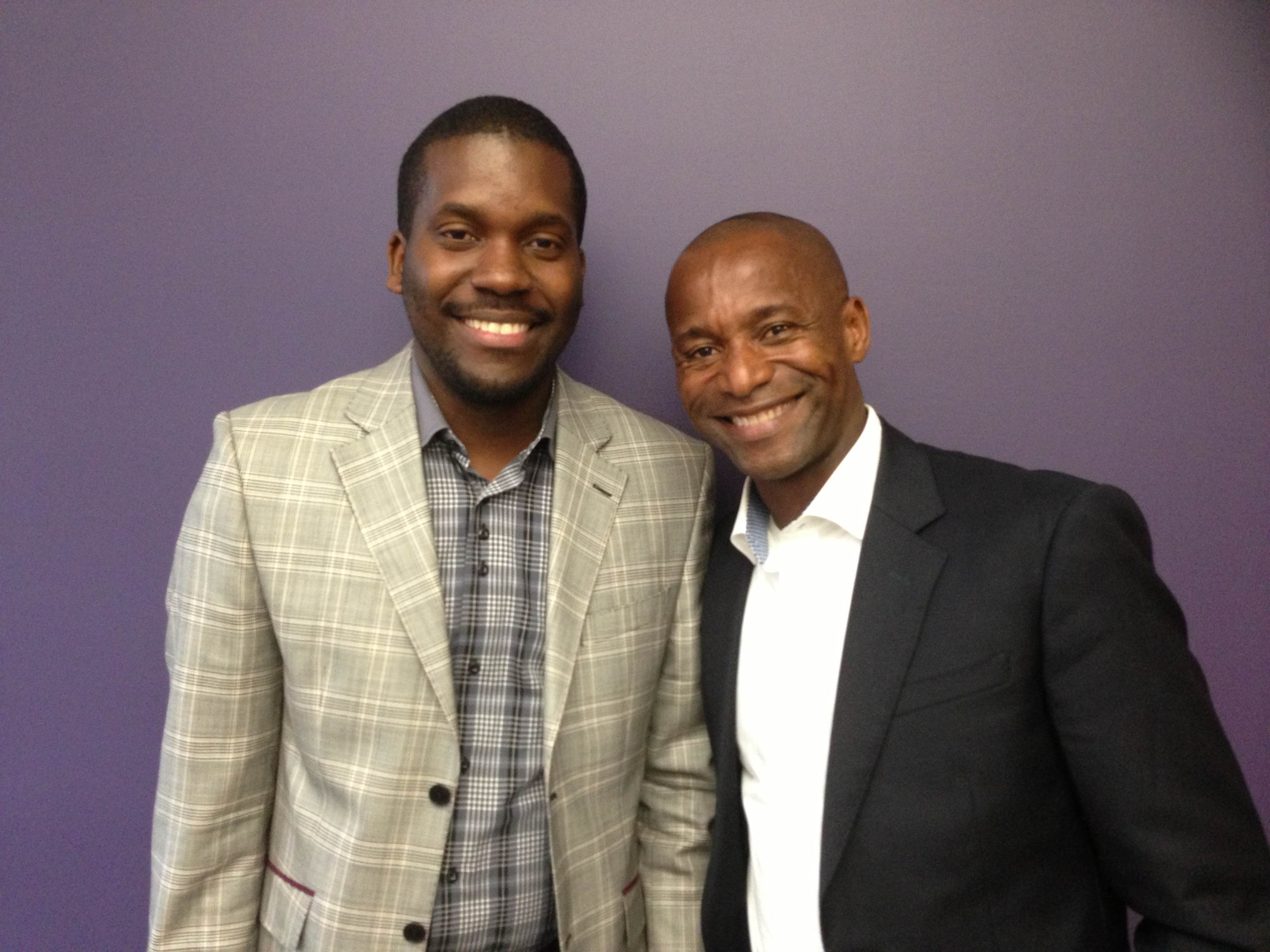
Verone Mankou of VMK with Senam Beheton of EtriLabs, who organized Verone's US trip.

Verone Mankou of VMK with Senam Beheton of EtriLabs, who organized Verone’s US trip.

We switched things up a little for our May 21 Technology Salon and had an evening event with Verone Mankou, the head of VMK, a company in Congo Brazzaville that designs and produces the Way-C Tablet and the Elikia smart phone. The event was graciously hosted by ThoughtWorks, and Verone’s US trip was organized by Senam Beheton of EtriLabs.

Verone told his story of starting the first African company to make mobile devices. In 2006, he said, the cheapest computer in Congo cost $1000 USD, and the cheapest Internet package was priced around $1000 per month. Verone worked in the tech industry and wondered why there was no computer or Internet that could be reasonably accessed by people in Congo. Everyone laughed and said he was young, fresh out of school, and that within 2 years he would understand the business and stop dreaming.

Verone persisted with his idea that computers and the Internet were not just for people in offices with suits. Everyone wanted to access Internet, he believed, but they just didn’t have the money. So in 2006, he started working on ideas for a laptop. After 6 months he concluded that it was impossible. To create a laptop you need a lot of money for research and development, and, unfortunately, his bank account only contained about $100 USD. He had no contacts with suppliers. Verone had a big dream but problems executing it, so he put the laptop project on hold.

In June 2007, a friend told him to hurry up and turn on the news. Steve Jobs was presenting the iPhone. “This is what I want to do,” Verone thought. “Make a big iPhone.” He felt keyboards were a deterrent for most people who were new to a computer, and that “a big iPhone” would be a solution. He started working on the idea of a tablet. It was difficult to find any suppliers on the African continent – no CPU factory, no battery factory. He could not find hardware engineers because in Congo there is no engineering high school. He realized he needed to go outside, to Asia. He made a first trip to China in 2007 and learned many things. By 2009 he had a plan, an Android system, and a finished project.

The next problem, however, was that he had no money for mass production. “In Congo we don’t have venture capitalists. Also as a youth, you cannot get any money. You will have a bad experience if you go to the bank to ask. People will tell you to start a hotel and not to waste your money on something different.” Verone did not go quiet when he could not find capital, however. He kept looking.

Meanwhile, Steve Jobs presented a new device: a big iPhone – otherwise known as the iPad. Verone was disappointed that Jobs had moved more quickly than he could with his tablet launch. On the other hand, everyone suddenly understood Verone’s project.

His miracle came a few months later when a minister from Congo was on a plane from Brazzaville to Singapore and came across a magazine article talking about a boy in Congo making a tablet. The minister could not believe someone in his country was doing this and he did not know about it. He contacted Verone and asked how he could help. Verone asked for $200k USD and gave the minister a prototype. Within 2 hours, the minister secured the funding and Verone was able to begin manufacturing.

He had enough funds to do a mass prototype of 1000 tablets and imagined that he could sell them in 3 months if they were marketed well. There was a buzz around the tablets, however, and they sold out in 1 week and he increased production to 10,000. Compared to the cost of an iPad in Congo (around $1500), Verone’s tablet was going for $200-300. He set his sights on making a good quality, low-cost smart phone.

Good quality is key for Verone. “Why do Samsung and Nokia come to Africa and think Africans need cheap, low quality devices?” As an African, Verone felt uniquely placed to create something for the continent – something cheap but good quality. He did this by eliminating unnecessary features and keeping only the necessary elements.

Next he needed to ensure that there was good content and an opportunity for monetization. Africans needed applications and content for their own purposes and context, he felt. Not maps of pharmacies in New York City. However most Africans do not have credit cards, so another way to pay for content and applications was needed. VMK created a marketplace for Africans that used scratch cards for payment, since everyone understands how scratch cards work.

VMK launched their smart phone in December of last year and  plans to sell 50K units in Congo Brazzaville. The company is also working on a cheaper phone with lower capacity that should run about $50 USD. In addition, they are working on identifying content partners and launching an “updateable school book” that would be accessible also at around $50 USD, so that students and teachers are not using outdated text books, which stunt the development of African children’s minds.  Verone’s vision is to give people access to good quality technology at a good price.

How will VMK compete with Chinese products as prices continue to go down over the next 10 years? “We will learn fast,” Verone says. “We will not sit while others advance.” He believes that expanding to African countries and developing the industry there will be good for the continent, good for developers and good for business. It’s not yet possible to do mass production in Africa because of poor education and lack of / high cost of Internet. People still cannot easily access relevant and updated information. But Internet is getting cheaper, access is improving and things are changing. People are starting to understand the importance of education. VMK currently has teams working in China and India, but they hope to move these functions to Africa as soon as possible. VMK plans to train staff up, offer internships and to get African youth skilled up in order to do this work.

The important thing is not to sit still, Verone says. “We can’t just keep waiting for things to change. We need to change them ourselves.”

Read Full Post »

M4 Version 5[4]I’ve been looking around for a good read for the past several months and finding myself dissatisfied with the airport bookstore. So I was glad to get a review copy of J’s latest: Missionary, Mercenary, Mystic, Misfit.

I read it in one sitting on the plane home from a meeting about disruption, civil society and the capacity of international development/aid organizations to adapt, so it was through that lens that I consumed the book. It pretty much answered the question “can INGOs adapt?” (Spoiler alert: prognosis is not good.)

And make no mistake: These structural issues are universal. It’s not Oxfam or WAC or Save or CARE. You don’t escape this problem by moving to another organization or taking a different job in your current organization, because this is the nature of the aid industry itself.

J’s description of personal agendas, bureaucracy, competition, jostling for position, stressed local government workers, exhausted staff, and unrealistic demands from donors and headquarters is an insider’s view of why INGOs have a hard time adapting and changing. The book describes the complexity of aid and humanitarian work in detail, bringing in the conflicting push and pull of the different stakeholders.

Rather than complexity encouraging adaptation and organizations that are more “fit for purpose,” however, J’s main characters are trapped in complexity that paralyzes, breeds mediocrity, loses sight of the mission and rewards the “wrong” motives and decisions.

Aid is not broken because aid workers are cynical, hedonistic alcoholics. Aid workers are cynical alcoholics because aid is broken, and further, because they have been repeatedly slapped down by their own leaders for trying to make it better.

J does recognize the conflicts, however, and (with only a little bit of blame and harsh judgment), he shows the demands made on people at all levels of the aid machine:

Management and leadership are the easiest things in the world until you actually have to do them.

J does a good job of humanizing the aid worker and his or her personal and professional struggles within this dysfunctional system. He writes about how the passion for aid work conflicts with the personal choices each aid worker makes, most significantly when the addiction to aid work obliterates the possibility of having “normal” and healthy relationships with one’s family and home country society. The book also highlights the internal doubts and fears of self-aggrandizement that any self-reflective aid worker experiences:

…Suddenly Mary-Anne felt overwhelmed with the feeling that her career in the humanitarian world had thus far been built on so much self-important dishonesty….

….“You come here, you and your foreign friends. You spend hundreds of thousands of dollars to instruct refugees about drinking enough water or where they should shit every day.” He snorted derisively. “These people were mapping the stars and perfecting mathematics while your ancestors were painting themselves blue and dancing naked around fires in the forest…. You children come here to patiently explain to Ethiopians about accountability and honesty… You think we need you to help us know right from wrong. You come here to ‘supervise’ people old enough to be your parents. My youngest daughter is your age. ”

Reading the book was like having a long conversation with J over Skype or beers where he offers you career advice and makes you feel better by acknowledging you that you are not the first person to experience internal conflict and self-doubt. There is a fair bit of J bestowing his wisdom on the reader, but I find that J normally has good insights and offers solid advice, so this did not bother me.

I did feel that the book was half-finished. Several of the characters introduced early in the book were not developed out in the rest of it. Given the “to be continued” on the last page, I assume that their stories will be picked up in the next book in the series. I also would have liked more about the setting and history woven in, and more active roles for some of the “local” characters, as well as a chance to get inside their heads and see their perspectives in more depth. This would have rounded the book out and brought it fully from the tongue-in-cheek harlequin romance novel style of J’s first book (Disastrous Passion) to a more solid kind of “historical fiction”.

Some have criticized the book for being aimed solely at those in the aid and development world and making too many “insider” assumptions. I suspect, however, that J purposely wrote it for “Expat Aid Workers,” and I didn’t find that to be a problem. Simplifying things for a mainstream audience would water the book down, making it less “real” for those working in the sector. This choice means that this book will not become a best seller outside of the industry — but I don’t think it is meant to.

I will note that the fact that I didn’t have a problem with the level of detail-that-only-an-aid-or-development-worker-would-appreciate probably means that I am sitting firmly in the category of “Misfit.” Read the book and you’ll understand what I mean!

Disclosures: I was provided with a free copy for review. I have known J for quite some time and consider him a friend, which may color my opinions about the book.

Read Full Post »

About 15 years ago, I was at a regional management meeting where a newly hired colleague was introduced. The guy next to me muttered “Welcome to the Titanic.”

In the past 20 years, we’ve seen the disruption of the record, photo, newspaper, and other industries. Though music, photos, and news continue to play a big role in people’s lives, the old ‘owners’ of the space were disrupted by changes in technology and new expectations from consumers. Similar changes are happening in the international civil society space, and organizations working there need to think more systematically about what these changes mean.

I spent last week with leadership from a dozen or so international civil society organizations (ICSOs) thinking about what is disrupting our space and strategizing about how to help the space, including our organizations, become more resilient and adaptive to disruption. Participants in the meeting came from several types of organizations (large INGOs doing service delivery and policy work, on-line organizing groups, social enterprises, think tanks, and big campaigning organizations), both new and old, headquartered and/or founded in both the “North” and the “South.”

We approached discussions from the premise that, like music, photos, and news; our sector does have value and does serve an important function. The world is not a perfect place, and government and the private sector need to be balanced and kept in check by a strong and organized “third sector.” However, many ICSOs are dinosaurs whose functions may be replaced by new players and new ways of working that better fit the external environment.

Changes around and within organizations are being prompted by a number of converging factors, including new technology, global financial shifts, new players and ways of working, and new demands from “beneficiaries,” constituencies, and donors. All of these involve shifting power. On top of power shifts, an environmental disaster looms (because we are living beyond the means of the planet), and we see civil society space closing in many contexts while at the same time organized movements are forcing open space for civic uprising and citizen voice.

ICSOs need to learn how to adapt to the shifting shape and context of civil society, and to work and collaborate in a changing ecosystem with new situations and new players. This involves:

  • Detecting and being open to changes and potential disruptors
  • Preparing in a long-term, linear way by creating more adaptive, iterative and resilient organizations
  • Responding quickly and nimbly to disruption and crises when they hit

Key elements of preparing for and navigating disruption are:

  • Maintaining trust and transparency – both internally and externally
  • Collective action
  • Adaptability
  • Being aware of and able to analyze and cope with power shifts

Organization cannot prepare for every specific disruption or crisis, and the biggest crises and shocks come out of nowhere. ICSOs should however become more adaptive and agile by creating built-in responsiveness. We surfaced a number of ideas for getting better at this:

  • Networking/Exchange: actively building networks, learning across sectors, engaging and working with non-traditional partners, bringing in external thinkers and doers for exchange and learning
  • Trend spotting and constant monitoring: watching and participating in spaces where potential disruptions are springing up (for example, challenge funds, contest and innovation prizes); exit interviews to understand why innovative staff are leaving, where they are going, and why; scanning a wide range of sources (staff, people on the ground, traditional media, social media, political analysts) including all ICSO’s audiences – eg., donors, supporters, communities
  • Predicting. Keeping predictable shocks on the radar (hurricane season, elections) and preparing for them, scenario planning as part of the preparatory phase
  • Listening: Ensuring that middle level, often unheard parts of the organization are listened to and that there are open and fluid communication lines between staff and middle and upper management; listening to customers, users, beneficiaries, constituencies; basically listening to everyone
  • Confident humility: Being humble and open, yet also confident, systematic and not desperate/chaotic
  • Meta-learning: Finding systematic ways to scan what is happening and understand it; learning from successes and failures at the ‘meta’ and the cross-sector level not just the organizational or project level
  • Slack time: Giving staff some slack for thinking, experimenting and reflecting; establishing a system for identifying what an organization can stop doing to enable staff to have slack time to think and be creative and try new things
  • Training. Ensuring that staff have skills to do strategic decision making, monitoring, scenario planning
  • Decentralized decision-making. Allow local pods and networks to take control of decision-making rather than having all decisions weighed in on by everyone or taking place at the top or the center; this should be backed by policies and protocols that enable quick decision making at the local level and quick communication across the organization
  • Trust. Hiring staff you can trust and trusting your staff (human resources departments need strengthening in order to do this well; they need to better understand the core business and what kind of staff an organization needs in these new times)

Culture, management, and governance changes are all needed to improve an organization’s ability to adapt. Systems need to be adjusted so that organizations can be more flexible and adaptive. Organizational belief systems and values also need to shift. Trying out adaptive actions and flexible culture in small doses to develop an organization’s comfort level and confidence and helping to amass shared experience of acting in a new way can help move an organization forward. Leadership should also work to identify innovation across the organization, highlight it, and scale it, and to reward staff who take risk and experiment rather than punishing them.

These changes are very difficult for large, established organizations. Staff and management tend to be overworked and spread thin as it is, managing an existing workload and with little “slack time” to manage change processes. In addition, undesignated funds are shrinking, meaning that organizations have little funding to direct towards new areas or for scanning and preparing, testing and learning. Many organizations are increasingly locked into implementing projects and programs per a donor’s requirements and there are few resources to strategize and focus on organizational adaptation and change. Contractual commitments and existing promises and community partnerships can make it difficult for ICSOs to stop doing certain programs in order to dedicate resources to new areas. The problem is usually not a shortage of innovative ideas and opportunities, but rather the bandwidth to explore and test them, and the systems for determining which ideas are most likely to succeed so that scarce resources can be allocated to them.

Despite all the challenges, the organizations in the room were clear that ICSOs need to change and disrupt themselves, because if they don’t, someone else will. We profiled three types of organizations: the conservative avoider, the opportunistic navigator, and the active disruptor, and determined that the key to survival for many ICSOs will be “dialing up the pain of staying the same and reducing the pain of changing.”

What might an adaptive organization look like?

  • Focused on its mission, not its traditional means of achieving the mission (get across the water in the best way possible, don’t worry if it’s via building a bridge or taking a boat or swimming)
  • Not innovating for the sake of innovation or disrupting for the sake of it – accompanying innovation and disruption with longer-term and systematic follow through
  • Periodically updating its mission to reflect the times
  • Piloting, gaining experience, monitoring, evaluating, building evidence and learning iteratively and at the meta-level from trends and patterns
  • Sub-granting to new, innovative players and seeding new models
  • Open, in the public domain, supporting others to innovate, decentralized, networked, flexible, prepared for new levels of transparency
  • Systematically discovering new ways of working and new partners, testing them, learning and mainstreaming them
  • Keeping its ear to the ground
  • Learning to exit and say no in order to free up slack time to experiment and try new things

Many “dinosaur” organizations are adopting a head-in-the-sand approach, believing that they can rely on their age, their hierarchical systems and processes, or their brand to carry them through the current waves of change. This is no longer enough, and we can expect some of these organizations to die off. Other organizations are in the middle of an obvious shift where parts of the organization are pushing to work under new rules but other parts are not ready. This internal turmoil, along with the overstretched staff, and ineffective boards in some cases, make it difficult to deal with external disruption while managing internal change.

Newer organizations and those that are the closest to the ground seem to have the best handle on disruption. They tend to be more adaptive and nimble, whereas those far from the ground can be insulated from external realities and less aware of the need for ISCOs to change. Creating a “burning platform” can encourage organizational change and a sense of urgency, however, this type of change effort needs to be guided by a clear and positive vision of why change is needed, where change is heading, and why it will be beneficial to achieving an organization’s mission.

After our week of intense discussions, the group felt we still had not answered the question: Can ISCOs be nimble? As in any ecosystem, as the threats and problems to civil society shift and change, a wide array of responses from a number of levels, players and approaches is necessary. Some will not be fit or will not adapt and will inevitably die off. Others will shift to occupy a new space. Some will swallow others up or replace them. Totally new ones will continue to arise. For me, the important thing in the end is that the problems that civil society addresses are dealt with, not that individual organizations maintain their particular position in the ecosystem.

Read Full Post »

Imagery and stories used to frame issues of humanitarian development for advocacy and funding are often sensational and culturally disrespectful, representing those living in poverty as helpless victims in need, rather than as empowered and capable individuals.

Fueled by intense Twitter and blog discussions about this topic (which is often referred to as “Poverty Porn,”) a few years ago a number of us decided to work together to create a space for wider dialogue around issues of representation of the people that aid and development organizations support.

Screen Shot 2013-05-19 at 2.53.22 PM

Today we launch our multimedia platform Regarding Humanity or “Re: Hum.” The platform aims to engage practitioners, educators, and students in discussions on how to represent  communities we work with in relevant and respectful ways.

Re: Hum is a website and blog that explore how the way we see, listen and frame stories of “the poor” often strips individuals of their agency and creates a general sense of hopelessness and disempowerment. More respectful and relevant methods of seeing, listening and framing can help tell more nuanced stories that respect people and their complex realities.

The Re: Hum website will source content from a diverse set of authors and creators in order to bring a global perspective to the issue. It will serve as an educational resource and discussion forum to teach visual literacy, the importance of ethnography, and ways to maintain narrative integrity. We will be expanding to a discussion series, research, and an educational curriculum over time and as resources permit.

We invite you to take a quick look at Re: Hum (which is still a work-in-progress) and let us know your thoughts and suggestions on how to generate constructive conversation and learning on this issue!

Read Full Post »

This is a summary of the May 14th Technology Salon in New York city on “Does social media exacerbate poverty porn”.

  1. MT @nidhi_c: #povertyporn is never about the beneficiary..it’s an org’s attempt to stay relevant. #techsalon
  2. RT @nidhi_c: How do we teach orgs & journalists that #povertyporn isn’t necessary to raise $ or awareness? #techsalon
  3. Fr my notes on today’s NYC #TechSalon on #povertyporn: Ppl visit Africa like it’s the zoo. Do you know the names of ppl u took photos with?
  4. #povertyporn is disempowering both to those it portrays and to those it’s aimed at, bc you only offer one solution – yours. #techsalon
  5. Telling only “positive” stories is also not the solution. Life anywhere is not only one or the other. It’s complex. #povertyporn #techsalon
  6. Great question from @meowtree & #TechSalon on #povertyporn – Do you know the names of people you take photos with?
  7. Stop hijacking people’s stories by putting your NGO/organization at the center of it. #povertyporn #techsalon
  8. transmedia storytelling is one good way to bring in more stories fr more angles to create a diverse narrative #techsalon #povertyporn
  9. Don’t need to take the western voice out. We need all the voices. But often the most vulnerable are not included. #povertyporn #techsalon
  10. Why do donors demand impact evals for ‘regular’ devt pjcts, but to prove soc med impact they’re fine w likes/clicks? #povertyporn #techsalon
  11. Where is the accountability to small individual donors/donations garnered via social media, i.e. for Kony2012? #povertyporn #techsalon
  12. Why do ppl from US photo’d during tragedy have name/story, yet ppl from other places are unknown victims? #povertyporn #techsalon
  13. Yet also, are we respecting privacy, consent and dignity when we photograph ppl in other countries? #povertyporn #techsalon
  14. Why ppl in US portrayed as heroes after tragedy (eg., Boston, 911) but not first responders in other countries? #povertyporn #techsalon
  15. How to get influentials w lrge audience (eg N Kristof) to see that external hero narrative not helpful in long term? #povertyporn #techsalon
  16. #PovertyPorn not only problem of “white” saviors/Africa. Privileged often view “the poor” this way in their own countries #techsalon
  17. Social media does not necessarily reduce the “othering” of #povertyporn. We still create our own filter bubbles #techsalon
  18. NGOs send media teams to find pre-conceived #povertyporn stories. Eg: this post by @morealtitude ht.ly/l23yQ #techsalon
  19. Diff to change existing orgs/system. But what is being done in schools re global education and media literacy? #povertyporn #techsalon
  20. Sites like everydayafrica.tumblr.com can help to overcome the #povertyporn narrative. #techsalon
  21. Or google “tumblr” and any country a hashtag (eg., #elsalvador) to find a diverse range of images, not only #povertyporn #techsalon
  22. How can we harness social media to show this range of images/realities to overcome the #povertyporn narrative? #techsalon
  23. And I’ll stop now – here’s @viewfromthecave‘s summary of this really thought provoking #techsalon on #povertyporn ht.ly/l24sJ

Read Full Post »

This is a cross-post from Tessie San Martin, CEO of Plan International USA. Tessie’s original post is published on the Plan International USA blogFor more on the status of the International Aid Transparency Initiative (IATI) in the US and information on which donors sit where on the Transparency Index, visit Publish What You Fund.

Over 40 governments, along with UN organizations and the World Bank, have committed to a common standard and time schedule for publishing aid information under the International Aid Transparency Initiative (IATI).  There are high expectations for this initiative. The ultimate objective is to increase the effectiveness of donor assistance, making aid work for those whom we are trying to help and contributing to accelerated development outcomes on the ground. IATI is good news for increased accountability, can help improve coordination, and provides a space for engaging donors, communities, governments and the general public in a broader development dialogue.

Secretary of State Clinton signed on behalf of the US Government on November 2011. While US engagement has been very welcomed, US Government performance in terms of actually executing IATI has left much to be desired.  Publish What You Fund, an organization helping to ensure governments are held to their initial aid transparency commitments, ranked only one out of six agencies (MCC) in the ‘fair’ category in terms of execution. Recently, organizations like Oxfam and ONE have rightly questioned the US Government’s commitment and progress, and exhorted the Obama administration to make full compliance with the IATI standard a priority.

But with all the attention focused on how USG is performing, what are INGOs doing about IATI?  After all, governments can only open access to the data they have. Official development assistance is an increasingly smaller proportion of the entire aid flows, so having INGOs — particularly, and at the very least, the largest global INGOs — also committed to this process is vital to the success of the Initiative.

What are INGO’s doing about IATI? The answer is: not much.

Very few INGOs have committed to publishing their information to the IATI standard.  INGOs that have complied are doing so primarily because a donor is requiring it.  For example, DfID, the UK foreign aid agency, has such a requirement and, as a result, the UK has the largest number of INGOs in compliance.  The US Government has not imposed this requirement on US-based INGOs and it is not likely to do so in the future.  It is therefore not surprising that US-based INGOs have not shown much interest in IATI.

This is a lost opportunity for everyone.  Accountability and transparency are as relevant to the private and the non-profit side of development assistance as they are to the public side.

At Plan International, an INGO with offices in almost 70 countries, it is not surprising that the part of our organization making the fastest strides in this area is our office in the United Kingdom.  As an important recipient of DfID money, they were instructed to do so.  In the US, though Plan International USA is not a major recipient of USG funding, we believe that making the investment to comply with IATI reporting format and timelines is good development practice; we are thus committed to publishing to IATI in the next year.  How can we effectively preach transparency and increased accountability to our recipient communities and to the governments with which we are working yet not commit to something as eminently common sensical as uniform formats, comparable data sets and systematic reporting frequencies?

We are not Pollyannaish about the task.  Like all INGOs pondering whether and how to comply with IATI, we have many concerns, including the costs of complying and what it will do to our overhead (and therefore to something like our Charity Navigator) rating.   We have established an internal project code so we can better capture, track and understand the costs involved in this initiative.  And we are evaluating where we draw the line in terms of the size of the projects on which we should be reporting, balancing costs with the desire to maximize disclosure (it is also worth remembering that rating agencies themselves are placing increasing emphasis on transparent reporting, so rating concerns may ultimately support a move towards greater IATI compliance).

As we have moved forward, we have had many issues to address, including privacy concerns, since a fair bit of Plan’s internal documentation was not written with the idea that it would one day be shared with the public.  Publishing some information may pose security risks for minority or political groups being supported.  These situations have been contemplated by IATI already, however, and there are valid exemptions for sensitive data.  We have also learned that there are many resources to help INGOs navigate the IATI compliance waters.  These resources are not well known to US INGOs, and need to be better publicized. Plan in the US, of course, is also benefiting from the research and hard work our UK office has done to comply with DfID’s mandate, allowing us to start off on a strong foundation of organizational experience.

I am convinced that IATI is not just good development practice but also makes good business sense. At the same time, it is worth remembering that IATI is not the entire solution.  IATI is designed to improve upward accountability to donors and taxpayers.  It is not designed explicitly to improve accountability to the children and communities with which we are partnering and whom we serve. And, as the ultimate goal is improved aid effectiveness, data must be accompanied by better information about goals, methodologies and approaches.  We also need to get better at sharing not just successes but failures within our federation and across all development organizations.

Despite all the shortcomings, IATI is a good start.  And as we push the US Government to do better, INGOs need to be pushing themselves to do better as well.

Read Full Post »

At Catholic Relief Services’ annual ICT4D meeting in March 2013, I worked with Jill Hannon from Rockefeller Foundation’s Evaluation Office to organize 3 sessions on the use of ICT for Monitoring and Evaluation (ICTME). The sessions covered the benefits (known and perceived) of using ICTs for M&E, the challenges and barriers organizations face when doing so, and some lessons and advice on how to integrate ICTs into the M&E process.

Our lead discussants in the three sessions included: Stella Luk (Dimagi), Guy Sharrack (CRS), Mike Matarasso (CRS), David McAfee (HNI/Datawinners), Mark Boots (Votomobile), and Teressa Trusty (USAID’s IDEA/Mobile Solutions). In addition, we drew from the experiences and expertise of some 60 people who attended our two round table sessions.

Benefits of integrating ICTs into the M&E process

Some of the potential benefits of integrating ICTs mentioned by the various discussants and participants in the sessions included:

  • More rigorous, higher quality data collection and more complete data
  • Reduction in required resources (time, human, money) to collect, aggregate and analyze data
  • Reduced complexity if data systems are simplified; thus increased productivity and efficiency
  • Combined information sources and types and integration of free form, qualitative data with quantitative data
  • Broader general feedback from a wider public via ICT tools like SMS; inclusion of new voices in the feedback process, elimination of the middleman to empower communities
  • Better cross-sections of information, information comparisons; better coordination and cross-comparing if standard, open formats are used
  • Trend-spotting with visualization tools
  • Greater data transparency and data visibility, easier data auditing
  • Real-time or near real-time feedback “up the chain” that enables quicker decision-making, adaptive management, improved allocation of limited resources based on real-time data, quicker communication of decisions/changes back to field-level staff, faster response to donors and better learning
  • Real-time feedback “down the ladder” that allows for direct citizen/beneficiary feedback, and complementing of formal M&E with other social monitoring approaches
  • Scale, greater data security and archiving, and less environmental impact
  • Better user experience for staff as well as skill enhancement and job marketability and competitiveness of staff who use the system

Barriers and challenges of integrating ICTs into M&E processes

A number of challenges and barriers were also identified, including:

  • A lack of organizational capacity to decide when to use ICTs in M&E, for what, and why, and deciding on the right ICT (if any) for the situation. Organizations may find it difficult to get beyond collecting the data to better use of data for decision-making and coordination. There is often low staff capacity, low uptake of ICT tools and resistance to change.
  • A tendency to focus on surveys and less attention to other types of M&E input, such as qualitative input. Scaling analysis of large-scale qualitative feedback is also a challenge: “How do you scale qualitative feedback to 10,000 people or more? People can give their feedback in a number of languages by voice. How do you mine that data?”
  • The temptation to offload excessive data collection to frontline staff without carefully selecting what data is actually going to be used and useful for them or for other decision-makers.
  • M&E is often tacked on at the end of a proposal design. The same is true for ICT. Both ICT and M&E need to be considered and “baked in” to a process from the very beginning.
  • ICT-based M&E systems have missed the ball on sharing data back. “Clinics in Ghana collect a lot of information that gets aggregated and moved up the chain. What doesn’t happen is sharing that information back with the clinic staff so that they can see what is happening in their own clinic and why. We need to do a better job of giving information back to people and closing the loop.” This step is also important for accountability back to communities. On the whole, we need to be less extractive.
  • Available tools are not always exactly right, and no tool seems to provide everything an organization needs, making it difficult to choose the right tool. There are too many solutions, many of which are duplicative, and often the feature sets and the usability of these tools are both poor. There are issues with sustainability and ongoing maintenance and development of M&E platforms.
  • Common definitions for data types and standards for data formatting are needed. The lack of interoperability among ICT solutions also causes challenges. As a field, we don’t do enough linking of systems together to see a bigger picture of which programs are doing what, where and who they are impacting and how.
  • Security and privacy are not adequately addressed. Many organizations or technology providers are unaware of the ethical implications of collecting data via new tools and channels. Many organizations are unclear about the ethical standards for research versus information that is offered up by different constituents or “beneficiaries” (eg., information provided by people participating in programs that use SMS or collect information through SMS-based surveys) versus monitoring and evaluation information. It is also unclear what the rules are for information collected by private companies, who this information can be shared with and what privacy laws mean for ICT-enabled M&E and other types of data collection. If there are too many barriers to collecting information, however, the amount of information collected will be reduced. A balance needs to be found. The information that telecommunications companies hold is something to think about when considering privacy and consent issues, especially in situations of higher vulnerability and risk. (UNOCHA has recently released a report that may be useful.)
  • Not enough is understood about motivation and incentive for staff or community members to participate or share data. “Where does my information go? Do I see the results? Why should I participate? Is anyone responding to my input?” In addition, the common issues of cost, access, capacity, language, literacy, cultural barriers are very much present in attempts to collect information directly from community members. Another question is that of inclusion: Does ICT-enabled data collection or surveying leave certain groups out? (See this study on intrinsic vs extrinsic motivation for feedback.)
  • Donors often push or dictate the use of ICT when it’s perhaps not the most useful for the situation. In addition there is normally not enough time during proposal process for organizations to work on buy-in and good design of an ICT-enabled M&E system. There is often a demand from the top for excessive data collection without an understanding of the effort required to collect it, and time/resource trade-offs for excessive data collection when it leads to less time spent on program implementation. “People making decisions in the capital want to add all these new questions and information and that can be a challenge… What data are valuable to collect? Who will respond to them? Who will use them as the project goes forward?”
  • There seems to be a focus on top-down, externally created solutions rather than building on local systems and strengths or supporting local organizations or small businesses to strengthen their ICTME capacities. “Can strengthening local capacity be an objective in its own right? Are donors encouraging agencies to develop vertical ICTME solutions without strengthening local systems and partners?”
  • Results-based, data-based focus can bias the countable, leave out complex development processes with more difficult to count/measure impacts.

Lessons and good practice for integrating ICTs into M&E processes

ICT is not a silver bullet – it presents its own set of challenges. But a number of good practices surfaced:

  • The use of ICTs for M&E is not just a technology issue, it’s a people and processes issue too, and it is important to manage the change carefully. It’s also important to keep an open mind that ICT4D to support M&E might not always be the best use of scarce resources – there may be more pressing priorities for a project. Getting influential people on your side to support the cause and help leverage funding and support is critical. It’s also important to communicate goals and objectives clearly, and provide incentives to make sure ICTs are successfully adopted. The trick is keeping up with technology advances to improve the system, but also keeping your eye on the ball.
  • When designing an ICTME effort, clarity of purpose and a holistic picture of the project M&E system are needed in order to review options for where ICT4D can best fit. Don’t start with the technology. Start with the M&E purpose and goals and focus on the business need, not the gadgets. Have a detailed understanding of M&E data requirements and data flows as a first step. Follow those with iterative discussions with ICT staff to specify the ICT4D solution requirements.
  • Select an important but modest project to start with and pilot in one location – get it right and work out the glitches before expanding to a second tier of pilots or expanding widely. Have a fully functional model to share for broad buy-in and collect some hard data during the pilot to convince people of adoption. The first ICT initiative will be the most important.  If it is successful, use of ICTs will likely spread throughout an organization.  If the first initiative fails, it can significantly push back the adoption of ICTs in general. For this reason, it’s important to use your best people for the first effort. Teamwork and/or new skill sets may be required to improve ICT-enabled M&E. The “ICT4D 2.0 Manifesto” talks about a tribrid set of skills needed for ICT-enabled programs.
  • Don’t underestimate the need for staff training and ongoing technical assistance to ensure a positive user experience, particularly when starting out. Agencies need to find the right balance between being able to provide support for a limited number of ICT solutions versus the need to support ongoing local innovation.  It’s also important to ask for help when needed.  The most successful M&E projects are led by competent managers who seek out resources both inside and outside their organizations.
  • Good ICT-enabled M&E comes from a partnership between program, M&E and ICT staff, technical support internal and external to the organization. Having a solid training curriculum and a good help desk are important. In addition, in-built capacity for original architecture design and to maintain and adjust the system is a good idea. A lead business owner and manager for the system need to be in place as well as global and local level pioneers and strong leadership (with budget!) to do testing and piloting. At the local level, it is important to have an energetic and savvy local M&E pioneer who has a high level of patience and understands technology.
  • At the community level, a key piece is understanding who you need to hear from for effective M&E and ensuring that ICT tools are accessible to all. It’s also critical to understand who you are ignoring or not reaching with any tool or process. Are women and children left out? What about income level? Those who are not literate?
  • Organizations should also take care that they are not replacing or obliterating existing human responsibilities for evaluation. For example, at community level in Ghana, Assembly Members have the current responsibility for representing citizen concerns. An ICT-enabled feedback loop might undermine this responsibility if it seeks direct-from-citizen evaluation input.  The issue of trust and the human-human link also need consideration. ICT cannot and should not be a replacement for everything. New ICT tools can increase the number of people and factors evaluated; not just increase efficiency of existing evaluations.
  • Along the same lines, it’s important not to duplicate existing information systems, create parallel systems or fragment the government’s own systems. Organizations should be strengthening local government systems and working with government to use the information to inform policy and help with decision-making and implementation of programs.
  • implementors need to think about the direction of information flow. “Is it valuable to share results “upward” and “downward”? It is possible to integrate local decision-making into a system.” Systems can be created that allow for immediate local-level decision-making based on survey input. Key survey questions can be linked to indicators that allow for immediate discussion and solutions to improve service provision.
  • Also, the potential political and social implications of greater openness in information flows needs to be considered. Will local, regional and national government embrace the openness and transparency that ICTs offer? Are donors and NGOs potentially putting people at risk?
  • For best results, pick a feasible and limited number of quality indicators and think through how frontline workers will be motivated to collect the data. Excessive data collection will interfere with or impede service delivery. Make sure managers are capable of handling and analyzing data that comes in and reacting to it, or there is no point in collecting it. It’s important to not only think about what data you want, but how this data will be used. Real-time data collected needs to be actionable. Be sure that those submitting data understand what data they have submitted and can verify its accuracy. Mobile data collection needs to be integrated into real processes and feedback loops. People will only submit information or reports if they see that someone cares about those reports and does something about them.
  • Collecting data through mobile technology may change the behavior being monitored or tracked. One participant commented that when his organization implemented an ICT-based system to track staff performance, people started doing unnecessary activities so that they could tick off the system boxes rather than doing what they knew should be done for better program impact.
  • At the practical level, tips include having robust options for connectivity and power solutions, testing the technology in the field with a real situation, securing reduced costs with vendors for bulk purchasing and master agreements, using standard vendor tools instead of custom building. It’s good to keep the system simple, efficient and effective as possible and to avoid redundancy or the addition of features things that don’t truly offer more functionality.

Thanks to all our participants and lead discussants at the sessions!

Useful information and guides on ICTME:

Mobile-based technology for monitoring and evaluation: A reference guide for project managers, M&E specialists, researchers, donors

3 Reports on mobile data collection

Other posts on ICTs for M&E:

12 tips on using ICTs for social monitoring and accountability

11 points on strengthening local capacity to use new ICTs for M&E

10 tips on using new ICTs for qualitative M&E

Using participatory video for M&E

ICTs and M&E at the South Asia Evaluators’ Conclave

Read Full Post »

CISCO is looking for stories about how people and organizations have used network services (mobile video and gaming, video conferencing, SMS, and social networking) to achieve different social or personal goals. The idea is to find stories not only about how technology developers are inventing things, but also about how different tools are enabling a range of things to happen and helping people to resolve challenges and achieve progress in their communities.

The application process is quite simple – just answer 5 questions through a form on the website to formulate the story. You can also download a form, fill it out, and then cut/paste into the form online if you are on slow internet. Contest and story submission information is here.

According to CISCO, by posting a story on how you’ve developed solutions, or used these services, you will be an inspiration to others and CISCO will help you promote your work through their social media channels thereby increasing your visibility. They hope that the stories help generate more conversation around the impact of Internet services.

They also hope the stories can help answer some questions around the benefits of increased connectivity. For example:

  • How will growth in Internet access impact global economies?
  • How can more communities and businesses take advantage of the significant growth in mobile services?
  • What new opportunities can be created for those least connected?
  • Why are there regional variations in adoption rates of certain networking services?

I know a lot of smaller local organizations – especially some great youth-led organizations – are doing some fantastic things, and a prize like this could help these organizations get to the next level. More information here.

The more academic folks out there may not want to submit stories, but you might be interested in the Virtual Network Indexing Forecast.

Read Full Post »

« Newer Posts - Older Posts »