Feeds:
Posts
Comments

Archive for the ‘m4D’ Category

I spent last week in Kwale, Kenya in the company of several colleagues learning about and discussing the use of mobiles in community development, both for outreach and communications and for mobile data gathering. There was a variety of people — from frontline staff to members of Community Based Organizations (CBO) in Kwale, to monitoring and evaluation (M&E) staff from Plan Kenya’s districts and central offices and Plan’s West Africa Regional office, to IT staff, to youth and those working with youth media, to partner organizations working on child help lines and social media outreach.

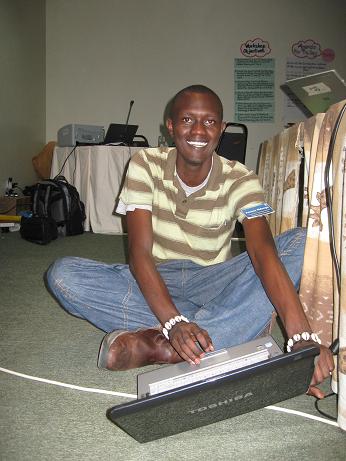
Photo: Anthony from Plan along with Mativo, a former Plan colleague, trained us on FLSMS

We looked closely at Frontline SMS (FLSMS) and Nokia’s new Data Gathering Software (NDGS) and brainstormed on ways that this type of tool might support the work that people are already doing. Really an interesting week!

In addition to the more common ideas of using mobiles for health campaigns, disaster/crisis situations and general communications and monitoring, people mentioned:

For youth media programs:

-Organizing weekly radio contests via Frontline SMS and allowing many more youth to participate in the radio program that way. Now for contests, they have to write a letter with their answer and bring it to radio station by foot. Using SMS many more could participate, increasing listeners and engagement.

-Assessing the radio show right after the recording. The youth and children could go in the audience and gather the data they normally do by hand using mobile data gathering software, thus easing the processing time and analysis of the information.

-Monitoring progress and changes made in relation to the show at a broader level — the participating youth could use mobile data gathering to monitor change related to the issues they are targeting in the radio shows and to see if youth organization and awareness building is impacting on the community over time.

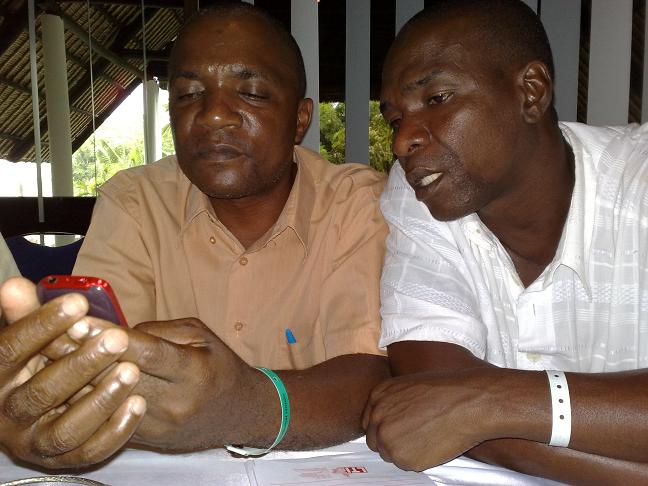
Photo: people got really excited when their first forms appeared on their phones to be filled in!

For Child/Human Rights work and Global Child Rights Campaigns:

-Assessing the knowledge/awareness of the communities about rights issues and/or our global campaigns

-Receiving reports and sharing information about violations of rights (gathering info on whether children are being registered at birth, the incidence of school violence, girl’s or women’s rights violations, cases of child abuse) and offer short information on where to go for help.

-Monitoring child abuse cases, e.g. community members could text in key words such as ABUSE or MARRIAGE to report and track child abuse cases and early marriages happening in the community:

Birth Registration (UBR) implementation

-Tracking birth registration certificates and sharing information on the steps of the registration process. With auto SMS replies we could enhance information accessibility 24/7. We could provide instant feedback to people on the status of their birth registration. It would be a very quick way of sending information to many.

-Using mobile data gathering software, the birth registration process could be made paperless and computerized, thus saving time and effort for the population and increasing the number of children who are registered at birth.

Photo: Jackson and 3 other colleagues from Brazil trained us on the NDGS.

Monitor services

-Running a mobile survey or a rapid assessment to find out whether a service like Childline is reaching people and whether the service is known and being utilized in the field.

Communicating among Plan staff, CBOs, Communities

-Passing along information such as training dates, schedules, meetings, etc., to avoid making a trip out to the community to get information

-Surveying on health, school attendance, and school enrollment through a network of teachers

Communities communicating amongst themselves

-Communities have a lot of information they want to share among themselves, among the Community Health Workers (CHWs), with the other communities and other leaders – they could do this with FLSMS.

Managing Meetings and Decisions

-Inviting participants, confirming attendance, updating on the absentees when you’ve reached a decision they could be contacted this way. You could even involve those who are absent in voting by SMS if you don’t have quorum; eg., text in 1 for this candidate, 2 for this other one, or vote yes/no on something.

Photo: SMS was seen as a great way for communities and CBOs to communicate and organize.

Read Full Post »

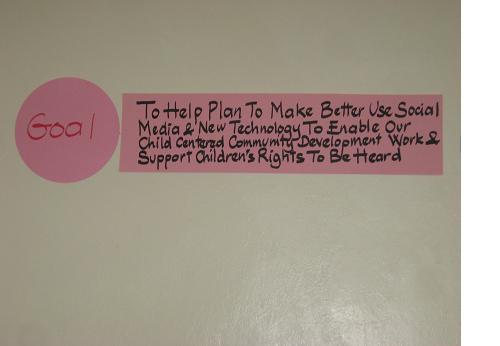
We’ve been thinking and discussing the best way to follow up on the Social Media for Social Change workshop that we had in December in Kenya. Ideas have been going back and forth about the best way to really find out what the Information and Communication needs are in the countries where we are working, and then how to support the different offices and staff to find the best and most appropriate Technology solutions.

We ended up with a chicken and egg situation in a way…. if ICT4D is not your top priority, and you don’t spend your life trying to figure out what is happening with ICT4D, you may not know what all is out there. (Ha, even if you do spend your life doing it, you don’t know what all is out there). So it can be hard to imagine tools and solutions if you’ve not seen them in action, used them yourself, or heard about how others are using them. At the same time, each local situation is different, so one size doesn’t fit all, so in order to find a tool or a solution, the situation analysis must come from those who would use that ‘solution.’ So what do you do first — learn about different tools and potential solutions so that the lightbulb goes off on ways to incorporate/adapt the existing tools to your needs, or discuss your ‘needs’ and design something that works — sometimes re-inventing the wheel. We thought that the best way we could manage the situation was to try to do both at once.

What we want to do is to activate our knowledge and study more about the concrete information and communications needs at the community level as well as in Plan’s program work that could be supported by ICTs. So we are hoping that we can produce a document which offers specific recommendations about utilizing ICTs in our work in the participating countries in Africa. And we then hope that we can identify areas to be developed further including successful initiatives currently being implemented by Plan itself and also those areas where we can build on existing synergy with governmental strategies. We are also hoping to better understand the capacity building needs among Plan and its partners.

It should be interesting research/training and hopefully will take us one step further towards incorporating appropriate technology to improve our communications and management of information so that we can have greater impact in our existing programs or even develop new programs that we didn’t think were possible before….

Read Full Post »

Yippee!!! Mika and his colleague Ville at Plan Finland have been working on a tutorial video for using Frontline SMS since our Social Media for Social Change (SM4SC) workshop in December. They just posted it and it’s really helpful to better understand how mobile data gathering works in general.

http://frontlinesms.ning.com/video/video/show?id=2052630%3AVideo%3A11014

We’ll be having a workshop coming up in June in Kenya to see how to use Nokia’s Mobile Data Gathering Software, so soon I hope I’ll have a good understanding of how this whoe thing works so that we can train others to use it.

For YETAM we are looking at how we can use mobile data gathering software to do follow up monitoring in the communities following the YETAM workshops. The idea is that during the arts and media workshops, the kids are discussing issues most important to them. Then they make videos, photos, arts, etc. to investigate the issues, and bring them out, and to generate dialogue in their communities on the issues in order to try to bring about positive change by engaging peers, community at large, decision makers, and Plan (in case Plan hasn’t been aware of the particular issues the youth are looking at). But how are we monitoring afterwards to see what is happening at the individual youth level, and at other levels? How are the youth able to measure their impact on the issues they’ve chosen?

So we are planning to work with them to develop mobile surveys related to the changes they hope to create in the communities, and then they could monitor their progress on the issues through the surveys. They would also make videos/photos, etc. to show their progress, but in addition now they would have some data as well to help them shape their approach and measure their impact.

Sounds cool to me!

Read Full Post »

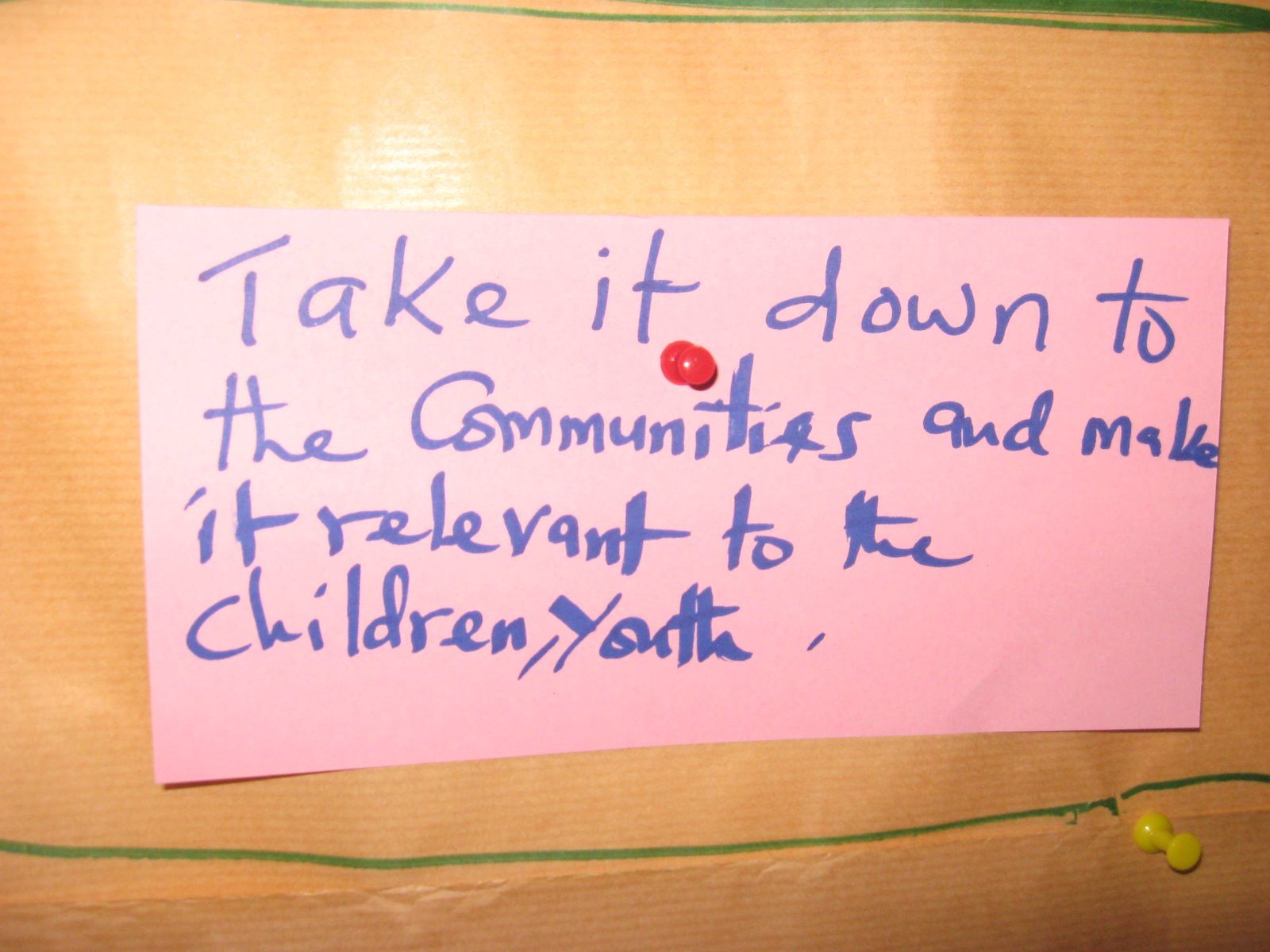
Wow what a week. My head is spinning from all the discussions and possibilities from our workshop in Kenya. So it’s 3 a.m. and I’m back home, and here I am again at the computer. My New Year’s resolution is to work less, but it’s not New Year’s yet… and I’m still on Kenya time, so fell asleep at 6 and woke up at 1.30. So why not grab my coffee and get going. Photo: one of the ‘take aways’ on the last day.

I have a zillion ideas and things to think about. How to support the different people and offices present at our workshop to build in more social media and technology to improve our programs and reach/impact.
The last couple days were amazing, with presentations by/about youth and how they are using blogging, mobiles and other technology for health and learning. We talked about citizen journalism and thought about how to apply it to our programs and communications. And there was a LOT of discussion about how organizations need to open up to embrace new kinds of media or they will become irrelevant.
One key thought (originally stated by Ken Banks from FrontlineSMS.com and then taken up by everyone) was that it’s easier to ask for forgiveness than for permission. That people should just do it, just try things, instead of asking for permission to innovate and be creative.
We learned from one participant how blue tooth was used during the Kenya election crisis to get information out to the public… and at the airport on the way home heard about arrests of activists in Nairobi and increasing media censorship.
We talked about how organizations need to modernize and open up new ways to engage the public in their work based on concepts of social media. We used SMS to send messages and talked through specific ways we could use Frontline SMS (http://www.frontlinesms.org/) to make it easier for children to get birth certificates and access their rights at citizens. Imagine instead of having to trek miles to the district capital if mobiles could help communicate and ease that process. We looked at specific existing projects and thought about how to use SMS and other social media to improve them.
We presented and discussed the YETAM project, and heard things like “every country should do this” and got great feedback for making the project more relevant and to increase its impact from the local level upwards. I had a lot of time to brainstorm with Mimi (the link between YETAM and Nokia via Plan Finland) for once about the project and to start working out the action plan for next year. Photo: Me and Mimi

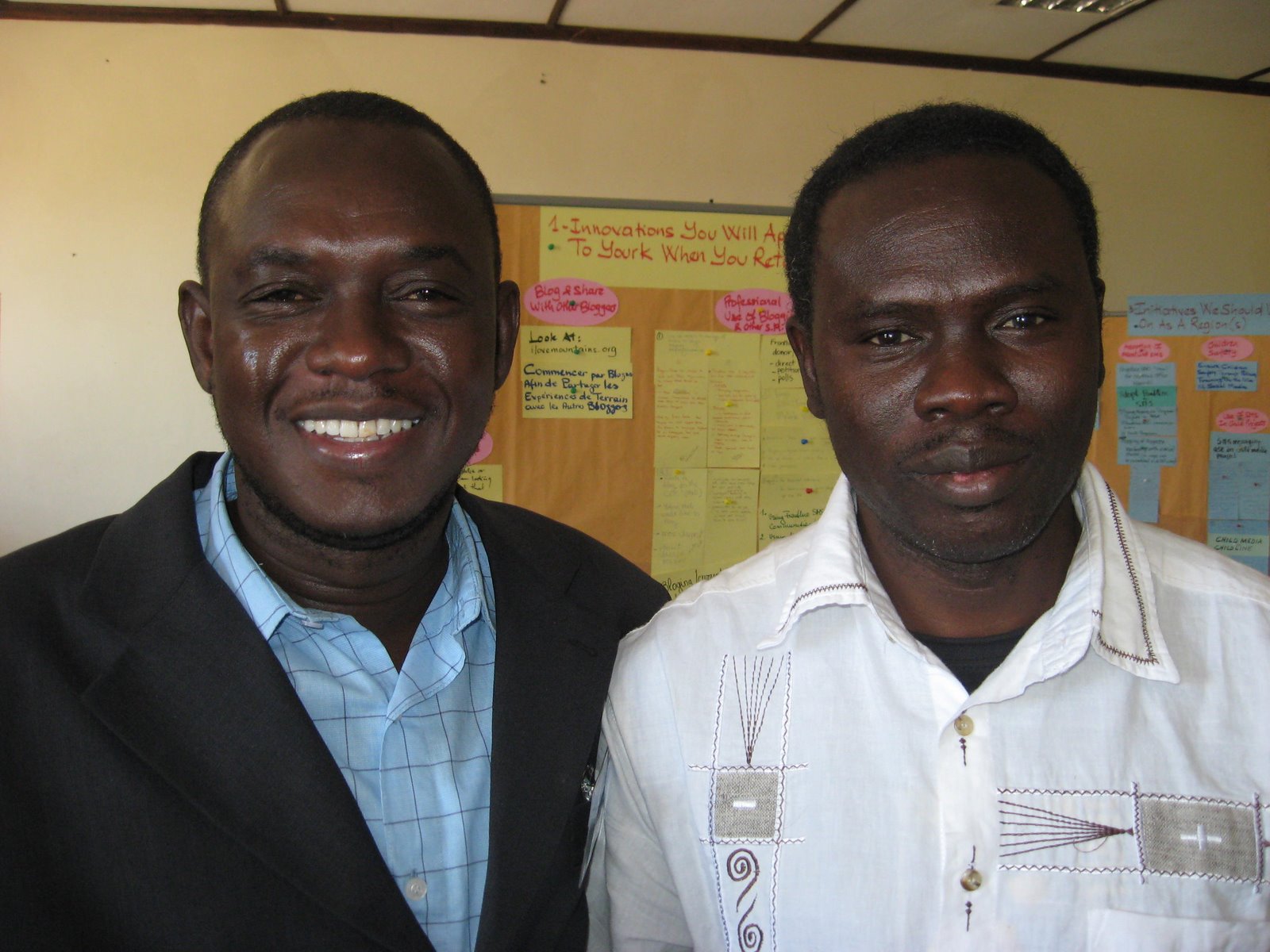
We heard so many opinions from everyone, and the French translation and bi-lingual nature of the workshop meant that we heard from everyone there, whereas often those who speak French keep quiet since English is the ‘official working language’. Photo: PapaSidy and Bedo.

Our external experts stayed with us the whole week and added so much to the conversation.
Really an amazing time. We tracked the workshop on a collective blog (http://sm4sc.maneno.org/eng/) so people could practice, and posted photos on Flickr http://www.flickr.com/photos/whiteafrican/sets/72157610896848364/.
Now Mika and I will do the report. We asked people to state a few concrete ways they will follow up on the workshop and then our job along with the different offices involved is to support their work and help address any challenges or obstacles that come up. Photo: the fearless Mika!
(And we had a “Bush Dinner” with a fire and music the last night”)
So our work is cut out for us next year…. and it’s about 90% sure that I’ll get to extend my secondment for another year to focus on YETAM’s next countries and SM4SC follow up.
Yippeee!

Read Full Post »

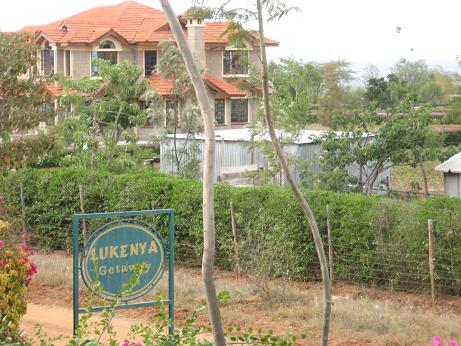
I’m back from Brazil and in Kenya now for the Social Change for Social Media workshop. There are about 25 of us here and the first day was really really good. I learned tons of stuff from everyone here. It’s about 6:00 and most everyone is still here in the workshop room, doing email and stuff. We are going into “Bar Chats” in a few minutes – where people can just suggest topics that they want to discuss and form groups to do it. Photo: Lukenya Getaway

We have tried live broadcasting some of the talks – some worked some didn’t. And we’re testing a blog on a site called Maneno. The link is http://www.maneno.org/. Under SM4SC workshop you can find it…. I couldn’t get my photos to post there so I thought I’d revert to here to put some up. Photo: Tonee from Wazimba blogging. Erik from White African/Ushahidi and Mativo and Anthony from Plan Kenya.

Will post more this week.

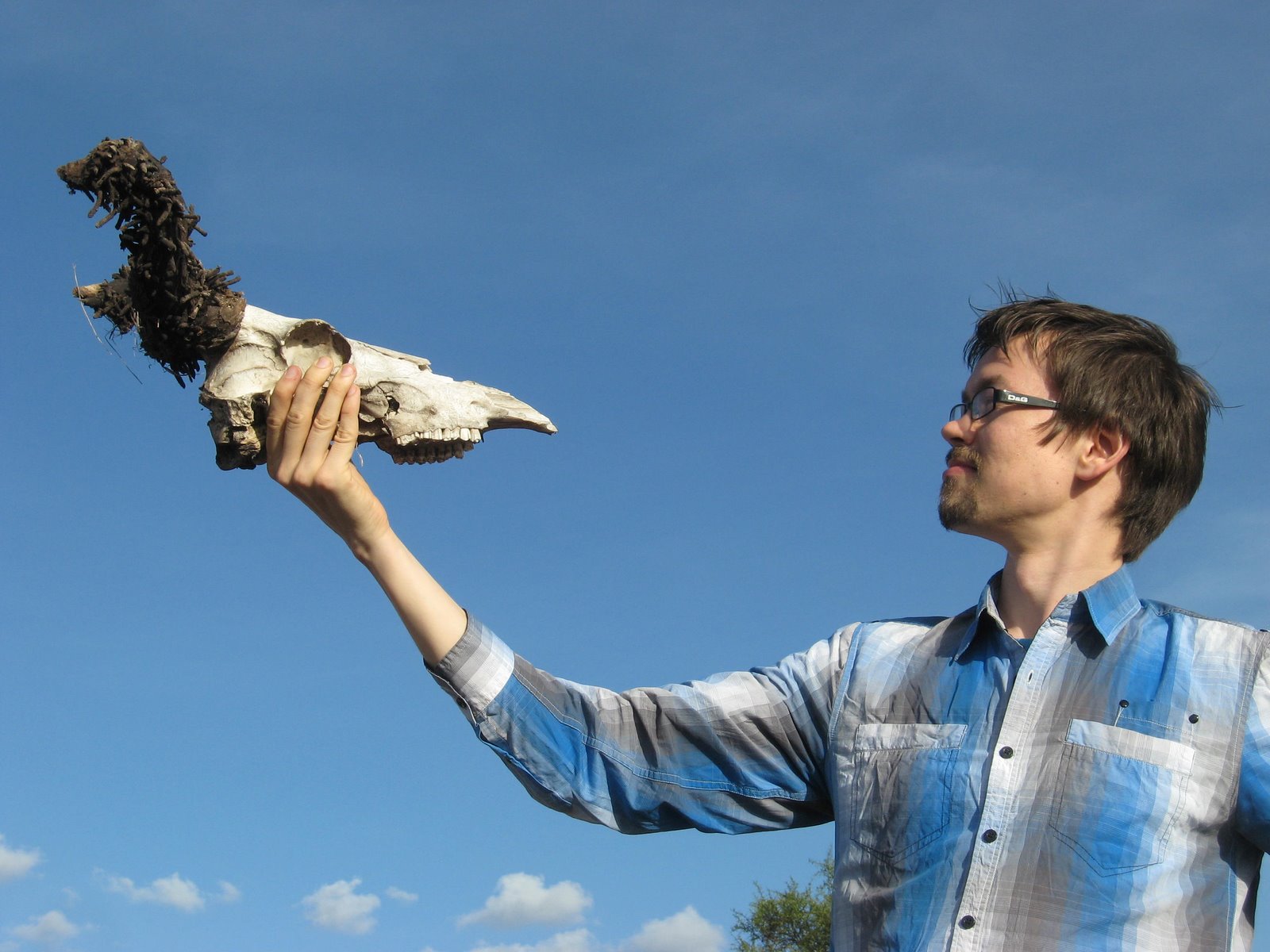
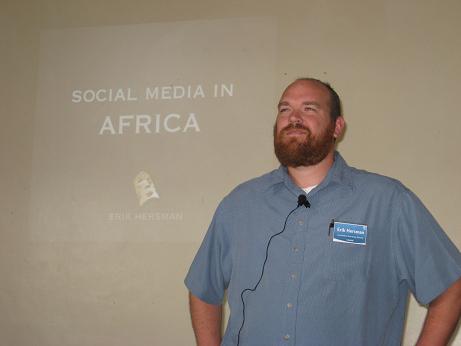
Photo: Erik starting his talk.

Read Full Post »

« Newer Posts