Feeds:
Posts
Comments

Archive for the ‘smart aid’ Category

Last week’s conference: “The Power of Information: New Technologies for Philanthropy and Development” hosted by the Indigo TrustThe Institute for Philanthropy and The Omidyar Network was somewhat of a ‘who’s who in ICT4D’. It provided an incredible opportunity to hear and discuss what some of the best minds are up to with regard to technology and innovation in development. (Check the conference videos here for more.)

The purpose of the conference was to bring innovators and donors together. In addition to the panelists, many other leaders in the field of social media, ICT4D and innovation as well as a variety of donors and funders were around to chat with during breaks, lunch, dinner and drinks. Conference topics included transparency, accountability and democracy; health; finance and rural development; youth empowerment and education; human rights; and fostering innovation and enterprise.

I got a lot out of the conference, but want to focus on two areas of specific interest:

  1. Balancing innovation (inspiration) and process (sustainability)
  2. Building bridges between new technologies and existing initiatives

Balancing innovation (inspiration) and process (sustainability)

Philip Thigo from SODNET started the day off with an introduction and a great set of questions* to explore around ICTs and development.  I found myself nodding and frantically typing and tweeting to catch and share as many of them as I could:

  • Are technologies just tools or are they the engine of transformation?
  • Are they universal? Can we cut and paste them from one context/culture to another?
  • Is it about connecting old and new tech for use by marginalized people and groups? Should we be creating interfaces between new and old tech?
  • What about power hierarchies with relation to access? Will disempowered communities automatically adopt technology and turn its use and information into action?
  • What about the challenge of laws and limitations on technologies and the selective enforcement of these laws by the state with regard to access, ownership, and control of information and knowledge?
  • What are the accountability, ethics and responsibilities of technology activists and developers? How are we evaluating our actions and decisions and their impact on people lives?
  • Is it worth taking the risk?

Philip emphasized the need to fail fast, learn fast, and move fast when working in this area. “We need to think about people first, not technology first,” he said. “We should strike a balance between supporting innovators (inspiration) while at the same time strengthening process (sustainability).”

I couldn’t agree more.

Though there is a sense (and a couple panelists, including Philip, commented) that anyone can use social media, that people don’t need training, and that ideally you should just hand over the tools and let people get to work, I do think that ‘striking a balance’ is critical, especially when talking about funding and implementing particular initiatives that are seeking specific outcomes related to development. This isn’t to say that we need an over orchestrated process, but I do think it’s important to remember that not everyone can pick up technology as easily as those who are immersed and surrounded by it 24/7.

Yes, technology needs to be ‘demystified’ and tech is getting simpler and simpler, but based on experience working with staff, community leaders, local organizations, youth and teachers in rural Benin, Kenya, Mozambique, Senegal, Mali, Cameroon, Rwanda and Ghana, it’s clear to me that not everyone can just jump in and go. Not everyone speaks English, not everyone knows about coding, not everyone has used technology before, not everyone feels confident even if they are very curious, and some people want additional support to get going.

In addition, ICT4D-type projects need good overall design, beyond the technology piece. They need a good think-through in terms of sustainability (for programs that are meant to endure), local context, unintended effects, privacy and protection (especially if they are human rights related, work with vulnerable people or could put users in any kind of risk).

As many would agree, the tech is only 10% of it. There is a trend toward developing more detailed user manuals and guidance on what to think about when designing initiatives using new tools like Ushahidi because of demand for this from users. I do think that donors, implementers and innovators need to keep that in mind, and be sure that they are planning for and funding that other 90% [eg, all the ‘boring’ stuff that makes the 10% of the ‘cool and -exciting’ stuff work – like good planning, core staff, logistics, monitoring and evaluation or as the link I mentioned above says, outreach, branding, translation, verification, documentation, integration with other systems….]. I also think donors should be supporting the local strengthening of people and organizations’ skills, capacities and strategic thinking via funding to innovation and tech hubs and support to universities and other kinds of opportunities for further education, training and experimentation in the area of technology for people in ‘developing’ countries, starting from local context and local realities.

Building bridges between new technologies and existing initiatives

Some major transparency initiatives are gaining more and more traction at the moment, for example the recently-launched open government program led by the US and Brazil (and rejected by India) and the International Aid Transparency Initiative (IATI). In addition, there are some really interesting locally led transparency initiatives happening all over the place. The panel on Transparency, Accountability and Democracy highlighted a number of tech tools and platforms that are being used to enhance this area of work (including  Frontline SMSMy Society, and Huduma) and some broad thinking around the topic by Owen Barder, who highlighted various aspects of aid transparency and the giant disconnect in terms of what the general public, governments receiving aid, and donors want to know about aid efforts.

Following the panel, a great question came up from Martin Tisne from the Transparency and Accountability Initiative (TAI).  He said that the transparency and accountability field has been around and funded for many years but it is atomized. He wondered how the different initiatives represented on the panel all fit into the broader picture. Owen agreed that atomization is a very serious concern. “The answer to it is open standards that enable people to take information from all these sources and mash it up and make it available to everyone. This is ‘unsexy’ and doesn’t photograph well but it’s potentially revolutionary in the way that the web has revolutionized our lives.” Owen emphasized the need for donors to invest in areas that maybe don’t seem so innovative and exciting, but that are critical to moving the field forward. (This goes back to the first point – the need to balance innovation and process, and funding for the other 90%).

Stephan King from the Omidyar Network continued during the donor panel to talk about transparency and accountability. He added that “tech tools are not a panacea,” and asked how technology can supplement and complement the work that many organizations are already doing. “Many charities and non-profits don’t know how to use technology,” Stephan said, commenting that there is a role for Omidyar and others to help organizations realize the benefits and utilities of technology to help reach scale, innovative solutions, and to provide feedback loops. “Technology is important in the area of transparency and accountability because it can engage citizens,” he said. “It allows people to access information in a way like never before.”

Martin (from the Transparency and Accountability Initiative) followed, saying that TAI is a collaborative of major funders who are looking at the whole field of transparency and accountability. The field as a whole is about 20-25 yrs old, he said, and is currently very atomized. “We need, as funders overall, to ensure that this growing and exciting community of practice [technology in transparency and accountability] isn’t just another atom within the overall transparency and accountability movement,” he said. “How can technology feed and nurture this overall community of practice? Technology has potential to do something really exciting in our field, to solve problems we’re really poor at, such as scale.” He also talked about the potential for tech to help engage citizens. “This field is and has been monopolized by policy wonks in the cities, in the capitals, but we have an opportunity to reach citizens and that’s really exciting.”

“The vast majority of technology and accountability groups — 95% — however, don’t harness the potential of mobile technologies really strategically, yet the potential is exciting if they did.” Martin asked how we can link organizations with fantastic grassroots networks and/or that really know how to use media with those that are using technology. “If we can crack this complex bridging issue of how to bring the transparency world and the tech world together we will have achieved a huge amount.” It’s not enough to bring government groups and tech groups to the table and think it will happen overnight, he said. “What we are trying to do is to focus on people, on entrepreneurs, on individuals who really understand the problems and the solutions that tech can provide as well as focus on organizations. We find a lot of program officers who know what tech can do or a CEO who has a vision of what tech can do but it doesn’t percolate throughout the organization.” TIA wants to bring together the people who understand the problems together with those who may have the technology solutions. Martin’s idea to bring technology folks together with transparency and accountability folks together to make “tech babies” was a big hit….

These points also resonated strongly with me as someone working in a large development organization that is looking at how to integrate new technologies into its work, and being one of few people within the organization with the specific responsibility of bridging programs and new technologies. It’s  simultaneously comforting and frustrating to know that organizations typically struggle with this and also good to know that some donors are aware of the challenge and willing to support it to be overcome.

Philanthropy and social media

In closing this too-long post, I just want to mention that as background material, Indigo Trust and the Institute for Philanthropy produced an impressive paper called Philanthropy and Social Media, which gives an overview of social media, how it’s being used for communication and social impact, and why social media is important (with separate sections on communication messages, knowledge sharing and reporting, overcoming barriers to inclusion, connecting people, improving service delivery, scaling fast, fundraising, transparency and accountability). The paper also summarizes some conversations with investors in social media. Two charts I find extremely on target are the “tips and advice on investing in social media” and the “roadmap for engaging with social media.” They are both simple and well laid out, and would be useful not only for donors but for anyone who is engaging with social media in development work.

Many thanks to Will and Fran at Indigo Trust for the invitation to participate in the conference!

*See also Charlie Beckett’s great overview of the conference and the key questions he pulled out from the day.


Read Full Post »

The number of international aid and development blogs has expanded rapidly in the past few years, and the number of people reading them has also grown. But aside from retweets, comments, and  ‘hits’ to our blog sites, those of us who blog about aid and development really haven’t got a very good idea of who reads our blogs, what interests our readers, if our posts have any kind of impact, and what our readers do with the information they find on our blogs (if anything!).

To get a sense of that, several aid and development bloggers have joined together to do a small survey of our readers to see what we could find out.

I’d be quite pleased if you, dear reader, would take 5 minutes to take the survey (click here). All responses are anonymous.

If you also have an aid or development focused blog, please share the link on your blog too.

Thanks very much!

Read Full Post »

This week I came across the “Feedback Mechanisms in International Assistance Organizations” report by CDA Collaborative Learning Projects, based on research undertaken by the Listening Project and funded by the Gates Foundation.

The findings and recommendations are very intuitive and it’s nice to have them gathered in one place. The report can serve as a starting point or a pause-and-reflect moment for organizations working specifically on humanitarian accountability as well as those who are looking to integrate better ‘downward’ or beneficiary feedback into development or humanitarian work overall. It also offers good food for thought for those interested in crowd sourcing and the use of new technology for citizen engagement and input.

The report is not too long, and it’s easily laid out for a quick read, so I’d recommend downloading the .pdf and digesting it fully.

To whet your appetite, here are some points I found interesting:

Why do agencies seek recipient feedback?

Four reasons were identified in the report: to improve accountability, to improve effectiveness, to respond to donor requirements or media pressure, and to increase security for staff. Feedback from recipients* was seen to give staff the fuel needed to pressure higher-ups for necessary changes in programming; beneficiary feedback often improved program quality and recipient satisfaction, and seeking dialogue and communication with communities tended to reduce threats of violence. When accountability was a donor requirement but wasn’t part of a larger organizational buy-in or value, unsurprisingly, initiatives were less successful.

To many reading this post or who may read the CDA report, the benefits of participation and feedback and accountability are already obvious, nonetheless it’s  good to see them captured and documented in a report as a support to those who are trying to establish accountability and transparency mechanisms in less-friendly or convinced atmospheres.

Other key points (any quotes come directly from the report):

  • All practitioners interviewed for the study “expressed their unequivocal commitment to participatory and inclusive approaches to humanitarian and development work, and placed significant emphasis on accountability mechanisms.” In addition, many organizations have signed different charters and standards including SPHERE  Guidelines, the Humanitarian Accountability Partnership (HAP) Standard in Accountability and Quality Management and the INGO Accountability Charter. This rather contradicts the impression the media often likes to give about aid agencies as being totally unaccountable to anyone. Or maybe certain parts of aid agencies are more interested and prone to seek accountability and transparency than others.
  • The report says, however, that there are still issues with continuous feedback loops and information doesn’t always return from whence it came. “Typically information gathered from primary stakeholders flows through different parts of organizations, but decisions are rarely communicated back to communities.” One could also ask how often this feedback (or similarly, any information, or data) is returned to communities in accessible formats so that they can use it as well for their own purposes.
  • Good accountability mechanisms are not possible without management buy-in or staff competency. Managers play a critical role in “creating incentives and requirements for field staff to regularly solicit and utilize feedback.” Organizations need to invest in the skills necessary to ensure honest feedback can happen at community level, and/or among the various people and organizations involved (community members, CBOs, local partners, local staff, management staff, headquarters, government, etc).
  • Different agencies are working to develop frameworks to improve feedback and accountability mechanisms. “Some of these new approaches have built-in mechanisms for integrating recipient voices into program strategies and operations.” Some organizations have been collecting primary stakeholder feedback and sharing information with recipients for years as part of participatory development processes. However, the report says, often the exercises are very focused on individual projects or towards particular practical results and the richness of the feedback is not fully appreciated or systematically fed into broader decision-making processes.  “The practices of systematically listening to, gathering and analyzing people’s perspectives, recommendations and complaints have not become routine in many agencies.”
  • Feedback mechanisms need to be designed together with recipients. “Mechanisms must also be appropriate to the specific contexts where they are intended to operate, and agencies have to consider the most appropriate name for the [system], channels, and methods for raising complaints, and culturally appropriate ways of responding.” This is especially important in tense environments or with people who are not accustomed to voicing their opinions.
  • Trust is important, and according to the report is “the first step in getting meaningful feedback. Providing information about the goals and expectations of the organization is the first step in building trust…. Organizations need to establish systematic procedures for reviewing, investigating and responding to feedback or complaints. All this needs to occur in a consistent, timely manner for people to believe in the system and use it.” My own experience with children and youth participation initiatives, has taught me it’s also critical to discuss and agree on clear and honest expectations about what can and will be done with the feedback, and the degree to which feedback will actually be able to change a situation. This goes back to the report’s point on management buy-in and institutional systems. Unless your organization really wants to hear the feedback, is willing to change itself or its actions or viewpoints to respond to the feedback, and has the internal capacity to respond and modify how it’s doing things, asking people what they think can be really tricky and potentially demoralizing for all involved. It’s never nice to hear people say “why did you ask us if you didn’t want to know” or “what is the point of knowing what we think if you’re not going to change?”
  • New and emerging approaches are being tested, including those that use innovative tools and technologies such as SMS and social media. However, the same principles apply to these new technologies as to any other type of feedback loop, and it’s clear that there are still challenges with new technologies.  As mentioned earlier in the report “Most organizations that were successful in gathering feedback… and distributing information back… found it necessary to have more than one mechanism in place…in order to provide options for all of the different groups within the local community to provide feedback and to get information.” This is especially true with new technologies, given the large numbers of people left out of feedback loops due to cost, literacy, age, gender, and access if only SMS or social media are used. Specific challenges with new technologies are highlighted in the report, such as the case of Haiti where an SMS service was set up and people were very willing to use it, “but the agencies had not incorporated a way to monitor the replies and feedback. This resulted in some frustrations and a lost opportunity for a feedback loop between recipient and aid agencies.”

Page 17 of the report offers some good examples of what effective feedback loops look like, page 20 lists several areas that need investment and incentive to ensure effective feedback mechanisms and to guarantee that information is properly gathered and well-utilized, and page 23 offers a list of recommendations for effective and comprehensive feedback loops.

Read the full report here.

*I’m not a big fan of the terms ‘recipient’ and ‘beneficiary’ but have used them here because they are the terms used in the report.

Related Posts:

Ian Thorpe does a good job of commenting some of the portions of the report I didn’t expand on:  “Listening to the people we work for

Read Full Post »

Youth learning to use GPS in Pitoa, Cameroon (photo: Ernest Kunbega)

Last Monday I attended Africa Gathering London. The topic was ‘Social Media Revolutionizing Africa: How is new media changing Africa, giving voices to the voiceless, improving governance and transparency, and changing narratives?’

The event stimulated thinking and brought up some hot discussions around technology, traditional and social media, aid and development, participation and governance. (Big congratulations to Marieme Jamme  for curating a great line up that brought in an interesting and engaged group of participants and to William Perrin of Indigo Trust for keeping things on track and generating good debate!) See the program, the speaker bios and some short video interviews.

Some quotes, thoughts and debates from the day:

  • If your purpose is to bring more people into discussions, remember that radio, Facebook, and Twitter audiences are distinct and be sure you are thinking differently about how to engage them all. Remember that many people in Africa prefer to talk not write.  (from BBC’s Africa Have Your Say – @bbcafricahys‘s presentation)
  • You can’t resolve all of Africa’s issues with one approach. The countries are very different and local context really matters. But you also can’t design something for every tiny demographic. Where is the sweet spot between localized and scale? (discussion after the morning workshop)
  • People should not sit in the UK deciding and develop things for Africans. Develop things with Africans, or support Africans to develop things themselves. This idea got retweeted a lot, with lots of agreement. But H Taylor – @HFTaylor88 also commented via Twitter that this rhetoric has been around for ages within NGOs…. (discussion after morning workshop)
  • It’s great that the market has been able to bring mobile phones to so many people in Africa, but the market can’t do it on its own as many are still left out. There needs to be more incentive to reach remote areas. There needs to be education, cash transfers, government regulation if we want to really realize the potential of mobiles. Mika Valitalo – @vatamik commented that in many African countries, mobiles are still taxed as luxury items, making them more expensive than they should be. (Clare Melamed -ODI – @claremelamed‘s “Is the Mobile Phone Revolution Really for Everyone”.)
  • Any big story today on CNN has a social media component, yet there is still the idea that social media only breaks news and ‘it won’t make the history books until CNN or BBC report on it’. If CNN is not planning to do a story but sees everyone is talking about it on Facebook and Twitter, they will cover may rethink covering it. CNN finds good opinions and stories on social media, but their primary news source will continue to be their correspondents. Emrys Schoemaker – @emrys_s however questioned whether mass media use of citizen journalism is a broadening of voices or if it’s cheap content for big media – or both. (Faith Karimi/CNN/@faithCNN’s presentation and resulting discussions.)
  • Social media gives African youth an uncensored worldwide platform, letting them feel included in shaping Africa’s image, but the youth using social media in Africa are still the middle class and the rich. We need to find ways to include other youth. (Faith Karimi – @faithCNN’s presentation and resulting discussions.)
  • The Guardian’s Global Development Site and Poverty Matters blog are trying to get away from the vision of ‘poor Africa’ and have only been accused of ‘poverty porn’ once in 9 months (which Liz said irritated her to no end as they really try to avoid it). (I remember the case…) They stay away from the typical ‘flies in the eyes’ photos, but sometimes there really is starvation in Africa, and in those cases, a photo of a starving child might actually represent reality. (Someone countered that African newspapers should use photos of drunk, vomiting Brits to illustrate stories about parliament).  (Liz Ford/deputy editor/@lizford‘s talk and discussion)
  • Is the Guardian’s Global Development site one-sided, taking the view that aid is good rather than other ideas on how to best achieve development? Development is much larger than ‘aid’ and when talking about development we need to remember the bigger picture and the alternative views that maybe aid is not the best (or only) way to ‘do development’. The Guardian is quite open to new thoughts and ideas and invites anyone with ideas for blogs or stories to be in touch with them. They consider their site a ‘work in progress’. (Note: I like the Guardian’s site very much as it is one of the few media sources that discusses and seems to really promote and engage in the ‘#smartaid / @smart_aid‘ discussion). (Liz Ford’s talk and discussion)
  • Many African leaders, not to mention the public and the media, will listen when high level people call their attention to something, but problems can’t be solved by the same people who created them, especially if those people are considered morally bankrupt. Karen Attiah – @karennattiah  commented in from Twitter that a big part of development work should focus on rebuilding the broken social contract between governments and citizens in Africa. So how can we connect policy makers with ordinary Africans? How to bridge the gap between policy makers and grassroots approaches and implementation. (Panel with Alex Reid/@alreidy and Carolina Rodriguez /@caro_silborn – media heads at Gates Foundation and at Africa Progress Panel)
  • Not all sources are created equal – this is true for traditional and for social media. Social media is not about the technology, it’s about the human need to communicate. You can make traditional media more social also. Even those without access to social media will get around harsh barriers to tell their stories because of the urge to communicate. So the best thing is to create a social experience, not to worry so much about getting ‘jiggy’ with the technology. (from Kevin Anderson/@KevGlobal‘s presentation. See Putting the social in media.)
  • New technologies can impact on public debate, people’s political capabilities, citizen-state relations, relationships with other government actors. Frontline SMS Radio, for example, could be a very useful tool for this because radio is still the main way to communicate with the majority of Africa. Using Frontline SMS Radio, stations can sort through messages they get, understand them better, and use the information to orient their radio programs as well as other things. Radio can play a very strong and useful role in governance. (from Sharath Srinivasan/ @sharath_sri‘s presentation. See FrontlineSMS at Africa Gathering.)
  • Youth can have a big impact on community development if given space to influence. There is money (eg., in Cameroon, at local government level) but it needs to be better spent. Informed and involved youth can hold government accountable for spending it better. Local level advocacy has a greater impact on youths’ lives than global level initiatives because you can make as many laws as you like, but unless people are putting them into place and practice at a local level they don’t matter. Organizations should listen to young people but not make them dependent on NGOs because the real duty-bearers are family, community, government. NGOs need to be models of their own methodologies; eg., if an NGO is encouraging people to criticize the government, the NGO should be ready to receive the same scrutiny around its own work and behaviors. Social media can play a role in this process by showing what is happening at the local level to a global audience. (from my presentation and the resulting discussions. See Youth Empowerment through Technology, Arts and Media)
Julia Chandler (@juliac2) did a great round-up of the day’s presentations and discussions on her blog: Part 1 and Part 2. The Guardian continues the discussion here and of course the Africa Gathering website is a great place for more information.
.
Update – more posts about Africa Gathering:
Great perspective from Tony Burkson – @tonyballu – who I really enjoyed talking with at the post-event drinks: A Day at Africa Gathering.

Read Full Post »

If you are from an outside group that wants to work with a community, you need to know the community. You need to spend time there, sleep there, live there, before trying to help or come in with recommendations. Until you have lived together with the community, you cannot really give any savvy advice or support because you won’t know or understand the community’s reality. You won’t have ‘mastered’ the community.’

Kenneth Nyah from Partner Vision (PAVIS), the organization we are partnering with in Bamenda, Cameroon, on the Youth Empowerment through Arts and Media (YETAM) Project, gave us some great tips last week on how to do community-based, youth-led advocacy and support local action and change.

Timothy and Kenneth from Partner Vision (PAVIS)

Know the steps for good advocacy

  • Identify the issue that needs to be addressed.
  • Master the community by spending time there.
  • Identify the principle actions to take in the community, together with all the stakeholders.
  • Gather information and statistics that will support the case and help to shape the suggested solutions.
  • Synthesize information and statistics to make them easier for people to get a handle on and understand.

Model good advocate behaviors

  • Participation. All the stakeholders need to be included and the discussions need to be open.
  • Legitimacy. An advocate should be someone who practices what he or she preaches and lives the values that he or she is working for.
  • Accountability. An advocate has to be transparent and open and accountable for his or her actions and to the community.
  • Acting peacefully. An advocate should always look for ways to resolve issues in a peaceful way.
  • Representing the affected group. An advocate should be sure to understand the affected groups’ issues and viewpoints and to represent them, not his own opinions or agenda.

Be clear about your role as an outside organization

Kenneth described the main roles of an advocate or organization supporting local advocacy work as:

  • helping to empower the community to speak for itself
  • mediating and facilitating communication between people
  • ensuring that communication and dialogue happen
  • modeling behavior to people and policy makers
  • helping build coalitions so that local people can raise their issues and get resolutions.

Know what advocacy is not

  • An information campaign. Hanging up posters is not advocacy. You have to go deep into things, to take actions, to actually do something, not just ‘raise awareness’ or share information.
  • A public relations action. Advocacy is not an opportunity for you to create fame for yourself or your organization or political agenda. It’s about the community.
  • A strike or mob action. Advocacy should be strategic.
  • A pressure group. Advocacy does not mean ‘we want something and we are coming in to take it whether you like it or not.’

Remember who this is about:

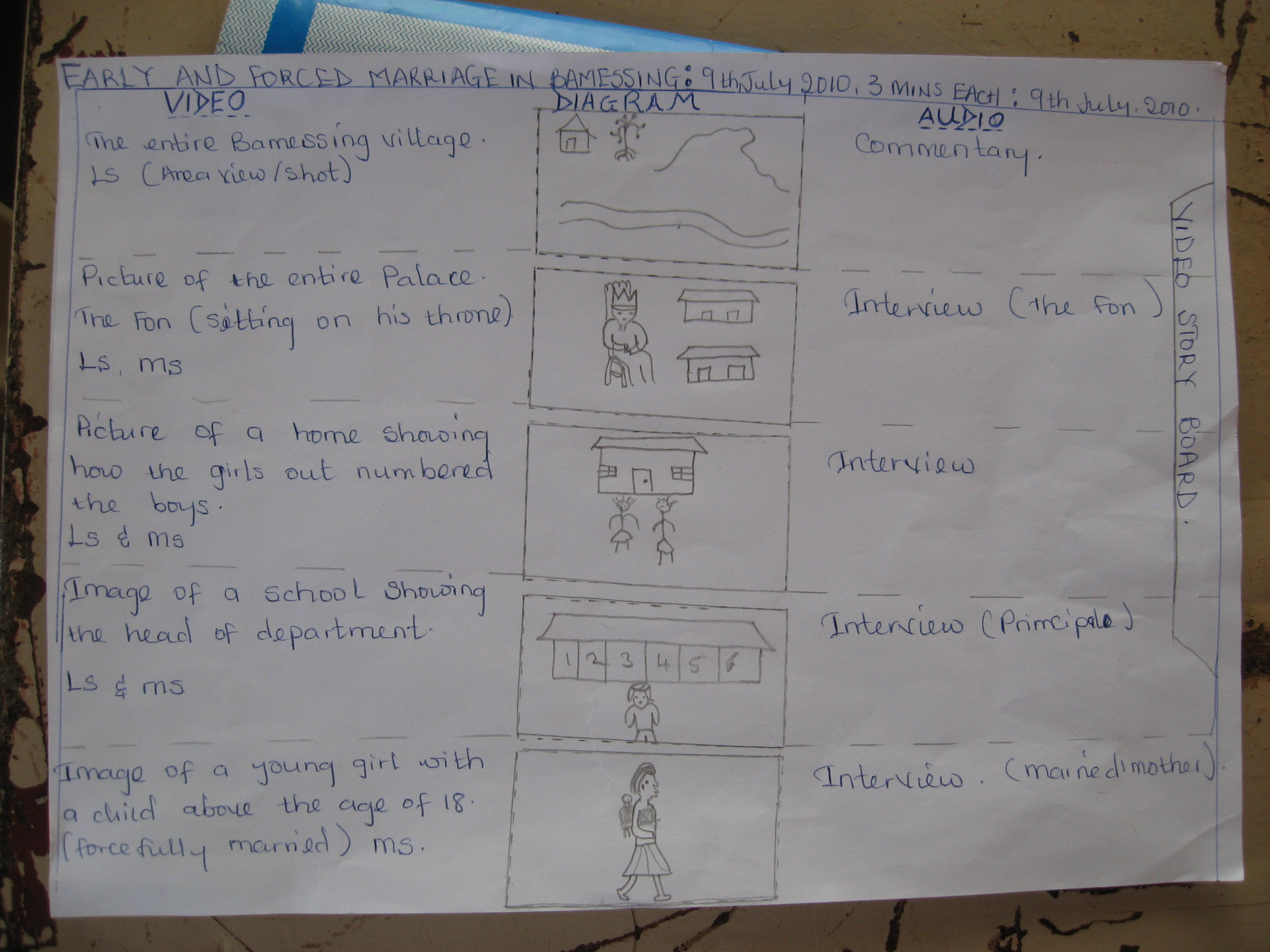
First half of a storyboard by youth in Bamessing for video on early marriage.

You shouldn’t do advocacy without proposing a solution, said Kenneth, and the solution should come from the community itself, not from you. In community-led advocacy, the outside agency should not be bringing in its own agenda. It should not be manipulating people.

When working with youth, the agenda needs to come from the youth themselves. If the youth don’t have their own agenda, it’s very easy for people to manipulate them. Once you work with the youth to help them discover their community more, and to determine their own agenda for change, they will work on that and it can be very positive.

Youth-led and community-led advocacy is different than global advocacy campaigns which tend to be top-down. When people raise their own issues at local level, do their own research, identify their own solutions, discover the bottlenecks that get in the way of those solutions, and determine who to target with their advocacy actions, advocacy can be very effective.

One participant emphasized that even in global campaigns, local stakeholders need to be involved, because they are the ones who will give the stories, the statistics, and the effective solutions.

Find the information that already exists in the community

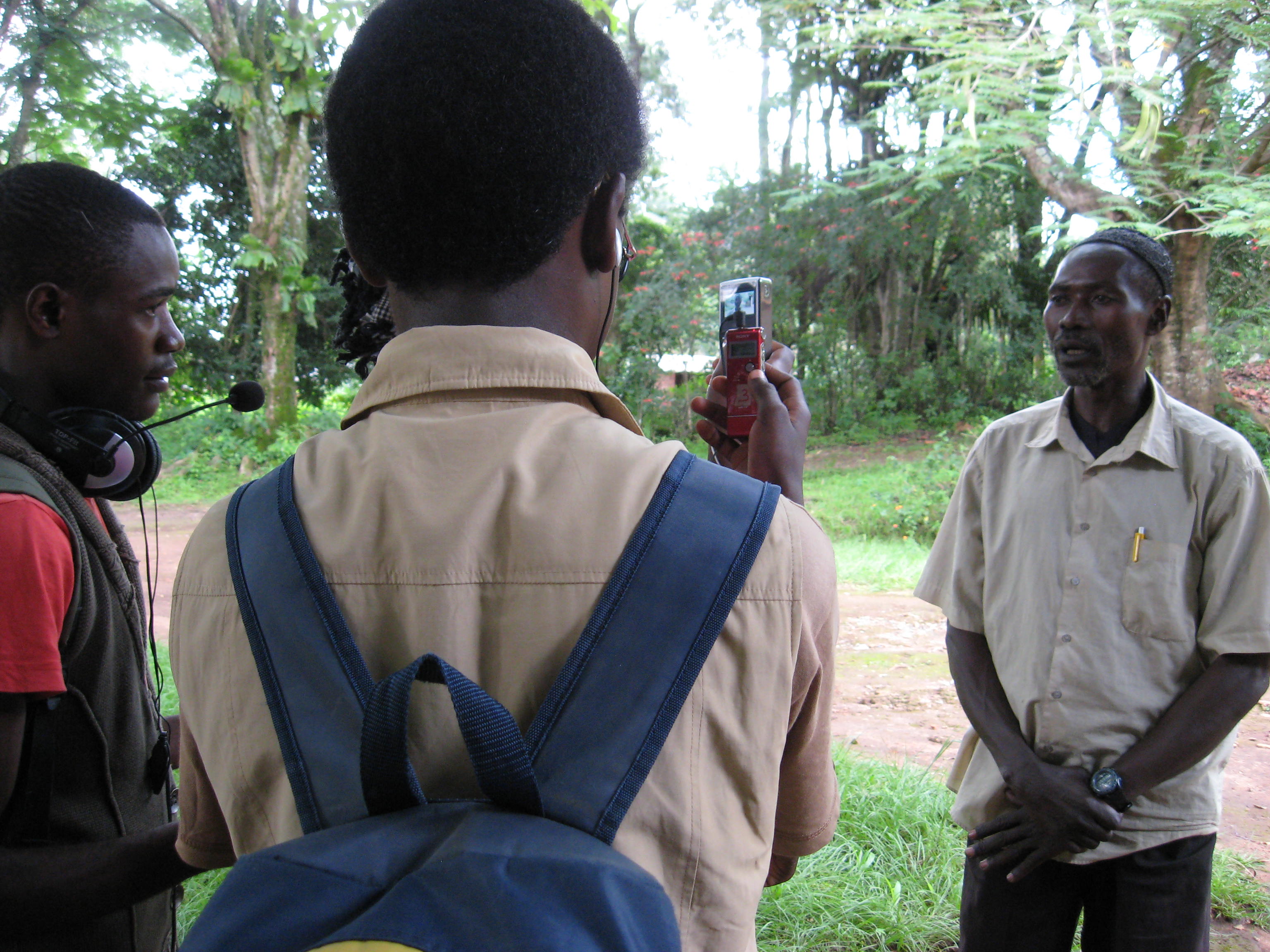
Collecting information.

Advocacy goes with facts and figures. You cannot do advocacy without figures, said Kenneth. And you cannot have figures without research. But there is much information that is already there, right in the community. ‘As outsiders,’ commented one person, ‘it’s easy to imagine that a community doesn’t have any information, but this is not true. We found so much information in the community.’

‘All the facts that youth needed to advocate for the water project* were given by the people in the community. The youth know who the key people are in the community. They know who has the information and the statistics. For example, there is a person who manages the local water system and who knows what the problems are with it. There is the chairman of the water board. These are people in the community who manage information! They have reports, they have meetings, they know these things. There is no need to come from the outside to do a big expensive data gathering campaign. You can go into the records that the community is already keeping. Working with the youth and community it’s very possible to find this information to support local advocacy.’

A role for ICTs

Another person shared the case of youth in Pitoa who identified malnutrition in the community. ‘The parents didn’t  identify malnutrition as a problem, they said it was not an issue. Maybe they were embarrassed that they were unable to give their children enough food. But the youth went with cameras, they filmed malnourished children, they went to the hospital to check the numbers. There is a whole ward there with malnourished children; they filmed there.  They made a video and showed it to the parents and the council and were able to get them to see that this is a problem in the community.’

The digital mapping that we are doing with the YETAM project (watch for a new post coming soon on this), said other participants, can provide the youth with an additional tool for local advocacy. ‘Youth went out to map their area. They saw the road network, they created a database about their schools, they saw the conditions of the hospitals and everything. Through mapping they were able to master their environment because they were there, collecting the data, tracing and making waypoints of everything. This fed very well into their advocacy work.’

*In this water project example, youth used their research, videos, interviews, focus group discussions and role play to advocate to community leaders, the village development union and the Ndop Rural Council around the water issue. The Ndop Council acknowledged the issue and Bamessing and its neighbouring communities succeeded in securing funding from FEICOM for the first phase of the Ndop water supply project for 214 million CFAs (around $450,000). Feasibility studies were done by the Ministry of Water Resources and Energy in collaboration with SNV and submitted to the Ndop Council. The project is expected to provide potable water in Bamessing, Bamali, Bamuanka rural and Bambalang communities.

Other successes of youth-led advocacy in the YETAM Cameroon project include that the Municipal Councils of Pitoa and Ndop approved financial support to youth micro-projects.  The Mayor of Pitoa municipal council approved 400,000 CFA (around $850) for the youth to spearhead actions to curb the high incidence of cholera in the council area. The Mayor of Ndop Municipal Council approved 500,000 CFA (around $1070) as council support for the youth to fight against the high rate of school dropouts in the Ndop council area. This support came in response to youth participation in the council budgetary sessions.

Read Full Post »

Where are the spaces for youth participatory governance?

‘People no longer rely on governments alone to improve governance. All over the world we are seeing experiments in ‘participatory governance’. People and organisations are grasping the opportunities offered by decentralisation and other reform processes to demand more of a say in the public policy and budget processes that affect them. These ways of holding the state to account are often called ‘social accountability’. Examples include participatory budgeting, monitoring electoral processes, using online and mobile technology, and citizen evaluation of public services. These forms of citizen engagement and social accountability are particularly promising for young people, who often face challenges in getting their voices heard in formal policy and governance processes.’

The ‘youth bulge‘ is impacting or will impact hugely in many countries in Africa, but there is limited documentation on youth involvement in social accountability processes in Sub-Saharan African countries. Youth and governance efforts have been ‘largely unsystematic and often constrained by the vague and paternalistic parameters of the UN Convention on the Rights of the Child (McGee, forthcoming 2010). However this is changing and there are calls for new models, tools and approaches that enable young people to take a more meaningful role in decision-making.’ (call for submissions for the upcoming Participatory Learning and Action Journal (PLA) special issue on Youth and Participatory Governance).

****

In March I attended a “writeshop” put on by Plan UK, the Institute of Development Studies (IDS), and the International Institute for Environment and Development (IIED) to share different youth participatory governance initiatives, reflect on challenges and successes therein, learn how to write better, and finalize articles on the above topic for a PLA Special Issue in December 2011. The special issue will highlight some of the different ways young people are engaging with government to participate in public policy, planning and budgeting processes at local, national, regional, and international levels. Practitioners, youth and government officials from Kenya, Zimbabwe, Sierra Leone, Nigeria, Mali, Senegal, Lesotho, the US, the UK, Ghana, Germany and Liberia attended the writeshop. (The PLA will also have articles from Cameroon and Somalia).

The first day we did a cool exercise revolving around 4 statements on voice, youth, participation, and governance. I learned a lot from the discussion and I wanted to share it here.

So, what do you think? and why?

Statement 1. The author’s voice will always be louder than the voices of the people he/she is writing about.

Strongly agree ___

Agree ___

Disagree ___

Strongly Disagree ___

Statement 2. Increased transparency leads to increased accountability.

Strongly agree ___

Agree ___

Disagree ___

Strongly disagree ___

Statement 3. It is possible to do governance work without engaging in politics.

Strongly agree ___

Agree ___

Disagree ___

Strongly disagree ___

Statement 4. Citizen led/social accountability processes offer more potential for youth than traditional accountability processes.

Strongly agree ___

Agree ___

Disagree ___

Strongly disagree ___

****

Here’s what we discussed at the writeshop. I’d be interested in what you think about the statements too…

Statement 1. The author’s voice will always be louder than the voices of the people he/she is writing about:

Discussion: The group mostly concluded that it’s difficult for the author’s voice to stay in the background – it will inevitably jump out and become stronger than the voice of those he or she is writing about.

‘Regardless of that, the author has been given an opportunity to project the voices of those that don’t have a platform to speak for themselves, so he or she should take advantage of the opportunity.’

‘Just by choosing what goes into the piece, the writer is already showing some type of bias. One or the other idea or opinion will be louder than the others because it serves the author’s own purpose.’

‘Writers need to think carefully about their approaches as authors and be self-aware of what biases are coming through in their pieces. This is an issue of credibility.’

‘One thing to aim for in our work with youth is finding more opportunities for them to author their own stories, because they can speak louder and stay true to their own agendas.’

‘How many of us here sat down and wrote our submissions together with youth? What are some methodologies that we can use to ensure that youth are writing about their own work, rather than always being written about?’

Note: Some methods for involving youth in the writing process will be covered in the upcoming Special Issue, based on experiences from the group attending the writeshop.

Statement 2. Increased transparency leads to increased accountability.

Discussion: Most everyone disagreed with this statement, saying that there is no causal relationship between transparency and accountability.

‘Many civil society and faith-based organizations really engage citizens, but if you look deeply, that engagement hasn’t translated into accountability.’

‘Including people in governance and keeping them informed about what is happening can lead to accountability. People will start to take responsibility, report about actions. If they are involved, included and informed they will start to question things.’

‘There is not always a causal link between transparency and accountability.’

‘Having transparent information is one thing, but accountability is what you actually do with the information. Having the habit of discussion, questioning is one thing, but ensuring that feedback is actually taken into consideration is another.’

‘Often those in power say “we’ve heard” but they don’t do anything to change. Accountability isn’t only about voice, you need to have opportunities for redress.’

‘Without transparency there is no accountability. This can mean access to information. We need legislation to make access to information possible. It’s a pre-requisite for increased accountability.’

‘There are NGO and donor accountability issues also. Just because NGOs or donors put information on-line doesn’t mean that they are being accountable. There is the issue of literacy, of whether people seek out information, of access to the information in a variety of languages, of what format the information is shared in and the sheer quantity of information. Who really has access to the information they are sharing? Can those who are supposed to be benefiting from NGOs and donors programs access the information?’

‘Another thing is making people and institutions understand why they should be held to account, why they need to be accountable, changing mindsets about why leaders and power holders need to be accountable.’

‘Flooding people with information so that people don’t know where to look for what is relevant to them or posting the information on-line, in a language that isn’t useful to them, is not really being transparent. Often calls for transparency don’t really go far enough. Transparency is about making the information usable and about information demand.’

One of our facilitators (Rosemary McGee from IDS) pointed us to Jonathan Fox at UCLA who says:

‘Transparency can be ‘opaque’ (the dissemination of information that does not reveal how institutions actually behave) or ‘clear’ (access to reliable information about institutional behaviour). Accountability can be ‘soft’ (‘answerability’ – demanding answers from duty-bearers) or ‘hard’ (answers plus consequences). Information dissemination does not automatically lead to answerability, nor answerability to the possibility of sanctions. If access to information is to guarantee the sanctions that hard accountability requires, public sector as well as civil society actors must intervene.’

Statement 3. It is possible to do governance work without engaging in politics.

Discussion: The group was pretty evenly divided between strongly agree, agree, disagree and strongly disagree, so the discussion was really interesting.

‘I strongly disagree because government is about service delivery and politics is about the opinions of the people. Everyone is a political animal. There is a difference between politics and partisan politics, though.’

‘Every action has a vision and a political orientation. You can’t change a situation without being involved in politics.’

‘Governance has nothing to do with politics; the government can be left or right; but governance means the same thing. It’s being transparent and accountable to the people; and it’s also about including other stakeholders, NGOs, private sector and responding to the citizens needs. Governance is impartial and non political.’

‘Governance is about how power is exercised. It’s about certain practices and systems – in state, family, community, etc. If you are challenging power, whether policy change or change in practice, whether it’s gender or whatever, you want to address unjust power relations, so at some point you need to confront the polity of those structures. However being engaged in governance is not about partisan politics. There’s a difference between a political party and the issue of politics. If I say I’m in solidarity with children, I’ve taken a political position. Political parties are about obtaining power. But governance is about challenging power relationships.’

‘We need to distinguish “governance and politics” and “party politics.” It’s difficult to say that things will naturally happen based on a structure. But the structures will adjust, they will be used differently according to who is in power. You need to know politics and the opinions of political leaders in order to effectively get your agenda through. You need to understand the political dynamics in terms of what happens in the country, what is the ideology, what is their strategy and what are their plans. If you don’t understand that, you can’t address the issues that you are trying to resolve via governance.’

‘It’s not possible to work on governance and not engage in politics. I work in government. Our mandate ends after 5 yrs. We must go back to elections and the people must give us the mandate again to exercise power on their behalf. This is the only clear mechanism whereby the people can engage in politics. Politics is about opinions and perceptions. People have diverging opinions, those opinions will create debate and that leads to political actions. Whenever there is a debate involved about something, that is politics. It’s not easy to exercise power without debate. To give services to people, to exercise power on their behalf, it’s not easy if you don’t take into consideration the opinions coming from them, they need to debate and the debate then needs to be translated into policies.’

‘The people who are most engaged in governance should not be politically engaged. When you work from civil society on governance issues, you should not have a party affiliation. Because then you will carry a bias. To do good governance work you need to be impartial and unaffiliated with a party, or people will consider you to be biased.’

‘If we look at governance and politics, politics is just a subset of governance. There are actually lots of issues under governance. In governance we expect everyone to take part in how things are governed. We see different political actors. Governance encompasses more than politics, it’s above politics.’

Statement 4. Citizen led / social accountability processes offer more potential for youth than traditional accountability processes.

Discussion: Everyone sat on the strongly agree or agree side of this debate.

‘Citizen led processes offer much more openness to youth.’

‘We need to define citizen-led and traditional accountability processes. Citizen led, social accountability processes are where those spaces are claimed by citizens themselves. Secondly the citizen-led social accountability process tends to be less vertical. There is collectivization of the aspirations of the people who are supposed to benefit from a service or a process. The power relationships are much fairer in that situation. Traditional accountability is like something done within government, something led by World Bank or the IMF. In that case, the state creates space for citizens to participate, information is shared but there is actually not much action taking and questioning because it is the state itself running the accountability initiative on its own behalf. But with social accountability, it’s driven and led by people, by civil society, and there is more questioning and participation.’

‘I was being ethnocentric and thinking as a Westerner about “traditional” as meaning “government and voting,” but I’m realizing that there is a range of understandings of “traditional accountability” processes.’

‘If there is a mainstream more traditional accountability process vs a parallel citizen led process it can be confusing. Often youth are not clear how to link the parallel transparency and accountability that they are creating up to the official structures. There is a lack of connection there. Youth get a lot out of the processes individually, but are they also increasing state accountability?  There is also the concept of traditional accountability. Traditionally led accountability comes from many sides.’

‘There are formal and informal politics. What does it all mean? Based on all of your submissions, we would like to be able to start giving some definitions and an “OK” on all these terms and interpretations. There is a gap in understanding on social accountability, citizen-led accountability and the role of young people in these processes. That is why we wanted to do this PLA Journal.’

****

Look for the PLA Special Edition coming out on paper and on-line in December 2011. In the meantime, check out the current editions here, including PLA 59: Change at Hand – Web 2.0 for Development and PLA 54: Mapping for Change – Practice, Technologies and Communication.

Read Full Post »

The 55th Session of the Commission on the Status of Women is taking place this week in New York City, with the core theme of: “Access and participation of women and girls to education, training, science and technology, including for the promotion of women’s equal access to full employment and decent work.”

Some of the girls that we’re working with in our programs are participating, including Fabiola and Shira from Cameroon. I met them both last July when we worked together on the Youth Empowerment through Technology, Arts and Media (YETAM) project. The YETAM coordinator in Cameroon, Judith Nkie, is also attending the CSW as the girls’ chaperone. She certainly also has a lot to contribute on girls, women and ICTs. Judith once said to me “This project is a catalyst in my body.” Judith is awesome.

Girls from the YETAM project worked to prepare the interviews, film and videos below. Each girl interviews another girl from the community about the role of ICTs in their lives. The videos are worth watching as the questions and the responses of the girls are very insightful.

The interviewee in the first video says ICTs help you find out what is happening around the world. She comments that she found out about what just happened in Egypt (the February revolution) because of ICTs. Some of the other things I found most interesting in the videos are:

  • The girls’ recognition of the importance of information for making good decisions
  • The technologies that girls have most access to (mobile phone!)
  • The first time the girls encountered a mobile phone (a few years ago, at a local call box for one, and via an uncle who brought one back from travels for the other)
  • Why it is hard for girls to use ICTs in the community (lack of ICT devices, cost, parents don’t allow girls to learn about ICTs, at school the computers are few – you will see at least 20 persons per computer – and half are broken, the boys are very powerful and they fight us to occupy the computers, girls’ illiteracy, girls don’t continue in school)
  • How often the girls use ICTs (mobiles are used every day, there is only one place to access Internet in the community)
  • What they like most about ICTs (ICTs help me to know what is happening in other countries, I came to know about what happened 2 days ago in Egypt via communication technologies, many youth have been able to be employed through their mobile phones)
  • What they like the least about mobile phones and Internet (scamming, its easy to tell lies by mobile)
  • How can ICTs be helpful to girls (in my community a girl was able to borrow a phone from a friend to report that she was to be married at the age of 12, and the marriage was stopped)
  • Can ICTs be used to hurt girls? (yes, the girls who can afford their own mobile phones are those who are wealthy, when the poor girls see the wealthy girls with their phones, they go into competition, they can go into prostitution to have money to get a phone; but on the other side, girls are also self-employed through the phones, so the mobile phone hurts but it also helps girls)
  • How the communities use the Internet to sell their products (most people in the community use ICTs to communicate to find buyers for their products)
  • What girls would like parents, community leaders and government to do regarding ICTs (improve our access to ICTs, bring in programs and projects that can support youths to use ICTs and learn to use them better, educate parents to help them to see that girls also should be allowed to access this type of training and technology)
  • What hurts most about this ICT thing (when those who are really privileged and who can use the Internet don’t put their talents and privileges to good use, they go there to scam, to do robbery, not to do good; if these youth have the time and this privilege they should not do harm but they should do good.)
Kirby, one of the girls from the US, edited together portions of the videos above with video footage from the rest of the girls in the group, and they used the video to kick off their ‘Girl Led Side Event’ today. The turnout was great. They will continue throughout the rest of the week getting their ideas and messages across in different events and panels. You can follow their thoughts and impressions on the Plan Youth Tumblr or by following @plan_youth on Twitter. My colleague @KeshetBachan is also blogging from the CSW at the Girls Report blog.

Read Full Post »

the giant and unsinkable ship....

It seems like so long ago that the aid and development blogosphere was up in arms about Jason Sadler’s One Million Shirts initiative. Unfortunately the 60-year-old aid and development giant, World Vision USA, is engaged in a similar effort – the donation of 100,000 NFL t-shirts to 4 countries. This is something World Vision USA has been doing for the past 15 years, even though the benefits of this type of program are very questionable in terms of whether they actually contribute effectively to World Vision’s overall vision and mission. Several aid workers have called them out on this; you can see the list of posts here. Talesfromthehood has given some recommendations on what would need to happen to move things forward and stop this kind of ‘bad aid.’

A day or so after the peak of the 1 million shirts outrage last May, I wrote the post below, titled “The elephant in the room“. Most of it is still valid, so I’m re-posting it. Maybe next year, around this time, I could post something that indicates that NGOs and the aid and development community in general are moving forward on some of these items.

Though there are some pretty interesting things happening in the aid and development world (for example, the “Smart Aid” initiative) and some circles that are focusing on aid transparency and related aid practice improvements (some of the folks leading these efforts are listed in the post below), it still feels like we are in much the same place we were last year. Shifting the course of the giant aid machine is very slow work.

The elephant in the room, from May 2, 2010

One of the best things about the Great Tshirt Debate has been the variety of voices and perspectives that are weighing in.  This one potentially misguided project was able to catalyze a huge discussion on the nature of ‘aid’.  Once again the power of social media to engage people in debate and dialogue was demonstrated.

There are a lot of angles to follow up on from last week’s blow up. There’s a lot to unpack and it goes much deeper than a conversation about t-shirts.  One thread I find particularly interesting is the use of social media and ICTs (information and communication technologies) for bringing greater accountability and generating input and dialogue around ideas for aid and development.

Christopher FabianOwen Barder and @Morealtitude wrote about this specifically in relation to the Tshirt Debate; and Duncan GreeneOwen BarderAidwatch,  Tim Ogden, and others in a broader debate about accountability, aid and development. Certainly there are many posts and discussions out there on this topic.

Some things that stand out for me in the aftermath of the tshirt discussion:

Broadening perspectives.

It’s easy to forget that we all mean something different when we use the terms ‘aid’ and ‘development.’ There is a big difference between emergency aid and longer-term development.  And there are countless theories and approaches and understandings of both of those terms  (Alanna Shaikh and Talesfromthehood have both written on that).  This was really apparent throughout the discussion last week and in the on-going commentary.

I’m still trying to sort out in my own mind the difference between the various aid and development theories, the perspectives of the ‘aid bloggers’ that I follow, and the frameworks of other people who were involved in the Tshirt Debate. People’s views are intimately linked with cultural, political, economic and religious worldviews, and varying levels of snark (which I have to say can be very intimidating) making it even more interesting.  Before Twitter and the blogosphere, I certainly didn’t have daily exposure and access to such an array of thoughts.  Score one for social media.

The elephant in the room.

All this access to all these perspectives and on-line debate and open participation is great for me. And for you. Because we read English and have access to the internet.

But there is a really big elephant in the room.  One that was lurking on the global conference call hosted by Mobile Active on April 30 and that is still standing around quietly as the discussions continue.  I’m talking about the voices and perspectives of the people that the 1millionshirts project was aimed at helping.

I would bet money that some of those voices would have said “I want a tshirt.”

There are a lot of possible outcomes when ‘beneficiaries’ and ‘donors’ actually talk to each other.  Like donors wanting to give t-shirts and people wanting to receive them.  Then what?  Most of those involved in aid and development and work with local economies can and have listed a myriad of reasons why handouts are not a good idea, but most also believe in listening to voices of ‘beneficiaries.’   It seems paternalistic to say that NGOs or businesspeople know best what people need.  What will happen when more donors and beneficiaries are using social media to talk to one another?  And what if NGOs or governments or business people trying to improve ‘developing country’ economies don’t agree?  Then what?  That’s going to be pretty interesting. For a taste of this can of worms, read this post and related comments.

Development education.

This brings me to thinking about the educational processes that contribute to good development results.  Around the world, people have been presented with hand-out and silver bullet ideas around development and aid for a long time. Donors need to be educated about effective aid and development, but communities do also.  People have been trained to gravitate towards one-off donations and charity mentalities, and need to learn why that isn’t actually very helpful in the long term. They’ve been taught that there is a silver bullet we just need to find. People have also been trained to take hand outs and see themselves as victims and need to re-learn how to take the reins and do for themselves.  This is true everywhere – people look for the easy way out. Consider how many people in the US for example prefer to get plastic surgery or take miracle diet pills and medications over adopting healthier lifestyles involving a good diet and exercise.  Complicated situations require integrated approaches and often need cultural shifts and behavior changes.  Those take time and effort and are hard to explain.  How does social media impact on or shift this in terms of aid and development, and in which direction is it shifting?

Barriers to social media participation.

Both #1millionshirts and Kiva were held up to a huge amount of scrutiny online via social media.  But again, who was scrutinizing, and who had access to the tools and means to participate in these widespread discussions?  It was not the people getting loans from Kiva or the eventual t-shirt wearers.  It was donors and ‘experts’.  I would hope that there are plenty of discussions happening about Kiva programs at local levels, in person, in meetings and in local media or newspapers. But these don’t normally make their way to the internet.

I don’t know Kiva’s programs well, but I would also hope that Kiva staff and/or partners, for example, are listening to that local input and using it to improve their programs on the ground to make them more useful to participants.  And I would hope that those discussions take place within a longer term education, training and relationship building process as with many NGOs.  This kind of input from and dialogue with program participants is every bit as important for adapting and improving programs and initiatives, and maybe more important, than all the public discussions on the internet…. as long as it’s being listened to and responded to, and as long as local offices are taking these messages up the chain within the organization, and as long as local offices also are being listened to and carry weight within the organization. What might be the role of social media there to move those offline discussions further within organizations and to educate, inform and engage the broader public and ensure that responses and changes are forthcoming and everyone learns from it?

There are still huge barriers to social media participation for many people in communities all over the world… not having electricity, computers, smart phones and internet, to start with. There are also barriers like language, literacy, age and gender based discrimination, hierarchies and cultural norms that limit participation in general by particular groups in discussions and decision making.  When working face-to-face, good organizations are in tune with the barriers and find ways to gather input from those typically left out of the discussion.  How can organizations use what they know about engaging more marginalized populations and apply it to a more creative use of social media to ensure that all voices are heard?  What resources and ICT tools would be needed to do that effectively?

Offline to Online to Offline

And how could more of the discussions that happen on the ground with communities, when programs are being designed, implemented, evaluated and re-designed; be shared in the open by those who are involved – whether participants, local bloggers, citizen journalists, NGO workers or others?  And how can the debates happening online make their way back to communities that are not connected? It would be amazing if more program staff and community workers were blogging and sharing their work and their challenges and accomplishments.  And if more organizational decision makers were listening to what their community workers or other staff who are blogging and tweeting are saying. And if more people participating in programs could share their viewpoints via the internet.  This would be useful to the global commons and would also help the fields of aid and development to improve.

How can we support more communities to have access to social media and ICTs as tools to participate more broadly? And how can community members be the owners and drivers of this discussion and input. How can we help bring voices from the grassroots to a broader public and also bring these broader public debates back to communities.  How can the access, language, literacy and cultural barriers be addressed?  There are some programs out there doing this, for example Global Voices RisingMIT’s Department of Play at the Center for Future Civic Media, and the Manenoplatform, but we really need more of it.

Youth.

I think as connectivity becomes less of a challenge, we will see the younger generation claiming spaces in this way. More organizations should be working to engage more young people in the development process and supporting them to access ICTs and social media.  When a consultation with children and youth was done after the Haiti earthquakes, for example, young people did not say that they wanted hand outs.  They said that they wanted to participate. They wanted to play a stronger role in the recovery and the reconstruction.  They said they wanted education, a voice in how things were to be done, decentralization.

Staff that I’ve worked with on youth and ICT programs in several countries have said that ICTs and community media are excellent tools for engaging youth in the development process and maintaining their interest, for supporting youth-led research and collecting opinions about community processes.  With advances in technology, these voices can reach a much broader and public audience and can be pulled into donor communications as well as used as input in the resource and problem analysis, program design,  program monitoring and evaluation processes.  Youth can access information previously unavailable to them which broadens their own views and helps in their education processes. They can also contribute information and images of themselves and their communities to the online pool of resources so that they are portraying themselves to the world in their own image as opposed to being shown by and through the eyes of outsiders.

In addition to the Tshirt Debate stirring up questions about good donorship, I really hope it stirs up the debate about the value of more local ‘beneficiary’ voices in aid and development discussions, and that it fuels more efforts to use, adapt, and develop social media tools and ICTs to support these voices to join the debate.

What about you?  What do you think?

Related posts on Wait… What?

Children and young people’s vision for a new Haiti

It’s not a black and white photo

Meeting in the Middle

Mind the gap

Putting Cumbana on the map: with ethics

Read Full Post »

The 55th Commission on the Status of Women (CSW) happens in New York City Feb 21-25, 2011. For me, the most exciting thing about the event is that several girls from some of the countries where we are working (Canada, US, Finland, Cameroon, Sierra Leone and Indonesia) will be participating and speaking. This aspect of our work – helping to bring young people’s voices into these large influential forums – (when done properly) can be very effective at bringing a reality check to the ivory tower and helping influence decision makers at the very highest levels.

This year’s CSW is especially interesting to me since I work in the area of ICTs, and the theme of the CSW is:

“Access and participation of women and girls to education, training, science and technology, including for the promotion of women’s equal access to full employment and decent work.”

The girls will be presenting at the Girls Take the Stage: Growing up in a Digital World on Feb 22nd:

I’ll be presenting with Fabiola from Cameroon at the Empowering Girls: Education and Technology” session on February 23.

I’ll also talk at a panel-workshop hosted by the Buddhist Tzu Chi Foundation on Tuesday Feb 22, from 10-11.30, called “Breaking the Cycle of Poverty of Women and Girls through Education and Training,” on the 2nd floor room of the CCUN (Church Center of the UN).

Update: Ika one of the girls from Indonesia, will speak at a panel on Commercial Sexual Exploitation and the Girl Child: A Human Rights Approach at the Main Auditorium, Salvation Army Social Justice Center, 221 East 52nd St between 2nd and 3rd Ave, on Feb 24th from 2-3.30 pm.

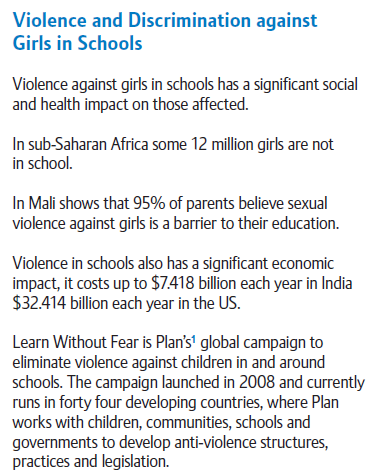
Update: Lil Shira from Cameroon will present on Violence and Discrimination against Girls in School, along with Marta Santos Pais (UN Special Representative to the Secretary General on Violence against Children) and others on Feb 22, from 16-17.30 at UN Church Center, 777 United Nations Plaza, Drew Room, Ground Floor.

Join us at the some of the sessions or come for an evening with the 21+ crowd at #ICT4Drinks Feb 23rd at 6 pm at Me Bar.

We’re trying to interest the girls in tweeting during the CSW on the @plan_youth account and to blog at  http://plan_youth.tumblr.com, so check it out as of this Monday. (We’ll see if they are willing or not!)

You can follow the events on Twitter at the hashtag #CSW55.

Read Full Post »

In the past couple years, social media combined with traditional media has allowed people all over the world to feel they are supporting and participating in very visible revolutions (think Iran, Tunisia, Egypt). There is also a slow and steady revolution happening as more and more communities around the world access the tools to tell their own stories in their own words from their own perspectives.

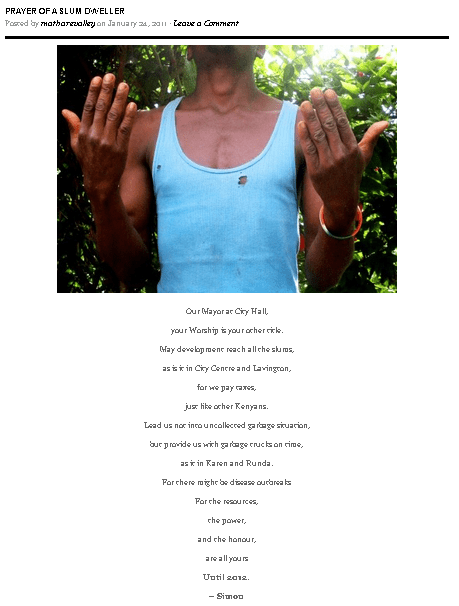
I came across the Mathare Valley blog this weekend. It’s beautiful, artful and powerful.

Prayer of a slum dweller from the Mathare Valley blog

According to the ‘about’ page, the authors of the blog:  Simon Kokoyo, Ivyonne Tiany and Jeff Mohamed, grew up in or around Mathare. They are now involved in community programs there, including the Map Mathare Initiative.

Jamie Lundine, who works at MapKibera and who’s supporting some community mapping in Mathare, wrote an excellent post about integrating participatory community development work and digital mapping in Mathare, showing how development and tech folks can combine their expertise and work together with communities to strengthen local development processes.

In my last post, I wrote about how communications (and ICTs) should be ‘built in, not bolted on‘ to development initiatives. The Mathare Initiative looks like a good example of that, with community members taking a strong lead.

Read Full Post »

« Newer Posts - Older Posts »