Feeds:
Posts
Comments

Posts Tagged ‘child’

Henri from Plan Benin training on SMS reporting.

In February I was in Benin to support staff to pilot the idea of using SMS reporting (FrontlineSMS) and digital mapping (Ushahidi) to strengthen local and national systems for reporting, tracking and responding to violence against children.  We conducted 2 workshops in mid-February with youth leaders, frontline staff, community members, local authorities from the Center for Social Protection (CPS) and representatives from the Ministry of the Family to get things started.

For some more background, check out my previous posts on the Violence against Children (VAC) project, the questions we asked ourselves before getting started on the SMS and mapping initiative, and the February workshops in Benin and what we learned there.

Since February, staff in Benin have been following up with workshop participants and with local authorities and institutions, including: the Prefect, the Mayors, community supervisors, animators of the children’s/youth media clubs, headmasters and other school authorities and the CPS.  The youth in one community did a radio program about violence against children and talked about SMS reporting. They also designed an information sheet that’s been hung up all over the town to encourage the population to report cases of violence.

Henri, Plan Benin’s ICT Director who facilitated at the Benin workshops, went to Togo to replicate the training with staff and youth there.  He and Carmen, who manages the overall VAC project in Benin, have also been observing and collecting feedback on the system to see where it needs tweaking.  They have put a project plan together for the next 6 months or so.

Carmen the VAC project coordinator in Benin.

Observations that Henri and Carmen shared and some thoughts we have about resolving them:

Issue:

  • Most people call instead of sending SMS

Hmmm….

  • Why?  Habit?  Literacy?  Unclear indications of what to do or unclear expectations of what the system is for?  We need to find out more about this.  It would be good to know exactly what kind of volume we are talking about total in terms of SMS vs calls. (I will update this post when I find out.)
  • Should we start taking calls too then? And are there resources and capacity to manage calls in addition to FrontlineSMS (which is automated)? How are we linking with the Child Help Line in Benin?
  • Could both calls and SMS be administered in the Ushahidi system?  Eg., Just as an administrator needs to review any SMS’s that come into Ushahidi  before approving them, someone could be tasked with inputting information from a phone call into the Ushahidi back end to then trigger the rest of the process (verification, response, etc). And how would that impact on pulling data out of the system for decision making?  (See this post for more information on how the system is currently conceived)

Issue:

  • Some people are sending a re-call SMS (asking us to return the call)

Hmmm….

  • We need to find out why people are sending re-call messages instead of SMS’s.  Because in the current set-up, text messages are not free?  Literacy issues? Because our system looks like something else they’ve done where re-call was the norm?  Something else?
  • If it’s due to low literacy or language issues, how can we open the system to those who cannot read/write or who do not use French?
  • Plan Benin is discussing with the GSM provider to find a way to send back an automatic reply SMS informing people not to call but to send a message, and to take this opportunity to indicate in the message what is expected as information.  But if literacy/language is the issue, we will not have solved anything by doing this…. Sounds like we really need to make sure calling is an option, and that good integration with the national Child Help Line is a real priority.
  • Plan Benin is also negotiating getting a “green line” or free short code, so that might resolve part of this.

Issue:

  • Many people are not using the key word ‘HALTE’ (stop) at the beginning of the message, meaning that the commands don’t trigger the messages to automatically send the information to Ushahidi.  (In the current system, each SMS should include the key word ‘HALTE’.  This key word triggers a “thanks for your message” automatic response from FrontlineSMS, and the forwarding of the message to the Ushahidi back end for subsequent management and follow up by local authorities.)

Hmmm….

  • Staff noticed that most (but not all) of the messages without the key word ‘’HALTE’’ contained the word ‘enfant’ (child). Henri has added ‘enfant’ as a key word in addition to ‘HALTE’ — and says it is working fine.  So we will assess if this helps.
  • Another alternative would be to not use any keywords – we will need to look into whether we can set FrontlineSMS up so that any SMS that goes to that number gets auto forwarded to Ushahidi.

Early draft of a poster promoting violence reporting by SMS

Issue:

  • Most of the messages are too vague to find the place and the victim for responding (and people do not have GPS enabled phones).  We have suggested that an SMS report should contain certain information [HALTE+type of violence+where it’s happening (eg., school, home, etc)+village name+district+age+sex+name of child if known], but people don’t follow the suggested format.

Hmmm….

  • How can we simplify it or better explain the type of information that’s needed?  Something we need to dig deeper into and consult with users to figure out.  Carmen’s take is that we are at the beginning of the process and we need to be patient and sensitize a lot so that people get used to the idea and understand how things work.

Issue:

  • Compatible FLSMS phones and modems are very difficult to find.  We were only able to find one phone that was compatible in Benin (a used one) because newer phone models are not compatible and the modems we found refused to connect.

Hmmm….

  • We really need to get this resolved since the entire system in Benin rests on one phone. What if it stops working?  It’s really difficult to expand the project without a larger set of phone/modem options.  We’ll work with the FrontlineSMS forum or staff (both are always super helpful on this kind of thing) in the next couple weeks to figure out how to resolve the compatibility issues, because there are modems available in West Africa that should be compatible, but that we couldn’t get to function.

Issue:

  • We planned for community response teams to be able to subscribe to alerts on Ushahidi, so that when there is an incident reported in the zone where they work, they would be alerted by SMS and could set the follow up process in motion.  But we haven’t been able to get the alerts working on Ushahidi or set up email reporting there.

Hmmm….

  • We discussed with the Ushahidi team and the problem was that not all the strings of code in Ushahidi had been translated into French yet.  Thanks to @theresac and @penelopeinparis, who volunteered to translate a load of strings, we are getting everything into French, and Henry at Ushahidi is helping get alerts working.  We still need to finalize all the elements on our Ushahidi page however and get everything working.  We’d also like to customize our Ushahidi page to make it our own, similar to the customizing that Voices of Kibera has done with their Ushahidi instance.

Any additional thoughts or help on the above issues are most welcome!


As for next steps, Henri and Carmen shared their plans:

  • Present the system to political and administrative authorities, including: head of the Brigade for the Protection of Minors, juvenile judges, Ministry of the Family’s Director for Children and Adolescents, Director of Family Programs, Minister of ICTs, cabinet and authorities who regulate telecommunications, Ministry of the Interior and Public Security, National Assembly, mayors and prefects, schools and teacher-parent committees, community authorities, media
  • Train staff, government partners, school and parent committees, and local NGOs on the reporting system, including a 1-day workshop with all Plan staff and a 1 day workshop with local NGO partners, schools and government staff
  • Accompany child protection committees and organized youth groups to use the system.  This will be done by holding sessions with organized children and youth groups at village level to reinforce and raise awareness on the reporting system; training child protection committees to use the new reporting system; holding one day sessions each month with the village level child protection system staff to discuss follow up on reports that have come in, and installing FrontlineSMS in each local site and adding local focal points as Ushahidi administrators
  • Strengthen awareness in the public and with leaders to support violence reporting by developing a communications plan to generate awareness on the issue of violence, the importance of reporting, and the mechanisms to report via SMS; supporting youth to use arts and theater to raise awareness on the issue of violence against children; talking with religious leaders and village chiefs; creating television, radio, newspaper and web advertisements to reach the general public and decision makers
  • Secure a free short code (target:  by May)
  • Conduct a national level evaluation workshop with involved local and national actors (in 6 months)

As we move forward, more questions will surely come up and we’ll need to continually tweak things. But I feel that we’re off to a good start. The fact that people are calling in and SMS’ing in is a good sign already that the program has some potential, and that people are willing to report violence against children.

—————-

Related posts on Wait… What?

Breaking it down: violence against children

Fostering a new political consciousness on violence against children

Seven (or more) questions to ask before adding ICTs

Finding some ICT answers in Benin

Meeting in the middle

Read Full Post »

There is a lot of talk about “Child Protection” these days and an increased awareness of the vulnerability of children who are separated from their parents or who have lost them due to the Haiti earthquake   But what exactly does “Child Protection” mean?  What does a child protection system look like on the ground?  How can child protection mechanisms be set up during an emergency phase, and how can they be turned into a sustainable mechanism post-crisis?

Jose Francisco de Sousa (“Quico”), a co-worker of mine at Plan Timor-Leste, sent me written information on Plan’s child protection work in the 2006 crisis response there and talked me through some of details below. Photo:  Quico.

Plan was active in the broader emergency response in Timor-Leste following the political crisis of April 2006 through work in over 40 camps for Internally Displaced Persons (IDPs). (For some deeper insight into Timor-Leste, check out this post by my twitter pal @giantpandinha).

In Timor-Leste, Plan was one of the first agencies to respond as Site Liaison Support (SLS), responsible for the coordination, operation and management of camp activities within days of the crisis. Plan’s specific focus was on addressing the needs of children in the camps, covering service provision such as the delivery of potable water to 15,000 IDPs, addressing hygiene and sanitation issues to improve health, and training youth in conflict resolution skills to aid the nation’s peace building process, and child protection.

Plan’s child protection approach included identifying, monitoring and protecting children at risk, setting up referral systems, training communities in child rights and child protection strategies and mechanisms, and ‘seconding’ Quico as an advisor to the government to strengthen its child protection systems.

Quico was “loaned out” to the Ministry of Social Solidarity (MSS) to build upon existing capacities in the Ministry of Social Solidarity (Child Protection Department) and to ensure a strongly coordinated sectoral, systems-building approach to the child protection response. Through this process, the government came to see child protection as a priority in the long term and eventually established a Child Protection Department under the MSS. So, in other words, the emergency child protection mechanisms established during the crisis were successfully built into a sustainable child protection system in the long term, and services are now available in the district and sub-district levels across the country.

“When the crisis began in Timor Leste, it was very difficult for us to get any resources on how best we could assist internally displaced people. During the emergency, there were many NGOs and other organizations trying to support the internally displaced through different approaches. The focus was mainly to provide the basic needs. There was no proper coordination strategy/mechanism that included broader child protection issues.

I would say that if we look at the nature of the disasters in Timor-Leste and what is happening in Haiti right now, It’s different,  but I imagine (correct me if I’m wrong) that the impact of the disasters might be same, where instability is created in different sectors leading to broader child protection issues.

Plan responded to the emergency in Dili (the Capital of Timor-Leste) with immediate practical child protection measures focusing on the prevention of family separation, and the promotion of safety, and health and hygiene in camps. We also prioritised co-ordination of child protection actors by initiating a Child Protection Working Group. This filled a leadership vacuum whilst building the capacity of the Government  to gradually take over leadership responsibility.”

Keep reading for an overview of the Toolkit…..or download it here.

————————————————–

Plan Timor-Leste’s Child Protection Emergency Toolkit is divided into 7 parts:

1. Overview of Framework & Standards Related to an Emergency Response in Timor-Leste
This section aims to give an overview of the international, national and organizational laws, policies, standards and approaches to child protection in emergencies in order have clear guidance on how to create an appropriate framework for a potential response that is in line with global, national and internal organizational laws and policies on Child Protection in Emergencies. (If replicating the toolkit, these documents would need to be adapted to the country context).  Users of the toolkit should read this section before they go on to use the other sections in the toolkit.   These overviews are important to integrate into Child Protection in Emergency trainings and orientation for new staff recruited in the event of an emergency.

Some of the legal instruments and Humanitarian Principles Applicable to Child Protection in Emergencies in Timor-Leste included:
  • Overview of Approaches and Guidelines in Child Protection in Emergency
  • Timor-Leste Structural Framework of the Current System for Child Protection
  • Timor-Leste Legal Framework for Child Protection
  • Plan’s Approach to Emergency
  • Summary of Learning and Recommendations from 2006 Emergency Child Protection Response

2. Emergency preparedness
The section includes an overview of steps that should be taken to ensure that Plan offices are prepared for an emergency. It’s divided into two areas – programmatic preparedness and administrative preparedness.  It also includes the practical internal financial codes for general emergency preparedness activities so that these are compiled and readily available to support and inform activities and rapid proposal writing in the event of an emergency. These are also useful for Country Offices to be prepared for emergency in the long term.

Programmatically, the tools include government and Child Protection Working Group contingency planning, risk analysis and scenario planning, child protection activity mapping and definition of roles and responsibilities.  They also include tools developed specifically for the geographical areas where a child protection response might potentially be needed, such as contact lists for child protection actors at the municipal level, and community-based hazard, risk and capacity maps developed by children and their communities as part of Plan’s on-going mitigation activities.

The administrative tools cover generic job responsibilities, a general child protection in emergencies orientation session for newly recruited staff or those who are new to emergency response.  The human resource structure of a response is defined and responsibilities are allocated within the current staff organigram.  Advocacy and media standards and a stock list of necessary items for the first phase of an emergency response are also included.

3. Initial emergency response
This section contains the basic tools relevant to an initial emergency response.  The emergency planning tools included in the previous section are also relevant to ensuring the most efficient response possible, in line with Plan’s community-based approach.  The shape of the response will depend largely on the type, scale and location of the emergency, and any tools need to be adapted according to this context.

“One of the tools here is a child protection message to Camp Managers.  During the emergency period, Plan was assigned to be responsible for a certain number of IDPs. One of our focuses was to establish and ensure that the structure in the IDP was functioning to assist the IDP’s and that we established the camp. But we also wanted to make sure that child protection was understood and prioritized in displaced persons camps. This meant that we discussed children and child centered programming with camp managers, and they worked to ensure that there would be no discrimination towards children and their families during the emergency.”

This was difficult for us to introduce in the beginning of the crisis, as people tended to have different thoughts and priorities, and it gave additional works to the IDPs.  In addition to that, some organizations did not have a mandate for “child centeredness.” So we started facilitating child protection focused workshops for camp managers and other NGOs, and getting their commitment to be involved in process.  Aside from that we also guided the camp manager on using the checklists as well as we assigned Plan, government and other NGO staff  (who were also in IDPs) to support throughout the process, and it worked.

One of the problems that we encountered was related to volunteers.  Since we were establishing a new system, we needed people to take responsibility at different levels. Camp managers already had additional child protection tasks for the whole camp, so they were supported by child protection focal points and child protection teams in each block of IDPs.  I wouldn’t say it all worked perfectly.  There were issues among volunteers that were brought to the Child Protection Working Group to discuss. Some NGOs who were also assigned in the IDP camps had a policy of paying camp managers and teams, which created jealously and conflict between them and the volunteers. But in the end, we developed guidelines for volunteers, establishing from the start that we would not give them cash but rather give them recognition and reward such as:

· identification cards recognizing them as volunteers
· training and continuing refresher courses
· certificates for every completed training course
· promotional t-shirts, hats, umbrellas & bags, whenever available
· public acknowledgment
· certificate of community service for every 3 months of services rendered
· access to information about suitable job vacancies in NGOs”

4. Child protection assessment
This section contains tools for use in assessing child protection-related needs.  It draws heavily from the Inter Agency First Phase Child Protection Resource Kit developed by the IASC Child Protection Working Group. The assessment contains generic questions relevant to a range of child protection issues common to emergencies.  They are adapted and modified according to the context of the emergency and the child protection issues that are identified as emerging. Training on ethical considerations and assessment methodologies should be conducted as necessary.

“There are 8 main focus questions in the Questionnaire for Children, for example.  To find out about children’s psycho-social well being, we ask the questions:

· What are the things/activities that you like the most?
· What kind of things makes you happy or comfortable?
· What are the things/activities that you dislike?
· What kind of things makes you angry or sad?
· What kind of activities would you like to have here?
· What are the main problems that you face now?
· What would help you solve these problems?
· What are your biggest concerns or worries about the future? What do you think would help?
· Which people make you happy in the community?  Why?
· Which people make you unhappy in the community?  Why?”

5.      Building a Child Protection System in an Emergency
The section looks first at developing child protection systems in the context of displacement.  It then looks at supporting district, sub-district and village child protection systems to respond to the needs of displaced people living in host communities and other disaster-affected communities.   It goes on to look at the implementation of the Child Protection Policy and ensuring the effective management of individual child protection cases.  This sub-section contains guidelines on monitoring and reporting grave violations of children’s rights.

6. Key issues for children in emergency
This section looks at some of the issues that children commonly face in emergencies and appropriate child protection responses in line with international standards and according to Plan’s mandate and experience.  The three key issues covered in detail are: Family Separation, Sexual Violence against Children, Psychosocial Support for Children. Each of these three issues has a sub-section containing a summary of standards and guidelines, process for prevention and response, necessary tools, and a training module for staff.

7. Monitoring and Evaluation
This section contains the tools used to monitor and evaluate child protection in emergencies interventions.   These are based on tools already used by the Plan Timor-Leste Office.  They are adjusted according to the needs of an emergency context and are supplemented with additional tools in line with good practice.

“In Haiti, I would say that children separated from their parents will need to be especially considered, while people will also need to be alert for the effects that the crisis may have, for example, increased violence.  This will be a special concern if there were any political issues before the crisis. Psychosocial activities are very, very important too, the other key areas are likely to be water and sanitation, heath problems and education.  Coordination mechanisms between aid organizations must be considered, as each organization will have their own approach but in this situation each organization needs to think about the wellbeing of children and the community.”

More resources:
The Child Protection Working Group in Haiti has created the following Guiding Principles for Unaccompanied and Separated Children Following the Haiti Earthquake, 2010.

These principles represent the views of the following agencies: the International Committee of the Red Cross (ICRC), the International Rescue Committee (IRC), Save the Children, Terre des Hommes (TdH), the United Nations Children’s Fund (UNICEF), World Vision International (WVI), Plan International, War Child UK.  Organizations wishing to work on behalf of separated children are strongly encouraged to endorse these principles.


Plan International: Children and the Tsunami


—————
Related posts on Wait… What?:

Read Full Post »

Mid week the first week of the community youth training, the youth chose what they wanted to do: arts or video/photos, and they split into groups for more focused training. The media group further split into 6 small groups of 4-5 people (one for each set of equipment) to then develop their interviews and ideas for their short films, based on the list of topics that had been created earlier by the youth and community members. The arts group chose topics from the list also to develop out. Photo: Some of the arts group.

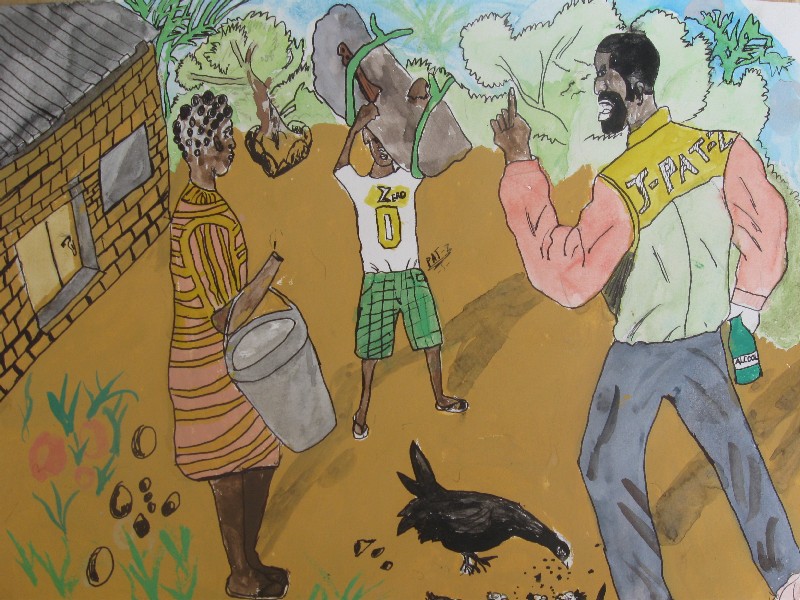
The first Saturday (after 4 days of theory and practice) we did a community field visit to get a better sense of what to film and to make appointments with resource people for interviews. The arts groups did rough sketches of the things they wanted to draw. On Sunday the groups started filming and working more closely on their chosen drawings. We filmed for about 3 days in small groups, and by the 2nd day had some groups stay back to learn editing, then switching and going to film in the afternoons while another group stayed back to edit. The arts group worked in watercolor and gauche to finalize their works. By the end of the week we had 15 films and about 12 really nice drawings! Photo: Filming on Birth Registration

The films that we finished included:

· Meeting Places/Community Resources

· Alcohol Abuse

· A quick trip around the rural areas

· Forest resources

· Universal Birth Registration (and issue of not declaring births)

· History of Mva’a

· Installation of the church in Mva’a

· Water

· How mud houses are constructed

· The market

· Raising pigs

· The long walk to school

· Relationships between parents and children

· Agriculture

The drawings were really powerful, touching on themes that went deeper than the films, due to the nature of the two media. Drawing topics included Alcohol Abuse, A family losing their home to high winds/storms, Church, Long walk to school, Education, Hunting, Distance to health centers, People working on Sundays instead of attending church, Water, People not using latrines, Dangers of transport means, Recreation, Well/water sources, and Child abuse/Child labor

We closed out with a community film showing where the Mayor and community members and parents were invited to see the work of the youth. The youth, teachers and community members worked on an action plan to determine how they will follow up via concrete activities in the coming 6 months. Plan Cameroon is hoping to expand the program to additional communities, so it was important that the Mayor’s office attended as maybe they would have funds to support project expansion….

Read Full Post »

« Newer Posts