Feeds:
Posts
Comments

Posts Tagged ‘development’

Coming from the viewpoint that accountability and transparency, citizen engagement and public debate are critical for good development, I posted yesterday on 5 ways that ICTs can support the MDGs. I got to thinking I would be remiss not to also post something on ways that ICTs (information and communication technologies) and poor or questionable use of ICTs and social media can hinder development.

It’s not really the fault of the technology. ICTs are tools, and the real issues lie behind the tools — they lie with people who create, market and use the tools. People cannot be separated from cultures and societies and power and money and politics. And those are the things that tend to hinder development, not really the ICTs themselves. However the combination of human tendencies and the possibilities ICTs and social media offer can can sometimes lead us down a shaky path to development or actually cause harm to the people that we are working with.

When do I start getting nervous about ICTs and social media for social good?

1) When the hype wins out over the real benefits of the technology. Sometimes the very idea of a cool and innovative technology wins out over an actual and realistic analysis of its impact and success. Here I pose the cases of the so-called Iran Twitter Revolution and One Laptop per Child (and I’ll throw in Play Pumps for good measure, though it’s not an ICT project, it’s an acknowledged hype and failure case). There are certainly other excellent examples. So many examples in fact that there are events called Fail Faires being organized to discuss these failures openly and learn how to avoid them in the future.

2) When it’s about the technology, not the information and communications needs.  When you hear someone say “We want to do an mHealth project” or “We need to have a Facebook page” or “We have a donor who wants to give us a bunch of mobile phones–do you know of something we can do with them?” you can be pretty sure that you have things backwards and are going to run into trouble down the road, wasting resources and energy on programs that are resting on weak foundations. Again, we can cite the One Laptop per Child (OLPC) initiative, where you have a tool, but the context for using it isn’t there (connectivity, power, teacher training and content). There is debate whether OLPC was a total failure or whether it paved the way for netbooks, cheap computers and other technologies that we use today. I’ll still say that the grand plan of OLPC:  a low-cost laptop for every child leading to development advances; had issues from the start because it was technology led.

3) When technology is designed from afar and parachuted in. If you don’t regularly involve people who will use your new technology, in the context where you’re planning for it to be used, you’re probably going to find yourself in a bind. True for ICTs and for a lot of other types of innovations out there. There’s a great conversation on Humanitarian Design vs. Design Imperialism that says it all. ICTs are no different. Designing information and communication systems in one place and imposing them on people in another place can hinder their uptake and/or waste time and money that could be spent in other ways that would better contribute to achieving development goals.

4) When the technology is part of a larger hidden agenda. I came across two very thought-provoking posts this week: one on the US Government’s Internet Freedom agenda and another from youth activists in the Middle East and North Africa region who criticize foundations and other donors for censoring their work when it doesn’t comply with US foreign policy messages. Clearly there are hidden political agendas at work which can derail the use of ICTs for human rights work and build mistrust instead of democracy. Another example of a potential hidden agenda is donation of proprietary hardware and software by large technology companies to NGOs and NGO consortia in order to lock in business (for example mHealth or eHealth) and prevent free and open source tools from being used, and which end up being costly to maintain, upgrade and license in the long-term.

5) When tech innovations put people and lives at risk. I’d encourage you to read this story about Haystack, a software hyped as a way to circumvent government censorship of social media tools that activists use to organize. After the US government fast-tracked it for use in Iran, huge security holes were found that could put activists in great danger. In our desire to see things as cool, cutting edge, and perhaps to be seen as cool and cutting edge ourselves, those of us suggesting and promoting ICTs for reporting human rights abuses or in other sensitive areas of work can cause more harm than we might imagine. It’s dangerous to push new technologies that haven’t been properly piloted and evaluated. It’s very easy to get caught up in coolness and forget the nuts and bolts and the time it takes to develop and test something new.

6) When technologists and humanitarians work in silos. A clear example of this might be the Crisis Camps that sprung up immediately after the Haiti Earthquakes in 2010. The outpouring of good will was phenomenal, and there were some positive results. The tech community got together to see how to help, which is a good thing. However the communication between the tech community and those working on the ground was not always conducive to developing tech solutions that were actually helpful. Here is an interesting overview by Ethan Zuckerman of some of the challenges the Crisis Commons faced. I remember attending a Crisis Camp and feeling confused about why one guy was building an iPhone application for local communities to gather data. Cool application for sure, but from what people I knew on the ground were saying, most people in local communities in Haiti don’t have iPhones. With better coordination among the sectors, people could put their talents and expertise to real use rather than busy work that makes them feel good.

7) When short attention spans give rise to vigilante development interventions. Because most of us in the West no longer have a full attention span (self included here), we want bite sized bits of information. But the reality of development is complicated, complex and deep. Social media has been heralded as a way to engage donors, supporters and youth; as a way to get people to help and to care. However the story being told has not gotten any deeper or more realistic in most cases than the 30 second television commercials or LiveAid concerts that shaped perceptions of the developing world 25 years ago. The myth of the simple story and simple solution propagates perhaps even further because of how quickly the message spreads. This gives rise to public perception that aid organizations are just giant bureaucracies (kind of true) and that a simple person with a simple idea could just go in and fix things without so much hullabaloo (not the case most of the time). The quick fix culture, supported and enhanced by social media, can be detrimental to the public’s patience with development, giving rise to apathy or what I might call vigilante development interventions — whereby people in the West (cough, cough, Sean Penn) parachute into a developing country or disaster scene to take development into their own hands because they can’t understand why it’s not happening as fast as the media tells them it should.

8 ) When DIY disregards proven practice. In line with the above, there are serious concerns in the aid and development community about the ‘amateurization’ of humanitarian and development work. The Internet allows people to link and communicate globally very easily. Anyone can throw up a website or a Facebook page and start a non-profit that way, regardless of their understanding of the local dynamics or good development practices built through years of experience in this line of work. Many see criticism from development workers as a form of elitism rather than a call for caution when messing around in other people’s lives or trying to do work that you may not be prepared for or have enough understanding about. The greater awareness and desire to use ‘social media for social good’ may be a positive thing, but it may also lead to good intentions gone awry and again, a waste of time and resources for people in communities, or even harm. There’s probably no better example of this phenomenon than #1millionshirts, originally promoted by Mashable, and really a terrible idea. See Good Intents for discussion around this phenomenon and tools to help donors educate themselves.

9) When the goal is not development but brand building through social media. Cause campaigns have been all the rage for the past several years. They are seen as a way for for-profit companies and non-profits to join together for the greater good. Social media and new ICTs have helped this along by making cause campaigns cheap and easy to do. However many ‘social media for social good’ efforts are simply bad development and can end up actually doing ‘social harm’. Perhaps a main reason for some of the bad ideas is that most social media cause campaigns are not actually designed to do social good. As Mashable says, through this type of campaign, ‘small businesses can gain exposure without breaking the bank, and large companies can reach millions of consumers in a matter of hours.’ When ‘social good’ goals are secondary to the ‘exposure for my brand’ goals, I really question the benefits and contribution to development.

10) When new media increases voyeurism, sensationalism or risk. In their rush to be the most innovative or hard-hitting in the competition for scarce donor dollars, organizations sometimes expose communities to child protection risks or come up with cutesy or edgy social media ideas that invade and interrupt people’s lives; for example, ideas like putting a live web camera in a community so that donors can log on 24/7 and see what’s happening in a ‘real live community.’ (This reminds me a bit of the Procrastination Pit’s 8 Cutest and Weirdest Live Animal Cams). Or when opportunities for donors to chat with people in communities become gimmicks and interrupt people in communities from their daily lives and work. Even professional journalists sometimes engage in questionable new media practices that can endanger their sources or trivialize their stories. With the Internet, stories stick around a lot longer and travel a lot farther and reach their fingers back to where they started a lot more easily than they used to. Here I will suggest two cases: Nick Kristof’s naming and fully identifying a 9-year-old victim of rape in the DRC and @MacClelland’s ‘live tweeting’ for Mother Jones of a rape survivor’s visit to the doctor in Haiti.

Update: Feb 22, 2011 – adding a 10a!

10a) When new media and new technologies put human rights activists at risk of identification and persecution. New privacy and anonymity issues are coming up due to the increasing ubiquity of video for human rights documenting. This was clearly seen in the February 2011 uprisings in Egypt, Tunisia, Libya, Bahrain and elsewhere.  From Sam Gregory’s excellent piece on privacy and anonymity in the digital age: “In the case of video (or photos), a largely unaddressed question arises. What about the rights to anonymity and privacy for those people who appear, intentionally or not, in visual recordings originating in sites of individual or mass human rights violations? Consider the persecution later faced by bystanders and people who stepped in to film or assist Neda Agha-Soltan as she lay dying during the election protests in Iran in 2009. People in video can be identified by old-fashioned investigative techniques, by crowd-sourcing (as with the Iran example noted above…) or by face detection/recognition software. The latter is now even built into consumer products like the Facebook Photos, thus exposing activists using Facebook to a layer of risk largely beyond their control.”

11) When ICTs and new media turn activism to slacktivism. Quoting from Evgeny Morozov, “slacktivism” is the ideal type of activism for a lazy generation: why bother with sit-ins and the risk of arrest, police brutality, or torture if one can be as loud campaigning in the virtual space? Given the media’s fixation on all things digital — from blogging to social networking to Twitter — every click of your mouse is almost guaranteed to receive immediate media attention, as long as it’s geared towards the noble causes. That media attention doesn’t always translate into campaign effectiveness is only of secondary importance.” Nuff said.

I’ll leave you with this kick-ass Le Tigre Video: Get off the Internet.… knowing full well that I’m probably the first one who needs to take that advice.

‘It feels so 80s… or early 90s…  to be political… where are my friends? GET OFF THE INTERNET, I’ll meet you in the streets….’


Related posts on Wait… What?

3 ways to integrate ICTs into development work

5 ways ICTs can support the MDGs

7 (or more) questions to ask before adding ICTs

Amateurs, professionals, innovations and smart aid

I and C, then T

MDGs through a child rights lens

Read Full Post »

Angelica Valeria Ospina recently wrote about the role of social memory and ICTs in building climate change resilience.  She refers to Carl Folke’s definition of social memory as “captured experience with change and successful adaptations embedded in a deeper level of values, and actualized through community debate and decision-making processes into appropriate strategies for dealing with ongoing change.

Ospina suggests that social memory is “key for linking past experience with present and future adaptation actions, and in turn allows for novelty and innovation.” She comments that “Although the role of memory tends to be overshadowed by that of innovation, the two are in fact important foundations for change, and are equally relevant within contexts that are struggling to adapt to uncertainty….”

I really like this idea of balancing memory and innovation, and it’s not only valid within the framework of resilience and climate change.  Social memory is also useful for those of us working in ICT4D and m4D because we find ourselves at the intersection of development and technology, where methodologies and mindsets can be in opposition at times and where change is happening at a rapid frequency.

A quick characterization of the mindsets

Development Organization Mindset: How can we work with our existing resources and work around our challenges to reach our goals? How can we build on experience?

Those who work with grassroots community development are schooled to look at assets, to help communities and local organizations look at what exists already, what is within their reach, and how to identify their existing resources before looking outside for support or help. This helps a program to be more locally owned and sustainable.  Those in this field are trained to look for potential obstacles and limitations and see how to go around them or to work within them. There is a sense that lives and livelihoods are on the line, this is nothing to play around with and failure carries a high price both for community members and for organizations. This mindset can be really frustrating for for-profit or marketing consultants who come in to get people to do ‘blue sky thinking’ and to forget about limitations.

This is the group that people would describe using that Henry Ford quote:  ‘If I had asked people what they wanted, they would have asked for a faster horse.’ But this kind of thinking does have its place – local context, perceived limitations, and local experience, eg. social memory, are important in design and sustainability and impact. In addition, innovations don’t only happen in terms of ‘products’, there are process, position and paradigm innovations also which happen all the time in non-profit organizations and communities.

(Note: Certainly some will say that in aid work, no one does evaluations, and no one learns and it’s all a waste of time and resources, but that’s not been my personal experience at this point, and the work I’ve been involved in has been community development focused, not top down delivery of services and goods.)

Design Student/Technology Innovator Mindset: What can we make? What can we build that’s like nothing that’s come before? What solutions can we offer?

Innovation thinking pushes for a different kind of visioning. For throwing aside conventions and ignoring limitations so that the chains are completely off. It urges people to move quickly, to try and fail fast and often. A lot of innovation and tech thinking is product focused – What can we make? What can we build? What solution do we have that people might need? What tech can we invent and then let people figure out uses for? Those in this group are trained to move forward without thinking so much about the challenges and limitations, to move at a quick pace, and without engaging a thousand people in the process. This enables new ideas to flourish unfettered by endless rounds of consultations and participation by too many people bringing you to the fabled and unfortunate “a camel is a horse designed by a committee” result.  It allows totally new ideas and processes as well as products to spring up. Lots of trying might equal lots of failing, but it also brings about those few amazing and game changing innovations that allow huge leaps forward. Many within this field are amazingly bright and creative. At this point few have long-term experience living in poor communities in developing countries, and there are few opportunities for gaining enough of that experience.

The middle ground

Both of these mindsets have advantages and limitations and seem to have a very hard time coming to a middle ground to work together effectively, though some initiatives are overcoming this challenge. Potential collaboration can be compromised when people address each other in snarky or accusatory ways, without sufficient knowledge of the other’s work and experience. For example, this series of blog posts around crowdsourcing and humanitarian aid between Patrick Meier (here, here and here) and Paul Currion (here and here). Unfortunately I don’t have a audio recording to post of the conversation where someone told me that Paul is quite well-known for innovations in the field of humanitarian aid and technology, and would be an excellent person to collaborate with on innovations in humanitarian aid — I really hope people like Patrick and Paul will work together, as the results could be fantastic.

Ken Banks has also raised this issue of m(obile) vs d(evelopment); most recently in his post Dissecting m4d: back to basics, where he asks: Do the majority of people working in “mobiles for development” work in mobile, or development? It may seem like an odd question, but how people approach “m4d” may have more of an impact on success or failure than we think.

An example of collaboration

There are some good examples of collaboration however. One I saw most recently is MIT’s Department of Play’s Summer Institute in early August, where a team of incredible innovators and students from MIT working on community youth engagement tools spent 2 days in discussions with folks with years of experience working on child participation and youth engagement, including UNICEFCUNY Children’s Environments Research GroupProject Vision Design and Research Collective at Srishti School of Art Design and Technology Bangalore; and the Program in Education, Afterschool & Resiliency (and me :-D)

I think eventually these gaps will smooth out as the younger generation moves in and up the chain at development organizations and some of the newer technology becomes ubiquitous within organizations. It’s quite possible also that the current and new generations of design and tech students will spend more time ‘in the field’. And I am not only talking about ‘Western’ folks here, I’m also talking about young people and design students from the so-called ‘underdeveloped countries’, many of whom use technology at a dizzying pace and who are already re-shaping how development is viewed and carried out in their countries.

By lowering the fences that we are all working behind, and finding ways to combine our different skills, ICT4D and m4d can come up with even better solutions and achieve better impact in areas like accountability, health, education, livelihood, governance, emergency response and disaster preparedness.  We can build teams that capitalize on the different kinds of knowledge, skills and mindsets. We can harness social memory and strive for a balance between experience and innovation.

Related posts on Wait… What?

Salim’s ICT4D advice: innovate but keep it real

Mind the gap

mGESA: Mobile GEographical Services for Africa

Amateurs, professionals, innovations and smartaid

On trust and disempowerment

Read Full Post »

What has been will be again, what has been done will be done again; there is nothing new under the sun. Ecclesiastes 1:9

In my last post (Orgasmatron Moments) I compared re-hashed development and aid work ideas to re-makes of songs, lamenting that often people don’t realize that their favorite new innovation is more like a cover of an old idea.

Dave Algoso at Find What Works commented:

So my question is: Linda, what’s next?! … What principles of good development are already being implemented by smart groups, but are still unnoticed by the academics and other commentators? To continue the music analogy, if you’re the fan who liked the hip new band before they were big — what are you listening to now?

Hmm. A tricky question if you ask me. There are a lot of people who write and blog about development trends and who know a lot more about this than I do, (Owen Barder, for example) but I’ll take a stab at some things that I’m hearing about, working on, discussing and/or seeing nowadays.

The fact that I can link to most of these ideas means that they are not going unnoticed. Or maybe the development blogosphere is akin to the underground music scene.  In any case, none of these are totally new. There is nothing new under the sun, but there are lots of old things we don’t know. Ambrose Bierce, The Devil’s Dictionary (1911).

Some mash-ups/re-mixes that together create a new, interesting and good sound to my ears:

Cynefin, aid, development. I first heard about Cynefin when reading @morealtitude’s post ‘Embracing the chaotic: Cynefin and humanitarian response‘. Cynefin draws the world’s systems into four paradigms:  Simple, Complicated, Complex or Chaotic. Each paradigm has its own characteristics, and systems can shift from one paradigm to another. Not new, as the concept is at least 10 years old… but I love the connection between these paradigms, development/humanitarian aid work, and the way that organizations market themselves. A good resource on complexity theories in aid and development is Aid on the Edge.

Social media and ICTs to broaden participation. I’m digging the use of social media and ICT tools to bring marginalized voices into discussions about development, aid, governance, accountability, corporate abuses and other related areas, and to get broader input from ‘beneficiaries’ on approaches, ideas and initiatives. I’m liking how they are being used to simplify information and expand the number of people with access to information that was hidden or inaccessible before. (Update: This cool effort to geo-code aid data could make a lot of foreign aid project funding data more available.)

Not a new concept, as people have been ‘popularizing’ and sharing information for ages (think town criers, jesters, printing press, cartoons or ‘child friendly’ versions of legal documents) but social media and ICTs continue along this path. Issues of accessibility, language, gender, literacy, electricity, and disability need to be overcome, but things are moving forward, and organizations are more and more thinking about how to use ICTs for these purposes. This makes aid transparency, budget transparency come alive, and it becomes easier to see who is doing what where and who is spending what where and who is funding what. Kind of like that cool website Source Watch where you can type in a name (eg., the name of the guy who did that research saying that climate change doesn’t exist) and find out who he works for and who pays his salary is spreading to new areas and new levels.

Crowdsourcing/crowdfeeding in humanitarian and development work. Linked to the above, I’m increasingly interested in approaches that combine broad and quick information gathering with good quality information gathering, are based on experiences in past emergencies or development initiatives, that find ways to speed up information processing and response, and that improve on quality. Those efforts that consider proper management of expectations and privacy; child and witness protection, and that do not create parallel systems score extra points. Use of these technologies internally in organizations and among/across organizations, and with /by affected populations all fall into this category, which is closely linked with the one above. Check out this cool presentation on interaction design and crowdsourcing or this brilliant piece on Social Media and Humanitarian Response.

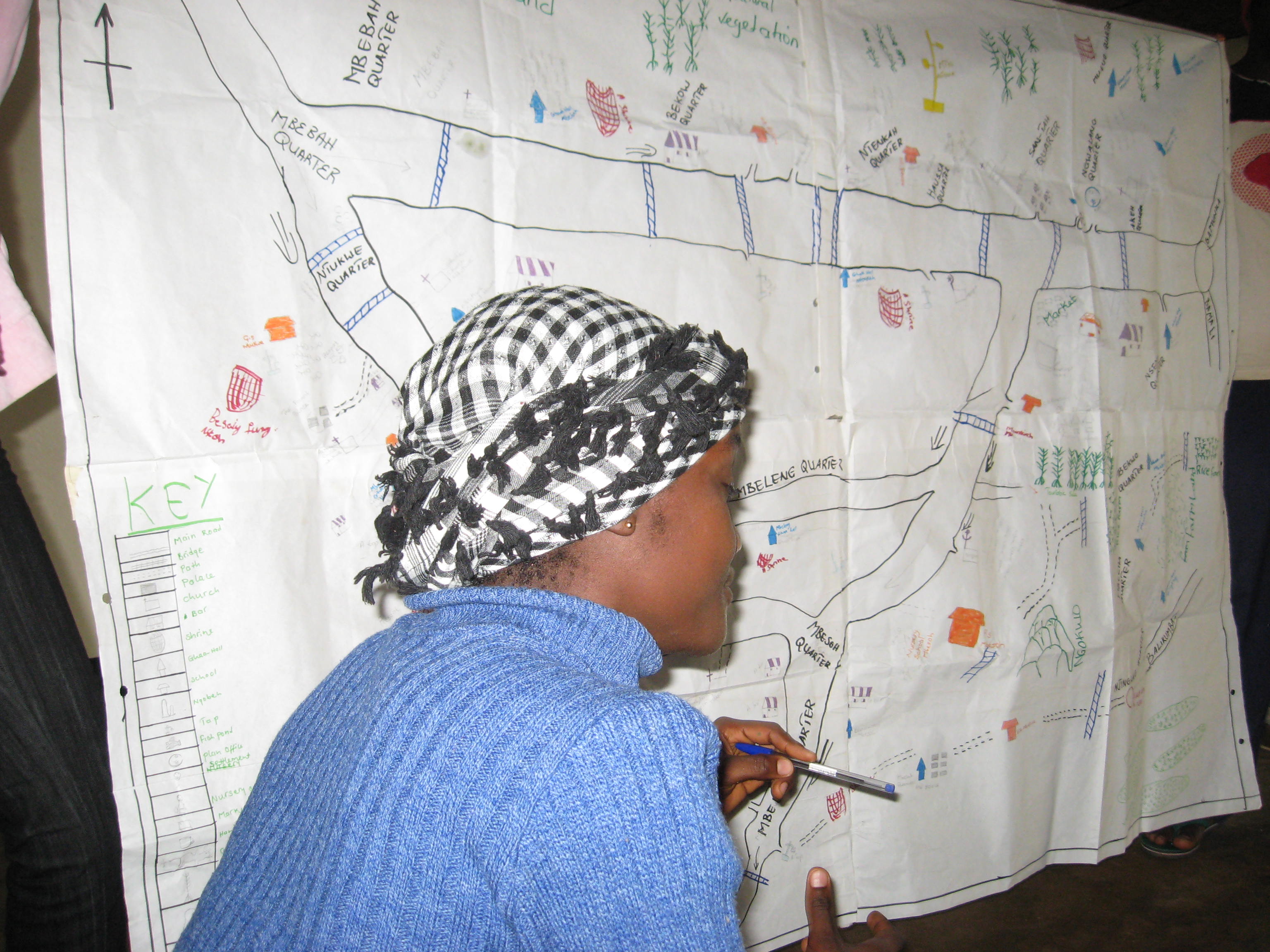
Online + offline combos. Not everyone is online, and not every context is the same. I’m really interested in approaches that use a variety of communication tools and methods to reach their goals and that are flexible and seamless across the initiative.  Looking at how to better connect knowledge and information from the local level to the global level and back again, and to link horizontally is key. I’m a fan of initiatives that are goal, results, impact driven, but that also consider good process and take local context into great consideration. I like initiatives that are not technology driven, but where technology is incorporated strategically if and when and where it actually adds value.  An example of this is where hand drawn maps and digital maps work together in participatory mapping to meet the needs of different groups.

Data and information collection and sharing by mobiles. Data collection – not new. But use of low cost mobile phones and data decentralization to district and community levels is a relatively new phenomenon. When data is owned more closely to the source, it seems more likely that people will care more about data validity and that the data will become information that they can use to manage their own processes and their own development. This is happening in many areas, from health to education to financial transactions a la mPesa and mKesho, to civil registration (eg, birth certificates) to government budgets to emergencies.

Expanding innovation. ALNAP (Active Learning Network for Accountability and Performance) talks about the 4 Ps model (pages 3 and 4 of this really relevant .pdf file) of innovation in humanitarian aid, and expands on the typical thinking that ‘innovation’ means ‘creating a new thing/product’.  ‘Innovations can be directed towards improvements or new developments of four aspects: (i) products, such as improved cooking stoves or food products to counter malnutrition; (ii) processes, such as methods for stockpiling goods, improved coordination, or improving learning and quality assurance; (iii) the position of an organisation and its work in relation to key stakeholders, for example by changing an organisation’s public profile or by changing attitudes to an area of work such as shelter; (iv) paradigms or combined attitudes and beliefs determining the fundamental approach to humanitarian work, such as the calls for paradigm shifts in humanitarian business models towards beneficiary participation, local ownership and capacity development. Exploring these ideas in the context of humanitarian work gives a new way of understanding and harnessing organisations’ creative potential.’ Yeah. I guess Marketers have their own 4Ps, (product, price, place, promotion) and marketing innovators have theirs (population, penetration, price, purchase frequency), so having 4 P’s is not new, just maybe it’s new when thinking about innovation in humanitarian aid.

Questioning capitalism’s influence on aid and development. By that I mean looking more closely at things like Corporate Social Responsibility (sometime I think that term is an oxymoron — check this animated video version of Slavoj Zizek’s Marxist reading of charity). Questioning capitalism is not new. (Hello Marx). But it’s still relevant to pick apart capitalism and to wonder if things will ever change if we keep pushing the same system with all its flaws and inherent inequities.  Questioning CSR includes thinking critically about ‘philanthrocapitalism’ in the sense of 1) the application of business models/ approaches to aid and 2) doing things to benefit the poor at a profit.

Related to that, thinking critically about cause-based marketing and its link to consumerism and the destruction of the planet and having clear program-driven policies on if, when and how to engage volunteers, take gifts in kind, and work with corporations and other funding bodies; and having mechanisms in place to ensure before accepting them that the above are actually necessary and contribute to program goals and actually benefit communities in the long run. Then again, a lot of people are on the trade-not-aid kick (thanks to Dambisa Moyo) and the two sides are a bit at odds with each other. It’s a battle of the bands that I’m still not ready to vote on yet. Can someone please come up with a new political and economic system that is fair and works?

Along these lines is questioning models of social entrepreneurship, social innovations, innovation contests, and design for the BOP, design for the ‘third world’ and other similar initiatives. There is a great article that opens a lot of questions around that model and a cool initiative called “Design for the First World.” Not to mention the Bruce Nussbaum et al. debate around ‘Is Humanitarian Design the New Imperialism?

Transmedia activism. I first heard about Transmedia Activism from Lina Srivastava (@lksriv) and I still don’t fully understand it, but then Lina is way smarter than I am, so that could be why.  I quote: ‘Transmedia Activism is a framework that creates social impact by using storytelling by a number of decentralized authors who share assets and create content for distribution across multiple forms of media to raise awareness and influence action.’ Again, not new is the concept of transmedia storytelling, used in marketing and product sales for quite some time, but it’s only recently that it’s being applied and used in advocacy work and non-profit causes.

Organizing your workers with the times. Rather than top-down, super structured, cubicle-based working environments, some offices are (and IMHO, all should be) looking at management styles that encourage innovation, collaboration and global teamwork.  Time Magazine, a  mainstream news source, talks about “global teams that use social media and collaborative decision-making that might involve team members scattered around the world, from Beijing to Barcelona to Boston, whom the nominal leader of a given project may never have met in person…. By 2019, every leader will have to be culturally dexterous on a global scale.”  If you ask me, not enough INGOs are paying attention to this and are still embracing old-fashioned structures and work environments. (Update: Google is known for stimulating innovation, and Netflix also seems to be doing this well.) (Update #2: Recommend subscribing to the Aid on the Edge of Chaos blog. Love this post – now, can I just get the organization where I work to see the light?)

Global warming and climate change. Whether because of the global meetings (COP15), because of the increase in disasters, because a younger generation is entering the workforce, or because we are finally realizing that it is for real, there are more programs dealing with climate change and its effects, especially looking at the differential impacts on women and children. Organizations are starting to think more about how they themselves contribute to climate change. Again, this is not a new thing, but it’s coming into vogue again. It makes us think about consumer based advocacy and cause based marketing, travel and carbon footprints, and starts asking why people are still coming up with ‘send your old crap to Africa’ schemes rather than working on changing consumer-based cultures in their own territories to stop buying so much stuff and producing so much waste.

Continuum between emergency and development. The gap between what is an emergency/humanitarian program and what is a development program continues to close up a bit more as organizations realize the importance of community ownership and engagement as soon as possible after a disaster. Again, not new. This was signaled as early as the 90s with the Red Cross Red Crescent Code of Conduct, but it’s taken awhile for it to hit home. The dangers of too much doing by external agencies and the damage it can cause to longer term development are coming more to the forefront and entering mainstream conversations a bit more. Here’s one blog post and related discussions that sort of gets at what I mean…. I’m sure there are many other discussions happening in the humanitarian world that I’m not currently participating in.

Some ideas I’ve been listening to a bit less/conversations I’m not very engaged in and (in keeping with our metaphor of music) where I’m trying to figure out if I want to buy the album:

RCTs: There is quite a lot of debate around RCTs (Randomized Controlled Trials) and the importance of evaluation. This is one of AidWatch’s favorite topics, and there’s a lot of debate every time they do a post on it. Here’s one such post by Alanna Shaikh.

Cash transfers… conditional or un-conditional, universal or targeted. Not new. Lots of agencies have done cash transfers in the past. Sponsorship agencies for example used to do only that, but they moved over to community based development in the 1970 and 80s. I’m trying to find some information on why, but haven’t been successful yet. Also trying to figure out what exactly is new about the current cash transfer model, and what makes it work better than the old sponsorship line-up-to-collect-your-$20 models. There’s more information on cash transfers here.  If anyone has concrete information from back in the day on why sponsorship organizations made this change in how they work, it would be much appreciated. I plan to do some more homework on this when I have time, as I do agree with giving people more control over the ‘aid’ and ‘development’ that is coming their way, but there must be a reason that organizations stopped giving out cash, and I’d hope some studies on that decision and its impact on ‘beneficiaries’ for better or worse.

Cash on Delivery aid is being discussed quite a bit. I don’t know enough about it to have an opinion one way or another, but you can check out the Center for Global Development’s site. As I was in the middle of composing this post, Amanda Makulec commented on my last post, saying: In some ways, CGD’s Cash on Delivery Aid idea isn’t entirely new either (and I’m not the first to call them out on this), though it’s gotten a lot of press from everyone from DfID to Nick Kristof who have heralded it as a “new” way of doing development. Programs in Haiti, Rwanda, and other countries have relied on the idea of making either financial incentives or even specific percentages of an annual budget contingent on meeting specific service delivery targets. I’d have to go back into old files from my grad school internship for specifics, but, for example, in a past program in Haiti funded by USAID, NGOs received funding to accomplish certain program outcomes (vaccinate X children, for example). By meeting their targets, the NGOs ensured they received continued funding.

The CGD proposal does, however, advocate for taking the principles behind performance-based financing (or results-based financing, if you work for Abt or the World Bank), and applying those ideas to how governments spend aid dollars. So perhaps it could be held up as a good example of a new way to apply an existing idea, elevating it from a program to a policy.

So, time will tell which of the song categories each of these development trends will fall into…. and there are certainly many more trends. Feel free to add your own in the comments section or challenge the ones I mentioned above… But maybe more fun than that, what do you think? Which of the ideas above or the new ideas you’re seeing will fall into which of the categories below?

  • Instant Classic –good enough to get played on the Classic station even when it’s only been out for a year
  • Alternative – but eventually you’ll hear it at the dentist office, or feel obliged to comment when you see the next generation be-bopping to it at wedding receptions because it used to be so provocative
  • Underground – edgy and radical, still waiting for pop stars to water it down or to cover it when the time is right for it to go mainstream
  • One Hit Wonder – great idea, doesn’t last past evaluation stage or burns out
  • Child Star — forced to mature before its time by too much media attention and too much donor money
  • Pay to Play –not necessarily bad, but forced on everyone because it’s backed by big corporations/ donors and crowds out the other ideas that have less financial backing
  • We are the World – feel-good idea that most people buy into that is actually bad development / bad aid and a waste of everyone’s time
  • Next  Bono  – seemed pretty cool at first, but overrated

PS: thanks to everyone who contributed directly or indirectly to this post for constantly challenging my thinking and taking it to new levels.

Related post on Wait… What?

Orgasmatron Moments

Read Full Post »

I taught English in El Salvador when I was 24. A few of the students liked to talk with me about music. One day they wanted me to hear ‘this great song by Sepultura’, and I was like ‘Cool! That’s Orgasmatron!‘ and mentioned that I knew the Motorhead version. I don’t know what shocked them more: that I knew that particular song, or that their Sepultura version wasn’t the original.

I find myself having my fair share of those moments these days. I’m happy when good ideas in development and aid work are taken up, and especially happy when they are improved on (though I have to say that I like Motorhead’s version better than Sepultura’s). But it kinda bugs me when people talk about those ideas as if they are brand spanking new when they’ve actually been around for awhile. It seems like people should do some research, to at least know what came before.

What are some examples of 2010 re-makes?

Bottom up development

I find it weird that we are still discussing ‘bottom up’ development as a new or innovative thing in the year 2010 when it’s clearly been around for a really long time.

I started in development in 1994 in El Salvador. Most of the work that local NGOs were doing at that time was focused on helping grassroots groups and communities organize and manage their own development. A lot of time was spent in communities with community organizations. But this concept wasn’t born in the 1990s. It was grounded in Liberation Theology and Paulo Freire’s Pedagogy of the Oppressed.

Liberation Theology emerged in the 1960s ‘as a result of a systematic, disciplined reflection on Christian faith and its implications’ as the Catholic church in Latin America was reflecting on itself and its relationship with the poor. Those who formulated the concept worked closely in communities with the poor and saw the social and economic injustice begun by colonization and continued through those in power both in governments and within the church. Liberation theology re-interpreted the scripture in a way that affirmed the dignity and self worth of the poor and their right to struggle for a dignified life. ‘Liberation theology strove to be a bottom-up movement in practice, with Biblical interpretation and liturgical practice designed by lay practitioners themselves, rather than by the orthodox Church hierarchy.’  Check here and here for good links on Liberation Theology.

Pedagogy of the Oppressed. Brazilian Paolo Freire, based on his experiences working on literacy with poor communities developed his Pedagogy of the Oppressed all the way back in 1968, around the same time that Liberation Theology was emerging. Freire’s philosophy has been heavily drawn from and applied to development. Especially pertinent is the concept of dialogics an instrument to free the colonized, through the use of cooperation, unity, organization and cultural synthesis (overcoming problems in society to liberate human beings). This is in contrast to antidialogics which use conquest, manipulation, cultural invasion, and the concept of divide and rule’. Freire’s ‘emphasis on dialogue struck a very strong chord with those concerned with popular and informal education…. However, Paulo Freire was able to take the discussion on several steps with his insistence that dialogue involves respect. It should not involve one person acting on another, but rather people working with each other. For more on Freire (I certainly did not do him justice) check here and here.

These 2 philosophies closely mirrored ideas that arose during the Civil Rights Movement in the US. There’s a brilliant book called “We Make the Road by Walking: Conversations on Education and Social Change” where Paulo Freire and Myles Horton (who started the Highlander Folk School in 1932 and influenced Rosa Parks and Martin Luther King Jr.) discuss the similarities between their philosophies.

Public policy and advocacy

Fast forward to 1996, where we get a new director at the organization where I’m working, a Brazilian. He simply won’t stop talking about ‘civil society’ and ‘public policies’.  ‘There will be no sustainable changes if we don’t have an impact on the level of policies and their implementation. How does this program idea impact on public policies? How is civil society involved in holding the government accountable? Where is the budget for Peace Accords implementation going?’ Changing systems, transparency, political participation by those formerly excluded, and moving away from hand outs and emergency type programs were key in the vision of how the country would improve.

Working with local partners

To that aim, we funded different local organizations that raised awareness in rights holders on their rights and that advocated for the implementation of the 1992 Peace Accords. We worked with an association of women who were demanding that the alimony laws be operationalized, ex-combatants groups from both sides of the conflict who were not getting the benefits promised them in the Peace Accords, sex workers who were being harassed and abused by police, civic education, environmental organizations who worked with local communities on issues such as deforestation, water and land rights, etc. We also met and discussed a lot with other international organizations, and many of them were doing similar kinds of work.

Local management of the development process

I was pretty much ineligible for any advancement in the organization because the director’s mandate was to nationalize and hand over the program, now that the civil war and the ‘state of emergency’ were over. Local organizations now had more political space to work without the protection of international organizations. The idea was to strengthen capacities of all local staff, to move over to a national board of directors and to nationalize the organization. At the same time, the thought was to build the administrative capacity of local organizations so that they could function transparently with full accountability.

Participatory design/participatory development

I moved to a different organization in 1998, and one of my first tasks was to help write the organization’s strategic plan. The first step in developing that plan was community consultation. Staff (all of them local by the way) facilitated a consultation process with people  in the 400+ communities where we worked. In addition, they met and consulted with community based organizations, local NGOs, local governments, national level ministries as well as other international organizations, to learn of their plans and to avoid duplication of efforts.

The community consultations were done using PRA (aka ‘participation, reflection, action’) methodologies. Many of the tools staff used were developed and written about by Robert Chambers. Check here for a great overview of PRA or these 2003 notes on PRA since 1998.  PRA traces many of its roots back to Freire’s Pedagogy of the Oppressed and looks to make communities the real owners of the development process. Any externals involved act as facilitators of a process (not drivers of the discussion) who ‘hand over the stick’ to local people as often as possible so that they fully manage their own processes. Chambers warns against ‘fascipulation’ – facilitation + manipulation, and surface PRA, saying the main ingredient in PRA is having real respect for local knowledge and local people. Some reading suggestions here.

(Side note to get an idea of how awesome Chambers is. I went to a workshop with him once and he walked in barefoot, pants rolled up, hair askew. He stood in front of us holding a map. It was upside down. Someone raised their hand to tell him it was upside down. He looked down at it and said ‘it looks fine from my perspective’. Then he went into a whole discussion about perspective. As part of that discussion, he started talking about computers and network thinking and how birds fly in flocks. This guy is some kind of genius.)

Community managed projects

Following the strategic consultations, staff worked with communities to design, plan and carry out their own projects, which were also administered by the community once they had gone through project administration training and had opened their community bank account to receive deposits.

Orgasmatron moments

Thinking about sustainability and working with local communities is really not a new concept, nor is the idea of working yourself out of a job if you work in development. The buzz words of transparency and accountability have also been around for awhile. Participatory design is not new either.

I don’t know. Maybe the organizations I’ve worked with in the 1990s and up to now are just amazingly progressive. Or maybe I’m missing something and when people use the terms above they are talking about something different and much more advanced and innovative than what I’m talking about.  I mean, the White Stripes first album was a total Doors/Zeppelin rip off, but they did go on to develop their own sound as they matured, and their third album was brilliant.  Snoop’s Upside Ya Head is obviously drawing on the Gap Band’s Ooops Upside Ya Head, but both versions are excellent. I do actually like a lot of the re-makes that are out there and there are also some really good new concepts and ideas and some great people and organizations that I learn from on a regular basis.

However, Green Day are not the ‘godfathers of punk rock’ (sign the petition here and help settle that issue once and for all) – How could they be if they came out in the late 80s and punk started in the early 70s? And I keep having Orgasmatron Moments when I see people gushing over an NGO that hires local staff (no brainer) or has a child protection policy (implementing ours since 2003) or consults with communities (why wouldn’t you consult with local communities?).

I suppose, like with my students in El Salvador, it kind of sucks when you realize your idea or your version isn’t the original. But you can be annoyed or bummed out or remain in denial, or you can go back and do some research, and see what you can learn from the original and try to improve on it. With music, knowing about the original song (even if it’s horrible and the new version is much much better), usually scores you some points for legitimacy.

Related posts on Wait… What?

Nothing new under the sun: trends & development mash-ups

Amateurs, professionals, innovations and smartaid

Mind the Gap

Meeting in the middle

Read Full Post »

I had a doctor’s appointment a couple months ago, and my doctor asked me if it was OK for a student to do the prep work, you know, the usual: height, weight, temperature, blood pressure, the like. I said sure.

What I didn’t expect though, was that the student intern was going to read through a list of health questions to try to find out if I was menopausal. Nothing against menopause – it’s a natural thing and I think some women even look forward to it. But I just turned 42, and no, I’m not having hot flashes quite yet.

I suppose it’s some kind of mandatory thing to ask a woman who is in her 40s a series of questions like that. And to be honest, I probably wouldn’t have minded if it had been my doctor asking me. I’ve been seeing her for years now, she knows me, and she knows how to ask questions in the right way. I trust her.

But sitting up on an examination table in a sterile room, clothes off save for an oversized paper gown that keeps falling off my shoulder, with a 20-something I’ve never met sitting in front of me asking if I’m incontinent, suffer from bouts of depression, and have loss of libido was a bit off putting.

It made me want to lie to her. To not reveal any sign of potential menopausal weakness. To tell her that I never feel fatigued. That I never, ever forget anything, and that I am never ever ever distracted or unfocused. I secretly shunned all her suggestions. Calcium? nope, not taking it. Multi vitamins, pah, I feel fine. Let’s get this interview over with STAT.

It felt disempowering to have this young woman, who I don’t know and haven’t developed any trust in, asking me very personal questions about myself and my life and offering scripted solutions to something she imagined I might have, and that she’d obviously never experienced herself.  Since then, I’ve been thinking about it off and on, and related life stories come to mind.

—–

Julia*, someone I was very close to in my Barrio in El Salvador (where I lived for most of the 90s) had a long history of domestic abuse. She would talk to me about it all the time – she still lived with the man, who had tapered off a bit as he got older but who was still not entirely pleasant to her. She would get depressed sometimes and talk about leaving, but she never did. As I got to know her better, I realized my role in the relationship was not trying to find solutions, or criticizing the man, or feeling enraged. It was listening and not judging. An older woman, with a small pension. Where would she go? She believed that she would be seen by the neighbors as weak, and that people would lose respect for her. She really didn’t have a lot of options. So she’d tell me and I’d listen, and that was enough. I’d tell her my work troubles too, and she’d listen, and that was also enough for me. I realize as I write this how much I miss her.

About 15 years ago at work, while still in El Salvador, I was responsible for overseeing a study on gender violence that a partner organization was carrying out and that we were funding. It was going to be a door-to-door survey mixed with some focus group discussions. I immediately thought of Julia; of all the women in the Barrio. I thought ‘Julia would never tell anyone the truth if they came knocking on her door to interview her about domestic violence.’ She would say no, that doesn’t happen here, and close the door until they went away. I doubt any of the other women in the Barrio would have acted any differently.

I felt pretty sure that the information that was produced in that study on domestic violence was not going to be valid, even though it was being managed by a group of well-known, well-educated Salvadoran feminists.  But I felt like I couldn’t say anything, because I wasn’t a well known local feminist. And after all, they’d often imply, what did I know about El Salvador? I was a foreigner. What I did feel certain about was that no one in the Barrios where they wanted to do their study was going to tell them the truth.

—–

And somehow related to that, I started thinking about the time I went to the doctor’s office with my mother-in-law, a brilliant, strong and upright woman from the Barrio, with a 6th grade education, who would be considered ‘impoverished’ by most standards. I remember vividly a young male doctor who addressed her using the familiar form of ‘you’ (vos) instead of using the respectful form of ‘you’ (Usted). I remember being furious. I don’t even use vos with my mother-in-law, out of respect. What was this young, wealthy doctor doing using it? I hated seeing her stripped of her well-earned Barrio respect once she entered the doctor’s office, just because she was poor.

—–

What am I trying to say here? I’m not entirely sure, but I guess I’m thinking about respect and the hierarchies of information and education and offices, and the importance of developing a rapport with people before you go prying around in their personal lives and offering solutions.

I’m relating that to ‘aid’ and ‘development’ work, which in my world, is an intensely personal thing. I try to work from the heart, and I hope I’m never making people feel belittled, judged, or like they need to lie to me or conceal things from me because I haven’t taken the time to get to know them. I hope I’m not disrespecting anyone, knowingly or unknowingly, and that I’m not messing around in things that are none of my business or where I haven’t got an invitation. I hope I’m not always trying to offer solutions, but rather listening and supporting people to come to their own conclusions. I hope I don’t make people feel like they are sitting, half naked on an examination table, while someone who knows nothing about them or their life politely asks them some standard questions and comes up with some generic recommendations for how to prevent or cure something they may or may not have or may not think is an illness.

*Not her real name

Related posts on Wait… What?

The real story involves anti-social entrepreneurs and anthropology

It’s not a black and white photo

18 years

Read Full Post »

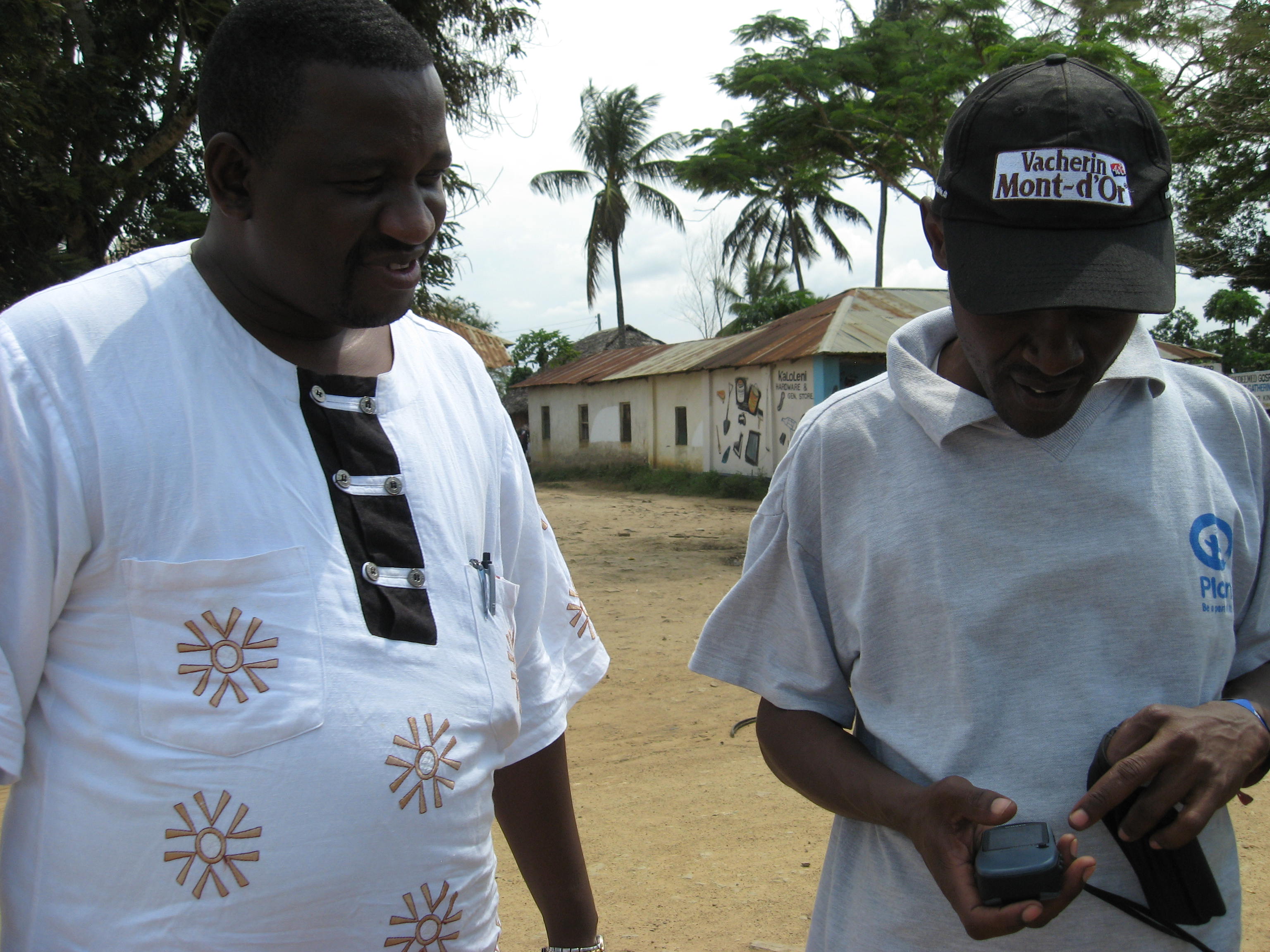
Salim (left) with Solomon in Kinango community.

As I mentioned in my previous post, Plan’s Kwale District office in Kenya has been a role model for Plan on how to integrate ICTs into community-led programming to help reach development goals and improve access to children’s rights.

I talked with Salim Mvurya, the Area Manager in Kwale, last week and asked him for advice for the tech community (0.15), corporations (1.19) and development organizations (1.57) who want to build in ICTs for moving towards development goals. He also comments on the importance of realizing that development is changing (4.43). You can watch the video below or at this link. If you’re not patient enough to watch a 6 min video (often I’m not!) or don’t have a strong connection, see the transcript below.

You can also view Part 1 of the video, where Salim gives some background on how Plan Kwale has been using ICTs in their programs since 2003 (1.11), shares ideas about the potential of new ICTs (3.42) and talks about some key lessons learned (5.03). Or you can read the Part 1 transcript here.

Transcript Part 2

ICTs and Development Part 2: advice for tech community, corporations and development organizations

My name is Salim Mvurya, I’m the Area Manager for Plan in the Kwale Development Area.

What advice can you give to outside tech people who want to develop something for a place like Kenya?

I think that to get an idea externally is a good thing, but that idea has to be blended with grassroots. It has to be contextualized, because there are very many good ideas which may not be appropriate at the community level. So I think my advice, for people who have ideas, who have never been to Kenya or Africa or in the field, is to leave the process to be home grown, so that the ideas that are coming from outside are building on existing issues, so that the ideas are also looking at what kind of skills and what can be done on the ground, and looking also at issues of sustainability. So it’s very important for somebody from outside the country to be sensitive to local conditions, local context, local skills and also looking at putting ideas that can be self-sustaining.

What is your advice for corporations who want to support the use of ICTs in development?

Corporate organizations who are interested in making a contribution to ICT for development, I think it is important that they foster and have partnerships with grassroots organizations that can really give them the issues because, OK, most corporations are very innovative, but working with grassroots NGOs and civil society that can give them the practical sense of those ideas, I think would be a good thing to do.

What is your advice for colleagues trying to successfully integrate ICTs into their programs?

One thing for organizations that are thinking of utilizing ICT is that you need local capacity. Like, if you have a field office, for example, Plan has development areas, in development areas, particularly for Plan, the ICT technical people should also have an opportunity to lead the ICT for development. What I have seen in the few years that I have been trying this is that it requires also the ICT function to be more available to communities. It requires the ICT function to also work around the program issues that the team is thinking, so it’s not just about looking at systems, looking at computers, but looking at how can all these ICT skills be able to help to develop programs. How can the ICT function be able to support innovations that are also going to enhance problem solutions at the community level. How can we use ICT to strengthen our interventions in the community?

And I must say from experience, that the ICT coordinator for Kwale has been more of a ‘program’ person, and I think that is why we are seeing all these gains.  I remember when we were designing the community-led birth registration one afternoon, we sat together and we were thinking, how can we put all these ideas together and include ICTs in it, so I think it’s about having an ICT function that is responsive to the program issues on the ground and not necessarily sitting somewhere and looking at softwares. You know, even designing a software that would be more responsive to what is happening on the ground, like looking at issues of child protection and seeing how can ICT help the response mechanism. Looking at issues of accountability and seeing how ICT can make a contribution to accountability processes in community.  So I think that is the kind of ICT that would be appropriate in the field, but also an ICT function that can learn. You know, learning from other people, but bringing the lessons closer home to see what can work, and what can’t work.

Any last advice for development organizations around integration of ICTs?

The message that I would want to give to stakeholders and development organizations is that a lot is happening in the world in terms of ICT.  Also recognizing that development is changing… ICT is providing opportunities for greater advocacy and accountability, and I think getting the interest for looking at all this and trying to say ‘what does this mean for development’ I think is very very critical. The youth constituency is emerging as very critical and they have interest in ICT. I know in Kenya youth have been trying different things, different groups, but I think ICT is providing an opportunity for them to strengthen accountability but also to be able to get skills that they can use as individuals that can also make a contribution in economic development.

Related posts on Wait… What?

Salim’s ICT4D advice part 1: consider both process and passion

Youth mappers: from Kibera to Kinango

A positively brilliant ICT4D workshop in Kwale, Kenya

Is this map better than that map?

Modernizing birth registration with mobile technology

Read Full Post »

At last week’s workshop in Kwale, we had the good fortune to have 4 folks from Map Kibera with us to train us on GSP and Open Street Map so that we could support youth in 3 districts where we’re working on the south coast of Kenya (Kwale, Kinango, Msambweni) to map their own communities. Jamie Lundine and Primoz Kovacic are Map Kibera staff, and Kevin Otieno and Millicent Achieng are youth who are trained on mapping. See the video above where Kevin and Millicent talk about the experience or watch it at the link here.

Kevin Otieno from Map Kibera

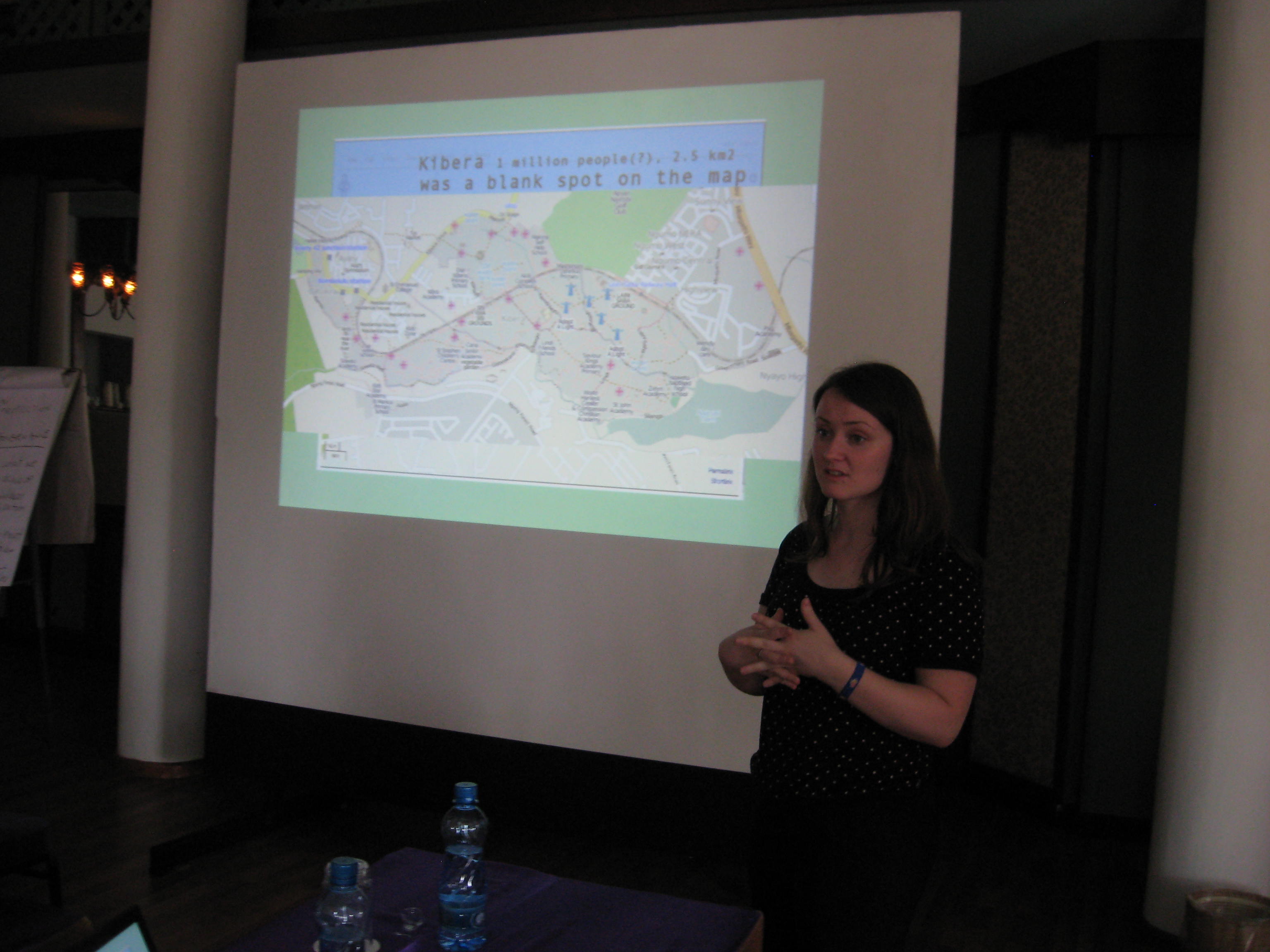
Both Kevin and Milli have been working with the Map Kibera staff since October, mapping out different areas in Kibera. For our introduction to Map Kibera, they started us off with a general overview of Voice of Kibera.

Kibera was a blank spot on the map (just like Kinango). (Jamie Lundine)

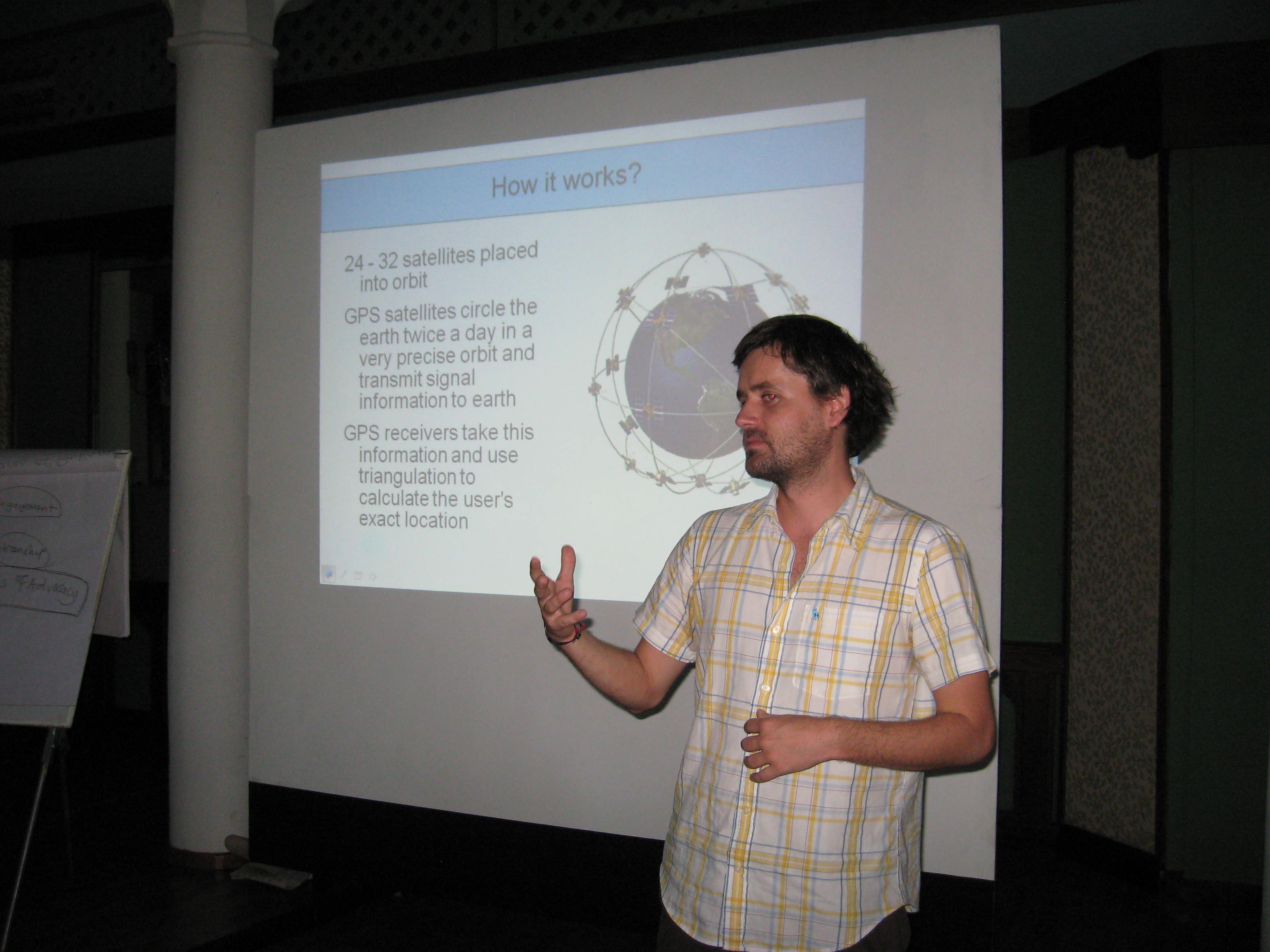
Jamie continued on with an overview of GPS and the Map Kibera project.

How GPS works. (Primoz Kovacic)

Primoz gave us the details on using the GPS devices and Open Street Map.

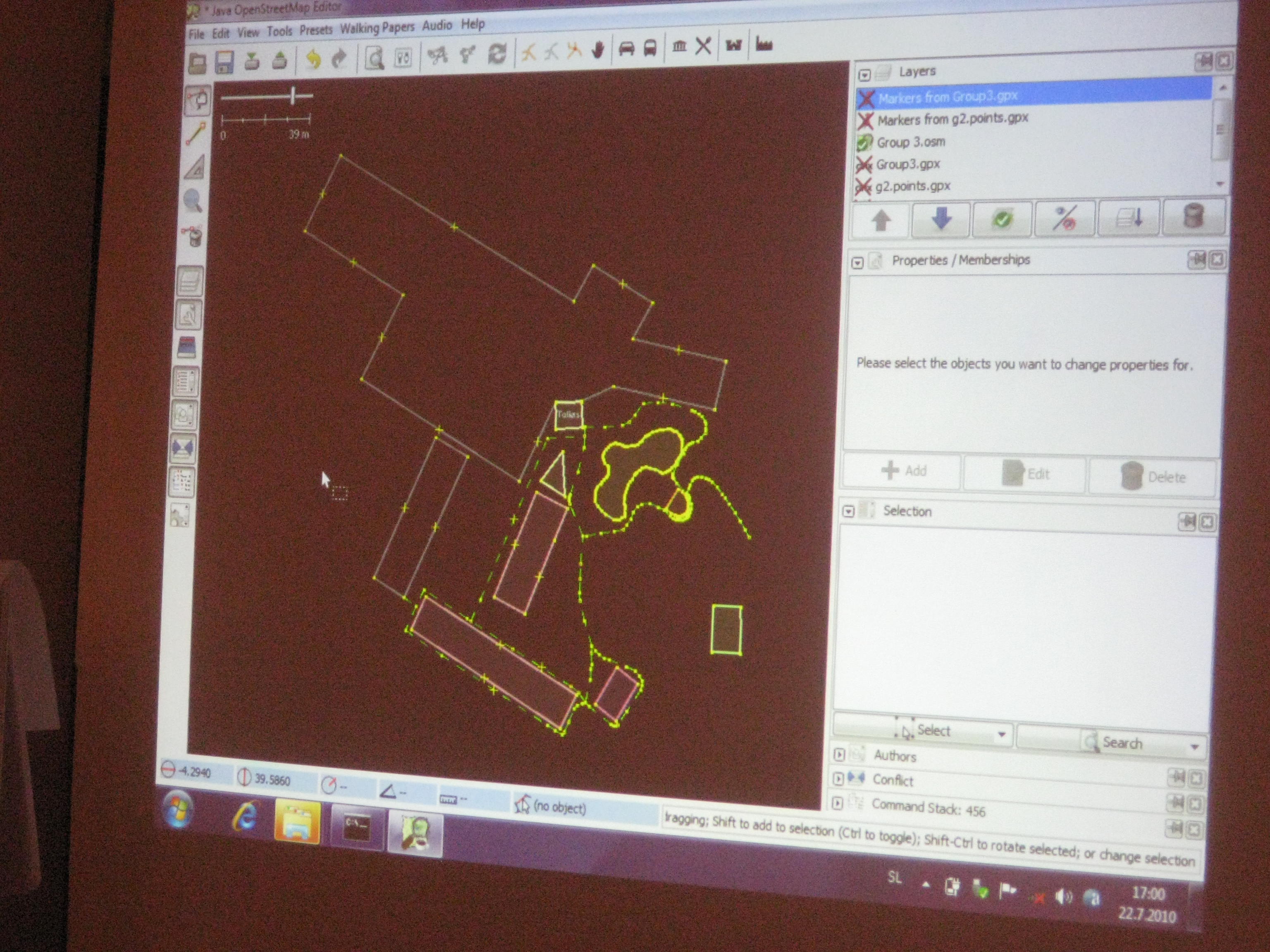
Hotel Kaskazi LTI Diani is now officially on the map

We practiced by mapping out our hotel, and adding it to Open Street Maps.

Then we went to Kinango District to start making the community map there. We met with the District Official and George, the District Youth Officer, explained why we were there. The DO said he’d heard good things about Map Kibera, and he ‘wanted to meet some of those youth mappers’. He welcomed us to move around the community.

The 4 teams did the first piece of the map, and will continue on with it in the future in Kinango but also in Msambweni and Kwale. The maps can then be used for different purposes, such as looking at existing resources and missing resources, or resource allocation, social auditing (eg., the government said that they built something here but it doesn’t seem to exist), tracking and responding to child protection issues, etc.

In addition to that, the arts and media content that youth produce as part of the project will have a much nicer digital map to sit on than what we currently have available… practically no information exists on digital maps about these 3 areas.

Here’s a video about the community mapping. If you can’t access, try the link here.

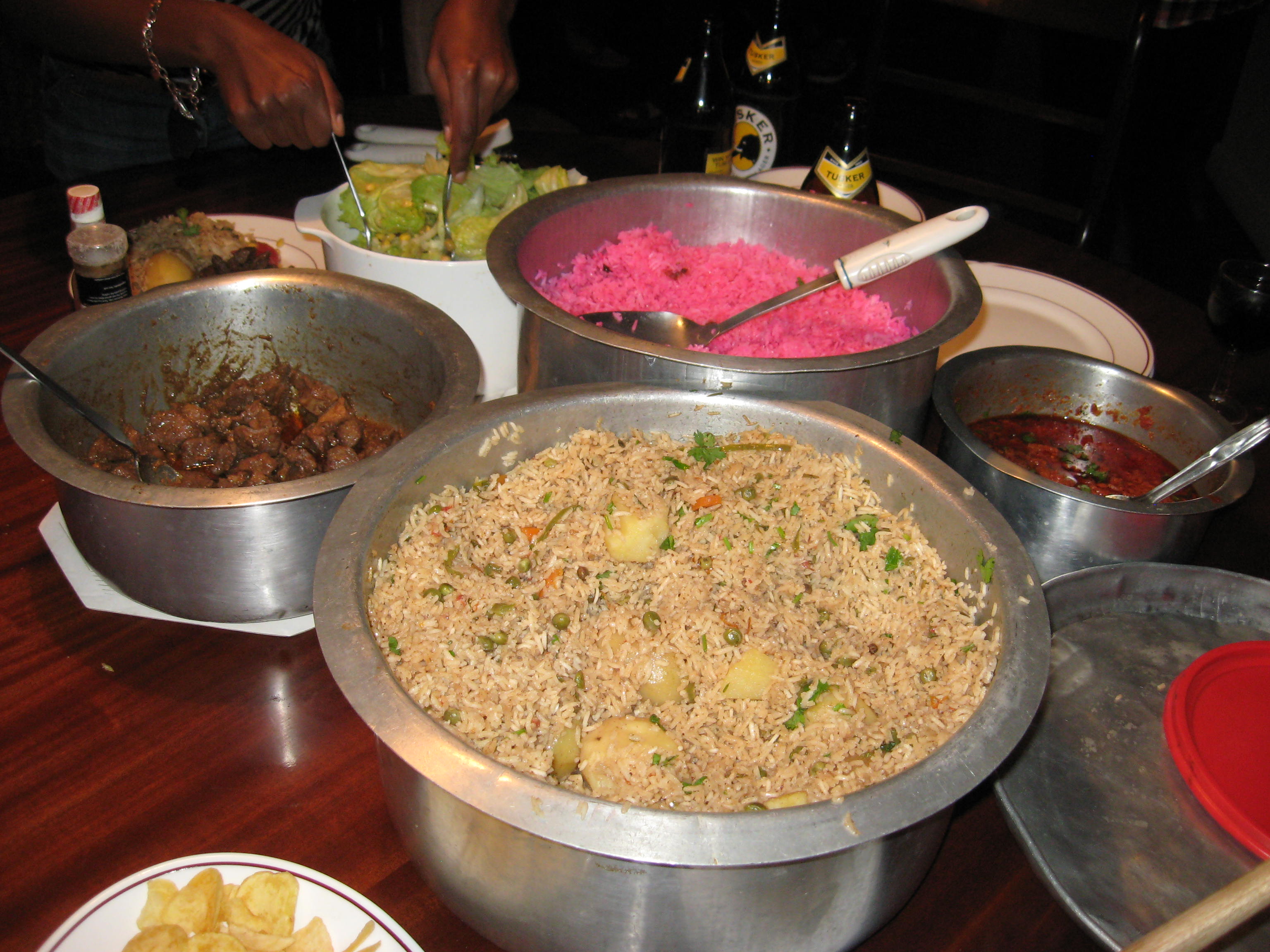
I had the pleasure of attending a Nairobi party on my last night in town and meeting up with Mikel Maron and Erica Hagen, who make up the rest of the Map Kibera team. I also ate some really bright pink rice…. yum….

If cotton candy were rice....

Related posts on Wait… What?

A positively brilliant ICT4D workshop in Kwale, Kenya

Salim’s ICT4D advice part 1: consider both process and passion

Salim’s ICT4D advice part 2: innovate, but keep it real

Is this map better than that map?

ICT4D in Uganda: ICT does not equal computers

Read Full Post »

Nothing to do with the topic of this post, but the Kwale coast is gorgeous.

Last week I was in Kwale, at a Plan Kenya hosted workshop as part of the Youth Empowerment through Technology, Arts and Media program. The team at Plan Kwale has been pointedly using ICTs in their community development programs since 2003 (not counting email and Internet of course) when they began working with radio and video as tools for raising awareness about children’s rights.

It’s really impressive to see how they’ve moved forward with very strategic ideas for integrating ICTs to help reach programmatic and development goals, especially in the areas of youth and governance, universal birth registration, and child/youth-led advocacy around rights and protection issues.

Over the 6 day workshop, the main things we wanted to do were:

  • look at the development context in Kwale, Kinango and Msambweni Districts (South Coast areas where Plan operates via the Kwale Office)
  • better understand the perspective of youth in the 3 districts
  • remind ourselves of rights-based approaches to community development
  • discuss youth issues, governance, advocacy, violence against children and gender within the local context
  • look at the ICTs currently being used by youth, communities and Plan in the Kwale Development Area
  • share and discuss new social media and ICT tools and ways they can be used
  • practice using new social media and ICT tools and see if they can be useful and sustainable in the 3 districts
  • determine next steps for integrating social media and new ICTs in specific local initiatives and plan for how to build on them in Plan Kenya’s overall work

Some elements that made the week positively brilliant:

workshop participants

Engaged and committed stakeholders

We were a group about 20, including staff and university student interns from Plan’s Kwale and Kilifi District Offices and Plan’s Country Office in Nairobi; Government District Youth Officers (‘DYOs’) from the Ministry of Youth, Sports and Culture; Youth Council members from Kwale, Kinango and Msambweni; 2 staff from Map Kibera and 2 youth mappers from Kibera.

This mix meant that we had a variety of perspectives and opinions, including those of youth from local communities, partner organizations, local government, frontline staff, protection and governance technical advisors, ICT managers, and senior level program managers. This helped to ensure that we were grounded in reality, technically and thematically sound, able to cross-pollinate and integrate new ideas with solid experience and practice, and take decisions immediately forward to a higher level.

Local partners and youth-youth networking

Peer-peer learning and exchange among all the participants was a big plus. Plan and Map Kibera have very similar visions and values, yet each has its own area of specialized technical expertise and experience.  The youth participants from local councils from the 3 South Coast districts and the youth mappers from Kibera brought different perspectives into the workshop which enriched the discussions.  We all learned a lot from each other. Combining expertise as partners brought the workshop to a whole new level, and will help to ensure that the efforts are sustainable and can be built on and expanded. The youth in Kwale can now extend their skills to more youth in their communities, the youth mappers from Kibera can take home new ideas to improve their work, the university-level interns gained practical experience, and the buy-in from the local government’s District Youth Officers (who manage government funds) in the 3 participating districts can help provide the necessary support to broaden the efforts.

Flexible workshop methodology

We had certain goals that we wanted to achieve and we were clear on that, but we let the agenda flow. We started by taking a deep look at the local context and resources. We heard from local experts in the areas that we wanted to focus on (youth and governance, child protection) as well as community youth and local authorities. We spent time getting to know some new tools and discussing the pros and cons of using them.

Hands-on with FrontlineSMS

Hands On Work

We had practical sessions and hands-on work on blogging, FrontlineSMS, Ushahidi, Map Kibera, and mGESA (a local application of the mGEOS mobile platform co-developed by Plan Kenya, Plan Finland, University of Nairobi and Pajat Management and being piloted in Kilifi).

This was important for helping participants feel confident about doing some of the work once the training team was gone. I imagine however that more practice will be needed during some follow up sessions, as most of the participants don’t have regular computer and Internet access for enhancing their skills on a daily basis with additional practice and exploration.

We spent one day mapping our Hotel on Open Street Maps, and another day in Kinango, mapping specific points in 4 teams.  Lessons learned during hands-on work included the importance of engaging and involving the community ahead of time, so that rumors about why people are mapping the community don’t fly. In my group, for example, we were moving around with George the District Youth Officer from Kinango. Someone that he ran into joked to him “Oh, now Kinango is going up for sale!”  A joke, but nonetheless if people don’t know why we were mapping, this or other rumours can quickly spread. (See the video about mapping in Kinango at this link and the background blog post here.)

End goals + new tools + back again

By starting with people’s expectations for the workshop, analysis of the local context, and an understanding of the goals that youth and staff wanted to achieve together, we could be sure that we stayed true to where we wanted to end up. At the same time, by learning about new tools, things that weren’t possible before became imaginable and people started to innovate and mix their existing knowledge and experience with some new ideas.

Combining the two, and having a good variety of perspectives in the room and a lot of space for discussion and practice means that next steps will be more achievable and sustainable, because people are clear and agree about where they want to go, and they feel capable of incorporating some new tools and ideas to get there.

The tools

We explored a number of new(ish) tools at the workshop. They had been identified over the past couple years due to their use by Plan or other organizations in areas such as: community development work, violence tracking, advocacy, governance and social auditing.  We talked about mobile phones, email, Internet, Facebook, Hi5, Google search and Google maps. We did a quick overview of Voice of Kibera, use of GPS, Open Street Maps, FrontlineSMS, Ushahidi, the YETAM project, the PlanYouth website, and a Plan pilot project in Benin using SMS to track violence against children.

The first day, the context analysis was very focused on youth and governance, transparency and social auditing, so we pulled out the 10 Tactics video by Tactical Technology Collective (which @hapeeg had given to me a couple days earlier). This video series talks about 10 tactics for turning information into action. It really sparked ideas among the participants for how they could use social media and ICTs in social accountability work and human rights/child rights work.  Map Kibera partners also shared a tool developed by SODNET (SMS for social auditing of the Constituency Development Fund).

We talked about the use of mapping and SMS in child protection work. One of the main child protection issues in the south coast area is the distance that a child, girl, family has to travel in order to report an abuse. Women’s lack of economic power, inability to own property and the importance of marriageability also mean that often women and girls feel unable to speak out or protest abuse when it’s happening. It’s still not certain what role ICTs can play in this context given the risks involved to those who report, but Plan’s child protection point person, Mohammad, is planning to host a series of meetings with local child protection authorities to discuss possible ways forward.

Digital mapping was immediately cataloged as an important tool for identifying resources, advocating for services and holding government accountable through social auditing. It was also recognized as a potential income generator once areas, shops and local businesses could be added to an on-line map, or if youth could purchase GPS units with funding from the District Youth Office and charge for their GPS services. George, the District Youth Officer for Kinango talks in this video about how mapping can be useful to the Kinango community, even if most members don’t have access to computers and broad band. (Click the link or watch below)

Information and communication gap analysis –> ICT integration plans

ICT integration for youth and governance program

Early on in the workshop, we worked in 2 groups to analyze the goals for the Youth and Governance and the Child Protection programs that Plan is supporting in Kwale. The groups discussed the information and communication gaps that needed to be filled in order to move towards the goals of the 2 initiatives. We looked at what ICT tools might best help reduce the gaps, from existing traditional tools (like meetings, face-to-face advocacy, drama, town criers, radio) to those new(ish) tools that we had discovered (see above paragraph) that might be useful to try out given the goals in the 2 key areas. The groups revisited this gap analysis on the last day after having had more hands-on use of the different tools and turned the gap analysis into an action plan.

ICT integration for child protection programs

Management buy-in and leadership

While the 2 groups worked on local action plans for integrating ICTs into their work, senior management from Plan’s Kenya office created their own action plan for how to build on the workshop experience, engage mid-level managers and other key staff in ICT integration, further develop partnerships and solidify cross-cutting incorporation of ICTs into Plan’s work in Kenya. The Kwale and Kilifi program units have been innovators within Plan for several years. Learning from, supporting and building on concrete work that they are doing on the ground allows for a solid and feasible country strategy based on reality. Having a strategy built from the ground up and with solid support and buy-in from national management means that there is less risk of donor led ICT funding, and more probability that new resources mobilized for ICT work go towards real needs and have better results.

Related posts on Wait… What?

Youth mappers: from Kibera to Kinango

Salim’s ICT4D advice part 1: consider both process and passion

Salim’s ICT4D advice part 2: innovate, but keep it real

Is this map better than that map?

ICT4D in Uganda: ICT does not equal computers

Read Full Post »

Youth in Ndop, Cameroon

For the past few years I’ve been supporting the Youth Empowerment through Technology Arts and Media project (YETAM) in several countries in Africa.  The last few weeks I was in Cameroon, where the initiative is expanding to new communities, based on learning from last year’s work in Okola.

The project

The project uses technology, arts and media to spur youth engagement in the community development process and youth-led actions around challenges youth identify in their communities. In the process they think about their personal and community strengths and resources, develop skills for problem solving, team work, research and investigation, and get training on how to use some different ICTs (information and communication technologies). They also build confidence and self esteem and learn how to bring up different issues in their communities and involve their peers, families, local authorities and local leaders in actions to address them.

Audience

The main ‘audience’ for the arts and media is the communities where the youth live and nearby communities. Some of their teachers, parents and local leaders also take part in the project and related training. This helps youth to build up support for their agenda. The arts and media is aimed at engaging communities in dialog and discussion that eventually leads to positive change.  Youth often have opportunities to participate in and use their new skills and their arts and media to advocate at national levels as well. Via the Internet, the youth’s voices are amplified to also reach their global peers and decision makers. For example, the YouTube site for the project has over 100 videos made by youth over the past 2 years.

Youth drawing on issue of water

Actions

Last year, the youth in Okola identified poor quality drinking water as a key challenge. They got the community moving to restore a damaged and contaminated spring bed and improve the water quality (without external funding).  This year we’ve incorporated a stronger focus on prevention of violence and gender discrimination because those were the themes that emerged most heavily across all the participating countries in the past 2 years of the project.  We hope the youth will improve their analytical skills around these areas and begin to look at these issues in more depth, strengthen their understanding of the causes of violence and gender discrimination, and develop strategies for overcoming them.

Process

The whole process starts when staff begin discussions about the project and its goals with interested local communities and youth. It’s a dialog and negotiation process, aimed at building local ownership and partnership for the initiative. Staff identify local partners skilled in the areas of technology, arts and media to accompany and support the process.

Staff and partners learning to use GPS for Open Street Mapping

TOT

A 1-week training of trainers (TOT) ensures that everyone is on the same page with regard to the project objectives.The TOT also helps deepen staff and partners’ understanding of some of the issues such as gender and violence, and is an opportunity to build skills on new ICTs that can be used in the project.  This year, for example, we had a session on GPS and OpenStreetMap because we want to add digital mapping to the toolbox to complement hand-drawn mapping, since both are of value to the work we are doing. (Shout out to @billzimmerman and @mikel for pointing us in the direction of Ernest, our fabulous GPS and OSM trainer from Limbe).

Critical questions

At the TOT, we discuss some of the critical questions in a project like this, such as:

Whose media? The arts and media created in the project should belong to the community, not to the funding organization or the arts and media partners. This has connotations then in how it is attributed and copyrighted, and who keeps copies of it, and what it is used for. The best way to manage this seems to be to see organizations and funders as ‘sponsors’ of the project and to ‘brand’ the media as such (this project was funded by xxx and does not represent official positions of xxx).

My personal bias is that the media and any web associated with the project should not carry an institutional logo or be hosted on an institution’s website, but should be established and managed locally using free tools like WordPress and YouTube with support from partner organizations.  I think that we should be looking at these kinds of initiatives as youth and community capacity building not as an institutional branding opportunity.

A middle ground could be that the media is ‘owned’ by all the involved partners and all can use it to promote their own objectives, or that some of the media supports an institutional position and that media is put on an institutional site, and other media can be created by the community for its own purposes, and hosted/posted on free sites like the ones I mentioned. This aspect can still be a little bit tricky, if you ask me.

Whose agenda? The agenda should be built by and belong to the youth and the community. They are not making promotional materials for us or the local partners. We also should not be censoring media.  This is an issue sometimes when the position of the community does not follow institutional positions.  This can be addressed by resolving the issue of ‘whose media’.

Which media? The project aims at building skills in various media forms. The primary audience is local, and so we help youth learn to select their media form by thinking about the primary audience’s access and media habits or traditions. Often painting, drama, newsletters, comedy, poems and singing, radio, and video are more effective than say YouTube and blogging for getting a message across to local community members who may not have electricity and/or Internet. Digital media serves a purpose, but for a different audience, normally at the national or global level.  In addition, sometimes one tool is better than another for addressing a particular topic, for example, violence may be difficult to portray on a film without identifying the person who was mistreated and putting them at risk of retaliation.

At the same time, the thing that draws a lot of the youth into the project is the opportunity to learn computer skills, to manipulate and manage a camera, to go onto the Internet. So we bring these tools in as well to build those skills in young people, even though they may not have Internet access on a daily basis. We also ensure that youth have access to the tools and equipment they need to continue making digital media and accessing the Internet and computers by working with schools and partners on an agreement for owning and managing the equipment and supporting youth to use it.

Media for what? We all know that kids can make amazing arts and media and that they can learn to use computers and cameras and mobile phones without a problem. So what? The goal of the project is what children and youth learn in the process of making that media, what skills they build, and then what they actually do with their skills and their art and media that counts, what changes do they achieve for themselves and in their communities? How do they generate dialog while making the arts and media and/or how do they use their final ‘products’ to push for positive change.

Adapting to the local setting

During the TOT, partners and staff create a detailed plan for how they will train the 60 or so participating youth on technology, arts and media over a focused 2-week period and beyond through refresher training and hands-on work. We’ve set the goal of 30% theory and 70% practice to help guide partners and facilitators as they prepare their sessions. The goal is not training professional artists, journalists and technologists – it’s using arts, media and technology as tools for youth participation, action and advocacy.

Mercy presents the youth's map

Mapping

To identify the themes that the youth will focus on, we facilitate a participatory mapping process. The youth create a base map of their community and discuss the community’s history and what makes it unique – they create their community profile.

Then they identify community resources and risks based on the 4 categories of child rights:  survival, development, participation and protection. In other words, they identify what exists currently in the community that supports children to survive and develop, and how the community currently protects children, and what spaces children currently have to participate.  They then look at where those 4 categories are not doing so well, and where children are at risk.

Youth, parents and local authorities discuss the map

The map is shared on the first day of the youth workshop and discussed with participating teachers, local authorities and parents in order to generate additional input and to get buy-in from the adults.  In small groups and plenary, they together prioritize the issues and decide which ones they will focus on during the workshop and beyond, using arts and new media tools. In follow up sessions, they will also make a digital map of their area for uploading to the Internet, and their arts and media work will be uploaded as points on that digital map. The digital map and the hand drawn map bring distinct benefits to this kind of process.

I love mapping. It’s a really interesting process, because when you start by looking at resources and when you are working with youth, so many things come out that would not come up if you came in and asked about needs or problems and only worked with adults. Communities are used to NGOs coming in to ask them what they need, to train them to see only their problems and to feel like victims, and to then expect the NGO or external agent to ‘resolve things.’ If you start by identifying only needs and problems, there are so many things in a community that will be missed. I notice that youth are not as well-trained as their parents in playing the victim. They are much better at talking about their community and what it means or holds for them than their parents are. When I show up as an outsider, they often want to show me beautiful places, special places, things they have and are proud of, not their needs and problems.

Some of the challenges youth identified and will work on

The real work

After the workshops comes the real work.  The partner organizations, staff, teachers and community leaders who are involved support the youth over time to continue their learning in the different areas, to do refresher training in areas they didn’t fully catch during the first round, to generate dialog in the community around the themes youth have identified, and to work on the issues they have identified through organized youth-led actions and advocacy at different levels and engaging decision makers at the local, but also district and national, and sometimes even global levels.

This is where the real change happens and is the real heart of the initiative.

My Cameroonian colleague told me one day ‘This project is like a catalyst in my body.’ It has motivated and driven her to learn new skills and take on new challenges, to push herself to new levels to achieve the goals set out. I’ve seen it have the same effect on the youth and on myself as well. In the end, that is what we want to achieve — motivated and engaged people, working together to make positive change in their communities and beyond.

Resources

This morning I came across this toolkit ‘A Rights-Based Approach to Participatory Video Toolkit’ by Insight, and I absolutely love it. It pretty much spells out what we are doing (though we had nothing to do with writing it up), and confirms a lot of the hunches and ideas that we’ve had while developing the program. I highly recommend it if you are working on rights and media.

Read Full Post »

Bamenda, Cameroon

Based on my last couple of posts, apparently this week I’m a little hung up on privilege and position.

I’m in Cameroon to support staff and partners with some training. Today we drove from Bamenda out to the community where we’ll be working. We needed to do the last bit of the arrangements, greet the community notables and school principal, and see the center where we would be having the training to get a sense of how we would set things up for Monday.

Ride out to the community, near Bamenda Town

The community is about an hour’s drive out on roads that curve through green mountains that cover over with clouds and fog from dusk until the sun burns them off mid morning. This part of Cameroon has got to be one of the richest, most fertile places I’ve ever been to.

Our meeting was at the school, and I knew once we drove up and I got a peek through the school windows, that I was going to have to sit up front on the stage at the important people’s table and give a speech. Damn. There was no way around it.

This is what it feels like when you have to sit up there:

On the plus side, experience tells me that after a couple days at the training it will feel more like this:

The kids and the community are super excited about the workshop.  The youth sang a choir style welcome song that gave me chills. It took me back to the days when I used to spend a lot of time accompanying foreign delegations to communities. This welcome was one of the finest. It’s easy to see why visitors feel so special when they go to communities in places like Cameroon.

On the drive back we stopped along the road, near the palm wine huts and kola nut sellers, for fresh boiled peanuts in the shell and roasted corn. The sun set and the fog settled in for the night as we carefully made our way back to Bamenda in near zero visibility.

I can’t wait till Monday when we move from town out to stay in the community at the training center.

On days like today I wonder what, exactly, we are talking about when we say ‘development’.

On the surface it sure seems like people up in these mountains have it pretty good.

Related posts on Wait… What?

Shotgun

Privilege

It’s not a black and white photo

Read Full Post »

« Newer Posts - Older Posts »