Feeds:
Posts
Comments

Posts Tagged ‘participation’

The 55th Commission on the Status of Women (CSW) happens in New York City Feb 21-25, 2011. For me, the most exciting thing about the event is that several girls from some of the countries where we are working (Canada, US, Finland, Cameroon, Sierra Leone and Indonesia) will be participating and speaking. This aspect of our work – helping to bring young people’s voices into these large influential forums – (when done properly) can be very effective at bringing a reality check to the ivory tower and helping influence decision makers at the very highest levels.

This year’s CSW is especially interesting to me since I work in the area of ICTs, and the theme of the CSW is:

“Access and participation of women and girls to education, training, science and technology, including for the promotion of women’s equal access to full employment and decent work.”

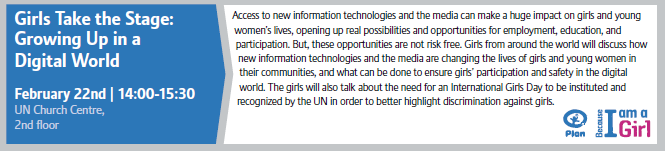
The girls will be presenting at the Girls Take the Stage: Growing up in a Digital World on Feb 22nd:

I’ll be presenting with Fabiola from Cameroon at the Empowering Girls: Education and Technology” session on February 23.

I’ll also talk at a panel-workshop hosted by the Buddhist Tzu Chi Foundation on Tuesday Feb 22, from 10-11.30, called “Breaking the Cycle of Poverty of Women and Girls through Education and Training,” on the 2nd floor room of the CCUN (Church Center of the UN).

Update: Ika one of the girls from Indonesia, will speak at a panel on Commercial Sexual Exploitation and the Girl Child: A Human Rights Approach at the Main Auditorium, Salvation Army Social Justice Center, 221 East 52nd St between 2nd and 3rd Ave, on Feb 24th from 2-3.30 pm.

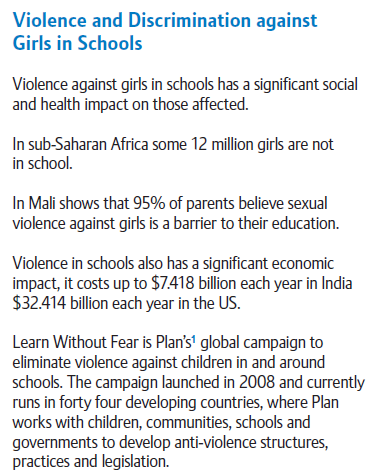
Update: Lil Shira from Cameroon will present on Violence and Discrimination against Girls in School, along with Marta Santos Pais (UN Special Representative to the Secretary General on Violence against Children) and others on Feb 22, from 16-17.30 at UN Church Center, 777 United Nations Plaza, Drew Room, Ground Floor.

Join us at the some of the sessions or come for an evening with the 21+ crowd at #ICT4Drinks Feb 23rd at 6 pm at Me Bar.

We’re trying to interest the girls in tweeting during the CSW on the @plan_youth account and to blog at  http://plan_youth.tumblr.com, so check it out as of this Monday. (We’ll see if they are willing or not!)

You can follow the events on Twitter at the hashtag #CSW55.

Read Full Post »

When people tell their own stories and take photos of themselves, the results are quite different from when outsiders bring in their stereotypes and their agendas.

I love love love this photo series by youth in Croix des Bouquets and Jacmel.

In October, 2010, Plan commissioned Natasha Fillion, a Canadian photojournalist based in Port-au-Prince, to train and work with 22 teenagers to document their own lives in their own home, neighborhoods and schools. The youth, ages 14-19, got a crash course in photography and were given a digital camera and sent out ‘on assignment’ in their communities. Their brief was to cover topics such as home life, education, leisure, friends, everyday Haiti, and anything about which they were passionate. The photos were taken over a period of 2 weeks.

Fillion commented ‘I go out and I’m covering demonstrations, violence and destruction but there’s a whole side of Haiti that the media, the whole world doesn’t get to see, and I told the students — this is your opportunity to show people what Haiti is really like. These are photos that tell the story of Haiti as a whole, not just news.’

February 3, 2011, update:

Interview with 2 of the youth photographers and Natasha Fillion.

Related posts on Wait… What?

Read Full Post »

Bamboo Shoots training manual

I like to share good training guides when I come across them, so here is a quick summary and a link to Bamboo Shoots. It was originally created by Plan in Cambodia.

Bamboo Shoots is a training manual on child rights, child centered community development and child-led community actions for facilitators working with children and youth groups. You can download it here.

Bamboo Shoots was developed to: Increase children’s understanding of their rights as defined by the United Nations Convention on the Rights of the Child (UNCRC); raise children’s awareness of their rights and build their capacities to claim them; create opportunities for children to recognize, identify and prioritize issues and problems or gaps in relation to child rights violations; and provide opportunities for children to influence agendas and action regarding identified and prioritized child rights violations.

Bamboo Shoots takes complicated concepts and breaks them down into easy language and engaging, interactive sessions. It also offers good resources and background material for facilitators so that they can manage the sessions well.

Part One:

I like this manual because it starts off right in the first chapter with the importance of setting the tone and the context for good child and youth participation. It provides ideas on selecting participants and facilitators, and gives a description of a good facilitator. It provides recommendations on the setting and practical considerations for managing a workshop with children, as well as good paragraph to help think through when and when not to include other adults in the training.

The guideline goes through the 6 principles for making child participation a reality:

  1. Non-discrimination and inclusiveness
  2. Democracy and equality of opportunity
  3. Physical, emotional and psychological safety of participants
  4. Adult responsibility
  5. Voluntarism, informed consent and transparency
  6. Participation as an enjoyable and stimulating experience for children

It shares Plan’s code of ethics on child participation and important steps to follow in working with children, as well as tips on how to establish a good working relationship with children, how to help children learn and develop their potential, how to help children build self-confidence and self-esteem, and how to encourage children to develop a responsible attitude towards others and a sense of community. There is a section on how to keep children safe also and an explanation of a facilitator’s ‘duty of care’.

A last section of part one lists common facilitation techniques and tools, such as: role-play, working in pairs and groups, idea storming, whole group discussion, questioning, projects, buzz sessions, drawing, photographs, video, word association, recreating information and more; and gives ideas on when they are most useful.

Part Two:

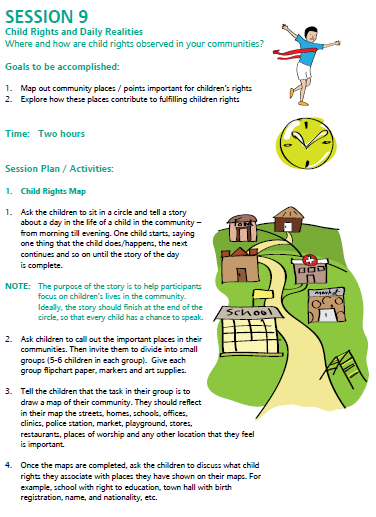
Section 9 on community mapping

The next section has very complete sessions on:

  • the concept of rights
  • the history of human rights, and international treaties on rights
  • children’s rights as human rights
  • duties and responsibilities in relation to child rights
  • making sure children are involved
  • child rights and daily realities and making a child rights map
  • gaps in fulfilling child rights
  • setting priority problems and violations of child rights
  • creating an action agenda and proposed solutions to the gaps identified

Each session comes complete with a pre-training assessment, reading material for facilitators and handouts for participants.

Part Three:

The last section of the manual helps facilitators take children through the steps to child-led community action, including children’s participation in all the program and project cycles: assessment, planning, implementation, monitoring and evaluation.

Needs-based vs. Rights-based

It also explains Plan’s rights-based child-centered community development approach, the foundations of that approach, and the difference between needs-based approaches and rights-based approaches. It goes on to cover planning and supporting child-led community action.

The last section of the guide offers a list of resources and references.

For anyone working with children, or even anyone looking for an excellent comprehensive community training package on rights and community-led action, I really recommend checking out Bamboo Shoots. Whether you are working through media and ICTs or using more traditional means for engaging children, this is a great guide on how to do it well from start to finish. I’ll be referring to it often.

Additional Resources:

Minimum standards for child participation in national and regional consultation events

Protocols and documents to help ensure good quality child participation

United Nations Convention on the Rights of the Child

Insight Share’s rights-based approach to participatory video toolkit

Related posts on Wait… What?

Child participation at events: getting it right

Community based child protection

Child protection, the media and youth media programs

Read Full Post »

Salim Mvurya, Plan Kwale's District Area Manager

Plan’s Kwale District office in Kenya has been very successful in building innovative community-led programming that incorporates new ICTs.  I had the opportunity to interview Salim Mvurya, the Area Manager, last week, and was really struck by his insights on how to effectively incorporate ICTs into community-led processes to reach development goals and improve on child rights, child protection and governance.

In this video, Salim gives some background on how Plan Kwale has been using ICTs in their programs since 2003 (1:11). He shares ideas about the potential of new ICTs (3.42) and some key lessons learned since 2003 (5.03).

Watch the video to get the advice straight from Salim. Or if your internet connection is slow or you’re like me and you like to skim through an article rather sit still and watch a video, the transcript is below.

In a second video, Salim gives really astute advice to the tech community (0.15), corporations (1.19), and development organizations (1.57) on how to successfully integrate ICTs to enable good development processes. He also mentions the importance of moving with the times (4.43). Read the transcript here.

Transcript for Part 1:

ICTs and development Part 1: ICT tools for child rights, child protection and social accountability

My name is Salim Mvurya, I’m the Area Manager for Plan in the Kwale District. My core responsibility as an area manager is to provide leadersip to the Kwale team in both program issues and also operational issues within the organization. This week we have been here in a workshop where we’ve been focusing mostly on issues of ICT for development and particularly what we’ve been learning here is the issue of mapping. We’ve also learned Ushahidi. We’ve also learned from our colleagues in Kilifi on mGESA (a local application of mGEOS that Plan Kenya, Plan Finland, University of Nairobi and Pajat Mgmt are developing) and basically we have been looking at this workshop as providing opportunities for using ICTs for development, but more particularly for us in Kwale is the issue of child protection and youth governance.

How has Plan Kwale been using ICTs for issues of child rights, child protection and child participation?

ICT in Kwale has a bit of a long history and it’s because of the issues on child rights. Kwale has a number of issues. Child marriages, issues of violations of child rights through sexual exploitation, and child poverty. So the efforts to do media started in Kwale in 2003 when we rolled out our first video that was done by children at the time to profile some of the issues of child marriage. But more importantly in 2005, we began to think greatly how we can bring the voices of children to duty-bearers and at time we thought of having a children’s community radio.

Because of lack of experience, we were thinking maybe at the end of that year we could launch the radio station. But then it took longer than we envisioned because we needed to roll out a participatory process. Alongside the same time, we had ideas of community-led birth registration which was being done in one community based organization. But later we also thought about looking at how ICT can help us in moving that direction.

Then we also had this idea of inter-generational dialogue, where children and youth can sit with duty-bearers and discuss critical issues affecting them, so we began using youth and video there, children and video, and showing those videos in a community meeting where then people could discuss the issues.  Alongside the same time we were partnering with various media houses and also rolling out radio programs where people could listen and also foster some discussions on children.

So it’s been a long journey but I think what we are seeing is that we need now to consolidate the gains, the experiences and efforts so that we can have a more strategic approach to ICT for Development and this workshop basically provides us with an opportunity and a platform to think much more.

What potential do you see for some of the newer ICT tools for your work in Kwale?

I see great potential in some of the tools that have been learned here this week, more particularly to get information at the click of a button from the ground. We could use the tools to map out resources out in the community, to map zones where there are a lot of issues on child protection, areas where we have issues like low birth registration… There is great potential for the tools that we’ve learned here to assist us not only in planning for projects, but in issues of social accountability. For example if you map out the areas where we have projects for Constituency Development Fund you can easily see where we have projects that have been done well but where we also have projects where maybe communities will need to discuss much more with duty-bearers to be able to, you know, foster issues of social accountability.

What are your biggest challenges? What mistakes have you made?

One thing that we’ve been learning in the process… well, you know sometimes we have ideas that we think can work in the next week, like for example the children’s community radio when we were thinking about it we were thinking that it could take off in about 2 months. But what we learned is that there are processes to be involved. Communities have to be prepared well for sustainability. Children have to be trained, there needs to be capacity building. You have also to conform to government procedures and processes.

The same also with birth registration. We thought in 6 months we could send an SMS and get your birth notification, but what we have also learned is that it takes a process. It takes awhile. You have to get the government buy in.  You also have to work on software, where the government is having a critical input. Because, although it is a pilot, we also think that if it works well then it has to be replicated, so it has to conform with the thinking in government. Also, with the issues of youth and media, one thing that has to be very clear is that you have to get youth who are committed, so you start with a bigger group, and you end up with those who are passionate

So I think it’s very critical when somebody is thinking about ICT for Development that, one, you look at the context: is it relevant to that area? What kind of skills are needed? What kind of processes for sustainability? but also getting the passion. Getting people who are passionate to lead the process is also a very critical lesson.

Related posts on Wait… What?

Salim’s ICT4D advice part 2: innovate, but keep it real

Youth mappers: from Kibera to Kinango

A positively brilliant ICT4D workshop in Kwale, Kenya

Is this map better than that map?

Modernizing birth registration with mobile technology

Read Full Post »

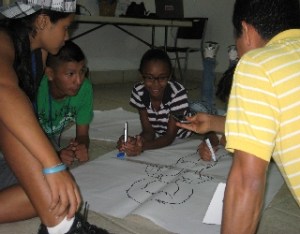
Group work at a regional consultation

Children and adolescent’s participation in decisions that affect them is key. More and more, decision makers are realizing that they need to consult with children when they are making decisions about children, meaning that children have more opportunities to weigh in on issues that impact on their lives.

Not knowing how to manage a good participation process or not listening to past lessons learned, however, can make it difficult for children and adolescents to take advantage of opportunities offered them to input into these decisions.

Children’s rights to participate

A child is anyone under the age of 18.  According to the UN Convention on the Rights of the Child (UN CRC), in addition to survival, development and protection rights, children also have participation rights.

  • Children have rights to be listened to, to freely express their views on all matters that affect them, and to freedom of expression, thought, association and access to information.
  • Participation should promote the best interest of the child and enhance the personal development of each child.
  • All children have equal rights to participation without discrimination.
  • All children have the right to be protected from manipulation, violence, abuse and exploitation

from the “Minimum Standards for Children’s Participation 10th draft”, written by Helen Veitch,*drawing on Articles 2, 3, 12, 13, 17, 19, 34 and 36 in the UN Convention on the Rights of the Child

What are the principles of participation? (Summarized from the above document)

An ethical approach: transparency, honesty and accountability

Adults involved need to follow ethical and participatory practices and put children’s best interests first. Because there are power and status imbalances between adults and children.  An ethical approach is needed in order for children’s participation to be genuine and meaningful.

A child friendly environment

The atmosphere should be safe, welcoming and encouraging.  Because in order for children to feel comfortable participating they need to feel safe and supported.

Equality of opportunity

Space should be ensured for those groups of children who typically suffer discrimination and are often excluded from activities. Because children, like adults, are not a homogeneous group and participation should be open to all.

Participation promotes the safety and protection of children

Child protection policies and procedures are an essential part of participatory work with children. Because organisations have a duty of care to children with whom they work and everything should be done to minimize the risk to children of abuse and exploitation or other potentially negative consequences of their participation.

Child participation in national, regional and global consultations

Children’s right to participate is key. However in practice, a safe and open environment for child participation at national, regional and global events can be difficult to ensure. It requires resources as well as a great deal of preparation.

Over the past several years, I’ve participated in some disappointing events where:

  • lessons learned about effective child participation and child protection were ignored
  • those tasked with ensuring child participation and protection were powerless to influence event organizers to ensure quality and safe participation
  • those organizing the event or sending children to it simply had no idea that there are standards and protocols and plenty of lessons learned that they should have taken into consideration.

Minimum standards for child participation

For example, back in 2005, several organizations in East Asia and the Pacific* collaborated to produce minimum standards for child participation in national and regional consultation events. These were initially developed for the UN Study on Violence against Children.

They offer a comprehensive overview of how to manage child participation and can be used as a guide for other national, regional or global events where children participate.  They should be considered whenever organizing, hosting or participating in an event where children are being consulted or their participation is desired.

You can have the most amazing and wonderful children present and the very best intentions, but fall very short of your goals of quality child participation because logistics and organization are poor and/or child participation and protection protocols are not followed.

What often goes wrong?

Child participation holds tremendous value, but when it’s not properly facilitated or supported; results can be negative on many levels, including:

  • Children are tokenized or used
  • Poor organization gets in the way of participation
  • Important opportunities are missed
  • Children become frustrated
  • Children are put at risk
  • Money and time are wasted

Oh, the things I’ve seen…

Mistakes those new to organizing events or supporting child participation in events often make:

  • Having singing and dancing in traditional costumes be the main role for children
  • Setting up totally new groups to participate in an event rather than working with existing groups
  • Not understanding the concept of ‘representativity’ and not ensuring democratic and fair selection processes of those children who participate
  • Not realizing (for global events) that the visa application process takes a very long time, and requires visa invitation letters and appointments in advance
  • Forgetting to get children their required vaccines
  • Not realizing that children may not have birth certificates or passports, meaning the visa process takes even longer
  • Not preparing children well for visa interviews, including the possibility that their visa request will be denied
  • Not allocating time and budget for travel necessary to obtain visas, permission from parents who do not live with the child (child trafficking laws often require this now) and other documentation
  • Not obtaining permission slips, medical histories, media releases from parents and/or not obtaining travel insurance for children
  • Not getting the above materials translated into a language parents can understand
  • Not having child protection policies in place and adhering to them
  • Not doing background checks on people who will be working with children
  • Thinking it’s OK to send children overseas without a chaperone, not budgeting for chaperones
  • Forgetting that not all children speak a major language like English, Spanish, Portuguese or French and will require translation of all materials before the event as well as constant translation during the event, and support following the event if they will continue to participate in event follow up
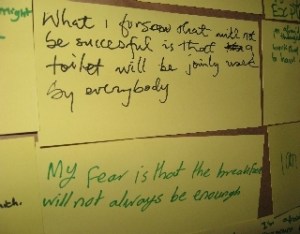
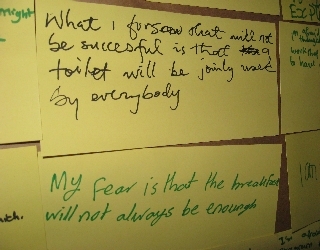
Children's responses on what they feared at an event.

Mistakes that even experienced child participation facilitators make:

  • Influencing too much on what children will say
  • Using children to promote the sponsoring organization or INGO’s agenda
  • Having children represent an NGO or INGO rather than representing themselves, their own groups or their communities
  • Having children wear NGO/ INGO t-shirts, caps and other branded items
  • Asking children from some countries (usually those from countries deemed ‘exotic’) to bring traditional costumes and share their culture, but not asking the same from other countries
  • Creating/building up ‘professional’ child participants and creating child star speakers
  • Relying on the same children all the time to represent because they have passports or visas or prior experience
  • Only bringing children who speak a major language or live in the capital to events
  • During sessions, not organizing group work in ways that facilitate communication across different languages
  • Sending any adult as a chaperone, rather than sending the best or the right adult as a chaperone
  • Not planning ahead on how children will be supported when they get back home to continue inputting into global networks and processes
  • Not ensuring a space for children to share their experiences with home offices and groups
  • Making children work long hours to fit everything in
  • Not giving children pocket money so that those with less means can also purchase small things for themselves or for family members
  • Housing children in fancy hotels with fancy food that they may not be used to; (not cooking enough good quality rice at lunch and dinner!)
  • Not realizing children may need to be shown how to use things like hotel showers, air conditioning, toilets
  • Not realizing that children may not want to sleep alone in a room
  • Not providing additional warm clothing for children if the conference climate is colder than their own
  • Not realizing that a trip overseas creates culture shock, children may feel lonely for their families
  • Not ensuring that children have the means to call home as soon as they arrive to an event and periodically during their stay
  • Not realizing that those facilitating child participation or working on child protection may not have the power to influence event organizers, especially if events are being organized in hierarchical ways with governments and high level committees involved
  • Not establishing at what point enough is enough, and children shouldn’t participate because conference organizers simply haven’t created favorable conditions, and children are put at risk or their participation will not be of good quality or have any real impact

Mistakes I’ve seen conference and event organizers repeat over and over:

  • Focusing on number of children participants rather than quality of participation
  • Not providing information with enough lead time for it to be translated and shared with children, or for good planning and selection processes to be done
  • Segregating children in parallel events where they don’t interact with adults
  • Not giving children space to lead sessions or engage with adults; offering them the last spot in the opening /closing speeches, and giving them a small percentage of the time that the adult speakers are given; or reducing children’s participation time because adults have gone over their allotted time
  • Patronizing children by clapping every time a child says something, or saying “oh that’s such a great idea!” not treating children respectfully as equals
  • Encouraging adults to get their photos taken with ‘exotic looking’ children in costumes
  • Not balancing the number of local participants and global participants
  • Not understanding that they need certain conditions to be available to fulfill child protection protocols (eg., children and adults need separate rooms; boys and girls as well as older/younger youth need to have separate rooms; the venue selection needs to have a measure of safety/security to prevent outsiders from taking advantage of any of the participating children, etc.)
  • Packing too many activities into the day and leaving children no time to rest
  • Not allowing any time for sight-seeing or recreation
  • Thinking all children have access to internet and computers to fill out registration forms, etc. and to participate in networks post conference
  • Not realizing that they need to listen to child participation and protection committees and adjust their ideas for their event so that children can effectively participate and are not put at risk
  • Thinking they can hire just anybody to manage child participation at the event
  • Not including a child participation/child protection point person in the organizing committee

So, what then?

I do honestly believe that children should participate and have a say in these issues, and that only by listening to children can decision-makers ensure that they are coming to the best decisions that benefit, resonate with, or have the best impact on children’s lives.

However unless proper organization, logistics, preparation and care are taken, these opportunities can be frustrating or a waste of an opportunity for everyone involved, and the validity of the efforts can easily be questioned.

Child participation needs to be taken seriously, not as an add-on or nice to have or cute to have. Unless and until regional and global events can ensure that this is happening, it might be a better investment to work with children at local and national levels.

Event organizers and child participation facilitators need to look at existing protocols, documentation, minimum standards and lessons learned and use them. Organizations shouldn’t be coming up with the same ‘lessons learned’ after every event and repeating the same mistakes at the next one. Surely we can do better than that.

What guidelines does your organization have? What mistakes have you made and learned from? What recommendations can you give? How can we get it right? Please share your thoughts in the comments section…

Download

Minimum Standards on Child Participation

Protocols and documents to use to help ensure good quality participation

*The following organizations participated on the steering committee that elaborated the Minimum Standards: UNICEF East Asia Pacific Regional Office, World Health Organisation, Office for the High Commissioner for Human Rights, ILO IPEC Asia and the Pacific, NGO Advisory Panel on the UN Study on Violence Against Children, Save the Children Alliance, Child Workers in Asia, ECPAT International, World Vision International APRO, Plan International, Terre des Hommes Germany, ASEAN Foundation.

Related posts on Wait… What?

Child protection, the media and youth media programs

Children and young people’s vision for a new Haiti

Read Full Post »
courtesy of bioweb.uwlax.edu

One of the best things about the Great Tshirt Debate has been the variety of voices and perspectives that are weighing in.  This one potentially misguided project was able to catalyze a huge discussion on the nature of ‘aid’.  Once again the power of social media to engage people in debate and dialogue was demonstrated.

There are a lot of angles to follow up on from last week’s blow up. There’s a lot to unpack and it goes much deeper than a conversation about t-shirts.  One thread I find particularly interesting is the use of social media and ICTs (information and communication technologies) for bringing greater accountability and generating input and dialogue around ideas for aid and development.

Christopher FabianOwen Barder and @Morealtitude wrote about this specifically in relation to the Tshirt Debate; and Duncan GreeneOwen Barder, Aidwatch,  Tim Ogden, and others in a broader debate about accountability, aid and development. Certainly there are many posts and discussions out there on this topic.

Some things that stand out for me in the aftermath of the tshirt discussion:

Broadening perspectives.

It’s easy to forget that we all mean something different when we use the terms ‘aid’ and ‘development.’ There is a big difference between emergency aid and longer-term development.  And there are countless theories and approaches and understandings of both of those terms  (Alanna Shaikh and Talesfromthehood have both written on that).  This was really apparent throughout the discussion last week and in the on-going commentary.

I’m still trying to sort out in my own mind the difference between the various aid and development theories, the perspectives of the ‘aid bloggers’ that I follow, and the frameworks of other people who were involved in the Tshirt Debate. People’s views are intimately linked with cultural, political, economic and religious worldviews, and varying levels of snark (which I have to say can be very intimidating) making it even more interesting.  Before Twitter and the blogosphere, I certainly didn’t have daily exposure and access to such an array of thoughts.  Score one for social media.

The elephant in the room.

All this access to all these perspectives and on-line debate and open participation is great for me. And for you. Because we read English and have access to the internet.

But there is a really big elephant in the room.  One that was lurking on the global conference call hosted by Mobile Active on April 30 and that is still standing around quietly as the discussions continue.  I’m talking about the voices and perspectives of the people that the 1millionshirts project was aimed at helping.

I would bet money that some of those voices would have said “I want a tshirt.”

There are a lot of possible outcomes when ‘beneficiaries’ and ‘donors’ actually talk to each other.  Like donors wanting to give t-shirts and people wanting to receive them.  Then what?  Most of those involved in aid and development and work with local economies can and have listed a myriad of reasons why handouts are not a good idea, but most also believe in listening to voices of ‘beneficiaries.’   It seems paternalistic to say that NGOs or businesspeople know best what people need.  What will happen when more donors and beneficiaries are using social media to talk to one another?  And what if NGOs or governments or business people trying to improve ‘developing country’ economies don’t agree?  Then what?  That’s going to be pretty interesting. For a taste of this can of worms, read this post and related comments.

Development education.

This brings me to thinking about the educational processes that contribute to good development results.  Around the world, people have been presented with hand-out and silver bullet ideas around development and aid for a long time. Donors need to be educated about effective aid and development, but communities do also.  People have been trained to gravitate towards one-off donations and charity mentalities, and need to learn why that isn’t actually very helpful in the long term. They’ve been taught that there is a silver bullet we just need to find. People have also been trained to take hand outs and see themselves as victims and need to re-learn how to take the reins and do for themselves.  This is true everywhere – people look for the easy way out. Consider how many people in the US for example prefer to get plastic surgery or take miracle diet pills and medications over adopting healthier lifestyles involving a good diet and exercise.  Complicated situations require integrated approaches and often need cultural shifts and behavior changes.  Those take time and effort and are hard to explain.  How does social media impact on or shift this in terms of aid and development, and in which direction is it shifting?

Barriers to social media participation.

Both #1millionshirts and Kiva were held up to a huge amount of scrutiny online via social media.  But again, who was scrutinizing, and who had access to the tools and means to participate in these widespread discussions?  It was not the people getting loans from Kiva or the eventual t-shirt wearers.  It was donors and ‘experts’.  I would hope that there are plenty of discussions happening about Kiva programs at local levels, in person, in meetings and in local media or newspapers. But these don’t normally make their way to the internet.

I don’t know Kiva’s programs well, but I would also hope that Kiva staff and/or partners, for example, are listening to that local input and using it to improve their programs on the ground to make them more useful to participants.  And I would hope that those discussions take place within a longer term education, training and relationship building process as with many NGOs.  This kind of input from and dialogue with program participants is every bit as important for adapting and improving programs and initiatives, and maybe more important, than all the public discussions on the internet…. as long as it’s being listened to and responded to, and as long as local offices are taking these messages up the chain within the organization, and as long as local offices also are being listened to and carry weight within the organization. What might be the role of social media there to move those offline discussions further within organizations and to educate, inform and engage the broader public and ensure that responses and changes are forthcoming and everyone learns from it?

There are still huge barriers to social media participation for many people in communities all over the world… not having electricity, computers, smart phones and internet, to start with. There are also barriers like language, literacy, age and gender based discrimination, hierarchies and cultural norms that limit participation in general by particular groups in discussions and decision making.  When working face-to-face, good organizations are in tune with the barriers and find ways to gather input from those typically left out of the discussion.  How can organizations use what they know about engaging more marginalized populations and apply it to a more creative use of social media to ensure that all voices are heard?  What resources and ICT tools would be needed to do that effectively?

Offline to Online to Offline

And how could more of the discussions that happen on the ground with communities, when programs are being designed, implemented, evaluated and re-designed; be shared in the open by those who are involved – whether participants, local bloggers, citizen journalists, NGO workers or others?  And how can the debates happening online make their way back to communities that are not connected? It would be amazing if more program staff and community workers were blogging and sharing their work and their challenges and accomplishments.  And if more organizational decision makers were listening to what their community workers or other staff who are blogging and tweeting are saying. And if more people participating in programs could share their viewpoints via the internet.  This would be useful to the global commons and would also help the fields of aid and development to improve.

How can we support more communities to have access to social media and ICTs as tools to participate more broadly? And how can community members be the owners and drivers of this discussion and input. How can we help bring voices from the grassroots to a broader public and also bring these broader public debates back to communities.  How can the access, language, literacy and cultural barriers be addressed?  There are some programs out there doing this, for example Global Voices Rising, MIT’s Department of Play at the Center for Future Civic Media, and the Maneno platform, but we really need more of it.

Youth.

I think as connectivity becomes less of a challenge, we will see the younger generation claiming spaces in this way. More organizations should be working to engage more young people in the development process and supporting them to access ICTs and social media.  When a consultation with children and youth was done after the Haiti earthquakes, for example, young people did not say that they wanted hand outs.  They said that they wanted to participate. They wanted to play a stronger role in the recovery and the reconstruction.  They said they wanted education, a voice in how things were to be done, decentralization.

Staff that I’ve worked with on youth and ICT programs in several countries have said that ICTs and community media are excellent tools for engaging youth in the development process and maintaining their interest, for supporting youth-led research and collecting opinions about community processes.  With advances in technology, these voices can reach a much broader and public audience and can be pulled into donor communications as well as used as input in the resource and problem analysis, program design,  program monitoring and evaluation processes.  Youth can access information previously unavailable to them which broadens their own views and helps in their education processes. They can also contribute information and images of themselves and their communities to the online pool of resources so that they are portraying themselves to the world in their own image as opposed to being shown by and through the eyes of outsiders.

In addition to the Tshirt Debate stirring up questions about good donorship, I really hope it stirs up the debate about the value of more local ‘beneficiary’ voices in aid and development discussions, and that it fuels more efforts to use, adapt, and develop social media tools and ICTs to support these voices to join the debate.

What about you?  What do you think?

Related posts on Wait… What?

Children and young people’s vision for a new Haiti

It’s not a black and white photo

Meeting in the Middle

Mind the gap

Putting Cumbana on the map: with ethics


Read Full Post »

I recently had the honor of leading a group of tech, development and gender folks in a discussion around Girls and ICTs at the Technology Salon.  The conversation revolved around 5 aspects I wrote about in an earlier blog post On Girls and ICTs:

  • Tension between participation and protection
  • Online behavior is an extension of, and a potential amplifier of offline behavior
  • Qualifying the digital divide
  • Girls’ involvement in developing and designing ICT solutions for their own needs
  • Research on Girls and ICTs

Check out the Technology Salon’s page for a round-up of our discussions!

Photo:  Informal evening one-on-one ICT time at a Youth Empowerment through Arts and Media (YETAM) project workshop in Cameroon.

——————-
Related post on Wait… What?
On Girls and ICTs

Putting Cumbana on the Map:  with Ethics
Being a Girl in Cumbana

Girl Power and the CGI

Read Full Post »

In early 2005, following the Tsunami, I collaborated with a cross-section of people at the organization where I work to put together a summary of lessons learned and some short guidelines for working with children and communities in emergencies.

All of us had been directly responsible for supporting and/or coordinating disaster response with communities, staff, local and national governments, international and national NGOs, children, youth, schools and teachers, or some combination of the above, in the countries where we lived and worked.  We discussed preparedness as well as relief and recovery phases. We talked about how child focused community development organizations, like the one where we worked, should look at children’s survival, development, participation and protection in a disaster situation and we created some internal guidelines.

Some of the most important things that stayed with me from the weeks we spent talking with each other, with peer organizations, and with our colleagues who were dealing with the 2004 Tsunami are related to the importance of child participation and protection during emergencies.  These recommendations can be applied now to the crisis in Haiti.

  • Don’t assume children or their families can’t do anything for themselves. Local coping mechanisms are often overlooked and underestimated by central governments or aid organizations, creating unnecessary dependency.  Participating and taking control of their situation can actually help people return to normal sooner. I clearly remember an example of an IDP camp where all the services (food, water) were at first centrally coordinated by the municipal government.  A manager from our organization was able to convince the government to engage camp ‘residents’ and organize children and youth into smaller groups who handled particular responsibilities. Suddenly the trash in the camp was picked up and time spent in the food line went from 2 hours to 20 minutes, tempers lowered and people relaxed a bit and got on with things.  The Children and Participation: Research, Monitoring and Evaluation with Children and Young People by Save the Children is a general guide that can help staff think through and orient participation of children and young people in emergencies.  Child-Oriented Participatory Risk Assessment and Planning (COPRAP): A Toolkit developed by the Center for Disaster Preparedness (CDP) in the Philippines is another excellent resource. Both were adapted and used by Plan during the conflict in Timor Leste, for example.
  • Child protection is critical during an emergency and after. During a disaster the typical social patterns and groupings that protect children may be challenged or broken. Children can be further harmed, abused and exploited by those who take advantage of the chaos.  Unaccompanied children can be preyed on if mechanisms are not established quickly.  Personal information about children is often shared or published widely in the interest of helping find parents or relatives or find missing persons, yet it can also help unscrupulous people to identify unaccompanied children and prey on them, especially now when published on the internet.  Birth registration and restoration of lost identity and other civil registration documents are critical to halt trafficking, as is close coordination among organizations, governments, communities and local agencies/staff.  Community members and the affected population can play a strong role in protecting their children, as can older children themselves.  The Interagency Guiding Principles on Unaccompanied and Separated Children, put together by the International Committee of the Red Cross, International Rescue Committee, Save the Children UK, United Nations Children’s Fund (UNICEF), United Nations High Commissioner for Refugees (UNHCR), and World Vision, gives an excellent overview of protection.  Further resources are available at Better Care Network’s website which has materials on separated children in emergencies, how to prevent separation through good relief and response efforts, registration, documentation and tracing, emergency care arrangements, verification and family reunification.
  • Unaccompanied children should not be given up for foreign adoption during the emergency phase. Experience in many past emergencies and conflicts has shown that this is just not the way to go.  In the emergency phase there is no way to ascertain which children are orphans with no other family at all, versus children who might be orphaned but have family somewhere who could take them in.  Taking children out of the country to feed them without a long-term, sustainable plan for them can end up being more complex than finding a way to feed and care for them in country.  Supporting removal of children from their own country during a time of upheaval can also engender a negative reaction among the affected population, who may come to see every external face that comes into the community or camp as someone coming to steal their children.  Interim and emergency care should be consistent with the long-term goal of family reunification.  More background on this can be found at the International Foster Care Association’s website.
  • Participation and protection go hand in hand. The greater the amount of knowledge and ownership that children, youth and their families and communities have, the safer they will be and the sooner they will recover. When the affected people have more input in the relief, recovery and reconstruction, efforts are more successful.  This means linking and coordinating with existing community organizations and structures, local government mechanisms, local non-governmental organizations.  Though it may appear that everything is wiped out in a major disaster, leaders will emerge and regroup.  Plan’s publication “After the Cameras have Gone:  Children in Disasters” offers some examples and insights on protection and participation in disaster situations.
  • Report ethically. The media will undoubtedly look for the ‘best’ story in the interest of raising the most funds possible for the emergency.  In media-speak, unfortunately, that often means the hardest hitting story, the most emotional story, and some journalists/media folks will go extremely far to get it.  However, journalists and agencies bringing journalists to affected communities should obviously not further harm children or take advantage of affected persons in their drive to get the best story.  Journalists should not ask children to relive traumatic experiences or to make them tell stories that upset them just to get a shot of a child crying.  The golden rule applies – how would you like it if that were you or your child?  Children or other community members may be too polite or unsure of whether they can say ‘no’ to a journalist, especially if that journalist is foreign or comes with an aid agency or entity that is linked with emergency aid.  Those working regularly with children and their families should ensure them that they can refuse to talk, they can halt an interview, or not have their picture taken. Local staff managing media visits should feel empowered to intervene on behalf of children in these cases. UNICEF’s “Child Rights and the Media” Guidelines for Journalists and Media Professionals, published by the International Federation of Journalists, gives a background and guide for ethical reporting on children in general.  These guidelines include things like striving for sensitivity when reporting on issues involving children and avoiding use of stereotypes and sensational presentation to promote journalistic material involving children, and they should apply in emergency situations as well.

Read Full Post »

I had dinner last night with those who had arrived for the meeting and then crashed. My luggage came around 3 a.m. so I had to go down to the lobby half asleep to get it! But yay!
Today we went out to the community were we had dropped the radio equipment off yesterday. First we went to a meeting at the Plan office. It was really interesting to hear their strategy which is centered around the concept of Child Friendly Communities. The cool thing is that they work with the community to define a set of indicators that the community is in agreement with. Then they measure where the community is at currently (baseline). Then they work with the community to improve their indicators. The interesting thing is that I have never seen it where the community is involved with setting and tracking indicators of their own development. Really really cool. We heard all the theory about it in the morning when the country director and program manager gave us an overview.
Then we all drove out to the village where the community representatives went through all their community indicators and explained where they were with them. So things like how many mothers are exclusively breastfeeding. How many kids are attending school. Percentage that have good hygiene habits. Etc. etc. We saw a few projects in the community – the early childhood care and development center, the nutrition center, and the women’s village savings and loan project. It was really interesting to see how they work, the impact the projects are having on the health and education of the kids, and also all the work that the women are doing to improve their community.
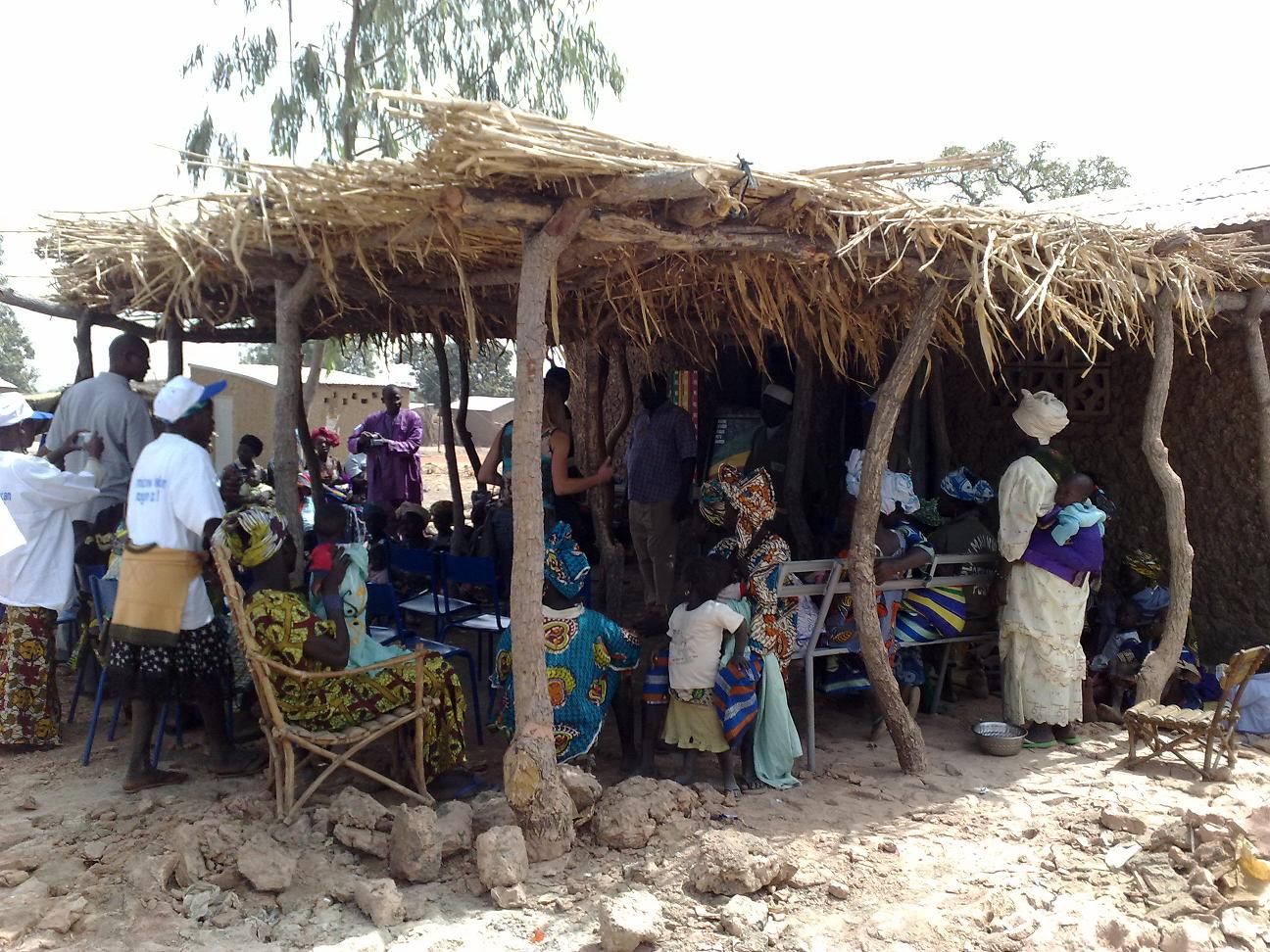
Photo: Community nutrition center where they weigh children to track their growth. They also work with the mothers to show them how to use locally available ingredients like sorghum, peanuts, herbs that grow in the area, to make high protein, high calorie porridge. The program is based on the concept of positive deviance — where the mothers who manage to have well nourished children are studied to find out how they do it, and then their habits are replicated/taught to the other mothers.
Stefanie asked the women in the savings and loan group what the men did, because she had seen mostly women doing all the work in all the projects. That really got a good laugh out of the women. The way the development process seems to work is that the men make the decisions about which projects and initiatives that their wives can participate in. Custom allows multiple wives. The men see the advantage of the improved health and education of their children, and the improved financial status of their wives. Mostly the men work in the fields and do the heavy work for project that require manual labor. Interesting dynamic though – when Stefanie asked her question there was a super long and animated conversation among several of the women and the men from the partner local organization that manages the project. None of this was translated for us! Then Thiekoro from Plan Mali just made a very quick summary. Stefanie asked for clarification later….and I’m not sure the real story was revealed then either.
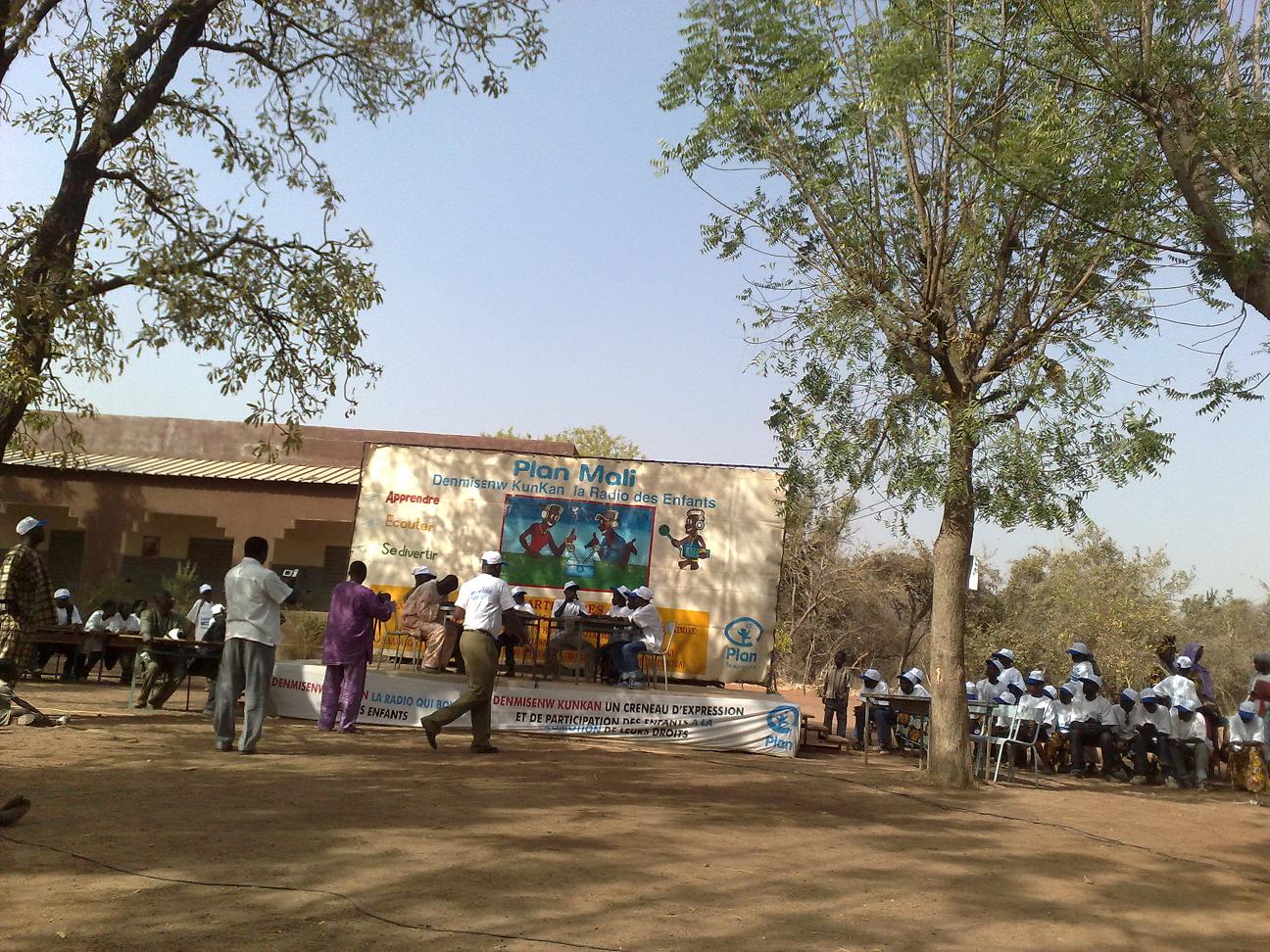
After we talked with all the project groups, the radio project crew – Kids Waves – did a live radio show. The radio project moves from community to community, training the kids and then the develop a half-hour radio show on different topics. They were covering the issue of Violence in Schools. They had invited the local mayor and the director of the school to ask them about the issue and what they planned to do about it. When will children stop being beaten in schools? The officials assured them that they would not beat children any more. Many of the children laughed at that. I didn’t understand much of what was happening because the radio show is conducted in Bambara, the local language. But the kids and the community really really got a kick out of it, and the kids were great. Self assured and really professional.

Photo: Kids Waves radio program.

We stayed until around 4 and then drove back. We arrived quite late due to traffic and I was soooo tired by then. I went out for pizza with a few of the others, Messan from Togo, Carmen from Benin and Francoise from Burkina. Messan and Francoise had participated in the Kenya Social Media for Social Change workshop, and it was great to see them again. One of the best things about working for Plan is when you have a chance to see colleagues again and develop nice friendships and working relationships.

Read Full Post »

« Newer Posts