Feeds:
Posts
Comments

Posts Tagged ‘technology’

Yesterday I inadvertently clicked on a link to the first blog post by Talesfromthehood that I think I ever read. The post starts by saying ‘There is just no way around the critique that aid is ultimately about imposing change from outside….you’ve got to make your peace with that reality.’  (Not what I like to hear).  Tales goes on to say that we need to better define the term ‘bottom up‘ development and concludes that we may really not be talking about ‘bottom up‘ development at all, but more about ‘meeting in the middle‘.

The idea of imposing change from the outside is a little uncomfortable sounding when you normally think of your work as ‘bottom up‘, and you have seen the countless problems that ‘top down‘ approaches create.  But funny that Tales happened to include a link to that particular post in the more recent post that I was reading, because I was in the process of writing up some notes about a community development approach that I believe is quite good.  And looking more closely, it actually sounds a lot more like ‘meeting in the middle‘ than ‘bottom up‘….

I spent this past week in a workshop with colleagues from Cameroon, Mozambique and Kenya discussing a program we’re all working on at different levels. The initiative (Youth Empowerment through Technology, Arts and Media -YETAM) aims to build skills in youth from rural areas to claim space at community, district, national and global levels to bring forth their agendas. It looks to create an environment where peers, adults, decision makers, partners, schools, and our own organization are more open and supportive to young people’s participation and ideas.  It uses arts and ICTs (both new and traditional ones) as tools for youth to examine their lives and their communities; identify assets, strengths and challenges; build skills; share their agendas; and lead actions to bring about long term and positive change.

It is clear from listening to my colleagues that ICTs in this case have been effective catalysts, tools and motivators for youth participation and voice in their communities and beyond, but that other elements were just as critical to the program’s successes.  Throughout the meeting they kept saying things like ‘we are adopting the YETAM approach for our disaster risk reduction work’ or ‘we are incorporating the YETAM approach into our strategic plans’ and ‘we are going to use the YETAM approach with new communities’.  So I asked them if they could put into words exactly what they considered ‘the YETAM approach‘ to be so that we could document it.

I furiously typed away as they discussed how they are working, and what they consider to be the elements and benefits of the ‘YETAM approach.’ And it’s probably a pretty good example of what is normally called a ‘bottom up approach‘ but which might actually be a ‘meeting in the middle approach.’  And I’m definitely OK with that.

I like the approach because it builds on good community development practices that we’ve endorsed as an organization for quite awhile. It brings in new ideas, new tools and new ways of thinking about things at the community level, but it doesn’t do so in a top-down way.  It doesn’t encourage youth to abruptly raise controversial issues and then leave them to deal with the consequences.  It thinks about implications of actions and ownership.  It addresses the ‘what’s in it for me?’ questions but doesn’t turn the answer into unsustainable handouts.  It looks to instill a sense of accountability across the board.  On top of all that, it incorporates ICT tools in an integrated way that gets youth excited about engaging and participating and helps them take a lead role in advocating for themselves.
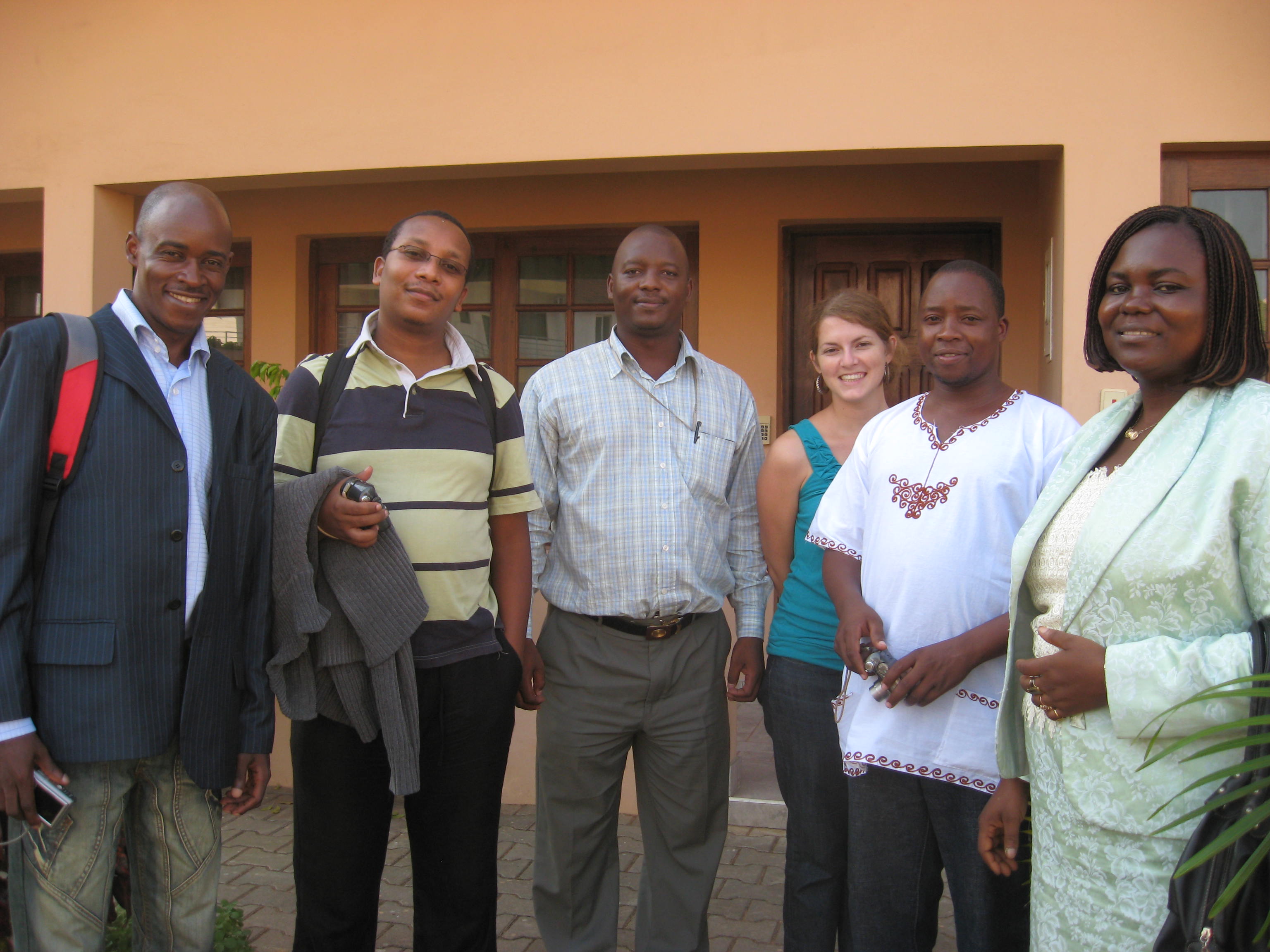
YETAM Point Persons: Mballa (Cameroon partner), Anthony (Plan Kenya), Pedro (Plan Mozambique), Lauren (Mozambique Peace Corps Volunteer teacher), Nordino (Plan Mozambique) and Judith (Plan Cameroon)

So, ‘bottom up’, or ‘meeting in the middle’ or whatever, here’s ‘the YETAM approach’:

Meetings…. Lots of them. We meet with men, with women, with children, with youth, with local authorities and district officials and relevant ministries, with partner organizations and community based organization, in short, with all those who have a stake in the initiative, to get their input.  This is an opportunity to understand what everyone wants to get out of the project, what value it adds to what they are doing or what they aspire to do, and what role everyone will play.  Then we meet with everyone all together at a community assembly. Once we pull together what everyone’s interests and contributions are, we can go forward.  This means a lot of time and a lot of meetings, which can be tiresome, but in the end it is worth doing for the long term success of the initiative.

Partnerships. Everyone brings something to the table – communities, local partners, young people, schools, teachers, local leaders, and us.  So we work to ensure that the contributions of each entity are clear and detailed, and that all sides are accountable if they don’t hold up their end of the deal. The community might contribute time or food or labor or a training space or some other resources that they have. We might contribute funds or technical advice or facilitators or the like.  Local partners might bring in technical expertise; schools or governments something else. Youth are putting in time and efforts also. To ensure that the project holds up and succeeds, we negotiate with all involved partners to see what they can contribute. If you see that people are not willing to put something into the initiative, it means that it is not of value to them.  If you push the project on people, and move it forward without it having value for them, it will be a constant struggle and a headache.  Seeing the level of commitment and interest in different community members can tell you if the initiative is a good thing for the community or not, so that you can adjust it and be sure it’s worth doing, not pursue it, or continue to work on buy in if some parts of the community are interested, but others are not.

Accountability. We set up agreements with all partners in the initiative, detailing what everyone will contribute and what they will get out of it, establishing everyone’s roles.  This is critical for accountability on all sides, and gives everyone involved a common basis for any future discussions or disputes, including if the community wants to hold us or a local partner accountable for not fulfilling our promises.

Buy-in. We don’t pay people to participate in projects or for sitting in workshops.  If you pay people to participate in a project once, you will have to pay them forever and it becomes a weak project without any real buy-in.  Our particular role in community development is not creating short term jobs, but contributing to long term sustainable improvements.  So what we do is to sit with the community and any participating partners or individuals from the very beginning and fully discuss the project with them. Then those who participate do so with a clear understanding of the set up, the longer term goals, the value to the community, and they have decided whether they want to be involved, and what is their level of commitment.

Some NGOs find that paying people to participate is an easy way to move budgets. This may help get things done in the short term, but for the type of programming that we do, it doesn’t work in the long term. It takes away people’s ownership of their community’s development if you pay them a fee to participate in their own project. So to avoid misunderstandings, everything needs to be clear before the project activities even start. We spend time with the community and all those who would be involved.  In the very first meetings with the community before concrete activities even get started, we address the issue of payment.  It’s not our project for the community and they are not working for us – it’s the community’s project.  We do negotiate with them to cover additional expenses that they may incur for participation in a workshop or event, for example, transport, food, etc.

What’s in it for me? Many NGOs have come around before, just giving hand outs, and people are used to seeing an NGO come in paternalistically to give them things.  They imagine that you have a lot of money and you’ll arrive to just start handing things out.  This is not how we want to work.  But people want to know – well, I’m not making any money from this, and I’m going above and beyond, so what do I personally get out of it? What’s in it for me? They even ask this directly, and that is normal. There’s a need to help people think beyond the immediate project. What value does this project add to people’s lives in the long term, to what they do on a daily basis?  If they are not thinking in the long-term, it may be hard for them to see value in the project. If during this discussion with them it’s clear that people don’t see any value in an initiative, then you should be aware that they are not really going to participate.  And that is also logical – if there’s really nothing in it for them, why should they do it? So you need to listen to people and be prepared to discuss and redesign and renegotiate the project so that they are really getting something of value for themselves and the community out of it.  If you come in with an idea from the outside and people don’t see value for themselves, and you go the easy route and pay people to participate in the project, you will see the whole thing fall apart and the efforts will have been for nothing, you will see no impact. So we take the time and discuss and co-design with the community to make it all work. That way it becomes a catalyst for long term positive changes.

Understanding local culture and how your government works. We work to involve local governments and ministries in this work as well as other kinds of decision makers. It’s important to understand how local culture works and what the hierarchies and protocols are in order to do this successfully. It’s critical to know what your government is like and how they work.  If you are not aware of this, it will create problems.  You need to know how to engage teachers, district officials, school directors.  We follow local protocols so that we can ensure good participation and involvement, especially when we need support from the government or ministries in order to move forward with something.  We involve people at these levels also because they are the duty bearers who have the ultimate responsibility here in our countries.  If you leave them out of the equation, you are really harming the initiative and its sustainability as well as losing out on an opportunity to make sustainable changes happen at that higher level.

Respecting community schedules. Communities are not sitting around, waiting for NGOs to show up so that they can participate in NGO activities and projects.  They have their own lives, their own other projects, their own work and their own goals that we need to harmonize with.  Projects that we are supporting are just one part of what community members are doing in their lives.  So we need to be flexible and let the community dictate the pace.  Sometimes partners, colleagues from other parts of the organization and outside donors do not understand this, which can cause conflicts and misunderstandings with the community.  In our case, for example, we are working with youth. They are in school.  We can’t interrupt their primary responsibility, which is getting their education, so we work with them during school holidays or after school.  Often parents want them to work during their school holidays. So again those meetings with parents, community leaders and so on become very important so that they see that their children are participating in a broader initiative and they see the value in it.

Gradual processes.  In this particular project, we are working with youth to have more of a voice.  This can be threatening to some adults in the community, and can go against local norms and culture, just like working with women to overcome gender discrimination can.  If youth are not used to voicing their opinions, they may be fearful of reprisals.  We don’t want to show up, give young people the tools and means to speak out, create conflict in the community, and leave.  This can be very counterproductive and even dangerous. This is where those meetings and building those relationships with different parts of the community again become very critical. We’ve adapted a methodology of intergenerational dialogue.  We sit with the elders, with the community leaders who hold elective positions, and share the project idea and what might come out of it, sit with women, sit with youth. This is like a focus group.  You don’t go in accusing people either. You ask them – what issues do you think youth are facing in the community? They will tell you, and when you’ve heard from everyone, you triangulate the information. Then you find a way to bring everyone together to find common points to start from.  The shift cannot come so strong and fast.  You need to take a slow process.

Listening to children and youth. The strongest point of reference will be what children and youth have talked about, because that is our focus. And for a child to tell you something, it’s taken a lot of work inside themselves to say something.  We had one case where a child decided to stand up and raise the issue of incest at an inter-generational dialogue meeting. A man stood up and said ‘you are lying, this doesn’t happen here’.  But there had been an on-going community process already, and there were other people in the community who were aware and were prepared to stand up and support the child.  In that case, a man stood behind the boy and said, ‘in our community we don’t talk about this, and it takes courage.  Let’s listen to the boy.’ This community process and work is really important to give confidence to the children to be able to speak.  If you are not yet at the point where children can stand up publicly and speak out, then ICTs can also be a good tool.  We’ve found that children’s radio is an excellent place to speak out anonymously about a sensitive community issue.  Children can call in to raise an issue and others can call in to confirm it if it’s happening in the community.  Theater, cartooning and other media area also good ways to raise issues.  Making a drama video on a sensitive topic and sharing it with the community can also be a way to raise an issue without directly accusing someone or implicating a child or youth for having raised it.

Expecting yourself to be held to task too. If there is a track record in the community with children speaking out but nothing happening or changing, then that will deter them from saying anything. So if you want to go down that road, of encouraging children and youth to speak out, you need to be prepared to take it through to the end, to support them. You have to be prepared to really take children and youth voices seriously, to follow things through to the end.  This is actually also true if they raise an area where your own organization has failed, that you yourself have not done something that you promised.  If we encourage them to use their voices, we have to expect that they will hold us accountable too.  We raise funds in the name of these children and communities, so we need to be accountable to them.  We need to be open to children, youth and the community also calling us out.  And have no doubt that they will. It’s happened before and will happen again. So we encourage them to challenge us as an organization, to be honest and to hold us to task.

Change and growth from within. As part of the whole community process, we do mapping, problem tree analysis, assets analysis with the youth and accompanying adults, and they learn much more about themselves. They think about where they are coming from and where they are going, and what local resources they have. This offers perpetuity, especially for the children and youth.  Because of knowing where you come from, you can know where you are going. Where you dream to be.  Using this kind of documentation and these tools actually helps a community to be open to absorbing new things, to be open to change and growth. But not external change and growth, change and growth coming from within the community.

Addressing gender discrimination. As part of the process of mapping and prioritizing issues, there is a lot of discussion.  Very often this brings up issues that are closely linked with gender discrimination.  We see this over and over again. Because we are working in a safe space and using different tools, the issues come up in a way that is not so threatening. Boys also are at a stage where they are more adaptable. They see their sisters and mothers being victims of discrimination and they are more open to hearing out their female peers.  So, we are able then to build a shared agenda that is favorable to girls, and which both boys and girls are then acting on and working to address.  Issues like child marriage, early pregnancy, girls’ schooling come up, but there is a way to look at them and do something.  We also open opportunities for youth leadership roles within the project, and we’ve seen girls start to fight to have a space there, whereas before they would not have thought that they could play an executive role.

Opening space for youth. We work to build new skills in youth to manage new technology, new media, and to do research in their communities.  Through this, youth claim a space that they didn’t have before and can influence certain things, advocate on certain issues they feel are important to them. You see them start taking ownership in communities and in leadership, they want to pick up new things for this role.  We used to invite youth to community meetings. We would start with 20 youth, then it would go down to 10, to 4, to 3 to none. They got bored with it because they didn’t see any relation to themselves. But with this integration of technology and arts, youth have a high interest. It’s really bringing in their opinions, their thoughts and ideas to join their voices with their parents. Now they use arts and media to promote communication, dialogue on their issues and look for ways to resolve them. Before they were totally missing. We tried to come in with programs for youth but they never worked before. With this new way of working, they have become more responsible because they  are not waiting for adults to come in with something and invite them in to ‘help’. Now they are designing strategies and solutions themselves and bringing these to the table.  It’s less easy for politicians and parties to manipulate them and incite them to violence.  Arts and media are effective in this way to share ideas, issues and to use in generating dialogue and solutions in their communities.

ICTs providing reach, motivation and skills. In addition to using ICTs to generate interest in young people and for them to take actions in their communities, we also use ICTs as a cost-efficient way of actually advocating at different levels. You can use video at the local level but also at the national, regional and global level. That is cost effective and has a real impact. You can use videos in invited spaces, for example, where governments, schools, other communities, or our organization itself invite children’s and youth’s voices in.  But we also support youth to use these tools to claim spaces, to fight for space and to get their voices heard there.  We give youth the tools, and you see their brains rewiring. They learn better hand-eye coordination by using a mouse and a computer, and you see then that in class, they can copy from the board without looking at their paper. They learn organizational skills by creating folders and sub folders. They learn structure from filming a video and making a time line while editing it.  They learn to speak with adults and decision makers from talking on the radio, using a recorder or a camera.  They become more motivated to complete school.  All this makes them more effective leaders and advocates for themselves and their agenda.  They also know that they’ve learnt a skill that puts them at the top of the pile in their community for jobs now. They are plugged into something that would never have existed for them before.

Related Posts on Wait… What?

7 (or more) questions to ask before adding ICTs

Is this map better than that map?

Mind the gap

An example of youth-led community change in Mali

Being a girl in Cumbana

Putting Cumbana on the map: with ethics

Read Full Post »

As part of our ongoing work around using ICTs (information and communication technology) in our programs and general operations, 10 staff in Plan Uganda did a 2-day workshop in March, 2010.  The workshop was based on a distance learning pack that my colleague Mika Valitalo (Plan Finland), Hannah Beardon (Mobiles for Development report) and I put together. It includes some narrated slide shows, short videos, and a series of questions and exercises to guide discussion around strategically incorporating ICTs into our work where and when it is appropriate and feasible.  So far the workshops have been conducted in 6 countries with 2 still to come.

Anthony Makumbi, from our Regional Office for Eastern and Southern Africa, facilitated this Uganda workshop (and credit for the information below goes to him). Anthony is the Regional Community ICT Advisor and has a long experience working on ICTs and ICT4D in the region.  He’s also just written up a pretty impressive draft document which will guide Plan’s ICT strategies in Eastern and Southern Africa.

“We initially thought that when you talked about ICT you were referring to the computer guys, but our minds have now been opened further on the topic. We’ve learned that ‘ICT’ does not equal ‘computers’. Instead, the term ICT encompasses any technology tool that enables information flow and communication.”  (participant)

This always seems to come up in these trainings – people realize that thinking about and using ICTs is not something that is limited to technicians, geeks, network specialists, programmers, the IT Department, etc.  Demystifying this term is so important in order to get people interested and to open up to thinking about how ICTs can support their every day work.

Staff also said that they needed more exposure to new ICTs and innovations. “People need to be informed of something in order to be able to seek further information about it.  If we know about available technologies and what they can offer, we will further explore them.”

——————–

Below is a summary of the Uganda team’s general reflections from the workshop:

Multi stakeholder approaches are necessary to promote innovation and a favorable climate for integration of ICTs.  It is vital to work with governments as the main regulators, the private sector to effectively explore the use of technology, and civil society to ensure that the services are accessible to the population. (For example, the Seacom cable was meant to reduce the Internet costs yet there has not been a notable reduction in costs for the general population – what is the role of civil society in making sure this happens?)

Participatory community assessment around trusted information sources. Before embarking on a community ICT initiative, it’s critical to do a participatory assessment of what the trusted information sources are at the community level. This is important especially if you plan on building awareness on particular issues within a community and would like this information to reach as many people as possible.  A participatory assessment can help gain a better understanding of how people communicate and what communication tools  are most effective to reach a particular goal.

Access for women and girls. Cultural practices, the availability or cost of acquiring a tool, and access to that tool or source of information need to be taken into consideration.  Women in many areas are excluded from accessing ICT tools because they do not handle money. A key focus in ICT programs in Uganda should be to strengthen access to information sources, including programs that mitigate women’s and girls’ barriers to use and access. Another tactic might be programs that promote access to basic information for women so that they are also informed and able to utilize information for their own purposes: eg., nutritional information for their children, the need for girls to go to school or avoid early marriages; programs that share information from other sources that influence women’s decisions.

Building on what is available.  Organizations should look at what is around them and leverage available opportunities. In Plan Uganda’s case, for example, this could mean looking at mobile money transfer services linked to Village Savings and Loans Associations (VSLA); closed user group (CUG) services that define private networks and allow calls made within the private network at large discounts; and services such as the Pakalast promotion on Warid Telecom, which gives users access to each other on the same network for 24hrs for about 80 cents. Awareness should also be built about tools that can provide radio signals apart from a radio, such as a phone with radio access.

Literacy levels and local language. In Uganda, literacy levels are low.  Many people do not manage English. Technologies need to be made available in local languages. Fast track learning could also be considered, such as the development of an integrated education program to address technology and literacy. A close look at mobiles phones — which have taken off at their own pace with the existing literacy levels – could help us to think about how other technologies might fare similarly well.

Electricity.  Solar power should be built into all of our initiatives.

Mobile tools. Mobile data collection could be used instead of paper systems that are currently in place and very laborious. Services like use of SMS for accessing national exam results could serve as a stimulus to further expose communities on what these technologies can do for them.  SMS services could also be used to acquire basic quantitative data in, for example, VSLAs to collect information about group portfolios, or gender ratios or youth participation by age. This can then be vital for designing further programming.

GPS. This could be a useful tool in a program like Community Lead Total Sanitation (CLTS). Latrine coverage could be mapped at the start of a CLTS project in a community and after the project has been implemented over time. This could be linked to health programs that could track a reduction in diarrhea cases in the community, and then this information could be linked to home improvement campaigns as evidence based approach.

ICTs in Governance. ICTs can give communities a platform to provide feedback on services rendered and also know of services available to them.

New ICTs or ICT applications that staff found most interesting:  SMS and mobile data gathering, platforms such as Village Diary for managing confidential legal services and potentially HIV/AIDs program information, blogging to open up channels for discussion on issues and bringing together social movements and organizations working on similar issues, wikis for writing reports, podcasting which could be used in capacity building interventions for multiple groups.

——————–

Plan Uganda staff felt that this type of training on ICTs should be expanded to more people in the organization, and to partner organizations, to build more buy in. They recognized the importance of organizational commitment to moving forward in this area, and asked for continuous training on new ICT tools and innovations.  Ongoing evaluation was suggested to measure the value added by ICTs to program activities, and a follow-up workshop was requested to check progress on the ideas that were generated.

Related posts on Wait… What?

It’s all part of the ICT jigsaw: Plan Mozambique ICT4D workshop

I and C and then T

ICT4D Ideas from Plan Cameroon

Mambenanje and the Village Diary Project

ICT4D Kenya:  “ICT and community development is real”

Chickens and Eggs and ICTs

Read Full Post »

There are a lot of great ideas floating around about how Information and Communications Technology (ICTs) and technology in general can help to rebuild Haiti.  I hope these ideas keep coming.  I would love to see international development organizations, aid agencies and non-profits in general open up more to ideas on how technology can improve the lives of the people they are trying to support as well as facilitate coordination and program implementation.

But I also hope that the technology folks who haven’t worked in a crisis context such as that in Haiti will lend an ear to those who have experience working in past disasters and on-going development programs, human rights work, volunteer initiatives and advocacy. Those experiences shouldn’t be tossed out as old-school.  Good programs and experiences exist that can be examined, processed and built on.

I work globally, with one foot in community development and the other in ICTs, and I notice a gap between these 2 sectors, though they could really learn a lot from each other and work nicely together.

Cool technology ideas, just like cool program ideas can flop on the ground if the local culture and context are not taken into consideration, users were not involved or consulted during design and testing, the supposed ‘problem’ really wasn’t a problem at all, the proposed idea is not sustainable, a better/preferred local solution already exists, etc., etc.

Sometimes when I hear enthusiastic people sharing ideas for new applications, innovations or program ideas that they want to implement in ‘developing’ countries, I find myself thinking:  “Wow.  They have no idea what it’s like on the ground.”  I don’t want to shoot down someone’s excitement.  But I do wish that those who are not intimately familiar with their end users would slow down, think for a minute, and realize that local context is king. I wish they would remember that ultimately this is not about them and their ideas for other people. I wish they would stop being mad that abc organization won’t take that shipment of xyz technology that they want to send over, or that no one wants to implement such and such program that was so successful in such and such place.  Solutions looking for problems are not the best way to go about things, even when you have the very best of intentions.

However, non-profit organizations (large and small)  can be totally resistant to trying new tools, technologies and programs that could make a huge difference in their effectiveness, impact and quality of programming. They can be bureaucratic and slow to put new ideas to work.  They can be risk averse, afraid of failure, and resistant to innovation and new ideas.  The seemingly limitless relationships that need to be negotiated around can really slow things down.

Sometimes I see non-profits doing things they way they’ve always been done and I find myself thinking “Wow.  I wish they’d be open to trying ________.” I wish organizations would be more willing to test out new technologies and new ideas that don’t come from within their sector. I wish it were easier to make change happen.

When it comes to the Haiti earthquake response, the technology and non-profit sectors are 2 of the key players.  I’m worried that the outpouring of interest in helping will lead to a lot of wheel re-inventing.  I’m worried about local relevance and executability (if that’s even a word) of some of the ideas I am seeing.  I have concerns about the amount of projects being conceived and designed from afar.  I also see that there are new program and technology ideas out there that have the potential to make people’s lives easier if they were well integrated into the local reality, yet there are many factors that prohibit and inhibit organizations from exploring them or using them.

The technology and non-profit sectors benefit quite a lot from each other when they work together and understand each other.  It would be great to see a bigger effort to bridge the gap between these sectors.  Regardless of whether people believe NGOs and/or private enterprises and/or technologists or the Haitian government or the UN are good or bad, there are a lot of experiences that can be learned from and/or improved on from all sides.

The links below might be helpful for thinking about designing technology, ICT and programs in ‘developing’ country contexts and to help avoid known pitfalls and overcome obstacles. They can help reduce the amount of time and other resources wasted on projects that are not sustainable or impactful, or at worst are actually harmful in the short or long term to the very people that we all want to support and help.  There are certainly many more resources out there… please add ones that you find helpful in the comments section.

ICT Works and The 4 C’s of ICT Deployment

Mobiles for Development Guide by Hannah Beardon

IDEO Human Centered Design Toolkit

Changemakers and Kiwanja collaboration: SMS How To Guide

Mobile Active‘s case studies

ML4D:  Mobile learning for development’s design narratives

Ushahidi Blog: February Archives have a lot of information on the Haiti response

iRevolution: thought provoking posts on technology and crisis situations

Educational Technology Debate:  Sustaining, rather than sustainable ICT4E and Designing and sustaining a sustainable ICT4E initiative

Posts on Wait… What? that might be useful:

7 (or more) questions to ask before adding ICTs

Finding some ICT answers in Benin

Meeting in the Middle: A good local process

It’s all part of the ICT jigsaw

I and C and then T

Read Full Post »

I recently had the honor of leading a group of tech, development and gender folks in a discussion around Girls and ICTs at the Technology Salon.  The conversation revolved around 5 aspects I wrote about in an earlier blog post On Girls and ICTs:

  • Tension between participation and protection
  • Online behavior is an extension of, and a potential amplifier of offline behavior
  • Qualifying the digital divide
  • Girls’ involvement in developing and designing ICT solutions for their own needs
  • Research on Girls and ICTs

Check out the Technology Salon’s page for a round-up of our discussions!

Photo:  Informal evening one-on-one ICT time at a Youth Empowerment through Arts and Media (YETAM) project workshop in Cameroon.

——————-
Related post on Wait… What?
On Girls and ICTs

Putting Cumbana on the Map:  with Ethics
Being a Girl in Cumbana

Girl Power and the CGI

Read Full Post »

At the Technology Salon hosted by the UN Foundation’s Technology Partnership with Vodafone Foundation on Jan 28, 2010, some folks from the DC area (and beyond) will gather to share experiences around girls and ICTs.

This conversation is an important one, given that gaps exist around discussion, practice and research.  The information and ideas shared at the Technology Salon will feed into the contents of the Girls and ICTs chapter for Plan’s upcoming 2010 “Because I am a Girl” Report (currently in the works).

There are a few points that I hope will be considered in the Technology Salon discussion:

Tension between participation and protection.

There are many examples of ICTs being used for increased participation and connection:  mobile phones for citizen journalism;  Twitter revolution in Iran; girls using mobiles to ask questions about sexuality and to get information to help them improve their sexual and reproductive health; girls married off early or those living in protective societies using mobile phones to maintain contact with friends; new media tools opening up possibilities for youth engagement in important conversations that normally they would be shut out of.

However, due to the very real problems of on-line child pornography, child trafficking, child harassment, and cyber bullying, there is also a strong push for more control, more restrictions on on-line use in the name of protecting children.  The tension between child participation and child protection is a very real one.

As we look at how technology and international development communities can support girls’ development, I hope it’s kept in mind that the more knowledge that girls have about the internet and ICTs in general, the more practical use they are allowed, the more coaching to help them understand implications of their actions, then the better prepared they will be to navigate these realms and to keep themselves safe.  Increasing their knowledge, abilities and desire to protect themselves may be more effective than setting strict external limitations.

Actively engaging girls in this as part of an educational process can be better than restricting their use – and being open to young people’s own ideas and ways of using ICTs is critical.  Adult involvement in this area is important, but it is probably more worthwhile to coach than to control.  Good communication and trust between children, youth and their adult mentors and guides is critical in this process. (Excellent resources on Child Online Protection (COP) for children, youth, educators and parents came out on October 2009 and are well worth the read.)

Online behavior mirrors offline behavior.

I remember getting an obscene phone call when I was around 8 years old.  My mother did not blame the telephone, however. She blamed the pervert that was calling.  She made sure to teach me how to be prepared in case it happened again. She emphasized not giving out information on the phone and hanging up immediately if I felt uncomfortable or didn’t know who was calling.  She did not prohibit me from ever touching the phone again or blame me, but she was vigilant for awhile.

In the same way, new ICTs themselves cannot be blamed for negative and twisted behaviors.  ICTs are tools that exacerbate and extend already existing human behaviors, and the blame lies with those who are using ICTs for child trafficking, cyber bullying and the other evils associated with the internet. It’s important to address underlying behaviors. Research shows that kids who are bullied offline are often also bullied online.  Girls who are vulnerable offline are likely also vulnerable online.  Online is a manifestation of offline, and the root causes of girls’ vulnerabilities online cannot be blamed only on the ICT tools themselves.

I have my own daughter now, and have discussed with her many times how to keep herself safe online and on the phone.  It’s important for her to know this before something happens, not during or after.  She will probably be using the internet and the phone for the rest of her life, so prohibiting them is not an option, and the benefits of using these tools obviously outweigh the risks.  My own involvement and use of social networking sites, texting, etc. is an excellent way for me to know how these sites are used and what security holes there are for my children on the sites. How can parents and teachers in areas with limited use of ICTs be involved and engaged to serve as coaches and leaders in on-line protection together with children?  How can communities help identify existing vulnerabilities in girls (or young people in general) that might manifest themselves online and offer support to prevent exploitation?

Digital gender divide.

There are some amazing examples of ICTs helping women and girls to improve their livelihoods; for example, women selling mobile telephone services; birth attendance being improved by using mobile phones to connect women to midwives, ambulances and other medical services; educational content being  expanded using internet; youth media and youth radio programs bringing girls voices and gender topics into the mix for community discussion and dialogue.

However, in places where boys and men dominate women and girls, boys and men likely also dominate the use of available ICTs.  Men may control the family’s mobile phone and take it with them, or monitor women’s calls. In places where boys are more favored, their confidence to try new things is higher meaning they may rush in to use mobiles, cameras, radio equipment in projects while girls shy back.  In some cases girls report that boys hog and monopolize the computers and equipment, and access is denied.  I’ve seen boys criticize, scorn and ridicule girls who are using equipment for the first time, and girls become too timid to try again.  In many developing countries, just getting girls to attend school is difficult.  If girls are assumed to be less intelligent or less worthy than boys, and their secondary school attendance (where ICT training might be offered) is not a priority, girls will have a very difficult time ever accessing and using ICTs.

Underlying issues surrounding girls’ participation in general need to be addressed.  We need to think about how ICTs can be used to help girls’ inclusion, participation and self esteem increase in general.

Girls involvement in developing and designing ICT solutions for their own needs.

Studies in several countries have shown that girls and boys use technology in different ways and for different things.  What specific ICT needs do underprivileged girls in ‘developing’ countries have? Is anyone asking? What processes or solutions already exist that take girls’ ICT needs into account?  What environments are necessary for girls to engage in defining, deciding and creating ICT solutions? Where are they already engaging, and how can communities, schools, organizations and businesses support and recreate those environments?  How can processes and products be designed together with girls?

Tech is still a field heavily dominated by males.  In the US, for example, some women in tech have pulled together to question this and to advocate for more opportunities for women to break into the male dominated worlds of publication owners, conference speakers, businesses, well known innovators, and “best of” lists.  There have been protests against prominent companies for promoting “Booth Babes” and in one case last year, strippers, at tech conferences.  This brings the question – in places without female tech role models and respectful environments, how can girls see themselves as leaders in this field?

Specific research on girls and ICTs.

There is not a lot of information on the impact of ICTs on the lives of girls in ‘developing’ countries, especially studies that go beyond establishment of computer centers.  There is  anecdotal evidence of positive impact of mobile phones on women. There are studies on the digital gender divide for women; on child trafficking and other negative aspects of the internet; and on use of internet and technology among youth in the US, UK, Australia, etc.  It’s been difficult to find a lot of information on the use of ICTs by girls in the “South.”  It would be interesting for more research to be done on girls and ICTs in the “South” and for some good practices to be shared. Hopefully someone at the Technology Salon will be able to share some insight on this.

Read Full Post »

I spent last week in Kwale, Kenya in the company of several colleagues learning about and discussing the use of mobiles in community development, both for outreach and communications and for mobile data gathering. There was a variety of people — from frontline staff to members of Community Based Organizations (CBO) in Kwale, to monitoring and evaluation (M&E) staff from Plan Kenya’s districts and central offices and Plan’s West Africa Regional office, to IT staff, to youth and those working with youth media, to partner organizations working on child help lines and social media outreach.

Photo: Anthony from Plan along with Mativo, a former Plan colleague, trained us on FLSMS

We looked closely at Frontline SMS (FLSMS) and Nokia’s new Data Gathering Software (NDGS) and brainstormed on ways that this type of tool might support the work that people are already doing. Really an interesting week!

In addition to the more common ideas of using mobiles for health campaigns, disaster/crisis situations and general communications and monitoring, people mentioned:

For youth media programs:

-Organizing weekly radio contests via Frontline SMS and allowing many more youth to participate in the radio program that way. Now for contests, they have to write a letter with their answer and bring it to radio station by foot. Using SMS many more could participate, increasing listeners and engagement.

-Assessing the radio show right after the recording. The youth and children could go in the audience and gather the data they normally do by hand using mobile data gathering software, thus easing the processing time and analysis of the information.

-Monitoring progress and changes made in relation to the show at a broader level — the participating youth could use mobile data gathering to monitor change related to the issues they are targeting in the radio shows and to see if youth organization and awareness building is impacting on the community over time.

Photo: people got really excited when their first forms appeared on their phones to be filled in!

For Child/Human Rights work and Global Child Rights Campaigns:

-Assessing the knowledge/awareness of the communities about rights issues and/or our global campaigns

-Receiving reports and sharing information about violations of rights (gathering info on whether children are being registered at birth, the incidence of school violence, girl’s or women’s rights violations, cases of child abuse) and offer short information on where to go for help.

-Monitoring child abuse cases, e.g. community members could text in key words such as ABUSE or MARRIAGE to report and track child abuse cases and early marriages happening in the community:

Birth Registration (UBR) implementation

-Tracking birth registration certificates and sharing information on the steps of the registration process. With auto SMS replies we could enhance information accessibility 24/7. We could provide instant feedback to people on the status of their birth registration. It would be a very quick way of sending information to many.

-Using mobile data gathering software, the birth registration process could be made paperless and computerized, thus saving time and effort for the population and increasing the number of children who are registered at birth.

Photo: Jackson and 3 other colleagues from Brazil trained us on the NDGS.

Monitor services

-Running a mobile survey or a rapid assessment to find out whether a service like Childline is reaching people and whether the service is known and being utilized in the field.

Communicating among Plan staff, CBOs, Communities

-Passing along information such as training dates, schedules, meetings, etc., to avoid making a trip out to the community to get information

-Surveying on health, school attendance, and school enrollment through a network of teachers

Communities communicating amongst themselves

-Communities have a lot of information they want to share among themselves, among the Community Health Workers (CHWs), with the other communities and other leaders – they could do this with FLSMS.

Managing Meetings and Decisions

-Inviting participants, confirming attendance, updating on the absentees when you’ve reached a decision they could be contacted this way. You could even involve those who are absent in voting by SMS if you don’t have quorum; eg., text in 1 for this candidate, 2 for this other one, or vote yes/no on something.

Photo: SMS was seen as a great way for communities and CBOs to communicate and organize.

Read Full Post »

« Newer Posts