Feeds:
Posts
Comments

Archive for the ‘ICT4D’ Category

The Open Knowledge Festival (OKFest) happens this September 17-22 in Helsinki, Finland with the theme Open Knowledge in Action. OKFest will explore the benefits of opening up knowledge and information, look at the ecosystems of organisations that can benefit from openness, and discuss the impact that more transparency can have in our societies. OKFest will run 13 key Topic Streams, one of which will focus on the topic of ‘Open Development’.

So what does ‘open knowledge’ have to do with ‘open development’? And why are people putting the word ‘open’ in front of everything these days?

Well, in addition to being a bit of a buzz word or trend, the idea behind ‘open’ is that making data and information more accessible and less restricted can enhance transparency, accountability, sharing, and collaboration. This in turn can benefit development processes. (See this post for ideas on how openness and information literacy links with participatory governance, for example.)

As Matthew Smith, a strong proponent of ‘open development,’ says, ‘openness’ is not a new concept, especially with respect to development theory. Democracy and participation represent an opening up of decision-making processes to more people. Transparency and accountability are about opening up organizations, people and processes to scrutiny and feedback.

The Internet and new ICTs such as mobile phones play a big part in the idea of ‘open’ since these platforms and tools can allow data and information to be shared more freely and widely. The concept of ‘open development’ according to Smith is enhanced by ICTs when it favors:

  • Universal over restricted access to communication tools and information. For example, access to the telecommunications infrastructure through a mobile phone or access to online [educational] content or government information.
  • Universal over restricted participation in informal and formal groups/institutions. For example, the use of SMS to mobilize political protests or new e-government implementations that provide increased transparency and new accountability arrangements.
  • Collaborative over centralized production of information, cultural content, and physical goods. For example, collaborative production of school textbooks, co-creation of government services, mesh networks.

Attitudes and behaviors also play a part in ‘openness.’ Smith notes that egalitarianism and sharing are two core concepts within ‘openness:’

  • Egalitarianism suggests an equal right to participate (access, use and collaborate).
  • Sharing is embedded in the idea of enhanced access to things that were otherwise normally restricted. This enhanced access is often motivated by the normative desire to share – whether through an obligation to contribute to the common good or to participate in a coordinated or collaborative activity.

Policies, practices and philosophies that allow data and information to be shared are also a part of ‘open’. Tim Davies explains ‘open data‘ as:

  • a set of policies and practices – open data should be accessible (online); standardized (in a common format) and reusable (open licenses)
  • a response to how tech and society is changing –  bandwidth is growing, there is more capacity to share and analyze data, people want to do things for themselves and analyze information for themselves rather than have someone do it for them.
  • a tendency towards new combinations of data – seen in ‘mash-up’ websites where people pull data from different sources, combine them with other sources, add crowd-sourced information and maps, etc.
  • a philosophy or movement – there is a push to open information and access to knowledge because information is power; there is a tendency toward greater collaboration, transparency and collaboration

The Open Development stream at OKFest will explore ways that openness can help address key development challenges, from reducing poverty to improving access to education and healthcare to mitigating climate change and managing natural resources to improving transparency, accountability and governance. One of the most important aspects of the Open Development stream will be the participation of development practitioners and thematic experts on development.

As guest program planners for the Open Development stream*, we are determined to support two-way learning about how open data and open knowledge can benefit development. We know that ICTs and new technologies cannot work in a vacuum and that open information on its own is not enough. We know that creating ICT tools and applications without basing them on real needs and local context is not helpful, useful or sustainable. We also know that traditionally excluded and marginalized populations are the ones that most often do not have access to information and new ICTs, and therefore open access to information and knowledge needs to be part of a broader and more holistic development approach that takes care to include those who are often marginalized and excluded.

Within the Open Development stream, we will offer space where those working with new technologies and those working on development issues can learn more about each other and work on joint solutions that are based on local realities and that take advantage of new opportunities that new ICTs and ‘open knowledge’ can offer.

The Open Development stream will bring together key thinkers and doers in the ‘open’ movement and the development sector via a panel discussion. We are also organizing 3 working sessions to explore:

Open development and aid flows.  Here we will look more internally at ways that greater openness in aid and development funding, activities and impact (such as the  International Aid Transparency Initiative – IATI) can help make aid more transparent, accountable, coordinated and effective. What are the new opportunities Open Data and Open Knowledge provide? How can aid and aid organizations be more open, transparent and accountable?

Open = accessible? In this session we will explore practical issues and the realities of access to and use of open information in low-resource settings. We will hear opinions and realities from development practitioners regarding a series of critical questions such as: Open for who? Open for what? Is open data enough? How can we design for accessibility in communities with lower resources and access and/or in ‘developing’ countries? Who are the new information intermediaries (aka ‘infomediaries‘)? How can we ensure that ‘open’ is not replicating existing exclusions, creating a new middle-class or benefiting already well-off sections of communities and societies?

Technologies for open development In this session we will focus on the role that ICTs and open technologies, from open source to open hardware, can play in development. We will hear ideas from development workers, technology evangelists and those who bridge the two fields.

In addition to these sessions, there will be an ‘Open Development Hack Day‘ where development practitioners can share development challenges with the OKFest community to create mobile and other ICT applications.

Events like OKFest can be overwhelming the first time you participate in them, but we are committed to making sure everyone who attends OKFest can join the discussions, contribute ideas, and learn from the wealth of keynotes, sessions and workshops. The organizers of the Open Development Stream will be on hand to support participants working in development and those who are new to the Open Knowledge World to navigate the conference via daily birds-of-a-feather gatherings, catch-up sessions and more.

In order for our stream to be a success, we need the participation of development practitioners and development workers!  The core OKFest team has made a number of travel bursaries available to help potential participants with the costs of getting to Finland, and the open development stream team are also working hard to encourage development organisations to support staff and associates from projects in the ‘global south’ to take part. If you need help securing support from your organization or funders to take part, then get in touch with the team (okfest-dev@practicalparticipation.co.uk) and we will do what we can to help.

UPDATE (July 19, 2012) – copied from the OK Fest website:

Sida, the Swedish International Development Cooperation Agency, offers travel bursaries to a number of development practitioners and coders taking part in the Open Development topic stream. These travel bursaries will cover all reasonable flight costs and accommodation for the duration of the conference core days. A week ticket to the festival is also included. Transportation to/from airport and within Helsinki and food costs are not covered by travel bursaries. 

Who are these Bursaries For?

The Sida travel bursaries are for development practitioners and coders who can make a significant contribution to the festival, but who are not able to take part without financial aid. People who are taking an active part in the Open Development topic stream will be prioritised. We will also prioritise those who truly cannot make it to Helsinki on their own without financial help, e.g. people from developing countries

Be sure to fill out the application form here before the deadline on August 8!

For more on OKFest, watch the slideshow:

*Tim Davies from AidInfoSarah JohnsMika Valitalo and I from Plan

Read Full Post »

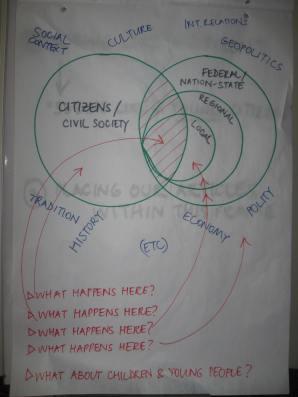
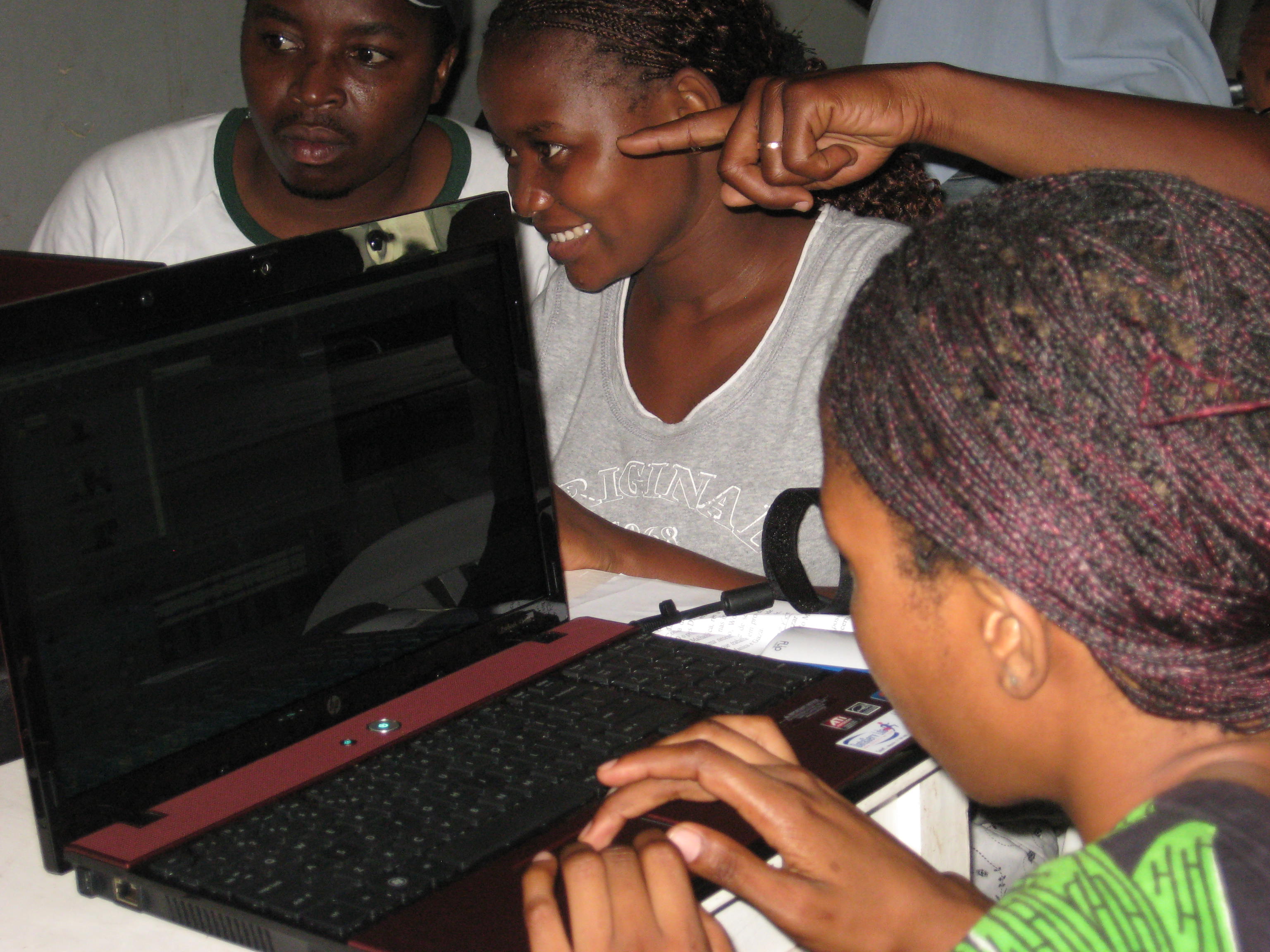
Where are the spaces for dialogue on good governance? (Image from a workshop on youth participatory governance, April 2011)

As I mentioned in my ‘governance is *so* not boring’ post, I am recently back from an internal workshop where some 20 colleagues from across the organization where I work (Plan) pulled together some basic elements for a global program strategy on Youth, Citizenship and Governance.

One of the key elements that we talked about was the importance of information literacy in citizenship and governance work, including at the level of governments, duty bearers and decision makers and of course at the level of citizens — in our case, especially children and young people. Information literacy is defined by the University of Idaho as “the ability to identify what information is needed, understand how the information is organized, identify the best sources of information for a given need, locate those sources, evaluate the sources critically, and share that information”. (I can hear my librarian friends cheering right now, as they’ve been working on this for years).

Openness as an attitude came up as something that’s important all around for good governance. This doesn’t only mean ‘open’ as a technological specification for data, but rather openness as an entire approach and attitude towards governance, citizen participation and the nature of relationships and interactions in the spaces where citizens and government overlap. We were able to link our work up very well with the concepts of open development, open government and open data; all of which can contribute to better transparency, accountability and governance and which require information literacy and a number of other skills and capacities in order to take advantage of.

My practitioner colleagues said over and over at the meeting ‘we don’t have access to the information we need to do better governance work.’ I was left wondering how those of us working at various levels, including the field of ICT4D and related, can do a better job of supporting access to information, and what are the technology and non-technology tools and approaches that work best. There is still a huge gap between the community- and district-level governance work that my colleagues are working on with children, youth and communities and the big on-line data sets that are part of open data and open government. Both very important, but there really needs to be a stronger link between the two so that they can feed into each other to achieve better governance. Once again – the questions ‘open for who? and open for what?‘ come in, as well as the need for a two-way (multi-way?) information flow.

We talked about how social accountability tools like community scorecards, social audits, budget tracking and monitoring, and participatory budgeting can be an important way for engaging marginalized and excluded populations in governance work outside of more formal channels (eg, elections, law courts, planning and auditing of public expenditure). Social accountability tools and processes allow people to more directly participate in the accountability process and make themselves heard rather than leaving accountability in the hands of the government or relying only on formal mechanisms. During our workshop, we watched the International Budget Partnership’s video ‘It’s our money, where has it gone‘ on using social accountability tools in Kenya. (Long, but very worth watching)

Following the video I explained open data in a nutshell by asking people to imagine that the budget information that the community had to get via their district officials was available online and could be accessed without going through the district officer. It was a good opportunity to think about the potential of open data and open government and how they can fit in with social accountability work.

The video highlights the very real dangers that can be present when working on transparency and accountability. Since in our case we are working with children and youth, we need to be especially aware of potential risks involved in transparency, accountability and good governance work, because this kind of work raises questions and aims to shift power and politics and resources. We need to be very sure that we are not somehow pushing our own agenda through children and youth, or handing them a hot potato that we don’t want to take on as adults or organizations, or even unintentionally putting them at risk because we haven’t fully thought through a project or initiative. We need to be sure that we are conducting thorough, participatory and shared risk assessments together with children and youth and establishing mechanisms and ways of mitigating risks, or making decisions on what to pursue and what to leave for others. Child protection, our own responsibilities as duty bearers, and the notion of ‘do no harm’ are massively important to bring in here.

We spent time talking about what we need to do as an institution to support good governance, and emphasized that openness and good governance is a key element of institutions, INGOs, local NGOs and CBOs who want to be credible in this space.  Organizations that are working with communities to push for local and/or national government transparency and accountability should expect that these same demands will be turned around to them, and the same questions asked of government and decision-makers will be asked of them. Taking those steps internally towards openness, accountability and good governance is critical. When working with youth associations and children’s groups, this is also a point for strengthening so that openness, transparency, accountability, positive leadership and other capacities, capabilities and skills are enhanced. If local associations replicate the bad governance practices that they are trying to change, then things are really not advancing much.

Successful governance work addresses multiple sides of the governance issue. Working only with citizens can create a demand that outstrips government interest, capacity or responsiveness and lead to apathy, frustration and/or conflict. So it’s really important to work with duty bearers and decision makers as well as with children and youth and their communities, and with other non-state adult actors, such as parents, teachers, community leaders and the media; to help create an environment for better governance. In addition, it’s important to understand the  incentives and disincentives that shape the behaviors of different service providers, for example teachers and health care workers.

As my colleague Wale Osofisan from our UK office pointed out today after I shared these videos on governance work: “It is not enough to get the students and communities to monitor absenteeism without really examining the root causes of the problem from the point of view of the teachers and doctors. For example, in the DRC health care workers at PHCs particularly in the rural areas don’t get their salaries paid on time – sometimes for 6 months. Hence, they are forced to abandon their official duty posts and find alternative ways of earning an income either working informally for a private clinic which pays them or they engage in other economic activities. Same goes for the teachers. Thus, civil society interventions also need to focus on the problems encountered in the supply side of the equation… This is quite a challenge because it would require tackling the perverse politics of service delivery in many developing countries and NGOs always find it very uncomfortable to engage in such terrain.”

Good governance work uses existing spaces for collaboration and dialogue among the various actors or creates new space if none exists. It builds skills and capacities in both citizens and government officials. Children and youth, for example, need to have capacities to work effectively together, organize, prioritize, influence, use media and new communication technologies, access information and interpret/analyze it, and to develop partnerships and networks. Decision-makers need to strengthen capacities to engage with children and young people, to hear, respond, follow up and provide feedback. Government institutions need to have the attitudes as well as the resources to be more responsive to citizens’ needs and rights. Government employees, as mentioned above, need to also have the space to share what makes it difficult for them to do their jobs.

We did some group work around the 3 key actors in our citizenship and governance work: the State, children and young people, and other non-state adult actors. I participated in the group that looked at the changes that would need to happen at the level of the State and was again reminded how this work requires so much more than accountability mechanisms, new ICT tools and data. We talked about what would motivate a State to have an open information policy. What is in it for elected officials? How can State actors be motivated to change their attitudes to one of more openness and accountability? Can citizens push the State to be more open? Is international donor or political pressure the only motivator that has been successful so far in most countries? If a State is not governing well, what are the common root causes? If openness is an attitude, what motivates a State and its different bodies to be open? External pressure and citizen demand are one thing, but what about addressing other factors that prohibit good governance?

Linking and promoting collaboration between and among children’s and youth groups was noted as another key piece of citizenship and governance work with young people. This can be supported at a face-to-face level but also needs to happen from the local to the global level, so that young people can connect and share common agendas and experiences both ‘horizontally and vertically.’ The web is a key tool here for taking local issues to the global level and back down again to community level. A question in my mind here was how INGOs can do a better job of linking youth and governance work that they are supporting at local levels with the external social and political environment so that they are not happening in parallel or in a vacuum. Another was whether we are thinking enough about broader social and political movements as related to major events or changes happening in a country or globally (eg, Arab Spring, Occupy Wall Street, Rio+20) and our role and position and purpose there. And what about on-line organizing and activism and ‘direct democracy’ as more young people access on-line networks and activism happens in virtual spaces?

We discussed quite a lot about how supporting overall behavior changes and public opinion are critical to creating an environment that supports public accountability and openness and gets these on the agenda. It’s also important to change attitudes with relation to how children and young people are perceived so that adults and decision-makers will listen to them and take their opinions and claims into consideration. Programs that engage children and youth and showcase their capacities and abilities can help decision-makers and other non-state adults to see that the younger generation does have valid points, opinions and ideas for positive change.

And lastly, there is the importance of ensuring that staff are well versed in local political contexts and how government systems work. Without a strong and nuanced understanding of the local context, local power dynamics, local political and local cultural contexts, and how children and young people and other excluded groups are viewed, programs may be over ambitious, wrong-headed, create dangerous conflict, set back governance and accountability work, or put children and young people in harm’s way. The complexity of this kind of work combined with the complexity of the various settings mean that a clear theory of change is needed to guide efforts and expressly address the specific changes that are sought so that initiatives can be well-designed, implemented, monitored and evaluated, and so that there is a better chance of a good impact.

Related posts:

Young citizens: youth, and participatory governance in Africa

A practitioner’s discussion on social accountability and youth participatory governance

Governance is *so* not boring

Does ‘openness’ enhance development?

New technology and good governance

ICTs, social media, local government and youth-led social audits

Digital mapping and governance: the stories behind the maps

What would an International CSO Governance revolution look like?

Resources:

IIED’s Participatory Learning and Action Journal: Young Citizens: Youth and participatory governance in Africa

Plan UK’s Governance Learning Guide

Technology for Transparency network

Read Full Post »

The Technology Salon* hosted at IREX on Thursday, June 6, focused on what the International Aid Transparency Initiative (IATI) would mean for international development, especially for US-based NGOs and government contractors.

Tony Pipa, Deputy Assistant Administrator, Policy, Planning and Learning at USAID, started the Salon off by noting that IATI is an inter-agency US government commitment, not only a USAID commitment. USAID is the lead agency for developing the IATI implementation plan, building on existing agreements on transparency, enhancing the US Government’s commitments to transparency, openness and accountability. A key element of these efforts is the Foreign Assistance Dashboard which places the data into the public realm in a user friendly way, making it easier to understand visually and also more accessible and easy to find. The goal is not only transparency, but greater accountability. The US Government hopes to streamline reporting requirements, meeting multiple requirements for a range of international and national reporting standards. The goal for USAID is making aid more useful for development.

Steve Davenport from AidData followed, giving some background on IATI itself. IATI was initially sponsored largely by DFID, but has since grown as a partnership. Over 75% of development assistance is represented by signatories to IATI now. Eight donors are now publishing and twenty-three developing countries have signed on (involving partner countries at the local level as well). Different groups are conducting pilots to see how to implement as IATI gains more traction. For this reason, it would be a good move for US INGOs and contractors to get in front of the transparency and accountability curve rather than get hit by the wave. Better transparency allows organizations to better show their results. The IATI standard can lead to better coordination among the different actors, making it easier to broaden our collective impact. This is especially important now given that aid budgets are being reduced. IATI can be thought of as a group of people, a set of commitments, and an XML standard for moving data from point a to point b. Application developers are beginning to pick this up and develop tools that allow for new ways of visualizing the data, making it actionable and improving accessibility, which can lead to better accountability.

Larry Nowels (Consultant at Hewlett, ONE campaignspoke about Hewlett experience with IATI. Hewlett has made a large investment in transparency and accountability, supporting US and European organizations as well as startups in Africa and Asia over the past 10 years. Transparency is a key building block, so that governments and their citizens know what is being spent, where and on what, and how to make better decisions about resources and reducing waste. It also allows citizens to hold their governments accountable. Hewlett was one of the original signatories and the second publisher to the IATI standard. A key question remains: What’s in it for an organization that publishes according to the standard? For some teams, IATI makes all the sense in the world, but for others it seems to be a waste of resources. The Obama Administration (Open Government Directive, Open Government Partnership, Foreign Assistance Dashboard), all show a strong commitment to transparency. The tough part is implementation of IATI standards and details are still being worked out to find an ideal way.

Larry considers a central repository ideal, but there are issues with quality control and the Foreign Assistance Dashboard does not add data that was not already publicly available. In addition, many US Government agencies have not been added to the Dashboard yet, and getting them on board will be difficult if they are less dedicated than USAID or State. It’s critical to institutionalize IATI and related initiatives and internalize them, given that we cannot assume Obama’s will be a multi-term presidency. In the past 3 years, a number of bills around the theme of accountability and transparency have been introduced by both parties. The Poe-Berman Bill (HR 3159) provides a law to entrench the use of tools like the Dashboard. The Administration, especially the State Department, however, has not engaged Congress enough on these issues, and this has led to some roadblocks. White House pressure could help strengthen support for this initiative; however, there may be pushback by Republicans who generally oppose the US subscribing to international standards.

Discussion**

What is the overlap between the Open Government Partnership (OGP) and IATI?

What is the practical, on-the-ground use or application of IATI data? What does it look like when it is working how it should? What would it ideally look like 5 years from now?

  • There is enormous need for data sharing in a crisis – it is essential for coordinating and understanding the unfolding situations in real-time in order to save lives. There is much more scrutiny as well as a need for rapid coordination and response during a humanitarian crisis, so it requires a higher level of transparency than development work. One way that has been suggested for getting more organizations on board is to start sharing more information during crises and draw the lessons over to development.
  • A project in Mexico City has run investigative campaigns on spending. This has led to the prosecution and resignations of political figures and even some threats against staff, which demonstrates how unsettling this open information can be to the powers that be. It is not about transparency for transparency’s sake. It’s about having a tool that can be used to inform, interpret situations and hold governments and donors accountable. It opens the system up for sharing information.
  • Currently this type of information isn’t available to Country Governments for coordination. Countries need to plan their fiscal year budgets, but rely heavily on donors, and both run on a different fiscal calendar. If donor information were more readily available, countries could plan better.
  • On a 5-year horizon, we would ideally see aid tracking down to the beneficiary level. Tools like IATI can help collect data in more automated ways. Open data can help us track both where funding is allocated and also what is actually being implemented. Additional work is needed on this side; for example, training journalists to understand how to use this data, how to access it – handing them a data file isn’t a very useful thing in and of itself.

That’s great, but great for whom? What does it mean? Does this lead to better aid? Better spending? And what if it creates unrealistic timelines, where development becomes more like a for-profit company that must demonstrate impact within a fiscal quarter? We all know that development initiatives and impact take much longer than three months. Will IATI mean that we will stop doing things that take longer? Things that cannot be checked off on a checkbox? Will we actually lower the quality of our programs by doing this?

  • IATI, like any form of transparency, is only one element of a whole stream of things. The new USAID monitoring and evaluation system is a breakthrough for actually learning from evaluations and data. It’s a longer-term investment than Congress is used to, so it’s a matter of convincing Congress that it is worth the value. There is a better chance of USAID admitting failure in the future if the systems are in place to demonstrate these failures in hard data and learn from them. It’s about discovering why we failed – if we spend money and it doesn’t work, we can at least then identify weaknesses and build on them. Showing failures also demonstrates credibility and a willingness to move forward positively.
  • We can err on the side of openness and transparency and engage congress and the public, making a distinction between performance management and the long-term impact of development projects. There is no way of holding back on publishing information until it is in a format that will be readily understandable to congress and the public. This is a reality that we are going to have to live with; we have to put the data out and build on it. This can help to start important conversations. IATI is important for closing the loop, not just on public resources but also private resources (which is why Hewlett’s commitment is important). As private development resources increase, USAID becomes less dominant in the development landscape. Making sure data from many sources comes in a common format will make it easy to compare, and bring this data together to help understand what it going on. The way to visualize and think of it now is different because we are still in early days. IATI will begin to change the approach for how you evaluate impact.
  • IATI data itself does not tell the whole story, so it’s important to look at additional sources of information beyond it. IATI is only one part of the monitoring and evaluation effort, only one part of the transparency and accountability effort.

How do you overcome conflicts of interest? If development outcomes or data that is opened are not in the interest of the country government, how do we know the data can be trusted, or how does it feed back to the public in each country?

  • China’s investment in Africa, for example, may make it more difficult to understand aid flows in some ways. It will take a while to enforce the standards, particularly if it is done quickly, but we can draw the BRICs into the conversation and we are working with them on these topics.

The hard part is the implementation. So what are the time lines? How soon do we think we will see the US publish data to IATI?

  • At this time, the US Government hasn’t created an implementation timeline, so the first order of business is to get IATI institutionalized, and not to rush on this. It’s a larger issue than just USAID, so it must be done carefully and tactfully so it stays in place over the long term. USAID is working on getting data on the Dashboard to get the Obligation of Spending data up and project level data up. USAID is trying to balance this with consistency and quality control. How do you produce quality data when you are publishing regularly? These issues must be addressed while the systems are being developed. Once USAID puts data on the Dashboard, it will begin being converted to IATI data

IATI is still a donor-led initiative. NGOs involvement opens this data up to use by communities. Training individuals to use this information is not necessarily sufficient. Are there plans to build institutions or civil society organizations to support the data to be useful for communities and the general public?

  • The data can assist with the development of watchdog organizations who provide a platform for citizens to act together for accountability. Examples of organizations that are currently receiving funding to do this are Sodnet and Twaweza. There has also been support to think tanks throughout Africa to build the capacity of objective, independent policy analysts who write critiques of government initiatives.
  • There is a definite need to mainstream IATI and bring everyone together into one single conversation instead of setting up parallel structures.

So how do you build these institutions, watchdogs, etc? Will USAID really put out RFPs that offer funding to train people to criticize them?

  • This is where Hewlett and other organizations come in. They can run these trainings and build capacities. The Knight News Challenge is doing a lot of work around data-driven journalism, for example.

This is going to put a lot of pressure on people to be more efficient and might drive down resources in these spheres. There is a limited amount of incentive for organizations to involve themselves. Is there a way to incentivize it?

  • It will also drive some internal efficiencies, creating greater internal coherence within development organizations. It’s very hard to pinpoint impact within organizations because there isn’t an easy way to draw comparisons between projects, implementation strategies, etc. People always worry: What if we find something that makes us look bad? So IATI is just one part of a bigger effort to push for commitment to transparency across the board. Committing to IATI can lead to a mindset which focuses organizations on efficiency, transparency and accountability.
  • Filling out the Dashboard will be helpful in many respects, and it will make information more accessible to the general public, as well as congressional staffers, etc. It can serve multiple constituencies while making data more usable and transparent. USAID is going to be as aggressive as possible to get information on the dashboard into IATI format. There has not been a conversation about requiring implementing partners to meet IATI standards, but USAID itself is committed.

***

Thanks to IREX for hosting the Salon, our fantastic lead discussants and participants for stimulating discussion, Wayan Vota for inviting me to coordinate the Salon and Anna Shaw for sharing her Salon notes which were the basis for this blog post.

Sign up here if you’d like to be on the invitation list for future Salons.

*The Technology Salon is sponsored Inveneo in collaboration with IREX, Plan International USA, Jhpiego and ARM.

**The Salon runs by Chatham House Rule, so no attribution has been made for the discussion portion of the Salon.

Read Full Post »

Starting next week, I’ll be participating in TechChange‘s course on Global Innovations for Digital Organizing: Open Data, Good Governance and Online/Offline Advocacy. I’m excited about it because the topics are among the things I’m most interested in, and I think they deserve a closer and more focused look.

I wrote a post back in November 2010 asking “where’s the ICT4D distance learning.” This led me to discover TechChange, and in January 2011 we co-hosted an “ICT4D Distance Learning Tweet Chat.” Since then I’ve been collaborating with the team to input into course ideas. I also participated as a moderator in the Mobiles in International Development course last year.

So after a year of running courses, what has TechChange learned? Nick Martin, TechChange founder, says that online learning needs to be social in order for it to be effective. “Most organizations think of ‘online learning’ as uploading powerpoints or manuals onto their website or hosting monthly webinars for their employees, but it can and should be so much more than this. By emphasizing social elements such as video chats, collaborative simulations, small group discussions and through the use of video game mechanics (point systems, progress bars, and good graphics) we keep participants engaged and connected with one another, not just the content.”

Working across time zones can be a challenge, as I also discovered when moderating the Mobiles in Development course. Scheduling in side chats was difficult, but that’s not something that’s easy to fix. TechChange tries to address this by “combining synchronous and asynchronous learning in the same platform and keeping the balance between a persistent learning network where people can socialize (via video, audio, and text) with each other and experts, and allowing people to get caught up on weekends when they fall behind so that they don’t feel left out,” according to Nick.

One thing the group learned about running this kind of course is that when engaging external experts in webinars and chats, informal-yet-direct interaction is much better than more produced content.

“We tried doing formal studio-style interviews with our experts, but found that most students just tuned out like they were watching a TV show. When the experts were just talking directly to the camera from their laptops, we found students asked more questions and participated more. They really appreciated the access to experts and weren’t particular about the production value of the webcast. Sometimes less is more,” Nick says.

Personal attention can still be a challenge, however. So TechChange emphasizes the role and importance of moderators. Their last Mobiles for International Development course had 70 students from 30 countries (see map below), making moderators a key part of personalization.

TechChange recently ran an online course for Pakistani students in partnership with IREX, where Nick says the challenge was keeping up with the students. “They brought creative ideas from their cultural exchange program with Global UGRAD-Pakistan, so we were always trying to tailor lessons around ways to improve or discuss their experiences. IREX was very focused on using our platform to create a tailored four-week program for the students, so we were able to tweak it as we went along.” (Read more here: TechChange Lessons from Training Pakistani Students Online)

The class with the Pakistani group was based on the Global Innovations for Digital Organizing course. TechChange had information ahead of time on the participant profile (the students were from Pakistan, undergraduate education, good English, decent connectivity), so they were able to maximize the experience by bringing in local partners like Pakistan Youth Alliance and Khudi and targeting youth leaders that they thought would resonate (like Prashan De Visser of Sri Lanka Unites). However, doing a class in Pakistan presented some difficulties, such as rolling power outages and load shedding. “We had to really make sure everything was optimized for low bandwidth and archiving.”

What does the future hold for TechChange? According to Nick, the group is pushing ahead on two fronts:

  1. Working with technology firms to create courses that can help them better engage their user communities
  2. Helping international development organizations integrate online learning into their local capacity building projects.

The open enrollment courses will remain, but the team will be focusing more on partnering with tech/development firms to help them build out their engaged communities. “There’s already a ton of cool tools out there that we love to teach, like Ushahidi and OpenStreetMap, but the biggest challenge isn’t tech–it’s educating and engaging communities of practice. We’re really excited about our upcoming Ushahidi course, which we developed in partnership with Ushahidi (developer Rob Baker will be the lead facilitator), but we see it as the first of many. Developers have great manuals, products, and organizations, but we can often add value by helping them educate their existing audiences and reach out to new ones.”

TechChange plans to work in the area of technical capacity building by developing more custom courses for organizations. “We see our role as changing from being the central learning location for individual students to helping development/nonprofit organizations reach out to their key stakeholders. This fulfills a key part of our mandate. It lets us provide tailor-made courses for organizations in fragile states and countries in transition.” TechChange is also looking to integrate their platform into other online learning opportunities, such as accredited courses and online conference opportunities.

It’s inspiring for me to see how quickly TechChange has built their online learning platform and how adaptable they are to the topics and themes that different people and organizations need to get a handle on in the area of ICTs and development and related humanitarian fields. I’m looking forward to participating (and speaking as a guest) in the Digital Organizing course starting on Monday!

Read Full Post »

Starting yesterday (I’m late on writing about this one!) people from across the African continent are meeting at the Conference on Child Protection Systems Strengthening in Sub-Saharan Africa in Dakar, Senegal, to discuss how child protection systems work effectively in the African context. Follow the conference at the #cps12 hashtag or via @CPSystemsS and check out a day one summary on Storify.

“Dozens of African countries are engaged in strengthening child protection systems and mobilizing new sectors for child protection. For example, education and health sectors are engaged in violence prevention work, and social protection is becoming an essential part of efforts to reduce child labour and child marriage. Child justice initiatives are being embedded in broader national justice and security reforms and the health sector is supporting birth registration. Mobile technologies are being used for the reporting of violence, family reunification and rapid assessments. Donors are also increasingly supporting child protection systems….

“’Just the way a health system deals with many diseases, a child protection system addresses a broad range of violations of children’s rights. Children cannot be protected effectively unless social workers, police officers, justice servants, teachers and health workers and communities work together to prevent and respond to abuse and violence…. Investment in national child protection systems leads to better outcomes for children because of children’s improved access to protection services, new investments in frontline workers to identify and respond to children in need; and improved partnerships to mobilize and use resources for children, families and communities,’ according to Joachim Theis, Regional Child Protection Advisor, UNICEF, West and Central Africa.”

Key conference themes include:

  • Mapping and assessment of national child protection systems
  • Strategies and approaches to strengthening national child protection systems
  • Community based child protection mechanisms
  • Children as actors and partners in child protection systems
  • Social welfare workforce strengthening
  • Services delivery in Sub-Saharan Africa
  • Aligning traditional child protection agendas with child protection systems
  • Strengthening monitoring and evaluation for child protection
  • Mobilizing resources for child protection systems

Resources and a discussion forum are available at wiki.childprotectionforum.org. Some relevant background papers include:

A few webinars are recorded here on the topics of systems strengthening, budgeting for national system and core competencies for better national child protection systems.

There’s also a good paper on community-based child protection systems that I summarized awhile back.

Coming up soon, a few of us from different organizations will be looking more closely at the role new ICTs can play in child protection systems. Some examples of ICTs and child protection systems are here.

(Thanks to Joachim Theis at UNICEF West Africa for sending over the info on this one.)

Read Full Post »

The field of Information and Communication Technology (ICTs) tends to be dominated by men. Is this because men are more suited to working in technology? Because women don’t want to? Because boys are more interested from an early age?

Probably not. What is more likely is that there are factors throughout girls’ lives that discourage them from going into this field.

At a personal level, I’ve been lucky enough to work in settings and environments that are largely positive towards women in this field. I’ve met and collaborated with numerous wonderful men who treat me with respect and who have been more than willing to work side-by-side, to help me out, to ask for advice, to share their own experience and information, and to support and promote the work I’m involved in. The fact that I work more on the social side of ICTs rather than the super technical, engineering or ‘coding’ side, however, may have something to do with my positive experiences.

Many women who work on the more ‘techie’ side report feeling discriminated against, and the numbers tell a story that’s worth looking into.

In the US, for example…

When women are shown in the media working in technology, they are often seen as rare, they are patronized or sexualized, and their appearance is noted and commented on. (And don’t even get me started on ‘booth babes’ at for-profit technology conferences.)

As Miriam writes in ‘First Female Engineer Graces the Cover of Wired Magazine‘, ‘I’m glad they’ve featured her here, and I’m glad that she’s not scantily clad like most of the women who grace the covers of national magazines. But when will we get beyond the idea of Rosie the Riveter? When can women across fields just be acknowledged the way their male counterparts are–for their accomplishments? …Posing her like Rosie feels antiquated, and also draws attention only to the fact that she’s a woman in a man’s world–not that she’s an incredible engineer in her own rite [sic].’

It’s the same, or perhaps more pronounced, the world over.

At last year’s Commission on the Status of Women, Fabiola, a 17 year old from Cameroon commented: “when a girl succeeds to sit on a computer lab, a boy will raise his voice on her, saying: ‘Why should you be holding a computer mouse when at the end of the day you will be holding a baby’s napkin?’

In other parts of her talk, Fabiola recognized the important role that her parents played in keeping her in school and encouraging her to study for a career related to the sciences.

This highlights the importance of not only education, but of positive parental and community support and a broader set of changes that allow girls to have more freedom and more opportunities. Girls need to know that they have options open to them. And boys need to know too that girls can ‘do stuff’. Women role models are important, and where there are not yet women in certain careers to serve as role models, positive support from men to encourage girls to explore their options is key.

More girls and women in ICTs is not only an individual opportunity for women to earn an income. It can also mean that ICTs products and tools will be designed with women in mind. And I’m not talking about making things pink and purple to appeal to women, I’m talking about the design that responds to real needs in the real lives of women and girls around the world.

As part of a broader effort to encourage more girls to consider wider options, ‘Girls in ICTs Day‘, was established last year and will now be an annual event on the UN Calendar, to be celebrated every year on the fourth Thursday in April.

Many initiatives are underway already to support girls and women in the ICT sector. More governments recognize the importance and necessity of taking deliberate steps. The ITU’s latest report notes that “The choices made by policymakers, enterprises and individuals on investment in education and training must strive for gender equality—that is, to give women the same rights, responsibilities and opportunities as men.”

Positive attitudes and support from families, friends, communities, the private sector and the media is also part of the solution to helping girls see their potential.

The Girls in ICT Portal offers statistics and advice on how to encourage more girls to consider ICTs as a career option. 

Read Full Post »

A version of this post originally appears on the World Bank’s Connect4Climate site.

Twenty years ago, at the Rio Earth Summit, 178 governments committed to a series of legally non-binding principles designed to commit governments to balance development and environment in a way that would bring a more sustainable future. Principle 10, the first international declaration that recognizes the rights of people to hold governments accountable for their policies regarding the environment, was one key result of the summit. It provides a means for people to engage in the decisions made by political leaders and government agencies about environmental issues that affect livelihoods and long-term wellbeing.

“Environmental issues are best handled with participation of all concerned citizens, at the relevant level. At the national level, each individual shall have appropriate access to information concerning the environment that is held by public authorities, including information on hazardous materials and activities in their communities, and the opportunity to participate in decision-making processes. States shall facilitate and encourage public awareness and participation by making information widely available. Effective access to judicial and administrative proceedings, including redress and remedy, shall be provided.” – Principle 10 of the Rio Declaration

Video by Article 19

Zero Draft 2012: participation, transparency, accountability and aid effectiveness

Since 2011, key stakeholders have been submitting ideas for the Zero Draft of the Rio+20 outcome document, to be discussed at the Rio+20 Conference in June 2012.

Like Principle 10, the Zero Draft recognizes the need for broad public participation in decision-making, linked to a strengthened right to access information and to better civil society capacity to exercise that right. It notes that technology can make it easier for governments “to share information with the public and for the public to hold decision makers accountable” and that it is critical to work towards universal access to information and communications technologies. (Clauses 17 and 18). A recent analysis showed that participation, accountability, transparency, Principle 10/access to information and social inclusion/ equity are among the terms that share an ‘excellent’ level of interest among governments, UN agencies, civil society groups and other stakeholders.

Along with public participation, the Zero Draft also calls for “increased aid effectiveness, taking into account the Paris Declaration, the Accra Action Agenda and the Busan Partnership for Effective Development Cooperation in ensuring that aid is effective, accountable and responsive to the needs and priorities of developing countries.” Greater coherence at international and national levels is urged, including “effective oversight of resources to ensure that developing countries have steady and predictable access to adequate financing, including by the private sector, to promote sustainable development.’

A role for Communications and ICT tools

ICTs can play a role in supporting Principle 10 and Zero Draft, and pushing for appropriate mechanisms for response and redress.

Mass media campaigns and communication for development (C4D) approaches have long been used to disseminate information and encourage environmental awareness and behavior change. New media has improved access to information and allows multi-channel communication rather than one-way broadcasts. Greater access to mobile phones and to new media channels mean that a broader population than ever before can be engaged in and/or participate proactively in defining and acting on Rio+20 and its outcomes.

In addition to information sharing and behavior change, ICTs have the potential to play a strong role in helping civil society organize and push for greater transparency, openness and accountability around Rio+20. As Chantal Line Carpintier suggests, “Rio+20 should also agree on an effective accountability process for all actors  – governments, business and industry, local authorities, NGOs and other major groups and stakeholders.  Accountability and ownership by all actors would favour implementation. There is growing support, for instance, for public reporting on sustainability performance.  A registry of commitments is one of the tools that have been suggested to follow up on commitments made at Rio+20 to avoid previous lack of implementation.”

An effort similar to the open government partnership and the International Aid Transparency Initiative or the integration of sustainable development goals and Rio+20 commitments into these two efforts could be something to consider, along with a mandate for corporations to also open their activities to public scrutiny.

On-line organizing combined with both online and offline actions (in places that have ready access to social media) can help the world prepare for Rio and to push for its outcomes to be implemented.

Access, capacity and the communication cycle

Despite the great potential for ICTs in communication, change and accountability efforts, however; lack of access to ICTs and potentially low capacity to interpret data that might be presented on-line in such a registry is of concern in less accessible rural communities and among some marginalized groups.

Education levels, literacy, and other excluding factors such as poverty and gender discrimination can severely limit ICT and social media access for a large number of people.  In addition, information produced in dominant cultures or languages can exclude or override those with less power. As Angelica Ospina notes in her post Knowledge Brokers, ICTs, and Climate Change: Hybrid Approaches to Reach the Vulnerable, “There are many misconceptions about what ‘reaching out’ implies, as in practice it requires much more than making climate change information and knowledge publicly available through Internet-based tools such as Web portals and online databases.”

Therefore, there needs to be, “a more holistic understanding of the information cycle, including the creation, acquisition, assimilation, management, dissemination and ultimately the USE of climate change information, particularly within vulnerable contexts. Beyond the provision of climate change information, it’s necessary to consider if/how the information is being integrated -or not- into decision-making processes at the local, regional or national levels,” she says.

The Children in a Changing Climate project uses a variety of participatory development and media tools for children and adolescents to explore and document climate change in their communities, and to share their findings and suggestions to adults and other decision makers.

From information and knowledge to practice

There is also a need “to identify, adapt and adopt innovative approaches for the effective delivery and the local appropriation of climate change messages, and most importantly, for the translation of information and knowledge -both new and traditional- into climate change practice.” This will require strong efforts as well as resources to create an inclusive environment that fosters greater participation, as mandated by Principle 10, and local ownership of sustainable practices.

“Working with knowledge brokers, also called “human infomediaries” who can help bring people together, identify local needs and transfer information and knowledge more effectively is one such approach to improve information and communication flows,” Ospina advises. “Human infomediaries support an active process that involves exchanges between people, facilitating the development of climate change strategies, adoption of adaptation and mitigation practices, and processes of local change and innovation.”

(More here on ICTs and the role of knowledge brokers).

Building on Ospina’s observations on how to bring information to the “last mile,” meaningful ways to bring community knowledge and information into higher level discussions need to be found. Local communities have vast knowledge on resilience, climate patterns, local environments and local situations and histories that can be documented and shared using ICTs both to benefit themselves and to share at broader levels, improving South-South cooperation and innovation. Multi-media curricula such as the Children in a Changing Climate website bring together young people’s voices and opinions around climate change and environment.

Post Rio+20, digital tools are one of many information and communication mechanisms that local communities and their citizens can use to confirm, validate, contest and dispute information related to compliance with commitments being put forward by those responsible for upholding them. Participatory media approaches can be effective in bringing community members as well as duty bearers at local, district, national and global levels into discussions about climate change and sustainable development.

Why are you killing me? Girls in Kenya use poetry to engage adults in discussion on climate change.

Summing up

In summary, ICTs can play a strong role in education, participation and accountability processes if their integration is well thought through, appropriate to the context, and taking into consideration good participatory practices. Hybrid approaches that use a variety of online and offline tools can be effective for reaching populations and decisions-makers at different levels of responsibility, for ensuring that ICTs are not widening existing information and participation gaps and for upholding the goals set forth in Principle 10. Children and youth can and should play an instrumental role in bringing about awareness and accountability, especially since they will be the ones who reap the long-term results of the agreements sown at Rio+20.

The Notes on ICTs, Climate Change and Development blog provides a wide range of research, commentary, and research on these areas.

Read Full Post »

The Technology Salon (TSNYC) on the International Aid Transparency Initiative (IATI), held April 13th, offered an overview of IATI as a coming-together point for aid transparency. It also stimulated discussion on opportunities and challenges for organizations and institutions when publishing information within the IATI standard and shared some available tools to support publishing NGO data.
.
IATI Background
.
Simon Parrish from Aid Info explained that IATI aims to provide information that meets the needs of a number of diverse groups, is timely, is ‘compilable’ and comparable, improves efficiency and reduces duplication. Simon explained that IATI arose from the 2005 Paris Declaration on Aid Effectiveness and was launched as part of the Accra Agenda for Action in 2008 due to a strong call from civil society to donors, multilaterals and northern NGOs for greater transparency.
.
Organizations felt they were already working hard to be transparent; however governments, journalists, tax payers and others looking for information were not able to find what they needed. Rather than each organization creating its own improved transparency and accountability system, the idea was to use an open data approach, and this is where IATI came in. Since Accra, transparency and accountability have gained global traction and IATI has been a key part of this movement for the aid sector.
.
Donor agencies, the World Bank, the EU, the US Government and others have already signed on to IATI and have started to publish basic information. INGOs are also starting to come on board and schedule their dates for publication to the IATI standard. It is hoped that over time the quality and amount of information published will improve and expand. For example, ‘traceability’ needs to be improved so that aid can be followed down the supply chain. Information from international and local NGOs is critical in this because the closer to the ground the information is, the better it can be used for accountability purposes.
.
Opportunities and Questions around IATI
.
To complement Simon’s overview, I shared ideas on some of the opportunities that IATI can offer, and some common questions that may arise within INGOs who are considering publishing their information to IATI.
.
For example, IATI can help catalyze:
  • transparency and accountability as core values
  • better coordination and program planning (internally and externally)
  • reduced reporting burden (if donors agree to use IATI as a common tool)
  • improved aid effectiveness
  • collective learning in the aid sector
  • improved legitimacy for aid agencies
  • an opportunity to educate the donor public on how aid/development really works
  • ‘moral ground’ for IATI compliant aid organizations to pressure governments and private sector to be more transparent
  • space for communities and ‘beneficiaries’ to hold aid agencies more accountable for their work
  • space for engaging communities and the public in identifying what information about aid is useful to them
  • concrete ways for communities to contest, validate and discuss aid information, intentions, budgets, actions, results.
Concerns and questions that may arise within NGOs / CSOs around IATI include:
  • Is IATI the right way to achieve the goal of transparency and accountability?
  • Is the cost in time, money, systems, and potential risk of exposure worth the individual and collective gain?
  • Is IATI the flavor of the month, to be replaced in 2-4 years?
  • What is the burden for staff? Will it increase overhead? Will it take funds and efforts away from programs on the ground?
  • What is the position of the US Government/USAID? Will implementing agencies have to report in yet another format (financial, narrative)?
  • Much internal project documentation at NGOs/INGOs has not been written with the idea of it being published. There may be confidential information or poorly written internal documents. How will aid agencies manage this?
  • What if other agencies ‘steal’ ideas, approaches or donors?
  • What security/risks might be caused for sexual or political minority groups or vulnerable groups if activities are openly published?
  • Isn’t IATI too focused on ‘upward’ accountability to donors and tax payers? How will it improve accountability to local program participants and ’beneficiaries’? How can we improve and mandate feedback loops for participants in the same way we are doing for donors?
  • Does IATI offer ‘supplied data’ rather than offer a response to data demands from different sectors?
ICT Tools to support NGOs with IATI
.
Ruth Del Campo discussed some of the different tools that are available to support INGOs and smaller organizations with IATI reporting, including Open Aid Register (OAR) which she created to support smaller organizations to comply with IATI. The Foundation Center has created a tool to support Foundations to enter their information into the IATI Standard also. Aid Stream is being used by many UK organizations to convert their data to the IATI Standard. Geo-visualization tools include CartoDB, AidView.
.
IATI awareness in the US
.
Although tools exist and awareness around IATI is growing elsewhere, Ruth noted that in the US many organizations do not know what IATI is, and this is a problem. Another issue Ruth brought up is that most existing charity raters do not rate program effectiveness or program transparency. Instead, charities are judged based on overhead rates, growth, financial statements, and whether they are publishing certain information on their websites. These measures do not tell what an organization’s program impact or overall transparency are, and they do not trace funds far enough along the chain. Linking charity rating systems with IATI standards could encourage greater transparency and accountability and help the public make decisions based on program accountability in addition to financial accountability. (For background on INGO overhead, see Saundra Schimmelpfennig’s “Lies, White Lies, and Accounting Practices”).
.
Because many INGOs are not familiar with IATI, a greater dissemination effort is needed for IATI to be of optimal use. If only 20% of the aid picture is available, it will not be very helpful for coordination and decision making. Many INGOs feel that they are already transparent because they are publishing their annual reports as a .pdf file on their websites and they have an overhead rate within a certain percentage, but this is not enough. Much more needs to be done to gain awareness and buy-in from US INGOs, government, charity rating systems, donors, media and the public on transparency and IATI.
.
Discussion…
.
Following the 3 discussants, TSNYC participants jumped in for a good debate around key points:
.
Carrot or stick approach?
.
NGOs place great importance on their Charity Navigator rankings and Better Business Bureau reviews, and many donors select charities based on these rankings, so it will be important to link these with IATI. The Publish What You Fund index, which tracks the transparency of different organizations, has been helpful in getting countries and institutions on board. The Foundation Center lists transparency indicators on their site GlassPockets as well. The Brookings and CGD QuODA report was mentioned as a key reason that the US Government signed onto IATI at Busan last November, since the US was ranked very low on transparency and saw that they could bring their ranking up by signing on.
.
Consensus at the Technology Salon was that it is not likely that the US Government or USAID will make IATI compliance mandatory for their grantees and implementing partners as DFID has done. Rather, the existing dashboard for collecting information would be used to report into IATI, so the dashboard needs to be improved and regularly updated by US agencies. One concern was whether in this scenario, the information published by USAID would be useful for developing country governments or would only be of use to USAID Missions. On the bright side, it was felt that movement within the US Government over the past few years towards greater openness and transparency has been massive. TSNYC participants noted that there seems to be a fundamental mindset change in the current administration around transparency, but it’s still difficult to make change happen quickly.
.
Some members of the US Congress have latched onto the idea and are pushing for greater transparency and this could impact whether the IATI profile increases. Transparency and accountability are of interest to both major US parties. Liberals tend to be interested in the idea of being more open and sharing information; and conservatives tend to focus on value for money and stamping out corruption and lowering inefficient aid spending and waste. IATI can support with both and be a win for everyone.
.
Making IATI mandatory could, some cautioned, backfire. For example there are foundations and corporations that for a variety of reasons do not openly share information about their giving. If pressured, the tendency may be to shut down totally.
.
Showing what positive things can be done with IATI and how it can benefit CSO information management and coordination internally as well as externally was thought to be a better approach than positioning IATI as “we are being audited by everyone now.” IATI should be emphasized as an opportunity to join data together to know what everyone is doing, visualize the data using new technologies, and use it to make better program decisions and improve coordination as well as accountability. Some examples of vibrant and informative uses of IATI data include Mapping for Results, Interaction’s Haiti Aid Map and the Foundation Center’s comparison of Foundation giving and World Bank funding.
.
Transparency as a ‘norm’
.
Many organizations are investing in transparency for reasons that go far beyond IATI compliance. Three kinds or organizations were identified at the Salon session: those who comply because it is mandatory; those who comply because it’s inevitable; and those who comply because they believe in the inherent value of transparency as a core principle. Even within organizations, some teams such as Democracy and Governance, may be much more interested in IATI than, say, Education, Health, or Arts teams, simply because of the themes they work on and their competing priorities. It is hoped that in 5 years’ time, it is no longer a question of mandatory or inevitable compliance, but rather transparency becomes the norm and it starts to feel strange to work in a space that is not transparent. Leadership is important to get an organization on board.
.
Challenges and opportunities in IATI compliance
.
Challenges to IATI compliance were discussed in depth at the Salon, including questions around the amount of resources needed to report to IATI. It was noted that the biggest challenges are organization, coordination, and change of attitudes internally. Some of the core obstacles that Salon participants noted include:
.
Time and resources
Some pushback might be seen around IATI because investment in IATI compliance may not be seen as providing an immediate return to individual organizations. TSNYC participants felt that rather than a constraint, IATI provided an opportunity for organizations to better manage their own information for internal sharing and use. IATI can help improve program planning, reduce time spent gathering program information from colleagues and across countries, and support better internal coordination among offices and partners. It was noted that when governments started publishing open data, the people who most used it were government employees for their own work. IATI can be seen as an investment in better internal coordination and information management. Once the information is available in an open format it can be used for a number of data visualizations that can show an organization’s reach and impact, or help a number of organizations share their joint work and impact, such as in the case of coalitions and thematic or sectoral networks.
.
Project document quality
Concerns may be raised in some organizations regarding the state of project documents that were not originally written with publication in mind. Organizations will have to decide if they want to work retroactively, invest in quality control, and/or change processes over time so that documentation is ready for publication.
.
Losing the competitive edge
TSNYC participants worried that without USAID mandatory compliance, some INGOs, and contractors especially, would not be motivated to publish information for fear of losing their competitive edge. It is feared that getting contractors to report to any level of detail will be difficult. This, the group discussed, makes peer pressure and public pressure important, and mechanisms to encourage broader transparency will need to be found. One idea was to create a ‘5 star system’ of IATI compliance so that organizations with full compliance get a higher star rating (something that Aid Info is already working on). Another angle is the hope that IATI reporting could replace some other mandatory reporting mechanisms, and this may be another entry point.
.
Accountability to whom?  
It was recognized that IATI was initiated as a top-down approach to accountability. The question remains how to make IATI information more useful for ‘beneficiaries’ and program participants to track aid flows, and to contest and validate the information. What complaints mechanisms exist for communities where aid has not been effectively implemented? One point was that IATI is designed to do exactly that and that when it is more populated with information, then this more exciting part that involves playing with the data and seeing what communities have to say about it will start to happen.
.
Simon noted that there is a huge emerging civic hacker and ICT for social change movement. Access to aid information can be hugely liberating for people. At some aid transparency workshops the focus has been on what national NGOs and governments are doing. Young people are often angry that they don’t know about this. They often find the idea that the information is available to them very exciting. Much of the conversation at these meetings has been about ways to reach communities and about who can be involved as intermediaries.
.
IATI is still top down and the information that people need is bottom up. However the conversation is starting to happen. Infomediaries need to be multiple and varied so that there is not only one source of IATI data interpretation, but rather a variety of interpretations of the data. Social accountability processes like community score cards and social audits can be brought into the equation to extend the value of IATI information and bring in community opinion on aid projects and their effectiveness. Platforms like Huduma are examples of making open data more accessible and useful to communities.
.
* * * * *
.
A huge thanks to our discussants Ruth Del Campo and Simon Parrish and to all those who participated in this 3rd Technology Salon NYC!
.
Contact me if you’d like to get on the list for future TSNYC invitations.
.
The Technology Salon™ is an intimate, informal, and in person, discussion between information and communication technology experts and international development professionals, with a focus on both:
  • technology’s impact on donor-sponsored technical assistance delivery, and
  • private enterprise driven economic development, facilitated by technology.

Our meetings are lively conversations, not boring presentations – PowerPoint is banned and attendance is capped at 15 people – and frank participation with ideas, opinions, and predictions is actively encouraged through our key attributes. The Technology Salon is sponsored by Inveneo and a consortium of sponsors as a way to increase the discussion and dissemination of information and communication technology’s role in expanding solutions to long-standing international development challenges.

Read Full Post »

I was chatting with my pal Ernst Suur from War Child Holland and he alerted me to this instructional video they’ve made about using participatory video for monitoring and evaluation in Northern Uganda.

“A PhD student working on video diaries with children commented: ‘What fascinates me is that there is a whole lot of data that they can give me, that they can share, but I cannot always see what it is, or know how to ask for it, or know it exists, and that is what the video diary does.'”

“Video diaries can enhance our transparency, as youth can communicate directly with a wide variety of people; providing field workers, project officers, headquarter staff and even donors with tangible insights into progress made at the individual level.”

Take a look. It’s worth it.

Hint: Flip video cameras are fantastic for filming, but the Flip video format is incompatible with a lot of (most?) video editing software. According to Ernst, if you’re using Flip video cameras and need to edit, Windows Movie Maker Live is the way to go.

Read Full Post »

At the global level, a very small percentage of development funding goes to urban spaces, yet hard-hitting issues impact many of the urban poor: lack of tenure, lack of legality of land, informal settlements, lack of birth registration and civil registration in general, waste disposal, clean water, politicizing of local authorities and more. Can new technologies be a solution for some of these issues?

Tuesday’s Technology Salon NYC offered a space to discuss some of the key challenges and good practice related to working with children, youth, and urban communities and explored the potential role of ICTs in addressing issues related to urban poverty.

According to UNICEF, who co-organized and hosted the Salon at their offices, half of the world’s people – including over one billion children – live in cities and towns. By 2030, it is projected that the majority of the world’s children will grow up in urban areas, yet infrastructure and services are not keeping pace with this urban population growth. (See UNICEF’s 2012 State of the World’s Children or Plan’s 2010 Because I am a Girl Report: Digital and Urban Frontiers).

We welcomed 3 experienced and engaging discussants to the Salon, who commented on the intersection of children, youth, urban environments and new technologies:

  • Doris Gonzalez, Senior Program Manager Corporate Citizenship & Corporate Affairs at IBM Corporation who manages IBM’s grade 9-14 education model Pathways in Technology Early College High School (P-TECH), a program that maps work-based skills to the curriculum and provides mentors to students and teachers
  • Ron Shiffman, a city planner with close to 50 years of experience providing architectural, planning, community economic development, and sustainable and organizational development assistance to community-based groups in low- and moderate-income neighborhoods; and the co-founder of the Pratt Institute Center for Community and Environmental Development [PICCED]
  • Sheridan Bartlett, a researcher affiliated with the Children’s Environments Research Group at CUNY and the International Institute for Environment and Development in London, co-editor of the journal Environment and Urbanization, supporter of Slum Dwellers International, and researcher on the link between violence and living conditions as they affect young children.

Doris shared IBM’s experiences with technology education programs with children and youth in New York City, including the highly successful P-TECH program which prepares youth for jobs that require 21st century skills. Some of the key aims in the PTECH program are making technology accessible, engaging, relevant to children and youth, and connecting what kids are learning to the real world. Through the program, IBM and partners hope to turn out skilled employees who are on entry-level career tracks. They look at what jobs are hiring with AAS degrees, what skills are attached and how to map those skills back into curriculum. Helping children and youth acquire collaboration, communication, and problem solving skills is key to the approach, as are broad partnerships with various stakeholders including government, private sector, communities and youth themselves. The program has been lauded by President Obama and is in the process of being replicated in Chicago.

Ron highlighted that working on urban poverty is not new. His involvement began in 1963 when John F. Kennedy was elected and there was a thrust to address urban poverty. Many, including Ron, began to think about their role in abolishing (not just alleviating or reducing) poverty. ‘We thought as architects, as planners about how we could address the issues of urban poverty.’ Broader urban poverty initiatives grew from work done forming the first youth in action community based organizations (CBOs) in Bedford Sty, Harlem and the Lower East Side. Originally these programs were empowerment programs, not service delivery programs; however because they confronted power, they faced many challenges and eventually morphed into service delivery programs. Since then, this youth in action community based model has served other community based initiatives all over the world. Ron emphasized the importance of differentiating among the roles of CBOs, technical assistance providers, and intermediaries and the need to learn to better to support CBOs who are on the ground rather than supplanting their roles with NGOs and other intermediaries.

Sherry picked up where Ron left off, noting that she’d collaborated with a network of federations of the urban poor in 33 countries, looking at ways they’ve used technologies and how technology presents new challenges for communities.

A large percentage of the urban poor live illegally in non-formal settlements where they can’t vote and don’t have legal representation, she said. They want partnership with the local government and to make themselves visible. The first thing they do is to count themselves, document the land they live on, map every lane and garbage dump, every school (if schools exist), their incomes, livelihoods, and expenditures. This body of information can help them engage with local authorities. It’s an organizing tool that gives them a collective identity that can lead to a collective voice.

This process seems to be a natural fit for technology, in that it can allow for management and storing of information, she said. However, technology use can be incredibly complicated. Traditionally the process has been managed manually. The information comes in on paper, it is fed immediately back to community members, contested and corrected right there. The process is very participatory and very accurate, and includes everybody. Things that have been mapped or measured are validated. Boundaries are argued and joint agreement about the community reality and the priorities is reached right there.

Sherry noted that when technology is used to do this, participation becomes more restricted to a smaller, more technically savvy group rather than the entire community. It takes longer to get the information back to the community. Many urban poor are technology literate, but there are complexities. Sometimes youth want to go with technology and older leaders are more comfortable with the more manual, inclusive processes.

The complexity of urban environments was addressed by all three discussants. According to Sherry, many people still hold a development image of the ‘perfect village,’ contained, people sitting around a tree. But urban communities are very complex: Who owns what? There are landlords. Who represents whom? How do you create the space and the links with local authorities? Ron agreed, saying that cities and settlements  tend to be far more pluralistic. Understanding the nature and differences among them, how to weave together and work together is critical. Doris noted that one organization cannot work on this alone, but that multiple partners need to be involved.

Participants at the Technology Salon. (Photo: UNICEF)

Key points brought up during the ensuing discussion included:

Process, product and participation:

  • It’s important to work directly with community based organizations rather than surrogates (in the form of external NGOs). It’s critical to work on building the capacity of people and organizations on the ground, recognizing them as the core actors.
  • The process by which people engage is just as important as the end product. If new technologies are involved, participation needs special attention to ensure no one is being marginalized and the data is interpreted by local people, and they play a role in gathering it and learning, sharing and discussing during the process.
  • Digital data collection and fly-over mapping should not replace participatory processes of data collection and local interpretation. Bringing in more efficient processes via new technologies is possible, but it often means losing some of the richness and interpretation of the data. If you’re not including everyone in this process, you risk marginalizing people from the process.
  • Every community, village or barrio has a different personality. No one size approach or model or technology fits all.
  • It’s important to let people create solutions to their own challenges; set the right policies so that what is produced can be scaled (open/open source); and make sure things are hyper-local – yet help move the ideas and build networks of south-south collaboration so that people can connect.
  • The technologies only make sense when they are done within a participatory framework or context. People get excited about technology and the idea of really iterating and trying things out very quickly. But this only makes sense if you have a bigger plan. If you go in and start playing around, without context and a long-term plan, you lose the community’s trust. You can’t drop in tech without context, but you also can’t come and create such a huge infrastructure that it’s impossible to implement. You need balance.
Children and youth:
  • We shouldn’t forget protection and privacy issues, especially with children and with mapping. These need to be carefully built in and we need to be sure that information and maps are not misused by authorities.
  • We can’t forget the young people and adolescents that we are working with – what do we want them to gain out of this? Critical thinking, problem solving skills? This is what will serve them. Educational systems need to address the pedagogy – if children are even in schools – where do you get that critical thinking? How do you create space for innovation? What is the role of tech in helping support this innovation? What is the role of mapping? Just accounting? Just quantifying? Or are you helping youth know their communities better? Helping them understand safety? What are we mapping for? Community self-knowledge or outside advocacy?
Technology:
  • We need to always ask: Who owns and manages technology? Technology is never neutral. It can both empower and disempower people and communities, and certain groups of people within communities.
  • The technology is a tool. It’s not the technology that teaches, for example, it is teachers who teach. They use the tech to supplement what’s going on in the classroom.
  • Rather than bring in ‘really cool’ things from the outside, we should know what tech already exists, what children, youth and communities are already using and build on that.
  • The challenge always comes down to the cost. Even if an idea works in the US, will it work in other places? Can other places afford the technology that we are talking about? There are some very good projects, but they are impossible to replicate. We need to find feasible and sustainable ways that technology can help reduce costs while it improves the situation for the urban poor.
Engaging local and national governments and the private sector
  • Bottom up is important, but it is not enough. The role of local authorities is critical in these processes but national authorities tend to cut local budgets meaning local authorities cannot respond to local needs. It’s important to work at every level – national policies should enable local authorities and mandate local authorities to work with local communities.
  • Local authorities often need to be pushed to accept some of these new ideas and pulled forward. Often communities can be more technologically savvy than local authorities, which can turn the power dynamic upside down and be seen as threatening, or in some cases as an opportunity for engagement.
  • Communities may need to learn to engage with local governments. Adversarial or advocacy techniques may be useful sometimes but they are not always the right way to go about engaging with the authorities.
  • It’s useful for CBOs to work with both horizontal and vertical networks, and NGOs can play a role in helping this to happen, as long as the NGOs are not replacing or supplanting the CBOs.
  • There needs to be support from the local city government, and an interest, a need, an expressed dedication to wanting to be involved or these kinds of initiatives will fail or fizzle out.
  • There is a tendency to seek quick solutions, quick fixes, when we all know that creating change takes a long time and requires a long-term perspective and investment. The city of Medellin for example has done a good job of investing in connecting settlements to the city through infrastructure and access to technology. Long-term vision with participation from private, public and  community engagement is critical.
  • The quality of investment in poor areas needs to be as high as that in wealthier areas. Many interventions are low quality or limited when they are done in poor areas.
  • Multiple partners and collaboration among them is necessary for these initiatives to move forward and to be successful. You need to bring everyone to the table and to have an existing funding structure and commitment from local and national governments and ministries, as well as local communities and CBOs, NGOs and the private sector.
  • A role for the UN and INGOs can be to help ensure that the right channels are being opened for these projects, that the right partnerships are established, that systems and technologies are kept open and not locked into particular proprietary solutions.
Learning/sharing challenges, approaches and good practice:
  • There is much to learn from how marginalized youth in communities have been engaged without technologies. Once they have the information, no matter how it was gathered — in the sand, by SMS, on the wall — then how can marginalized young people access and address local authorities with it? How can we help enable them to feel more empowered? What can we learn from past efforts that we can apply?
  • There is a lack of exposure of those working in ICT to the urban space and vice versa. This reflects a need to break down the issues and opportunities and to think more deeply about the potential of technology as a part of the solution to urban poverty issues.
  • We need to make a distinction between wonderful projects that some are doing, but that are very costly and have a high cost per participant; and programs that can be done in developing countries. Consider that 75 million youth are now unemployed. The more we learn about what others are doing, the more information we have on how to do it, the better.
  • ICTs are a relatively new element in the urban space. It would be helpful to have a a follow-up report that focuses on how ICTs have been used to address specific issues with children, youth and communities in urban spaces and what specific challenges are posed when using ICTs in this space. What projects have been done or could be done? What are the challenges in implementing projects with refugee populations, undocumented populations, migrants, and other groups? We need to understand this better. We need a document or guide that explores these issues and suggests practical ways to move forward.
  • Social media and new technologies can be used to spread information on successful case studies, to share our learning and challenges and good practice so that we can apply the best approaches.
A huge thanks to ICT Works, UNICEF, our discussants and participants for making this 2nd Technology Salon NYC a success!

Save the date for our 3rd TSNYC, on April 13, 2-4pm at New York Law School. The topic will be the International Aid Transparency Initiative (IATI); how it can contribute to  better aid coordination and effectiveness; challenges and opportunities for CSOs in signing onto IATI; and ways that technology and open data are supporting the process. 

Read Full Post »

« Newer Posts - Older Posts »