Feeds:
Posts
Comments

Archive for the ‘open development’ Category

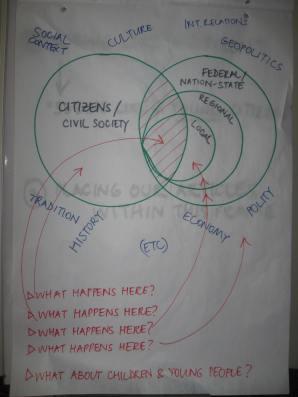
Where are the spaces for dialogue on good governance? (Image from a workshop on youth participatory governance, April 2011)

As I mentioned in my ‘governance is *so* not boring’ post, I am recently back from an internal workshop where some 20 colleagues from across the organization where I work (Plan) pulled together some basic elements for a global program strategy on Youth, Citizenship and Governance.

One of the key elements that we talked about was the importance of information literacy in citizenship and governance work, including at the level of governments, duty bearers and decision makers and of course at the level of citizens — in our case, especially children and young people. Information literacy is defined by the University of Idaho as “the ability to identify what information is needed, understand how the information is organized, identify the best sources of information for a given need, locate those sources, evaluate the sources critically, and share that information”. (I can hear my librarian friends cheering right now, as they’ve been working on this for years).

Openness as an attitude came up as something that’s important all around for good governance. This doesn’t only mean ‘open’ as a technological specification for data, but rather openness as an entire approach and attitude towards governance, citizen participation and the nature of relationships and interactions in the spaces where citizens and government overlap. We were able to link our work up very well with the concepts of open development, open government and open data; all of which can contribute to better transparency, accountability and governance and which require information literacy and a number of other skills and capacities in order to take advantage of.

My practitioner colleagues said over and over at the meeting ‘we don’t have access to the information we need to do better governance work.’ I was left wondering how those of us working at various levels, including the field of ICT4D and related, can do a better job of supporting access to information, and what are the technology and non-technology tools and approaches that work best. There is still a huge gap between the community- and district-level governance work that my colleagues are working on with children, youth and communities and the big on-line data sets that are part of open data and open government. Both very important, but there really needs to be a stronger link between the two so that they can feed into each other to achieve better governance. Once again – the questions ‘open for who? and open for what?‘ come in, as well as the need for a two-way (multi-way?) information flow.

We talked about how social accountability tools like community scorecards, social audits, budget tracking and monitoring, and participatory budgeting can be an important way for engaging marginalized and excluded populations in governance work outside of more formal channels (eg, elections, law courts, planning and auditing of public expenditure). Social accountability tools and processes allow people to more directly participate in the accountability process and make themselves heard rather than leaving accountability in the hands of the government or relying only on formal mechanisms. During our workshop, we watched the International Budget Partnership’s video ‘It’s our money, where has it gone‘ on using social accountability tools in Kenya. (Long, but very worth watching)

Following the video I explained open data in a nutshell by asking people to imagine that the budget information that the community had to get via their district officials was available online and could be accessed without going through the district officer. It was a good opportunity to think about the potential of open data and open government and how they can fit in with social accountability work.

The video highlights the very real dangers that can be present when working on transparency and accountability. Since in our case we are working with children and youth, we need to be especially aware of potential risks involved in transparency, accountability and good governance work, because this kind of work raises questions and aims to shift power and politics and resources. We need to be very sure that we are not somehow pushing our own agenda through children and youth, or handing them a hot potato that we don’t want to take on as adults or organizations, or even unintentionally putting them at risk because we haven’t fully thought through a project or initiative. We need to be sure that we are conducting thorough, participatory and shared risk assessments together with children and youth and establishing mechanisms and ways of mitigating risks, or making decisions on what to pursue and what to leave for others. Child protection, our own responsibilities as duty bearers, and the notion of ‘do no harm’ are massively important to bring in here.

We spent time talking about what we need to do as an institution to support good governance, and emphasized that openness and good governance is a key element of institutions, INGOs, local NGOs and CBOs who want to be credible in this space.  Organizations that are working with communities to push for local and/or national government transparency and accountability should expect that these same demands will be turned around to them, and the same questions asked of government and decision-makers will be asked of them. Taking those steps internally towards openness, accountability and good governance is critical. When working with youth associations and children’s groups, this is also a point for strengthening so that openness, transparency, accountability, positive leadership and other capacities, capabilities and skills are enhanced. If local associations replicate the bad governance practices that they are trying to change, then things are really not advancing much.

Successful governance work addresses multiple sides of the governance issue. Working only with citizens can create a demand that outstrips government interest, capacity or responsiveness and lead to apathy, frustration and/or conflict. So it’s really important to work with duty bearers and decision makers as well as with children and youth and their communities, and with other non-state adult actors, such as parents, teachers, community leaders and the media; to help create an environment for better governance. In addition, it’s important to understand the  incentives and disincentives that shape the behaviors of different service providers, for example teachers and health care workers.

As my colleague Wale Osofisan from our UK office pointed out today after I shared these videos on governance work: “It is not enough to get the students and communities to monitor absenteeism without really examining the root causes of the problem from the point of view of the teachers and doctors. For example, in the DRC health care workers at PHCs particularly in the rural areas don’t get their salaries paid on time – sometimes for 6 months. Hence, they are forced to abandon their official duty posts and find alternative ways of earning an income either working informally for a private clinic which pays them or they engage in other economic activities. Same goes for the teachers. Thus, civil society interventions also need to focus on the problems encountered in the supply side of the equation… This is quite a challenge because it would require tackling the perverse politics of service delivery in many developing countries and NGOs always find it very uncomfortable to engage in such terrain.”

Good governance work uses existing spaces for collaboration and dialogue among the various actors or creates new space if none exists. It builds skills and capacities in both citizens and government officials. Children and youth, for example, need to have capacities to work effectively together, organize, prioritize, influence, use media and new communication technologies, access information and interpret/analyze it, and to develop partnerships and networks. Decision-makers need to strengthen capacities to engage with children and young people, to hear, respond, follow up and provide feedback. Government institutions need to have the attitudes as well as the resources to be more responsive to citizens’ needs and rights. Government employees, as mentioned above, need to also have the space to share what makes it difficult for them to do their jobs.

We did some group work around the 3 key actors in our citizenship and governance work: the State, children and young people, and other non-state adult actors. I participated in the group that looked at the changes that would need to happen at the level of the State and was again reminded how this work requires so much more than accountability mechanisms, new ICT tools and data. We talked about what would motivate a State to have an open information policy. What is in it for elected officials? How can State actors be motivated to change their attitudes to one of more openness and accountability? Can citizens push the State to be more open? Is international donor or political pressure the only motivator that has been successful so far in most countries? If a State is not governing well, what are the common root causes? If openness is an attitude, what motivates a State and its different bodies to be open? External pressure and citizen demand are one thing, but what about addressing other factors that prohibit good governance?

Linking and promoting collaboration between and among children’s and youth groups was noted as another key piece of citizenship and governance work with young people. This can be supported at a face-to-face level but also needs to happen from the local to the global level, so that young people can connect and share common agendas and experiences both ‘horizontally and vertically.’ The web is a key tool here for taking local issues to the global level and back down again to community level. A question in my mind here was how INGOs can do a better job of linking youth and governance work that they are supporting at local levels with the external social and political environment so that they are not happening in parallel or in a vacuum. Another was whether we are thinking enough about broader social and political movements as related to major events or changes happening in a country or globally (eg, Arab Spring, Occupy Wall Street, Rio+20) and our role and position and purpose there. And what about on-line organizing and activism and ‘direct democracy’ as more young people access on-line networks and activism happens in virtual spaces?

We discussed quite a lot about how supporting overall behavior changes and public opinion are critical to creating an environment that supports public accountability and openness and gets these on the agenda. It’s also important to change attitudes with relation to how children and young people are perceived so that adults and decision-makers will listen to them and take their opinions and claims into consideration. Programs that engage children and youth and showcase their capacities and abilities can help decision-makers and other non-state adults to see that the younger generation does have valid points, opinions and ideas for positive change.

And lastly, there is the importance of ensuring that staff are well versed in local political contexts and how government systems work. Without a strong and nuanced understanding of the local context, local power dynamics, local political and local cultural contexts, and how children and young people and other excluded groups are viewed, programs may be over ambitious, wrong-headed, create dangerous conflict, set back governance and accountability work, or put children and young people in harm’s way. The complexity of this kind of work combined with the complexity of the various settings mean that a clear theory of change is needed to guide efforts and expressly address the specific changes that are sought so that initiatives can be well-designed, implemented, monitored and evaluated, and so that there is a better chance of a good impact.

Related posts:

Young citizens: youth, and participatory governance in Africa

A practitioner’s discussion on social accountability and youth participatory governance

Governance is *so* not boring

Does ‘openness’ enhance development?

New technology and good governance

ICTs, social media, local government and youth-led social audits

Digital mapping and governance: the stories behind the maps

What would an International CSO Governance revolution look like?

Resources:

IIED’s Participatory Learning and Action Journal: Young Citizens: Youth and participatory governance in Africa

Plan UK’s Governance Learning Guide
Technology for Transparency network

Read Full Post »

I’ve been told that mention of the term ‘governance’ makes people want to immediately roll over and fall asleep, and that I’m a big weirdo for being interested in it. But I promise you governance is *so* not boring! (I’m also fairly sure that whatever my teacher droned on about as I slept through my ‘Government’ class senior year of high school was not ‘governance’.)

If you get excited about the concepts of ‘open’ or ‘transparent’ or ‘accountable’ or ‘sustainable’ or ‘human rights’ or ‘politics’ then you need to also get pumped about ‘governance’ because it includes elements of all of the above.

I am just back from a week-long workshop where, based on our different practical and strategic and thematic experiences, internal and external evaluations and reviews of good practice, videos and documents from other organizations, input from children and youth in several countries (and with the support of a fantastic facilitator), several of us from different Plan offices worked to define the basic elements for a global program strategy on Youth, Citizenship and Governance (to be completed over the next several months).

At the workshop, we got a copy of A Governance Learning Guide, which I’m finding very useful and am summarizing below.

Why is governance important?

Our focus is on children and youth, but many of the reasons that governance is important for them extend to governance overall.

From Plan UK’s Governance Learning Guide, chapter 1.

So what exactly do we mean by the term “governance”? 

In our case, we link governance work with our child-centered community approach (a rights-based approach) and in this particular strategy, we will be focusing on the processes by which the state exercises power, and the relationships between the state and citizens. We have separate yet related strands of work around child and youth participation in our internal governance structures (here’s one example), effectiveness of our institutional governance overall (see this discussion on International CSO governance, for example), and the participation of children and youth in high level decision-making fora.

Our concept of governance for the youth, citizenship and governance strategy is based on the following governance concepts*:

Accountability and responsiveness.  This includes formal government accountability as well as citizen-led accountability. Opportunities for children and youth to participate in formal accountability processes are often limited due to their age — they cannot participate in elections, for example. Citizen-led accountability can open new opportunities for children, youth and other more marginalized groups to hold those in power more accountable.

‘People no longer rely on governments alone to improve governance. All over the world we are seeing experiments in ‘participatory governance’. People and organisations are grasping the opportunities offered by decentralisation and other reform processes to demand more of a say in the public policy and budget processes that affect them. These ways of holding the state to account are often called ‘social accountability’. Examples include participatory budgeting, monitoring electoral processes, using online and mobile technology, and citizen evaluation of public services. These forms of citizen engagement and social accountability are particularly promising for young people, who often face challenges in getting their voices heard in formal policy and governance processes.’ (from the call for submissions for the Participatory Learning and Action Journal (PLA) special issue on Young Citizens: youth and participatory governance in Africa, published in December, 2011)

Accountability is also linked with openness and sharing of information such as local government budgets and plans (this is also referred to as ‘transparency’). Responsiveness, in our case, refers to ‘the extent to which service providers and decision makers listen, meet and respond to the needs and concerns of young people.’ Responsiveness includes the willingness of those in power to engage seriously with young people and a government’s commitment to ‘be responsive’ to the issues raised by citizens, including children and young people. Responsiveness entails also the administrative and financial capacity to respond concretely to a population’s needs, rights and input.

Voice and participation.  This refers to the capacity of young people to speak, be heard and connect to others. Voice is one of the most important means for young people to participate. Within the concept of ‘voice’ we also consider voice strategies for raising and amplifying voices, capacity to use voice in a variety of ways to bring about change, space to exercise the raising of voices, and voice as a means to participate and exercise citizenship rights. (We consider that every child has citizenship rights, not only those who hold citizenship in a particular country). It’s also important to qualify the use of the term participation. In the case of young people’s participation in governance, we are not referring to the participatory methods that we commonly use in program planning or evaluation (we are also not discounting these at all – these are critical for good development processes!). In governance work, we are rather taking it further to refer to the meaningful inclusion of children and young people in decision-making processes.  

Power and politics. These are key in governance work. It is essential to be aware of and understand politics and power dynamics so that children and young people (and other oft-excluded groups) are not overlooked, manipulated, intimidated or disempowered.

Image captured from Plan UK’s Governance Learning Guide, chapter 2 page 14.

A key question here is what children and young people are participating in, and what for. Another important question is where are children and young people participating? Is it in special events or spaces designated just for them or are they participating in adult spaces? How does the place and space where children and young people are participating impact on their ability to influence decisions?

It’s important to note the 4 types of power that are typically considered in power analyses (from VeneKlasen, 2007): power over (domination or control), power within (self-worth), power to (individual ability to act, agency) and power with (collective action, working together). These need to be analyzed and understood, including their social, cultural and historical factors that create and sustain different power dynamics in different situations and spaces.

Capacity. We refer here to the capacity of both decision-makers and young people. Decision makers need to have the ability to perform their duties and ensure services are delivered. This, in our case, includes the abilities of decision makers to interact, engage and listen to children and young people and to take them seriously and to be responsive (see above) to their views, needs and rights. Young people also need to have the capacity to hold decision makers to account and to express their concerns and their views, including the views of other children and young people who may be excluded and marginalized from the decision making process or from participating fully. Information literacy and the capacity to access, interpret and analyze information is a critical skill for children and young people.

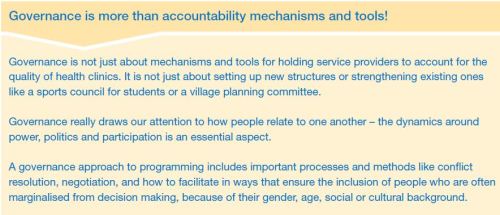
Interactions between children and young people and decision makers. These spaces encompass critical aspects of participation, power and politics. An example of a space for interaction would be where children and young people, local government and school leaders come together to discuss budget plans and available resources for school infrastructure. These spaces are shaped by a number of factors, including social, economic, cultural ones. They are also not free of personal agendas, desires, intentions and prejudices. It’s critical to remember this in governance work — ‘tools’ and ‘mechanisms’ are not enough. (ICT4Governance and Tech for Transparency friends, I’m looking at you! Though I think most of us see this point as ‘beating a dead horse’ by now.)

From Chapter 2 of the Governance Learning Guide by Plan UK

*Summarized from Chapter 1 and Chapter 2 of Plan UK’s extremely useful and easily downloadable A Governance Learning Guide. The guide also has a number of practical use cases on different governance initiatives as well as an extensive section on additional resources.

Here’s a follow-up post (since governance is so clearly *not* boring and I’m sure there is high demand for more!) called 15 thoughts on good governance programming with youth.


Read Full Post »

The Technology Salon* hosted at IREX on Thursday, June 6, focused on what the International Aid Transparency Initiative (IATI) would mean for international development, especially for US-based NGOs and government contractors.

Tony Pipa, Deputy Assistant Administrator, Policy, Planning and Learning at USAID, started the Salon off by noting that IATI is an inter-agency US government commitment, not only a USAID commitment. USAID is the lead agency for developing the IATI implementation plan, building on existing agreements on transparency, enhancing the US Government’s commitments to transparency, openness and accountability. A key element of these efforts is the Foreign Assistance Dashboard which places the data into the public realm in a user friendly way, making it easier to understand visually and also more accessible and easy to find. The goal is not only transparency, but greater accountability. The US Government hopes to streamline reporting requirements, meeting multiple requirements for a range of international and national reporting standards. The goal for USAID is making aid more useful for development.

Steve Davenport from AidData followed, giving some background on IATI itself. IATI was initially sponsored largely by DFID, but has since grown as a partnership. Over 75% of development assistance is represented by signatories to IATI now. Eight donors are now publishing and twenty-three developing countries have signed on (involving partner countries at the local level as well). Different groups are conducting pilots to see how to implement as IATI gains more traction. For this reason, it would be a good move for US INGOs and contractors to get in front of the transparency and accountability curve rather than get hit by the wave. Better transparency allows organizations to better show their results. The IATI standard can lead to better coordination among the different actors, making it easier to broaden our collective impact. This is especially important now given that aid budgets are being reduced. IATI can be thought of as a group of people, a set of commitments, and an XML standard for moving data from point a to point b. Application developers are beginning to pick this up and develop tools that allow for new ways of visualizing the data, making it actionable and improving accessibility, which can lead to better accountability.

Larry Nowels (Consultant at Hewlett, ONE campaignspoke about Hewlett experience with IATI. Hewlett has made a large investment in transparency and accountability, supporting US and European organizations as well as startups in Africa and Asia over the past 10 years. Transparency is a key building block, so that governments and their citizens know what is being spent, where and on what, and how to make better decisions about resources and reducing waste. It also allows citizens to hold their governments accountable. Hewlett was one of the original signatories and the second publisher to the IATI standard. A key question remains: What’s in it for an organization that publishes according to the standard? For some teams, IATI makes all the sense in the world, but for others it seems to be a waste of resources. The Obama Administration (Open Government Directive, Open Government Partnership, Foreign Assistance Dashboard), all show a strong commitment to transparency. The tough part is implementation of IATI standards and details are still being worked out to find an ideal way.

Larry considers a central repository ideal, but there are issues with quality control and the Foreign Assistance Dashboard does not add data that was not already publicly available. In addition, many US Government agencies have not been added to the Dashboard yet, and getting them on board will be difficult if they are less dedicated than USAID or State. It’s critical to institutionalize IATI and related initiatives and internalize them, given that we cannot assume Obama’s will be a multi-term presidency. In the past 3 years, a number of bills around the theme of accountability and transparency have been introduced by both parties. The Poe-Berman Bill (HR 3159) provides a law to entrench the use of tools like the Dashboard. The Administration, especially the State Department, however, has not engaged Congress enough on these issues, and this has led to some roadblocks. White House pressure could help strengthen support for this initiative; however, there may be pushback by Republicans who generally oppose the US subscribing to international standards.

Discussion**

What is the overlap between the Open Government Partnership (OGP) and IATI?

What is the practical, on-the-ground use or application of IATI data? What does it look like when it is working how it should? What would it ideally look like 5 years from now?

  • There is enormous need for data sharing in a crisis – it is essential for coordinating and understanding the unfolding situations in real-time in order to save lives. There is much more scrutiny as well as a need for rapid coordination and response during a humanitarian crisis, so it requires a higher level of transparency than development work. One way that has been suggested for getting more organizations on board is to start sharing more information during crises and draw the lessons over to development.
  • A project in Mexico City has run investigative campaigns on spending. This has led to the prosecution and resignations of political figures and even some threats against staff, which demonstrates how unsettling this open information can be to the powers that be. It is not about transparency for transparency’s sake. It’s about having a tool that can be used to inform, interpret situations and hold governments and donors accountable. It opens the system up for sharing information.
  • Currently this type of information isn’t available to Country Governments for coordination. Countries need to plan their fiscal year budgets, but rely heavily on donors, and both run on a different fiscal calendar. If donor information were more readily available, countries could plan better.
  • On a 5-year horizon, we would ideally see aid tracking down to the beneficiary level. Tools like IATI can help collect data in more automated ways. Open data can help us track both where funding is allocated and also what is actually being implemented. Additional work is needed on this side; for example, training journalists to understand how to use this data, how to access it – handing them a data file isn’t a very useful thing in and of itself.

That’s great, but great for whom? What does it mean? Does this lead to better aid? Better spending? And what if it creates unrealistic timelines, where development becomes more like a for-profit company that must demonstrate impact within a fiscal quarter? We all know that development initiatives and impact take much longer than three months. Will IATI mean that we will stop doing things that take longer? Things that cannot be checked off on a checkbox? Will we actually lower the quality of our programs by doing this?

  • IATI, like any form of transparency, is only one element of a whole stream of things. The new USAID monitoring and evaluation system is a breakthrough for actually learning from evaluations and data. It’s a longer-term investment than Congress is used to, so it’s a matter of convincing Congress that it is worth the value. There is a better chance of USAID admitting failure in the future if the systems are in place to demonstrate these failures in hard data and learn from them. It’s about discovering why we failed – if we spend money and it doesn’t work, we can at least then identify weaknesses and build on them. Showing failures also demonstrates credibility and a willingness to move forward positively.
  • We can err on the side of openness and transparency and engage congress and the public, making a distinction between performance management and the long-term impact of development projects. There is no way of holding back on publishing information until it is in a format that will be readily understandable to congress and the public. This is a reality that we are going to have to live with; we have to put the data out and build on it. This can help to start important conversations. IATI is important for closing the loop, not just on public resources but also private resources (which is why Hewlett’s commitment is important). As private development resources increase, USAID becomes less dominant in the development landscape. Making sure data from many sources comes in a common format will make it easy to compare, and bring this data together to help understand what it going on. The way to visualize and think of it now is different because we are still in early days. IATI will begin to change the approach for how you evaluate impact.
  • IATI data itself does not tell the whole story, so it’s important to look at additional sources of information beyond it. IATI is only one part of the monitoring and evaluation effort, only one part of the transparency and accountability effort.

How do you overcome conflicts of interest? If development outcomes or data that is opened are not in the interest of the country government, how do we know the data can be trusted, or how does it feed back to the public in each country?

  • China’s investment in Africa, for example, may make it more difficult to understand aid flows in some ways. It will take a while to enforce the standards, particularly if it is done quickly, but we can draw the BRICs into the conversation and we are working with them on these topics.

The hard part is the implementation. So what are the time lines? How soon do we think we will see the US publish data to IATI?

  • At this time, the US Government hasn’t created an implementation timeline, so the first order of business is to get IATI institutionalized, and not to rush on this. It’s a larger issue than just USAID, so it must be done carefully and tactfully so it stays in place over the long term. USAID is working on getting data on the Dashboard to get the Obligation of Spending data up and project level data up. USAID is trying to balance this with consistency and quality control. How do you produce quality data when you are publishing regularly? These issues must be addressed while the systems are being developed. Once USAID puts data on the Dashboard, it will begin being converted to IATI data

IATI is still a donor-led initiative. NGOs involvement opens this data up to use by communities. Training individuals to use this information is not necessarily sufficient. Are there plans to build institutions or civil society organizations to support the data to be useful for communities and the general public?

  • The data can assist with the development of watchdog organizations who provide a platform for citizens to act together for accountability. Examples of organizations that are currently receiving funding to do this are Sodnet and Twaweza. There has also been support to think tanks throughout Africa to build the capacity of objective, independent policy analysts who write critiques of government initiatives.
  • There is a definite need to mainstream IATI and bring everyone together into one single conversation instead of setting up parallel structures.

So how do you build these institutions, watchdogs, etc? Will USAID really put out RFPs that offer funding to train people to criticize them?

  • This is where Hewlett and other organizations come in. They can run these trainings and build capacities. The Knight News Challenge is doing a lot of work around data-driven journalism, for example.

This is going to put a lot of pressure on people to be more efficient and might drive down resources in these spheres. There is a limited amount of incentive for organizations to involve themselves. Is there a way to incentivize it?

  • It will also drive some internal efficiencies, creating greater internal coherence within development organizations. It’s very hard to pinpoint impact within organizations because there isn’t an easy way to draw comparisons between projects, implementation strategies, etc. People always worry: What if we find something that makes us look bad? So IATI is just one part of a bigger effort to push for commitment to transparency across the board. Committing to IATI can lead to a mindset which focuses organizations on efficiency, transparency and accountability.
  • Filling out the Dashboard will be helpful in many respects, and it will make information more accessible to the general public, as well as congressional staffers, etc. It can serve multiple constituencies while making data more usable and transparent. USAID is going to be as aggressive as possible to get information on the dashboard into IATI format. There has not been a conversation about requiring implementing partners to meet IATI standards, but USAID itself is committed.

***

Thanks to IREX for hosting the Salon, our fantastic lead discussants and participants for stimulating discussion, Wayan Vota for inviting me to coordinate the Salon and Anna Shaw for sharing her Salon notes which were the basis for this blog post.

Sign up here if you’d like to be on the invitation list for future Salons.

*The Technology Salon is sponsored Inveneo in collaboration with IREX, Plan International USA, Jhpiego and ARM.

**The Salon runs by Chatham House Rule, so no attribution has been made for the discussion portion of the Salon.

Read Full Post »

A version of this post originally appears on the World Bank’s Connect4Climate site.

Twenty years ago, at the Rio Earth Summit, 178 governments committed to a series of legally non-binding principles designed to commit governments to balance development and environment in a way that would bring a more sustainable future. Principle 10, the first international declaration that recognizes the rights of people to hold governments accountable for their policies regarding the environment, was one key result of the summit. It provides a means for people to engage in the decisions made by political leaders and government agencies about environmental issues that affect livelihoods and long-term wellbeing.

“Environmental issues are best handled with participation of all concerned citizens, at the relevant level. At the national level, each individual shall have appropriate access to information concerning the environment that is held by public authorities, including information on hazardous materials and activities in their communities, and the opportunity to participate in decision-making processes. States shall facilitate and encourage public awareness and participation by making information widely available. Effective access to judicial and administrative proceedings, including redress and remedy, shall be provided.” – Principle 10 of the Rio Declaration

Video by Article 19

Zero Draft 2012: participation, transparency, accountability and aid effectiveness

Since 2011, key stakeholders have been submitting ideas for the Zero Draft of the Rio+20 outcome document, to be discussed at the Rio+20 Conference in June 2012.

Like Principle 10, the Zero Draft recognizes the need for broad public participation in decision-making, linked to a strengthened right to access information and to better civil society capacity to exercise that right. It notes that technology can make it easier for governments “to share information with the public and for the public to hold decision makers accountable” and that it is critical to work towards universal access to information and communications technologies. (Clauses 17 and 18). A recent analysis showed that participation, accountability, transparency, Principle 10/access to information and social inclusion/ equity are among the terms that share an ‘excellent’ level of interest among governments, UN agencies, civil society groups and other stakeholders.

Along with public participation, the Zero Draft also calls for “increased aid effectiveness, taking into account the Paris Declaration, the Accra Action Agenda and the Busan Partnership for Effective Development Cooperation in ensuring that aid is effective, accountable and responsive to the needs and priorities of developing countries.” Greater coherence at international and national levels is urged, including “effective oversight of resources to ensure that developing countries have steady and predictable access to adequate financing, including by the private sector, to promote sustainable development.’

A role for Communications and ICT tools

ICTs can play a role in supporting Principle 10 and Zero Draft, and pushing for appropriate mechanisms for response and redress.

Mass media campaigns and communication for development (C4D) approaches have long been used to disseminate information and encourage environmental awareness and behavior change. New media has improved access to information and allows multi-channel communication rather than one-way broadcasts. Greater access to mobile phones and to new media channels mean that a broader population than ever before can be engaged in and/or participate proactively in defining and acting on Rio+20 and its outcomes.

In addition to information sharing and behavior change, ICTs have the potential to play a strong role in helping civil society organize and push for greater transparency, openness and accountability around Rio+20. As Chantal Line Carpintier suggests, “Rio+20 should also agree on an effective accountability process for all actors  – governments, business and industry, local authorities, NGOs and other major groups and stakeholders.  Accountability and ownership by all actors would favour implementation. There is growing support, for instance, for public reporting on sustainability performance.  A registry of commitments is one of the tools that have been suggested to follow up on commitments made at Rio+20 to avoid previous lack of implementation.”

An effort similar to the open government partnership and the International Aid Transparency Initiative or the integration of sustainable development goals and Rio+20 commitments into these two efforts could be something to consider, along with a mandate for corporations to also open their activities to public scrutiny.

On-line organizing combined with both online and offline actions (in places that have ready access to social media) can help the world prepare for Rio and to push for its outcomes to be implemented.

Access, capacity and the communication cycle

Despite the great potential for ICTs in communication, change and accountability efforts, however; lack of access to ICTs and potentially low capacity to interpret data that might be presented on-line in such a registry is of concern in less accessible rural communities and among some marginalized groups.

Education levels, literacy, and other excluding factors such as poverty and gender discrimination can severely limit ICT and social media access for a large number of people.  In addition, information produced in dominant cultures or languages can exclude or override those with less power. As Angelica Ospina notes in her post Knowledge Brokers, ICTs, and Climate Change: Hybrid Approaches to Reach the Vulnerable, “There are many misconceptions about what ‘reaching out’ implies, as in practice it requires much more than making climate change information and knowledge publicly available through Internet-based tools such as Web portals and online databases.”

Therefore, there needs to be, “a more holistic understanding of the information cycle, including the creation, acquisition, assimilation, management, dissemination and ultimately the USE of climate change information, particularly within vulnerable contexts. Beyond the provision of climate change information, it’s necessary to consider if/how the information is being integrated -or not- into decision-making processes at the local, regional or national levels,” she says.

The Children in a Changing Climate project uses a variety of participatory development and media tools for children and adolescents to explore and document climate change in their communities, and to share their findings and suggestions to adults and other decision makers.

From information and knowledge to practice

There is also a need “to identify, adapt and adopt innovative approaches for the effective delivery and the local appropriation of climate change messages, and most importantly, for the translation of information and knowledge -both new and traditional- into climate change practice.” This will require strong efforts as well as resources to create an inclusive environment that fosters greater participation, as mandated by Principle 10, and local ownership of sustainable practices.

“Working with knowledge brokers, also called “human infomediaries” who can help bring people together, identify local needs and transfer information and knowledge more effectively is one such approach to improve information and communication flows,” Ospina advises. “Human infomediaries support an active process that involves exchanges between people, facilitating the development of climate change strategies, adoption of adaptation and mitigation practices, and processes of local change and innovation.”

(More here on ICTs and the role of knowledge brokers).

Building on Ospina’s observations on how to bring information to the “last mile,” meaningful ways to bring community knowledge and information into higher level discussions need to be found. Local communities have vast knowledge on resilience, climate patterns, local environments and local situations and histories that can be documented and shared using ICTs both to benefit themselves and to share at broader levels, improving South-South cooperation and innovation. Multi-media curricula such as the Children in a Changing Climate website bring together young people’s voices and opinions around climate change and environment.

Post Rio+20, digital tools are one of many information and communication mechanisms that local communities and their citizens can use to confirm, validate, contest and dispute information related to compliance with commitments being put forward by those responsible for upholding them. Participatory media approaches can be effective in bringing community members as well as duty bearers at local, district, national and global levels into discussions about climate change and sustainable development.

Why are you killing me? Girls in Kenya use poetry to engage adults in discussion on climate change.

Summing up

In summary, ICTs can play a strong role in education, participation and accountability processes if their integration is well thought through, appropriate to the context, and taking into consideration good participatory practices. Hybrid approaches that use a variety of online and offline tools can be effective for reaching populations and decisions-makers at different levels of responsibility, for ensuring that ICTs are not widening existing information and participation gaps and for upholding the goals set forth in Principle 10. Children and youth can and should play an instrumental role in bringing about awareness and accountability, especially since they will be the ones who reap the long-term results of the agreements sown at Rio+20.

The Notes on ICTs, Climate Change and Development blog provides a wide range of research, commentary, and research on these areas.

Read Full Post »

The Technology Salon (TSNYC) on the International Aid Transparency Initiative (IATI), held April 13th, offered an overview of IATI as a coming-together point for aid transparency. It also stimulated discussion on opportunities and challenges for organizations and institutions when publishing information within the IATI standard and shared some available tools to support publishing NGO data.
.
IATI Background
.
Simon Parrish from Aid Info explained that IATI aims to provide information that meets the needs of a number of diverse groups, is timely, is ‘compilable’ and comparable, improves efficiency and reduces duplication. Simon explained that IATI arose from the 2005 Paris Declaration on Aid Effectiveness and was launched as part of the Accra Agenda for Action in 2008 due to a strong call from civil society to donors, multilaterals and northern NGOs for greater transparency.
.
Organizations felt they were already working hard to be transparent; however governments, journalists, tax payers and others looking for information were not able to find what they needed. Rather than each organization creating its own improved transparency and accountability system, the idea was to use an open data approach, and this is where IATI came in. Since Accra, transparency and accountability have gained global traction and IATI has been a key part of this movement for the aid sector.
.
Donor agencies, the World Bank, the EU, the US Government and others have already signed on to IATI and have started to publish basic information. INGOs are also starting to come on board and schedule their dates for publication to the IATI standard. It is hoped that over time the quality and amount of information published will improve and expand. For example, ‘traceability’ needs to be improved so that aid can be followed down the supply chain. Information from international and local NGOs is critical in this because the closer to the ground the information is, the better it can be used for accountability purposes.
.
Opportunities and Questions around IATI
.
To complement Simon’s overview, I shared ideas on some of the opportunities that IATI can offer, and some common questions that may arise within INGOs who are considering publishing their information to IATI.
.
For example, IATI can help catalyze:
  • transparency and accountability as core values
  • better coordination and program planning (internally and externally)
  • reduced reporting burden (if donors agree to use IATI as a common tool)
  • improved aid effectiveness
  • collective learning in the aid sector
  • improved legitimacy for aid agencies
  • an opportunity to educate the donor public on how aid/development really works
  • ‘moral ground’ for IATI compliant aid organizations to pressure governments and private sector to be more transparent
  • space for communities and ‘beneficiaries’ to hold aid agencies more accountable for their work
  • space for engaging communities and the public in identifying what information about aid is useful to them
  • concrete ways for communities to contest, validate and discuss aid information, intentions, budgets, actions, results.
Concerns and questions that may arise within NGOs / CSOs around IATI include:
  • Is IATI the right way to achieve the goal of transparency and accountability?
  • Is the cost in time, money, systems, and potential risk of exposure worth the individual and collective gain?
  • Is IATI the flavor of the month, to be replaced in 2-4 years?
  • What is the burden for staff? Will it increase overhead? Will it take funds and efforts away from programs on the ground?
  • What is the position of the US Government/USAID? Will implementing agencies have to report in yet another format (financial, narrative)?
  • Much internal project documentation at NGOs/INGOs has not been written with the idea of it being published. There may be confidential information or poorly written internal documents. How will aid agencies manage this?
  • What if other agencies ‘steal’ ideas, approaches or donors?
  • What security/risks might be caused for sexual or political minority groups or vulnerable groups if activities are openly published?
  • Isn’t IATI too focused on ‘upward’ accountability to donors and tax payers? How will it improve accountability to local program participants and ’beneficiaries’? How can we improve and mandate feedback loops for participants in the same way we are doing for donors?
  • Does IATI offer ‘supplied data’ rather than offer a response to data demands from different sectors?
ICT Tools to support NGOs with IATI
.
Ruth Del Campo discussed some of the different tools that are available to support INGOs and smaller organizations with IATI reporting, including Open Aid Register (OAR) which she created to support smaller organizations to comply with IATI. The Foundation Center has created a tool to support Foundations to enter their information into the IATI Standard also. Aid Stream is being used by many UK organizations to convert their data to the IATI Standard. Geo-visualization tools include CartoDB, AidView.
.
IATI awareness in the US
.
Although tools exist and awareness around IATI is growing elsewhere, Ruth noted that in the US many organizations do not know what IATI is, and this is a problem. Another issue Ruth brought up is that most existing charity raters do not rate program effectiveness or program transparency. Instead, charities are judged based on overhead rates, growth, financial statements, and whether they are publishing certain information on their websites. These measures do not tell what an organization’s program impact or overall transparency are, and they do not trace funds far enough along the chain. Linking charity rating systems with IATI standards could encourage greater transparency and accountability and help the public make decisions based on program accountability in addition to financial accountability. (For background on INGO overhead, see Saundra Schimmelpfennig’s “Lies, White Lies, and Accounting Practices”).
.
Because many INGOs are not familiar with IATI, a greater dissemination effort is needed for IATI to be of optimal use. If only 20% of the aid picture is available, it will not be very helpful for coordination and decision making. Many INGOs feel that they are already transparent because they are publishing their annual reports as a .pdf file on their websites and they have an overhead rate within a certain percentage, but this is not enough. Much more needs to be done to gain awareness and buy-in from US INGOs, government, charity rating systems, donors, media and the public on transparency and IATI.
.
Discussion…
.
Following the 3 discussants, TSNYC participants jumped in for a good debate around key points:
.
Carrot or stick approach?
.
NGOs place great importance on their Charity Navigator rankings and Better Business Bureau reviews, and many donors select charities based on these rankings, so it will be important to link these with IATI. The Publish What You Fund index, which tracks the transparency of different organizations, has been helpful in getting countries and institutions on board. The Foundation Center lists transparency indicators on their site GlassPockets as well. The Brookings and CGD QuODA report was mentioned as a key reason that the US Government signed onto IATI at Busan last November, since the US was ranked very low on transparency and saw that they could bring their ranking up by signing on.
.
Consensus at the Technology Salon was that it is not likely that the US Government or USAID will make IATI compliance mandatory for their grantees and implementing partners as DFID has done. Rather, the existing dashboard for collecting information would be used to report into IATI, so the dashboard needs to be improved and regularly updated by US agencies. One concern was whether in this scenario, the information published by USAID would be useful for developing country governments or would only be of use to USAID Missions. On the bright side, it was felt that movement within the US Government over the past few years towards greater openness and transparency has been massive. TSNYC participants noted that there seems to be a fundamental mindset change in the current administration around transparency, but it’s still difficult to make change happen quickly.
.
Some members of the US Congress have latched onto the idea and are pushing for greater transparency and this could impact whether the IATI profile increases. Transparency and accountability are of interest to both major US parties. Liberals tend to be interested in the idea of being more open and sharing information; and conservatives tend to focus on value for money and stamping out corruption and lowering inefficient aid spending and waste. IATI can support with both and be a win for everyone.
.
Making IATI mandatory could, some cautioned, backfire. For example there are foundations and corporations that for a variety of reasons do not openly share information about their giving. If pressured, the tendency may be to shut down totally.
.
Showing what positive things can be done with IATI and how it can benefit CSO information management and coordination internally as well as externally was thought to be a better approach than positioning IATI as “we are being audited by everyone now.” IATI should be emphasized as an opportunity to join data together to know what everyone is doing, visualize the data using new technologies, and use it to make better program decisions and improve coordination as well as accountability. Some examples of vibrant and informative uses of IATI data include Mapping for Results, Interaction’s Haiti Aid Map and the Foundation Center’s comparison of Foundation giving and World Bank funding.
.
Transparency as a ‘norm’
.
Many organizations are investing in transparency for reasons that go far beyond IATI compliance. Three kinds or organizations were identified at the Salon session: those who comply because it is mandatory; those who comply because it’s inevitable; and those who comply because they believe in the inherent value of transparency as a core principle. Even within organizations, some teams such as Democracy and Governance, may be much more interested in IATI than, say, Education, Health, or Arts teams, simply because of the themes they work on and their competing priorities. It is hoped that in 5 years’ time, it is no longer a question of mandatory or inevitable compliance, but rather transparency becomes the norm and it starts to feel strange to work in a space that is not transparent. Leadership is important to get an organization on board.
.
Challenges and opportunities in IATI compliance
.
Challenges to IATI compliance were discussed in depth at the Salon, including questions around the amount of resources needed to report to IATI. It was noted that the biggest challenges are organization, coordination, and change of attitudes internally. Some of the core obstacles that Salon participants noted include:
.
Time and resources
Some pushback might be seen around IATI because investment in IATI compliance may not be seen as providing an immediate return to individual organizations. TSNYC participants felt that rather than a constraint, IATI provided an opportunity for organizations to better manage their own information for internal sharing and use. IATI can help improve program planning, reduce time spent gathering program information from colleagues and across countries, and support better internal coordination among offices and partners. It was noted that when governments started publishing open data, the people who most used it were government employees for their own work. IATI can be seen as an investment in better internal coordination and information management. Once the information is available in an open format it can be used for a number of data visualizations that can show an organization’s reach and impact, or help a number of organizations share their joint work and impact, such as in the case of coalitions and thematic or sectoral networks.
.
Project document quality
Concerns may be raised in some organizations regarding the state of project documents that were not originally written with publication in mind. Organizations will have to decide if they want to work retroactively, invest in quality control, and/or change processes over time so that documentation is ready for publication.
.
Losing the competitive edge
TSNYC participants worried that without USAID mandatory compliance, some INGOs, and contractors especially, would not be motivated to publish information for fear of losing their competitive edge. It is feared that getting contractors to report to any level of detail will be difficult. This, the group discussed, makes peer pressure and public pressure important, and mechanisms to encourage broader transparency will need to be found. One idea was to create a ‘5 star system’ of IATI compliance so that organizations with full compliance get a higher star rating (something that Aid Info is already working on). Another angle is the hope that IATI reporting could replace some other mandatory reporting mechanisms, and this may be another entry point.
.
Accountability to whom?  
It was recognized that IATI was initiated as a top-down approach to accountability. The question remains how to make IATI information more useful for ‘beneficiaries’ and program participants to track aid flows, and to contest and validate the information. What complaints mechanisms exist for communities where aid has not been effectively implemented? One point was that IATI is designed to do exactly that and that when it is more populated with information, then this more exciting part that involves playing with the data and seeing what communities have to say about it will start to happen.
.
Simon noted that there is a huge emerging civic hacker and ICT for social change movement. Access to aid information can be hugely liberating for people. At some aid transparency workshops the focus has been on what national NGOs and governments are doing. Young people are often angry that they don’t know about this. They often find the idea that the information is available to them very exciting. Much of the conversation at these meetings has been about ways to reach communities and about who can be involved as intermediaries.
.
IATI is still top down and the information that people need is bottom up. However the conversation is starting to happen. Infomediaries need to be multiple and varied so that there is not only one source of IATI data interpretation, but rather a variety of interpretations of the data. Social accountability processes like community score cards and social audits can be brought into the equation to extend the value of IATI information and bring in community opinion on aid projects and their effectiveness. Platforms like Huduma are examples of making open data more accessible and useful to communities.
.
* * * * *
.
A huge thanks to our discussants Ruth Del Campo and Simon Parrish and to all those who participated in this 3rd Technology Salon NYC!
.
Contact me if you’d like to get on the list for future TSNYC invitations.
.
The Technology Salon™ is an intimate, informal, and in person, discussion between information and communication technology experts and international development professionals, with a focus on both:
  • technology’s impact on donor-sponsored technical assistance delivery, and
  • private enterprise driven economic development, facilitated by technology.

Our meetings are lively conversations, not boring presentations – PowerPoint is banned and attendance is capped at 15 people – and frank participation with ideas, opinions, and predictions is actively encouraged through our key attributes. The Technology Salon is sponsored by Inveneo and a consortium of sponsors as a way to increase the discussion and dissemination of information and communication technology’s role in expanding solutions to long-standing international development challenges.

Read Full Post »

Does ‘openness’ enhance development?

This was the question explored in a packed Room 3 (and via livestream and Twitter) on the last day of the ICTD2012 Conference in Atlanta, GA.

Panelists included Matthew Smith from the International Development Research Center (IDRC), Soren Gigler from the World Bank, Varun Arora from the Open Curriculum Project and Ineke Buskens from Gender Research in Africa into ICTs for Empowerment (GRACE). The panel was organized by Tony Roberts and Caitlin Bentley, both pursuing PhD’s at ICT4D at Royal Holloway, University of London. I was involved as moderator.

As background for the session, Caitlin set up a wiki where we all contributed thoughts and ideas on the general topic.

“Open development” (sometimes referred to as “Open ICT4D“) is defined as:

“an emerging area of knowledge and practice that has converged around the idea that the opening up of information (e.g. open data), processes (e.g. crowdsourcing) and intellectual property (e.g. open source) has the potential to enhance development.”

Tony started off the session explaining that we’d come together as people interested in exploring the theoretical concepts and the realities of open development and probing some of the tensions therein. The wiki does a good job of outlining the different areas and tension points, and giving some background, additional links and resources.

[If you’re too short on time or attention to read this post, see the Storify version here.]

Matthew opened the panel giving an overview of ‘open development,’ including 3 key areas: open government, open access and open means of production. He noted that ICTs can be enablers of these and that within the concept of ‘openness’ we also can find a tendency towards sharing and collaborating. Matthew’s aspiration for open development is to see more experimentation and institutional incentives towards openness. Openness is not an end unto itself, but an element leading to better development outcomes.

Soren spoke second, noting that development is broken, there is a role for innovation in fixing it, and ‘open’ can contribute to that. Open is about people, not ICTs, he emphasized. It’s about inclusion, results and development outcomes. To help ensure that what is open is also inclusive, civil society can play an ‘infomediary‘ role between open data and citizens. Collaboration is important in open development, including co-creation and partnership with a variety of stakeholders. Soren gave examples of open development efforts including Open Aid Partnership; Open Data Initiative; and Kenya Open Government Portal.

Varun followed, with a focus on open educational resources (OER), asking how ordinary people benefit from “open”. He noted that more OER does not necessarily lead to better educational outcomes. Open resources produced in, say, the US are not necessarily culturally appropriate for use in other places. Open does not mean unbiased. Open can also mean that locally produced educational resources do not flourish. Varun noted that creative commons licenses that restrict to “non-commercial” use can demotivate local entrepreneurship. He also commented that resources like those from Khan Academy assume that end users have a computer in their home and a broadband connection.

Ineke spoke next, noting that ‘open’ doesn’t happen in a vacuum. Sometimes power relations become more apparent when things become open. She gave the example of a project that offered free computer use in a community, yet men dominated the computers, computers were available during hours when women could not take advantage of them, and women were physically pushed away from using the computers. ‘This only has to happen once or twice before all the women in the community get the message,’ she noted. The intent behind ‘open’ is important, and it’s difficult to equalize the playing field in one small area when working within a broader context that is not open and equalized. She spoke of openness as performance, and emphasized the importance of thinking through the questions: openness for whom? openness for what?

[Each of the presenters holds a wealth of knowledge on this topic and I’d encourage you to explore their work in more detail!]

Following the short comments from panelists, the room split into several groups for about 15 minutes to discuss points, tensions, and questions on the concept of open development. (See the bottom of the wiki page for the full list of questions.)

We came back together in plenary to discuss points from the room and those coming in from Twitter, including:

  • Should any research done with public funds be publicly open and available? This was a fundamental values question for some.
  • Can something be open and not public? Some said that no, if it’s open it needs to be public. Others countered that there is some information that should not be public because it can put people at risk or invade privacy. Others discussed that open goods are not necessarily public goods, rather they are “club” goods that are only open to certain members of society, in this case, those of a certain economic and education level. It was noted that public access does not equal universal availability, and we need to go beyond access in this discussion.
  • Is openness fundamentally decentralizing or does it lead to centralization? Some commented that the World Bank, for example, by making itself “open” it can dominate the development debate and silence voices that are not within that domain. Others felt that power inequalities exist whether there is open data or not. Another point of view was that the use of a particular technique can change people without it being the express intent. For example, some academic journals may have been opening up their articles from the beginning. This is probably not because they want to be ‘nice’ but because they want to keep their powerful position, however the net effect can still be positive.
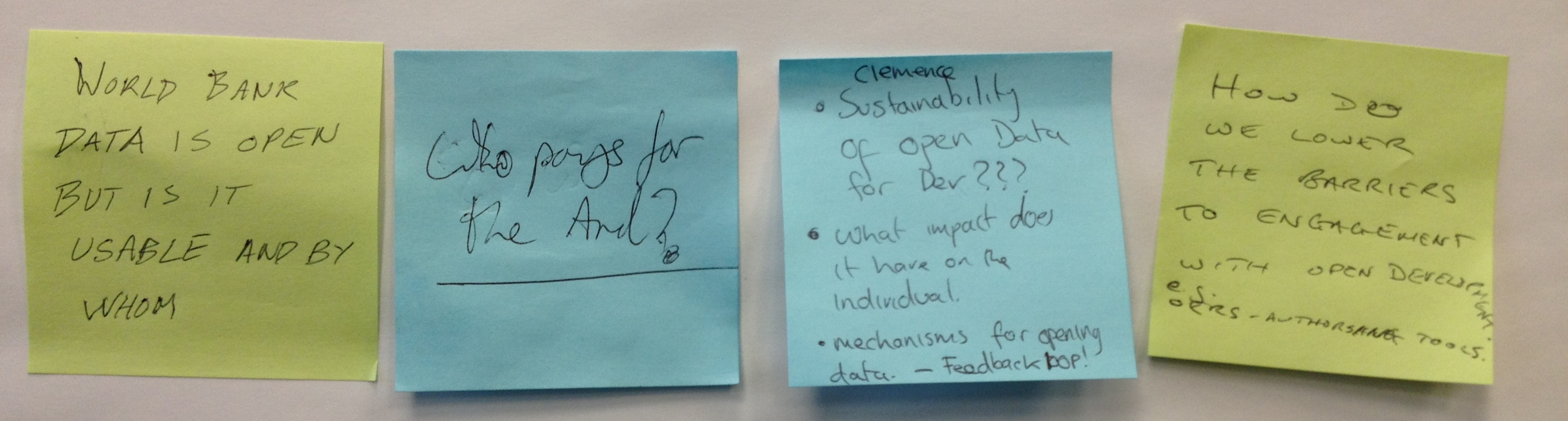
  • How to ensure it’s not data for data’s sake? How do we broker it? How do we translate it into knowledge? How does it lead to change? ‘A farmer in Niger doesn’t care about the country’s GDP,’ commented one participant. It’s important to hold development principles true when looking at ‘openness’. Power relations, gender inequities, local ownership, all these aspects are still something to think about and look at in the context of ‘openness’.

The general consensus was that it is important to fight the good fight, yes, but don’t lose sight of the ultimate goal. Open for whom? Open for what?

As organizers of the session, we were all quite pleased at the turnout and the animated debate and high level of interest in the topic of ‘open development’. A huge thanks to the panelists and the participants. We are hoping to continue the discussions throughout the coming months and to secure a longer session (and a larger room) for the next ICTD conference!

Note: New Tactics is discussing “Strengthening Citizen Participation in Local Governance” this week. There are some great resources there that could help to ground the discussion on ‘open development’.

Visit the ‘does openness enhance development’ wiki for a ton of resources and background on ‘open development’!

Read Full Post »

« Newer Posts