Feeds:
Posts
Comments

Archive for the ‘youth’ Category

Ending violence is not as simple as some people (and some famous-journalists-from-the-New-York-Times) might think. It’s not as easy as telling some personal stories of child victims of violence and getting people in the “West” to pay attention and care.  Ending violence against children will involve some very deep and profound cultural shifts that need to be owned by local communities who have decided that they want to end violence. Violence needs to be addressed on multiple fronts over time, taking into consideration very localized contexts that frame violence against children as an accepted norm, and that allow those who commit violent acts against children to continue with impunity.  Violence is not something in isolation of other currents running through a society, and much (most? all?) violence is rooted in unequal power relationships.

Next Sunday, I’m heading to Benin for a couple weeks to work on a project aimed at ending violence against children.  I’ll be training colleagues from Benin and Togo on setting up an SMS based system of collecting incident reports on violence against children and mapping the incidents out. This information should allow for better tracking and understanding of what kind of violence is taking place, and for more informed thinking about sustainable solutions/responses to the violence.

My colleagues and I will then train youth in 2 communities in Benin to use the system.  We’ll also train youth to do some basic audio and video testimonies. Our Togo colleagues will return to Togo to replicate the training with some youth groups there.  This is all part of a larger Violence against Children (VAC) project that has been ongoing since 2008.

One thing that I like about this VAC project is that it trains and engages children and youth themselves as advocates and agents of change to end violence, together with adult community allies.  As those who are experiencing this violence, it’s vital that children and youth are prepared and able to take part in stopping the cycle – it’s in their own best interest.  They also need a critical mass of people locally who are aware of the negative impacts of violence, and a system that can apprehend and mete out consequences for those who commit acts of violence.

After its 4 year running period, the VAC project will have trained some 200 children and youth on the causes, manifestations and consequences of violence; ways to communicate effectively with different audiences to get the message of stopping violence across; the use of cartoons, comics, social media, radio and television to talk about issues of violence; and how to respectfully yet confidently lead intergenerational dialogue around the issue.  After my 2 weeks in Benin, the youth, project staff and other participating community adults will (I hope!) be able to use mobile phones to collect information, pictures, videos and audio testimonies about violence in their communities to share locally, nationally and globally to speak to publics and decision makers.

As part of the preparation for the upcoming workshop, I’ve been reading through some reports and documentation about the project.  One report stated that all children participating thus far in the project have said that there has been a concrete reduction of violence in their lives. They have consciously broken the cycle of violence themselves and have been able to talk to their families and peers, who now exercise less violence against them.  Most of the youth in the participating groups have themselves been victims of violence, sometimes severe, at home on a regular basis.

The pain, the marks on my skin, swelling and wounds are the consequences of violence against me…I lose my composure and all ability to complete a task. Then there’s also the doubt, fear, stress, not wanting to talk about it and shyness. –  female participant, Togo

They in turn they were often also violent towards their siblings and their peers.  Participating in the project has strengthened their “be the change you want to see” mentality around violence.

“The knowledge I have gained from the project has helped me put an end to the violence that I used to carry out against my sisters, brothers, and sometimes other children. My parents have also changed – they are no longer violent towards me.” female participant, Togo

In addition to the personal changes at the level of the participants, the VAC project has built a civil society of youth who engage politically with their peers, families, schools and communities around issues of violence.  The youth have also made violence against children part of the public agenda by partnering with media sources who feed their media into mainstream channels.

Participants are fostering a new political consciousness on violence against children by educating other children and youth about the UNVAC study and how violence compromises their rights. They’ve been able to create alliances between youth and adults to advance their cause and youth have been able to share their experiences and opinions with high-level policy makers, including government officials and the UN Special Representative on Violence against Children.

This project is a great example of how engaging with young people can begin to offer solutions to very complex problems, and how looking at youth, and at people in general, as participants and stakeholders and subjects of rights rather than victims, or beneficiaries, or objects of pity can have much better and more sustainable results.

The United Nations Violence against Children Study examined the violence that children around the world experience on a daily basis and documented children’s own experiences of violence in their homes, school, communities, workplace and institutions. A Child Friendly Version of the report is also available.

The VAC project is co-implemented by Plan and Save the Children in West Africa and takes place over 4 years (2008-2011) in seven countries: Togo, Ghana, Benin, Guinea, Mali, Côte d’Ivoire and Gambia in partnership with Curious Minds (Ghana), Child Protection Alliance of Gambia, youth and children’s clubs in all these countries, the African Movement for Working Children and Youth, and Planet Jeunes (a popular magazine for youth in West Africa).   Through the project’s work with children, youth, parents and communities, the achievements of the VAC project to combat violence against children are directly helping to realize the UN VAC Study’s recommendations. Several action plans developed by children and youth seek the support and commitment of the UN Special Representative on Violence against Children to continue lobbying governments for change. Young people engaged in the West African VAC project are a valuable resource for the UN Special Representative, ready to support her work in Africa and beyond.

——————–
Related Posts:

Read Full Post »

I recently had the honor of leading a group of tech, development and gender folks in a discussion around Girls and ICTs at the Technology Salon.  The conversation revolved around 5 aspects I wrote about in an earlier blog post On Girls and ICTs:

  • Tension between participation and protection
  • Online behavior is an extension of, and a potential amplifier of offline behavior
  • Qualifying the digital divide
  • Girls’ involvement in developing and designing ICT solutions for their own needs
  • Research on Girls and ICTs

Check out the Technology Salon’s page for a round-up of our discussions!

Photo:  Informal evening one-on-one ICT time at a Youth Empowerment through Arts and Media (YETAM) project workshop in Cameroon.

——————-
Related post on Wait… What?
On Girls and ICTs

Putting Cumbana on the Map:  with Ethics
Being a Girl in Cumbana

Girl Power and the CGI

Read Full Post »

At the Technology Salon hosted by the UN Foundation’s Technology Partnership with Vodafone Foundation on Jan 28, 2010, some folks from the DC area (and beyond) will gather to share experiences around girls and ICTs.

This conversation is an important one, given that gaps exist around discussion, practice and research.  The information and ideas shared at the Technology Salon will feed into the contents of the Girls and ICTs chapter for Plan’s upcoming 2010 “Because I am a Girl” Report (currently in the works).

There are a few points that I hope will be considered in the Technology Salon discussion:

Tension between participation and protection.

There are many examples of ICTs being used for increased participation and connection:  mobile phones for citizen journalism;  Twitter revolution in Iran; girls using mobiles to ask questions about sexuality and to get information to help them improve their sexual and reproductive health; girls married off early or those living in protective societies using mobile phones to maintain contact with friends; new media tools opening up possibilities for youth engagement in important conversations that normally they would be shut out of.

However, due to the very real problems of on-line child pornography, child trafficking, child harassment, and cyber bullying, there is also a strong push for more control, more restrictions on on-line use in the name of protecting children.  The tension between child participation and child protection is a very real one.

As we look at how technology and international development communities can support girls’ development, I hope it’s kept in mind that the more knowledge that girls have about the internet and ICTs in general, the more practical use they are allowed, the more coaching to help them understand implications of their actions, then the better prepared they will be to navigate these realms and to keep themselves safe.  Increasing their knowledge, abilities and desire to protect themselves may be more effective than setting strict external limitations.

Actively engaging girls in this as part of an educational process can be better than restricting their use – and being open to young people’s own ideas and ways of using ICTs is critical.  Adult involvement in this area is important, but it is probably more worthwhile to coach than to control.  Good communication and trust between children, youth and their adult mentors and guides is critical in this process. (Excellent resources on Child Online Protection (COP) for children, youth, educators and parents came out on October 2009 and are well worth the read.)

Online behavior mirrors offline behavior.

I remember getting an obscene phone call when I was around 8 years old.  My mother did not blame the telephone, however. She blamed the pervert that was calling.  She made sure to teach me how to be prepared in case it happened again. She emphasized not giving out information on the phone and hanging up immediately if I felt uncomfortable or didn’t know who was calling.  She did not prohibit me from ever touching the phone again or blame me, but she was vigilant for awhile.

In the same way, new ICTs themselves cannot be blamed for negative and twisted behaviors.  ICTs are tools that exacerbate and extend already existing human behaviors, and the blame lies with those who are using ICTs for child trafficking, cyber bullying and the other evils associated with the internet. It’s important to address underlying behaviors. Research shows that kids who are bullied offline are often also bullied online.  Girls who are vulnerable offline are likely also vulnerable online.  Online is a manifestation of offline, and the root causes of girls’ vulnerabilities online cannot be blamed only on the ICT tools themselves.

I have my own daughter now, and have discussed with her many times how to keep herself safe online and on the phone.  It’s important for her to know this before something happens, not during or after.  She will probably be using the internet and the phone for the rest of her life, so prohibiting them is not an option, and the benefits of using these tools obviously outweigh the risks.  My own involvement and use of social networking sites, texting, etc. is an excellent way for me to know how these sites are used and what security holes there are for my children on the sites. How can parents and teachers in areas with limited use of ICTs be involved and engaged to serve as coaches and leaders in on-line protection together with children?  How can communities help identify existing vulnerabilities in girls (or young people in general) that might manifest themselves online and offer support to prevent exploitation?

Digital gender divide.

There are some amazing examples of ICTs helping women and girls to improve their livelihoods; for example, women selling mobile telephone services; birth attendance being improved by using mobile phones to connect women to midwives, ambulances and other medical services; educational content being  expanded using internet; youth media and youth radio programs bringing girls voices and gender topics into the mix for community discussion and dialogue.

However, in places where boys and men dominate women and girls, boys and men likely also dominate the use of available ICTs.  Men may control the family’s mobile phone and take it with them, or monitor women’s calls. In places where boys are more favored, their confidence to try new things is higher meaning they may rush in to use mobiles, cameras, radio equipment in projects while girls shy back.  In some cases girls report that boys hog and monopolize the computers and equipment, and access is denied.  I’ve seen boys criticize, scorn and ridicule girls who are using equipment for the first time, and girls become too timid to try again.  In many developing countries, just getting girls to attend school is difficult.  If girls are assumed to be less intelligent or less worthy than boys, and their secondary school attendance (where ICT training might be offered) is not a priority, girls will have a very difficult time ever accessing and using ICTs.

Underlying issues surrounding girls’ participation in general need to be addressed.  We need to think about how ICTs can be used to help girls’ inclusion, participation and self esteem increase in general.

Girls involvement in developing and designing ICT solutions for their own needs.

Studies in several countries have shown that girls and boys use technology in different ways and for different things.  What specific ICT needs do underprivileged girls in ‘developing’ countries have? Is anyone asking? What processes or solutions already exist that take girls’ ICT needs into account?  What environments are necessary for girls to engage in defining, deciding and creating ICT solutions? Where are they already engaging, and how can communities, schools, organizations and businesses support and recreate those environments?  How can processes and products be designed together with girls?

Tech is still a field heavily dominated by males.  In the US, for example, some women in tech have pulled together to question this and to advocate for more opportunities for women to break into the male dominated worlds of publication owners, conference speakers, businesses, well known innovators, and “best of” lists.  There have been protests against prominent companies for promoting “Booth Babes” and in one case last year, strippers, at tech conferences.  This brings the question – in places without female tech role models and respectful environments, how can girls see themselves as leaders in this field?

Specific research on girls and ICTs.

There is not a lot of information on the impact of ICTs on the lives of girls in ‘developing’ countries, especially studies that go beyond establishment of computer centers.  There is  anecdotal evidence of positive impact of mobile phones on women. There are studies on the digital gender divide for women; on child trafficking and other negative aspects of the internet; and on use of internet and technology among youth in the US, UK, Australia, etc.  It’s been difficult to find a lot of information on the use of ICTs by girls in the “South.”  It would be interesting for more research to be done on girls and ICTs in the “South” and for some good practices to be shared. Hopefully someone at the Technology Salon will be able to share some insight on this.

Read Full Post »

Mid week the first week of the community youth training, the youth chose what they wanted to do: arts or video/photos, and they split into groups for more focused training. The media group further split into 6 small groups of 4-5 people (one for each set of equipment) to then develop their interviews and ideas for their short films, based on the list of topics that had been created earlier by the youth and community members. The arts group chose topics from the list also to develop out. Photo: Some of the arts group.

The first Saturday (after 4 days of theory and practice) we did a community field visit to get a better sense of what to film and to make appointments with resource people for interviews. The arts groups did rough sketches of the things they wanted to draw. On Sunday the groups started filming and working more closely on their chosen drawings. We filmed for about 3 days in small groups, and by the 2nd day had some groups stay back to learn editing, then switching and going to film in the afternoons while another group stayed back to edit. The arts group worked in watercolor and gauche to finalize their works. By the end of the week we had 15 films and about 12 really nice drawings! Photo: Filming on Birth Registration

The films that we finished included:

· Meeting Places/Community Resources

· Alcohol Abuse

· A quick trip around the rural areas

· Forest resources

· Universal Birth Registration (and issue of not declaring births)

· History of Mva’a

· Installation of the church in Mva’a

· Water

· How mud houses are constructed

· The market

· Raising pigs

· The long walk to school

· Relationships between parents and children

· Agriculture

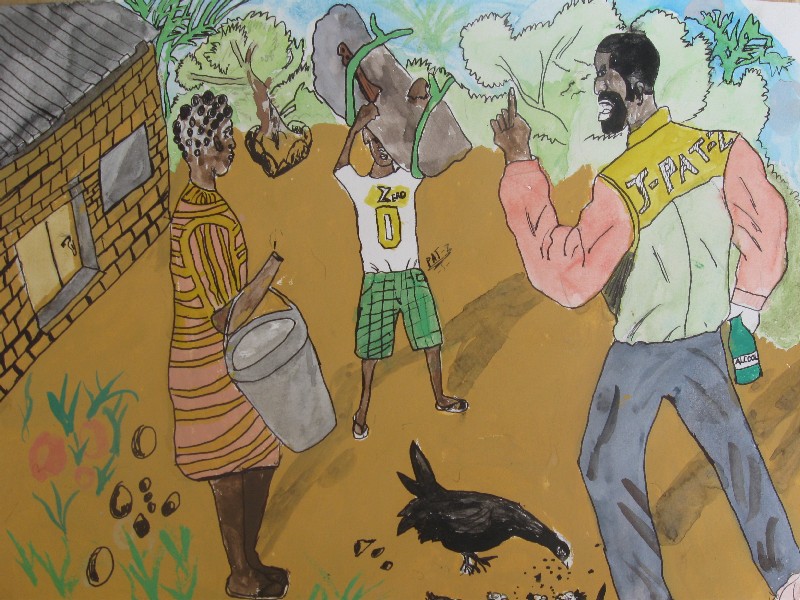
The drawings were really powerful, touching on themes that went deeper than the films, due to the nature of the two media. Drawing topics included Alcohol Abuse, A family losing their home to high winds/storms, Church, Long walk to school, Education, Hunting, Distance to health centers, People working on Sundays instead of attending church, Water, People not using latrines, Dangers of transport means, Recreation, Well/water sources, and Child abuse/Child labor

We closed out with a community film showing where the Mayor and community members and parents were invited to see the work of the youth. The youth, teachers and community members worked on an action plan to determine how they will follow up via concrete activities in the coming 6 months. Plan Cameroon is hoping to expand the program to additional communities, so it was important that the Mayor’s office attended as maybe they would have funds to support project expansion….

Read Full Post »

We started the YETAM training with the youth on Tuesday morning, after an official launch. The mayor of Okola attended as well as some of the Plan staff from the Country Office in Yaounde.

Since the youth had already had training via Plan and IRONDEL on the Rights of the Child, and some had worked with Plan’s Kids Waves radio show, they were really well equipped for moving onto video and arts work. They started with their community map where they had detailed, along with the community organization members, everything in their community.

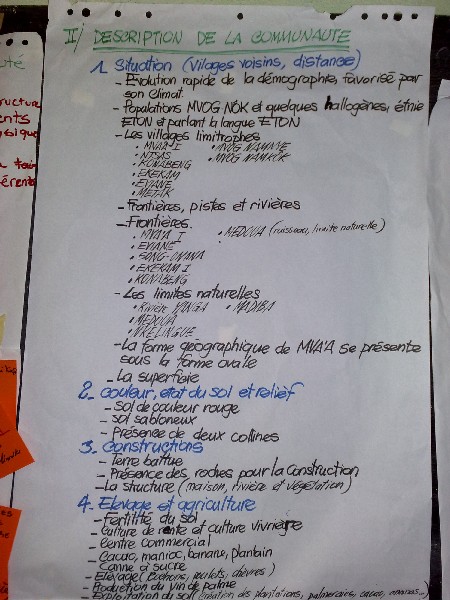
The youth presented the map and everyone worked in groups to organize and flesh out the information from the map in 4 categories: community history, community description, community resources, and the situation of child rights and protection. Photo: youth presenting the map.

They wrote their ideas on note cards which were posted on flipcharts and then sorted to come up with final categories. These formed the basis for all the upcoming work. Photos: flipcharts with the different topics for filming and arts work.

After the map work, we went into introductions to the different things that we’d be doing: photography, film and drawing/painting. We had a bit of a struggle within the team getting facilitators to move from too much theory onto practical work. They kept going back to presentations and lots of long flipcharts and technical descriptions. Photo: The arts group re-drew a nicer version of the community map later in the week.

We realized later in the week that we didn’t all have the same understanding of the project methodology. Some thought that we were doing 1 week of theory, and 1 week of practice, and then afterwards would start making some videos, when in reality the idea is that we would not focus too much on theory because the media equipment is very simple to use, and we can use practical, hands-on exercises to build the technical skills.

The idea is to quickly get hands on during the first week, and then start making a first round of arts and videos near the end of the first week, continuing through the second week, and then getting into editing by the middle of the 2nd week. In the evenings we’d look at the footage as a whole group, and participants would talk about what looked good, what didn’t and how to improve. Once that got cleared up things moved on splendidly. Photo: Practice and group reflection is the best teacher.

Read Full Post »

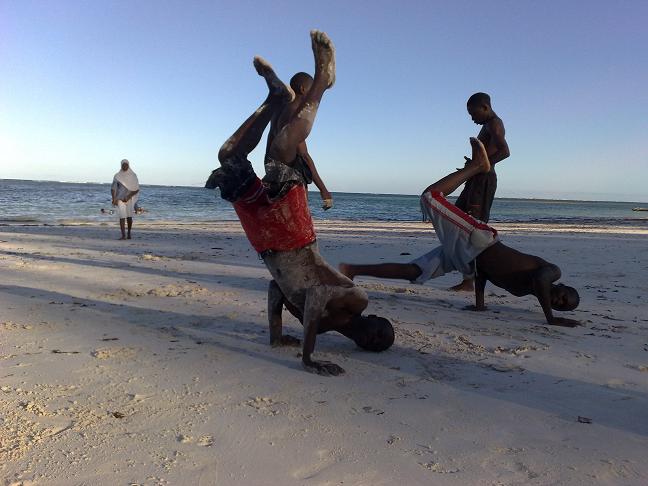
We ended up taking a nice break Saturday afternoon to go to the beach. Really nice. Took tons of photos. Ended up trading acrobatic tricks with the guys so that was fun – everyone showing different moves and people trying it out. I only had like 2 things I could do – this one capoeira move – queda de rins and a headstand where you push up into a handstand — but it was fun showing them how to do it. I think we all needed a break.

Anthony and some of the guys stayed up till like 4 a.m. getting rough cuts of 12 videos done since that was the goal for the week. I stayed up sorting photos, but not till 4!

Sunday we had a light morning. We did the evaluation by asking what was the most significant change they had experienced at the personal level during the workshop, and what change did they want to see in the community. This led into a selection of the issues that the kids want to address in the community going forward. What really came out was poor performance in school – especially for girls, early marriages/early pregnancies, disabilities/the community attitude towards those people with special needs (the community still practices exposure and infanticide if children are born with any type of disability), and youth participation/youth action to make these changes in the community. They will work on their action plan this coming week including how they will use these and other videos they will make, along with any skills they’ve learned this week to bring about some changes in the community in those areas.
Summary of some expressions during the evaluation:

“I’ve learned that change comes from within and not from outside.” Community Chairman

“I would like to work on the issue of disability because the community needs to know that every child has a right to life and disability is not inability.” Ali
“Now I’m viewing arts and media in a very different perspective – as a vital tool in sharing and disseminating ideas/issues thereby transforming the lives of people around the world” Ali K
“The workshop has changed my attitude so I feel that I can do something better for my community.” Vincent
“I’ll make a change of early pregnancy in the community and I will stay with all girls and discuss the way girls get pregnant when they are at school and how they get it easily.” Violet

“Before I joined the workshop I didn’t have an ambition, but after I joined I was taught how to use camera, to edit, to interview people and now my ambition is to become a journalist.” Samira
“I discovered my responsibilities as a youth and a technique that I can use to convince people in the community towards positive attitudes. As a youthI will make sure that the young generation is given a chance to participate in the community.” Dickson

“I would like to work on the issue of early pregnancies. It really touches my heart as it makes most of the girls in my community not fully acquire the right to education.” Chimoche

“I have come to know how to sort out problems from the community through friendly negotiation and I have developed empathy to some things.” Bomaz
“It has helped me to look at things from a broader perspective and I am in a better position to reflect on the different situations that I come across and make necessary adjustments… I would like to use of the skills I have acquired to help the community reflect on their situation so that it changes for the better.” Rama

“I’ve been introduced to the method of looking at things/issues at different levels hence identifying the consequences and impact they may have in the community.” Zainab (teacher)

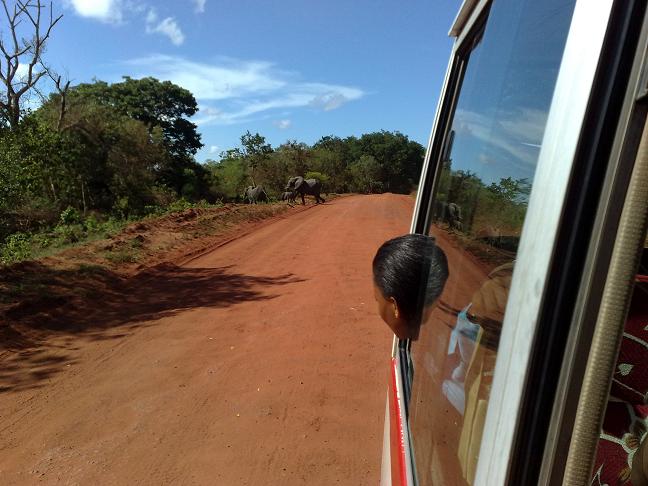
We all got on the bus around 2.30 to drive everyone back to their communities, including the 2-3 kids who lived in other communities. The door fell off the bus last night as we were coming back from the beach, so the bus was really breezy. We drove around through really lush green areas where the national park and elephant sanctuary is first (and saw a herd of 4 elephants!) and then through a very arid place, and then back to a different hotel right on the beach where Wajuhi, Ali K and Ali M, and Rama and I will put the finishing touches on the videos, do the transcriptions and translations, and wrap it all up before we go home on Wednesday. There was Arabic music playing in the bus and the guys got going singing all these songs in Swahili on top of it. Maybe some of it will be nice for background music on the videos?

We got to our hotel around 6.30. It’s really nice – gorgeous floors and wood staircases, white washed, beautiful gardens, right on the beach. Since it’s low season Plan Kenya gets a good discount price. But I guess it’s geared to the older tourist. They were having bingo at 9.15 last night! I checked out the beach this morning and it’s not that great of a beach because it’s not flat and there is a lot of seaweed washing up, but nice for a solitary walk in the early morning.

Read Full Post »

Burani!

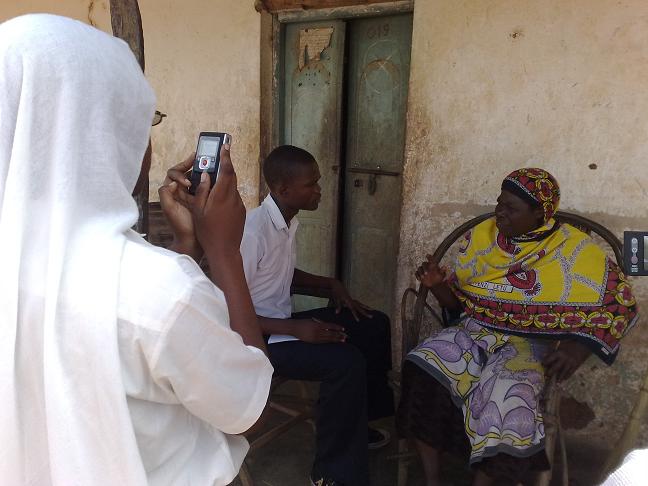
Today we actually made it out to the community. Yay! The kids went around and did several interviews and filmed background shots. They covered the topics of disabilities and traditional beliefs linked to them, dance traditions and their links to marriage and development issues, and started stories on the town cleaners (the group that helps keep the town clean), and economic activities in the community.

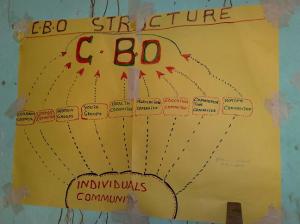
We visited the office of the Community Based Organization (CBO) where the Chairman (who’s participating in the workshop) is heading up the work of some 64 organized groups, including women’s groups, youth groups, and others. I hadn’t realized the extent of the work that he’s managing. Pretty major thing.

I spent a little time hanging out in front of a house where a lady has a little sewing shop. The kids were playing out front and it was cool to see that they played similar games to other places — dodge ball, marbles, etc. Pretty universal I guess.

The power was out in the afternoon so the youth worked on storyboards to use during editing, and started some storyboards for tomorrow. I’m excited to see how the edited films come out!

Read Full Post »

The main thing that we did today was to go back to the map to see what the different issues in the community are, and what kind of stories could be told about the issues. How can we tell stories that touch the heart? That move people to action? That are real and relevant and educational? The personal examples that went behind the stories were super interesting. I hope the youth will capture a lot of these stories in their videos… I also hope that we’re able to produce videos that work to stimulate dialogue in the community, and that also are interesting to an external audience. That is one of the big challenges in this project.

Some stories that came out:

“There is a story about old men that go to the farms w/their tools but they don’t actually have to work, the spirits come to do the work for them; so a woman wanted to see the ghosts and she came up with a scheme to watch. When the spirits discovered the woman had seen them they stopped working and the men were angry and made women work tilling the fields ever since.”

“There is the story of witchcraft in the community. If people see someone progressing they perform some witchcraft rituals that make them go crazy or take them down.”

“Girls are being targeted for harassment; it’s a real story. It happens often. Even beyond this harassment there are threats of physical harm and sometimes charms/witchcraft. But the community is responding and these people are being arrested now.”

“A story about the way girls are married. They are married very early and marriage is an obligation. They stop attending school. Because girls are not allowed to inherit anything, they don’t see a purpose in education or in community development because they never have any decision making power. Bride price contributes to harassment. If you get married and get 12 cows as a dowry, then the family just equates you to that – 12 cows.”

“Sometimes girls come to school on opening day for boarding school, parents say that school is supposed to be free, so they haven’t even provided the girls with anything. The matatu (public transportation minibuses) drivers take advantage of them and then deny that they’ve had anything to do with them.”

“There is a belief that only basic education is important and that anything beyond is not necessary. So even if a girl/boy qualify for university, parents won’t support them. Some parents don’t believe in white collar jobs, if you aren’t a soldier or watchman which is something they can understand, if you don’t have a practical skill like carpentry, the parents don’t feel it’s a job. They are only willing to pay for an education for a skill that they can understand.”

“There is a belief the disabled children should not be allowed to live. Sometimes they are killed or they are kept out of sight and in bad conditions. Sometimes if someone has a disabled child, it’s seen to be related to the fact that they have some wealth and they’ve traded their family for wealth.”

Read Full Post »

Today we worked out the whole rest of the media training plan and who would facilitate what parts. Everyone is taking on different roles according to their strengths and knowledge, and we’ll facilitate in pairs or teams. We spent the afternoon trying out the cameras, testing mics, etc., and then Anthony took us through the editing process in the evening.

Mercy told us that there will be an induction ceremony in Kwale Town for a man who will become an elder. There are both cultural and political connotations to his induction and the whole area will turn out for the celebration and ceremony. Wajuhi suggested that we film it as practice, so we took the afternoon to plan out how we would do that, what stories we would catch from which perspectives, and who would interview and film whom/what. We worked together on the interview questions for men, women, youth, children. It should be pretty interesting.

The manager from the center where we’re staying stopped in and hooked up the internet so that is great!

Read Full Post »

YETAM Kenya

So I’m off to Kenya tonight – just about ready to head to the airport…. We’ll be training in the Kwale Program Unit district with about 20 high school aged youth from one of the nearby communities. They have to go back to school on May 3, and we weren’t able to negotiate any additional time with them, so we will have to fit the 2 week training into just about 9 days — we’ll see how that goes. I’m pretty stressed right now about it actually… but normally it all works out.

I’ll fly from Boston to Nairobi and then take a short flight to Mombasa, stay over night there, and then will be picked up in the morning to go to the training center. I’ll meet with the Plan Kenya staff to prepare, and then Thurs-Sat we’ll have the facilitator’s training and work out all the details for the following week with the youth. We have a basic outline that just needs fleshing out. We’ll also check over all the equipment, etc. and be sure we’re ready. We’ll start the training with the youth on Sunday Apr 26 and run through May 3, and then I’ll stay a few extra days to finish up.

I’m going to try tweeting from there to see how that goes…. could be interesting to use the YETAM twitter account for the youth to post what is going on during the training and the project, but we’ll see if they are interested and if we have a good enough connection….

Read Full Post »

« Newer Posts - Older Posts »