Feeds:
Posts
Comments

Posts Tagged ‘development’

I joined Twitter because of frequent flyer miles.

No really.  It’s true.

I kept trying to use my miles and failing, due to blackout dates or not having enough points to go where I needed to. The use-em-or-lose-em deadline came up on one particular airline, so I accepted an offer to sign up for some magazines. In addition to a hefty increase in junk mail, I began receiving Wired Magazine – and my synapses started firing at a million miles per hour.

This was around 2006. I’d find myself suddenly having breathless conversations with the few people around who would listen about technology and the science of networks and other similarly nerdy stuff. This really wasn’t like me, but then, I was late to the game for a couple of reasons: for one, I spent the 1990’s in El Salvador and there was not much Internet or Wired magazine available there at the time. Secondly, I’d always been much more of an alternative music/ development/ social sciences geek than a computer / video game geek.

But something had changed since high school and college. There was Radiohead for starters… but on top of that, it became strikingly clear to me that things were aligning in a way I hadn’t seen before. Tech could really have a social purpose.

In Wired, I started reading about the idea that the Internet was horizontal, that things could be free, that people could collaborate in self-organized nodes, that social media could bypass ‘official’ pronouncements and allow alternative voices and ‘citizen journalists’ to be heard. I started thinking about how many of the principles and philosophies behind social media networks were closely aligned with those underpinning participatory approaches to development:  self-organizing, community-led processes and self-management, accountability and transparency, ownership, learning by doing, building on local knowledge and localized expertise. I got hooked on trying to link some of the ideas that were fueling social media and online networking with the work that the organization that had been employing me for several years (Plan) was facilitating with young people and communities. I started reading blogs about technology and aid, and I began writing one too.

Over time, my initial interest broadened to how new technologies — not only social media networks, but also new tools like mobile phones and GPS units and digital maps and all kinds of other new tools and platforms — could be put at the service of community development.

In large part, the reason for the branching out and wider perspective was that in December 2008, a few development and technology leaders/ bloggers/ mentors gave me a suggestion. “Get on Twitter,” they said,” if you really want to keep up with what is happening.”  I was wary of the platform, so instead of my real name, I used the name of a kitten we used to have – @meowtree  – also a bit of a play on my last name.

Quickly I realized there was nothing to fear. Twitter opened up a whole world at the professional and personal level. I found all kinds of people from a variety of disciplines and backgrounds who were discussing, debating, trying, failing, learning, blogging, and collaborating on a variety of projects related to technology, human rights, global development, community work and other fields I am very interested in.

Joining Twitter was like signing up to get an online degree in a very specialized field, where everyone was both teacher and learner. The quantity of information and knowledge shared among practitioners and theoreticians in my field and related areas was infinite, as were the ranges of opinions.

Through Twitter I’ve had the opportunity to work on voluntary side projects and connect with experts and practitioners for research and professional or personal advice. Sometimes a number of us join together to get across a certain point that we feel strongly about, and it ends up getting to the ears of someone who’s making major decisions or it gets brought up by individuals in personal conversation, spreading the ideas offline. A group of Twitter folks who are part of the ‘Smart Aid’ collaborative recently conducted a survey to find out more about who reads aid and development blogs, for example, and what they do with the information there.

Not just a news and professional education platform, Twitter is also a friend and colleague network. Over the past 3 years, I’ve met a few hundred new people in real life that I initially connected with on Twitter.

It’s a great feeling when you are chatting with someone at a conference, and they look down at your name tag (where you’ve penned in your Twitter handle with a Sharpie) and exclaim “Wait! You’re @meowtree!? I’m @so-and-so!” You’ve only just met, but because you’ve connected on Twitter, you already feel like old friends. You can immediately jump into a conversation and continue on with a topic you’d been batting around on Twitter or make plans to partner up on a work-related initiative or simply discuss the fact that you both like the same kind of beer.

Last week a colleague alerted me (via Twitter, naturally) that I’d been named by the Guardian as one of the “20 Global Development Twitterati” to follow. It was unexpected, and I’m hugely honored.  The Guardian’s Global Development team does fantastic and highly credible work facilitating forward-thinking debates and discussions around development. Being listed alongside the 19 other “Twitterati” is indeed a privilege, as they are some of the leading voices in the aid and development debate.

So if you have an interest in development and/or new technology, you can either accumulate a ton of unusable frequent flyer miles and follow my convoluted path, or you can skip all that in-between and simply “Get on Twitter!” Once you do, be sure to follow the Guardian’s list of 20 Global Development Twitterati. But don’t stop there – the Twitterverse is full of brilliant minds and voices that you won’t want to miss if you are serious about engaging in a stimulating global development conversation.

Note: this post originally appears on PlanUSA’s blog.
Read Full Post »

Assets, contributors, thinkers and doers, not problems to be solved.

Making Cents International’s Global Youth Economic Opportunities Conference happened last week (September 7-9). The focus of the conference was ‘Breakthroughs in Youth Enterprise, Workforce Development, Financial Services and Livelihoods.’ I attended most of the plenary sessions and followed the Adolescent Girls and Young Women track.

The main messages I took away from the 2 and a half day conference included:

Seeing youth as assets

The youth development approach has been around for quite a while, and some of the organizations and people I respect the most and have learned a lot from are those that use this approach with young people (shout out to one of my youth development approach mentors, Jeremy Phillips).  Still, it’s encouraging to hear big agencies like USAID talking about the youth development approach, emphasizing the importance of youth participation, seeing potential in the youth population, and working with youth as assets and valuable people in their own right with something to offer rather than fearing the ‘youth bulge’ and using a heavy-handed approach to control, contain and suppress young people, their voices, their needs and their rights.

Ambassador Donald Steinberg, deputy director of USAID, spoke on Wednesday morning, saying ‘If you stop looking at people as a development challenge or a threat, and instead see people’s potential to be something great, your perspective totally changes.’ USAID is doing their first ever youth in development policy and is working on integrating youth concerns into their 6 focus areas.

According to Clare Ignatowski, USAID’s Senior Advisor on Workforce Development and Youth, the agency’s positive youth development approach includes youth engagement and valuing youth as assets, ensuring multi-stakeholder participation, offering second chance opportunities for youth, and ‘engendering’ youth work. The idea is that by empowering youth and helping them have basic skills and opportunities; a sense of safety, structure, belonging and membership; self-worth and valuable opportunities to contribute; independence and control over own lives; a sense that they are competent and able to do something with their lives; and solid and supportive relationships – we can help young people make something out of their lives.

What role can technology play?

The youth and ICTs panel mentioned a few of the many areas where new technologies can be integrated in youth development work. To begin with, as moderator Wayan Vota from Inveneo mentioned, technology is one area where youth are viewed as experts over adults. They are often seen as thought leaders in ICTs. Via mobile phones, youth are starting to open bank accounts, according  to David Mukaru from Equity Bank in Kenya, and this is demystifying aspects of finances and banking, even in rural and slum areas.

There are challenges though, as Lia Gardner from TakingITGlobal reminded. ‘ICT is not a self-fulfilling circle; you can share great ideas but what about taking online connections into the offline world?’ Jacob Korenblum from Souktel  considered adults to be the biggest barrier. ‘Adults don’t see how tech can be leveraged and utilized for serious purposes. Older people really need to come on board and take youth seriously. Tech is a good way for youth to express views.’ Peter Broffman from Intel Learn Program recommended showcases with parents, teachers and community leaders to allow adults to see how youth and technology can be harnessed to address things that matter and to resolve problems in the community.

ICTs can also be used to engage youth and hear their voices and opinions. Korenblum commented that Souktel’s JobMatch idea was adapted and used to get feedback on 2 large-scale radio broadcast projects in Sudan and Somalia. The program implementers didn’t know what the audiences thought about the programs. Souktel developed a way for people to text in for free to give feedback. Some of the comments were selected and read out on the air. The texts began to inform the content of the radio programs. “We saw hundreds, even thousands of SMS coming in. In one case we had thousands of messages coming in from Orphans and Vulnerable Children [after we did a radio show on the topic]. They were saying ‘No one has ever asked me about my concerns, thanks for this radio show.’” In another case, thousands of people texted in saying they were not aware of the potential dangers of skin lightening creams. “We also had very frank and candid feedback like ‘you don’t represent enough Sudanese on your program.’ In Gaza we asked several thousand youth about the potential for a ceasefire. Youth wrote back their thoughts and said ‘this is the first time anyone has asked or cared about what I have to say.’” The feedback was shared with the television and radio stations so they could improve their programs, and in some cases it was played along the ticker tape on the bottom of Al Jazeera.

Mukaru commented that Equity Bank is known to be the ‘listening and caring financial partner’ in Kenya. ‘We listen to youth and clients. We have gone out to do focus group discussions to get to understand what youth are asking us to change, to do better, what they want to see in our services. We also use technology, SMS feedback. Our mobile phone number is displayed in our lobby where youth can interact with us and give their feedback. We’ve changed a number of things….They didn’t like our website – they said it’s too old, that it wasn’t talking to the youth. So we redesigned it to speak to the youth better. They said they want to bank small amounts of money and it costs them a lot to go into town, so this is why we started local agencies,’ he said.

It was encouraging to hear so many people highlighting the importance of the youth development approach and the fact that youth need to be listened to, respected and seen as valued partners in their own development as well as in the development of their communities and nations.

I’ll cover some of the other key take aways in my next few posts here on Wait… What?!

Read Full Post »

FMLN guerrilla with rifle poised in town of Chalatenango, El Salvador, 1988. This photo is from the article referred to below. Original at http://www.ontheissuesmagazine.com, Winter 1994.

A version of this post was originally published on the Peace Dividend Trust blog.

I lived in El Salvador for about 6 months during the civil war and over 9 years post-conflict.  So I was quite interested in the Society for International Development (SID) Congress July 30th panel on the “Nexus of Conflict and Development.”

The panel was composed of a high-powered, high level group of men*, presided over with humor and grace by a woman of the same caliber, Tessie San Martin, President and CEO of Plan International USA, SID Board Member (and my boss!).

Arthur Keys, President and CEO of International Relief and Development introduced the panel, asking questions like:  Can development be done in a conflictive environment. Is settlement of conflict needed before development can take place? Can development assistance be used as a tool for peacemaking?

Keys noted the changing, fluid environments in conflict zones and their inherent complexities – the interconnectedness of many variables that cannot be addressed in isolation.

Within that context the panelists discussed a variety of issues, from the changing nature of conflict and violence, to the pillars of post-conflict reconstruction, to local ownership and local government credibility and legitimacy to the role of the military in ‘delivering’ development to front loading funds in conflict areas to USAID branding in conflict zones. Listening to the discussion, I realized many of the questions that we were asking ourselves 20 years ago in post-conflict El Salvador are still unresolved today.

One of the most interesting conversations of the panel was catalyzed by San Martin’s question on local ownership and legitimacy. “We’re talking about ownership and local voices, but one question is whose local voice? There are a number of vulnerable groups,” she said. “How do you deal with the question of ‘whose voice’?”

Donald Steinberg, Deputy Administrator of USAID, answered by telling the story of his experiences negotiating a peace agreement in Angola under Bill Clinton.

“When I was asked how this agreement benefits women, I answered that not a single part of this agreement discriminates against women,” he said. “But what I learned is that a peace agreement that calls itself gender neutral is actually working against women.”

The Angola agreement was based on 13 separate amnesties, he said.

I learned that ‘amnesty’ means ‘men with guns forgive other men with guns for crimes committed against women.’”

Steinberg went on to comment that the closest woman to the peace process in Angola was a female interpreter, who would “raise her eyebrows when we men did something stupid.”

He described the peace agreement as being “come and hand in your weapons and you get benefits.” But most women involved in the conflict were not bearing arms, they were playing other roles. So when demobilization came, they got no benefits. On top of that, “we sent men back to communities where women had become very empowered in their absence,” he said. “The men returned and there was no role for them. Many drank off all their benefits. They started beating their wives. The incidence of sexual aggression rose. So you saw that the end of the one conflict brought about a new insidious form of violence against women.”

Another area where the peace agreements forgot about women was in de-mining activities. “We cleared the roads of mines,” said Steinberg. “But we didn’t clear the fields. The water points. Places where women gathered wood. As communities returned home, and women went back to collecting water and firewood, they were blowing their legs off with remarkable regularity.”

The peace process started to fall apart a couple of years later, he said, but by then it was too late to bring women’s organizations into the process. “We tried to work with women’s groups but they would say, ‘This isn’t about us, it was about the men with guns. It hasn’t involved us at all.’” The country erupted into war again.

Steinberg said he was happy that USAID is addressing these issues now. “The first thing I put into place was support to women’s participation in peace processes and to provide them with protection to do so, as it’s dangerous for women to be involved in this work. Nothing about them without them – this is our phrase,” he said, and cited UN Security Council Resolution 1325 as a strong influence on him:

“The Security Council adopted resolution (S/RES/1325) on women and peace and security on 31 October 2000. The resolution reaffirms the important role of women in the prevention and resolution of conflicts, peace negotiations, peace-building, peacekeeping, humanitarian response and in post-conflict reconstruction and stresses the importance of their equal participation and full involvement in all efforts for the maintenance and promotion of peace and security. Resolution 1325 urges all actors to increase the participation of women and incorporate gender perspectives in all United Nations peace and security efforts. It also calls on all parties to conflict to take special measures to protect women and girls from gender-based violence, particularly rape and other forms of sexual abuse, in situations of armed conflict. The resolution provides a number of important operational mandates, with implications for Member States and the entities of the United Nations system.”

Ambassador Rick Barton, US Representative to the Economic and Social Council of the UN, agreed that the role of women is critical, and “it starts with who’s negotiating the peace process.” Barton noted that the percentage of women in peace negotiations is 5-7%, and that it’s a recurring concern. “If you are not there at the start of the race, it will be designed in a certain way and you will be disadvantaged. I’m hopeful that the UN Women’s Commission, led by Michelle Bachelet will bring attention and focus to this issue.”

“What about men and boys?” a woman in the audience asked. “It’s great to empower women, but what are you doing to change the attitudes and beliefs that men have? How can we get them to realize we are equal?”

Barton agreed that getting men’s attention is critical. “These are not women’s issues, they are society’s issues. Men and boys need to come a long way.”

“It’s easy to work on gender with this administration,” commented Steinberg, noting that USAID is trying to institutionalize it through the position of Senior Coordinator for Gender Equality and Women’s Empowerment. “It’s not only about protecting women or about victimization,” he said. “It’s about changing attitudes and instilling into our DNA the notion that women are key to building stable societies, ensuring sustainable growth and recovering from conflict situations. We need to focus on gender in addition to women.”

Sitting, there, listening to the panel discussions, I kept thinking about a Salvadoran friend from some 20 years ago. She was from a ‘conflict zone’ but would have never called herself an ex-combatant. For several years, she had moved around with the guerrilla, cooking and supporting the cause, but didn’t carry a weapon. Post conflict, she had lingering health problems stemming from that period, when she had been chronically malnourished. During her time with the guerrilla, she had contracted glandular TB, a condition that embarrassed her. At 34 years of age then, she had the ruddy, freckled and fresh face of a young girl, but she wore dentures as she had lost all of her teeth. She worked cleaning an office and always struggled financially. I’m not sure she ever got any benefits from demobilization.

I’m also reminded of a rather large post-conflict program that I was responsible for monitoring at the time, together with a few other privately funded donor agencies. Aimed at providing community-based psycho-social support to returning ex-combatants in several zones formerly held by the guerrilla, the program ended up mostly supporting women and children who were suffering domestic violence at the hands of the demobilizing men. The male ex-combatants either didn’t feel they needed psycho-social support or didn’t want to face the stigma of seeking it out, but the women took advantage of it. Community psycho-social support agents fully recognized that they were treating a secondary effect and not addressing the real causes of the violence.

According to a 1994 article by Betsy Morgan in On the Issues Magazine, ”Nearly one third of the FMLN guerrilla forces, who fought for 12 harrowing years in the mountains, were women. But neither of the restructuring plans [that of the government or that of the rebels] directly addressed women’s issues: equality in education, health care, job opportunities, and legal justice in instances of rape and domestic abuse…. Two female commandantes from the FMLN were on the negotiating team. However, when the peace accords were signed on January 16, 1992, all the signatories were male. The subsequent reconstruction plans called for demilitarization, but neither the government nor the FMLN addressed the hidden violence – domestic abuse, rape and incest – that invariably accompanies a military climate of violence, and neither side made provisions for the fair treatment of female ex-combatants, particularly in terms of land tenure. It can only be concluded that for all of the women’s influence during the war, at the point of peace, the women’s movement was still seen as a thing apart from the arena where real decisions were made.”

There were women involved in all aspects of the war, including negotiating the Peace Accords in El Salvador, but it didn’t guarantee that women’s needs were addressed during the negotiations.  It didn’t ensure that the post-conflict programs agreed to in the Accords were fully funded or that programs were designed and planned with participation of those they were meant to benefit or that women got fair treatment. It did not guarantee that the different efforts were non-politicized or that they were well-implemented. As Keys pointed out when introducing the panel: the nexus of conflict and development is a complex place, with every element impacting on every other, and as Steinberg and Barton pointed out, it’s not only about women, it’s about gender.

I’m glad to see the discussions taking place, and I hope that experiences, failures and successes from places like Angola, El Salvador, Colombia, Iraq, Afghanistan and so many others are fully examined and shared to see what more can be done to create environments where women are in decision-making roles before, during and after conflict; where the broader implications of gender and gender roles are considered; and where both women and men who achieve positions of power are really reaching out to, listening to and representing those who don’t have a seat at the table.

*Members of the panel:

Tessie San Martin, President and CEO, Plan International USA and SID Board Member (moderator)

Ambassador Rick Barton, US Representative to the Economic and Social Council of the United Nations

Alonzo L Fulgham, Vice President, IRD

Donald Steinberg, Deputy Administrator, USAID

Tom Wheelock, Vice President and Sr Director, Communities in Transition, Creative Associates

Read Full Post »

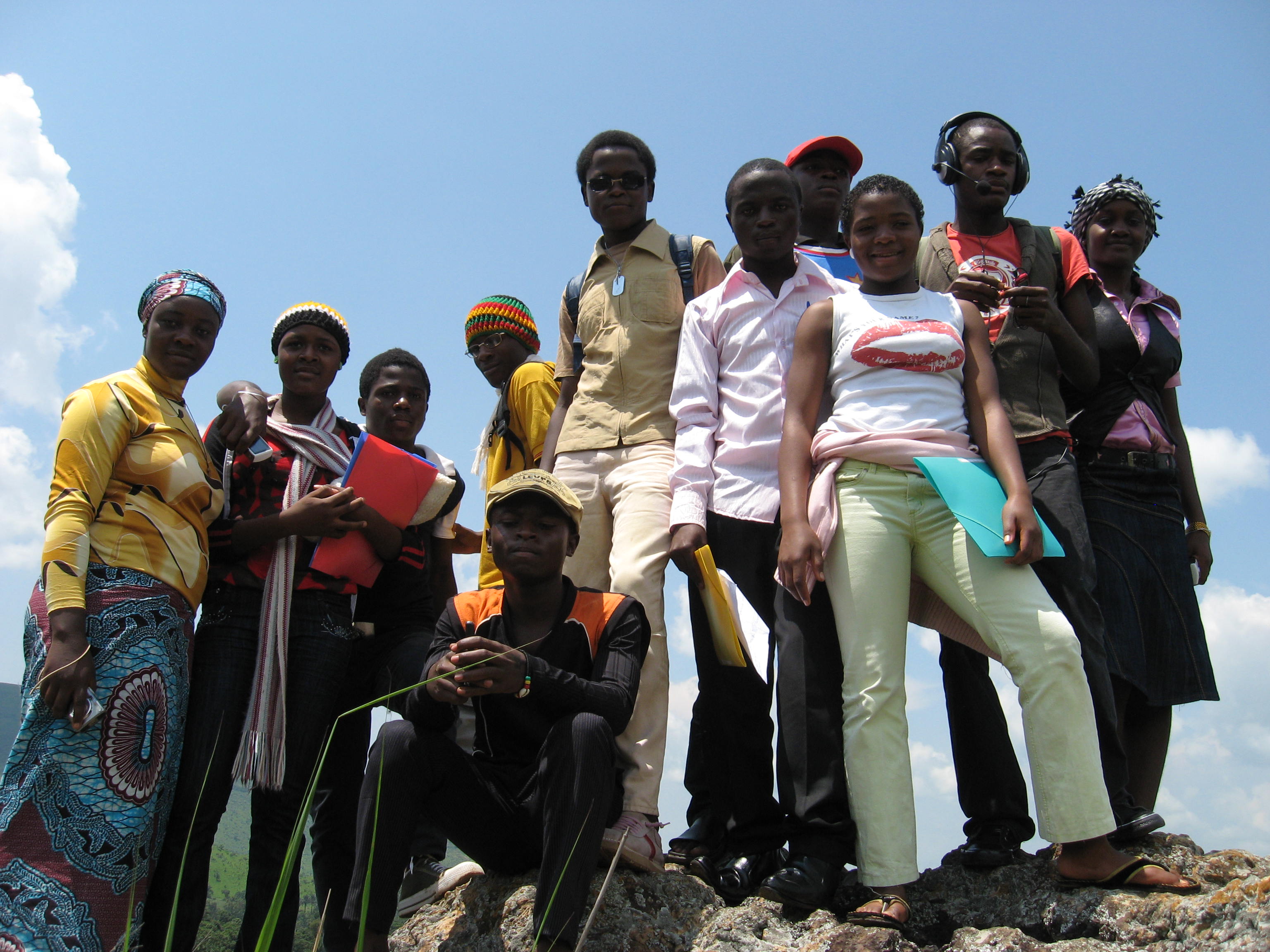
Youth learning to use GPS in Pitoa, Cameroon (photo: Ernest Kunbega)

Last Monday I attended Africa Gathering London. The topic was ‘Social Media Revolutionizing Africa: How is new media changing Africa, giving voices to the voiceless, improving governance and transparency, and changing narratives?’

The event stimulated thinking and brought up some hot discussions around technology, traditional and social media, aid and development, participation and governance. (Big congratulations to Marieme Jamme  for curating a great line up that brought in an interesting and engaged group of participants and to William Perrin of Indigo Trust for keeping things on track and generating good debate!) See the program, the speaker bios and some short video interviews.

Some quotes, thoughts and debates from the day:

  • If your purpose is to bring more people into discussions, remember that radio, Facebook, and Twitter audiences are distinct and be sure you are thinking differently about how to engage them all. Remember that many people in Africa prefer to talk not write.  (from BBC’s Africa Have Your Say – @bbcafricahys‘s presentation)
  • You can’t resolve all of Africa’s issues with one approach. The countries are very different and local context really matters. But you also can’t design something for every tiny demographic. Where is the sweet spot between localized and scale? (discussion after the morning workshop)
  • People should not sit in the UK deciding and develop things for Africans. Develop things with Africans, or support Africans to develop things themselves. This idea got retweeted a lot, with lots of agreement. But H Taylor – @HFTaylor88 also commented via Twitter that this rhetoric has been around for ages within NGOs…. (discussion after morning workshop)
  • It’s great that the market has been able to bring mobile phones to so many people in Africa, but the market can’t do it on its own as many are still left out. There needs to be more incentive to reach remote areas. There needs to be education, cash transfers, government regulation if we want to really realize the potential of mobiles. Mika Valitalo – @vatamik commented that in many African countries, mobiles are still taxed as luxury items, making them more expensive than they should be. (Clare Melamed -ODI – @claremelamed‘s “Is the Mobile Phone Revolution Really for Everyone”.)
  • Any big story today on CNN has a social media component, yet there is still the idea that social media only breaks news and ‘it won’t make the history books until CNN or BBC report on it’. If CNN is not planning to do a story but sees everyone is talking about it on Facebook and Twitter, they will cover may rethink covering it. CNN finds good opinions and stories on social media, but their primary news source will continue to be their correspondents. Emrys Schoemaker – @emrys_s however questioned whether mass media use of citizen journalism is a broadening of voices or if it’s cheap content for big media – or both. (Faith Karimi/CNN/@faithCNN’s presentation and resulting discussions.)
  • Social media gives African youth an uncensored worldwide platform, letting them feel included in shaping Africa’s image, but the youth using social media in Africa are still the middle class and the rich. We need to find ways to include other youth. (Faith Karimi – @faithCNN’s presentation and resulting discussions.)
  • The Guardian’s Global Development Site and Poverty Matters blog are trying to get away from the vision of ‘poor Africa’ and have only been accused of ‘poverty porn’ once in 9 months (which Liz said irritated her to no end as they really try to avoid it). (I remember the case…) They stay away from the typical ‘flies in the eyes’ photos, but sometimes there really is starvation in Africa, and in those cases, a photo of a starving child might actually represent reality. (Someone countered that African newspapers should use photos of drunk, vomiting Brits to illustrate stories about parliament).  (Liz Ford/deputy editor/@lizford‘s talk and discussion)
  • Is the Guardian’s Global Development site one-sided, taking the view that aid is good rather than other ideas on how to best achieve development? Development is much larger than ‘aid’ and when talking about development we need to remember the bigger picture and the alternative views that maybe aid is not the best (or only) way to ‘do development’. The Guardian is quite open to new thoughts and ideas and invites anyone with ideas for blogs or stories to be in touch with them. They consider their site a ‘work in progress’. (Note: I like the Guardian’s site very much as it is one of the few media sources that discusses and seems to really promote and engage in the ‘#smartaid / @smart_aid‘ discussion). (Liz Ford’s talk and discussion)
  • Many African leaders, not to mention the public and the media, will listen when high level people call their attention to something, but problems can’t be solved by the same people who created them, especially if those people are considered morally bankrupt. Karen Attiah – @karennattiah  commented in from Twitter that a big part of development work should focus on rebuilding the broken social contract between governments and citizens in Africa. So how can we connect policy makers with ordinary Africans? How to bridge the gap between policy makers and grassroots approaches and implementation. (Panel with Alex Reid/@alreidy and Carolina Rodriguez /@caro_silborn – media heads at Gates Foundation and at Africa Progress Panel)
  • Not all sources are created equal – this is true for traditional and for social media. Social media is not about the technology, it’s about the human need to communicate. You can make traditional media more social also. Even those without access to social media will get around harsh barriers to tell their stories because of the urge to communicate. So the best thing is to create a social experience, not to worry so much about getting ‘jiggy’ with the technology. (from Kevin Anderson/@KevGlobal‘s presentation. See Putting the social in media.)
  • New technologies can impact on public debate, people’s political capabilities, citizen-state relations, relationships with other government actors. Frontline SMS Radio, for example, could be a very useful tool for this because radio is still the main way to communicate with the majority of Africa. Using Frontline SMS Radio, stations can sort through messages they get, understand them better, and use the information to orient their radio programs as well as other things. Radio can play a very strong and useful role in governance. (from Sharath Srinivasan/ @sharath_sri‘s presentation. See FrontlineSMS at Africa Gathering.)
  • Youth can have a big impact on community development if given space to influence. There is money (eg., in Cameroon, at local government level) but it needs to be better spent. Informed and involved youth can hold government accountable for spending it better. Local level advocacy has a greater impact on youths’ lives than global level initiatives because you can make as many laws as you like, but unless people are putting them into place and practice at a local level they don’t matter. Organizations should listen to young people but not make them dependent on NGOs because the real duty-bearers are family, community, government. NGOs need to be models of their own methodologies; eg., if an NGO is encouraging people to criticize the government, the NGO should be ready to receive the same scrutiny around its own work and behaviors. Social media can play a role in this process by showing what is happening at the local level to a global audience. (from my presentation and the resulting discussions. See Youth Empowerment through Technology, Arts and Media)
Julia Chandler (@juliac2) did a great round-up of the day’s presentations and discussions on her blog: Part 1 and Part 2. The Guardian continues the discussion here and of course the Africa Gathering website is a great place for more information.
.
Update – more posts about Africa Gathering:
Great perspective from Tony Burkson – @tonyballu – who I really enjoyed talking with at the post-event drinks: A Day at Africa Gathering.

Read Full Post »

In the past couple years, social media combined with traditional media has allowed people all over the world to feel they are supporting and participating in very visible revolutions (think Iran, Tunisia, Egypt). There is also a slow and steady revolution happening as more and more communities around the world access the tools to tell their own stories in their own words from their own perspectives.

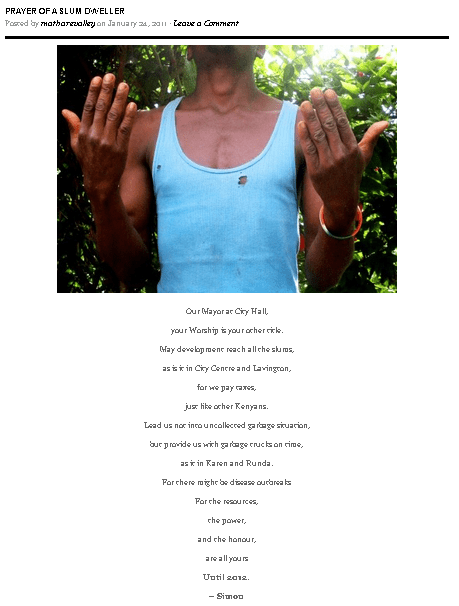
I came across the Mathare Valley blog this weekend. It’s beautiful, artful and powerful.

Prayer of a slum dweller from the Mathare Valley blog

According to the ‘about’ page, the authors of the blog:  Simon Kokoyo, Ivyonne Tiany and Jeff Mohamed, grew up in or around Mathare. They are now involved in community programs there, including the Map Mathare Initiative.

Jamie Lundine, who works at MapKibera and who’s supporting some community mapping in Mathare, wrote an excellent post about integrating participatory community development work and digital mapping in Mathare, showing how development and tech folks can combine their expertise and work together with communities to strengthen local development processes.

In my last post, I wrote about how communications (and ICTs) should be ‘built in, not bolted on‘ to development initiatives. The Mathare Initiative looks like a good example of that, with community members taking a strong lead.

Read Full Post »

I was in a global strategy meeting at the organization where I work last week. We had people from various disciplines present from across the organization and the goal was to chart a path to 2015 and beyond.

For the first couple days it seemed like a lot of talk and a lot more talk. We had very bright, very capable people representing different aspects of our work in the room. This can make things quite messy and tiring, and it can feel like everyone is talking in circles because there are so many perspectives and angles and factors that need to be considered in finding shared ground. Sometimes we are so participatory and complicated that we get in our own way. But by the 3rd and final day the perspectives had come together into a much clearer view of where the organization is headed, and we had the beginnings of a shared plan for how to get there.

We worked in a few main groups, and I participated in the Communications group. Much of our discussion centered around integrating better communication in all aspects of our work rather than seeing the role of Communications (and the Comms Team) as designing one-way messages out to the public. One colleague described this as ensuring ‘built in’ rather than ‘bolted on’ communications.

For me the discussions and end decisions were great, because there was a shared push in the group to move the organization towards things that I think are very important.

Some of the aspects we talked about included:

Communicating within programs

  • the critical role of Communications within programs – eg., Communications shouldn’t only happen at the end of a program (press releases, events or media work to share what was done); rather communication is a critical tool within programs to help reach program and development goals at various levels
  • the role of information and communications tools (new and old ones, high and low tech) at the community level to improve impact, efficiency, reach, engagement, decision-making, transparency and accountability
  • the need to strengthen our ability to better integrate information and communication tools into program efforts, measure the impact of different tools and efforts, and share experiences around this
Communicating with ‘the public’ (our ‘stakeholders’)
  • ensuring consistency in what we do and how we talk about what we do
  • space for children and young people to tell their own stories both behind the camera and in front of the camera, as producers of media not as objects of or consumers of media
  • reaching people through the ‘heart’ (which we are quite good at) as well as the ‘head’ (which we need to get better at)
  • communicating evidence of impact as well as anecdotal and personal stories
  • using different information and communication tools to communicate at varying levels of complexity and technicality to different ‘audiences’
  • using various kinds of media to tell a deeper and more complex story than is currently told
  • finding the sweet spot between a) talking to ourselves in boring technical language and b) over-simplifying or ‘dumbing down’ the complexity of people’s lives and the work that we’re involved in
  • having a strong and unified global goal so that each team or office can move towards that shared goal, but allowing the flexibility to take the path that makes the most sense locally
  • good communication at every level — community, district, national, global, ‘North’ and ‘South’, internal and external, networked — to involve people (including ‘beneficiaries’, ‘supporters’, ‘advocates’ and any other ‘stakeholder’) in community development work and in achieving child rights
  • opening the channels and lessening hierarchical controls on communications so that staff can feel more confident about communicating and using social media both internally and externally
  • using a combination of communication channels to reach our goals; eg., community radio enhanced by SMS; television programs enhanced by use of web and vice versa
  • new communications technology to facilitate connections among the network of people we reach (the ‘participants’ and the ‘supporters’ and all those in between)
Communicating for decision-making and accountability
  • the role of communications in knowledge sharing and knowledge management, internally and externally
  • creating better feedback and accountability loops to enable communities and the children and youth that we work with to have more of a say about the work we are doing and how we talk about it
  • using new technology to better organize, share and use the information that we already have, both internally and externally
  • using info-graphics to visualize information so that we can make better decisions about programs and to be more accountable to the public and to program participants
Even more important than ‘talking about’ the topics above, we worked on plans to actually do them…!
Note: this is not an official meeting report but rather my own take-aways from the workshop.

Read Full Post »

I got a great comment from Gareth on my last post Why aid and development workers should be reading blogs:

Do you know of any good blogs from local aid workers? I enjoy reading all these blogs from western-educated aid workers like myself, but we do tend to have a fairly similar way of looking at things, so it’d be great to read something from a different perspective. Any suggestions?

He’s right of course.  It would be nice to add some local perspectives to the lists of aid and development bloggers that float around.

Two well-known sites to find ‘local’ voices are Global Voices and Rising Voices. There is also Maneno which is (used to be?) a platform for bloggers in Africa, but it seems to be under maintenance while an open source platform is developed. I’m not sure how many of the bloggers on those platforms technically work at aid or development organizations, but regardless of that minor detail, you will get great local perspectives on aid and development issues there.

But the question stands – where can we find local aid and development worker blogs?

Suggestions please!

Read Full Post »

Dave Algoso, a grad student at NYU, just published a great post called A Grad Student’s Guide to the International Development Blogosphere wherein he explains why grad students should be reading blogs. It struck me that many of the reasons he recommends students read blogs are similar to why I recommend that you, my dear colleagues and friends who are development or aid practitioners or who sit in headquarters or fundraising or regional offices, or who make policy decisions, read blogs.

I’m a bit hesitant to share these tips because then you will realize that I’m not really all that smart, I just read a lot of blogs and discuss them a lot on Twitter…. On the other hand, I’m fairly confident that no matter how much I recommend blogs and Twitter, most of you will say you don’t have time, and I’ll still come out looking like a genius for knowing what’s going to hit the New York Times 2-3 days ahead of when you read it and forward it to me asking me if I’ve seen it!

You can read Dave’s post here and I encourage you to do so – so that he will get additional hits to his site and because he deserves the credit for writing the original post.

Below, I’ve taken Dave’s post (note: with permission) and substituted “development and aid workers” for “grad student” and switched it up just a bit to make it fit that context.

Here’s Dave’s post with my changes in italics:

Several friends have recently asked me which blogs I read and how I manage my reading. This post is targeted at my fellow aid and development practitioners, but those of you who work on policy, advocacy, customer service, grant writing and technical support, communications, marketing, and anyone who wants to know what’s happening in aid and development should find it useful as well. Let’s start with why to read blogs, then move on to the how, and finally the what.

1. Why should I read blogs? I do plenty of reading for work already…

I’m a fan of reading blogs. No big surprise there. Reading blogs should be part of how you get smart about your field. You read the news, right? New York Times or the Economist or People Magazine (you know who you are!) or whatever? Well newspapers write for general audiences. They won’t get very far into the complexity and nuance. You read a bunch of internal reports for work too? Well most reports are written for donors. They generally won’t tell you about what the theories and the practical work have to do with the larger picture of development. They also won’t critique the way you do business or offer you a cross cutting picture of where development and aid are headed across sectors and across organizations.

Blogs cover many of the same issues as both newspapers and journals and project reports, but with an eye toward what they mean for practitioners and policy makers. You’ll get stories from the field, scathing critiques of the latest development fads, and heated debates on everything from microfinance to conflict minerals. The blogosphere is the one place where geography is no barrier to the conversation. Academics, journalists, donors, Washington think tank-ers, UN or NGO staff — they all bounce ideas around here.

For a development worker, blogs also provide a check on what the experts, your bosses, top government officials, donors, advocates, marketers, policy-makers and celebrity spokespersons say. You’ll find out pretty quickly which issues are actually top-of-mind for practitioners and which issues only matter to the Ivory Tower types, those sitting in offices making policies, and those making things up. And if work, work meetings, conferences and discussions around the water cooler don’t allow you to delve far enough into an issue you care about, blogs can make up for that.

2. Blogs can be overwhelming. How do I manage the information flow?

First and foremost: You do not need to visit every blog’s website to check for new posts. In fact, you shouldn’t. You can subscribe by email if you like (most blogs have a button on the right hand side where you can subscribe by email) but even that can be overwhelming as blog posts mix with your normal emails.

There’s an easier way to read blogs. Instead of subscribing by email, you subscribe to the blog’s RSS feed. RSS means “really simple syndication.” You just subscribe to the RSS feed using a feed aggregator, and you’ll get all of your blogs in one place.

Some email programs (e.g. Outlook) can act as feed aggregators. I prefer to use Google Reader; if you have a Google Mail account, then you already have a Google Reader account. If you are on the road someplace with spotty internet connections, you can use a free program called FeedDemon; it’s a little clunkier than Google Reader, but it can download posts for viewing when you’re offline. On your iPhone, you can use another free program called MobileRSS. Both FeedDemon and MobileRSS sync with Google Reader, so your RSS subscriptions or starred items will always be the same in all three. (There are also many other options for feed aggregators.)

Once you have a feed aggregator, start subscribing. Most sites with feeds will have a link that looks like this orange square. Click on it to subscribe. Often you can just type the site’s URL into the feed aggregator, and it will figure out the rest.

The practical upshot of this feed aggregator stuff is that you can go to one place and see all of the new posts from all the blogs you follow. You can also “follow” your normal news (more on this below). This keeps you from being overwhelmed, so you’re more likely to keep up with them.

3. Okay, I’m sold. What should I be reading?

In my opinion, there are seven must-read blogs for any one working in the field of aid and development.

Following these seven will keep you up to speed with the debates of the day, and you’ll get links to the most interesting posts from other blogs. Seriously, if you read nothing else, at least subscribe to these seven.

4. C’mon. Only seven? I can handle a few more.

I hoped you’d say that. Here are some others that I highly recommend.

Most of the blogs above are pretty general, though everyone brings different perspectives and interests. There are also many issue/region-specific blogs you may want to check out. Here are a few that I recommend.

(Note from Linda here: I also have a list of blogs I read regularly – you can see it here on the right hand side bar under the title ‘blogroll’. Check some of them out when you have a chance. Or if you have a particular area of development or aid that you are interested in, let me know and I’m happy to give you some recommendations on specific blogs on that topic to get you started.)

I generally steer away from the blogs of NGOs and donor agencies. The content tends to be fluff. Of course, if you work for (or want to work for) a particular organization, it might be worth following them. There are two that I would recommend as generally thoughtful and interesting:

Finally, there’s news. Almost every news website does RSS feeds, so you can subscribe to them through Google Reader. I get the Economist, the New York Times Africa feed, the East AfricanForeign Policy, and others bundled together with my blogs. I also subscribe to TED talksxkcdGallup World polls, and more. If a site publishes regular content, it probably has an RSS feed. I barely even go to websites anymore.

5. But hey, you forgot about…

Am I missing anything? Feel free to fill the comments section here and on Dave’s post with suggestions.

Please don’t be offended if I failed to include you or your favorite blog above. This isn’t meant as a definitive list. Here are some more blogs I think are worthwhile. The full list of what I follow is longer still. The above is simply meant to get people started — and I don’t want to scare off the newcomers.

*****

Thanks to Dave for the great post, and hopefully some of you colleagues who haven’t caught the blog bug yet will get motivated!

Hopefully some more of you will start writing blogs too…. here are a couple links that talk about some of the reasons that blogging and other kinds of social media can be helpful in thinking about our program work:

Working and living out loud

Social media and humanitarian response

Read Full Post »

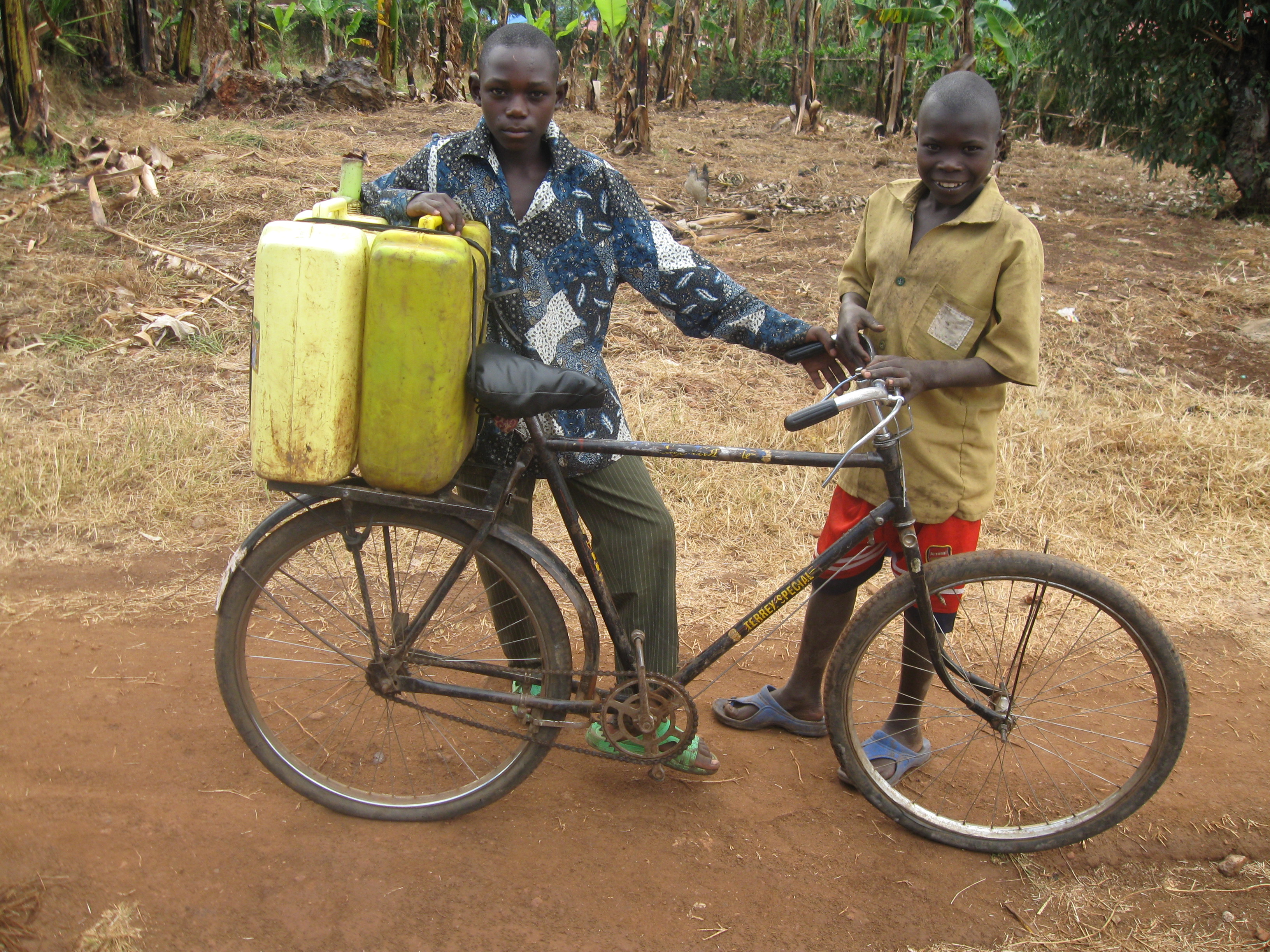
One of the main programs I support is a youth arts, technology and media program called ‘YETAM‘.  The program supports youth to identify and raise issues that they consider important, and then helps them engage their communities to resolve the issues they’ve raised. The youth have talked a lot about water in most of the places where I’ve been working in the past couple years, probably because children and youth tend to be the ones responsible for carrying water.

As part of the project in Okola District in Cameroon last year, youth mapped their community and prioritized their issues. One of their top issues was water. They made this film together about the water problem and shared it with the community adults and local authorities.

Probleme d’eau Potable – The Potable Water Problem (for subtitles, click on the arrow on the bottom right hand side of the video player and then click on the red ‘cc’ button)

Spurred on by the project and the organized youth, a few months later the community got to work fixing one of their water sources. They put in some resources and so did our local office.

La quete d’eau potable – Lack of Potable Water part 2.

Here are a couple other videos about water filmed by youth….

The Community Water Tank from El Salvador about what happens when water sources are not kept up (click on link as it’s not available on YouTube yet)

Djiko: l’eau potable a song youth wrote to remind communities about water scarcity in Mali

Water – Amazi where youth interview a rural family about water scarcity in Rwanda

Related posts on Wait… What?

A catalyst for positive change

Youth empowerment through tech, arts and media

Meeting in the middle

An example of youth-led community change in Mali

Read Full Post »

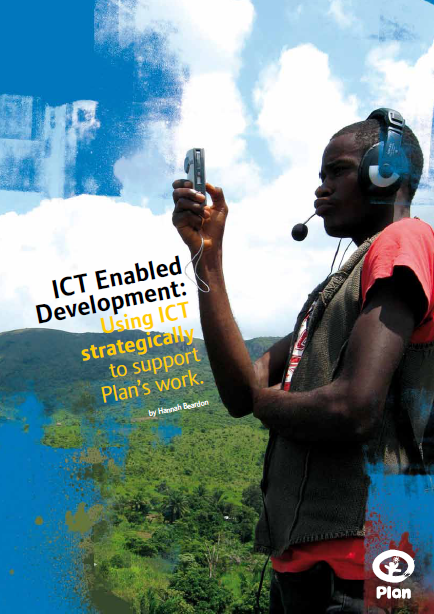
Plan just released a new report called ICT Enabled Development: Using ICT strategically to support Plan’s work. The report is part of an on-going process by Plan Finland (kudos to Mika Valitalo for leading the process) in collaboration with Plan USA to support Plan’s country offices in Africa to use ICTs strategically and effectively in their development work. It was written by Hannah Beardon and builds on the Mobiles for Development Guide that Plan Finland produced (also written by Hannah) in 2009.

The idea for the report came out of our work with staff and communities, and the sense that we needed to better understand and document the ICT4D context in the different countries where we are working. Country offices wanted to strengthen their capacities to strategically incorporate ICTs into their work and to ensure that any fund-raising efforts for ICTs were stemming from real needs and interest from the ground. Plan offices were also in the process of updating their long-term strategic plans and wanted to think through how and where they could incorporate ICTs in their work internally and with communities.

The process for creating the report included 2-day workshops with staff in 5 countries, using a methodology that Mika, Hannah and I put together. We created a set of ICT training materials and discussion questions and used a ‘distance-learning’ process, working with a point person in each office who planned and carried out the workshop. Mika and I supported via Skype and email.

Hannah researched existing reports and initiatives by participating offices to find evidence and examples of ICT use. She also held phone or skype conversations with key staff at the country and regional levels around their ICT use, needs and challenges, and pulled together information on the national ICT context for each country.

The first section of the report explains the concept of ‘ICT enabled development’ and why it is important for Plan and other development organizations to take on board. “With so many ICT tools and applications now available, the job of a development organization is no longer to compensate for lack of access but to find innovative and effective ways of putting the tools to development ends. This means not only developing separate projects to install ICTs in under-served communities, but looking at key development challenges and needs with an ICT eye, asking ‘how could ICTs help to overcome this problem’?

Drawing on the research, conversations, workshop input and feedback from staff, and documented experience using ICTs in Plan’s work, Hannah created a checklist with 10 key areas to think about when planning ICT-enabled development efforts.

  1. Context Analysis: what is happening with ICT (for development) in the country or region?
  2. Defining the need: what problems can ICT help overcome? what opportunities can it create?
  3. Choosing a strategy: what kind of ICT4D is needed? direct? internal? strategic?
  4. Undertaking a participatory communications assessment: who will benefit from this use of ICT and how?
  5. Choosing the technology: what ICTs/applications are available to meet this need or goal?
  6. Adjusting the content: can people understand and use the information provided for and by the ICTs?
  7. Building and using capacity: what kind of support will people need to use and benefit from the ICT, and to innovate around it?
  8. Monitoring progress: how do you know if the ICT is helping meet the development goal or need?
  9. Keeping it going: how can you manage risks and keep up with changes?
  10. Learning from each other: what has been done before, and what have you learned that others could use?

The checklist helps to ensure that ICT use is linked to real development needs and priorities and appropriate for those who are participating in an initiative or a project. The report elaborates on the 10 key areas with detailed observations, learning and examples to illustrate them and to help orient others who are working on similar initiatives. It places the checklist into a 4-stage process for ICT integration.

  1. Understanding the context for ICT work: includes external context and internal experience and capacity
  2. Finding a match between priorities and possibilities: rooting the system in local needs and priorities and finding good uses for tools and applications
  3. Planning and implementing concrete initiatives: carrying out participatory assessments, linking to other development processes and addressing technical issues and concerns
  4. Building a culture of systematic, sustained and strategic use of ICTs: linking ICTs with program work, transforming the role of ‘the ICT guy’, and building expertise on the cultural and social aspects of ICT use

Additional material and case studies, ICT country briefings, and an overview of Plan’s current work with ICT4D in Africa are offered at the end of the report.

The report includes input from Plan staff in Ghana, Mali, Mozambique, Senegal and Uganda who participated in the ICT4D workshops. It also draws heavily on some of the work that Mika has been doing in Finland and Kenya, and work that I’ve been involved in and have written about in Mali, Cameroon, Mozambique, Ghana, Benin and Kenya involving staff, community members and community youth. You can contact Mika to get the workshop methodology in French or English or to comment on the report (ict4d [at] plan [dot] fi).

There’s so much rich material in the report that I almost want to summarize the whole thing here on my blog, section by section, so that people will take the time to read it…  I think this is a really important and useful piece of work and we’re very excited that it’s now available! Download it here.

Related posts on Wait… What?

ICT4D in Uganda: ICT does not equal computers

Demystifying Internet (Ghana)

It’s all part of the ICT jigsaw: Plan Mozambique ICT4D workshops

A positively brilliant ICT4D workshop in Kwale, Kenya

7 or more questions to ask before adding ICTs (Benin)

A catalyst for positive change (Cameroon)

Salim’s ICT advice part 1: consider both process and passion (Kenya)

Salim’s ICT advice part 2: innovate but keep it real (Kenya)

Meeting in the middle

I and C, then T (US)

Read Full Post »

« Newer Posts - Older Posts »