Feeds:
Posts
Comments

Archive for the ‘YETAM’ Category

Bamenda, Cameroon

Based on my last couple of posts, apparently this week I’m a little hung up on privilege and position.

I’m in Cameroon to support staff and partners with some training. Today we drove from Bamenda out to the community where we’ll be working. We needed to do the last bit of the arrangements, greet the community notables and school principal, and see the center where we would be having the training to get a sense of how we would set things up for Monday.

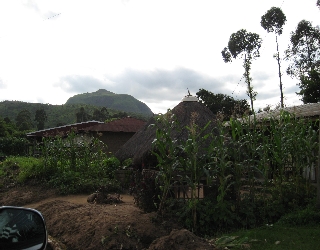
Ride out to the community, near Bamenda Town

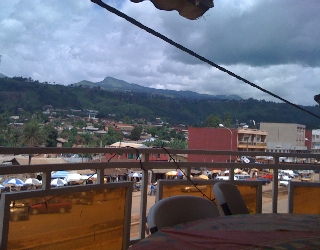
The community is about an hour’s drive out on roads that curve through green mountains that cover over with clouds and fog from dusk until the sun burns them off mid morning. This part of Cameroon has got to be one of the richest, most fertile places I’ve ever been to.

Our meeting was at the school, and I knew once we drove up and I got a peek through the school windows, that I was going to have to sit up front on the stage at the important people’s table and give a speech. Damn. There was no way around it.

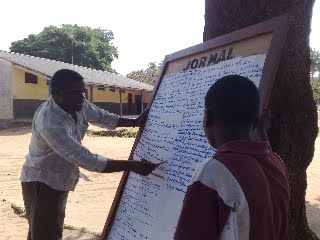
This is what it feels like when you have to sit up there:

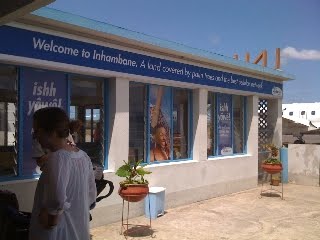
On the plus side, experience tells me that after a couple days at the training it will feel more like this:

The kids and the community are super excited about the workshop.  The youth sang a choir style welcome song that gave me chills. It took me back to the days when I used to spend a lot of time accompanying foreign delegations to communities. This welcome was one of the finest. It’s easy to see why visitors feel so special when they go to communities in places like Cameroon.

On the drive back we stopped along the road, near the palm wine huts and kola nut sellers, for fresh boiled peanuts in the shell and roasted corn. The sun set and the fog settled in for the night as we carefully made our way back to Bamenda in near zero visibility.

I can’t wait till Monday when we move from town out to stay in the community at the training center.

On days like today I wonder what, exactly, we are talking about when we say ‘development’.

On the surface it sure seems like people up in these mountains have it pretty good.

Related posts on Wait… What?

Shotgun

Privilege

It’s not a black and white photo

Read Full Post »

So, a few weeks ago I came across this fabulous article by Jay Rosen called “How the backchannel has changed the game for conference panelists“.  It was perfect timing because I had just been discussing how much I had enjoyed the public/private tweeting and live commenting happening during a live stream event I was watching, and how Twitter allows for a totally different and very engaging experience at these things than we used to have before.

I had no idea that there was actually a name for this phenomenon:  the backchannel; coined by Victor Yngve in 1970 and made famous in 2002 at the PC Forum conference (thank you Wikipedia!).

Rosen notes that “The popularity of the backchannel… has empowered those in the audience to compare notes and pool their dissatisfaction during a performance that misfires…. Especially at risk are ‘big name’ speakers whose online or offline status is such that they may complacently assume their presence alone completes the assignment and guarantees success.”

He goes on to give 10 tips for how to avoid getting killed in the backchannel. These tips are a good read for famous types who speak at conferences or panels. But they are also a good read for the rest of us, as a lot of it is still relevant. For example, I liked the idea of “blog it first” to get early reactions to what you are going to present so that you can tweak it before your actual presentation.

Now, I’m obviously the non-famous type, and I doubt the ‘audience’ will be harsh, but in mid-June, I’ll be in Karlstad, Sweden presenting at the 6th World Summit on Media for Children. My presentation is on one of the projects that I’ve been involved in over the past couple years: Youth Empowerment through Arts and Media (YETAM). I actually refer to it a lot in this blog, though I haven’t really written a summary post on it.  I normally refer people to this nice overview posted on the Communication Initiative website or to this post on the project’s overall methodology.

So, I thought I’d post my presentation here for the 99.9% of people I’m acquainted with who won’t be at the 6th World Summit, and of course as part of my plan to avoid any negative backchannel tweeting while I’m presenting!  Enjoy, and would love to have any comments to, you know, tweak it before it goes super live, just in case there are any hardcore backchannellers there….

Note: if you are reading on Google Reader, it seems the presentation doesn’t appear, so try clicking through to slideshare here…. or [NEW!] watch or download the file with notes here (if watching with notes, resize the .pdf document so that you can see the notes underneath the slides).

Related posts on Wait… What?

Hands on, hands on, hands on

Putting Cumbana on the map, with ethics

Being a girl in Cumbana

Demystifying Internet


Read Full Post »

the Ghana team: row 1: Steven, Joyce, Yaw, Samuel; row 2: Bismark, Maakusi, James, Chris, Dan

I was in a workshop in the Upper West Region of Ghana this past week.  The goal was two-fold.  1) to train a small group of staff, ICT teachers and local partners on social media and new technologies for communications; and 2) to help them prepare for a project that will support 60 students to use arts and citizen media in youth-led advocacy around issues that youth identify.

I was planning to talk about how social media is different from traditional media, focusing on how it offers an opportunity to democratize information, and how we can support youth to use social media to reduce stereotypes about them and to bring their voices and priorities into global discussions.  But all those theories about social media being the great equalizer, the Internet allowing everyone’s voices to flourish and yadaya, don’t mean a lot unless barriers like language, electricity, gender, and financial resources are lowered and people can actually access the Internet regularly.

Mobile internet access is extremely good in this part of Ghana, but when we did a quick exercise to see what the experience levels of the group were, only half had used email or the Internet before.  So I started there, rather than with my fluffy theories about democratization, voice, networks and many-to-many communications.

We got really good feedback from the participants on the workshop.  Here’s how we did it:

What is Internet?

I asked the ICT teachers to explain what the Internet is, and to then try to put it into words that the youth or someone in a community who hadn’t used a computer before would be able to understand.  We discussed ways in which radios, mobile phones, televisions are the same or different from the Internet.

How can you access Internet here?

We listed common ways to access Internet in the area: through a computer at an internet café or at home or work, through a mobile phone (“smart phone”), or via a mobile phone or flash-type modem connected to a computer (such as the ones that we were using at the workshop).  We went through how to connect a modem to a computer to access internet via the mobile network.

Exploring Internet and using search functions

Riffing off Google search

We jumped into Internet training by Googling the community’s name to see what popped up, then we followed the paths to where they led us. We found an article where the secondary school headmaster (who was participating in the workshop) had been interviewed about the needs of the school.

Everyone found it hilarious, as they didn’t know the headmaster was featured in an online article.  This lead to a good discussion on consent, permission and the fact that information does go global, but it doesn’t stay global, because more and more people are able to access that same information locally too through the Internet, so you need to think carefully about what you say.

The article about the school had a comments stream. The first comment was directly related to the article, and said that the school deserved to get some help.  But the comments quickly turned to politics, including accusations that a local politician was stealing tractors.  Again this generated a big discussion, and again the local-global point hit home.  The internet is not ‘over there’ but potentially ‘right here’.  People really need to be aware of this when publishing something online or when being interviewed, photographed or filmed by someone who will publish something.

Other times when we’ve done this exercise, we haven’t found any information online about the community. In those cases, the lack of an online presence was a good catalyst to discuss why, and to motivate the community to get the skills and training to put up their own information. That is actually one of the goals of the project we are working on.

We used a projector, but small groups would have also been fine if there was no projector and a few computers were available. We generally use what we can pull together through our local offices, the small amount of equipment purchased with the project funds, and what the local school and partners have, and organize it however makes the most sense so that people can practice.  4-5 people per computer is fine for the workshop because people tend to teach each other and take turns. There will be some people who have more experience and who can show others how to do things, so that the facilitator can step out of the picture as soon as possible, just being available for any questions or trouble shooting.

Social networks and privacy

When we Googled the name of the community, we also found a Facebook page for alums from the secondary school.  That was a nice segue into social networks.  I showed my Facebook page and a few others were familiar with Facebook. One colleague talked about how she had just signed up and was finding old school friends there who she hadn’t seen in years. People had a few questions such as ‘Is it free?  How do you do it? Can you make it yourself?  Who exactly can see it?’  So we had to enter the thorny world of privacy, hoping no one would be scared off from using Internet because of privacy issues.

One of the ICT teachers, for example, was concerned that someone could find his personal emails by Googling.  I used to feel confident when I said ‘no they can’t’ but now it seems you can never be certain who can see what (thank you Facebook).  I tried to explain privacy settings and that it’s important to understand how they work, suggesting they could try different things with low sensitivity information until they felt comfortable, and test by Googling their own name to see if anything came up.

Online truth and safety

Another question that surfaced was ‘Is the internet true?’ This provoked a great discussion about how information comes from all sides, and that anyone can put information online.  And anyone else can discuss it.  It’s truth and opinions and you can’t believe everything you read, it’s not regulated, you need to find a few sources and make some judgment calls.

A participant brought up that children and youth could use Internet to find ‘bad’ things, that adults can prey on children and youth using the Internet.  We discussed that teachers and parents really need to have some understanding of how Internet works. Children and youth need to know how to protect themselves on the Internet; for example, not posting personal information or information that can identify their exact location.  We discussed online predators and how children and youth can stay secure, and how teachers and communities should learn more about Internet to support children and youth to stay safe.

We discussed the Internet as a place of both opportunities and risks, going back to our earlier discussions on Child Protection in this project and expanding on them.  I also shared an idea I’d seen on ICT Works about how to set up the computers in a way that the teachers/instructor can see all the screens and know what kids are doing on them – this is more effective than putting filters and controls on the machines.

Speaking of controls: virus protection and flash drives

The negative impact of viruses on productivity in African countries has been covered by the media, and I enthusiastically concur. I’ve wasted many hours because someone has come in with a flash drive that infected all the computers we are using at a workshop.  Our general rule is no flash drives allowed during the workshop period.  I have no illusions, however, that the computers will remain flash drive free forever.  One good thing to do to reduce the risk of these autorun viruses is to disable autorun on the computers.  This takes about 2 minutes.  After you do that, you just have to manually access flash drives by opening My Computer from the start menu. A second trick is to create an autorun.inf file that redirects the virus and stops it from propagating on your machine. Avast is a free software that seems to catch most autorun viruses.  Trend Micro doesn’t seem to do very well in West Africa.

Hands on, hands on, hands on

I cannot stress enough the importance of hands on. We try to make sure that there is a lot of free time at this kind of workshop for people to play around online.  This usually means keeping the workshop space open for a couple hours after the official workshop day has ended and opening up early in the morning. People will skip lunch, come early, and stay late for an opportunity to get on-line. Those with more experience can use that time to help others. People often use this time to help each other open personal email accounts and share their favorite sites.

No getting too technical

People don’t want to listen to a bunch of theory or mechanical explanations on how things work. They don’t need to see the inside of a CPU, for example. They need to know how to make things work for them.  And the only way they will figure it out is practice, trial and error, playing around.  If a few people in the workshop are really curious to know the mechanics of something, they will start asking (if the facilitator is approachable and non-threatening), but most people for starters just want to know how to use the tools.

No showing off

I’ll always remember my Kenyan colleague Mativo saying that in this kind of work, a facilitator’s main role is demystifying ICTs.  So that means being patient and never making anyone feel stupid for asking a question, or showing any frustration with them.  If someone makes a mistake or goes down a path and doesn’t know how to get back and the facilitator has to step in to do some ‘magic’ fixing, it’s good to talk people through some of the ‘fix’ steps in a clear way as they are being done.

My friend DK over at Media Snackers said that he noticed something when working with youth vs adults on Internet training: youth will click on everything to see what happens. Adults will ask what happens and ask for permission to click.  [update:  Media Snackers calls this the ‘button theory‘].  Paying close attention to learning styles and tendencies of each individual when facilitating, including those related to experience, rural or urban backgrounds, age, gender, literacy, other abilities, personality, and adjusting methodologies helps everyone learn better.

Have fun!

Lightening up the environment and making it hands on lowers people’s inhibitions and helps them have the confidence to learn by doing.

**Check back soon for a second post about photography, filming, uploading and setting up a YouTube account….

Related posts on Wait… What?

Child protection, the media and youth media programs

On girls and ICTs

Revisiting the topic of girls and ICTs

Putting Cumbana on the map: with ethics


Read Full Post »

The basic premise of the Convention on the Rights of the Child (referred to as the ‘CRC’) is that children are born with fundamental freedoms and the inherent rights of all human beings.

According to the CRC, the 4 main categories of rights that children have are survival, development, participation and protection. The CRC’s guiding principles help further shape the way that child rights should be interpreted. These are non-discrimination, the best interest of the child, right to life, survival and development, and respect for the views of the child.

Child protection concerns a child’s right not to be harmed and to protection from violence, abuse, neglect and exploitation.  It involves the duty of care placed on those that work with children or that come into contact with children.  It encompasses the responsibilities, measures, and activities that must be undertaken to safeguard children from both intentional and unintentional harm.

Child protection encompasses many different areas, such as juvenile justice systems and a child’s right not to be tried as an adult or incarcerated with adults; special care needed by unaccompanied children; protection from sexual exploitation and dangerous forms of child labor; prevention of trafficking and harmful traditional practices such as female genital cutting; support for children in emergency and conflict situations; prevention of exploitation by the media; the right not to be abused or taken advantage of by family, caregivers or institutions; and so on.  This link gives an explanation of a protective environment, and this one offers an excellent broad overview of child protection.

Child protection policies and strategies create mechanisms to prevent any type of harm to a child.

Child protection in youth media programs

The organization where I work frames its efforts within the CRC.  Most of the programs that I focus on are related to child participation and child protection.  These two areas go hand in hand, because good participation initiatives need to take child protection into consideration, and good protection initiatives are only successful when children participate in designing them and in protecting themselves.  Children should both know what their rights are and take an active part in achieving them and in protecting themselves.

This week, for example, I’m at a workshop with a small group of colleagues, teachers and local partners from the Upper West Region of Ghana. We’re preparing for a youth arts and media project that they will implement in June. By the end of this facilitator workshop, we will have a localized training plan that fits the context of the community and the youth participants, and the facilitators will have learned some new media skills that they will train the youth on when the project starts.

As part of the facilitators’ training, we cover the CRC, going in depth on child participation and child protection.  There is always a certain tension between these two areas. We want to encourage children to participate to their fullest, yet both children and adults need to be aware of potential risks that participation can bring with it, and know how to mitigate and manage them.

Three child protection risks that we are focusing on with facilitators at this week’s workshop are:

  • Intentional or unintentional abuse by staff or local partners
  • Retaliation or harm to a child who appears in a media story or art piece on a sensitive issue
  • Retaliation or harm to a child who authors or creates media or arts on a sensitive issue

Internal child protection policies

To begin our sessions on child protection, my colleague Joyce covered our organizational Child Protection Policy, which clearly states our intention to protect children from harm and advises that we will take positive action to prevent child abusers from becoming involved with the organization.

Joyce explained that child abuse is never acceptable:

  • Child abuse in our case is defined as:  All forms of physical abuse, emotional ill-treatment, sexual abuse and exploitation, neglect or negligent treatment, commercial or other exploitation of a child and includes any actions that result in actual or potential harm to a child.
  • Our child protection policy applies to staff at all levels, including board members, volunteers, community volunteers, supporters, consultants, contractors; partner organizations, local government people who have been brought into contact with children via our organization, visitors, donors, journalists, researchers and any other type of person or institution associated with us.
  • We recognize that child abuse may be a deliberate act or it may be failing to act to prevent harm. Child abuse consists of anything which individuals, institutions or processes do or fail to do, intentionally or unintentionally which harms a child or damages their prospect of safe and healthy development into adulthood.
  • We follow through on cases of child abuse to the fullest extent of the law.

Point three, unintentional abuse, refers to situations where someone has good intentions but their lack of planning, knowledge, foresight, or their recklessness puts children in harm’s way.  As Joyce explained, “It’s  like an excursion that is not well planned.”  The good intention is to take children out so that they could have some fun.  But if proper care is not taken to plan the trip and ensure children’s safety during the trip, then unintentional harm could be done. A child could be lost, a vehicle could be unsafe, a child could drown.  Though the good intention of the person planning this event is not in question — they wanted the children to have fun and enjoy themselves — if proper planning is not done and something happens that causes harm to a child, it is still considered child abuse.  Good intentions are not enough.

Here are some resources on institutional child protection standards and an excellent overview on minimum participation and protection standards when working with children and residential events.

Use of children’s images in the media

Since this is a youth arts and media project, we need to think about the use of children’s images and identities in the media: print, broadcast, radio, internet or visual arts. The CRC asserts that every child has the right to privacy, and this extends to the right not to have their image used for any purpose for which they have not given consent.

Key points related to the use of children’s images and working with children’s stories include:

  • If the person is below 18, you must seek the consent of the parents/guardians
  • Consent forms must be kept securely for future audit or proof purposes
  • A child’s real name should not be used in publication or broadcast unless they would benefit from increased self-esteem by seeing their name in print
  • The information given about the child should not allow their precise location to be identified (either directly or indirectly)
  • A story should not be published, with or without names or identities altered, if it could put a child, siblings or peers at risk
  • The best interest of the child comes above all else

Helping people see the implications

Expanding on the aspects above, Joyce offered ideas on how to discuss and ensure that children and adults that might portray others, or be portrayed in media, are aware of all the implications and potential risks:

  • Today’s media is global and can be accessed anywhere in the world through the internet.
  • When you talk to the media nowadays, you are talking to the world. The story may not reach everybody in every country, but you can be sure that it will reach further than you can imagine.
  • Ask yourself the following:
    • How would friends and family react if they saw the story, or found out that it had been published?
    • Think through who might be harmed.  Would the subject of the article, artwork or video be at risk of any harm if someone saw it?  Could this story or artwork put anyone in danger?
    • This story can stay documented for years. How would the person feel if their children were to read the story in a few years?
    • There is no guarantee that this story cannot be seen by people whom you do not want to know about it.  Help people thoroughly understand the implications of sharing their stories. This protects not only the subject of the story, but the person who is authoring the story.
    • Are there people we need to protect when telling our story? Friends that we need to protect?  What needs to be edited out so that nobody is implicated in the presentation of the work?

Here is an excellent resource on use of children’s images in the media, and a guide for journalists reporting on children, and guidelines for reporting on children in the context of HIV/AIDS.

Stories that cause unintentional harm

To illustrate some of the points above, we used 2 examples.  A New York Times/Nick Kristof article that identifies a child from the Democratic Republic of the Congo who was raped and his opinion piece on why he believes that was OK, and a scenario where a film is made of a girl who reports that her mother beats her and doesn’t allow her to attend school.

General consensus from the group in our workshop on the New York Times case was that child protection and media guidelines were not followed, and that Kristof was reckless and unintentionally put the girl at risk.  Workshop participants felt that appropriate respect for the child was not shown. “The journalist would never be able to do that in the US”.  One participant exclaimed “So, he didn’t feel that any Congolese would ever be enlightened enough to access the story?”  It was recognized that “his intention was good, that people should know about these terrible crimes, but there is no need to share all the specifics.” Participants wondered whether this was in the best interest of the girl, and how she would feel in the future if someone she knew found the article.  “In our culture, this type of thing can be very stigmatizing.”  Participants asked why technology wasn’t used to cover the girls’ face and disguise her voice, or why she wasn’t filmed from behind to conceal her identity.  The conclusion was that this story could have been told in a way that protected the child and had equal impact on readers.  [Update: Laura over at Texas in Africa has a great post on Connectivity and Child Protection which comes to the same conclusions.  You can also find related posts from awhile back on Wronging Rights.]

In the second scenario, consensus was that the story could create difficulties for everyone involved.  One participant commented that the mother might get angry and beat the child even more.  Another said that it the whole village might feel betrayed by the child exposing the story. “When a child does something, people ask – from which village are you? From which house?  From which family?  Whatever you do to a member of the village you do to the whole village. This can cause a threat to the child by the whole village.  Those who give out the story, if they are known by the village, will also be at risk.”  Another issue was that the community might say that the children are given too much power. “They will wonder who is behind it and may not wish to work any longer with the organization that is supporting the project.”  It was suggested that if a story like this were filmed, it should show a resolution, a happy ending, so that it could be used as an example. “That way you can favor all who are involved.”  The group concluded that when topics are quite sensitive or individuals are implicated, the story should be altered to protect identity and the same situation could be brought out using simulations, song, theater or drawings.

As we are training children as citizen journalists in this project, case studies that highlight the potential risks and impact of a story are critical learning tools.

In conclusion….

Child protection needs to be considered whenever children are involved.  Adults and children need to be aware of potential risks and thoroughly discuss how to mitigate them. Mechanisms need to be in place to address any intentional or unintentional harm that could be caused to a child or children.  There are plenty of good resources around on how to do this, so there is really no excuse not to.

————————–

The Child Rights Information Network provides excellent all around resources on child protection and child rights, and a list of over 1000 global resources on child rights

Keeping Children Safe offers a toolkit for developing your organization’s internal child protection policies

The International Federation of Journalists has created Guidelines and Principles for Reporting on Issues Involving Children

Related posts on Wait… What?

Child protection, from emergency response to a sustainable mechanism

Children in emergencies: applying what we already know to the crisis in Haiti

Read Full Post »

Yesterday I inadvertently clicked on a link to the first blog post by Talesfromthehood that I think I ever read. The post starts by saying ‘There is just no way around the critique that aid is ultimately about imposing change from outside….you’ve got to make your peace with that reality.’  (Not what I like to hear).  Tales goes on to say that we need to better define the term ‘bottom up‘ development and concludes that we may really not be talking about ‘bottom up‘ development at all, but more about ‘meeting in the middle‘.

The idea of imposing change from the outside is a little uncomfortable sounding when you normally think of your work as ‘bottom up‘, and you have seen the countless problems that ‘top down‘ approaches create.  But funny that Tales happened to include a link to that particular post in the more recent post that I was reading, because I was in the process of writing up some notes about a community development approach that I believe is quite good.  And looking more closely, it actually sounds a lot more like ‘meeting in the middle‘ than ‘bottom up‘….

I spent this past week in a workshop with colleagues from Cameroon, Mozambique and Kenya discussing a program we’re all working on at different levels. The initiative (Youth Empowerment through Technology, Arts and Media -YETAM) aims to build skills in youth from rural areas to claim space at community, district, national and global levels to bring forth their agendas. It looks to create an environment where peers, adults, decision makers, partners, schools, and our own organization are more open and supportive to young people’s participation and ideas.  It uses arts and ICTs (both new and traditional ones) as tools for youth to examine their lives and their communities; identify assets, strengths and challenges; build skills; share their agendas; and lead actions to bring about long term and positive change.

It is clear from listening to my colleagues that ICTs in this case have been effective catalysts, tools and motivators for youth participation and voice in their communities and beyond, but that other elements were just as critical to the program’s successes.  Throughout the meeting they kept saying things like ‘we are adopting the YETAM approach for our disaster risk reduction work’ or ‘we are incorporating the YETAM approach into our strategic plans’ and ‘we are going to use the YETAM approach with new communities’.  So I asked them if they could put into words exactly what they considered ‘the YETAM approach‘ to be so that we could document it.

I furiously typed away as they discussed how they are working, and what they consider to be the elements and benefits of the ‘YETAM approach.’ And it’s probably a pretty good example of what is normally called a ‘bottom up approach‘ but which might actually be a ‘meeting in the middle approach.’  And I’m definitely OK with that.

I like the approach because it builds on good community development practices that we’ve endorsed as an organization for quite awhile. It brings in new ideas, new tools and new ways of thinking about things at the community level, but it doesn’t do so in a top-down way.  It doesn’t encourage youth to abruptly raise controversial issues and then leave them to deal with the consequences.  It thinks about implications of actions and ownership.  It addresses the ‘what’s in it for me?’ questions but doesn’t turn the answer into unsustainable handouts.  It looks to instill a sense of accountability across the board.  On top of all that, it incorporates ICT tools in an integrated way that gets youth excited about engaging and participating and helps them take a lead role in advocating for themselves.

YETAM Point Persons: Mballa (Cameroon partner), Anthony (Plan Kenya), Pedro (Plan Mozambique), Lauren (Mozambique Peace Corps Volunteer teacher), Nordino (Plan Mozambique) and Judith (Plan Cameroon)

So, ‘bottom up’, or ‘meeting in the middle’ or whatever, here’s ‘the YETAM approach’:

Meetings…. Lots of them. We meet with men, with women, with children, with youth, with local authorities and district officials and relevant ministries, with partner organizations and community based organization, in short, with all those who have a stake in the initiative, to get their input.  This is an opportunity to understand what everyone wants to get out of the project, what value it adds to what they are doing or what they aspire to do, and what role everyone will play.  Then we meet with everyone all together at a community assembly. Once we pull together what everyone’s interests and contributions are, we can go forward.  This means a lot of time and a lot of meetings, which can be tiresome, but in the end it is worth doing for the long term success of the initiative.

Partnerships. Everyone brings something to the table – communities, local partners, young people, schools, teachers, local leaders, and us.  So we work to ensure that the contributions of each entity are clear and detailed, and that all sides are accountable if they don’t hold up their end of the deal. The community might contribute time or food or labor or a training space or some other resources that they have. We might contribute funds or technical advice or facilitators or the like.  Local partners might bring in technical expertise; schools or governments something else. Youth are putting in time and efforts also. To ensure that the project holds up and succeeds, we negotiate with all involved partners to see what they can contribute. If you see that people are not willing to put something into the initiative, it means that it is not of value to them.  If you push the project on people, and move it forward without it having value for them, it will be a constant struggle and a headache.  Seeing the level of commitment and interest in different community members can tell you if the initiative is a good thing for the community or not, so that you can adjust it and be sure it’s worth doing, not pursue it, or continue to work on buy in if some parts of the community are interested, but others are not.

Accountability. We set up agreements with all partners in the initiative, detailing what everyone will contribute and what they will get out of it, establishing everyone’s roles.  This is critical for accountability on all sides, and gives everyone involved a common basis for any future discussions or disputes, including if the community wants to hold us or a local partner accountable for not fulfilling our promises.

Buy-in. We don’t pay people to participate in projects or for sitting in workshops.  If you pay people to participate in a project once, you will have to pay them forever and it becomes a weak project without any real buy-in.  Our particular role in community development is not creating short term jobs, but contributing to long term sustainable improvements.  So what we do is to sit with the community and any participating partners or individuals from the very beginning and fully discuss the project with them. Then those who participate do so with a clear understanding of the set up, the longer term goals, the value to the community, and they have decided whether they want to be involved, and what is their level of commitment.

Some NGOs find that paying people to participate is an easy way to move budgets. This may help get things done in the short term, but for the type of programming that we do, it doesn’t work in the long term. It takes away people’s ownership of their community’s development if you pay them a fee to participate in their own project. So to avoid misunderstandings, everything needs to be clear before the project activities even start. We spend time with the community and all those who would be involved.  In the very first meetings with the community before concrete activities even get started, we address the issue of payment.  It’s not our project for the community and they are not working for us – it’s the community’s project.  We do negotiate with them to cover additional expenses that they may incur for participation in a workshop or event, for example, transport, food, etc.

What’s in it for me? Many NGOs have come around before, just giving hand outs, and people are used to seeing an NGO come in paternalistically to give them things.  They imagine that you have a lot of money and you’ll arrive to just start handing things out.  This is not how we want to work.  But people want to know – well, I’m not making any money from this, and I’m going above and beyond, so what do I personally get out of it? What’s in it for me? They even ask this directly, and that is normal. There’s a need to help people think beyond the immediate project. What value does this project add to people’s lives in the long term, to what they do on a daily basis?  If they are not thinking in the long-term, it may be hard for them to see value in the project. If during this discussion with them it’s clear that people don’t see any value in an initiative, then you should be aware that they are not really going to participate.  And that is also logical – if there’s really nothing in it for them, why should they do it? So you need to listen to people and be prepared to discuss and redesign and renegotiate the project so that they are really getting something of value for themselves and the community out of it.  If you come in with an idea from the outside and people don’t see value for themselves, and you go the easy route and pay people to participate in the project, you will see the whole thing fall apart and the efforts will have been for nothing, you will see no impact. So we take the time and discuss and co-design with the community to make it all work. That way it becomes a catalyst for long term positive changes.

Understanding local culture and how your government works. We work to involve local governments and ministries in this work as well as other kinds of decision makers. It’s important to understand how local culture works and what the hierarchies and protocols are in order to do this successfully. It’s critical to know what your government is like and how they work.  If you are not aware of this, it will create problems.  You need to know how to engage teachers, district officials, school directors.  We follow local protocols so that we can ensure good participation and involvement, especially when we need support from the government or ministries in order to move forward with something.  We involve people at these levels also because they are the duty bearers who have the ultimate responsibility here in our countries.  If you leave them out of the equation, you are really harming the initiative and its sustainability as well as losing out on an opportunity to make sustainable changes happen at that higher level.

Respecting community schedules. Communities are not sitting around, waiting for NGOs to show up so that they can participate in NGO activities and projects.  They have their own lives, their own other projects, their own work and their own goals that we need to harmonize with.  Projects that we are supporting are just one part of what community members are doing in their lives.  So we need to be flexible and let the community dictate the pace.  Sometimes partners, colleagues from other parts of the organization and outside donors do not understand this, which can cause conflicts and misunderstandings with the community.  In our case, for example, we are working with youth. They are in school.  We can’t interrupt their primary responsibility, which is getting their education, so we work with them during school holidays or after school.  Often parents want them to work during their school holidays. So again those meetings with parents, community leaders and so on become very important so that they see that their children are participating in a broader initiative and they see the value in it.

Gradual processes.  In this particular project, we are working with youth to have more of a voice.  This can be threatening to some adults in the community, and can go against local norms and culture, just like working with women to overcome gender discrimination can.  If youth are not used to voicing their opinions, they may be fearful of reprisals.  We don’t want to show up, give young people the tools and means to speak out, create conflict in the community, and leave.  This can be very counterproductive and even dangerous. This is where those meetings and building those relationships with different parts of the community again become very critical. We’ve adapted a methodology of intergenerational dialogue.  We sit with the elders, with the community leaders who hold elective positions, and share the project idea and what might come out of it, sit with women, sit with youth. This is like a focus group.  You don’t go in accusing people either. You ask them – what issues do you think youth are facing in the community? They will tell you, and when you’ve heard from everyone, you triangulate the information. Then you find a way to bring everyone together to find common points to start from.  The shift cannot come so strong and fast.  You need to take a slow process.

Listening to children and youth. The strongest point of reference will be what children and youth have talked about, because that is our focus. And for a child to tell you something, it’s taken a lot of work inside themselves to say something.  We had one case where a child decided to stand up and raise the issue of incest at an inter-generational dialogue meeting. A man stood up and said ‘you are lying, this doesn’t happen here’.  But there had been an on-going community process already, and there were other people in the community who were aware and were prepared to stand up and support the child.  In that case, a man stood behind the boy and said, ‘in our community we don’t talk about this, and it takes courage.  Let’s listen to the boy.’ This community process and work is really important to give confidence to the children to be able to speak.  If you are not yet at the point where children can stand up publicly and speak out, then ICTs can also be a good tool.  We’ve found that children’s radio is an excellent place to speak out anonymously about a sensitive community issue.  Children can call in to raise an issue and others can call in to confirm it if it’s happening in the community.  Theater, cartooning and other media area also good ways to raise issues.  Making a drama video on a sensitive topic and sharing it with the community can also be a way to raise an issue without directly accusing someone or implicating a child or youth for having raised it.

Expecting yourself to be held to task too. If there is a track record in the community with children speaking out but nothing happening or changing, then that will deter them from saying anything. So if you want to go down that road, of encouraging children and youth to speak out, you need to be prepared to take it through to the end, to support them. You have to be prepared to really take children and youth voices seriously, to follow things through to the end.  This is actually also true if they raise an area where your own organization has failed, that you yourself have not done something that you promised.  If we encourage them to use their voices, we have to expect that they will hold us accountable too.  We raise funds in the name of these children and communities, so we need to be accountable to them.  We need to be open to children, youth and the community also calling us out.  And have no doubt that they will. It’s happened before and will happen again. So we encourage them to challenge us as an organization, to be honest and to hold us to task.

Change and growth from within. As part of the whole community process, we do mapping, problem tree analysis, assets analysis with the youth and accompanying adults, and they learn much more about themselves. They think about where they are coming from and where they are going, and what local resources they have. This offers perpetuity, especially for the children and youth.  Because of knowing where you come from, you can know where you are going. Where you dream to be.  Using this kind of documentation and these tools actually helps a community to be open to absorbing new things, to be open to change and growth. But not external change and growth, change and growth coming from within the community.

Addressing gender discrimination. As part of the process of mapping and prioritizing issues, there is a lot of discussion.  Very often this brings up issues that are closely linked with gender discrimination.  We see this over and over again. Because we are working in a safe space and using different tools, the issues come up in a way that is not so threatening. Boys also are at a stage where they are more adaptable. They see their sisters and mothers being victims of discrimination and they are more open to hearing out their female peers.  So, we are able then to build a shared agenda that is favorable to girls, and which both boys and girls are then acting on and working to address.  Issues like child marriage, early pregnancy, girls’ schooling come up, but there is a way to look at them and do something.  We also open opportunities for youth leadership roles within the project, and we’ve seen girls start to fight to have a space there, whereas before they would not have thought that they could play an executive role.

Opening space for youth. We work to build new skills in youth to manage new technology, new media, and to do research in their communities.  Through this, youth claim a space that they didn’t have before and can influence certain things, advocate on certain issues they feel are important to them. You see them start taking ownership in communities and in leadership, they want to pick up new things for this role.  We used to invite youth to community meetings. We would start with 20 youth, then it would go down to 10, to 4, to 3 to none. They got bored with it because they didn’t see any relation to themselves. But with this integration of technology and arts, youth have a high interest. It’s really bringing in their opinions, their thoughts and ideas to join their voices with their parents. Now they use arts and media to promote communication, dialogue on their issues and look for ways to resolve them. Before they were totally missing. We tried to come in with programs for youth but they never worked before. With this new way of working, they have become more responsible because they  are not waiting for adults to come in with something and invite them in to ‘help’. Now they are designing strategies and solutions themselves and bringing these to the table.  It’s less easy for politicians and parties to manipulate them and incite them to violence.  Arts and media are effective in this way to share ideas, issues and to use in generating dialogue and solutions in their communities.

ICTs providing reach, motivation and skills. In addition to using ICTs to generate interest in young people and for them to take actions in their communities, we also use ICTs as a cost-efficient way of actually advocating at different levels. You can use video at the local level but also at the national, regional and global level. That is cost effective and has a real impact. You can use videos in invited spaces, for example, where governments, schools, other communities, or our organization itself invite children’s and youth’s voices in.  But we also support youth to use these tools to claim spaces, to fight for space and to get their voices heard there.  We give youth the tools, and you see their brains rewiring. They learn better hand-eye coordination by using a mouse and a computer, and you see then that in class, they can copy from the board without looking at their paper. They learn organizational skills by creating folders and sub folders. They learn structure from filming a video and making a time line while editing it.  They learn to speak with adults and decision makers from talking on the radio, using a recorder or a camera.  They become more motivated to complete school.  All this makes them more effective leaders and advocates for themselves and their agenda.  They also know that they’ve learnt a skill that puts them at the top of the pile in their community for jobs now. They are plugged into something that would never have existed for them before.

Related Posts on Wait… What?

7 (or more) questions to ask before adding ICTs

Is this map better than that map?

Mind the gap

An example of youth-led community change in Mali

Being a girl in Cumbana

Putting Cumbana on the map: with ethics

Read Full Post »
For the past couple years, I’ve been supporting the Youth Empowerment through Arts and Media (YETAM) project in 6 African countries. One of the best things about being involved in the project is the opportunity to work with some incredible people who are developing the program strategies and implementing YETAM on the ground.  Bedo, the child media program coordinator in Plan Mali, is one of those people I’ve been lucky enough to work with.  He’s kind, gentle, thoughtful and soft spoken yet solid in his opinions and knowledge. His face totally lights up when he’s working with the youth. He has clear vision and gets things done, writes excellent reports, and isn’t afraid to clarify things if he’s not sure he’s understood correctly.  It’s been a real pleasure working with him. On Friday, Bedo told me about some of the short-term positive results that the Mali team is seeing in the YETAM program there, which I’ll summarize below. Photo: Bedo in December 2008 at the Social Media for Social Change Workshop in Kenya.

YETAM
The YETAM project aims to help youth develop their skills to communicate, educate and advocate at local, national, and global levels about issues impacting on their lives using the arts, traditional media, and new media tools.The project methodology consists of hands-on workshops and activities where youth can improve their communication and analytical skills in order to effectively raise their viewpoints and enter into dialogue with families, peers, community members, decision makers, and the general public. Youth go through a process of participatory mapping, discussions to prioritize their key themes, topics or issues. Then they learn to use arts and media to get their messages across to those that they want to engage in helping them find solutions. To date the project is being implemented in 6 countries in Africa (Senegal, Mali, Cameroon, Rwanda, Kenya and Mozambique).

YETAM in Mali
In Mali, around 60 children and youth in a community in the Kati District have been involved in the YETAM project for about a year and a half so far.  In an initial workshop, the youth raised a number of issues through participatory mapping. They researched, investigated and developed opinions on these issues further through song, poetry, theater, photo and video, and later in the process, prioritized their most important issues:

· many children do not have birth certificates
· rural exodus
· violence at school
· excision (female genital cutting).

Integrating YETAM into school curriculum
Following the prioritization of their topics, youth began an education effort around the 4 themes with the local population and local authorities from their village and surrounding villages. As part of this effort, six school teachers were appointed by local school authorities to support the youth and supervise extracurricular activities around the youths’ 4 themes. They were trained by local consultants and Plan Mali staff on participatory methodologies using arts and media as participation tools.

During this training, teachers learned to adjust their teaching styles and to address the 4 topics not as lessons taught in the classroom, but as information sharing and advocacy topics through drawings, poetry, crafts, dance, and theater. New students joined the small arts groups according to the type of activity that they were interested in.  Students who had been involved longer supervised and trained newer students and helped integrate the program within the school.

In addition to the arts, youth and adults worked together on several short drama films. One of these was about female circumcision. It discusses the medical complications of circumcision in a married woman during her 1st birth. The complications were due to excision, done in infancy, and resulted in vesico-vaginal fistula. Rejected at first by her husband, the woman is eventually accepted after the husband’s becomes aware of the existence of appropriate care (free in Mali) and the commitment made between spouses at marriage.

Engaging the public and local authorities through arts and media
Through the training workshops and the production of the different arts and media materials, youth were able to form their own opinions, messages and ideas for solutions to the issues that they had prioritized.  They organized a public event in the community where they performed their drama, songs and poetry pieces, showed their film, and held a panel with local authorities to discuss how to improve the four areas that they had identified.  Photo:  youth performing a drama piece in the village.

Short term results to build upon
According to Bedo, “Integrating the YETAM methodology with the school environment enabled teachers to learn to address and manage issues with children and youth in a participatory way. The education methods have changed and the student / teacher relationships have become less tense, especially when it comes to discussing subjects such as violence at school or practice of female circumcision.”

Bedo explained that “the introduction of the ‘violence in school’ theme by the students initially caused some frustration among teachers. At first, they felt directly targeted. But when we integrated the teachers into the process, their frustration dissolved and trust began to grow between students and teachers because teachers are discovering another way to teach and discuss sensitive issues – they are behaving as coaches.”  Bedo also said that since the discussions took place at the school, the education authorities have become more interested in the topics and the project.

“At the community event,” said Bedo, “the mayor declared that the council was taking all steps to ensure that all children have birth certificates.  He also addressed the migration of young people from the rural to the urban areas, saying that one of the main reasons is lack of employment. He promised to create jobs to reduce the mass exodus of young people.” Photo: Children interviewing local authorities.

One of the most extraordinary things that happened as a result of the youth’s education and advocacy, according to Bedo, was that “the village chief also made a pronouncement….  He announced that ‘The practice of female circumcision is part of our traditions. As it has adverse consequences on the health of women, I have decided to end female circumcision in the village.’”

Teachers are engaged
Teachers have been happy with the new ways of teaching and the integration of the YETAM project within their school curriculum. One teacher told Bedo that “there have been developments in many areas, especially in the areas that teachers and students developed together – birth registration, rural-urban migration, female circumcision and violence at school.”

The teacher explained that the youths’ messages have extended to parents and those who practice these phenomena.Those who practice circumcision have pledged they will stop it. Corporal punishment is now prohibited by school rules, because we now know that violence undermines the intelligence of the child. The teachers have agreed to end it. They are ready to make every effort to pass the message of awareness among their colleagues so that together we can make every effort to end school violence….”

Youth see concrete results
Participating children also commented that they think that there have been improvements due to the project’s integration into the school. One 14 year old participant in the project said “With this new formula of YETAM, the suffering of children through corporal punishment in schools and the harmful practice of female circumcision has decreased. Before, we children, we could not stand before the public and parents to discuss the subject of female circumcision, but now we can do it. This has greatly reduced the practice of female circumcision. In our village, many people practiced circumcision, but now they say they will stop because they have learned from our messages about the harm it causes.

Another participant, who is 12 years old, commented that “with YETAM, teachers have ceased to beat us in school. Many of our schoolmates have their birth certificates. We are noticing an improvement in our situation.

Next steps
Bedo says that given the positive impact so far of the project, they will ask school authorities to institutionalize an annual special day for each of the 4 topics.  They will continue to support the work that the youth are doing and try to involve more youth, teachers, community volunteers and surrounding villages in this type of project.  Plan Mali also has plans to conduct a participatory assessment with stakeholders to evaluate the project so far and learn how to improve it.

Within the next month or so, the overall project website will be complete, and the maps, art work and videos of all 6 participating countries will be uploaded so that youth can connect with their peers in Africa as well as share ideas with youth in non-African countries.  A curriculum for teachers and youth groups based on the arts and media work that the youth have done around their priority topics is in the works and will be available for schools in the participating countries.


Read Full Post »

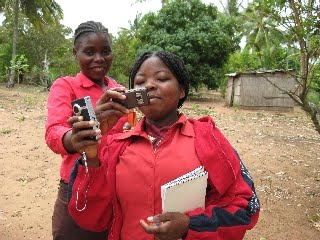
Saturday, was the last day of the 2-week Youth Empowerment through Arts and Media (YETAM) workshop with the youth.  Each of the sub-groups had the task of prioritizing 2-3 areas that they wanted to focus on over the next 6 months and developing a basic plan. The plans included their focus issues, analysis of the causes of the issue, what they would do about it using their reinforced media and arts skills, when they would do it, and how they would know that they had achieved their short term goals (indicators). Photo: members of one of the media teams.

Nathalia, age 18, presented for the theater group. “We are going to work more on the issue of devaluation of girls by their parents.  This is caused by the belief that men were made to dominate and women to serve, the idea that girls don’t bring any benefit to their parents, but bring only trouble, and the idea that girls are physically and mentally weak.”

The other 4 groups’ topics are:

· Music/Dance group: children’s rights in general, education as the key to a successful future, the value of local culture and traditions.

· Media group:  disaster risk reduction and risks to youth in the community such as the discotheque, alcohol and drugs, and violence.

· Painting group: child rights in general, drug abuse and protecting children from violence/risk.

· Journalism group: sanitation and hygiene, education.

Mobile data gathering?

The groups will prepare work on these topics and extend their messages out to the school community and the surrounding villages.  To track their progress, they plan to survey audiences that have seen their work (eg., their films, paintings, songs, theater, newsletters, etc).  This made us think about the idea of using mobile phones to do the surveys (Nokia Data Gathering or Frontline SMS Forms, depending on which is more feasible and cost effective).

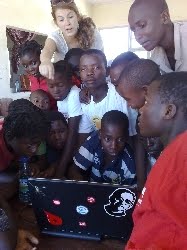
The youth could create surveys on a few devices, and then go around to survey people who have attended their events or viewed their work and heard their messages.  The youth could then have immediate results by exporting the survey results into excel for analysis.  In the process, the youth can learn about statistics, charts and graphs.  Eventually they could also take surveying to another level, such as looking at behaviors and practices, and use the information to inform the outreach work that they are doing.  Photo:  Thinking about mobiles for more than calls and SMS.

“The kids see charts and graphs sometimes in their books, but they never have a chance to learn what actually goes into making a chart or graph, or to cover anything about statistics.  This would be a fabulous hand-on way to see how data is collected and used for decision making and to measure results,” said Lauren, the Peace Corps volunteer teacher at the school. “It would be great for them to get to see immediate feedback on their own work!”

Feedback from youth

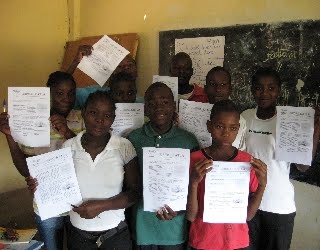
Photo: journalism group shows their newsletter.

At the closing ceremony the youth were sad to go. “This is an opportunity that we had to participate in something that has never happened here at Cumbana,” said one girl.  “I encourage my fellow students here to show through their behavior, actions and their studies this coming year that they are now different.  That they are changed.”  (theater group)

“I never imagined that I could be a painter, but now I have the dream that I can do it.  I am happy because I showed what I’m capable of and I expressed my feelings through art.” (painting group)

“My favorite thing was making the big mural. I feel very proud and I can show my friends what I’m capable of.” (painting group)

“This initiative allowed us to show light on our reality. I also know now that I have talent in my mind and in my hands to express myself now and to build my future.” (journalism group)

“I really thank Plan and Nokia because with this workshop I saw myself transforming my life. I will become an artist and I will make something out of my life” (painting group)

“I liked helping to raise awareness in people and to change things in our community and in ourselves.  I want to share the success we’ve had in this project and our work, and to involve more people. There are many things we can achieve.” (media group)

“The best thing about the workshop was the way that they listened to us, they gave us courage to believe in ourselves. They reminded us that nothing comes from nothing and that only through education can we prepare for our futures.” (theater group)

“I liked working with equipment that I had never seen.  Now I know how to use it. I feel able to learn without fear.” (media group)

And facilitators?

“It was great to see the youth increase their knowledge about their culture, history, rights and the role they can play in their community as agents of change.  I loved seeing the youth apply the things that they learned and then do the work by themselves.  I would like to see more adults in the community participating in a workshop like this. There are many things that we can benefit from as well.” (Facilitator)

“I thought the workshop was fantastic.  The kids gained so much experience and confidence and really took advantage of these new opportunities.” (Facilitator)

Related posts:
On Girls and ICTs
Putting Cumbana on the Map

Read Full Post »

Sometimes being a girl is no piece of cake.  For the Youth Empowerment through Arts and Media (YETAM) workshop we hoped to have 50% girls participating, and we ended up with about 15 girls and 40 boys.  The boys raised this on the 3rd day of the workshop (through no prompting by the facilitators).  “Why aren’t there more girls here? And the girls who are here, they never talk, they just sit there.” “They don’t have the ambition or the drive to improve themselves so they don’t even come to workshops like this when they have the opportunity”. Photo: Painting the mural.

Most of the girls listened to this criticism without responding.  “Girls – what do you have to say about this?” asked one of the facilitators.  Silence.  “See, even now they just sit there and don’t defend themselves,” complained the boys. More silence.  Finally one girl spoke up “You don’t know what it’s like.  We can’t get permission to come. It’s very difficult for us. Our parents don’t trust us. They think we are just coming to play. They want us to stay at home to do work during our school break.”  “But you have the same letter from the school that we do! Why can’t you learn to negotiate with your parents like we do?”  More silence.  The discussion turned to effective negotiation skills to communicate with and convince parents to allow both girls and boys to participate. “Our parents and grandparents are not ignorant donkeys; they are just from another time. They have never had the opportunity to participate in projects and workshops or even to go to school. They don’t know why we think it’s important.  We need to become better at talking with them, to counsel them and help them to see what we are doing so that they will allow us to join in these efforts.”

Being a girl isn’t only an obstacle to participating in workshops.  In the community over the past 3 weeks, I saw and heard about the challenges girls face to achieve an education, avoid unwanted advances, including from teachers, and avoid early pregnancies.  Most of the time there is no space for these issues to be discussed openly among both boys and girls, and with adults.  Plan’s two campaigns, Learn without Fear and Because I am a Girl, seem extremely relevant to the context.

A Conquista

The hottest debate of the 2 weeks was not “poverty” or “lack of water” or anything typically thought of as a “development” issue.  It was “a conquista” or the process of getting a girl/being wooed by a boy.  It was nice to see the girls getting more vocal as we got further along into the workshop. “We try to talk to girls and they don’t respond.  They just ignore us! So it makes us angry,” said one of the guys.  A girl countered “We are afraid when someone approaches us, because if we don’t agree, a boy or a man may get angry and they can find us and take out their aggression on us, they can rape us.”  “Sometimes if girls talk to one of us, and then talk to another of us also, what boys do then is to join together and show her that she can’t play with us, show her she can’t act like that,” said one of the boys. “It’s true,” said a girl, “We are afraid because they get mad if we don’t talk to them.”  “You should talk to us then!” interrupted a boy.  “What, can I give myself to every single male in the village just because he wants me?” exclaimed one of the girls.  This forum was incredibly important for guys and girls to have a time and a place to hear each other out, see each others’ points of view and try to understand each other.  There is a lot of room for awareness building on gender violence.  I even heard one teenage girl in one of the nearby communities say “if it’s just one man, it’s not really a rape…. it has to be 3 or 4.”

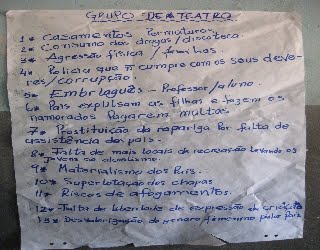
So I was really happy that the theater group decided to do their play about the things that girls face, even more so because there were only about 4 girls in the theater group, and the 3 facilitators were male.  (There are not many female teachers and facilitators to work with). Now that we had divided into small group and we’d been working together for several days, the girls’ voices were much louder. Photo: the issues chosen by the theater group included early marriage, drug abuse, physical aggression in families, corrupt police, professors/student fights, lack of value placed on girls within families.

Community Showcase

The groups had their showcase on Nov. 20, coinciding with the celebration of the 20th Anniversary of the Convention on the Rights of the Child (CRC). Some 300 people from nearby primary schools and communities attended the event.The painting group’s mural greeted people as they came into the school grounds. Under giant orange tarp (which pretty much ruined any chance of getting good photos/videos since everything had a very strange light) the music group sang 2 songs about education and HIV prevention and performed a traditional dance.  The media group showed 6 of their videos, on life in the community, the importance of the river, trash in the market, the discotheque, and the local cinemas.  The journalism group shared their community newspaper, and the theater group performed their play.

On being a girl…

The storyline in the play is of a girl whose father marries her off for money; she is taken off to her new husband’s place and becomes pregnant. Her husband is abusive, alcoholic and brings other women home. He beats her, but her mother finds out and they report it to the police.  The police come to take a report, admonishing the husband and telling him that he is going to jail.  No matter, nothing a little private conversation and bribe won’t solve.  So the tables turn with the policeman admonishing the girl that she should not treat her husband badly and she deserves what she got.  As soon as the police leave, he beats the girl again, shouting as her father had shouted at her mother “In this house it’s the man who’s in charge!” He throws her out on the street. A friend tries to convince her to prostitute herself and make good money and she refuses.  The play ends as she looks at the audience, carrying the small bundle of her child, and asks “Why will people say this is my fault?”  The other actors come out one by one, calling on governments, parents, friends, school, teachers to see the situation clearly and to take on their responsibilities to change this scenario.  I have to say it was one of the best theater pieces I’ve ever seen, and it was written entirely by this group of 9th and 10th graders. Photo: Theater group closing out after a day of rehearsing.

The best tools to get the message across

Each different art or media form carried the messages on issues that the youth want to raise and change in their communities.  Once more it was a reminder that it’s the communication objectives and impact on the audience that matter, and the choice of the tools should be secondary, based on the outcomes to achieve.  We are not “doing media projects”, but helping kids to use different tools, including media, to dig into their realities and then use those tools as effective means of communication to make change in their communities.  What may be a great topic for a video, may not work so well as theater, and vice versa. In the process of discussing the issues and the media forms that would be best to make change in the community, both boys and girls learn new personal skills and improve their self esteem as well as their own communication skills.  They also have an opportunity to openly and deeply discuss issues among themselves and to understand each other better.  The discussion around gender issues and how the same challenges may affect girls and boys differently is one of the most important that they can have.

Related posts:
On Girls and ICTs
An example of youth led community change in Mali
Breaking it down: Violence against Children
Stories that touch the heart

Read Full Post »

We’ve completed our first week of arts and media training with around 55 youth in Cumbana, a coastal community some 450 kms north of Maputo, the capital of Mozambique.  If you ever tried to Google Cumbana, you’d find information about a photographer with the same last name or links to tourist hotels at the nearby beaches in Maxixe or Inhambane, and not much else.  We actually did this as part of our Tuesday session on Internet with the youth.  Googling New York was another story.  But why?

We turned it around to the youth. Why is there no information on Cumbana?  The conclusion was you only find things on internet that someone puts there, and  no one had bothered, no one had ever really uploaded anything about Cumbana.  And that meant that this group of youth has a big responsibility, because they are going to be the ones to put Cumbana on the map. Photo:  After Cumbana, the top Google search among our small population was, of course, Michael Jackson.

What does that mean?  Aside from producing arts and media to raise issues that affect them and engage their communities in jointly finding solutions, the youth will be the ones to define Cumbana.  As Lauren (the Peace Corps volunteer who’s been teaching at the school for the past 2 years) said:  “Did we find anything about you all in Cumbana now on the internet?  No.  When will there be something about Cumbana?  When you make the effort to put it there.”  Photo: Mobile phone connections are much more likely than computers in the near future, so we trained on internet also using mobiles.

Access to internet whether by laptop using mobile internet or directly on a phone is a huge hit with the kids, 75% of whom had never been online before.  Our 2 hour session could have gone on all day for all they cared. The idea of putting yourself on the map seems to have appeal in the same way that having a Facebook page does.  It’s about self publishing and creating an identity. Photo left: Anthony the local Peace Corps Volunteer supported with the internet and is working with the theater group.  Photo below: Lauren, Peace Corps Volunteer, is working with the multimedia group.

But as we are seeing more and more, citizen journalism has its downfalls (think Fort Hood).  So it was great to see the debates about ethics in journalism that also happened last week.  Jeremias from Radio Mozambique facilitated a great session. He was excited to be part of the workshop because, as he said, “I’m a journalist.  I want to groom more young people from right here in the community where I came from to follow in my profession, and this is a great chance for all of us.”

During Jeremias’ session on ethics, the kids hotly debated the question of whether you should show the face of someone caught stealing.  Many felt that this would punish the thief as well as protect the community. Jeremias countered, “In Mozambique, whose job is it to determine guilt or punishment? Eh?  It’s not the role of the journalist. It’s the role of the judicial system. Like it or not, that’s how it is.”  He talked about the basic rules in journalism to protect people, about divulging information and objectivity. “When you leave here, to do work out there in the community, you need to be sure to hear all sides.  You need to protect the good name of people.  This is our responsibility.  This is ethics.  You cannot condemn someone until the judicial system has determined that they are guilty.”

I sat there wishing every self-appointed citizen journalist followed those rules, and self-examining whether I always do.  But it also got me thinking about how when you are not in a free state, your judicial system is totally non functional, or there is corruption within the journalism profession or media houses, things are not nearly so clear.  Sometimes things need to be filmed to get something to happen, whether they’ve been proven or not.  What are the rules and ethics then?  (I’m sure I can Google this and find a debate!)

The youth were cautioned to leave aside sensationalism.  “Often wanting to be the first to get the news out makes us less careful as journalists” Jeremias said.  If we drop the bomb, we’re likely to see the next day that we are the ones being processed, accused of not being ethical.” Photo: Jeremias and a youth participant share ideas.

“The ethics of a journalist come from within us,” he said.  Sometimes even a journalist’s own employers may ask him do things that are not ethical.  Or others want a certain story to come out and they try to bribe a journalist.  This makes it really difficult to be a journalist. A journalist needs to have high and strong ethics and maintain objectivity,” he told the kids.

“So you see, journalist is under constant pressure. It’s REALLY easy to get a recorder, to make a story.  It’s more difficult to think through what the consequences of publishing that story might be.  As a journalist, your goal is not to get famous; it’s to transmit information, so get the idea of fame right out of your head.”

Jeremias is a wise man and we are really lucky to have him training our group of journalists.

Cumbana is the only secondary school (it covers to 10th grade) in the entire district, with 3 sessions a day, serving some 4000 students (if the teacher I asked is correct). The opportunity to participate in a program like YETAM is huge for students and teachers alike.  In addition to the journalist group, there is theater, music and dance, multimedia, and painting.  For the kids, it’s like a 2 week summer camp where they strengthen leadership skills, improve their studies, get organized to address community challenges facing youth, and think about careers outside of the norm.  For the teachers, it’s an opportunity to engage with students in a different way, to strengthen their teaching methodologies and improve their ICT skills.  For the partners, it’s an opportunity to give back to the community and, of course, to discover new talent for their professions.

Related posts:
On Girls and ICTs
Being a Girl in Cumbana
Is this map better than that map?

Read Full Post »

Landing in Inhambane, Mozambique, the first thing you see is the blue Vodacom sign:  ‘Welcome to Inhambane – a land covered by palm trees and the best cellular network’.  I don’t usually believe ads and this time was no exception. But I have to say, it seems to be true. My sim card is actually on mCel, not Vodacom, but the coverage is still damn good.  And the two cell phone companies are everywhere. I’m not sure which I saw more of – yellow Frelimo t-shirts (elections were last week), yellow mCel kiosks or blue Vodacom kiosks.

Which reminds me that I saw a statistic last week saying that more people have mobile phones than latrines.  And I’m not sure how I feel about that….  And then I start thinking about the hierarchy of personal needs – which perhaps needs some revising.  So does communication rank higher now than toilets?  What about food? I was certainly more worried about getting online than about eating for the past 4 days (as a vegetarian, your choice is limited unless you really make an effort).  I mean, at least I got to complain about the 4 days of fried eggs on Twitter…. but what if it were access to food in general? Where would I put my effort? hmmm. I digress….

My travel diet (in addition to the eggs) has been around 5 hours of mobile internet on my laptop a day (skype, email, blogging, Twitter, maps, google translate, and a few doses of Facebook thrown in), and several mobile internet snacks from my phone itself in between. I’ve gone through about 600 credits in 5 days, or around $4/day.  I fully recognize that is expensive for someone who is not earning a US salary, but I love that I was able to just purchase a sim card, put it in my phone, hook up my phone as a modem, and ta-dah.

Yes I’m using a ‘smart phone’ (Nokia E-63), but my point is that it’s much easier to use your phone as a modem in Mozambique than it is in the US (seems the latest i-phone update disables that so I’m afraid to download the latest update) or in the other African countries that I’ve been in over the past year.  Compared to Cameroon, Senegal and Kenya where we had to purchase a special data package and get help/permission from the phone company (or were we just not doing it right? It does get easier to figure out the more you do this stuff). In any case, internet hardly worked once we finally got connected. So in that sense, Mozambique is an internet junkie’s dream.

I asked about internet as a precursor to the social media session of the Youth Empowerment through Arts and Media (YETAM) training of trainers workshop yesterday.  We are working from a secondary school about 30 km outside of the town of Maxixe, where I expected internet would be nil (and it is, except by mobile phone modem).   Several teachers and partner organization members from the area are participating. Starting on Sunday, for two weeks they’ll work with youth to use arts and media as tools in the community development process. The same arts and media are a way for youth to put themselves, their community and their issues on the global map by uploading the photos, drawings and videos they will make to the web.

As an example during yesterday’s session, I Googled the name of the school.  All we found in the first couple of pages was Maxixe and nearby towns listed, with content related to tourist beaches. There was also a blog by Lauren, the Peace Corp Volunteer who is teaching there.  Several months back when we were planning the training, Lauren’s blog was the only information I was able to specifically find about the school and area.  Because of her blog, I was able to connect her and our local staff to work together on the whole training.  After the YETAM training, the ideas is that people will be able to find information created by the community and youth themselves, from their own perspective.

I’m really excited about the good internet, because maybe then the whole process can be done from the community – including the uploading and subtitling of the videos (usually is done from the Plan office in the US due to slow connections).  That will be huge in terms of community and youth ownership.  Im crossing my fingers that we can make this happen.  Or we’ll have to sue the land of palm trees and the best cellular network for false advertising :-).

Related posts:

It’s all part of the ICT Jigsaw: Plan Mozambique ICT4D workshops
Putting Cumbana on the Map


Read Full Post »

« Newer Posts - Older Posts »