Feeds:
Posts
Comments

Posts Tagged ‘ICT’

I spent the past week in New York City attending the UN Digital Media Lounge and Mobile Active’s mWomen Technology Salon. These 2 events happened alongside the Millennium Development Goals (MDG) Summit and the Clinton Global Initiative (CGI), where world leaders, corporations, movie stars/rock stars, innovators, and heads of big development organizations gather. There was a lot of talk about Technology and Innovation, Women and Girls, and Public-Private Partnerships, and, well, a lot of talk in general according to some, but I am not going to go there. Saundra put together a great compilation of MDG and CGI and UN Week posts over at Good Intents where you can read all about it.

My learning highlights for the week were in the area of m4D (mobiles for development) and ICT4D (information and communications technology for development):

  • World Bank Open Data. The Bank is really moving towards opening up their data. They currently have over 2000 websites and they are trying to consolidate them and make it easier for users to access the World Bank’s Data for their own purposes. The Bank has put more than 1,200 indicators, including the full World Development Indicators dataset, on the site. In addition, there are a variety of maps, dynamic graphs where you can compare data sets, and widgets for you to add information to your own website. Check the World Bank Open Data site for more.
  • UN Global Pulse. Over at Global Pulse the team is looking at existing indicators from UN agencies and others and trying to figure out how they can tap into human behavior patterns for early detection of crisis and as a way of quickly investigating and responding to such crises. In this age of real-time information, it’s somewhat bizarre that large development organizations are working based on extrapolations of data that are 2-3 years old.  Global Pulse hopes to change that by identifying and tracking a series of pulse points, such as satellite data, mobile phone and SMS trends, internet and search word trends, increase and decrease of doctor visits and medication sales, and other human behaviors; that can serve as early warning system for crises. Think Flu Trends but pulling in all kinds of data at the global level.  The UN plans to use their own data and the data of others, as well as “data exhaust” from a variety of sources to come up with a new way to predict, mitigate and manage global crises, such as the current food-fuel-finance crisis, and their impact on communities.
  • Civil Society 2.0 Initiative. The US State Department’s Civil Society 2.0 Initiative is working to address the chasm between what NGOs and local organizations need and what the tech community can provide. The idea is to bring the two sectors together and bridge the gap between them. The initiative would work to identify the local needs and local context, and then help with tools to meet the needs using the available technologies. They are also building toolkits for organizations on how to blog, set up SMS systems, and other common social media activities. The aim is to improve disaster response efforts by balancing between communication and ethical standards, operating procedures, alert systems, and technical capabilities and working in advance of disaster and emergencies so that civil society groups are prepared.
  • GSMA. I’m not sure where I’ve been hiding but I hadn’t heard about GSM Association before. GSMA represents the interests of the worldwide mobile operators. They have around 800 members from 219 countries. GSMA engages in policy debate with governments and regulators and advises mobile operators on ways to move their core business forward. GSMA has done a lot of research on women and how to market sales of mobile phones to women, especially in those countries where women are lagging behind in mobile phone ownership. They were part of the Women and Mobile: a Global Opportunity study.  GSMA is working with mobile operators on mobile banking in some 147 countries, which I find a bit mind-boggling, since I hadn’t heard of them before!
  • Pesinet. For just about $1/month, Pesinet provides families in Mali with a micro-insurance service. Healthcare agents visit the homes of children enrolled in the program to  check height and weight and for any signs of illness. If illness is detected, they arrange for a visit to a clinic. Pesinet covers half the price of medication if needed. Using the Pesinet mobile application, the healthcare agents record information about the patient and send it to a central data base at the clinic. By using mobiles and encouraging preventative healthcare, Pesinet is reaching more children and improving healthcare.
  • Souktel.  In developing countries, finding a job can be extremely difficult, and job boards are not prevalent. Using simple SMS, Souktel has created the JobMatch application which allows a person to create a mini-CV which is uploaded into a data base. Employers can also send out job notices which people can receive by text message, in order to connect to those jobs that match their skills.
  • Priyanka Matanhelia’s research on mobiles in Mumbai and Kanpur, India showed that young people in both the cities used cell phones for a variety of communication, news and entertainment needs. They used cell phones to negotiate independence from parents and to maintain friendships and create friendships with members of opposite sex. The young people in the two cities used mobiles differently due to the differences in their lifestyles and socio-cultural factors, however there were only a few gender differences in the use of cell phones.

I also had the opportunity to present some of the work that I’m involved in. You can see the live stream of the ICT4D, Innovations and the MDGs panel on Mashable TV, or check out my Ignite talk from Mobile Active’s mWomen event (download the power point if you want to see the notes). You can also download the new Because I am a Girl 2010 Report on Girls in a Changing Landscape: Digital and Urban Frontiers.

The best part of the week was meeting up with old friends, and tweeting up with people I have been conversing with for months, even years, on Twitter and through emails and blogs.  New York is like a real-life Twitter. There is always something happening, you meet brilliant, intelligent, creative and energized people from all fields and walks of life, and you learn and discuss and constantly broaden your horizons.

That 20 minute Friday afternoon nap in the sun at Sheep’s Meadow in Central Park wasn’t so bad either. I really do love New York….

Related posts on Wait… What?

On girls and ICTs

Revisiting the topic of girls and ICTS: Tech Salon Discussions

Being a girl in Cumbana

MDGs through a child rights lens

3 ways to integrate ICTs into development work
5 ways ICTs can support the MDGs

Read Full Post »

Coming from the viewpoint that accountability and transparency, citizen engagement and public debate are critical for good development, I posted yesterday on 5 ways that ICTs can support the MDGs. I got to thinking I would be remiss not to also post something on ways that ICTs (information and communication technologies) and poor or questionable use of ICTs and social media can hinder development.

It’s not really the fault of the technology. ICTs are tools, and the real issues lie behind the tools — they lie with people who create, market and use the tools. People cannot be separated from cultures and societies and power and money and politics. And those are the things that tend to hinder development, not really the ICTs themselves. However the combination of human tendencies and the possibilities ICTs and social media offer can can sometimes lead us down a shaky path to development or actually cause harm to the people that we are working with.

When do I start getting nervous about ICTs and social media for social good?

1) When the hype wins out over the real benefits of the technology. Sometimes the very idea of a cool and innovative technology wins out over an actual and realistic analysis of its impact and success. Here I pose the cases of the so-called Iran Twitter Revolution and One Laptop per Child (and I’ll throw in Play Pumps for good measure, though it’s not an ICT project, it’s an acknowledged hype and failure case). There are certainly other excellent examples. So many examples in fact that there are events called Fail Faires being organized to discuss these failures openly and learn how to avoid them in the future.

2) When it’s about the technology, not the information and communications needs.  When you hear someone say “We want to do an mHealth project” or “We need to have a Facebook page” or “We have a donor who wants to give us a bunch of mobile phones–do you know of something we can do with them?” you can be pretty sure that you have things backwards and are going to run into trouble down the road, wasting resources and energy on programs that are resting on weak foundations. Again, we can cite the One Laptop per Child (OLPC) initiative, where you have a tool, but the context for using it isn’t there (connectivity, power, teacher training and content). There is debate whether OLPC was a total failure or whether it paved the way for netbooks, cheap computers and other technologies that we use today. I’ll still say that the grand plan of OLPC:  a low-cost laptop for every child leading to development advances; had issues from the start because it was technology led.

3) When technology is designed from afar and parachuted in. If you don’t regularly involve people who will use your new technology, in the context where you’re planning for it to be used, you’re probably going to find yourself in a bind. True for ICTs and for a lot of other types of innovations out there. There’s a great conversation on Humanitarian Design vs. Design Imperialism that says it all. ICTs are no different. Designing information and communication systems in one place and imposing them on people in another place can hinder their uptake and/or waste time and money that could be spent in other ways that would better contribute to achieving development goals.

4) When the technology is part of a larger hidden agenda. I came across two very thought-provoking posts this week: one on the US Government’s Internet Freedom agenda and another from youth activists in the Middle East and North Africa region who criticize foundations and other donors for censoring their work when it doesn’t comply with US foreign policy messages. Clearly there are hidden political agendas at work which can derail the use of ICTs for human rights work and build mistrust instead of democracy. Another example of a potential hidden agenda is donation of proprietary hardware and software by large technology companies to NGOs and NGO consortia in order to lock in business (for example mHealth or eHealth) and prevent free and open source tools from being used, and which end up being costly to maintain, upgrade and license in the long-term.

5) When tech innovations put people and lives at risk. I’d encourage you to read this story about Haystack, a software hyped as a way to circumvent government censorship of social media tools that activists use to organize. After the US government fast-tracked it for use in Iran, huge security holes were found that could put activists in great danger. In our desire to see things as cool, cutting edge, and perhaps to be seen as cool and cutting edge ourselves, those of us suggesting and promoting ICTs for reporting human rights abuses or in other sensitive areas of work can cause more harm than we might imagine. It’s dangerous to push new technologies that haven’t been properly piloted and evaluated. It’s very easy to get caught up in coolness and forget the nuts and bolts and the time it takes to develop and test something new.

6) When technologists and humanitarians work in silos. A clear example of this might be the Crisis Camps that sprung up immediately after the Haiti Earthquakes in 2010. The outpouring of good will was phenomenal, and there were some positive results. The tech community got together to see how to help, which is a good thing. However the communication between the tech community and those working on the ground was not always conducive to developing tech solutions that were actually helpful. Here is an interesting overview by Ethan Zuckerman of some of the challenges the Crisis Commons faced. I remember attending a Crisis Camp and feeling confused about why one guy was building an iPhone application for local communities to gather data. Cool application for sure, but from what people I knew on the ground were saying, most people in local communities in Haiti don’t have iPhones. With better coordination among the sectors, people could put their talents and expertise to real use rather than busy work that makes them feel good.

7) When short attention spans give rise to vigilante development interventions. Because most of us in the West no longer have a full attention span (self included here), we want bite sized bits of information. But the reality of development is complicated, complex and deep. Social media has been heralded as a way to engage donors, supporters and youth; as a way to get people to help and to care. However the story being told has not gotten any deeper or more realistic in most cases than the 30 second television commercials or LiveAid concerts that shaped perceptions of the developing world 25 years ago. The myth of the simple story and simple solution propagates perhaps even further because of how quickly the message spreads. This gives rise to public perception that aid organizations are just giant bureaucracies (kind of true) and that a simple person with a simple idea could just go in and fix things without so much hullabaloo (not the case most of the time). The quick fix culture, supported and enhanced by social media, can be detrimental to the public’s patience with development, giving rise to apathy or what I might call vigilante development interventions — whereby people in the West (cough, cough, Sean Penn) parachute into a developing country or disaster scene to take development into their own hands because they can’t understand why it’s not happening as fast as the media tells them it should.

8 ) When DIY disregards proven practice. In line with the above, there are serious concerns in the aid and development community about the ‘amateurization’ of humanitarian and development work. The Internet allows people to link and communicate globally very easily. Anyone can throw up a website or a Facebook page and start a non-profit that way, regardless of their understanding of the local dynamics or good development practices built through years of experience in this line of work. Many see criticism from development workers as a form of elitism rather than a call for caution when messing around in other people’s lives or trying to do work that you may not be prepared for or have enough understanding about. The greater awareness and desire to use ‘social media for social good’ may be a positive thing, but it may also lead to good intentions gone awry and again, a waste of time and resources for people in communities, or even harm. There’s probably no better example of this phenomenon than #1millionshirts, originally promoted by Mashable, and really a terrible idea. See Good Intents for discussion around this phenomenon and tools to help donors educate themselves.

9) When the goal is not development but brand building through social media. Cause campaigns have been all the rage for the past several years. They are seen as a way for for-profit companies and non-profits to join together for the greater good. Social media and new ICTs have helped this along by making cause campaigns cheap and easy to do. However many ‘social media for social good’ efforts are simply bad development and can end up actually doing ‘social harm’. Perhaps a main reason for some of the bad ideas is that most social media cause campaigns are not actually designed to do social good. As Mashable says, through this type of campaign, ‘small businesses can gain exposure without breaking the bank, and large companies can reach millions of consumers in a matter of hours.’ When ‘social good’ goals are secondary to the ‘exposure for my brand’ goals, I really question the benefits and contribution to development.

10) When new media increases voyeurism, sensationalism or risk. In their rush to be the most innovative or hard-hitting in the competition for scarce donor dollars, organizations sometimes expose communities to child protection risks or come up with cutesy or edgy social media ideas that invade and interrupt people’s lives; for example, ideas like putting a live web camera in a community so that donors can log on 24/7 and see what’s happening in a ‘real live community.’ (This reminds me a bit of the Procrastination Pit’s 8 Cutest and Weirdest Live Animal Cams). Or when opportunities for donors to chat with people in communities become gimmicks and interrupt people in communities from their daily lives and work. Even professional journalists sometimes engage in questionable new media practices that can endanger their sources or trivialize their stories. With the Internet, stories stick around a lot longer and travel a lot farther and reach their fingers back to where they started a lot more easily than they used to. Here I will suggest two cases: Nick Kristof’s naming and fully identifying a 9-year-old victim of rape in the DRC and @MacClelland’s ‘live tweeting’ for Mother Jones of a rape survivor’s visit to the doctor in Haiti.

Update: Feb 22, 2011 – adding a 10a!

10a) When new media and new technologies put human rights activists at risk of identification and persecution. New privacy and anonymity issues are coming up due to the increasing ubiquity of video for human rights documenting. This was clearly seen in the February 2011 uprisings in Egypt, Tunisia, Libya, Bahrain and elsewhere.  From Sam Gregory’s excellent piece on privacy and anonymity in the digital age: “In the case of video (or photos), a largely unaddressed question arises. What about the rights to anonymity and privacy for those people who appear, intentionally or not, in visual recordings originating in sites of individual or mass human rights violations? Consider the persecution later faced by bystanders and people who stepped in to film or assist Neda Agha-Soltan as she lay dying during the election protests in Iran in 2009. People in video can be identified by old-fashioned investigative techniques, by crowd-sourcing (as with the Iran example noted above…) or by face detection/recognition software. The latter is now even built into consumer products like the Facebook Photos, thus exposing activists using Facebook to a layer of risk largely beyond their control.”

11) When ICTs and new media turn activism to slacktivism. Quoting from Evgeny Morozov, “slacktivism” is the ideal type of activism for a lazy generation: why bother with sit-ins and the risk of arrest, police brutality, or torture if one can be as loud campaigning in the virtual space? Given the media’s fixation on all things digital — from blogging to social networking to Twitter — every click of your mouse is almost guaranteed to receive immediate media attention, as long as it’s geared towards the noble causes. That media attention doesn’t always translate into campaign effectiveness is only of secondary importance.” Nuff said.

I’ll leave you with this kick-ass Le Tigre Video: Get off the Internet.… knowing full well that I’m probably the first one who needs to take that advice.

‘It feels so 80s… or early 90s…  to be political… where are my friends? GET OFF THE INTERNET, I’ll meet you in the streets….’


Related posts on Wait… What?

3 ways to integrate ICTs into development work
5 ways ICTs can support the MDGs

7 (or more) questions to ask before adding ICTs

Amateurs, professionals, innovations and smart aid

I and C, then T

MDGs through a child rights lens


Read Full Post »

Continuing on with the Millennium Development Goal (MDG) related posts…. I’ll be on a panel on Sept 21st talking about how ICTs can contribute to the MDGs. My perspective is less from a top down, big business, giant project point of view. In my work, I look at ICTs (Information and Communication Technologies) as tools that children and young people can use to create and access information and to advance their own agendas locally and beyond, and ICTs as tools that organizations (big and small, local or not) can incorporate into their work to improve their efforts to attain development goals (such as the MDGs).
ICTs can be helpful tools for enhancing accountability, transparency, citizen engagement, public debate, participation and local ownership of the development process — all of which help with achievement of the MDGs. (See my post on MDGs through a child rights lens for more reasons why). ICTs and social media can also help organizations do more efficient, effective, engaging and high quality work.

ICTs are not silver bullets or magical elements, however; and they will not solve anything on their own. They need to be well-integrated into programs, and well-contextualized.

One framework I especially like to use for thinking about how organizations can integrate ICTs into their work comes from Hannah Beardon. Hannah suggests that ICTs can be integrated directly, strategically and indirectly:

Directly (Providing Access to ICTs): Mobiles and other ICTs have an immediate and striking impact at the family and community level, connecting people for personal, business and community reasons. Mobile devices save individuals time and money and are indispensable in emergencies and for connecting people to the larger world, such as for remittances and commodity pricing. Mobiles and ICTs can help people access information, improve their education, maintain social networks, participate in governance and community, and generate income.

Providing equipment directly is one way to think about ICTs in development programs. This includes ICT tools such as computers, mobile phones, video cameras, digital cameras, radio equipment, electricity, and Internet access. Often direct ICT support is considered for education programs and efforts focused primarily on ICT training or media projects. Computer centers and classrooms are an example, as is supplying mobile phones to project participants or GPS units for mapping projects or equipment for health programs. If this equipment and the information it collects are managed at the community or local organization level, it can enable people to assess and respond to local development needs in a powerful way.

The availability of ICTs is obviously a pre-cursor to using them in different programs and projects. However I’m not much in favor of development organizations coming in and giving away mobile phones (unless it’s some type of extreme emergency or crisis, I suppose). I’m also wary of external NGOs setting up computer centers or giving large equipment donations because of sustainability and capacity concerns. Care needs to be taken that a non-profit organization is not assuming the role that local businesses or government institutions should be playing. Working in good partnerships with local and national government institutions and local businesses and keeping clear agreements on the roles of all actors, including the community, can help to reduce these risks and make programs more sustainable. Programs that directly provide equipment also need to think carefully about what other elements are required for success (purpose of the equipment, training to use it, ongoing maintenance and repair, electricity/power, a place to keep the equipment safe, local involvement in defining the type of equipment, etc). (See 10 Worst Practices in ICTs in Education).

In thinking about providing direct access to ICTs, one place for NGOs to focus energies is keeping an eye on government ICT policies and plans and strengthening civil society to pressure government to ensure that ICTs (including Internet) are accessible to the population now that more and more information is shared via ICTs. Article 17 in the Convention on the Rights of the Child outlines children’s right to information, including access to information and material from a diversity of national and international sources, especially those aimed at the promotion of a child’s social, spiritual and moral well-being and physical and mental health. States Parties are obliged to (a) Encourage the mass media to disseminate information and material of social and cultural benefit to the child and in accordance with the spirit of article 29; (b) Encourage international cooperation in the production, exchange and dissemination of such information and material from a diversity of cultural, national and international sources; (c) Encourage the production and dissemination of children’s books; (d) Encourage the mass media to have particular regard to the linguistic needs of the child who belongs to a minority group or who is indigenous; (e) Encourage the development of appropriate guidelines for the protection of the child from information and material injurious to his or her well-being, bearing in mind the provisions of articles 13 and 18. The 2005 World Summit on the Information Society’s Tunis Agenda also provides a useful platform for thinking about advocacy around rights to information and ICTs.

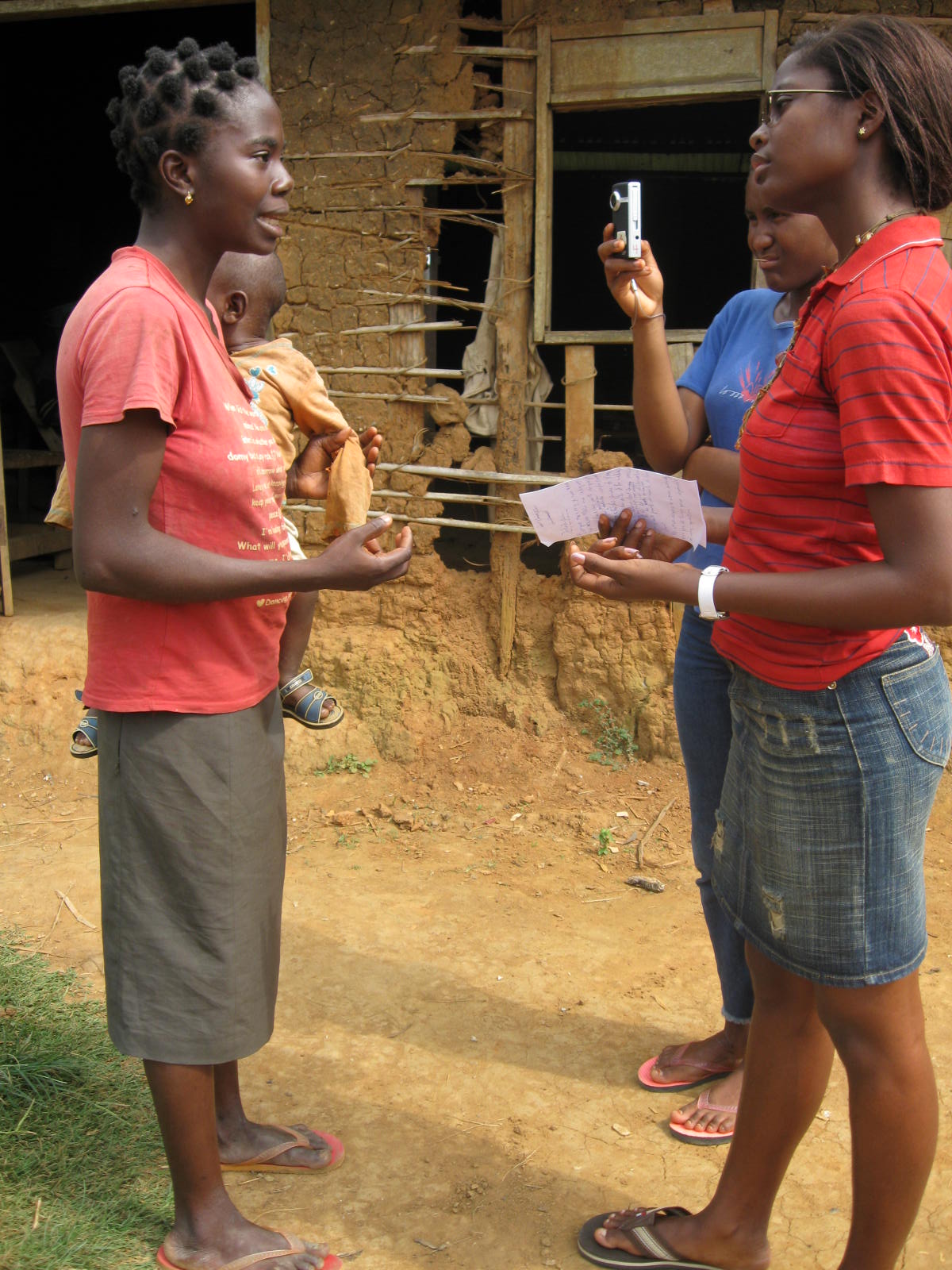
Making a film on birth registration, Cameroon

Strategically (Using ICTs as tools to support development processes): Beyond directly providing ICTs, new technologies can be used in a myriad of ways to support the broader development process. Starting from larger program goals, defining the roles that information and communication play, looking closely at the local context, and then researching existing tools that could be supportive is a good way to start when planning concrete initiatives. (Forthcoming is a second publication by Hannah outlining a good process for local contextualizing and ICT integration into specific programs). If there are no existing tools, a case can be made for developing or building onto a tool or an application.

Mobile phones, as tools for effective and timely dissemination of information, have real potential to strengthen the design and delivery of programs, for example in health, education, household economic security, disaster risk reduction and response, emergency and crisis management, HIV and AIDS prevention and treatment, child protection, youth-led advocacy, and water and sanitation. ICTs should be an integral part of local, country-level and broader strategic planning processes and they should be incorporated, where appropriate and relevant, into programs where they can add value, keeping a close eye during monitoring and evaluation on whether their purported benefits are real.

On-going capacity building and exchange at various levels is critical to help program staff become aware of advances in the field of ICTs and to help ICT advisors better understand programs, staff needs and community realities. Conversations across sector and silo boundaries are also critical to ensure that ICT integration is successful. ‘Bridge figures’ are helpful — those persons with good knowledge of both programs and ICTs — to help these processes along. In the absence of someone to serve as a bridge figure, well-structured teams with expertise in both areas should work closely together to take advantage of their specific expertise and to learn from one another.  ICT tools should be selected based on local needs and contexts as well as program priorities, starting with information and communication needs, rather than starting with new ‘breakthrough’ technologies. (Though other sectors often start with the cool technology and see if/how it can be useful). During strategic planning processes, program staff should be analyzing program information and communication needs and working with ICT staff to incorporate technology that may add value and help reach program goals in a higher quality and more effective way. Again, ‘bridge figures’ can be helpful in that process. Monitoring and evaluation are important along the way to check whether adding ICTs is actually helping. Sometimes things work perfectly fine without new ICTs.

Indirectly (Using ICTs to improve efficiency and communication within the organization): The wealth of knowledge and information that a development organization generates and uses needs to be documented, shared and communicated effectively in order to improve impact. Advances in knowledge management and on-line collaboration, including blogs, wikis and other social media tools and feedback mechanisms can bring immediate access to information and real-time discussion. Lower cost technology, notably in the areas of digital mapping, GPS, mobile mapping, mobile internet can help staff to carry out their daily work and improve information sharing and decision-making across departments and to engage and inform the public. Engagement with donors can also be heightened through ICT tools and social media, always taking into consideration the additional burden 24/7 demands can add to staff’s workload, and the child protection and other risks posed by more direct access to communities.

ICTs and social media can help make aid and development organizations more participatory, more agile, and able to pull in information from variety of sources and process it faster. This in turn can help pull people out of their silos and force them to consider new ideas and ways of working and thinking about challenges. Mobiles especially are helpful for better communication with community members and local organizations. Forward thinking organizations should be taking advantage of these new tools to gather direct feedback from those that they are supporting, for better dialog to improve their work, and for devolving helpful information to community members. Mobile data collection, for example, in addition to being a strategic tool for program implementation, can also be a way of improving the quality of data collection and increasing ownership by community members of their own data which support them to take back management of their own development processes from external agents. Mobiles are also a great tool for gathering data quickly from a broad subset of the population; data which can shape rapid responses and emergency interventions.

Twitter and blogging and other web-based services can serve as a springboard for deeper discussions and coordination among different development actors, government agents, institutions and the private sector. Social media is a way to share and discuss lessons learned and challenges faced, and to diffuse information about new ICTs and how they are being used by different agencies and individuals. Global partnerships can easily be initiated, developed and nurtured on-line. Organizations can provide on-line training opportunities to staff and save time and money by using new technologies such as forums, blogs for sharing and reporting, Skype and chat tools, and social networking. These same tools can be used to improve relationships with donors and with partners and staff working in disperse offices. However, in order for any of the above to happen, command and control practices that are common in large institutions and organizations need to be abolished so the tools can be most useful.  Here is an excellent post on use of social media tools in humanitarian work.

3-fold path

Using those three categories to think about ICT integration in an organization’s work can help clarify and strategize. Some initiatives may include all three categories and some may be more focused on one particular category.

In a follow-up post, I’ll share some examples of tools that I find interesting and helpful for organizations working at the grassroots level to achieve broader programmatic goals and to improve local community participation and ownership of the development process.

—–

MDG related posts on Wait… What?

MDGs through a child rights lens

5 ways ICTs can support the MDGs

ICT related posts on Wait… What?

11 concerns about ICTs and ‘social media for social good’

I and C, then T

Innovate but keep it real

ICT4D in Uganda — ‘ICT’ does not equal ‘computers’

Mind the gap

7 (or more) questions to ask before adding ICTs

It’s all part of the ICT Jigsaw: ICT workshop in Mozambique

Read Full Post »

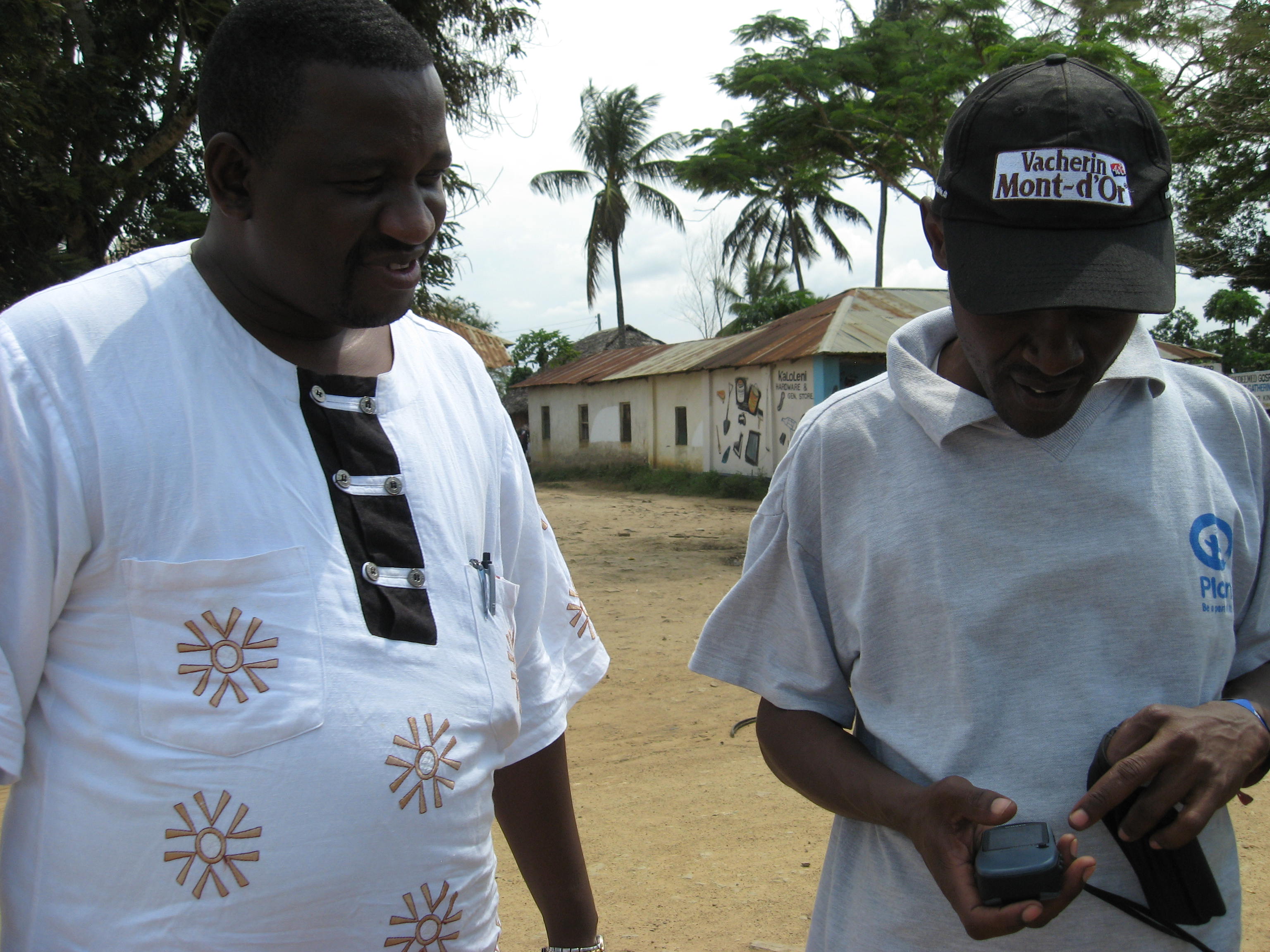
Salim (left) with Solomon in Kinango community.

As I mentioned in my previous post, Plan’s Kwale District office in Kenya has been a role model for Plan on how to integrate ICTs into community-led programming to help reach development goals and improve access to children’s rights.

I talked with Salim Mvurya, the Area Manager in Kwale, last week and asked him for advice for the tech community (0.15), corporations (1.19) and development organizations (1.57) who want to build in ICTs for moving towards development goals. He also comments on the importance of realizing that development is changing (4.43). You can watch the video below or at this link. If you’re not patient enough to watch a 6 min video (often I’m not!) or don’t have a strong connection, see the transcript below.

You can also view Part 1 of the video, where Salim gives some background on how Plan Kwale has been using ICTs in their programs since 2003 (1.11), shares ideas about the potential of new ICTs (3.42) and talks about some key lessons learned (5.03). Or you can read the Part 1 transcript here.

Transcript Part 2

ICTs and Development Part 2: advice for tech community, corporations and development organizations

My name is Salim Mvurya, I’m the Area Manager for Plan in the Kwale Development Area.

What advice can you give to outside tech people who want to develop something for a place like Kenya?

I think that to get an idea externally is a good thing, but that idea has to be blended with grassroots. It has to be contextualized, because there are very many good ideas which may not be appropriate at the community level. So I think my advice, for people who have ideas, who have never been to Kenya or Africa or in the field, is to leave the process to be home grown, so that the ideas that are coming from outside are building on existing issues, so that the ideas are also looking at what kind of skills and what can be done on the ground, and looking also at issues of sustainability. So it’s very important for somebody from outside the country to be sensitive to local conditions, local context, local skills and also looking at putting ideas that can be self-sustaining.

What is your advice for corporations who want to support the use of ICTs in development?

Corporate organizations who are interested in making a contribution to ICT for development, I think it is important that they foster and have partnerships with grassroots organizations that can really give them the issues because, OK, most corporations are very innovative, but working with grassroots NGOs and civil society that can give them the practical sense of those ideas, I think would be a good thing to do.

What is your advice for colleagues trying to successfully integrate ICTs into their programs?

One thing for organizations that are thinking of utilizing ICT is that you need local capacity. Like, if you have a field office, for example, Plan has development areas, in development areas, particularly for Plan, the ICT technical people should also have an opportunity to lead the ICT for development. What I have seen in the few years that I have been trying this is that it requires also the ICT function to be more available to communities. It requires the ICT function to also work around the program issues that the team is thinking, so it’s not just about looking at systems, looking at computers, but looking at how can all these ICT skills be able to help to develop programs. How can the ICT function be able to support innovations that are also going to enhance problem solutions at the community level. How can we use ICT to strengthen our interventions in the community?

And I must say from experience, that the ICT coordinator for Kwale has been more of a ‘program’ person, and I think that is why we are seeing all these gains.  I remember when we were designing the community-led birth registration one afternoon, we sat together and we were thinking, how can we put all these ideas together and include ICTs in it, so I think it’s about having an ICT function that is responsive to the program issues on the ground and not necessarily sitting somewhere and looking at softwares. You know, even designing a software that would be more responsive to what is happening on the ground, like looking at issues of child protection and seeing how can ICT help the response mechanism. Looking at issues of accountability and seeing how ICT can make a contribution to accountability processes in community.  So I think that is the kind of ICT that would be appropriate in the field, but also an ICT function that can learn. You know, learning from other people, but bringing the lessons closer home to see what can work, and what can’t work.

Any last advice for development organizations around integration of ICTs?

The message that I would want to give to stakeholders and development organizations is that a lot is happening in the world in terms of ICT.  Also recognizing that development is changing… ICT is providing opportunities for greater advocacy and accountability, and I think getting the interest for looking at all this and trying to say ‘what does this mean for development’ I think is very very critical. The youth constituency is emerging as very critical and they have interest in ICT. I know in Kenya youth have been trying different things, different groups, but I think ICT is providing an opportunity for them to strengthen accountability but also to be able to get skills that they can use as individuals that can also make a contribution in economic development.

Related posts on Wait… What?

Salim’s ICT4D advice part 1: consider both process and passion

Youth mappers: from Kibera to Kinango

A positively brilliant ICT4D workshop in Kwale, Kenya

Is this map better than that map?

Modernizing birth registration with mobile technology

Read Full Post »

Salim Mvurya, Plan Kwale's District Area Manager

Plan’s Kwale District office in Kenya has been very successful in building innovative community-led programming that incorporates new ICTs.  I had the opportunity to interview Salim Mvurya, the Area Manager, last week, and was really struck by his insights on how to effectively incorporate ICTs into community-led processes to reach development goals and improve on child rights, child protection and governance.

In this video, Salim gives some background on how Plan Kwale has been using ICTs in their programs since 2003 (1:11). He shares ideas about the potential of new ICTs (3.42) and some key lessons learned since 2003 (5.03).

Watch the video to get the advice straight from Salim. Or if your internet connection is slow or you’re like me and you like to skim through an article rather sit still and watch a video, the transcript is below.

In a second video, Salim gives really astute advice to the tech community (0.15), corporations (1.19), and development organizations (1.57) on how to successfully integrate ICTs to enable good development processes. He also mentions the importance of moving with the times (4.43). Read the transcript here.

Transcript for Part 1:

ICTs and development Part 1: ICT tools for child rights, child protection and social accountability

My name is Salim Mvurya, I’m the Area Manager for Plan in the Kwale District. My core responsibility as an area manager is to provide leadersip to the Kwale team in both program issues and also operational issues within the organization. This week we have been here in a workshop where we’ve been focusing mostly on issues of ICT for development and particularly what we’ve been learning here is the issue of mapping. We’ve also learned Ushahidi. We’ve also learned from our colleagues in Kilifi on mGESA (a local application of mGEOS that Plan Kenya, Plan Finland, University of Nairobi and Pajat Mgmt are developing) and basically we have been looking at this workshop as providing opportunities for using ICTs for development, but more particularly for us in Kwale is the issue of child protection and youth governance.

How has Plan Kwale been using ICTs for issues of child rights, child protection and child participation?

ICT in Kwale has a bit of a long history and it’s because of the issues on child rights. Kwale has a number of issues. Child marriages, issues of violations of child rights through sexual exploitation, and child poverty. So the efforts to do media started in Kwale in 2003 when we rolled out our first video that was done by children at the time to profile some of the issues of child marriage. But more importantly in 2005, we began to think greatly how we can bring the voices of children to duty-bearers and at time we thought of having a children’s community radio.

Because of lack of experience, we were thinking maybe at the end of that year we could launch the radio station. But then it took longer than we envisioned because we needed to roll out a participatory process. Alongside the same time, we had ideas of community-led birth registration which was being done in one community based organization. But later we also thought about looking at how ICT can help us in moving that direction.

Then we also had this idea of inter-generational dialogue, where children and youth can sit with duty-bearers and discuss critical issues affecting them, so we began using youth and video there, children and video, and showing those videos in a community meeting where then people could discuss the issues.  Alongside the same time we were partnering with various media houses and also rolling out radio programs where people could listen and also foster some discussions on children.

So it’s been a long journey but I think what we are seeing is that we need now to consolidate the gains, the experiences and efforts so that we can have a more strategic approach to ICT for Development and this workshop basically provides us with an opportunity and a platform to think much more.

What potential do you see for some of the newer ICT tools for your work in Kwale?

I see great potential in some of the tools that have been learned here this week, more particularly to get information at the click of a button from the ground. We could use the tools to map out resources out in the community, to map zones where there are a lot of issues on child protection, areas where we have issues like low birth registration… There is great potential for the tools that we’ve learned here to assist us not only in planning for projects, but in issues of social accountability. For example if you map out the areas where we have projects for Constituency Development Fund you can easily see where we have projects that have been done well but where we also have projects where maybe communities will need to discuss much more with duty-bearers to be able to, you know, foster issues of social accountability.

What are your biggest challenges? What mistakes have you made?

One thing that we’ve been learning in the process… well, you know sometimes we have ideas that we think can work in the next week, like for example the children’s community radio when we were thinking about it we were thinking that it could take off in about 2 months. But what we learned is that there are processes to be involved. Communities have to be prepared well for sustainability. Children have to be trained, there needs to be capacity building. You have also to conform to government procedures and processes.

The same also with birth registration. We thought in 6 months we could send an SMS and get your birth notification, but what we have also learned is that it takes a process. It takes awhile. You have to get the government buy in.  You also have to work on software, where the government is having a critical input. Because, although it is a pilot, we also think that if it works well then it has to be replicated, so it has to conform with the thinking in government. Also, with the issues of youth and media, one thing that has to be very clear is that you have to get youth who are committed, so you start with a bigger group, and you end up with those who are passionate

So I think it’s very critical when somebody is thinking about ICT for Development that, one, you look at the context: is it relevant to that area? What kind of skills are needed? What kind of processes for sustainability? but also getting the passion. Getting people who are passionate to lead the process is also a very critical lesson.

Related posts on Wait… What?

Salim’s ICT4D advice part 2: innovate, but keep it real

Youth mappers: from Kibera to Kinango

A positively brilliant ICT4D workshop in Kwale, Kenya

Is this map better than that map?

Modernizing birth registration with mobile technology

Read Full Post »

Youth in Ndop, Cameroon

For the past few years I’ve been supporting the Youth Empowerment through Technology Arts and Media project (YETAM) in several countries in Africa.  The last few weeks I was in Cameroon, where the initiative is expanding to new communities, based on learning from last year’s work in Okola.

The project

The project uses technology, arts and media to spur youth engagement in the community development process and youth-led actions around challenges youth identify in their communities. In the process they think about their personal and community strengths and resources, develop skills for problem solving, team work, research and investigation, and get training on how to use some different ICTs (information and communication technologies). They also build confidence and self esteem and learn how to bring up different issues in their communities and involve their peers, families, local authorities and local leaders in actions to address them.

Audience

The main ‘audience’ for the arts and media is the communities where the youth live and nearby communities. Some of their teachers, parents and local leaders also take part in the project and related training. This helps youth to build up support for their agenda. The arts and media is aimed at engaging communities in dialog and discussion that eventually leads to positive change.  Youth often have opportunities to participate in and use their new skills and their arts and media to advocate at national levels as well. Via the Internet, the youth’s voices are amplified to also reach their global peers and decision makers. For example, the YouTube site for the project has over 100 videos made by youth over the past 2 years.

Youth drawing on issue of water

Actions

Last year, the youth in Okola identified poor quality drinking water as a key challenge. They got the community moving to restore a damaged and contaminated spring bed and improve the water quality (without external funding).  This year we’ve incorporated a stronger focus on prevention of violence and gender discrimination because those were the themes that emerged most heavily across all the participating countries in the past 2 years of the project.  We hope the youth will improve their analytical skills around these areas and begin to look at these issues in more depth, strengthen their understanding of the causes of violence and gender discrimination, and develop strategies for overcoming them.

Process

The whole process starts when staff begin discussions about the project and its goals with interested local communities and youth. It’s a dialog and negotiation process, aimed at building local ownership and partnership for the initiative. Staff identify local partners skilled in the areas of technology, arts and media to accompany and support the process.

Staff and partners learning to use GPS for Open Street Mapping

TOT

A 1-week training of trainers (TOT) ensures that everyone is on the same page with regard to the project objectives.The TOT also helps deepen staff and partners’ understanding of some of the issues such as gender and violence, and is an opportunity to build skills on new ICTs that can be used in the project.  This year, for example, we had a session on GPS and OpenStreetMap because we want to add digital mapping to the toolbox to complement hand-drawn mapping, since both are of value to the work we are doing. (Shout out to @billzimmerman and @mikel for pointing us in the direction of Ernest, our fabulous GPS and OSM trainer from Limbe).

Critical questions

At the TOT, we discuss some of the critical questions in a project like this, such as:

Whose media? The arts and media created in the project should belong to the community, not to the funding organization or the arts and media partners. This has connotations then in how it is attributed and copyrighted, and who keeps copies of it, and what it is used for. The best way to manage this seems to be to see organizations and funders as ‘sponsors’ of the project and to ‘brand’ the media as such (this project was funded by xxx and does not represent official positions of xxx).

My personal bias is that the media and any web associated with the project should not carry an institutional logo or be hosted on an institution’s website, but should be established and managed locally using free tools like WordPress and YouTube with support from partner organizations.  I think that we should be looking at these kinds of initiatives as youth and community capacity building not as an institutional branding opportunity.

A middle ground could be that the media is ‘owned’ by all the involved partners and all can use it to promote their own objectives, or that some of the media supports an institutional position and that media is put on an institutional site, and other media can be created by the community for its own purposes, and hosted/posted on free sites like the ones I mentioned. This aspect can still be a little bit tricky, if you ask me.

Whose agenda? The agenda should be built by and belong to the youth and the community. They are not making promotional materials for us or the local partners. We also should not be censoring media.  This is an issue sometimes when the position of the community does not follow institutional positions.  This can be addressed by resolving the issue of ‘whose media’.

Which media? The project aims at building skills in various media forms. The primary audience is local, and so we help youth learn to select their media form by thinking about the primary audience’s access and media habits or traditions. Often painting, drama, newsletters, comedy, poems and singing, radio, and video are more effective than say YouTube and blogging for getting a message across to local community members who may not have electricity and/or Internet. Digital media serves a purpose, but for a different audience, normally at the national or global level.  In addition, sometimes one tool is better than another for addressing a particular topic, for example, violence may be difficult to portray on a film without identifying the person who was mistreated and putting them at risk of retaliation.

At the same time, the thing that draws a lot of the youth into the project is the opportunity to learn computer skills, to manipulate and manage a camera, to go onto the Internet. So we bring these tools in as well to build those skills in young people, even though they may not have Internet access on a daily basis. We also ensure that youth have access to the tools and equipment they need to continue making digital media and accessing the Internet and computers by working with schools and partners on an agreement for owning and managing the equipment and supporting youth to use it.

Media for what? We all know that kids can make amazing arts and media and that they can learn to use computers and cameras and mobile phones without a problem. So what? The goal of the project is what children and youth learn in the process of making that media, what skills they build, and then what they actually do with their skills and their art and media that counts, what changes do they achieve for themselves and in their communities? How do they generate dialog while making the arts and media and/or how do they use their final ‘products’ to push for positive change.

Adapting to the local setting

During the TOT, partners and staff create a detailed plan for how they will train the 60 or so participating youth on technology, arts and media over a focused 2-week period and beyond through refresher training and hands-on work. We’ve set the goal of 30% theory and 70% practice to help guide partners and facilitators as they prepare their sessions. The goal is not training professional artists, journalists and technologists – it’s using arts, media and technology as tools for youth participation, action and advocacy.

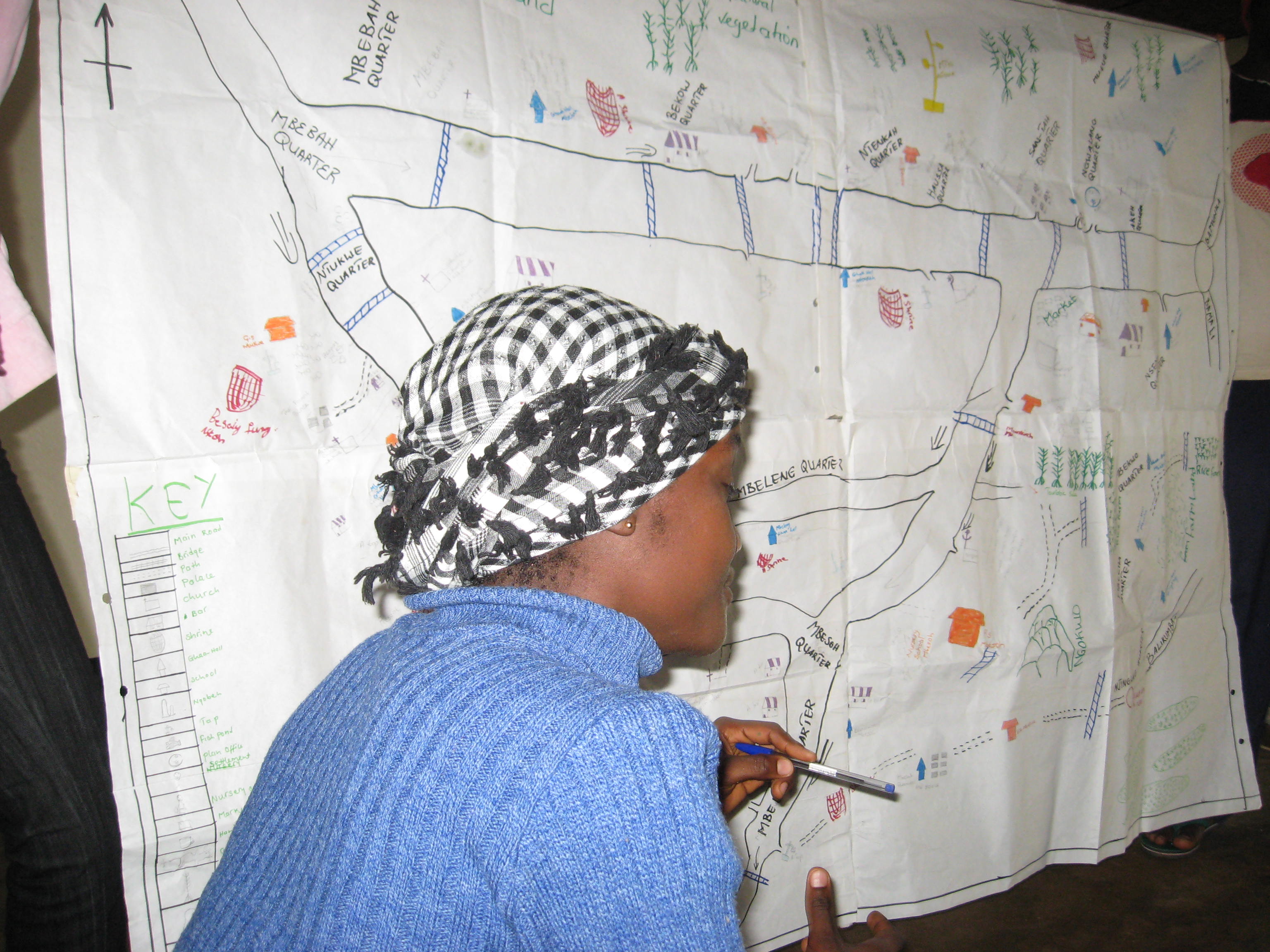
Mercy presents the youth's map

Mapping

To identify the themes that the youth will focus on, we facilitate a participatory mapping process. The youth create a base map of their community and discuss the community’s history and what makes it unique – they create their community profile.

Then they identify community resources and risks based on the 4 categories of child rights:  survival, development, participation and protection. In other words, they identify what exists currently in the community that supports children to survive and develop, and how the community currently protects children, and what spaces children currently have to participate.  They then look at where those 4 categories are not doing so well, and where children are at risk.

Youth, parents and local authorities discuss the map

The map is shared on the first day of the youth workshop and discussed with participating teachers, local authorities and parents in order to generate additional input and to get buy-in from the adults.  In small groups and plenary, they together prioritize the issues and decide which ones they will focus on during the workshop and beyond, using arts and new media tools. In follow up sessions, they will also make a digital map of their area for uploading to the Internet, and their arts and media work will be uploaded as points on that digital map. The digital map and the hand drawn map bring distinct benefits to this kind of process.

I love mapping. It’s a really interesting process, because when you start by looking at resources and when you are working with youth, so many things come out that would not come up if you came in and asked about needs or problems and only worked with adults. Communities are used to NGOs coming in to ask them what they need, to train them to see only their problems and to feel like victims, and to then expect the NGO or external agent to ‘resolve things.’ If you start by identifying only needs and problems, there are so many things in a community that will be missed. I notice that youth are not as well-trained as their parents in playing the victim. They are much better at talking about their community and what it means or holds for them than their parents are. When I show up as an outsider, they often want to show me beautiful places, special places, things they have and are proud of, not their needs and problems.

Some of the challenges youth identified and will work on

The real work

After the workshops comes the real work.  The partner organizations, staff, teachers and community leaders who are involved support the youth over time to continue their learning in the different areas, to do refresher training in areas they didn’t fully catch during the first round, to generate dialog in the community around the themes youth have identified, and to work on the issues they have identified through organized youth-led actions and advocacy at different levels and engaging decision makers at the local, but also district and national, and sometimes even global levels.

This is where the real change happens and is the real heart of the initiative.

My Cameroonian colleague told me one day ‘This project is like a catalyst in my body.’ It has motivated and driven her to learn new skills and take on new challenges, to push herself to new levels to achieve the goals set out. I’ve seen it have the same effect on the youth and on myself as well. In the end, that is what we want to achieve — motivated and engaged people, working together to make positive change in their communities and beyond.

Resources

This morning I came across this toolkit ‘A Rights-Based Approach to Participatory Video Toolkit’ by Insight, and I absolutely love it. It pretty much spells out what we are doing (though we had nothing to do with writing it up), and confirms a lot of the hunches and ideas that we’ve had while developing the program. I highly recommend it if you are working on rights and media.

Read Full Post »

Yesterday my colleague Mika Valitalo at Plan Finland sent some information about mGeos, a cool project that Pajat Management (a Finnish company), Plan Kenya, Plan Finland, Helsinki University of Technology and University of Nairobi have been collaborating on for the past year. Note: Mika and Pertti Lounamaa from Pajat gave me written permission to share this info.

The idea? To develop easy-to-use GPS-based mapping software that runs on low-cost mobile phones.

Detailed map information is missing from most of the 'developing' world

What needs is mGeos responding to? Being efficiently able to provide health, education and humanitarian aid or even most industrial services is critically dependent on knowing where to provide these services. Basic location information about points-of-interest (POIs), routes to them and areas to service are missing from the countries in most need of public service improvement. In ‘developing’ countries especially, critical map and location information is largely incomplete, outdated or missing. For example, in the image here, you can see small town map details available for Finland (left image) vs for those for Kenya (right image).

Earlier experiences in a few program countries as well as responses to a questionnaire conducted with Plan Kenya staff showed a desire and clear need to use location data more effectively. There is also a need to make it available on low-cost phones that are more accessible.

Stefanie Conrad (my awesome boss) for example, sees it like this:

“Geographic analysis of the distribution of social services such as wells, hospitals, telecommunication facilities, broadcast services, schools, etc. is essential for Plan’s program work in order to have a sound understanding of the best way to provide access to those services. In reality, most of our country offices work with non-geographical systems, for example, lists of communities. In many countries, the government itself does not have sufficient mapping of communities in place. Decisions on where to put something to guarantee access to populations often becomes a thing based on best guess.

Mobile phones with GPS could support more equitable and technically sound placement of basic services. Digital pictures and maps could be used with communities in order to facilitate discussions about where to best place a well, for example. This can often be a difficult process, as usually community leaders try to get these types of services to be conveniently placed as close as possible to their own homes….  Many of our offices also have difficulties producing the maps needed for corporate communications (area overviews, local area maps, etc) – this would become possible with GPS.”

The mGeos project aims to respond to these identified needs. A 3-month field pilot is planned to take place in Kilifi, Kenya, in July.  I’ll be in Kenya in July and if the pilot goes forward then, I am hoping to be able to see personally how mGeos works!

What are mGeos’ key features?

  • mGeos service platform

    Supports collection of structured data as numbers, text, exclusive and multiple choice and images; and also location data including points of interest, routes and areas

  • Multiple front ends:  standard internet browsing for laptops and large screen smart phones and mobile browsing (xHTML/WAP)
  • Dedicated application for GPS enabled mobile phones
  • Authoring tool for defining forms and corresponding database model for storing the collected data
  • Open API for accessing stored data
  • Based on a SaaS (software as services) model

What does the mGeos system consist of?

  • client software which runs on low-cost S40 GPS enabled mobile phones (eg. Nokia 2710)
  • server running a database where all the collected information is stored and accessed
  • portal i.e. webpages which show the collected Points of Interest (POIs) on Google maps (or other maps) and allow browsing, exporting and sorting of the collected data.

What would mGeos look like in action?

Say a field worker named Victoria arrives to the Kilifi District Program Unit in the morning. She’s planning to visit Kujemudo community. Before leaving for the day trip, she takes a GPS enabled mobile phone from the office and downloads the latest updated ‘Points of Interest’ (POI) list from the computer to her phone.  The POI list has been created by Victoria and her colleagues by gathering location data while visiting different communities during the past couple of months.  Today Victoria also wants to map important POIs in the communities, among many other tasks.

After arriving to Kujemudu and having a meeting with the local community based organization, Victoria rides her motorbike over to a school building in Ezamoyo village, takes her GPS enabled mobile phone in hand, and starts the mapping application.  The she chooses ‘add POI’ from the menu, selects the POI category of ‘school’ and adds the name of the school. After that she also types in the additional information such as the number of pupils and teachers, ownership of the school, etc.  Finally she takes a photo of the school, attaches it to this record and saves the information to the phone memory to be transferred later to the computer server.

Next Victoria visits Mkombe village where the location and information of the school has already been entered into the database by her colleague Peter a few weeks earlier.  Victoria uses the POI browsing feature to find the right school (browse by POI category).  When she finds the existing data record, she chooses ‘edit’ in order to update the information. Because part of the school has been reconstructed, she takes a new photo of the school and replaces the outdated one. Also, since the number of students has increased, she edits the ‘school population’ field to match the current number. Finally she saves the record.

While visiting Mabirikani village the next day, Victoria checks one of the wells, because she has heard that it has collapsed due to recent floods.  Since this is clearly the case, Victoria takes the mobile, searches the well from the data base and marks the record as deleted.

mGeos web screen shot

The next day, Victoria arrives to the Kilifi District Program Unit, connects the phone to her computer, and uploads all the new records and changes. Then she sends them to the mGeos webpage, which gets updated (i.e., now all the users can see the Ezamoyo school building, the updated information from Mkombe, and will notice that the well in Mabrikani is no longer in use).

When Victoria sees the new information in the system, she notices that she has mistyped the number of pupils in Mkombe school.  Since she is the author of the information, she can also edit the record in the mGeos webpage to correct the information. After checking that all the other information is OK, she leaves the phone in the office and continues with other work tasks.

When will it be tested? We plan to fully test the application in Kenya in July. Plan Kenya/Kilifi District Program Unit has identified a number of  POIs ( schools, health facilities, water points, trading centers etc.) they would like to map. They have also listed additional information each POI should have. For example, for schools they would collect information on: name, type (special, integrated, non-integrated), level (primary, secondary…), numbers of pupils, availability of water and sanitation services, etc. etc.  This information would be entered into mobile phones running mGeos software and later transferred to the server for sharing, analysis, editing, reporting and exporting.

Once the pilot has run, and user input is collected, the system will be adjusted and improved so that it can be fully launched.  I’ll keep following the mGeos story and post more as it’s tested and rolled out!

Update:  For more information see these later posts:

mGESA: Mobile GEographical Services for Africa

Mobile Date Collection through Points of Interest in Kenya (on Mobile Active)

The final application is called PoiMapper (see www.pajatman.com). Give it a try by downloading it and installing it on your mobile!

Read Full Post »

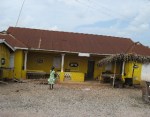
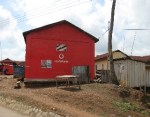
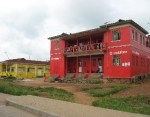
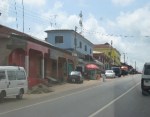
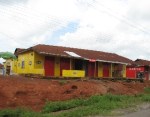
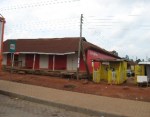
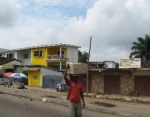
On the road up to Wa (Upper West Region of Ghana) last week, I noticed something. I tried to capture it on the way back to Accra, yesterday. I snapped the shots from a moving vehicle, so they are not great quality. I posted several, because the remarkable thing for me was their sheer quantity.  (I am only posting about half the shots, and I was asleep for about 4 of the 10 hour drive). See for yourself. As far as I could tell these are not mobile phone company offices or kiosks, but houses and buildings used for advertising. Reminds me of political graffiti or turf wars you see between gangs.  [Note – if you have similar shots, please add a link in the comments!]

Read Full Post »

the road to Wa

I’m in Ghana this week for a workshop in Wa, the district capital of the Upper West Region.  I wasn’t too excited about the trip from Accra (the capital of Ghana) to Wa when I heard it was a 10-12 hour drive. I figured it took so long because the road was in bad condition, but I was wrong, it’s just a long trip and there is a lot of traffic. The road to Wa is paved.  Not with gold. Not with good intentions, just paved.  And what a difference that makes.

All kinds of vehicles and travelers use the road. Motorcycles, cars, taxis, 4x4s, Land Cruisers, big trucks, small trucks, semi trucks with trailers.  People walk and bike alongside the road.  I even saw an adolescent boy trying to rollerblade – he wasn’t getting too far in the gravel but was pretty determined regardless.

All kinds of people move in and about and around all the shops and businesses along the road… people making purchases, moving supplies, carrying firewood and water, socializing, flirting, arguing.  Vendors sell fruits, clothing, electronics, car parts, prepared food, plastics, new clothing, used t-shirts.  There are tons of stalls selling airtime  for mobile phones and entire buildings painted bright red with the white Vodafone logo on the side, not to mention doorways, sides and fronts of buildings, market stalls and taxis similarly painted.  Tigo, Glo and MTN also have their noses in the business with signs, billboards, stalls, buildings and such – obviously a lot of competition for mobile phone customers.

collision

The road holds both opportunities and dangers. Some people go very fast and others crawl along, creating accident potential as drivers try to pass them on curves and hills.  As in many countries, a good number of crashed vehicles dot the roadside; though unlike past road trips, this time I didn’t see anyone get hit or observe any bodies lying on the road after being hit, a small crowd around them, fresh blood pooling around their head and twisted frame.   Every so often on this road to Wa, there are toll booths and customs check points.  Speed bumps slow you down as you enter towns.  Police officers stop you for no reason wanting bribes. The road is really happening.

Aside from the rich and fertile rolling hills in between the towns as we got further north, the most striking thing to me was the image of the funeral crowds. You see large groups of people on both sides of the road dressed in very fine black West African clothing with accents of red: black for mourning and red if the person who passed away was strong and in their prime; sometimes white if the person was very old.  Stunning. My colleague Stephen said that funerals happen on Saturdays and that is partly why the road is so busy on weekends.  He also said that politics paved the road, because the current vice president lives in the north and made this road a priority, helping him win the elections.

While driving, we listened to a lot of political talk radio.  Obama’s honeymoon is definitely over if those who were talking are any indication. “We thought there would be a change with Obama, but his foreign policy continues along the lines of Bush.” The commentators argued for nationalization and control of Ghana and Ghana’s resources without foreign intervention and without selling off resources to foreigners, a shaking off of old colonialism.  They heavily criticized the US’s current strategy of opening military bases in West Africa and the US’s failed and reckless policies in the Middle East. References to Chile, Castro and the CIA reminded me of the kinds of conversations you hear in Latin America.  I need to read up more on this, and find out who Kosmos (Cosmos?) is, and what their relationship is with Bush, Exxon Mobile and Ghana’s oil.  [Update: here’s some background on that: Ghana blocks Exxon Oil-Field Deal.] I miss being in Central America where I knew the history of all the politicians and movements, and could read beyond fiery words to interpret motives; where I could read my own truth into things.

As we drove along I thought about the road, and all the activity that it enables. Before my flight to Accra, I visited the  Museum of Modern Art in New York with my brother who studies biology, and we saw an exhibit about Design through the Ages.  Some of the modern pieces showed graphics or moving visualizations of communication networks and systems.  One piece tracked and visualized the movement of taxis in New York City.  Another showed internet connections across the world.  My brother and I talked about our fascination with micro and macro networks and systems… synapses in the human brain, the flow of blood in the body, the New York subways, sewers.

dusk settles on the long drive north

Looking out the window of the car on our seemingly endless drive north, I thought about the similarities between this highway and the internet — road networks and communication networks.  All the people traveling down and alongside the road to Wa. The communication among and between them.  The small and large businesses that have sprung up and are prospering because the road is there allowing access.  The opportunities and dangers, the police and the periodic barriers to speed.

I’m sitting here, 12 hours north of the capital city, uploading this post, with photos even, using 3G wireless internet. Not long ago that wouldn’t have been within my capacity to imagine.

I know there is nothing new in comparing communications infrastructure and networks to a road system. But I am struck today, after the drive to Wa, with the similarities — and the vital need for both. I’m convinced that, just like the roads that provide a basis for connection, communication and commerce; Internet, via undersea cable or mobile or whatever, is essential infrastructure for development.

Read Full Post »

courtesy of bioweb.uwlax.edu

One of the best things about the Great Tshirt Debate has been the variety of voices and perspectives that are weighing in.  This one potentially misguided project was able to catalyze a huge discussion on the nature of ‘aid’.  Once again the power of social media to engage people in debate and dialogue was demonstrated.

There are a lot of angles to follow up on from last week’s blow up. There’s a lot to unpack and it goes much deeper than a conversation about t-shirts.  One thread I find particularly interesting is the use of social media and ICTs (information and communication technologies) for bringing greater accountability and generating input and dialogue around ideas for aid and development.

Christopher FabianOwen Barder and @Morealtitude wrote about this specifically in relation to the Tshirt Debate; and Duncan GreeneOwen Barder, Aidwatch,  Tim Ogden, and others in a broader debate about accountability, aid and development. Certainly there are many posts and discussions out there on this topic.

Some things that stand out for me in the aftermath of the tshirt discussion:

Broadening perspectives.

It’s easy to forget that we all mean something different when we use the terms ‘aid’ and ‘development.’ There is a big difference between emergency aid and longer-term development.  And there are countless theories and approaches and understandings of both of those terms  (Alanna Shaikh and Talesfromthehood have both written on that).  This was really apparent throughout the discussion last week and in the on-going commentary.

I’m still trying to sort out in my own mind the difference between the various aid and development theories, the perspectives of the ‘aid bloggers’ that I follow, and the frameworks of other people who were involved in the Tshirt Debate. People’s views are intimately linked with cultural, political, economic and religious worldviews, and varying levels of snark (which I have to say can be very intimidating) making it even more interesting.  Before Twitter and the blogosphere, I certainly didn’t have daily exposure and access to such an array of thoughts.  Score one for social media.

The elephant in the room.

All this access to all these perspectives and on-line debate and open participation is great for me. And for you. Because we read English and have access to the internet.

But there is a really big elephant in the room.  One that was lurking on the global conference call hosted by Mobile Active on April 30 and that is still standing around quietly as the discussions continue.  I’m talking about the voices and perspectives of the people that the 1millionshirts project was aimed at helping.

I would bet money that some of those voices would have said “I want a tshirt.”

There are a lot of possible outcomes when ‘beneficiaries’ and ‘donors’ actually talk to each other.  Like donors wanting to give t-shirts and people wanting to receive them.  Then what?  Most of those involved in aid and development and work with local economies can and have listed a myriad of reasons why handouts are not a good idea, but most also believe in listening to voices of ‘beneficiaries.’   It seems paternalistic to say that NGOs or businesspeople know best what people need.  What will happen when more donors and beneficiaries are using social media to talk to one another?  And what if NGOs or governments or business people trying to improve ‘developing country’ economies don’t agree?  Then what?  That’s going to be pretty interesting. For a taste of this can of worms, read this post and related comments.

Development education.

This brings me to thinking about the educational processes that contribute to good development results.  Around the world, people have been presented with hand-out and silver bullet ideas around development and aid for a long time. Donors need to be educated about effective aid and development, but communities do also.  People have been trained to gravitate towards one-off donations and charity mentalities, and need to learn why that isn’t actually very helpful in the long term. They’ve been taught that there is a silver bullet we just need to find. People have also been trained to take hand outs and see themselves as victims and need to re-learn how to take the reins and do for themselves.  This is true everywhere – people look for the easy way out. Consider how many people in the US for example prefer to get plastic surgery or take miracle diet pills and medications over adopting healthier lifestyles involving a good diet and exercise.  Complicated situations require integrated approaches and often need cultural shifts and behavior changes.  Those take time and effort and are hard to explain.  How does social media impact on or shift this in terms of aid and development, and in which direction is it shifting?

Barriers to social media participation.

Both #1millionshirts and Kiva were held up to a huge amount of scrutiny online via social media.  But again, who was scrutinizing, and who had access to the tools and means to participate in these widespread discussions?  It was not the people getting loans from Kiva or the eventual t-shirt wearers.  It was donors and ‘experts’.  I would hope that there are plenty of discussions happening about Kiva programs at local levels, in person, in meetings and in local media or newspapers. But these don’t normally make their way to the internet.

I don’t know Kiva’s programs well, but I would also hope that Kiva staff and/or partners, for example, are listening to that local input and using it to improve their programs on the ground to make them more useful to participants.  And I would hope that those discussions take place within a longer term education, training and relationship building process as with many NGOs.  This kind of input from and dialogue with program participants is every bit as important for adapting and improving programs and initiatives, and maybe more important, than all the public discussions on the internet…. as long as it’s being listened to and responded to, and as long as local offices are taking these messages up the chain within the organization, and as long as local offices also are being listened to and carry weight within the organization. What might be the role of social media there to move those offline discussions further within organizations and to educate, inform and engage the broader public and ensure that responses and changes are forthcoming and everyone learns from it?

There are still huge barriers to social media participation for many people in communities all over the world… not having electricity, computers, smart phones and internet, to start with. There are also barriers like language, literacy, age and gender based discrimination, hierarchies and cultural norms that limit participation in general by particular groups in discussions and decision making.  When working face-to-face, good organizations are in tune with the barriers and find ways to gather input from those typically left out of the discussion.  How can organizations use what they know about engaging more marginalized populations and apply it to a more creative use of social media to ensure that all voices are heard?  What resources and ICT tools would be needed to do that effectively?

Offline to Online to Offline

And how could more of the discussions that happen on the ground with communities, when programs are being designed, implemented, evaluated and re-designed; be shared in the open by those who are involved – whether participants, local bloggers, citizen journalists, NGO workers or others?  And how can the debates happening online make their way back to communities that are not connected? It would be amazing if more program staff and community workers were blogging and sharing their work and their challenges and accomplishments.  And if more organizational decision makers were listening to what their community workers or other staff who are blogging and tweeting are saying. And if more people participating in programs could share their viewpoints via the internet.  This would be useful to the global commons and would also help the fields of aid and development to improve.

How can we support more communities to have access to social media and ICTs as tools to participate more broadly? And how can community members be the owners and drivers of this discussion and input. How can we help bring voices from the grassroots to a broader public and also bring these broader public debates back to communities.  How can the access, language, literacy and cultural barriers be addressed?  There are some programs out there doing this, for example Global Voices Rising, MIT’s Department of Play at the Center for Future Civic Media, and the Maneno platform, but we really need more of it.

Youth.

I think as connectivity becomes less of a challenge, we will see the younger generation claiming spaces in this way. More organizations should be working to engage more young people in the development process and supporting them to access ICTs and social media.  When a consultation with children and youth was done after the Haiti earthquakes, for example, young people did not say that they wanted hand outs.  They said that they wanted to participate. They wanted to play a stronger role in the recovery and the reconstruction.  They said they wanted education, a voice in how things were to be done, decentralization.

Staff that I’ve worked with on youth and ICT programs in several countries have said that ICTs and community media are excellent tools for engaging youth in the development process and maintaining their interest, for supporting youth-led research and collecting opinions about community processes.  With advances in technology, these voices can reach a much broader and public audience and can be pulled into donor communications as well as used as input in the resource and problem analysis, program design,  program monitoring and evaluation processes.  Youth can access information previously unavailable to them which broadens their own views and helps in their education processes. They can also contribute information and images of themselves and their communities to the online pool of resources so that they are portraying themselves to the world in their own image as opposed to being shown by and through the eyes of outsiders.

In addition to the Tshirt Debate stirring up questions about good donorship, I really hope it stirs up the debate about the value of more local ‘beneficiary’ voices in aid and development discussions, and that it fuels more efforts to use, adapt, and develop social media tools and ICTs to support these voices to join the debate.

What about you?  What do you think?

Related posts on Wait… What?

Children and young people’s vision for a new Haiti

It’s not a black and white photo

Meeting in the Middle

Mind the gap

Putting Cumbana on the map: with ethics


Read Full Post »

« Newer Posts - Older Posts »