Feeds:
Posts
Comments

Archive for 2010

Remember back when you were a little kid?  The world then was so absolutely interesting that you never wanted to stop playing to eat, sleep, brush your teeth, bathe, or go to the bathroom.  How many times did you pee your pants when you were outside playing because you didn’t want to stop and come inside to take care of business?  How many times was bedtime the cause of a crying fit, with you insisting that you weren’t tired?  It was all because you didn’t want to miss out on anything.  The adults around never seemed to understand that, probably because your world didn’t seem all that interesting to them anymore.

These days I totally get it.  And sometimes I think I’m regressing back to that stage and acting like a 3 year old.  I’ve started resenting the time I spend on the mundane because it interrupts me from the fascinating and the exciting.  I’m not sure if that is a good thing or a bad thing.  It could mean that I’m extremely stressed out and imbalanced.  On the other hand, it could mean that my world has once again become an amazing place to explore and experience.

Yes, I still shower and all the rest, but I wish that there were more time in the day to do and learn about cool stuff and hang around with interesting people. Most days I feel lucky that I don’t have a parent in the house to make me stop and go to bed. Other days I suppose maybe I need one….

Read Full Post »

There are a lot of great ideas floating around about how Information and Communications Technology (ICTs) and technology in general can help to rebuild Haiti.  I hope these ideas keep coming.  I would love to see international development organizations, aid agencies and non-profits in general open up more to ideas on how technology can improve the lives of the people they are trying to support as well as facilitate coordination and program implementation.

But I also hope that the technology folks who haven’t worked in a crisis context such as that in Haiti will lend an ear to those who have experience working in past disasters and on-going development programs, human rights work, volunteer initiatives and advocacy. Those experiences shouldn’t be tossed out as old-school.  Good programs and experiences exist that can be examined, processed and built on.

I work globally, with one foot in community development and the other in ICTs, and I notice a gap between these 2 sectors, though they could really learn a lot from each other and work nicely together.

Cool technology ideas, just like cool program ideas can flop on the ground if the local culture and context are not taken into consideration, users were not involved or consulted during design and testing, the supposed ‘problem’ really wasn’t a problem at all, the proposed idea is not sustainable, a better/preferred local solution already exists, etc., etc.

Sometimes when I hear enthusiastic people sharing ideas for new applications, innovations or program ideas that they want to implement in ‘developing’ countries, I find myself thinking:  “Wow.  They have no idea what it’s like on the ground.”  I don’t want to shoot down someone’s excitement.  But I do wish that those who are not intimately familiar with their end users would slow down, think for a minute, and realize that local context is king. I wish they would remember that ultimately this is not about them and their ideas for other people. I wish they would stop being mad that abc organization won’t take that shipment of xyz technology that they want to send over, or that no one wants to implement such and such program that was so successful in such and such place.  Solutions looking for problems are not the best way to go about things, even when you have the very best of intentions.

However, non-profit organizations (large and small)  can be totally resistant to trying new tools, technologies and programs that could make a huge difference in their effectiveness, impact and quality of programming. They can be bureaucratic and slow to put new ideas to work.  They can be risk averse, afraid of failure, and resistant to innovation and new ideas.  The seemingly limitless relationships that need to be negotiated around can really slow things down.

Sometimes I see non-profits doing things they way they’ve always been done and I find myself thinking “Wow.  I wish they’d be open to trying ________.” I wish organizations would be more willing to test out new technologies and new ideas that don’t come from within their sector. I wish it were easier to make change happen.

When it comes to the Haiti earthquake response, the technology and non-profit sectors are 2 of the key players.  I’m worried that the outpouring of interest in helping will lead to a lot of wheel re-inventing.  I’m worried about local relevance and executability (if that’s even a word) of some of the ideas I am seeing.  I have concerns about the amount of projects being conceived and designed from afar.  I also see that there are new program and technology ideas out there that have the potential to make people’s lives easier if they were well integrated into the local reality, yet there are many factors that prohibit and inhibit organizations from exploring them or using them.

The technology and non-profit sectors benefit quite a lot from each other when they work together and understand each other.  It would be great to see a bigger effort to bridge the gap between these sectors.  Regardless of whether people believe NGOs and/or private enterprises and/or technologists or the Haitian government or the UN are good or bad, there are a lot of experiences that can be learned from and/or improved on from all sides.

The links below might be helpful for thinking about designing technology, ICT and programs in ‘developing’ country contexts and to help avoid known pitfalls and overcome obstacles. They can help reduce the amount of time and other resources wasted on projects that are not sustainable or impactful, or at worst are actually harmful in the short or long term to the very people that we all want to support and help.  There are certainly many more resources out there… please add ones that you find helpful in the comments section.

ICT Works and The 4 C’s of ICT Deployment

Mobiles for Development Guide by Hannah Beardon

IDEO Human Centered Design Toolkit

Changemakers and Kiwanja collaboration: SMS How To Guide

Mobile Active‘s case studies

ML4D:  Mobile learning for development’s design narratives

Ushahidi Blog: February Archives have a lot of information on the Haiti response

iRevolution: thought provoking posts on technology and crisis situations

Educational Technology Debate:  Sustaining, rather than sustainable ICT4E and Designing and sustaining a sustainable ICT4E initiative

Posts on Wait… What? that might be useful:

7 (or more) questions to ask before adding ICTs

Finding some ICT answers in Benin

Meeting in the Middle: A good local process

It’s all part of the ICT jigsaw

I and C and then T

Read Full Post »

Members of the "Voces" Latin American youth media network.

I’m in Nicaragua this week for a regional meeting of youth leaders from 12 Latin American countries where the organization where I work (Plan) operates.  Well, actually only 11 countries are present, since our 5 person Haitian delegation (2 adults and 3 youth) was deported immediately upon arrival. What I understand is that they were missing a special type of visa permit required by Haitians that the Consulate in the Dominican Republic should have issued and didn’t, and the Haitian youth paid the price by having their hopes dashed.

To me it feels like adding insult to injury, but I guess no one cuts anyone any slack these days.  After 3 days running around, staff at our office in Nicaragua were unable to arrange for the team to enter the country.

I’m really disappointed that the Haitian team is not here this week because it would have meant a chance to hear first hand from the youth and my Haitian colleagues about their experiences over the past few months and to learn about how they have been participating in the Post Disaster Needs Assessment (PDNA) process in Haiti.  The youth from the Latin American youth media network, “Voces” (“Voices”) here are extremely bummed as well.  One aspect of their strategy for the next few years involves working in solidarity their Haitian peers to ensure that their voices and opinions are heard in the building and negotiating of the PDNA as well as in the post-PDNA process when promises and commitments will be monitored.

Around half of the population in Haiti is under 18, yet young people were not initially given a space to input into the PDNA process, even though it will decide the framework and funding for reconstruction of their country.  In order to bring those voices into the process, Plan worked in partnership with UNICEF to consult with 54 groups of children and youth (around 1000 kids in total) across the country (West, North East, South East, Artibonite, Nippes, South, North West, Grand Anse and Central Plateau) to find out about their current situation and their plans and ideas for the future. Issues of gender, disability, vulnerability, access to services, disaster risk reduction, participation in decision making, and accountability mechanisms for the PDNA were considered in the consultations. Plan has been working in Haiti for several years and has an active local network on the ground. These consultations were a lot of work, but not impossible.  (Read more about the process here.)

But the effort to fully involve children and youth does not stop at the consultation stage.  Plan and UNICEF are currently working to ensure that the input from the children and youth will be incorporated into the upcoming donor conference in New York on March 31, 2010 where representatives from the Haitian government, international organizations and representatives from the World Bank will decide Haiti’s future.  My colleague in the US office is working right now to try to secure visas for 2 youth to attend the March 31 meeting.

Interestingly enough, much of the input from the youth consultations fits right into the categories that will be discussed in these meetings:  education, housing, telecommunications, transport, energy, boosting the effectiveness of government and macro economic recovery.  If you ask me, it would be vital for decision makers to hear it.  The most common point made by children and youth during the consultations was education and getting back to school.

Here in Nicaragua, the 40 or so youth from the “Voces” network who did make it through immigration to participate in our meeting this week have been following the Haiti situation since it began, offering solidarity and support from afar.  The group is composed of young media veterans, all part of youth networks and media groups in their home countries. They have been doing local, national and global level advocacy work for years; some for 10 years, since they were pre-teens.  They write blogs, host television and radio shows, publish newsletters, make videos, produce music, and are generally involved and powerful voices for their generation.

I really like their vision for supporting their Haitian peers’ primary efforts in getting a seat at the table and being heard by decision makers around the PDNA and post-PDNA reconstruction process in Haiti. They are planning to use their contacts in their own governments and ministries and their existing media platforms to bring the opinions and voices of their Haitian peers in “through the back door” so to speak. They want to advocate with their own country governments, youth commissions, Ministries, etc., to influence their positions so that when they interact with the Government of Haiti, they are doing it with opinions and positions of Haitian youth in mind. In this way they want to help the voices of their peers to be heard directly and indirectly on various fronts and from all sides.

On the ground in Haiti, Plan is working to find and revive all the youth media groups that were its active partners before the earthquake.  These groups have been working in their communities and at the national level through various media around themes of importance to youth.  In fact Caroline and Fritz, 2 of the youth that I have met in the past at other youth encounters are at the forefront of the children and youth participation in the PDNA process right now.  These and other groups of  young people can play a vital role in the post-disaster reconstruction process in many ways, including monitoring the gap between commitments made and commitments fulfilled.

The knowledge, motivation and spirit of the youth here at this regional encounter, are a real inspiration. I can only imagine how disappointed their peers are, back in Haiti, after all the preparation that they did to attend this week. But our regional media encounter is of  much less significance than the March 31 meeting.  How will the youth who are planning to attend that meeting feel if they are not allowed in.  Why is their voice less important in that context, less of a priority than other voices?  I’ve been in this world long enough to know the answer to that question, but it will never cease to upset me.

So here’s hoping that the 2 Haitian youth who are slated to participate in the PDNA Meeting in NYC are given a seat at the table and permission to attend the donor meeting and to enter the US.  Here’s hoping that Haitian youth and their voices will not go missing again.

Related Posts on Wait… What?

Children and young people’s vision for a new Haiti

Children in Emergencies:  Applying what we already know to the crisis in Haiti

An example of youth-led community change in Mali

Read Full Post »

There are surely enough travel blogs out there, but given how much travel I do and my recent hiccups getting home from Benin (eg., 5 day total delay), I thought I’d throw together some of the things that keep me sane and somewhat prepared when I’m on the road…. I normally travel to Africa and Latin America, so these ideas may not be useful to people traveling to other places.  I have geared them towards women, though they might be useful to men also…. Ladies, add your tips to the comments section!

Breasts, shoulders, thighs, knees and ankles. Do a little internet research before you leave.  Observe what local women where you will go are wearing in pictures or on other people’s blogs. Especially notice the attitude towards breasts, shoulders, thighs, knees and ankles. In many places, for example, breasts are not a big deal, but thighs are.  Keep that in mind when you pack and in your behavior when you arrive. Don’t wear tank tops/spaghetti straps if you don’t see local women wearing them.  Same goes for shorts and capris or tight clothing.  This may be different if you are a teenager and traveling with a group, but I still recommend against a lot of thigh action if you want to be taken seriously and to be respected.  There may be different dress codes depending on urban and rural, so observe that and be respectful, be smart.  And if you are not, don’t be surprised if you get unwanted attention.  Maybe not the most feminist thing to say here, just being realistic.  People will often cut you some slack knowing that you are foreign, but when I travel, I tend to go for respecting local customs over my right to self-expression in my attire.

Sweat – Not a nice topic for many of us, but if you are someone who sweats (I always envy those people who don’t) it’s a fact of life when traveling somewhere hot. You’ll often be advised to wear clothing made out of lightweight fabric, however this kind of fabric shows every drop of sweat. Skimpy underwear does not absorb sweat and that fact will express itself on your clothing, especially when you are forced to sit in a hot car, meeting or community for several hours.  Not attractive.  Cotton boy shorts are a good alternative to the sexier variety of under things, as is clothing made out of thicker fabrics.

And speaking of undergarments – I get really annoyed when I see young women who, in the name of modesty or fitting in with local culture or just being hippy backpackers wear long flowing skirts without realizing that they are completely see through when walking in the sun! Do us all a favor and invest in a slip.

Tattoos.  You may get stared at for having visible tattoos.  You’ll want to decide how you feel about that.  I normally keep mine covered until people get to know me a bit so that any judgment comes later in the relationship. Since a lot of Americans have them these days, it’s also kind of fun to explain that tattoos are part of our coming of age ritual.

Packing – If you’re a frequent traveler, keep a second set of travel stuff right in your suitcase.  I keep a plastic Ziploc bag with less than 3 oz. quantities toiletries in it and just refill them before I leave and stash them on the top of my carry on for easy removal at security check points.  I keep all my favorite warm weather travel clothes in my suitcase. I have a checklist that I run through before I go to add anything that’s missing.  Makes for much easier packing.

Luggage – Put some identifying marks on your luggage so you can spot it when you arrive.  Assume it might be delayed by a day or so, and be prepared in case it is.  I do this by always packing any equipment, a change of clothes, and any essentials in my carry on.  This includes a small quantity of any printed materials I need if I am presenting at a workshop, just so that I won’t be left hanging.  I always take my laptop.

Travel socks – They are dorky but they keep your ankles from swelling and you from looking like you have tree trunks for calves upon arrival.  They also help prevent a potentially fatal condition (deep vein thrombosis) where blood clots form due to long flights.

Shoes – If the climate is hot your feet may swell and your shoes will be tight, especially if you are walking or standing a lot. This is most pronounced in the evenings.  Bring shoes that are a bit loose to be more comfortable.

Flip Flops – I wear them whenever I can get away with it, but sometimes they are seen as a sign of disrespect.  If you’re on any kind of trip where you need to do business or represent at any kind of function, or train a group, bring some sandals that don’t look like flip flops, at least for the first couple days. Do bring the flip flops for sketchy showers.

Sarong – Pick one up somewhere next time you see one.  They double as a scarf for freezing plane trips, and a skirt for when your luggage gets lost, you want to visit a pool or beach, or you need a cover up in a pinch, like if you have dinner in your room and want to throw something on to cover your shorts/your thighs when your meal or beer arrives.

Coffee press – If you are a coffee addict and are traveling to a country that produces wonderful coffee, rest assured that you will be served none of it.  You will get Nescafe.  I bring my own travel coffee press (pick one up for cheap at REI) and some ground coffee.  You can almost always get boiled/hot water.

Food – If you are vegetarian, pack granola bars, a jar of peanut butter, some chocolate, and some of those little cheese hunks wrapped in red wax… they last up to a week or 2 without refrigeration (if you’re not squeamish), and taste really good after a few days of full-on starch meals (eg., vegetarians often get a plate of bread, rice, pasta, potatoes and green plantains for lunch and dinner and some more bread for breakfast).  Try to make friends with your hotel or workshop venue cook and ask if they could make you some beans or cooked vegetables.  Make sure you don’t refer to yourself as a vegetarian without giving some suggestions of what you do eat, or you may get raw vegetables and salad which often lead to amoebas and giardia.  Buy some fruit when you see it. Bring a knife from home to cut it up and be sure to wash and dry it well before digging in.  Fancy hotels will often have no idea how to feed you so look forward to a lot of French fries and omelets.  Local hotels or hosts will usually make an effort using what they have available.  Don’t assume that your fancy hotel food is safer than other food.  Different bacteria is different bacteria and your system just may need to adjust.

Bottle opener – Light, easy to pack, and a life saver when you have to buy your beer in advance or want to drink it in your room on a hot evening.

Ziploc baggies –Freezer size zip lock baggies seem to always come in handy for something.

Flashlight.  A small flashlight is useful for frequent power cuts. Especially for visiting bathrooms outside your sleeping area at night.

Towel – Often small hotels will not provide towels, or will give you a non-absorbent hand towel.  If this is a problem for you, bring your own towel.

Mosquito net – You can never count on a mosquito net.  Do yourself a favor and purchase your own.  I bought my own self-standing mosquito net (a “travel tent”) which has been a life saver.  Light weight and convenient, it sets up on any single bed or even on the floor.  It means you get sleep without being woken up by mosquitoes buzzing in your ears, and you can avoid taking malaria pills (well, unless you’re working for an organization that makes them mandatory….)

Laundry soap/clothesline – I usually pack a clothes line to string up in my hotel room, and a baggie of powdered laundry soap.   You can also get these when you arrive. You can pack lighter if you wash things out in the evening. If you’re in a hot climate they will dry in less than 24 hours.  When Air France lost my bag in Togo, I made it through 9 days by washing in the evening and re-wearing in the morning.

Water – If you see a bucket in your room, it is a sign that the water goes off.  Keep it filled or you may be in for an unpleasant surprise when you go to take a shower.  There’s quite a talent in toilet flushing with buckets.  Experiment and soon you will learn how to economize on water use and keep the bathroom area clean as well. I got through each day in rural Rwanda on one jerry can by being smart about re-using my bathing water for the toilet, etc.  Get a plastic cup at the market to make it all easier.

Candles – Same as a bucket – candle in your hotel room means that the power goes off fairly often – be prepared.  Charge up all your stuff whenever there is available electricity.

Electricity adaptors – Often your room will have only 1 or 2 outlets, (if at all when you’re out somewhere really rural).  A 3-plug + an adaptor are handy for charging up 3 things at a time instead of juggling them one after the other.  Google “electricity converter” or “electricity adaptor” something like that before you leave and get some plug adaptors of your own. It gets annoying when people are always asking to borrow yours, and your hotel will not have them unless you’re traveling in high style.

Check in – Check in on-line if you can.  If not, get there early enough to get a window seat on long flights.  Don’t expect any special attention unless you are wearing a fancy suit and a big watch.

Airport pick up – Assume that no one will be there to pick you up from the airport.  Maybe this is just an issue with my organization, but it happens quite often.  Before you leave, be sure that you write down the address and phone numbers of your office, any contact persons, and your hotel.  (I once arrived in India without this information…. not wise).  This is also helpful to keep handy when filling out paperwork at the airport upon arrival.

Flight delays and ticketing – Be aware that once you purchase your ticket, Orbitz and the like won’t help you much as they transfer the ticket over to the airline systems.  I found out last week when stuck in Benin for 4 extra days that your ticket will not have a phone number on it, or it will be an 800 number, which only works in the US.  Try to get a non 800 number before you leave in case of anything.  When in a real pinch, send out pleas for help on Twitter and the community will get you the phone numbers you need.

Cash – Some places only change $20 bills or less.  Other places give a better rate for $100 bills.  Do some research.  Change money in the airport when you arrive if the agencies are still open. Assume you may not have access to an ATM when you arrive.  Assume your hotel may not have cash to change money for you when you need it.  Assume you will wait for 2 or 3 hours at a bank to change money, and will need ID to do it.  Know that every time you ask your organization’s driver to do these types of things for you, you are probably ensuring that his day is that much longer. (Drivers in my experience have the worst rap, always having to arrive before everyone and leave after everyone’s all taken care of, and they don’t get any recognition for their work).

Communications – Get an unlocked cheap phone and buy a local SIM card and some airtime on arrival.  Check before you go which network has 3G or Edge if you plan to use it for internet.  Download the software to connect your phone to 3G internet before leaving.  If you travel often, it can be worth the money to invest in a phone that connects to internet.  If you are a Twitter or Facebook freak, install Snaptu for Twitter/Facebook on your phone.  Outlook doesn’t work on all phones, so I do an out-of-office reply giving people my phone number for emergencies.  I create a rule to auto-forward my work email to my gmail.  If you use an i-phone and want to get some extra mileage out of it on the plane/before you jump into local phone/local SIM mode, Duracell makes a $17 charger that gives you an extra 3 hours.

Medications – I don’t like taking medicine.  I do however have a prescription for Ambien for sleeping on flights. That means I can sleep all night on a plane, get some coffee when I arrive, and get straight to work, and I can avoid arriving a day or so early to acclimate.  Never take a sleeping pill before your flight is in the air in case you have to deplane!  Get a prescription for Cipro before you go.  Take it if you have a bad stomach w/fever for a couple days. Then eat lots and lots of yogurt when you get back home as Cipro depletes your good stomach bacteria.  (*Note – I’m not a doctor and am not giving medical advice here, just telling it like I do it!).

Malaria – I never take malaria pills.  They make me tired and nauseous which means I can’t work, so what’s the point?  And the pills prescribed by your doctor at home may not be effective for the zone or area that you are traveling to because of how the disease evolves.  Decide for yourself, but if you are careful, you can get by without them.  (Again – I’m not taking responsibility for this if you follow my advice and you do get sick).  I prefer using my mosquito net, wearing long pants/long sleeve shirts in the evenings, and using hard core bug spray on exposed skin.  Beware that many bug sprays will eat through nail polish.  My toenails normally look like there is chewed up gum residue on them by the time I get home.  Dark clothing attracts mosquitoes so be aware of that.  Don’t be surprised if sometimes there is a cloud of them swarming over your head if you have dark hair…..  Never take Lariam.  I know of a couple cases where the side effects caused permanent psychological damage to colleagues.  I don’t really know why it’s still prescribed actually.

Marriage proposals and unwanted attention – I could write a whole book on this, but in an effort to be succinct….  Ladies, if you are under, say, 30, don’t be surprised if you get your fair share of suitors.  If you are over 30 and divorced or single, expect some attention from 20-something young men who imagine you to be desperate and lonely.  If you’re interested, by all means, go for it, but protect yourself just like you would when you’re at home. Don’t take any excuses.  Condoms are readily available just about anywhere, or better yet, always travel with some.  If you are American, you will likely have a reputation for being loose (thank you Hollywood and MTv) [note: adding “and all the ‘Western’ women who have helped confirm that stereotype“). If you are divorced, people may pity you.  If you are married or in a relationship, some men will still try to pick up on you.  (In El Salvador when I’d say I was married, men would often say “It’s ok, I’m not jealous”).   If you are not interested and the attention you are getting is not overly offensive, take it in stride.  Don’t be rude, but do be firm.  Deflect lightly when possible and move on, it’s OK to say no. Sometimes you may want to keep your phone out of sight so that you can pretend you don’t have one if you keep getting asked for your number.  If the attention is scary and threatening though, do whatever is necessary. As anyplace, be safe.

I’m sure I’ve forgotten something…. Add your comments below.

Update:  Here’s a great post by Scarlett Lion:  What to bring and not bring when traveling to Africa.

Related post on Wait… What?

Getting screwed by Orbitz.

Read Full Post »


Mapping Violence against Children in Benin

In my last post, I wrote about key questions to ask before adding ICTs to a development initiative, using the example of a violence against children program I’m working on in Benin. The piece that was missing, and which came together over the past 2 weeks, was the view from the ground.

We just finished two workshops (in Natitingou and Couffo Districts) with 24 youth from 9-10 villages in each district, the district heads of the Center for Social Protection (CPS), and the Ministry of the Family (both of whom are responsible for responding to cases of child abuse/child rights violations in their varying forms).  We covered several topics related to youth leadership and youth-led advocacy.

I was most excited, though, about getting end user input and thoughts about implementing a FrontlineSMS and Ushahidi set-up as a way of reporting, tracking and responding to violence against children.

I had a lot of questions before arriving to Benin, but by the end of my 2 weeks here, I feel satisfied that the system can work, that it’s reflective of real information and communication flows on the ground, that roles of the different actors – including youth – are clear, that it can add value to local structures and initiatives, and that it could be sustainable and potentially scaled into a national level system in Benin and possibly other countries.

What we are tracking.
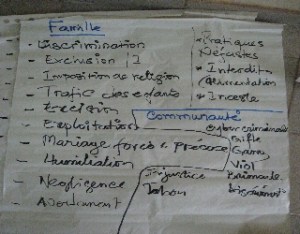
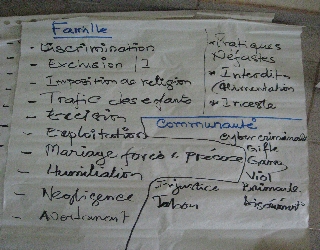
Violence children said they experience at family and community levels.

Forms of violence that children and youth experience at home and in the community.

The UN Report on Violence against Children (VAC) identified 4 key forms of violence against children (physical, psychological, sexual and neglect) and 5 key places where it takes place (home, school, community, institutions, workplace).  Plan is one of the organizations that participated in the elaboration of the study. Now, together with local, national and global partners, we are working on sharing the study’s results and strengthening capacities at different levels to prevent and respond to violence against children.

Plan’s approach helps rights holders (in this case children and youth) know their rights and engages them in educating on and advocating for those rights. At the same time Plan works to strengthen the capacities of duty bearers (local and national institutions, including the family) to ensure those rights.

The VAC study revealed some shocking statistics on violence against children, yet we also know that under-reporting is a reality, meaning that the magnitude of violence is not fully known.  People don’t report violence for many reasons, including fear of reprisal and stigma, difficulties in communication and access to places where they could report. Institutions also face difficulties in responding to violence for a variety of reasons, including lack of political will, disinterest, lack of awareness on the magnitude of the problem, scarce resources, poorly functioning or corrupt systems, and poor quality information.  Even when violence against children is reported, national response and judicial systems in many countries don’t do a good job of addressing it.

How ICTs can help.
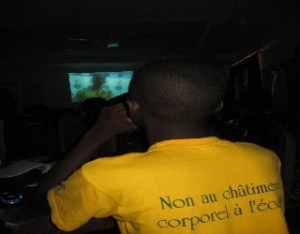
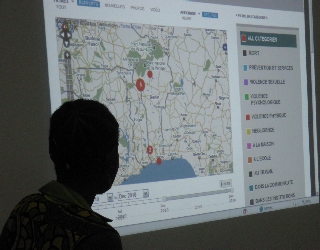
Watching testimonials captured as part of the workshop.

Watching testimonials youth produced during the workshop.

Mobiles can pull in and send out multiple bits of information, creating a kind of glue that can hold a system together.  In Benin, the use of SMS and mapping can bolster and connect the existing system for reporting and responding to cases of violence against children. SMS allows for anonymous and low cost reporting. It’s hoped that this will encourage more reporting.  More reporting will allow for more information, and for patterns and degrees of violence to be mapped.  This in turn can be used to raise awareness around the severity of the problem, advocate for the necessary resources to prevent it, and develop better and more targeted response and follow-up mechanisms. Better information can help design better programs. SMS can alert local authorities quickly and help improve response. Mapping is a visual tool that children and youth can use to advocate for an end to cultural practices that allow for violence against them.

In addition to FrontlineSMS and Ushahidi, digital media tools can be used to record audiovisual information that helps qualify the statistics and better understand attitudes towards violence.  At the workshops we trained youth to use low cost video cameras, mobile phones and audio recorders to document violence and to take testimonials from other youth and community members.  These testimonials can help youth improve and target their messaging to change violent behaviors and can be used to educate in their communities and generate dialogue around violent practices. Testimonials and audiovisual materials also help youth connect with people outside the borders of their communities to share their realities, challenges and accomplishments via the web.

What the system looks like.
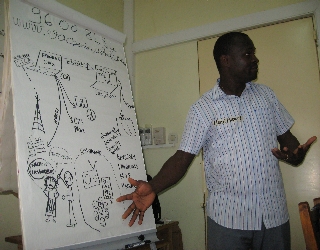
My colleague Henri sharing the basic idea of the information flow and how it could intersect with a FrontlineSMS and Ushahidi system.

My colleague Henri explaining the basics of the system.

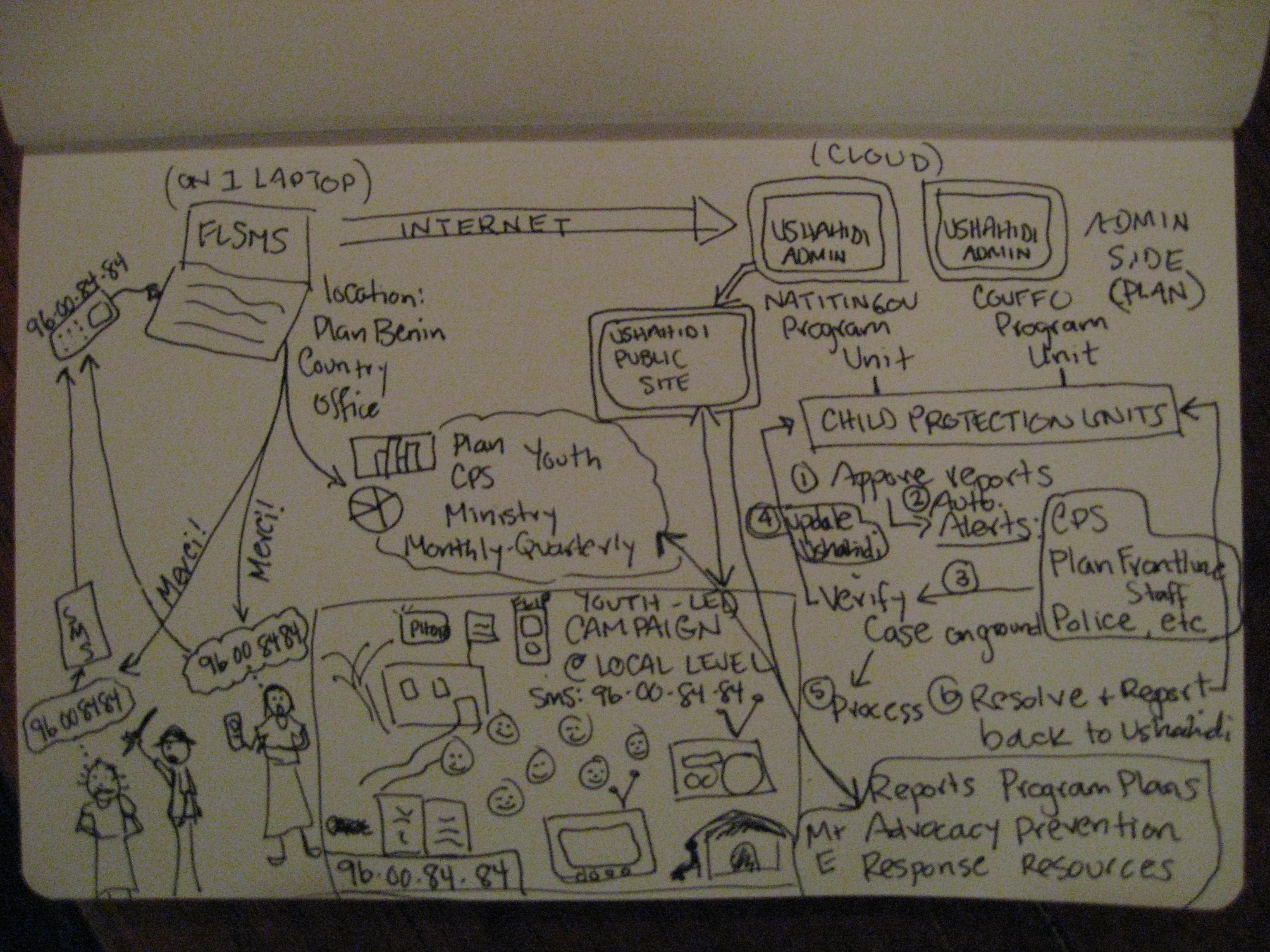
We had some ideas and a drawing of what the system might look like that we shared to get across the basic idea of the system and to obtain user feedback on it.

After the workshops, with input from the youth, national and district level Plan child protection staff, community outreach staff, the Center for Social Protection (CPS) and the Ministry of the Family, it ended up looking something like this (forgive my poor artistic talents….)

My low tech attempt at drawing out the system....

For now, the Frontline SMS piece of the system will be managed by Henri (see photo above) at Plan’s Country Office. Plan’s district level child protection staff will administer the Ushahidi system, receiving and approving the SMS reports that are automatically forwarded to Ushahidi from Frontline SMS.  Automatic alerts will be set up so that when there is a case reported in a particular community, the Plan staff person who liaises with that community, as well as the CPS point person, and the local police and any other relevant community level persons will be alerted.  These authorities will verify the cases and do the follow up (they are already responsible and trained for this role).  The goal is for management of the whole system to be handed over to national authorities.

Main challenges we face(d) and ideas for overcoming them.

There were many questions and thoughts from users about the system that need to be worked out (see below). But these are not insurmountable.

Lack of resources to respond to violence at the local and national level is the main challenge seen by the CPS and local Plan staff.  It will be easy to report now because there will be a locally available, low cost and fast system.  The number of reports will increase. What if we don’t have enough capacity to respond to them? Children and youth may feel discouraged and stop reporting.

Proposed Solution:  Plan Benin will continue to work closely with the Ministry of the Family and the CPS during the 6-12 month pilot phase in the Natitingou and Couffo districts.  The end goal is that the CPS and Ministry will manage the entire system. The information collected during the pilot phase will be used to advocate for more resources for prevention and response.

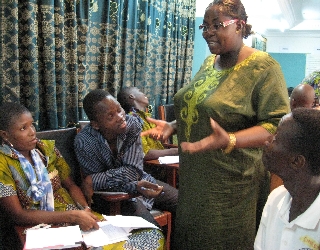
Anastasie during some group work with the youth.

Anastasie

Airtime and mobile phone access in order to report incidents was raised as a potential challenge by children and youth in both groups.  What if people don’t have credit?  Can Plan purchase credit for the participating youth leaders and buy them phones?

Proposed Solution:   My amazing colleague Anastasie, who coordinates the program in West Africa, turned around to youth and said, “Hah? Do you honestly think Plan can purchase credit and mobile phones for the entire country of Benin?  No! This is not only Plan’s concern. This is not only happening here in one community or one district.  This is a problem that we all share, and we all have a responsibility to do something about.”  The kids laughed and agreed that anyone could find a way to report by borrowing a phone if necessary or asking an aunt or friend to help them.  The youth that we are working with are all part of organized community youth groups, about half of them have mobile phones and all said that their families or neighbors had phones that they could borrow or use.  Still, Plan will approach the government and cell phone providers about getting a “green” number that would allow for free SMS violence reporting.

Phones and modems. “Here (at the Nokia Store) we don’t carry the older models, surely you would prefer this nice new one with many cool features and capabilities?”  Um, no, actually what we’re looking for is an older, cheaper phone or one of the modems on our list here!  We spent quite some time visiting stores and testing modems and phones to find one that worked with FrontlineSMS.  Mobile phones are a complex ecology with many factors — phone or modem model and auto-installed programs they come with, SIM cards, etc.–that can trip you up and there is not a lot of standardization across phones or countries, so what works in one place may not work in another. It’s good to have an additional day for testing things out.

Proposed Solution:  The young woman working at the Nokia store in Cotonou was very happy to sell us her used old phone for an exorbitant price…..  I’m thinking I will go on e-bay or someplace to find some older model phones that work with Frontline SMS to use as a backup.  I wonder if there are original (not pirated) phones at local markets….

Weak internet, electricity. Staff and CPS wondered: What if our internet is down, or not strong enough to go into the system and verify the reports in Ushahidi?  Will the messages from FrontlineSMS forward to the Ushahidi system if the internet is down?  What if there is a power cut? Will FrontlineSMS still capture the SMS’s and forward them?

Proposed Solution:  Power and electricity are always a challenge, but we were able with a normal degree of patience to make the system work. I was constantly reminded how my habits are based on having constant electricity and high speed internet.  Use patterns are quite different when it’s a weak, intermittent connection, but most people in places with customary weak connections and unreliable electricity have higher tolerances for the situation.  Internet and electricity are not really in our hands, but we did use mobile internet as a back up and that worked in some cases.  The Ushahidi system will be managed from the two Plan district offices for now, which have good internet (the training site where we were working did not). Eventually if/when the system is passed to local authorities this will need to be looked into.

Our own technical knowledge.  We were asked: How can we set it up so that the CPS or Plan staff or local authorities can get an SMS when a case is reported so that they can go immediately to check it out?  Can people make reports by email?  Can we get statistics on a regular basis from Frontline SMS and Ushahidi to send to our superiors?  Is there a way to track the status of each case so that we know where it is in the process from reported to resolved?  Well, yes, there is but we couldn’t get the email or the alert system working.  Likely this is our lack of experience with the system…. and the weak internet didn’t allow us to do a lot of poking around on user forums while at the workshops to find solutions.

Proposed Solution:  We’ll continue to explore FrontlineSMS and Ushahidi to better learn all the functionalities and see what potential ones we can use.  We will also add relevant feeds, add an “about” page, clear off the test SMS’s, etc., so that our Ushahidi instance can go live.  There are likely add-on functions that we could use to query data in FrontlineSMS for exporting to spreadsheets for sorting and managing (I have done this with Frontline SMS Forms but couldn’t make it work with text message contents).  We will look into to a way to manage the status of each incident report, moving from reported into FrontlineSMS, approved in Ushahidi, sent out by alert to the relevant authority for verification, verification completed and marked in the system (hopefully with a report), and some kind of closure of the incident – what response was given or what legal or community resolution process was started and what was the result – and finally, incident closed. Some of the applications developed during Ushahidi Haiti may be useful for us here, or those being used by FrontlineSMS: Medic.

Privacy and protection for violence victims/witnesses who report.  In this sense we have two challenges.  Can we capture all the information that comes in, yet scrub it before publication on Ushahidi so that it doesn’t identify the victim or alleged perpetrators, yet keep it in a file for the local authorities to follow up and respond?  And a second challenge:  If everyone knows everything that happens in the community, how can we ensure privacy and confidentiality for those who report?

Proposed Solution:  Find out how this was managed in the Haiti situation in the case of names of missing or separated children.  Learn more about all of the possible data exports from both FrontlineSMS and Ushahidi.  Find out if a separate box for “Private Information” could be added to the report section of Ushahidi for information to be kept in the system but not published on the public site itself or if there is a program that can query the data base either in FrontlineSMS or Ushahidi. The second challenge, that of information confidentiality at the community level, is actually more of a concern.  Staff will have follow up meetings with children and youth to identify additional ways to ensure confidentiality at the community level.

What if your phone rings while you are making a video report with it!? Strangely enough, this was one of the hottest questions with the most debate at the workshop.  I found that amusing, but it was a question that needed to be resolved then and there.  I suggested that it was unprofessional/rude to answer your phone if you were in the middle of a video testimony.  But what if your family has been in an accident?!  What if it’s an emergency!?

Proposed Solution:   OK, well in the end we decided it was up to each individual to decide what to do!

Next steps.
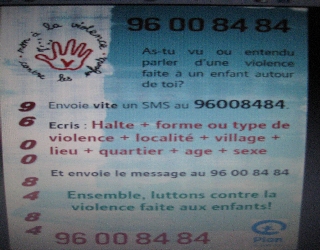
Draft campaign poster after the first workshop; information to send by SMS will be updated to reflect input from the CPS in Couffo.

Draft poster. Information to send in the SMS will be altered to reflect input from the CPS.

Our main next steps will be follow up training for Plan staff, Ministry of the Family and Center for Social Protection, including discussions on how to pass management of the system over to them. We’ll also continue to support youth to promote the SMS hotline and to do their video and photo testimonies.  We will continuously monitor how the system is working and in about 6-12 months we’ll evaluate what has happened thus far with the system in order to make decisions about potential scaling up to the national level in Benin and/or to other countries. And we’ll follow up on resolving any of the challenges noted above.  During the pilot phase we will also tweak the system according to suggestions by users – including the youth, the CPS, Plan staff, and other reporters and responders.  For the evaluation, we will want to measure results and factor in a variety of elements that may impact on them, both those related to ICTs and those not related to ICTs.

Key principles confirmed.

Your ICT system needs to rest on an existing information and communications flow. Conversations about a new ICT system can be a catalyst to help identify and map out or even adjust that flow, but it’s critical to understand how information flows currently, and to find points where ICT systems can help to improve the flow.

End user input and testing is critical. We learned a lot and our thinking evolved exponentially during the workshops because we had children and youth present, as well as Plan frontline staff who work on child protection at the community and district levels, community members, local authorities responsible for child protection and responding to cases of violence, and the relevant ministry.  At first, my colleagues from the Country Office and I were uncertain that the system could be used for more than gathering information on violence for future decisions; we didn’t feel confident that there was a reliable local/national response system in place.  We wondered what the point of collecting information was if there would be nothing done about it.

However, the excitement of the CPS, children, and Plan staff working at the district level changed our thinking, and during the workshop we adapted it towards supplying information for future decisions as well as for immediate response.  Local authorities did have concerns about their own capacity to respond, but embraced the system and its potential to help them do their jobs.  They suggested many ways to improve it, and fleshed out our original ideas on how the information should flow to those responsible for responding and supporting victims, including local actors that we hadn’t thought of during the initial design phase.

The CPS, for example, suggested that the SMS’s should contain the full name of the victim, which is something we hadn’t thought was necessary for information gathering.  “We will have a much easier time finding the victim and responding if we have a first and last name.”

Testing SMS with the youth was important. We initially set up the word “HALTE” as our key word, but during testing noticed that people were spelling it “HALT” and “ALT” in their messages. So we adjusted the key word in FrontlineSMS to “ALT” to capture the alternative spellings that people might use when sending in reports.  Something we can find out during the next 6 month testing period is how to set up the system for local languages as well.  Local staff brought up the issue of adult literacy.  During local promotion of the violence prevention hotline these will all be key factors to consider.

Youth have a main role in promoting the SMS number and orienting peers of where to go for support.

Youth's role in promoting the line and orienting their peers will be critical.

The role of the participating youth leaders was a bit nebulous before the workshops for me.  I wasn’t clear if they were to be those who reported violence or if they would have another role. I was concerned about potential retaliation against them if they played a leading role in reporting violence. At the workshops it became very clear what they saw as their role – working to promote the SMS number for violence reporting, taking testimonials from youth and community members on the situation of violence, carrying out radio and poster campaigns against violence, leading educational sessions at schools and in their communities about violence and the SMS line, working to approach local leaders and decision makers to engage them in the campaign, and orienting those who had questions about which authorities and institutions they could approach for support if they had been victims of violence.  They are also key people to consult with around how the system is working during the monitoring and evaluation – what are the challenges children and youth face in reporting by SMS, how can we work around them, what other factors do we need to consider.

Input from the CPS and Ministry was critical to flesh out the information flow.  Participation by the CPS and Plan’s Child Protection point persons who know how things work on the ground brought us amazing knowledge on who should be involved and who should receive reports and alerts, and at what levels different parts of the system should be managed.  Their involvement from the start was key for making the system function now, for sustainability over time, and for potentially scaling to a national-level system.

Continued monitoring and evaluation of the effort will be critical for learning and potential scaling to a national system in Benin and for sharing with other countries or for other similar initiatives.  We’ll establish indicators for the various steps/aspects outlined in the information flow diagram.  As we pilot the system in these 2 districts in Benin, we will also want to pay close attention to things like:  additional costs to maintain the system; reporting and response rates; legal action in severe cases; adoption of the system and its sustained use by local entities/government bodies (Ministry of the Family and Center for Social Protection); suggestions from users on how to improve the system; privacy breaches at community level and any consequences; numbers of verified cases; number of actual prosecution or action taken once cases are reported and verified; quality of local level promotion of the hotline and education to users on how to report; progress in obtaining the green (free text) line; factors deterring people at different levels from using the system.

The end goal, something to evaluate in the long term, is whether actual levels of violence and abuse go down over time, and what role this system had in that.  Our main assumption — that education, awareness, reporting and response, and follow up action actually make a difference in reducing violence — needs also to be confirmed.

Related posts on Wait… What?

If you are still in the mood to read… I added a 7a and a 7b to my 7 or more questions to ask before adding ICTs post based on suggestions from readers and my time in Benin.

Here is an update on the project after 2 months:  Tweaking: SMS violence reporting system in Benin

For background on the broader Violence against Children (VAC) initiative:

Fostering a new political consciousness on violence against children

Breaking it Down:  Violence against Children


Read Full Post »
Josh's FLSMS Ushahidi Diagram

Drawing by Josh Nesbit (Frontline SMS: Medic) and James Bon Tempo (Jhpiego) from an amazing brainstorming session in early Feb 2010.

When looking at integrating ICTs (Information and Communication Technology) into existing programs, or making an initiative go further or work better with ICTs, there is a lot to figure out before you even get started….

Over the past few months, I’ve been supporting the development of a mobile data gathering/ crowd sourcing and mapping workshop for youth in Benin.  The training is part of a broader initiative to reduce violence against children.  We’ve decided to use Frontline SMS and Ushahidi as tools in the project because we think (and want to test whether) mobile data collection/ crowd sourcing incidents of violence will allow for a better understanding of what is happening in this area.  We also think that geo-visualizing reports of violence against children may have an impact on decision makers and might allow them to better plan prevention and treatment programs and services.

At first I was most worried about whether we could get the technology itself set up and working, but as I started digging in, it was immediately apparent that the technology was the last thing to worry about.

The first thing to consider is probably:  Why are you doing this?

Well, we all have our different reasons…..  But even in a worst case scenario where someone wants you to use ICTs because they are cool or you have funding for them (*not the case in the project I’m writing about, but I’ve seen a lot of this going around) you might be able to salvage the project if you ask the right questions and get the right people involved in finding the answers.  Many of the questions I’m asking myself and my colleagues now will be asked again next week when we are all together on the ground with local staff, youth and community members. I expect there will be more questions added to this list, and that a lot of our current assumptions will change.  But here is the starting list that we’re working from (in no particular order, as answering one may alter answers to another one):

1) What are your specific information and communication needs and goals?

  • Why are you collecting the information?
  • What will be done with it?
  • Who will it be shared with and why?
  • What change will it contribute to?

For example: In our case, we want to gather information on the amount, types and location of violence happening in communities where we are working on a Violence against Children (VAC) project.  We want to know where the violence is happening most, and what kind of violence it is. The information will be used by the youth and project participants, staff, and relevant local or national authorities. We want to generate awareness, inform programmatic efforts, and advocate for more attention and services to prevent, respond to and treat violence against children.

2) Are you working within a particular framework or project/program already?

  • Do you have existing indicators that you want to meet or track using mobiles or mapping or specific information that needs to be gathered?  Does someone else have existing indicators or initiatives or information needs or formats that you should be linking in with/ following/ supporting?  If neither, you probably need to take a step back and think through your goals, purpose, and outline what your information needs are, and why you are gathering information or setting up a project in the first place.
  • Who are the target audiences/persons/decision makers/populations that you want to impact?
  • What information do you need to gather from and/or show to these groups in order to reach your established goals?

For example:  In our case, we are framing our whole project within the UN Study on Violence against Children (UNVAC).  The study identifies types of violence and contexts in which violence happens.  Our information gathering will be set up within that framework.  If possible, we’d also like to track the age and sex of those who experience violence, because that can help in designing prevention programs and services.

3) How is the issue you are working on currently dealt with?

  • Are there local structures that are involved or engaged with your topic/theme/project/initiative already?
  • What do they look like?
  • Who is involved in them?
  • Who currently provides solutions or responses?
  • How can they be involved/engaged?
  • What is the existing information and communications flow? Can you tap into it?
  • Will ICTs improve upon it? (if not, then stop here!)

For example:  In our case, we need to know more about the current community attitude towards violence. We need to know more about local mechanisms and whether they deal with violence as a crime or if those who are violent towards children are ever prosecuted (whether via local justice or national judicial systems)  We need to know which government services intervene or treat cases of violence.  Is there a Child Helpline that we can work with?  Who are the local allies?  How does this initiative fit into larger district or national initiatives and where are the connection points?  How can this initiative  enhance and/or improve what is already existing?  We will know more about this when we are on the ground next week.

4) What are the parameters for information collecting? What is the local use of ICTs?

  • Based on the broader framework of your project or initiative, what is the geographic range for information collecting? (1 community? One district? Nation-wide?)
  • Is there detailed geographical/map information for the area you want to work in? Do you actually need it?  If it doesn’t exist, what will you do about it?
  • How do people in the community use their phones? Are they individual phones? Family phones? Community phones? Who owns phones? Who has access to them?
  • Do people in the community have internet access? Who? How?
  • What is your set-up for collecting information and who will collect it/submit it?  Eg., do you expect a broad public to use SMS to send in information? Or will you do mobile data gathering where trained individuals go around collecting information using mobile based forms such as those on Frontline SMS Forms module?
  • How will people find out about your initiative?  How will you advertise the number to send information to — by radio, television, billboards, handmade posters, word of mouth, in schools?

For example:  In our case, we’ll work in only 2 districts to start.  Because we are concerned about privacy and protection (eg., retaliation against children who report violence) it may be OK to work without extremely detailed maps that could identify particular households or persons.  We are working with youth groups who are trained on violence, but we are afraid that they could be put at risk if they are going around collecting reports from individuals as a mobile survey.  We also feel that information might not be honestly shared if it were collected in survey form.  We assume that not all children own phones, but that phones are readily available.  We assume that if families own phones, they are controlled by one or the other parent.  In a school setting, we assume that children could borrow each other’s phones if some students have phones.

We are thinking that there will be adult allies, and that local community networks can spread the word that children can use SMS to send in violence reports.  We will need to get suggestions from youth and community members on how to ensure that SMSing information in doesn’t put children at further risk if they do not own their own phone.  We’ll have to find a way to remove/reduce the risk of being found out and retaliated against.  If we can’t do that, we won’t do the project.

5) What are the privacy and protection issues that you may run into? This is especially critical if you are collecting information from and/or about children under legal adult age or with sensitive or potentially dangerous areas such as conflicts, elections, health or human rights.

  • What are the risks to those who report information?
  • How can this be managed in the project structure/information gathering set up?
  • Will you have a private Ushahidi instance or public one? (eg. available to the public, or only available to those involved in the project?)  Who can access the RSS feed and the local alerts, and does this put anyone in particular at risk? If you have a public instance, who will have access to the information, and what will your parameters be for removing identifying information that could put people at risk.
  • How can you assure that information remains private both for individuals reporting and within the FLSMS/Ushahidi system once collected and that it’s treated confidentially by those managing the system?
  • Are you prepared to address any information/privacy breaches if they should happen? How? Who will be responsible?

For example:  In our case we are still concerned about privacy and protection, and potential retaliation against children who could be caught reporting violence.  We will discuss this in depth with staff and participating children and youth to be sure that they are aware of the implications of this type of project and information gathering.

Some potential risks that we are already aware of include: a child not deleting the SMS after reporting; a child reporting and expecting immediate help which may not be available; risk to the youth group that is promoting and leading this project; community rejection of the project.

Some possible ways of reducing risk include good promotion of how the project works and of how to delete an SMS after sending; not using an easily identifiable automatic text reply to those who report (eg., an auto reply SMS that says “thanks!” might be smarter than one that says “Thanks for reporting!”); openly raising awareness about the project and getting community support for it; ensuring adult allies and engaged adult decision makers; password protection for the website at first until we’re sure that privacy and protection are well managed and ensured.  Additional mechanisms will be discussed with local staff, local youth and engaged adult community members.

6) How will you close the circle and manage expectations?

  • Will there be a response to those that submit information? What? Who will respond? How? What is the plan?
  • How will you ensure that there are not expectations around the project or information gathering system that you cannot or are not set up to meet?
  • How will you return the information to the community/local district/those who provided so that they can use it for decision making or program intervention?
  • How will on-line/offline be managed and streamlined into an information gathering, communication and feedback system that works for the different levels of access of the populations you want to collect information from and share information with?
  • In your project design, how will you take into consideration and maximize local information sharing formats, customs, and opportunities?
  • And how will you ensure that the information remains in a protected/private state in order to avoid putting anyone at risk?

For example:  In our case, we are not sure yet what the local response mechanism is currently when violence is reported.  We will find out more when we are on the ground in the communities next week with local staff, and we see how we can link the initiative in with existing local systems.  However, we will likely not be able to provide any immediate support to those who report violence unless there is already a system in place that can be enhanced by better reporting through SMS.  We will probably need to be very clear that the point of the project is to collect information for future decisions, not for providing immediate help.  This may or may not have an effect on people’s interest and willingness to actually use an SMS based system to submit information.

We will discuss and agree with the community, youth, local staff and local organizations on how and when the information will available to the community in order to close the circle to be used for decision making and program design, etc.  Determining who has constant access to the information is also a part of this discussion.

7) What other questions come up based on the context of your initiative and your experience?

March 1:  Based on feedback to the post, I’ve added a couple more categories here:

7a)  How will you ensure that your project is sustainable?

  • What will the project look like in 5 years? Where will it be?
  • What happens when you leave? Who will manage and run the initiative? Will you or someone else be needed and available later on to support? How will this be managed?
  • What equipment are you basing your ICT system on? Who will own and care for it? How will it be maintained/upgraded and sustained? What capacities exist (or will you strengthen) at what levels to do this? What future costs are implied in maintaining the system? How will they be covered?
  • Who will own/manage any equipment? How will you ensure that it’s not commandeered by those with more power in the community?
  • What costs need to be considered for sustained functioning, and how will they be met?

7b)  What about scale? Is it something you are striving for and, if so, how will you get there?

  • Can the project set up/idea/initiative be replicated? Where and how?
  • Is scale something you are striving for? If so, is it do-able? How?
  • What sort of buy-in from local and/or national actors will you need to scale?  How will you involve those actors early on and get their input into the process?
  • How are you systematizing and sharing information and lessons learned?
  • How and when will you monitor and evaluate the project to know what outcomes, results, and impact you had?
  • How will you know you had an impact at all? And how will you measure the particular impact that your ICT tools or set up had in reaching those outcomes/results/impact?

**(would still love to hear other people’s key questions too – pls comment below….)

—————————–

So, now, after all that, finally…. What will your Frontline SMS, Ushahidi set up look like?

This part is very well covered by the different toolkits that have been developed (see links at the end of this post), but so as not to leave it hanging, here are some of our technology related tasks and questions that we will address when we arrive in Benin:

  • Setting up Frontline SMS and our Ushahidi page for the project
  • Setting up an automatic link between Frontline SMS and Ushahidi so that any SMS’s that come in will go automatically to Ushahidi for uploading onto our map
  • Determining how we will verify reports that come in
  • Determining how to manage auto-replies in a way that lets the person reporting an incident know that we received it, yet doesn’t put them at risk if the wrong person finds the auto-reply message on the phone.
  • Estimating budget for incoming text messages
  • Ensuring there are no legal issues around who is holding this type of data
  • Linking in with a local Child Helpline to involve them in the pilot and  see if we could integrate with them (and use their  short code eventually if they have one)
  • Reviewing on-going system management needs – verifying incidents, managing the back-end on Ushahidi; who will act as the local point person
  • Being sure that all the technology works on the ground….
    • Do we have the right equipment/phones?
    • Is the laptop/server working?
    • Are we able to connect with the phones?
    • Is the information linking back into Ushahidi properly?
    • Are key words / automated responses working?
    • Is verification working?
    • Can we export data?
    • Other things to consider?

Useful resources:

Ushahidi’s Community Resources for Non-Techies (including the Preliminary Practical Considerations guide, which is based on the above post!)

Mobiles for Development Guide by Hannah Beardon

Changemakers and Kiwanja collaboration:  SMS How To Guide

Frontline SMS:  Ning group for asking questions and learning and Frontline SMS site

RANET:  Utilizing Mobile: Installation and Use of Frontline SMS for basic data collection or outbound messaging (there are 3 parts to this series, and you can find it in French and Portuguese also)

Mobile Active: data about mobile use, mobile data communications costs, mobile coverage and operators by country and How to Set up an SMS System.

Mobiles-in-a-Box: Tools and Tactics for Mobile Advocacy

Ushahidi:  The Ushahidi Blog

iRevolution:  for broader discussions, thoughts, questions on crowdsourcing, crisis mapping, and the works.

New Tactics in Human Rights:  for practical tools and discussions around new technology in human rights work

Related posts on Wait… What?

3 ways to integrate ICTs in development work

Finding some ICT answers in Benin

Tweaking: SMS violence reporting system in Benin

Fostering a new political consciousness on violence against children

Breaking it Down: Violence against Children

It’s all part of the ICT jigsaw

I and C then T

5 ways ICTs can support the MDGs

11 concerns about ICTs and ‘social media for social good’

Read Full Post »

Ending violence is not as simple as some people (and some famous-journalists-from-the-New-York-Times) might think. It’s not as easy as telling some personal stories of child victims of violence and getting people in the “West” to pay attention and care.  Ending violence against children will involve some very deep and profound cultural shifts that need to be owned by local communities who have decided that they want to end violence. Violence needs to be addressed on multiple fronts over time, taking into consideration very localized contexts that frame violence against children as an accepted norm, and that allow those who commit violent acts against children to continue with impunity.  Violence is not something in isolation of other currents running through a society, and much (most? all?) violence is rooted in unequal power relationships.

Next Sunday, I’m heading to Benin for a couple weeks to work on a project aimed at ending violence against children.  I’ll be training colleagues from Benin and Togo on setting up an SMS based system of collecting incident reports on violence against children and mapping the incidents out. This information should allow for better tracking and understanding of what kind of violence is taking place, and for more informed thinking about sustainable solutions/responses to the violence.

My colleagues and I will then train youth in 2 communities in Benin to use the system.  We’ll also train youth to do some basic audio and video testimonies. Our Togo colleagues will return to Togo to replicate the training with some youth groups there.  This is all part of a larger Violence against Children (VAC) project that has been ongoing since 2008.

One thing that I like about this VAC project is that it trains and engages children and youth themselves as advocates and agents of change to end violence, together with adult community allies.  As those who are experiencing this violence, it’s vital that children and youth are prepared and able to take part in stopping the cycle – it’s in their own best interest.  They also need a critical mass of people locally who are aware of the negative impacts of violence, and a system that can apprehend and mete out consequences for those who commit acts of violence.

After its 4 year running period, the VAC project will have trained some 200 children and youth on the causes, manifestations and consequences of violence; ways to communicate effectively with different audiences to get the message of stopping violence across; the use of cartoons, comics, social media, radio and television to talk about issues of violence; and how to respectfully yet confidently lead intergenerational dialogue around the issue.  After my 2 weeks in Benin, the youth, project staff and other participating community adults will (I hope!) be able to use mobile phones to collect information, pictures, videos and audio testimonies about violence in their communities to share locally, nationally and globally to speak to publics and decision makers.

As part of the preparation for the upcoming workshop, I’ve been reading through some reports and documentation about the project.  One report stated that all children participating thus far in the project have said that there has been a concrete reduction of violence in their lives. They have consciously broken the cycle of violence themselves and have been able to talk to their families and peers, who now exercise less violence against them.  Most of the youth in the participating groups have themselves been victims of violence, sometimes severe, at home on a regular basis.

The pain, the marks on my skin, swelling and wounds are the consequences of violence against me…I lose my composure and all ability to complete a task. Then there’s also the doubt, fear, stress, not wanting to talk about it and shyness. –  female participant, Togo

They in turn they were often also violent towards their siblings and their peers.  Participating in the project has strengthened their “be the change you want to see” mentality around violence.

“The knowledge I have gained from the project has helped me put an end to the violence that I used to carry out against my sisters, brothers, and sometimes other children. My parents have also changed – they are no longer violent towards me.” female participant, Togo

In addition to the personal changes at the level of the participants, the VAC project has built a civil society of youth who engage politically with their peers, families, schools and communities around issues of violence.  The youth have also made violence against children part of the public agenda by partnering with media sources who feed their media into mainstream channels.

Participants are fostering a new political consciousness on violence against children by educating other children and youth about the UNVAC study and how violence compromises their rights. They’ve been able to create alliances between youth and adults to advance their cause and youth have been able to share their experiences and opinions with high-level policy makers, including government officials and the UN Special Representative on Violence against Children.

This project is a great example of how engaging with young people can begin to offer solutions to very complex problems, and how looking at youth, and at people in general, as participants and stakeholders and subjects of rights rather than victims, or beneficiaries, or objects of pity can have much better and more sustainable results.

The United Nations Violence against Children Study examined the violence that children around the world experience on a daily basis and documented children’s own experiences of violence in their homes, school, communities, workplace and institutions. A Child Friendly Version of the report is also available.

The VAC project is co-implemented by Plan and Save the Children in West Africa and takes place over 4 years (2008-2011) in seven countries: Togo, Ghana, Benin, Guinea, Mali, Côte d’Ivoire and Gambia in partnership with Curious Minds (Ghana), Child Protection Alliance of Gambia, youth and children’s clubs in all these countries, the African Movement for Working Children and Youth, and Planet Jeunes (a popular magazine for youth in West Africa).   Through the project’s work with children, youth, parents and communities, the achievements of the VAC project to combat violence against children are directly helping to realize the UN VAC Study’s recommendations. Several action plans developed by children and youth seek the support and commitment of the UN Special Representative on Violence against Children to continue lobbying governments for change. Young people engaged in the West African VAC project are a valuable resource for the UN Special Representative, ready to support her work in Africa and beyond.

——————–
Related Posts:

Read Full Post »

I recently had the honor of leading a group of tech, development and gender folks in a discussion around Girls and ICTs at the Technology Salon.  The conversation revolved around 5 aspects I wrote about in an earlier blog post On Girls and ICTs:

  • Tension between participation and protection
  • Online behavior is an extension of, and a potential amplifier of offline behavior
  • Qualifying the digital divide
  • Girls’ involvement in developing and designing ICT solutions for their own needs
  • Research on Girls and ICTs

Check out the Technology Salon’s page for a round-up of our discussions!

Photo:  Informal evening one-on-one ICT time at a Youth Empowerment through Arts and Media (YETAM) project workshop in Cameroon.

——————-
Related post on Wait… What?
On Girls and ICTs

Putting Cumbana on the Map:  with Ethics
Being a Girl in Cumbana

Girl Power and the CGI

Read Full Post »

There is a lot of talk about “Child Protection” these days and an increased awareness of the vulnerability of children who are separated from their parents or who have lost them due to the Haiti earthquake   But what exactly does “Child Protection” mean?  What does a child protection system look like on the ground?  How can child protection mechanisms be set up during an emergency phase, and how can they be turned into a sustainable mechanism post-crisis?

Jose Francisco de Sousa (“Quico”), a co-worker of mine at Plan Timor-Leste, sent me written information on Plan’s child protection work in the 2006 crisis response there and talked me through some of details below. Photo:  Quico.

Plan was active in the broader emergency response in Timor-Leste following the political crisis of April 2006 through work in over 40 camps for Internally Displaced Persons (IDPs). (For some deeper insight into Timor-Leste, check out this post by my twitter pal @giantpandinha).

In Timor-Leste, Plan was one of the first agencies to respond as Site Liaison Support (SLS), responsible for the coordination, operation and management of camp activities within days of the crisis. Plan’s specific focus was on addressing the needs of children in the camps, covering service provision such as the delivery of potable water to 15,000 IDPs, addressing hygiene and sanitation issues to improve health, and training youth in conflict resolution skills to aid the nation’s peace building process, and child protection.

Plan’s child protection approach included identifying, monitoring and protecting children at risk, setting up referral systems, training communities in child rights and child protection strategies and mechanisms, and ‘seconding’ Quico as an advisor to the government to strengthen its child protection systems.

Quico was “loaned out” to the Ministry of Social Solidarity (MSS) to build upon existing capacities in the Ministry of Social Solidarity (Child Protection Department) and to ensure a strongly coordinated sectoral, systems-building approach to the child protection response. Through this process, the government came to see child protection as a priority in the long term and eventually established a Child Protection Department under the MSS. So, in other words, the emergency child protection mechanisms established during the crisis were successfully built into a sustainable child protection system in the long term, and services are now available in the district and sub-district levels across the country.

“When the crisis began in Timor Leste, it was very difficult for us to get any resources on how best we could assist internally displaced people. During the emergency, there were many NGOs and other organizations trying to support the internally displaced through different approaches. The focus was mainly to provide the basic needs. There was no proper coordination strategy/mechanism that included broader child protection issues.

I would say that if we look at the nature of the disasters in Timor-Leste and what is happening in Haiti right now, It’s different,  but I imagine (correct me if I’m wrong) that the impact of the disasters might be same, where instability is created in different sectors leading to broader child protection issues.

Plan responded to the emergency in Dili (the Capital of Timor-Leste) with immediate practical child protection measures focusing on the prevention of family separation, and the promotion of safety, and health and hygiene in camps. We also prioritised co-ordination of child protection actors by initiating a Child Protection Working Group. This filled a leadership vacuum whilst building the capacity of the Government  to gradually take over leadership responsibility.”

Keep reading for an overview of the Toolkit…..or download it here.

————————————————–

Plan Timor-Leste’s Child Protection Emergency Toolkit is divided into 7 parts:

1. Overview of Framework & Standards Related to an Emergency Response in Timor-Leste
This section aims to give an overview of the international, national and organizational laws, policies, standards and approaches to child protection in emergencies in order have clear guidance on how to create an appropriate framework for a potential response that is in line with global, national and internal organizational laws and policies on Child Protection in Emergencies. (If replicating the toolkit, these documents would need to be adapted to the country context).  Users of the toolkit should read this section before they go on to use the other sections in the toolkit.   These overviews are important to integrate into Child Protection in Emergency trainings and orientation for new staff recruited in the event of an emergency.

Some of the legal instruments and Humanitarian Principles Applicable to Child Protection in Emergencies in Timor-Leste included:
  • Overview of Approaches and Guidelines in Child Protection in Emergency
  • Timor-Leste Structural Framework of the Current System for Child Protection
  • Timor-Leste Legal Framework for Child Protection
  • Plan’s Approach to Emergency
  • Summary of Learning and Recommendations from 2006 Emergency Child Protection Response

2. Emergency preparedness
The section includes an overview of steps that should be taken to ensure that Plan offices are prepared for an emergency. It’s divided into two areas – programmatic preparedness and administrative preparedness.  It also includes the practical internal financial codes for general emergency preparedness activities so that these are compiled and readily available to support and inform activities and rapid proposal writing in the event of an emergency. These are also useful for Country Offices to be prepared for emergency in the long term.

Programmatically, the tools include government and Child Protection Working Group contingency planning, risk analysis and scenario planning, child protection activity mapping and definition of roles and responsibilities.  They also include tools developed specifically for the geographical areas where a child protection response might potentially be needed, such as contact lists for child protection actors at the municipal level, and community-based hazard, risk and capacity maps developed by children and their communities as part of Plan’s on-going mitigation activities.

The administrative tools cover generic job responsibilities, a general child protection in emergencies orientation session for newly recruited staff or those who are new to emergency response.  The human resource structure of a response is defined and responsibilities are allocated within the current staff organigram.  Advocacy and media standards and a stock list of necessary items for the first phase of an emergency response are also included.

3. Initial emergency response
This section contains the basic tools relevant to an initial emergency response.  The emergency planning tools included in the previous section are also relevant to ensuring the most efficient response possible, in line with Plan’s community-based approach.  The shape of the response will depend largely on the type, scale and location of the emergency, and any tools need to be adapted according to this context.

“One of the tools here is a child protection message to Camp Managers.  During the emergency period, Plan was assigned to be responsible for a certain number of IDPs. One of our focuses was to establish and ensure that the structure in the IDP was functioning to assist the IDP’s and that we established the camp. But we also wanted to make sure that child protection was understood and prioritized in displaced persons camps. This meant that we discussed children and child centered programming with camp managers, and they worked to ensure that there would be no discrimination towards children and their families during the emergency.”

This was difficult for us to introduce in the beginning of the crisis, as people tended to have different thoughts and priorities, and it gave additional works to the IDPs.  In addition to that, some organizations did not have a mandate for “child centeredness.” So we started facilitating child protection focused workshops for camp managers and other NGOs, and getting their commitment to be involved in process.  Aside from that we also guided the camp manager on using the checklists as well as we assigned Plan, government and other NGO staff  (who were also in IDPs) to support throughout the process, and it worked.

One of the problems that we encountered was related to volunteers.  Since we were establishing a new system, we needed people to take responsibility at different levels. Camp managers already had additional child protection tasks for the whole camp, so they were supported by child protection focal points and child protection teams in each block of IDPs.  I wouldn’t say it all worked perfectly.  There were issues among volunteers that were brought to the Child Protection Working Group to discuss. Some NGOs who were also assigned in the IDP camps had a policy of paying camp managers and teams, which created jealously and conflict between them and the volunteers. But in the end, we developed guidelines for volunteers, establishing from the start that we would not give them cash but rather give them recognition and reward such as:

· identification cards recognizing them as volunteers
· training and continuing refresher courses
· certificates for every completed training course
· promotional t-shirts, hats, umbrellas & bags, whenever available
· public acknowledgment
· certificate of community service for every 3 months of services rendered
· access to information about suitable job vacancies in NGOs”

4. Child protection assessment
This section contains tools for use in assessing child protection-related needs.  It draws heavily from the Inter Agency First Phase Child Protection Resource Kit developed by the IASC Child Protection Working Group. The assessment contains generic questions relevant to a range of child protection issues common to emergencies.  They are adapted and modified according to the context of the emergency and the child protection issues that are identified as emerging. Training on ethical considerations and assessment methodologies should be conducted as necessary.

“There are 8 main focus questions in the Questionnaire for Children, for example.  To find out about children’s psycho-social well being, we ask the questions:

· What are the things/activities that you like the most?
· What kind of things makes you happy or comfortable?
· What are the things/activities that you dislike?
· What kind of things makes you angry or sad?
· What kind of activities would you like to have here?
· What are the main problems that you face now?
· What would help you solve these problems?
· What are your biggest concerns or worries about the future? What do you think would help?
· Which people make you happy in the community?  Why?
· Which people make you unhappy in the community?  Why?”

5.      Building a Child Protection System in an Emergency
The section looks first at developing child protection systems in the context of displacement.  It then looks at supporting district, sub-district and village child protection systems to respond to the needs of displaced people living in host communities and other disaster-affected communities.   It goes on to look at the implementation of the Child Protection Policy and ensuring the effective management of individual child protection cases.  This sub-section contains guidelines on monitoring and reporting grave violations of children’s rights.

6. Key issues for children in emergency
This section looks at some of the issues that children commonly face in emergencies and appropriate child protection responses in line with international standards and according to Plan’s mandate and experience.  The three key issues covered in detail are: Family Separation, Sexual Violence against Children, Psychosocial Support for Children. Each of these three issues has a sub-section containing a summary of standards and guidelines, process for prevention and response, necessary tools, and a training module for staff.

7. Monitoring and Evaluation
This section contains the tools used to monitor and evaluate child protection in emergencies interventions.   These are based on tools already used by the Plan Timor-Leste Office.  They are adjusted according to the needs of an emergency context and are supplemented with additional tools in line with good practice.

“In Haiti, I would say that children separated from their parents will need to be especially considered, while people will also need to be alert for the effects that the crisis may have, for example, increased violence.  This will be a special concern if there were any political issues before the crisis. Psychosocial activities are very, very important too, the other key areas are likely to be water and sanitation, heath problems and education.  Coordination mechanisms between aid organizations must be considered, as each organization will have their own approach but in this situation each organization needs to think about the wellbeing of children and the community.”

More resources:
The Child Protection Working Group in Haiti has created the following Guiding Principles for Unaccompanied and Separated Children Following the Haiti Earthquake, 2010.

These principles represent the views of the following agencies: the International Committee of the Red Cross (ICRC), the International Rescue Committee (IRC), Save the Children, Terre des Hommes (TdH), the United Nations Children’s Fund (UNICEF), World Vision International (WVI), Plan International, War Child UK.  Organizations wishing to work on behalf of separated children are strongly encouraged to endorse these principles.


Plan International: Children and the Tsunami


—————
Related posts on Wait… What?:

Read Full Post »

At the Technology Salon hosted by the UN Foundation’s Technology Partnership with Vodafone Foundation on Jan 28, 2010, some folks from the DC area (and beyond) will gather to share experiences around girls and ICTs.

This conversation is an important one, given that gaps exist around discussion, practice and research.  The information and ideas shared at the Technology Salon will feed into the contents of the Girls and ICTs chapter for Plan’s upcoming 2010 “Because I am a Girl” Report (currently in the works).

There are a few points that I hope will be considered in the Technology Salon discussion:

Tension between participation and protection.

There are many examples of ICTs being used for increased participation and connection:  mobile phones for citizen journalism;  Twitter revolution in Iran; girls using mobiles to ask questions about sexuality and to get information to help them improve their sexual and reproductive health; girls married off early or those living in protective societies using mobile phones to maintain contact with friends; new media tools opening up possibilities for youth engagement in important conversations that normally they would be shut out of.

However, due to the very real problems of on-line child pornography, child trafficking, child harassment, and cyber bullying, there is also a strong push for more control, more restrictions on on-line use in the name of protecting children.  The tension between child participation and child protection is a very real one.

As we look at how technology and international development communities can support girls’ development, I hope it’s kept in mind that the more knowledge that girls have about the internet and ICTs in general, the more practical use they are allowed, the more coaching to help them understand implications of their actions, then the better prepared they will be to navigate these realms and to keep themselves safe.  Increasing their knowledge, abilities and desire to protect themselves may be more effective than setting strict external limitations.

Actively engaging girls in this as part of an educational process can be better than restricting their use – and being open to young people’s own ideas and ways of using ICTs is critical.  Adult involvement in this area is important, but it is probably more worthwhile to coach than to control.  Good communication and trust between children, youth and their adult mentors and guides is critical in this process. (Excellent resources on Child Online Protection (COP) for children, youth, educators and parents came out on October 2009 and are well worth the read.)

Online behavior mirrors offline behavior.

I remember getting an obscene phone call when I was around 8 years old.  My mother did not blame the telephone, however. She blamed the pervert that was calling.  She made sure to teach me how to be prepared in case it happened again. She emphasized not giving out information on the phone and hanging up immediately if I felt uncomfortable or didn’t know who was calling.  She did not prohibit me from ever touching the phone again or blame me, but she was vigilant for awhile.

In the same way, new ICTs themselves cannot be blamed for negative and twisted behaviors.  ICTs are tools that exacerbate and extend already existing human behaviors, and the blame lies with those who are using ICTs for child trafficking, cyber bullying and the other evils associated with the internet. It’s important to address underlying behaviors. Research shows that kids who are bullied offline are often also bullied online.  Girls who are vulnerable offline are likely also vulnerable online.  Online is a manifestation of offline, and the root causes of girls’ vulnerabilities online cannot be blamed only on the ICT tools themselves.

I have my own daughter now, and have discussed with her many times how to keep herself safe online and on the phone.  It’s important for her to know this before something happens, not during or after.  She will probably be using the internet and the phone for the rest of her life, so prohibiting them is not an option, and the benefits of using these tools obviously outweigh the risks.  My own involvement and use of social networking sites, texting, etc. is an excellent way for me to know how these sites are used and what security holes there are for my children on the sites. How can parents and teachers in areas with limited use of ICTs be involved and engaged to serve as coaches and leaders in on-line protection together with children?  How can communities help identify existing vulnerabilities in girls (or young people in general) that might manifest themselves online and offer support to prevent exploitation?

Digital gender divide.

There are some amazing examples of ICTs helping women and girls to improve their livelihoods; for example, women selling mobile telephone services; birth attendance being improved by using mobile phones to connect women to midwives, ambulances and other medical services; educational content being  expanded using internet; youth media and youth radio programs bringing girls voices and gender topics into the mix for community discussion and dialogue.

However, in places where boys and men dominate women and girls, boys and men likely also dominate the use of available ICTs.  Men may control the family’s mobile phone and take it with them, or monitor women’s calls. In places where boys are more favored, their confidence to try new things is higher meaning they may rush in to use mobiles, cameras, radio equipment in projects while girls shy back.  In some cases girls report that boys hog and monopolize the computers and equipment, and access is denied.  I’ve seen boys criticize, scorn and ridicule girls who are using equipment for the first time, and girls become too timid to try again.  In many developing countries, just getting girls to attend school is difficult.  If girls are assumed to be less intelligent or less worthy than boys, and their secondary school attendance (where ICT training might be offered) is not a priority, girls will have a very difficult time ever accessing and using ICTs.

Underlying issues surrounding girls’ participation in general need to be addressed.  We need to think about how ICTs can be used to help girls’ inclusion, participation and self esteem increase in general.

Girls involvement in developing and designing ICT solutions for their own needs.

Studies in several countries have shown that girls and boys use technology in different ways and for different things.  What specific ICT needs do underprivileged girls in ‘developing’ countries have? Is anyone asking? What processes or solutions already exist that take girls’ ICT needs into account?  What environments are necessary for girls to engage in defining, deciding and creating ICT solutions? Where are they already engaging, and how can communities, schools, organizations and businesses support and recreate those environments?  How can processes and products be designed together with girls?

Tech is still a field heavily dominated by males.  In the US, for example, some women in tech have pulled together to question this and to advocate for more opportunities for women to break into the male dominated worlds of publication owners, conference speakers, businesses, well known innovators, and “best of” lists.  There have been protests against prominent companies for promoting “Booth Babes” and in one case last year, strippers, at tech conferences.  This brings the question – in places without female tech role models and respectful environments, how can girls see themselves as leaders in this field?

Specific research on girls and ICTs.

There is not a lot of information on the impact of ICTs on the lives of girls in ‘developing’ countries, especially studies that go beyond establishment of computer centers.  There is  anecdotal evidence of positive impact of mobile phones on women. There are studies on the digital gender divide for women; on child trafficking and other negative aspects of the internet; and on use of internet and technology among youth in the US, UK, Australia, etc.  It’s been difficult to find a lot of information on the use of ICTs by girls in the “South.”  It would be interesting for more research to be done on girls and ICTs in the “South” and for some good practices to be shared. Hopefully someone at the Technology Salon will be able to share some insight on this.

Read Full Post »

« Newer Posts - Older Posts »