Feeds:
Posts
Comments

Archive for 2010

the Ghana team: row 1: Steven, Joyce, Yaw, Samuel; row 2: Bismark, Maakusi, James, Chris, Dan

I was in a workshop in the Upper West Region of Ghana this past week.  The goal was two-fold.  1) to train a small group of staff, ICT teachers and local partners on social media and new technologies for communications; and 2) to help them prepare for a project that will support 60 students to use arts and citizen media in youth-led advocacy around issues that youth identify.

I was planning to talk about how social media is different from traditional media, focusing on how it offers an opportunity to democratize information, and how we can support youth to use social media to reduce stereotypes about them and to bring their voices and priorities into global discussions.  But all those theories about social media being the great equalizer, the Internet allowing everyone’s voices to flourish and yadaya, don’t mean a lot unless barriers like language, electricity, gender, and financial resources are lowered and people can actually access the Internet regularly.

Mobile internet access is extremely good in this part of Ghana, but when we did a quick exercise to see what the experience levels of the group were, only half had used email or the Internet before.  So I started there, rather than with my fluffy theories about democratization, voice, networks and many-to-many communications.

We got really good feedback from the participants on the workshop.  Here’s how we did it:

What is Internet?

I asked the ICT teachers to explain what the Internet is, and to then try to put it into words that the youth or someone in a community who hadn’t used a computer before would be able to understand.  We discussed ways in which radios, mobile phones, televisions are the same or different from the Internet.

How can you access Internet here?

We listed common ways to access Internet in the area: through a computer at an internet café or at home or work, through a mobile phone (“smart phone”), or via a mobile phone or flash-type modem connected to a computer (such as the ones that we were using at the workshop).  We went through how to connect a modem to a computer to access internet via the mobile network.

Exploring Internet and using search functions

Riffing off Google search

We jumped into Internet training by Googling the community’s name to see what popped up, then we followed the paths to where they led us. We found an article where the secondary school headmaster (who was participating in the workshop) had been interviewed about the needs of the school.

Everyone found it hilarious, as they didn’t know the headmaster was featured in an online article.  This lead to a good discussion on consent, permission and the fact that information does go global, but it doesn’t stay global, because more and more people are able to access that same information locally too through the Internet, so you need to think carefully about what you say.

The article about the school had a comments stream. The first comment was directly related to the article, and said that the school deserved to get some help.  But the comments quickly turned to politics, including accusations that a local politician was stealing tractors.  Again this generated a big discussion, and again the local-global point hit home.  The internet is not ‘over there’ but potentially ‘right here’.  People really need to be aware of this when publishing something online or when being interviewed, photographed or filmed by someone who will publish something.

Other times when we’ve done this exercise, we haven’t found any information online about the community. In those cases, the lack of an online presence was a good catalyst to discuss why, and to motivate the community to get the skills and training to put up their own information. That is actually one of the goals of the project we are working on.

We used a projector, but small groups would have also been fine if there was no projector and a few computers were available. We generally use what we can pull together through our local offices, the small amount of equipment purchased with the project funds, and what the local school and partners have, and organize it however makes the most sense so that people can practice.  4-5 people per computer is fine for the workshop because people tend to teach each other and take turns. There will be some people who have more experience and who can show others how to do things, so that the facilitator can step out of the picture as soon as possible, just being available for any questions or trouble shooting.

Social networks and privacy

When we Googled the name of the community, we also found a Facebook page for alums from the secondary school.  That was a nice segue into social networks.  I showed my Facebook page and a few others were familiar with Facebook. One colleague talked about how she had just signed up and was finding old school friends there who she hadn’t seen in years. People had a few questions such as ‘Is it free?  How do you do it? Can you make it yourself?  Who exactly can see it?’  So we had to enter the thorny world of privacy, hoping no one would be scared off from using Internet because of privacy issues.

One of the ICT teachers, for example, was concerned that someone could find his personal emails by Googling.  I used to feel confident when I said ‘no they can’t’ but now it seems you can never be certain who can see what (thank you Facebook).  I tried to explain privacy settings and that it’s important to understand how they work, suggesting they could try different things with low sensitivity information until they felt comfortable, and test by Googling their own name to see if anything came up.

Online truth and safety

Another question that surfaced was ‘Is the internet true?’ This provoked a great discussion about how information comes from all sides, and that anyone can put information online.  And anyone else can discuss it.  It’s truth and opinions and you can’t believe everything you read, it’s not regulated, you need to find a few sources and make some judgment calls.

A participant brought up that children and youth could use Internet to find ‘bad’ things, that adults can prey on children and youth using the Internet.  We discussed that teachers and parents really need to have some understanding of how Internet works. Children and youth need to know how to protect themselves on the Internet; for example, not posting personal information or information that can identify their exact location.  We discussed online predators and how children and youth can stay secure, and how teachers and communities should learn more about Internet to support children and youth to stay safe.

We discussed the Internet as a place of both opportunities and risks, going back to our earlier discussions on Child Protection in this project and expanding on them.  I also shared an idea I’d seen on ICT Works about how to set up the computers in a way that the teachers/instructor can see all the screens and know what kids are doing on them – this is more effective than putting filters and controls on the machines.

Speaking of controls: virus protection and flash drives

The negative impact of viruses on productivity in African countries has been covered by the media, and I enthusiastically concur. I’ve wasted many hours because someone has come in with a flash drive that infected all the computers we are using at a workshop.  Our general rule is no flash drives allowed during the workshop period.  I have no illusions, however, that the computers will remain flash drive free forever.  One good thing to do to reduce the risk of these autorun viruses is to disable autorun on the computers.  This takes about 2 minutes.  After you do that, you just have to manually access flash drives by opening My Computer from the start menu. A second trick is to create an autorun.inf file that redirects the virus and stops it from propagating on your machine. Avast is a free software that seems to catch most autorun viruses.  Trend Micro doesn’t seem to do very well in West Africa.

Hands on, hands on, hands on

I cannot stress enough the importance of hands on. We try to make sure that there is a lot of free time at this kind of workshop for people to play around online.  This usually means keeping the workshop space open for a couple hours after the official workshop day has ended and opening up early in the morning. People will skip lunch, come early, and stay late for an opportunity to get on-line. Those with more experience can use that time to help others. People often use this time to help each other open personal email accounts and share their favorite sites.

No getting too technical

People don’t want to listen to a bunch of theory or mechanical explanations on how things work. They don’t need to see the inside of a CPU, for example. They need to know how to make things work for them.  And the only way they will figure it out is practice, trial and error, playing around.  If a few people in the workshop are really curious to know the mechanics of something, they will start asking (if the facilitator is approachable and non-threatening), but most people for starters just want to know how to use the tools.

No showing off

I’ll always remember my Kenyan colleague Mativo saying that in this kind of work, a facilitator’s main role is demystifying ICTs.  So that means being patient and never making anyone feel stupid for asking a question, or showing any frustration with them.  If someone makes a mistake or goes down a path and doesn’t know how to get back and the facilitator has to step in to do some ‘magic’ fixing, it’s good to talk people through some of the ‘fix’ steps in a clear way as they are being done.

My friend DK over at Media Snackers said that he noticed something when working with youth vs adults on Internet training: youth will click on everything to see what happens. Adults will ask what happens and ask for permission to click.  [update:  Media Snackers calls this the ‘button theory‘].  Paying close attention to learning styles and tendencies of each individual when facilitating, including those related to experience, rural or urban backgrounds, age, gender, literacy, other abilities, personality, and adjusting methodologies helps everyone learn better.

Have fun!

Lightening up the environment and making it hands on lowers people’s inhibitions and helps them have the confidence to learn by doing.

**Check back soon for a second post about photography, filming, uploading and setting up a YouTube account….

Related posts on Wait… What?

Child protection, the media and youth media programs

On girls and ICTs

Revisiting the topic of girls and ICTs

Putting Cumbana on the map: with ethics


Read Full Post »

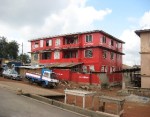
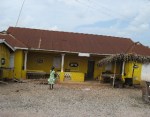
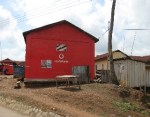
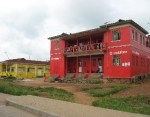
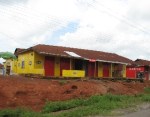
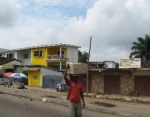
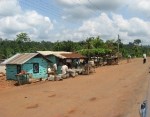
On the road up to Wa (Upper West Region of Ghana) last week, I noticed something. I tried to capture it on the way back to Accra, yesterday. I snapped the shots from a moving vehicle, so they are not great quality. I posted several, because the remarkable thing for me was their sheer quantity.  (I am only posting about half the shots, and I was asleep for about 4 of the 10 hour drive). See for yourself. As far as I could tell these are not mobile phone company offices or kiosks, but houses and buildings used for advertising. Reminds me of political graffiti or turf wars you see between gangs.  [Note – if you have similar shots, please add a link in the comments!]

Read Full Post »

The basic premise of the Convention on the Rights of the Child (referred to as the ‘CRC’) is that children are born with fundamental freedoms and the inherent rights of all human beings.

According to the CRC, the 4 main categories of rights that children have are survival, development, participation and protection. The CRC’s guiding principles help further shape the way that child rights should be interpreted. These are non-discrimination, the best interest of the child, right to life, survival and development, and respect for the views of the child.

Child protection concerns a child’s right not to be harmed and to protection from violence, abuse, neglect and exploitation.  It involves the duty of care placed on those that work with children or that come into contact with children.  It encompasses the responsibilities, measures, and activities that must be undertaken to safeguard children from both intentional and unintentional harm.

Child protection encompasses many different areas, such as juvenile justice systems and a child’s right not to be tried as an adult or incarcerated with adults; special care needed by unaccompanied children; protection from sexual exploitation and dangerous forms of child labor; prevention of trafficking and harmful traditional practices such as female genital cutting; support for children in emergency and conflict situations; prevention of exploitation by the media; the right not to be abused or taken advantage of by family, caregivers or institutions; and so on.  This link gives an explanation of a protective environment, and this one offers an excellent broad overview of child protection.

Child protection policies and strategies create mechanisms to prevent any type of harm to a child.

Child protection in youth media programs

The organization where I work frames its efforts within the CRC.  Most of the programs that I focus on are related to child participation and child protection.  These two areas go hand in hand, because good participation initiatives need to take child protection into consideration, and good protection initiatives are only successful when children participate in designing them and in protecting themselves.  Children should both know what their rights are and take an active part in achieving them and in protecting themselves.

This week, for example, I’m at a workshop with a small group of colleagues, teachers and local partners from the Upper West Region of Ghana. We’re preparing for a youth arts and media project that they will implement in June. By the end of this facilitator workshop, we will have a localized training plan that fits the context of the community and the youth participants, and the facilitators will have learned some new media skills that they will train the youth on when the project starts.

As part of the facilitators’ training, we cover the CRC, going in depth on child participation and child protection.  There is always a certain tension between these two areas. We want to encourage children to participate to their fullest, yet both children and adults need to be aware of potential risks that participation can bring with it, and know how to mitigate and manage them.

Three child protection risks that we are focusing on with facilitators at this week’s workshop are:

  • Intentional or unintentional abuse by staff or local partners
  • Retaliation or harm to a child who appears in a media story or art piece on a sensitive issue
  • Retaliation or harm to a child who authors or creates media or arts on a sensitive issue

Internal child protection policies

To begin our sessions on child protection, my colleague Joyce covered our organizational Child Protection Policy, which clearly states our intention to protect children from harm and advises that we will take positive action to prevent child abusers from becoming involved with the organization.

Joyce explained that child abuse is never acceptable:

  • Child abuse in our case is defined as:  All forms of physical abuse, emotional ill-treatment, sexual abuse and exploitation, neglect or negligent treatment, commercial or other exploitation of a child and includes any actions that result in actual or potential harm to a child.
  • Our child protection policy applies to staff at all levels, including board members, volunteers, community volunteers, supporters, consultants, contractors; partner organizations, local government people who have been brought into contact with children via our organization, visitors, donors, journalists, researchers and any other type of person or institution associated with us.
  • We recognize that child abuse may be a deliberate act or it may be failing to act to prevent harm. Child abuse consists of anything which individuals, institutions or processes do or fail to do, intentionally or unintentionally which harms a child or damages their prospect of safe and healthy development into adulthood.
  • We follow through on cases of child abuse to the fullest extent of the law.

Point three, unintentional abuse, refers to situations where someone has good intentions but their lack of planning, knowledge, foresight, or their recklessness puts children in harm’s way.  As Joyce explained, “It’s  like an excursion that is not well planned.”  The good intention is to take children out so that they could have some fun.  But if proper care is not taken to plan the trip and ensure children’s safety during the trip, then unintentional harm could be done. A child could be lost, a vehicle could be unsafe, a child could drown.  Though the good intention of the person planning this event is not in question — they wanted the children to have fun and enjoy themselves — if proper planning is not done and something happens that causes harm to a child, it is still considered child abuse.  Good intentions are not enough.

Here are some resources on institutional child protection standards and an excellent overview on minimum participation and protection standards when working with children and residential events.

Use of children’s images in the media

Since this is a youth arts and media project, we need to think about the use of children’s images and identities in the media: print, broadcast, radio, internet or visual arts. The CRC asserts that every child has the right to privacy, and this extends to the right not to have their image used for any purpose for which they have not given consent.

Key points related to the use of children’s images and working with children’s stories include:

  • If the person is below 18, you must seek the consent of the parents/guardians
  • Consent forms must be kept securely for future audit or proof purposes
  • A child’s real name should not be used in publication or broadcast unless they would benefit from increased self-esteem by seeing their name in print
  • The information given about the child should not allow their precise location to be identified (either directly or indirectly)
  • A story should not be published, with or without names or identities altered, if it could put a child, siblings or peers at risk
  • The best interest of the child comes above all else

Helping people see the implications

Expanding on the aspects above, Joyce offered ideas on how to discuss and ensure that children and adults that might portray others, or be portrayed in media, are aware of all the implications and potential risks:

  • Today’s media is global and can be accessed anywhere in the world through the internet.
  • When you talk to the media nowadays, you are talking to the world. The story may not reach everybody in every country, but you can be sure that it will reach further than you can imagine.
  • Ask yourself the following:
    • How would friends and family react if they saw the story, or found out that it had been published?
    • Think through who might be harmed.  Would the subject of the article, artwork or video be at risk of any harm if someone saw it?  Could this story or artwork put anyone in danger?
    • This story can stay documented for years. How would the person feel if their children were to read the story in a few years?
    • There is no guarantee that this story cannot be seen by people whom you do not want to know about it.  Help people thoroughly understand the implications of sharing their stories. This protects not only the subject of the story, but the person who is authoring the story.
    • Are there people we need to protect when telling our story? Friends that we need to protect?  What needs to be edited out so that nobody is implicated in the presentation of the work?

Here is an excellent resource on use of children’s images in the media, and a guide for journalists reporting on children, and guidelines for reporting on children in the context of HIV/AIDS.

Stories that cause unintentional harm

To illustrate some of the points above, we used 2 examples.  A New York Times/Nick Kristof article that identifies a child from the Democratic Republic of the Congo who was raped and his opinion piece on why he believes that was OK, and a scenario where a film is made of a girl who reports that her mother beats her and doesn’t allow her to attend school.

General consensus from the group in our workshop on the New York Times case was that child protection and media guidelines were not followed, and that Kristof was reckless and unintentionally put the girl at risk.  Workshop participants felt that appropriate respect for the child was not shown. “The journalist would never be able to do that in the US”.  One participant exclaimed “So, he didn’t feel that any Congolese would ever be enlightened enough to access the story?”  It was recognized that “his intention was good, that people should know about these terrible crimes, but there is no need to share all the specifics.” Participants wondered whether this was in the best interest of the girl, and how she would feel in the future if someone she knew found the article.  “In our culture, this type of thing can be very stigmatizing.”  Participants asked why technology wasn’t used to cover the girls’ face and disguise her voice, or why she wasn’t filmed from behind to conceal her identity.  The conclusion was that this story could have been told in a way that protected the child and had equal impact on readers.  [Update: Laura over at Texas in Africa has a great post on Connectivity and Child Protection which comes to the same conclusions.  You can also find related posts from awhile back on Wronging Rights.]

In the second scenario, consensus was that the story could create difficulties for everyone involved.  One participant commented that the mother might get angry and beat the child even more.  Another said that it the whole village might feel betrayed by the child exposing the story. “When a child does something, people ask – from which village are you? From which house?  From which family?  Whatever you do to a member of the village you do to the whole village. This can cause a threat to the child by the whole village.  Those who give out the story, if they are known by the village, will also be at risk.”  Another issue was that the community might say that the children are given too much power. “They will wonder who is behind it and may not wish to work any longer with the organization that is supporting the project.”  It was suggested that if a story like this were filmed, it should show a resolution, a happy ending, so that it could be used as an example. “That way you can favor all who are involved.”  The group concluded that when topics are quite sensitive or individuals are implicated, the story should be altered to protect identity and the same situation could be brought out using simulations, song, theater or drawings.

As we are training children as citizen journalists in this project, case studies that highlight the potential risks and impact of a story are critical learning tools.

In conclusion….

Child protection needs to be considered whenever children are involved.  Adults and children need to be aware of potential risks and thoroughly discuss how to mitigate them. Mechanisms need to be in place to address any intentional or unintentional harm that could be caused to a child or children.  There are plenty of good resources around on how to do this, so there is really no excuse not to.

————————–

The Child Rights Information Network provides excellent all around resources on child protection and child rights, and a list of over 1000 global resources on child rights

Keeping Children Safe offers a toolkit for developing your organization’s internal child protection policies

The International Federation of Journalists has created Guidelines and Principles for Reporting on Issues Involving Children

Related posts on Wait… What?

Child protection, from emergency response to a sustainable mechanism

Children in emergencies: applying what we already know to the crisis in Haiti

Read Full Post »

the road to Wa

I’m in Ghana this week for a workshop in Wa, the district capital of the Upper West Region.  I wasn’t too excited about the trip from Accra (the capital of Ghana) to Wa when I heard it was a 10-12 hour drive. I figured it took so long because the road was in bad condition, but I was wrong, it’s just a long trip and there is a lot of traffic. The road to Wa is paved.  Not with gold. Not with good intentions, just paved.  And what a difference that makes.

All kinds of vehicles and travelers use the road. Motorcycles, cars, taxis, 4x4s, Land Cruisers, big trucks, small trucks, semi trucks with trailers.  People walk and bike alongside the road.  I even saw an adolescent boy trying to rollerblade – he wasn’t getting too far in the gravel but was pretty determined regardless.

All kinds of people move in and about and around all the shops and businesses along the road… people making purchases, moving supplies, carrying firewood and water, socializing, flirting, arguing.  Vendors sell fruits, clothing, electronics, car parts, prepared food, plastics, new clothing, used t-shirts.  There are tons of stalls selling airtime  for mobile phones and entire buildings painted bright red with the white Vodafone logo on the side, not to mention doorways, sides and fronts of buildings, market stalls and taxis similarly painted.  Tigo, Glo and MTN also have their noses in the business with signs, billboards, stalls, buildings and such – obviously a lot of competition for mobile phone customers.

collision

The road holds both opportunities and dangers. Some people go very fast and others crawl along, creating accident potential as drivers try to pass them on curves and hills.  As in many countries, a good number of crashed vehicles dot the roadside; though unlike past road trips, this time I didn’t see anyone get hit or observe any bodies lying on the road after being hit, a small crowd around them, fresh blood pooling around their head and twisted frame.   Every so often on this road to Wa, there are toll booths and customs check points.  Speed bumps slow you down as you enter towns.  Police officers stop you for no reason wanting bribes. The road is really happening.

Aside from the rich and fertile rolling hills in between the towns as we got further north, the most striking thing to me was the image of the funeral crowds. You see large groups of people on both sides of the road dressed in very fine black West African clothing with accents of red: black for mourning and red if the person who passed away was strong and in their prime; sometimes white if the person was very old.  Stunning. My colleague Stephen said that funerals happen on Saturdays and that is partly why the road is so busy on weekends.  He also said that politics paved the road, because the current vice president lives in the north and made this road a priority, helping him win the elections.

While driving, we listened to a lot of political talk radio.  Obama’s honeymoon is definitely over if those who were talking are any indication. “We thought there would be a change with Obama, but his foreign policy continues along the lines of Bush.” The commentators argued for nationalization and control of Ghana and Ghana’s resources without foreign intervention and without selling off resources to foreigners, a shaking off of old colonialism.  They heavily criticized the US’s current strategy of opening military bases in West Africa and the US’s failed and reckless policies in the Middle East. References to Chile, Castro and the CIA reminded me of the kinds of conversations you hear in Latin America.  I need to read up more on this, and find out who Kosmos (Cosmos?) is, and what their relationship is with Bush, Exxon Mobile and Ghana’s oil.  [Update: here’s some background on that: Ghana blocks Exxon Oil-Field Deal.] I miss being in Central America where I knew the history of all the politicians and movements, and could read beyond fiery words to interpret motives; where I could read my own truth into things.

As we drove along I thought about the road, and all the activity that it enables. Before my flight to Accra, I visited the  Museum of Modern Art in New York with my brother who studies biology, and we saw an exhibit about Design through the Ages.  Some of the modern pieces showed graphics or moving visualizations of communication networks and systems.  One piece tracked and visualized the movement of taxis in New York City.  Another showed internet connections across the world.  My brother and I talked about our fascination with micro and macro networks and systems… synapses in the human brain, the flow of blood in the body, the New York subways, sewers.

dusk settles on the long drive north

Looking out the window of the car on our seemingly endless drive north, I thought about the similarities between this highway and the internet — road networks and communication networks.  All the people traveling down and alongside the road to Wa. The communication among and between them.  The small and large businesses that have sprung up and are prospering because the road is there allowing access.  The opportunities and dangers, the police and the periodic barriers to speed.

I’m sitting here, 12 hours north of the capital city, uploading this post, with photos even, using 3G wireless internet. Not long ago that wouldn’t have been within my capacity to imagine.

I know there is nothing new in comparing communications infrastructure and networks to a road system. But I am struck today, after the drive to Wa, with the similarities — and the vital need for both. I’m convinced that, just like the roads that provide a basis for connection, communication and commerce; Internet, via undersea cable or mobile or whatever, is essential infrastructure for development.

Read Full Post »

courtesy of bioweb.uwlax.edu

One of the best things about the Great Tshirt Debate has been the variety of voices and perspectives that are weighing in.  This one potentially misguided project was able to catalyze a huge discussion on the nature of ‘aid’.  Once again the power of social media to engage people in debate and dialogue was demonstrated.

There are a lot of angles to follow up on from last week’s blow up. There’s a lot to unpack and it goes much deeper than a conversation about t-shirts.  One thread I find particularly interesting is the use of social media and ICTs (information and communication technologies) for bringing greater accountability and generating input and dialogue around ideas for aid and development.

Christopher FabianOwen Barder and @Morealtitude wrote about this specifically in relation to the Tshirt Debate; and Duncan GreeneOwen Barder, Aidwatch,  Tim Ogden, and others in a broader debate about accountability, aid and development. Certainly there are many posts and discussions out there on this topic.

Some things that stand out for me in the aftermath of the tshirt discussion:

Broadening perspectives.

It’s easy to forget that we all mean something different when we use the terms ‘aid’ and ‘development.’ There is a big difference between emergency aid and longer-term development.  And there are countless theories and approaches and understandings of both of those terms  (Alanna Shaikh and Talesfromthehood have both written on that).  This was really apparent throughout the discussion last week and in the on-going commentary.

I’m still trying to sort out in my own mind the difference between the various aid and development theories, the perspectives of the ‘aid bloggers’ that I follow, and the frameworks of other people who were involved in the Tshirt Debate. People’s views are intimately linked with cultural, political, economic and religious worldviews, and varying levels of snark (which I have to say can be very intimidating) making it even more interesting.  Before Twitter and the blogosphere, I certainly didn’t have daily exposure and access to such an array of thoughts.  Score one for social media.

The elephant in the room.

All this access to all these perspectives and on-line debate and open participation is great for me. And for you. Because we read English and have access to the internet.

But there is a really big elephant in the room.  One that was lurking on the global conference call hosted by Mobile Active on April 30 and that is still standing around quietly as the discussions continue.  I’m talking about the voices and perspectives of the people that the 1millionshirts project was aimed at helping.

I would bet money that some of those voices would have said “I want a tshirt.”

There are a lot of possible outcomes when ‘beneficiaries’ and ‘donors’ actually talk to each other.  Like donors wanting to give t-shirts and people wanting to receive them.  Then what?  Most of those involved in aid and development and work with local economies can and have listed a myriad of reasons why handouts are not a good idea, but most also believe in listening to voices of ‘beneficiaries.’   It seems paternalistic to say that NGOs or businesspeople know best what people need.  What will happen when more donors and beneficiaries are using social media to talk to one another?  And what if NGOs or governments or business people trying to improve ‘developing country’ economies don’t agree?  Then what?  That’s going to be pretty interesting. For a taste of this can of worms, read this post and related comments.

Development education.

This brings me to thinking about the educational processes that contribute to good development results.  Around the world, people have been presented with hand-out and silver bullet ideas around development and aid for a long time. Donors need to be educated about effective aid and development, but communities do also.  People have been trained to gravitate towards one-off donations and charity mentalities, and need to learn why that isn’t actually very helpful in the long term. They’ve been taught that there is a silver bullet we just need to find. People have also been trained to take hand outs and see themselves as victims and need to re-learn how to take the reins and do for themselves.  This is true everywhere – people look for the easy way out. Consider how many people in the US for example prefer to get plastic surgery or take miracle diet pills and medications over adopting healthier lifestyles involving a good diet and exercise.  Complicated situations require integrated approaches and often need cultural shifts and behavior changes.  Those take time and effort and are hard to explain.  How does social media impact on or shift this in terms of aid and development, and in which direction is it shifting?

Barriers to social media participation.

Both #1millionshirts and Kiva were held up to a huge amount of scrutiny online via social media.  But again, who was scrutinizing, and who had access to the tools and means to participate in these widespread discussions?  It was not the people getting loans from Kiva or the eventual t-shirt wearers.  It was donors and ‘experts’.  I would hope that there are plenty of discussions happening about Kiva programs at local levels, in person, in meetings and in local media or newspapers. But these don’t normally make their way to the internet.

I don’t know Kiva’s programs well, but I would also hope that Kiva staff and/or partners, for example, are listening to that local input and using it to improve their programs on the ground to make them more useful to participants.  And I would hope that those discussions take place within a longer term education, training and relationship building process as with many NGOs.  This kind of input from and dialogue with program participants is every bit as important for adapting and improving programs and initiatives, and maybe more important, than all the public discussions on the internet…. as long as it’s being listened to and responded to, and as long as local offices are taking these messages up the chain within the organization, and as long as local offices also are being listened to and carry weight within the organization. What might be the role of social media there to move those offline discussions further within organizations and to educate, inform and engage the broader public and ensure that responses and changes are forthcoming and everyone learns from it?

There are still huge barriers to social media participation for many people in communities all over the world… not having electricity, computers, smart phones and internet, to start with. There are also barriers like language, literacy, age and gender based discrimination, hierarchies and cultural norms that limit participation in general by particular groups in discussions and decision making.  When working face-to-face, good organizations are in tune with the barriers and find ways to gather input from those typically left out of the discussion.  How can organizations use what they know about engaging more marginalized populations and apply it to a more creative use of social media to ensure that all voices are heard?  What resources and ICT tools would be needed to do that effectively?

Offline to Online to Offline

And how could more of the discussions that happen on the ground with communities, when programs are being designed, implemented, evaluated and re-designed; be shared in the open by those who are involved – whether participants, local bloggers, citizen journalists, NGO workers or others?  And how can the debates happening online make their way back to communities that are not connected? It would be amazing if more program staff and community workers were blogging and sharing their work and their challenges and accomplishments.  And if more organizational decision makers were listening to what their community workers or other staff who are blogging and tweeting are saying. And if more people participating in programs could share their viewpoints via the internet.  This would be useful to the global commons and would also help the fields of aid and development to improve.

How can we support more communities to have access to social media and ICTs as tools to participate more broadly? And how can community members be the owners and drivers of this discussion and input. How can we help bring voices from the grassroots to a broader public and also bring these broader public debates back to communities.  How can the access, language, literacy and cultural barriers be addressed?  There are some programs out there doing this, for example Global Voices Rising, MIT’s Department of Play at the Center for Future Civic Media, and the Maneno platform, but we really need more of it.

Youth.

I think as connectivity becomes less of a challenge, we will see the younger generation claiming spaces in this way. More organizations should be working to engage more young people in the development process and supporting them to access ICTs and social media.  When a consultation with children and youth was done after the Haiti earthquakes, for example, young people did not say that they wanted hand outs.  They said that they wanted to participate. They wanted to play a stronger role in the recovery and the reconstruction.  They said they wanted education, a voice in how things were to be done, decentralization.

Staff that I’ve worked with on youth and ICT programs in several countries have said that ICTs and community media are excellent tools for engaging youth in the development process and maintaining their interest, for supporting youth-led research and collecting opinions about community processes.  With advances in technology, these voices can reach a much broader and public audience and can be pulled into donor communications as well as used as input in the resource and problem analysis, program design,  program monitoring and evaluation processes.  Youth can access information previously unavailable to them which broadens their own views and helps in their education processes. They can also contribute information and images of themselves and their communities to the online pool of resources so that they are portraying themselves to the world in their own image as opposed to being shown by and through the eyes of outsiders.

In addition to the Tshirt Debate stirring up questions about good donorship, I really hope it stirs up the debate about the value of more local ‘beneficiary’ voices in aid and development discussions, and that it fuels more efforts to use, adapt, and develop social media tools and ICTs to support these voices to join the debate.

What about you?  What do you think?

Related posts on Wait… What?

Children and young people’s vision for a new Haiti

It’s not a black and white photo

Meeting in the Middle

Mind the gap

Putting Cumbana on the map: with ethics


Read Full Post »

Henri from Plan Benin training on SMS reporting.

In February I was in Benin to support staff to pilot the idea of using SMS reporting (FrontlineSMS) and digital mapping (Ushahidi) to strengthen local and national systems for reporting, tracking and responding to violence against children.  We conducted 2 workshops in mid-February with youth leaders, frontline staff, community members, local authorities from the Center for Social Protection (CPS) and representatives from the Ministry of the Family to get things started.

For some more background, check out my previous posts on the Violence against Children (VAC) project, the questions we asked ourselves before getting started on the SMS and mapping initiative, and the February workshops in Benin and what we learned there.

Since February, staff in Benin have been following up with workshop participants and with local authorities and institutions, including: the Prefect, the Mayors, community supervisors, animators of the children’s/youth media clubs, headmasters and other school authorities and the CPS.  The youth in one community did a radio program about violence against children and talked about SMS reporting. They also designed an information sheet that’s been hung up all over the town to encourage the population to report cases of violence.

Henri, Plan Benin’s ICT Director who facilitated at the Benin workshops, went to Togo to replicate the training with staff and youth there.  He and Carmen, who manages the overall VAC project in Benin, have also been observing and collecting feedback on the system to see where it needs tweaking.  They have put a project plan together for the next 6 months or so.

Carmen the VAC project coordinator in Benin.

Observations that Henri and Carmen shared and some thoughts we have about resolving them:

Issue:

  • Most people call instead of sending SMS

Hmmm….

  • Why?  Habit?  Literacy?  Unclear indications of what to do or unclear expectations of what the system is for?  We need to find out more about this.  It would be good to know exactly what kind of volume we are talking about total in terms of SMS vs calls. (I will update this post when I find out.)
  • Should we start taking calls too then? And are there resources and capacity to manage calls in addition to FrontlineSMS (which is automated)? How are we linking with the Child Help Line in Benin?
  • Could both calls and SMS be administered in the Ushahidi system?  Eg., Just as an administrator needs to review any SMS’s that come into Ushahidi  before approving them, someone could be tasked with inputting information from a phone call into the Ushahidi back end to then trigger the rest of the process (verification, response, etc). And how would that impact on pulling data out of the system for decision making?  (See this post for more information on how the system is currently conceived)

Issue:

  • Some people are sending a re-call SMS (asking us to return the call)

Hmmm….

  • We need to find out why people are sending re-call messages instead of SMS’s.  Because in the current set-up, text messages are not free?  Literacy issues? Because our system looks like something else they’ve done where re-call was the norm?  Something else?
  • If it’s due to low literacy or language issues, how can we open the system to those who cannot read/write or who do not use French?
  • Plan Benin is discussing with the GSM provider to find a way to send back an automatic reply SMS informing people not to call but to send a message, and to take this opportunity to indicate in the message what is expected as information.  But if literacy/language is the issue, we will not have solved anything by doing this…. Sounds like we really need to make sure calling is an option, and that good integration with the national Child Help Line is a real priority.
  • Plan Benin is also negotiating getting a “green line” or free short code, so that might resolve part of this.

Issue:

  • Many people are not using the key word ‘HALTE’ (stop) at the beginning of the message, meaning that the commands don’t trigger the messages to automatically send the information to Ushahidi.  (In the current system, each SMS should include the key word ‘HALTE’.  This key word triggers a “thanks for your message” automatic response from FrontlineSMS, and the forwarding of the message to the Ushahidi back end for subsequent management and follow up by local authorities.)

Hmmm….

  • Staff noticed that most (but not all) of the messages without the key word ‘’HALTE’’ contained the word ‘enfant’ (child). Henri has added ‘enfant’ as a key word in addition to ‘HALTE’ — and says it is working fine.  So we will assess if this helps.
  • Another alternative would be to not use any keywords – we will need to look into whether we can set FrontlineSMS up so that any SMS that goes to that number gets auto forwarded to Ushahidi.

Early draft of a poster promoting violence reporting by SMS

Issue:

  • Most of the messages are too vague to find the place and the victim for responding (and people do not have GPS enabled phones).  We have suggested that an SMS report should contain certain information [HALTE+type of violence+where it’s happening (eg., school, home, etc)+village name+district+age+sex+name of child if known], but people don’t follow the suggested format.

Hmmm….

  • How can we simplify it or better explain the type of information that’s needed?  Something we need to dig deeper into and consult with users to figure out.  Carmen’s take is that we are at the beginning of the process and we need to be patient and sensitize a lot so that people get used to the idea and understand how things work.

Issue:

  • Compatible FLSMS phones and modems are very difficult to find.  We were only able to find one phone that was compatible in Benin (a used one) because newer phone models are not compatible and the modems we found refused to connect.

Hmmm….

  • We really need to get this resolved since the entire system in Benin rests on one phone. What if it stops working?  It’s really difficult to expand the project without a larger set of phone/modem options.  We’ll work with the FrontlineSMS forum or staff (both are always super helpful on this kind of thing) in the next couple weeks to figure out how to resolve the compatibility issues, because there are modems available in West Africa that should be compatible, but that we couldn’t get to function.

Issue:

  • We planned for community response teams to be able to subscribe to alerts on Ushahidi, so that when there is an incident reported in the zone where they work, they would be alerted by SMS and could set the follow up process in motion.  But we haven’t been able to get the alerts working on Ushahidi or set up email reporting there.

Hmmm….

  • We discussed with the Ushahidi team and the problem was that not all the strings of code in Ushahidi had been translated into French yet.  Thanks to @theresac and @penelopeinparis, who volunteered to translate a load of strings, we are getting everything into French, and Henry at Ushahidi is helping get alerts working.  We still need to finalize all the elements on our Ushahidi page however and get everything working.  We’d also like to customize our Ushahidi page to make it our own, similar to the customizing that Voices of Kibera has done with their Ushahidi instance.

Any additional thoughts or help on the above issues are most welcome!


As for next steps, Henri and Carmen shared their plans:

  • Present the system to political and administrative authorities, including: head of the Brigade for the Protection of Minors, juvenile judges, Ministry of the Family’s Director for Children and Adolescents, Director of Family Programs, Minister of ICTs, cabinet and authorities who regulate telecommunications, Ministry of the Interior and Public Security, National Assembly, mayors and prefects, schools and teacher-parent committees, community authorities, media
  • Train staff, government partners, school and parent committees, and local NGOs on the reporting system, including a 1-day workshop with all Plan staff and a 1 day workshop with local NGO partners, schools and government staff
  • Accompany child protection committees and organized youth groups to use the system.  This will be done by holding sessions with organized children and youth groups at village level to reinforce and raise awareness on the reporting system; training child protection committees to use the new reporting system; holding one day sessions each month with the village level child protection system staff to discuss follow up on reports that have come in, and installing FrontlineSMS in each local site and adding local focal points as Ushahidi administrators
  • Strengthen awareness in the public and with leaders to support violence reporting by developing a communications plan to generate awareness on the issue of violence, the importance of reporting, and the mechanisms to report via SMS; supporting youth to use arts and theater to raise awareness on the issue of violence against children; talking with religious leaders and village chiefs; creating television, radio, newspaper and web advertisements to reach the general public and decision makers
  • Secure a free short code (target:  by May)
  • Conduct a national level evaluation workshop with involved local and national actors (in 6 months)

As we move forward, more questions will surely come up and we’ll need to continually tweak things. But I feel that we’re off to a good start. The fact that people are calling in and SMS’ing in is a good sign already that the program has some potential, and that people are willing to report violence against children.

—————-

Related posts on Wait… What?

Breaking it down: violence against children

Fostering a new political consciousness on violence against children

Seven (or more) questions to ask before adding ICTs

Finding some ICT answers in Benin

Meeting in the middle

Read Full Post »

our stolen flowers, still going strong after almost 18 years.... (2009, Barrio Candelaria)

My son turns 18 today, and as always, when my kids have a birthday, it makes me think back to the day they were born and I get a little lost in the memories.

When I gave birth to my son, it was 1992 and I had been living in El Salvador for almost 1 year with my husband, Memo.  The Peace Accords had been signed a few months earlier, on January 16, ending a long and bloody civil war.  We lived in Barrio Candelaria, an old barrio in downtown San Salvador where Memo had grown up. My in-laws lived in the ‘meson’ about a half a block down from where we lived.  Memo was employed as a mechanic, making almost $100 a month and I gave evening English classes a couple times a week to the daughters of the wealthy family that lived in the Barrio (the ones who owned the corner store) to help pay for tortillas and drinks to accompany our meals.  I spent my days mopping, cooking, washing and hanging the clothes out, tending to the plants in the little cement garden in back of our house, hanging out with my mother-in-law, and doing a lot of reading.  It was a nice couple years’ break after college.  At that point we didn’t really have any plans. We were just living day to day.

Niña Alicia and I (2009)

The morning of the day that Daniel was born, I had my last visit to immigration where I picked up my residency papers.  My mother in law, Niña Alicia, walked over with me. On the way back, we stopped to pick up a ‘faja’ (girdle) which she insisted was necessary for after the baby was born.  She said that when a woman gives birth, she gets air inside which puffs up her stomach, and so she needs to wear a girdle afterwards.  I wasn’t convinced, but I would always go along with her ideas when they didn’t seem to do any outward harm.

After we picked out a faja (which I realized I would probably never wear once I realized what a faja was) we made our way home, collecting (stealing) snippets of plants from the nicer houses along the way to plant when we got back.  We always did that.  Niña Alicia had an amazing green thumb, so we always had a nice garden, even though my father in law wouldn’t allow us to break the cement to plant anything in the ground.

We’d left the house around 7 a.m. to do our rounds at immigration and got back at 11.  Memo worked in the mechanic shop about 2 blocks from the house, and I was supposed to walk over with his lunch around then. But I seemed to have a bit of a stomach ache.  It was 9 days earlier than my April 30 due date, so I didn’t realize it was labor kicking in.  I laid down on the bed for a bit to see if it would go away, our cat, Irola, curled up next to me.  Cats always know when something’s going on.  After a bit, I got up and made my way over to Niña Alicia’s house and told her I thought we needed to get the midwife, and could she please let Memo know that it was time (and take him his lunch).

Daniel and Memo

Early on I had decided that I wanted a home birth.  My other options were the public maternity hospital or the social security hospital, and at that time my Spanish wasn’t so great. I worried that the male doctors would come over and gawk at me out of curiosity – I’d certainly had enough men staring, groping and asking rude questions while fully clothed and even while very pregnant – and being a spectacle at the hospital didn’t appeal to me at all.  I also didn’t want to sit on a bed with several other women in the crowded maternity ward waiting for a bed to give birth in.  I didn’t want to give birth alone, and no family members were allowed in.  I didn’t want to be medicated and didn’t trust that they would listen to me about that at the hospital. And I wanted to exclusively breastfeed and keep my baby with me, and I had heard that the hospital always took the babies away and gave them a bottle of formula right away. I had a bunch of books about midwifery and birth. I read them voraciously with the idea that I could learn enough to practically give birth by myself if necessary.

The midwife, Niña Lita, and her daughter got to the house within about an hour. Niña Lita was a wizened old woman with crinkly eyes and a sweet smile.  She said she was a Mormon, but she would invoke the Virgin Mary before she worked on anything important.  She had been coming to the house for the past several months to check in on me and to ‘sobarme’ (massage my belly).  She’d look up to the sky, say some prayers to La Virgen, warm her hands with scented oils and start massaging. She’d tell me she felt the head here, the arm there.  Her goal was to help the baby get into the right position.  (A few years after, there was a big public education campaign against midwives and traditional practices, saying that this was a bad thing to do, but it doesn’t really seem too harmful to me.)  The monthly visits helped us get to know each other and develop trust and a bond.

When she arrived to the house to help with the birth, Niña Lita patiently watched and waited and softly encouraged me.  Luckily my labor was only about 4 hours total.  I kept waiting for Memo to show up, but he never did.  Later I realized that they didn’t want him to be there.  They said that if there were too many people around, the baby would get embarrassed and wouldn’t come out.

Daniel was born right around 3 p.m.  Niña Lita cut the cord, cleaned him up and wrapped him in a blanket while my mother in law ran to the corner store and borrowed the metal scale that they used to weigh beans, rice and sugar because I insisted on knowing how much Daniel weighed.  Niña Lita carefully placed him on the balance while Nina Alicia held it up.  Nine and a half pounds.  About that time they let Memo come in and went on their way, saying they’d be back tomorrow to bathe Daniel with rose and rue to ward off any bad energy or bad spirits.

The next day after the bathing process (rose and rue is one of the most delicious scents in the world) we went to the Health Center to get Daniel’s first check up and vaccines.  A couple weeks later, we went to the City Hall to register his birth.  At that time they wouldn’t let anyone in dressed in shorts, so Memo had to wait outside while I registered Daniel and people looked on in disapproval because a father is supposed to take on this responsibility.

I had the luxury of spending the next 40 days resting with Daniel.  My mother-in-law went to the market, bought cocoa beans, and ground them into fresh homemade chocolate to drink hot to bring down my milk.  I remember eating a lot of mangos de leche too, those small yellow ones that are in season in April.  There were certain foods prohibited for the 40 day period, including eggs and beans and anything strong smelling or strong flavored.

Every day I was supposed to give Daniel a spoonful of garlic oil that Niña Alicia had prepared so that my breast milk wouldn’t upset his stomach, but I only pretended to do that.  I was also instructed to tie a ‘faja’ around Daniel’s waist (a folded piece of cotton) to keep his new belly button clean and avoid any flies or germs getting on it, and also to keep his belly button from being an outie (I stopped doing that after a day or so because I was worried it would get infected and figured it needed some air to dry out — ironically he has an outie).  I was supposed to also shape his nose and his head two times a day by rubbing baby oil on my hands, heating them over a candle, and pressing lightly to round his head and straighten his nose.

Daniel was to wear a red hat, red socks and a red bracelet with a large grey seed on it to protect him from anyone with a strong gaze who might give him ‘ojo’ (evil eye) and terrible diarrhea.  And anyone who saw him was supposed to hold him so that in case they had any underlying jealousy due to his infant beauty, it would fade out and their bad feelings wouldn’t do him any harm. I was supposed to bind him up tightly so that he would not get bowlegged, and I was scolded when I held him upright because it would make his cheeks sag down.  I had to wear socks for the 40 day period to avoid getting air in my feet which would swell my legs and stomach. I wasn’t supposed to eat dry foods like cookies or bread while breastfeeding, because the crumbs would block up the milk stream.  If I was angry or upset, I was not supposed to breast feed or the baby would get cholic.

All those rituals were something that I wasn’t sure I believed in, but they added meaning and history to Daniel’s birth.  They helped us feel that he belonged to a long line of babies that had come before, and I didn’t mind them at all.  I was surrounded by people who loved babies and wanted to hold Daniel every chance they got.

Daniel, after almost 18 years (2009, Barrio Candelaria)

We didn’t have any money, so we didn’t have any of those typical things that accompany babies in many families.  We had no bottles, diaper bags, disposable diapers, baby food, high chairs, strollers, infant seats, cribs, car seats, playpens, jumpy chairs or the like.  As he grew, Daniel continued to sleep in our bed, and when he started eating table food, he would sit on our laps and eat from our plates. He was held and carried until he could walk, and then he walked until he was tired and was carried again.  He was never strapped in and confined – he learned boundaries without physical restraint. And I have a little theory — that this helped him learn to manage freedom and establish internal boundaries and limits.  (Don’t get me started on parents who put leashes on their kids!)

Daniel played outside in the alleyway. He got dirty. He got scraped and bullied.  But there was always a neighbor around to call over to one of us:  ‘Niña Liiiindaa, Daniel is playing in the dirty water!’ ‘Niña Aliiii, Daniel is jumping up and down on an ant hill!’

When we moved back to the US in 2001 and I saw women struggling to manage work and day care and all the accessories associated with babies, I realized how privileged we were in those early years.  Daniel talks about those days too. He realizes how lucky he is to have grown up in the Barrio, like those little snippets of plants Nina Alicia and I would pick up on our long walks and that still thrive in front of her house, 18 years later.

Related posts on Wait… What?

Beginnings – the story of Clare

On trust and disempowerment

The real story involves antisocial entrepreneurs and anthropology

It’s not a black and white photo

On Glenn Beck and ‘rooting out’ liberation theology

Activism vs slacktivism: it’s about context not tools

Read Full Post »

Yesterday I inadvertently clicked on a link to the first blog post by Talesfromthehood that I think I ever read. The post starts by saying ‘There is just no way around the critique that aid is ultimately about imposing change from outside….you’ve got to make your peace with that reality.’  (Not what I like to hear).  Tales goes on to say that we need to better define the term ‘bottom up‘ development and concludes that we may really not be talking about ‘bottom up‘ development at all, but more about ‘meeting in the middle‘.

The idea of imposing change from the outside is a little uncomfortable sounding when you normally think of your work as ‘bottom up‘, and you have seen the countless problems that ‘top down‘ approaches create.  But funny that Tales happened to include a link to that particular post in the more recent post that I was reading, because I was in the process of writing up some notes about a community development approach that I believe is quite good.  And looking more closely, it actually sounds a lot more like ‘meeting in the middle‘ than ‘bottom up‘….

I spent this past week in a workshop with colleagues from Cameroon, Mozambique and Kenya discussing a program we’re all working on at different levels. The initiative (Youth Empowerment through Technology, Arts and Media -YETAM) aims to build skills in youth from rural areas to claim space at community, district, national and global levels to bring forth their agendas. It looks to create an environment where peers, adults, decision makers, partners, schools, and our own organization are more open and supportive to young people’s participation and ideas.  It uses arts and ICTs (both new and traditional ones) as tools for youth to examine their lives and their communities; identify assets, strengths and challenges; build skills; share their agendas; and lead actions to bring about long term and positive change.

It is clear from listening to my colleagues that ICTs in this case have been effective catalysts, tools and motivators for youth participation and voice in their communities and beyond, but that other elements were just as critical to the program’s successes.  Throughout the meeting they kept saying things like ‘we are adopting the YETAM approach for our disaster risk reduction work’ or ‘we are incorporating the YETAM approach into our strategic plans’ and ‘we are going to use the YETAM approach with new communities’.  So I asked them if they could put into words exactly what they considered ‘the YETAM approach‘ to be so that we could document it.

I furiously typed away as they discussed how they are working, and what they consider to be the elements and benefits of the ‘YETAM approach.’ And it’s probably a pretty good example of what is normally called a ‘bottom up approach‘ but which might actually be a ‘meeting in the middle approach.’  And I’m definitely OK with that.

I like the approach because it builds on good community development practices that we’ve endorsed as an organization for quite awhile. It brings in new ideas, new tools and new ways of thinking about things at the community level, but it doesn’t do so in a top-down way.  It doesn’t encourage youth to abruptly raise controversial issues and then leave them to deal with the consequences.  It thinks about implications of actions and ownership.  It addresses the ‘what’s in it for me?’ questions but doesn’t turn the answer into unsustainable handouts.  It looks to instill a sense of accountability across the board.  On top of all that, it incorporates ICT tools in an integrated way that gets youth excited about engaging and participating and helps them take a lead role in advocating for themselves.

YETAM Point Persons: Mballa (Cameroon partner), Anthony (Plan Kenya), Pedro (Plan Mozambique), Lauren (Mozambique Peace Corps Volunteer teacher), Nordino (Plan Mozambique) and Judith (Plan Cameroon)

So, ‘bottom up’, or ‘meeting in the middle’ or whatever, here’s ‘the YETAM approach’:

Meetings…. Lots of them. We meet with men, with women, with children, with youth, with local authorities and district officials and relevant ministries, with partner organizations and community based organization, in short, with all those who have a stake in the initiative, to get their input.  This is an opportunity to understand what everyone wants to get out of the project, what value it adds to what they are doing or what they aspire to do, and what role everyone will play.  Then we meet with everyone all together at a community assembly. Once we pull together what everyone’s interests and contributions are, we can go forward.  This means a lot of time and a lot of meetings, which can be tiresome, but in the end it is worth doing for the long term success of the initiative.

Partnerships. Everyone brings something to the table – communities, local partners, young people, schools, teachers, local leaders, and us.  So we work to ensure that the contributions of each entity are clear and detailed, and that all sides are accountable if they don’t hold up their end of the deal. The community might contribute time or food or labor or a training space or some other resources that they have. We might contribute funds or technical advice or facilitators or the like.  Local partners might bring in technical expertise; schools or governments something else. Youth are putting in time and efforts also. To ensure that the project holds up and succeeds, we negotiate with all involved partners to see what they can contribute. If you see that people are not willing to put something into the initiative, it means that it is not of value to them.  If you push the project on people, and move it forward without it having value for them, it will be a constant struggle and a headache.  Seeing the level of commitment and interest in different community members can tell you if the initiative is a good thing for the community or not, so that you can adjust it and be sure it’s worth doing, not pursue it, or continue to work on buy in if some parts of the community are interested, but others are not.

Accountability. We set up agreements with all partners in the initiative, detailing what everyone will contribute and what they will get out of it, establishing everyone’s roles.  This is critical for accountability on all sides, and gives everyone involved a common basis for any future discussions or disputes, including if the community wants to hold us or a local partner accountable for not fulfilling our promises.

Buy-in. We don’t pay people to participate in projects or for sitting in workshops.  If you pay people to participate in a project once, you will have to pay them forever and it becomes a weak project without any real buy-in.  Our particular role in community development is not creating short term jobs, but contributing to long term sustainable improvements.  So what we do is to sit with the community and any participating partners or individuals from the very beginning and fully discuss the project with them. Then those who participate do so with a clear understanding of the set up, the longer term goals, the value to the community, and they have decided whether they want to be involved, and what is their level of commitment.

Some NGOs find that paying people to participate is an easy way to move budgets. This may help get things done in the short term, but for the type of programming that we do, it doesn’t work in the long term. It takes away people’s ownership of their community’s development if you pay them a fee to participate in their own project. So to avoid misunderstandings, everything needs to be clear before the project activities even start. We spend time with the community and all those who would be involved.  In the very first meetings with the community before concrete activities even get started, we address the issue of payment.  It’s not our project for the community and they are not working for us – it’s the community’s project.  We do negotiate with them to cover additional expenses that they may incur for participation in a workshop or event, for example, transport, food, etc.

What’s in it for me? Many NGOs have come around before, just giving hand outs, and people are used to seeing an NGO come in paternalistically to give them things.  They imagine that you have a lot of money and you’ll arrive to just start handing things out.  This is not how we want to work.  But people want to know – well, I’m not making any money from this, and I’m going above and beyond, so what do I personally get out of it? What’s in it for me? They even ask this directly, and that is normal. There’s a need to help people think beyond the immediate project. What value does this project add to people’s lives in the long term, to what they do on a daily basis?  If they are not thinking in the long-term, it may be hard for them to see value in the project. If during this discussion with them it’s clear that people don’t see any value in an initiative, then you should be aware that they are not really going to participate.  And that is also logical – if there’s really nothing in it for them, why should they do it? So you need to listen to people and be prepared to discuss and redesign and renegotiate the project so that they are really getting something of value for themselves and the community out of it.  If you come in with an idea from the outside and people don’t see value for themselves, and you go the easy route and pay people to participate in the project, you will see the whole thing fall apart and the efforts will have been for nothing, you will see no impact. So we take the time and discuss and co-design with the community to make it all work. That way it becomes a catalyst for long term positive changes.

Understanding local culture and how your government works. We work to involve local governments and ministries in this work as well as other kinds of decision makers. It’s important to understand how local culture works and what the hierarchies and protocols are in order to do this successfully. It’s critical to know what your government is like and how they work.  If you are not aware of this, it will create problems.  You need to know how to engage teachers, district officials, school directors.  We follow local protocols so that we can ensure good participation and involvement, especially when we need support from the government or ministries in order to move forward with something.  We involve people at these levels also because they are the duty bearers who have the ultimate responsibility here in our countries.  If you leave them out of the equation, you are really harming the initiative and its sustainability as well as losing out on an opportunity to make sustainable changes happen at that higher level.

Respecting community schedules. Communities are not sitting around, waiting for NGOs to show up so that they can participate in NGO activities and projects.  They have their own lives, their own other projects, their own work and their own goals that we need to harmonize with.  Projects that we are supporting are just one part of what community members are doing in their lives.  So we need to be flexible and let the community dictate the pace.  Sometimes partners, colleagues from other parts of the organization and outside donors do not understand this, which can cause conflicts and misunderstandings with the community.  In our case, for example, we are working with youth. They are in school.  We can’t interrupt their primary responsibility, which is getting their education, so we work with them during school holidays or after school.  Often parents want them to work during their school holidays. So again those meetings with parents, community leaders and so on become very important so that they see that their children are participating in a broader initiative and they see the value in it.

Gradual processes.  In this particular project, we are working with youth to have more of a voice.  This can be threatening to some adults in the community, and can go against local norms and culture, just like working with women to overcome gender discrimination can.  If youth are not used to voicing their opinions, they may be fearful of reprisals.  We don’t want to show up, give young people the tools and means to speak out, create conflict in the community, and leave.  This can be very counterproductive and even dangerous. This is where those meetings and building those relationships with different parts of the community again become very critical. We’ve adapted a methodology of intergenerational dialogue.  We sit with the elders, with the community leaders who hold elective positions, and share the project idea and what might come out of it, sit with women, sit with youth. This is like a focus group.  You don’t go in accusing people either. You ask them – what issues do you think youth are facing in the community? They will tell you, and when you’ve heard from everyone, you triangulate the information. Then you find a way to bring everyone together to find common points to start from.  The shift cannot come so strong and fast.  You need to take a slow process.

Listening to children and youth. The strongest point of reference will be what children and youth have talked about, because that is our focus. And for a child to tell you something, it’s taken a lot of work inside themselves to say something.  We had one case where a child decided to stand up and raise the issue of incest at an inter-generational dialogue meeting. A man stood up and said ‘you are lying, this doesn’t happen here’.  But there had been an on-going community process already, and there were other people in the community who were aware and were prepared to stand up and support the child.  In that case, a man stood behind the boy and said, ‘in our community we don’t talk about this, and it takes courage.  Let’s listen to the boy.’ This community process and work is really important to give confidence to the children to be able to speak.  If you are not yet at the point where children can stand up publicly and speak out, then ICTs can also be a good tool.  We’ve found that children’s radio is an excellent place to speak out anonymously about a sensitive community issue.  Children can call in to raise an issue and others can call in to confirm it if it’s happening in the community.  Theater, cartooning and other media area also good ways to raise issues.  Making a drama video on a sensitive topic and sharing it with the community can also be a way to raise an issue without directly accusing someone or implicating a child or youth for having raised it.

Expecting yourself to be held to task too. If there is a track record in the community with children speaking out but nothing happening or changing, then that will deter them from saying anything. So if you want to go down that road, of encouraging children and youth to speak out, you need to be prepared to take it through to the end, to support them. You have to be prepared to really take children and youth voices seriously, to follow things through to the end.  This is actually also true if they raise an area where your own organization has failed, that you yourself have not done something that you promised.  If we encourage them to use their voices, we have to expect that they will hold us accountable too.  We raise funds in the name of these children and communities, so we need to be accountable to them.  We need to be open to children, youth and the community also calling us out.  And have no doubt that they will. It’s happened before and will happen again. So we encourage them to challenge us as an organization, to be honest and to hold us to task.

Change and growth from within. As part of the whole community process, we do mapping, problem tree analysis, assets analysis with the youth and accompanying adults, and they learn much more about themselves. They think about where they are coming from and where they are going, and what local resources they have. This offers perpetuity, especially for the children and youth.  Because of knowing where you come from, you can know where you are going. Where you dream to be.  Using this kind of documentation and these tools actually helps a community to be open to absorbing new things, to be open to change and growth. But not external change and growth, change and growth coming from within the community.

Addressing gender discrimination. As part of the process of mapping and prioritizing issues, there is a lot of discussion.  Very often this brings up issues that are closely linked with gender discrimination.  We see this over and over again. Because we are working in a safe space and using different tools, the issues come up in a way that is not so threatening. Boys also are at a stage where they are more adaptable. They see their sisters and mothers being victims of discrimination and they are more open to hearing out their female peers.  So, we are able then to build a shared agenda that is favorable to girls, and which both boys and girls are then acting on and working to address.  Issues like child marriage, early pregnancy, girls’ schooling come up, but there is a way to look at them and do something.  We also open opportunities for youth leadership roles within the project, and we’ve seen girls start to fight to have a space there, whereas before they would not have thought that they could play an executive role.

Opening space for youth. We work to build new skills in youth to manage new technology, new media, and to do research in their communities.  Through this, youth claim a space that they didn’t have before and can influence certain things, advocate on certain issues they feel are important to them. You see them start taking ownership in communities and in leadership, they want to pick up new things for this role.  We used to invite youth to community meetings. We would start with 20 youth, then it would go down to 10, to 4, to 3 to none. They got bored with it because they didn’t see any relation to themselves. But with this integration of technology and arts, youth have a high interest. It’s really bringing in their opinions, their thoughts and ideas to join their voices with their parents. Now they use arts and media to promote communication, dialogue on their issues and look for ways to resolve them. Before they were totally missing. We tried to come in with programs for youth but they never worked before. With this new way of working, they have become more responsible because they  are not waiting for adults to come in with something and invite them in to ‘help’. Now they are designing strategies and solutions themselves and bringing these to the table.  It’s less easy for politicians and parties to manipulate them and incite them to violence.  Arts and media are effective in this way to share ideas, issues and to use in generating dialogue and solutions in their communities.

ICTs providing reach, motivation and skills. In addition to using ICTs to generate interest in young people and for them to take actions in their communities, we also use ICTs as a cost-efficient way of actually advocating at different levels. You can use video at the local level but also at the national, regional and global level. That is cost effective and has a real impact. You can use videos in invited spaces, for example, where governments, schools, other communities, or our organization itself invite children’s and youth’s voices in.  But we also support youth to use these tools to claim spaces, to fight for space and to get their voices heard there.  We give youth the tools, and you see their brains rewiring. They learn better hand-eye coordination by using a mouse and a computer, and you see then that in class, they can copy from the board without looking at their paper. They learn organizational skills by creating folders and sub folders. They learn structure from filming a video and making a time line while editing it.  They learn to speak with adults and decision makers from talking on the radio, using a recorder or a camera.  They become more motivated to complete school.  All this makes them more effective leaders and advocates for themselves and their agenda.  They also know that they’ve learnt a skill that puts them at the top of the pile in their community for jobs now. They are plugged into something that would never have existed for them before.

Related Posts on Wait… What?

7 (or more) questions to ask before adding ICTs

Is this map better than that map?

Mind the gap

An example of youth-led community change in Mali

Being a girl in Cumbana

Putting Cumbana on the map: with ethics

Read Full Post »

As part of our ongoing work around using ICTs (information and communication technology) in our programs and general operations, 10 staff in Plan Uganda did a 2-day workshop in March, 2010.  The workshop was based on a distance learning pack that my colleague Mika Valitalo (Plan Finland), Hannah Beardon (Mobiles for Development report) and I put together. It includes some narrated slide shows, short videos, and a series of questions and exercises to guide discussion around strategically incorporating ICTs into our work where and when it is appropriate and feasible.  So far the workshops have been conducted in 6 countries with 2 still to come.
Anthony Makumbi, from our Regional Office for Eastern and Southern Africa, facilitated this Uganda workshop (and credit for the information below goes to him). Anthony is the Regional Community ICT Advisor and has a long experience working on ICTs and ICT4D in the region.  He’s also just written up a pretty impressive draft document which will guide Plan’s ICT strategies in Eastern and Southern Africa.

“We initially thought that when you talked about ICT you were referring to the computer guys, but our minds have now been opened further on the topic. We’ve learned that ‘ICT’ does not equal ‘computers’. Instead, the term ICT encompasses any technology tool that enables information flow and communication.”  (participant)

This always seems to come up in these trainings – people realize that thinking about and using ICTs is not something that is limited to technicians, geeks, network specialists, programmers, the IT Department, etc.  Demystifying this term is so important in order to get people interested and to open up to thinking about how ICTs can support their every day work.

Staff also said that they needed more exposure to new ICTs and innovations. “People need to be informed of something in order to be able to seek further information about it.  If we know about available technologies and what they can offer, we will further explore them.”

——————–

Below is a summary of the Uganda team’s general reflections from the workshop:

Multi stakeholder approaches are necessary to promote innovation and a favorable climate for integration of ICTs.  It is vital to work with governments as the main regulators, the private sector to effectively explore the use of technology, and civil society to ensure that the services are accessible to the population. (For example, the Seacom cable was meant to reduce the Internet costs yet there has not been a notable reduction in costs for the general population – what is the role of civil society in making sure this happens?)

Participatory community assessment around trusted information sources. Before embarking on a community ICT initiative, it’s critical to do a participatory assessment of what the trusted information sources are at the community level. This is important especially if you plan on building awareness on particular issues within a community and would like this information to reach as many people as possible.  A participatory assessment can help gain a better understanding of how people communicate and what communication tools  are most effective to reach a particular goal.

Access for women and girls. Cultural practices, the availability or cost of acquiring a tool, and access to that tool or source of information need to be taken into consideration.  Women in many areas are excluded from accessing ICT tools because they do not handle money. A key focus in ICT programs in Uganda should be to strengthen access to information sources, including programs that mitigate women’s and girls’ barriers to use and access. Another tactic might be programs that promote access to basic information for women so that they are also informed and able to utilize information for their own purposes: eg., nutritional information for their children, the need for girls to go to school or avoid early marriages; programs that share information from other sources that influence women’s decisions.

Building on what is available.  Organizations should look at what is around them and leverage available opportunities. In Plan Uganda’s case, for example, this could mean looking at mobile money transfer services linked to Village Savings and Loans Associations (VSLA); closed user group (CUG) services that define private networks and allow calls made within the private network at large discounts; and services such as the Pakalast promotion on Warid Telecom, which gives users access to each other on the same network for 24hrs for about 80 cents. Awareness should also be built about tools that can provide radio signals apart from a radio, such as a phone with radio access.

Literacy levels and local language. In Uganda, literacy levels are low.  Many people do not manage English. Technologies need to be made available in local languages. Fast track learning could also be considered, such as the development of an integrated education program to address technology and literacy. A close look at mobiles phones — which have taken off at their own pace with the existing literacy levels – could help us to think about how other technologies might fare similarly well.

Electricity.  Solar power should be built into all of our initiatives.

Mobile tools. Mobile data collection could be used instead of paper systems that are currently in place and very laborious. Services like use of SMS for accessing national exam results could serve as a stimulus to further expose communities on what these technologies can do for them.  SMS services could also be used to acquire basic quantitative data in, for example, VSLAs to collect information about group portfolios, or gender ratios or youth participation by age. This can then be vital for designing further programming.

GPS. This could be a useful tool in a program like Community Lead Total Sanitation (CLTS). Latrine coverage could be mapped at the start of a CLTS project in a community and after the project has been implemented over time. This could be linked to health programs that could track a reduction in diarrhea cases in the community, and then this information could be linked to home improvement campaigns as evidence based approach.

ICTs in Governance. ICTs can give communities a platform to provide feedback on services rendered and also know of services available to them.

New ICTs or ICT applications that staff found most interesting:  SMS and mobile data gathering, platforms such as Village Diary for managing confidential legal services and potentially HIV/AIDs program information, blogging to open up channels for discussion on issues and bringing together social movements and organizations working on similar issues, wikis for writing reports, podcasting which could be used in capacity building interventions for multiple groups.

——————–

Plan Uganda staff felt that this type of training on ICTs should be expanded to more people in the organization, and to partner organizations, to build more buy in. They recognized the importance of organizational commitment to moving forward in this area, and asked for continuous training on new ICT tools and innovations.  Ongoing evaluation was suggested to measure the value added by ICTs to program activities, and a follow-up workshop was requested to check progress on the ideas that were generated.

Related posts on Wait… What?

It’s all part of the ICT jigsaw: Plan Mozambique ICT4D workshop

I and C and then T

ICT4D Ideas from Plan Cameroon

Mambenanje and the Village Diary Project

ICT4D Kenya:  “ICT and community development is real”

Chickens and Eggs and ICTs

Read Full Post »

Report released March 29, 2010

Often adults think that children and youth don’t have the capacity to express themselves or make good decisions.  I’ve been working with kids for a long time and I wholeheartedly disagree.  It makes me cringe when I hear adults making a big fuss out of something intelligent that a child or a young person says.

I’m not amazed anymore when kids say something profound or brilliant – I’ve come to expect it.  When trusted and given a comfortable space to say what they think, children and young people tend to bring critical insights to a situation, especially when it’s one that directly impacts on them and their lives.

So when adults are designing and implementing programs, instead of assuming that they know what is best for children and youth, it’s a good idea to actually ask them and involve them.

The “Children’s Voices in the PDNA” project (implemented by Plan with support from UNICEF) did exactly that:  experienced Haitian facilitators developed a child friendly methodology to consult with 54 groups of children and youth – almost 1000 kids in total – in 9 departments in Haiti to find out what they wanted to see in the new Haiti.  The resulting document in full can be found here, and is well worth a look-through.

The consultations focused on a few broad areas:

  • the impact of the January 2010 earthquake on children’s and youth’s lives and that of their communities
  • their visions for the reconstruction and long-term development of their country
  • their views regarding their present situations and future risks they may face
  • their ideas on how they would like to participate the future development of their country.

The project aimed at not only gathering opinions and ideas from the participating children and youth to feed into the PDNA, but to help them understand the PDNA process and how it would link into the long-term reconstruction in Haiti and impact on their own lives. Children and youth were also given the space to share ideas for accountability, monitoring and evaluation mechanisms.

Participants were divided into age-based groups (5-10, 11-16 and 17-24 year olds) for the consultations, and their responses were recorded according to sex in order to ensure that gender-based information was available for future program planning.  The 4 main categories of the PDNA were included as well: social sectors, infrastructure, production sectors, and governance/security. In order to ensure a holistic approach when coming up with solutions, the root causes of vulnerability and risk were discussed.  Environmental hazards such as earthquakes, floods, landslides, and social risks like child trafficking, child protection, violence and abuse were addressed.  A summary of the children and youths priorities by age and sex is found on page 19 of the document.

Children and youth certainly had something to say.

——————–

I want a different Haiti where we, the youth, have a chance to participate with the government; we can be part of the government and of all activities in the country. In the past, youth had been completely excluded; we need a new strategy or approach to achieve this end.” Boy in age group 11-16, Croix des Bouquets

I’m sure we’ll have a better Haiti with the participation of youth and children. Then, Haiti would become a beautiful country. Haiti cannot be rebuilt without the participation of children and youth, we are Haiti’s present, we will be Haiti’s future.” Girl in age group 11-16yrs, Croix des Bouquets

After the earthquake, I have seen a deprived youth. The country had assumed a thinking mind on behalf of Haitian youth. Because in my vision, I saw there was no future for the youth. We need to make men act consciously to facilitate equal distribution of things and to help every citizen according to his needs. My advice would be to decentralize the country, think of the whole country and rebuild the country consciously. Awareness is crucial to achieve a better distribution of international aid so it can benefit those most in need.” 22 year old male, Cyvadier / South-East

First, the focus group was a very good activity; everyone was involved and conscientious. Everyone had the opportunity to express their ideas and opinions freely. About January 12, I think everyone has his or her own way to live, understand and explain this event. But, there is still confusion and fear among people. They are traumatized and desperate. Now, we must reconsider, give room for everyone, listen to every person with positive ideas in the context of the reconstruction.” 18 year old female, Department of the West

——————–

Permission for two of the participating youth to attend a March 30th Side Event called “A Haiti Fit for Children” and to participate in the March 31st Donors Conference (both held in New York City), was granted. Ironically, the youth were denied visas to enter the US.  In my last post about Haiti I asked “Will Haitian youth go missing again?” The answer is “yes.”  But at least we can hope that their voices in written form will reach the eyes and ears of decision makers and donors. I hope that they will listen.  Children under 18 make up around 50% of the population in Haiti… if they go unheard, that is a lot of missing voices.

If you are reading this blog post and you plan to launch an initiative in Haiti, I hope you also will take 15 minutes to read through the “Children and Young People’s Voices in Haiti’s Post Disaster Needs Assessment” to hear what these 1000 children and youth in Haiti have to say.

But not only that.  I hope that before doing anything on the ground in Haiti, you or someone that you are working with will directly talk with and listen to Haitian children and young people, as well as with their parents, teachers, community leaders, and others in the communities that you are hoping to help or support.

Related posts on Wait… What?

Will Haitian youth go missing again?

Children in Emergencies: Applying what we already know to the crisis in Haiti

Read Full Post »

« Newer Posts - Older Posts »