Feeds:
Posts
Comments

Archive for the ‘communications’ Category

If you happen to be in New York City and have a couple of hours to spare, come on by to this panel today from 12-2 at UNICEF’s Danny Kaye Center. I’ll be doing an overview of some research that Keshet Bachan and I worked on late last year for UNICEF.

There will be some fantastic examples from Tostan, Equal Access, New School and UNICEF on creative ways that new technologies can be used when working directly with marginalized adolescent girls. We’ll also discuss how ICTs and communication for development (C4D) can be used in broader outreach aimed at changing mindsets and behaviors to look more favorably on girls and their capacities and improve their access to new technologies.

Update:  Here’s an article and short video about the panel.

Read Full Post »

I joined Twitter because of frequent flyer miles.

No really.  It’s true.

I kept trying to use my miles and failing, due to blackout dates or not having enough points to go where I needed to. The use-em-or-lose-em deadline came up on one particular airline, so I accepted an offer to sign up for some magazines. In addition to a hefty increase in junk mail, I began receiving Wired Magazine – and my synapses started firing at a million miles per hour.

This was around 2006. I’d find myself suddenly having breathless conversations with the few people around who would listen about technology and the science of networks and other similarly nerdy stuff. This really wasn’t like me, but then, I was late to the game for a couple of reasons: for one, I spent the 1990’s in El Salvador and there was not much Internet or Wired magazine available there at the time. Secondly, I’d always been much more of an alternative music/ development/ social sciences geek than a computer / video game geek.

But something had changed since high school and college. There was Radiohead for starters… but on top of that, it became strikingly clear to me that things were aligning in a way I hadn’t seen before. Tech could really have a social purpose.

In Wired, I started reading about the idea that the Internet was horizontal, that things could be free, that people could collaborate in self-organized nodes, that social media could bypass ‘official’ pronouncements and allow alternative voices and ‘citizen journalists’ to be heard. I started thinking about how many of the principles and philosophies behind social media networks were closely aligned with those underpinning participatory approaches to development:  self-organizing, community-led processes and self-management, accountability and transparency, ownership, learning by doing, building on local knowledge and localized expertise. I got hooked on trying to link some of the ideas that were fueling social media and online networking with the work that the organization that had been employing me for several years (Plan) was facilitating with young people and communities. I started reading blogs about technology and aid, and I began writing one too.

Over time, my initial interest broadened to how new technologies — not only social media networks, but also new tools like mobile phones and GPS units and digital maps and all kinds of other new tools and platforms — could be put at the service of community development.

In large part, the reason for the branching out and wider perspective was that in December 2008, a few development and technology leaders/ bloggers/ mentors gave me a suggestion. “Get on Twitter,” they said,” if you really want to keep up with what is happening.”  I was wary of the platform, so instead of my real name, I used the name of a kitten we used to have – @meowtree  – also a bit of a play on my last name.

Quickly I realized there was nothing to fear. Twitter opened up a whole world at the professional and personal level. I found all kinds of people from a variety of disciplines and backgrounds who were discussing, debating, trying, failing, learning, blogging, and collaborating on a variety of projects related to technology, human rights, global development, community work and other fields I am very interested in.

Joining Twitter was like signing up to get an online degree in a very specialized field, where everyone was both teacher and learner. The quantity of information and knowledge shared among practitioners and theoreticians in my field and related areas was infinite, as were the ranges of opinions.

Through Twitter I’ve had the opportunity to work on voluntary side projects and connect with experts and practitioners for research and professional or personal advice. Sometimes a number of us join together to get across a certain point that we feel strongly about, and it ends up getting to the ears of someone who’s making major decisions or it gets brought up by individuals in personal conversation, spreading the ideas offline. A group of Twitter folks who are part of the ‘Smart Aid’ collaborative recently conducted a survey to find out more about who reads aid and development blogs, for example, and what they do with the information there.

Not just a news and professional education platform, Twitter is also a friend and colleague network. Over the past 3 years, I’ve met a few hundred new people in real life that I initially connected with on Twitter.

It’s a great feeling when you are chatting with someone at a conference, and they look down at your name tag (where you’ve penned in your Twitter handle with a Sharpie) and exclaim “Wait! You’re @meowtree!? I’m @so-and-so!” You’ve only just met, but because you’ve connected on Twitter, you already feel like old friends. You can immediately jump into a conversation and continue on with a topic you’d been batting around on Twitter or make plans to partner up on a work-related initiative or simply discuss the fact that you both like the same kind of beer.

Last week a colleague alerted me (via Twitter, naturally) that I’d been named by the Guardian as one of the “20 Global Development Twitterati” to follow. It was unexpected, and I’m hugely honored.  The Guardian’s Global Development team does fantastic and highly credible work facilitating forward-thinking debates and discussions around development. Being listed alongside the 19 other “Twitterati” is indeed a privilege, as they are some of the leading voices in the aid and development debate.

So if you have an interest in development and/or new technology, you can either accumulate a ton of unusable frequent flyer miles and follow my convoluted path, or you can skip all that in-between and simply “Get on Twitter!” Once you do, be sure to follow the Guardian’s list of 20 Global Development Twitterati. But don’t stop there – the Twitterverse is full of brilliant minds and voices that you won’t want to miss if you are serious about engaging in a stimulating global development conversation.

Note: this post originally appears on PlanUSA’s blog.

Read Full Post »

Last week’s conference: “The Power of Information: New Technologies for Philanthropy and Development” hosted by the Indigo TrustThe Institute for Philanthropy and The Omidyar Network was somewhat of a ‘who’s who in ICT4D’. It provided an incredible opportunity to hear and discuss what some of the best minds are up to with regard to technology and innovation in development. (Check the conference videos here for more.)

The purpose of the conference was to bring innovators and donors together. In addition to the panelists, many other leaders in the field of social media, ICT4D and innovation as well as a variety of donors and funders were around to chat with during breaks, lunch, dinner and drinks. Conference topics included transparency, accountability and democracy; health; finance and rural development; youth empowerment and education; human rights; and fostering innovation and enterprise.

I got a lot out of the conference, but want to focus on two areas of specific interest:

  1. Balancing innovation (inspiration) and process (sustainability)
  2. Building bridges between new technologies and existing initiatives

Balancing innovation (inspiration) and process (sustainability)

Philip Thigo from SODNET started the day off with an introduction and a great set of questions* to explore around ICTs and development.  I found myself nodding and frantically typing and tweeting to catch and share as many of them as I could:

  • Are technologies just tools or are they the engine of transformation?
  • Are they universal? Can we cut and paste them from one context/culture to another?
  • Is it about connecting old and new tech for use by marginalized people and groups? Should we be creating interfaces between new and old tech?
  • What about power hierarchies with relation to access? Will disempowered communities automatically adopt technology and turn its use and information into action?
  • What about the challenge of laws and limitations on technologies and the selective enforcement of these laws by the state with regard to access, ownership, and control of information and knowledge?
  • What are the accountability, ethics and responsibilities of technology activists and developers? How are we evaluating our actions and decisions and their impact on people lives?
  • Is it worth taking the risk?

Philip emphasized the need to fail fast, learn fast, and move fast when working in this area. “We need to think about people first, not technology first,” he said. “We should strike a balance between supporting innovators (inspiration) while at the same time strengthening process (sustainability).”

I couldn’t agree more.

Though there is a sense (and a couple panelists, including Philip, commented) that anyone can use social media, that people don’t need training, and that ideally you should just hand over the tools and let people get to work, I do think that ‘striking a balance’ is critical, especially when talking about funding and implementing particular initiatives that are seeking specific outcomes related to development. This isn’t to say that we need an over orchestrated process, but I do think it’s important to remember that not everyone can pick up technology as easily as those who are immersed and surrounded by it 24/7.

Yes, technology needs to be ‘demystified’ and tech is getting simpler and simpler, but based on experience working with staff, community leaders, local organizations, youth and teachers in rural Benin, Kenya, Mozambique, Senegal, Mali, Cameroon, Rwanda and Ghana, it’s clear to me that not everyone can just jump in and go. Not everyone speaks English, not everyone knows about coding, not everyone has used technology before, not everyone feels confident even if they are very curious, and some people want additional support to get going.

In addition, ICT4D-type projects need good overall design, beyond the technology piece. They need a good think-through in terms of sustainability (for programs that are meant to endure), local context, unintended effects, privacy and protection (especially if they are human rights related, work with vulnerable people or could put users in any kind of risk).

As many would agree, the tech is only 10% of it. There is a trend toward developing more detailed user manuals and guidance on what to think about when designing initiatives using new tools like Ushahidi because of demand for this from users. I do think that donors, implementers and innovators need to keep that in mind, and be sure that they are planning for and funding that other 90% [eg, all the ‘boring’ stuff that makes the 10% of the ‘cool and -exciting’ stuff work – like good planning, core staff, logistics, monitoring and evaluation or as the link I mentioned above says, outreach, branding, translation, verification, documentation, integration with other systems….]. I also think donors should be supporting the local strengthening of people and organizations’ skills, capacities and strategic thinking via funding to innovation and tech hubs and support to universities and other kinds of opportunities for further education, training and experimentation in the area of technology for people in ‘developing’ countries, starting from local context and local realities.

Building bridges between new technologies and existing initiatives

Some major transparency initiatives are gaining more and more traction at the moment, for example the recently-launched open government program led by the US and Brazil (and rejected by India) and the International Aid Transparency Initiative (IATI). In addition, there are some really interesting locally led transparency initiatives happening all over the place. The panel on Transparency, Accountability and Democracy highlighted a number of tech tools and platforms that are being used to enhance this area of work (including  Frontline SMSMy Society, and Huduma) and some broad thinking around the topic by Owen Barder, who highlighted various aspects of aid transparency and the giant disconnect in terms of what the general public, governments receiving aid, and donors want to know about aid efforts.

Following the panel, a great question came up from Martin Tisne from the Transparency and Accountability Initiative (TAI).  He said that the transparency and accountability field has been around and funded for many years but it is atomized. He wondered how the different initiatives represented on the panel all fit into the broader picture. Owen agreed that atomization is a very serious concern. “The answer to it is open standards that enable people to take information from all these sources and mash it up and make it available to everyone. This is ‘unsexy’ and doesn’t photograph well but it’s potentially revolutionary in the way that the web has revolutionized our lives.” Owen emphasized the need for donors to invest in areas that maybe don’t seem so innovative and exciting, but that are critical to moving the field forward. (This goes back to the first point – the need to balance innovation and process, and funding for the other 90%).

Stephan King from the Omidyar Network continued during the donor panel to talk about transparency and accountability. He added that “tech tools are not a panacea,” and asked how technology can supplement and complement the work that many organizations are already doing. “Many charities and non-profits don’t know how to use technology,” Stephan said, commenting that there is a role for Omidyar and others to help organizations realize the benefits and utilities of technology to help reach scale, innovative solutions, and to provide feedback loops. “Technology is important in the area of transparency and accountability because it can engage citizens,” he said. “It allows people to access information in a way like never before.”

Martin (from the Transparency and Accountability Initiative) followed, saying that TAI is a collaborative of major funders who are looking at the whole field of transparency and accountability. The field as a whole is about 20-25 yrs old, he said, and is currently very atomized. “We need, as funders overall, to ensure that this growing and exciting community of practice [technology in transparency and accountability] isn’t just another atom within the overall transparency and accountability movement,” he said. “How can technology feed and nurture this overall community of practice? Technology has potential to do something really exciting in our field, to solve problems we’re really poor at, such as scale.” He also talked about the potential for tech to help engage citizens. “This field is and has been monopolized by policy wonks in the cities, in the capitals, but we have an opportunity to reach citizens and that’s really exciting.”

“The vast majority of technology and accountability groups — 95% — however, don’t harness the potential of mobile technologies really strategically, yet the potential is exciting if they did.” Martin asked how we can link organizations with fantastic grassroots networks and/or that really know how to use media with those that are using technology. “If we can crack this complex bridging issue of how to bring the transparency world and the tech world together we will have achieved a huge amount.” It’s not enough to bring government groups and tech groups to the table and think it will happen overnight, he said. “What we are trying to do is to focus on people, on entrepreneurs, on individuals who really understand the problems and the solutions that tech can provide as well as focus on organizations. We find a lot of program officers who know what tech can do or a CEO who has a vision of what tech can do but it doesn’t percolate throughout the organization.” TIA wants to bring together the people who understand the problems together with those who may have the technology solutions. Martin’s idea to bring technology folks together with transparency and accountability folks together to make “tech babies” was a big hit….

These points also resonated strongly with me as someone working in a large development organization that is looking at how to integrate new technologies into its work, and being one of few people within the organization with the specific responsibility of bridging programs and new technologies. It’s  simultaneously comforting and frustrating to know that organizations typically struggle with this and also good to know that some donors are aware of the challenge and willing to support it to be overcome.

Philanthropy and social media

In closing this too-long post, I just want to mention that as background material, Indigo Trust and the Institute for Philanthropy produced an impressive paper called Philanthropy and Social Media, which gives an overview of social media, how it’s being used for communication and social impact, and why social media is important (with separate sections on communication messages, knowledge sharing and reporting, overcoming barriers to inclusion, connecting people, improving service delivery, scaling fast, fundraising, transparency and accountability). The paper also summarizes some conversations with investors in social media. Two charts I find extremely on target are the “tips and advice on investing in social media” and the “roadmap for engaging with social media.” They are both simple and well laid out, and would be useful not only for donors but for anyone who is engaging with social media in development work.

Many thanks to Will and Fran at Indigo Trust for the invitation to participate in the conference!

*See also Charlie Beckett’s great overview of the conference and the key questions he pulled out from the day.

Read Full Post »

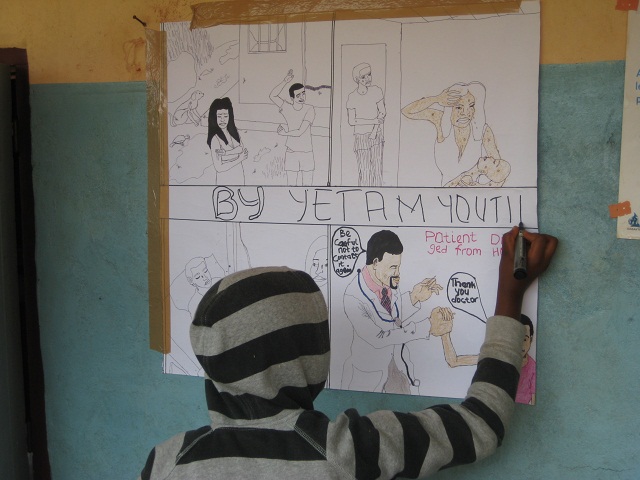
This is a guest post by Joe Pavey who, along with Rebecca Tapscott, interned with us in Cameroon on the Youth Empowerment through Technology, Arts and Media (YETAM) project during July and August. Reading Joe’s post I couldn’t help but think about how positive the contributions of youth can be, and about the attitudes that adults and elected officials need to have in order to encourage youth to engage in actions to make their communities better, and how important it is for communities to show young people that they are valued for the contributions that they make and respected for the role that they play.  

The original post appears on Joe’s blog Yakcast 2.0, titled Youth Led Action in Bamessing.

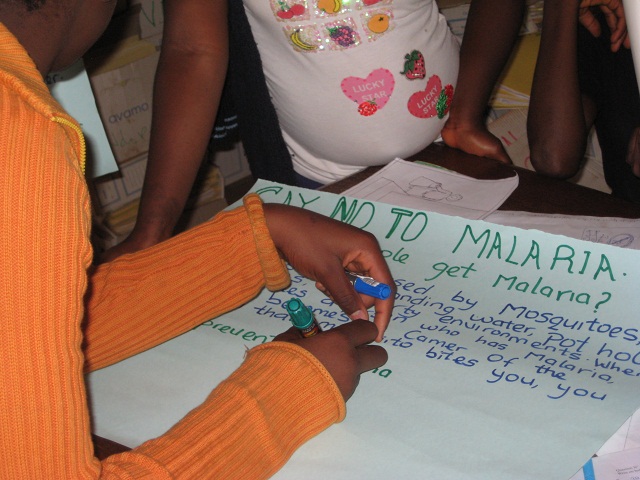
Following the conclusion of the refresher course at GBHS Bamessing, the YETAM youth began work on their first advocacy campaign of the summer. After much discussion the youth decided that the first topic they would take on would be the high prevalence of malaria in their community.

Malaria is one of the biggest killers of children under the age of six in Africa, but lack of health education means many people here still are not aware of how the disease is contracted, and how it can be avoided. Additionally, the direct relationship between cleanliness and the spread of this disease runs counter to many of the choices the environment here encourages. The long periods that often come between availability of running water, forces villagers to store water in containers, and collect it from the frequent rains. This water is frequently left sitting in open containers. Mosquitos will lay their eggs in this water, leading to an increase in the insect population. More mosquitos, means more carriers for the disease, which in turn leads to more people contracting the illness. Additionally, mosquitos tend to thrive in places with tall grass. Lack of funds to clean communal areas often means that shrubbery in public places such as the market square, aren’t cleared regularly. Ignorance of this cycle is what the youth intended to combat. Not an easy thing since explaining these correlations requires the understanding of multiple stages of cause and effect.

In order to get the attention of the village, the youth decided to hold a series of clean-up and sensitization campaigns, intended to illustrate the sort of changes they felt the village needed to make. The first stage was a clean-up at three of the local health centers. The youth divided themselves into three separate groups, and spent several hours clearing brush, dirt, and standing water, from outside these centers. They posted sensitization signs outlining the causes of malaria and what can be done to minimize it. Despite the fact that many of the youth had left town for holiday, there was excellent youth turnout at all three health centers. After the morning of the clean-up these centers were models of how the village should maintain their environment.

Next a major cleanup campaign was performed at the BamessingTown Square, the day before Market Day. Market day here is a huge event, so the time and location of this clean-up had been chosen for maximum exposure. Twenty-four youth and two facilitators (myself included) spent nearly seven hours cleaning brush, shoveling dirt, and picking up trash to make the campaign a success. The youth took turns documenting this work with both video and still cameras. When the clean-up was completed they hung signs in main areas of the market urging the community not to dump dirt and trash in the market square. Another sign was created instructing people to a landfill pit where waste could be properly disposed.

The next morning, when Market Day was in full swing, the youth headed down in their bright yellow YETAM t-shirts to explain to market sellers and patrons what they had done and why they had done it. Their message was well received. Community members were thankful for the hard work the youth had performed, and therefore open to hearing their advice. At the end of the day there was a marked increase in people disposing of their trash appropriately.

Finally, the youth invited members of the village community and high-ranking officials to a workshop to discuss the causes of malaria and what could be done about it. My colleague Rebecca had arranged for a Peace Corps volunteer working on health education to come to the event to give a brief presentation. Unfortunately, only one community member apart from YETAM youth and facilitators attended the workshop. Thankfully this attendee was a member of the Sanitary Committee, so all was not lost. She arrived to the workshop quite late (just as we were finishing), so a short recap was given for her benefit.

The woman from the Sanitary Committee requested that the youth express their concerns to the village council, which they did two days later. The council was happy to receive the youth’s concerns and invited them to sing the national anthem at a special ceremony celebrating the arrival of the District Officer later in the week.

This ceremony turned out to be the closest thing to a festival I experienced during my time in Bamessing. Well over 1000 villagers attended the event. There was dancing and singing. There were masked characters called Ndobo, who shook fistfuls of brush at passers-by. (Check out this link for a great post on Ndobo by Plan USA’s Linda Raftree.) There were Muslim men in full regalia riding bucking, wild horses. There were flute players, and drummers, and dignitaries. Everyone arrived dressed in their finest traditional outfits. The Fon of Bamessing (the village ruler), a proud mountain of a man, oversaw the ceremony from the perch of his throne. If his hulking stature weren’t enough to separate him from the massive crowd outside the palace, he was seated on top of an authentic (and I’m sure locally made) animal skin rug to emphasize his authority.

YETAM was represented at the event in two ways: First, several of the youth led the singing of the national anthem. Second, the President of YETAM Bamessing, Martin, gave a short speech informing the District Officer about the activities of YETAM. His was the only speech not given by a high-ranking dignitary. Martin presented the District Officer with a copy of a Small-Grant Project Proposal To Increase School Attendance in the Bamessing Community which the youth had written for an upcoming advocacy project.

It cannot be over-emphasized how big an event this was for the community, and how impressive it was that the Village Council chose to make the YETAM youth such an integral part of the proceedings. Whether the youth’s efforts will lead to lasting behavioral change in the community is unknown, but it was a fascinating thing to see this project escalate over the course of the month. I couldn’t have had an experience like this without investing the length of time I did here this summer. And for me at least, that made the experience worthwhile.

Read Full Post »

Charles Suglo, Bestway Zottor and Francis Diamenu from Radio Tongu

Sometimes among all the ICT4D hype, we forget about one of the biggest and oldest ICTs there is:  radio.

Last month while in Ghana, I visited Radio Tongu in Sogakofe. The compound where this community radio station sits also serves as a community center, with computer training, a press center and Internet access for a discounted rate.

Plan Ghana staff was meeting with the radio director, Bestway Zottor, and two of the managers, Francis Diamenu and Charles Suglo, to discuss the idea of offering internships for 6-8 youth from the nearby school-based Girls Making Media (GMM) program Plan Ghana and Plan US are supporting.

Charles explained to us that the station gets some 70% of its news from the Internet. The other 30% is sourced from local communities, and recorded on the ground wherever the news is happening. ‘The voice is reality,’ he said. ‘It’s what promises that the news is real. It’s what makes people believe.’ The station broadcasts in 3 languages: Ewe, English and French.

If the youth in the GMM program want to be radio hosts, according to Charles, they need to be well trained and professional, especially since the topics that the youth are bringing up — violence against children and bullying — are sensitive. ‘We have our credibility as a radio station,’ he said. ‘So they need to be well-trained on radio program hosting, know how to manage on air, be skilled on how to ask good questions and follow-up questions.’

There are all kinds of jobs that the youth can do at the radio station, including news, marketing, voice, or running the cafe. Having job skills such as these can begin to give the youth some experiences that will serve them later in life. The training and work they’ve done through the GMM project over the past year give them a foundation for the internship positions at Radio Tongu.

Following the visit to the radio station, we went to the school to meet with the media club. It’s called the  ‘Eye Media Network.’ The group’s slogan is ‘Our eyes are always watching.’

The GMM program began last year with a workshop for 20 of the students on media skills and gender. Following that the Club received a small media kit consisting of digital cameras, voice recorders, a radio, a notice board and Flip cameras. The girls work with 2 advisers and now several boys have also joined the Club. The club plans its own programs and actions, and does a school-wide newscast every Wednesday during the school assembly.

A student reads us the news they've posted on the Notice Board

As part of the program, the Club meets and interviews local and national figures, with a focus on women journalists, government officials and businesswomen. The group has covered school elections and put into place a ‘Walk your Talk’ Accountability initiative.

They conducted a bullying campaign with the goal of reducing the incidence of bullying by 30%. After the campaign, which included posters, educational sessions and other outreach, the Senior Housemaster claimed that bullying had been reduced by 90% compared to the year before. They will begin a campaign against sexual harassment in the coming year.

Some of the challenges that the group faces include posters being ripped down, friends trying to discourage them, boys suffering discrimination for belonging to the “Girls Making Media” club, and not having enough equipment. The club hopes to obtain their own modem, computer, printer and more cameras.

The first week of August, select students from the GMM group participated  in social media training, where they learned how to shoot video, subtitle, access different social networking sites to post their content, and stay safe while online.

The girls in the club said the project has helped them to build confidence and take up leadership positions. ‘We learn how to find information and to bring out problems and get solutions,’ said one girl.

Another said ‘We took bullying as a normal thing. Now we know that bullying is not normal. Now when we see something, we are alert.’

‘I used to walk around without seeing,’ added another ‘but now I see everything because I am looking for news. My mind has been opened.’

The Girls Making Media program covers 7 schools in Ghana. Several other groups in Togo, Liberia, and Sierra Leone also participate in the GMM program.

Read Full Post »

This week I came across the “Feedback Mechanisms in International Assistance Organizations” report by CDA Collaborative Learning Projects, based on research undertaken by the Listening Project and funded by the Gates Foundation.

The findings and recommendations are very intuitive and it’s nice to have them gathered in one place. The report can serve as a starting point or a pause-and-reflect moment for organizations working specifically on humanitarian accountability as well as those who are looking to integrate better ‘downward’ or beneficiary feedback into development or humanitarian work overall. It also offers good food for thought for those interested in crowd sourcing and the use of new technology for citizen engagement and input.

The report is not too long, and it’s easily laid out for a quick read, so I’d recommend downloading the .pdf and digesting it fully.

To whet your appetite, here are some points I found interesting:

Why do agencies seek recipient feedback?

Four reasons were identified in the report: to improve accountability, to improve effectiveness, to respond to donor requirements or media pressure, and to increase security for staff. Feedback from recipients* was seen to give staff the fuel needed to pressure higher-ups for necessary changes in programming; beneficiary feedback often improved program quality and recipient satisfaction, and seeking dialogue and communication with communities tended to reduce threats of violence. When accountability was a donor requirement but wasn’t part of a larger organizational buy-in or value, unsurprisingly, initiatives were less successful.

To many reading this post or who may read the CDA report, the benefits of participation and feedback and accountability are already obvious, nonetheless it’s  good to see them captured and documented in a report as a support to those who are trying to establish accountability and transparency mechanisms in less-friendly or convinced atmospheres.

Other key points (any quotes come directly from the report):

  • All practitioners interviewed for the study “expressed their unequivocal commitment to participatory and inclusive approaches to humanitarian and development work, and placed significant emphasis on accountability mechanisms.” In addition, many organizations have signed different charters and standards including SPHERE  Guidelines, the Humanitarian Accountability Partnership (HAP) Standard in Accountability and Quality Management and the INGO Accountability Charter. This rather contradicts the impression the media often likes to give about aid agencies as being totally unaccountable to anyone. Or maybe certain parts of aid agencies are more interested and prone to seek accountability and transparency than others.
  • The report says, however, that there are still issues with continuous feedback loops and information doesn’t always return from whence it came. “Typically information gathered from primary stakeholders flows through different parts of organizations, but decisions are rarely communicated back to communities.” One could also ask how often this feedback (or similarly, any information, or data) is returned to communities in accessible formats so that they can use it as well for their own purposes.
  • Good accountability mechanisms are not possible without management buy-in or staff competency. Managers play a critical role in “creating incentives and requirements for field staff to regularly solicit and utilize feedback.” Organizations need to invest in the skills necessary to ensure honest feedback can happen at community level, and/or among the various people and organizations involved (community members, CBOs, local partners, local staff, management staff, headquarters, government, etc).
  • Different agencies are working to develop frameworks to improve feedback and accountability mechanisms. “Some of these new approaches have built-in mechanisms for integrating recipient voices into program strategies and operations.” Some organizations have been collecting primary stakeholder feedback and sharing information with recipients for years as part of participatory development processes. However, the report says, often the exercises are very focused on individual projects or towards particular practical results and the richness of the feedback is not fully appreciated or systematically fed into broader decision-making processes.  “The practices of systematically listening to, gathering and analyzing people’s perspectives, recommendations and complaints have not become routine in many agencies.”
  • Feedback mechanisms need to be designed together with recipients. “Mechanisms must also be appropriate to the specific contexts where they are intended to operate, and agencies have to consider the most appropriate name for the [system], channels, and methods for raising complaints, and culturally appropriate ways of responding.” This is especially important in tense environments or with people who are not accustomed to voicing their opinions.
  • Trust is important, and according to the report is “the first step in getting meaningful feedback. Providing information about the goals and expectations of the organization is the first step in building trust…. Organizations need to establish systematic procedures for reviewing, investigating and responding to feedback or complaints. All this needs to occur in a consistent, timely manner for people to believe in the system and use it.” My own experience with children and youth participation initiatives, has taught me it’s also critical to discuss and agree on clear and honest expectations about what can and will be done with the feedback, and the degree to which feedback will actually be able to change a situation. This goes back to the report’s point on management buy-in and institutional systems. Unless your organization really wants to hear the feedback, is willing to change itself or its actions or viewpoints to respond to the feedback, and has the internal capacity to respond and modify how it’s doing things, asking people what they think can be really tricky and potentially demoralizing for all involved. It’s never nice to hear people say “why did you ask us if you didn’t want to know” or “what is the point of knowing what we think if you’re not going to change?”
  • New and emerging approaches are being tested, including those that use innovative tools and technologies such as SMS and social media. However, the same principles apply to these new technologies as to any other type of feedback loop, and it’s clear that there are still challenges with new technologies.  As mentioned earlier in the report “Most organizations that were successful in gathering feedback… and distributing information back… found it necessary to have more than one mechanism in place…in order to provide options for all of the different groups within the local community to provide feedback and to get information.” This is especially true with new technologies, given the large numbers of people left out of feedback loops due to cost, literacy, age, gender, and access if only SMS or social media are used. Specific challenges with new technologies are highlighted in the report, such as the case of Haiti where an SMS service was set up and people were very willing to use it, “but the agencies had not incorporated a way to monitor the replies and feedback. This resulted in some frustrations and a lost opportunity for a feedback loop between recipient and aid agencies.”

Page 17 of the report offers some good examples of what effective feedback loops look like, page 20 lists several areas that need investment and incentive to ensure effective feedback mechanisms and to guarantee that information is properly gathered and well-utilized, and page 23 offers a list of recommendations for effective and comprehensive feedback loops.

Read the full report here.

*I’m not a big fan of the terms ‘recipient’ and ‘beneficiary’ but have used them here because they are the terms used in the report.

Related Posts:

Ian Thorpe does a good job of commenting some of the portions of the report I didn’t expand on:  “Listening to the people we work for

Read Full Post »

Youth learning to use GPS in Pitoa, Cameroon (photo: Ernest Kunbega)

Last Monday I attended Africa Gathering London. The topic was ‘Social Media Revolutionizing Africa: How is new media changing Africa, giving voices to the voiceless, improving governance and transparency, and changing narratives?’

The event stimulated thinking and brought up some hot discussions around technology, traditional and social media, aid and development, participation and governance. (Big congratulations to Marieme Jamme  for curating a great line up that brought in an interesting and engaged group of participants and to William Perrin of Indigo Trust for keeping things on track and generating good debate!) See the program, the speaker bios and some short video interviews.

Some quotes, thoughts and debates from the day:

  • If your purpose is to bring more people into discussions, remember that radio, Facebook, and Twitter audiences are distinct and be sure you are thinking differently about how to engage them all. Remember that many people in Africa prefer to talk not write.  (from BBC’s Africa Have Your Say – @bbcafricahys‘s presentation)
  • You can’t resolve all of Africa’s issues with one approach. The countries are very different and local context really matters. But you also can’t design something for every tiny demographic. Where is the sweet spot between localized and scale? (discussion after the morning workshop)
  • People should not sit in the UK deciding and develop things for Africans. Develop things with Africans, or support Africans to develop things themselves. This idea got retweeted a lot, with lots of agreement. But H Taylor – @HFTaylor88 also commented via Twitter that this rhetoric has been around for ages within NGOs…. (discussion after morning workshop)
  • It’s great that the market has been able to bring mobile phones to so many people in Africa, but the market can’t do it on its own as many are still left out. There needs to be more incentive to reach remote areas. There needs to be education, cash transfers, government regulation if we want to really realize the potential of mobiles. Mika Valitalo – @vatamik commented that in many African countries, mobiles are still taxed as luxury items, making them more expensive than they should be. (Clare Melamed -ODI – @claremelamed‘s “Is the Mobile Phone Revolution Really for Everyone”.)
  • Any big story today on CNN has a social media component, yet there is still the idea that social media only breaks news and ‘it won’t make the history books until CNN or BBC report on it’. If CNN is not planning to do a story but sees everyone is talking about it on Facebook and Twitter, they will cover may rethink covering it. CNN finds good opinions and stories on social media, but their primary news source will continue to be their correspondents. Emrys Schoemaker – @emrys_s however questioned whether mass media use of citizen journalism is a broadening of voices or if it’s cheap content for big media – or both. (Faith Karimi/CNN/@faithCNN’s presentation and resulting discussions.)
  • Social media gives African youth an uncensored worldwide platform, letting them feel included in shaping Africa’s image, but the youth using social media in Africa are still the middle class and the rich. We need to find ways to include other youth. (Faith Karimi – @faithCNN’s presentation and resulting discussions.)
  • The Guardian’s Global Development Site and Poverty Matters blog are trying to get away from the vision of ‘poor Africa’ and have only been accused of ‘poverty porn’ once in 9 months (which Liz said irritated her to no end as they really try to avoid it). (I remember the case…) They stay away from the typical ‘flies in the eyes’ photos, but sometimes there really is starvation in Africa, and in those cases, a photo of a starving child might actually represent reality. (Someone countered that African newspapers should use photos of drunk, vomiting Brits to illustrate stories about parliament).  (Liz Ford/deputy editor/@lizford‘s talk and discussion)
  • Is the Guardian’s Global Development site one-sided, taking the view that aid is good rather than other ideas on how to best achieve development? Development is much larger than ‘aid’ and when talking about development we need to remember the bigger picture and the alternative views that maybe aid is not the best (or only) way to ‘do development’. The Guardian is quite open to new thoughts and ideas and invites anyone with ideas for blogs or stories to be in touch with them. They consider their site a ‘work in progress’. (Note: I like the Guardian’s site very much as it is one of the few media sources that discusses and seems to really promote and engage in the ‘#smartaid / @smart_aid‘ discussion). (Liz Ford’s talk and discussion)
  • Many African leaders, not to mention the public and the media, will listen when high level people call their attention to something, but problems can’t be solved by the same people who created them, especially if those people are considered morally bankrupt. Karen Attiah – @karennattiah  commented in from Twitter that a big part of development work should focus on rebuilding the broken social contract between governments and citizens in Africa. So how can we connect policy makers with ordinary Africans? How to bridge the gap between policy makers and grassroots approaches and implementation. (Panel with Alex Reid/@alreidy and Carolina Rodriguez /@caro_silborn – media heads at Gates Foundation and at Africa Progress Panel)
  • Not all sources are created equal – this is true for traditional and for social media. Social media is not about the technology, it’s about the human need to communicate. You can make traditional media more social also. Even those without access to social media will get around harsh barriers to tell their stories because of the urge to communicate. So the best thing is to create a social experience, not to worry so much about getting ‘jiggy’ with the technology. (from Kevin Anderson/@KevGlobal‘s presentation. See Putting the social in media.)
  • New technologies can impact on public debate, people’s political capabilities, citizen-state relations, relationships with other government actors. Frontline SMS Radio, for example, could be a very useful tool for this because radio is still the main way to communicate with the majority of Africa. Using Frontline SMS Radio, stations can sort through messages they get, understand them better, and use the information to orient their radio programs as well as other things. Radio can play a very strong and useful role in governance. (from Sharath Srinivasan/ @sharath_sri‘s presentation. See FrontlineSMS at Africa Gathering.)
  • Youth can have a big impact on community development if given space to influence. There is money (eg., in Cameroon, at local government level) but it needs to be better spent. Informed and involved youth can hold government accountable for spending it better. Local level advocacy has a greater impact on youths’ lives than global level initiatives because you can make as many laws as you like, but unless people are putting them into place and practice at a local level they don’t matter. Organizations should listen to young people but not make them dependent on NGOs because the real duty-bearers are family, community, government. NGOs need to be models of their own methodologies; eg., if an NGO is encouraging people to criticize the government, the NGO should be ready to receive the same scrutiny around its own work and behaviors. Social media can play a role in this process by showing what is happening at the local level to a global audience. (from my presentation and the resulting discussions. See Youth Empowerment through Technology, Arts and Media)
Julia Chandler (@juliac2) did a great round-up of the day’s presentations and discussions on her blog: Part 1 and Part 2. The Guardian continues the discussion here and of course the Africa Gathering website is a great place for more information.
.
Update – more posts about Africa Gathering:
Great perspective from Tony Burkson – @tonyballu – who I really enjoyed talking with at the post-event drinks: A Day at Africa Gathering.

Read Full Post »

(See this post in English here.)

Estaba hablando con una amiga en el Facebook. Me había contactado porque estaba interesada en participar en el curso sobre las TICs (Tecnologías para la Información y la Comunicación) que había mencionado en mi último post.

Su primera pregunta fue – Y los cursos, los ofrecen solamente en Inglés?

Por ahora, sí, le dije. Pero TechChange está iniciando con los cursos ahorita. Es posible que a futuro ofrezcan cursos en otros idiomas.

OK, dijo mi amiga. Genial. Vamos a esperar esto….

Bueno. Mi amiga habla el suficiente ingles para sacar mucho provecho de estos cursos, pero para poder asistir al curso, hay otros factores que le parecían hasta más difíciles a superar. Y lo triste es que estos factores son internos.

1) Los Pagos OnLine

Ahora, ¿sabes el problema? decía mi amiga, Acá vemos que el costo es de 250 o 300 dólares.

Ah, pensaba yo. El costo es muy alto.

No, decía ella. No es el costo. Es que acá en [su organización] los pagos online están prohibidos. Se consideran una POSIBILIDAD EXTREMA DE FRAUDE.

Ella se reía. Jajajajajaja. Yo imaginé que su risa era de frustración y un poco de amargura.

Pues, mi amiga tiene presupuesto y mucho interés en participar en la capacitación, pero no puede inscribirse porque en su organización, no está permitido hacer pagos online.

Wau, le respondí. ¿Ayuda si yo mando un correo o algo?

No, me dijo ella. Es la política de la organización. No se pueden hacer pagos online, aunque sea mucho más barato y sea lo específico que necesites y no esté disponible en tu país.

2) Apoyo de la gerencia

Bueno y si usas tu propia tarjeta de crédito y pedís que te reembolsen? le pregunté.

Ay no, dijo mi amiga. Nadie nos apoya con esto, especialmente con este tipo de cosas que no conocen y no entienden. Necesitamos este tipo de cursos para el personal nuevo y joven que tiene mucho interés en estas herramientas. Pero es difícil hacer que la gerencia entienda.

De allí mi amiga escribió en letra mayúscula: LINDAAAAAAA TIENES QUE VER COMO PODRIAS APOYARNOS CON ESTO DE LAS TICS! Somos pocos en la organización los que manejamos esto y no nos creen de su efectividad.

Ella continuó. Estamos empezando con esto. Tenemos lo básico y tenemos fondos para capacitarnos, pero nadie ve que es una prioridad. Ay, es muy complejo.

3) El bloqueo de los sitios de medios sociales

Seguíamos hablando. Ella decía o, jaja, y por favor escribir tu blog en otra idioma para que podemos compartirlo. Es importante que nos actualicemos. Por lo menos nos permiten acceso a los blogs.

Lo intentaré, le dije.

Mira, agregó, No tenemos acceso a redes sociales. Tenemos un canal de YouTube que nadie puede ver en la oficina. Alguien hizo un Twitter pero todo el personal esta bloqueado del Twitter. Lo mismo con el Facebook. Ni los gerentes tienen acceso! Tenemos que ir a un Internet café o verlo en la casa.

Ay ay ay.

Yo entiendo que hay riesgos con los pagos online, entiendo que hay personas que podrían abusar de las redes sociales si no tienen restricción en las oficinas, y entiendo que en algunos países hay dificultades con el ancho de banda, pero esta plática me puso triste.

La organización donde trabaja mi amiga es de un tamaño regular, e imagino que ésta es la política en toda la organización. Me pregunto si la organización ha considerado que sus políticas están afectando su habilidad de avanzar en su propia causa y su propio trabajo.

Read Full Post »

I was chatting with a friend of mine yesterday evening on Facebook. She contacted me because she was very interested in participating in the TechChange courses that I wrote about in my last blog post.

Her first question – ‘Are the courses only available in English.’ ‘Yes,’ I said, ‘but TechChange is just getting started. It’s quite possible that in the future they could offer courses in other languages.’

‘OK,’ said my friend, ‘that’s great. We’ll be waiting for that.’

Now, my friend speaks enough English that she could get something out of these courses, but there are other factors that seemed to her even more difficult to surmount. And the sad thing is that these other factors are internal factors.

1) On-line purchasing

‘Our problem with registering for the courses,’ said my friend, ‘is that they cost $250/$350….’

Hm, I thought, ‘So the cost is too high?’

‘No,’ she said, ‘the cost is fine. But here [at our organization] we are not allowed to purchase anything online. Purchasing on-line is considered EXTREME POSSIBILITY FOR FRAUD.’ Then she laughed ‘jajajaja.’ I imagine it was a bitter and frustrated laugh.

So here my friend has a budget and great interest in being trained, but can’t sign up because at her organization, they are not allowed to make on-line purchases.

‘Wow,’ I said. ‘Do you want me to send an email or something to vet the organization?’

‘Nope,’ she said. ‘It’s just their policy. You can’t purchase on-line. Not even if it’s much cheaper, it’s exactly what you want and need, and it’s not available in your country.’

2) Management buy-in

‘Oh,’ I continued. ‘Can you use your own credit card and then get the organization to reimburse you?’

‘Ay,’ my friend said. ‘No one will support us with that, especially an on-line course of this type of thing that they have never heard about and they don’t understand. These courses would be just what we need for some of our staff who are very interested in getting trained up to use some of these new tools. But it’s so hard to get management to see the utility of this.’

Then my friend wrote in all capitals ‘LINDA, YOU KNOW THIS. PLEASE FIND A WAY TO COME AND HELP US WITH ICTS! We need to know this and no one in our management believes it’s useful to our work.’

She continued, ‘We’re only at the beginning of this. We (staff) know only the very basics. We have funds for training but we can’t get anyone to see that this [ICTs] is a priority. Ay, it’s all very complex.’

3) Blocking social media sites

We kept chatting. She said ‘oh, ja ja, and please write your blog in other languages so we can share it around. We need to be updated on these things. At least we are allowed to access blogs.’

‘I will try…’ I said.

‘Do you know,’ she said ‘We can’t access any social media sites from the office. They are all blocked. We have a YouTube channel but none of us can watch it at the office. Someone created a Twitter account but all staff are blocked from Twitter and Facebook at the office. Not even our managers can access it. If we want to see anything we have to go to an Internet cafe or to have Internet at home.’

Argh.

I understand that there are risks to purchasing on-line, and I understand that some staff might abuse social media if they are free to use at work, and I understand that there are bandwidth issues in some countries, but this conversation made me very sad.

My friend works at a decent-sized organization and I assume this must be the policy across the organization. I wonder if the organization has considered that its policies are cutting into its own ability to advance its own cause and its own development work in today’s world.

Ver este post en español!

Read Full Post »

In the past couple years, social media combined with traditional media has allowed people all over the world to feel they are supporting and participating in very visible revolutions (think Iran, Tunisia, Egypt). There is also a slow and steady revolution happening as more and more communities around the world access the tools to tell their own stories in their own words from their own perspectives.

I came across the Mathare Valley blog this weekend. It’s beautiful, artful and powerful.

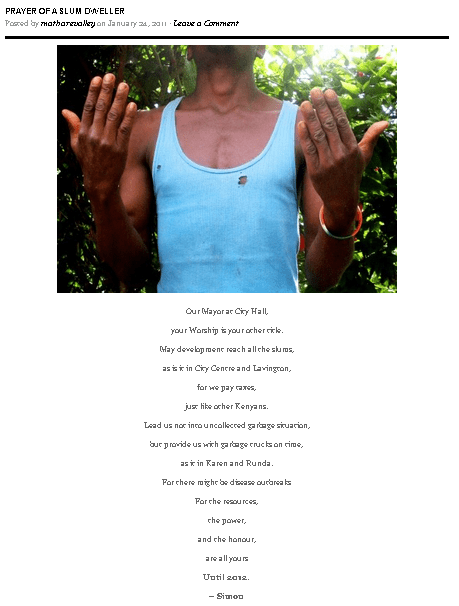
Prayer of a slum dweller from the Mathare Valley blog

According to the ‘about’ page, the authors of the blog:  Simon Kokoyo, Ivyonne Tiany and Jeff Mohamed, grew up in or around Mathare. They are now involved in community programs there, including the Map Mathare Initiative.

Jamie Lundine, who works at MapKibera and who’s supporting some community mapping in Mathare, wrote an excellent post about integrating participatory community development work and digital mapping in Mathare, showing how development and tech folks can combine their expertise and work together with communities to strengthen local development processes.

In my last post, I wrote about how communications (and ICTs) should be ‘built in, not bolted on‘ to development initiatives. The Mathare Initiative looks like a good example of that, with community members taking a strong lead.

Read Full Post »

« Newer Posts - Older Posts »