Feeds:
Posts
Comments

Archive for the ‘m4D’ Category

The Open Knowledge Festival (OKFest) happens this September 17-22 in Helsinki, Finland with the theme Open Knowledge in Action. OKFest will explore the benefits of opening up knowledge and information, look at the ecosystems of organisations that can benefit from openness, and discuss the impact that more transparency can have in our societies. OKFest will run 13 key Topic Streams, one of which will focus on the topic of ‘Open Development’.

So what does ‘open knowledge’ have to do with ‘open development’? And why are people putting the word ‘open’ in front of everything these days?

Well, in addition to being a bit of a buzz word or trend, the idea behind ‘open’ is that making data and information more accessible and less restricted can enhance transparency, accountability, sharing, and collaboration. This in turn can benefit development processes. (See this post for ideas on how openness and information literacy links with participatory governance, for example.)

As Matthew Smith, a strong proponent of ‘open development,’ says, ‘openness’ is not a new concept, especially with respect to development theory. Democracy and participation represent an opening up of decision-making processes to more people. Transparency and accountability are about opening up organizations, people and processes to scrutiny and feedback.

The Internet and new ICTs such as mobile phones play a big part in the idea of ‘open’ since these platforms and tools can allow data and information to be shared more freely and widely. The concept of ‘open development’ according to Smith is enhanced by ICTs when it favors:

  • Universal over restricted access to communication tools and information. For example, access to the telecommunications infrastructure through a mobile phone or access to online [educational] content or government information.
  • Universal over restricted participation in informal and formal groups/institutions. For example, the use of SMS to mobilize political protests or new e-government implementations that provide increased transparency and new accountability arrangements.
  • Collaborative over centralized production of information, cultural content, and physical goods. For example, collaborative production of school textbooks, co-creation of government services, mesh networks.

Attitudes and behaviors also play a part in ‘openness.’ Smith notes that egalitarianism and sharing are two core concepts within ‘openness:’

  • Egalitarianism suggests an equal right to participate (access, use and collaborate).
  • Sharing is embedded in the idea of enhanced access to things that were otherwise normally restricted. This enhanced access is often motivated by the normative desire to share – whether through an obligation to contribute to the common good or to participate in a coordinated or collaborative activity.

Policies, practices and philosophies that allow data and information to be shared are also a part of ‘open’. Tim Davies explains ‘open data‘ as:

  • a set of policies and practices – open data should be accessible (online); standardized (in a common format) and reusable (open licenses)
  • a response to how tech and society is changing –  bandwidth is growing, there is more capacity to share and analyze data, people want to do things for themselves and analyze information for themselves rather than have someone do it for them.
  • a tendency towards new combinations of data – seen in ‘mash-up’ websites where people pull data from different sources, combine them with other sources, add crowd-sourced information and maps, etc.
  • a philosophy or movement – there is a push to open information and access to knowledge because information is power; there is a tendency toward greater collaboration, transparency and collaboration

The Open Development stream at OKFest will explore ways that openness can help address key development challenges, from reducing poverty to improving access to education and healthcare to mitigating climate change and managing natural resources to improving transparency, accountability and governance. One of the most important aspects of the Open Development stream will be the participation of development practitioners and thematic experts on development.

As guest program planners for the Open Development stream*, we are determined to support two-way learning about how open data and open knowledge can benefit development. We know that ICTs and new technologies cannot work in a vacuum and that open information on its own is not enough. We know that creating ICT tools and applications without basing them on real needs and local context is not helpful, useful or sustainable. We also know that traditionally excluded and marginalized populations are the ones that most often do not have access to information and new ICTs, and therefore open access to information and knowledge needs to be part of a broader and more holistic development approach that takes care to include those who are often marginalized and excluded.

Within the Open Development stream, we will offer space where those working with new technologies and those working on development issues can learn more about each other and work on joint solutions that are based on local realities and that take advantage of new opportunities that new ICTs and ‘open knowledge’ can offer.

The Open Development stream will bring together key thinkers and doers in the ‘open’ movement and the development sector via a panel discussion. We are also organizing 3 working sessions to explore:

Open development and aid flows.  Here we will look more internally at ways that greater openness in aid and development funding, activities and impact (such as the  International Aid Transparency Initiative – IATI) can help make aid more transparent, accountable, coordinated and effective. What are the new opportunities Open Data and Open Knowledge provide? How can aid and aid organizations be more open, transparent and accountable?

Open = accessible? In this session we will explore practical issues and the realities of access to and use of open information in low-resource settings. We will hear opinions and realities from development practitioners regarding a series of critical questions such as: Open for who? Open for what? Is open data enough? How can we design for accessibility in communities with lower resources and access and/or in ‘developing’ countries? Who are the new information intermediaries (aka ‘infomediaries‘)? How can we ensure that ‘open’ is not replicating existing exclusions, creating a new middle-class or benefiting already well-off sections of communities and societies?

Technologies for open development In this session we will focus on the role that ICTs and open technologies, from open source to open hardware, can play in development. We will hear ideas from development workers, technology evangelists and those who bridge the two fields.

In addition to these sessions, there will be an ‘Open Development Hack Day‘ where development practitioners can share development challenges with the OKFest community to create mobile and other ICT applications.

Events like OKFest can be overwhelming the first time you participate in them, but we are committed to making sure everyone who attends OKFest can join the discussions, contribute ideas, and learn from the wealth of keynotes, sessions and workshops. The organizers of the Open Development Stream will be on hand to support participants working in development and those who are new to the Open Knowledge World to navigate the conference via daily birds-of-a-feather gatherings, catch-up sessions and more.

In order for our stream to be a success, we need the participation of development practitioners and development workers!  The core OKFest team has made a number of travel bursaries available to help potential participants with the costs of getting to Finland, and the open development stream team are also working hard to encourage development organisations to support staff and associates from projects in the ‘global south’ to take part. If you need help securing support from your organization or funders to take part, then get in touch with the team (okfest-dev@practicalparticipation.co.uk) and we will do what we can to help.

UPDATE (July 19, 2012) – copied from the OK Fest website:

Sida, the Swedish International Development Cooperation Agency, offers travel bursaries to a number of development practitioners and coders taking part in the Open Development topic stream. These travel bursaries will cover all reasonable flight costs and accommodation for the duration of the conference core days. A week ticket to the festival is also included. Transportation to/from airport and within Helsinki and food costs are not covered by travel bursaries. 

Who are these Bursaries For?

The Sida travel bursaries are for development practitioners and coders who can make a significant contribution to the festival, but who are not able to take part without financial aid. People who are taking an active part in the Open Development topic stream will be prioritised. We will also prioritise those who truly cannot make it to Helsinki on their own without financial help, e.g. people from developing countries

Be sure to fill out the application form here before the deadline on August 8!

For more on OKFest, watch the slideshow:

*Tim Davies from AidInfoSarah JohnsMika Valitalo and I from Plan

Read Full Post »

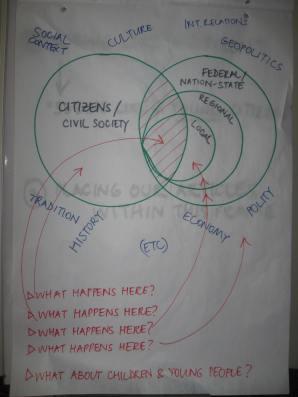
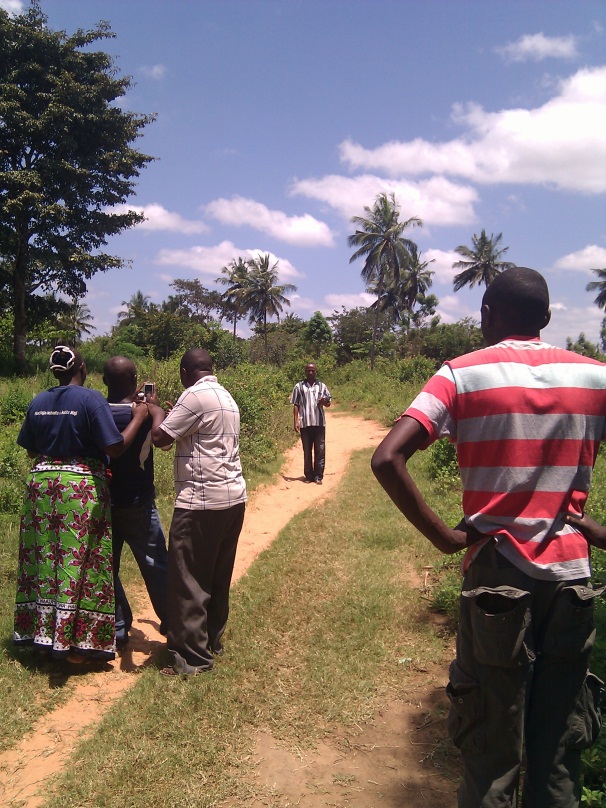
Where are the spaces for dialogue on good governance? (Image from a workshop on youth participatory governance, April 2011)

As I mentioned in my ‘governance is *so* not boring’ post, I am recently back from an internal workshop where some 20 colleagues from across the organization where I work (Plan) pulled together some basic elements for a global program strategy on Youth, Citizenship and Governance.

One of the key elements that we talked about was the importance of information literacy in citizenship and governance work, including at the level of governments, duty bearers and decision makers and of course at the level of citizens — in our case, especially children and young people. Information literacy is defined by the University of Idaho as “the ability to identify what information is needed, understand how the information is organized, identify the best sources of information for a given need, locate those sources, evaluate the sources critically, and share that information”. (I can hear my librarian friends cheering right now, as they’ve been working on this for years).

Openness as an attitude came up as something that’s important all around for good governance. This doesn’t only mean ‘open’ as a technological specification for data, but rather openness as an entire approach and attitude towards governance, citizen participation and the nature of relationships and interactions in the spaces where citizens and government overlap. We were able to link our work up very well with the concepts of open development, open government and open data; all of which can contribute to better transparency, accountability and governance and which require information literacy and a number of other skills and capacities in order to take advantage of.

My practitioner colleagues said over and over at the meeting ‘we don’t have access to the information we need to do better governance work.’ I was left wondering how those of us working at various levels, including the field of ICT4D and related, can do a better job of supporting access to information, and what are the technology and non-technology tools and approaches that work best. There is still a huge gap between the community- and district-level governance work that my colleagues are working on with children, youth and communities and the big on-line data sets that are part of open data and open government. Both very important, but there really needs to be a stronger link between the two so that they can feed into each other to achieve better governance. Once again – the questions ‘open for who? and open for what?‘ come in, as well as the need for a two-way (multi-way?) information flow.

We talked about how social accountability tools like community scorecards, social audits, budget tracking and monitoring, and participatory budgeting can be an important way for engaging marginalized and excluded populations in governance work outside of more formal channels (eg, elections, law courts, planning and auditing of public expenditure). Social accountability tools and processes allow people to more directly participate in the accountability process and make themselves heard rather than leaving accountability in the hands of the government or relying only on formal mechanisms. During our workshop, we watched the International Budget Partnership’s video ‘It’s our money, where has it gone‘ on using social accountability tools in Kenya. (Long, but very worth watching)

Following the video I explained open data in a nutshell by asking people to imagine that the budget information that the community had to get via their district officials was available online and could be accessed without going through the district officer. It was a good opportunity to think about the potential of open data and open government and how they can fit in with social accountability work.

The video highlights the very real dangers that can be present when working on transparency and accountability. Since in our case we are working with children and youth, we need to be especially aware of potential risks involved in transparency, accountability and good governance work, because this kind of work raises questions and aims to shift power and politics and resources. We need to be very sure that we are not somehow pushing our own agenda through children and youth, or handing them a hot potato that we don’t want to take on as adults or organizations, or even unintentionally putting them at risk because we haven’t fully thought through a project or initiative. We need to be sure that we are conducting thorough, participatory and shared risk assessments together with children and youth and establishing mechanisms and ways of mitigating risks, or making decisions on what to pursue and what to leave for others. Child protection, our own responsibilities as duty bearers, and the notion of ‘do no harm’ are massively important to bring in here.

We spent time talking about what we need to do as an institution to support good governance, and emphasized that openness and good governance is a key element of institutions, INGOs, local NGOs and CBOs who want to be credible in this space.  Organizations that are working with communities to push for local and/or national government transparency and accountability should expect that these same demands will be turned around to them, and the same questions asked of government and decision-makers will be asked of them. Taking those steps internally towards openness, accountability and good governance is critical. When working with youth associations and children’s groups, this is also a point for strengthening so that openness, transparency, accountability, positive leadership and other capacities, capabilities and skills are enhanced. If local associations replicate the bad governance practices that they are trying to change, then things are really not advancing much.

Successful governance work addresses multiple sides of the governance issue. Working only with citizens can create a demand that outstrips government interest, capacity or responsiveness and lead to apathy, frustration and/or conflict. So it’s really important to work with duty bearers and decision makers as well as with children and youth and their communities, and with other non-state adult actors, such as parents, teachers, community leaders and the media; to help create an environment for better governance. In addition, it’s important to understand the  incentives and disincentives that shape the behaviors of different service providers, for example teachers and health care workers.

As my colleague Wale Osofisan from our UK office pointed out today after I shared these videos on governance work: “It is not enough to get the students and communities to monitor absenteeism without really examining the root causes of the problem from the point of view of the teachers and doctors. For example, in the DRC health care workers at PHCs particularly in the rural areas don’t get their salaries paid on time – sometimes for 6 months. Hence, they are forced to abandon their official duty posts and find alternative ways of earning an income either working informally for a private clinic which pays them or they engage in other economic activities. Same goes for the teachers. Thus, civil society interventions also need to focus on the problems encountered in the supply side of the equation… This is quite a challenge because it would require tackling the perverse politics of service delivery in many developing countries and NGOs always find it very uncomfortable to engage in such terrain.”

Good governance work uses existing spaces for collaboration and dialogue among the various actors or creates new space if none exists. It builds skills and capacities in both citizens and government officials. Children and youth, for example, need to have capacities to work effectively together, organize, prioritize, influence, use media and new communication technologies, access information and interpret/analyze it, and to develop partnerships and networks. Decision-makers need to strengthen capacities to engage with children and young people, to hear, respond, follow up and provide feedback. Government institutions need to have the attitudes as well as the resources to be more responsive to citizens’ needs and rights. Government employees, as mentioned above, need to also have the space to share what makes it difficult for them to do their jobs.

We did some group work around the 3 key actors in our citizenship and governance work: the State, children and young people, and other non-state adult actors. I participated in the group that looked at the changes that would need to happen at the level of the State and was again reminded how this work requires so much more than accountability mechanisms, new ICT tools and data. We talked about what would motivate a State to have an open information policy. What is in it for elected officials? How can State actors be motivated to change their attitudes to one of more openness and accountability? Can citizens push the State to be more open? Is international donor or political pressure the only motivator that has been successful so far in most countries? If a State is not governing well, what are the common root causes? If openness is an attitude, what motivates a State and its different bodies to be open? External pressure and citizen demand are one thing, but what about addressing other factors that prohibit good governance?

Linking and promoting collaboration between and among children’s and youth groups was noted as another key piece of citizenship and governance work with young people. This can be supported at a face-to-face level but also needs to happen from the local to the global level, so that young people can connect and share common agendas and experiences both ‘horizontally and vertically.’ The web is a key tool here for taking local issues to the global level and back down again to community level. A question in my mind here was how INGOs can do a better job of linking youth and governance work that they are supporting at local levels with the external social and political environment so that they are not happening in parallel or in a vacuum. Another was whether we are thinking enough about broader social and political movements as related to major events or changes happening in a country or globally (eg, Arab Spring, Occupy Wall Street, Rio+20) and our role and position and purpose there. And what about on-line organizing and activism and ‘direct democracy’ as more young people access on-line networks and activism happens in virtual spaces?

We discussed quite a lot about how supporting overall behavior changes and public opinion are critical to creating an environment that supports public accountability and openness and gets these on the agenda. It’s also important to change attitudes with relation to how children and young people are perceived so that adults and decision-makers will listen to them and take their opinions and claims into consideration. Programs that engage children and youth and showcase their capacities and abilities can help decision-makers and other non-state adults to see that the younger generation does have valid points, opinions and ideas for positive change.

And lastly, there is the importance of ensuring that staff are well versed in local political contexts and how government systems work. Without a strong and nuanced understanding of the local context, local power dynamics, local political and local cultural contexts, and how children and young people and other excluded groups are viewed, programs may be over ambitious, wrong-headed, create dangerous conflict, set back governance and accountability work, or put children and young people in harm’s way. The complexity of this kind of work combined with the complexity of the various settings mean that a clear theory of change is needed to guide efforts and expressly address the specific changes that are sought so that initiatives can be well-designed, implemented, monitored and evaluated, and so that there is a better chance of a good impact.

Related posts:

Young citizens: youth, and participatory governance in Africa

A practitioner’s discussion on social accountability and youth participatory governance

Governance is *so* not boring

Does ‘openness’ enhance development?

New technology and good governance

ICTs, social media, local government and youth-led social audits

Digital mapping and governance: the stories behind the maps

What would an International CSO Governance revolution look like?

Resources:

IIED’s Participatory Learning and Action Journal: Young Citizens: Youth and participatory governance in Africa

Plan UK’s Governance Learning Guide

Technology for Transparency network

Read Full Post »

I went to a great meeting hosted by NetHope and Plan International in Cairo, Egypt during the last week of February. The idea was to get several of the NetHope partners together — both IT companies and INGOs — to discuss ways of working together in the area of ICTs and Education.

I took advantage of the meeting to make some more “Reality Videos”, similar to the mHealth Reality Videos that James Bon Tempo and I did during the mHealth Summit.

1) My Finnish colleague Mika Valitalo asks ‘Really, what’s all the fuss? We just got some equipment and dropped it off in the community and it all worked fine….’

2) Nzila shares what was learned at the workshop and focuses on Grapho Game, a tool to improve literacy in local language.

3) Marcha Neeling says throwing devices at people will not solve any development issues.

4) Mohamed Hussein talks about how ICT4D needs to be led by programs and supported by ICT staff, not the other way around.

5) Maria Berenguer notes that teachers need computer training first if they are to use computers with their students.

6) Chris Bane reminds us that we don’t always need super sophisticated tools. Sometimes very simple ICTs can make all the difference.

7) Edison Nsubega explains that it’s important to base your selection of ICT tools and platforms on the local context and situation that you are trying to resolve.

Read Full Post »

I’ve been thinking quite a bit about the sustainability of ICT4D initiatives over the past couple months in preparation for a panel I participated in yesterday at ICTD 2012 and due to a good discussion on the topic while at a workshop in Cairo hosted by NetHope and Plan International in late February.

At the Cairo workshop a group of INGOs, ICT corporations and a representative from the Ministry of Education’s ICT section discussed replicability, scale and sustainability in ICT and Education programs at length. At yesterday’s panel, we tackled the more specific topic of financial sustainability with folks from NGOs, contractors, corporations, ICT associations and researchers.

The themes and challenges that came up in both of these discussions were similar, whether looking at more ICT-driven projects (eg., providing computer equipment) or smaller social enterprises or very large government or aid-funded programs that seek to integrate ICTs into other areas like health, education, agriculture, or economic empowerment.

Sustainability is a real challenge for all these kinds of programs. Individuals and organizations are trying to build in sustainability in various ways, from supplementing ICT platforms with advertising to charging end users small fees to seeking funds from corporations and institutional donors to conceiving of ICT initiatives as small enterprises.

Some key points I presented yesterday combined with some points brought up in our discussion group include that:

Financial sustainability should stem from the identification of a real need

The need should be identified by the community. The initiative should be owned by the community and co-created with end users, not designed and parachuted in from the outside. When the benefits of a program (ICT related or not) are not tangible, it may be necessary to do some buy-in work and awareness raising with people to help make the benefits of an initiative more clear to the broader population. It’s important to do a baseline and some monitoring and evaluation to know whether or not the initiative is indeed having an impact. If you have to pay people to participate, you’ve got issues.

Where the market doesn’t work…

The market by nature excludes large swaths of people. At the same time, giving away free stuff usually hurts development efforts because people often do not value that which is ‘free’. (On the other hand, if people are not willing to pay for something, some would say you haven’t identified a real need). Even ‘poor’ people do have some resources, so their contributions to this or that project need to be carefully analyzed and weighed as part of the process.

There are differing opinions around the privatization of services like water, education and healthcare and whether people should be paying for these or whether they are rights that governments need to be held responsible for as duty bearers. Some kind of balance needs to be found here.

Financial sustainability cannot be divorced from other aspects of sustainability, such as

  • political – consider election cycles and government budget cycles and support
  • legal –work within local legal frameworks or the project may fail once it gets going
  • managerial – have the right people managing a program, especially if it’s meant to grow and scale.
  • social sustainability – as mentioned above, ensure local community ownership, interest, buy-in
  • transparency, accountability, good governance are key in all the above

Financial (and other kinds of) sustainability requires creativity and a good understanding of:

  • client (end user)
  • context
  • capacity
  • culture
  • connectivity
  • cost

ICT solutions that save people money and time can be sustainable from within. If the problem can be resolved in a cheaper, simpler way without them, then don’t suggest using ICTs. Start small with scale and sustainability in mind from the very start.

Local, local, local and local… and more local…

For both financial and technological sustainability, it’s important that the technology tools and devices as well as the technical support is local. Local partners should be involved in implementation. Research on impact should also not be exclusively done by those from the outside, but rather should involve local researchers. Local feedback loops can assist with more real-time understanding of how the initiative is faring.

Tension between public, private and non-profit institutions is common

Telecoms and IT companies are looking out for their bottom line. Development agencies and civil society organizations by nature are supposed to be looking out for the most marginalized and excluded. NGOs and civil society will likely resist privatization of areas like education and health. Governments will have their own agendas and self-interests. NGOs will have their own funding interests as well. There are vastly different approaches, paces, deliverables, timelines and methodologies among these three types of institutions who are all involved in the ICT4D space. Trying to harmonize these interests alongside what communities want can be a huge management challenge and can have a strong impact on sustainability concepts and approaches.

In aid-funded and government projects

Often the sustainability plan for projects by INGOs or local NGOs is “the government will assume responsibility” or “the community will assume the costs and management.” This can be a big issue if not properly planned from the start. If every development program plans for the government to take on the costs for the program, but this has not been discussed fully, agreed on or budgeted by the government, there will be real issues with sustainability as there won’t be enough budget to cover the continuation of all these projects and programs. There is a role for greater aid coordination here, for example via the International Aid Transparency Initiative (IATI) and for open publication of government budgets and spending plans. Localization of costs is important. If an INGO is paying high salaries during the initial funding stage and then wishes the government to take on the program costs, the project may collapse.

A few models to look at:

Additional good resources on ICTs and sustainability:

Also check out last November’s huge debate on ICT4D vs ICT4$. It’s worth reading as it highlights elements of the sustainability discussion from a broader perspective and pulls in opinions from several well-known authorities on the topic.

Read Full Post »

If you happen to be in New York City and have a couple of hours to spare, come on by to this panel today from 12-2 at UNICEF’s Danny Kaye Center. I’ll be doing an overview of some research that Keshet Bachan and I worked on late last year for UNICEF.

There will be some fantastic examples from Tostan, Equal Access, New School and UNICEF on creative ways that new technologies can be used when working directly with marginalized adolescent girls. We’ll also discuss how ICTs and communication for development (C4D) can be used in broader outreach aimed at changing mindsets and behaviors to look more favorably on girls and their capacities and improve their access to new technologies.

Update:  Here’s an article and short video about the panel.

Read Full Post »

This is a guest post from Jamie Lundine, who has been collaborating with Plan Kenya to support digital mapping and governance programming in Kwale and Mathare.

Throughout October and November 2011, Plan Kwale worked through Map Kibera Trust with Jamie Lundine and Primoz Kovacic, and 4 young people from Kibera and Mathare, to conduct digital mapping exercises to support ongoing youth-led development processes in Kwale county. One of the important lessons learned through the Trust’s work in Kibera and Mathare is that the stories behind the mapping work are important for understanding the processes that contribute to a situation as represented on a map. To tell these stories and to complement the data collection and mapping work done by the youth in Kwale, the Map Kibera Trust team worked with the Kwale youth to set up platforms to share this information nationally and internationally. Sharing the important work being done in Kwale will hopefully bring greater visibility to the issues which may in the longer term lead to greater impact.

Sharing stories of local governance

To support their work on social accountability, the Kwale Youth and Governance Consortium (KYGC) mapped over 100 publicly and privately funded community-based projects. The projects were supported by the Constituency Development Fund (CDF), Local Area Development Fund (LATF), NGOs and private donors. As one channel of sharing this information, the Consortium set up a blog called Nuru ya Kwale (Light of Kwale). According to KYGC the blog “features and addresses issues concerning promotion of demystified participatory community involvement in the governance processes towards sustainable development. We therefore expect interactivity on issues accruing around social accountability.” This involves sharing evidence about various projects and stories from the community.

One example is the documentation of the Jorori Water project in Kwale; through the mapping work, the Governance team collected details of the constituency development fund (CDF) project. The funding allocated to upgrade the water supply for the community was 6,182,960 ksh (approximately 73,000.00 USD). From their research the KYGC identified that the Kenya Open Data site reported that the full funding amount has been spent.

A field visit to the site however revealed that project was incomplete and the community is still without a stable water supply, despite the fact that the funding has been “spent.”

Jorori Water Project, built using approximately 6.2 million shillings (73, 000.00 USD)

Read more about the questions the team raised in terms of the governance of CDF projects, including the detailed the project implementation process and some reflections on why the project stalled. This is information on community experiences (tacit information) that is well-known in a localized context but has not been documented and shared widely. New media tools, a blog in this case, provide free (if you have access to a computer and the internet) platforms for sharing this information with national and international audiences.

Addressing violence against children and child protection

Another blog was set up by the Kwale Young Journalists. The Young Journalists, registered in 2009, have been working with Plan Kwale on various projects, including Violence against Children campaigns. The group has been working to set up a community radio station in Kwale to report on children’s issues. Thus far, their application for a community radio frequency has encountered several challenges. New media provides an interim solution and will allow the team to share their stories and network with partners on a national and internal stage.

The Kwale Young Journalists worked with Jeff Mohammed, a young award-winning filmmaker from Mathare Valley. The YETAM project not only equips young people with skills, but through peer-learning establishes connections between young people working on community issues throughout Kenya. The programme also provides young people with life skills through experiential learning – Jeff reflects on his experience in Kwale and says:

Jeff and the Kwale Young Journalists shooting a scene from “The Enemy Within”

“My knowledge didn’t come from books and lecturers it came from interest, determination and persistence to know about filmmaking and this is what I was seeing in these Kwale youths. They numbered 12 and they were me. They are all in their twenties and all looking very energetic, they had the same spirit as mine and it was like looking at a mirror. I had to do the best I could to make sure that they grasp whatever I taught.”

Jeff worked with the Young Journalists on a short film called “the Enemy Within.” The film, shot with flip-cameras, tells the story of 12-year-old girl who is sold into indentured labour by her parents to earn money for her family. During the time she spends working, the young girl “falls prey of her employer (Mr.Mtie) who impregnates her when she is only 12 years old.” Jeff reflects that “early pregnancies are a norm in the rural Kwale area and what the young filmmakers wanted to do is to raise awareness to the people that its morally unacceptable to impregnate a very young girl, in Enemy Within the case didn’t go as far because the village chairman was bribed into silence and didn’t report the matter to higher authorities.” This is a common scenario in Kwale, and the young journalists plan to use the film in public screenings and debates as part of their advocacy work in the coming months.

Jeff and the Kwale Young Journalists shot the film in four days – they travelled to Penzamwenye, Kikoneni and also to Shimba Hills national park to shoot 7 scenes for the movie. Read more about Jeff’s reflections on working with the Kwale Young Journalists on his blog.

Sharing ecotourism resources

The Dzilaz ecotourism team – a group that encourages eco-cultural tourism in Samburu region of Kwale county — also integrated social media into their work. During the last week (November 8th-12th) the group set up a blog to market the community resources, services and products. They also plan to document eco-culture sites and the impact that eco-tourism can have on the community. As of November 10th, 2011 the Dzilaz team had already directed potential clients to their website and thus secured a booking through the information they had posted.

The importance of telling the stories behind the maps

One important component to mapping work is to tell the stories behind the map. The three groups in Kwale are working to build platforms to amplify their grassroots level work in order to share stories and lessons learned. The information documented on the various platforms will develop over time and contribute to a greater understanding of the processes at a local level where youth as young leaders can intervene to begin to change the dynamics of community development.

Read Full Post »

In this guest post, Keshet Bachan, gender equality activist and blogger at The XX Factor, questions whether mobile phone applications addressing street violence are an effective way to prevent violence against women. What do you think? 

Can mobile ‘apps’ really prevent or discourage instances of violence against women? This question has been on my mind since a colleague shared this video from Voice of America about a mobile app called ‘Fight Back’, marketed as ‘India’s first mobile app for women’s safety’.

The video sparked an email discussion that raised some interesting questions that deserve a closer examination.

The VOA story provides a holistic view of violence against women and the developers of the mobile phone application admit that they are but one element in a broader system that needs to respond to instances of violence. They discuss the involvement of police and other duty bearers, such as municipal bodies, which need to address reports women make and do more to reduce their risks. I applaud this approach and the way in which the developers acknowledge the limitations of their application, which I find refreshing.

At the same time I feel this application distracts attention away from more prevalent (and deadly) issues. According to the World Health Organization 10-69% of women stated that they had been physically assaulted by an intimate partner at some point in their lives. The WHO also reports that 40-70% of female murder victims were killed by an intimate partner. A recent survey in the UK showed that one in three girls aged 13 – 17 reported sexual abuse from a partner and one in four had experienced some form of physical partner violence. The UK police receive a call for help regarding relationship abuse every minute.

The degree to which this mobile phone application promotes the notion of ‘stranger danger’ distracts attention from the urgent and more prevalent issue of family and intimate partner violence. Moreover, the fact that the application has a GPS tracker to trace a woman’s route home could inadvertently contribute to both increasing women’s fear of violence in public spaces as well as playing into the hands of those who seek to control women’s mobility by pleading the need to ‘protect’ them by knowing their whereabouts at all times.

In this context a colleague commented that a GPS enabled function could allow ‘even a moderately tech-savvy user to trace the woman in question’ – which could serve to increase traditional control over women who dare to step outside the confines of convention (and the home) even further.

There’s a disparity between the actual risk of being molested or assaulted in the street, and the level to which women fear it. One thing this mobile app could help with is mapping the actual instances of violence. This could in fact serve to reduce women’s fear, proving that violence outside the home is not as common or as severe as people might believe. At the same time the app could also shed light on the places where women are more prone to abuse (dark alleys or well lit train stations?) and call for concrete actions like streetlights to improve safety.

The application (as always) leaves it up to women to try protect themselves and does little to tackle the root causes of violence. For instance, research from India (where this application was developed) found that almost all police officers interviewed agreed that ‘a husband is allowed to rape his wife’, while 68% of judges felt that ‘provocative attire was an invitation to rape’ (Khan and Battacharya, 2010). The application would do well to connect its users to a platform for social mobilization and consciousness raising work that could create a critical mass of people who will work together to challenge traditional attitudes around gender.

Some of the other questions raised by this application, and others of its ilk, concern the development of such applications and the development of technology itself.

Does the sex of the person developing the application have an impact on the relevance of the application for persons of the opposite sex (i.e. can men develop useful applications for women)? Is technology itself biased in favor of one gender over the other (i.e. is technology inherently male)? As these questions assume rigid gender binaries the answer must inevitably be ‘no’. At the same time, research has shown that women use technology differently and that they are not well represented amongst technology developers.

Technology can be useful to both sexes and really it is a question of how one applies it that counts. In the same vein, it shouldn’t matter who’s behind developing the application but whether or not the application is answering a real need. (Let us recall that simply being a woman, doesn’t mean you’re more in touch with other women — the CEO of playboy is Hugh Hefner’s daughter).

I’m not convinced that women need a mobile phone application to protect them from strangers on a dark street. If I were asked ‘what do you think would make the streets of Delhi safer for women’, an app is not the first thing that would spring to my mind.

Read Full Post »

Last October, UNICEF West Africa wrote up a nice briefing note on mobile tech and its relevance in child protection programming. You can download it here.

According to the document, pulled together by Mirkka Mattila, ‘This is an area of rapid innovation and new applications are being developed all the time. Telecommunications is one of the fastest growing sectors in Africa and the relevance and reach of mobile technologies for development and humanitarian work is only going to increase over the coming years. Many technical, legal and security aspects of these new technologies remain to be fully addressed and worked out. The dependence on technology, network coverage and electricity supply also mean that mobile technologies cannot be used everywhere.’

The paper includes examples on the use of mobile technologies for:

  • gathering and transmitting data by child protection service providers; including surveys, rapid assessments, case management, family tracing and reunification of separated children, and birth registration
  • self-protection and complaints mechanisms; such as child helplines, violence reporting and community mapping for violence prevention
  • transmitting information and money via mobile; eg, SMS campaigns and cash transfers.
Some of the examples and tools highlighted include: RapidSMS, RapidFTR, Nokia Data Gathering, Child HelpLines, FrontlineSMS, Ushahidi, OSM and Map Kibera, and M-PESA.

It pulls out challenges and advantages of the different use cases and offers some guiding questions to assist in the selection of the most appropriate applications, such as:

  • Is there a need to create new applications or can existing solutions be used?
  • What are the characteristics of the user group and the environment (urban – rural, existing networks and coverage etc.)?
  • What technical expertise is required for installing and maintaining the system?
  • How well will investments in equipment and capacity meet the needs, expected impact, benefits and outcomes in terms of results delivery?
  • What are the potential partnerships for sustainable capacity-building and service delivery? What are the roles of public and private service providers?
  • What are the financial resources needed in the short, medium and long-term to establish and maintain the system?

The document ends with some arguments and counter arguments around the use of mobiles in child protection work. It’s nice to see this paper as there is not a whole lot of research and/or documentation on use of mobiles and ICTs specifically in child protection work.

Download it here.

****

Other child protection resources/posts on Wait… What?:

Child Protection: From emergency response to a sustainable mechanism

Community Based Child Protection

Child Protection, the media and youth media programs

Children in Emergencies: Applying what we already know to the crisis in Haiti

Read Full Post »

I spent the past few days at the mHealth Summit where James BonTempo and I (supported by Plan International USA and MCHIP via USAID) co-hosted the “mHealth Reality Booth,” which we hoped would bring some mHealth practitioner reality to the Summit and offer an opportunity to capture some learning from folks working on the ground and implementing mHealth programs in some of the less cushy environments.

As people came by the booth, we asked them if they’d be willing to do a short video that completed the idea:

“We thought that…. but in reality….” or “Most people think…. but in reality….”

We ended up with some great advice on mHealth design and implementation. Watch below or on YouTube! If you have an mHealth Reality you want to add in the comments or as a ‘video response’ please do!

Here’s our talk-show host intro (why does self-filming always make me look so weird?) and our list of mHealth Realities underneath. Enjoy!

1) Phones do get stolen, so you should involve health workers in determining what the consequences are when it happens.

2) When hospitals are gutted, cell towers are gone and there’s no electricity, for example during the Great Floods in Pakistan, you have to go back to the basics.

3) The technology should be the last thing to think about in the design process. You need to know the what first, and then think about the how.

4) Mobile operators are very interested in exclusivity. This is a challenge if you want your project to reach the entire population.

5) Even if your macro level research tells you that 80% of households have mobile phone access, it doesn’t mean that 80% of women have mobile phone access.

6) There’s literacy, and then there’s ‘mobile phone literacy’. Both are important.

7) If your paper form is crap, your mobile data collection form will also be crap.

8 ) You need policies on lost, damaged, stolen phones, and emergency mobile phone resuscitation training.

9) You will be beholden to traditional funding cycles regardless of how innovative you are, or how sustainable your own business plan is.

10) NGOs just want to come in and do one year pilots, pack up and leave, and come back to do another one year pilot. This is not sustainable. Governments need to be involved. (in French translation pending…)

11) You really need someone who’s available locally to provide technology support and someone who’s good at helping others use and be comfortable with tech.

12) Power is always a consideration. Having it figured out in one place doesn’t mean you have it solved for another place.

13) Things take a really long time. Much longer than you initially think.

14) You might love designing for iPhones and Androids, but if your users don’t have iPhones and Androids, well, that’s not very useful, is it?

15) There are very talented software development firms in places outside of the US and Europe.

16) Every assumption you have about an area or a population is probably wrong.

17) Every country has a different set of mHealth issues and there’s no way of anticipating until you have hands on the ground there.

18) User testing will help you understand what users really want. And NGOs need to ask themselves the hard question: why do we really want to use new technologies?

19) People in low resource settings and with no previous experience really can learn to use smart phones and like it.

Watch all 20 on YouTube.

Read Full Post »

Some of the top organizations and corporations working in the mobile technology and health space will gather December 5–7 at the  mHealth Summit near Washington, D.C. The summit program offers several tracks and a wide range of sessions and  exhibits  for  just  about  anyone interested in mobile technology and health.

A few months back, James Bon Tempo and I came up with the idea to co-host a “Reality Booth” at the Summit.

Innovative business models are great. New behavior change communication technologies open huge opportunities. Mobile tools to help health professionals build capacity to improve healthcare systems sound like a dream come true. But what happens during implementation? What are the real life barriers and challenges that practitioners face when implementing programs with an mHealth component? Where can you get some honest answers?

The Reality Booth is a place for practitioners working in rural settings or implementing programs in ‘developing’ countries to connect with others working in similar situations and facing comparable challenges. It offers a space to share and learn from peers who implement mHealth programs on the ground and to get advice on resolving the kinds of difficulties that probably won’t be highlighted during the official presentations.
We’ve invited some of the most respected mHealth practitioners to attend the booth for an hour or 2, and are pleased to mention that we’ll have some fantastic folks joining us. (We’re filling our last few remaining slots, so stop by booth number 131 for the full schedule on Monday!)

Come and share your mHealth reality stories, ask your implementation questions and get some practical or strategic advice from:

Monday, Dec 5

11:15-12                Isaac Holeman

12-1                        Heather La Garde

1-2                          David Isaak

2-3.15                      David Cantor

4.30-5.30              Pamela Riley

Tuesday, Dec 6

2-3.30                   David Cantor

3.30-5                   Neal Lesh

Wednesday, Dec 7

10-11                     David Isaak

We’re also planning to make a short video on ‘mHealth Realities,’ so stop on by if you have a ‘reality story’ to share.

The Reality Booth is co-hosted by MCHIP, USAID’s flagship maternal, newborn and child health program, and Plan International USA, one of the oldest and largest children’s development organizations in the world, and co-coordinated by James BonTempo of Jhpiego and Linda Raftree of Plan International USA. Contact James (JBonTempo@jhpiego.net) or Linda (Linda.Raftree@planusa.org) for more information.

In addition to the Reality Booth, we’re hosting ICT4Drinks at Thai  Pavilion from 5.30-7.30 on Tuesday, December 6. Meet and mingle with your fellow mHealth practitioners! Free drinks for the first folks in the door and fantastic Thai munchies for everyone!

Read Full Post »

« Newer Posts - Older Posts »