The 55th Session of the Commission on the Status of Women is taking place this week in New York City, with the core theme of: “Access and participation of women and girls to education, training, science and technology, including for the promotion of women’s equal access to full employment and decent work.”
Some of the girls that we’re working with in our programs are participating, including Fabiola and Shira from Cameroon. I met them both last July when we worked together on the Youth Empowerment through Technology, Arts and Media (YETAM) project. The YETAM coordinator in Cameroon, Judith Nkie, is also attending the CSW as the girls’ chaperone. She certainly also has a lot to contribute on girls, women and ICTs. Judith once said to me “This project is a catalyst in my body.” Judith is awesome.
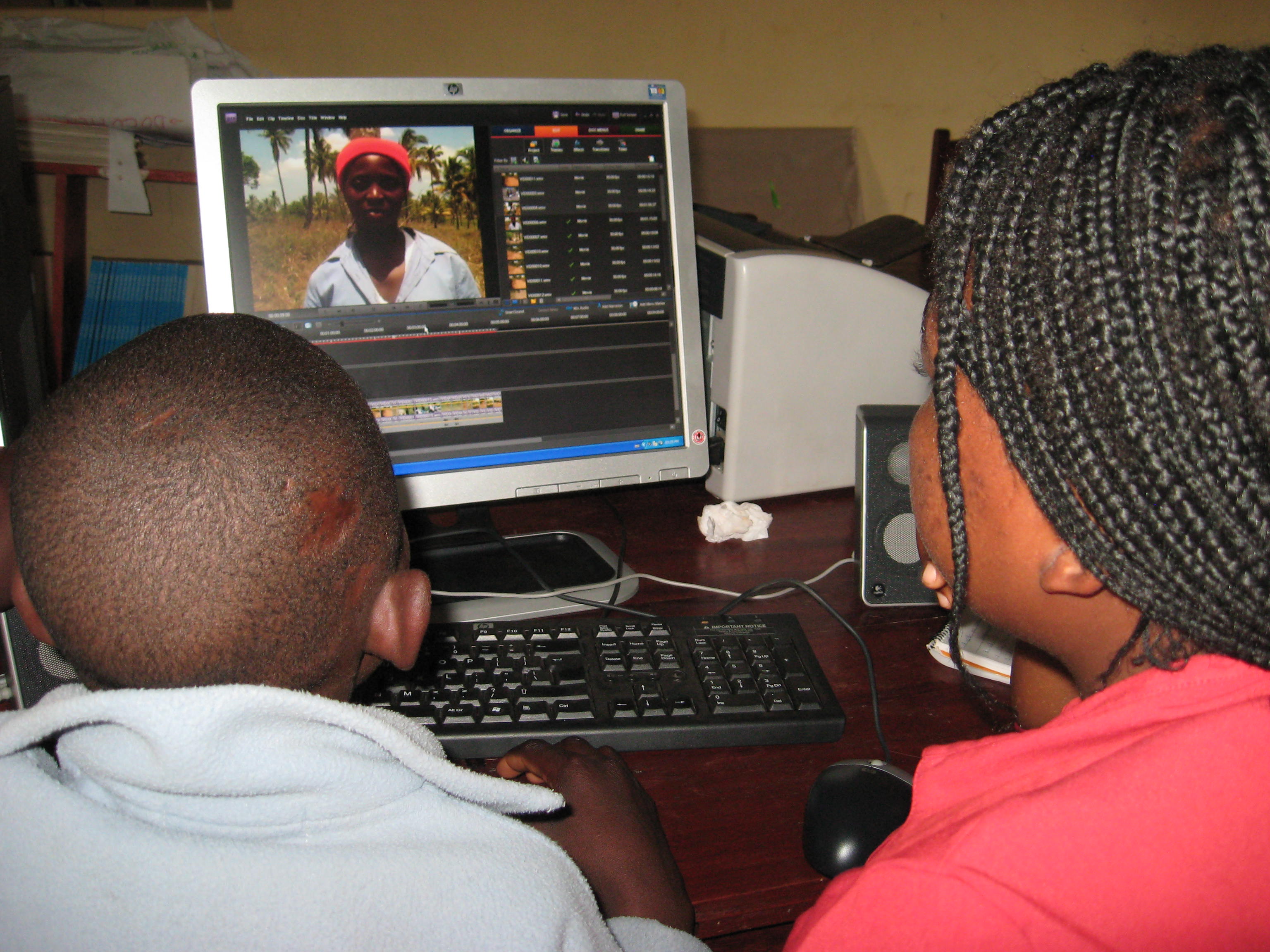
Girls from the YETAM project worked to prepare the interviews, film and videos below. Each girl interviews another girl from the community about the role of ICTs in their lives. The videos are worth watching as the questions and the responses of the girls are very insightful.
The interviewee in the first video says ICTs help you find out what is happening around the world. She comments that she found out about what just happened in Egypt (the February revolution) because of ICTs. Some of the other things I found most interesting in the videos are:
The girls’ recognition of the importance of information for making good decisions
The technologies that girls have most access to (mobile phone!)
The first time the girls encountered a mobile phone (a few years ago, at a local call box for one, and via an uncle who brought one back from travels for the other)
Why it is hard for girls to use ICTs in the community (lack of ICT devices, cost, parents don’t allow girls to learn about ICTs, at school the computers are few – you will see at least 20 persons per computer – and half are broken, the boys are very powerful and they fight us to occupy the computers, girls’ illiteracy, girls don’t continue in school)
How often the girls use ICTs (mobiles are used every day, there is only one place to access Internet in the community)
What they like most about ICTs (ICTs help me to know what is happening in other countries, I came to know about what happened 2 days ago in Egypt via communication technologies, many youth have been able to be employed through their mobile phones)
What they like the least about mobile phones and Internet (scamming, its easy to tell lies by mobile)
How can ICTs be helpful to girls (in my community a girl was able to borrow a phone from a friend to report that she was to be married at the age of 12, and the marriage was stopped)
Can ICTs be used to hurt girls? (yes, the girls who can afford their own mobile phones are those who are wealthy, when the poor girls see the wealthy girls with their phones, they go into competition, they can go into prostitution to have money to get a phone; but on the other side, girls are also self-employed through the phones, so the mobile phone hurts but it also helps girls)
How the communities use the Internet to sell their products (most people in the community use ICTs to communicate to find buyers for their products)
What girls would like parents, community leaders and government to do regarding ICTs (improve our access to ICTs, bring in programs and projects that can support youths to use ICTs and learn to use them better, educate parents to help them to see that girls also should be allowed to access this type of training and technology)
What hurts most about this ICT thing (when those who are really privileged and who can use the Internet don’t put their talents and privileges to good use, they go there to scam, to do robbery, not to do good; if these youth have the time and this privilege they should not do harm but they should do good.)
Kirby, one of the girls from the US, edited together portions of the videos above with video footage from the rest of the girls in the group, and they used the video to kick off their ‘Girl Led Side Event’ today. The turnout was great. They will continue throughout the rest of the week getting their ideas and messages across in different events and panels. You can follow their thoughts and impressions on the Plan Youth Tumblr or by following @plan_youth on Twitter. My colleague @KeshetBachan is also blogging from the CSW at the Girls Report blog.
Last year, I spent some time in Benin piloting an SMS reporting system to track and respond to Violence against Children (VAC). After almost a year developing the idea and thinking it through to see if it was potentially feasible (see 7 or more questions to ask before adding ICTs), in February 2010 we conducted 2 workshops with youth, staff and local authorities in Couffo and Atacora, Benin, to design a system with their input (see Finding Some ICT answers in Benin). The main pieces of the reporting system are FrontlineSMS and Ushahidi. A few months after, staff reported back on some of the challenges with implementation (see Tweaking: SMS Violence Reporting System in Benin).
Romeo Essou, project coordinator
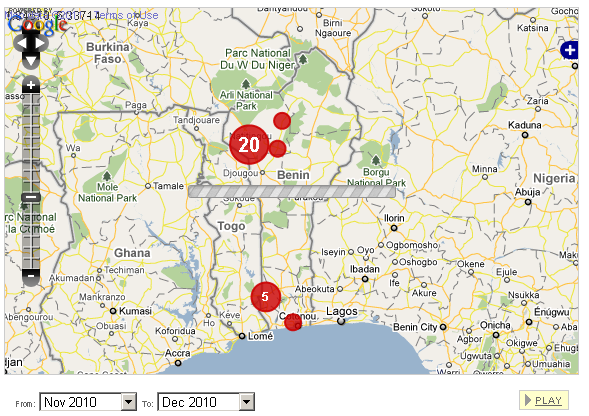
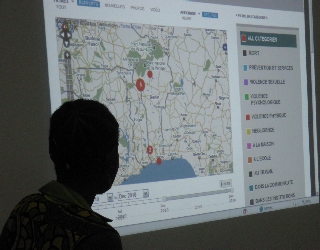
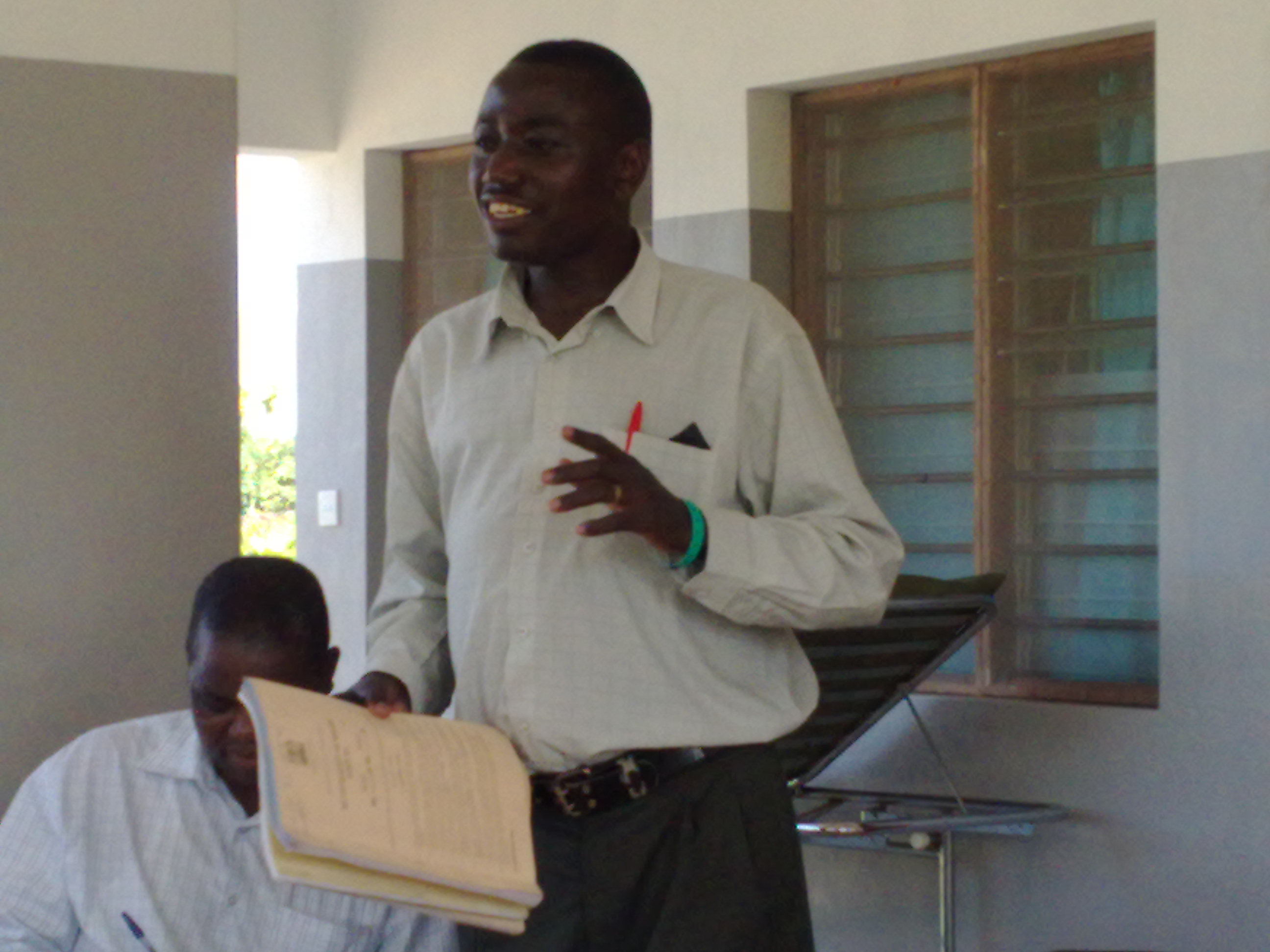
Since then, many of the issues have been resolved, and we’ve improved outreach so that communities are more aware of the SMS reporting system and how to use it. We’ve also been looking at the system itself, continuing testing, and seeing what improvements are needed. We didn’t have resources to dedicate someone fully to the program at first, but after seeing the potential, Plan Benin assigned Romeo (see photo) to manage the pilot project full-time in Benin. It’s been quite a pleasure working with the team there, and Romeo is no exception. Having someone dedicated full-time to working with communities and staff in the two districts has really made a difference. From November to mid-January, several additional violence cases were reported and a good number of them have been followed up on and closed.
Last week, Romeo shared what we still need to find solutions for. Some of these are issues that we’d identified last year and others are additional things that Romeo has suggested as he’s gotten down to business.
Some people still call instead of texting, or they send “call me back” texts
Cases are now coming in
The team is fairly certain this is due to illiteracy. Plan will involve more school-going youth in the initiative because they have higher literacy levels and can support others with reporting if needed.
Romeo and the team will continue doing outreach and education on how the system works both at community meetings and via radio broadcasts in French and local languages.
To address the calls that may continue to come in, a voice mail will be set up on the phone that links up to the FrontlineSMS laptop, with a message explaining that people have to send in a text. Romeo will do some research to determine which languages to use in the message for the best result (French and the 2 main local languages….).
If that doesn’t resolve the issue, Romeo and the staff will call back anyone who phones in.
Cost of an SMS continues to be a discouraging factor for people in terms of reporting. Often when Romeo or other staff visit a community, community members take advantage of their physical presence to report additional cases of violence. This is not necessarily negative, considering that we want to increase the number of incidents reported and followed up on; however, if it turns out that awareness around violence is high but the cost of the SMS is a deterring factor in reporting, more inexpensive channels to report also need to be offered. We are still negotiating with the local operators to get a free SMS line.
Spam
Some 50 spams a day are coming in. This is an issue on all mobile phones in Benin. Much of the spam comes from the mobile service providers themselves.
If the spam is coming from the same number, it’s possible that a workaround script could be written up at the point where FrontlineSMS forwards to Ushahidi. The messages can also be marked on Ushahidi as spam, but they will still be arriving via FrontlineSMS, unfortunately, unless numbers can be blocked somehow.
Needs further thought on how it might be overcome.
The Violence Tracking Platform (Ushahidi):
Ushahidi platform
We need to be 100% sure that any personal or identifying information coming in via the SMS reports is scrubbed so we do not put any children or witnesses at risk or falsely accuse anyone of violence against children by publishing the reports to the Ushahidi platform.
Romeo will develop a Privacy and Protection Checklist and train those administering the Ushahidi system to be sure to remove identifying information thoroughly before allowing it to be published on the Ushahidi site.
The identifying information still needs to be stored somewhere on the system to support with follow-up on the cases that come in. We may need additional development work on the platform to allow for that.
We hope to integrate the Ushahidi map into the Violence against Children website, which has educational material, videos and cartoons done by youth, and a discussion forum. However if the information poses a risk to anyone, we may decide to make the Ushahidi site private and keep it as a management tool rather than a public site.
Categorizing:
The staff who administer the Ushahidi website are not always clear which type of violence an incident should be categorized as (physical violence? sexual violence? psychological violence?).
Romeo will create short guidelines to help people to categorize the incidents properly. He’d like these to be incorporated into the Ushahidi platform.
Often a reported incident can fit into more than one category – eg., both physical and sexual violence. If it’s categorized in two categories, then we lose the sense of how many incidents there have been overall, and we’re unable to properly chart the data. We need to find a way to manage this on the system so that we have proper statistics.
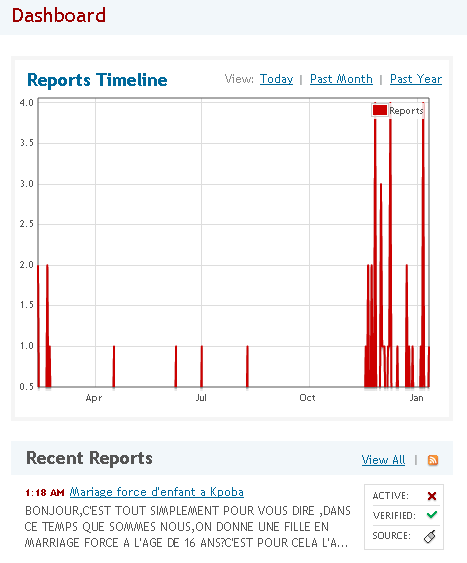
Recent reports of physical violence, sexual violence, forced marriage and exploitation
Follow up on reported cases:
We still want a way to track response and follow-up on cases within the Ushahidi platform, as often a report requires more than one verification visit.
We need someplace within the platform to store this type of information to keep records of follow-up.
This will require work by a developer, but it might be helpful for other institutions using Ushahidi as well. It’s also possible that FrontlineSMS Medic could be used for case management rather than Ushahidi, but it might prove confusing for staff to have to store and act on the same kind of information using two different tools.
Names of villages, hamlets, etc:
We would like to have a listing on the map of the various hamlets, villages, etc. They do not currently appear on the map since there is no record of them on Open Street Maps or Google Maps. Plan has this detailed information in its internal systems and we want to add it to the base maps so that it’s easier for administrators to locate the incident in the right community.
Coordination and outreach:
In addition to the technical work on the system, Romeo will continue to coordinate and share information with local partners and other organizations working on violence against children. There are similar initiatives already in place and we don’t want to duplicate efforts. Combining and sharing help line numbers and taking reports by both phone and SMS is one option.
I spent a few days in Nairobi early last week with our education and our ICT staff from Ghana, Uganda, Senegal, Mozambique, Kenya, Egypt and a few other folks, including the brilliant Mika Valitalo from our Finnish office and people from regional and headquarters levels. We were looking at goals and challenges in our education programs and thinking about where ICTs might play a role.
The process was really interesting. Starting a few months back, each country shared their education context analysis onto a wiki. In a second round they narrowed down to a specific area in education, looked at the information and communication flow and gaps, and identified areas where there might be an ICT solution. They focused mostly on mobiles, but in many cases mobiles were supported by computers, servers and laptops as well as non-digital information and communication tools and also solar technologies. Each country team met by Skype with Mika and an external consultant to discuss the concepts and get ICT advice and support. Then they updated their concepts and got additional feedback. For the third round, they added rich pictures to show what the specific ICT solutions might look like. Everyone had an opportunity to give input into everyone else’s ideas via the wiki.
At the meeting in Nairobi, we spent a day sharing the concepts with each other for clarification and focused input. Colleagues shared the broader education context in their countries and specifically in the communities where they are working. Then they illustrated the specific education issues and the ICT solutions that they were suggesting and/or the places they felt ICTs could help. Some of the ICT solutions focused on a very specific technology or device. Others showed how different types of ICTs could be integrated at different points in the process. Others required development of a totally new ‘solution’.
Some of the areas where colleagues thought ICTs could support education included: teacher training for those working in remote communities, adult literacy (especially literacy retention post literacy training), improving exam scores, livening up and improving in-class curriculum, and transparency and accountability in education. We spent 2 days then working in different small groups on the concepts, cross-pollinating ideas and deciding which of the concepts were most relevant to all 6 countries (in order to make it more possible to scale them) and which were most feasible and do-able.
The ideas were all a good fit with our global education strategy (see page 9) which focuses on service delivery (in partnership with local governments and communities); organizing and empowering rights holders; and grassroots participatory advocacy to influence education policies, financing and practice. The strategy prioritizes actions around equal access to education, quality of education, and education governance (see page 10).
Accountability and transparency in education
One of the concepts that captured the most interest from the whole group was that of using ICTs to improve accountability and transparency in education. Education is one of the areas where “Quiet Corruption” is often found. ‘Quiet corruption, which can take the form of absenteeism among teachers or doctors, the distribution of fake drugs, or the sale of diluted fertilizers to poor farmers, is having a damaging effect on people in Africa, according to the African Development Indicators report released by the World Bank….’ (March 18, 2010 article)
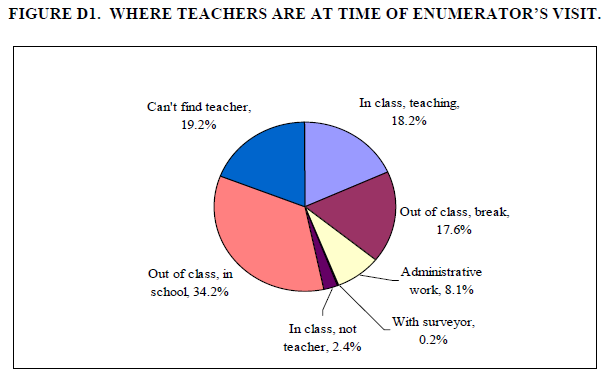
It's time for class.... where is the teacher to be found?
Edison, Charles and Erik, our colleagues from Uganda, did a short skit illustrating the different points in the primary education system where corruption happens. Their points correlated well with this summary of quiet corruption in education from a July 5, 2010 article in the Independent:
‘Early this year, the Transparency International (TI) Africa Education Watch Programme report: Africa Education Watch: good governance lessons for primary education showed that the government’s perception that massive enrollment is a sign of success of the UPE [universal primary education] programme must be revised to address the problem of overcrowding in classrooms, studying under trees, poor financial management, illegal fees, and lack of school inspection. The report exposes irritating embezzlement of UPE funds and abuse of authority by head-teachers who charge illegal fees, make students offer labour on teachers’ projects, sexual harassment, and systematic teacher absenteeism. The report noted that 85% of schools surveyed had either deficient accounting systems or none at all. In most cases, financial records were either unavailable or incomplete. The survey found limited financial documentation at district education offices and at schools. Most people who handle school grants had no training in basic finance management.
Another survey titled, The Efficiency of Public Education in Uganda, conducted in 2007 by the Ministry of Education to determine efficiency in provision of education services found an average rate of teacher absenteeism of 27% in Uganda, compared to other countries like Zambia (17%), and Papa New Guinea (15%). The aggregate loss caused by this absenteeism constituted 19% which translates into Shs 53 billion out of the Shs276 billion of the Education ministry’s wage bill.
In a swift headcount at the beginning of this year, the Education ministry established that the number of pupils listed in primary school registers was 25% higher than those actually studying. Similarly, the report established that the number of students in lower secondary schools had been exaggerated by 12%. For instance at Amaji Primary School last year, the school register had 816 pupils. But when the headcount was conducted the school administration could not account for 302 pupils.
It is reported that many districts’ chief administrative officers have failed to show proper accountability for the UPE and USE funds.’
The Uganda team also explained that:
Parental interest in education is very low because since Universal Primary Education launched, parents feel it’s the government’s responsibility. Some youth we were working with in Kenya last year made a short film about poor performance in primary schools covering the same issue (see below).
Teachers’ salaries are paid directly to their bank accounts, and there is no way to punish them if they don’t show up.
There are mechanisms to ensure that donor funds go from the national level to the district level and then on to the school, but no accountability mechanisms to ensure that they get from the school to the classroom and are translated into quality education for children.
District level government authority and accountability ends when they transfer funds to the schools; school directors can report to them that they have received funding and that everything is going fine when it’s really not.
Local school committees are often made up of people who are not neutral and who do not have the best interest of the children in mind. In some cases, school committee positions are used for personal gain and to launch individual political careers and political campaigns.
Lack of parental and community involvement in the education process and in school governance means that no one is demanding accountability from teachers and schools.
Sexual and physical violence in schools is very common and underreported. When it is reported, often nothing is done about it.
(Start playing the video, then click the small ‘cc’ button to turn on captions in English)
Colleagues from the other countries face the same challenges in their work and in their own children’s education.
Can ICTs play a role?
What is the solution then? Colleagues suggest that motivating parents and the community to get more involved in school governance and demanding transparency and accountability can begin to change the situation. This obviously requires a lot more than ICTs. So several different actions would be taken to engage and motivate parents and the community to take a bigger role in their children’s education. Then ICTs can be integrated into and support the process for sharing education information with parents, such as student absenteeism, grades, parent-school meetings, exam dates and scores, etc. Parents and students would also be able to report when teachers do not show up or suspected corruption. Students could also report abusive teachers, absent teachers, and other issues they are not happy with at the school. A neutral party would manage and hold the information that flows in and out to protect students from reprisal and to protect teachers from any abuse of the system in case fraudulent or incorrect information is reported. Commitment from those responsible for overseeing education to respond to the issues raised and take serious action is also needed, and this may be the biggest challenge overall. Plan can play a role there, leveraging existing relationships with local and national governments and Ministries.
The idea needs quite a bit of further work, a closer look at feasibility, and more research and input from local communities and parents. As mentioned, the ICTs are actually a small, but potentially very important, part of a much larger initiative to get parents and communities involved in school governance to demand transparent, accountable and quality education and budget spending.
Challenges in the process
Some of the challenges that we had to manage well during this initial piece of the longer process included:
We needed to ensure that we were starting with the context and the need for better information and communications, not starting with the technology and devices and building initiatives around them. Yet we also had to avoid getting lost in the overall context and missing the opportunity to pinpoint potential ICT solutions at specific places within the context. Role play and flip chart illustrations of the ‘problem’ and the ‘solutions’ were very useful for getting more concrete (“So, Kofi is here in his community and he wants to …. So he uses xxx to do this, and then this happens and then….).
Though we wanted to specifically look at places that mobiles and other ICTs could support, it was important to list out all the factors that needed to be in place in order for the ICTs to work and to think clearly about the constraints we might face during implementation. One good question to help with that was, after seeing an idea or ICT solution presented, to ask “What needs to be in place in order for that to happen?” Then you start to remember critical things like community motivation, government interest to actually resolve a problem, electricity, someone to set up and manage a server, a strong enough network to download multimedia content, mobile versions of websites, educational content re-design for mobiles, teacher training on how to integrate ICTs in the classroom, limitations of SMS for doing something other than rote learning, higher versions of a mobile operating system, a smart phone, etc.
We had input from a potential corporate partner during the process. We learned that corporations are thinking several years ahead to what will be coming down the line; however non-profit are normally working within existing constraints and trying to find solutions that work here and now in the resource poor places where we work or ways to get around those constraints. Multi-level solutions seemed to be a good possibility; eg., ideas that can rely on SMS today, but have potential to expand as networks expand and data enabled mobiles become more available.
A corporation tends to think in terms of vendors, results, timelines, launch dates, price points, return on investment whereas a non-profit (at least ours) tends to think in terms of community members, organizations, process, participation, local context. Our facilitator even told us that a corporation normally does a presentation by starting with the solution, and then spending the rest of the presentation showing why that is the right solution. A non-profit usually starts a presentation by sharing all the context and background, and showing the process that led to eventually reaching the potential solution, including every step along the way, how ownership was achieved in the process, why different decisions were made and who participated in them. So keeping corporate vs non-profit cultures and languages in mind is also important when working on joint initiatives.
We need to remember to establish measurable indicators of success so that we can tell if this new type of intervention has a different/ better/ greater / lesser impact than carrying out a similar process without ICTs or with a different set of ICTs. This is something we will address once the full idea is developed. Impact measurement is very important to both corporate partners and development organizations.
This was the first time many were involved a process of this kind, so keeping the balance between technology and development goals was a constant challenge. We sometimes veered too far towards focusing on all the details of the context and then back to focusing too much on that piece of the context where a potential technology solution was seen. I think we were moving toward a pretty healthy mix of both. The process is nowhere near complete, and as we continue to work on the ideas and look at feasibility and actual implementation, we should find the sweet spot.
The work above was guided by Plan Finland’s recent publication ICT Enabled Development – Using ICT strategically to support Plan’s work. On the whole, it was a great learning process for everyone involved, and we came up with some good ideas that we will flesh out in the coming months. Having the opportunity to patiently and carefully think through areas and ways that ICTs can support program goals around education and discussing the ideas at length with colleagues was a capacity strengthening exercise for all involved and will mean that we will be more prone in general to thinking about incorporating ICTs in our work going forward.
I like to share good training guides when I come across them, so here is a quick summary and a link to Bamboo Shoots. It was originally created by Plan in Cambodia.
Bamboo Shoots is a training manual on child rights, child centered community development and child-led community actions for facilitators working with children and youth groups. You can download it here.
Bamboo Shoots was developed to: Increase children’s understanding of their rights as defined by the United Nations Convention on the Rights of the Child (UNCRC); raise children’s awareness of their rights and build their capacities to claim them; create opportunities for children to recognize, identify and prioritize issues and problems or gaps in relation to child rights violations; and provide opportunities for children to influence agendas and action regarding identified and prioritized child rights violations.
Bamboo Shoots takes complicated concepts and breaks them down into easy language and engaging, interactive sessions. It also offers good resources and background material for facilitators so that they can manage the sessions well.
Part One:
I like this manual because it starts off right in the first chapter with the importance of setting the tone and the context for good child and youth participation. It provides ideas on selecting participants and facilitators, and gives a description of a good facilitator. It provides recommendations on the setting and practical considerations for managing a workshop with children, as well as good paragraph to help think through when and when not to include other adults in the training.
The guideline goes through the 6 principles for making child participation a reality:
Non-discrimination and inclusiveness
Democracy and equality of opportunity
Physical, emotional and psychological safety of participants
Adult responsibility
Voluntarism, informed consent and transparency
Participation as an enjoyable and stimulating experience for children
It shares Plan’s code of ethics on child participation and important steps to follow in working with children, as well as tips on how to establish a good working relationship with children, how to help children learn and develop their potential, how to help children build self-confidence and self-esteem, and how to encourage children to develop a responsible attitude towards others and a sense of community. There is a section on how to keep children safe also and an explanation of a facilitator’s ‘duty of care’.
A last section of part one lists common facilitation techniques and tools, such as: role-play, working in pairs and groups, idea storming, whole group discussion, questioning, projects, buzz sessions, drawing, photographs, video, word association, recreating information and more; and gives ideas on when they are most useful.
Part Two:
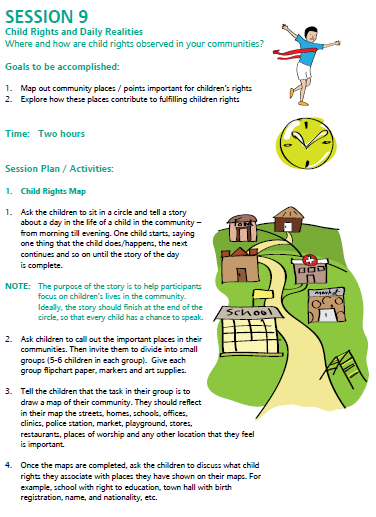
Section 9 on community mapping
The next section has very complete sessions on:
the concept of rights
the history of human rights, and international treaties on rights
children’s rights as human rights
duties and responsibilities in relation to child rights
making sure children are involved
child rights and daily realities and making a child rights map
gaps in fulfilling child rights
setting priority problems and violations of child rights
creating an action agenda and proposed solutions to the gaps identified
Each session comes complete with a pre-training assessment, reading material for facilitators and handouts for participants.
Part Three:
The last section of the manual helps facilitators take children through the steps to child-led community action, including children’s participation in all the program and project cycles: assessment, planning, implementation, monitoring and evaluation.
Needs-based vs. Rights-based
It also explains Plan’s rights-based child-centered community development approach, the foundations of that approach, and the difference between needs-based approaches and rights-based approaches. It goes on to cover planning and supporting child-led community action.
The last section of the guide offers a list of resources and references.
For anyone working with children, or even anyone looking for an excellent comprehensive community training package on rights and community-led action, I really recommend checking out Bamboo Shoots. Whether you are working through media and ICTs or using more traditional means for engaging children, this is a great guide on how to do it well from start to finish. I’ll be referring to it often.
This is a cross-post of an article written by Shawn Hayward, who interns with Journalists for Human Rights (JHR) via the International Youth Internship Program (IYIP). You can read Shawn’s original post here.
It’s easy to get jaded seeing sign after sign in the streets of Accra pointing the way to one NGO or another. Despite the slew of development organizations here, people continue to live with poor drinking water, low incomes and lack of decent health care.
One NGO (besides jhr, of course) seems to be taking a step in the right direction. Plan Ghana has been working with children in the country since 1992. The goals, according to their website, are to provide quality education and teacher training, create awareness of children’s rights and ensure food security for children.
Anyone can state goals on a website. It’s much harder to find effective ways to achieve them. Plan Ghana held a forum this week as part of a week-long workshop on the status of children in the country. They flew in 80 youth delegates from all over West Africa. It had real results.
This wasn’t an event where adults tell kids what they should think. The young delegates posed questions to the forum guests, including the United Nations Representative for Violence Against Children, Marta Santos Pais, and the Ghanaian Minister of Sports and Youth, Akua Sena Dansua.
Most importantly, the kids got a chance to tell their stories to a wide audience, and the media and representatives from various NGOs had a rare opportunity to hear well-spoken, motivated youth describe their experiences with children’s rights abuses.
One girl from Cote D’Ivoire told us in her native French how girls in her country are beaten by child traffickers when they refuse to prostitute themselves, and how a three-year-old girl was sexually abused by a neighbour. Police jailed the man for 72 hours and released him.
Outside the auditorium, Plan Ghana displayed pictures made by West African children that illustrate the abuses they’ve seen during their young lives. There were images of people being beaten, stabbed, raped and murdered.
I remember drawing snowball fights and monster trucks when I was their age, maybe the occasional army tank. No one being murdered though, or raped—I was lucky enough to grow up far away from that.
The forum was effective because the kids were active participants, not mere objects to be educated. We learned as much as they did during the forum, if not more. These kids came away with the pride of knowing they played a role in shaping their future, and Plan Ghana distinguished itself as more than just another NGO with a bunch of goals posted on its website.
Our Tracking Violence Against Children in Benin project won first prize for Most Innovative Use of Technology or Social Media in Plan’s internal Global Awards contest. The competition was fierce and we were up against some really great projects.
We still have some kinks to work out and we are still in pilot phase, but we are pretty happy about the award in any case. It helps motivate us even further to improve on the idea until it’s fully functioning and sustainable and we know that it’s resulting in more reporting of violence, helping to track trends and cases of violence, and being used by local and national authorities for responding and following up on those cases that occur.
Many many thanks to everyone who has helped the project get where it is, including: Henri da Silva, Carmen Johnson, Bell’Aube Houinato, Amelie Soukossi, Eleonore Soglohoun, Morel Azanhoue, Victoire Tidjani, Alfred Santos, Jean Sewanou, Michel Kanhonou, Paul Fagnon, Camille Ogounssan, Anastasie Koudoh, Mika Valitalo, Ken Banks, Josh Nesbit, Patrick Meier, Juliana Rodich, Henry Addo, David Kobia, James Bon Tempo, Stefanie Conrad, Theresa Carpenter, Penelope Chester, Shona Hamilton, and community leaders, parents, school directors, local authorities, children and youth in the 2 participating communities.
‘Last week, four episodes of a film entitled Prostitutes of God were posted on VBS.TV, which is owned by Vice Magazine. Prostitutes of God producer Sarah Harris, spent time with members of Veshya Anyay Mukti Parishad (meaning ‘Prostitutes’ Freedom from Injustice’) or “VAMP,” [who] let her into their lives, their families and their workplace. The result? Films that are inaccurate and misrepresentative, and insulting to the people who agreed to participate and to the Hindu culture.’
The ‘Prostitutes of God’ film is part of the Vice Guide to Travel where ‘correspondents from VBS and Vice magazine are dispatched around the world to visit the planet’s most dangerous and weird destinations.’
Their reaction is one of anger and feelings of betrayal. They denounce the filmmaker (Sarah Harris) for laughing at them, making fun of them, disrespecting them, misinterpreting their stories and making public judgment calls on their religious practices.
They say ‘… Your analysis is wrong and we do not agree with it. Who is Sarah Harris? What is the research that informs her story?’‘ They ask ‘Who gave you the right to laugh?‘ They wonder ‘If I had come to your town and insulted your gods would you have liked it?‘
Tonight I watched the 30 minute film. To be honest, it doesn’t strike me as any worse than a lot of other stories told about people from developing communities or exotic or marginalized groups. We see these kinds of stories all the time, where people are held up to view with sensationalism, superiority and for purposeful shock value.
What is interesting about this case is that the community saw it and reacted publicly. It made me wonder, what is the back story? What steps were taken by the filmmaker to secure informed consent? What were members of the different communities expecting the film to be about? What about the local organization, what were they expecting? Where was the communication breakdown and what steps were taken to try to avoid it? What ownership of the content of the film and the storyline did the community members have? Did they expect to be paid? Were they put at high risk or otherwise threatened when the filmmaker released her film? Did the filmmaker think about the ramifications that her film would carry for the communities where she had filmed? What was the filmmaker’s purpose for telling this story?
I think we are going to see more and more of this type of scenario. I hope it will force media practices and ethics to be updated, more respectful and more legal when filming marginalized or disenfranchised groups in ‘developing countries’.
A third film about the Devadasi
I know of a third film about the Devadasi. I saw this one several years ago, and it was made by a group of Indian child journalists as part of a child media project. In that case, the children successfully used the film at the community level to press for compliance with established laws against the Devadasi practice and to discuss culturally appropriate alternatives.
I’m a big fan of local activists using media tools to push for social change on their own terms.
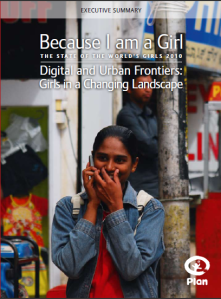
The urban and digital environments are the 21st century’s fastest-growing spheres. Both offer enormous potential for girls around the world, but prejudice and poverty exclude millions of girls from taking advantages of the transformative possibilities that cities and information and communication technologies (ICTs) can offer. Exploitation and the threat of violence exist in both urban spaces and in cyberspace, especially for the most marginalized and vulnerable girls.
The piece that I’m most interested is the segment on Girls and ICTs, since that’s the main area I currently work on. (Disclosure: I contributed to the development of the chapter). To give you a taste of what’s in the report, here’s a summary of Chapter 4: Adolescent girls and communications technologies – opportunity or exploitation. You can download the full report here.
Chapter 4’s introduction explains that online behaviors mimic offline behaviors. Empowerment and abuse of girls reveals itself through technology as it does in other areas of girls’ lives. Through girls own voices, expert opinion and original research, the report highlights the positive and negative consequences of ICTs, in particular mobile phones and the Internet. The authors talk about the positive ideas and new ways of thinking that ICTs open up for girls in terms of learning, networking, campaigning and personal development. They then discuss the darker side of technology — how cyberspace makes it easier for sexual predators to operate with impunity, where girls are prime targets for abuse, and where girls are sometimes perpetrators themselves.
Section Two offers girl-related statistics on the digital revolution and the digital divide and highlights the enormous variation between and within countries in terms of digital access, and the gaps between rich and poor, male and female, urban and rural. The report cautions that excluding girls from the digital revolution will have consequences on their growth and development. For additional global ICT statistics (1998-2009) see this post at ICT4D blog. Another resource on mobiles and women is the Cherie Blair study.
Section Three describes and provides statistics around 7 important reasons that ICTs are important to adolescent girls:
To keep in touch with others and reduce isolation in countries where this is an issue
To further their education and acquire new skills
To take an active part in their communities and countries
In order to have the skills to find work
To build specific skills and knowledge on subjects they might otherwise not know about, such as HIV and AIDS
Because evidence has shown that learning to use these technologies can build self-esteem
In order to keep safe
Section Four goes in depth around ways that adolescent girls compete with adolescent boys for the most use of communications technologies such as mobiles and the Internet, but that often they are using them for different reasons and different purposes. Most of the available research for this chapter is from the ‘North’, yet the studies indicate that girls tend to use ICTs for communication and boys tend toward a focus on the technology itself. Studies on this from the ‘South’ are unavailable to date.
When girls are treated as real partners....
Section Five discusses the barriers that keep adolescent girls from accessing ICTs. In other words, if the importance of ICTs has been established, girls are willing and able and keen to use ICTs, then what prevents them from having equal access to ICTs? Some of the issues that the chapter discusses are those of power and control.
‘I can immediately call the wholesale market to inquire about prices and place direct orders. I am now recognized as a businesswoman, growing and selling sesame seeds, not just as somebody’s wife or sister,’ said a woman in India.
‘You’re a girl – a mobile can cause many problems, and so you don’t need it,’ said the father of a Palestinian girl.
Girls’ access to technology is limited by their societies, communities and families. In patriarchal societies where men control technology, girls and women simply have less access, because ICT’s confer power on the user. Even in educational settings, a study found that boys tend to hog available ICTs. Teachers have distinct expectations from boys vs. girls. Girls also don’t tend to go into the field of ICTs or want to have ICT careers, since the field is typically a male field. ‘Technology appears to be marketed by men for men. It’s time we started switching bright and talented girls on to science and technology,’ comments a British government official.
Women and girls in developing countries however are not receiving the basic education and training that they need to be ready technology adopters. They are seen as users and receivers of technology, not as innovators involved in technology design and development. Once they are computer literate, however, many young women see the computer industry as a route to independence. The report offers statistics on the numbers of young women in countries like South Africa, India, Malaysia and Brazil who are working in the ICT related industries and professions.
What stops girls from using technology?
There are seven key factors that prevent girls from taking advantage of technology:
Discrimination – girls are still viewed as second-class citizens in many societies.
Numbers – boys both outnumber girls and tend to dominate access to computers.
Confidence – because they don’t have equal access at school, girls may be less confident than boys when it comes to going into IT jobs because they don’t feel they have the same skills and knowledge as the young men competing for the jobs.
Language – in order to use these technologies, English is usually a requirement, and for girls with only basic literacy in their own language, this is a major barrier.
Time – girls’ domestic roles, even at a young age, mean they have less free time than boys to explore and experiment with new technologies.
Money – girls are less likely than their brothers to have the financial resources to pay for, say, a mobile phone and its running costs, or access to the web in an internet café.
Freedom – boys are also more likely to be allowed to use internet cafés because parents are concerned about their daughters going out on their own.
Section Six digs into the dark side of cyberspace and the risks that adolescent are exposed to at a time of their lives when they are beginning to develop sexually. One in 5 women report having been sexually abused before the age of 15, according to the authors. The Internet by and large is simply a new medium for old kinds of bad behavior, however; and new technologies simply extend the possibility of abuse to new arenas. Girls who are not even using the Internet are still vulnerable, given that a photo of them can be taken and posted by someone else even if they have no computer access. Cyberbullying and cyberharrassment are other risks that girls face.
Many young people and youth organizations are active in facing these risks and protecting themselves, and various campaigns exist to help adolescent girls be more aware of how to protect themselves while using ICTs. New technology can itself also be a tool to help with counter-trafficking efforts. The chapter outlines some of the different efforts being made to protect girls online, and emphasizes the role of parents and schools in discussing on-line use and being supportive as girls begin exploring cyberspace.
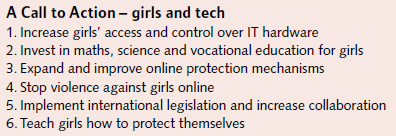
There is a quite broad set of recommendations for a wide array of actors at the end of Chapter 4 that could be taken up, contextualized and fleshed out by different parties or stakeholders into specific calls to action:
Brazilian girls in a digital world. As an annex to Chapter 4 on ICTs, new research with 49 boys and 44 girls, aged 10-14 examines adolescent girls’ rights and protection in Brazil within the context of ICTs. ICT use is growing exponentially in Brazil, particularly among 15-17 year olds, where between 2005 and 2008, ICT usage went from 33.7 to 62.9 percent. The study covers use pattern, links between on-line and off-line behavior, and on-line safety.
Conclusions. The report concludes by calling for greater knowledge about ICT-related sexual exploitation and violence against girls, more emphasis on prevention and stronger international standards. It also points out that girls need to be empowered to use new communications technologies safely, on their own terms, and in ways that promote their development and build their futures.
Call to action for September 22: As part of the launch of the Because I am a Girl Report, Plan is calling for International Day of the Girl to be established on September 22. You can sign the petition here.
Coming from the viewpoint that accountability and transparency, citizen engagement and public debate are critical for good development, I posted yesterday on 5 ways that ICTs can support the MDGs. I got to thinking I would be remiss not to also post something on ways that ICTs (information and communication technologies) and poor or questionable use of ICTs and social media can hinder development.
It’s not really the fault of the technology. ICTs are tools, and the real issues lie behind the tools — they lie with people who create, market and use the tools. People cannot be separated from cultures and societies and power and money and politics. And those are the things that tend to hinder development, not really the ICTs themselves. However the combination of human tendencies and the possibilities ICTs and social media offer can can sometimes lead us down a shaky path to development or actually cause harm to the people that we are working with.
When do I start getting nervous about ICTs and social media for social good?
1) When the hype wins out over the real benefits of the technology. Sometimes the very idea of a cool and innovative technology wins out over an actual and realistic analysis of its impact and success. Here I pose the cases of the so-called Iran Twitter Revolution and One Laptop per Child (and I’ll throw in Play Pumps for good measure, though it’s not an ICT project, it’s an acknowledged hype and failure case). There are certainly other excellent examples. So many examples in fact that there are events called Fail Faires being organized to discuss these failures openly and learn how to avoid them in the future.
2) When it’s about the technology, not the information and communications needs. When you hear someone say “We want to do an mHealth project” or “We need to have a Facebook page” or “We have a donor who wants to give us a bunch of mobile phones–do you know of something we can do with them?” you can be pretty sure that you have things backwards and are going to run into trouble down the road, wasting resources and energy on programs that are resting on weak foundations. Again, we can cite the One Laptop per Child (OLPC) initiative, where you have a tool, but the context for using it isn’t there (connectivity, power, teacher training and content). There is debate whether OLPC was a total failure or whether it paved the way for netbooks, cheap computers and other technologies that we use today. I’ll still say that the grand plan of OLPC: a low-cost laptop for every child leading to development advances; had issues from the start because it was technology led.
3) When technology is designed from afar and parachuted in. If you don’t regularly involve people who will use your new technology, in the context where you’re planning for it to be used, you’re probably going to find yourself in a bind. True for ICTs and for a lot of other types of innovations out there. There’s a great conversation on Humanitarian Design vs. Design Imperialism that says it all. ICTs are no different. Designing information and communication systems in one place and imposing them on people in another place can hinder their uptake and/or waste time and money that could be spent in other ways that would better contribute to achieving development goals.
4) When the technology is part of a larger hidden agenda. I came across two very thought-provoking posts this week: one on the US Government’s Internet Freedom agenda and another from youth activists in the Middle East and North Africa region who criticize foundations and other donors for censoring their work when it doesn’t comply with US foreign policy messages. Clearly there are hidden political agendas at work which can derail the use of ICTs for human rights work and build mistrust instead of democracy. Another example of a potential hidden agenda is donation of proprietary hardware and software by large technology companies to NGOs and NGO consortia in order to lock in business (for example mHealth or eHealth) and prevent free and open source tools from being used, and which end up being costly to maintain, upgrade and license in the long-term.
5) When tech innovations put people and lives at risk. I’d encourage you to read this story about Haystack, a software hyped as a way to circumvent government censorship of social media tools that activists use to organize. After the US government fast-tracked it for use in Iran, huge security holes were found that could put activists in great danger. In our desire to see things as cool, cutting edge, and perhaps to be seen as cool and cutting edge ourselves, those of us suggesting and promoting ICTs for reporting human rights abuses or in other sensitive areas of work can cause more harm than we might imagine. It’s dangerous to push new technologies that haven’t been properly piloted and evaluated. It’s very easy to get caught up in coolness and forget the nuts and bolts and the time it takes to develop and test something new.
6) When technologists and humanitarians work in silos. A clear example of this might be the Crisis Camps that sprung up immediately after the Haiti Earthquakes in 2010. The outpouring of good will was phenomenal, and there were some positive results. The tech community got together to see how to help, which is a good thing. However the communication between the tech community and those working on the ground was not always conducive to developing tech solutions that were actually helpful. Here is an interesting overview by Ethan Zuckerman of some of the challenges the Crisis Commons faced. I remember attending a Crisis Camp and feeling confused about why one guy was building an iPhone application for local communities to gather data. Cool application for sure, but from what people I knew on the ground were saying, most people in local communities in Haiti don’t have iPhones. With better coordination among the sectors, people could put their talents and expertise to real use rather than busy work that makes them feel good.
7) When short attention spans give rise to vigilante development interventions. Because most of us in the West no longer have a full attention span (self included here), we want bite sized bits of information. But the reality of development is complicated, complex and deep. Social media has been heralded as a way to engage donors, supporters and youth; as a way to get people to help and to care. However the story being told has not gotten any deeper or more realistic in most cases than the 30 second television commercials or LiveAid concerts that shaped perceptions of the developing world 25 years ago. The myth of the simple story and simple solution propagates perhaps even further because of how quickly the message spreads. This gives rise to public perception that aid organizations are just giant bureaucracies (kind of true) and that a simple person with a simple idea could just go in and fix things without so much hullabaloo (not the case most of the time). The quick fix culture, supported and enhanced by social media, can be detrimental to the public’s patience with development, giving rise to apathy or what I might call vigilante development interventions — whereby people in the West (cough, cough, Sean Penn) parachute into a developing country or disaster scene to take development into their own hands because they can’t understand why it’s not happening as fast as the media tells them it should.
8 ) When DIY disregards proven practice. In line with the above, there are serious concerns in the aid and development community about the ‘amateurization’ of humanitarian and development work. The Internet allows people to link and communicate globally very easily. Anyone can throw up a website or a Facebook page and start a non-profit that way, regardless of their understanding of the local dynamics or good development practices built through years of experience in this line of work. Many see criticism from development workers as a form of elitism rather than a call for caution when messing around in other people’s lives or trying to do work that you may not be prepared for or have enough understanding about. The greater awareness and desire to use ‘social media for social good’ may be a positive thing, but it may also lead to good intentions gone awry and again, a waste of time and resources for people in communities, or even harm. There’s probably no better example of this phenomenon than #1millionshirts, originally promoted by Mashable, and really a terrible idea. See Good Intents for discussion around this phenomenon and tools to help donors educate themselves.
9) When the goal is not development but brand building through social media.Cause campaigns have been all the rage for the past several years. They are seen as a way for for-profit companies and non-profits to join together for the greater good. Social media and new ICTs have helped this along by making cause campaigns cheap and easy to do. However many ‘social media for social good’ efforts are simply bad development and can end up actually doing ‘social harm’. Perhaps a main reason for some of the bad ideas is that most social media cause campaigns are not actually designed to do social good. As Mashable says, through this type of campaign, ‘small businesses can gain exposure without breaking the bank, and large companies can reach millions of consumers in a matter of hours.’ When ‘social good’ goals are secondary to the ‘exposure for my brand’ goals, I really question the benefits and contribution to development.
10) When new media increases voyeurism, sensationalism or risk. In their rush to be the most innovative or hard-hitting in the competition for scarce donor dollars, organizations sometimes expose communities to child protection risks or come up with cutesy or edgy social media ideas that invade and interrupt people’s lives; for example, ideas like putting a live web camera in a community so that donors can log on 24/7 and see what’s happening in a ‘real live community.’ (This reminds me a bit of the Procrastination Pit’s 8 Cutest and Weirdest Live Animal Cams). Or when opportunities for donors to chat with people in communities become gimmicks and interrupt people in communities from their daily lives and work. Even professional journalists sometimes engage in questionable new media practices that can endanger their sources or trivialize their stories. With the Internet, stories stick around a lot longer and travel a lot farther and reach their fingers back to where they started a lot more easily than they used to. Here I will suggest two cases: Nick Kristof’s naming and fully identifying a 9-year-old victim of rape in the DRC and @MacClelland’s ‘live tweeting’ for Mother Jones of a rape survivor’s visit to the doctor in Haiti.
Update: Feb 22, 2011 – adding a 10a!
10a) When new media and new technologies put human rights activists at risk of identification and persecution. New privacy and anonymity issues are coming up due to the increasing ubiquity of video for human rights documenting. This was clearly seen in the February 2011 uprisings in Egypt, Tunisia, Libya, Bahrain and elsewhere. From Sam Gregory’s excellent piece on privacy and anonymity in the digital age: “In the case of video (or photos), a largely unaddressed question arises. What about the rights to anonymity and privacy for those people who appear, intentionally or not, in visual recordings originating in sites of individual or mass human rights violations? Consider the persecution later faced by bystanders and people who stepped in to film or assist Neda Agha-Soltan as she lay dying during the election protests in Iran in 2009. People in video can be identified by old-fashioned investigative techniques, by crowd-sourcing (as with the Iran example noted above…) or by face detection/recognition software. The latter is now even built into consumer products like the Facebook Photos, thus exposing activists using Facebook to a layer of risk largely beyond their control.”
11) When ICTs and new media turn activism to slacktivism. Quoting from Evgeny Morozov, “slacktivism” is the ideal type of activism for a lazy generation: why bother with sit-ins and the risk of arrest, police brutality, or torture if one can be as loud campaigning in the virtual space? Given the media’s fixation on all things digital — from blogging to social networking to Twitter — every click of your mouse is almost guaranteed to receive immediate media attention, as long as it’s geared towards the noble causes. That media attention doesn’t always translate into campaign effectiveness is only of secondary importance.” Nuff said.
I’ll leave you with this kick-ass Le Tigre Video: Get off the Internet.… knowing full well that I’m probably the first one who needs to take that advice.
‘It feels so 80s… or early 90s… to be political… where are my friends? GET OFF THE INTERNET, I’ll meet you in the streets….’
I’ll be speaking on a panel called ICT4D, Innovations and the MDGs next week during UN Week in New York and another on Girls and Mobiles hosted by Mobile Active. So, I’ve been putting together my thoughts around girls, child rights, ICTs and the MDGs. The angle I’m taking is not from the large donor, top down, huge institutional program side, but instead, looking at examples from the work I’ve been closest to over the past few years at the community and district level, mostly focused on child and youth participation in the development process. Check my MDGs through a child rights lens post for more background.
My last post (3 ways to integrate ICTs into your development organization) uses Hannah Beardon’s framework to discuss how organizations can integrate ICTs into their work. Hannah suggests that ICTs can be integrated directly(providing access to ICTs), strategically (using ICTs as tools to support development processes) and indirectly (using ICTs to improve efficiency and communication within the organization).
To complete that post, I’m listing below 5 ways that ICTs can facilitate accountability and transparency, citizen engagement, and public debate, all of which are necessary to bring about development improvements and achieve the MDGs. Obviously these are not the only ways ICTs can support the MDGs, but this post would have been miles long if I’d listed all the initiatives that are out there.
1) Engaging children and youth in the development process
An engaged and active population is a key ingredient for good development programs. Children and youth have much to offer, are directly targeted in the MDGs and many other development initiatives, offer valuable ideas and energy, and make up around half the population in many of the countries that are lagging in reaching the MDGs. ICTs can help children and youth engage in the development process and bring their ideas, opinions and voices alive at the community, district, national and global level. ‘Using new technology, new media, children and youth can claim a space that they didn’t have before. They can influence certain things, advocate on particular issues that are important to them, take ownership in communities and in leadership. ICTs excite them and encourage them to be more involved and engaged.’ Anthony Njoroge, Plan Kenya Community ICT Manager.
ICTs empower young people with skills that make them more confident and more involved at the community level.‘Using ICTs, children and youth have become more responsible because they are not waiting for adults to come in with something. Now they are designing it themselves, they are creating space for themselves and bringing their agenda to adult meetings instead of waiting to be invited in or having to work within the agenda of the adults. It used to be that you’d start working with 20 youth, you’d invite them into a community meeting. You’d see the number go down to 10, to 4, to 3, because they didn’t see any relation to themselves in the topics and the goings on. With integration of technology and the arts however, youth have a high level of interest. It’s really bringing in their opinions, their thoughts and ideas to join their voices with parents. Now they use arts and media to promote communication, dialogue on their issues and look for ways to resolve them. Before they were totally missing from the discussion, but now they are here.’ Judith Nkie, Plan Cameroon Youth Empowerment through Arts and Media Project Coordinator.
Arts and ICTs were used in the above-mentioned project as tools for youth engagement, mapping and prioritizing, research and community dialog. The media produced with the ICT tools was shared first within the community and then outside at the district, national and global levels as a way of engaging decision makers and the public in the youths’ agenda. For more on how arts and ICTs are being used in the above-mentioned project, see this post. Watch 100 videos made by youth in 6 African countries on topics they are passionate about.
GPS work in Kwale, Kenya
2) Identifying resources and mapping patterns for better decision-making
Tracking and visualizing information is an excellent way to improve decision-making capacity. The advent of simpler and open source participatory digital mapping tools allows community members to map their communities digitally and to have more ownership of the information. Mapping helps identify patterns that may not have been visible before. Local maps shared on-line allow local people to provide their own information from their own perspective, and that information serves multiple purposes at the local level and beyond.
Digital mapping can be helpful when governments decentralize. Municipalities are mapping resources as well as projects and interventions. District authorities can track their own initiatives and those by local and international organizations to avoid duplication of efforts and wasted resources. When maps are public, the population can better demand answers about where resources are being allocated and why. Maps can help with disaster risk reduction and tools such as Ushahidi can help during emergency response. Mapping information is also useful for holding up a mirror to the population to ask them questions about themselves and their behaviors and for showing the direct consequences of actions; for example in a Community Total Led Sanitation mapping project, the community faces its realities about where their own waste is entering food and water sources.
3) Pulling in quick information to guide further investigation, response, or advocacy; pushing out information for targeted actions
ICTs can be used to gather quick information from a broad population. This can be useful in a variety of situations and themes, including those outlined in the MDGs. For example, SMS are being used to report on whether teachers are showing up at school, where violence against children and women is happening, where help is needed in the aftermath of a disaster, and for tracking endangered wildlife. Crowd sourced information can help governments and agencies get preliminary information so that further investigation and support can be provided in a particular area. Another example is the use of mobiles in different health initiatives, including: child-birth care; HIV and AIDS prevention and treatment programs; support for volunteer community healthcare workers; and bed net treatment reminders. Most of the ICT and development world is also already familiar with the work of two organizations: Ushahidi and FrontlineSMS who have been combining SMS with digital mapping.
A program that I’m closely involved with is SMS reporting of violence against children in Benin, where local communities, government agencies and NGOs are collaborating to improve the child protection system. This type of program shows promise if heed is paid to the pros and cons of collecting information by SMS, and if those implementing are clear about the type of information that will be gathered, privacy implications, and how the system will complement existing systems. (Here is one document that outlines some considerations). Increasing controls by governments and mobile phone companies, including SIM card registry and Mozambique’s recent government shut down of SMS services during the bread riots are good examples of how quickly the ICT landscape can change, and how flexible and agile those working in the area of ICTs need to be.
Checking info on constituency development fund
4) Supporting accountability and transparency
ICTs are useful to support accountability and transparency, necessary for attempts to track and ensure good use of funding for different efforts, including those related to the MDGs and other aid and development programs. Making information more available to the public by mobile is one such way. SODNET’s budget tracking tool, for example, informs Kenyans of how much funding is allocated by the Constituency Development Fund to different municipalities in different categories. Combined with mapping, as outlined in this post, the budget information can help constituents to track where their funds are actually being spent. Other interesting examples of how ICTs can be used for transparency and accountability can be found at TacticalTech’s Info Activism site and at Technology for Transparency.
Paper forms will soon be digitized….
5) Improving municipal services and information management
Civil registration documents, especially a birth certificate, are a precursor to demanding any number of rights or accessing a wide array of services. Without a birth certificate a child may not be able to sit for school exams, receive immunizations or free health care or claim rights to inheritance or legal protection in courts of law. Proof of age is critical in successfully prosecuting perpetrators of crimes against children such as child trafficking, sexual offenses, early recruitment into the armed forces, child marriage and child labor. ICTs are being used to digitize civil registry in Kenya, for example. Not only are records being digitized, but mobile phones are used to make it more convenient for the population to know when their documents are ready. This saves people time and money and means that more parents will register their children.
But wait, there’s more!
These are only a few examples of ways that ICTs are being used at the grassroots level to improve participation, transparency, accountability, debate and ownership of the development process. The MDGs are lofty, but informed local community participation and ownership is key in efforts to reach them and in ensuring that marginalized populations can also be included.
Please add your examples of ways that ICTs can support development and ICTs in the comments section!
I work on digital development research, strategy and evaluation with an emphasis on responsible data use, inclusion, gender, and children and young people. I support organizations to develop, implement, and engage staff and partners in responsible data policy and practice. I enjoy facilitating and moderating convenings, workshops and learning-focused events.
I’m affiliated with:
The MERL Tech Initiative: I founded The MERL Tech Initiative, which sits at the intersection of digital technology and the social sector. We support thoughtful tech-enabled program design, implementation, and monitoring, evaluation, research and learning (MERL). We convene communities to share good practice and improve programmatic outcomes. We advocate for responsible, ethical, realistic approaches that center people, communities and societies. My consulting practice is under The MERL Tech Initiative umbrella.
Technology Salon:Technology Salon is an intimate, informal, and in person, discussion among information and communication technology experts and international development professionals. Technology Salons happen in various cities. I convene the NYC Technology Salon. Technology Salon is the non-profit arm of The MERL Tech Initiative, enabling The MERL Tech Initiative to accept 501c3 funding.
This is a personal blog that does not represent official views of my current, past or future employers, affiliates or other organizations with whom I engage. Any opinions expressed herein are my own, and I take responsibility for them.












 Wait... What?