Feeds:
Posts
Comments

Archive for the ‘random, musing or confusing’ Category

Four years ago, I was working on a youth participatory video project in Togo. Charlie, a videographer from the US, was with us, supporting with the training. We would split into small groups each day and film in the community, according to topics and priorities that the youth had identified. The kids were secondary school students from rural communities, living with relatives in the district capital. They were between 12 and 18 years old, and most spoke their native Kabye, French, and a bit of formal English.

One night at dinner, Charlie confessed that he’d made a small blunder and was trying to delicately remedy it. There were about 4-5 kids in the group that he was accompanying. He’d noticed a bit of friction between them and was mulling it over. He suddenly realized that after each bit of video work, he had been gathering the group together and saying ‘good job!’ or ‘great job!’ or ‘you did a really nice job,’ and giving them a thumbs up.

It dawned on him that one of the kids in the group’s name was ‘Job’ and that the whole group, including Job himself, thought that after each shoot, Charlie was singling out Job to praise him, and him alone for the good work. The mentoring relationship between Charlie and Job was incredible, perhaps due to this misunderstanding, and Job eventually went on to pursue journalism. Charlie began using other congratulatory language with the group to try to make up for his unintentional error. I wonder what other kinds of blunders happen every day in our work that create this kind of unanticipated response and impact?

One day, about a year after the Togo video training, a colleague working in our donor relations department forwarded me an email.  It was from Job and he was answering a direct email appeal he had received from our marketing department, asking him to please give a monthly donation to support a needy child. Somehow Job had gotten onto our email list for potential donors.

Job responded, in very good English, directly to our Executive Director (whose signature was on the email) that he would really like to be able to help children to improve their lives, but that he was still a youth himself, and he didn’t have any spare money to help others at the moment. He went on to say how he himself had benefited from our organization’s support. He had been able to complete secondary school, had learned to become a journalist and was writing articles, and had access to internet via a multimedia center that our organization had started for youth. He attached some samples of his writing, and said he hoped more children would be supported as he had been.

I was a bit mortified by this situation, thinking about what a direct appeal and the kind of language normally used in this kind of mailing might sound like to Job. I wondered how he’d gotten onto our email list. And what would communities in general think if they saw the kinds of marketing appeals that go out in their names. As the mother of 2 ‘brown’ children who were born and raised in a ‘developing’ country, I’m bothered by these kinds of appeals, imagining a photo of my own children plastered on a ‘needy children’ billboard or direct mail piece somewhere, thinking about what that might do to their self-image or my image of myself as a capable parent. As internet usage continues to grow, organizations are really going to have to think hard about how they portray the people they work with.

I am pretty sure that Job didn’t realize that email wasn’t supposed to be for him, it was supposed to be about kids like him. But he didn’t identify as a poor needy child, and I love that. The more I think about it, the more I second Charlie: Good Job!

Related posts on Wait… What?

It’s not a black and white photo

The elephant in the room

Child protection, the media and youth media programs

Read Full Post »

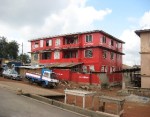
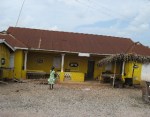
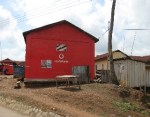
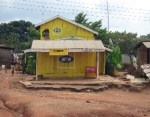
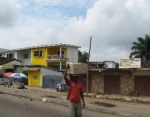
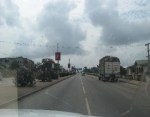
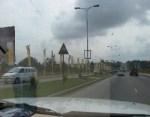
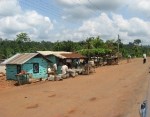
On the road up to Wa (Upper West Region of Ghana) last week, I noticed something. I tried to capture it on the way back to Accra, yesterday. I snapped the shots from a moving vehicle, so they are not great quality. I posted several, because the remarkable thing for me was their sheer quantity.  (I am only posting about half the shots, and I was asleep for about 4 of the 10 hour drive). See for yourself. As far as I could tell these are not mobile phone company offices or kiosks, but houses and buildings used for advertising. Reminds me of political graffiti or turf wars you see between gangs.  [Note – if you have similar shots, please add a link in the comments!]

Read Full Post »

the road to Wa

I’m in Ghana this week for a workshop in Wa, the district capital of the Upper West Region.  I wasn’t too excited about the trip from Accra (the capital of Ghana) to Wa when I heard it was a 10-12 hour drive. I figured it took so long because the road was in bad condition, but I was wrong, it’s just a long trip and there is a lot of traffic. The road to Wa is paved.  Not with gold. Not with good intentions, just paved.  And what a difference that makes.

All kinds of vehicles and travelers use the road. Motorcycles, cars, taxis, 4x4s, Land Cruisers, big trucks, small trucks, semi trucks with trailers.  People walk and bike alongside the road.  I even saw an adolescent boy trying to rollerblade – he wasn’t getting too far in the gravel but was pretty determined regardless.

All kinds of people move in and about and around all the shops and businesses along the road… people making purchases, moving supplies, carrying firewood and water, socializing, flirting, arguing.  Vendors sell fruits, clothing, electronics, car parts, prepared food, plastics, new clothing, used t-shirts.  There are tons of stalls selling airtime  for mobile phones and entire buildings painted bright red with the white Vodafone logo on the side, not to mention doorways, sides and fronts of buildings, market stalls and taxis similarly painted.  Tigo, Glo and MTN also have their noses in the business with signs, billboards, stalls, buildings and such – obviously a lot of competition for mobile phone customers.

collision

The road holds both opportunities and dangers. Some people go very fast and others crawl along, creating accident potential as drivers try to pass them on curves and hills.  As in many countries, a good number of crashed vehicles dot the roadside; though unlike past road trips, this time I didn’t see anyone get hit or observe any bodies lying on the road after being hit, a small crowd around them, fresh blood pooling around their head and twisted frame.   Every so often on this road to Wa, there are toll booths and customs check points.  Speed bumps slow you down as you enter towns.  Police officers stop you for no reason wanting bribes. The road is really happening.

Aside from the rich and fertile rolling hills in between the towns as we got further north, the most striking thing to me was the image of the funeral crowds. You see large groups of people on both sides of the road dressed in very fine black West African clothing with accents of red: black for mourning and red if the person who passed away was strong and in their prime; sometimes white if the person was very old.  Stunning. My colleague Stephen said that funerals happen on Saturdays and that is partly why the road is so busy on weekends.  He also said that politics paved the road, because the current vice president lives in the north and made this road a priority, helping him win the elections.

While driving, we listened to a lot of political talk radio.  Obama’s honeymoon is definitely over if those who were talking are any indication. “We thought there would be a change with Obama, but his foreign policy continues along the lines of Bush.” The commentators argued for nationalization and control of Ghana and Ghana’s resources without foreign intervention and without selling off resources to foreigners, a shaking off of old colonialism.  They heavily criticized the US’s current strategy of opening military bases in West Africa and the US’s failed and reckless policies in the Middle East. References to Chile, Castro and the CIA reminded me of the kinds of conversations you hear in Latin America.  I need to read up more on this, and find out who Kosmos (Cosmos?) is, and what their relationship is with Bush, Exxon Mobile and Ghana’s oil.  [Update: here’s some background on that: Ghana blocks Exxon Oil-Field Deal.] I miss being in Central America where I knew the history of all the politicians and movements, and could read beyond fiery words to interpret motives; where I could read my own truth into things.

As we drove along I thought about the road, and all the activity that it enables. Before my flight to Accra, I visited the  Museum of Modern Art in New York with my brother who studies biology, and we saw an exhibit about Design through the Ages.  Some of the modern pieces showed graphics or moving visualizations of communication networks and systems.  One piece tracked and visualized the movement of taxis in New York City.  Another showed internet connections across the world.  My brother and I talked about our fascination with micro and macro networks and systems… synapses in the human brain, the flow of blood in the body, the New York subways, sewers.

dusk settles on the long drive north

Looking out the window of the car on our seemingly endless drive north, I thought about the similarities between this highway and the internet — road networks and communication networks.  All the people traveling down and alongside the road to Wa. The communication among and between them.  The small and large businesses that have sprung up and are prospering because the road is there allowing access.  The opportunities and dangers, the police and the periodic barriers to speed.

I’m sitting here, 12 hours north of the capital city, uploading this post, with photos even, using 3G wireless internet. Not long ago that wouldn’t have been within my capacity to imagine.

I know there is nothing new in comparing communications infrastructure and networks to a road system. But I am struck today, after the drive to Wa, with the similarities — and the vital need for both. I’m convinced that, just like the roads that provide a basis for connection, communication and commerce; Internet, via undersea cable or mobile or whatever, is essential infrastructure for development.

Read Full Post »

courtesy of bioweb.uwlax.edu

One of the best things about the Great Tshirt Debate has been the variety of voices and perspectives that are weighing in.  This one potentially misguided project was able to catalyze a huge discussion on the nature of ‘aid’.  Once again the power of social media to engage people in debate and dialogue was demonstrated.

There are a lot of angles to follow up on from last week’s blow up. There’s a lot to unpack and it goes much deeper than a conversation about t-shirts.  One thread I find particularly interesting is the use of social media and ICTs (information and communication technologies) for bringing greater accountability and generating input and dialogue around ideas for aid and development.

Christopher FabianOwen Barder and @Morealtitude wrote about this specifically in relation to the Tshirt Debate; and Duncan GreeneOwen Barder, Aidwatch,  Tim Ogden, and others in a broader debate about accountability, aid and development. Certainly there are many posts and discussions out there on this topic.

Some things that stand out for me in the aftermath of the tshirt discussion:

Broadening perspectives.

It’s easy to forget that we all mean something different when we use the terms ‘aid’ and ‘development.’ There is a big difference between emergency aid and longer-term development.  And there are countless theories and approaches and understandings of both of those terms  (Alanna Shaikh and Talesfromthehood have both written on that).  This was really apparent throughout the discussion last week and in the on-going commentary.

I’m still trying to sort out in my own mind the difference between the various aid and development theories, the perspectives of the ‘aid bloggers’ that I follow, and the frameworks of other people who were involved in the Tshirt Debate. People’s views are intimately linked with cultural, political, economic and religious worldviews, and varying levels of snark (which I have to say can be very intimidating) making it even more interesting.  Before Twitter and the blogosphere, I certainly didn’t have daily exposure and access to such an array of thoughts.  Score one for social media.

The elephant in the room.

All this access to all these perspectives and on-line debate and open participation is great for me. And for you. Because we read English and have access to the internet.

But there is a really big elephant in the room.  One that was lurking on the global conference call hosted by Mobile Active on April 30 and that is still standing around quietly as the discussions continue.  I’m talking about the voices and perspectives of the people that the 1millionshirts project was aimed at helping.

I would bet money that some of those voices would have said “I want a tshirt.”

There are a lot of possible outcomes when ‘beneficiaries’ and ‘donors’ actually talk to each other.  Like donors wanting to give t-shirts and people wanting to receive them.  Then what?  Most of those involved in aid and development and work with local economies can and have listed a myriad of reasons why handouts are not a good idea, but most also believe in listening to voices of ‘beneficiaries.’   It seems paternalistic to say that NGOs or businesspeople know best what people need.  What will happen when more donors and beneficiaries are using social media to talk to one another?  And what if NGOs or governments or business people trying to improve ‘developing country’ economies don’t agree?  Then what?  That’s going to be pretty interesting. For a taste of this can of worms, read this post and related comments.

Development education.

This brings me to thinking about the educational processes that contribute to good development results.  Around the world, people have been presented with hand-out and silver bullet ideas around development and aid for a long time. Donors need to be educated about effective aid and development, but communities do also.  People have been trained to gravitate towards one-off donations and charity mentalities, and need to learn why that isn’t actually very helpful in the long term. They’ve been taught that there is a silver bullet we just need to find. People have also been trained to take hand outs and see themselves as victims and need to re-learn how to take the reins and do for themselves.  This is true everywhere – people look for the easy way out. Consider how many people in the US for example prefer to get plastic surgery or take miracle diet pills and medications over adopting healthier lifestyles involving a good diet and exercise.  Complicated situations require integrated approaches and often need cultural shifts and behavior changes.  Those take time and effort and are hard to explain.  How does social media impact on or shift this in terms of aid and development, and in which direction is it shifting?

Barriers to social media participation.

Both #1millionshirts and Kiva were held up to a huge amount of scrutiny online via social media.  But again, who was scrutinizing, and who had access to the tools and means to participate in these widespread discussions?  It was not the people getting loans from Kiva or the eventual t-shirt wearers.  It was donors and ‘experts’.  I would hope that there are plenty of discussions happening about Kiva programs at local levels, in person, in meetings and in local media or newspapers. But these don’t normally make their way to the internet.

I don’t know Kiva’s programs well, but I would also hope that Kiva staff and/or partners, for example, are listening to that local input and using it to improve their programs on the ground to make them more useful to participants.  And I would hope that those discussions take place within a longer term education, training and relationship building process as with many NGOs.  This kind of input from and dialogue with program participants is every bit as important for adapting and improving programs and initiatives, and maybe more important, than all the public discussions on the internet…. as long as it’s being listened to and responded to, and as long as local offices are taking these messages up the chain within the organization, and as long as local offices also are being listened to and carry weight within the organization. What might be the role of social media there to move those offline discussions further within organizations and to educate, inform and engage the broader public and ensure that responses and changes are forthcoming and everyone learns from it?

There are still huge barriers to social media participation for many people in communities all over the world… not having electricity, computers, smart phones and internet, to start with. There are also barriers like language, literacy, age and gender based discrimination, hierarchies and cultural norms that limit participation in general by particular groups in discussions and decision making.  When working face-to-face, good organizations are in tune with the barriers and find ways to gather input from those typically left out of the discussion.  How can organizations use what they know about engaging more marginalized populations and apply it to a more creative use of social media to ensure that all voices are heard?  What resources and ICT tools would be needed to do that effectively?

Offline to Online to Offline

And how could more of the discussions that happen on the ground with communities, when programs are being designed, implemented, evaluated and re-designed; be shared in the open by those who are involved – whether participants, local bloggers, citizen journalists, NGO workers or others?  And how can the debates happening online make their way back to communities that are not connected? It would be amazing if more program staff and community workers were blogging and sharing their work and their challenges and accomplishments.  And if more organizational decision makers were listening to what their community workers or other staff who are blogging and tweeting are saying. And if more people participating in programs could share their viewpoints via the internet.  This would be useful to the global commons and would also help the fields of aid and development to improve.

How can we support more communities to have access to social media and ICTs as tools to participate more broadly? And how can community members be the owners and drivers of this discussion and input. How can we help bring voices from the grassroots to a broader public and also bring these broader public debates back to communities.  How can the access, language, literacy and cultural barriers be addressed?  There are some programs out there doing this, for example Global Voices Rising, MIT’s Department of Play at the Center for Future Civic Media, and the Maneno platform, but we really need more of it.

Youth.

I think as connectivity becomes less of a challenge, we will see the younger generation claiming spaces in this way. More organizations should be working to engage more young people in the development process and supporting them to access ICTs and social media.  When a consultation with children and youth was done after the Haiti earthquakes, for example, young people did not say that they wanted hand outs.  They said that they wanted to participate. They wanted to play a stronger role in the recovery and the reconstruction.  They said they wanted education, a voice in how things were to be done, decentralization.

Staff that I’ve worked with on youth and ICT programs in several countries have said that ICTs and community media are excellent tools for engaging youth in the development process and maintaining their interest, for supporting youth-led research and collecting opinions about community processes.  With advances in technology, these voices can reach a much broader and public audience and can be pulled into donor communications as well as used as input in the resource and problem analysis, program design,  program monitoring and evaluation processes.  Youth can access information previously unavailable to them which broadens their own views and helps in their education processes. They can also contribute information and images of themselves and their communities to the online pool of resources so that they are portraying themselves to the world in their own image as opposed to being shown by and through the eyes of outsiders.

In addition to the Tshirt Debate stirring up questions about good donorship, I really hope it stirs up the debate about the value of more local ‘beneficiary’ voices in aid and development discussions, and that it fuels more efforts to use, adapt, and develop social media tools and ICTs to support these voices to join the debate.

What about you?  What do you think?

Related posts on Wait… What?

Children and young people’s vision for a new Haiti

It’s not a black and white photo

Meeting in the Middle

Mind the gap

Putting Cumbana on the map: with ethics


Read Full Post »

our stolen flowers, still going strong after almost 18 years.... (2009, Barrio Candelaria)

My son turns 18 today, and as always, when my kids have a birthday, it makes me think back to the day they were born and I get a little lost in the memories.

When I gave birth to my son, it was 1992 and I had been living in El Salvador for almost 1 year with my husband, Memo.  The Peace Accords had been signed a few months earlier, on January 16, ending a long and bloody civil war.  We lived in Barrio Candelaria, an old barrio in downtown San Salvador where Memo had grown up. My in-laws lived in the ‘meson’ about a half a block down from where we lived.  Memo was employed as a mechanic, making almost $100 a month and I gave evening English classes a couple times a week to the daughters of the wealthy family that lived in the Barrio (the ones who owned the corner store) to help pay for tortillas and drinks to accompany our meals.  I spent my days mopping, cooking, washing and hanging the clothes out, tending to the plants in the little cement garden in back of our house, hanging out with my mother-in-law, and doing a lot of reading.  It was a nice couple years’ break after college.  At that point we didn’t really have any plans. We were just living day to day.

Niña Alicia and I (2009)

The morning of the day that Daniel was born, I had my last visit to immigration where I picked up my residency papers.  My mother in law, Niña Alicia, walked over with me. On the way back, we stopped to pick up a ‘faja’ (girdle) which she insisted was necessary for after the baby was born.  She said that when a woman gives birth, she gets air inside which puffs up her stomach, and so she needs to wear a girdle afterwards.  I wasn’t convinced, but I would always go along with her ideas when they didn’t seem to do any outward harm.

After we picked out a faja (which I realized I would probably never wear once I realized what a faja was) we made our way home, collecting (stealing) snippets of plants from the nicer houses along the way to plant when we got back.  We always did that.  Niña Alicia had an amazing green thumb, so we always had a nice garden, even though my father in law wouldn’t allow us to break the cement to plant anything in the ground.

We’d left the house around 7 a.m. to do our rounds at immigration and got back at 11.  Memo worked in the mechanic shop about 2 blocks from the house, and I was supposed to walk over with his lunch around then. But I seemed to have a bit of a stomach ache.  It was 9 days earlier than my April 30 due date, so I didn’t realize it was labor kicking in.  I laid down on the bed for a bit to see if it would go away, our cat, Irola, curled up next to me.  Cats always know when something’s going on.  After a bit, I got up and made my way over to Niña Alicia’s house and told her I thought we needed to get the midwife, and could she please let Memo know that it was time (and take him his lunch).

Daniel and Memo

Early on I had decided that I wanted a home birth.  My other options were the public maternity hospital or the social security hospital, and at that time my Spanish wasn’t so great. I worried that the male doctors would come over and gawk at me out of curiosity – I’d certainly had enough men staring, groping and asking rude questions while fully clothed and even while very pregnant – and being a spectacle at the hospital didn’t appeal to me at all.  I also didn’t want to sit on a bed with several other women in the crowded maternity ward waiting for a bed to give birth in.  I didn’t want to give birth alone, and no family members were allowed in.  I didn’t want to be medicated and didn’t trust that they would listen to me about that at the hospital. And I wanted to exclusively breastfeed and keep my baby with me, and I had heard that the hospital always took the babies away and gave them a bottle of formula right away. I had a bunch of books about midwifery and birth. I read them voraciously with the idea that I could learn enough to practically give birth by myself if necessary.

The midwife, Niña Lita, and her daughter got to the house within about an hour. Niña Lita was a wizened old woman with crinkly eyes and a sweet smile.  She said she was a Mormon, but she would invoke the Virgin Mary before she worked on anything important.  She had been coming to the house for the past several months to check in on me and to ‘sobarme’ (massage my belly).  She’d look up to the sky, say some prayers to La Virgen, warm her hands with scented oils and start massaging. She’d tell me she felt the head here, the arm there.  Her goal was to help the baby get into the right position.  (A few years after, there was a big public education campaign against midwives and traditional practices, saying that this was a bad thing to do, but it doesn’t really seem too harmful to me.)  The monthly visits helped us get to know each other and develop trust and a bond.

When she arrived to the house to help with the birth, Niña Lita patiently watched and waited and softly encouraged me.  Luckily my labor was only about 4 hours total.  I kept waiting for Memo to show up, but he never did.  Later I realized that they didn’t want him to be there.  They said that if there were too many people around, the baby would get embarrassed and wouldn’t come out.

Daniel was born right around 3 p.m.  Niña Lita cut the cord, cleaned him up and wrapped him in a blanket while my mother in law ran to the corner store and borrowed the metal scale that they used to weigh beans, rice and sugar because I insisted on knowing how much Daniel weighed.  Niña Lita carefully placed him on the balance while Nina Alicia held it up.  Nine and a half pounds.  About that time they let Memo come in and went on their way, saying they’d be back tomorrow to bathe Daniel with rose and rue to ward off any bad energy or bad spirits.

The next day after the bathing process (rose and rue is one of the most delicious scents in the world) we went to the Health Center to get Daniel’s first check up and vaccines.  A couple weeks later, we went to the City Hall to register his birth.  At that time they wouldn’t let anyone in dressed in shorts, so Memo had to wait outside while I registered Daniel and people looked on in disapproval because a father is supposed to take on this responsibility.

I had the luxury of spending the next 40 days resting with Daniel.  My mother-in-law went to the market, bought cocoa beans, and ground them into fresh homemade chocolate to drink hot to bring down my milk.  I remember eating a lot of mangos de leche too, those small yellow ones that are in season in April.  There were certain foods prohibited for the 40 day period, including eggs and beans and anything strong smelling or strong flavored.

Every day I was supposed to give Daniel a spoonful of garlic oil that Niña Alicia had prepared so that my breast milk wouldn’t upset his stomach, but I only pretended to do that.  I was also instructed to tie a ‘faja’ around Daniel’s waist (a folded piece of cotton) to keep his new belly button clean and avoid any flies or germs getting on it, and also to keep his belly button from being an outie (I stopped doing that after a day or so because I was worried it would get infected and figured it needed some air to dry out — ironically he has an outie).  I was supposed to also shape his nose and his head two times a day by rubbing baby oil on my hands, heating them over a candle, and pressing lightly to round his head and straighten his nose.

Daniel was to wear a red hat, red socks and a red bracelet with a large grey seed on it to protect him from anyone with a strong gaze who might give him ‘ojo’ (evil eye) and terrible diarrhea.  And anyone who saw him was supposed to hold him so that in case they had any underlying jealousy due to his infant beauty, it would fade out and their bad feelings wouldn’t do him any harm. I was supposed to bind him up tightly so that he would not get bowlegged, and I was scolded when I held him upright because it would make his cheeks sag down.  I had to wear socks for the 40 day period to avoid getting air in my feet which would swell my legs and stomach. I wasn’t supposed to eat dry foods like cookies or bread while breastfeeding, because the crumbs would block up the milk stream.  If I was angry or upset, I was not supposed to breast feed or the baby would get cholic.

All those rituals were something that I wasn’t sure I believed in, but they added meaning and history to Daniel’s birth.  They helped us feel that he belonged to a long line of babies that had come before, and I didn’t mind them at all.  I was surrounded by people who loved babies and wanted to hold Daniel every chance they got.

Daniel, after almost 18 years (2009, Barrio Candelaria)

We didn’t have any money, so we didn’t have any of those typical things that accompany babies in many families.  We had no bottles, diaper bags, disposable diapers, baby food, high chairs, strollers, infant seats, cribs, car seats, playpens, jumpy chairs or the like.  As he grew, Daniel continued to sleep in our bed, and when he started eating table food, he would sit on our laps and eat from our plates. He was held and carried until he could walk, and then he walked until he was tired and was carried again.  He was never strapped in and confined – he learned boundaries without physical restraint. And I have a little theory — that this helped him learn to manage freedom and establish internal boundaries and limits.  (Don’t get me started on parents who put leashes on their kids!)

Daniel played outside in the alleyway. He got dirty. He got scraped and bullied.  But there was always a neighbor around to call over to one of us:  ‘Niña Liiiindaa, Daniel is playing in the dirty water!’ ‘Niña Aliiii, Daniel is jumping up and down on an ant hill!’

When we moved back to the US in 2001 and I saw women struggling to manage work and day care and all the accessories associated with babies, I realized how privileged we were in those early years.  Daniel talks about those days too. He realizes how lucky he is to have grown up in the Barrio, like those little snippets of plants Nina Alicia and I would pick up on our long walks and that still thrive in front of her house, 18 years later.

Related posts on Wait… What?

Beginnings – the story of Clare

On trust and disempowerment

The real story involves antisocial entrepreneurs and anthropology

It’s not a black and white photo

On Glenn Beck and ‘rooting out’ liberation theology

Activism vs slacktivism: it’s about context not tools

Read Full Post »

Remember back when you were a little kid?  The world then was so absolutely interesting that you never wanted to stop playing to eat, sleep, brush your teeth, bathe, or go to the bathroom.  How many times did you pee your pants when you were outside playing because you didn’t want to stop and come inside to take care of business?  How many times was bedtime the cause of a crying fit, with you insisting that you weren’t tired?  It was all because you didn’t want to miss out on anything.  The adults around never seemed to understand that, probably because your world didn’t seem all that interesting to them anymore.

These days I totally get it.  And sometimes I think I’m regressing back to that stage and acting like a 3 year old.  I’ve started resenting the time I spend on the mundane because it interrupts me from the fascinating and the exciting.  I’m not sure if that is a good thing or a bad thing.  It could mean that I’m extremely stressed out and imbalanced.  On the other hand, it could mean that my world has once again become an amazing place to explore and experience.

Yes, I still shower and all the rest, but I wish that there were more time in the day to do and learn about cool stuff and hang around with interesting people. Most days I feel lucky that I don’t have a parent in the house to make me stop and go to bed. Other days I suppose maybe I need one….

Read Full Post »

There are surely enough travel blogs out there, but given how much travel I do and my recent hiccups getting home from Benin (eg., 5 day total delay), I thought I’d throw together some of the things that keep me sane and somewhat prepared when I’m on the road…. I normally travel to Africa and Latin America, so these ideas may not be useful to people traveling to other places.  I have geared them towards women, though they might be useful to men also…. Ladies, add your tips to the comments section!

Breasts, shoulders, thighs, knees and ankles. Do a little internet research before you leave.  Observe what local women where you will go are wearing in pictures or on other people’s blogs. Especially notice the attitude towards breasts, shoulders, thighs, knees and ankles. In many places, for example, breasts are not a big deal, but thighs are.  Keep that in mind when you pack and in your behavior when you arrive. Don’t wear tank tops/spaghetti straps if you don’t see local women wearing them.  Same goes for shorts and capris or tight clothing.  This may be different if you are a teenager and traveling with a group, but I still recommend against a lot of thigh action if you want to be taken seriously and to be respected.  There may be different dress codes depending on urban and rural, so observe that and be respectful, be smart.  And if you are not, don’t be surprised if you get unwanted attention.  Maybe not the most feminist thing to say here, just being realistic.  People will often cut you some slack knowing that you are foreign, but when I travel, I tend to go for respecting local customs over my right to self-expression in my attire.

Sweat – Not a nice topic for many of us, but if you are someone who sweats (I always envy those people who don’t) it’s a fact of life when traveling somewhere hot. You’ll often be advised to wear clothing made out of lightweight fabric, however this kind of fabric shows every drop of sweat. Skimpy underwear does not absorb sweat and that fact will express itself on your clothing, especially when you are forced to sit in a hot car, meeting or community for several hours.  Not attractive.  Cotton boy shorts are a good alternative to the sexier variety of under things, as is clothing made out of thicker fabrics.

And speaking of undergarments – I get really annoyed when I see young women who, in the name of modesty or fitting in with local culture or just being hippy backpackers wear long flowing skirts without realizing that they are completely see through when walking in the sun! Do us all a favor and invest in a slip.

Tattoos.  You may get stared at for having visible tattoos.  You’ll want to decide how you feel about that.  I normally keep mine covered until people get to know me a bit so that any judgment comes later in the relationship. Since a lot of Americans have them these days, it’s also kind of fun to explain that tattoos are part of our coming of age ritual.

Packing – If you’re a frequent traveler, keep a second set of travel stuff right in your suitcase.  I keep a plastic Ziploc bag with less than 3 oz. quantities toiletries in it and just refill them before I leave and stash them on the top of my carry on for easy removal at security check points.  I keep all my favorite warm weather travel clothes in my suitcase. I have a checklist that I run through before I go to add anything that’s missing.  Makes for much easier packing.

Luggage – Put some identifying marks on your luggage so you can spot it when you arrive.  Assume it might be delayed by a day or so, and be prepared in case it is.  I do this by always packing any equipment, a change of clothes, and any essentials in my carry on.  This includes a small quantity of any printed materials I need if I am presenting at a workshop, just so that I won’t be left hanging.  I always take my laptop.

Travel socks – They are dorky but they keep your ankles from swelling and you from looking like you have tree trunks for calves upon arrival.  They also help prevent a potentially fatal condition (deep vein thrombosis) where blood clots form due to long flights.

Shoes – If the climate is hot your feet may swell and your shoes will be tight, especially if you are walking or standing a lot. This is most pronounced in the evenings.  Bring shoes that are a bit loose to be more comfortable.

Flip Flops – I wear them whenever I can get away with it, but sometimes they are seen as a sign of disrespect.  If you’re on any kind of trip where you need to do business or represent at any kind of function, or train a group, bring some sandals that don’t look like flip flops, at least for the first couple days. Do bring the flip flops for sketchy showers.

Sarong – Pick one up somewhere next time you see one.  They double as a scarf for freezing plane trips, and a skirt for when your luggage gets lost, you want to visit a pool or beach, or you need a cover up in a pinch, like if you have dinner in your room and want to throw something on to cover your shorts/your thighs when your meal or beer arrives.

Coffee press – If you are a coffee addict and are traveling to a country that produces wonderful coffee, rest assured that you will be served none of it.  You will get Nescafe.  I bring my own travel coffee press (pick one up for cheap at REI) and some ground coffee.  You can almost always get boiled/hot water.

Food – If you are vegetarian, pack granola bars, a jar of peanut butter, some chocolate, and some of those little cheese hunks wrapped in red wax… they last up to a week or 2 without refrigeration (if you’re not squeamish), and taste really good after a few days of full-on starch meals (eg., vegetarians often get a plate of bread, rice, pasta, potatoes and green plantains for lunch and dinner and some more bread for breakfast).  Try to make friends with your hotel or workshop venue cook and ask if they could make you some beans or cooked vegetables.  Make sure you don’t refer to yourself as a vegetarian without giving some suggestions of what you do eat, or you may get raw vegetables and salad which often lead to amoebas and giardia.  Buy some fruit when you see it. Bring a knife from home to cut it up and be sure to wash and dry it well before digging in.  Fancy hotels will often have no idea how to feed you so look forward to a lot of French fries and omelets.  Local hotels or hosts will usually make an effort using what they have available.  Don’t assume that your fancy hotel food is safer than other food.  Different bacteria is different bacteria and your system just may need to adjust.

Bottle opener – Light, easy to pack, and a life saver when you have to buy your beer in advance or want to drink it in your room on a hot evening.

Ziploc baggies –Freezer size zip lock baggies seem to always come in handy for something.

Flashlight.  A small flashlight is useful for frequent power cuts. Especially for visiting bathrooms outside your sleeping area at night.

Towel – Often small hotels will not provide towels, or will give you a non-absorbent hand towel.  If this is a problem for you, bring your own towel.

Mosquito net – You can never count on a mosquito net.  Do yourself a favor and purchase your own.  I bought my own self-standing mosquito net (a “travel tent”) which has been a life saver.  Light weight and convenient, it sets up on any single bed or even on the floor.  It means you get sleep without being woken up by mosquitoes buzzing in your ears, and you can avoid taking malaria pills (well, unless you’re working for an organization that makes them mandatory….)

Laundry soap/clothesline – I usually pack a clothes line to string up in my hotel room, and a baggie of powdered laundry soap.   You can also get these when you arrive. You can pack lighter if you wash things out in the evening. If you’re in a hot climate they will dry in less than 24 hours.  When Air France lost my bag in Togo, I made it through 9 days by washing in the evening and re-wearing in the morning.

Water – If you see a bucket in your room, it is a sign that the water goes off.  Keep it filled or you may be in for an unpleasant surprise when you go to take a shower.  There’s quite a talent in toilet flushing with buckets.  Experiment and soon you will learn how to economize on water use and keep the bathroom area clean as well. I got through each day in rural Rwanda on one jerry can by being smart about re-using my bathing water for the toilet, etc.  Get a plastic cup at the market to make it all easier.

Candles – Same as a bucket – candle in your hotel room means that the power goes off fairly often – be prepared.  Charge up all your stuff whenever there is available electricity.

Electricity adaptors – Often your room will have only 1 or 2 outlets, (if at all when you’re out somewhere really rural).  A 3-plug + an adaptor are handy for charging up 3 things at a time instead of juggling them one after the other.  Google “electricity converter” or “electricity adaptor” something like that before you leave and get some plug adaptors of your own. It gets annoying when people are always asking to borrow yours, and your hotel will not have them unless you’re traveling in high style.

Check in – Check in on-line if you can.  If not, get there early enough to get a window seat on long flights.  Don’t expect any special attention unless you are wearing a fancy suit and a big watch.

Airport pick up – Assume that no one will be there to pick you up from the airport.  Maybe this is just an issue with my organization, but it happens quite often.  Before you leave, be sure that you write down the address and phone numbers of your office, any contact persons, and your hotel.  (I once arrived in India without this information…. not wise).  This is also helpful to keep handy when filling out paperwork at the airport upon arrival.

Flight delays and ticketing – Be aware that once you purchase your ticket, Orbitz and the like won’t help you much as they transfer the ticket over to the airline systems.  I found out last week when stuck in Benin for 4 extra days that your ticket will not have a phone number on it, or it will be an 800 number, which only works in the US.  Try to get a non 800 number before you leave in case of anything.  When in a real pinch, send out pleas for help on Twitter and the community will get you the phone numbers you need.

Cash – Some places only change $20 bills or less.  Other places give a better rate for $100 bills.  Do some research.  Change money in the airport when you arrive if the agencies are still open. Assume you may not have access to an ATM when you arrive.  Assume your hotel may not have cash to change money for you when you need it.  Assume you will wait for 2 or 3 hours at a bank to change money, and will need ID to do it.  Know that every time you ask your organization’s driver to do these types of things for you, you are probably ensuring that his day is that much longer. (Drivers in my experience have the worst rap, always having to arrive before everyone and leave after everyone’s all taken care of, and they don’t get any recognition for their work).

Communications – Get an unlocked cheap phone and buy a local SIM card and some airtime on arrival.  Check before you go which network has 3G or Edge if you plan to use it for internet.  Download the software to connect your phone to 3G internet before leaving.  If you travel often, it can be worth the money to invest in a phone that connects to internet.  If you are a Twitter or Facebook freak, install Snaptu for Twitter/Facebook on your phone.  Outlook doesn’t work on all phones, so I do an out-of-office reply giving people my phone number for emergencies.  I create a rule to auto-forward my work email to my gmail.  If you use an i-phone and want to get some extra mileage out of it on the plane/before you jump into local phone/local SIM mode, Duracell makes a $17 charger that gives you an extra 3 hours.

Medications – I don’t like taking medicine.  I do however have a prescription for Ambien for sleeping on flights. That means I can sleep all night on a plane, get some coffee when I arrive, and get straight to work, and I can avoid arriving a day or so early to acclimate.  Never take a sleeping pill before your flight is in the air in case you have to deplane!  Get a prescription for Cipro before you go.  Take it if you have a bad stomach w/fever for a couple days. Then eat lots and lots of yogurt when you get back home as Cipro depletes your good stomach bacteria.  (*Note – I’m not a doctor and am not giving medical advice here, just telling it like I do it!).

Malaria – I never take malaria pills.  They make me tired and nauseous which means I can’t work, so what’s the point?  And the pills prescribed by your doctor at home may not be effective for the zone or area that you are traveling to because of how the disease evolves.  Decide for yourself, but if you are careful, you can get by without them.  (Again – I’m not taking responsibility for this if you follow my advice and you do get sick).  I prefer using my mosquito net, wearing long pants/long sleeve shirts in the evenings, and using hard core bug spray on exposed skin.  Beware that many bug sprays will eat through nail polish.  My toenails normally look like there is chewed up gum residue on them by the time I get home.  Dark clothing attracts mosquitoes so be aware of that.  Don’t be surprised if sometimes there is a cloud of them swarming over your head if you have dark hair…..  Never take Lariam.  I know of a couple cases where the side effects caused permanent psychological damage to colleagues.  I don’t really know why it’s still prescribed actually.

Marriage proposals and unwanted attention – I could write a whole book on this, but in an effort to be succinct….  Ladies, if you are under, say, 30, don’t be surprised if you get your fair share of suitors.  If you are over 30 and divorced or single, expect some attention from 20-something young men who imagine you to be desperate and lonely.  If you’re interested, by all means, go for it, but protect yourself just like you would when you’re at home. Don’t take any excuses.  Condoms are readily available just about anywhere, or better yet, always travel with some.  If you are American, you will likely have a reputation for being loose (thank you Hollywood and MTv) [note: adding “and all the ‘Western’ women who have helped confirm that stereotype“). If you are divorced, people may pity you.  If you are married or in a relationship, some men will still try to pick up on you.  (In El Salvador when I’d say I was married, men would often say “It’s ok, I’m not jealous”).   If you are not interested and the attention you are getting is not overly offensive, take it in stride.  Don’t be rude, but do be firm.  Deflect lightly when possible and move on, it’s OK to say no. Sometimes you may want to keep your phone out of sight so that you can pretend you don’t have one if you keep getting asked for your number.  If the attention is scary and threatening though, do whatever is necessary. As anyplace, be safe.

I’m sure I’ve forgotten something…. Add your comments below.

Update:  Here’s a great post by Scarlett Lion:  What to bring and not bring when traveling to Africa.

Related post on Wait… What?

Getting screwed by Orbitz.

Read Full Post »
Spoiler Alert – if you’re planning to go see Avatar you may want to stop reading now…. 🙂

Last week I read a post called “When Will White People Stop Making Movies like Avatar”. So I went into the movie this past Friday with some preconceptions.  Yesterday I read another post on this topic by David Brooks in the New York Times.

Though I found a great deal of truth to these writers’ opinions, consider substituting “White” with “American” (or as my more politically correct friends would remind me “United States of American”).  It seems to me that the film could have easily have cast an American of any race in the role of Jake Sully, and the story would have remained pretty much the same.  The issue for me is not about color, it’s about the American way of life.

What I saw in the film was a basic characterizing of Americans and America. It showed a stereotype of the US, distilled down to basic qualities (which I kind of agree with) of capitalism/greed, militarism/violence, science/distance from nature, fear mongering/terrorism as an excuse for isolation, exploration/curiosity, advanced technology/creativity, courage/entrepreneurialism, and a strong need by individual Americans to belong/to be liked by other cultures.

From this perspective, the color/race of the hero is inconsequential as long as he is American.  It could have just as easily been a non-white actor playing Sully.  (Though I’m not sure substituting a woman would have the same effect).  Try, for example, to replay the movie in your head with Cuba Gooding Jr. playing the lead.  I think it comes out pretty much the same.  I really don’t think it’s about race; it’s about the “American Way.”

Having said that, I was really disappointed at the way that the Na’vi were given a noble savage role in the film and the American was the hero.  I would have liked to see the Na’vi themselves deal with the American intrusion (Neytiri, the main female character says her great grandfather organized the clans to join together many years ago – why not now?).  I would have liked to see some equal amount of character development on both sides of the conflict (I even had to look up the name of the main female character to write this as I couldn’t remember it).

It was annoying that Jake Sully was the only one daring and brave enough to consider jumping on the big red bird, and that this immediately made all the Na’vi bow down and accept him as their leader (and this is one place where the American male fantasy part really comes in – ha, my dad loved this part!).  And why is it Sully who goes to pray to the tree of life, to Ehwa, and it’s not the shaman or the lead Na’vi warrior? At the same time I had to chuckle at how in spite of all this, Sully keeps having to pronounce to everyone “I’m one of you.” Insecure much?

One interesting point that the movie made me think about was the use of anthropologists/social scientists in conflict. Anthropologists (as I can personally attest) have a tendency to cross over to the other side [‘go native’], so I’m not sure what good they will do for the military if the US engages them in war zones, unless we are talking about a very different kind of anthropologist than the ones I’m used to.

I guess I would have liked a movie about the Na’vi and Pandora, with no violent, burning machine vs nature battle scenes and no Americans involved at all.  Well, then again, that film might have turned out like Apocalypto, whose portrayal of the Maya made me want to vomit….  Maybe I just need to stop going to see Hollywood films.

Read Full Post »

Before I went to El Salvador in 1991 (read why in my earlier post here), I had never traveled outside the US. I had read lots of articles about the country’s Civil War and intense poverty in the LA Weekly, a lefty newspaper in Los Angeles where I went to school.  I imagined El Salvador as a somber, high contrast black and white photo, with some thick red paint dripping down it to represent the bloodshed and suffering of a noble people being crushed by US Imperialism.  (yeah, pretty dramatic)

To my surprise, El Salvador was more of a bright, animated 3-D movie with endless layers of depth and detail.  The poor, simple, suffering, downtrodden people I had imagined I would live among in San Salvador were in reality intelligent, active, politically savvy individuals who listened to a lot of loud cumbia music (and some Rock en Espanol), privately followed politics with a passion, piled into a pickup truck on Sundays for soccer games, and bustled around with intensity.  There were meals to make and bills to pay in spite of the sporadic skirmishes outside of the capital, the possibility of being outed as an opposition supporter or recruited forcibly into the military, and the lack of free speech in the company of certain individuals and in the media.

Kids went to school, played marbles, laughed and flew kites.  Although lack of money was an obvious issue and there were scary soldiers with machine guns on every street corner downtown, people lived their daily lives pretty much like people do everywhere, dealing with the good, the bad, and quite a lot of the petty.  There were no noble sufferers.  There were no simple portraits.  Life was not a black and white photo.  Rather there were people living within intricate layers of economic, political, family and personal relationships, adapting skillfully to an ugly cold war reality.

Like everywhere, each individual was complex, as was every set of relationships.  The man who beat his wife would step aside with a gracious smile to allow you to pass on a narrow sidewalk. The woman who offered to help you carry your basket from the market might also be the one burying effigies and lighting candles to bring down business at the local tienda out of envy.  The guy who handed out cash to the kids to buy a soda was likely also the one who was informing the government of the names of people who sided with the opposition.  And (as I found out on this trip) the midwife’s daughter, who accompanied your children’s births along with her mother, might one day go to prison for being part of her husband’s organized crime group. These situations were all open secrets to everyone in the Barrio.

The “80% of people living in poverty” statistic (or whatever the number was at that time) didn’t mean a lot once you dug into it. Those newspaper photos of the impoverished, suffering people were a very thin reading of reality.  Behind them there were layers and layers of economic hierarchies and social depth.

About 3 years after I moved to El Salvador I started my first NGO job. One of my responsibilities was accompanying delegations to see different community projects. In many cases, as soon as we’d arrive to the communities, people would approach me and unleash the litany of their troubles and poverty, sometimes wringing their hands or their hat, asking for help, painting themselves as victims because I was white, had arrived in a 4×4 with an NGO logo on the side and a group of foreigners, and could translate their pleas for help.

I must have seemed pretty heartless, but it was hard to see people prostrating themselves when they lived in similar conditions to the ones my neighbors and I did in the Barrio, and no one in the Barrio saw me as someone who would fix things for them.

It probably seemed to the foreign visitors that a terrible thing had happened to me.  I had become “immune to the suffering”.  But what I think was really the case is that I didn’t feel sorry for people. I had no illusions that I could solve anyone’s problems and I felt really uncomfortable in this unfamiliar hierarchy.

My biggest work-related take-away from my time in El Salvador is an awareness of the hidden community dynamics and of what I represent when I visit different communities wherever my work takes me.  I’m acutely aware that there’s a lot happening under the surface that I know nothing about, and can’t know about, especially if I don’t speak the language or live in the community for a really long time or develop close and familiar relationships with several people so I can hear different viewpoints. (Perhaps that’s the anthropologist in me).

I’m hyper sensitive that I need to stay in the background. Community members, community organizations and local staff need to take the lead.  And when I see that there is a seat for me at that table up in front of the community assembly, I die a little inside.  When possible, I grab my camera as an excuse for not sitting there and roam around taking photos (of the non-black-and-white-with-dripping-red-blood variety).

Related posts on Wait… What?:

The real story involves anthropology and anti-social entrepreneurs

18 years

Read Full Post »

I come up against a nagging question when I’m thinking about mapping, when I’m talking about the projects I’m involved in, or when I’m working directly with staff and youth in rural communities using participatory mapping methodologies….

Why is this kind of map:

(source:  MapKibera, on Wikipedia)

better than this kind of map?

(Source:  Plan project in Kwale, Kenya)

Well… is it actually better?  And if it is better, when is it better, for whom and why?

I understand how useful mapping information is for big picture decision making, trend spotting and knowledge sharing at different levels.  Mapping in various forms is incredibly useful for program and advocacy work, and there are many examples of how crowd sourcing, digital mapping, and information geo-visualization can be done successfully (mapping stockouts, elections monitoring, human rights incident reporting, crisis management, public health). The potential is huge and exciting.

But when I’m sitting around with a group of people in a rural community without many services, it can be pretty hard to remember or to explain the benefits of digital mapping over low tech map making. Why should people make a digital map if they only have sporadic electricity and internet access (if at all) and not many smart phones.  How will they access that digital map on a regular basis once they make it?  Does the fact that they could make a digital map, necessarily mean that they should?

I guess my key concern is around how digital mapping is directly useful for the folks who are inputting the information, building the map.  The “what’s in it for them” question.

As I was pondering this nagging question, @NiJeL_mapping posted something on Twitter that caught my eye and helped spur along the idea of working through these thoughts.  He was at the Mobile Data for Social Action in the MidEast conference, hosted by UNICEF Innovations and MobileActive.  He tweeted:  “what data are we going to collect, how will we collect it, and from whom?” Then he tweeted:  “Again, the push for technology w/o any knowledge of the intended outcome is frustrating” And a last tweet “overhearing whispers about how we need to focus on the technology, but impossible w/o knowing info to collect”.  This really reminded me that you need to have clear objectives and reasons for collecting data before you decide what cool new technology will be used to do it.  A few days ago I read JD’s blog post giving an overview of the whole conference. The key point for me was that the ‘target’ population delegation “felt overwhelmed by the host of tools and projects presented to them and were unsure how any of this could benefit them”. Luckily, he said, the conference organizers realized this and quickly altered the course of the event.

——————–
Well, if you have ever asked yourself a question, it’s pretty likely that someone else has asked it too, and you can find some answers online. So I went digging around for thoughts from 4 initiatives that I’ve been following over the past year or so: Ushahidi, MapKibera, Wikimapa, and now NiJeL too.

In very quick summary, Ushahidi is often (but not exclusively) used as a crisis mapping tool for rapid crowd sourced information, decision making, and trend analysis. Map Kibera and Wikimapa both use mapping and user-generated media for social inclusion, community voice, community media and community planning. NiJeL works with participatory mapping, bringing it to the web for a variety of geo-visualization uses such as planning, resource allocation, impact visualization and advocacy.

Mine must be not be a unique query, because I found that Erica from Map Kibera answered it pretty directly a couple weeks ago in a blog post called Maps and the Media “…the question about benefit to those who aren’t online misses the point. The digital divide is a fact and needs to be addressed, but when it comes to community information there is also a need for expression outward and collaboration within Kibera. Something like the Kibera Journal or Pamoja FM allows Kibera to talk to itself, while putting facts and stories online allows it to speak to the rest of the world (including wired Nairobi, politicians, national press).”

The objectives of Map Kibera seem similar to those of the
YETAM project, the initiative that has taken up most of my work hours over the past couple years. YETAM’s  main goals are engaging youth in the local development process and helping them develop the skills and tools to communicate and advocate for their rights and their ideas with local, national and global audiences.  The project starts off with map making to visualize community profile, community history, community resources, and risks to child rights and protection. Group discussions ensue, issues are prioritized by the youth, and they then create art and media around those issues.
The arts and media materials that youth produce throughout the project are shared with community members, district officials and national authorities to generate dialogue. They’re also plotted onto a digital version of their map and uploaded to the web for the global audience.

Since the local audience is the main one for the media and arts that youth produce during YETAM project activities, followed by district, national and global audiences, it would seem then that the same is true for the map. It must first speak to the local audience, to the community.  It should be first useful to users and producers of the information, as a learning/discussion tool and as a decision making tool, and secondly be useful to a national and then a global audience. Perhaps this will be the case for many of the initiatives that Plan supports and facilitates, given Plan’s child-centered community develop approach and the fact that we use participatory mapping methodologies in our community work all the time. So we need to find a way for the hand-drawn map to be transformed into a digital map (this is what we’ve been doing up to now in the YETAM project), or find a way to make a digital map attractive and useful to local people. Or we could also keep doing both the low-tech and the digital versions.

[Update:  “Paper rocks!”  Mikel from Map Kibera (read his comment below) shared some additional tools that Map Kibera uses to ensure that information collected is available in the community.  One is called Walking Papers.  It is a paper based GPS where you print the map, re-draw it or add details, scan the new version and it automatically geo-rectifies the paper.  They will also be printing and distributing paper maps, and considering forums around the paper maps to increase participation from people who don’t use computers.  Also Mikel commented that drawn maps like the one in the image above can be stored and/or made available to the community using Map Warper.  Here you scan and upload a map, set control points, and then get a geo-rectified version for use online.  Excellent.  This gets better all the time.  :-)]

The Wikimapa Brazil project (paraphrasing from their website) aims to promote social inclusion using virtual and mobile mapping in low-income areas and slums, since available mapping services have not offered information from these marginalized areas.  The project aims to democratize access to information and raise low-income youth’s social participation from simple consumers of information to providers of information and change agents promoting local development and broadening perspectives and creating new cultural and geographical reference points.  In this case, the project goals are similar to YETAM and Map Kibera, but the project is primarily aimed at reducing marginalization and exclusion within available mapping services.  Therefore it seems relevant that on-line mapping is chosen as the mapping methodology.  It may also be the case that residents in the project area have easy access to internet, meaning they would be able to continually use and benefit from the on-line maps.

Patrick Meier from Ushahidi and the Harvard Humanitarian Institute talks specifically about the concepts of participatory mapping, social mapping and crowd feeding during this 30 min video. He comments that the information that’s collected via “crowd sourcing” needs to go right back to ‘the crowd’ who provided it (crowd feeding).  One way that Ushahidi is doing this in communities that do not have regular access to internet is by allowing people to subscribe to SMS alerts when a crisis event hits a particular area where they have a special interest.  Another way to ensure that map makers have information returned to them, he says, is to use transparencies in a manual approach to GIS where information is made more compelling by laying thematic transparent layers over a base map to show dynamic changes and trends.

Patrick points to Tactical Technology Collective’s Maps for Advocacy booklet which documents a number of different mapping techniques and mapping projects and how they have been used for advocacy.  So, I would conclude that in the case of Ushahidi and crisis mapping to see trends in time and space, to have immediate and up to date information, and to manage a broad set of information for crisis decision making, it also is logical that an online map is the primary mapping methodology.  In this case, the information is crowd sourced, so it comes from many, and it’s processed and aggregated on Ushahidi to go back to many.  Because the information in a crisis situation is changing rapidly, it would be difficult to use a static map, a hand drawn map or one that is updated less frequently.

In the case of Plan, as part of the Violence Against Children (VAC) project we are planning to pilot incident reporting by SMS of violence against children and subsequent mapping of the situation in order to raise awareness among families and community members, and to advocate to local, national and global authorities to uphold their responsibilities and promises in this aspect.  The question here will be how to make both crowd sourcing and crowd feeding something that is easily accessible by the participating youth and communities as well as to the other audiences in order to have the desired impact and reach the desired outcomes. The participating youth have already been trained on violence against children (VAC), its causes and effects, and ways to advocate around it.  Now the key will be training them on the technology so that they can discover and design ways to use it  to meet their goals.  A key point will be evaluating whether the outcome is a reduction in VAC.

So in conclusion I would have to say that one map is not better than the other map.  They are both amazing  tools and need to be selected depending on the situation. There is no one size fits all. It goes back to the point of having defined objectives and outcomes for the initiative, knowing what information will be collected, why, with whom, by whom, and for whom first, analyzing the local context as part of that process, knowing about what tools exist and finding the right tool/technology/information management process for the goals that people want to reach based on the context. It’s also about keeping the end-user in mind, and ensuring that those who are producing information have access to that information. I think I will have to keep my question in mind at all times, actually.
——————
Related post on Wait… What:

Read Full Post »

« Newer Posts - Older Posts »