Feeds:
Posts
Comments

Archive for the ‘youth’ Category

Continuing on with the Millennium Development Goal (MDG) related posts…. I’ll be on a panel on Sept 21st talking about how ICTs can contribute to the MDGs. My perspective is less from a top down, big business, giant project point of view. In my work, I look at ICTs (Information and Communication Technologies) as tools that children and young people can use to create and access information and to advance their own agendas locally and beyond, and ICTs as tools that organizations (big and small, local or not) can incorporate into their work to improve their efforts to attain development goals (such as the MDGs).

ICTs can be helpful tools for enhancing accountability, transparency, citizen engagement, public debate, participation and local ownership of the development process — all of which help with achievement of the MDGs. (See my post on MDGs through a child rights lens for more reasons why). ICTs and social media can also help organizations do more efficient, effective, engaging and high quality work.

ICTs are not silver bullets or magical elements, however; and they will not solve anything on their own. They need to be well-integrated into programs, and well-contextualized.

One framework I especially like to use for thinking about how organizations can integrate ICTs into their work comes from Hannah Beardon. Hannah suggests that ICTs can be integrated directly, strategically and indirectly:

Directly (Providing Access to ICTs): Mobiles and other ICTs have an immediate and striking impact at the family and community level, connecting people for personal, business and community reasons. Mobile devices save individuals time and money and are indispensable in emergencies and for connecting people to the larger world, such as for remittances and commodity pricing. Mobiles and ICTs can help people access information, improve their education, maintain social networks, participate in governance and community, and generate income.

Providing equipment directly is one way to think about ICTs in development programs. This includes ICT tools such as computers, mobile phones, video cameras, digital cameras, radio equipment, electricity, and Internet access. Often direct ICT support is considered for education programs and efforts focused primarily on ICT training or media projects. Computer centers and classrooms are an example, as is supplying mobile phones to project participants or GPS units for mapping projects or equipment for health programs. If this equipment and the information it collects are managed at the community or local organization level, it can enable people to assess and respond to local development needs in a powerful way.

The availability of ICTs is obviously a pre-cursor to using them in different programs and projects. However I’m not much in favor of development organizations coming in and giving away mobile phones (unless it’s some type of extreme emergency or crisis, I suppose). I’m also wary of external NGOs setting up computer centers or giving large equipment donations because of sustainability and capacity concerns. Care needs to be taken that a non-profit organization is not assuming the role that local businesses or government institutions should be playing. Working in good partnerships with local and national government institutions and local businesses and keeping clear agreements on the roles of all actors, including the community, can help to reduce these risks and make programs more sustainable. Programs that directly provide equipment also need to think carefully about what other elements are required for success (purpose of the equipment, training to use it, ongoing maintenance and repair, electricity/power, a place to keep the equipment safe, local involvement in defining the type of equipment, etc). (See 10 Worst Practices in ICTs in Education).

In thinking about providing direct access to ICTs, one place for NGOs to focus energies is keeping an eye on government ICT policies and plans and strengthening civil society to pressure government to ensure that ICTs (including Internet) are accessible to the population now that more and more information is shared via ICTs. Article 17 in the Convention on the Rights of the Child outlines children’s right to information, including access to information and material from a diversity of national and international sources, especially those aimed at the promotion of a child’s social, spiritual and moral well-being and physical and mental health. States Parties are obliged to (a) Encourage the mass media to disseminate information and material of social and cultural benefit to the child and in accordance with the spirit of article 29; (b) Encourage international cooperation in the production, exchange and dissemination of such information and material from a diversity of cultural, national and international sources; (c) Encourage the production and dissemination of children’s books; (d) Encourage the mass media to have particular regard to the linguistic needs of the child who belongs to a minority group or who is indigenous; (e) Encourage the development of appropriate guidelines for the protection of the child from information and material injurious to his or her well-being, bearing in mind the provisions of articles 13 and 18. The 2005 World Summit on the Information Society’s Tunis Agenda also provides a useful platform for thinking about advocacy around rights to information and ICTs.
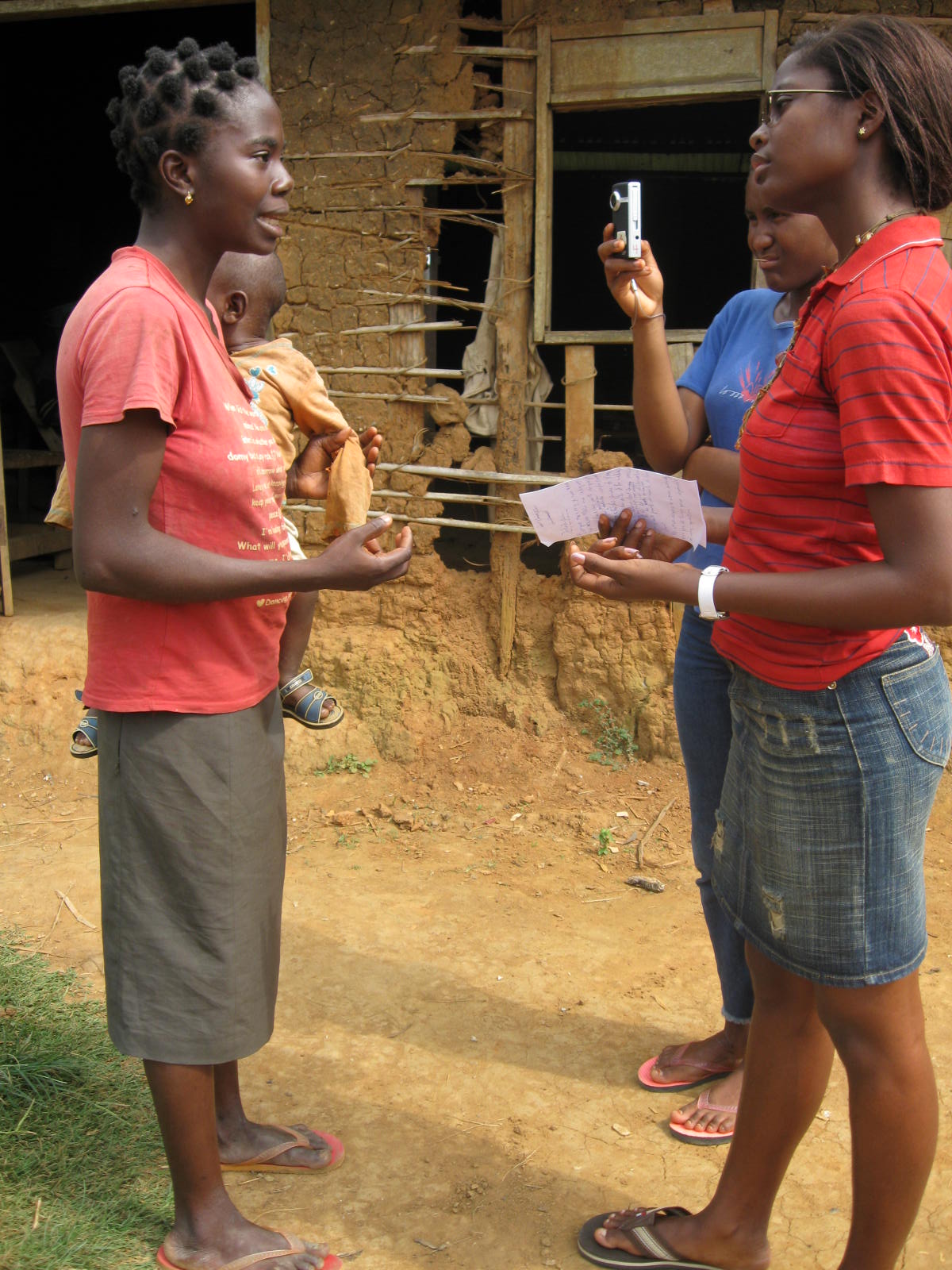
Making a film on birth registration, Cameroon

Strategically (Using ICTs as tools to support development processes): Beyond directly providing ICTs, new technologies can be used in a myriad of ways to support the broader development process. Starting from larger program goals, defining the roles that information and communication play, looking closely at the local context, and then researching existing tools that could be supportive is a good way to start when planning concrete initiatives. (Forthcoming is a second publication by Hannah outlining a good process for local contextualizing and ICT integration into specific programs). If there are no existing tools, a case can be made for developing or building onto a tool or an application.

Mobile phones, as tools for effective and timely dissemination of information, have real potential to strengthen the design and delivery of programs, for example in health, education, household economic security, disaster risk reduction and response, emergency and crisis management, HIV and AIDS prevention and treatment, child protection, youth-led advocacy, and water and sanitation. ICTs should be an integral part of local, country-level and broader strategic planning processes and they should be incorporated, where appropriate and relevant, into programs where they can add value, keeping a close eye during monitoring and evaluation on whether their purported benefits are real.

On-going capacity building and exchange at various levels is critical to help program staff become aware of advances in the field of ICTs and to help ICT advisors better understand programs, staff needs and community realities. Conversations across sector and silo boundaries are also critical to ensure that ICT integration is successful. ‘Bridge figures’ are helpful — those persons with good knowledge of both programs and ICTs — to help these processes along. In the absence of someone to serve as a bridge figure, well-structured teams with expertise in both areas should work closely together to take advantage of their specific expertise and to learn from one another.  ICT tools should be selected based on local needs and contexts as well as program priorities, starting with information and communication needs, rather than starting with new ‘breakthrough’ technologies. (Though other sectors often start with the cool technology and see if/how it can be useful). During strategic planning processes, program staff should be analyzing program information and communication needs and working with ICT staff to incorporate technology that may add value and help reach program goals in a higher quality and more effective way. Again, ‘bridge figures’ can be helpful in that process. Monitoring and evaluation are important along the way to check whether adding ICTs is actually helping. Sometimes things work perfectly fine without new ICTs.

Indirectly (Using ICTs to improve efficiency and communication within the organization): The wealth of knowledge and information that a development organization generates and uses needs to be documented, shared and communicated effectively in order to improve impact. Advances in knowledge management and on-line collaboration, including blogs, wikis and other social media tools and feedback mechanisms can bring immediate access to information and real-time discussion. Lower cost technology, notably in the areas of digital mapping, GPS, mobile mapping, mobile internet can help staff to carry out their daily work and improve information sharing and decision-making across departments and to engage and inform the public. Engagement with donors can also be heightened through ICT tools and social media, always taking into consideration the additional burden 24/7 demands can add to staff’s workload, and the child protection and other risks posed by more direct access to communities.

ICTs and social media can help make aid and development organizations more participatory, more agile, and able to pull in information from variety of sources and process it faster. This in turn can help pull people out of their silos and force them to consider new ideas and ways of working and thinking about challenges. Mobiles especially are helpful for better communication with community members and local organizations. Forward thinking organizations should be taking advantage of these new tools to gather direct feedback from those that they are supporting, for better dialog to improve their work, and for devolving helpful information to community members. Mobile data collection, for example, in addition to being a strategic tool for program implementation, can also be a way of improving the quality of data collection and increasing ownership by community members of their own data which support them to take back management of their own development processes from external agents. Mobiles are also a great tool for gathering data quickly from a broad subset of the population; data which can shape rapid responses and emergency interventions.

Twitter and blogging and other web-based services can serve as a springboard for deeper discussions and coordination among different development actors, government agents, institutions and the private sector. Social media is a way to share and discuss lessons learned and challenges faced, and to diffuse information about new ICTs and how they are being used by different agencies and individuals. Global partnerships can easily be initiated, developed and nurtured on-line. Organizations can provide on-line training opportunities to staff and save time and money by using new technologies such as forums, blogs for sharing and reporting, Skype and chat tools, and social networking. These same tools can be used to improve relationships with donors and with partners and staff working in disperse offices. However, in order for any of the above to happen, command and control practices that are common in large institutions and organizations need to be abolished so the tools can be most useful.  Here is an excellent post on use of social media tools in humanitarian work.

3-fold path

Using those three categories to think about ICT integration in an organization’s work can help clarify and strategize. Some initiatives may include all three categories and some may be more focused on one particular category.

In a follow-up post, I’ll share some examples of tools that I find interesting and helpful for organizations working at the grassroots level to achieve broader programmatic goals and to improve local community participation and ownership of the development process.

—–

MDG related posts on Wait… What?

MDGs through a child rights lens

5 ways ICTs can support the MDGs

ICT related posts on Wait… What?

11 concerns about ICTs and ‘social media for social good’

I and C, then T

Innovate but keep it real

ICT4D in Uganda — ‘ICT’ does not equal ‘computers’

Mind the gap

7 (or more) questions to ask before adding ICTs

It’s all part of the ICT Jigsaw: ICT workshop in Mozambique

Read Full Post »

The latest UN report on the MDGs states that progress towards the Millennium Development Goals has been made, but it’s uneven. It looks like the Goals will be missed in most regions.

I’m blaming Madonna for launching her line of MDG sunglasses and not linking them to an MDG promotion campaign (kidding!)

To discuss all this (well, except for the sunglasses part), MDG week is happening in New York from September 20-24, 2010.  I’ll be part of some of the activities, including 2 panels. The first panel is on ICTs, Innovation and the MDGs and the second is on Women/Girls and Mobiles. What better way to prepare than to write some blog posts to sort through some ideas?

This post looks at the link between child rights and the MDGs. I’ll write some additional posts and add links at the bottom of this post when they are ready. I would love feedback on which elements would be most important to highlight during the MDG panels next week.

Human rights and the MDGs

If you look at why some countries are more on track than others in achieving the MDGs, the answer often comes down to there being greater accountability and transparency at all levels, more citizen engagement, and more public debate. Human rights are instrumental in ensuring empowerment, access to social services, equality before the law, and poverty reduction. So the link between human rights and the MDGs is clear. There are a number of human rights concepts: shared responsibility, indivisibility, non-discrimination, equality, and accountability that are also necessary for achieving the MDGs.

Due to discrimination, the most marginalized are still not accessing their rights or being included in the MDGs. There are still massive inequalities between rich and poor, rural and urban, men and women, boys and girls, adults and children. Disability and ethnicity also prevent some groups from being included. Until these disparities are addressed, the achievement of the MDGs will be far off for many particular groups. The discussion around the MDGs needs to include and reflect the opinions and concerns of those who have been traditionally marginalized.

Girls and the MDGs

Children, especially girls, and especially girls in poor, rural areas and urban slums, are often the most marginalized in these processes and in general. The MDGs highlight some critical gender gaps, especially in education, but they do not reveal the power imbalances that are an underlying cause of these disparities. Girls are often subjected to harmful practices such as early marriage and sexual violence. In countries where literacy is lowest, girls’ chances of early marriage are highest. Girls spend more time working, shoulder the burden of household chores and are more often not in school. Organizations and entities working towards the MDGs need to do more to ensure that girls and other marginalized groups are not excluded.

MDGs through a child rights lens

Child rights are a set of specific rights for those under the age of 18. They are outlined in the Convention on the Rights of the Child. Much of the work that child rights organizations are doing is complementary to achieving the MDGs, and 6 of the 8 MDGs are directly related to children.

Working with children and young people to participate effectively in the development of their communities and the realization of their rights contributes directly and indirectly to the achievement of the MDGs. Ensuring that children, especially girls, and other marginalized groups are listened to and heard by decision makers at the local, district, national and global levels is critical in identifying and addressing the hidden power dynamics and the underlying issues that slow the achievement of the MDGs.

Applying a ‘child rights’ lens to the MDGs is helpful in identifying responsibilities for achievement of the different MDGs. A child rights lens can also help ensure the concepts of non-discrimination and the best interest of the child are incorporated into MDG work.

What is a child rights lens?  How can it be applied to the MDGs? In a simplified way, it means:

  1. Identifying and monitoring those persons and institutions responsible for ensuring children’s rights/achievement of the MDGs (the ‘duty bearers’).
  2. Helping children and adolescents (the ‘rights holders’ in this case), to empower themselves by knowing their rights/knowing the MDGs, and together with supportive adults and institutions, to hold duty bearers accountable for ensuring children’s rights/achievement of the MDGs.
  3. Supporting children to participate fully in the process. Children’s participation leads to better outcomes and policies, and involving children early in their lives helps them develop skills and attitudes that lead to a better society in the short and long-term. Not only do children have something to contribute to their societies now, but by engaging in community development and developing good leadership skills at a young age, they also become better leaders in the future.

A child rights approach should be central to all programs and funding that are addressing the MDGs, since the MDGs are interrelated with children’s rights to survival, development, participation and protection. In addition, the principles of non-discrimination and the best interest of the child should be paramount in all decisions taken related to the MDGs.

—–

Resources:

UNICEF’s Narrowing the Gaps to meet the Goals shows that paying attention to equity and the unreached can be a more cost-effective way of pursuing the MDGs in aggregate.

3 ways to integrate ICTs into development work

5 ways ICTs can support the MDGs

7 (or more) questions to ask before adding ICTs
Related posts on Wait… What

Child participation at events:  getting it right

Child protection, the media and youth media programs

Community based child protection


Read Full Post »

Salim (left) with Solomon in Kinango community.

As I mentioned in my previous post, Plan’s Kwale District office in Kenya has been a role model for Plan on how to integrate ICTs into community-led programming to help reach development goals and improve access to children’s rights.

I talked with Salim Mvurya, the Area Manager in Kwale, last week and asked him for advice for the tech community (0.15), corporations (1.19) and development organizations (1.57) who want to build in ICTs for moving towards development goals. He also comments on the importance of realizing that development is changing (4.43). You can watch the video below or at this link. If you’re not patient enough to watch a 6 min video (often I’m not!) or don’t have a strong connection, see the transcript below.

You can also view Part 1 of the video, where Salim gives some background on how Plan Kwale has been using ICTs in their programs since 2003 (1.11), shares ideas about the potential of new ICTs (3.42) and talks about some key lessons learned (5.03). Or you can read the Part 1 transcript here.

Transcript Part 2

ICTs and Development Part 2: advice for tech community, corporations and development organizations

My name is Salim Mvurya, I’m the Area Manager for Plan in the Kwale Development Area.

What advice can you give to outside tech people who want to develop something for a place like Kenya?

I think that to get an idea externally is a good thing, but that idea has to be blended with grassroots. It has to be contextualized, because there are very many good ideas which may not be appropriate at the community level. So I think my advice, for people who have ideas, who have never been to Kenya or Africa or in the field, is to leave the process to be home grown, so that the ideas that are coming from outside are building on existing issues, so that the ideas are also looking at what kind of skills and what can be done on the ground, and looking also at issues of sustainability. So it’s very important for somebody from outside the country to be sensitive to local conditions, local context, local skills and also looking at putting ideas that can be self-sustaining.

What is your advice for corporations who want to support the use of ICTs in development?

Corporate organizations who are interested in making a contribution to ICT for development, I think it is important that they foster and have partnerships with grassroots organizations that can really give them the issues because, OK, most corporations are very innovative, but working with grassroots NGOs and civil society that can give them the practical sense of those ideas, I think would be a good thing to do.

What is your advice for colleagues trying to successfully integrate ICTs into their programs?

One thing for organizations that are thinking of utilizing ICT is that you need local capacity. Like, if you have a field office, for example, Plan has development areas, in development areas, particularly for Plan, the ICT technical people should also have an opportunity to lead the ICT for development. What I have seen in the few years that I have been trying this is that it requires also the ICT function to be more available to communities. It requires the ICT function to also work around the program issues that the team is thinking, so it’s not just about looking at systems, looking at computers, but looking at how can all these ICT skills be able to help to develop programs. How can the ICT function be able to support innovations that are also going to enhance problem solutions at the community level. How can we use ICT to strengthen our interventions in the community?

And I must say from experience, that the ICT coordinator for Kwale has been more of a ‘program’ person, and I think that is why we are seeing all these gains.  I remember when we were designing the community-led birth registration one afternoon, we sat together and we were thinking, how can we put all these ideas together and include ICTs in it, so I think it’s about having an ICT function that is responsive to the program issues on the ground and not necessarily sitting somewhere and looking at softwares. You know, even designing a software that would be more responsive to what is happening on the ground, like looking at issues of child protection and seeing how can ICT help the response mechanism. Looking at issues of accountability and seeing how ICT can make a contribution to accountability processes in community.  So I think that is the kind of ICT that would be appropriate in the field, but also an ICT function that can learn. You know, learning from other people, but bringing the lessons closer home to see what can work, and what can’t work.

Any last advice for development organizations around integration of ICTs?

The message that I would want to give to stakeholders and development organizations is that a lot is happening in the world in terms of ICT.  Also recognizing that development is changing… ICT is providing opportunities for greater advocacy and accountability, and I think getting the interest for looking at all this and trying to say ‘what does this mean for development’ I think is very very critical. The youth constituency is emerging as very critical and they have interest in ICT. I know in Kenya youth have been trying different things, different groups, but I think ICT is providing an opportunity for them to strengthen accountability but also to be able to get skills that they can use as individuals that can also make a contribution in economic development.

Related posts on Wait… What?

Salim’s ICT4D advice part 1: consider both process and passion

Youth mappers: from Kibera to Kinango

A positively brilliant ICT4D workshop in Kwale, Kenya

Is this map better than that map?

Modernizing birth registration with mobile technology

Read Full Post »

At last week’s workshop in Kwale, we had the good fortune to have 4 folks from Map Kibera with us to train us on GSP and Open Street Map so that we could support youth in 3 districts where we’re working on the south coast of Kenya (Kwale, Kinango, Msambweni) to map their own communities. Jamie Lundine and Primoz Kovacic are Map Kibera staff, and Kevin Otieno and Millicent Achieng are youth who are trained on mapping. See the video above where Kevin and Millicent talk about the experience or watch it at the link here.

Kevin Otieno from Map Kibera

Both Kevin and Milli have been working with the Map Kibera staff since October, mapping out different areas in Kibera. For our introduction to Map Kibera, they started us off with a general overview of Voice of Kibera.

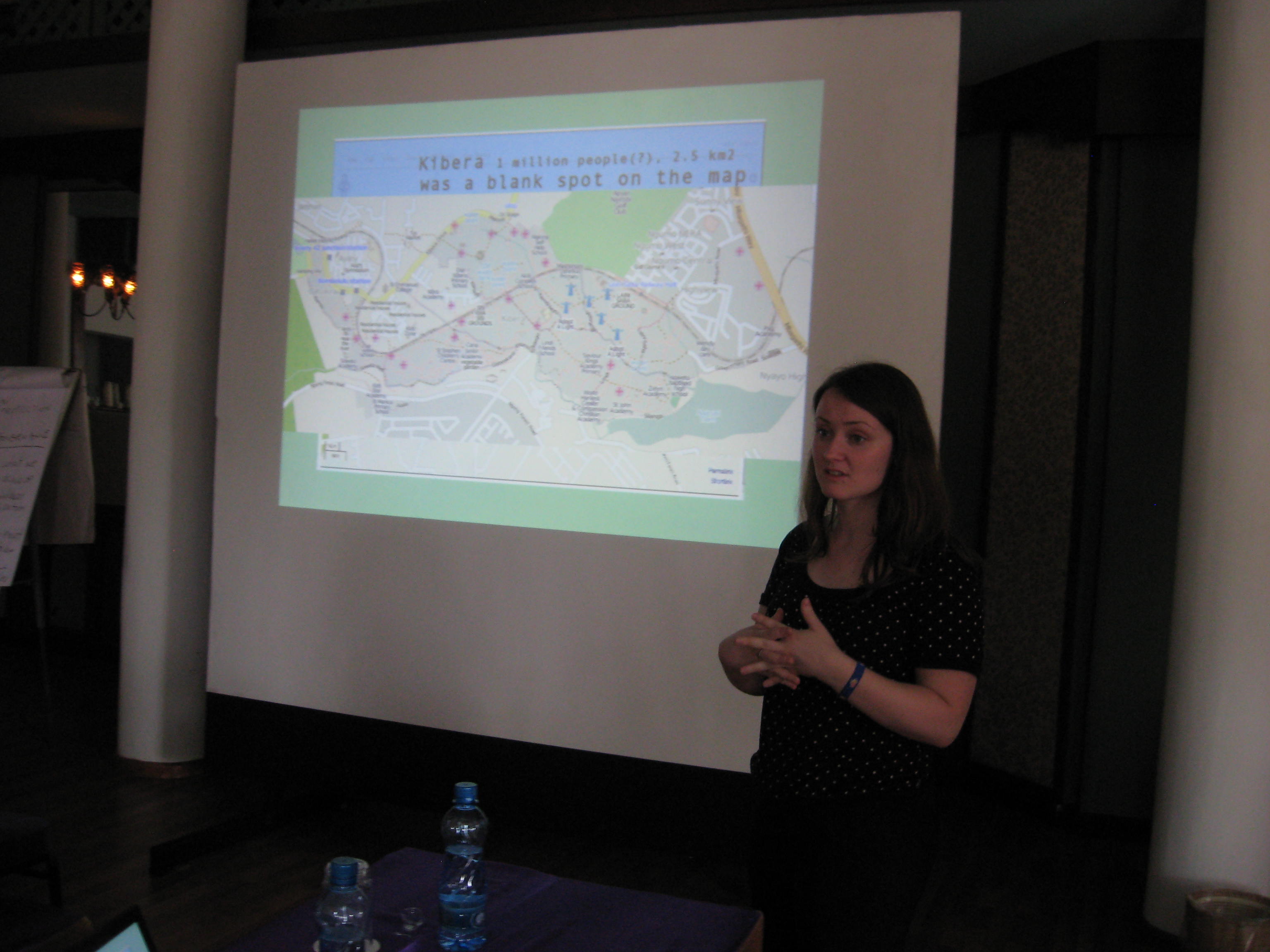
Kibera was a blank spot on the map (just like Kinango). (Jamie Lundine)

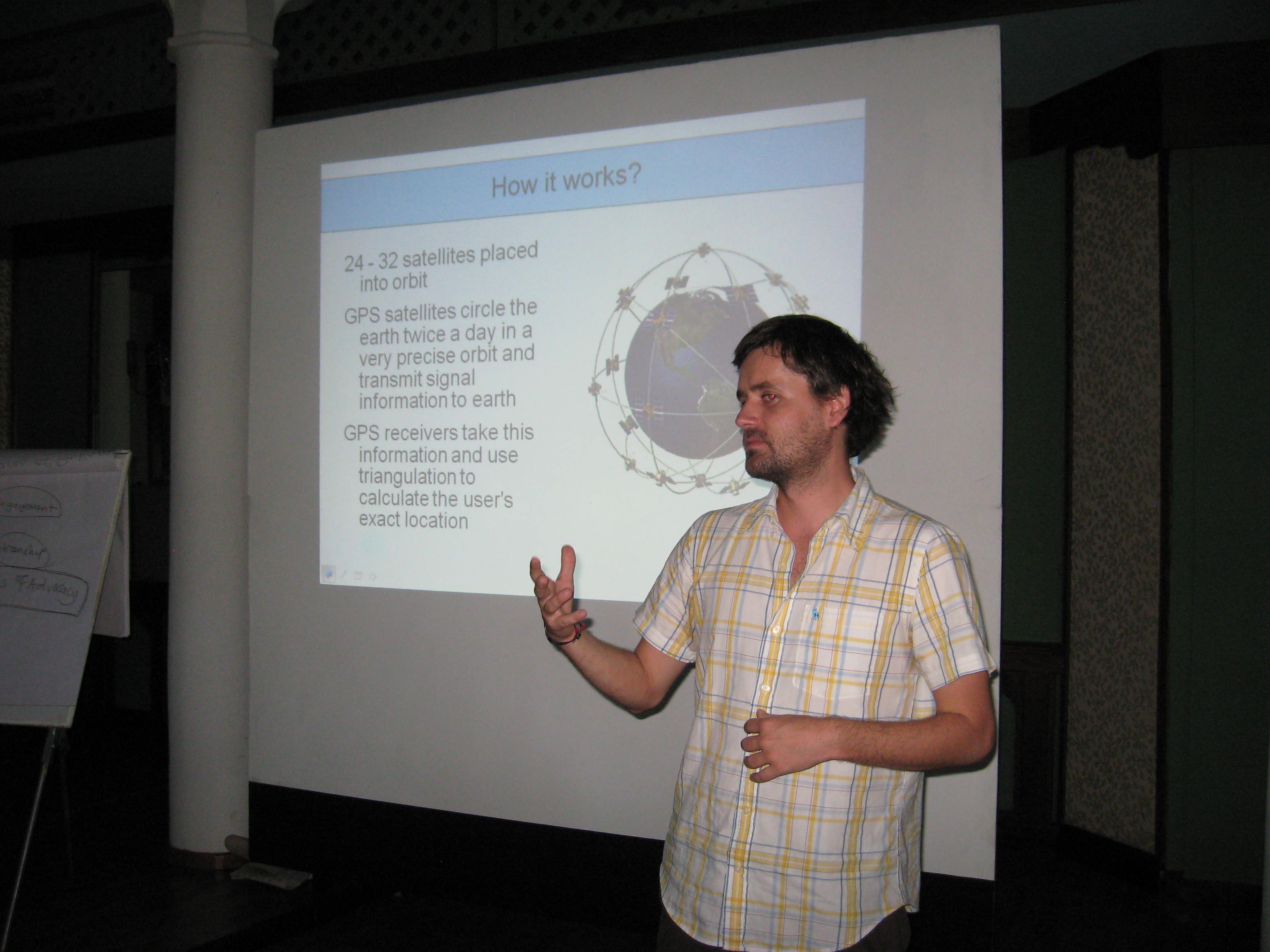
Jamie continued on with an overview of GPS and the Map Kibera project.

How GPS works. (Primoz Kovacic)

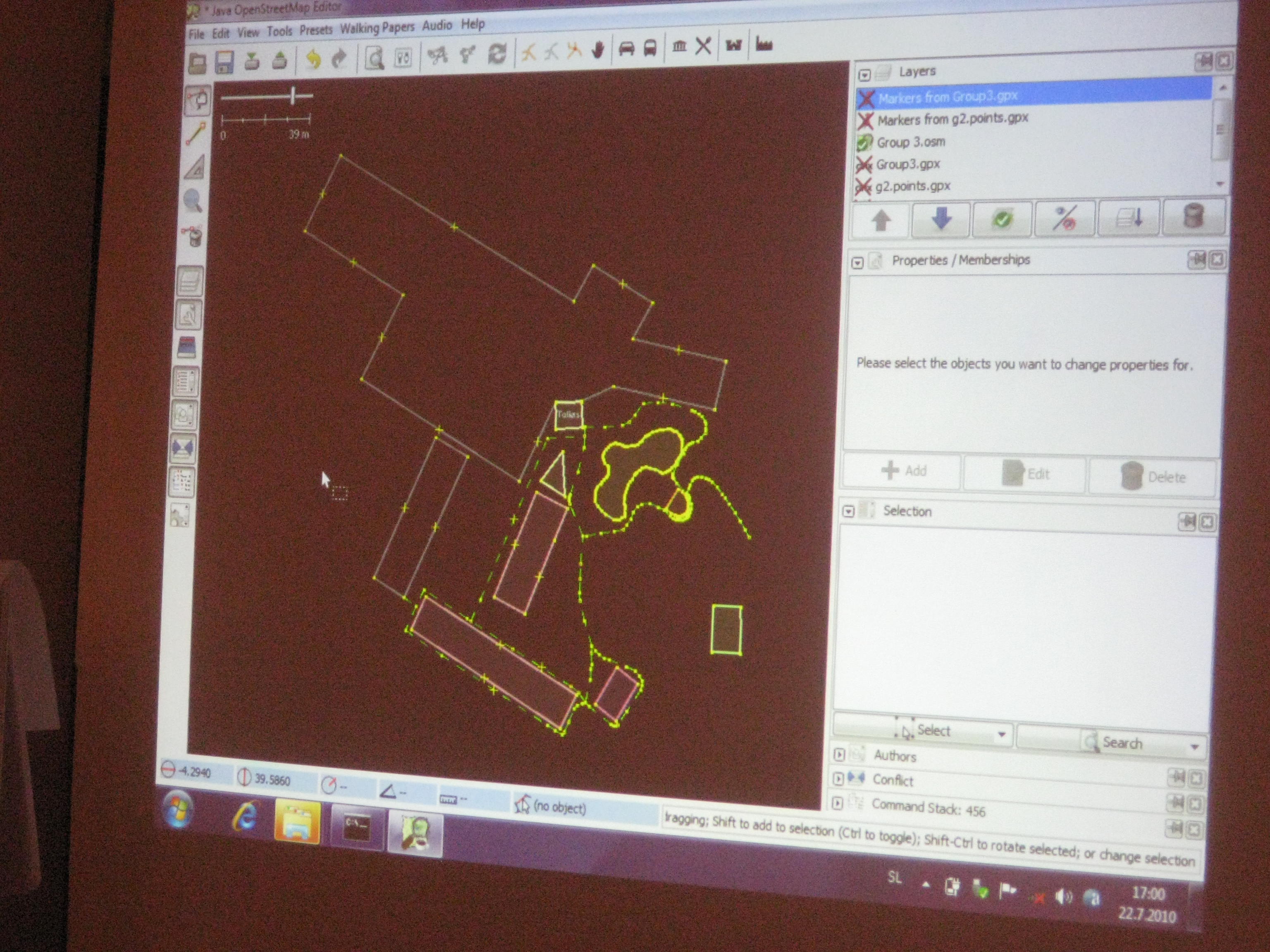
Primoz gave us the details on using the GPS devices and Open Street Map.

Hotel Kaskazi LTI Diani is now officially on the map

We practiced by mapping out our hotel, and adding it to Open Street Maps.

Then we went to Kinango District to start making the community map there. We met with the District Official and George, the District Youth Officer, explained why we were there. The DO said he’d heard good things about Map Kibera, and he ‘wanted to meet some of those youth mappers’. He welcomed us to move around the community.

The 4 teams did the first piece of the map, and will continue on with it in the future in Kinango but also in Msambweni and Kwale. The maps can then be used for different purposes, such as looking at existing resources and missing resources, or resource allocation, social auditing (eg., the government said that they built something here but it doesn’t seem to exist), tracking and responding to child protection issues, etc.

In addition to that, the arts and media content that youth produce as part of the project will have a much nicer digital map to sit on than what we currently have available… practically no information exists on digital maps about these 3 areas.

Here’s a video about the community mapping. If you can’t access, try the link here.

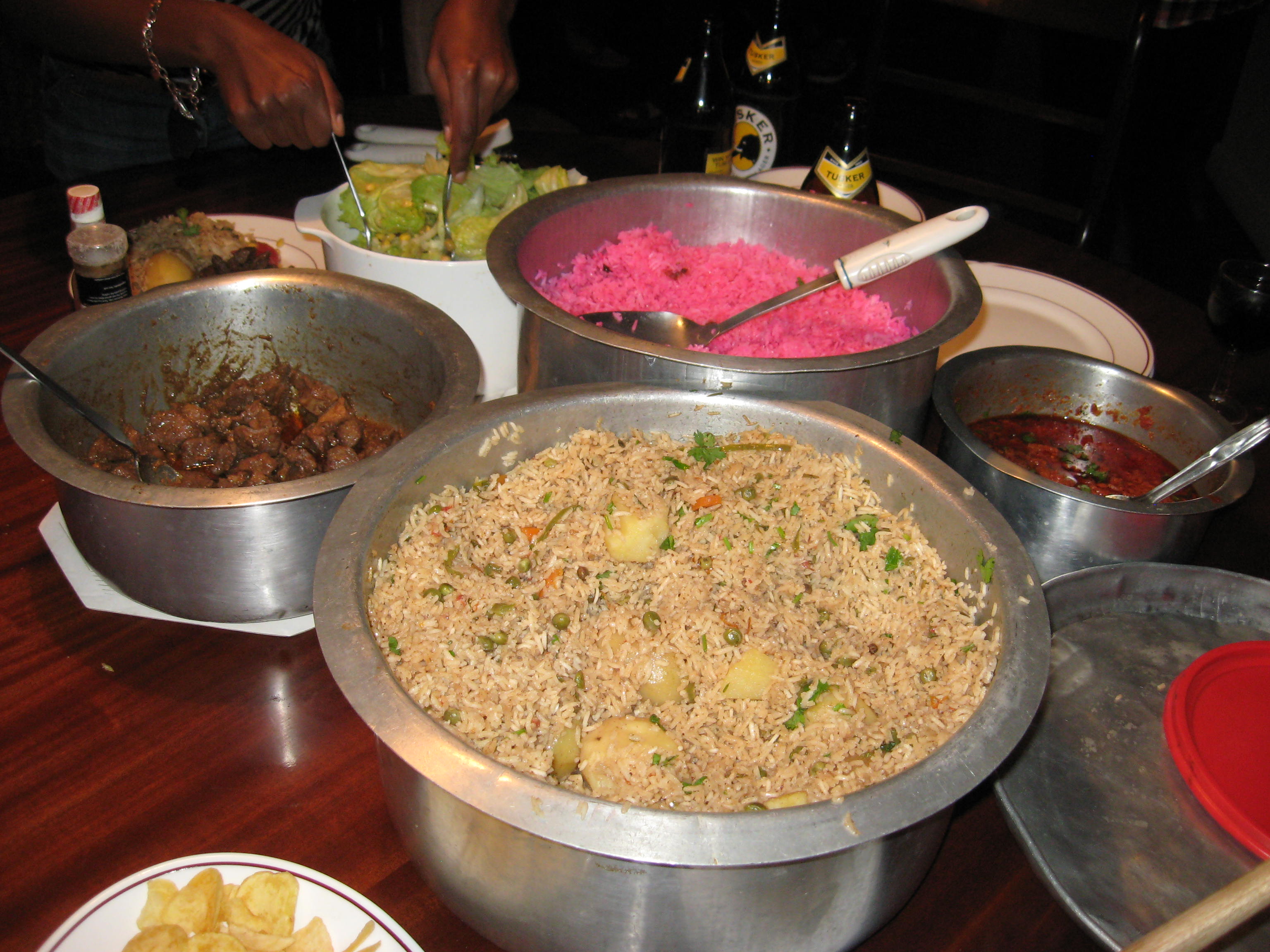
I had the pleasure of attending a Nairobi party on my last night in town and meeting up with Mikel Maron and Erica Hagen, who make up the rest of the Map Kibera team. I also ate some really bright pink rice…. yum….

If cotton candy were rice....

Related posts on Wait… What?

A positively brilliant ICT4D workshop in Kwale, Kenya

Salim’s ICT4D advice part 1: consider both process and passion

Salim’s ICT4D advice part 2: innovate, but keep it real

Is this map better than that map?

ICT4D in Uganda: ICT does not equal computers

Read Full Post »

Nothing to do with the topic of this post, but the Kwale coast is gorgeous.

Last week I was in Kwale, at a Plan Kenya hosted workshop as part of the Youth Empowerment through Technology, Arts and Media program. The team at Plan Kwale has been pointedly using ICTs in their community development programs since 2003 (not counting email and Internet of course) when they began working with radio and video as tools for raising awareness about children’s rights.

It’s really impressive to see how they’ve moved forward with very strategic ideas for integrating ICTs to help reach programmatic and development goals, especially in the areas of youth and governance, universal birth registration, and child/youth-led advocacy around rights and protection issues.

Over the 6 day workshop, the main things we wanted to do were:

  • look at the development context in Kwale, Kinango and Msambweni Districts (South Coast areas where Plan operates via the Kwale Office)
  • better understand the perspective of youth in the 3 districts
  • remind ourselves of rights-based approaches to community development
  • discuss youth issues, governance, advocacy, violence against children and gender within the local context
  • look at the ICTs currently being used by youth, communities and Plan in the Kwale Development Area
  • share and discuss new social media and ICT tools and ways they can be used
  • practice using new social media and ICT tools and see if they can be useful and sustainable in the 3 districts
  • determine next steps for integrating social media and new ICTs in specific local initiatives and plan for how to build on them in Plan Kenya’s overall work

Some elements that made the week positively brilliant:

workshop participants

Engaged and committed stakeholders

We were a group about 20, including staff and university student interns from Plan’s Kwale and Kilifi District Offices and Plan’s Country Office in Nairobi; Government District Youth Officers (‘DYOs’) from the Ministry of Youth, Sports and Culture; Youth Council members from Kwale, Kinango and Msambweni; 2 staff from Map Kibera and 2 youth mappers from Kibera.

This mix meant that we had a variety of perspectives and opinions, including those of youth from local communities, partner organizations, local government, frontline staff, protection and governance technical advisors, ICT managers, and senior level program managers. This helped to ensure that we were grounded in reality, technically and thematically sound, able to cross-pollinate and integrate new ideas with solid experience and practice, and take decisions immediately forward to a higher level.

Local partners and youth-youth networking

Peer-peer learning and exchange among all the participants was a big plus. Plan and Map Kibera have very similar visions and values, yet each has its own area of specialized technical expertise and experience.  The youth participants from local councils from the 3 South Coast districts and the youth mappers from Kibera brought different perspectives into the workshop which enriched the discussions.  We all learned a lot from each other. Combining expertise as partners brought the workshop to a whole new level, and will help to ensure that the efforts are sustainable and can be built on and expanded. The youth in Kwale can now extend their skills to more youth in their communities, the youth mappers from Kibera can take home new ideas to improve their work, the university-level interns gained practical experience, and the buy-in from the local government’s District Youth Officers (who manage government funds) in the 3 participating districts can help provide the necessary support to broaden the efforts.

Flexible workshop methodology

We had certain goals that we wanted to achieve and we were clear on that, but we let the agenda flow. We started by taking a deep look at the local context and resources. We heard from local experts in the areas that we wanted to focus on (youth and governance, child protection) as well as community youth and local authorities. We spent time getting to know some new tools and discussing the pros and cons of using them.

Hands-on with FrontlineSMS

Hands On Work

We had practical sessions and hands-on work on blogging, FrontlineSMS, Ushahidi, Map Kibera, and mGESA (a local application of the mGEOS mobile platform co-developed by Plan Kenya, Plan Finland, University of Nairobi and Pajat Management and being piloted in Kilifi).

This was important for helping participants feel confident about doing some of the work once the training team was gone. I imagine however that more practice will be needed during some follow up sessions, as most of the participants don’t have regular computer and Internet access for enhancing their skills on a daily basis with additional practice and exploration.

We spent one day mapping our Hotel on Open Street Maps, and another day in Kinango, mapping specific points in 4 teams.  Lessons learned during hands-on work included the importance of engaging and involving the community ahead of time, so that rumors about why people are mapping the community don’t fly. In my group, for example, we were moving around with George the District Youth Officer from Kinango. Someone that he ran into joked to him “Oh, now Kinango is going up for sale!”  A joke, but nonetheless if people don’t know why we were mapping, this or other rumours can quickly spread. (See the video about mapping in Kinango at this link and the background blog post here.)

End goals + new tools + back again

By starting with people’s expectations for the workshop, analysis of the local context, and an understanding of the goals that youth and staff wanted to achieve together, we could be sure that we stayed true to where we wanted to end up. At the same time, by learning about new tools, things that weren’t possible before became imaginable and people started to innovate and mix their existing knowledge and experience with some new ideas.

Combining the two, and having a good variety of perspectives in the room and a lot of space for discussion and practice means that next steps will be more achievable and sustainable, because people are clear and agree about where they want to go, and they feel capable of incorporating some new tools and ideas to get there.

The tools

We explored a number of new(ish) tools at the workshop. They had been identified over the past couple years due to their use by Plan or other organizations in areas such as: community development work, violence tracking, advocacy, governance and social auditing.  We talked about mobile phones, email, Internet, Facebook, Hi5, Google search and Google maps. We did a quick overview of Voice of Kibera, use of GPS, Open Street Maps, FrontlineSMS, Ushahidi, the YETAM project, the PlanYouth website, and a Plan pilot project in Benin using SMS to track violence against children.

The first day, the context analysis was very focused on youth and governance, transparency and social auditing, so we pulled out the 10 Tactics video by Tactical Technology Collective (which @hapeeg had given to me a couple days earlier). This video series talks about 10 tactics for turning information into action. It really sparked ideas among the participants for how they could use social media and ICTs in social accountability work and human rights/child rights work.  Map Kibera partners also shared a tool developed by SODNET (SMS for social auditing of the Constituency Development Fund).

We talked about the use of mapping and SMS in child protection work. One of the main child protection issues in the south coast area is the distance that a child, girl, family has to travel in order to report an abuse. Women’s lack of economic power, inability to own property and the importance of marriageability also mean that often women and girls feel unable to speak out or protest abuse when it’s happening. It’s still not certain what role ICTs can play in this context given the risks involved to those who report, but Plan’s child protection point person, Mohammad, is planning to host a series of meetings with local child protection authorities to discuss possible ways forward.

Digital mapping was immediately cataloged as an important tool for identifying resources, advocating for services and holding government accountable through social auditing. It was also recognized as a potential income generator once areas, shops and local businesses could be added to an on-line map, or if youth could purchase GPS units with funding from the District Youth Office and charge for their GPS services. George, the District Youth Officer for Kinango talks in this video about how mapping can be useful to the Kinango community, even if most members don’t have access to computers and broad band. (Click the link or watch below)

Information and communication gap analysis –> ICT integration plans

ICT integration for youth and governance program

Early on in the workshop, we worked in 2 groups to analyze the goals for the Youth and Governance and the Child Protection programs that Plan is supporting in Kwale. The groups discussed the information and communication gaps that needed to be filled in order to move towards the goals of the 2 initiatives. We looked at what ICT tools might best help reduce the gaps, from existing traditional tools (like meetings, face-to-face advocacy, drama, town criers, radio) to those new(ish) tools that we had discovered (see above paragraph) that might be useful to try out given the goals in the 2 key areas. The groups revisited this gap analysis on the last day after having had more hands-on use of the different tools and turned the gap analysis into an action plan.

ICT integration for child protection programs

Management buy-in and leadership

While the 2 groups worked on local action plans for integrating ICTs into their work, senior management from Plan’s Kenya office created their own action plan for how to build on the workshop experience, engage mid-level managers and other key staff in ICT integration, further develop partnerships and solidify cross-cutting incorporation of ICTs into Plan’s work in Kenya. The Kwale and Kilifi program units have been innovators within Plan for several years. Learning from, supporting and building on concrete work that they are doing on the ground allows for a solid and feasible country strategy based on reality. Having a strategy built from the ground up and with solid support and buy-in from national management means that there is less risk of donor led ICT funding, and more probability that new resources mobilized for ICT work go towards real needs and have better results.

Related posts on Wait… What?

Youth mappers: from Kibera to Kinango

Salim’s ICT4D advice part 1: consider both process and passion

Salim’s ICT4D advice part 2: innovate, but keep it real

Is this map better than that map?

ICT4D in Uganda: ICT does not equal computers

Read Full Post »

Youth in Ndop, Cameroon

For the past few years I’ve been supporting the Youth Empowerment through Technology Arts and Media project (YETAM) in several countries in Africa.  The last few weeks I was in Cameroon, where the initiative is expanding to new communities, based on learning from last year’s work in Okola.

The project

The project uses technology, arts and media to spur youth engagement in the community development process and youth-led actions around challenges youth identify in their communities. In the process they think about their personal and community strengths and resources, develop skills for problem solving, team work, research and investigation, and get training on how to use some different ICTs (information and communication technologies). They also build confidence and self esteem and learn how to bring up different issues in their communities and involve their peers, families, local authorities and local leaders in actions to address them.

Audience

The main ‘audience’ for the arts and media is the communities where the youth live and nearby communities. Some of their teachers, parents and local leaders also take part in the project and related training. This helps youth to build up support for their agenda. The arts and media is aimed at engaging communities in dialog and discussion that eventually leads to positive change.  Youth often have opportunities to participate in and use their new skills and their arts and media to advocate at national levels as well. Via the Internet, the youth’s voices are amplified to also reach their global peers and decision makers. For example, the YouTube site for the project has over 100 videos made by youth over the past 2 years.

Youth drawing on issue of water

Actions

Last year, the youth in Okola identified poor quality drinking water as a key challenge. They got the community moving to restore a damaged and contaminated spring bed and improve the water quality (without external funding).  This year we’ve incorporated a stronger focus on prevention of violence and gender discrimination because those were the themes that emerged most heavily across all the participating countries in the past 2 years of the project.  We hope the youth will improve their analytical skills around these areas and begin to look at these issues in more depth, strengthen their understanding of the causes of violence and gender discrimination, and develop strategies for overcoming them.

Process

The whole process starts when staff begin discussions about the project and its goals with interested local communities and youth. It’s a dialog and negotiation process, aimed at building local ownership and partnership for the initiative. Staff identify local partners skilled in the areas of technology, arts and media to accompany and support the process.

Staff and partners learning to use GPS for Open Street Mapping

TOT

A 1-week training of trainers (TOT) ensures that everyone is on the same page with regard to the project objectives.The TOT also helps deepen staff and partners’ understanding of some of the issues such as gender and violence, and is an opportunity to build skills on new ICTs that can be used in the project.  This year, for example, we had a session on GPS and OpenStreetMap because we want to add digital mapping to the toolbox to complement hand-drawn mapping, since both are of value to the work we are doing. (Shout out to @billzimmerman and @mikel for pointing us in the direction of Ernest, our fabulous GPS and OSM trainer from Limbe).

Critical questions

At the TOT, we discuss some of the critical questions in a project like this, such as:

Whose media? The arts and media created in the project should belong to the community, not to the funding organization or the arts and media partners. This has connotations then in how it is attributed and copyrighted, and who keeps copies of it, and what it is used for. The best way to manage this seems to be to see organizations and funders as ‘sponsors’ of the project and to ‘brand’ the media as such (this project was funded by xxx and does not represent official positions of xxx).

My personal bias is that the media and any web associated with the project should not carry an institutional logo or be hosted on an institution’s website, but should be established and managed locally using free tools like WordPress and YouTube with support from partner organizations.  I think that we should be looking at these kinds of initiatives as youth and community capacity building not as an institutional branding opportunity.

A middle ground could be that the media is ‘owned’ by all the involved partners and all can use it to promote their own objectives, or that some of the media supports an institutional position and that media is put on an institutional site, and other media can be created by the community for its own purposes, and hosted/posted on free sites like the ones I mentioned. This aspect can still be a little bit tricky, if you ask me.

Whose agenda? The agenda should be built by and belong to the youth and the community. They are not making promotional materials for us or the local partners. We also should not be censoring media.  This is an issue sometimes when the position of the community does not follow institutional positions.  This can be addressed by resolving the issue of ‘whose media’.

Which media? The project aims at building skills in various media forms. The primary audience is local, and so we help youth learn to select their media form by thinking about the primary audience’s access and media habits or traditions. Often painting, drama, newsletters, comedy, poems and singing, radio, and video are more effective than say YouTube and blogging for getting a message across to local community members who may not have electricity and/or Internet. Digital media serves a purpose, but for a different audience, normally at the national or global level.  In addition, sometimes one tool is better than another for addressing a particular topic, for example, violence may be difficult to portray on a film without identifying the person who was mistreated and putting them at risk of retaliation.

At the same time, the thing that draws a lot of the youth into the project is the opportunity to learn computer skills, to manipulate and manage a camera, to go onto the Internet. So we bring these tools in as well to build those skills in young people, even though they may not have Internet access on a daily basis. We also ensure that youth have access to the tools and equipment they need to continue making digital media and accessing the Internet and computers by working with schools and partners on an agreement for owning and managing the equipment and supporting youth to use it.

Media for what? We all know that kids can make amazing arts and media and that they can learn to use computers and cameras and mobile phones without a problem. So what? The goal of the project is what children and youth learn in the process of making that media, what skills they build, and then what they actually do with their skills and their art and media that counts, what changes do they achieve for themselves and in their communities? How do they generate dialog while making the arts and media and/or how do they use their final ‘products’ to push for positive change.

Adapting to the local setting

During the TOT, partners and staff create a detailed plan for how they will train the 60 or so participating youth on technology, arts and media over a focused 2-week period and beyond through refresher training and hands-on work. We’ve set the goal of 30% theory and 70% practice to help guide partners and facilitators as they prepare their sessions. The goal is not training professional artists, journalists and technologists – it’s using arts, media and technology as tools for youth participation, action and advocacy.

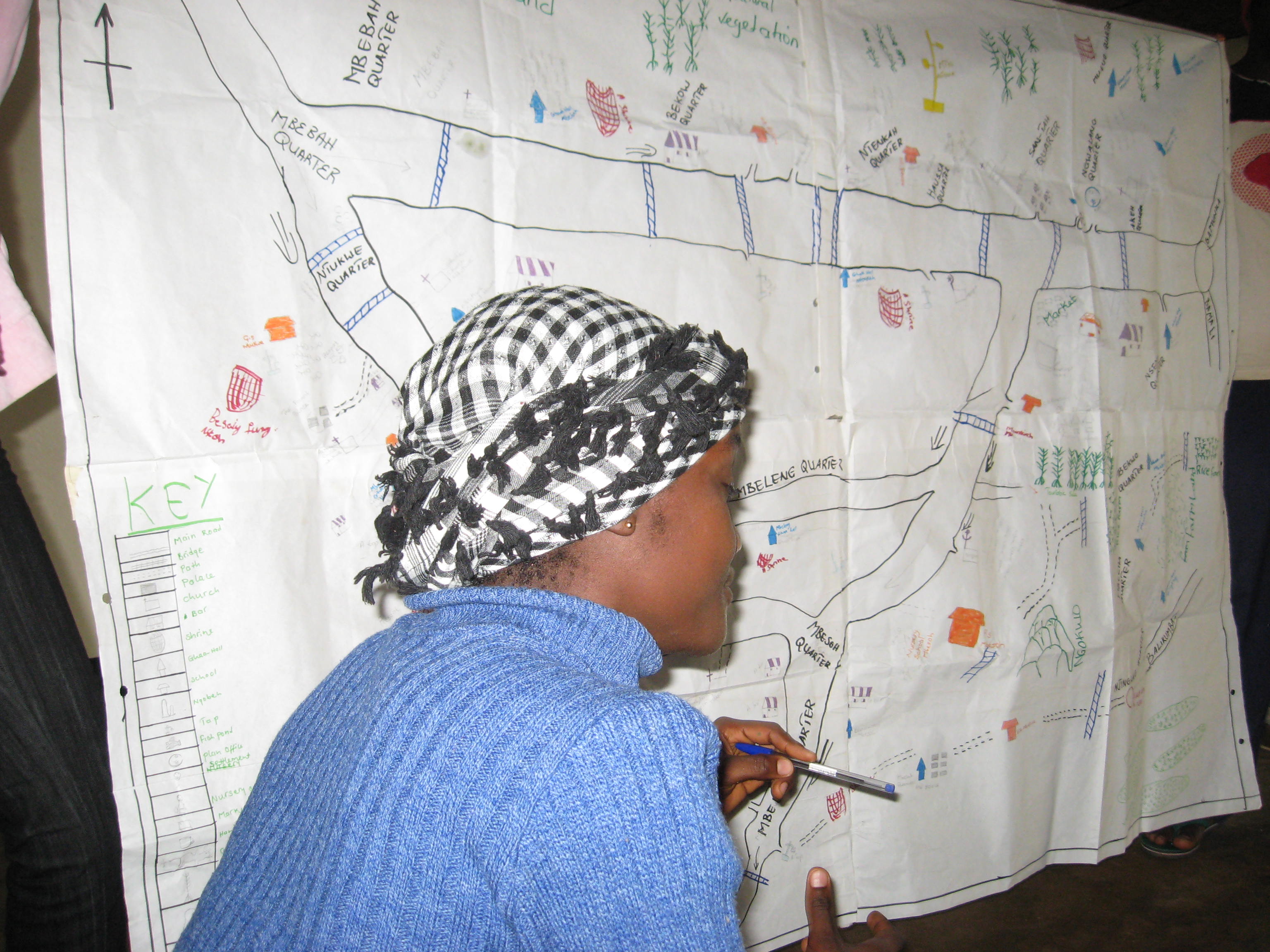
Mercy presents the youth's map

Mapping

To identify the themes that the youth will focus on, we facilitate a participatory mapping process. The youth create a base map of their community and discuss the community’s history and what makes it unique – they create their community profile.

Then they identify community resources and risks based on the 4 categories of child rights:  survival, development, participation and protection. In other words, they identify what exists currently in the community that supports children to survive and develop, and how the community currently protects children, and what spaces children currently have to participate.  They then look at where those 4 categories are not doing so well, and where children are at risk.

Youth, parents and local authorities discuss the map

The map is shared on the first day of the youth workshop and discussed with participating teachers, local authorities and parents in order to generate additional input and to get buy-in from the adults.  In small groups and plenary, they together prioritize the issues and decide which ones they will focus on during the workshop and beyond, using arts and new media tools. In follow up sessions, they will also make a digital map of their area for uploading to the Internet, and their arts and media work will be uploaded as points on that digital map. The digital map and the hand drawn map bring distinct benefits to this kind of process.

I love mapping. It’s a really interesting process, because when you start by looking at resources and when you are working with youth, so many things come out that would not come up if you came in and asked about needs or problems and only worked with adults. Communities are used to NGOs coming in to ask them what they need, to train them to see only their problems and to feel like victims, and to then expect the NGO or external agent to ‘resolve things.’ If you start by identifying only needs and problems, there are so many things in a community that will be missed. I notice that youth are not as well-trained as their parents in playing the victim. They are much better at talking about their community and what it means or holds for them than their parents are. When I show up as an outsider, they often want to show me beautiful places, special places, things they have and are proud of, not their needs and problems.

Some of the challenges youth identified and will work on

The real work

After the workshops comes the real work.  The partner organizations, staff, teachers and community leaders who are involved support the youth over time to continue their learning in the different areas, to do refresher training in areas they didn’t fully catch during the first round, to generate dialog in the community around the themes youth have identified, and to work on the issues they have identified through organized youth-led actions and advocacy at different levels and engaging decision makers at the local, but also district and national, and sometimes even global levels.

This is where the real change happens and is the real heart of the initiative.

My Cameroonian colleague told me one day ‘This project is like a catalyst in my body.’ It has motivated and driven her to learn new skills and take on new challenges, to push herself to new levels to achieve the goals set out. I’ve seen it have the same effect on the youth and on myself as well. In the end, that is what we want to achieve — motivated and engaged people, working together to make positive change in their communities and beyond.

Resources

This morning I came across this toolkit ‘A Rights-Based Approach to Participatory Video Toolkit’ by Insight, and I absolutely love it. It pretty much spells out what we are doing (though we had nothing to do with writing it up), and confirms a lot of the hunches and ideas that we’ve had while developing the program. I highly recommend it if you are working on rights and media.

Read Full Post »

Group work at a regional consultation

Children and adolescent’s participation in decisions that affect them is key. More and more, decision makers are realizing that they need to consult with children when they are making decisions about children, meaning that children have more opportunities to weigh in on issues that impact on their lives.

Not knowing how to manage a good participation process or not listening to past lessons learned, however, can make it difficult for children and adolescents to take advantage of opportunities offered them to input into these decisions.

Children’s rights to participate

A child is anyone under the age of 18.  According to the UN Convention on the Rights of the Child (UN CRC), in addition to survival, development and protection rights, children also have participation rights.

  • Children have rights to be listened to, to freely express their views on all matters that affect them, and to freedom of expression, thought, association and access to information.
  • Participation should promote the best interest of the child and enhance the personal development of each child.
  • All children have equal rights to participation without discrimination.
  • All children have the right to be protected from manipulation, violence, abuse and exploitation

from the “Minimum Standards for Children’s Participation 10th draft”, written by Helen Veitch,*drawing on Articles 2, 3, 12, 13, 17, 19, 34 and 36 in the UN Convention on the Rights of the Child

What are the principles of participation? (Summarized from the above document)

An ethical approach: transparency, honesty and accountability

Adults involved need to follow ethical and participatory practices and put children’s best interests first. Because there are power and status imbalances between adults and children.  An ethical approach is needed in order for children’s participation to be genuine and meaningful.

A child friendly environment

The atmosphere should be safe, welcoming and encouraging.  Because in order for children to feel comfortable participating they need to feel safe and supported.

Equality of opportunity

Space should be ensured for those groups of children who typically suffer discrimination and are often excluded from activities. Because children, like adults, are not a homogeneous group and participation should be open to all.

Participation promotes the safety and protection of children

Child protection policies and procedures are an essential part of participatory work with children. Because organisations have a duty of care to children with whom they work and everything should be done to minimize the risk to children of abuse and exploitation or other potentially negative consequences of their participation.

Child participation in national, regional and global consultations

Children’s right to participate is key. However in practice, a safe and open environment for child participation at national, regional and global events can be difficult to ensure. It requires resources as well as a great deal of preparation.

Over the past several years, I’ve participated in some disappointing events where:

  • lessons learned about effective child participation and child protection were ignored
  • those tasked with ensuring child participation and protection were powerless to influence event organizers to ensure quality and safe participation
  • those organizing the event or sending children to it simply had no idea that there are standards and protocols and plenty of lessons learned that they should have taken into consideration.

Minimum standards for child participation

For example, back in 2005, several organizations in East Asia and the Pacific* collaborated to produce minimum standards for child participation in national and regional consultation events. These were initially developed for the UN Study on Violence against Children.

They offer a comprehensive overview of how to manage child participation and can be used as a guide for other national, regional or global events where children participate.  They should be considered whenever organizing, hosting or participating in an event where children are being consulted or their participation is desired.

You can have the most amazing and wonderful children present and the very best intentions, but fall very short of your goals of quality child participation because logistics and organization are poor and/or child participation and protection protocols are not followed.

What often goes wrong?

Child participation holds tremendous value, but when it’s not properly facilitated or supported; results can be negative on many levels, including:

  • Children are tokenized or used
  • Poor organization gets in the way of participation
  • Important opportunities are missed
  • Children become frustrated
  • Children are put at risk
  • Money and time are wasted

Oh, the things I’ve seen…

Mistakes those new to organizing events or supporting child participation in events often make:

  • Having singing and dancing in traditional costumes be the main role for children
  • Setting up totally new groups to participate in an event rather than working with existing groups
  • Not understanding the concept of ‘representativity’ and not ensuring democratic and fair selection processes of those children who participate
  • Not realizing (for global events) that the visa application process takes a very long time, and requires visa invitation letters and appointments in advance
  • Forgetting to get children their required vaccines
  • Not realizing that children may not have birth certificates or passports, meaning the visa process takes even longer
  • Not preparing children well for visa interviews, including the possibility that their visa request will be denied
  • Not allocating time and budget for travel necessary to obtain visas, permission from parents who do not live with the child (child trafficking laws often require this now) and other documentation
  • Not obtaining permission slips, medical histories, media releases from parents and/or not obtaining travel insurance for children
  • Not getting the above materials translated into a language parents can understand
  • Not having child protection policies in place and adhering to them
  • Not doing background checks on people who will be working with children
  • Thinking it’s OK to send children overseas without a chaperone, not budgeting for chaperones
  • Forgetting that not all children speak a major language like English, Spanish, Portuguese or French and will require translation of all materials before the event as well as constant translation during the event, and support following the event if they will continue to participate in event follow up

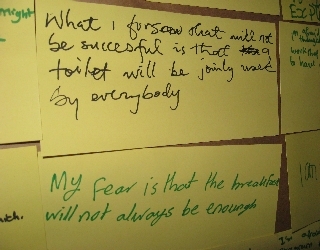
Children's responses on what they feared at an event.

Mistakes that even experienced child participation facilitators make:

  • Influencing too much on what children will say
  • Using children to promote the sponsoring organization or INGO’s agenda
  • Having children represent an NGO or INGO rather than representing themselves, their own groups or their communities
  • Having children wear NGO/ INGO t-shirts, caps and other branded items
  • Asking children from some countries (usually those from countries deemed ‘exotic’) to bring traditional costumes and share their culture, but not asking the same from other countries
  • Creating/building up ‘professional’ child participants and creating child star speakers
  • Relying on the same children all the time to represent because they have passports or visas or prior experience
  • Only bringing children who speak a major language or live in the capital to events
  • During sessions, not organizing group work in ways that facilitate communication across different languages
  • Sending any adult as a chaperone, rather than sending the best or the right adult as a chaperone
  • Not planning ahead on how children will be supported when they get back home to continue inputting into global networks and processes
  • Not ensuring a space for children to share their experiences with home offices and groups
  • Making children work long hours to fit everything in
  • Not giving children pocket money so that those with less means can also purchase small things for themselves or for family members
  • Housing children in fancy hotels with fancy food that they may not be used to; (not cooking enough good quality rice at lunch and dinner!)
  • Not realizing children may need to be shown how to use things like hotel showers, air conditioning, toilets
  • Not realizing that children may not want to sleep alone in a room
  • Not providing additional warm clothing for children if the conference climate is colder than their own
  • Not realizing that a trip overseas creates culture shock, children may feel lonely for their families
  • Not ensuring that children have the means to call home as soon as they arrive to an event and periodically during their stay
  • Not realizing that those facilitating child participation or working on child protection may not have the power to influence event organizers, especially if events are being organized in hierarchical ways with governments and high level committees involved
  • Not establishing at what point enough is enough, and children shouldn’t participate because conference organizers simply haven’t created favorable conditions, and children are put at risk or their participation will not be of good quality or have any real impact

Mistakes I’ve seen conference and event organizers repeat over and over:

  • Focusing on number of children participants rather than quality of participation
  • Not providing information with enough lead time for it to be translated and shared with children, or for good planning and selection processes to be done
  • Segregating children in parallel events where they don’t interact with adults
  • Not giving children space to lead sessions or engage with adults; offering them the last spot in the opening /closing speeches, and giving them a small percentage of the time that the adult speakers are given; or reducing children’s participation time because adults have gone over their allotted time
  • Patronizing children by clapping every time a child says something, or saying “oh that’s such a great idea!” not treating children respectfully as equals
  • Encouraging adults to get their photos taken with ‘exotic looking’ children in costumes
  • Not balancing the number of local participants and global participants
  • Not understanding that they need certain conditions to be available to fulfill child protection protocols (eg., children and adults need separate rooms; boys and girls as well as older/younger youth need to have separate rooms; the venue selection needs to have a measure of safety/security to prevent outsiders from taking advantage of any of the participating children, etc.)
  • Packing too many activities into the day and leaving children no time to rest
  • Not allowing any time for sight-seeing or recreation
  • Thinking all children have access to internet and computers to fill out registration forms, etc. and to participate in networks post conference
  • Not realizing that they need to listen to child participation and protection committees and adjust their ideas for their event so that children can effectively participate and are not put at risk
  • Thinking they can hire just anybody to manage child participation at the event
  • Not including a child participation/child protection point person in the organizing committee

So, what then?

I do honestly believe that children should participate and have a say in these issues, and that only by listening to children can decision-makers ensure that they are coming to the best decisions that benefit, resonate with, or have the best impact on children’s lives.

However unless proper organization, logistics, preparation and care are taken, these opportunities can be frustrating or a waste of an opportunity for everyone involved, and the validity of the efforts can easily be questioned.

Child participation needs to be taken seriously, not as an add-on or nice to have or cute to have. Unless and until regional and global events can ensure that this is happening, it might be a better investment to work with children at local and national levels.

Event organizers and child participation facilitators need to look at existing protocols, documentation, minimum standards and lessons learned and use them. Organizations shouldn’t be coming up with the same ‘lessons learned’ after every event and repeating the same mistakes at the next one. Surely we can do better than that.

What guidelines does your organization have? What mistakes have you made and learned from? What recommendations can you give? How can we get it right? Please share your thoughts in the comments section…

Download

Minimum Standards on Child Participation

Protocols and documents to use to help ensure good quality participation

*The following organizations participated on the steering committee that elaborated the Minimum Standards: UNICEF East Asia Pacific Regional Office, World Health Organisation, Office for the High Commissioner for Human Rights, ILO IPEC Asia and the Pacific, NGO Advisory Panel on the UN Study on Violence Against Children, Save the Children Alliance, Child Workers in Asia, ECPAT International, World Vision International APRO, Plan International, Terre des Hommes Germany, ASEAN Foundation.

Related posts on Wait… What?

Child protection, the media and youth media programs

Children and young people’s vision for a new Haiti

Read Full Post »

Henri from Plan Benin training on SMS reporting.

In February I was in Benin to support staff to pilot the idea of using SMS reporting (FrontlineSMS) and digital mapping (Ushahidi) to strengthen local and national systems for reporting, tracking and responding to violence against children.  We conducted 2 workshops in mid-February with youth leaders, frontline staff, community members, local authorities from the Center for Social Protection (CPS) and representatives from the Ministry of the Family to get things started.

For some more background, check out my previous posts on the Violence against Children (VAC) project, the questions we asked ourselves before getting started on the SMS and mapping initiative, and the February workshops in Benin and what we learned there.

Since February, staff in Benin have been following up with workshop participants and with local authorities and institutions, including: the Prefect, the Mayors, community supervisors, animators of the children’s/youth media clubs, headmasters and other school authorities and the CPS.  The youth in one community did a radio program about violence against children and talked about SMS reporting. They also designed an information sheet that’s been hung up all over the town to encourage the population to report cases of violence.

Henri, Plan Benin’s ICT Director who facilitated at the Benin workshops, went to Togo to replicate the training with staff and youth there.  He and Carmen, who manages the overall VAC project in Benin, have also been observing and collecting feedback on the system to see where it needs tweaking.  They have put a project plan together for the next 6 months or so.

Carmen the VAC project coordinator in Benin.

Observations that Henri and Carmen shared and some thoughts we have about resolving them:

Issue:

  • Most people call instead of sending SMS

Hmmm….

  • Why?  Habit?  Literacy?  Unclear indications of what to do or unclear expectations of what the system is for?  We need to find out more about this.  It would be good to know exactly what kind of volume we are talking about total in terms of SMS vs calls. (I will update this post when I find out.)
  • Should we start taking calls too then? And are there resources and capacity to manage calls in addition to FrontlineSMS (which is automated)? How are we linking with the Child Help Line in Benin?
  • Could both calls and SMS be administered in the Ushahidi system?  Eg., Just as an administrator needs to review any SMS’s that come into Ushahidi  before approving them, someone could be tasked with inputting information from a phone call into the Ushahidi back end to then trigger the rest of the process (verification, response, etc). And how would that impact on pulling data out of the system for decision making?  (See this post for more information on how the system is currently conceived)

Issue:

  • Some people are sending a re-call SMS (asking us to return the call)

Hmmm….

  • We need to find out why people are sending re-call messages instead of SMS’s.  Because in the current set-up, text messages are not free?  Literacy issues? Because our system looks like something else they’ve done where re-call was the norm?  Something else?
  • If it’s due to low literacy or language issues, how can we open the system to those who cannot read/write or who do not use French?
  • Plan Benin is discussing with the GSM provider to find a way to send back an automatic reply SMS informing people not to call but to send a message, and to take this opportunity to indicate in the message what is expected as information.  But if literacy/language is the issue, we will not have solved anything by doing this…. Sounds like we really need to make sure calling is an option, and that good integration with the national Child Help Line is a real priority.
  • Plan Benin is also negotiating getting a “green line” or free short code, so that might resolve part of this.

Issue:

  • Many people are not using the key word ‘HALTE’ (stop) at the beginning of the message, meaning that the commands don’t trigger the messages to automatically send the information to Ushahidi.  (In the current system, each SMS should include the key word ‘HALTE’.  This key word triggers a “thanks for your message” automatic response from FrontlineSMS, and the forwarding of the message to the Ushahidi back end for subsequent management and follow up by local authorities.)

Hmmm….

  • Staff noticed that most (but not all) of the messages without the key word ‘’HALTE’’ contained the word ‘enfant’ (child). Henri has added ‘enfant’ as a key word in addition to ‘HALTE’ — and says it is working fine.  So we will assess if this helps.
  • Another alternative would be to not use any keywords – we will need to look into whether we can set FrontlineSMS up so that any SMS that goes to that number gets auto forwarded to Ushahidi.

Early draft of a poster promoting violence reporting by SMS

Issue:

  • Most of the messages are too vague to find the place and the victim for responding (and people do not have GPS enabled phones).  We have suggested that an SMS report should contain certain information [HALTE+type of violence+where it’s happening (eg., school, home, etc)+village name+district+age+sex+name of child if known], but people don’t follow the suggested format.

Hmmm….

  • How can we simplify it or better explain the type of information that’s needed?  Something we need to dig deeper into and consult with users to figure out.  Carmen’s take is that we are at the beginning of the process and we need to be patient and sensitize a lot so that people get used to the idea and understand how things work.

Issue:

  • Compatible FLSMS phones and modems are very difficult to find.  We were only able to find one phone that was compatible in Benin (a used one) because newer phone models are not compatible and the modems we found refused to connect.

Hmmm….

  • We really need to get this resolved since the entire system in Benin rests on one phone. What if it stops working?  It’s really difficult to expand the project without a larger set of phone/modem options.  We’ll work with the FrontlineSMS forum or staff (both are always super helpful on this kind of thing) in the next couple weeks to figure out how to resolve the compatibility issues, because there are modems available in West Africa that should be compatible, but that we couldn’t get to function.

Issue:

  • We planned for community response teams to be able to subscribe to alerts on Ushahidi, so that when there is an incident reported in the zone where they work, they would be alerted by SMS and could set the follow up process in motion.  But we haven’t been able to get the alerts working on Ushahidi or set up email reporting there.

Hmmm….

  • We discussed with the Ushahidi team and the problem was that not all the strings of code in Ushahidi had been translated into French yet.  Thanks to @theresac and @penelopeinparis, who volunteered to translate a load of strings, we are getting everything into French, and Henry at Ushahidi is helping get alerts working.  We still need to finalize all the elements on our Ushahidi page however and get everything working.  We’d also like to customize our Ushahidi page to make it our own, similar to the customizing that Voices of Kibera has done with their Ushahidi instance.

Any additional thoughts or help on the above issues are most welcome!


As for next steps, Henri and Carmen shared their plans:

  • Present the system to political and administrative authorities, including: head of the Brigade for the Protection of Minors, juvenile judges, Ministry of the Family’s Director for Children and Adolescents, Director of Family Programs, Minister of ICTs, cabinet and authorities who regulate telecommunications, Ministry of the Interior and Public Security, National Assembly, mayors and prefects, schools and teacher-parent committees, community authorities, media
  • Train staff, government partners, school and parent committees, and local NGOs on the reporting system, including a 1-day workshop with all Plan staff and a 1 day workshop with local NGO partners, schools and government staff
  • Accompany child protection committees and organized youth groups to use the system.  This will be done by holding sessions with organized children and youth groups at village level to reinforce and raise awareness on the reporting system; training child protection committees to use the new reporting system; holding one day sessions each month with the village level child protection system staff to discuss follow up on reports that have come in, and installing FrontlineSMS in each local site and adding local focal points as Ushahidi administrators
  • Strengthen awareness in the public and with leaders to support violence reporting by developing a communications plan to generate awareness on the issue of violence, the importance of reporting, and the mechanisms to report via SMS; supporting youth to use arts and theater to raise awareness on the issue of violence against children; talking with religious leaders and village chiefs; creating television, radio, newspaper and web advertisements to reach the general public and decision makers
  • Secure a free short code (target:  by May)
  • Conduct a national level evaluation workshop with involved local and national actors (in 6 months)

As we move forward, more questions will surely come up and we’ll need to continually tweak things. But I feel that we’re off to a good start. The fact that people are calling in and SMS’ing in is a good sign already that the program has some potential, and that people are willing to report violence against children.

—————-

Related posts on Wait… What?

Breaking it down: violence against children

Fostering a new political consciousness on violence against children

Seven (or more) questions to ask before adding ICTs

Finding some ICT answers in Benin

Meeting in the middle

Read Full Post »

Report released March 29, 2010

Often adults think that children and youth don’t have the capacity to express themselves or make good decisions.  I’ve been working with kids for a long time and I wholeheartedly disagree.  It makes me cringe when I hear adults making a big fuss out of something intelligent that a child or a young person says.

I’m not amazed anymore when kids say something profound or brilliant – I’ve come to expect it.  When trusted and given a comfortable space to say what they think, children and young people tend to bring critical insights to a situation, especially when it’s one that directly impacts on them and their lives.

So when adults are designing and implementing programs, instead of assuming that they know what is best for children and youth, it’s a good idea to actually ask them and involve them.

The “Children’s Voices in the PDNA” project (implemented by Plan with support from UNICEF) did exactly that:  experienced Haitian facilitators developed a child friendly methodology to consult with 54 groups of children and youth – almost 1000 kids in total – in 9 departments in Haiti to find out what they wanted to see in the new Haiti.  The resulting document in full can be found here, and is well worth a look-through.

The consultations focused on a few broad areas:

  • the impact of the January 2010 earthquake on children’s and youth’s lives and that of their communities
  • their visions for the reconstruction and long-term development of their country
  • their views regarding their present situations and future risks they may face
  • their ideas on how they would like to participate the future development of their country.

The project aimed at not only gathering opinions and ideas from the participating children and youth to feed into the PDNA, but to help them understand the PDNA process and how it would link into the long-term reconstruction in Haiti and impact on their own lives. Children and youth were also given the space to share ideas for accountability, monitoring and evaluation mechanisms.

Participants were divided into age-based groups (5-10, 11-16 and 17-24 year olds) for the consultations, and their responses were recorded according to sex in order to ensure that gender-based information was available for future program planning.  The 4 main categories of the PDNA were included as well: social sectors, infrastructure, production sectors, and governance/security. In order to ensure a holistic approach when coming up with solutions, the root causes of vulnerability and risk were discussed.  Environmental hazards such as earthquakes, floods, landslides, and social risks like child trafficking, child protection, violence and abuse were addressed.  A summary of the children and youths priorities by age and sex is found on page 19 of the document.

Children and youth certainly had something to say.

——————–

I want a different Haiti where we, the youth, have a chance to participate with the government; we can be part of the government and of all activities in the country. In the past, youth had been completely excluded; we need a new strategy or approach to achieve this end.” Boy in age group 11-16, Croix des Bouquets

I’m sure we’ll have a better Haiti with the participation of youth and children. Then, Haiti would become a beautiful country. Haiti cannot be rebuilt without the participation of children and youth, we are Haiti’s present, we will be Haiti’s future.” Girl in age group 11-16yrs, Croix des Bouquets

After the earthquake, I have seen a deprived youth. The country had assumed a thinking mind on behalf of Haitian youth. Because in my vision, I saw there was no future for the youth. We need to make men act consciously to facilitate equal distribution of things and to help every citizen according to his needs. My advice would be to decentralize the country, think of the whole country and rebuild the country consciously. Awareness is crucial to achieve a better distribution of international aid so it can benefit those most in need.” 22 year old male, Cyvadier / South-East

First, the focus group was a very good activity; everyone was involved and conscientious. Everyone had the opportunity to express their ideas and opinions freely. About January 12, I think everyone has his or her own way to live, understand and explain this event. But, there is still confusion and fear among people. They are traumatized and desperate. Now, we must reconsider, give room for everyone, listen to every person with positive ideas in the context of the reconstruction.” 18 year old female, Department of the West

——————–

Permission for two of the participating youth to attend a March 30th Side Event called “A Haiti Fit for Children” and to participate in the March 31st Donors Conference (both held in New York City), was granted. Ironically, the youth were denied visas to enter the US.  In my last post about Haiti I asked “Will Haitian youth go missing again?” The answer is “yes.”  But at least we can hope that their voices in written form will reach the eyes and ears of decision makers and donors. I hope that they will listen.  Children under 18 make up around 50% of the population in Haiti… if they go unheard, that is a lot of missing voices.

If you are reading this blog post and you plan to launch an initiative in Haiti, I hope you also will take 15 minutes to read through the “Children and Young People’s Voices in Haiti’s Post Disaster Needs Assessment” to hear what these 1000 children and youth in Haiti have to say.

But not only that.  I hope that before doing anything on the ground in Haiti, you or someone that you are working with will directly talk with and listen to Haitian children and young people, as well as with their parents, teachers, community leaders, and others in the communities that you are hoping to help or support.

Related posts on Wait… What?

Will Haitian youth go missing again?

Children in Emergencies: Applying what we already know to the crisis in Haiti

Read Full Post »

Members of the "Voces" Latin American youth media network.

I’m in Nicaragua this week for a regional meeting of youth leaders from 12 Latin American countries where the organization where I work (Plan) operates.  Well, actually only 11 countries are present, since our 5 person Haitian delegation (2 adults and 3 youth) was deported immediately upon arrival. What I understand is that they were missing a special type of visa permit required by Haitians that the Consulate in the Dominican Republic should have issued and didn’t, and the Haitian youth paid the price by having their hopes dashed.

To me it feels like adding insult to injury, but I guess no one cuts anyone any slack these days.  After 3 days running around, staff at our office in Nicaragua were unable to arrange for the team to enter the country.

I’m really disappointed that the Haitian team is not here this week because it would have meant a chance to hear first hand from the youth and my Haitian colleagues about their experiences over the past few months and to learn about how they have been participating in the Post Disaster Needs Assessment (PDNA) process in Haiti.  The youth from the Latin American youth media network, “Voces” (“Voices”) here are extremely bummed as well.  One aspect of their strategy for the next few years involves working in solidarity their Haitian peers to ensure that their voices and opinions are heard in the building and negotiating of the PDNA as well as in the post-PDNA process when promises and commitments will be monitored.

Around half of the population in Haiti is under 18, yet young people were not initially given a space to input into the PDNA process, even though it will decide the framework and funding for reconstruction of their country.  In order to bring those voices into the process, Plan worked in partnership with UNICEF to consult with 54 groups of children and youth (around 1000 kids in total) across the country (West, North East, South East, Artibonite, Nippes, South, North West, Grand Anse and Central Plateau) to find out about their current situation and their plans and ideas for the future. Issues of gender, disability, vulnerability, access to services, disaster risk reduction, participation in decision making, and accountability mechanisms for the PDNA were considered in the consultations. Plan has been working in Haiti for several years and has an active local network on the ground. These consultations were a lot of work, but not impossible.  (Read more about the process here.)

But the effort to fully involve children and youth does not stop at the consultation stage.  Plan and UNICEF are currently working to ensure that the input from the children and youth will be incorporated into the upcoming donor conference in New York on March 31, 2010 where representatives from the Haitian government, international organizations and representatives from the World Bank will decide Haiti’s future.  My colleague in the US office is working right now to try to secure visas for 2 youth to attend the March 31 meeting.

Interestingly enough, much of the input from the youth consultations fits right into the categories that will be discussed in these meetings:  education, housing, telecommunications, transport, energy, boosting the effectiveness of government and macro economic recovery.  If you ask me, it would be vital for decision makers to hear it.  The most common point made by children and youth during the consultations was education and getting back to school.

Here in Nicaragua, the 40 or so youth from the “Voces” network who did make it through immigration to participate in our meeting this week have been following the Haiti situation since it began, offering solidarity and support from afar.  The group is composed of young media veterans, all part of youth networks and media groups in their home countries. They have been doing local, national and global level advocacy work for years; some for 10 years, since they were pre-teens.  They write blogs, host television and radio shows, publish newsletters, make videos, produce music, and are generally involved and powerful voices for their generation.

I really like their vision for supporting their Haitian peers’ primary efforts in getting a seat at the table and being heard by decision makers around the PDNA and post-PDNA reconstruction process in Haiti. They are planning to use their contacts in their own governments and ministries and their existing media platforms to bring the opinions and voices of their Haitian peers in “through the back door” so to speak. They want to advocate with their own country governments, youth commissions, Ministries, etc., to influence their positions so that when they interact with the Government of Haiti, they are doing it with opinions and positions of Haitian youth in mind. In this way they want to help the voices of their peers to be heard directly and indirectly on various fronts and from all sides.

On the ground in Haiti, Plan is working to find and revive all the youth media groups that were its active partners before the earthquake.  These groups have been working in their communities and at the national level through various media around themes of importance to youth.  In fact Caroline and Fritz, 2 of the youth that I have met in the past at other youth encounters are at the forefront of the children and youth participation in the PDNA process right now.  These and other groups of  young people can play a vital role in the post-disaster reconstruction process in many ways, including monitoring the gap between commitments made and commitments fulfilled.

The knowledge, motivation and spirit of the youth here at this regional encounter, are a real inspiration. I can only imagine how disappointed their peers are, back in Haiti, after all the preparation that they did to attend this week. But our regional media encounter is of  much less significance than the March 31 meeting.  How will the youth who are planning to attend that meeting feel if they are not allowed in.  Why is their voice less important in that context, less of a priority than other voices?  I’ve been in this world long enough to know the answer to that question, but it will never cease to upset me.

So here’s hoping that the 2 Haitian youth who are slated to participate in the PDNA Meeting in NYC are given a seat at the table and permission to attend the donor meeting and to enter the US.  Here’s hoping that Haitian youth and their voices will not go missing again.

Related Posts on Wait… What?

Children and young people’s vision for a new Haiti

Children in Emergencies:  Applying what we already know to the crisis in Haiti

An example of youth-led community change in Mali

Read Full Post »

« Newer Posts - Older Posts »