Feeds:
Posts
Comments

While writing my last post on amateurs, professionals, innovations and smart aid, I was also thinking about why organizations or institutions offer volunteering, voluntourism and exchange visits as an option for their donors, students, constituents, and why people (including US volunteers and overseas communities or organizations that receive volunteers/visitors) participate in them.

As another mental exercise, I came up with 4 categories that these programs fall into (feel free to differ or add others if I skipped over something, this is in no way scientific research or a desk study, just thoughts based on my experiences and observations):

Relationship building, cross-cultural learning, solidarity

  • Some initiatives are primarily aimed at learning, engaging with the world outside a person’s home country, strengthening cross-cultural relationships, and building links and global movements. These programs tend to stem from a core belief that in order to achieve a better and more peaceful world, we need to reach out and strengthen relationships across cultures and countries; enhance our understanding of one another; better comprehend our global interconnectedness; and build global movements around  particular themes to push forward change. This kind of program is sometimes also heavily funded by governments as part of foreign aid (Peace Corps, development education programs funded by USAID, ‘democracy strengthening’ exchange programs) with a goal of improving relations, transferring skills, and showing that Americans really are nice, helpful, friendly people and that democracy is the best form of government.
  • Those that sign up for these initiatives are often highly engaged with a particular cause (solidarity movement, peace, environment, religious, women, political viewpoint). They may be going overseas to show their solidarity, share knowledge and skills, or connect around issues they are passionate about.  Or they may simply want to travel abroad and have an interest in global issues and a desire to help. Volunteering, voluntourism and exchange programs offer a way travel and/or live abroad in a non-touristy way. These types of programs can be very attractive for youth and people late in their careers or retired.

Career development, field study and gaining experience

  • Some programs are offered by academic institutions, non-profits (or perhaps private companies) whose work is focused on or in the developing world, and who believe their students (or employees) need experience in the developing world in order to do quality work that is well adapted to the cultures and people that they will deal with/serve/sell to in the future.  These are programs that offer career development, internships or study opportunities via NGOs, universities, etc.; language learning; resume building and experience for future careers in a variety of fields; opportunities to live with and learn about or research a particular culture or field; a chance to better understand the poor and design products and services for/with the Bottom of the Pyramid (BoP); insight to build social enterprises, etc.
  • Those looking for these types of experiences are often university students, recent graduates, missionaries, foreign language students, or adventurers looking for a way to live abroad. For many in this group, overseas experience is a key factor that will set them apart; build a skill set; allow them to progress in their chosen field of work; and help them be more effective in the types of processes, services and products that they eventually develop. There is pretty much no way to get this kind of experience outside of volunteering, overseas interning or doing an exchange trip during a semester, a vacation period or a summer.

Cultural belief in community service and charity

  • Another common reason that organizations offer these opportunities is belief that volunteering is good, charity is an important value, we should appreciate what we have and give back. In the past 10 years or so, mandatory volunteering and community service is growing in US schools as a way to build certain habits and values in young people. Many teachers and parents believe America is the best country in the world, and want their students/children to ‘experience poverty’ so that they will ‘realize how good they have it.’ This type of program sometimes comes from a charity mindset (donor/recipient, rich/poor, us/them, developed/developing) and is based in beliefs about philanthropy that are prevalent in the US (and apparently in Canada, Australia, Europe and some other places too). These kinds of programs seem to be the most common and the easiest to sign up for.  (See @TalesfromthHood’s series on American Culture 101, 102 and 103 and related discussions.)

  • Those who participate here are often students that need to fulfill community service requirements for graduation. They may also be from church groups or other organized groups that do volunteering as a part of their culture, their way of being, and their belief structure. Many people in the US feel guilty that they are spending money on a vacation and want to alleviate their guilt by doing a bit of ‘service’. Or they are at a time in their lives where they have the means to ‘give back’ and they want to do it physically and personally, in the ‘poorest’ of places, and/or where it’s most convenient for them (like while they are on vacation). There is a belief in the US that giving money is ‘not enough,’ is too easy, and that if you really care, you will go and do. People are often not satisfied with ‘just giving money’ and really have a desire to try to know and understand the people that they are ‘helping’, but they don’t have a lot of time, and don’t want to become professional aid workers.

Donor engagement, fund raising, brand awareness

  • Organizations are aware that philanthropy is changing. Articles abound in philanthropic journals about how major donors are tired of bureaucracy; want to ‘do development’ using for-profit models; want to start their own organizations and get directly involved in managing projects they are funding. Organizations are also aware that younger adults, say 18-40, may not have a lot of money to give, but they are at a critical juncture where they are forming ideas about philanthropy, as well as bonds and alliances with the organizations that they will give to in the future.  NGOs are aware that Americans believe that it means more to do than to give, and that doing is a richer personal experience for donors.
  • Many organizations have programs to engage donors in ways other than giving money. They have volunteer programs; use social media to stimulate community and loyalty; build advocacy programs where donors can engage by clicking and sending something on-line or ‘like’ something to show their support. Voluntourism, exchanges and hands-on volunteering are another way to engage donors. The main goal here is not so much the advocacy or the ‘help’ that the volunteer gives, but rather the opportunity to gain an email address and build a relationship over time that turns into a loyal donor who gives what organizations really need in order to carry out their programs:  cash donations, major gifts and bequests. Advocacy and volunteering/voluntourism have an added benefit that they can also build brand awareness and PR for the organization.
  • Those that participate in this type of program are similar to those in point 3 above, and don’t want only a financial relationship with an organization. They want to do something direct and meaningful aside from giving money.

What do communities want?

I haven’t directly asked any communities or found any ‘poor’ communities themselves blogging about volunteers, voluntourism, exchange visits or amateurs.  From being involved in different negotiations around volunteers and exchanges and donor visits/trips over the years, however, here are some of the things I’ve seen, heard and experienced.

Communities (considered here as geographical or cause-based communities receiving volunteers, voluntours, exchange visits or hosting small new NGOs) that participate in these programs often hope to

  • receive funds locally to support their work
  • maintain a link to a broader movement or cause that benefits them
  • be invited to spend some time outside of their community/country in return
  • make social, financial and political connections through volunteers and visitors
  • get concrete support for a particular area or build knowledge and skills by learning from those who are volunteering
  • get some financial or other kind of direct benefits back through a project or program related to the expertise or study area of the volunteer or organization that sent the volunteer.

Communities may also take and house volunteers as a favor to an organization or institution that they are working with and as their contribution to a partnership relationship. They may genuinely enjoy the company of volunteer groups who bring a burst of energy and excitement into the community. Often projects that volunteers come to work on (eg, infrastructure, certain types of specialized training over the long term) would not be funded or available if it weren’t for the volunteer set-up or small non-profit, and communities are aware of this, so they gladly take an infrastructure project with some volunteers.

In a few cases, local people and organizations might be looking to take advantage of naive volunteers, inexperienced non-profit starters, and voluntourists. [Not forgetting here that volunteers, voluntourists, investors and non-profits can also do harm to a community and the people who live there, either intentionally or unintentionally, if they have bad intentions or don’t know what they are doing].

How is success defined?

You can tell a lot about the real reasons an organization or institution offers these programs if you can find out what the stated program goals are, or how they are measuring/defining program success.

Are they measuring…

  • development outcomes and sustainability at the community level? (eg., school attendance, quality of education, health indicators, etc.)
  • successful and sustainable entrepreneurial initiatives at the community level?
  • the number of schools, latrines, houses, etc., built in a community?
  • success in terms of a particular advocacy issue or broader movement around an issue?
  • changes in attitudes about something?
  • the number of students/volunteers/donors who enroll and complete the program/tour/exchange visit?
  • community satisfaction with the program?
  • profit from the actual volunteer/voluntour/exchange program? (above and beyond costs to run the program)?
  • the number of emails they get that they can add to their list for sending out appeals?
  • funds and donations raised during/after the program directly for the participating community?
  • funds and donations raised during/after the program for the organization’s work in general?

Who is volunteering/ overseas exchange mostly about?

I realize that there is no category above where the end goal is ‘providing communities with particular skills that only an overseas volunteer can offer’ or ‘providing necessary (unskilled, inexperienced) support in emergency situations.’ I suppose I don’t believe that organizations and institutions really have those goals for their volunteer programs, but feel free to correct me if I’m wrong.

I’m pretty sure that if you did some research, you would find that in the short term, volunteer and exchange programs are almost always mostly about the volunteer or the organization’s goals, not about the outcomes and impact at the community level. In the long term, however, they may be directly or indirectly beneficial to communities or the world at large.

I would be interested to know what, if any, is the long-term direct positive impact of volunteering/ voluntourism/ exchange visits

  • on ‘poor’ communities (do their development indicators rise?)
  • on political and voting tendencies of volunteers (do they vote for candidates who make decisions that favor the poor overseas? do they participate in direct advocacy with the US Government on issues related to their experiences?)
  • on business practices (do business owners who have volunteered implement better business practices? do they have fairer practices and policies toward developing countries?)
  • on world views (do participants see the world as more interconnected? does that impact on their personal actions and lifestyle choices?)
  • on fundraising for the organization’s general programs or for participating communities

Finally, to be honest about it, some volunteers/voluntourists/exchange visitors might not even care what the real reasons are that an organization offers these programs. They just want to travel and feel good that they are ‘helping’.

[Update: I’ve been traveling and behind on my reading – I didn’t see A View from a Cave’s entire great series on Volunteering until now. Highly recommend checking it out!]

———————–

Related posts on Wait… What?

Amateurs, professionals, innovation and smart aid

Mind the gap

The elephant in the room

I’ve been following the debates surrounding professionalism, amateurism, innovation and good practice in aid and development work on the blogosphere and Twitter for awhile now.  In their most extreme and exaggerated form, they go something like this:

Extreme side 1: Amateurs are evil

Aid is about the poor.  Amateurs and would-be overseas volunteers should stay home, give money to experienced international organizations, volunteer locally, and stop getting in the way of professionals who are trying to get some serious work done. Aid and development are complicated and there is no silver bullet. They require experience and expertise. Amateurs, voluntourists and unskilled volunteers do more harm than good — they are clueless, showing up with no experience or concept of good aid or development processes. They bypass coordination structures, create confusion and duplication, repeat mistakes and don’t follow known best practices or proven ethical and industry guidelines. You may be a brilliant designer, marketer, manager or engineer but if you don’t have experience in aid and development, please use your skills elsewhere.

Amateurs make major mistakes and get themselves into trouble, and then professionals have to waste their time dealing with them instead of on the people in most need of help.  They parachute in ideas and technologies designed from afar that have no basis in reality because they don’t have any experience in aid, development or the developing world and they don’t listen to past experiences or lessons learned. They come up with stupid ideas, take away paid jobs from local people, create hand-out schemes and other unsustainable and inappropriate models of helping, and then leave. In no other field are amateurs allowed to go in and muck around in other people’s lives with no preparation or experience just because they have good intentions, so why are they allowed to barge into poor communities and bumble around just because they feel guilty about their own wealth and privilege or think it’s their right to help? The poor deserve better than that. Aid should be left to professionals who know what they are doing.

Extreme side 2: Aid and aid workers are evil

There’s no point in talking about professionalism because aid workers and aid and development in their totality have been an utter failure, regardless of how professional aid workers think they are.  Aid is aid, how hard can it be? We need to get things done! Everyone can and should get involved in helping, because it’s everyone’s right and responsibility to help. How will things advance if new ideas and innovations aren’t tested? And by the way, my latest product/ invention/ idea would easily solve that issue that aid workers have been struggling with for centuries…. I just need a place to test it out, got any communities? Volunteers and people with good intentions can do just as good a job as professional aid workers, who have made a total mess of everything anyway with their outdated models and bureaucratic, slow, top down procedures.

New ways of doing things and ideas brought in by youth, volunteers, design students and for-profit innovators from different sectors are beneficial to aid, which is currently stagnated and ineffective and needs an overhaul, or better yet, total annihilation. Aid workers drive around in giant SUVs and don’t have any commitment to local people because they live in fancy ex-pat houses with servants, getting rich off of the backs of the poor they profess to help. It’s just a big business that is perpetuating itself and preventing the poor from developing.  On top of that, the only way you can get into it is to start as a volunteer, but volunteering is discredited by those same aid workers. The dying field of aid and development is a closed and exclusive club. Aid should be abolished, and/or bypassed by small groups of dedicated, good-hearted, every-day individuals and/or social entrepreneurs and capitalists with good intentions who really care about people in the developing world, and can bring in new ways of working and innovations.

Hmmmm.

I’m finding the arguments really interesting.  A little mixed up and too generalized sometimes, but both sides resonate with me because I’ve seen concrete examples of a lot of the above.  (By the way, I hope no one takes offense at how I’ve portrayed the sides – this is just an exercise here – I love you all).  So I was trying to step back and look at the discussion.

It struck me that the arguments sound a lot like the old media – new media arguments.  New media is less professional, less rigorous, and sometimes unethical and low quality. But it often it brings innovations and truths that old media misses. It’s quick, accessible, open, less controlled and often pretty freaking amazing and right on.  Old media is solid and has a long history of quality and impact, but it’s also slow, unresponsive and conservative at times. Old media that’s not finding a way to integrate and learn from new media is dying.

So how might old aid, old development and new aid, new development work together? What can traditional non-profits learn from traditional media outlets that have embraced new media or morphed their old models into something that is still solid and proven, yet offers a space for participation and innovation by the public?

What general standards and knowledge need to be out in the public to help amateurs or people from non-aid and non-development backgrounds who want to engage avoid pitfalls and known errors, and avoid breaking laws or forging forward unethically or foolishly, and doing damage? Can old and new come to terms and work together? What examples are there of this already happening in a way that both old and new agree is working?  Or are these two sides totally incompatible and doomed to work against each other?

[Update] See Deconstructing volunteerism and overseas exchanges for a Part 2 to this post.

For more background….

Update:  Penelope has written a great post called “On Entrepreneurship and NGOs

Saundra over at Good Intentions are not Enough does a great job of sharing standards, practices and educating on how to select good charities/organizations, and has published a “Smart Aid Wish List” you can add to.

Check out this excellent chapter (.pdf) by ALNAP on Innovations in International Humanitarian Action (thanks to @talesfromthhood for sharing).

[update] Michael Keizer at A Humorless Lot wrote a great response post here:  The professional volunteer (impossible in aid?) and how about the salaried amateur?

Check out the #smartaid and the #1millionshirts hashtags on Twitter.

Follow some of the bloggers on my blogroll — they pretty much span the different sides of the issue in less extreme and more nuanced ways than I’ve done in my exaggerations above.

Related posts on Wait… What?

Deconstructing volunteerism and overseas exchanges

Mind the gap

The elephant in the room

I went to get my car tuned up a last week and ended up having to leave it at the shop for a couple of days while I figured out how I was going to pay for it: over a thousand dollars of work in order to pass state inspection. The car shop had their man, Jack, drive me home. He was 70-something guy, probably a smoker, with the kind of Rhode Island accent it took me awhile to get used to when I moved here.  Jack tried to make small talk but I wasn’t in a chatty mood, absorbed in figuring out what I was going to juggle around to pay for the repairs.

A couple days later the car place arranged for Jack to pick me up, early in the morning, to get my car back. It was a gorgeous spring day. The birds had woken me up early. The shock of the thousand dollars was a little worn off. On the way back to the car place, Jack and I conversed about life and business ethics. He was a former used car salesman who’d left the business because ‘well, ya know, things change, an’nat’s all I’m gonna say.’

“I use ta just tell people, even if they loved a ca’ cause it looked good onna outside, ‘I’m not sellin’ it to ya.’  The people who came in widda lotta money, well, they always wanted the best deals, but me, I useta give the best deals t’da people wit the least money, and I wouldn’t let ‘em walk off widda bad ca’.”

I got out of the vehicle at the shop feeling happy. ‘Salt of the earth’ as they say in this part of the country. Good people. And goodness is catching. I waved good bye to Jack, drove off, in a sunny mood, and realized I needed some gas.

The car place is about 40 minutes south of Providence, out near the Rhode Island beaches, small towns and organic farms. I pulled into the nearest gas station and got out to pump. The attendant, a smallish, roundish, oldish man with the sweetest smile in the world appeared immediately, ready to give me a hand. ‘Oh, you’re full serve?’ He grinned at me, ‘Oh yes young lady, there’s the sign.’ Indeed, there it was: We pump your gas. ‘Just relax and I’ll get you all settled.’

I sat back in the car, all smiles, the breeze blowing through the windows. Vittorino, the attendant finished up and came over to the car window. “There, you’re all set now.” I signed the credit card slip. ‘See, we take good care of you here. We even give you fresh herbs.’ I couldn’t tell if he was flirting with me now or teasing me. I perceived an Italian accent but his smile made me wonder if he was putting it on or if it was real. I was kind of in a daze. I didn’t know if I was misunderstanding this bit about the herbs, or if he was pulling my leg. I flashed him another big smile and thanked him again, and started up the car.

‘So you don’t want any parsley? You wait – I give you some fresh parsley.’ So he was for real. I turned the engine off, and he walked with a slight limp over to a bed of parsley, picked off a few bunches and came back.  ‘How about some oregano?  It’s Italian oregano.’  Most definitely.  ‘And here I got flowers too.  Marigolds. They are just starting to come up but they’ll be beautiful soon.  Come back again. I give you flowers. And tomatoes.’ Another huge, flirtatious exchange of grins. Vittorino handed me my Italian oregano, gave me a wink and I was off.

I spent the sunny, breezy drive home thinking about the gentle, kind and good-hearted old men that I have encountered in my life….

There was Dr. Yen, originally from Kunming, China, ‘in the mountains, where we are tall’ as he liked to say. He was in his 60s, leading the civil and environmental engineering department at the University of Southern California. He hired me for my work-study job in college. I showed up for the interview with spiky blue hair, wearing all-black clothing from the Goodwill and a nose ring. Dr. Yen ignored my appearance, asked me if I could type, and hired me on the spot. I worked for him for 4 years.

He treated me like a daughter, counseled me, guided me, and bounced ideas off me about how to handle his graduate students. He’d eat traditional foods at lunchtime, and then laugh if I’d catch him with his chopsticks. “Ah Mrs. Yen, she doesn’t like me to eat this. She says it’s Buddha food.” He co-signed for me on my apartment when I moved off campus. He let me take time off work to get married in my senior year and told me he’d help me out if I needed anything. He helped me find a job with another department on campus my first year out of college when I had no idea what I was going to do with myself.

And there’s Bert who lives across the street from me.  He is in his 80s by now, originally from Scotland.  When I moved to the States with my kids in 2001, my mother-in-law came up with us from El Salvador for a couple months. She had no English whatsoever, and would spend her days alone in the house, cleaning and tending the yard while the kids were at school and I was at work. Bert would come over in the mornings and give her a smile and a wave and a brown bag full of tomatoes from his garden. He made her feel welcomed into the neighborhood through a language she understood well. It was often the highlight of her day.

I think of both my grandfathers, one quiet and reserved, one flamboyant. My mom’s father, a soft spoken Chicago Cubs fan, collected stamps and raised show pigeons in a coop in the garage. The smell of lots of pigeons always takes me back to my childhood and my grandpa.  He liked to tease us by grabbing our shoulder blades and saying “Look at those wings! They’re growing pretty fast. By the next time you come to visit, you’ll be ready to fly!” Or he’d grab our bare toes on summer evenings and sing “Stinky feet from Eddy Street”.

He was a gold beater and worked in a little artisan’s shop near the house on Eddy Street that he’d grown up in. He’d buy gold, boil it down, cool it and beat it into delicate, thin gold leaves.  At the shop and at his workbench at the house, where my grandmother would often spend her evenings, there were little packs of tissue paper and round leaves of beaten gold. My grandparents had a tool to cut the fragile, finely beaten gold into perfect squares. Then they’d lift each square carefully onto stack with special tweezers, add a square of thin tan tissue paper in between and make packs of gold leaf, ready for shipping out.  The gold was used to cover fine mirrors or gold domes on fancy buildings. My grandfather was the last known person in the US to hand-prepare gold leaf, and was featured once in National Geographic as one of the last artisans of his kind in the US. He was always referred to as ‘a fine, fine man.’

My dad’s dad was loud and boisterous; an engineer who loved music and theater, especially when he was starring in it. He would play jazz and swing at top volume in the downstairs of the house in Freeport, Illinois, whistling and scatting to the music. Family stories abounded about his brilliance. He was ambidextrous and could write two different sentences at the same time. I remember one Christmas as a child, I woke up around midnight and snuck downstairs. My grandfather was in our front room and the television was on, and it was now in color. Such was the legend of my grandpa’s amazing abilities, I imagined he had turned our black and white television into a color one.

My grandmother got Lou Gehrig’s disease when she was about 70. She slowly became paralyzed from the feet up, and my grandfather became her fulltime caretaker. He’d set her up in a chair at 5 p.m. for their habitual evening cocktail.  A scotch sour for my grandmother and a whiskey sour for him.  He’d put a straw in my grandmother’s glass so that she could drink it without help. She hated being dependent.  By the end, my grandfather had to help my grandma with the slightest thing.  She’d wake him in the middle of the night to help her move her legs into different position because they’d become painful. Over time, he had ceded the center of attention to her and moved himself to the background.

My own father too is becoming an ‘old man’. (Sorry, there’s no way around it, Dad). With age, his kindness also grows. He’s been there for me on countless occasions, when I couldn’t tell anyone else what was going on with me. I love to watch him with my kids, his patience and sweetness expanding with the years as he settles into his age.

So this little post is dedicated to these men and all the other ‘old men,’ the salt of the earth, who’ve passed through my life in one way or another, expecting nothing in return, and making the world a kinder and gentler place.

Yesterday my colleague Mika Valitalo at Plan Finland sent some information about mGeos, a cool project that Pajat Management (a Finnish company), Plan Kenya, Plan Finland, Helsinki University of Technology and University of Nairobi have been collaborating on for the past year. Note: Mika and Pertti Lounamaa from Pajat gave me written permission to share this info.

The idea? To develop easy-to-use GPS-based mapping software that runs on low-cost mobile phones.

Detailed map information is missing from most of the 'developing' world

What needs is mGeos responding to? Being efficiently able to provide health, education and humanitarian aid or even most industrial services is critically dependent on knowing where to provide these services. Basic location information about points-of-interest (POIs), routes to them and areas to service are missing from the countries in most need of public service improvement. In ‘developing’ countries especially, critical map and location information is largely incomplete, outdated or missing. For example, in the image here, you can see small town map details available for Finland (left image) vs for those for Kenya (right image).

Earlier experiences in a few program countries as well as responses to a questionnaire conducted with Plan Kenya staff showed a desire and clear need to use location data more effectively. There is also a need to make it available on low-cost phones that are more accessible.

Stefanie Conrad (my awesome boss) for example, sees it like this:

“Geographic analysis of the distribution of social services such as wells, hospitals, telecommunication facilities, broadcast services, schools, etc. is essential for Plan’s program work in order to have a sound understanding of the best way to provide access to those services. In reality, most of our country offices work with non-geographical systems, for example, lists of communities. In many countries, the government itself does not have sufficient mapping of communities in place. Decisions on where to put something to guarantee access to populations often becomes a thing based on best guess.

Mobile phones with GPS could support more equitable and technically sound placement of basic services. Digital pictures and maps could be used with communities in order to facilitate discussions about where to best place a well, for example. This can often be a difficult process, as usually community leaders try to get these types of services to be conveniently placed as close as possible to their own homes….  Many of our offices also have difficulties producing the maps needed for corporate communications (area overviews, local area maps, etc) – this would become possible with GPS.”

The mGeos project aims to respond to these identified needs. A 3-month field pilot is planned to take place in Kilifi, Kenya, in July.  I’ll be in Kenya in July and if the pilot goes forward then, I am hoping to be able to see personally how mGeos works!

What are mGeos’ key features?

  • mGeos service platform

    Supports collection of structured data as numbers, text, exclusive and multiple choice and images; and also location data including points of interest, routes and areas

  • Multiple front ends:  standard internet browsing for laptops and large screen smart phones and mobile browsing (xHTML/WAP)
  • Dedicated application for GPS enabled mobile phones
  • Authoring tool for defining forms and corresponding database model for storing the collected data
  • Open API for accessing stored data
  • Based on a SaaS (software as services) model

What does the mGeos system consist of?

  • client software which runs on low-cost S40 GPS enabled mobile phones (eg. Nokia 2710)
  • server running a database where all the collected information is stored and accessed
  • portal i.e. webpages which show the collected Points of Interest (POIs) on Google maps (or other maps) and allow browsing, exporting and sorting of the collected data.

What would mGeos look like in action?

Say a field worker named Victoria arrives to the Kilifi District Program Unit in the morning. She’s planning to visit Kujemudo community. Before leaving for the day trip, she takes a GPS enabled mobile phone from the office and downloads the latest updated ‘Points of Interest’ (POI) list from the computer to her phone.  The POI list has been created by Victoria and her colleagues by gathering location data while visiting different communities during the past couple of months.  Today Victoria also wants to map important POIs in the communities, among many other tasks.

After arriving to Kujemudu and having a meeting with the local community based organization, Victoria rides her motorbike over to a school building in Ezamoyo village, takes her GPS enabled mobile phone in hand, and starts the mapping application.  The she chooses ‘add POI’ from the menu, selects the POI category of ‘school’ and adds the name of the school. After that she also types in the additional information such as the number of pupils and teachers, ownership of the school, etc.  Finally she takes a photo of the school, attaches it to this record and saves the information to the phone memory to be transferred later to the computer server.

Next Victoria visits Mkombe village where the location and information of the school has already been entered into the database by her colleague Peter a few weeks earlier.  Victoria uses the POI browsing feature to find the right school (browse by POI category).  When she finds the existing data record, she chooses ‘edit’ in order to update the information. Because part of the school has been reconstructed, she takes a new photo of the school and replaces the outdated one. Also, since the number of students has increased, she edits the ‘school population’ field to match the current number. Finally she saves the record.

While visiting Mabirikani village the next day, Victoria checks one of the wells, because she has heard that it has collapsed due to recent floods.  Since this is clearly the case, Victoria takes the mobile, searches the well from the data base and marks the record as deleted.

mGeos web screen shot

The next day, Victoria arrives to the Kilifi District Program Unit, connects the phone to her computer, and uploads all the new records and changes. Then she sends them to the mGeos webpage, which gets updated (i.e., now all the users can see the Ezamoyo school building, the updated information from Mkombe, and will notice that the well in Mabrikani is no longer in use).

When Victoria sees the new information in the system, she notices that she has mistyped the number of pupils in Mkombe school.  Since she is the author of the information, she can also edit the record in the mGeos webpage to correct the information. After checking that all the other information is OK, she leaves the phone in the office and continues with other work tasks.

When will it be tested? We plan to fully test the application in Kenya in July. Plan Kenya/Kilifi District Program Unit has identified a number of  POIs ( schools, health facilities, water points, trading centers etc.) they would like to map. They have also listed additional information each POI should have. For example, for schools they would collect information on: name, type (special, integrated, non-integrated), level (primary, secondary…), numbers of pupils, availability of water and sanitation services, etc. etc.  This information would be entered into mobile phones running mGeos software and later transferred to the server for sharing, analysis, editing, reporting and exporting.

Once the pilot has run, and user input is collected, the system will be adjusted and improved so that it can be fully launched.  I’ll keep following the mGeos story and post more as it’s tested and rolled out!

Update:  For more information see these later posts:

mGESA: Mobile GEographical Services for Africa

Mobile Date Collection through Points of Interest in Kenya (on Mobile Active)

The final application is called PoiMapper (see www.pajatman.com). Give it a try by downloading it and installing it on your mobile!

Good Job

Four years ago, I was working on a youth participatory video project in Togo. Charlie, a videographer from the US, was with us, supporting with the training. We would split into small groups each day and film in the community, according to topics and priorities that the youth had identified. The kids were secondary school students from rural communities, living with relatives in the district capital. They were between 12 and 18 years old, and most spoke their native Kabye, French, and a bit of formal English.

One night at dinner, Charlie confessed that he’d made a small blunder and was trying to delicately remedy it. There were about 4-5 kids in the group that he was accompanying. He’d noticed a bit of friction between them and was mulling it over. He suddenly realized that after each bit of video work, he had been gathering the group together and saying ‘good job!’ or ‘great job!’ or ‘you did a really nice job,’ and giving them a thumbs up.

It dawned on him that one of the kids in the group’s name was ‘Job’ and that the whole group, including Job himself, thought that after each shoot, Charlie was singling out Job to praise him, and him alone for the good work. The mentoring relationship between Charlie and Job was incredible, perhaps due to this misunderstanding, and Job eventually went on to pursue journalism. Charlie began using other congratulatory language with the group to try to make up for his unintentional error. I wonder what other kinds of blunders happen every day in our work that create this kind of unanticipated response and impact?

One day, about a year after the Togo video training, a colleague working in our donor relations department forwarded me an email.  It was from Job and he was answering a direct email appeal he had received from our marketing department, asking him to please give a monthly donation to support a needy child. Somehow Job had gotten onto our email list for potential donors.

Job responded, in very good English, directly to our Executive Director (whose signature was on the email) that he would really like to be able to help children to improve their lives, but that he was still a youth himself, and he didn’t have any spare money to help others at the moment. He went on to say how he himself had benefited from our organization’s support. He had been able to complete secondary school, had learned to become a journalist and was writing articles, and had access to internet via a multimedia center that our organization had started for youth. He attached some samples of his writing, and said he hoped more children would be supported as he had been.

I was a bit mortified by this situation, thinking about what a direct appeal and the kind of language normally used in this kind of mailing might sound like to Job. I wondered how he’d gotten onto our email list. And what would communities in general think if they saw the kinds of marketing appeals that go out in their names. As the mother of 2 ‘brown’ children who were born and raised in a ‘developing’ country, I’m bothered by these kinds of appeals, imagining a photo of my own children plastered on a ‘needy children’ billboard or direct mail piece somewhere, thinking about what that might do to their self-image or my image of myself as a capable parent. As internet usage continues to grow, organizations are really going to have to think hard about how they portray the people they work with.

I am pretty sure that Job didn’t realize that email wasn’t supposed to be for him, it was supposed to be about kids like him. But he didn’t identify as a poor needy child, and I love that. The more I think about it, the more I second Charlie: Good Job!

Related posts on Wait… What?
It’s not a black and white photo

The elephant in the room

Child protection, the media and youth media programs

So, a few weeks ago I came across this fabulous article by Jay Rosen called “How the backchannel has changed the game for conference panelists“.  It was perfect timing because I had just been discussing how much I had enjoyed the public/private tweeting and live commenting happening during a live stream event I was watching, and how Twitter allows for a totally different and very engaging experience at these things than we used to have before.

I had no idea that there was actually a name for this phenomenon:  the backchannel; coined by Victor Yngve in 1970 and made famous in 2002 at the PC Forum conference (thank you Wikipedia!).

Rosen notes that “The popularity of the backchannel… has empowered those in the audience to compare notes and pool their dissatisfaction during a performance that misfires…. Especially at risk are ‘big name’ speakers whose online or offline status is such that they may complacently assume their presence alone completes the assignment and guarantees success.”

He goes on to give 10 tips for how to avoid getting killed in the backchannel. These tips are a good read for famous types who speak at conferences or panels. But they are also a good read for the rest of us, as a lot of it is still relevant. For example, I liked the idea of “blog it first” to get early reactions to what you are going to present so that you can tweak it before your actual presentation.

Now, I’m obviously the non-famous type, and I doubt the ‘audience’ will be harsh, but in mid-June, I’ll be in Karlstad, Sweden presenting at the 6th World Summit on Media for Children. My presentation is on one of the projects that I’ve been involved in over the past couple years: Youth Empowerment through Arts and Media (YETAM). I actually refer to it a lot in this blog, though I haven’t really written a summary post on it.  I normally refer people to this nice overview posted on the Communication Initiative website or to this post on the project’s overall methodology.

So, I thought I’d post my presentation here for the 99.9% of people I’m acquainted with who won’t be at the 6th World Summit, and of course as part of my plan to avoid any negative backchannel tweeting while I’m presenting!  Enjoy, and would love to have any comments to, you know, tweak it before it goes super live, just in case there are any hardcore backchannellers there….

Note: if you are reading on Google Reader, it seems the presentation doesn’t appear, so try clicking through to slideshare here…. or [NEW!] watch or download the file with notes here (if watching with notes, resize the .pdf document so that you can see the notes underneath the slides).

Related posts on Wait… What?

Hands on, hands on, hands on

Putting Cumbana on the map, with ethics

Being a girl in Cumbana

Demystifying Internet


the Ghana team: row 1: Steven, Joyce, Yaw, Samuel; row 2: Bismark, Maakusi, James, Chris, Dan

I was in a workshop in the Upper West Region of Ghana this past week.  The goal was two-fold.  1) to train a small group of staff, ICT teachers and local partners on social media and new technologies for communications; and 2) to help them prepare for a project that will support 60 students to use arts and citizen media in youth-led advocacy around issues that youth identify.

I was planning to talk about how social media is different from traditional media, focusing on how it offers an opportunity to democratize information, and how we can support youth to use social media to reduce stereotypes about them and to bring their voices and priorities into global discussions.  But all those theories about social media being the great equalizer, the Internet allowing everyone’s voices to flourish and yadaya, don’t mean a lot unless barriers like language, electricity, gender, and financial resources are lowered and people can actually access the Internet regularly.

Mobile internet access is extremely good in this part of Ghana, but when we did a quick exercise to see what the experience levels of the group were, only half had used email or the Internet before.  So I started there, rather than with my fluffy theories about democratization, voice, networks and many-to-many communications.

We got really good feedback from the participants on the workshop.  Here’s how we did it:

What is Internet?

I asked the ICT teachers to explain what the Internet is, and to then try to put it into words that the youth or someone in a community who hadn’t used a computer before would be able to understand.  We discussed ways in which radios, mobile phones, televisions are the same or different from the Internet.

How can you access Internet here?

We listed common ways to access Internet in the area: through a computer at an internet café or at home or work, through a mobile phone (“smart phone”), or via a mobile phone or flash-type modem connected to a computer (such as the ones that we were using at the workshop).  We went through how to connect a modem to a computer to access internet via the mobile network.

Exploring Internet and using search functions

Riffing off Google search

We jumped into Internet training by Googling the community’s name to see what popped up, then we followed the paths to where they led us. We found an article where the secondary school headmaster (who was participating in the workshop) had been interviewed about the needs of the school.

Everyone found it hilarious, as they didn’t know the headmaster was featured in an online article.  This lead to a good discussion on consent, permission and the fact that information does go global, but it doesn’t stay global, because more and more people are able to access that same information locally too through the Internet, so you need to think carefully about what you say.

The article about the school had a comments stream. The first comment was directly related to the article, and said that the school deserved to get some help.  But the comments quickly turned to politics, including accusations that a local politician was stealing tractors.  Again this generated a big discussion, and again the local-global point hit home.  The internet is not ‘over there’ but potentially ‘right here’.  People really need to be aware of this when publishing something online or when being interviewed, photographed or filmed by someone who will publish something.

Other times when we’ve done this exercise, we haven’t found any information online about the community. In those cases, the lack of an online presence was a good catalyst to discuss why, and to motivate the community to get the skills and training to put up their own information. That is actually one of the goals of the project we are working on.

We used a projector, but small groups would have also been fine if there was no projector and a few computers were available. We generally use what we can pull together through our local offices, the small amount of equipment purchased with the project funds, and what the local school and partners have, and organize it however makes the most sense so that people can practice.  4-5 people per computer is fine for the workshop because people tend to teach each other and take turns. There will be some people who have more experience and who can show others how to do things, so that the facilitator can step out of the picture as soon as possible, just being available for any questions or trouble shooting.

Social networks and privacy

When we Googled the name of the community, we also found a Facebook page for alums from the secondary school.  That was a nice segue into social networks.  I showed my Facebook page and a few others were familiar with Facebook. One colleague talked about how she had just signed up and was finding old school friends there who she hadn’t seen in years. People had a few questions such as ‘Is it free?  How do you do it? Can you make it yourself?  Who exactly can see it?’  So we had to enter the thorny world of privacy, hoping no one would be scared off from using Internet because of privacy issues.

One of the ICT teachers, for example, was concerned that someone could find his personal emails by Googling.  I used to feel confident when I said ‘no they can’t’ but now it seems you can never be certain who can see what (thank you Facebook).  I tried to explain privacy settings and that it’s important to understand how they work, suggesting they could try different things with low sensitivity information until they felt comfortable, and test by Googling their own name to see if anything came up.

Online truth and safety

Another question that surfaced was ‘Is the internet true?’ This provoked a great discussion about how information comes from all sides, and that anyone can put information online.  And anyone else can discuss it.  It’s truth and opinions and you can’t believe everything you read, it’s not regulated, you need to find a few sources and make some judgment calls.

A participant brought up that children and youth could use Internet to find ‘bad’ things, that adults can prey on children and youth using the Internet.  We discussed that teachers and parents really need to have some understanding of how Internet works. Children and youth need to know how to protect themselves on the Internet; for example, not posting personal information or information that can identify their exact location.  We discussed online predators and how children and youth can stay secure, and how teachers and communities should learn more about Internet to support children and youth to stay safe.

We discussed the Internet as a place of both opportunities and risks, going back to our earlier discussions on Child Protection in this project and expanding on them.  I also shared an idea I’d seen on ICT Works about how to set up the computers in a way that the teachers/instructor can see all the screens and know what kids are doing on them – this is more effective than putting filters and controls on the machines.

Speaking of controls: virus protection and flash drives

The negative impact of viruses on productivity in African countries has been covered by the media, and I enthusiastically concur. I’ve wasted many hours because someone has come in with a flash drive that infected all the computers we are using at a workshop.  Our general rule is no flash drives allowed during the workshop period.  I have no illusions, however, that the computers will remain flash drive free forever.  One good thing to do to reduce the risk of these autorun viruses is to disable autorun on the computers.  This takes about 2 minutes.  After you do that, you just have to manually access flash drives by opening My Computer from the start menu. A second trick is to create an autorun.inf file that redirects the virus and stops it from propagating on your machine. Avast is a free software that seems to catch most autorun viruses.  Trend Micro doesn’t seem to do very well in West Africa.

Hands on, hands on, hands on

I cannot stress enough the importance of hands on. We try to make sure that there is a lot of free time at this kind of workshop for people to play around online.  This usually means keeping the workshop space open for a couple hours after the official workshop day has ended and opening up early in the morning. People will skip lunch, come early, and stay late for an opportunity to get on-line. Those with more experience can use that time to help others. People often use this time to help each other open personal email accounts and share their favorite sites.

No getting too technical

People don’t want to listen to a bunch of theory or mechanical explanations on how things work. They don’t need to see the inside of a CPU, for example. They need to know how to make things work for them.  And the only way they will figure it out is practice, trial and error, playing around.  If a few people in the workshop are really curious to know the mechanics of something, they will start asking (if the facilitator is approachable and non-threatening), but most people for starters just want to know how to use the tools.

No showing off

I’ll always remember my Kenyan colleague Mativo saying that in this kind of work, a facilitator’s main role is demystifying ICTs.  So that means being patient and never making anyone feel stupid for asking a question, or showing any frustration with them.  If someone makes a mistake or goes down a path and doesn’t know how to get back and the facilitator has to step in to do some ‘magic’ fixing, it’s good to talk people through some of the ‘fix’ steps in a clear way as they are being done.

My friend DK over at Media Snackers said that he noticed something when working with youth vs adults on Internet training: youth will click on everything to see what happens. Adults will ask what happens and ask for permission to click.  [update:  Media Snackers calls this the ‘button theory‘].  Paying close attention to learning styles and tendencies of each individual when facilitating, including those related to experience, rural or urban backgrounds, age, gender, literacy, other abilities, personality, and adjusting methodologies helps everyone learn better.

Have fun!

Lightening up the environment and making it hands on lowers people’s inhibitions and helps them have the confidence to learn by doing.

**Check back soon for a second post about photography, filming, uploading and setting up a YouTube account….

Related posts on Wait… What?

Child protection, the media and youth media programs

On girls and ICTs

Revisiting the topic of girls and ICTs

Putting Cumbana on the map: with ethics


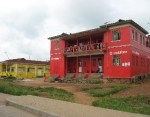
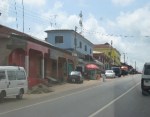
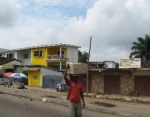
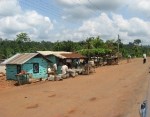
On the road up to Wa (Upper West Region of Ghana) last week, I noticed something. I tried to capture it on the way back to Accra, yesterday. I snapped the shots from a moving vehicle, so they are not great quality. I posted several, because the remarkable thing for me was their sheer quantity.  (I am only posting about half the shots, and I was asleep for about 4 of the 10 hour drive). See for yourself. As far as I could tell these are not mobile phone company offices or kiosks, but houses and buildings used for advertising. Reminds me of political graffiti or turf wars you see between gangs.  [Note – if you have similar shots, please add a link in the comments!]

The basic premise of the Convention on the Rights of the Child (referred to as the ‘CRC’) is that children are born with fundamental freedoms and the inherent rights of all human beings.

According to the CRC, the 4 main categories of rights that children have are survival, development, participation and protection. The CRC’s guiding principles help further shape the way that child rights should be interpreted. These are non-discrimination, the best interest of the child, right to life, survival and development, and respect for the views of the child.

Child protection concerns a child’s right not to be harmed and to protection from violence, abuse, neglect and exploitation.  It involves the duty of care placed on those that work with children or that come into contact with children.  It encompasses the responsibilities, measures, and activities that must be undertaken to safeguard children from both intentional and unintentional harm.

Child protection encompasses many different areas, such as juvenile justice systems and a child’s right not to be tried as an adult or incarcerated with adults; special care needed by unaccompanied children; protection from sexual exploitation and dangerous forms of child labor; prevention of trafficking and harmful traditional practices such as female genital cutting; support for children in emergency and conflict situations; prevention of exploitation by the media; the right not to be abused or taken advantage of by family, caregivers or institutions; and so on.  This link gives an explanation of a protective environment, and this one offers an excellent broad overview of child protection.

Child protection policies and strategies create mechanisms to prevent any type of harm to a child.

Child protection in youth media programs

The organization where I work frames its efforts within the CRC.  Most of the programs that I focus on are related to child participation and child protection.  These two areas go hand in hand, because good participation initiatives need to take child protection into consideration, and good protection initiatives are only successful when children participate in designing them and in protecting themselves.  Children should both know what their rights are and take an active part in achieving them and in protecting themselves.

This week, for example, I’m at a workshop with a small group of colleagues, teachers and local partners from the Upper West Region of Ghana. We’re preparing for a youth arts and media project that they will implement in June. By the end of this facilitator workshop, we will have a localized training plan that fits the context of the community and the youth participants, and the facilitators will have learned some new media skills that they will train the youth on when the project starts.

As part of the facilitators’ training, we cover the CRC, going in depth on child participation and child protection.  There is always a certain tension between these two areas. We want to encourage children to participate to their fullest, yet both children and adults need to be aware of potential risks that participation can bring with it, and know how to mitigate and manage them.

Three child protection risks that we are focusing on with facilitators at this week’s workshop are:

  • Intentional or unintentional abuse by staff or local partners
  • Retaliation or harm to a child who appears in a media story or art piece on a sensitive issue
  • Retaliation or harm to a child who authors or creates media or arts on a sensitive issue

Internal child protection policies

To begin our sessions on child protection, my colleague Joyce covered our organizational Child Protection Policy, which clearly states our intention to protect children from harm and advises that we will take positive action to prevent child abusers from becoming involved with the organization.

Joyce explained that child abuse is never acceptable:

  • Child abuse in our case is defined as:  All forms of physical abuse, emotional ill-treatment, sexual abuse and exploitation, neglect or negligent treatment, commercial or other exploitation of a child and includes any actions that result in actual or potential harm to a child.
  • Our child protection policy applies to staff at all levels, including board members, volunteers, community volunteers, supporters, consultants, contractors; partner organizations, local government people who have been brought into contact with children via our organization, visitors, donors, journalists, researchers and any other type of person or institution associated with us.
  • We recognize that child abuse may be a deliberate act or it may be failing to act to prevent harm. Child abuse consists of anything which individuals, institutions or processes do or fail to do, intentionally or unintentionally which harms a child or damages their prospect of safe and healthy development into adulthood.
  • We follow through on cases of child abuse to the fullest extent of the law.

Point three, unintentional abuse, refers to situations where someone has good intentions but their lack of planning, knowledge, foresight, or their recklessness puts children in harm’s way.  As Joyce explained, “It’s  like an excursion that is not well planned.”  The good intention is to take children out so that they could have some fun.  But if proper care is not taken to plan the trip and ensure children’s safety during the trip, then unintentional harm could be done. A child could be lost, a vehicle could be unsafe, a child could drown.  Though the good intention of the person planning this event is not in question — they wanted the children to have fun and enjoy themselves — if proper planning is not done and something happens that causes harm to a child, it is still considered child abuse.  Good intentions are not enough.

Here are some resources on institutional child protection standards and an excellent overview on minimum participation and protection standards when working with children and residential events.

Use of children’s images in the media

Since this is a youth arts and media project, we need to think about the use of children’s images and identities in the media: print, broadcast, radio, internet or visual arts. The CRC asserts that every child has the right to privacy, and this extends to the right not to have their image used for any purpose for which they have not given consent.

Key points related to the use of children’s images and working with children’s stories include:

  • If the person is below 18, you must seek the consent of the parents/guardians
  • Consent forms must be kept securely for future audit or proof purposes
  • A child’s real name should not be used in publication or broadcast unless they would benefit from increased self-esteem by seeing their name in print
  • The information given about the child should not allow their precise location to be identified (either directly or indirectly)
  • A story should not be published, with or without names or identities altered, if it could put a child, siblings or peers at risk
  • The best interest of the child comes above all else

Helping people see the implications

Expanding on the aspects above, Joyce offered ideas on how to discuss and ensure that children and adults that might portray others, or be portrayed in media, are aware of all the implications and potential risks:

  • Today’s media is global and can be accessed anywhere in the world through the internet.
  • When you talk to the media nowadays, you are talking to the world. The story may not reach everybody in every country, but you can be sure that it will reach further than you can imagine.
  • Ask yourself the following:
    • How would friends and family react if they saw the story, or found out that it had been published?
    • Think through who might be harmed.  Would the subject of the article, artwork or video be at risk of any harm if someone saw it?  Could this story or artwork put anyone in danger?
    • This story can stay documented for years. How would the person feel if their children were to read the story in a few years?
    • There is no guarantee that this story cannot be seen by people whom you do not want to know about it.  Help people thoroughly understand the implications of sharing their stories. This protects not only the subject of the story, but the person who is authoring the story.
    • Are there people we need to protect when telling our story? Friends that we need to protect?  What needs to be edited out so that nobody is implicated in the presentation of the work?

Here is an excellent resource on use of children’s images in the media, and a guide for journalists reporting on children, and guidelines for reporting on children in the context of HIV/AIDS.

Stories that cause unintentional harm

To illustrate some of the points above, we used 2 examples.  A New York Times/Nick Kristof article that identifies a child from the Democratic Republic of the Congo who was raped and his opinion piece on why he believes that was OK, and a scenario where a film is made of a girl who reports that her mother beats her and doesn’t allow her to attend school.

General consensus from the group in our workshop on the New York Times case was that child protection and media guidelines were not followed, and that Kristof was reckless and unintentionally put the girl at risk.  Workshop participants felt that appropriate respect for the child was not shown. “The journalist would never be able to do that in the US”.  One participant exclaimed “So, he didn’t feel that any Congolese would ever be enlightened enough to access the story?”  It was recognized that “his intention was good, that people should know about these terrible crimes, but there is no need to share all the specifics.” Participants wondered whether this was in the best interest of the girl, and how she would feel in the future if someone she knew found the article.  “In our culture, this type of thing can be very stigmatizing.”  Participants asked why technology wasn’t used to cover the girls’ face and disguise her voice, or why she wasn’t filmed from behind to conceal her identity.  The conclusion was that this story could have been told in a way that protected the child and had equal impact on readers.  [Update: Laura over at Texas in Africa has a great post on Connectivity and Child Protection which comes to the same conclusions.  You can also find related posts from awhile back on Wronging Rights.]

In the second scenario, consensus was that the story could create difficulties for everyone involved.  One participant commented that the mother might get angry and beat the child even more.  Another said that it the whole village might feel betrayed by the child exposing the story. “When a child does something, people ask – from which village are you? From which house?  From which family?  Whatever you do to a member of the village you do to the whole village. This can cause a threat to the child by the whole village.  Those who give out the story, if they are known by the village, will also be at risk.”  Another issue was that the community might say that the children are given too much power. “They will wonder who is behind it and may not wish to work any longer with the organization that is supporting the project.”  It was suggested that if a story like this were filmed, it should show a resolution, a happy ending, so that it could be used as an example. “That way you can favor all who are involved.”  The group concluded that when topics are quite sensitive or individuals are implicated, the story should be altered to protect identity and the same situation could be brought out using simulations, song, theater or drawings.

As we are training children as citizen journalists in this project, case studies that highlight the potential risks and impact of a story are critical learning tools.

In conclusion….

Child protection needs to be considered whenever children are involved.  Adults and children need to be aware of potential risks and thoroughly discuss how to mitigate them. Mechanisms need to be in place to address any intentional or unintentional harm that could be caused to a child or children.  There are plenty of good resources around on how to do this, so there is really no excuse not to.

————————–

The Child Rights Information Network provides excellent all around resources on child protection and child rights, and a list of over 1000 global resources on child rights

Keeping Children Safe offers a toolkit for developing your organization’s internal child protection policies

The International Federation of Journalists has created Guidelines and Principles for Reporting on Issues Involving Children

Related posts on Wait… What?

Child protection, from emergency response to a sustainable mechanism

Children in emergencies: applying what we already know to the crisis in Haiti

the road to Wa

I’m in Ghana this week for a workshop in Wa, the district capital of the Upper West Region.  I wasn’t too excited about the trip from Accra (the capital of Ghana) to Wa when I heard it was a 10-12 hour drive. I figured it took so long because the road was in bad condition, but I was wrong, it’s just a long trip and there is a lot of traffic. The road to Wa is paved.  Not with gold. Not with good intentions, just paved.  And what a difference that makes.

All kinds of vehicles and travelers use the road. Motorcycles, cars, taxis, 4x4s, Land Cruisers, big trucks, small trucks, semi trucks with trailers.  People walk and bike alongside the road.  I even saw an adolescent boy trying to rollerblade – he wasn’t getting too far in the gravel but was pretty determined regardless.

All kinds of people move in and about and around all the shops and businesses along the road… people making purchases, moving supplies, carrying firewood and water, socializing, flirting, arguing.  Vendors sell fruits, clothing, electronics, car parts, prepared food, plastics, new clothing, used t-shirts.  There are tons of stalls selling airtime  for mobile phones and entire buildings painted bright red with the white Vodafone logo on the side, not to mention doorways, sides and fronts of buildings, market stalls and taxis similarly painted.  Tigo, Glo and MTN also have their noses in the business with signs, billboards, stalls, buildings and such – obviously a lot of competition for mobile phone customers.

collision

The road holds both opportunities and dangers. Some people go very fast and others crawl along, creating accident potential as drivers try to pass them on curves and hills.  As in many countries, a good number of crashed vehicles dot the roadside; though unlike past road trips, this time I didn’t see anyone get hit or observe any bodies lying on the road after being hit, a small crowd around them, fresh blood pooling around their head and twisted frame.   Every so often on this road to Wa, there are toll booths and customs check points.  Speed bumps slow you down as you enter towns.  Police officers stop you for no reason wanting bribes. The road is really happening.

Aside from the rich and fertile rolling hills in between the towns as we got further north, the most striking thing to me was the image of the funeral crowds. You see large groups of people on both sides of the road dressed in very fine black West African clothing with accents of red: black for mourning and red if the person who passed away was strong and in their prime; sometimes white if the person was very old.  Stunning. My colleague Stephen said that funerals happen on Saturdays and that is partly why the road is so busy on weekends.  He also said that politics paved the road, because the current vice president lives in the north and made this road a priority, helping him win the elections.

While driving, we listened to a lot of political talk radio.  Obama’s honeymoon is definitely over if those who were talking are any indication. “We thought there would be a change with Obama, but his foreign policy continues along the lines of Bush.” The commentators argued for nationalization and control of Ghana and Ghana’s resources without foreign intervention and without selling off resources to foreigners, a shaking off of old colonialism.  They heavily criticized the US’s current strategy of opening military bases in West Africa and the US’s failed and reckless policies in the Middle East. References to Chile, Castro and the CIA reminded me of the kinds of conversations you hear in Latin America.  I need to read up more on this, and find out who Kosmos (Cosmos?) is, and what their relationship is with Bush, Exxon Mobile and Ghana’s oil.  [Update: here’s some background on that: Ghana blocks Exxon Oil-Field Deal.] I miss being in Central America where I knew the history of all the politicians and movements, and could read beyond fiery words to interpret motives; where I could read my own truth into things.

As we drove along I thought about the road, and all the activity that it enables. Before my flight to Accra, I visited the  Museum of Modern Art in New York with my brother who studies biology, and we saw an exhibit about Design through the Ages.  Some of the modern pieces showed graphics or moving visualizations of communication networks and systems.  One piece tracked and visualized the movement of taxis in New York City.  Another showed internet connections across the world.  My brother and I talked about our fascination with micro and macro networks and systems… synapses in the human brain, the flow of blood in the body, the New York subways, sewers.

dusk settles on the long drive north

Looking out the window of the car on our seemingly endless drive north, I thought about the similarities between this highway and the internet — road networks and communication networks.  All the people traveling down and alongside the road to Wa. The communication among and between them.  The small and large businesses that have sprung up and are prospering because the road is there allowing access.  The opportunities and dangers, the police and the periodic barriers to speed.

I’m sitting here, 12 hours north of the capital city, uploading this post, with photos even, using 3G wireless internet. Not long ago that wouldn’t have been within my capacity to imagine.

I know there is nothing new in comparing communications infrastructure and networks to a road system. But I am struck today, after the drive to Wa, with the similarities — and the vital need for both. I’m convinced that, just like the roads that provide a basis for connection, communication and commerce; Internet, via undersea cable or mobile or whatever, is essential infrastructure for development.