Feeds:
Posts
Comments

Archive for the ‘activism’ Category

The November 14, 2012, Technology Salon NYC (TSNYC) focused on ways that ICTs can support work with children who migrate. An earlier post covers the discussion around Population Council’s upcoming ‘Adolescent Girls on the Move’ report. The current post focuses on the strategic use of data visualization for immigration advocacy, based on opening points from Brian Root and Enrique Piracés of Human Rights Watch (HRW).

Visualizing the US Detention Network and the transfers between detention centers.

The project

The HRW initiative used data to track and visualize the movement of people through the US immigration detention system after noticing that U.S. Immigration and Customs Enforcement (ICE) was moving people very freely without notifying their families or attorneys. HRW was aware of the problem but not its pervasiveness. The team obtained some large data sets from the US government via Freedom of Information Act (FOIA) requests. They used the data to track individuals’ routes through the immigration detention system, eventually mapping the whole system out at both aggregate levels and the level of individual. The patterns in the data informed HRW’s advocacy at the state and federal levels. In the process, HRW was able to learn some key lessons on advocacy and the importance of targeting data visualizations to specific advocacy purposes.

Data advocacy and storytelling

The data set HRW obtained included over 5.4 million records of 2.3 million people, with 10-12 variables. The team was able to connect these records to individuals, which helped tell a meaningful story to a broad audience. By mapping out all the US facilities involved and using geo-location to measure the distance that any individual had been transferred, the number of times an individual from Country X in Age Range X was transferred from one facility to another was visible, and patterns could be found. For example, often people on the East Coast were transferred to Texas, where there is a low ratio of immigration lawyers per detainee.

Even though the team had data and good stories to tell with the data, the two were not enough to create change. Human rights are often not high priority for decision makers, but budgeting is; so the team attached a cost to each vector that would allow HRW to tell decision makers how much was being spent for each of these unnecessary transfers.

They were also able to produce aggregated data at the local level. They created a state dashboard so that people could understand the data at the state level, since the detention facilities are state-run. The data highlighted local-level inefficiencies. The local press was then able to tell locally relevant stories, thus generating public opinion around the issue. This is a good example of the importance of moving from data to story telling in order to strengthen advocacy work.

HRW conveyed information and advocated both privately and publicly for change in the system. Their work resulted in the issuing of a new directive in January 2012.

FOIA and the data set

Obtaining data via FOIA acts can be quite difficult if an organization is a known human rights advocate. For others it can be much easier. It is a process of much letter sending and sometimes legal support.

Because FOIA data comes from the source, validation is not a major issue. Publishing methodologies openly helps with validation because others can observe how data are being used. In the case of HRW, data interpretations were shared with the US Government for discussion and refutation. The organization’s strength is in its credibility, thus HRW makes every effort to be conservative with data interpretation before publishing or making any type of statement.

One important issue is knowing what data to ask for and what is possible or available. Phrasing the FOI request to obtain the right data can be a challenge. In addition, sometimes agencies do not know how to generate the requested information from their data systems. Google searches for additional data sets that others have obtained can help. Sites such as CREW (Citizens for Responsibility and Ethics in Washington), which has 20,000 documents open on Scribd, and the Government Attic project, which collects and lists FOI requests, are attempting to consolidate existing FOI information.

The type of information available in the US could help identify which immigration facilities are dealing with the under-18 population and help speculate on the flow of child migrants. Gender and nationality variables could also tell stories about migration in the US. In addition, the data can be used to understand probability: If you are a Mexican male in San Jose, California, what is the likelihood of being detained? Of being deported?

The US Government collects and shares this type of data, however many other countries do not. Currently only 80 countries have FOI laws. Obtaining these large data sets is both a question of whether government ministries are collecting statistics and whether there are legal mechanisms to obtain data and information.

Data parsing

Several steps and tools helped HRW with data parsing. To determine whether data were stable, data were divided by column and reviewed, using a SHELL. Then the data were moved to a database (MySQL), however other programs may be a better choice. A set of programs and scripts was built to analyze the data, and detention facilities were geo-located using GeoNames. The highest quality result was used to move geo-location down to the block level and map all the facilities. Then TileMill and Quantum GIS (QGIS) were used to make maps and ProtoViz (now D3) was used to create data visualizations.

Once the data were there, common variables were noted throughout the different fields and used to group and link information and records to individuals. Many individuals had been in the system multiple times. The team then looked at different ways that the information could be linked. They were able to measure time, distance and the “bounce factor”, eg.., how many times an individual was transferred from one place to the other.

Highlighting problematic cases: One man’s history of transfers.

Key learning:

Remember the goal. Visualization tools are very exciting, and it is easy to be seduced by cool visualizations. It is critical to keep in mind the goal of the project. In the HRW case the goal was to change policy, so the team needed to create visualizations that would specifically lead to policy change. In discussions with the advocacy team, they defined that the visualizations needed to 1) demonstrate the complexity 2) allow people to understand the distance 3) show the vast numbers of people being moved.

Privacy. It is possible to link together individual records and other information to tell a broader story, but one needs to be very careful about this type of information identifying individuals and putting them at risk. For this reason not all information needs to be shared publicly for advocacy purposes. It can be visualized in private conversations with decision makers.

Data and the future

Open data, open source, data visualization, and big data are shaping the world we are embedded in. More and more information is being released, whether through open data, FOIA or information leaks like Wikileaks. Organizations need to begin learning how to use this information in more and better ways.

Many thanks to the Women’s Refugee Commission and the International Rescue Committee for hosting the Salon.

The next Technology Salon NYC will be coming up soon. Stay tuned for more information, and if you’d like to receive notifications about future salons, sign up for the mailing list!

Read Full Post »

Continue reading on Storify…

Amanda’s workshop was educational, thought-provoking, well-researched and participatory. The youth who participated in the workshop were from Bangladesh, Liberia, Haiti and across the US. They were incredibly savvy and insightful in their thoughts, analysis and comments. I learned a lot about ethical advocacy as well as about what makes a campaign or initiative interesting for well-informed, globally engaged young activists.

The rest of the workshop is captured here, including my favorite part:

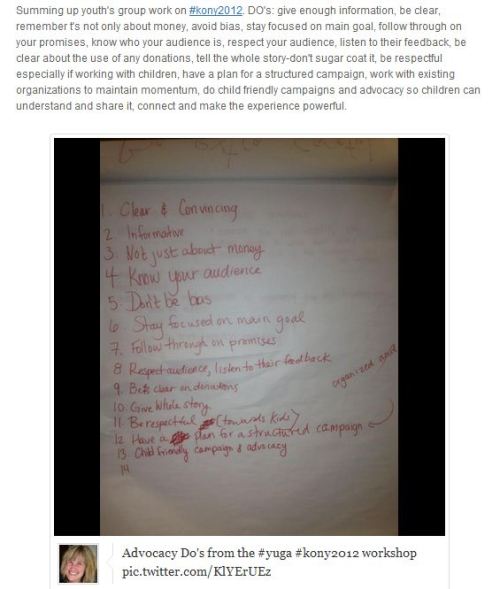
The advocacy Do’s and Don’ts that participants generated during group work:

And a key take-away:

Summary of the full workshop.

Amanda’s ebook “Beyond Kony2012: Atrocity, Awareness and Activism in the Internet Age.

Read Full Post »

English version here

A menudo, en el sector de las ONGs, se discute cómo podemos integrar de una mejor manera, las TICs en el proceso de desarrollo de las comunidades. Para mí, este video muestra una de las mejores maneras para lograrlo: contratar a personas como David.

Contratar gente joven y que provienen de las comunidades, personas que entiendan las realidades locales y que además son apasionados/as por mejorar las cosas de su entorno y tienen ganas de hacer cosas nuevas. Contratar personas no pretenciosas, personas que escuchan y que preguntan cuando no tienen la respuesta.

Hay que contratar a personas curiosas, que buscan información y están llenas de motivación propia. Aquellas que no tienen miedo al trabajo duro y que sienten la necesidad de tomar riesgos y además, no le  temen a la posibilidad de fallar. Hay que contratar gente con chispa creativa. Aquellas personas que saben trabajar en equipo, colaborar con otros y aprender de las personas a su alrededor.

Se debe contratar gente joven, que entiendan y usen las nuevas tecnologías y que pasen suficiente tiempo fuera de la oficina para saber cómo se pueden utilizar las TICs como herramienta en el desarrollo y/o en circunstancias difíciles.

Para eso hay que contratar gente como David. Pero no basta solo contratarla.

Una vez contratada, se debe asegurar que tengan las condiciones para crecer y logar su plenitud.

También se debe garantizar que tengan acceso a oportunidades, que participan en reuniones y eventos internos y externos, locales, regionales y globales para compartir sus conocimientos y así  aprender y para hacer contactos y conexiones.

A las personas como David se debe premiarlas, honrarlas y felicitarlas regularmente, aún si están muy ocupadas cumpliendo su trabajo, fuera de la autopromoción y de la política de la oficina.

Se debe asegurar que personas como David, tengan mentores y gerentes que les quiten las barreras para que puedan avanzar con su trabajo y en su desarrollo profesional. Escucharlas y respetarlas. Si, también debe cuestionárseles – pero con la certeza que ellas tienen la capacidad de inventar ideas que pueden funcionar, aún si no son las ideas que usted hubiera inventado. Los mentores y gerentes no deben sentirse amenazados por las personas como David, cuando sepan más que usted sobre algo. Todos y todas pueden aprender del uno al otro si el espacio para el diálogo es abierto y sincero.

Las personas como David son el presente y el futuro de los procesos del desarrollo.

Por las personas como David, me cuesta dar consejos de carrera a las personas en los EEUU que buscan trabajo en otros países. Preferia ver a las personas como David ocupando estos puestos.

David recién ganó el premio del Empleado Nuevo con Mayor Promesa en la región de las Américas durante los Premios Globales de Plan Internacional. Sigue a David al @2drodriguez y aprende más sobre los proyectos que esta hacienda aca: Mis Derechos Ante Desastres, en la pagina del proyecto de Facebook, o al @deantede.

(Gracias a Max Rodriguez por revisar y corregir mi traducción del post)

Read Full Post »

In the INGO sector, we often discuss ways that development organizations can better bridge development and ICTs. If you ask me, this video shows one of the best ways to achieve it: Hire people like David.

Hire young, local folks who have spent time in communities, who understand local realities, who are passionate about helping make things better, and who are hungry to do new things that make sense. Hire people who are humble; people who listen and who ask questions when they don’t know the answer.

Hire people who are curious, who seek out information, who are self starters, and who are not afraid to work hard, to try, to take risks and to fail. Hire people with creative fire who know how to work in a team, how to collaborate with others and how to learn from those around them. Hire young people who use and understand new technologies and who spend enough time out of the office to know how they can realistically be applied to development issues in difficult settings.

Hire people like David.

But don’t only hire them.

Once you hire them, make sure that they have the conditions to thrive and achieve to their fullest.

Make sure people like David have access to opportunities. Make sure that they get to attend regional and global internal and external meetings to share what they know, to learn, and to make contacts and connections.

Notice people like David. Reward them, honor them, and congratulate them regularly, even if they are too busy getting the job done to spend lots of time on self-promotion or office politics.

Make sure people like David have mentors and managers who can take roadblocks out of their way. Listen to them. Respect them. Question them, yes, but do so with the honest belief that they have the capacity to come up with ideas that can work even if they are not the ideas you would have come up with. Don’t feel threatened by people like David when they know more than you do about something. We can all learn from each other if the space for dialogue is open and sincere.

People like David are the present and future of development efforts.

People like David are the reason I have a hard time giving career advice to folks in the US who are looking for jobs overseas. I’d rather see people like David in these positions.

David recently won the “Most Promising Newcomer” award for the Americas region during Plan International’s Global Awards. Follow David at @2drodriguez and learn more about what he’s up to at the website Mis Derechos Ante Desastres (My Rights in the Face of a Disaster), the project Facebook page, or at @deantede.

**Version Español

Read Full Post »

I’ve been told that mention of the term ‘governance’ makes people want to immediately roll over and fall asleep, and that I’m a big weirdo for being interested in it. But I promise you governance is *so* not boring! (I’m also fairly sure that whatever my teacher droned on about as I slept through my ‘Government’ class senior year of high school was not ‘governance’.)

If you get excited about the concepts of ‘open’ or ‘transparent’ or ‘accountable’ or ‘sustainable’ or ‘human rights’ or ‘politics’ then you need to also get pumped about ‘governance’ because it includes elements of all of the above.

I am just back from a week-long workshop where, based on our different practical and strategic and thematic experiences, internal and external evaluations and reviews of good practice, videos and documents from other organizations, input from children and youth in several countries (and with the support of a fantastic facilitator), several of us from different Plan offices worked to define the basic elements for a global program strategy on Youth, Citizenship and Governance (to be completed over the next several months).

At the workshop, we got a copy of A Governance Learning Guide, which I’m finding very useful and am summarizing below.

Why is governance important?

Our focus is on children and youth, but many of the reasons that governance is important for them extend to governance overall.

From Plan UK’s Governance Learning Guide, chapter 1.

So what exactly do we mean by the term “governance”? 

In our case, we link governance work with our child-centered community approach (a rights-based approach) and in this particular strategy, we will be focusing on the processes by which the state exercises power, and the relationships between the state and citizens. We have separate yet related strands of work around child and youth participation in our internal governance structures (here’s one example), effectiveness of our institutional governance overall (see this discussion on International CSO governance, for example), and the participation of children and youth in high level decision-making fora.

Our concept of governance for the youth, citizenship and governance strategy is based on the following governance concepts*:

Accountability and responsiveness.  This includes formal government accountability as well as citizen-led accountability. Opportunities for children and youth to participate in formal accountability processes are often limited due to their age — they cannot participate in elections, for example. Citizen-led accountability can open new opportunities for children, youth and other more marginalized groups to hold those in power more accountable.

‘People no longer rely on governments alone to improve governance. All over the world we are seeing experiments in ‘participatory governance’. People and organisations are grasping the opportunities offered by decentralisation and other reform processes to demand more of a say in the public policy and budget processes that affect them. These ways of holding the state to account are often called ‘social accountability’. Examples include participatory budgeting, monitoring electoral processes, using online and mobile technology, and citizen evaluation of public services. These forms of citizen engagement and social accountability are particularly promising for young people, who often face challenges in getting their voices heard in formal policy and governance processes.’ (from the call for submissions for the Participatory Learning and Action Journal (PLA) special issue on Young Citizens: youth and participatory governance in Africa, published in December, 2011)

Accountability is also linked with openness and sharing of information such as local government budgets and plans (this is also referred to as ‘transparency’). Responsiveness, in our case, refers to ‘the extent to which service providers and decision makers listen, meet and respond to the needs and concerns of young people.’ Responsiveness includes the willingness of those in power to engage seriously with young people and a government’s commitment to ‘be responsive’ to the issues raised by citizens, including children and young people. Responsiveness entails also the administrative and financial capacity to respond concretely to a population’s needs, rights and input.

Voice and participation.  This refers to the capacity of young people to speak, be heard and connect to others. Voice is one of the most important means for young people to participate. Within the concept of ‘voice’ we also consider voice strategies for raising and amplifying voices, capacity to use voice in a variety of ways to bring about change, space to exercise the raising of voices, and voice as a means to participate and exercise citizenship rights. (We consider that every child has citizenship rights, not only those who hold citizenship in a particular country). It’s also important to qualify the use of the term participation. In the case of young people’s participation in governance, we are not referring to the participatory methods that we commonly use in program planning or evaluation (we are also not discounting these at all – these are critical for good development processes!). In governance work, we are rather taking it further to refer to the meaningful inclusion of children and young people in decision-making processes.  

Power and politics. These are key in governance work. It is essential to be aware of and understand politics and power dynamics so that children and young people (and other oft-excluded groups) are not overlooked, manipulated, intimidated or disempowered.

Image captured from Plan UK’s Governance Learning Guide, chapter 2 page 14.

A key question here is what children and young people are participating in, and what for. Another important question is where are children and young people participating? Is it in special events or spaces designated just for them or are they participating in adult spaces? How does the place and space where children and young people are participating impact on their ability to influence decisions?

It’s important to note the 4 types of power that are typically considered in power analyses (from VeneKlasen, 2007): power over (domination or control), power within (self-worth), power to (individual ability to act, agency) and power with (collective action, working together). These need to be analyzed and understood, including their social, cultural and historical factors that create and sustain different power dynamics in different situations and spaces.

Capacity. We refer here to the capacity of both decision-makers and young people. Decision makers need to have the ability to perform their duties and ensure services are delivered. This, in our case, includes the abilities of decision makers to interact, engage and listen to children and young people and to take them seriously and to be responsive (see above) to their views, needs and rights. Young people also need to have the capacity to hold decision makers to account and to express their concerns and their views, including the views of other children and young people who may be excluded and marginalized from the decision making process or from participating fully. Information literacy and the capacity to access, interpret and analyze information is a critical skill for children and young people.

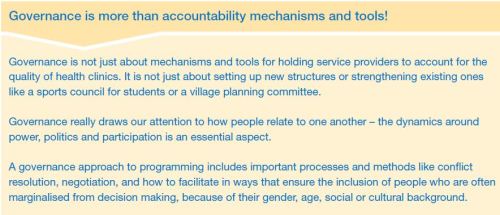
Interactions between children and young people and decision makers. These spaces encompass critical aspects of participation, power and politics. An example of a space for interaction would be where children and young people, local government and school leaders come together to discuss budget plans and available resources for school infrastructure. These spaces are shaped by a number of factors, including social, economic, cultural ones. They are also not free of personal agendas, desires, intentions and prejudices. It’s critical to remember this in governance work — ‘tools’ and ‘mechanisms’ are not enough. (ICT4Governance and Tech for Transparency friends, I’m looking at you! Though I think most of us see this point as ‘beating a dead horse’ by now.)

From Chapter 2 of the Governance Learning Guide by Plan UK

*Summarized from Chapter 1 and Chapter 2 of Plan UK’s extremely useful and easily downloadable A Governance Learning Guide. The guide also has a number of practical use cases on different governance initiatives as well as an extensive section on additional resources.

Here’s a follow-up post (since governance is so clearly *not* boring and I’m sure there is high demand for more!) called 15 thoughts on good governance programming with youth.


Read Full Post »

On the off chance you don’t have time to read the 594-page Special Report on Managing the Risks of Extreme Events and Disasters to Advance Climate Change Adaptation (SREX), check out this simplified (and nicely designed, easy-to-skim) 28-page report called ‘Climate Extreme.’

Climate Extreme: How young people can respond to disasters in a changing world shares ways to prepare and reduce risks children and young people can face when disasters impact their communities and presents examples of crucial roles children have played in disaster preparedness, community education, hazard identification and in evacuation and first aid during disasters.

The report was authored by Amalia Fawcett from Plan Australia who says “Children and young people have the right to information that is tailored to them. Even complex scientific reports should be converted to child and youth appropriate versions, if the information is likely to affect them.”

Examples of young people having a real impact include:

  • Young people lobbied their government to get their school moved out of the path of potential landslides in the Philippines.
  • Girls and boys in Bangladesh have carried out household visits and community assemblies to share their skills and knowledge on early warning and household preparedness with others.
  • A school safety program in India involves children in conducting risk and vulnerability assessments in over 2,000 schools.
  • In Thailand youth are actively engaged in revising community based disaster risk management plans in flood affected areas.
  • In Vietnam, children are training their peers on how climate change could affect their communities.

Climate Extreme is based on the report prepared by the Intergovernmental Panel on Climate Change (IPCC), featuring the extent to which climate change is affecting the number and severity of weather related disasters, investigating the current and predicted changes in our climate, how these affect disasters and what communities, governments and the international community can do to reduce risks people face.

Along with the IPCC report, Climate Extreme is being launched in New Delhi on May 3 and Bangkok on May 4.

*****

The Intergovernmental Panel on Climate Change (IPCC) is a scientific body first established in 1988 by two United Nations organisations, the World Meteorological Organization (WMO) and the United Nations Environment Programme (UNEP), and later endorsed by the United Nations General Assembly. Its mission is to provide comprehensive scientific assessments of current scientific, technical and socio-economic information worldwide about the risk of climate change caused by human activity, its potential environmental and socio-economic consequences, and possible options for adapting to these consequences or mitigating the effects. As such it produces regular reports, the latest of which, the ‘Special Report on Managing the Risks of Extreme Events and Disasters to Advance Climate Change Adaptation.’

Children in a Changing Climate is a coalition of leading child-focused research, development and humanitarian organisations each with a commitment to share knowledge, coordinate activities and work with children as agents of change. Members of the coalition include UNICEF, World Vision, Plan International, Save the Children and Institute for Development Studies.

Australian Aid (the disaster response arm of AusAID) funded the production of the child-friendly version.

Download the full version of IPCC report.
Download the child-friendly version.

Read Full Post »

This is a guest post by Alana Kapell. Alana has recently joined the Office of the Special Representative on Violence against Children as the children’s participation expert. As part of her work to further define a child participation strategy and identify key opportunities for learning and collaboration, she is researching projects and initiatives related to the UN Study on Violence against Children (UNVAC) specifically focused on involving children in preventing violence.

Six years after the UN Secretary General’s Study on Violence against Children (2004-2006) and in preparation for the 2012 Statement to the General Assembly, the Special Representative of the Secretary-General (SRSG) on Violence against Children is currently assessing progress made since the Study recommendations were released in 2006. This is a strategic occasion to gain perspective on progress achieved and to reflect on good initiatives, factors of success and define opportunities for further advancement.

Many initiatives, projects, networks and advancements were born out of the process, including continued efforts to support children’s participation. In order to gain further insight into children’s own efforts and perspectives, partners are invited to help inform the analysis of ‘progress made’ by sharing information (reports, publications, videos, research, etc.) about children’s own efforts to end and prevent violence.

Contributions should be current (e.g. developed from 2007-2012) and focus on ‘progress made’ with children or how children themselves perceive violence in their lives and communities.

Additional areas of interest include:

  • Research: any research or data collection done with children.
  • Links to UN Study: initiatives that were started as a direct result of the UN Study process.
  • New forms of Violence: material or details where children have identified and/or addressed new, hidden or emerging forms of violence.
  • Prevention: examples of initiatives undertaken by children to raise awareness in their communities and projects aimed at preventing violence against children.
  • Evaluation: information that measures the impact or outcomes of children’s participation and efforts related to ending violence against children.

In addition, there are numerous partners and networks supporting and facilitating children’s participation to prevent and end violence. Community, national, regional and international efforts exist to ensure children’s views, opinions, realities, recommendations and actions are informing and shaping our collective efforts.

We would also like to update our contact lists and map the individuals, organizations, children’s groups, etc. who are supporting children’s participation to prevent and end violence. We want to reconnect with groups who were involved with the UN Study process, including the follow up and to also identify new partners who are doing innovative and important work.

We are looking to connect with both adult led organizations and child led organizations and initiatives working on issues related to violence against children and children’s participation.

Please be in touch with me [akapell at unicef dot org] if you have any information to share!

Read Full Post »

This is a guest post by Anna Shaw, one of my newest colleagues. Anna talks about how to be skeptical about Invisible Children’s Kony 2012 campaign yet still get involved in the issues in a thoughtful way.  

I woke up yesterday, picked up my iPhone and almost immediately clicked on a link to Invisible Children’s Kony 2012 video. Even before I ate my breakfast, Jason Russell was showing me how I could help stop the terror of the Lord’s Resistance Army.

My first reaction was “This is awesome!” The conflict in Northern Uganda has interested me since I first learned about it in high school, and helped spark my deep-seated interest in peace and justice in Africa. I was really happy that someone was trying to connect young people just like me to something that really matters. But almost immediately, Twitter filled up with people questioning what Kony 2012 and Invisible Children were doing. The rest of my day was filled with blog post after blog post of comments on the campaign, and just as quickly as I hopped on the bandwagon, I was jumping off. But why?

The problem really has to do with the story Jason Russell is telling. He’s made a twenty year conflict into a Disney Film, where the US can swoop in and save the day. But there is a lot more going on than that. No one is denying that Joseph Kony is the bad guy, or that the LRA has wreaked havoc all around the region. But there are some questions we should be asking before we launch into this wholeheartedly.

What is the rest of the story?

I don’t want anyone to think there is a ‘nice’ side to Joseph Kony. There isn’t. But there are other pieces to the puzzle which Invisible Children seem to have forgotten to mention. Conflicts and wars are never as simple as good vs. bad, and arresting Kony is not going to solve the problems for people in Uganda or the nearby countries that the LRA is affecting. There are a number of other groups, rebels and armies, that have nothing to do with Kony who continue to terrorize this region. On top of that, conflict has destroyed jobs, roads, schools, hospitals, and many other essential things in these areas. We need to look at how people can rebuild their lives and deal with problems that helped start the conflict to begin with. Before talking about ending the LRA’s rampage, we should understand more about the where and why of the conflict and how it’s really affecting people in the region. We should also think about what the goal really is: finding justice for people in Uganda and elsewhere is much larger than putting Kony behind bars.

Who is this really about?

It’s easy to forget while watching this video that Ugandans aren’t sitting around waiting for us to help them. They have managed to deal with the LRA for more than twenty years, so by intervening, the US would definitely not be saving the day for most Ugandans. We need to get out of the mindset that the US has all the answers, and instead listen to what Ugandans actually need from us. That’s what this should really be about, sharing the stories of Ugandans and the people from the many other countries affected by the LRA. Their voices are almost unheard in the video, giving them no room to express themselves or provide us a true understanding of their situation. In the end, they are going to be saving themselves and resolving their own problems, and we can only help them do that.

Where is our money going?

Another point many people have brought up about this campaign is whether or not Invisible Children will use your money well. Several people have questioned the way Invisible Children spends money, and how much they are actually changing the lives of people in Uganda. I believe this is something you should decide for yourself. Before you decide whether to donate money or buy a t-shirt, ask questions. There are many great organizations working in Uganda, all of which could benefit from your donations, so make sure you are happy with the one you choose. When choosing, think about the impact the organization is having on the lives of Ugandans and try not to get distracted by how cool its videos and swag are.

What else can we do?

The Kony 2012 Campaign does a few things exceptionally well. It tells a simple, moving story that captures our hearts and makes us feel powerful – like we can actually do something to help. And we can! In fact, there are a lot of things we can do beyond liking something on Facebook or re-Tweeting a tweet.

  1. Educate ourselves. If you don’t get anything else from this whole blog, take this away: learn about these issues. Read books. Google stuff. Look it up on Wikipedia. Understand what is going on and pass on that knowledge to your friends, family, everyone. Find people who know the situation in-depth, contact them and ask them for their take on the issues. Don’t let one campaign be the only source of information you get. Be curious and ask questions. Look at a variety of sources, and see if you can find a variety of respected voices and independent commentary by people from the country you want to help too.
  2. Focus on Positive Change. When it boils down to it, Kony 2012 focuses on stopping the bad guy. But what can we do to help the good guy. Or even just help the regular guy or gal. And their kids. And their kids’ kids. Think about what will be most effective in the long-term to reduce instability and support people’s well-being.
  3. Talk to our representatives in Congress. One thing Kony 2012 did right was making it easy to contact Congress and encourage young people everywhere to engage in public policy. But, instead of asking for military intervention in Africa, why not talk to Congress about addressing the needs of people on the ground? Talk to Congress about doing something positive: supporting schools, hospitals, agriculture, drinking water – and the many other things that can impact the lives of people in this area.
  4. Get Involved. Like I said earlier, there are a lot of incredible groups working to help those hurt by the LRA, and they can all benefit from your greater involvement. Changing the world takes more than hitting the “Like” button, and unless people like you are willing to step up and take action, not much is really going to change. Do some research and find out who is doing good programs on the ground and how you can support by donating.

I am not here to tell you not to support Kony 2012. In fact, I plan on supporting it in my own way. I think its important that Americans are more aware of the world we live in, and this is a powerful way to do that. But I want to make sure the world changes for the better in the long run, not just the next nine months before 2013 rolls around. If you want to jump on a bandwagon like I was about to, it’s really important to understand what you are supporting first.

And certainly don’t take my word for it.

Here is a list of the commentary on Kony 2012 if you want to read more.

Here is Invisible Children’s response to the criticism against them.

Afripop has pulled together some African reactions to the Kony 2012 campaign.

[LR note: And here is a beautiful response to the whole discussion from Teddy Ruge]

Read Full Post »

This is a guest post from Jamie Lundine, who has been collaborating with Plan Kenya to support digital mapping and governance programming in Kwale and Mathare. The original was published on Jamie’s blog, titled Information with an Impact. See part 1 of this series here: Digital Mapping and Governance: the Stories behind the Maps.

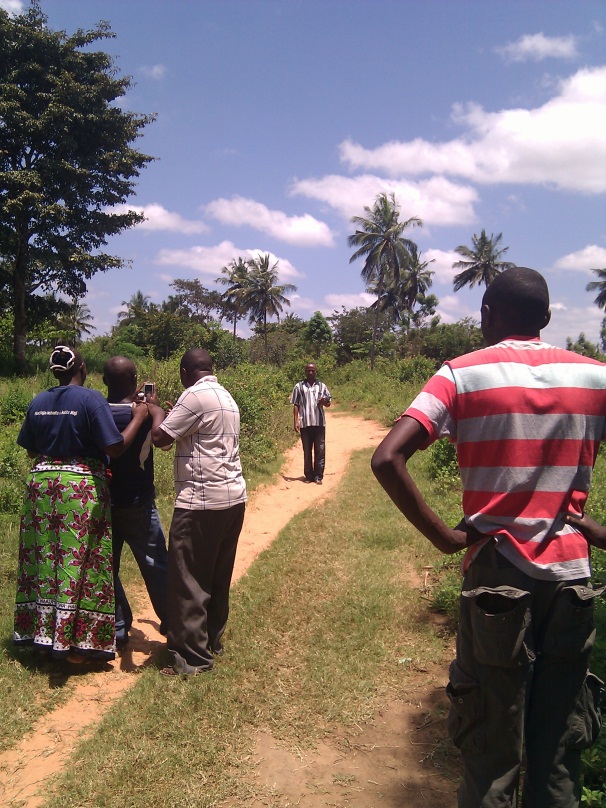
Mapping a school near Ukunda, Kwale County

Creating information is easy. Through mobile phones, GPS devices, computers (and countless other gadgets) we are all leaving our digital footprints on the world (and the World Wide Web). Through the open data movement, we can begin to access more and more information on the health and wellbeing of the societies in which we live. We can create a myriad of information and display it using open source software such as Ushahidi, OpenStreetMap, WordPress, and countless other online platforms. But what is the value of this digital information? And what impact can it have on the world?

Youth Empowerment Through Arts and Media (YETAM) is project of Plan International which aims to create information that encourages positive transformation in communities. The project recognizes young people as important change agents who, despite their energy and ability to learn, are often marginalized and denied opportunities.  Within the YETAM project, Plan Kenya works with young people in Kwale County (on the Coast of Kenya) to inspire constructive action through arts and media – two important channels for engaging and motivating young people.

Information in Kwale County

Kwale County is considered by Plan International to be a “hardship” area. Despite the presence of 5-star resorts, a private airport and high-end tourist destinations on Diani beach, the local communities in Kwale County lack access to basic services such as schools, health facilities and economic opportunities. Young people in the area are taking initiative and investigating the uneven distribution of resources and the inequities apparent within the public and private systems in Kwale County.

As one component of their work in Kwale, Plan Kenya is working with the three youth-led organizations to create space for young people to participate in their communities in a meaningful, productive way. There are different types of participation in local governance – often times government or other agencies invites youth to participate (“invited space”) as “youth representatives” but they are simply acting to fill a required place and are not considered  within the wider governance and community structures.

Youth representation can also be misleading as the Kwale Youth and Governance Coalition (KYGC) reports that “youth representatives” aren’t necessarily youth themselves – government legislation simply stipulates that there must be someone representing the youth – but there is no regulation that states that this person must be a youth themselves (they must only act on behalf of the youth). This leaves the system open to abuse (the same holds true for “women’s representative” – you can find a man acting on behalf of women in the position of women’s representative).  Plan Kenya and the young people we met are instead working to “create space” (as opposed to “a place”) for young people in community activism in Kwale County.

The 5 weeks we spent in Kwale were,the beginning of a process to support this on-going work in the broad area of “accountability” – this encompasses child rights, social accountability and eco-tourism. The process that began during the 5 weeks was the integration of digital mapping and social media to amplify voices of young people working on pressing concerns in the region.

To create the relevant stakeholders and solicit valuable feedback during the process of the YETAM work on digital mapping and new media, our last 3 days in Kwale were spent reviewing the work with the teams. On Thursday November 10th, we invited advisors from Plan Kwale, Plan Kenya Country Office, the Ministry of Youth Affairs and officers from the Constituency Development Fund to participate in a half-day of presentations and feedback on the work the young people had undertaken.

By far the work that generated the most debate in the room was the governance tracking by the KYGC. The team presented the Nuru ya Kwale blog which showcased 28 of the 100 + projects the youth had mapped during the field work. They classified the 28 projects according to various indicators – and for example documented that 23 of the projects had been completed, 1 was “in bad progress”, 2 were “in good progress” and 1 “stalled.”

The CDF officers (the Chairman, Secretary and Treasurer of the Matuga CDF committee in Kwale County) were concerned with the findings and questioned the methodology and outcome of the work.  They scrutinized some of the reports on the Nuru ya Kwale site and questioned for example, why Mkongani Secondary School was reported as a “bad” quality project. The officials wanted to know the methodology and indicators the team had used to reach their conclusions because according to the representatives of the CDF committee, the auditors gave the Mkongani Secondary School project a clean bill of health.

One important message for the youth based on feedback on their work was the need to clearly communicate the methodology used to undertake the documentation of projects (i.e. what are the indicators of a project in “bad” progress? how many people did you interview? Whose views did they represent?).

There is significant value in presenting balanced feedback that challenges the internal government (or NGO) audits – for example the data on Kenya Open Data documents that 100% of CDF money has been spent on the Jorori Water Project mentioned above, but a field visit, documented through photos and interviews with community members reveals that the project is stalled and left in disrepair. This is an important finding – the youth have now presented this to the relevant CDF committee. The committee members were responsive to the feedback and, despite turning the youth away from their offices the previous month, invited them to the CDF to get the relevant files to supplement some of the unknown or missing information (i.e. information that people on the ground at the project did not have access to, such as for example, who was the contractor on a specific project, and what was the project period).

Kwale youth with staff from Plan Kenya, officers from the CDFC and the local Youth Officer

Samuel Musyoki, Strategic Director of Plan Kenya who joined the presentations and reflections on November 10th and 11th, reported that:

“The good thing about this engagement is that it opened doors for the youth to get additional data which they needed to fill gaps in their entries. Interestingly, they had experienced challenges getting such data from the CDF. I sought to know form the CDFC and the County Youth Officer if they saw value in the data the youth were collecting and how they could use it.

The County Youth Officer was the most excited and has invited the youth to submit a business proposal to map Youth Groups in the entire county. The mapping would include capturing groups that have received the Youth Enterprise Fund; their location; how much they have received; enterprises they are engaged in; how much they have repaid; groups that have not paid back; etc. He said it will be an important tool to ensure accountability through naming and shaming defaulters.

The 5 weeks were of great value — talking to quite a number of the youth I could tell — they really appreciate the skill sets they have received-GIS mapping; blogging; video making and using the data to engage in evidence based advocacy. As I leave this morning they are developing action plans to move the work forward. I sought assurance from them that this will not end after the workshop. They had very clear vision and drive where they want to go and how they will work towards ensuring sustained engagement beyond the workshop.”

The impact of digital mapping and new media on social accountability is still an open question. Whether the social accountability work would have provoked similar feedback from duty bearers if presented in an offline platform (for example in a power point presentation) instead of as a dynamic-online platform is unknown.

The Matuga CDF officers were rather alarmed that the data were already online and exposed their work in an unfavourable light (in fairness, there were some well-executed projects as well). There is a definite need to question the use of new technology in governance work, and develop innovative methods for teasing out impact of open, online information channels in decision-making processes and how this is or isn’t amplifying existing accountability work.  There is definite potential in the work the young people are undertaking and the government officers consulted, from the Ministry of Youth Affairs and local CDF Committee (CDFC) stated that they were “impressed by the work of the youth”.

Within the community development systems and particularly the structure of devolved funding, there is a gap in terms of monitoring and evaluation (M&E) that the CDF committee to date has not been able to play effectively. As Samuel Musyoki stated the youth “could watch to ensure that public resources are well utilized to benefit the communities.” The Youth Officer even invited the youth to submit proposals for assistance in buying GPS gadgets and computers to strengthen this work.

Continuing the on and offline integration

As discussed, the work in Kwale on various issues is dynamic and evolving. The 5 weeks we spent with the teams were meant to provide initial trainings and support and to catalyse action that would be continued by the youth in the area, with support from Plan Kenya. Not only did we provide training to the young people, but Plan Kwale staff were also involved in the process and started documenting their work through the tools and techniques introduced by our team. With these skills, the Plan Kwale staff will support the on-going field mapping and new media work. We are also available to provide remote assistance with questions about strategies and technical challenges.

Some of the future activities include:

  • Holding a “leaders forum” during which the youth interact with a wider cross-section of stakeholders and share their work.
  • Continuing work on their various websites – updating the sites with results from social auditing work to be carried out throughout the last weeks of November, as well as digitizing previous information collected during historical social auditing.
  • Validating the data by revisiting some project sites and documenting projects that haven’t been done yet, gathering stories from some of the Project Management Committees, taking more photos, and potentially conducting surveys within the communities to get more representative views on project evaluations.
  • Each group also needs to develop a more structured advocacy strategy to direct their activities in these areas.
  • All teams expressed interest in developing proposals to submit to the Ministry of Youth Affairs, through the Youth Enterprise Fund and CDF Committee, based on the suggestion of potential funding for this process. Plan Kwale staff, as well as some of the Country Office advisers offered to support the youth in developing these proposals.
  • Most importantly, the teams want to consult the wider community in their respective areas to demonstrate the relevance of YETAM, including the skills they have gained, to the community stakeholders (beyond the relevant government authorities

The potential of new technologies, including digital mapping to promote accountability, is only as powerful as the offline systems into which it is integrated. Without offline engagement, existing community systems of trust and recognition will be threatened and thus undermine any online work. The youth must remain grounded within their existing work and use new technology to amplify their voices, build their network, share their stories and lessons and learn from and engage with others.

Read Full Post »

This is a guest post from Jamie Lundine, who has been collaborating with Plan Kenya to support digital mapping and governance programming in Kwale and Mathare.

Throughout October and November 2011, Plan Kwale worked through Map Kibera Trust with Jamie Lundine and Primoz Kovacic, and 4 young people from Kibera and Mathare, to conduct digital mapping exercises to support ongoing youth-led development processes in Kwale county. One of the important lessons learned through the Trust’s work in Kibera and Mathare is that the stories behind the mapping work are important for understanding the processes that contribute to a situation as represented on a map. To tell these stories and to complement the data collection and mapping work done by the youth in Kwale, the Map Kibera Trust team worked with the Kwale youth to set up platforms to share this information nationally and internationally. Sharing the important work being done in Kwale will hopefully bring greater visibility to the issues which may in the longer term lead to greater impact.

Sharing stories of local governance

To support their work on social accountability, the Kwale Youth and Governance Consortium (KYGC) mapped over 100 publicly and privately funded community-based projects. The projects were supported by the Constituency Development Fund (CDF), Local Area Development Fund (LATF), NGOs and private donors. As one channel of sharing this information, the Consortium set up a blog called Nuru ya Kwale (Light of Kwale). According to KYGC the blog “features and addresses issues concerning promotion of demystified participatory community involvement in the governance processes towards sustainable development. We therefore expect interactivity on issues accruing around social accountability.” This involves sharing evidence about various projects and stories from the community.

One example is the documentation of the Jorori Water project in Kwale; through the mapping work, the Governance team collected details of the constituency development fund (CDF) project. The funding allocated to upgrade the water supply for the community was 6,182,960 ksh (approximately 73,000.00 USD). From their research the KYGC identified that the Kenya Open Data site reported that the full funding amount has been spent.

A field visit to the site however revealed that project was incomplete and the community is still without a stable water supply, despite the fact that the funding has been “spent.”

Jorori Water Project, built using approximately 6.2 million shillings (73, 000.00 USD)

Read more about the questions the team raised in terms of the governance of CDF projects, including the detailed the project implementation process and some reflections on why the project stalled. This is information on community experiences (tacit information) that is well-known in a localized context but has not been documented and shared widely. New media tools, a blog in this case, provide free (if you have access to a computer and the internet) platforms for sharing this information with national and international audiences.

Addressing violence against children and child protection

Another blog was set up by the Kwale Young Journalists. The Young Journalists, registered in 2009, have been working with Plan Kwale on various projects, including Violence against Children campaigns. The group has been working to set up a community radio station in Kwale to report on children’s issues. Thus far, their application for a community radio frequency has encountered several challenges. New media provides an interim solution and will allow the team to share their stories and network with partners on a national and internal stage.

The Kwale Young Journalists worked with Jeff Mohammed, a young award-winning filmmaker from Mathare Valley. The YETAM project not only equips young people with skills, but through peer-learning establishes connections between young people working on community issues throughout Kenya. The programme also provides young people with life skills through experiential learning – Jeff reflects on his experience in Kwale and says:

Jeff and the Kwale Young Journalists shooting a scene from “The Enemy Within”

“My knowledge didn’t come from books and lecturers it came from interest, determination and persistence to know about filmmaking and this is what I was seeing in these Kwale youths. They numbered 12 and they were me. They are all in their twenties and all looking very energetic, they had the same spirit as mine and it was like looking at a mirror. I had to do the best I could to make sure that they grasp whatever I taught.”

Jeff worked with the Young Journalists on a short film called “the Enemy Within.” The film, shot with flip-cameras, tells the story of 12-year-old girl who is sold into indentured labour by her parents to earn money for her family. During the time she spends working, the young girl “falls prey of her employer (Mr.Mtie) who impregnates her when she is only 12 years old.” Jeff reflects that “early pregnancies are a norm in the rural Kwale area and what the young filmmakers wanted to do is to raise awareness to the people that its morally unacceptable to impregnate a very young girl, in Enemy Within the case didn’t go as far because the village chairman was bribed into silence and didn’t report the matter to higher authorities.” This is a common scenario in Kwale, and the young journalists plan to use the film in public screenings and debates as part of their advocacy work in the coming months.

Jeff and the Kwale Young Journalists shot the film in four days – they travelled to Penzamwenye, Kikoneni and also to Shimba Hills national park to shoot 7 scenes for the movie. Read more about Jeff’s reflections on working with the Kwale Young Journalists on his blog.

Sharing ecotourism resources

The Dzilaz ecotourism team – a group that encourages eco-cultural tourism in Samburu region of Kwale county — also integrated social media into their work. During the last week (November 8th-12th) the group set up a blog to market the community resources, services and products. They also plan to document eco-culture sites and the impact that eco-tourism can have on the community. As of November 10th, 2011 the Dzilaz team had already directed potential clients to their website and thus secured a booking through the information they had posted.

The importance of telling the stories behind the maps

One important component to mapping work is to tell the stories behind the map. The three groups in Kwale are working to build platforms to amplify their grassroots level work in order to share stories and lessons learned. The information documented on the various platforms will develop over time and contribute to a greater understanding of the processes at a local level where youth as young leaders can intervene to begin to change the dynamics of community development.

Read Full Post »

« Newer Posts - Older Posts »