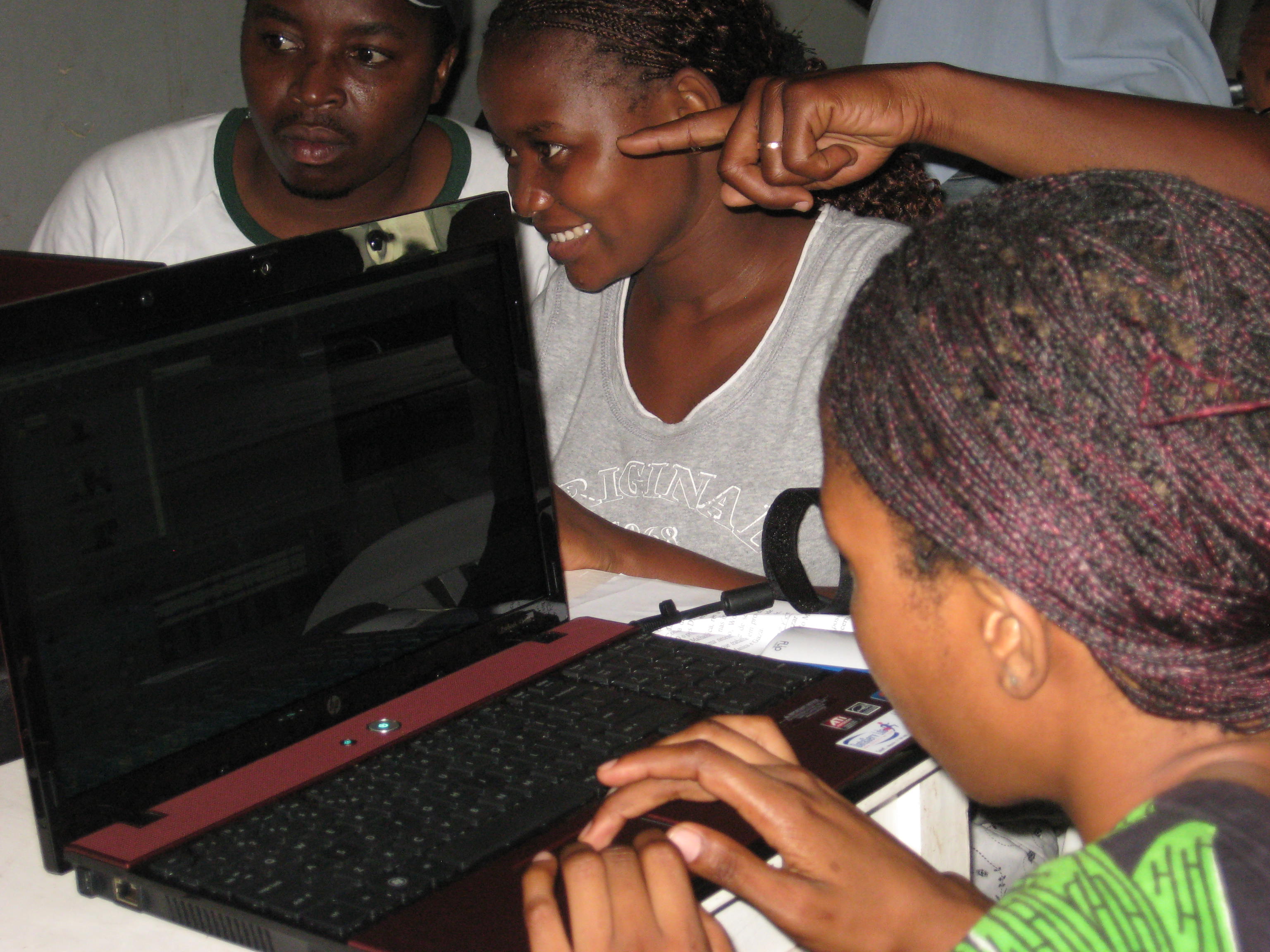
The field of Information and Communication Technology (ICTs) tends to be dominated by men. Is this because men are more suited to working in technology? Because women don’t want to? Because boys are more interested from an early age?
Probably not. What is more likely is that there are factors throughout girls’ lives that discourage them from going into this field.
At a personal level, I’ve been lucky enough to work in settings and environments that are largely positive towards women in this field. I’ve met and collaborated with numerous wonderful men who treat me with respect and who have been more than willing to work side-by-side, to help me out, to ask for advice, to share their own experience and information, and to support and promote the work I’m involved in. The fact that I work more on the social side of ICTs rather than the super technical, engineering or ‘coding’ side, however, may have something to do with my positive experiences.
Many women who work on the more ‘techie’ side report feeling discriminated against, and the numbers tell a story that’s worth looking into.
In the US, for example…
When women are shown in the media working in technology, they are often seen as rare, they are patronized or sexualized, and their appearance is noted and commented on. (And don’t even get me started on ‘booth babes’ at for-profit technology conferences.)
As Miriam writes in ‘First Female Engineer Graces the Cover of Wired Magazine‘, ‘I’m glad they’ve featured her here, and I’m glad that she’s not scantily clad like most of the women who grace the covers of national magazines. But when will we get beyond the idea of Rosie the Riveter? When can women across fields just be acknowledged the way their male counterparts are–for their accomplishments? …Posing her like Rosie feels antiquated, and also draws attention only to the fact that she’s a woman in a man’s world–not that she’s an incredible engineer in her own rite [sic].’
It’s the same, or perhaps more pronounced, the world over.
At last year’s Commission on the Status of Women, Fabiola, a 17 year old from Cameroon commented: “when a girl succeeds to sit on a computer lab, a boy will raise his voice on her, saying: ‘Why should you be holding a computer mouse when at the end of the day you will be holding a baby’s napkin?’”
In other parts of her talk, Fabiola recognized the important role that her parents played in keeping her in school and encouraging her to study for a career related to the sciences.
This highlights the importance of not only education, but of positive parental and community support and a broader set of changes that allow girls to have more freedom and more opportunities. Girls need to know that they have options open to them. And boys need to know too that girls can ‘do stuff’. Women role models are important, and where there are not yet women in certain careers to serve as role models, positive support from men to encourage girls to explore their options is key.
More girls and women in ICTs is not only an individual opportunity for women to earn an income. It can also mean that ICTs products and tools will be designed with women in mind. And I’m not talking about making things pink and purple to appeal to women, I’m talking about the design that responds to real needs in the real lives of women and girls around the world.
As part of a broader effort to encourage more girls to consider wider options, ‘Girls in ICTs Day‘, was established last year and will now be an annual event on the UN Calendar, to be celebrated every year on the fourth Thursday in April.
Many initiatives are underway already to support girls and women in the ICT sector. More governments recognize the importance and necessity of taking deliberate steps. The ITU’s latest report notes that “The choices made by policymakers, enterprises and individuals on investment in education and training must strive for gender equality—that is, to give women the same rights, responsibilities and opportunities as men.”
Positive attitudes and support from families, friends, communities, the private sector and the media is also part of the solution to helping girls see their potential.
The Girls in ICT Portal offers statistics and advice on how to encourage more girls to consider ICTs as a career option.
At the global level, a very small percentage of development funding goes to urban spaces, yet hard-hitting issues impact many of the urban poor: lack of tenure, lack of legality of land, informal settlements, lack of birth registration and civil registration in general, waste disposal, clean water, politicizing of local authorities and more. Can new technologies be a solution for some of these issues?
Tuesday’s Technology Salon NYC offered a space to discuss some of the key challenges and good practice related to working with children, youth, and urban communities and explored the potential role of ICTs in addressing issues related to urban poverty.
According to UNICEF, who co-organized and hosted the Salon at their offices, half of the world’s people – including over one billion children – live in cities and towns. By 2030, it is projected that the majority of the world’s children will grow up in urban areas, yet infrastructure and services are not keeping pace with this urban population growth. (See UNICEF’s 2012 State of the World’s Children or Plan’s 2010 Because I am a Girl Report: Digital and Urban Frontiers).
We welcomed 3 experienced and engaging discussants to the Salon, who commented on the intersection of children, youth, urban environments and new technologies:
Doris Gonzalez, Senior Program Manager Corporate Citizenship & Corporate Affairs at IBM Corporation who manages IBM’s grade 9-14 education model Pathways in Technology Early College High School (P-TECH), a program that maps work-based skills to the curriculum and provides mentors to students and teachers
Ron Shiffman, a city planner with close to 50 years of experience providing architectural, planning, community economic development, and sustainable and organizational development assistance to community-based groups in low- and moderate-income neighborhoods; and the co-founder of the Pratt Institute Center for Community and Environmental Development [PICCED]
Sheridan Bartlett, a researcher affiliated with the Children’s Environments Research Group at CUNY and the International Institute for Environment and Development in London, co-editor of the journal Environment and Urbanization, supporter of Slum Dwellers International, and researcher on the link between violence and living conditions as they affect young children.
Doris shared IBM’s experiences with technology education programs with children and youth in New York City, including the highly successful P-TECH program which prepares youth for jobs that require 21st century skills. Some of the key aims in the PTECH program are making technology accessible, engaging, relevant to children and youth, and connecting what kids are learning to the real world. Through the program, IBM and partners hope to turn out skilled employees who are on entry-level career tracks. They look at what jobs are hiring with AAS degrees, what skills are attached and how to map those skills back into curriculum. Helping children and youth acquire collaboration, communication, and problem solving skills is key to the approach, as are broad partnerships with various stakeholders including government, private sector, communities and youth themselves. The program has been lauded by President Obama and is in the process of being replicated in Chicago.
Ron highlighted that working on urban poverty is not new. His involvement began in 1963 when John F. Kennedy was elected and there was a thrust to address urban poverty. Many, including Ron, began to think about their role in abolishing (not just alleviating or reducing) poverty. ‘We thought as architects, as planners about how we could address the issues of urban poverty.’ Broader urban poverty initiatives grew from work done forming the first youth in action community based organizations (CBOs) in Bedford Sty, Harlem and the Lower East Side. Originally these programs were empowerment programs, not service delivery programs; however because they confronted power, they faced many challenges and eventually morphed into service delivery programs. Since then, this youth in action community based model has served other community based initiatives all over the world. Ron emphasized the importance of differentiating among the roles of CBOs, technical assistance providers, and intermediaries and the need to learn to better to support CBOs who are on the ground rather than supplanting their roles with NGOs and other intermediaries.
Sherry picked up where Ron left off, noting that she’d collaborated with a network of federations of the urban poor in 33 countries, looking at ways they’ve used technologies and how technology presents new challenges for communities.
A large percentage of the urban poor live illegally in non-formal settlements where they can’t vote and don’t have legal representation, she said. They want partnership with the local government and to make themselves visible. The first thing they do is to count themselves, document the land they live on, map every lane and garbage dump, every school (if schools exist), their incomes, livelihoods, and expenditures. This body of information can help them engage with local authorities. It’s an organizing tool that gives them a collective identity that can lead to a collective voice.
This process seems to be a natural fit for technology, in that it can allow for management and storing of information, she said. However, technology use can be incredibly complicated. Traditionally the process has been managed manually. The information comes in on paper, it is fed immediately back to community members, contested and corrected right there. The process is very participatory and very accurate, and includes everybody. Things that have been mapped or measured are validated. Boundaries are argued and joint agreement about the community reality and the priorities is reached right there.
Sherry noted that when technology is used to do this, participation becomes more restricted to a smaller, more technically savvy group rather than the entire community. It takes longer to get the information back to the community. Many urban poor are technology literate, but there are complexities. Sometimes youth want to go with technology and older leaders are more comfortable with the more manual, inclusive processes.
The complexity of urban environments was addressed by all three discussants. According to Sherry, many people still hold a development image of the ‘perfect village,’ contained, people sitting around a tree. But urban communities are very complex: Who owns what? There are landlords. Who represents whom? How do you create the space and the links with local authorities? Ron agreed, saying that cities and settlements tend to be far more pluralistic. Understanding the nature and differences among them, how to weave together and work together is critical. Doris noted that one organization cannot work on this alone, but that multiple partners need to be involved.
Participants at the Technology Salon. (Photo: UNICEF)
Key points brought up during the ensuing discussion included:
Process, product and participation:
It’s important to work directly with community based organizations rather than surrogates (in the form of external NGOs). It’s critical to work on building the capacity of people and organizations on the ground, recognizing them as the core actors.
The process by which people engage is just as important as the end product. If new technologies are involved, participation needs special attention to ensure no one is being marginalized and the data is interpreted by local people, and they play a role in gathering it and learning, sharing and discussing during the process.
Digital data collection and fly-over mapping should not replace participatory processes of data collection and local interpretation. Bringing in more efficient processes via new technologies is possible, but it often means losing some of the richness and interpretation of the data. If you’re not including everyone in this process, you risk marginalizing people from the process.
Every community, village or barrio has a different personality. No one size approach or model or technology fits all.
It’s important to let people create solutions to their own challenges; set the right policies so that what is produced can be scaled (open/open source); and make sure things are hyper-local – yet help move the ideas and build networks of south-south collaboration so that people can connect.
The technologies only make sense when they are done within a participatory framework or context. People get excited about technology and the idea of really iterating and trying things out very quickly. But this only makes sense if you have a bigger plan. If you go in and start playing around, without context and a long-term plan, you lose the community’s trust. You can’t drop in tech without context, but you also can’t come and create such a huge infrastructure that it’s impossible to implement. You need balance.
Children and youth:
We shouldn’t forget protection and privacy issues, especially with children and with mapping. These need to be carefully built in and we need to be sure that information and maps are not misused by authorities.
We can’t forget the young people and adolescents that we are working with – what do we want them to gain out of this? Critical thinking, problem solving skills? This is what will serve them. Educational systems need to address the pedagogy – if children are even in schools – where do you get that critical thinking? How do you create space for innovation? What is the role of tech in helping support this innovation? What is the role of mapping? Just accounting? Just quantifying? Or are you helping youth know their communities better? Helping them understand safety? What are we mapping for? Community self-knowledge or outside advocacy?
Technology:
We need to always ask: Who owns and manages technology? Technology is never neutral. It can both empower and disempower people and communities, and certain groups of people within communities.
The technology is a tool. It’s not the technology that teaches, for example, it is teachers who teach. They use the tech to supplement what’s going on in the classroom.
Rather than bring in ‘really cool’ things from the outside, we should know what tech already exists, what children, youth and communities are already using and build on that.
The challenge always comes down to the cost. Even if an idea works in the US, will it work in other places? Can other places afford the technology that we are talking about? There are some very good projects, but they are impossible to replicate. We need to find feasible and sustainable ways that technology can help reduce costs while it improves the situation for the urban poor.
Engaging local and national governments and the private sector
Bottom up is important, but it is not enough. The role of local authorities is critical in these processes but national authorities tend to cut local budgets meaning local authorities cannot respond to local needs. It’s important to work at every level – national policies should enable local authorities and mandate local authorities to work with local communities.
Local authorities often need to be pushed to accept some of these new ideas and pulled forward. Often communities can be more technologically savvy than local authorities, which can turn the power dynamic upside down and be seen as threatening, or in some cases as an opportunity for engagement.
Communities may need to learn to engage with local governments. Adversarial or advocacy techniques may be useful sometimes but they are not always the right way to go about engaging with the authorities.
It’s useful for CBOs to work with both horizontal and vertical networks, and NGOs can play a role in helping this to happen, as long as the NGOs are not replacing or supplanting the CBOs.
There needs to be support from the local city government, and an interest, a need, an expressed dedication to wanting to be involved or these kinds of initiatives will fail or fizzle out.
There is a tendency to seek quick solutions, quick fixes, when we all know that creating change takes a long time and requires a long-term perspective and investment. The city of Medellin for example has done a good job of investing in connecting settlements to the city through infrastructure and access to technology. Long-term vision with participation from private, public and community engagement is critical.
The quality of investment in poor areas needs to be as high as that in wealthier areas. Many interventions are low quality or limited when they are done in poor areas.
Multiple partners and collaboration among them is necessary for these initiatives to move forward and to be successful. You need to bring everyone to the table and to have an existing funding structure and commitment from local and national governments and ministries, as well as local communities and CBOs, NGOs and the private sector.
A role for the UN and INGOs can be to help ensure that the right channels are being opened for these projects, that the right partnerships are established, that systems and technologies are kept open and not locked into particular proprietary solutions.
Learning/sharing challenges, approaches and good practice:
There is much to learn from how marginalized youth in communities have been engaged without technologies. Once they have the information, no matter how it was gathered — in the sand, by SMS, on the wall — then how can marginalized young people access and address local authorities with it? How can we help enable them to feel more empowered? What can we learn from past efforts that we can apply?
There is a lack of exposure of those working in ICT to the urban space and vice versa. This reflects a need to break down the issues and opportunities and to think more deeply about the potential of technology as a part of the solution to urban poverty issues.
We need to make a distinction between wonderful projects that some are doing, but that are very costly and have a high cost per participant; and programs that can be done in developing countries. Consider that 75 million youth are now unemployed. The more we learn about what others are doing, the more information we have on how to do it, the better.
ICTs are a relatively new element in the urban space. It would be helpful to have a a follow-up report that focuses on how ICTs have been used to address specific issues with children, youth and communities in urban spaces and what specific challenges are posed when using ICTs in this space. What projects have been done or could be done? What are the challenges in implementing projects with refugee populations, undocumented populations, migrants, and other groups? We need to understand this better. We need a document or guide that explores these issues and suggests practical ways to move forward.
Social media and new technologies can be used to spread information on successful case studies, to share our learning and challenges and good practice so that we can apply the best approaches.
A huge thanks to ICT Works, UNICEF, our discussants and participants for making this 2nd Technology Salon NYC a success!
Save the date for our 3rd TSNYC, on April 13, 2-4pm at New York Law School. The topic will be the International Aid Transparency Initiative (IATI); how it can contribute to better aid coordination and effectiveness; challenges and opportunities for CSOs in signing onto IATI; and ways that technology and open data are supporting the process.
Last October, UNICEF West Africa wrote up a nice briefing note on mobile tech and its relevance in child protection programming. You can download it here.
According to the document, pulled together by Mirkka Mattila, ‘This is an area of rapid innovation and new applications are being developed all the time. Telecommunications is one of the fastest growing sectors in Africa and the relevance and reach of mobile technologies for development and humanitarian work is only going to increase over the coming years. Many technical, legal and security aspects of these new technologies remain to be fully addressed and worked out. The dependence on technology, network coverage and electricity supply also mean that mobile technologies cannot be used everywhere.’
The paper includes examples on the use of mobile technologies for:
gathering and transmitting data by child protection service providers; including surveys, rapid assessments, case management, family tracing and reunification of separated children, and birth registration
self-protection and complaints mechanisms; such as child helplines, violence reporting and community mapping for violence prevention
transmitting information and money via mobile; eg, SMS campaigns and cash transfers.
It pulls out challenges and advantages of the different use cases and offers some guiding questions to assist in the selection of the most appropriate applications, such as:
Is there a need to create new applications or can existing solutions be used?
What are the characteristics of the user group and the environment (urban – rural, existing networks and coverage etc.)?
What technical expertise is required for installing and maintaining the system?
How well will investments in equipment and capacity meet the needs, expected impact, benefits and outcomes in terms of results delivery?
What are the potential partnerships for sustainable capacity-building and service delivery? What are the roles of public and private service providers?
What are the financial resources needed in the short, medium and long-term to establish and maintain the system?
The document ends with some arguments and counter arguments around the use of mobiles in child protection work. It’s nice to see this paper as there is not a whole lot of research and/or documentation on use of mobiles and ICTs specifically in child protection work.
Charles Suglo, Bestway Zottor and Francis Diamenu from Radio Tongu
Sometimes among all the ICT4D hype, we forget about one of the biggest and oldest ICTs there is: radio.
Last month while in Ghana, I visited Radio Tongu in Sogakofe. The compound where this community radio station sits also serves as a community center, with computer training, a press center and Internet access for a discounted rate.
Plan Ghana staff was meeting with the radio director, Bestway Zottor, and two of the managers, Francis Diamenu and Charles Suglo, to discuss the idea of offering internships for 6-8 youth from the nearby school-based Girls Making Media (GMM) program Plan Ghana and Plan US are supporting.
Charles explained to us that the station gets some 70% of its news from the Internet. The other 30% is sourced from local communities, and recorded on the ground wherever the news is happening. ‘The voice is reality,’ he said. ‘It’s what promises that the news is real. It’s what makes people believe.’ The station broadcasts in 3 languages: Ewe, English and French.
If the youth in the GMM program want to be radio hosts, according to Charles, they need to be well trained and professional, especially since the topics that the youth are bringing up — violence against children and bullying — are sensitive. ‘We have our credibility as a radio station,’ he said. ‘So they need to be well-trained on radio program hosting, know how to manage on air, be skilled on how to ask good questions and follow-up questions.’
There are all kinds of jobs that the youth can do at the radio station, including news, marketing, voice, or running the cafe. Having job skills such as these can begin to give the youth some experiences that will serve them later in life. The training and work they’ve done through the GMM project over the past year give them a foundation for the internship positions at Radio Tongu.
Following the visit to the radio station, we went to the school to meet with the media club. It’s called the ‘Eye Media Network.’ The group’s slogan is ‘Our eyes are always watching.’
The GMM program began last year with a workshop for 20 of the students on media skills and gender. Following that the Club received a small media kit consisting of digital cameras, voice recorders, a radio, a notice board and Flip cameras. The girls work with 2 advisers and now several boys have also joined the Club. The club plans its own programs and actions, and does a school-wide newscast every Wednesday during the school assembly.
A student reads us the news they've posted on the Notice Board
As part of the program, the Club meets and interviews local and national figures, with a focus on women journalists, government officials and businesswomen. The group has covered school elections and put into place a ‘Walk your Talk’ Accountability initiative.
They conducted a bullying campaign with the goal of reducing the incidence of bullying by 30%. After the campaign, which included posters, educational sessions and other outreach, the Senior Housemaster claimed that bullying had been reduced by 90% compared to the year before. They will begin a campaign against sexual harassment in the coming year.
Some of the challenges that the group faces include posters being ripped down, friends trying to discourage them, boys suffering discrimination for belonging to the “Girls Making Media” club, and not having enough equipment. The club hopes to obtain their own modem, computer, printer and more cameras.
The first week of August, select students from the GMM group participated in social media training, where they learned how to shoot video, subtitle, access different social networking sites to post their content, and stay safe while online.
The girls in the club said the project has helped them to build confidence and take up leadership positions. ‘We learn how to find information and to bring out problems and get solutions,’ said one girl.
Another said ‘We took bullying as a normal thing. Now we know that bullying is not normal. Now when we see something, we are alert.’
‘I used to walk around without seeing,’ added another ‘but now I see everything because I am looking for news. My mind has been opened.’
The Girls Making Media program covers 7 schools in Ghana. Several other groups in Togo, Liberia, and Sierra Leone also participate in the GMM program.
Our first major discussion about the VAC Cameroon site was in regards to how reports should pass through the system. For obvious reasons the information contained within these reports is extremely sensitive, so each step of the workflow process needs to be determined with the best interests of the children involved in mind.
The existing offline system for reporting violence against children was agreed upon through an exhaustive deliberation process with government, community, and local council members. In short, a lot of hard work has gone into making the existing offline system something that all parties agree on and it would not only be negligent, but counterproductive not to use this as a blueprint. For this reason the online system we are working on should respect, support and ultimately serve to expedite the current process, not replace it.
Under this current system Plan serves in the capacity of witness in cases of child abuse. Plan Cameroon has partnered with several governmental agencies to investigate and respond to reports they receive. Which agency this is depends upon the circumstances of the abuse. Age, gender, and location are all factors in determining which agency will be responsible. For example, abuses taking place in the home are currently handled by the Ministry of Social Affairs, but cases involving female children are handled by the Ministry of Child and Women’s Empowerment.
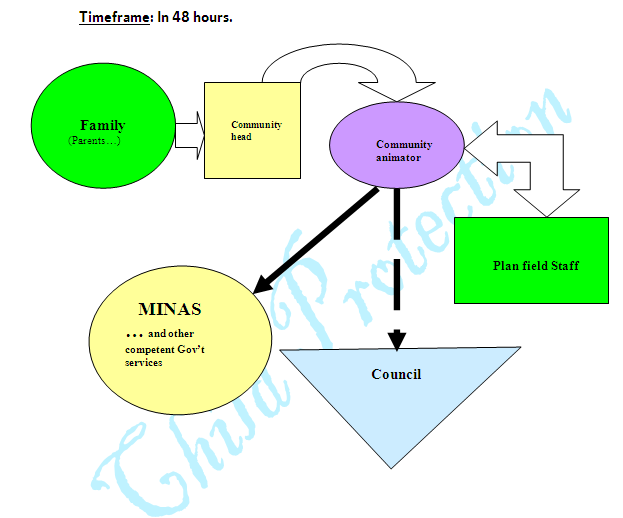
The current policy also requires that all reports of violence against children received by Plan staff be forwarded to the sector office within 48 hours.
Existing community-level reporting flow
Following this, the report has 24 hours to reach the country office in Yaounde. This one of the processes we are hoping to expedite with the implementation of the digitized system.
Existing flow of next-level reporting - at Program Unit and Plan Country Office
If this sounds complicated, that’s because it is. As outsiders who are new not only to the culture, but also to the peculiarities of local bureaucracy, much of Rebecca’s and my first session was taken up with trying to understand the rules and regulations already in place. Thankfully we have Cameroonian colleagues in the local office to help us navigate and understand all of this.
The Ushahidi System
Ushahidi allows three methods for submitting reports: (1) Text Message, via Frontline SMS or another text messaging tool, (2) Email, and (3) Submitting a report directly through the site. These actions can be taken by individuals in the community or by Plan Staff if they are alerted of a particular incident. A fourth means of submitting reports to Ushahidi, via voice messaging, was previously available through a plug-in called Cloudvox. Unfortunately the company that created the Cloudvox plug-in was recently acquired and has suspended this product for the immediate future, and we haven’t identified an alternative voice messaging system. This is unfortunate as we were hoping to be able to offer voice messaging as a reporting method for non-literate youth — although bandwidth limitations may have rendered this impossible anyway.
Information workflow for Plan Cameroon VAC Crowdmap site (updated; this is version 2.)
Based on the information that needs to be tracked and reported on, our current plan is to separate reports into four categories, each with several subcategories as follows:
Form of Violence
Physical
Sexual
Emotional/Psychological
Negligence
Gender of Victim
Male
Female
Age of Victim
0-5
6-12
13-18
Location of Incident
Home
Work
School
Community
Current Crowd Map set up with 4 main categories.
Creating these reporting categories (and each of their subsequent subcategories) will allow this information to be tracked separately, or to be looked at in terms of how categories overlap with each other. Since the Ushahidi platform allows users to choose more than one category or sub-category when submitting an incident report, no data need be lost in the effort to isolate and contextualize information.
For example, by tracking Gender and Location of Incident separately we will be able to more easily visualize how many incidents of abuse are taking place at schools in a certain community, how many of the victims are girls versus boys, and how each of those categories relates to reports from other regions. This will be especially important information to the government who has different agencies in place for tracking violence against children and youth depending on the circumstances. It will also be useful for Plan staff who can then tailor programs and awareness campaigns in a specific community towards the issues that are most prevalent there.
Plan Cameroon staff, partners and youth have create a detailed online map of each council area in which this project will take place, however, mapping of reports will be restricted to a less precise level described to us as the ‘community level’. It’s hard for Rebecca and me to conceptualize just how specific of an indicator this is, though once we are living in the community – a transition taking place this week – it should become easier to measure. The reason for mapping the location of incidents at the community level is privacy. If reports were mapped too precisely they could compromise the identity and safety of a child — a result that would be entirely unacceptable.
On the Ushahidi ‘back end’, each report of an incident will also contain a Description section that will allow information outside categorical parameters to be included in reports. This could be the body of a text message, a summary of a voicemail, or any other details that are deemed to fall outside the determined privacy boundaries (eg., this will allow us to keep identifying information and other details in the system, yet keep it from going public).
Over the course of our week in Yaounde, we engaged in many discussions regarding how we could make the online information workflow match that of the offline system. The conclusion seemed to be that involving community members and Plan staff in initial approval of reports might be possible, but that expecting all six of the varying government agencies that currently respond to such reports to use this digital system would be problematic. At this point we are hoping that the official agreement can be reworked slightly so that only MINAS, the Ministry of Social Affairs would need to be involved in the system.
By week’s end we had drafted an initial proposal for what the workflow for the system could be. It is by no means final and will likely go through numerous revisions over the course of our work here, but it will provide us a good base to build from in the future.
Unfortunately our progress on setting up the site itself has been handicapped by technical issues with the Crowdmap website that cause the site to crash when trying to create subcategories. We have engaged with members of the Ushahidi staff and they are currently working to fix the bug, but we don’t have a timeline as to when they will have the issue resolved.
We have now left Yaounde for Bamessing where we will be initiating our field work on the YETAM project, working with youth on creating short films, performing more community mapping, and we hope that the mobile Internet connection will allow us to continue to work remotely on the Crowdmap site.
This is a second guest post by Paul Goodman who is supporting Plan Benin to solidify their SMS Reporting and Tracking of Violence against Children (VAC) project. More on the overall project and process via the links at the end of this post.
Future proofing? Wishful thinking! There is of course no way to “future proof” an ICTD project. There are ways, however, to ensure that an ICT project has a fighting chance at sustainability. Here in Benin we’re revisiting the entire VAC Benin workflow in an effort to document the non-technical aspects of the project so that each person that touches this system fully understands the way that information moves through it. In addition to supporting training, this small but critical step will help drive consensus around how the project should and can work well into the future.
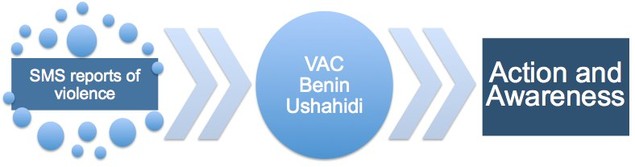
A succinct overview of this project:
The beginning of any development initiative is often marked by energetic optimism. At the onset, when a project enjoys the attention and enthusiasm of its creators and supporters, it is easy to forget that over time this attention will wane, priorities will shift, and critical personnel will undoubtedly take on new responsibilities or even different jobs. Purposeful problem definition and documentation can minimize the impact of these eventualities and only with a thorough understanding of the problem is it possible to discuss appropriate technology-enabled responses. And yes, in the real world, the problem often shifts over time as the situation changes or new information comes to light. But with a well-defined problem you have clarity around your intent and can face new challenges head-on.
Once defined, the problem and corresponding solution must be documented so that others may benefit from the insight gained during this process and apply that insight systematically. This seems elementary, of course, but in years of ICTD work I’ve found that the documentation of both technical systems and non-technical processes is often neglected in the rush to deploy or as a result of over-reliance on a few knowledgable individuals. Furthermore, in international development, documentation sometimes plays second fiddle to the production of reports and case studies.
Now I’ll happily get off my soap box and get back to business in Benin.
After sketching out the various aspects of the information flow with my colleague Elsie, I documented the workflow in a way that can be used to inform, train, and guide others as they interact with this project. I’m working on reference materials of different shapes and sizes including a number of graphics. Several of the graphics appear below; these are drafts and will be revised with Elsie, translated, distributed to the team, and revised again. These graphics represent the way we would like the system to work and are intended to be living documents.
In this graphic I included all the critical actors and their key responsibilities:
In this flow chart, I illustrated the way that messages should be processed:
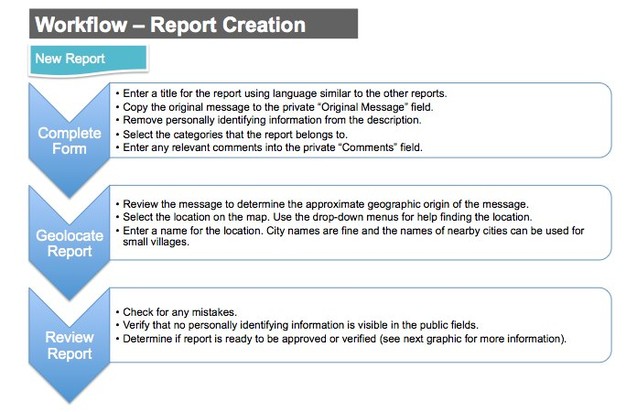
In this graphic, I illustrated the way that reports should be created:
Finally, this flow chart will support report approval and verification:
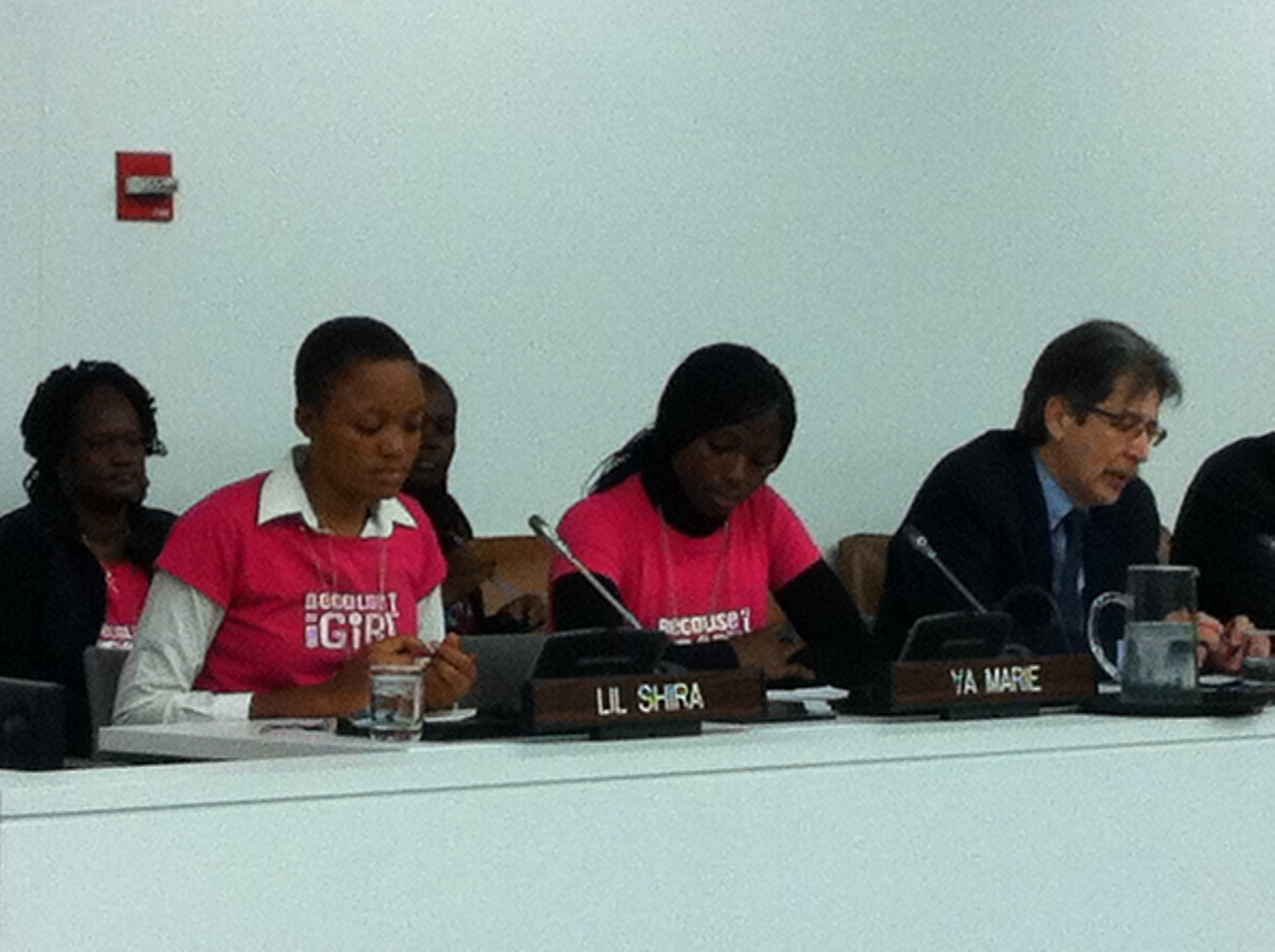
This is a guest post from Lil Shira, one of the girl delegates who attended the 55th Session of the Commission on the Status of Women in February, 2011. Lil Shira was part of a Plan led Girl Delegation which took part in high level panels, side events and caucuses. This post appears complete in its original format. You can read a post by Fabiola, another of the girl delegates from Cameroon, here.
Lil Shira in the community
My name is Lil Shira, a high school student and a Cameroonian. I am the second child out of five children in my family, three girls and two boys, and we live in a rural area. Because I am a girl I was selected by my school authority to be part of the journalism club in the school. This paved my way into YETAM (Youth Empowerment through Technology, Arts and Media) project sponsored by Plan Finland since the Journalism club was chosen for this project.
Because I am a girl I had to use the skills I have acquired in YETAM on music, media and ICTs to indentify issues like the problem of early and forced marriage, high rate of school dropout and violence against the girl child. Because I am a girl, I had to mobilize other youth (girls and boys) victims, so as to speak out as a unique voice, to raise awareness to the general public using music, drawings, drama, poems, videos, computers and overhead projector as tools. This led to many local advocacy actions spearheaded by us.
I was also very happy to celebrate the 21st anniversary, in Yaoundé in Cameroon, of the ratification of the Convention on the Rights of the Child within the framework of YETAM project. These created a big impact in my life, the lives of my friends, youth, school, family and my country. All these activities took me to a higher level because I was again selected, this time to be one of the girl delegates to represent Cameroon in the 55th session of the UN Commission on the Status of women (CSW) in New York City.
Lil Shira presenting at the CSW.
I was very happy, excited together with my friends and family members and I was planning and preparing on the role I was going to play while in New York. My expectation was to work with other youth from different region and country but did not really expect I was going to talk to Ministers from all the members’ state of the UN. I did my first presentation with the Canadian Minister on a panel about the importance of commemoration days and the importance of setting up an International day for the girls. Another thing which made me feel so opportune was the panel with UN women Ministers in the UN building.
I was very impressed seeing ministers from over two hundred countries and above listening to me and in effect giving a positive response to the issues I presented. In fact their reaction made me feel at home and so happy. I was equally happy to listen to other girls raise issues like gender based violence and discrimination in their various countries and what they have been doing to combat it.
Coming in contact with girls from Sierra Leone, Finland, United States, Indonesia, Canada and others, not mention to share our ideas, was so wonderful and exciting. This was a forum for me to dialogue with them to know more about them and some of the issues affecting them in their own country which was contrasting with mine. Though I was nervous during my first presentation, meeting new faces it all passes away like a breeze and I did not have any complex because everything was cute.
Life in the US to me was very enjoyable and meaningful, but I could not stop complaining of the cold and snow. In addition, I tried eating food not familiar to that of my home country. All these contributed greatly to the wonderful experiences I had on the weather condition and the food. I have learned to adapt to situations wherever I find myself. I hope to continue sharing this experience so that others may learn from it.
This is the time for girls to take up the challenge. I know my rights and have claim them, and no one can take them from me because I am a girl.
Thanks to Plan International, Judith Nkie our Chaperone, Kate Ezzes and Lia de Pauw.
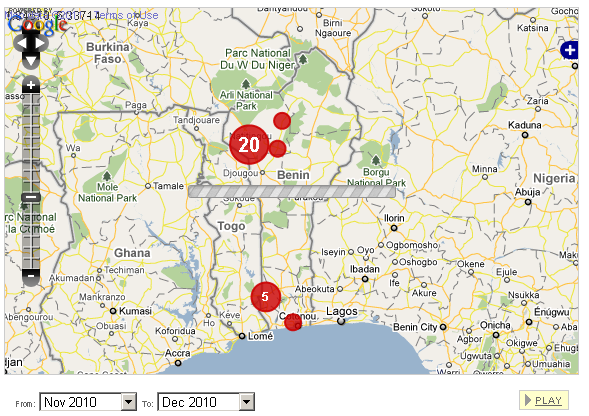
Last year, I spent some time in Benin piloting an SMS reporting system to track and respond to Violence against Children (VAC). After almost a year developing the idea and thinking it through to see if it was potentially feasible (see 7 or more questions to ask before adding ICTs), in February 2010 we conducted 2 workshops with youth, staff and local authorities in Couffo and Atacora, Benin, to design a system with their input (see Finding Some ICT answers in Benin). The main pieces of the reporting system are FrontlineSMS and Ushahidi. A few months after, staff reported back on some of the challenges with implementation (see Tweaking: SMS Violence Reporting System in Benin).
Romeo Essou, project coordinator
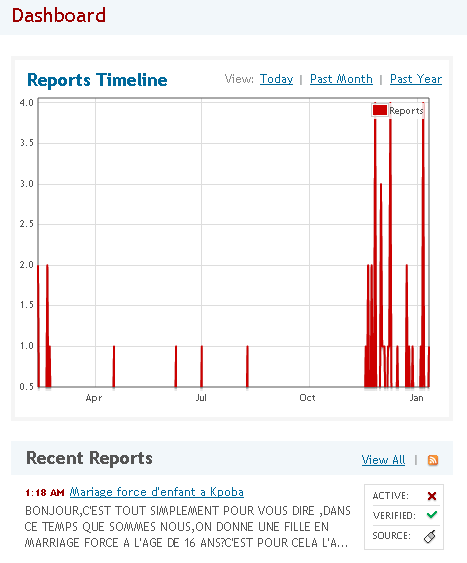
Since then, many of the issues have been resolved, and we’ve improved outreach so that communities are more aware of the SMS reporting system and how to use it. We’ve also been looking at the system itself, continuing testing, and seeing what improvements are needed. We didn’t have resources to dedicate someone fully to the program at first, but after seeing the potential, Plan Benin assigned Romeo (see photo) to manage the pilot project full-time in Benin. It’s been quite a pleasure working with the team there, and Romeo is no exception. Having someone dedicated full-time to working with communities and staff in the two districts has really made a difference. From November to mid-January, several additional violence cases were reported and a good number of them have been followed up on and closed.
Last week, Romeo shared what we still need to find solutions for. Some of these are issues that we’d identified last year and others are additional things that Romeo has suggested as he’s gotten down to business.
Some people still call instead of texting, or they send “call me back” texts
Cases are now coming in
The team is fairly certain this is due to illiteracy. Plan will involve more school-going youth in the initiative because they have higher literacy levels and can support others with reporting if needed.
Romeo and the team will continue doing outreach and education on how the system works both at community meetings and via radio broadcasts in French and local languages.
To address the calls that may continue to come in, a voice mail will be set up on the phone that links up to the FrontlineSMS laptop, with a message explaining that people have to send in a text. Romeo will do some research to determine which languages to use in the message for the best result (French and the 2 main local languages….).
If that doesn’t resolve the issue, Romeo and the staff will call back anyone who phones in.
Cost of an SMS continues to be a discouraging factor for people in terms of reporting. Often when Romeo or other staff visit a community, community members take advantage of their physical presence to report additional cases of violence. This is not necessarily negative, considering that we want to increase the number of incidents reported and followed up on; however, if it turns out that awareness around violence is high but the cost of the SMS is a deterring factor in reporting, more inexpensive channels to report also need to be offered. We are still negotiating with the local operators to get a free SMS line.
Spam
Some 50 spams a day are coming in. This is an issue on all mobile phones in Benin. Much of the spam comes from the mobile service providers themselves.
If the spam is coming from the same number, it’s possible that a workaround script could be written up at the point where FrontlineSMS forwards to Ushahidi. The messages can also be marked on Ushahidi as spam, but they will still be arriving via FrontlineSMS, unfortunately, unless numbers can be blocked somehow.
Needs further thought on how it might be overcome.
The Violence Tracking Platform (Ushahidi):
Ushahidi platform
We need to be 100% sure that any personal or identifying information coming in via the SMS reports is scrubbed so we do not put any children or witnesses at risk or falsely accuse anyone of violence against children by publishing the reports to the Ushahidi platform.
Romeo will develop a Privacy and Protection Checklist and train those administering the Ushahidi system to be sure to remove identifying information thoroughly before allowing it to be published on the Ushahidi site.
The identifying information still needs to be stored somewhere on the system to support with follow-up on the cases that come in. We may need additional development work on the platform to allow for that.
We hope to integrate the Ushahidi map into the Violence against Children website, which has educational material, videos and cartoons done by youth, and a discussion forum. However if the information poses a risk to anyone, we may decide to make the Ushahidi site private and keep it as a management tool rather than a public site.
Categorizing:
The staff who administer the Ushahidi website are not always clear which type of violence an incident should be categorized as (physical violence? sexual violence? psychological violence?).
Romeo will create short guidelines to help people to categorize the incidents properly. He’d like these to be incorporated into the Ushahidi platform.
Often a reported incident can fit into more than one category – eg., both physical and sexual violence. If it’s categorized in two categories, then we lose the sense of how many incidents there have been overall, and we’re unable to properly chart the data. We need to find a way to manage this on the system so that we have proper statistics.
Recent reports of physical violence, sexual violence, forced marriage and exploitation
Follow up on reported cases:
We still want a way to track response and follow-up on cases within the Ushahidi platform, as often a report requires more than one verification visit.
We need someplace within the platform to store this type of information to keep records of follow-up.
This will require work by a developer, but it might be helpful for other institutions using Ushahidi as well. It’s also possible that FrontlineSMS Medic could be used for case management rather than Ushahidi, but it might prove confusing for staff to have to store and act on the same kind of information using two different tools.
Names of villages, hamlets, etc:
We would like to have a listing on the map of the various hamlets, villages, etc. They do not currently appear on the map since there is no record of them on Open Street Maps or Google Maps. Plan has this detailed information in its internal systems and we want to add it to the base maps so that it’s easier for administrators to locate the incident in the right community.
Coordination and outreach:
In addition to the technical work on the system, Romeo will continue to coordinate and share information with local partners and other organizations working on violence against children. There are similar initiatives already in place and we don’t want to duplicate efforts. Combining and sharing help line numbers and taking reports by both phone and SMS is one option.
When people tell their own stories and take photos of themselves, the results are quite different from when outsiders bring in their stereotypes and their agendas.
I love love love this photo series by youth in Croix des Bouquets and Jacmel.
In October, 2010, Plan commissioned Natasha Fillion, a Canadian photojournalist based in Port-au-Prince, to train and work with 22 teenagers to document their own lives in their own home, neighborhoods and schools. The youth, ages 14-19, got a crash course in photography and were given a digital camera and sent out ‘on assignment’ in their communities. Their brief was to cover topics such as home life, education, leisure, friends, everyday Haiti, and anything about which they were passionate. The photos were taken over a period of 2 weeks.
Fillion commented ‘I go out and I’m covering demonstrations, violence and destruction but there’s a whole side of Haiti that the media, the whole world doesn’t get to see, and I told the students — this is your opportunity to show people what Haiti is really like. These are photos that tell the story of Haiti as a whole, not just news.’
February 3, 2011, update:
Interview with 2 of the youth photographers and Natasha Fillion.
I spent a few days in Nairobi early last week with our education and our ICT staff from Ghana, Uganda, Senegal, Mozambique, Kenya, Egypt and a few other folks, including the brilliant Mika Valitalo from our Finnish office and people from regional and headquarters levels. We were looking at goals and challenges in our education programs and thinking about where ICTs might play a role.
The process was really interesting. Starting a few months back, each country shared their education context analysis onto a wiki. In a second round they narrowed down to a specific area in education, looked at the information and communication flow and gaps, and identified areas where there might be an ICT solution. They focused mostly on mobiles, but in many cases mobiles were supported by computers, servers and laptops as well as non-digital information and communication tools and also solar technologies. Each country team met by Skype with Mika and an external consultant to discuss the concepts and get ICT advice and support. Then they updated their concepts and got additional feedback. For the third round, they added rich pictures to show what the specific ICT solutions might look like. Everyone had an opportunity to give input into everyone else’s ideas via the wiki.
At the meeting in Nairobi, we spent a day sharing the concepts with each other for clarification and focused input. Colleagues shared the broader education context in their countries and specifically in the communities where they are working. Then they illustrated the specific education issues and the ICT solutions that they were suggesting and/or the places they felt ICTs could help. Some of the ICT solutions focused on a very specific technology or device. Others showed how different types of ICTs could be integrated at different points in the process. Others required development of a totally new ‘solution’.
Some of the areas where colleagues thought ICTs could support education included: teacher training for those working in remote communities, adult literacy (especially literacy retention post literacy training), improving exam scores, livening up and improving in-class curriculum, and transparency and accountability in education. We spent 2 days then working in different small groups on the concepts, cross-pollinating ideas and deciding which of the concepts were most relevant to all 6 countries (in order to make it more possible to scale them) and which were most feasible and do-able.
The ideas were all a good fit with our global education strategy (see page 9) which focuses on service delivery (in partnership with local governments and communities); organizing and empowering rights holders; and grassroots participatory advocacy to influence education policies, financing and practice. The strategy prioritizes actions around equal access to education, quality of education, and education governance (see page 10).
Accountability and transparency in education
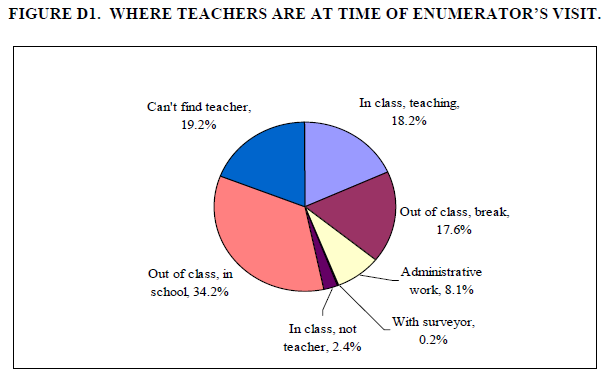
One of the concepts that captured the most interest from the whole group was that of using ICTs to improve accountability and transparency in education. Education is one of the areas where “Quiet Corruption” is often found. ‘Quiet corruption, which can take the form of absenteeism among teachers or doctors, the distribution of fake drugs, or the sale of diluted fertilizers to poor farmers, is having a damaging effect on people in Africa, according to the African Development Indicators report released by the World Bank….’ (March 18, 2010 article)
It's time for class.... where is the teacher to be found?
Edison, Charles and Erik, our colleagues from Uganda, did a short skit illustrating the different points in the primary education system where corruption happens. Their points correlated well with this summary of quiet corruption in education from a July 5, 2010 article in the Independent:
‘Early this year, the Transparency International (TI) Africa Education Watch Programme report: Africa Education Watch: good governance lessons for primary education showed that the government’s perception that massive enrollment is a sign of success of the UPE [universal primary education] programme must be revised to address the problem of overcrowding in classrooms, studying under trees, poor financial management, illegal fees, and lack of school inspection. The report exposes irritating embezzlement of UPE funds and abuse of authority by head-teachers who charge illegal fees, make students offer labour on teachers’ projects, sexual harassment, and systematic teacher absenteeism. The report noted that 85% of schools surveyed had either deficient accounting systems or none at all. In most cases, financial records were either unavailable or incomplete. The survey found limited financial documentation at district education offices and at schools. Most people who handle school grants had no training in basic finance management.
Another survey titled, The Efficiency of Public Education in Uganda, conducted in 2007 by the Ministry of Education to determine efficiency in provision of education services found an average rate of teacher absenteeism of 27% in Uganda, compared to other countries like Zambia (17%), and Papa New Guinea (15%). The aggregate loss caused by this absenteeism constituted 19% which translates into Shs 53 billion out of the Shs276 billion of the Education ministry’s wage bill.
In a swift headcount at the beginning of this year, the Education ministry established that the number of pupils listed in primary school registers was 25% higher than those actually studying. Similarly, the report established that the number of students in lower secondary schools had been exaggerated by 12%. For instance at Amaji Primary School last year, the school register had 816 pupils. But when the headcount was conducted the school administration could not account for 302 pupils.
It is reported that many districts’ chief administrative officers have failed to show proper accountability for the UPE and USE funds.’
The Uganda team also explained that:
Parental interest in education is very low because since Universal Primary Education launched, parents feel it’s the government’s responsibility. Some youth we were working with in Kenya last year made a short film about poor performance in primary schools covering the same issue (see below).
Teachers’ salaries are paid directly to their bank accounts, and there is no way to punish them if they don’t show up.
There are mechanisms to ensure that donor funds go from the national level to the district level and then on to the school, but no accountability mechanisms to ensure that they get from the school to the classroom and are translated into quality education for children.
District level government authority and accountability ends when they transfer funds to the schools; school directors can report to them that they have received funding and that everything is going fine when it’s really not.
Local school committees are often made up of people who are not neutral and who do not have the best interest of the children in mind. In some cases, school committee positions are used for personal gain and to launch individual political careers and political campaigns.
Lack of parental and community involvement in the education process and in school governance means that no one is demanding accountability from teachers and schools.
Sexual and physical violence in schools is very common and underreported. When it is reported, often nothing is done about it.
(Start playing the video, then click the small ‘cc’ button to turn on captions in English)
Colleagues from the other countries face the same challenges in their work and in their own children’s education.
Can ICTs play a role?
What is the solution then? Colleagues suggest that motivating parents and the community to get more involved in school governance and demanding transparency and accountability can begin to change the situation. This obviously requires a lot more than ICTs. So several different actions would be taken to engage and motivate parents and the community to take a bigger role in their children’s education. Then ICTs can be integrated into and support the process for sharing education information with parents, such as student absenteeism, grades, parent-school meetings, exam dates and scores, etc. Parents and students would also be able to report when teachers do not show up or suspected corruption. Students could also report abusive teachers, absent teachers, and other issues they are not happy with at the school. A neutral party would manage and hold the information that flows in and out to protect students from reprisal and to protect teachers from any abuse of the system in case fraudulent or incorrect information is reported. Commitment from those responsible for overseeing education to respond to the issues raised and take serious action is also needed, and this may be the biggest challenge overall. Plan can play a role there, leveraging existing relationships with local and national governments and Ministries.
The idea needs quite a bit of further work, a closer look at feasibility, and more research and input from local communities and parents. As mentioned, the ICTs are actually a small, but potentially very important, part of a much larger initiative to get parents and communities involved in school governance to demand transparent, accountable and quality education and budget spending.
Challenges in the process
Some of the challenges that we had to manage well during this initial piece of the longer process included:
We needed to ensure that we were starting with the context and the need for better information and communications, not starting with the technology and devices and building initiatives around them. Yet we also had to avoid getting lost in the overall context and missing the opportunity to pinpoint potential ICT solutions at specific places within the context. Role play and flip chart illustrations of the ‘problem’ and the ‘solutions’ were very useful for getting more concrete (“So, Kofi is here in his community and he wants to …. So he uses xxx to do this, and then this happens and then….).
Though we wanted to specifically look at places that mobiles and other ICTs could support, it was important to list out all the factors that needed to be in place in order for the ICTs to work and to think clearly about the constraints we might face during implementation. One good question to help with that was, after seeing an idea or ICT solution presented, to ask “What needs to be in place in order for that to happen?” Then you start to remember critical things like community motivation, government interest to actually resolve a problem, electricity, someone to set up and manage a server, a strong enough network to download multimedia content, mobile versions of websites, educational content re-design for mobiles, teacher training on how to integrate ICTs in the classroom, limitations of SMS for doing something other than rote learning, higher versions of a mobile operating system, a smart phone, etc.
We had input from a potential corporate partner during the process. We learned that corporations are thinking several years ahead to what will be coming down the line; however non-profit are normally working within existing constraints and trying to find solutions that work here and now in the resource poor places where we work or ways to get around those constraints. Multi-level solutions seemed to be a good possibility; eg., ideas that can rely on SMS today, but have potential to expand as networks expand and data enabled mobiles become more available.
A corporation tends to think in terms of vendors, results, timelines, launch dates, price points, return on investment whereas a non-profit (at least ours) tends to think in terms of community members, organizations, process, participation, local context. Our facilitator even told us that a corporation normally does a presentation by starting with the solution, and then spending the rest of the presentation showing why that is the right solution. A non-profit usually starts a presentation by sharing all the context and background, and showing the process that led to eventually reaching the potential solution, including every step along the way, how ownership was achieved in the process, why different decisions were made and who participated in them. So keeping corporate vs non-profit cultures and languages in mind is also important when working on joint initiatives.
We need to remember to establish measurable indicators of success so that we can tell if this new type of intervention has a different/ better/ greater / lesser impact than carrying out a similar process without ICTs or with a different set of ICTs. This is something we will address once the full idea is developed. Impact measurement is very important to both corporate partners and development organizations.
This was the first time many were involved a process of this kind, so keeping the balance between technology and development goals was a constant challenge. We sometimes veered too far towards focusing on all the details of the context and then back to focusing too much on that piece of the context where a potential technology solution was seen. I think we were moving toward a pretty healthy mix of both. The process is nowhere near complete, and as we continue to work on the ideas and look at feasibility and actual implementation, we should find the sweet spot.
The work above was guided by Plan Finland’s recent publication ICT Enabled Development – Using ICT strategically to support Plan’s work. On the whole, it was a great learning process for everyone involved, and we came up with some good ideas that we will flesh out in the coming months. Having the opportunity to patiently and carefully think through areas and ways that ICTs can support program goals around education and discussing the ideas at length with colleagues was a capacity strengthening exercise for all involved and will mean that we will be more prone in general to thinking about incorporating ICTs in our work going forward.
I work on digital development research, strategy and evaluation with an emphasis on responsible data use, inclusion, gender, and children and young people. I support organizations to develop, implement, and engage staff and partners in responsible data policy and practice. I enjoy facilitating and moderating convenings, workshops and learning-focused events.
I’m affiliated with:
The MERL Tech Initiative: I founded The MERL Tech Initiative, which sits at the intersection of digital technology and the social sector. We support thoughtful tech-enabled program design, implementation, and monitoring, evaluation, research and learning (MERL). We convene communities to share good practice and improve programmatic outcomes. We advocate for responsible, ethical, realistic approaches that center people, communities and societies. My consulting practice is under The MERL Tech Initiative umbrella.
Technology Salon:Technology Salon is an intimate, informal, and in person, discussion among information and communication technology experts and international development professionals. Technology Salons happen in various cities. I convene the NYC Technology Salon. Technology Salon is the non-profit arm of The MERL Tech Initiative, enabling The MERL Tech Initiative to accept 501c3 funding.
This is a personal blog that does not represent official views of my current, past or future employers, affiliates or other organizations with whom I engage. Any opinions expressed herein are my own, and I take responsibility for them.
 The field of Information and Communication Technology (ICTs) tends to be dominated by men. Is this because men are more suited to working in technology? Because women don’t want to? Because boys are more interested from an early age?













 Wait... What?