Feeds:
Posts
Comments

Archive for the ‘mapping’ Category

This is a third guest post by Paul Goodman who is supporting Plan Benin to solidify their SMS Reporting and Tracking of Violence against Children (VAC) project. More on the overall project and process via the links at the end of this post.

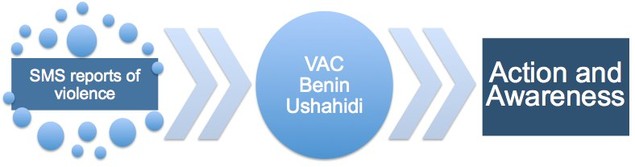
Plan Benin uses Ushahidi to map reports of violence against children in Benin. The platform is powerful right off the shelf (or right out of GitHub, as it were) and the latest version offers enough features to get the majority of deployments up and running without issue.

One benefit to working with Ushahidi — there are other options for gathering and mapping reports, of course — is that the global Ushahidi team works hard to cultivate a community of software developers hell bent on improving the software and innovating around new use cases. During my month in Benin I took advantage of a number of resources available to individuals and groups using Ushahidi. A few resources I consulted when working on solutions to technical problems:

In addition to making use of Ushahidi’s standard functionality, in Benin we’ve made some small customizations, configurations, and tweaks to that extend the functionality of the system, making it easier and faster to use.

A few tweaks:

FrontlineSMS – after upgrading to the latest version of Ushahidi, we made use of the new Plugin architecture and activated the FrontlineSMS plugin, which facilitates a seamless connection between FrontlineSMS and Ushahidi.

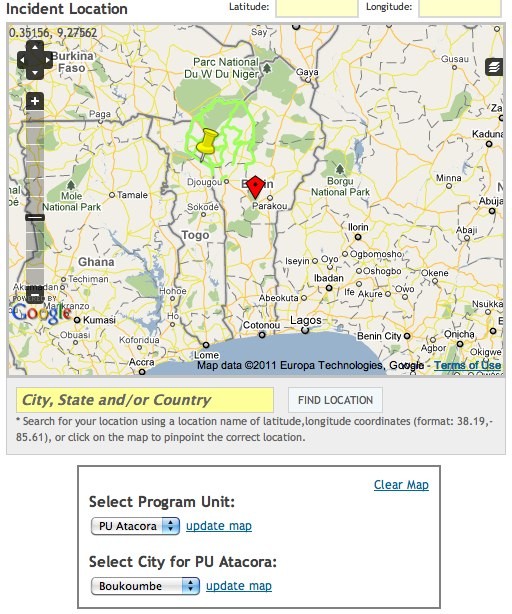
Location highlight – developed by John Etherton, this plugin improves the experience of mapping locations in areas that are not well-mapped. Instead of staring at a blank map, users creating reports can select the program area and nearby city from a drop down menu. Administrators can add as many points or areas as they’d like to aid the mapping process. Furthermore, the relatively slow internet connection in Benin makes loading map tiles and labels a painful process. In many cases, Location Highlight allows users to avoid having to load new zoom levels.

Nested Categories – a visual improvement more than anything, this functionality is supported out of the box. Rather than loading the Ushahidi landing page and seeing 20+ categories, we now see the major categories and users have the ability to drill down on the various categories to filter results.

Custom forms – the use of custom report forms with private fields allows Plan Benin to track information related to cases alongside the public report, allowing Plan staff in disparate geographies to track the reporting and resolution of incidents.

Related posts:

Future-proofing the VAC Benin project (also by Paul)

Update from Benin: charting a course forward (also by Paul)

Revisiting the SMS violence reporting project in Benin

Tracking violence against children in Benin video

Community-based child protection

Tweaking: SMS violence reporting system in Benin

Finding some ICT answers in Benin

7 (or more) questions to ask before adding ICTs

Fostering a New Political Consciousness on Violence against Children

Related links:

Text messages to help protect children against violence

Plan International case study: Helping children report abuse in Benin


Read Full Post »


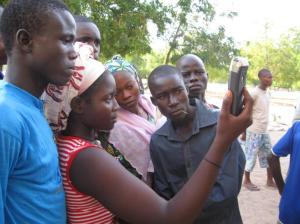
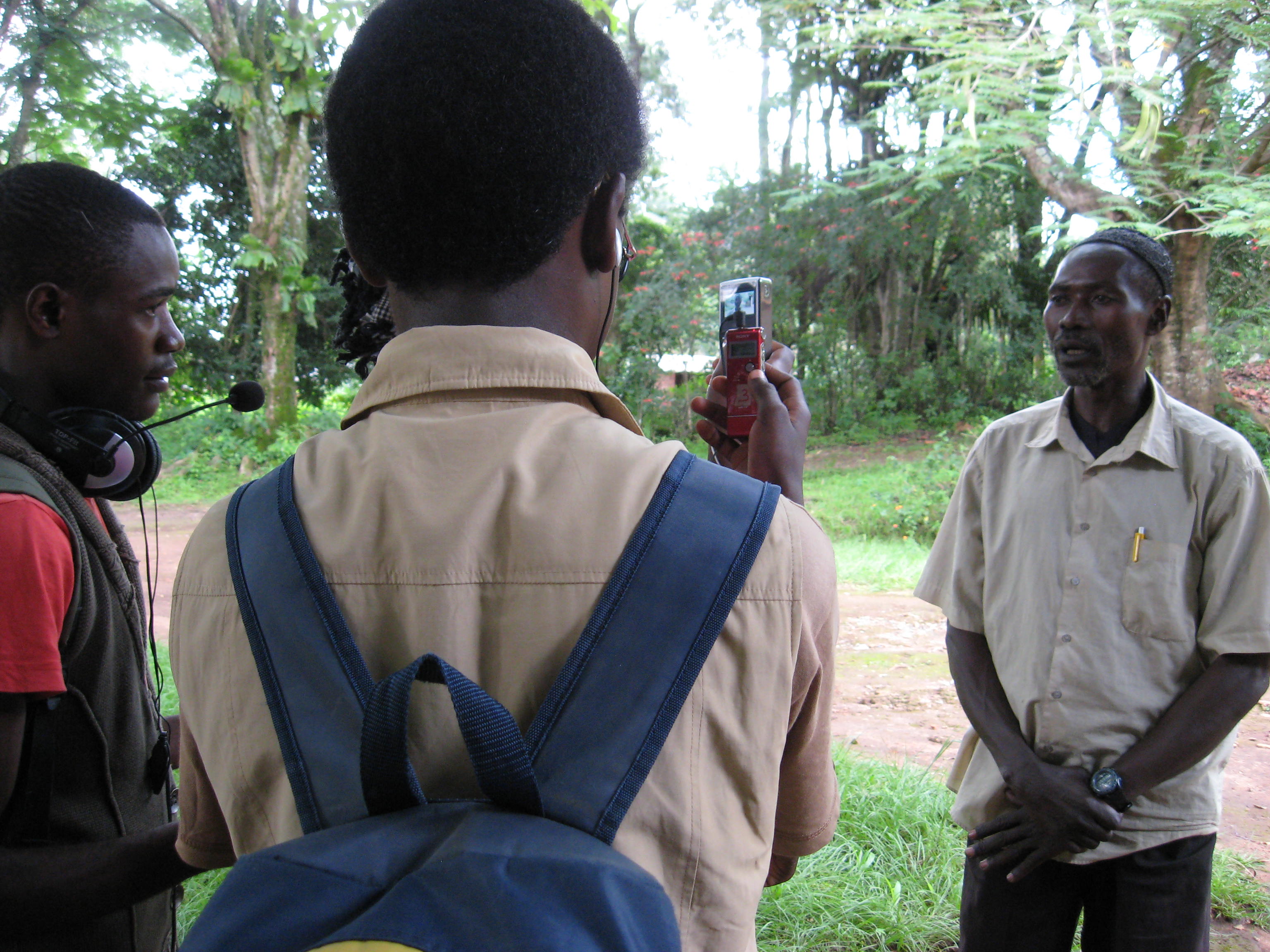
Ernest training youth in Okola.


In  Garoua, Cameroon last week at a Training of Trainers meeting for the Youth Empowerment through Arts and Media (YETAM) Project, Ernest Kunbega Gwanvoma from GIMAC (Geographic Information and Management Center) took us through the youth digital mapping process that he and Plan staff and other partners facilitated this past year.

Ernest’s presentation is posted below (with his permission), along with some comments from the rest of the group.


Why Digital Mapping?

In line with YETAM’s emphasis on use of new technology in youth and community development work, Plan introduced the use of GPS and digital mapping. Training the youths in the use of GPS and digital mapping permitted them to map out their council areas and create an information system, including the road network and other socio-economic infrastructure of their area. This exercise exposed the youths to the realities of their environment, for it took them to all the nooks and corners of their area. This way they could easily identify the problems of their communities and share with their peers all over the world. And what better way than to indicate all this than on a map? Eventually the digital maps produced will be used to track cases of violence, gender discrimination and community development planning issues. They will be used locally and shared on Open Street Map to a wider world community.

Mapping in Ndop Council Area

Objectives

The general objective of the exercise was to produce digital maps for 3 council areas; Ndop, Pitoa and Okola, where YETAM projects are being implemented. To accomplish this, participating youth were trained on the use of GPS for field data collection. They created way points of socio-economic infrastructures for their areas. A data base on all the socioeconomic infrastructures mentioned above was created. The youth also tracked the road network of their council and put it on the digital maps. This information was all uploaded into Open Street Map.

Methodology

We used the following working methodology:


  • Training of students /community youths in the use of GPS for field data collection, its potential uses and practical sessions
  • Elaboration of data codification sheets and production of waypoint forms/tracking sheets and data collection sheets for schools and health centers
  • Collection of field data
  • Analysis of data and production of digital maps
  • Uploading of digital map into Open Street Map


Data codification sheet, way point forms and data sheets


Training youth to use way point forms.

During the theoretical sessions, the youth worked in small groups to brainstorm the data that they wanted to collect about their communities. Community members and Plan staff with experience in data collection, advocacy, research and development programs gave input as well. A final set of data to collect was agreed upon, including schools and health centres in all 3 council areas.  Each group (from Ndop, Pitoa and Okola) also had its own particular aspects that it wanted to map out, based on local context.

To enable the youths collect field data in an organised manner field documents were created and made available to them, including:

  • General codification sheet
  • Waypoint form
  • School data information sheets
  • Nursery school information sheet
  • Primary school information sheet
  • Secondary school information sheet-General Education
  • Secondary school information sheet-Technical Education
  • High school information sheet
  • Health centre information sheets
  • Tracking sheet


GPS practice in Pitoa

Collection of field data

In each locality, the start off was at the District officer’s office where a cover letter or letter of introduction explaining the rationale for the field exercise was collected. This letter was presented in the communities as the need arose to avoid any form of embarrassment from the community.

The data collection exercise in was carried out by community youths, students, resource persons and the consultant’s team. In Ndop and Okola, the Partner Vision (PAVIS) and IRONDEL staff (respectively) and all resource persons were involved in the data collection. The student youth population was not available due to classes, so the out-of-school community youth who were involved in the training did the data collection. In Pitoa the staff of Solutions Technologiques Alternatives (STA) and all the resource persons were involved in the data collection. The community youths and the student population participated intensely in the exercise for they had just finished with their examinations and their principal gave them permission to participate in the field exercise during school period.

Formation of Groups

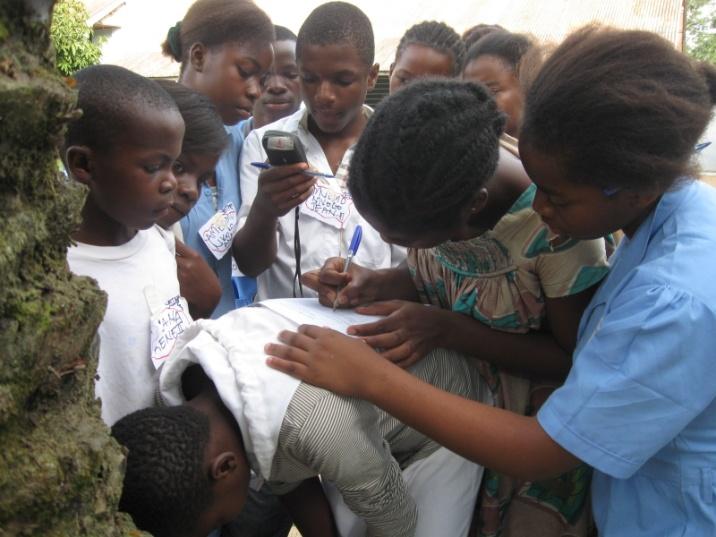
Youth filling out way point forms in Okola

To facilitate field data collection in each of the council areas, field groups were created, headed by a resource person or a staff of the consultant. The groups were allocated an area of work. One group was in-charge of tracking all the road networks and the rest of the groups collected waypoints and data on socio-economic infrastructures.

In places where the information sheet (data collecting forms) could not be filled instantly, the forms were dropped off to be filled by the competent authorities and to be collected later, this was the case especially with schools. Cars and motor bikes were hired to transport data collectors to the field in each locality.

At the end of each day, a review of the day was done; problems, lapses and wrongly collected information were pointed to the different groups for corrective measures to be taken.

Downloading /converting  GPS  Data

To be able to analyze the GPS data the waypoints and tracks were downloaded and saved in appropriate formats that could be visualized in JOSM. (Waypoints-GPX and text format, Tracklogs-GPX and DXF formats)

Attributing waypoint types
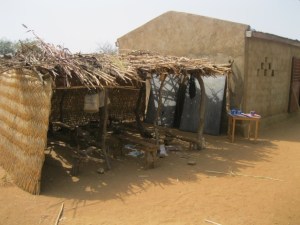
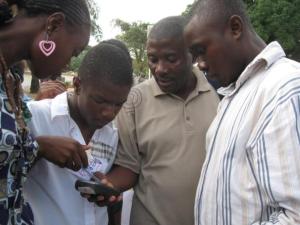
Students collected data to link with the way points, for example at this school in Pitoa

Based on the field data collected attribute tables were built for schools and hospitals etc. The data collected on schools and other aspects were triangulated for accuracy (when possible) with data previously collected by Plan or available from local government offices.


Production of digital maps

To produce the digital maps of the three council areas the JOSM offline editor was used. The waypoints and tracks were loaded into JOSM. The waypoints were digitized and appropriate attribute information assigned to them as tags. The tracks representing the road network were also digitized using JOSM.

Uploading and visualization of the digital maps

The produced maps were uploaded using JOSM to the Open Street Map site with online connection as soon as they were finished. The maps can be seen at the Open Street Map site.

Challenges and constraints
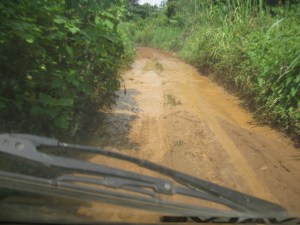
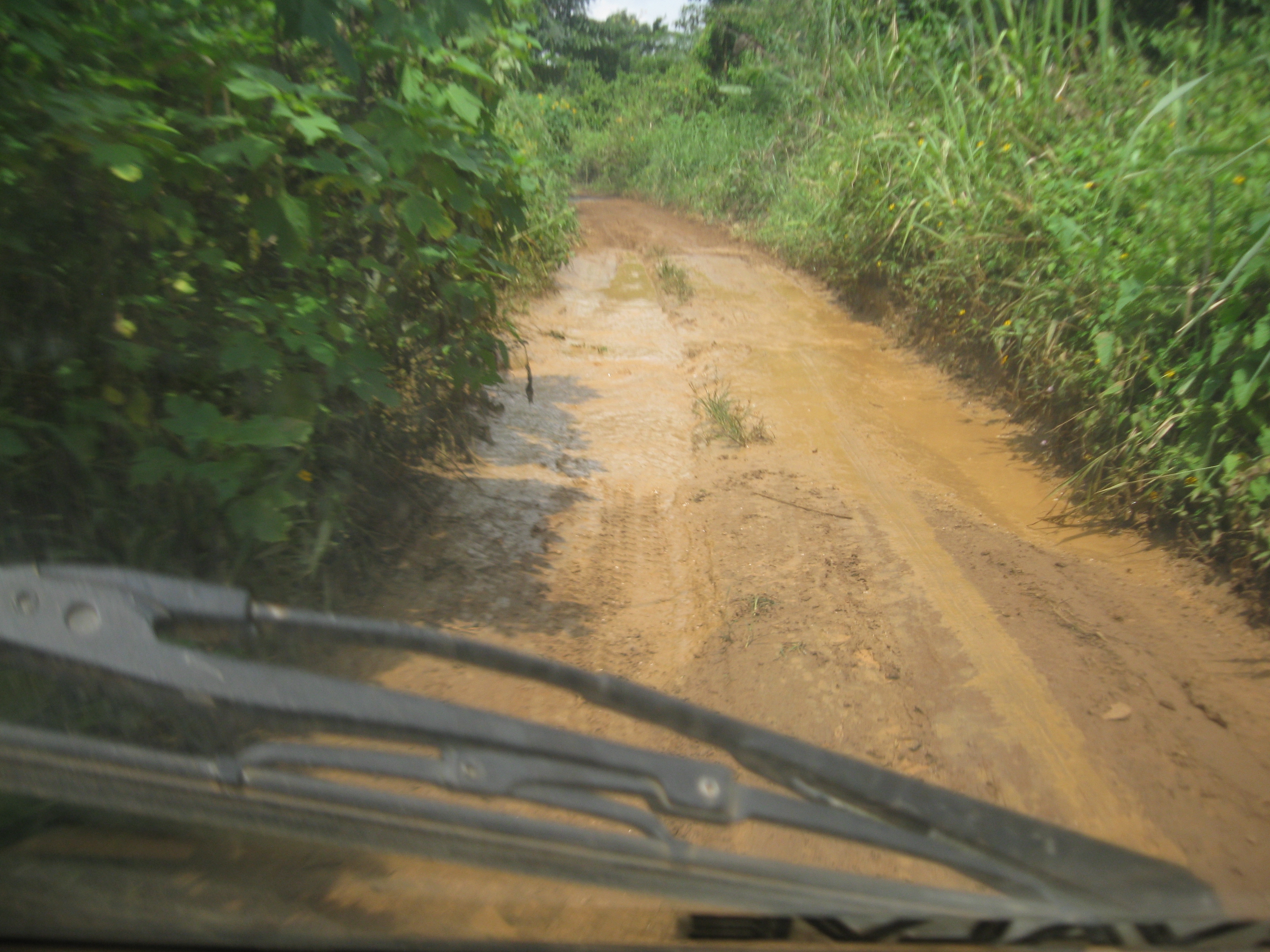
Bad roads made the mapping difficult in areas where vehicles and motorbikes couldn't pass after a certain point.

  • The student population was not fully involved in the actual field data collection in some communities because they had to be in class, so we worked only with the out-of-school youth population.
  • In Ndop and Okola, rain disrupted field activities and work had to slow down given the bad nature of the roads, which became very impracticable to vehicles and bikes, making the whole exercise difficult, strenous and time-consuming.
  • It was not always easy to arrange for transportation.
  • Most of the students and drivers did not know their full community areas well, so local community guides were recruited to take teams around.
  • In some of the areas the data sheets of schools could not be filled because the head teachers were not available.
  • In one particular area, a head teacher deliberately refused to fill the forms demanding bribe from the youths.
  • In some of the schools the head teachers had no information about the student enrolment and as such the youths had to go to each class and count the students themselves which was time-consuming.
  • Youths had to trek long distances in some of the inaccessible villages by vehicles because roads were very narrow.

Discussion

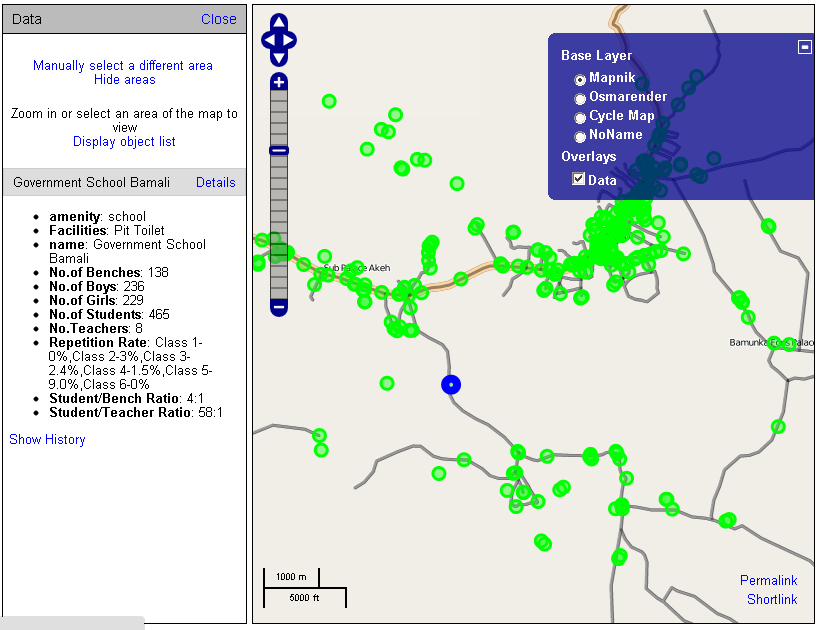
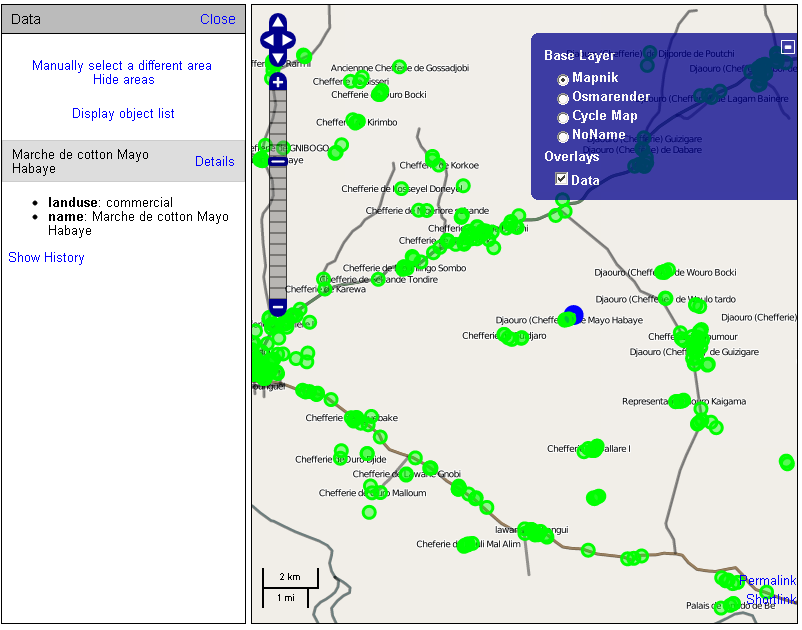
Despite the challenges faced during the field data collection the mapping exercise was quite successful. Having the digital maps is a real achievement. Having a solid data base attached to geographic location will be a powerful tool to support the youth’s local advocacy work. (Live version of the map is here. To see data, turn on the data layer as shown in the image below by clicking on the blue tab on the right side of the map.)
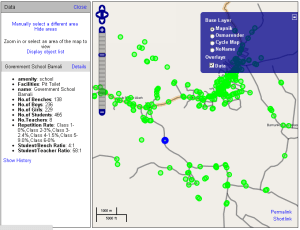
Open Street Map image of Ndop with data layer turned on. Data to the left belongs to the blue dot near the center of the map.

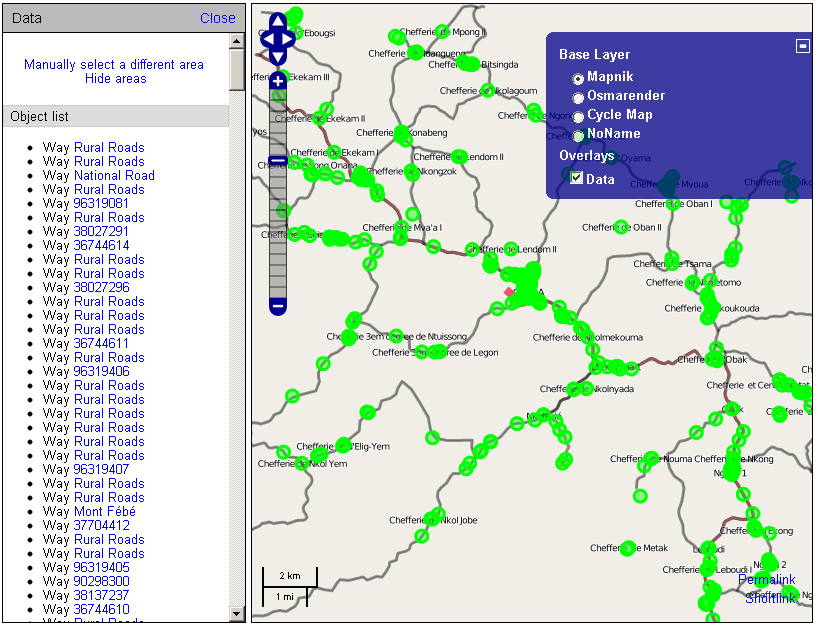
Pitoa Council Area with data layer. (Visit Open Street Map for interactive view).

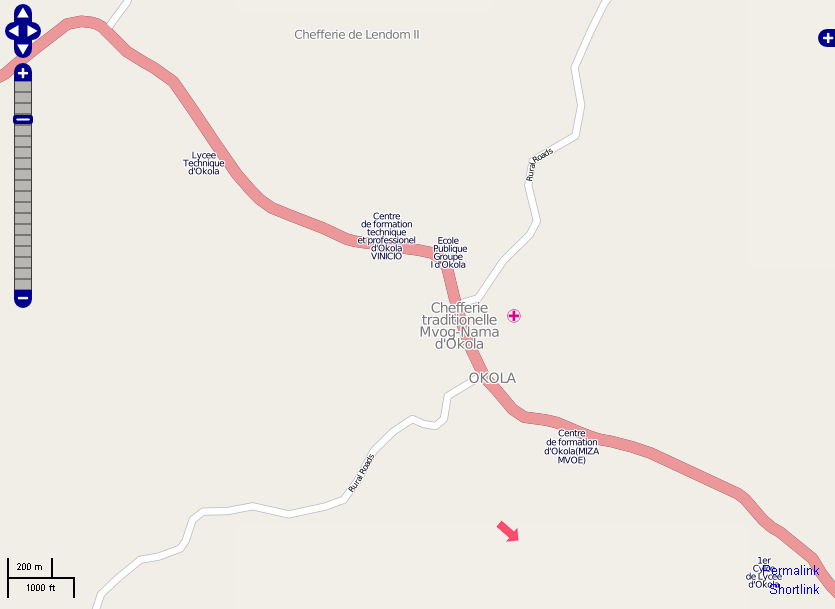
Okola Council Area with data points. (See Open Street Map for interactive map).

The group at the workshop (PAVIS, IRONDEL and STA partners, Plan staff and Ernest himself) concluded that digital mapping was a good exercise. One participant commented that the heads of the school hadn’t been aware of the importance of collecting data about their own schools, and the mapping exercise motivated the youth and the head teachers to begin to collect and track data, to look at the status of their building structures and to count their students.

Others commented that the mapping exercise is a tool that really takes the youth around to their environment. Many of the youth only knew specific parts of their communities, but the digital mapping exercise brought them around to the entire expanse of their community. It gave them a reason and an opportunity to get to know the realities of their environment.

The group agreed that in the future, it would be advisable for hand-drawn mapping followed by digital mapping to take place as the very first step of the project, before other project activities (arts, media and advocacy efforts) happen, because the mapping provides the youth with a deeper awareness of their communities and the main issues therein. It also allows them to collect solid data as well as a visual tool that they can use to then carry out their advocacy activities with local councils. (Note: This year, hand drawn mapping was done as a first step, then the arts and media activities followed. Because it was a new activity requiring additional training and preparation for staff and partners, the digital mapping was done in as third step).

One question the group will explore is how to train and support the local councils (who have responsibility for decentralized community development in Cameroon) with IT equipment so that they can keep the maps updated and/or create new digital maps on their own.

These same maps will serve as a base for an additional phase of the project that will involve tracking and mapping cases of violence against children and gender based violence and working with local communities and local government social services to raise awareness about violence and to prevent and respond to cases of abuse. (Similar to the VAC Benin project).

Read Full Post »
If you are from an outside group that wants to work with a community, you need to know the community. You need to spend time there, sleep there, live there, before trying to help or come in with recommendations. Until you have lived together with the community, you cannot really give any savvy advice or support because you won’t know or understand the community’s reality. You won’t have ‘mastered’ the community.’

Kenneth Nyah from Partner Vision (PAVIS), the organization we are partnering with in Bamenda, Cameroon, on the Youth Empowerment through Arts and Media (YETAM) Project, gave us some great tips last week on how to do community-based, youth-led advocacy and support local action and change.

Timothy and Kenneth from Partner Vision (PAVIS)

Know the steps for good advocacy

  • Identify the issue that needs to be addressed.
  • Master the community by spending time there.
  • Identify the principle actions to take in the community, together with all the stakeholders.
  • Gather information and statistics that will support the case and help to shape the suggested solutions.
  • Synthesize information and statistics to make them easier for people to get a handle on and understand.

Model good advocate behaviors

  • Participation. All the stakeholders need to be included and the discussions need to be open.
  • Legitimacy. An advocate should be someone who practices what he or she preaches and lives the values that he or she is working for.
  • Accountability. An advocate has to be transparent and open and accountable for his or her actions and to the community.
  • Acting peacefully. An advocate should always look for ways to resolve issues in a peaceful way.
  • Representing the affected group. An advocate should be sure to understand the affected groups’ issues and viewpoints and to represent them, not his own opinions or agenda.

Be clear about your role as an outside organization

Kenneth described the main roles of an advocate or organization supporting local advocacy work as:

  • helping to empower the community to speak for itself
  • mediating and facilitating communication between people
  • ensuring that communication and dialogue happen
  • modeling behavior to people and policy makers
  • helping build coalitions so that local people can raise their issues and get resolutions.

Know what advocacy is not

  • An information campaign. Hanging up posters is not advocacy. You have to go deep into things, to take actions, to actually do something, not just ‘raise awareness’ or share information.
  • A public relations action. Advocacy is not an opportunity for you to create fame for yourself or your organization or political agenda. It’s about the community.
  • A strike or mob action. Advocacy should be strategic.
  • A pressure group. Advocacy does not mean ‘we want something and we are coming in to take it whether you like it or not.’

Remember who this is about:

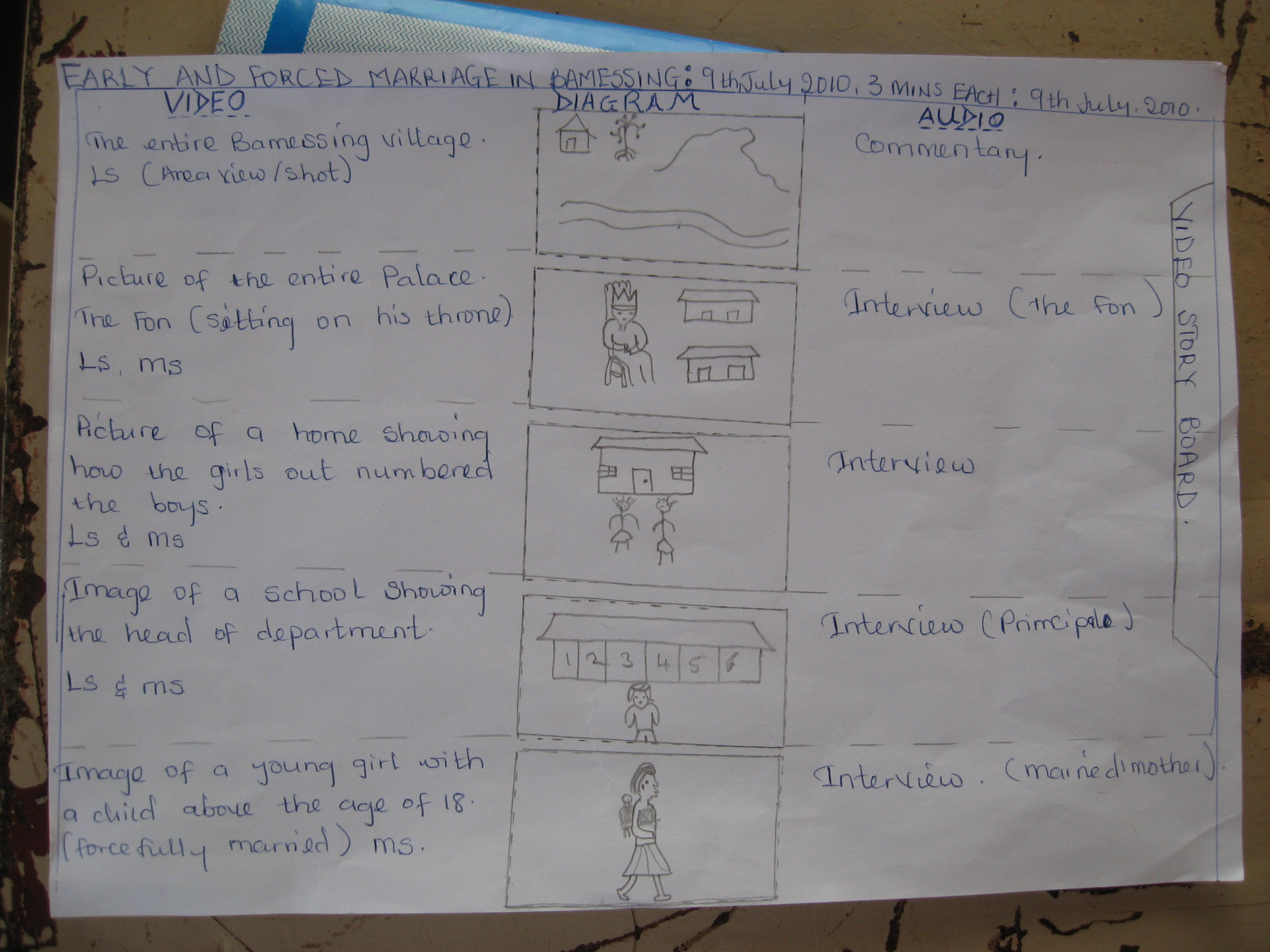
First half of a storyboard by youth in Bamessing for video on early marriage.

You shouldn’t do advocacy without proposing a solution, said Kenneth, and the solution should come from the community itself, not from you. In community-led advocacy, the outside agency should not be bringing in its own agenda. It should not be manipulating people.

When working with youth, the agenda needs to come from the youth themselves. If the youth don’t have their own agenda, it’s very easy for people to manipulate them. Once you work with the youth to help them discover their community more, and to determine their own agenda for change, they will work on that and it can be very positive.

Youth-led and community-led advocacy is different than global advocacy campaigns which tend to be top-down. When people raise their own issues at local level, do their own research, identify their own solutions, discover the bottlenecks that get in the way of those solutions, and determine who to target with their advocacy actions, advocacy can be very effective.

One participant emphasized that even in global campaigns, local stakeholders need to be involved, because they are the ones who will give the stories, the statistics, and the effective solutions.

Find the information that already exists in the community

Collecting information.

Advocacy goes with facts and figures. You cannot do advocacy without figures, said Kenneth. And you cannot have figures without research. But there is much information that is already there, right in the community. ‘As outsiders,’ commented one person, ‘it’s easy to imagine that a community doesn’t have any information, but this is not true. We found so much information in the community.’

‘All the facts that youth needed to advocate for the water project* were given by the people in the community. The youth know who the key people are in the community. They know who has the information and the statistics. For example, there is a person who manages the local water system and who knows what the problems are with it. There is the chairman of the water board. These are people in the community who manage information! They have reports, they have meetings, they know these things. There is no need to come from the outside to do a big expensive data gathering campaign. You can go into the records that the community is already keeping. Working with the youth and community it’s very possible to find this information to support local advocacy.’

A role for ICTs

Another person shared the case of youth in Pitoa who identified malnutrition in the community. ‘The parents didn’t  identify malnutrition as a problem, they said it was not an issue. Maybe they were embarrassed that they were unable to give their children enough food. But the youth went with cameras, they filmed malnourished children, they went to the hospital to check the numbers. There is a whole ward there with malnourished children; they filmed there.  They made a video and showed it to the parents and the council and were able to get them to see that this is a problem in the community.’

The digital mapping that we are doing with the YETAM project (watch for a new post coming soon on this), said other participants, can provide the youth with an additional tool for local advocacy. ‘Youth went out to map their area. They saw the road network, they created a database about their schools, they saw the conditions of the hospitals and everything. Through mapping they were able to master their environment because they were there, collecting the data, tracing and making waypoints of everything. This fed very well into their advocacy work.’

*In this water project example, youth used their research, videos, interviews, focus group discussions and role play to advocate to community leaders, the village development union and the Ndop Rural Council around the water issue. The Ndop Council acknowledged the issue and Bamessing and its neighbouring communities succeeded in securing funding from FEICOM for the first phase of the Ndop water supply project for 214 million CFAs (around $450,000). Feasibility studies were done by the Ministry of Water Resources and Energy in collaboration with SNV and submitted to the Ndop Council. The project is expected to provide potable water in Bamessing, Bamali, Bamuanka rural and Bambalang communities.

Other successes of youth-led advocacy in the YETAM Cameroon project include that the Municipal Councils of Pitoa and Ndop approved financial support to youth micro-projects.  The Mayor of Pitoa municipal council approved 400,000 CFA (around $850) for the youth to spearhead actions to curb the high incidence of cholera in the council area. The Mayor of Ndop Municipal Council approved 500,000 CFA (around $1070) as council support for the youth to fight against the high rate of school dropouts in the Ndop council area. This support came in response to youth participation in the council budgetary sessions.

Read Full Post »
This is a second guest post by Paul Goodman who is supporting Plan Benin to solidify their SMS Reporting and Tracking of Violence against Children (VAC) project. More on the overall project and process via the links at the end of this post.

Future proofing? Wishful thinking! There is of course no way to “future proof” an ICTD project. There are ways, however, to ensure that an ICT project has a fighting chance at sustainability. Here in Benin we’re revisiting the entire VAC Benin workflow in an effort to document the non-technical aspects of the project so that each person that touches this system fully understands the way that information moves through it. In addition to supporting training, this small but critical step will help drive consensus around how the project should and can work well into the future.

A succinct overview of this project:

The beginning of any development initiative is often marked by energetic optimism. At the onset, when a project enjoys the attention and enthusiasm of its creators and supporters, it is easy to forget that over time this attention will wane, priorities will shift, and critical personnel will undoubtedly take on new responsibilities or even different jobs. Purposeful problem definition and documentation can minimize the impact of these eventualities and only with a thorough understanding of the problem is it possible to discuss appropriate technology-enabled responses. And yes, in the real world, the problem often shifts over time as the situation changes or new information comes to light. But with a well-defined problem you have clarity around your intent and can face new challenges head-on.

Once defined, the problem and corresponding solution must be documented so that others may benefit from the insight gained during this process and apply that insight systematically. This seems elementary, of course, but in years of ICTD work I’ve found that the documentation of both technical systems and non-technical processes is often neglected in the rush to deploy or as a result of over-reliance on a few knowledgable individuals. Furthermore, in international development, documentation sometimes plays second fiddle to the production of reports and case studies.

Now I’ll happily get off my soap box and get back to business in Benin.

After sketching out the various aspects of the information flow with my colleague Elsie, I documented the workflow in a way that can be used to inform, train, and guide others as they interact with this project. I’m working on reference materials of different shapes and sizes including a number of graphics. Several of the graphics appear below; these are drafts and will be revised with Elsie, translated, distributed to the team, and revised again. These graphics represent the way we would like the system to work and are intended to be living documents.

In this graphic I included all the critical actors and their key responsibilities:


In this flow chart, I illustrated the way that messages should be processed:

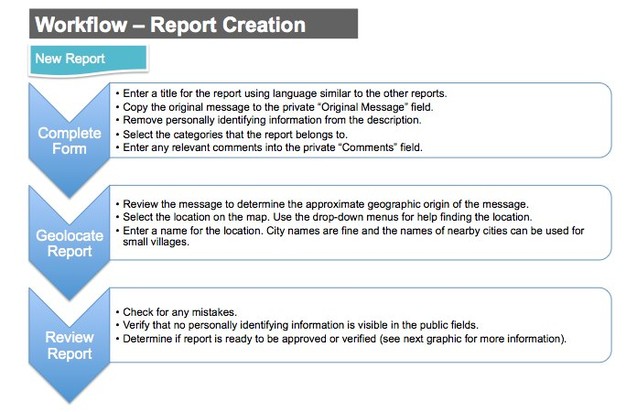
In this graphic, I illustrated the way that reports should be created:

Finally, this flow chart will support report approval and verification:

Related posts:

Update from Benin: charting a course forward (also by Paul)

Revisiting the SMS violence reporting project in Benin

Tracking violence against children in Benin video

Community-based child protection

Tweaking: SMS violence reporting system in Benin

Finding some ICT answers in Benin

7 (or more) questions to ask before adding ICTs

Fostering a New Political Consciousness on Violence against Children

Related links:

Text messages to help protect children against violence

Plan International case study: Helping children report abuse in Benin

Read Full Post »

I’m thrilled to write that we have 4 masters level students (or recent grads) who have been prepping for the past few months for 8-10 weeks of ICT4D, child participation, and child protection work with our teams at Plan Benin and Plan Cameroon.

My last post here on Wait… What? was an excellent guest post by Paul Goodman (@pdgoodman) who has been working with Plan Benin for most of May to help optimize the Frontline SMS / Ushahidi-based violence against children (VAC) reporting system that we initiated a little over a year ago. Paul is a Masters Level student at the School of Information Management and Systems at the University of California, Berkeley. In addition to on-the-ground ICT4D experience in Haiti, Pakistan and Bangladesh with DAI, he has worked on several USAID funded projects including the Cuba Development project and the Global Development Commons. Paul has also worked in business development and as a press assistant, multi-media editor and freelance photographer.

Jacqueline Deelstra has just completed her Masters at the Fletcher School at Tufts University. She’s worked overseas in the past with Twaweza in Tanzania and Kenya, World Teach in Ecuador and Tostan in Senegal. While at Twaweza, she focused on citizen reporting, village mobile phone surveys, and the use of mobile phones in development and governance programs. Jacqui will be spending her time in Atacora and Couffo, Benin, learning more about the social context and social challenges surrounding the implementation of the above-mentioned Violence against Children Reporting system in Benin, and looking at its contribution to good governance.

In Cameroon, we will be working with Joe Pavey and Rebecca Tapscott.

Joe (@joepavey) is a Master of Communications student in the Digital Media program at the University of Washington, where the program has an emphasis on storytelling and technology. Joe also spent 7 years at Microsoft, where he specialized on new standards of practice for processing and encoding video content. His undergraduate degree is in documentary film production. Joe will support the Youth Empowerment through Arts and Media (YETAM) Project on the technical side, helping youth and local partners in Cameroon to improve video production quality and to streamline the process from editing to uploading. He’ll also work closely with the well-skilled Cameroonian ICT team that is setting up a violence reporting system using Frontline SMS and CrowdMap, based on our learnings from the system in Benin.

Rebecca is a first-year Masters degree student at the Fletcher School at Tufts University, with experience in both development and journalism. She has also worked as an assistant researcher on a story about the Daniel Pearl case, a legal assistant and a production assistant at NPR. She previously completed a 6-month internship with Tostan in Senegal, where she worked closely with staff and program participants to support program implementation and evaluation. She also wrote stories for the Tostan website and blog. Rebecca will support the local partners and youth who participate in the YETAM project, especially with uploading content to the web and growing more accustomed to social media and ICTs in development. She will also be doing research on the traditional practice of breast ironing as an independent side project.

Joe and Rebecca will spend 8-10 weeks in Cameroon with the Plan team. I’m super excited to have Paul, Rebecca, Jacqui and Joe on board, as are the teams in Benin and Cameroon.

Look for some posts from the team on the Plan USA Blog and relevant cross posts here at Wait… What!

Read Full Post »

This is a guest post by Paul Goodman, who is spending the month of May supporting Plan Benin’s Violence against Children (VAC) prevention and response project. The post appears on Paul’s own blog and also on Plan USA’s blog.

Elsie, the VAC - Ushahidi Project Coordinator in Benin

I’m working with Plan Benin to support the Violence Against Children project. The team here has established a system whereby victims of violence and observers of violence can send text messages to Plan to report violence in their communities. Plan then processes and maps the messages and works with the government of Benin to investigate the cases. In about a year of operation the system has received more than 80 reports of violence against children. The reports include physical violence, sexual violence, psychological violence, and other abuses including kidnapping, negligence, and so on.

At the beginning of the year the team identified a number of technical challenges that they’re facing using the system, which rests on the foundation of two stellar open source technologies  FrontlineSMS and Ushahidi. Those technologies are the focus of my time here in Benin though along with everything else in life, nothing is black and white.

“Technical” issues are often social, social issues often have no technical remedies, and things become confused. Beyond the division of technical and social, there are many other factors to consider. Thorough problem definition and planning for the short, mid, and long term are necessary to help define expectations, support project evaluation, and improve the chances of sustainability. These themes should be revisited periodically and updated as necessary.

In recent months Plan Benin lost two staff that were key to the day-to-day management of the system. Their departure temporarily disrupted the flow of information through the system but also created an opportunity: with a renewed organizational focus on the system we have an excellent opportunity to revisit the purpose of the initiative, consider the day-to-day functionality of the system, and ask (and hopefully answer) questions about the initiative’s future.

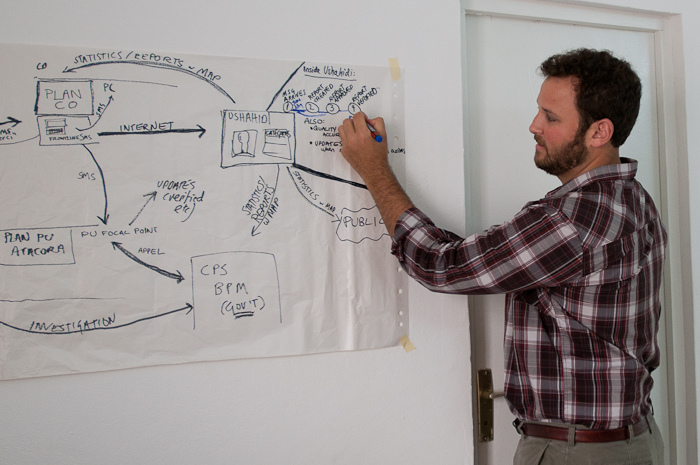
Today I worked with Elsie S., Plan Benin’s Project Coordinator, to chart out the operation of the system. The purpose of the exercise was to clarify the day-to-day operation of the system and revisit the roles and responsibilities of the many actors that interact with this project. Getting a firm grip on all of this information and documenting it for others will make it easier to train staff and partners and build further support inside Plan and within the government of Benin.

Elsie sketching her version of the workflow

A few of the questions we asked and answered today:

— How long should it take for incoming messages to be processed (stripped of personally identifying information, mapped, and so on)?

— What model is best for managing this process? Should the responsibility be centralized at the Plan Benin Country Office? Or should it be distributed to the Plan Benin Program Units (PUs) where the majority of the reports originate?

— How can we modify Ushahidi to support a distributed model, where focal points in the PUs take responsibility and have agency?

— How can we create a shared vocabulary around the various actions within the Ushahidi system? What does “approve” mean? What does “verify” mean?

Me describing my version of the workflow and discussing realistic timelines for different actions within Ushahidi.

In the coming weeks we’ll work with Plan Benin staff to ground truth any revisions to the workflow and modify the system as necessary. We’ll also spend quite a bit of time creating the documentation that will ensure the continuity of operations in the future: reference guides for Plan staff, guidelines for maintaining the privacy of victims, and documentation of the relevant technical aspects of the system.

In parallel, I’ll continue working on some necessary tweaks to Ushahidi including establishing security protocols, enhancing the system’s mapping capabilities (thanks John Etherton for your location highlight plugin and support), and more. In ten days we’ll be joined by Jacqueline Deelstra, a recent graduate of the Fletcher School at Tufts, who will continue these activities and dig deeper on the relevant social issues.

More from Benin soon.

Note: For background and additional posts on child protection, child participation and the VAC Benin project, click here.

Read Full Post »

Forget that show “Off the Map.”  Real live on the map is way more interesting.

Last July via the Youth Empowerment through Arts and Media project, we did some GPS and Open Street Map (OSM) training with Ernest Kunbega in Bamenda, Cameroon. I left for Kenya to attend a similar training with Map Kibera, and Ernest continued working with staff, local partners and youth in Ndop, Okola and Pitoa over the next several months to make maps of the 3 areas where the project is being implemented.

I got an email this week from Ernest and I was thrilled to hear that maps of the 3 areas have been completed. They did a fab job, too. Check these out.

This is what you used to find when you looked for Ndop on Open Street Map, and what you will still find on Google Maps (eg., not much):

and this is what you’ll find now if you look for Ndop on Open Street Map (close up):

This is what Okola looked like before on OSM, and what you will currently find on Google maps:

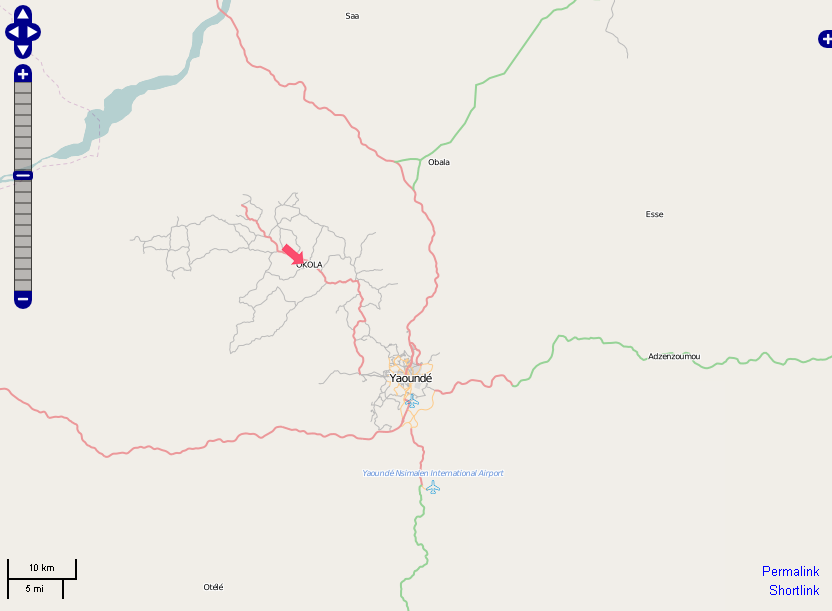
And what Okola looks like now on OSM (close up):

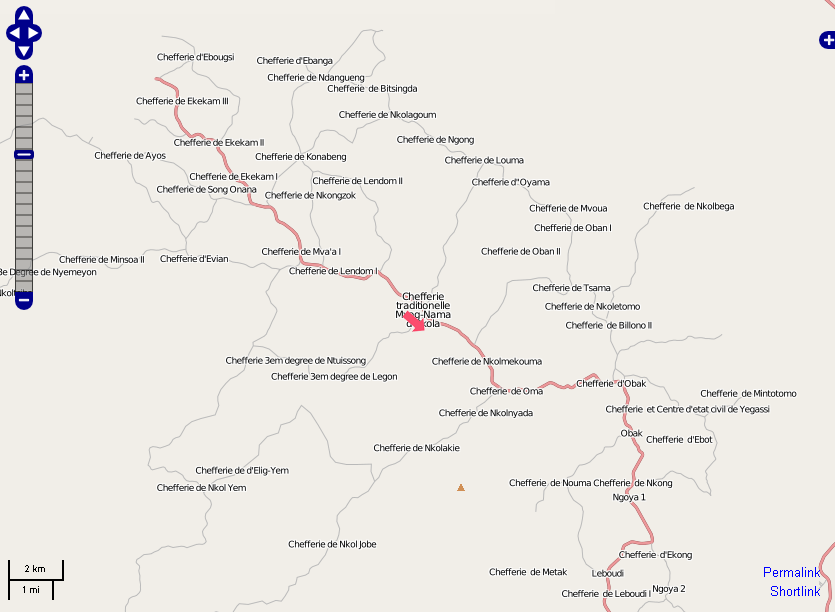
But in addition, they mapped out the chefferies in the larger Okola area:

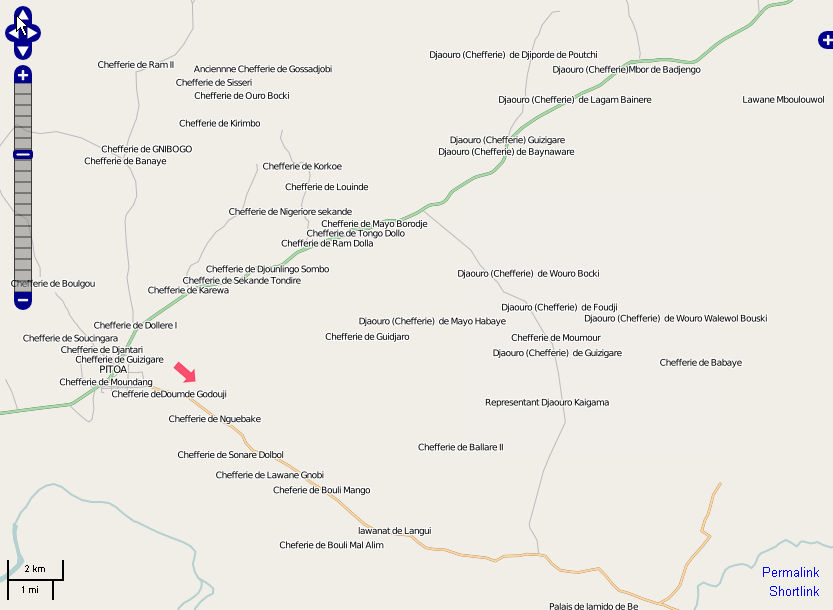
And I’m pretty sure this is the youth’s work because nothing else around is mapped in this level of detail:

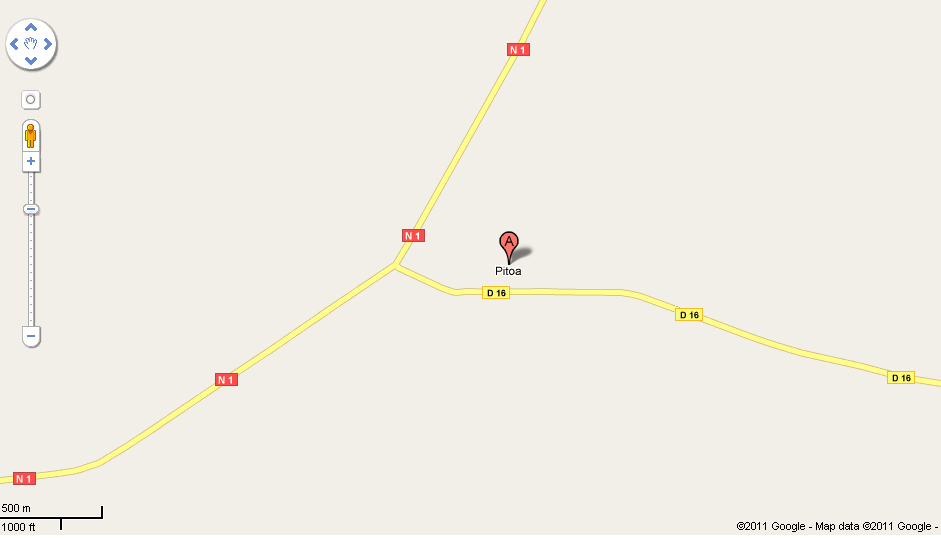
And lastly we have Pitoa as it is on Google/was on OSM:

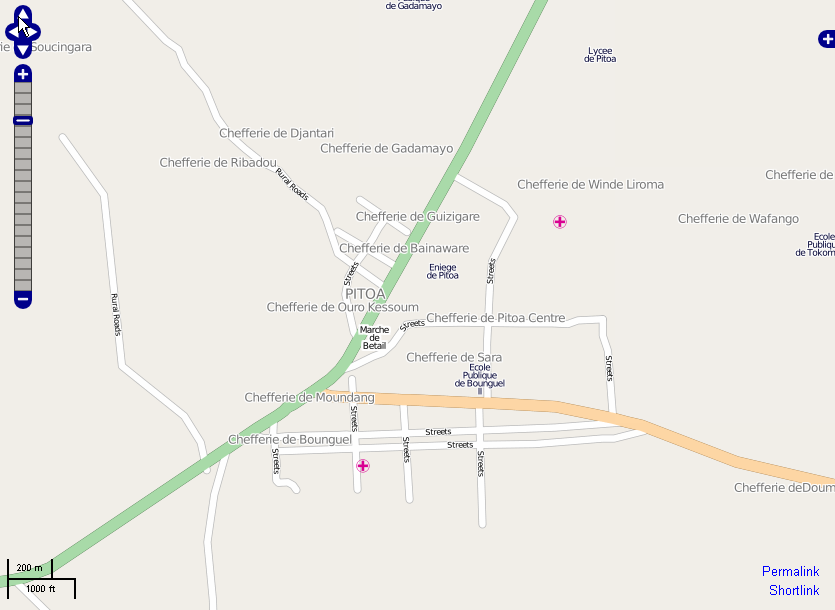
And Pitoa after Ernest and the youth mapped it on OSM (close up):

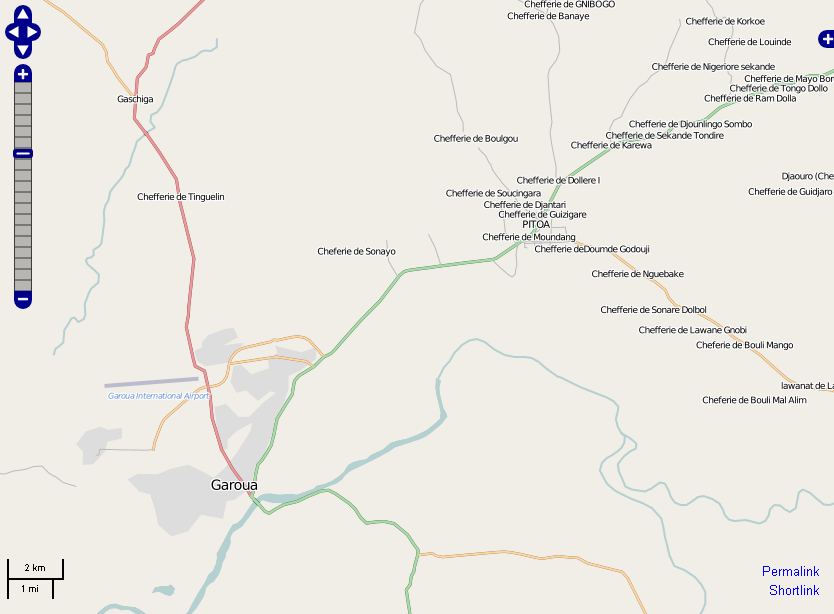
And the chefferies in the whole area of Pitoa:

And Pitoa (on the right) compared to Garoua (lower left):

For more background on the training in Cameroon, check out this post: A catalyst for positive change.

Read Full Post »
In the past couple years, social media combined with traditional media has allowed people all over the world to feel they are supporting and participating in very visible revolutions (think Iran, Tunisia, Egypt). There is also a slow and steady revolution happening as more and more communities around the world access the tools to tell their own stories in their own words from their own perspectives.

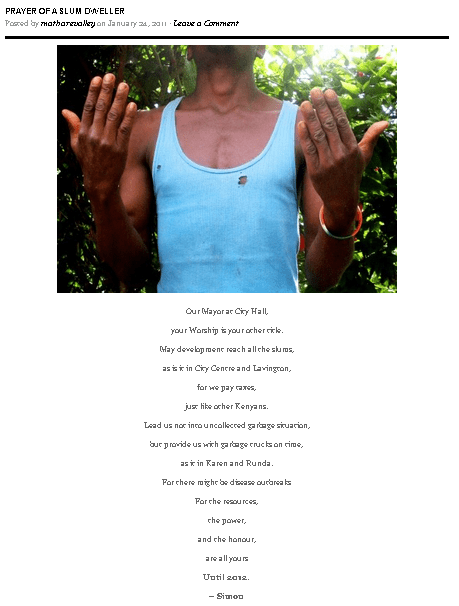
I came across the Mathare Valley blog this weekend. It’s beautiful, artful and powerful.

Prayer of a slum dweller from the Mathare Valley blog

According to the ‘about’ page, the authors of the blog:  Simon Kokoyo, Ivyonne Tiany and Jeff Mohamed, grew up in or around Mathare. They are now involved in community programs there, including the Map Mathare Initiative.

Jamie Lundine, who works at MapKibera and who’s supporting some community mapping in Mathare, wrote an excellent post about integrating participatory community development work and digital mapping in Mathare, showing how development and tech folks can combine their expertise and work together with communities to strengthen local development processes.

In my last post, I wrote about how communications (and ICTs) should be ‘built in, not bolted on‘ to development initiatives. The Mathare Initiative looks like a good example of that, with community members taking a strong lead.

Read Full Post »
Last year, I spent some time in Benin piloting an SMS reporting system to track and respond to Violence against Children (VAC). After almost a year developing the idea and thinking it through to see if it was potentially feasible (see 7 or more questions to ask before adding ICTs), in February 2010 we conducted 2 workshops with youth, staff and local authorities in Couffo and Atacora, Benin, to design a system with their input (see Finding Some ICT answers in Benin). The main pieces of the reporting system are FrontlineSMS and Ushahidi. A few months after, staff reported back on some of the challenges with implementation (see Tweaking: SMS Violence Reporting System in Benin).

Romeo Essou, project coordinator

Since then, many of the issues have been resolved, and we’ve improved outreach so that communities are more aware of the SMS reporting system and how to use it. We’ve also been looking at the system itself, continuing testing, and seeing what improvements are needed. We didn’t have resources to dedicate someone fully to the program at first, but after seeing the potential, Plan Benin assigned Romeo (see photo) to manage the pilot project full-time in Benin. It’s been quite a pleasure working with the team there, and Romeo is no exception. Having someone dedicated full-time to working with communities and staff in the two districts has really made a difference. From November to mid-January, several additional violence cases were reported and a good number of them have been followed up on and closed.

Last week, Romeo shared what we still need to find solutions for. Some of these are issues that we’d identified last year and others are additional things that Romeo has suggested as he’s gotten down to business.

Some people still call instead of texting, or they send “call me back” texts

Cases are now coming in

  • The team is fairly certain this is due to illiteracy. Plan will involve more school-going youth in the initiative because they have higher literacy levels and can support others with reporting if needed.
  • Romeo and the team will continue doing outreach and education on how the system works both at community meetings and via radio broadcasts in French and local languages.
  • To address the calls that may continue to come in, a voice mail will be set up on the phone that links up to the FrontlineSMS laptop, with a message explaining that people have to send in a text. Romeo will do some research to determine which languages to use in the message for the best result (French and the 2 main local languages….).
  • If that doesn’t resolve the issue, Romeo and the staff will call back anyone who phones in.
  • Cost of an SMS continues to be a discouraging factor for people in terms of reporting. Often when Romeo or other staff visit a community, community members take advantage of their physical presence to report additional cases of violence.  This is not necessarily negative, considering that we want to increase the number of incidents reported and followed up on; however, if it turns out that awareness around violence is high but the cost of the SMS is a deterring factor in reporting, more inexpensive channels to report also need to be offered. We are still negotiating with the local operators to get a free SMS line.

Spam

  • Some 50 spams a day are coming in. This is an issue on all mobile phones in Benin. Much of the spam comes from the mobile service providers themselves.
  • If the spam is coming from the same number, it’s possible that a workaround script could be written up at the point where FrontlineSMS forwards to Ushahidi. The messages can also be marked on Ushahidi as spam, but they will still be arriving via FrontlineSMS, unfortunately, unless numbers can be blocked somehow.
  • Needs further thought on how it might be overcome.

The Violence Tracking Platform (Ushahidi):

Ushahidi platform

  • We need to be 100% sure that any personal or identifying information coming in via the SMS reports is scrubbed so we do not put any children or witnesses at risk or falsely accuse anyone of violence against children by publishing the reports to the Ushahidi platform.
  • Romeo will develop a Privacy and Protection Checklist and train those administering the Ushahidi system to be sure to remove identifying information thoroughly before allowing it to be published on the Ushahidi site.
  • The identifying information still needs to be stored somewhere on the system to support with follow-up on the cases that come in. We may need additional development work on the platform to allow for that.
  • We hope to integrate the Ushahidi map into the Violence against Children website, which has educational material, videos and cartoons done by youth, and a discussion forum. However if the information poses a risk to anyone, we may decide to make the Ushahidi site private and keep it as a management tool rather than a public site.

Categorizing:

  • The staff who administer the Ushahidi website are not always clear which type of violence an incident should be categorized as (physical violence? sexual violence? psychological violence?).
  • Romeo will create short guidelines to help people to categorize the incidents properly. He’d like these to be incorporated into the Ushahidi platform.
  • Often a reported  incident can fit into more than one category – eg., both physical and sexual violence. If it’s categorized in two categories, then we lose the sense of how many incidents there have been overall, and we’re unable to properly chart the data. We need to find a way to manage this on the system so that we have proper statistics.

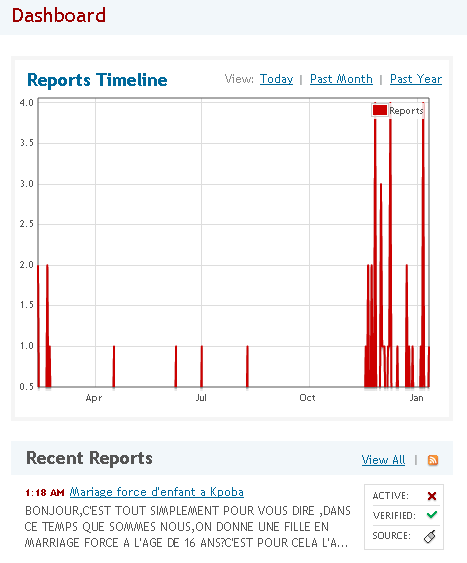
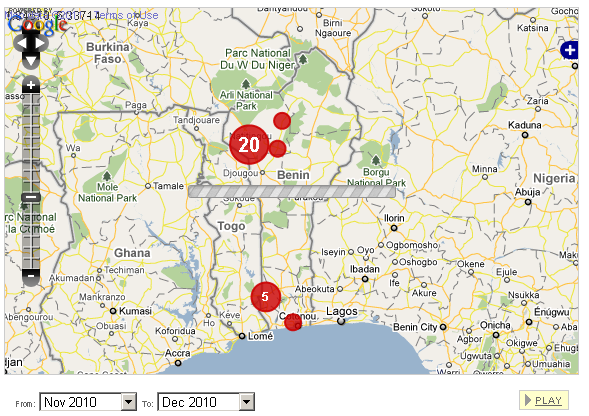
Recent reports of physical violence, sexual violence, forced marriage and exploitation

Follow up on reported cases:

  • We still want a way to track response and follow-up on cases within the Ushahidi platform, as often a report requires more than one verification visit.
  • We need someplace within the platform to store this type of information to keep records of follow-up.
  • This will require work by a developer, but it might be helpful for other institutions using Ushahidi as well. It’s also possible that FrontlineSMS Medic could be used for case management rather than Ushahidi, but it might prove confusing for staff to have to store and act on the same kind of information using two different tools.

Names of villages, hamlets, etc:

  • We would like to have a listing on the map of the various hamlets, villages, etc. They do not currently appear on the map since there is no record of them on Open Street Maps or Google Maps. Plan has this detailed information in its internal systems and we want to add it to the base maps so that it’s easier for administrators to locate the incident in the right community.
Coordination and outreach:
  • In addition to the technical work on the system, Romeo will continue to coordinate and share information with local partners and other organizations working on violence against children. There are similar initiatives already in place and we don’t want to duplicate efforts. Combining and sharing help line numbers and taking reports by both phone and SMS is one option.
Related posts on Wait… What?

Read Full Post »

Ivan and Massilau working on some mapping in Inhambane, Mozambique.

I had the pleasure of working with Iván Sánchez Ortega in Mozambique earlier this month, and I learned a ton about the broader world of GIS, GPS, FOSS, Ubuntu and Open Street Maps from him. We also shared a few beers, not to mention a harrowing plane ride complete with people screaming and everyone imagining we were going to die! But I suppose it’s all in a day’s work.

Below is a cross-post by Iván about Maps for Mozambique. You can find the original post here, and a version in Spanish here. Note: the opinions expressed below belong to Iván and not to his former, current or future employeers…..

*****

Last week was a small adventure. I went to Mozambique to make maps, as part of the Youth Empowerment through Arts and Media program. The main goal was to train youngsters in order for them to make a basic cartography of the surrounding rural communities.

This travel is part of the Humanitarian OpenStreetMap Team activities. After the successes of Kibera and Haiti, we want to check how much we can help by providing cartography.

Cartography in developing areas provides a great amount of situational awareness – in order to help, one needs to know where the help is needed. In the case of Mozambique rural communities, we’re talking about knowing who has a water well and access to healthcare and education, and who doesn’t.

The problem with rural Mozambique is that the population is very disperse. Each family unit lives in an isolated set of huts, away from the other families in the community. There is so much land available that the majority of the land is neither used or managed.

Which leads to think that, maybe, the successes at Kibera and Haiti are, in part, due to them being dense urban areas, where a kilometer square of information is very useful.

It has been repeated ad nauseam that geographic information is the infrastructure of infrastructures. Large-scale humanitarian problems can’t be tackled without cartographic support – without it, there isn’t situational awareness, nor will coordinating efforts be possible, something very important in an era when aid can get in the way of helping. However, even with agile surveying techniques and massively crowdsourced work, the cost of surveying large areas is still big. And, as in all the other problems, technology isn’t the silver bullet.

—-

That said, the way one has to go to reach the rural communities doesn’t have anything to do with the occidentalized stereotypical image of rural sub-Saharan Africa. There are no lions, nor children with inflated bellies due to starvation.

There is, however, the image of a developed country but in which the public agencies work at half throttle. Mass transit, garbage collection, urbanism, civil protection, environment, job market, education, social security. Everything’s there, but everything works at a much lower level than one could expect. To give out an example, the Administraçao Nacional de Estradas (national roads administration) plans switching of one-way lanes over hand-drawn sketches.

The reasons that explain the situation of the country are not simple, not by far, but in general terms they can be resumed in two: the war of independence of 1964-1975 and the civil war of 1977-1992. Living is not bad, but also not good, and part of the population is expecting international humanitarian aid to magically solve all of their problems.

When one stops to think, the situation eerily reminds of the Spanish movie Welcome, Mr. Marshall. Only that everyone’s black, they don’t dance sevillanas, and instead of railroads they expect healthcare and education.

Wait a moment. A reconstruction 20 years after a civil war, external aid, and the need of cartography for a full country. This reminds me to the 1956-57 Spain general flight, popularly known among cartographers as the American flight.

These aerial photographs, made in collaboration with the U.S. Army Map Service, had a great influence in the topographic maps of that period, and even today they are an invaluable resource to study changes in land use.

—–

Which is, then, the best solution? To inject geospatial technology may be a short-term gain, long-term pain in the form of 9000€/seat software licenses. Mr. Marshall won’t come with a grand orthophotogrameric flight. Military mapping agencies won’t implement SDIs (spatial data infrastructures) overnight. Training aid workers and locals into surveying is possible, but slow and expensive, although it might be the only doable thing.

Related posts on Wait… What?

Mapping Magaiça and other photos from Mozambique

Being a girl in Cumbana

Putting Cumbana on the map — with ethics

Inhambane: land of palm trees and cellular networks

It’s all part of the ICT jigsaw — Plan Mozambique ICT4D workshops

Read Full Post »

« Newer Posts - Older Posts »