Feeds:
Posts
Comments

Archive for the ‘mobile’ Category

We looked at the role of mobiles in youth financial inclusion at our March 11th Technology Salon in New York City. Tim Nourse, Making Cents; Peter Goldstein, Intermedia; and Jamie Zimmerman, Bankable Frontier Associates; joined as lead discussants.

Though mobile financial services are seen by many as inevitable, some Salon participants felt that, like in so many other ‘mobiles for xxxx’ areas, we were long on enthusiasm and short on evidence and successful examples. Are we just too early in the game, as with so much of ICT4D? Emerging research on youth demand for mobile financial services may help answer some of those questions, but many other questions remain.

What do we mean by youth financial inclusion?

The Salon started with a quick overview of the terms “financial inclusion” and ‘youth.’ One lead discussant emphasized that the idea of ‘youth’ is context specific. According to the UN, “youth” are people between 15 and 24 years old, though in many countries this can extend to age 30 or 35. Segmentation within this wide age range is important when designing programs because of varying needs, demands, and concerns within age subsets. Using a gender lens is also critical, because young women and young men have different needs, concerns, barriers, interests and experiences. Cultural norms about girls’ and young women’s access to and use of assets and resources, financial services, and mobiles also come into play and need to be well-understood. When discussing youth financial inclusion, it’s useful to talk about the age ranges of 15-17 and 18-24, because in most countries 18 is the legal age at which youth can enter into a formal financial system, sign contracts, and purchase a SIM card in their own name. Program design, challenges faced, and workable business models may look quite different for these two age groups.

The term ‘youth financial services’ includes a full range of services (credit, savings, insurance, money transfer and payments) that help youth build assets. In other words, financial services go far beyond mobile money transfers. Most youth in developing nations are engaged in some kind of livelihood or education, and access to financial services can help them achieve goals in both arenas. It is important to reach youth with financial education when they are adolescents, as they are more inclined to form good habits if they are engaged early on. Availability of services at specific transition points in youth’s lifecycles when they are making serious decisions is another key to establishing good long-term financial habits. It can be difficult, however, to convince banking institutions to develop a menu of financial services for youth because few successful business models exist for youth-focused financial products and services. Savings, account balances and demand for credit tend to be lower among youth, so serving the youth market profitably can be difficult. Strategic rationales and successful business cases around expanded access to youth financial services are needed.

Emerging guidelines for good practice in design and implementation of youth-inclusive financial services being developed by Making Cents include:

  • Involve youth in market research and product development
  • Develop products and services that represent the diversity of youth
  • Ensure youth have safe and supportive spaces
  • Provide or link youth with complementary non-financial services
  • Focus on core competencies and collaborate with youth organizations to ensure holistic programs
  • Involve communities to reinforce and enhance the effectiveness of programming
  • Establish a strategic rational and ensure institutional readiness for serving youth

Mobiles and youth financial inclusion

Many have high hopes around the role of mobile phones in enhancing and expanding youth financial services. Mobiles may allow financial institutions to lower costs for financial products and thus enable new and profitable business models. In addition to providing direct services, mobiles might be able to improve the reach and impact of financial education aimed at youth, and encourage particular behaviors and habit formation. For example, SMS reminders are being used to ‘nudge’ youth towards particular actions related to savings and smarter purchases.

A report called “Beyond the Buzz” however, highlight some of the major challenges when it comes to the role of mobile and financial inclusion for the under 18 population. As explained by one lead discussant (also one of the report’s authors), most youth surveyed in Sub Saharan Africa believed mobile money would be far more important for financial inclusion in the future than SMS. Non-profit organization practitioners and financial institutions surveyed for the report expressed strong belief in the potential of mobile money and other mobile services for broadening youth financial inclusion.

Enthusiasm is quite high, though there has been little success thus far, and the evidence on the ground is not very encouraging. Even though most people surveyed felt that mobile money was the future and would change everything, mobiles are actually being used far more commonly for financial education (SMS and nudges) than for providing youth access to financial services.

So what are the obstacles?

Some of the challenges that prevent mobile financial services from taking off include:

  • Age restrictions and regulations. In most countries, a young person cannot obtain an identity card until the age of 18, meaning access to a bank account, a SIM and/or mobile money is restricted. Many young people get around this obstacle by borrowing a handset or asking a parent or guardian for support. When phones do not belong to youth, however, SMS ‘nudges’ for financial education may not reach them. In addition, the lack of a private handset may discourage youth from using mobile to manage their money due to the potential loss of privacy and control over their money. Children under the age of 18 are a protected group, and many countries have regulations around collecting information about or marketing to this population. Child protection policies and legal regulations are a positive thing, however, they can also create barriers to financial education and financial services for under 18s.
  • Lack of data. One discussant noted that age-disaggregated data from mPesa’s mobile money service would probably show that older youth (ages 18-30) are the majority of the mobile money users. The lack of data on youth, however, makes it difficult for non-profit organizations to develop targeted and demand-led financial products and services. Mobile Network Operators (MNOs) have data, yet their data are not easy to access. One Salon discussant told of a project where it took over two and a half years to obtain legal permission from an MNO to access youth data for an RCT on the impact of SMS on youth savings.
  • Industry barriers. Successful and sustainable business models for youth financial services are few and far between. The likelihood of low financial returns from youth make most banks uninterested in approaching the youth ‘base of the pyramid’ market. Institutions that make money from youth financial services are most likely making it from 24 and 25 year olds, not under 18s. Explaining the potential benefits of a long-term business model (that you may need to take a loss earlier on to gain from this segment later) to financial institutions is difficult. In addition, mobile operators are not fully empowered to launch mobile financial services on their own, even if they wanted to, because of government regulations (in some cases, added one Salon participant, because the banking industry actively lobbies government to avoid losing business to MNOs).

Long on enthusiasm and short on examples?

Considering all the obstacles, why are hopes so high when it comes to mobiles and youth financial inclusion? Some consider that MNOs have a fundamental advantage over banks in countries where the majority of people have access to a mobile phone yet have never used a bank or formal financial service. In many parts of the world, banking systems are unavailable and/or inefficient, and people do not trust formal systems or large bureaucracies. When it comes to mobile, however, use and availability of handsets, widespread recognition of mobile operator brands and services, and familiarity with the notion of transferring airtime mean that mobile money is a fairly easy idea for people to grasp and thus it may be easier to generate trust in mobile as a means to access financial services.

The impact of mobile money and mobiles on financial inclusion is difficult to evaluate rigorously, however, noted one Salon participant. The volume of money is very small, so we should have very low expectations in that regard. If 20% of a target population uses a financial service or product, we should be excited because we see an individual having more control over and information on their own financial transactions. This enables them to make better decisions over their finances. Mobile financial services are likely doing more good than harm, even if a large, broad-based impact study is not available. Another Salon participant pointed out, however, that market research to inform good product and service offerings is very much lacking, and a concerted effort is needed to document and research this area.

A large study is being conducted with youth ages 15-19 and 20-24 on youth demand for mobile money and financial services in several African and Asian countries as part of the Financial Inclusion Insights program, said one lead discussant, and data will be available to the public. The majority of youth surveyed for the study said that they did not use a bank because they did not have enough money to do so. In five years, according to the discussant, mobile financial products will be accessible in a wide range of countries and the number of youth using them is increasing. Research shows that urban youth tend to adopt these products more often than older people or rural populations, and there is a male-female gap, where more males are accessing and using them. In general, younger populations have been positive about mobile financial products and services.

An inevitable future?

Despite the dearth of successful business models, evidence, and large-scale sustainable examples, some Salon participants felt that we are entering a new era where financial products and services will be widely available through the mobile phone. As one person explained, it’s a question of moving with the times or becoming obsolete. In Southern African countries, she said, the move is towards rolling out products and services that provide holistic financial inclusion — credit, savings and insurance. In addition, municipal and utility bill paying is getting people accustomed to mobile financial services via MNOs. Banks who are running at a low level of innovation will lose out if they are not capable of providing these kinds of time-saving services through mobile phones.

So what should organizations be doing to prepare youth to widely access and use mobile financial services? Should financial education programs include content about mobile financial services, offerings and fees, and potential risks and benefits for youth of using them? Might mobile gaming be a way of getting around some of the barriers for under 18s, as one Salon participant suggested? In this case, children could practice important concepts around savings and loans, types of bank accounts, fee structures for banking, etc., without assuming any real risk.

Some broader questions linger around mobile financial services for youth as well: What impact does (or will) mobile financial services have on people’s lives and wellbeing? Will they impact how youth invest and manage their money? Will they improve redistribution of resources to households? Will they end up pulling a large segment of the population into unsustainable systems and backfire?  So far there’s no clear answer, but watch this space.

***

A list of resources, links, projects, organizations and research on the topic is here. Please add anything that’s missing!

Thanks to participants and lead discussants for the great discussions and to Population Council for hosting us at their offices for this Salon. Thanks also to Peter Goldstein for suggesting the topic and to Somto Fab-Ukozor for support with notes and the summary. Salons are held under Chatham House Rule, therefore no attribution has been made in this post. If you’d like to attend future Salons, sign up here!

Read Full Post »

This is a cross post from Heather Leson, Community Engagement Director at the Open Knowledge Foundation. The original post appeared here on the School of Data site.

by Heather Leson

What is the currency of change? What can coders (consumers) do with IATI data? How can suppliers deliver the data sets? Last week I had the honour of participating in the Open Data for Development Codeathon and the International Aid Transparency Initiative Technical Advisory Group meetings. IATI’s goal is to make information about aid spending easier to access, use, and understand. It was great that these events were back-to-back to push a big picture view.

My big takeaways included similar themes that I have learned on my open source journey:

You can talk about open data [insert tech or OS project] all you want, but if you don’t have an interactive community (including mentorship programmes), an education strategy, engagement/feedback loops plan, translation/localization plan and a process for people to learn how to contribute, then you build a double-edged barrier: barrier to entry and barrier for impact/contributor outputs.

Currency

About the Open Data in Development Codeathon

At the Codathon close, Mark Surman, Executive Director of Mozilla Foundation, gave us a call to action to make the web. Well, in order to create a world of data makers, I think we should run aid and development processes through this mindset. What is the currency of change? I hear many people talking about theory of change and impact, but I’d like to add ‘currency’. This is not only about money, this is about using the best brainpower and best energy sources to solve real world problems in smart ways. I think if we heed Mark’s call to action with a “yes, and”, then we can rethink how we approach complex change. Every single industry is suffering from the same issue: how to deal with the influx of supply and demand in information. We need to change how we approach the problem. Combined events like these give a window into tackling problems in a new format. It is not about the next greatest app, but more about asking: how can we learn from the Webmakers and build with each other in our respective fields and networks?

Ease of Delivery

The IATI community / network is very passionate about moving the ball forward on releasing data. During the sessions, it was clear that the attendees see some gaps and are already working to fill them. The new IATI website is set up to grow with a Community component. The feedback from each of the sessions was distilled by the IATI – TAG and Civil Society Guidance groups to share with the IATI Secretariat.

In the Open Data in Development, Impact of Open Data in Developing Countries, and CSO Guidance sessions, we discussed some key items about sharing, learning, and using IATI data. Farai Matsika, with International HIV/Aids Alliance, was particularly poignant reminding us of IATI’s CSO purpose – we need to share data with those we serve.

Country edits IATI

One of the biggest themes was data ethics. As we rush to ask NGOs and CSOs to release data, what are some of the data pitfalls? Anahi Ayala Iaccuci of Internews and Linda Raftree of Plan International USA both reminded participants that data needs to be anonymized to protect those at risk. Ms. Iaccuci asked that we consider the complex nature of sharing both sides of the open data story – successes and failures. As well, she advised: don’t create trust, but think about who people are trusting. Turning this model around is key to rethinking assumptions. I would add to her point: trust and sharing are currency and will add to the success measures of IATI. If people don’t trust the IATI data, they won’t share and use it.

Anne Crowe of Privacy International frequently asked attendees to consider the ramifications of opening data. It is clear that the IATI TAG does not curate the data that NGOS and CSOs share. Thus it falls on each of these organizations to learn how to be data makers in order to contribute data to IATI. Perhaps organizations need a lead educator and curator to ensure the future success of the IATI process, including quality data.

I think that School of Data and the Partnership for Open Data have a huge part to play with IATI. My colleague Zara Rahman is collecting user feedback for the Open Development Toolkit, and Katelyn Rogers is leading the Open Development mailing list. We collectively want to help people become data makers and consumers to effectively achieve their development goals using open data. This also means also tackling the ongoing questions about data quality and data ethics.


Here are some additional resources shared during the IATI meetings.

Read Full Post »

Screen Shot 2013-11-23 at 6.14.40 PM

Migration has been a part of the human experience since the dawn of time, and populations have always moved in search of resources and better conditions. Today, unaccompanied children and youth are an integral part of national and global migration patterns, often leaving their place of origin due to violence, conflict, abuse, or other rights violations, or simply to seek better opportunities for themselves.

It is estimated that 33 million (or some 16 percent) of the total migrant population today is younger than age 
20. Child and adolescent migrants make up a significant proportion of the total population of migrants in Africa (28 percent), Asia (21 percent), Oceania (11 percent), Europe (11 percent), and the Americas (10 percent).

The issue of migration is central to the current political debate as well as to the development discussion, especially in conversations about the “post 2015” agenda. Though many organizations are working to improve children’s well-being in their home communities, prevention work with children and youth is not likely to end migration. Civil society organizations, together with children and youth, government, community members, and other stakeholders can help make migration safer and more productive for those young people who do end up on the move.

As the debate around migration rages, access to and use of ICTs is expanding exponentially around the globe. For this reason Plan International USA and the Oak Foundation felt it was an opportune time to take stock of the ways that ICTs are being used in the child and youth migration process.

Our new report, “Modern Mobility: the role of ICTs in child and youth migration” takes a look at:

  • how children and youth are using ICTs to prepare for migration; to guide and facilitate their journey; to keep in touch with families; to connect with opportunities for support and work; and to cope with integration, forced repatriation or continued movement; and
  • how civil society organizations are using ICTs to facilitate and manage their work; to support children and youth on the move; and to communicate and advocate for the rights of child and youth migrants.

In the Modern Mobility paper, we identify and provide examples of three core ways that child and youth migrants are using new ICTs during the different phases of the migration process:

  1. for communicating and connecting with families and friends
  2. for accessing information
  3. for accessing services

We then outline seven areas where we found CSOs are using ICTs in their work with child and youth migrants, and we offer some examples:

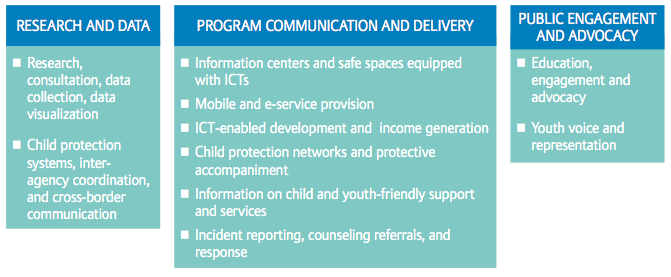
Ways that CSOs are using ICTs in their work with child and youth migrants.

Ways that CSOs are using ICTs in their work with child and youth migrants.

Though we were able to identify some major trends in how children and youth themselves use ICTs and how organizations are experimenting with ICTs in programming, we found little information on the impact that ICTs and ICT-enabled programs and services have on migrating children and youth, whether positive or negative. Most CSO practitioners that we talked with said that they had very little awareness of how other organizations or initiatives similar to their own were using ICTs. Most also said they did not know where to find orientation or guidance on good practice in the use of ICTs in child-centered programming, ICTs in protection work (aside from protecting children from online risks), or use of ICTs in work with children and young people at various stages of migration. Most CSO practitioners we spoke with were interested in learning more, sharing experiences, and improving their capacities to use ICTs in their work.

Based on Plan Finland’s “ICT-Enabled Development Guide” (authored by Hannah Beardon), the Modern Mobility report provides CSOs with a checklist to support thinking around the strategic use of ICTs in general.

ICT-enabled development checklist developed by Hannah Beardon for Plan International.

ICT-enabled development checklist developed by Hannah Beardon for Plan International.

We also offer a list of key considerations for practitioners who wish to incorporate new technologies into their work, including core questions to ask about access, age, capacity, conflict, connectivity, cost, disability, economic status, electricity, existing information ecosystems, gender, information literacy, language, literacy, power, protection, privacy, sustainability, and user-involvement.

Our recommendation for taking this area forward is to develop greater awareness and capacity among CSOs regarding the potential uses and risks of ICTs in work with children and youth on the move by:

  1. Establishing an active community of practice on ICTs and children and youth on the move.
  2. Mapping and sharing existing projects and programs.
  3. Creating a guide or toolbox on good practice for ICTs in work with children and youth on the move.
  4. Further providing guidance on how ICTs can help “normal” programs to reach out to and include children and youth on the move.
  5. Further documentation and development of an evidence base.
  6. Sharing and distributing this report for discussion and action.

Download the Modern Mobility report here.

We’d love comments and feedback, and information about examples or documentation/evidence that we did not come across while writing the report!

Read Full Post »

This is a cross-post from Tom Murphyeditor of the aid blog A View From the Cave. The original article can be found on Humanosphere. The post summarizes discussions at our November 21st New York City Technology Salon: Are Mobile Money Cash Grants the Future of Development?  If you’d like to join us for future Salons, sign up here.

by Tom Murphy

Decades ago, some of the biggest NGOs simply gave away money to individuals in communities. People lined up and were just given cash.

The once popular form of aid went out of fashion, but it is now making a comeback.

Over time, coordination became extremely difficult. Traveling from home to home costs time and money for the NGO and the same problem exists for recipients when they have to go to a central location. More significant was the shift in development thinking that said giving hand outs was causing long term damage.

The backlash against ‘welfare queens’ in the US, UK and elsewhere during the 1980s was reflected in international development programming. Problem was that it was all based on unproven theories of change and anecdotal evidence, rather than hard evidence.

Half a decade later, new research shows that just giving people money can be an effective way to build assets and even incomes. The findings were covered by major players like NPR and the Economist.

While exciting and promising, cash transfers are not a new tool in the development utility belt.

Various forms of transfers have emerged over the past decade. Food vouchers were used by the World Food Programme when responding to the 2011 famine in the Horn of Africa. Like food stamps in the US, people could go buy food from local markets and get exactly what they need while supporting the local economy.

The differences have sparked a sometimes heated debate within the development community as to what the findings about cash transfers mean going forward. A Technology Salon hosted conversation at ThoughtWorks in New York City last week, featured some of the leading researchers and players in the cash transfer sector.

The salon style conversation featured Columbia University and popular aid blogger Chris Blattman, GiveDirectly co-founder and UCSD researcher Paul Neihaus and Plan USA CEO Tessie San Martin. The ensuing discussion, operating under the Chatham House Rule of no attribution, featured representatives from large NGOs, microfinance organizations and UN agencies.

Research from Kenya, Uganda and Liberia show both the promise and shortcomings of cash transfers. For example, giving out cash in addition to training was successful in generating employment in Northern Uganda. Another program, with the backing of the Ugandan government, saw success with the cash alone.

Cash transfers have been argued as the new benchmark for development and aid programs. Advocates in the discussion made the case that programs should be evaluated in terms of impact and cost-effectiveness against just giving people cash.

That idea saw some resistance. The research from Liberia, for example, showed that money given to street youth would not be wasted, but it was not sufficient to generate long-lasting employment or income. There are capacity problems and much larger issues that probably cannot be addressed by cash alone.

An additional concern is the unintended negative consequences caused by cash transfers. One example given was that of refugees in Syria. Money was distributed to families labeled for rent. Despite warnings not to label the transfer, the program went ahead.

As a result, rents increased. The money intended to help reduce the cost incurred by rent was rendered largely useless. One participant raised the concern that cash transfers in such a setting could be ‘taxed’ by rebels or government fighters. There is a potential that aid organizations could help fund fighting by giving unrestricted cash.

The discussion made it clear that the applications of cash transfers are far more nuanced than they might appear. Kenya saw success in part because of the ease of sending money to people through mobile phones. Newer programs in India, for example, rely on what are essentially ATM cards.

Impacts, admitted practitioners, can go beyond simple incomes. There has been care to make sure that implementing cash transfer programs to not dramatically change social structures in ways that cause problems for the community and recipients. In one case, giving women cash allowed for them to participate in the local markets, a benefit to everyone except for the existing shop oligarchs.

Governments in low and middle-income countries are seeing increasing pressure to establish social programs. The success of cash transfer programs in Brazil and Mexico indicate that it can be an effective way to lift people out of poverty. Testing is underway to bring about more efficient and context appropriate cash transfer schemes.

An important component in the re-emergence of cash transfers is looking back to previous efforts, said one NGO official. The individual’s organization is systematically looking back at communities where the NGO used to work in order to see what happened ten years later. The idea is to learn what impacts may or may not have been on that community in order to inform future initiatives.

“Lots of people have concerns about cash, but we should have concerns about all the programs we are doing,” said a participant.

The lessons from the cash transfer research shows that there is increasing need for better evidence across development and aid programs. Researchers in the group argued that the ease of doing evaluations is improving.

Read the “Storified” version of the Technology Salon on Mobiles and Cash Transfers here.

Read Full Post »

At the November 8th Technology Salon in New York City, we looked at the role of ICTs in communication for development (C4D) initiatives with marginalized adolescent girls. Lead discussants Kerida McDonald and Katarzyna Pawelczyk discussed recent UNICEF reports related to the topic, and John Zoltner spoke about FHI360’s C4D work in practice.

To begin, it was pointed out that C4D is not donor communications or marketing. It is the use of communication approaches and methodologies to achieve influence at various levels —  e.g., family, institutional and policy —  to change behavior and social norms. C4D is one approach that is being used to address the root causes of gender inequality and exclusion.

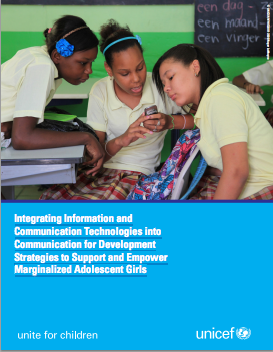
Screen Shot 2013-10-11 at 7.24.48 AMAs the UNICEF report on ICTs and C4D* notes, girls may face a number of situations that contribute to and/or are caused by their marginalization: early pregnancy, female genital cutting, early marriage, high rates of HIV/AIDS, low levels of education, lack of control over resources. ICTs alone cannot resolve these, because there is a deep and broad set of root causes. However, ICTs can be integrated systematically into the set of C4D tools and approaches that contribute to positive change.

Issues like bandwidth, censorship and electricity need to be considered when integrating ICTs into C4D work, and approaches that fit the context need to be developed. Practitioners should use tools that are in the hands of girls and their communities now, yet be aware of advances in access and new technologies, as these change rapidly.

Key points:

Interactivity is more empowering than one-way messaging:  Many of the ICT solutions being promoted today focus on sending messages out via mobile phones. However C4D approaches aim for interactivity and multi-channel, multi-directional communication, which has proven more empowering.

Content: Traditional media normally goes through a rigorous editorial process and it is possible to infuse it with a gender balance. Social media does not have the same type of filters, and it can easily be used to reinforce stereotypes about girls. This is something to watch and be aware of.

Purpose: It’s common with ICT-related approaches to start with the technology rather than starting with the goals. As one Salon participant asked “What are the results we want to see for ourselves? What are the results that girls want to see? What are the root causes of discrimination and how are we trying to address them? What does success look like for girls? For organizations? Is there a role for ICTs in helping achieve success? If so, what is it?” These questions need to be the starting point, rather than the technology.

Participation: One Salon participant mentioned a 2-year project that is working together with girls to define their needs and their vision of success. The process is one co-design, and it is aimed at understanding what girls want. Many girls expressed a feeling of isolation and desire for connection, and so the project is looking at how ICTs can help them connect. As the process developed, the diversity of needs became very clear and plans have changed dramatically based on input from a range of girls from different contexts. Implementors need to be prepared to change, adapt and respond to what girls say they want and to local realities.

****

Screen Shot 2013-11-23 at 10.41.22 PMA second study commissioned by UNICEF explores how young people use social media. The researchers encountered some challenges in terms of a strong gender approach for the study. Though a gender lens was used for analysis, there is little available data disaggregated by sex. The study does not focus on the most marginalized, because it looks at the use of social media, which normally requires a data connection or Internet access, which the most marginalized youth usually do not have.

The authors of the report found that youth most commonly used the Internet and social media for socializing and communicating with friends. Youth connected less often for schoolwork. One reason for this may be that in the countries/contexts where the research took place, there is no real integration of ICTs into the school system. It was emphasized that the  findings in the report are not comparable or nationally representative, and blanket statements such as “this means x for the whole developing world” should be avoided.

Key points:

Self-reporting biases. Boys tend to have higher levels of confidence and self-report greater ICT proficiency than girls do. This may skew results and make it seem that boys have higher skill levels.

Do girls really have less access? We often hear that girls have less access than boys. The evidence gathered for this particular report found that “yes and no.” In some places, when researchers asked “Do you have access to a mobile,” there was not a huge difference between urban and rural or between boys and girls. When they dug deeper, however, it became more complex. In the case of Zambia, access and ownership were similar for boys and girls, but fewer girls were connecting at all to the Internet as compared to boys. Understanding connectivity and use was quite complicated.

What are girls vs. boys doing online? This is an important factor when thinking about what solutions are applicable to which situation(s). Differences came up here in the study. In Argentina, girls were doing certain activities more frequently, such as chatting and looking for information, but they were not gaming. In Zambia, girls were doing some things less often than boys; for example, fewer girls than boys were looking for health information, although the number was still significant. A notable finding was that both girls and boys were accessing general health information more often than they were accessing sensitive information, such as sexual health or mental health.

What are the risks in the online world? A qualitative portion of the study in Kenya used focus groups with girls and boys, and asked about their uses of social media and experience of risk. Many out-of-school girls aged 15-17 reported that they used social media as a way to meet a potential partner to help them out of their financial situation. They reported riskier behavior, contact with older men, and relationships more often than girls who were in school. Girls in general were more likely to report unpleasant online encounters than boys, for example, request for self-exposure photos.

Hiding social media use. Most of the young people that researchers spoke with in Kenya were hiding social media use from their parents, who disapproved of it. This is an important point to note in C4D efforts that plan on using social media, and program designers will want to take parental attitudes about different media and communication channels into consideration as they design C4D programs.

****

When implementing programs, it is noteworthy how boys and girls tend to use ICT and media tools. Gender issues often manifest themselves right away. “The boys grab the cameras, the boys sit down first at the computers.” If practitioners don’t create special rules and a safe space for girls to participate, girls may be marginalized. In practical ICT and media work, it’s common for boys and girls to take on certain roles. “Some girls like to go on camera, but more often they tend to facilitate what is being done rather than star in it.” The gender gap in ICT access and use, where it exists, is a reflection of the power gaps of society in general.

In the most rural areas, even when people have access, they usually don’t have the resources and skills to use ICTs.  Very simple challenges can affect girls’ ability to participate in projects, for example, oftentimes a project will hold training at times when it’s difficult for girls to attend. Unless someone systematically goes through and applies a gender lens to a program, organizations often don’t notice the challenges girls may face in participating. It’s not enough to do gender training or measure gender once a year; gendered approaches needs to be built into program design.

Long-terms interventions are needed if the goal is to emancipate girls, help them learn better, graduate, postpone pregnancy, and get a job. This cannot be done in a year with a simple project that has only one focus, because girls are dealing with education, healthcare, and a whole series of very entrenched social issues. What’s needed is to follow a cohort of girls and to provide information and support across all these sectors over the long-term.

Key points:

Engaging boys and men: Negative reactions from men are a concern if and when girls and women start to feel more empowered or to access resources. For example, some mobile money and cash transfer programs direct funds to girls and women, and some studies have found that violence against women increases when women start to have more money and more freedom. Another study, however, of a small-scale effort that provides unconditional cash transfers to girls ages 18-19 in rural Kenya, is demonstrating just the opposite: girls have been able to say where money is spent and the gender dynamics have improved. This raises the question of whether program methodologies need to be oriented towards engaging boys and men and involving them in changing gender dynamics, and whether engaging boys and men can help avoid an increase in violence. Working with boys to become “girl champions” was cited as a way to help to bring boys into the process as advocates and role models.

Girls as producers, not just consumers. ICTs are not only tools for sending content to girls. Some programs are working to help girls produce content and create digital stories in their own languages. Sometimes these stories are used to advocate to decision makers for change in favor of girls and their agendas. Digital stories are being used as part of research processes and to support monitoring, evaluation and accountability work through ‘real-time’ data.

ICTs and social accountability. Digital tools are helping young people address accountability issues and inform local and national development processes. In some cases, youth are able to use simple, narrow bandwidth tools to keep up to date on actions of government officials or to respond to surveys to voice their priorities. Online tools can also lead to offline, face-to-face engagement. One issue, however, is that in some countries, youth are able to establish communication with national government ministers (because there is national-level capacity and infrastructure) but at local level there is very little chance or capability for engagement with elected officials, who are unprepared to respond and engage with youth or via social media. Youth therefore tend to bypass local government and communicate with national government. There is a need for capacity building at local level and decentralized policies and practices so that response capacity is strengthened.

Do ICTs marginalize girls? Some Salon participants worried that as conversations and information increasingly move to a digital environment, ICTs are magnifying the information and communication divide and further marginalizing some girls. Others felt that the fact that we are able to reach the majority of the world’s population now is very significant, and the inability to reach absolutely everyone doesn’t mean we should stop using ICTs. For this very reason – because sharing of information is increasingly digital – we should continue working to get more girls online and strengthen their confidence and abilities to use ICTs.

Many thanks to UNICEF for hosting the Salon!

(Salons operate under Chatham House Rule, thus no attribution has been given in the above summary. Sign up here if you’d like to attend Salons in the future!)

*Disclosure: I co-authored this report with Keshet Bachan.

Read Full Post »

This is a guest post from Anna Crowe, Research Officer on the Privacy in the Developing World Project, and  Carly Nyst, Head of International Advocacy at Privacy International, a London-based NGO working on issues related to technology and human rights, with a focus on privacy and data protection. Privacy International’s new report, Aiding Surveillance, which covers this topic in greater depth was released this week.

by Anna Crowe and Carly Nyst

NOV 21 CANON 040

New technologies hold great potential for the developing world, and countless development scholars and practitioners have sung the praises of technology in accelerating development, reducing poverty, spurring innovation and improving accountability and transparency.

Worryingly, however, privacy is presented as a luxury that creates barriers to development, rather than a key aspect to sustainable development. This perspective needs to change.

Privacy is not a luxury, but a fundamental human right

New technologies are being incorporated into development initiatives and programmes relating to everything from education to health and elections, and in humanitarian initiatives, including crisis response, food delivery and refugee management. But many of the same technologies being deployed in the developing world with lofty claims and high price tags have been extremely controversial in the developed world. Expansive registration systems, identity schemes and databases that collect biometric information including fingerprints, facial scans, iris information and even DNA, have been proposed, resisted, and sometimes rejected in various countries.

The deployment of surveillance technologies by development actors, foreign aid donors and humanitarian organisations, however, is often conducted in the complete absence of the type of public debate or deliberation that has occurred in developed countries. Development actors rarely consider target populations’ opinions when approving aid programmes. Important strategy documents such as the UN Office for Humanitarian Affairs’ Humanitarianism in a Networked Age and the UN High-Level Panel on the Post-2015 Development Agenda’s A New Global Partnership: Eradicate Poverty and Transfer Economies through Sustainable Development give little space to the possible impact adopting new technologies or data analysis techniques could have on individuals’ privacy.

Some of this trend can be attributed to development actors’ systematic failure to recognise the risks to privacy that development initiatives present. However, it also reflects an often unspoken view that the right to privacy must necessarily be sacrificed at the altar of development – that privacy and development are conflicting, mutually exclusive goals.

The assumptions underpinning this view are as follows:

  • that privacy is not important to people in developing countries;
  • that the privacy implications of new technologies are not significant enough to warrant special attention;
  • and that respecting privacy comes at a high cost, endangering the success of development initiatives and creating unnecessary work for development actors.

These assumptions are deeply flawed. While it should go without saying, privacy is a universal right, enshrined in numerous international human rights treaties, and matters to all individuals, including those living in the developing world. The vast majority of developing countries have explicit constitutional requirements to ensure that their policies and practices do not unnecessarily interfere with privacy. The right to privacy guarantees individuals a personal sphere, free from state interference, and the ability to determine who has information about them and how it is used. Privacy is also an “essential requirement for the realization of the right to freedom of expression”. It is not an “optional” right that only those living in the developed world deserve to see protected. To presume otherwise ignores the humanity of individuals living in various parts of the world.

Technologies undoubtedly have the potential to dramatically improve the provision of development and humanitarian aid and to empower populations. However, the privacy implications of many new technologies are significant and are not well understood by many development actors. The expectations that are placed on technologies to solve problems need to be significantly circumscribed, and the potential negative implications of technologies must be assessed before their deployment. Biometric identification systems, for example, may assist in aid disbursement, but if they also wrongly exclude whole categories of people, then the objectives of the original development intervention have not been achieved. Similarly, border surveillance and communications surveillance systems may help a government improve national security, but may also enable the surveillance of human rights defenders, political activists, immigrants and other groups.

Asking for humanitarian actors to protect and respect privacy rights must not be distorted as requiring inflexible and impossibly high standards that would derail development initiatives if put into practice. Privacy is not an absolute right and may be limited, but only where limitation is necessary, proportionate and in accordance with law. The crucial aspect is to actually undertake an analysis of the technology and its privacy implications and to do so in a thoughtful and considered manner. For example, if an intervention requires collecting personal data from those receiving aid, the first step should be to ask what information is necessary to collect, rather than just applying a standard approach to each programme. In some cases, this may mean additional work. But this work should be considered in light of the contribution upholding human rights and the rule of law make to development and to producing sustainable outcomes. And in some cases, respecting privacy can also mean saving lives, as information falling into the wrong hands could spell tragedy.

A new framing

While there is an increasing recognition among development actors that more attention needs to be paid to privacy, it is not enough to merely ensure that a programme or initiative does not actively harm the right to privacy; instead, development actors should aim to promote rights, including the right to privacy, as an integral part of achieving sustainable development outcomes. Development is not just, or even mostly, about accelerating economic growth. The core of development is building capacity and infrastructure, advancing equality, and supporting democratic societies that protect, respect and fulfill human rights.

The benefits of development and humanitarian assistance can be delivered without unnecessary and disproportionate limitations on the right to privacy. The challenge is to improve access to and understanding of technologies, ensure that policymakers and the laws they adopt respond to the challenges and possibilities of technology, and generate greater public debate to ensure that rights and freedoms are negotiated at a societal level.

Technologies can be built to satisfy both development and privacy.

Download the Aiding Surveillance report.

Read Full Post »

Screen Shot 2013-10-11 at 7.24.48 AMA paper that Keshet Bachan and I authored for Unicef is now available for your reading pleasure!

Here’s a  summary of what we talk about in the paper:

Social, cultural, economic and political traditions and systems that prevent girls, especially the most marginalized, from fully achieving their rights present a formidable challenge to development organizations. The integration of new Information and Communication Technologies (ICTs) to the Communication for Development (C4D) toolbox offers an additional means for challenging unequal power relations and increasing participation of marginalized girls in social
transformation.

We examine ways that ICTs can strengthen C4D programming by:

  • enhancing girls’ connections, engagement and agency;
  • helping girls access knowledge; and
  • supporting improved governance and service delivery efforts.

We reflect and build on the views of adolescent girls from 13 developing countries who participated in a unique discussion for this paper, and we then provide recommendations to support the integration of ICTs in C4D work with marginalized adolescent girls, including:

  • Girls as active participants in program design. Practitioners should understand local context and ensure that programs use communication channels that are accessible to girls. This will often require multi-channel and multiple platform approaches that reach more marginalized girls who may not have access to or use of ICTs. Programs should be community driven, and real-time feedback from girls should be incorporated to adjust programs to their needs and preferences. Mentoring is a key component of programming with girls, and holistic programs designed together with girls tend towards being more successful.
  • Privacy and protection. Every program should conduct a thorough risk analysis of proposed approaches to ensure that girls are not placed at risk by participating, sharing and consuming information, or publicly holding others to account. Girls should also be supported to make their own informed choices about their online presence and use of ICT devices and platforms. A broader set of stakeholders should be engaged and influenced to help mitigate systemic and structural risks to girls.
  • Research and documentation. The evidence base for use of ICTs in C4D programming with marginalized adolescent girls is quite scarce. Better documentation would improve understanding of what programs are the most effective, and what the real added value of ICTs are in these efforts.
  • Capacity building. Because the integration of ICTs into C4D work is a relatively new area that lacks a consistent methodological framework, organizations should support a comprehensive training process for staff to cover areas such as program design, effective use of new ICT tools in combination with existing tools and methods, and close attention to privacy and risk mitigation.
  • Policy. Programs should use free and open source software. In addition, child protection policies, measures and guidelines should be updated to reflect changes in technology, platforms and information sharing.

The paper was first shared at the 12th Inter-Agency Roundtable on Communication for Development in November 2011. It was then reviewed and updated in August 2012, and released in August 2013 under the title “Integrating Information and Communication Technologies into Communication for Development Strategies to Support and Empower Marginalized Adolescent Girls.”

Download it here!

Read Full Post »

Screen Shot 2013-09-13 at 5.09.30 PMYouth make up 17 percent of the world’s population and 40 percent of the world’s unemployed, according to the International Labor Organization. A number of factors combine to make sustainable, decent employment an enormous challenge for youth the world over, including low levels of education and technical skills, slow job growth, lack of information about available jobs, and difficulties accessing financial capital to start small enterprises. Decent jobs are especially difficult to find for rural youth, girls and women, and youth with disabilities.

In addition to the growth in youth unemployment, access to and use of mobile technologies (e.g., mobile phones, tablets, eReaders, radio, portable media players, SD cards) among youth worldwide is also expanding. This has created excitement about the potential of mobile devices to catalyze new approaches that address some of the constraints keeping youth from finding and sustaining decent livelihoods. Documentation and evidence of impact in the broad field of mobile technology and youth workforce development (mYWD) is lacking, however, meaning that it has been difficult to identify where mobile technology and youth workforce development initiatives overlap and where mobile may have the greatest added value.

After a year of hard work, last week we launched the mEducation Alliance’s Mobiles for Youth Workforce Development (mYWD) Landscape Review, an effort of the mEducation Alliance, The MasterCard Foundation, and USAID. The review maps out who is doing what and where, and to the extent possible, discusses evidence of what is working. The body of the report answers questions such as:

  • What organizations and programs are using mobiles to help overcome the barriers to employment for youth?
  • What type of programming has been implemented and how?
  • Where do prime opportunities exist for integrating mobile devices into youth workforce development programs?
  • What are relevant considerations related to gender and disability in mYWD programming?
  • What factors facilitate or hinder mYWD in specific contexts?
  • Are there any research findings that show the impact of mobiles on youth workforce development?

In addition, the annexes provide information on 80 initiatives and over 275 publicly available documents describing efforts that use mobile technology to support youth workforce development programming in five key areas:

  • Workforce education and training, including basic education, technical and vocational education and training (TVET), job skills training, apprenticeships, and life skills training (in and out of the classroom).
  • Employment services, including on-going job referral services that bring employers and workers together through job postings, job fairs, job shadowing, job placement, resume preparation, and coaching.
  • Entrepreneurship and enterprise development, including support programs for self-employment and business development, such as entrepreneurship training, mentoring, and financial services for loans and capital.
  • Demand-side policies and programs, including broad-based economic growth programs like national youth employment policies, value chain development, public works programs, wage subsidies, minimum wages, and tax breaks for employers (JBS International, 2013).
  • Addressing social norms, including programs that support effective participation of excluded groups, non-traditional skills training, safe training and employment spaces for excluded youth, and broader awareness campaigns.

There is an enormous amount of activity in mYWD, from small-scale, market-based start-up applications to mobile innovation hubs for youth entrepreneurs. The landscape review offers a summary of how mobile devices are used in the above five areas, draws out relevant lessons from the available literature and existing evidence base, offers advice from practitioners working in the field of mYWD, discusses the issue of scale and sustainability of mYWD programs, and offers a number of recommendations for furthering the field, including:

  • Creating a mYWD framework to aid in advancing the field
  • Further developing the evidence base for mYWD
  • Improving our understanding of what scale means
  • Focusing on gender and youth with disability
  • Improving knowledge sharing and collaboration
  • Building the mYWD evidence base through research and impact evaluation

Download the mYWD landscape review at this link!

If the topic is of interest, you can also join the mYWD working group by signing up here.

Read Full Post »

This is a cross post from Tessie San Martin, CEO of Plan International USA. It was originally posted on the Plan USA blog, titled Old Roads to New Directions. We’ll have Tessie, Chris Blattman and Paul Niehaus from Give Directly joining us in NYC for our November Technology Salon on Cash Transfers. More info on that soon!
.
There has been a lot of chatter in the mainstream media about unconditional cash transfers (UCTs) lately. See, for example, recent pieces in The New York Times and The Atlantic; and a much discussed segment in NPR. Most media pieces also mentioned an organization called GiveDirectly that does just this. The idea, touted as an important innovation in development, is simplicity itself: give cash directly to poor people who need it, without strings.

GiveDirectly leverages the low costs of mobile money to deliver cash transfers to poor households in select African countries. Initial results are encouraging. The money is not being spent on “sin goods”. On the contrary, it is being – for the most part – directed into productive investment that helps these poor families get ahead.

It is worth noting differences between UCTs and CCTs (conditional cash transfers). CCT programs provide cash payments to poor households, but they impose conditions on recipients before they get the money, mostly related to children’s health care and education (e.g. enroll the kids in school). UCTs put no such conditions. This is why there is such enthusiasm about UCTs. “No conditions” means such programs tend to be cheaper to administer. At least that is the theory. Note that UCTs and CCTs are similar in that neither has any conditions on how the money (once obtained) is spent.

This posting is focused on UCTs because of the current buzz around them. Although they are showing impressive results, let’s be realistic about the potential and limitations of UCTs. There is a lot that we do not know about the conditions under which UCT schemes lead to sustainable poverty reduction. Nor are we clear about how such programs can be scaled effectively. To the credit of organizations like GiveDirectly, they have partnered with Innovations for Poverty Action to carefully evaluate the results of their actions through rigorous randomized control trials.

It is worth noting that GiveDirectly is doing more than just sending cash to the poor; they are also spending resources carefully identifying, evaluating and selecting beneficiaries, and on monitoring and evaluation. This leads me to one of three points I think are worth making about UCTs.

First, the idea behind UCTs may be simple, but the more successful UCT schemes are complex. The “U” in UCTs does not mean that all you are doing is giving poor people money and stepping back. Research done by ODI and funded by the UK’s Department for International Development (DfID) suggests that UCTs work best when accompanied by information, education and communication efforts, careful targeting and selection of participants, and constant feedback and interaction. In other words, you need to consider who will be selected, what complementary efforts/services will enable and facilitate a good response, and you need to constantly invest in citizen feedback channels that allow you to learn and adapt as better information about program impact comes in. This is not much different than what a good INGO needs to do in order to deliver effective programming (UCT or not).

Second, the media coverage ignores how much variation exists among UCTs schemes. As the World Bank’s Berk Ozler has highlighted, there is a world of difference between “waking up one morning and finding $500 in your M-PESA account” (GiveDirectly) and the interventions being carried out in Liberia for unemployed youth, or what the DfID-funded ODI studies describe. Again, it is too early to tell what kinds of effects on poverty reduction we can expect from such schemes and we are miles away from understanding how scheme design details are related to sustainable paths out of poverty.

This leads me to a third set of questions: for whom are UCTs working? How do program results compare in urban vs. rural areas, for different income levels? We have years of data on CCTs, particularly a lot of data from Mexico, Brazil and other middle income countries where these programs have been scaled up nationally. Yes CCTs have problems (what development and social safety net programs do not?). But there is plenty of research demonstrating the conditions under which CCTs work. UCTs are much less well studied.

But the importance of these innovations, as Chris Blattman has already said, is that it forces (or should force) development organizations and donors to think about “top and bottom lines.” In other words, is what we are doing working? And even if it is working, at what cost? More importantly, we should always ask: are there other options for delivering the same (or similar) results more cost effectively?

As the CEO of a child sponsorship organization, I am drawn to the idea of UCTs. In fact, our initial child sponsorship efforts decades ago bear important similarities to today’s UCT programs. But Plan (like most other child sponsorship organizations) stepped away from such direct transfers, as concerns with sustainability and dependency grew. It is perhaps time to take a new look at the evidence around cash transfers, invest in reviewing results of past sponsorship programs and the lessons learned from that experience that may be applicable to a new generation of UCTs.

In the private sector, publicly quoted companies live and die by the share price, and the pressure to innovate and stay ahead is always present. For public charities like Plan, the rewards – and risks – of innovation are much less clear. But ignoring disruptive technologies and innovations, and failing to continuously push to experiment and learn will lead to irrelevancy. The jury may be out on UCTs, but they need to be taken seriously. GiveDirectly and others like it are pushing us all to do better.

Read Full Post »

According to the latest GSMA statistics, nearly 50% of people own a mobile phone in the developing world and almost 70% have access to mobile phones. With mobile access increasing daily, opportunities to use mobiles in development initiatives continue to grow and expand. The area of Mobiles for Development (M4D) has attracted investment from all sides, including mobile operators, entrepreneurs, investors and international development agencies – all working to generate social impact and improve wellbeing at the base of the pyramid. However, efforts to scale M4D initiatives and make them sustainable have largely failed.

Our July 25th NYC Technology Salon examined the topic of Scaling M4D. Lead discussants Corina Gardner from the GSMA’s Mobile Development Intelligence (MDI) unit and Sean McDonald from FrontlineSMS joined us to kick off the conversation, which was hosted at the Rockefeller Foundation.

Screen Shot 2013-08-14 at 10.52.13 AMThe Salon started off with key points from the MDI report “Scaling Mobile for Development: A developing world opportunity,” which highlights the issue of sustainable and scaled impact as the central challenge (and opportunity) in M4D over the next five years. Because the GSMA is commercially focused (it is made up of telecommunication industry members), business models that can achieve both revenue goals and added value to customers are a core concern. GSMA is interested in finding M4D business models that convince industry to re-invest and replicate. However not many of these examples exist.

Business models at the base of the pyramid (BOP) tend to be different than what the industry is used to. If scale is defined as the number of people reached with a service, and the population being reached has little money, then the only clear business model is via a huge customer base. Given that international development agencies also want to achieve scale with development programs, there is a good potential overlap in M4D. In order to achieve good impact, it’s critical to think through what BOP users want and need, and what offers real value to them for their limited resources.

Innovative vehicles are needed for investing in M4D. Currently, M4D financing tends to take two distinct paths: International Development funding and Venture Capital (VC) funding. Hiccups occur because the two operate very differently and do not always work well together. International development funds and processes do not move as quickly as technology-based funds. There is low tolerance for uncertainty and a desire for initial proof of potential impact, adoption and uptake. On the VC side, there is the desire for a light overhead structure modeled after Silicon Valley; however in African countries, for example, there is little existing infrastructure, meaning a heavier structure and a slower process. In addition, the exit strategy may not be clear. A worst-case scenario is when one of the two types of financing bodies is interested in investing, yet both walk away when they see the other at the table.

Though very few examples of M4D at scale exist, some elements brought up during the Salon that need to be considered include:

User-centric design. It is critical to understand the community and the end user’s needs, demands, and payment capacity. Both the private sector and international development agencies have existing approaches to developing M4D initiatives that focus on understanding local context and consultation and engagement with users, but the two sectors use different language to describe these approaches and they often talk past each other without connecting on their commonalities. According to one discussant, the best and most user friendly design is that with the lowest barrier to access, the simplest technology, the cleanest interface and configurability, so that people can build in more complexity if needed. These types of design will also tend to be the most replicable, an important element of scale. Iterative design and getting prototypes in front of users is needed to get their feedback, and this can be a challenge in M4D programs if they are being done within typical international development cycles of planning and funding.

User data. Users at the base of the pyramid are both financially poor and “data poor” and companies cannot create products for users that they know nothing about. Mobile can help gather data on user behaviors. This data can be used to inform business models, create products and services of value for BOP users, and to create revenue streams. One key question is that of how the data can be better used to benefit the BOP more broadly.

Understanding what ‘scale’ means for different parties. For mobile operators, scale is important because it is linked to numbers, volume and revenue. However this is not the element that matters for those working in international development, where impact may be a more important measure of success. Uptake of an M4D service may be due to advertising, rather than because it has a measurable impact on the life of a user. The difference needs to be understood and better analyzed and documented before success, scale, or impact is claimed. One measure of success is improved and sustained functioning of broader systems — and mobile may only be one small piece of a well-functioning development program, information ecosystem, or service delivery effort. As one discussant noted, “I don’t care if someone uses mobile banking or branch banking, so long as they are banking.” The mobile device may not be the central piece; it may be an additional access point for people who were formerly left out of these systems. In addition, “reaching” people is different than “influencing” people, and the latter will likely have more of an impact. Trust is critical in these efforts to influence, and often that takes more than a mobile connection.

Infrastructure.  The case for improved networks, coverage, and other infrastructure (electricity, for example) needs to be made to operators and government. The urban-rural divide when it comes to infrastructure is a global issue, not just one in so-called ‘developing economies.’ For example, using 4G and a credit card, someone can order a product on Amazon from the DRC, however Amazon will not be able to deliver that product. Similarly, someone can report poor government services via a mobile phone, but until infrastructure and governance improves, there may be no response. Poor infrastructure in rural areas is an issue globally.

Payment. Operators incorrectly give away free SMS to NGOs, said one discussant. Instead, having to pay a small amount (either as an NGO or an end user) means that much more care is taken in terms of what is communicated. “If it costs 5 cents to send a message, you will not spam people.” This is also critical for building in sustainability, and where the best ROI tends to be found in technology influenced programming. More thought and research is needed regarding payment and sustainable, scalable models.

Due diligence. A challenge in the M4D space is the high incidence of people seeing a problem, thinking no one has addressed it, and jumping in to build their own solution. This wastes money and time and creates churn. It is important to do research, layer, and build from other people’s ideas and existing solutions. One problem with the idea of due diligence, according to a participant, is that it means different things to different people. In technology it means “you have a problem, what is the cheapest and most robust solution,” but in the field of international development, context discovery takes a very long time and requires multidisciplinary knowledge and awareness that goes far beyond technology. There is also a need to consider whether technology (as opposed to non-digital efforts) is the most viable solution for the information and communication situation. ‘Horizontal due diligence’ (looking at partnerships) and due diligence with regard to maximizing systems are also needed.

Monitoring and Evaluation (M&E). M&E is currently sub-par on most M4D initiatives, said one participant. Organizations are often doing their own M&E rather than having a third party conduct external M&E.  There is a lack of comparative data on M4D programs also, and often M&E is attempted at the end of a project rather than built in from the start. A greater presence of academia is needed in M4D work, it was noted, and we also need more qualitative data, as currently the emphasis is on the quantitative data that are collected more easily via mobiles. One benefit in M4D programs is the ability to digitize and intelligently store data from the very start. This is the way to show scale and impact, said another participant. However data need to be well-used and refined, and available to the right person or people at the right time. Greater respect and understanding of privacy and ethical issues along with helping people to understand and steward their users’ data are also critically important and need more attention.

Salons function under Chatham House Rule, thus no attribution has been made. Sign up here to join the Technology Salon mailing list to receive invitations for future events in NYC, DC, San Francisco, London and Nairobi!

Read Full Post »

« Newer Posts - Older Posts »