Feeds:
Posts
Comments

Archive for the ‘youth’ Category

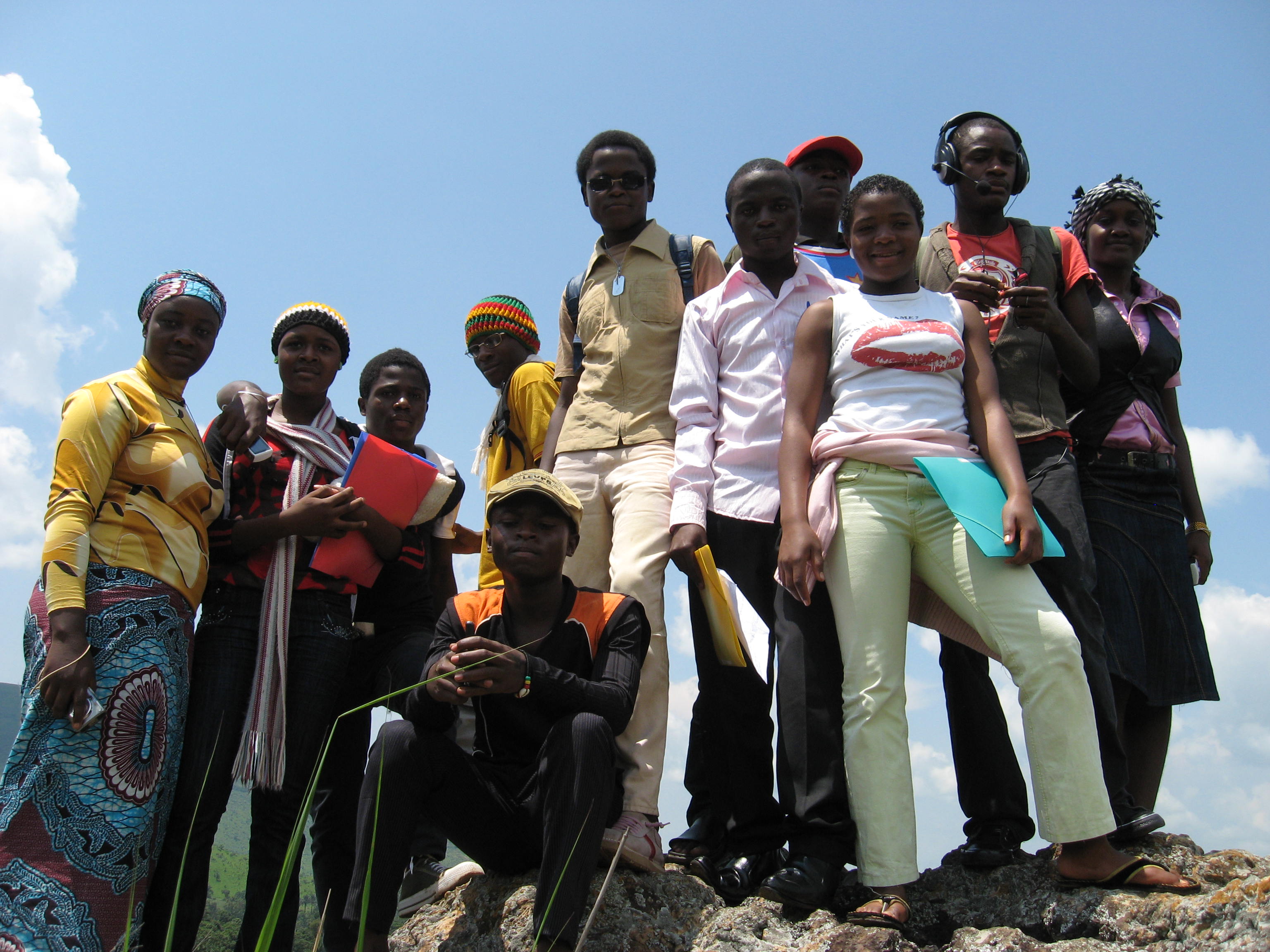
Youth map toilets in Mathare. (From Map Kibera's Blog)

I first heard about Map Kibera quite awhile ago. Looking through old blog posts, I’m thinking it’s been about 2 years. Somehow, probably through blogs and Twitter, we connected and made plans to work together on the Youth Empowerment through Technology, Arts and Media (YETAM) project that I was coordinating and where we (Plan) had been wanting to use digital mapping but didn’t have a clear understanding of how to do it technically.

Around the same time, Plan’s program team in Kenya was connecting with Map Kibera through the Institute for Development Studies (IDS), where Robert Chambers (the guru/godfather/grandfather of participatory rural development approaches) and co. were also thinking about how digital mapping fits into participatory development. Sammy Musyoki, Plan Kenya’s program support manager who is also affiliated with IDS, was already engaged in some work around the use of mobiles in community led total sanitation (CLTS) work. In November 2010, Map Kibera became part of a research project, where Sammy and Evangelia Berdou (also from IDS) began looking at “the challenges faced when applying the methodologies of participatory technologies to participatory development and aid.”

Importantly, the research is not ‘extractive,’ research, eg, the researchers are not coming into Kibera to pull information out and leave, publishing their work for academic circles and never bringing the insights back to the community for discussion and interpretation.

As Map Kibera Trust co-founder Mikel Maron wrote, “With IDS, all of the interviews and meetings were facilitated by Sammy, leading up to a gathering of everyone to reflect on the results. This was incredibly valuable for everyone to share their perspectives and understand others. We thought of it as Group Therapy.” (Note: the posts written during the research are collected here – more good reading.)

He continues, “Additionally, we organized an amazing inquiry led learning session with Aptivate, which contributes to creating a guide-book for future trainings.” (Note: I was following the Twitter stream during the sessions that Aptivate conducted, and I highly suggest checking this organization out.)

While the research was taking off, Plan Kenya and Map Kibera also started working together on both the YETAM project as well as on a Community-Led Total Sanitation (CLTS) program in Mathare.

The learning from the IDS research, together with Plan and Aptivate’s input around facilitating participatory development approaches meant that the Mathare project started off differently than the Kibera project did. The approach was a bit slower, and started by really engaging the community. As Jamie Lundine (current director of Map Kibera Trust) writes in her post Whose Map, “Map Kibera did not begin as a participatory development project. The initial project was an attempt to introduce open source technology – namely, OpenStreetMap – into a community that had previously not had a publicly accessible map (for all intents and purposes it was “unmapped”). Initial mapping of Kibera was done quickly (in 3 weeks) and local leaders, including administration were consulted but not necessarily engaged in the process.” The quick growth of the project was partly fueled by interest and support from the international community due to the innovative nature of the project, rather than by demand from the community for a rapid implementation.

She continues in the post to describe the participatory process that was used in Mathare – eg., lots of meetings, discussions and participation and offline activity before any mapping even started. The approach in Mathare was to really engage the community and local organizations and structures from the outset, and to “lead from behind”. One of the neat results from this approach is the fantastic Mathare Valley Blog, set up and maintained by the youth, and a great place to go to hear about what’s happening in Mathere directly from residents.

From Jamie’s post New Media in Mathare:

“To provide the participants with some ideas about other options in terms of new media, some basic training on the use of the Ushahidi Voice of Mathare platform was provided to some of the Map Mathare project participants. The Voice of Kibera team conducted a number of hands-on trainings with 8-10 Mathare participants. The participants were interested in the platform and learning from the experience of the Voice of Kibera members, but did not take-up the software as we saw in Kibera. We therefore agreed to provide technical support for the blogging platform as a central online information focal point for the Map Mathare initiative. We were careful not to impose the original ideas of New Media in Mathare and have adhered to the original methodology agreed upon by the team with support from Plan Kenya and CCS. This was a community driven approach from which the technical and coordination team “leads from behind”. We are and continue to be flexible when it comes to programming in Mathare.”

Map Kibera has worked with a broader group of Plan Kenya staff also to build capacity around participatory mapping so that various on-line and off-line mapping tools could be considered in Plan Kenya’s future efforts, for example, these suggestions by the Plan Kenya staff: mapping and identifying the hot spots of child abuse, use of SMS for communication with hearing and speech impaired within the community, using reports and sharing the same information to various media channels, program monitoring, a governance tool for enhancing social accountability as well as tracking projects, involving children in participatory community mapping, using blogging as a tool for youth to document governance issues, and to document and share participatory activities that Plan already undertakes, such  as transect walks and participatory situational analyses.

Map of toilets, water points and open defecation areas in Mathare. (from Map Kibera's blog)

Today, almost 2 years after our “first contact”, Jamie wrote a motivating post that highlights how things can work when development, technology, academia, communities and local partners work together openly.

“Mapping the sanitation in situation in Mathare has been a process of continual learning. When we began the Map Mathare pilot project in December 2010, we employed a dynamic methodology to engage young people and the community issues in the approximately 20 villages in Mathare. My colleague Primoz and I worked closely with the Plan Kenya team to design a training programme and over the past 8 months, have learned a great deal about working with youth and communities to “make the invisible visible” that is – to document tacit knowledge and turn the experience of communities and young people into information that translates across social and geographic boundaries.”

Through these collaborations, everyone benefits and learns. Plan is learning how to support communities to use new technologies in community development work. Plan staff is also developing capacity to innovate in Plan’s work by becoming more familiar with different technology tools and ways of working. Through blogging and sharing and face-to-face meetings, this learning is making its way through the organization, touching on a variety of levels, sparking slow and steady changes in how a huge organization operates. The Map Kibera team is learning more about participatory methodologies in development, which carries into their work and how they talk about their work also. IDS is learning how the two mix, and offering an academic overview within theoretical frameworks and advancing the field of knowledge around participation technology and participatory development. The community benefits by being fully engaged in a process that has positive and lasting impact.

Jamie writes:

“The team of mappers, videographers and bloggers– now about 15 in number – who have stuck with us since December of last year, can really tell you what empowerment means to them. Not only have they put themselves and their community on the map – a process that evokes a great sense of pride and responsibility. Some of the young people did not know how to read a map before…. 

Putting yourself on the map is the first step toward demanding recognition and everything that comes along with it – including basic human rights (the right to a clean living environment, the right to health) and by extension – the right to access services provided to the rest of Nairobi. Through our programme, young people are given the chance to represent their community through the medium of a map. Standard GIS symbols break down the barriers that separate youth and elders – rich and poor – and allow these young people to express themselves on a level playing field. Looking at the maps,  who would know they were generated by youth from the informal settlements?”

This is a good example of various disciplines and sectors working together with youth and community members to take an initiative forward in a very positive way.

It’s proof that coordination, cooperation and bridging across all these areas is not only possible, it is vital if efforts are to be of any real and sustained impact.
Read Full Post »

Last week’s conference: “The Power of Information: New Technologies for Philanthropy and Development” hosted by the Indigo TrustThe Institute for Philanthropy and The Omidyar Network was somewhat of a ‘who’s who in ICT4D’. It provided an incredible opportunity to hear and discuss what some of the best minds are up to with regard to technology and innovation in development. (Check the conference videos here for more.)

The purpose of the conference was to bring innovators and donors together. In addition to the panelists, many other leaders in the field of social media, ICT4D and innovation as well as a variety of donors and funders were around to chat with during breaks, lunch, dinner and drinks. Conference topics included transparency, accountability and democracy; health; finance and rural development; youth empowerment and education; human rights; and fostering innovation and enterprise.

I got a lot out of the conference, but want to focus on two areas of specific interest:

  1. Balancing innovation (inspiration) and process (sustainability)
  2. Building bridges between new technologies and existing initiatives

Balancing innovation (inspiration) and process (sustainability)

Philip Thigo from SODNET started the day off with an introduction and a great set of questions* to explore around ICTs and development.  I found myself nodding and frantically typing and tweeting to catch and share as many of them as I could:

  • Are technologies just tools or are they the engine of transformation?
  • Are they universal? Can we cut and paste them from one context/culture to another?
  • Is it about connecting old and new tech for use by marginalized people and groups? Should we be creating interfaces between new and old tech?
  • What about power hierarchies with relation to access? Will disempowered communities automatically adopt technology and turn its use and information into action?
  • What about the challenge of laws and limitations on technologies and the selective enforcement of these laws by the state with regard to access, ownership, and control of information and knowledge?
  • What are the accountability, ethics and responsibilities of technology activists and developers? How are we evaluating our actions and decisions and their impact on people lives?
  • Is it worth taking the risk?

Philip emphasized the need to fail fast, learn fast, and move fast when working in this area. “We need to think about people first, not technology first,” he said. “We should strike a balance between supporting innovators (inspiration) while at the same time strengthening process (sustainability).”

I couldn’t agree more.

Though there is a sense (and a couple panelists, including Philip, commented) that anyone can use social media, that people don’t need training, and that ideally you should just hand over the tools and let people get to work, I do think that ‘striking a balance’ is critical, especially when talking about funding and implementing particular initiatives that are seeking specific outcomes related to development. This isn’t to say that we need an over orchestrated process, but I do think it’s important to remember that not everyone can pick up technology as easily as those who are immersed and surrounded by it 24/7.

Yes, technology needs to be ‘demystified’ and tech is getting simpler and simpler, but based on experience working with staff, community leaders, local organizations, youth and teachers in rural Benin, Kenya, Mozambique, Senegal, Mali, Cameroon, Rwanda and Ghana, it’s clear to me that not everyone can just jump in and go. Not everyone speaks English, not everyone knows about coding, not everyone has used technology before, not everyone feels confident even if they are very curious, and some people want additional support to get going.

In addition, ICT4D-type projects need good overall design, beyond the technology piece. They need a good think-through in terms of sustainability (for programs that are meant to endure), local context, unintended effects, privacy and protection (especially if they are human rights related, work with vulnerable people or could put users in any kind of risk).

As many would agree, the tech is only 10% of it. There is a trend toward developing more detailed user manuals and guidance on what to think about when designing initiatives using new tools like Ushahidi because of demand for this from users. I do think that donors, implementers and innovators need to keep that in mind, and be sure that they are planning for and funding that other 90% [eg, all the ‘boring’ stuff that makes the 10% of the ‘cool and -exciting’ stuff work – like good planning, core staff, logistics, monitoring and evaluation or as the link I mentioned above says, outreach, branding, translation, verification, documentation, integration with other systems….]. I also think donors should be supporting the local strengthening of people and organizations’ skills, capacities and strategic thinking via funding to innovation and tech hubs and support to universities and other kinds of opportunities for further education, training and experimentation in the area of technology for people in ‘developing’ countries, starting from local context and local realities.

Building bridges between new technologies and existing initiatives

Some major transparency initiatives are gaining more and more traction at the moment, for example the recently-launched open government program led by the US and Brazil (and rejected by India) and the International Aid Transparency Initiative (IATI). In addition, there are some really interesting locally led transparency initiatives happening all over the place. The panel on Transparency, Accountability and Democracy highlighted a number of tech tools and platforms that are being used to enhance this area of work (including  Frontline SMSMy Society, and Huduma) and some broad thinking around the topic by Owen Barder, who highlighted various aspects of aid transparency and the giant disconnect in terms of what the general public, governments receiving aid, and donors want to know about aid efforts.

Following the panel, a great question came up from Martin Tisne from the Transparency and Accountability Initiative (TAI).  He said that the transparency and accountability field has been around and funded for many years but it is atomized. He wondered how the different initiatives represented on the panel all fit into the broader picture. Owen agreed that atomization is a very serious concern. “The answer to it is open standards that enable people to take information from all these sources and mash it up and make it available to everyone. This is ‘unsexy’ and doesn’t photograph well but it’s potentially revolutionary in the way that the web has revolutionized our lives.” Owen emphasized the need for donors to invest in areas that maybe don’t seem so innovative and exciting, but that are critical to moving the field forward. (This goes back to the first point – the need to balance innovation and process, and funding for the other 90%).

Stephan King from the Omidyar Network continued during the donor panel to talk about transparency and accountability. He added that “tech tools are not a panacea,” and asked how technology can supplement and complement the work that many organizations are already doing. “Many charities and non-profits don’t know how to use technology,” Stephan said, commenting that there is a role for Omidyar and others to help organizations realize the benefits and utilities of technology to help reach scale, innovative solutions, and to provide feedback loops. “Technology is important in the area of transparency and accountability because it can engage citizens,” he said. “It allows people to access information in a way like never before.”

Martin (from the Transparency and Accountability Initiative) followed, saying that TAI is a collaborative of major funders who are looking at the whole field of transparency and accountability. The field as a whole is about 20-25 yrs old, he said, and is currently very atomized. “We need, as funders overall, to ensure that this growing and exciting community of practice [technology in transparency and accountability] isn’t just another atom within the overall transparency and accountability movement,” he said. “How can technology feed and nurture this overall community of practice? Technology has potential to do something really exciting in our field, to solve problems we’re really poor at, such as scale.” He also talked about the potential for tech to help engage citizens. “This field is and has been monopolized by policy wonks in the cities, in the capitals, but we have an opportunity to reach citizens and that’s really exciting.”

“The vast majority of technology and accountability groups — 95% — however, don’t harness the potential of mobile technologies really strategically, yet the potential is exciting if they did.” Martin asked how we can link organizations with fantastic grassroots networks and/or that really know how to use media with those that are using technology. “If we can crack this complex bridging issue of how to bring the transparency world and the tech world together we will have achieved a huge amount.” It’s not enough to bring government groups and tech groups to the table and think it will happen overnight, he said. “What we are trying to do is to focus on people, on entrepreneurs, on individuals who really understand the problems and the solutions that tech can provide as well as focus on organizations. We find a lot of program officers who know what tech can do or a CEO who has a vision of what tech can do but it doesn’t percolate throughout the organization.” TIA wants to bring together the people who understand the problems together with those who may have the technology solutions. Martin’s idea to bring technology folks together with transparency and accountability folks together to make “tech babies” was a big hit….

These points also resonated strongly with me as someone working in a large development organization that is looking at how to integrate new technologies into its work, and being one of few people within the organization with the specific responsibility of bridging programs and new technologies. It’s  simultaneously comforting and frustrating to know that organizations typically struggle with this and also good to know that some donors are aware of the challenge and willing to support it to be overcome.

Philanthropy and social media

In closing this too-long post, I just want to mention that as background material, Indigo Trust and the Institute for Philanthropy produced an impressive paper called Philanthropy and Social Media, which gives an overview of social media, how it’s being used for communication and social impact, and why social media is important (with separate sections on communication messages, knowledge sharing and reporting, overcoming barriers to inclusion, connecting people, improving service delivery, scaling fast, fundraising, transparency and accountability). The paper also summarizes some conversations with investors in social media. Two charts I find extremely on target are the “tips and advice on investing in social media” and the “roadmap for engaging with social media.” They are both simple and well laid out, and would be useful not only for donors but for anyone who is engaging with social media in development work.

Many thanks to Will and Fran at Indigo Trust for the invitation to participate in the conference!

*See also Charlie Beckett’s great overview of the conference and the key questions he pulled out from the day.

Read Full Post »

As you may have read in my previous posts, I participated in Making Cents International’s Global Youth Economic Opportunities Conference from September 7-9. Some of the most interesting points for me were the emphases on seeing youth as assets, specialized and focused efforts with girls, and the gaps and bridges that technology can create and span for girls.

A last point I want to bring up is the need for ‘soft skills’ and ‘enabling environments’ in addition to the specific ‘hard skills’ like vocational training, specific job skills, computer training, etc. The importance of ‘soft skills’ and ‘enabling environments’ was  mentioned in pretty much every session that I attended.

Soft skills. It seems obvious, but in addition to knowing how to cut hair, fix a car, run a small business, develop computer software, repair mobile phones, do construction, or work at a store, an office, a factory or whatever, young people need to learn ‘soft skills.’  Soft skills include good attitudes towards work and learning, good interpersonal relationships, self-esteem and confidence, decision-making and all kinds of skills that don’t only help youth succeed at generating income, but that help them negotiate a variety of situations in their lives. Sometimes these are called ‘life skills’, and they are critical elements of holistic youth focused programs.

Most youth development approach programs, whether aimed at economic empowerment or striving for other goals, are about helping youth strengthen these types of skills. At the personal level, most of the work I’ve been involved in over the past several years is along these lines, but via the use of technology, arts and media and involvement in youth-led advocacy or youth-led community development activities. The results are similar however —  youth learn to have self-confidence and they feel valued, they have a sense of group belonging and safety, they learn to speak in public, interact confidently with each other and with adults, they find a space where they can say what they think without being shy, boys and girls learn to work together and better understand each other, and youth learn to negotiate and broker with those who have power. Combined with financial literacy, specific job training and skills related to work and business, these skills are what make young people more successful when trying to earn a living, whether it’s in the formal or informal sector. They also help youth to navigate and overcome some of the challenges and barriers that they encounter. In addition, having trusted adult mentors who they can turn to for support can help ease their way.

Enabling environment. Youth can learn all the soft skills and vocations they want, but if the environment that surrounds them is not conducive to their well-being, if adults do not respect and value them, if there are no broader supportive systems and opportunities for youth to link into, they will be primed for success, but they may not reach it, and this can lead to frustration and apathy. For this reason, the ‘enabling environment’ is a critical piece of these programs.

Manjula Pradeep from Navsarjan Trust talked about the variety of skills and aspects that they focus on with adolescent girls and young women, and their communities, including:

  • Sense of self
  • Identity
  • Solidarity
  • Sense of place
  • Finding self and others who can be supportive
  • Changing and bringing women up to another level in the family and the community
  • Vocational skills
  • Leadership skills
  • Focus on rights and protection
  • Support and acknowledgment to the other elements of their lives
Youth Build and Catholic Relief Services shared their short document called Rebuilding Lives and Livelihoods, which gives a clear set of promising practices for working with gang-involved youth. Each organization present at Making Cents had its own way of looking at or describing soft skills and enabling environments, but every successful program approach seemed to emphasize the need for both.

The development of soft skills goes hand in hand with seeing youth as assets and people in their own right, and with understanding that mere vocational training, or simply owning a mobile phone will not be enough for many adolescents and young people to achieve success. The focus on enabling environments shows an awareness that the context in which young people grow up is complex and needs to be seen as such, and that all levels and sectors need to be working together to support healthy, thriving and successful young people — from the individual youth, to the family, community, district, national and global levels, and from the cultural to the educational to private enterprise and government and religious and civil society.

Read Full Post »

One of the great panels at last week’s Making Cents International’s Global Youth Economic Opportunities Conference was on technology and youth economic opportunities. (See my previous posts on seeing youth as assets and barriers girls face to economic opportunities, and my next post on soft skills and enabling environments).

In addition to the specific panel, I paid special attention throughout the conference for any mention of technology, and I asked some questions in panels that were not related to technology to see if people thought technology was an enabler for adolescent  girls or if my perception is biased because it’s my area of focus.

What I heard is that in regard to girls and technology, there are large gaps as well as areas where technology can serve as a bridge for girls to achieve economic opportunities. As Wayan Vota from Inveneo noted, globally, women are 20% less likely to have a mobile phone than men and in Asia, that number rises to 37%. How can we address the ‘girl gap’ especially in terms of the poor and disadvantaged 10% of adolescent girls who are the most marginalized of all? How can we help bring economic opportunities to this group?

Girl-focused programs. In terms of helping girls feel more comfortable accessing and learning about technology, Peter Broffman from Intel brought up the importance of safe spaces. Intel’s Learn program creates spaces that are ‘girls only, where they are not competing with boys,’ he said. ‘It takes a concerted effort to construct comfortable environments where girls can explore technology.’ We have special days for girls and girls only projects. Girls tend to be more comfortable creating and using technology in that kind of environment,’ he said. Vota agreed, saying that one simple way of making spaces more amenable to girls is by having all the computer screens in a computer lab or cafe facing the public, so that it’s easy to monitor what is being done on them (eg., so that accessing ‘adult’ content is impossible to hide). Katherine Lucey from Solar Sister, in a separate panel, also referred to the need for programs that are specifically designed for girls and women. She described a microfinance program operating in one of the same communities as Solar Sister where 90% of the participants are male. ‘Solar Sister is a program aimed at women because the existing programs are biased towards men.’

Girls and women in rural areas. David Mukaru from Kenya’s Equity Bank said that the bank reaches more women and girls simply because  the majority of rural population in Kenya is made up of women. Many men have migrated to urban areas. ‘Through the financial education which the bank embarked on 3 years ago, we addressed technology fears. We were able to train the women, create awareness on bank services, train them how to use technology, how to interact with bank officials. We also introduced technology to the rural agency. The agency uses a mobile. The agency in the rural area is the normal shop keeper and he has become an agent of training and penetrating in the rural areas. This guy is in the rural shop and he trains the woman how to use these technologies to do banking.’

Mobility.  Mobile tech can really be the great leveler, according to Jacob Korenblum from Souktel. It can really help to close gender gap.  ‘Many of the young women who use our services come from traditional families that would not allow them to go door to door to find employment. They are not allowed to go around town to find job opportunities. So their ability to find jobs is limited. But since many young women have mobile phones, within the household, as a young woman via Souktel you can start looking for work and even secure a job interview from home. Your family is comfortable with how you are doing this but you are still asserting yourself, you are taking that step to get a job.’

Another program that Souktel offers is support for women entrepreneurs via mobile phone groups. ‘Through a closed mobile phone peer network, women can ask questions to each other. In Iraq for example, women cannot travel, but they want to consult with other women on a business they are starting – they can send a question out to peers who can respond with advice. It’s like a list-serve via mobile phone. For female business owners, being able to consult peers via mobile is tremendous. It’s safe for them, it’s empowering. Our studies have shown this. We’ve been able to help women play catch up and access the same resources that men have, just through a different channel.’

Access is not enough. Raquel Barros from Lua Nova, a program that trains marginalized girls in Brasil to do construction work, said that in Brazil mobile phones are very expensive and they are a high status asset for the girls she works with. But ‘access is not sufficient for the phone to be used for something good or useful,’ she said. ‘It’s important to access the mobile phone but also important to do more education about how you can use the mobile phone. All our girls have Orkut but they don’t know their email. They have computers that they can use and we started to take some photos and that kind of thing, but the girls don’t always access and use mobiles and Internet in a good way. Access and education are both important.’ [Plan did some interesting research on girls use of technology in Brazil that confirms this also – see the Annex to Chapter 4.]

Technology as an economic enabler. Technology is everywhere according to Manjula Pradeep from Navsarjan, a trust that works with low-caste girls in India, “In Gujarat we have maximum mobile owners. The mobile is a status symbol, yes. In a family you can have 3-4 people owning a phone. And it does mean a lot when young women have mobiles, you can do your marketing, you have access to people, people can reach you on your mobile, you can put it on your shop board so people can reach you on mobile.’ In addition, computer training can allow girls to replicate and train others on computer skills. ‘A lot of girls have done computers; they are running classes for the children because children are not taught computers in schools. So the girls can teach this.’ However, as David Mukaru from Equity Bank in Kenya had noted earlier during the technology panel, ‘the challenge is access to a power supply.’ Not to mention other infrastructure. ‘When we work with the tribal populations, they have no access to transport, so how can you ever get a computer repaired?’ Some young people who Pradeep works with have started their own studios. ‘They start by buying a camera — it’s not cheap but they save and buy it. We have a lot of wedding ceremonies and rituals that happen that people can do a lot of video projects.’

Wearing pants. But as Pradeep said, technology can also bring about other personal changes. ‘Ultimately, your entire outlook changes with tech. Women with computers or cameras tend to wear trousers and shirts. I’ve seen women — if you get married you only have to wear saris, you can’t get out of a sari, you struggle with that identity — but these women are wearing trousers and using a camera. Sometimes they even cut their hair! Even just using a camera or cell phone,  you will see women changing. Technology really changes their role. To bring change, mobilizing the community is important but technology itself can also change the role of women.”

Interesting indeed!

Read Full Post »

Assets, contributors, thinkers and doers, not problems to be solved.

Making Cents International’s Global Youth Economic Opportunities Conference happened last week (September 7-9). The focus of the conference was ‘Breakthroughs in Youth Enterprise, Workforce Development, Financial Services and Livelihoods.’ I attended most of the plenary sessions and followed the Adolescent Girls and Young Women track.

The main messages I took away from the 2 and a half day conference included:

Seeing youth as assets

The youth development approach has been around for quite a while, and some of the organizations and people I respect the most and have learned a lot from are those that use this approach with young people (shout out to one of my youth development approach mentors, Jeremy Phillips).  Still, it’s encouraging to hear big agencies like USAID talking about the youth development approach, emphasizing the importance of youth participation, seeing potential in the youth population, and working with youth as assets and valuable people in their own right with something to offer rather than fearing the ‘youth bulge’ and using a heavy-handed approach to control, contain and suppress young people, their voices, their needs and their rights.

Ambassador Donald Steinberg, deputy director of USAID, spoke on Wednesday morning, saying ‘If you stop looking at people as a development challenge or a threat, and instead see people’s potential to be something great, your perspective totally changes.’ USAID is doing their first ever youth in development policy and is working on integrating youth concerns into their 6 focus areas.

According to Clare Ignatowski, USAID’s Senior Advisor on Workforce Development and Youth, the agency’s positive youth development approach includes youth engagement and valuing youth as assets, ensuring multi-stakeholder participation, offering second chance opportunities for youth, and ‘engendering’ youth work. The idea is that by empowering youth and helping them have basic skills and opportunities; a sense of safety, structure, belonging and membership; self-worth and valuable opportunities to contribute; independence and control over own lives; a sense that they are competent and able to do something with their lives; and solid and supportive relationships – we can help young people make something out of their lives.

What role can technology play?

The youth and ICTs panel mentioned a few of the many areas where new technologies can be integrated in youth development work. To begin with, as moderator Wayan Vota from Inveneo mentioned, technology is one area where youth are viewed as experts over adults. They are often seen as thought leaders in ICTs. Via mobile phones, youth are starting to open bank accounts, according  to David Mukaru from Equity Bank in Kenya, and this is demystifying aspects of finances and banking, even in rural and slum areas.

There are challenges though, as Lia Gardner from TakingITGlobal reminded. ‘ICT is not a self-fulfilling circle; you can share great ideas but what about taking online connections into the offline world?’ Jacob Korenblum from Souktel  considered adults to be the biggest barrier. ‘Adults don’t see how tech can be leveraged and utilized for serious purposes. Older people really need to come on board and take youth seriously. Tech is a good way for youth to express views.’ Peter Broffman from Intel Learn Program recommended showcases with parents, teachers and community leaders to allow adults to see how youth and technology can be harnessed to address things that matter and to resolve problems in the community.

ICTs can also be used to engage youth and hear their voices and opinions. Korenblum commented that Souktel’s JobMatch idea was adapted and used to get feedback on 2 large-scale radio broadcast projects in Sudan and Somalia. The program implementers didn’t know what the audiences thought about the programs. Souktel developed a way for people to text in for free to give feedback. Some of the comments were selected and read out on the air. The texts began to inform the content of the radio programs. “We saw hundreds, even thousands of SMS coming in. In one case we had thousands of messages coming in from Orphans and Vulnerable Children [after we did a radio show on the topic]. They were saying ‘No one has ever asked me about my concerns, thanks for this radio show.’” In another case, thousands of people texted in saying they were not aware of the potential dangers of skin lightening creams. “We also had very frank and candid feedback like ‘you don’t represent enough Sudanese on your program.’ In Gaza we asked several thousand youth about the potential for a ceasefire. Youth wrote back their thoughts and said ‘this is the first time anyone has asked or cared about what I have to say.’” The feedback was shared with the television and radio stations so they could improve their programs, and in some cases it was played along the ticker tape on the bottom of Al Jazeera.

Mukaru commented that Equity Bank is known to be the ‘listening and caring financial partner’ in Kenya. ‘We listen to youth and clients. We have gone out to do focus group discussions to get to understand what youth are asking us to change, to do better, what they want to see in our services. We also use technology, SMS feedback. Our mobile phone number is displayed in our lobby where youth can interact with us and give their feedback. We’ve changed a number of things….They didn’t like our website – they said it’s too old, that it wasn’t talking to the youth. So we redesigned it to speak to the youth better. They said they want to bank small amounts of money and it costs them a lot to go into town, so this is why we started local agencies,’ he said.

It was encouraging to hear so many people highlighting the importance of the youth development approach and the fact that youth need to be listened to, respected and seen as valued partners in their own development as well as in the development of their communities and nations.

I’ll cover some of the other key take aways in my next few posts here on Wait… What?!

Read Full Post »

This is a guest post by Joe Pavey who, along with Rebecca Tapscott, interned with us in Cameroon on the Youth Empowerment through Technology, Arts and Media (YETAM) project during July and August. Reading Joe’s post I couldn’t help but think about how positive the contributions of youth can be, and about the attitudes that adults and elected officials need to have in order to encourage youth to engage in actions to make their communities better, and how important it is for communities to show young people that they are valued for the contributions that they make and respected for the role that they play.  

The original post appears on Joe’s blog Yakcast 2.0, titled Youth Led Action in Bamessing.

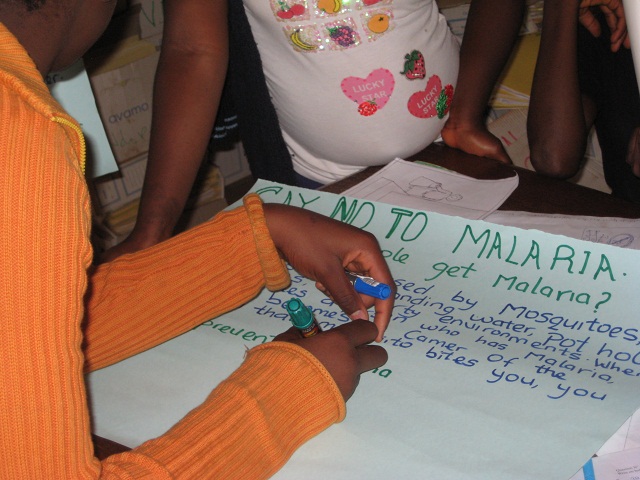
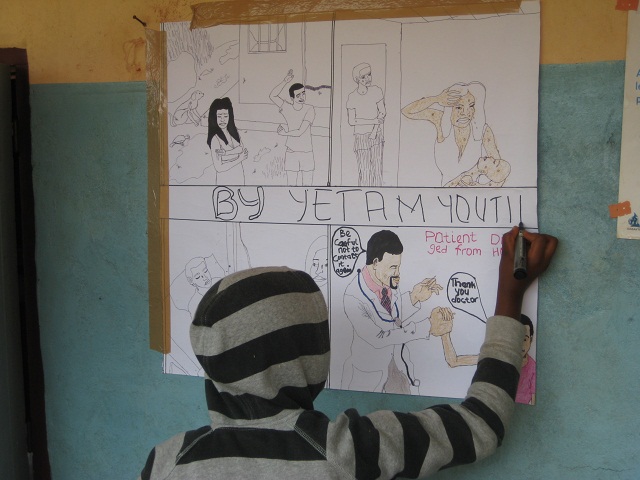
Following the conclusion of the refresher course at GBHS Bamessing, the YETAM youth began work on their first advocacy campaign of the summer. After much discussion the youth decided that the first topic they would take on would be the high prevalence of malaria in their community.

Malaria is one of the biggest killers of children under the age of six in Africa, but lack of health education means many people here still are not aware of how the disease is contracted, and how it can be avoided. Additionally, the direct relationship between cleanliness and the spread of this disease runs counter to many of the choices the environment here encourages. The long periods that often come between availability of running water, forces villagers to store water in containers, and collect it from the frequent rains. This water is frequently left sitting in open containers. Mosquitos will lay their eggs in this water, leading to an increase in the insect population. More mosquitos, means more carriers for the disease, which in turn leads to more people contracting the illness. Additionally, mosquitos tend to thrive in places with tall grass. Lack of funds to clean communal areas often means that shrubbery in public places such as the market square, aren’t cleared regularly. Ignorance of this cycle is what the youth intended to combat. Not an easy thing since explaining these correlations requires the understanding of multiple stages of cause and effect.

In order to get the attention of the village, the youth decided to hold a series of clean-up and sensitization campaigns, intended to illustrate the sort of changes they felt the village needed to make. The first stage was a clean-up at three of the local health centers. The youth divided themselves into three separate groups, and spent several hours clearing brush, dirt, and standing water, from outside these centers. They posted sensitization signs outlining the causes of malaria and what can be done to minimize it. Despite the fact that many of the youth had left town for holiday, there was excellent youth turnout at all three health centers. After the morning of the clean-up these centers were models of how the village should maintain their environment.

Next a major cleanup campaign was performed at the BamessingTown Square, the day before Market Day. Market day here is a huge event, so the time and location of this clean-up had been chosen for maximum exposure. Twenty-four youth and two facilitators (myself included) spent nearly seven hours cleaning brush, shoveling dirt, and picking up trash to make the campaign a success. The youth took turns documenting this work with both video and still cameras. When the clean-up was completed they hung signs in main areas of the market urging the community not to dump dirt and trash in the market square. Another sign was created instructing people to a landfill pit where waste could be properly disposed.

The next morning, when Market Day was in full swing, the youth headed down in their bright yellow YETAM t-shirts to explain to market sellers and patrons what they had done and why they had done it. Their message was well received. Community members were thankful for the hard work the youth had performed, and therefore open to hearing their advice. At the end of the day there was a marked increase in people disposing of their trash appropriately.

Finally, the youth invited members of the village community and high-ranking officials to a workshop to discuss the causes of malaria and what could be done about it. My colleague Rebecca had arranged for a Peace Corps volunteer working on health education to come to the event to give a brief presentation. Unfortunately, only one community member apart from YETAM youth and facilitators attended the workshop. Thankfully this attendee was a member of the Sanitary Committee, so all was not lost. She arrived to the workshop quite late (just as we were finishing), so a short recap was given for her benefit.

The woman from the Sanitary Committee requested that the youth express their concerns to the village council, which they did two days later. The council was happy to receive the youth’s concerns and invited them to sing the national anthem at a special ceremony celebrating the arrival of the District Officer later in the week.

This ceremony turned out to be the closest thing to a festival I experienced during my time in Bamessing. Well over 1000 villagers attended the event. There was dancing and singing. There were masked characters called Ndobo, who shook fistfuls of brush at passers-by. (Check out this link for a great post on Ndobo by Plan USA’s Linda Raftree.) There were Muslim men in full regalia riding bucking, wild horses. There were flute players, and drummers, and dignitaries. Everyone arrived dressed in their finest traditional outfits. The Fon of Bamessing (the village ruler), a proud mountain of a man, oversaw the ceremony from the perch of his throne. If his hulking stature weren’t enough to separate him from the massive crowd outside the palace, he was seated on top of an authentic (and I’m sure locally made) animal skin rug to emphasize his authority.

YETAM was represented at the event in two ways: First, several of the youth led the singing of the national anthem. Second, the President of YETAM Bamessing, Martin, gave a short speech informing the District Officer about the activities of YETAM. His was the only speech not given by a high-ranking dignitary. Martin presented the District Officer with a copy of a Small-Grant Project Proposal To Increase School Attendance in the Bamessing Community which the youth had written for an upcoming advocacy project.

It cannot be over-emphasized how big an event this was for the community, and how impressive it was that the Village Council chose to make the YETAM youth such an integral part of the proceedings. Whether the youth’s efforts will lead to lasting behavioral change in the community is unknown, but it was a fascinating thing to see this project escalate over the course of the month. I couldn’t have had an experience like this without investing the length of time I did here this summer. And for me at least, that made the experience worthwhile.

Read Full Post »

This is a guest post by Jamie Lundine. Jamie is a health geographer who works with Map Kibera in Kenya. We first met about a year ago when Plan began thinking about using digital mapping as an element of the Youth Empowerment through Technology, Arts and Media (YETAM) project and we started discussing how we could work together. Since then it’s been exciting to see how Plan Kenya and Map Kibera are collaborating to bring together child-centered community development work and ICTs in programs such as YETAM, youth and governance work, and community led total sanitation (CLTS) programs. Globally Plan is committed to building its capacity to use ICTs where appropriate in its work and to support youth, communities and local governments to use ICTs where useful for their goals. Plan Kenya is one of the offices that is leading the way in ICT4D at Plan, and there is much that the rest of us can learn from their approach and experiences.

Jamie’s original post appears on her blog Health Geography as ‘Documenting a participatory digital mapping workshop with Plan Kenya‘ and on the Map Kibera blog. Michael Warui, Plan Kenya’s ICT director, sent me the workshop report and I was planning to write about it here, but Jamie’s already done all the work, so I’m re-posting.

Map Kibera Trust recently facilitated a 3 day training to introduce participatory digital mapping to target staff at Plan Kenya. The participants in the workshop included programme staff and ICT staff from the Kenya Country office and regional offices around the country. Participants came from Homabay, Kisumu, Kilifi, Kwale, Tharaka, Machachos, Bondo, the Kenya Country Office and the Urban Programme (Nairobi). Their backgrounds ranged from ICT support staff, to Child Rights & Gender Advisor, to M&E Coordinator, to programme staff in 4 of Plan’s 5 focus areas (Protection and Inclusion, Health, Education and Governance).

The training was planned at the beginning of the implementation of the new Kenya country strategic plan (CSP) 2011-2015 for Plan Kenya. Building on the success of Plan Kenya’s work in Kwale on universal birth registration and also from digital mapping work with POIMapper and Map Kibera Trust, the new CSP highlights the importance of ICT in the improved efficacy of Plan’s work. Plan Kenya has chosen to place an explicit focus on participatory ICT in its work. This is in line with Plan International’s focus and leadership in ICT4D globally.

In this context, the workshop aimed to:

  • Introduce participatory digital mapping theories, techniques and tools that Map Kibera Trust employs in its work
  • Provide hands on experience in GPS data collection and data editing using Open Street Map
  • Learn more about how Plan Kenya programmes use information and communicate
  • Brainstorm ideas about how to integrate ICT into programme work

We began with an introduction to Information Communication Technology for Development (ICT4D) by exploring some questions to consider before introducing ICT into programme work. The questions were (and are) meant to stimulate discussion and encourage participants to think systematically about the integration of ICT into new and existing programmes. The questions identify the reasons why you would use ICT, assess what constraints and opportunities exist in the framework you are working in, and explore how people are communicating in order to design appropriate and sustainable systems to build upon existing channels of communication. The questions are modified from Linda Raftree’s post “7 or more questions to ask before adding ICTs,” so thanks to Linda for the inspiration!

  1. Why are you considering the use of ICT?

The Plan Kenya staff identified that using ICT, particularly mobile phones and the internet, has become a desired lifestyle choice that the majority of Kenyans around the country have embraced. This was an important point that the participants wished to build upon and capture in their use of ICT in various communities. The group generally agreed that ICTs are available and can be accessed by many Kenyans. The staff also mentioned that ICTs could improve communication and be used to easily mobilize communities (for example sending one SMS to many people to attend a meeting). ICTs are flexible and can improve accuracy and consistency in information, which can then be easily stored and shared. There was also mention of improved efficiency in programme work through the collection and processing of real-time information.

  1. What are the programme goals or programme framework you are working within?

Most of the participants identified the new country strategic plan for the organization as the overarching framework that Plan Kenya staff are working with. The country strategic plan identifies 5 areas of focus: Health, Livelihoods, Education, Protection & Inclusion and Governance.

  1. What are your specific information and communication needs?

The information needs of Plan Kenya staff members were largely related to programme work. The needs included collecting accurate data for baseline surveys for Monitoring and Evaluation and thus to assess programme impact. There were some suggestions of improving communication through digitizing information that can more easily be shared to large numbers of people. The group suggested that this could improve accountability to other staff members, donors and to beneficiaries in communities. ICT can also improve the ability of Plan Kenya staff to analyze information and make decisions.

  1. How are you already using information and communicating?

In order to integrate ICT into existing programmes within communities, it is important to know how staff members are already using information and communicating in their daily lives. The group came up with a long list of communication tools: email, internet, intranet, websites and social netoworks – namely Twitter, Facebook, Flickr, MySpace), applications (Skype, Yahoo Messenger), SMS and telephone calls, radio, and television. The group is using information during baseline data collection. Some are involved in a project that integrates SMS applications into the birth registration process in Kwale District.

  1. Who are the actors involved in the particular issue you are seeking to address with ICT?

 The Plan Kenya staff won’t be (and aren’t) using ICT in isolation. There are important stakeholders they work with on particular issues, programmes and projects. These include the general community – with a particular focus on youth and children. Important sub-sections of the community include teachers, school administration, Government of Kenya, civil society organizations, Plan Kenya partners (such as Childline Kenya, Community Cleaning Services), the media and private sector actors. Different groups of people use technology differently, and depending on the answer to question 1) and question 6 (below) the staff may need an ICT strategy that is diverse enough to reach the various stakeholders.

  1. How do people use ICT already?

This list of the ways in which Kenyans are already using ICT is a testament to the idea that the group tapped into when answering question 1. The use of ICT in Kenya, specifically mobile phone applications, has become a lifestyle choice. Kenyans use phones for mobile money transfer, SMS, calling, accessing the internet, paying their bills, paying for goods, calling toll-free lines (e.g. Childline call centre, police hot lines) and for data collection and dissemination. Kenyans also listen to the radio, use computers, blog, email, chat, shop online, bank online, join online discussions and news groups and use various forms of social media. They do this for work, but also for pleasure. These were the means identified by the group, however this is not an exhaustive list.

  1. How do people access technology already?

This was a sub-section of question 6 and the group answered: mobile phones (including GPS enabled and internet enabled phones), street phones, computer, internet connection in office and homes, internet modems, cyber cafés, radios, TVs, toll free lines, and resource centres.

  1. How will you close the feedback loop and manage expectations?

How do you make sure the information you are generating, no matter the medium or tool you are using, gets back to the community? How do you promote the use of technology without seemingly presenting a silver bullet solution (even if you don’t intend to do so)?

These questions were answered in several ways. One idea about both closing the feedback loop and managing expectation was to network  with other organizations and partners in the community to share information and raise awareness about the use of ICT and the opportunities and limitations of ICT4D projects.

Another option for closing the feedback loop was to both collect and disseminate information on popular social media sites such as Facebook and Twitter.

A third suggestion was to close the feedback loop and manage expectations through an informed resource person and/or resource centers and staff having sessions with the community.

Finally, there was the suggestion to start the integration of ICT in development work by outlining and communicating clear expectations and at the end have feedback sessions to monitor the whole process.

  1. What is your sustainability plan?

The final question, and likely the most difficult (we only had a one hour brainstorming session and did not expect participants to come up with final answers to this question but simply consider it as an important component to any project with an ICT component).

One idea was to equip community members, and particularly youth, with skills that will be applicable beyond the program (or project) timeline. The YETAM project (youth empowerment thorough arts and media) was designed in this way and the group agreed that this design was beneficial to the young people involved in the program.

Another suggestion was to involve the beneficiaries/community in the entire process of choosing/customizing appropriate ICT tools that suit their needs and for further development so that it is community owned process and will in theory continue beyond the project/program lifecycle. Other ideas included:

  •  Build partnership with Government and NGOs.
  • Integrate fund raising or income generating activities into the project.
  • Use affordable technology (free and open source)
  • Ensure follow-up mechanisms are built into the project

We discussed the use of mapping, open information and ICTs for development. We also used two of the three training days to focus on hands-on training and skills building. We facilitated training in handling the GPS devices, collecting data and using Java Open Street Map (JOSM) and Potlatch to record open spatial information into the OpenStreetMap databases. As we’ve found in the past, the hands on training is exciting and motivating. The theorietical discussions, combined with the practical field work inspired discussion and debate on ideas on how to integrate participatory digital mapping andICTs into programme work.

The following are ideas generated by the Plan Kenya staff:

  • Ushahidi could be useful for referral partners mapping and identifying the hot spots of child abuse
  • Use of SMS for communication with hearing and speech impaired within the community
  • Using reports and sharing the same information to various media channels. E.g. PPM, a in-house system that is used to track and monitor information and projects progress
  • In governance as a tool for enhancing social accountability, where ICT can be used to track projects
  • Digitization of data collection e.g. in sponsorship (especially photography), child abuse hotspots
  • Involving children in participatory community mapping by mapping schools using walking papers
  • Using blogging as a tool for youth to document governance issues in the new good governance project for the Urban Programme
  • In Kilifi the team is doing a 2 year study on Open Defecation Free villages and health outcomes. They could use mapping and spatial statistics to document findings.
  • Mapping and other ICT4D tools could be used to document and share participatory activities that Plan already undertakes, such  as transect walks and participatory situational analyses

The training ended with a note of caution – the team recognized the potential tension between the processes that are needed for ownership of a community map (and any other ICT4D project) and the haste of development partners to use the budget and report progress to donors. In this case, many projects (ICT4D, mapping and any other project) may “leave the community behind.”

It is thus important to ask the following questions and consider the answers carefully when designing projects:

  • For whom are we doing the mapping (or any project really)? And whose map is it?
  • Of what use is the (spatial) information, what will it compliment?

After another successful workshop with Plan Kenya, we look forward to building on the excitement and enthusiasm generated during the training! Let’s see some of the great ideas turned into reality!

Read Full Post »

This is a guest post by Rebecca Tapscott who, along with Joe Paveyis interning with us in Cameroon for the next couple months. Rebecca wrote a first post about the what and the why of setting up an Ushahidi system in Cameroon to track violence against children and Joe goes more into depth about the technical side of setting the actual system up in his post Digitizing violence reporting. Sounds complicated… because it is!.

Here Rebecca writes about how she and Joe are better understanding mobile phone use and community context by living in the community. She also goes into how the team is training youth on how the system works and getting youth’s input into the design and use of this type of system in their community

Learning what information to include when sending SMS reports on child abuse.

One component of our ICT4D internship with Plan is working “in the field” with the community to help implement the Ushahidi reporting system for violence against children (“VAC”).  To this end, Joe and I are living in Bamessing community, a village in the North West Region of Cameroon, also one of the three program units (“PUs”) hosting the YETAM program.

Bamessing has no running water, limited network coverage, and sporadic electricity.  The region is also known for high rates of child/forced marriage, domestic violence and school dropouts.  If a VAC Ushahidi system can work here, it can work anywhere.

Piloting the site in Bamessing has several benefits as well.  First, we are working with a group of motivated youth who have received extensive training on the four categories of  child abuse and violence against children (physical, psychological / emotional, sexual, and neglect or negligent treatment), as well as their legal rights under the UN Convention on the Rights of the Child and other international and national protocol.

Second, the Bamessing community is saturated with cell phones, and most of the youth in the YETAM group have their own personal cell phones.  Joe and I had a discussion with Odelia, our “land lady” and the 30-year-old widow of the late pastor, who told us that she first noticed cell phones in Bamessing in 2010 (though some say they’ve been around since 2004).  Since then, she has owned five cell phones, although she never uses one to text, and makes only one or two calls a week.  Instead, cell phones seem to serve as a sort of portable doorbell.  Neighbors, friends, and acquaintances “beep” each other (give a missed call, which does not cost any credit) to relay a predetermined message.  Credit is expensive relative to other daily costs and, as previously mentioned, the network here is tenuous.  Texting requires literacy, dexterity, and decent vision, which are limiting factors for many of the adults in the community.

Finally, Cameroon seems to have the advantage of a functioning (albeit imperfect) offline system for reporting and responding to VAC.  I spoke with a delegate from the Ministry of Social Affairs (“MINAS”), who explained some of the system’s weaknesses to me, namely that the ministry is highly underfunded and understaffed.  He also lamented that reporting is lacking, due to inadequate knowledge of civil law (instead, most people are familiar with customary law, which often reinforces certain rights violations), and inability to report violations.  While knowledge of civil law must come from human led sensitization and education projects, the Ushahidi platform can enhance reporting ability in Cameroon.  Through our discussions with Plan staff in Yaoundé, we came to the optimistic conclusion that the government might increase investment in staff, resources, and educative programs in direct response to the number and severity of reports that come through the Ushahidi system.

Given these caveated benefits, our current challenge is to introduce the concept of reporting through Ushahidi to the YETAM youth group, teach the youth how to report incidents, integrate their feedback into the system, get the online system up and running, pilot it, and present it to MINAS.

Our first opportunity to present Ushahidi to the youth was during the YETAM refresher training, held June 22 – June 27, 2011 at a local high school in Bamessing.  Joe and I worked with Georges (Plan Cameroon’s ICT coordinator for the area) and Judith (the YETAM coordinator in Cameroon) to design a module to introduce Ushahidi and our particularized reporting system.  First, Georges and Joe explained Ushahidi and answered questions on a theoretical level.  We then described our intention to use Ushahidi for reporting VAC, what information must be included in reports of VAC, and what information will be displayed on the Ushahidi site.

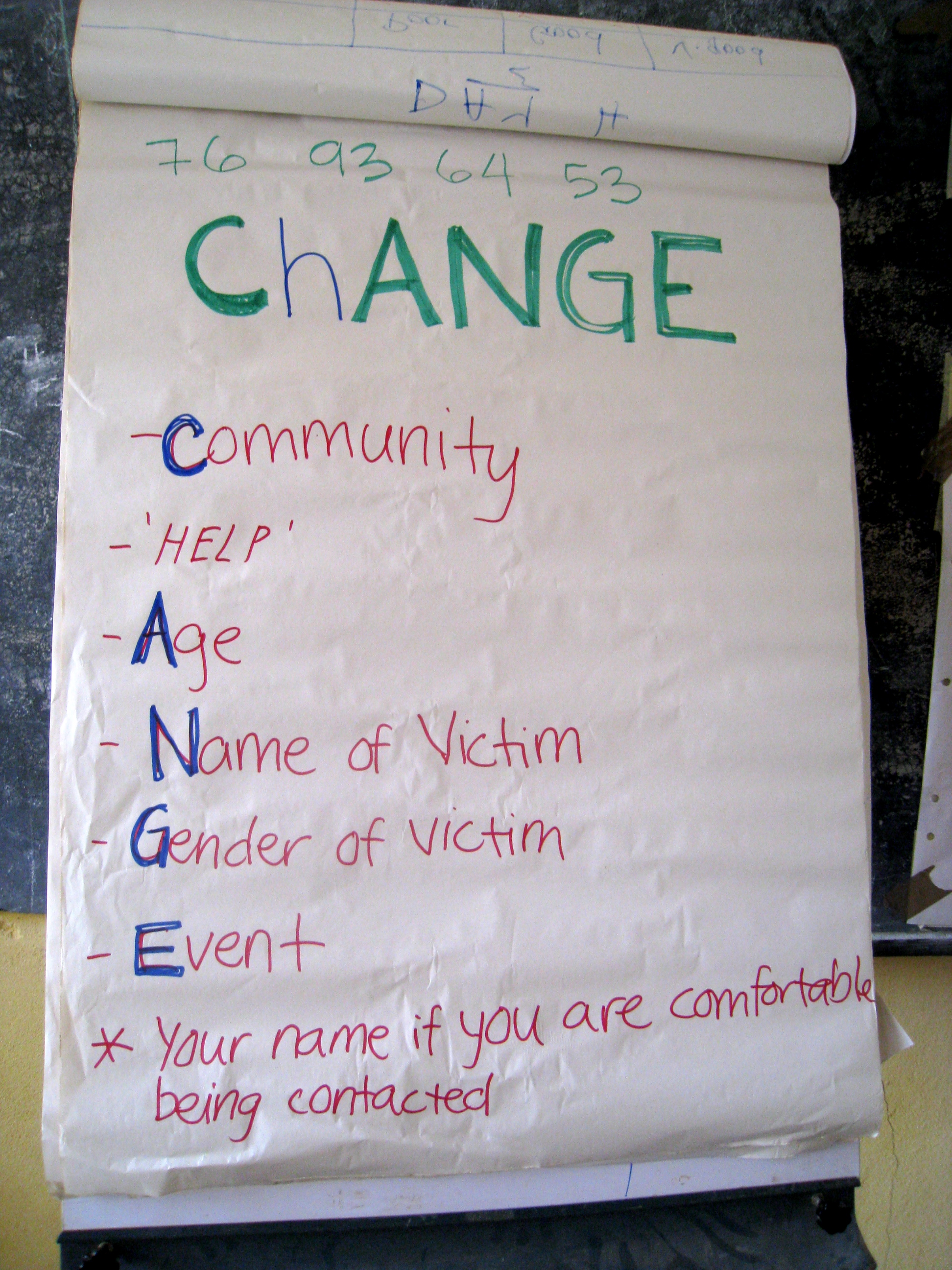
We created an acronym (ChANGE) to help the youth remember what information to include in text message reports. (C: Community; h: False letter– we said “help” so people can remember, but really nothing should be reported there, A: Age, N: Name of victim, and your own if you are comfortable reporting it, G: Gender, E: Event.)  Then we gave a practice scenario and asked five participants in the class to show how they would report the message. We reviewed each message for number of characters, noting that a single text message is limited to 140 characters, and also checked to make sure that all the necessary components were included.  All five messages were similar, reading something like:

My name is Judith. I beg of you for my friend Mary who is 14 years old and whose father is taking her from school to give to a 60 year old man for marriage in Bamessing community.

Most of the messages ran long, but did include the five required components.  One area of confusion was what level of geographic specificity to include.  We explained that while the report must be as specific as possible to facilitate a response, the Ushahidi site will present a more general geographic location so as to preserve anonymity for victims and reporters.

We asked the youth for feedback on the system, which resulted in more questions clarifying what is appropriate to report, and the level of confidentiality of reporting.  One concern was that often the phone network is down, making it impossible to send text messages.  We clarified that all the old methods of reporting still exist, and that community animators and Plan staff can be sought out to report either by text message or the other ways.  By the end of the training, the youth agreed that this would be a useful system, and some commented that they particularly appreciate the unique level of anonymity associated with SMS reporting.

This month, Joe and Georges will finalize the Ushahidi system, Joe will create brief manuals for system users, and Joe and I will provide additional training on using the system.  We hope to have the youth send sample text messages to the site in the next month to test the system, to train the youth, and to provide sample data to present the site to potential government partners. Our colleague Nathalia (the Child Protection Advisor in Plan Cameroon) also suggested that we create a ‘child and youth friendly’ guide to how Ushahidi works that can be used for training, so we’ll get going on that also.

Read Full Post »

This is a first guest post by Jacqueline Deelstra, who is working for about 2 months to support Plan Benin to solidify their SMS Reporting and Tracking of Violence against Children (VAC) project.

The VAC Benin project started as a pilot in February 2010. Plan Benin welcomed Paul Goodman (see earlier posts) for the month of May to support refining and optimizing the actual SMS and mapping system, and Jacqui is now spending 10 weeks looking further at the non-technological aspects that underlie the initiative, including staff training, links with government duty bearers, and community input around the idea and practice of SMS-based reporting.

During the initial workshops with staff, government representatives and youth in February 2010, we identified the need to map out and better understand what information should be collected in order to 1) allow Plan staff and government to understand the nature of violence against children in Benin, respond to VAC reports, and to avoid creating parallel information systems and 2) the need to provide clear guidance and training to ensure consistent categorization of reported cases. Jacqui writes about this below. (More on the overall project and process via the links at the end of this post.)

In coming to Benin for two months as a consultant to work with Plan staff on a project using FrontlineSMS and Ushahidi to collect and map citizen reports of violence against children (explained previously in this blog) I knew part of my work would be training staff in the technology and answering their questions about how it works and what it’s good for.  In other words, that this work would fall under the often discussed buzz phrase “capacity building” for local staff. And certainly, many questions have come to me about aspects of the technology.

For example, how data from Ushahidi can be downloaded for analysis and to make graphs for reports and how staff without access to Ushahidi as administrators can use the public site to submit cases of violence that are reported to them in person as opposed to being submitted directly from the reporter to our Ushahidi platform via our SMS helpline.

During the recent trainings I carried out in Cotonou on Tuesday and Wednesday I was able to demonstrate to staff members the features of Ushahidi, but just as important was the chance to field a lot of interesting comments and questions. As this was the first time many staff members had seen the vacbenin.ushahidi.com site, it was a process of discovery. There was resulting curiosity about things I had just taken as given in the system.

Comments were made about how we are currently processing reports of violence received by SMS by classifying them into certain categories and specifically why we chose the categories we did for the type of violence and location. The categories we have are listed below.

Current categories on the Violence Against Children (VAC) Ushahidi site in Benin

From French to English they translate to:

Type of Violence– death, sexual violence, psychological violence, physical violence, negligence, exploitation and kidnapping

Location– At home, at school, at work, in the community and in institutions.

You will see next to categories right now there is the statement: “Select as many as needed.” Everyone knows it is difficult to classify many things into just one box. Thus, with cases of violence such a forced marriage it was initially decided that multiple boxes should be checked because it certainly entails sexual and physiological violence and potentially physical violence, and we wanted to cover all our bases.

However, comments from the standpoint of the country office staff pointed to a different conclusion: you have to categorize each report in just one category or else it will be difficult to do a good analysis of the data. They see instead that there is one category which the case belongs to above all, (for forced marriage this would be sexual violence) and that is how it should be categorized. As it was explained to me they look at the categories and say, “just because only one box is checked does not mean the case does not belong to other categories, and selecting one box ensures there is not double counting of cases in the analysis.”

Finally, in our discussion of the choice of locations when processing a report, questions come up about why “at work” was chosen, when other locations more specifically of interest to staff, such as the market, were not included. (Note: the original categories were taken from the UN Study on Violence Against Children, which provides the framework for the overall program.) Staff explained that markets are known to be dangerous places for children who work in them and thus they would like to see if reports come in specifically about that. They also discussed their feeling that “at home,” is too vague. Violence at home could be committed by parents against their own children. Or it may be violence committed against domestic workers or other children living in the household, which they have the impression happens frequently. But the category “at home” does not provide any insight into that question.

The clear value of this discussion of categories and what information would be of most use to the local staff points to another buzz phrase in development, “participatory methods for program design, monitoring an evaluation.” Without consulting various staff members and getting that local knowledge about what issues a project should be tracking and addressing, it is likely the project will not be as useful and impactful as it could be. Especially with a project like as this one that is gathering data for the sake of advocacy, awareness raising and informing future programming, the way data is collected and classified has to fit the local needs and context.

Thus in my trainings this week it was certainly not only the Cotonou-based staff that learned something. I learned more about what types of violence are of interest to staff and how we can make this project work better for them by better meeting their information needs.

Related posts:

Future proofing the VAC Benin project (by Paul Goodman)

Update from Benin: charting a course forward (by Paul Goodman)

Revisiting the SMS violence reporting project in Benin

Tracking violence against children in Benin video

Community-based child protection

Tweaking: SMS violence reporting system in Benin

Finding some ICT answers in Benin

7 (or more) questions to ask before adding ICTs

Fostering a New Political Consciousness on Violence against Children

Related links:

Text messages to help protect children against violence

Plan International case study: Helping children report abuse in Benin

Read Full Post »

This is a guest post by Joe Pavey who, along with Rebecca Tapscott, is interning with us in Cameroon for the next couple months. Rebecca wrote a first post about the what and the why of setting up an Ushahidi system in Cameroon to track violence against children. Here Joe goes more into depth about the technical side of setting the actual system up.

Our first major discussion about the VAC Cameroon site was in regards to how reports should pass through the system. For obvious reasons the information contained within these reports is extremely sensitive, so each step of the workflow process needs to be determined with the best interests of the children involved in mind.

The existing offline system for reporting violence against children was agreed upon through an exhaustive deliberation process with government, community, and local council members. In short, a lot of hard work has gone into making the existing offline system something that all parties agree on and it would not only be negligent, but counterproductive not to use this as a blueprint. For this reason the online system we are working on should respect, support and ultimately serve to expedite the current process, not replace it.

Under this current system Plan serves in the capacity of witness in cases of child abuse. Plan Cameroon has partnered with several governmental agencies to investigate and respond to reports they receive. Which agency this is depends upon the circumstances of the abuse.  Age, gender, and location are all factors in determining which agency will be responsible. For example, abuses taking place in the home are currently handled by the Ministry of Social Affairs, but cases involving female children are handled by the Ministry of Child and Women’s Empowerment.

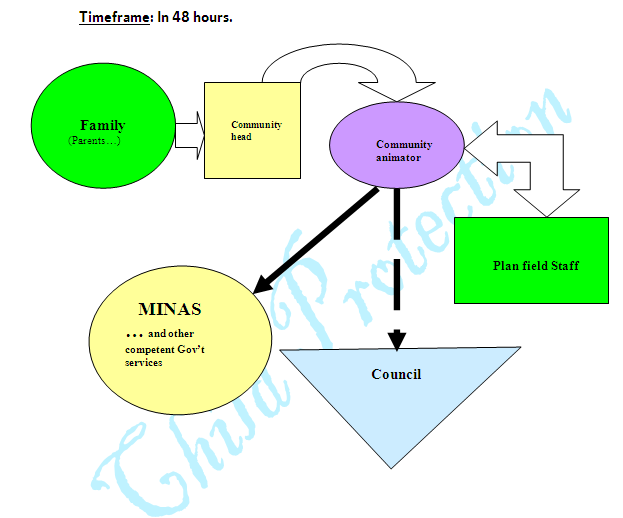
The current policy also requires that all reports of violence against children received by Plan staff be forwarded to the sector office within 48 hours.

Existing community-level reporting flow

Following this, the report has 24 hours to reach the country office in Yaounde. This one of the processes we are hoping to expedite with the implementation of the digitized system.

Existing flow of next-level reporting - at Program Unit and Plan Country Office

If this sounds complicated, that’s because it is. As outsiders who are new not only to the culture, but also to the peculiarities of local bureaucracy, much of Rebecca’s and my first session was taken up with trying to understand the rules and regulations already in place. Thankfully we have Cameroonian colleagues in the local office to help us navigate and understand all of this.

The Ushahidi System

Ushahidi allows three methods for submitting reports: (1) Text Message, via Frontline SMS or another text messaging tool, (2) Email, and (3) Submitting a report directly through the site. These actions can be taken by individuals in the community or by Plan Staff if they are alerted of a particular incident. A fourth means of submitting reports to Ushahidi, via voice messaging, was previously available through a plug-in called Cloudvox. Unfortunately the company that created the Cloudvox plug-in was recently acquired and has suspended this product for the immediate future, and we haven’t identified an alternative voice messaging system. This is unfortunate as we were hoping to be able to offer voice messaging as a reporting method for non-literate youth — although bandwidth limitations may have rendered this impossible anyway.

Information workflow for Plan Cameroon VAC Crowdmap site (updated; this is version 2.)

Based on the information that needs to be tracked and reported on, our current plan is to separate reports into four categories, each with several subcategories as follows:

  1. Form of Violence
  • Physical
  • Sexual
  • Emotional/Psychological
  • Negligence
  1. Gender of Victim
  • Male
  • Female
  1. Age of Victim
  • 0-5
  • 6-12
  • 13-18
  1. Location of Incident
  • Home
  • Work
  • School
  • Community

Current Crowd Map set up with 4 main categories.

Creating these reporting categories (and each of their subsequent subcategories) will allow this information to be tracked separately, or to be looked at in terms of how categories overlap with each other. Since the Ushahidi platform allows users to choose more than one category or sub-category when submitting an incident report, no data need be lost in the effort to isolate and contextualize information.

For example, by tracking Gender and Location of Incident separately we will be able to more easily visualize how many incidents of abuse are taking place at schools in a certain community, how many of the victims are girls versus boys, and how each of those categories relates to reports from other regions. This will be especially important information to the government who has different agencies in place for tracking violence against children and youth depending on the circumstances. It will also be useful for Plan staff who can then tailor programs and awareness campaigns in a specific community towards the issues that are most prevalent there.

Plan Cameroon staff, partners and youth have create a detailed online map of each council area in which this project will take place, however, mapping of reports will be restricted to a less precise level described to us as the ‘community level’. It’s hard for Rebecca and me to conceptualize just how specific of an indicator this is, though once we are living in the community – a transition taking place this week – it should become easier to measure. The reason for mapping the location of incidents at the community level is privacy. If reports were mapped too precisely they could compromise the identity and safety of a child — a result that would be entirely unacceptable.

On the Ushahidi ‘back end’, each report of an incident will also contain a Description section that will allow information outside categorical parameters to be included in reports. This could be the body of a text message, a summary of a voicemail, or any other details that are deemed to fall outside the determined privacy boundaries (eg., this will allow us to keep identifying information and other details in the system, yet keep it from going public).

Over the course of our week in Yaounde, we engaged in many discussions regarding how we could make the online information workflow match that of the offline system. The conclusion seemed to be that involving community members and Plan staff in initial approval of reports might be possible, but that expecting all six of the varying government agencies that currently respond to such reports to use this digital system would be problematic. At this point we are hoping that the official agreement can be reworked slightly so that only MINAS, the Ministry of Social Affairs would need to be involved in the system.

By week’s end we had drafted an initial proposal for what the workflow for the system could be. It is by no means final and will likely go through numerous revisions over the course of our work here, but it will provide us a good base to build from in the future.

Unfortunately our progress on setting up the site itself has been handicapped by technical issues with the Crowdmap website that cause the site to crash when trying to create subcategories. We have engaged with members of the Ushahidi staff and they are currently working to fix the bug, but we don’t have a timeline as to when they will have the issue resolved.

We have now left Yaounde for Bamessing where we will be initiating our field work on the YETAM project, working with youth on creating short films, performing more community mapping, and we hope that the mobile Internet connection will allow us to continue to work remotely on the Crowdmap site.

Read Full Post »

« Newer Posts - Older Posts »