Feeds:
Posts
Comments

Beginnings

Clare and I

14 years ago today it was a chilly December morning in Barrio Candelaria, San Salvador. I’d spent the night before doing something mundane yet extraordinary… giving birth to a baby girl. She was still a little blue that morning, having had a tough time making it through to the light of day. Being born when you weigh 10.5 pounds is not an easy thing for a baby, or for a mother. But she was nursing and we had her wrapped up in a warm blanket and a little hat.

Niña Lita, my elderly midwife, stopped by around 7 a.m. that morning to bathe the baby, Clare, in the customary rose and rue to ward off any evil spirits or bad vibes.  She had come back early in the morning rather than waiting till later because she was concerned about us. The night before she was worried that neither of us would survive. She didn’t say so of course, but it was clear from her eyes and the lines of concern on her face as she helped us through the short, 4 hour labor.

I had gone to work on the 13th, the last day before Christmas break. My stomach was so big it was hard to eat or breathe. The baby was taking up all the possible space in my abdomen. I grabbed the bus home as usual, made dinner, read my son his bedtime story, and got ready to sleep. Around 11 I felt the first labor pains and called Niña Lita. She had attended me with my son Daniel (see my 18 years post) and had been coming around every month to ‘sobar‘ me – massage my stomach – and check in on how I was doing. I’d been to the ‘real’ doctor a few times also, but the pervasive medical approach in El Salvador at the time was a mix of fear and pharmaceuticals and that wasn’t my thing. So my pre-natal care was pretty infrequent and I was mostly just going through the motions.

As with Daniel’s birth almost 5 years earlier, I had decided to have my baby at home in the small room attached to our bedroom. We didn’t have the money for me to go to a private hospital, and the public hospital horror stories had me turned off. I wanted a natural birth with my family nearby. I wanted to breastfeed immediately and keep the baby close at all times – things that the public hospitals didn’t promote at the time.

Niña Lita arrived around midnight with her daughter A., a registered nurse who owned a hair salon down the street (and who had a mafioso for a husband – I learned last time I was in El Salvador that A. and her husband are in prison.) She made me some cinnamon tea to help speed up the labor, and I promptly threw it up. It was freezing in the house and the power was being funky so we relied on the flickering lightbulb and kept the candles handy. My mother-in-law was next door, I later found out, awake and vigilant, lighting candles to la Virgen and on her knees praying for a safe birth. She later said she’d had a bad feeling. My husband and Daniel were in the next room, dozing off and waiting.

Labor came hard and fast, but then the pains stopped despite the fact that the baby hadn’t arrived. She had crowned but she was stuck. I looked at Niña Lita, in pain and wondering what was happening. What was I supposed to do now? I wanted her to fix something, to make it better. She worked her calm magic, carefully reaching inside and untangling the baby’s umbilical cord from around her eyes and her neck. Random and harried thoughts marched through my head as I waited. Wondered. Time stopped and everything was silent. Then she gave me a penetrating look. ‘Tenés que empujar mamita. You have to push, mama.’No puedo, I can’t.’ ‘You must.’ There were no longer any labor pains to help me out but I managed. Finally the baby was born and relief set in – until I propped myself up a little more and looked down between my legs. A big baby. A girl. Her chubby body from the neck down was a beautiful rosy pink…. but she was still. Her entire head was bluish purple, her eyes swollen and puffed closed. Oh God. She’s dead.

Not possible. Not happening. Why? Why am I so stupid and stubborn? Why did I insist on having a baby at home?! This can’t be happening.

A. stepped back from attending me. Niña Lita bent down somberly. She rolled the baby onto her side and tapped her back gently while she murmured some prayers. The baby started to cry. ‘Una niña,‘ said Niña Lita with her crinkly smile. ‘Una bebecita gordita. Ay, que hermosura, que hermosura. What a beauty.’

A. cradled the baby while they cut the cord and cleaned her up. She was a bit scary looking, with her blue face and head attached to a chubby, healthy, pink body. Niña Lita put a little white hat on her and swaddled her up and gave her to me. She immediately started nursing and the fear left me. I knew she would be OK, despite her funny looking blue head…. it was about 5 a.m. and the sky was just starting to lighten.

My husband had come in from the bedroom to see the baby and pay the midwife. He had no idea of the tragedy we had just avoided. I heated up some water and took a bucket bath – I was exhausted and shaky. I crawled into bed with him and my son and Clarita, relieved.

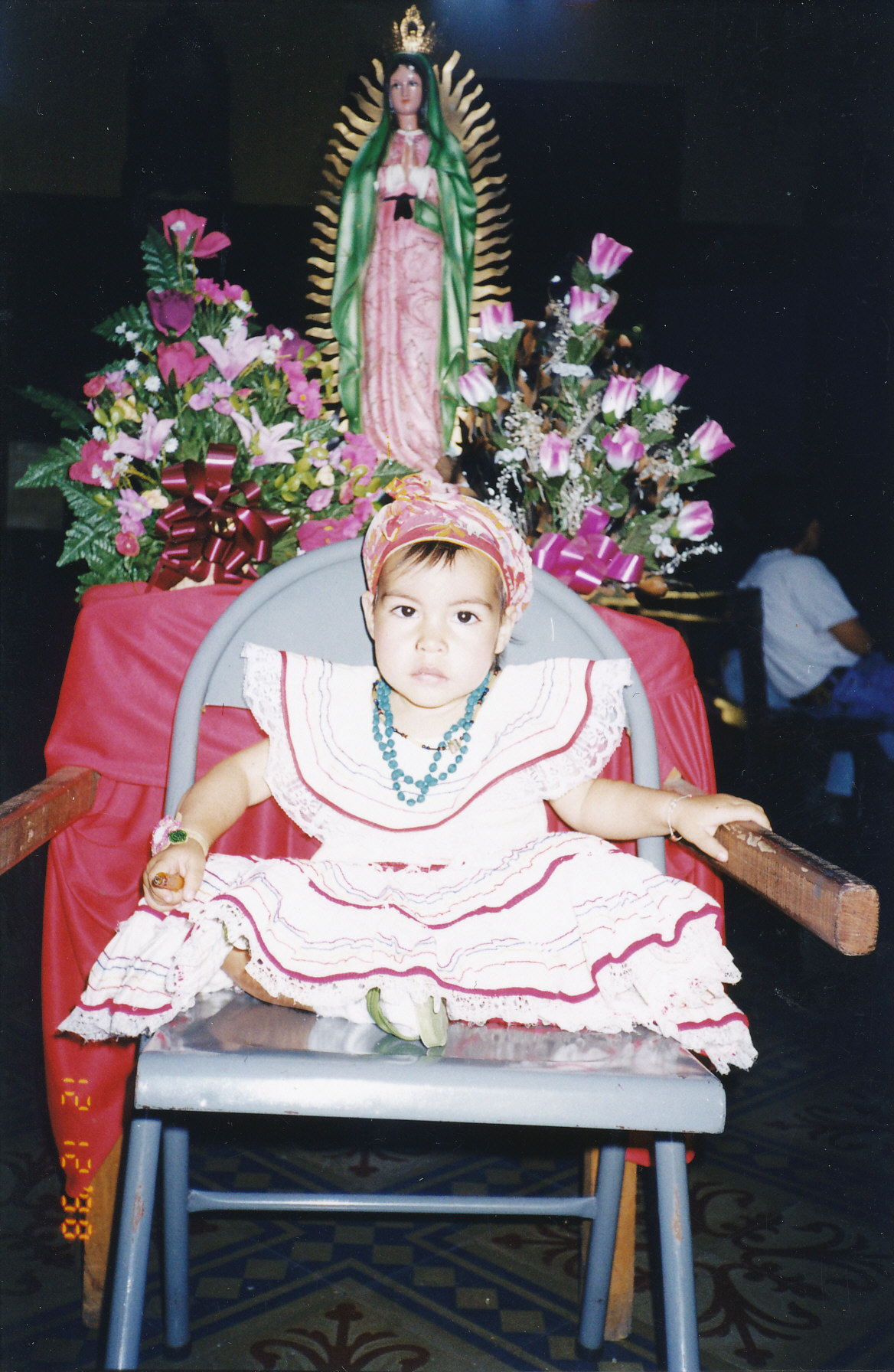
My parents-in-law came over early to see the new baby and word spread quickly through the Barrio. My mother-in-law held her and gave thanks to la Virgen Maria. The night before she had promised that the baby would be a child of la Virgen, and that she would keep the tradition of celebrating the 12th of December – the feast day of La Virgen de Guadalupe. The visit to bathe Clarita left Niña Lita feeling relieved also. ‘Estaba bien preocupadita mamita,’ she said, ‘I was very, very worried.’ We got the scale from the corner store: 10.5 pounds. No wonder, we all thought. No wonder.

Clare and her dad

The following day we took Clarita over to get her first vaccines and her foot prints at the local health unit. ‘Where was the baby born?’ ‘At home.’ ‘En casa? ohh.’ ‘And how old is the baby?’ ‘2 days.’ ‘2 months you mean?’ ‘No, 2 days.’ ‘A baby of this size? Are you sure? Let’s weigh her. 5 kilos?’ They looked at me suspiciously. They looked at each other. Clarita was big, healthy, pink and strong. I was in good shape with no belly sticking out. I wasn’t wearing socks and didn’t have cotton in my ears as would a normal Salvadoran woman who had just given birth. I was very obviously a white woman. The baby looked very Salvadoran. ‘Would you like to have an exam?’ ‘No.’ ‘I think we should examine you. We need to examine you.’ they insisted. I realized they didn’t believe this was my baby. I agreed to the exam… certainly I didn’t want anyone accusing me of child trafficking. I passed the exam and went home for my 40 days of rest…. Well, actually I didn’t get that, but that’s another story.

Birth was only my first big scare with Clare. There were a couple other times that I thought I was going to lose her.

When she was 9 months old I took her to the clinic to get her MMR vaccine. I was walking home with her, and after a couple blocks her skin began to mottle. Then she fainted. I rushed back to the clinic with her, knowing that she was having a bad reaction. The doctors were nowhere to be found. The nurses were slow and bored. They thought I was overreacting. ‘She probably was scared of the vaccine.’ ‘No, this is something else. She didn’t even cry when she got the vaccine. She’s having an allergic reaction. Please can you do something?’ ‘The doctor isn’t here yet. Sit there and he’ll be in.’ ‘No I need something now. Do you see her? She needs something now.’ Eventually one of the nurses took us into an examination room and gave her some Benedryl while they searched for a doctor. Luckily the Benedryl worked, and she was fine. It felt surreal walking out of the clinic into the warm sunshine, birds singing.
Once she was feverish and dehydrated and the hospitals were closed. We had to wait until the next day to take her in. Meanwhile my mother-in-law took her to a traditional healer. Trying to leave for the doctor, then, we had a huge family fight because my in-laws said the healer said that Clarita had to stay inside because any air blowing on her would kill her. My husband and I wanted to get her medical attention as soon as possible. It escalated into a rift that was difficult to subsequently repair between my husband and my father-in-law. An argument of tradition vs ‘modernity’. Quien crees que sos, con tu esposa chelita y tu título de bachiller? Who do you think you are with your white wife and your high school degree? Crees que sabes mejor que tus padres? Do you think you know more than your parents?

My mother-in-law always counted on la Virgen to keep Clare safe and sound, and though I am not religious, I’ve always taken great comfort in her ability to pray.

14 years later Clare is still a survivor. She’s smart, strong, independent and beautiful. Beginnings always shape things and Clare’s beginnings shaped her. They shaped me. They shaped all of us.

Related posts on Wait… What?

18 years – the story of Daniel’s beginnings

On trust and disempowerment

The real story involves antisocial entrepreneurs and anthropology

It’s not a black and white photo

On Glenn Beck and ‘rooting out’ liberation theology

Activism vs slacktivism: it’s about context not tools

I got a great comment from Gareth on my last post Why aid and development workers should be reading blogs:

Do you know of any good blogs from local aid workers? I enjoy reading all these blogs from western-educated aid workers like myself, but we do tend to have a fairly similar way of looking at things, so it’d be great to read something from a different perspective. Any suggestions?

He’s right of course.  It would be nice to add some local perspectives to the lists of aid and development bloggers that float around.

Two well-known sites to find ‘local’ voices are Global Voices and Rising Voices. There is also Maneno which is (used to be?) a platform for bloggers in Africa, but it seems to be under maintenance while an open source platform is developed. I’m not sure how many of the bloggers on those platforms technically work at aid or development organizations, but regardless of that minor detail, you will get great local perspectives on aid and development issues there.

But the question stands – where can we find local aid and development worker blogs?

Suggestions please!

Dave Algoso, a grad student at NYU, just published a great post called A Grad Student’s Guide to the International Development Blogosphere wherein he explains why grad students should be reading blogs. It struck me that many of the reasons he recommends students read blogs are similar to why I recommend that you, my dear colleagues and friends who are development or aid practitioners or who sit in headquarters or fundraising or regional offices, or who make policy decisions, read blogs.

I’m a bit hesitant to share these tips because then you will realize that I’m not really all that smart, I just read a lot of blogs and discuss them a lot on Twitter…. On the other hand, I’m fairly confident that no matter how much I recommend blogs and Twitter, most of you will say you don’t have time, and I’ll still come out looking like a genius for knowing what’s going to hit the New York Times 2-3 days ahead of when you read it and forward it to me asking me if I’ve seen it!

You can read Dave’s post here and I encourage you to do so – so that he will get additional hits to his site and because he deserves the credit for writing the original post.

Below, I’ve taken Dave’s post (note: with permission) and substituted “development and aid workers” for “grad student” and switched it up just a bit to make it fit that context.

Here’s Dave’s post with my changes in italics:

Several friends have recently asked me which blogs I read and how I manage my reading. This post is targeted at my fellow aid and development practitioners, but those of you who work on policy, advocacy, customer service, grant writing and technical support, communications, marketing, and anyone who wants to know what’s happening in aid and development should find it useful as well. Let’s start with why to read blogs, then move on to the how, and finally the what.

1. Why should I read blogs? I do plenty of reading for work already…

I’m a fan of reading blogs. No big surprise there. Reading blogs should be part of how you get smart about your field. You read the news, right? New York Times or the Economist or People Magazine (you know who you are!) or whatever? Well newspapers write for general audiences. They won’t get very far into the complexity and nuance. You read a bunch of internal reports for work too? Well most reports are written for donors. They generally won’t tell you about what the theories and the practical work have to do with the larger picture of development. They also won’t critique the way you do business or offer you a cross cutting picture of where development and aid are headed across sectors and across organizations.

Blogs cover many of the same issues as both newspapers and journals and project reports, but with an eye toward what they mean for practitioners and policy makers. You’ll get stories from the field, scathing critiques of the latest development fads, and heated debates on everything from microfinance to conflict minerals. The blogosphere is the one place where geography is no barrier to the conversation. Academics, journalists, donors, Washington think tank-ers, UN or NGO staff — they all bounce ideas around here.

For a development worker, blogs also provide a check on what the experts, your bosses, top government officials, donors, advocates, marketers, policy-makers and celebrity spokespersons say. You’ll find out pretty quickly which issues are actually top-of-mind for practitioners and which issues only matter to the Ivory Tower types, those sitting in offices making policies, and those making things up. And if work, work meetings, conferences and discussions around the water cooler don’t allow you to delve far enough into an issue you care about, blogs can make up for that.

2. Blogs can be overwhelming. How do I manage the information flow?

First and foremost: You do not need to visit every blog’s website to check for new posts. In fact, you shouldn’t. You can subscribe by email if you like (most blogs have a button on the right hand side where you can subscribe by email) but even that can be overwhelming as blog posts mix with your normal emails.

There’s an easier way to read blogs. Instead of subscribing by email, you subscribe to the blog’s RSS feed. RSS means “really simple syndication.” You just subscribe to the RSS feed using a feed aggregator, and you’ll get all of your blogs in one place.

Some email programs (e.g. Outlook) can act as feed aggregators. I prefer to use Google Reader; if you have a Google Mail account, then you already have a Google Reader account. If you are on the road someplace with spotty internet connections, you can use a free program called FeedDemon; it’s a little clunkier than Google Reader, but it can download posts for viewing when you’re offline. On your iPhone, you can use another free program called MobileRSS. Both FeedDemon and MobileRSS sync with Google Reader, so your RSS subscriptions or starred items will always be the same in all three. (There are also many other options for feed aggregators.)

Once you have a feed aggregator, start subscribing. Most sites with feeds will have a link that looks like this orange square. Click on it to subscribe. Often you can just type the site’s URL into the feed aggregator, and it will figure out the rest.

The practical upshot of this feed aggregator stuff is that you can go to one place and see all of the new posts from all the blogs you follow. You can also “follow” your normal news (more on this below). This keeps you from being overwhelmed, so you’re more likely to keep up with them.

3. Okay, I’m sold. What should I be reading?

In my opinion, there are seven must-read blogs for any one working in the field of aid and development.

Following these seven will keep you up to speed with the debates of the day, and you’ll get links to the most interesting posts from other blogs. Seriously, if you read nothing else, at least subscribe to these seven.

4. C’mon. Only seven? I can handle a few more.

I hoped you’d say that. Here are some others that I highly recommend.

Most of the blogs above are pretty general, though everyone brings different perspectives and interests. There are also many issue/region-specific blogs you may want to check out. Here are a few that I recommend.

(Note from Linda here: I also have a list of blogs I read regularly – you can see it here on the right hand side bar under the title ‘blogroll’. Check some of them out when you have a chance. Or if you have a particular area of development or aid that you are interested in, let me know and I’m happy to give you some recommendations on specific blogs on that topic to get you started.)

I generally steer away from the blogs of NGOs and donor agencies. The content tends to be fluff. Of course, if you work for (or want to work for) a particular organization, it might be worth following them. There are two that I would recommend as generally thoughtful and interesting:

Finally, there’s news. Almost every news website does RSS feeds, so you can subscribe to them through Google Reader. I get the Economist, the New York Times Africa feed, the East AfricanForeign Policy, and others bundled together with my blogs. I also subscribe to TED talksxkcdGallup World polls, and more. If a site publishes regular content, it probably has an RSS feed. I barely even go to websites anymore.

5. But hey, you forgot about…

Am I missing anything? Feel free to fill the comments section here and on Dave’s post with suggestions.

Please don’t be offended if I failed to include you or your favorite blog above. This isn’t meant as a definitive list. Here are some more blogs I think are worthwhile. The full list of what I follow is longer still. The above is simply meant to get people started — and I don’t want to scare off the newcomers.

*****

Thanks to Dave for the great post, and hopefully some of you colleagues who haven’t caught the blog bug yet will get motivated!

Hopefully some more of you will start writing blogs too…. here are a couple links that talk about some of the reasons that blogging and other kinds of social media can be helpful in thinking about our program work:

Working and living out loud

Social media and humanitarian response

Star-shaped Jell-o molds

I finally started a serious de-cluttering process — one that goes farther than my normal spring and fall cleaning. Yesterday was Day 1: Kitchen.

I’ve always been a bit of a pack-rat and as a teenager was one of those ‘alternative’ kids who purchased second-hand clothing from the 60s and 70s to make a fashion statement. But I’ll credit (blame?) my mother-in-law and my mother, for quite different reasons, for encouraging me and enabling me to continue that trend.

If you’ve been reading my blog or know me personally, you’ll know that I lived in an urban barrio in El Salvador for about 10 years in the 1990s. I lived there with my husband, next door to my parents-in-law. My husband’s family had always struggled economically, and we did too for several years after we moved there.

My mother-in-law taught me to never throw anything away because you might need it later. In the fenced-in area in front of the side-by-side apartments that we shared from 1991-2001, you will still find old pieces of tin, plastic, wood and rope. We’d pound nails out of wood we’d scavenged and save them to use later.  Old powdered milk cans served as planters and anything that broke was repaired or reused to the fullest. (I remember my father-in-law and the guy from the water company trying to stop the toilet from running by tying a rock to the pump mechanism to weight and balance it. They didn’t want to listen to my advice so I snuck in afterwards and adjusted the little screw on the top and removed the rock :-)). Last time I went back to visit, I saw that she had turned a psychedelic 1960 dress I’d gotten at the Good Will into pillow cases. Nothing went to waste at the house, and we never threw anything away because it might always come in handy at some point. Talk about living sustainably.

Tiny forks... maybe I should save them for when I have grandkids who come to visit.

My own mother also knows the value of reusing, but she focuses on another aspect: reselling. She currently owns an auction (and no, she is not the auctioneer!), does appraisals, and has worked with antiques. So she collects and sorts things that other people have owned or saved, and sells them for a profit. She’s very good at looking at something and determining its resale value, and she knows how to move merchandise. My family jokes that she’d sell our family photo albums if we let her get a hold of them. (I’m a little bitter about this talent of hers because she gave my entire record collection — including rare bands and hard to find classics — away to the Salvation Army after I moved to El Salvador because they were taking up space and I could ‘just get them all on CD’.) My mother has been sending me boxes of used things that won’t sell at auction for many years now, and I sort through and keep what I like and give away or throw away the rest.

The accidental wedding present - someone put the wrong wedding present for my parents in the box. My aunt was reportedly mortified.

For someone who came back to the US in 2001 with 2 kids and 6 suitcases I’ve certainly amassed a ton of stuff. Through the auction, my mom was able to hook me up with all the basics for furnishing a house when we arrived – bed frames, tables, chairs, couch, dishes, china cabinet, dressers and the like – for really cheap. Most of it is still in use (I’ve been told this ‘look’ is called ‘shabby chic’). I’ve also picked up good condition furniture from neighbors and friends. Add that to the random boxes of auction goods each year and it’s easy to see why my house has gotten increasingly cluttered. I haven’t been able to shake the mindset that things will be useful later and that it’s a shame to throw away something that is perfectly good or oddly interesting.

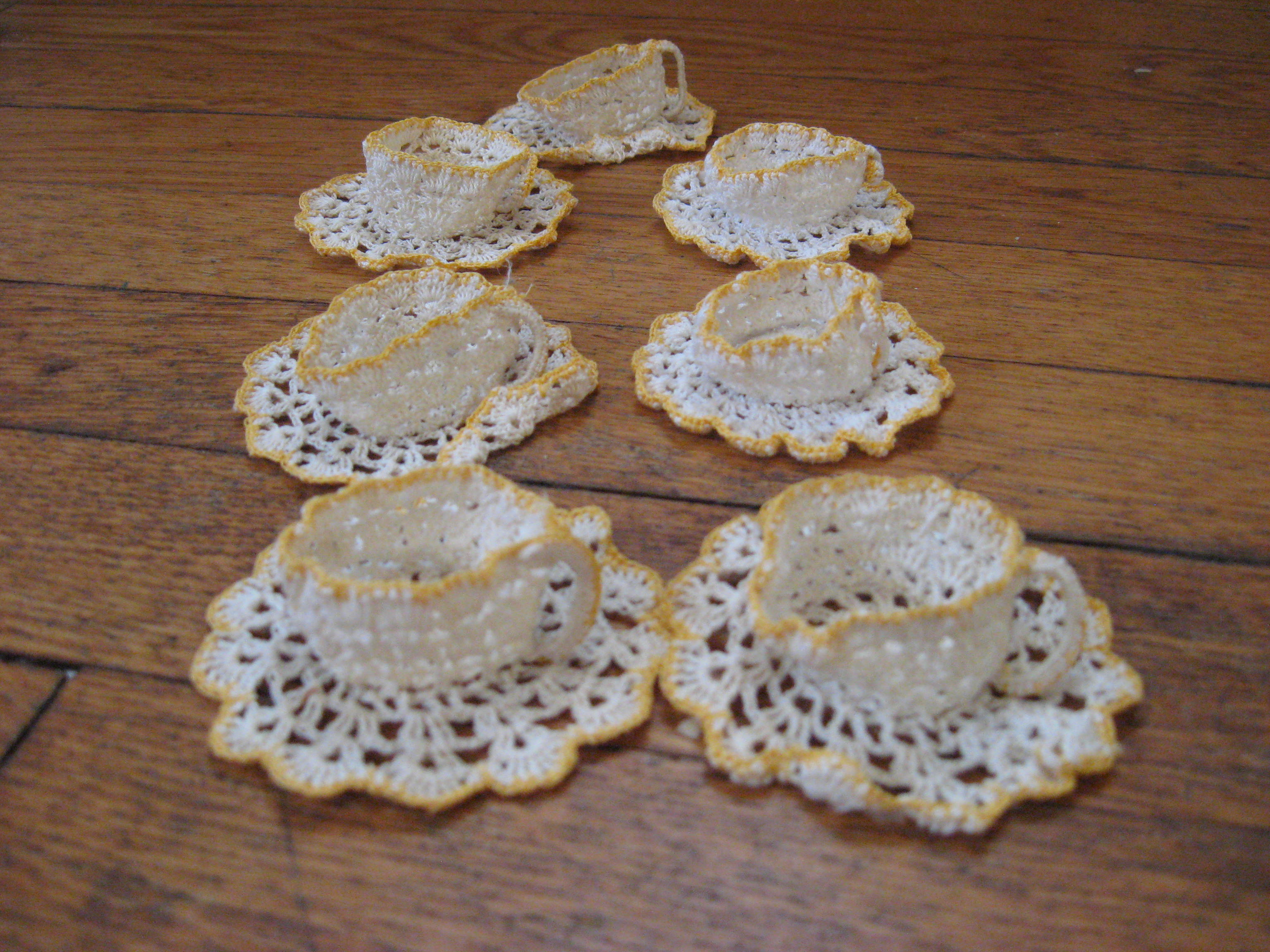
The ghost of cognitive surpluses past... tiny crocheted teacups and saucers.

This of course is a terribly un-cool and outdated concept on the one hand. Minimalism is the new hip and secretly I’d love to be one of those streamlined design types. But I think many of today’s minimalists are able to rid themselves of everything because they feel confident that they will have the means to replace whatever they might be missing. Downsize and get rid of anything extraneous, and if you are in a bind, just go buy what you need. That’s not something that we could do in El Salvador or even something I can do now.

On the other hand, the reduce, reuse, recycle mindset continues to gain more traction these days. I suppose I could be a poster child for that movement…. Or maybe there are more like me out there with those depression era values, as TalesfromtheHood reminds us in his post American culture 103: still useful after all these years.

The meanings attached to things

I’m not in a situation today where I save old nails, but I still have a hard time getting rid of some things. While de-cluttering the kitchen yesterday, I got to thinking about what the things I don’t use but that I’m loathe to part with say about 1) the person I have been and believe I might become again; and 2) the person I have never been, but imagine I might be one day.

I might one day decide to become a real mom who bakes cakes that go into real cake pans.

Maybe I will make applesauce again the old-fashioned way like I used to 7-8 years ago and I’ll need that early 1900’s style fruit grinding apparatus. In fact it probably would have served for making that cranberry sauce this Thanksgiving…. Maybe one day I will be a real mom and bake cakes and put them inside those 1950s cake pans that I can’t bear to give away…. And won’t it be nice if one day I have grandchildren and I can invite them over and make them jello in little star-shaped molds? Or they can use those tiny colorful forks that only grandma has to eat their dinner. And what about those dinner parties I might host one day, where I’ll use those fancy candle holders, the beautiful antique silverware and the fragile and ornate dishes from the china cabinet…?

Then there are those things that I can’t stand to give away because of nostalgia. They represent something I know I’ll never be and a culture that will probably never return. Who in this day and age would crochet tiny tea cups? (That’s some cognitive surplus if I ever saw it.) And what on earth would they be used for? But how can I part with them? And what about those little silver salt shakers? And those slim, 1960s Danish candles (that my daughter once decided to light in a bundle and almost burned the house down). Or the hand-made doilies that should go under the vases that are stored away because I don’t have a flower garden….

As the only daughter, I automatically got the china....

There are also the things that I don’t use but I keep because they have personal relevance: my great great grandmother’s hand painted Austrian china, brought over with her from Germany on the boat. The pig pitcher that was an accidental wedding gift to my parents from my aunt (she had ordered something by mail, and wasn’t that a bit awkward when my mom opened the box at the reception….)

The de-cluttering’s only just started but I’m thinking a lot about meanings attached to things, and struggling a bit to detach myself at times. I have a feeling I’ll never achieve minimalist stature.

My son goes to college next fall so he will be the lucky recipient of a set of dishes and the linens that will go into the pile when I get started on the closets… I’ll save some other things for my mother-in-law for our next trip down to El Salvador — the good thing is that I can actually ask her what she wants and needs and go from there.  The rest of it will go to the local second-hand shop or into the trash if the life cycle is truly over.

Aid and development workers don’t despair, I will NOT try to send any of my #SWEDOW ‘to Africa’ no matter how wonderful and useful I think my old stuff might be.

Update: The Grandmaster of #SWEDOW has come to the rescue and the best of my personal #SWEDOW will now be put to good use as prizes for The 2010 Best in SWEDOW Contest! Send your nominations for Best Swedow of 2010 to @talesfromthhood and you could win either of the prizes below, or one of the items listed above!

Tilt head back, hear him threaten 'Stop! Move away from the cookie jar. (No recollection of why this is in my house or where it came from).'

I think this is a mobile phone holder from Japan. It says 'Leave your stuffs with me But don't iron my body!' (Sentimental value)

I spent a few days in Nairobi early last week with our education and our ICT staff from Ghana, Uganda, Senegal, Mozambique, Kenya, Egypt and a few other folks, including the brilliant Mika Valitalo from our Finnish office and people from regional and headquarters levels. We were looking at goals and challenges in our education programs and thinking about where ICTs might play a role.

The process was really interesting. Starting a few months back, each country shared their education context analysis onto a wiki. In a second round they narrowed down to a specific area in education, looked at the information and communication flow and gaps, and identified areas where there might be an ICT solution. They focused mostly on mobiles, but in many cases mobiles were supported by computers, servers and laptops as well as non-digital information and communication tools and also solar technologies. Each country team met by Skype with Mika and an external consultant to discuss the concepts and get ICT advice and support. Then they updated their concepts and got additional feedback. For the third round, they added rich pictures to show what the specific ICT solutions might look like. Everyone had an opportunity to give input into everyone else’s ideas via the wiki.

At the meeting in Nairobi, we spent a day sharing the concepts with each other for clarification and focused input. Colleagues shared the broader education context in their countries and specifically in the communities where they are working. Then they illustrated the specific education issues and the ICT solutions that they were suggesting and/or the places they felt ICTs could help. Some of the ICT solutions focused on a very specific technology or device. Others showed how different types of ICTs could be integrated at different points in the process. Others required development of a totally new ‘solution’.

Some of the areas where colleagues thought ICTs could support education included: teacher training for those working in remote communities, adult literacy (especially literacy retention post literacy training), improving exam scores, livening up and improving in-class curriculum, and transparency and accountability in education. We spent 2 days then working in different small groups on the concepts, cross-pollinating ideas and deciding which of the concepts were most relevant to all 6 countries (in order to make it more possible to scale them) and which were most feasible and do-able.

The ideas were all a good fit with our global education strategy (see page 9) which focuses on service delivery (in partnership with local governments and communities); organizing and empowering rights holders; and grassroots participatory advocacy to influence education policies, financing and practice. The strategy prioritizes actions around equal access to education, quality of education, and education governance (see page 10).

Accountability and transparency in education

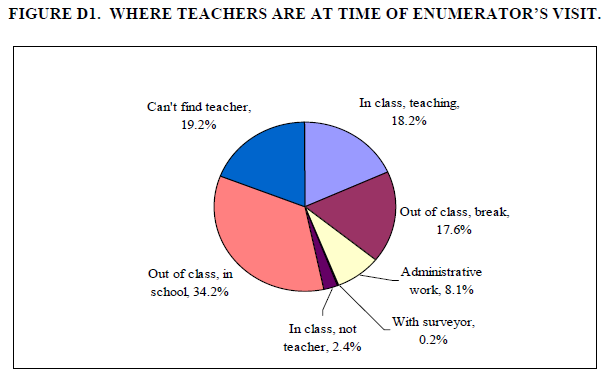
One of the concepts that captured the most interest from the whole group was that of using ICTs to improve accountability and transparency in education. Education is one of the areas where “Quiet Corruption” is often found. ‘Quiet corruption, which can take the form of absenteeism among teachers or doctors, the distribution of fake drugs, or the sale of diluted fertilizers to poor farmers, is having a damaging effect on people in Africa, according to the African Development Indicators report released by the World Bank….’ (March 18, 2010 article)

It's time for class.... where is the teacher to be found?

Edison, Charles and Erik, our colleagues from Uganda, did a short skit illustrating the different points in the primary education system where corruption happens. Their points correlated well with this summary of quiet corruption in education from a July 5, 2010 article in the Independent:

‘Early this year, the Transparency International (TI) Africa Education Watch Programme report: Africa Education Watch: good governance lessons for primary education showed that the government’s perception that massive enrollment is a sign of success of the UPE [universal primary education] programme must be revised to address the problem of overcrowding in classrooms, studying under trees, poor financial management, illegal fees, and lack of school inspection. The report exposes irritating embezzlement of UPE funds and abuse of authority by head-teachers who charge illegal fees, make students offer labour on teachers’ projects, sexual harassment, and systematic teacher absenteeism. The report noted that 85% of schools surveyed had either deficient accounting systems or none at all. In most cases, financial records were either unavailable or incomplete. The survey found limited financial documentation at district education offices and at schools. Most people who handle school grants had no training in basic finance management.

Another survey titled, The Efficiency of Public Education in Uganda, conducted in 2007 by the Ministry of Education to determine efficiency in provision of education services found an average rate of teacher absenteeism of 27% in Uganda, compared to other countries like Zambia (17%), and Papa New Guinea (15%). The aggregate loss caused by this absenteeism constituted 19% which translates into Shs 53 billion out of the Shs276 billion of the Education ministry’s wage bill.

In a swift headcount at the beginning of this year, the Education ministry established that the number of pupils listed in primary school registers was 25% higher than those actually studying. Similarly, the report established that the number of students in lower secondary schools had been exaggerated by 12%. For instance at Amaji Primary School last year, the school register had 816 pupils. But when the headcount was conducted the school administration could not account for 302 pupils.

It is reported that many districts’ chief administrative officers have failed to show proper accountability for the UPE and USE funds.’

The Uganda team also explained that:

  • Parental interest in education is very low because since Universal Primary Education launched, parents feel it’s the government’s responsibility. Some youth we were working with in Kenya last year made a short film about poor performance in primary schools covering the same issue  (see below).
  • Teachers’ salaries are paid directly to their bank accounts, and there is no way to punish them if they don’t show up.
  • There are mechanisms to ensure that donor funds go from the national level to the district level and then on to the school, but no accountability mechanisms to ensure that they get from the school to the classroom and are translated into quality education for children.
  • District level government authority and accountability ends when they transfer funds to the schools; school directors can report to them that they have received funding and that everything is going fine when it’s really not.
  • Local school committees are often made up of people who are not neutral and who do not have the best interest of the children in mind. In some cases, school committee positions are used for personal gain and to launch individual political careers and political campaigns.
  • Lack of parental and community involvement in the education process and in school governance means that no one is demanding accountability from teachers and schools.
  • Sexual and physical violence in schools is very common and underreported. When it is reported, often nothing is done about it.
(Start playing the video, then click the small ‘cc’ button to turn on captions in English)

Colleagues from the other countries face the same challenges in their work and in their own children’s education.

Can ICTs play a role?

What is the solution then? Colleagues suggest that motivating parents and the community to get more involved in school governance and demanding transparency and accountability can begin to change the situation. This obviously requires a lot more than ICTs. So several different actions would be taken to engage and motivate parents and the community to take a bigger role in their children’s education. Then ICTs can be integrated into and support the process for sharing education information with parents, such as student absenteeism, grades, parent-school meetings, exam dates and scores, etc. Parents and students would also be able to report when teachers do not show up or suspected corruption. Students could also report abusive teachers, absent teachers, and other issues they are not happy with at the school. A neutral party would manage and hold the information that flows in and out to protect students from reprisal and to protect teachers from any abuse of the system in case fraudulent or incorrect information is reported. Commitment from those responsible for overseeing education to respond to the issues raised and take serious action is also needed, and this may be the biggest challenge overall. Plan can play a role there, leveraging existing relationships with local and national governments and Ministries.

The idea needs quite a bit of further work, a closer look at feasibility, and more research and input from local communities and parents. As mentioned, the ICTs are actually a small, but potentially very important, part of a much larger initiative to get parents and communities involved in school governance to demand transparent, accountable and quality education and budget spending.

Challenges in the process

Some of the challenges that we had to manage well during this initial piece of the longer process included:

  • We needed to ensure that we were starting with the context and the need for better information and communications, not starting with the technology and devices and building initiatives around them. Yet we also had to avoid getting lost in the overall context and missing the opportunity to pinpoint potential ICT solutions at specific places within the context. Role play and flip chart illustrations of the  ‘problem’ and the ‘solutions’ were very useful for getting more concrete (“So, Kofi is here in his community and he wants to …. So he uses xxx to do this, and then this happens and then….).
  • Though we wanted to specifically look at places that mobiles and other ICTs could support, it was important to list out all the factors that needed to be in place in order for the ICTs to work and to think clearly about the constraints we might face during implementation. One good question to help with that was, after seeing an idea or ICT solution presented, to ask “What needs to be in place in order for that to happen?” Then you start to remember critical things like community motivation, government interest to actually resolve a problem, electricity, someone to set up and manage a server, a strong enough network to download multimedia content, mobile versions of websites, educational content re-design for mobiles, teacher training on how to integrate ICTs in the classroom, limitations of SMS for doing something other than rote learning, higher versions of a mobile operating system, a smart phone, etc.
  • We had input from a potential corporate partner during the process. We learned that corporations are thinking several years ahead to what will be coming down the line; however non-profit are normally working within existing constraints and trying to find solutions that work here and now in the resource poor places where we work or ways to get around those constraints. Multi-level solutions seemed to be a good possibility; eg., ideas that can rely on SMS today, but have potential to expand as networks expand and data enabled mobiles become more available.
  • A corporation tends to think in terms of vendors, results, timelines, launch dates, price points, return on investment whereas a non-profit (at least ours) tends to think in terms of community members, organizations, process, participation, local context. Our facilitator even told us that a corporation normally does a presentation by starting with the solution, and then spending the rest of the presentation showing why that is the right solution. A non-profit usually starts a presentation by sharing all the context and background, and showing the process that led to eventually reaching the potential solution, including every step along the way, how ownership was achieved in the process, why different decisions were made and who participated in them. So keeping corporate vs non-profit cultures and languages in mind is also important when working on joint initiatives.
  • We need to remember to establish measurable indicators of success so that we can tell if this new type of intervention has a different/ better/ greater / lesser impact than carrying out a similar process without ICTs or with a different set of ICTs. This is something we will address once the full idea is developed. Impact measurement is very important to both corporate partners and development organizations.
  • This was the first time many were involved a process of this kind, so keeping the balance between technology and development goals was a constant challenge. We sometimes veered too far towards focusing on all the details of the context and then back to focusing too much on that piece of the context where a potential technology solution was seen. I think we were moving toward a pretty healthy mix of both. The process is nowhere near complete, and as we continue to work on the ideas and look at feasibility and actual implementation, we should find the sweet spot.
The work above was guided by Plan Finland’s recent publication ICT Enabled Development – Using ICT strategically to support Plan’s work.  On the whole, it was a great learning process for everyone involved, and we came up with some good ideas that we will flesh out in the coming months. Having the opportunity to patiently and carefully think through areas and ways that ICTs can support program goals around education and discussing the ideas at length with colleagues was a capacity strengthening exercise for all involved and will mean that we will be more prone in general to thinking about incorporating ICTs in our work going forward.

Resources

ICT-Enabled Development

Plan’s Education Strategy 2010-2013

African Development Indicators Report by the World Bank

Africa Education Watch: Good Governance Lessons for Primary Education by Transparency International

The Efficiency of Public Education in Uganda by the World Bank

Learn without Fear Report on School Violence by Plan. Summary and Full Report (also available in French and Spanish).

Painful lessons: the politics of preventing sexual violence and bullying at school by the Overseas Development Institute

Expel violence! A systematic review of interventions to prevent corporal punishment, sexual violence and bullying in schools by the International Observatory on Violence in Schools

School violence in OECD countries by Karen Moore, Nicola Jones and Emma Broadbent

Update: Owen Barder published an interesting post called Development 3.0 – is social accountability the answer, which refers to social accountability in education in Uganda and links to 2 other quite interesting papers: Fighting corruption to improve schooling: evidence from a newspaper campaign in Uganda; and a 2007 paper by the Center for Global Development challenging the findings of that paper: Putting the Power of Transparency in Context: Information’s Role in Reducing Corruption in Uganda’s Education Sector

Related posts on Wait… What?

Community-based child protection

New Plan report on ICT-enabled development


Maps for Mozambique

Ivan and Massilau working on some mapping in Inhambane, Mozambique.

I had the pleasure of working with Iván Sánchez Ortega in Mozambique earlier this month, and I learned a ton about the broader world of GIS, GPS, FOSS, Ubuntu and Open Street Maps from him. We also shared a few beers, not to mention a harrowing plane ride complete with people screaming and everyone imagining we were going to die! But I suppose it’s all in a day’s work.

Below is a cross-post by Iván about Maps for Mozambique. You can find the original post here, and a version in Spanish here. Note: the opinions expressed below belong to Iván and not to his former, current or future employeers…..

*****

Last week was a small adventure. I went to Mozambique to make maps, as part of the Youth Empowerment through Arts and Media program. The main goal was to train youngsters in order for them to make a basic cartography of the surrounding rural communities.

This travel is part of the Humanitarian OpenStreetMap Team activities. After the successes of Kibera and Haiti, we want to check how much we can help by providing cartography.

Cartography in developing areas provides a great amount of situational awareness – in order to help, one needs to know where the help is needed. In the case of Mozambique rural communities, we’re talking about knowing who has a water well and access to healthcare and education, and who doesn’t.

The problem with rural Mozambique is that the population is very disperse. Each family unit lives in an isolated set of huts, away from the other families in the community. There is so much land available that the majority of the land is neither used or managed.

Which leads to think that, maybe, the successes at Kibera and Haiti are, in part, due to them being dense urban areas, where a kilometer square of information is very useful.

It has been repeated ad nauseam that geographic information is the infrastructure of infrastructures. Large-scale humanitarian problems can’t be tackled without cartographic support – without it, there isn’t situational awareness, nor will coordinating efforts be possible, something very important in an era when aid can get in the way of helping. However, even with agile surveying techniques and massively crowdsourced work, the cost of surveying large areas is still big. And, as in all the other problems, technology isn’t the silver bullet.

—-

That said, the way one has to go to reach the rural communities doesn’t have anything to do with the occidentalized stereotypical image of rural sub-Saharan Africa. There are no lions, nor children with inflated bellies due to starvation.

There is, however, the image of a developed country but in which the public agencies work at half throttle. Mass transit, garbage collection, urbanism, civil protection, environment, job market, education, social security. Everything’s there, but everything works at a much lower level than one could expect. To give out an example, the Administraçao Nacional de Estradas (national roads administration) plans switching of one-way lanes over hand-drawn sketches.

The reasons that explain the situation of the country are not simple, not by far, but in general terms they can be resumed in two: the war of independence of 1964-1975 and the civil war of 1977-1992. Living is not bad, but also not good, and part of the population is expecting international humanitarian aid to magically solve all of their problems.

When one stops to think, the situation eerily reminds of the Spanish movie Welcome, Mr. Marshall. Only that everyone’s black, they don’t dance sevillanas, and instead of railroads they expect healthcare and education.

Wait a moment. A reconstruction 20 years after a civil war, external aid, and the need of cartography for a full country. This reminds me to the 1956-57 Spain general flight, popularly known among cartographers as the American flight.

These aerial photographs, made in collaboration with the U.S. Army Map Service, had a great influence in the topographic maps of that period, and even today they are an invaluable resource to study changes in land use.

—–

Which is, then, the best solution? To inject geospatial technology may be a short-term gain, long-term pain in the form of 9000€/seat software licenses. Mr. Marshall won’t come with a grand orthophotogrameric flight. Military mapping agencies won’t implement SDIs (spatial data infrastructures) overnight. Training aid workers and locals into surveying is possible, but slow and expensive, although it might be the only doable thing.

Related posts on Wait… What?

Mapping Magaiça and other photos from Mozambique

Being a girl in Cumbana

Putting Cumbana on the map — with ethics

Inhambane: land of palm trees and cellular networks

It’s all part of the ICT jigsaw — Plan Mozambique ICT4D workshops

I spent the first 2 weeks of November in Mozambique working on the continuation of the Youth Empowerment through Arts and Media project. This year, we are piloting digital mapping in addition to the other ICT tools that we’ve been integrating into the project. We weren’t able to find anyone locally in Mozambique who could train on Open Street Map but luckily were able to link up with Portuguese-speaking Iván Sánchez Ortega from OSM in Spain. (In case you didn’t catch the link – the official language in Mozambique is Portuguese…)

Iván was a great trainer and the youth from the two associations (Vuneka and Litanga) that we are working with really took to the idea of digital mapping and learning some new skills in the area of painting, theater, print journalism, radio, video and blogging. See some of Ivan’s thoughts on this Maps for Mozambique post.

Here are some photos of the work we did while in Mozambique….


Last summer I had the chance to meet with War Child in Holland to talk about our shared excitement and common challenges in using social media and ICTs in program work (eg., to further program goals and as enablers in community level work with children and youth). I met Ernst Suur there, and over the past several months we’ve been trying to find an on-line Masters Degree in ICT4D. There are a couple places that are considering this type of course in the future, but we were not able to lay our fingers on anything concrete at this point.  As Ernst says: Isn’t it funny that you can learn online how to knit, but ICT4D isn’t taught much online yet?

The constraints that both Ernst and I have are that we work full-time (and then some) at jobs that require a lot of travel so it’s impossible to attend a normal schedule of university classes. We also live on salaries that don’t leave extra for furthering our education and we don’t want to spend the rest of our lives in debt. We would like a program that is not completely focused on the technology, but that instead really goes into depth on how ICTs can enable better processes, results and outcomes in development work. We are both working on program initiatives that would benefit from focused ICT4D research and deeper thinking that a guided process of shared learning and discussion could provide. We work with colleagues across our organizations who, like us, are interested in and would benefit from more systematic learning and focused ICT4D capacity strengthening but who are also not in a position to attend traditional university courses (or these courses are simply not offered where we live).

We are assuming that there are others out there from other organizations in similar conditions with similar interests. For example, at the October 2010 International Conference on Crisis Mapping (ICCM) in Boston there was mention of the need for further education opportunities on ICTs in Crisis Situations.

After doing some on-line research to find options and contacting some individuals, Ernst and I thought a next step would be to do a bit of crowd sourcing to find out if there is something that already exists that we are missing. As Ernst said: Better well stolen than badly invented.

If anyone has any thoughts, please share them in the comments section or contact me at lindaraftree at gmail.

For example:

  • Are there existing on-line masters level courses that we have missed out on in our desktop research?
  • If you could design an on-line ICT4D masters program that would fit your needs, what would it look like – eg, would there be face-to-face meetings? How often and for how long? Where?
  • What are the key topics/areas/disciplines that would be covered in an on-line ICT4D course?
  • What would some of the required courses be and who could teach us?
  • What would a reasonable cost be?
  • Who might be willing to offer scholarships for this type of study course? Eg., in whose interest is it to strengthen these capacities?

Please share your thoughts and ideas so we can build a strong case, because we believe that ICT4D should walk the talk and talk the walk and make online higher education and distance learning available for everyone.

There’s a new Youth and Participatory Governance initiative that I’m going to be supporting from the social media and ICT side, and I’m really excited about.

My colleague Jess in our UK Office gives an overview:

Plan UK is working with the Institute of Development Studies (IDS) and the International Institute for Environment and Development (IIED) to produce a Special Issue of the journal Participatory Learning Action (PLA) focusing on Youth and Participatory Governance in Africa. The Special Issue will capture and share experiences of the different ways young people in African countries are engaging with government to participate in public policy, planning and budgeting processes at local, national, regional, and international levels.

Key details about the Special Issue:

  • What is the theme? Contributions should capture practical experiences of governance work involving youth. Contributions should include: the processes young people have been engaged in; innovations, achievements and challenges; lessons and ways forward. Each article should be around 2,500 words. (Note: this includes innovative ways that youth are engaging with support of ICTs.)
  • Who can contribute? We are seeking submissions from adults and young people working in the field of youth and governance who would like to contribute an article to this Special Issue. You might be a youth activist, a practitioner from an NGO or international agency, or a member of government, for example.
  • How will contributors be supported? Support will be provided to contributors throughout the drafting process, including a writing workshop (a ‘writeshop’) in Nairobi in March next year during which contributors will receive one-to-one support and meet with others working on participatory governance to discuss and share their experiences
  • When do articles need to be written? Anybody interested in contributing needs to submit a 500 word summary by December 5th. Articles will be selected in December. Authors will submit a first draft of their article in February 2011 and, after further drafting, a final draft in June/July 2011.

Download further information on the Special Issue and the PLA journal here. Download the Call for Proposals here if you think you’d like to submit something or to support youth you are working with to submit.

Why I’m excited about being involved…

I had the chance to talk with Jess (the project coordinator) at Plan UK about my role last week. I’ll be supporting with dissemination (starting here with this post) to help get as many good submissions as possible. I’ll also be reviewing submissions that have ICT components to them; supporting participating youth with writing drafts and at the writeshop in Nairobi this March; and looking at how we can use social media to support the initiative throughout.

I’m really happy to be involved because this is something I want to dig into into and the process will offer a chance to learn about methodological innovations in this area that can be replicated and shared within some of the other programs I’m supporting. I also love that young people are encouraged to submit ideas for the journal and that they will be involved in writing and documenting their experiences. Sometimes their voices are really missing in these debates because they are not in the habit or don’t have time to write and document their work, or because of other factors like language or access. (And we all know that if it’s not on the Internet, to many of us it ‘doesn’t exist’).

To be honest, I’m also excited because it will give me a ton of new stuff to share here, and maybe during the process we’ll be successful in getting some more young people and practitioners blogging.

Another reason I’m keen to participate was this bit in the concept note: Youth and governance efforts have been ‘largely unsystematic and often constrained by the vague and paternalistic parameters of the UN Convention on the Rights of the Child (McGee, forthcoming 2010). However this is changing and there are calls for new models, tools and approaches that enable young people to take a more meaningful role in decision-making.’ Looking forward to the discussions around that.

Submit a concept!

If you are working on programs around youth and governance, youth and transparency, youth and accountability and related areas or know of young people or young people’s organizations who are, please check out this link on how to submit a concept or contact me (lindaraftree at gmail) or Jess (Jessica.Greenhalf at Plan-International dot org). If the youth you’re working with are more comfortable in a language other than English or French, please let us know so that we could see how to support them to engage.

Please share this call for submissions through your own networks – we are hoping for a real variety of contributions to what should be a great Special Issue!

I have issues with the word ‘charity.’ It makes me squirm and wrinkle my nose when I’m introduced or described as working for a ‘charity.’

‘Charity’ conjures up images of wealthy church ladies in Victorian times, assembling baskets of Christmas food for the poor that their husbands maintain working for miserable salaries the rest of the year. ‘Charity’ to me is working at a soup kitchen but never asking why people don’t have enough to eat, and who should be doing something about it and what needs to change. ‘Charity’ is the community members having to kowtow to the big man in the community for some of his left-overs in difficult times.

‘Charity’ is about power. ‘Charity’ is having pity for those that you are ‘helping’ and seeing ‘the poor’ as helpless victims. ‘Charity’ rests on foundations of guilt, privilege and the belief the ‘the poor will always be with us’.

Most everyone understands the act of ‘charity’. I have more than you do, so I give you some of what I have. You feel grateful for my generosity. I feel good about my generosity. Everyone’s momentarily happy. We do it again next season, nothing changes or gets better; and ‘the poor are always with us’ and kept in check by power imbalances.

‘Charity’ is related to a ‘needs-based’ approach, still used by some non-profit organizations, both large and small.

—–

There’s another approach that is referred to as social justice, related to the ‘rights-based’ approach. This type of approach is a little more complicated, but still not too hard to grasp on the surface.

Needs-based vs. Rights-based

However, social justice or rights-based approaches are not so easy to actually implement, because they imply shifting power, changing systems, demanding that governments and other authorities fulfill their obligations, pushing citizens to take on their civic responsibilities, and getting political. They require those who have power to question why they have it, and they require those who are claiming rights to be empowered and organized. They often require examining one’s own behavior on a broader level. These approaches are not so easy as giving someone some money or your old clothes or a turkey at Thanksgiving. Talk of justice and rights makes a lot of people afraid, both those who hold wealth and power and those that the wealthy and powerful manipulate through the media. However these approaches can lead to long-term and sustainable changes.

This blog post at the Episcopal Cafe (I recommend reading the whole post – it’s short) sums up the difference between charity and social justice quite well. It starts off with this quote:

“Had I but one wish for the churches of America I think it would be that they come to see the difference between charity and justice. Charity is a matter of personal attributes; justice, a matter of public policy. Charity seeks to eliminate the effects of injustice; justice seeks to eliminate the causes of it. Charity in no way affects the status quo, while justice leads inevitably to political confrontation.” – The Rev. William Sloane Coffin, Jr., from his book Credo.

—–

When I read about some of the initiatives being promoted these days – the #SWEDOW projects of the world and the idea that ‘anyone can do aid or development’ – more than anything, what irks me is that many (not all) of them are coming from a charity mentality. Sure, if all you need to do is hand out some of your old stuff or build something, maybe anyone can do it. But that’s not really helping much in the long term.

It doesn’t matter if it’s a non-profit, a do-it-yourselfer, an innovator, a business person, a religious-based group, a social media guru, or a movie star who wants to help out. And it doesn’t matter if the person is from (or working in) the US or a ‘developing’ country. The first thing that I look at in an initiative is the approach — is it coming from a charity mentality (in which case I will groan and fume) or is it questioning why the problem is happening in the first place and does it work in a non-patronizing, non-romanticized, respectful way with the people who are affected by the issue in an effort to help resolve it? (In which case I’ll then look further to see if the person or organization initiating the project has done their research to find well-documented good practices and avoid repeating mistakes or potentially doing harm or doing something that’s totally unsustainable.)

I recognize that social justice is not nearly as easy to achieve as ‘charity’. And I recognize that sometimes people need to be fed so that they have the strength to question why they are hungry and so that they have the energy to do something about it. And I don’t want to give the impression that solutions come from the outside, because most of the time they don’t.

I also recognize that ‘people want to do something’. But if ‘doing something’ means ‘charity’ then I am not in favor. It’s important to address the causes, not just treat the symptoms.

Social enterprise with its triple bottom line (people, planet, profit) has come up heavily in the past few years as one way to address poverty. Social entrepreneurship is also a trend that allows people a way to ‘do something’. I’m not as familiar with these approaches as I am with the other approaches, and I admit that I get the two terms confused.

I like that they move away from the charity mentality. But I’m not entirely sure that these approaches do enough on the side of changing power structures and ensuring that those who are marginalized can access their rights. I’m not convinced that the market takes care the people ‘at the bottom’, or balances out society. I’m also concerned that when push comes to shove, the profit motive will always win out over people and planet, and we are back to where we started perhaps… ‘the poor will always be with us’…. The jury is still out on that one for me.

I’m looking forward to seeing what hybrids develop over the next years, and if we will ever finally eliminate poverty and injustice. In any case, I feel pretty confident saying that it’s time to retire the charity mentality.

Some Resources:

Dochas Network’s simple overview of the Rights Based Approach

Bamboo Shoots – a tookit for facilitators working with children using a rights-based approach

Participatory Rural Appraisal (aka Participatory Research and Action) overview

Paulo Freire’s Pedagogy of the Oppressed

Anything by Robert Chambers (my development hero!)

Applying a Rights-Based Approach (.pdf)

Related posts on Wait… What?

On Glenn Beck and ‘rooting out’ liberation theology

Orgasmatron moments

Meeting in the middle