Feeds:
Posts
Comments

Archive for the ‘governance’ Category

Original published on the Guardian’s Poverty Matters site as part of a series of year-end reflection pieces.

An Egyptian anti-government protester holds a flag in Cairo's Tahrir Square earlier this year. Photograph: Miguel Medina/AFP/Getty Images

Waking one lazy Sunday morning and checking my Twitter feed, the first link I clicked on was a video of the Egyptian military beating unarmed protesters. The second was a series of Lego reconstructions of key moments in 2011, including the now-famous campus policeman pepper spraying unarmed student protesters in the face. It’s impossible to look back on 2011 without recalling the massive number of people who joined in worldwide protests to push for openness and inclusion – financial, political and social. No less memorable is the violence with which those protests were met.

As 2012 approaches, protesters across the world continue to occupy public spaces and fight for a voice in how things are run. They seek greater transparency, and new means of participating in social, financial and political life.

Many of 2011’s more horrifying and memorable images – captured on mobile phones, and generating global outrage and solidarity – involved systemic repression by the powers-that-be. Progress has been made in some countries, but sadly it’s not clear what the end result of the world’s uprisings will be.

Inclusion was not only a theme of large-scale world events, it was also key in aid and development. Organisations continued to push for adolescent girls’ inclusion in development initiatives and to emphasise that the most excluded and marginalised populations need to be reached in order to advance towards shared development objectives such as the millennium development goals. In June 2011, in a clear move forward on inclusion, the UN endorsed the rights of gay, lesbian and transgender people, yet the world still has a very long way to go.

Another central themein 2011 was openness. Whether it was the World Bank’s open data site, the Open Government Partnership (OGP), theInternational Aid Transparency Initiative (IATI), the Busan high level forum on aid effectiveness, the increase in “fail faires“, or grassroots initiatives pushing for more transparency – in aid and government funding as well as political decision making – “open” was everywhere.

As yet, however, the trend hasn’t reached quite far enough, and it would be good if it expanded in 2012 to encompass banks and other private sector entities. Hopefully, openness can help to advance inclusion and itself become more inclusive. All this amazing, open data needs to be re-used and it needs to connect back with people who might not be technology or data experts, have an internet connection or speak one of the major languages.

I hope 2012 sees greater effort to support communities and local organisations to access and use open data. I also hope there will be more effort to understand what information communities and local groups need to improve their own situations and exact more accountability and better governance from aid agencies, governments, service providers and the private sector.

Along with inclusion and openness, authenticity was a key concept in 2011. I enjoyed seeing critiques of simplistic media pieces about “the poor” and “the excluded”. Lakota youth, for instance, responded in a video to a Forbes [should be ABC] piece about poverty and hardship on reservations, emphasising: “We’re more than that.”. The Forbes piece, headlined “If I was a poor black kid“, caused a huge stir and response. One close reading of simplistic mainstream journalism called out the author for habitually ignoring the complex, systemic causes of poverty and exclusion.

I look forward to hearing more voices in these debates in 2012, continued questioning of simplistic messages, and more authentic reporting. New media can help previously excluded people tell their own, unspun stories and comment on simplistic reporting about them elsewhere. I hope aid and development agencies will increasingly support this, not as a gimmick or marketing ploy, but as a core element of their work and a way to better understand and share the issues and opinions of the people they aim to support through their programmes.

My wish for 2012 is that the world makes serious gains in reducing social, political and financial exclusion, in advancing participatory and accountable governance, and in achieving a better distribution of power and resources. Hopefully, aid and development organisations will continue to make progress in understanding what inclusion, openness, and authenticity in the global landscape mean for the kinds of programmes they fund and support.


Read Full Post »

If you have any sort of curiosity about how youth across sub-Saharan Africa

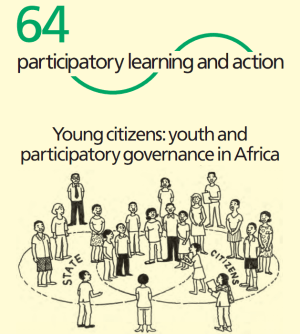
are engaged in social accountability and participatory governance, I suggest downloading and reading the PLA Special Issue 64 on Young citizens: youth and participatory governance in Africa.

[Update: In French now, too!]

PLA 64 goes in depth on the involvement of youth in governance, the particular challenges that youth face in this area and ways young people are overcoming marginalization to participate and make change. It talks through key theories related to good governance, social accountability and social audits and shows concrete examples of putting them into action.

‘Social accountability can be defined as an approach towards building accountability that relies on civic engagement, i.e. in which it is ordinary citizens and/or civil  society organisations who participate directly or indirectly in exacting accountability.  Mechanisms of social accountability can be initiated and supported by the state, citizens or both, but very often they are demand-driven and operate from the bottom-up. Source: Malena et al. (2004).’

Scenes were acted out during the write shop to express how young people might feel about participation and governance initiatives.

PLA 64 aims to share practices that avoid instrumentalizing children and youth or using them as puppets or tools in achieving organizational or political aims. The idea of ‘seeing like a young citizen’ was critical during the writing process, as were authentic examples of youth participation and leadership in good governance and social accountability processes.

‘…Young people in Africa are challenging the norms and structures that exclude them, engaging with the state and demanding accountability. This special issue describes how young people are exercising their right to participate and developing the knowledge, skills and confidence to affect to [sic] change. It explores methods of communication, appraisal, monitoring and research which are involving young people in decision-making spaces. It asks how can we re-shape how young people perceive and exercise citizenship? How can we redefine and deepen the links between young citizens and the state?

This issue demonstrates the persistence, passion and enthusiasm that youth bring to governance processes – and how they are driving change in creative and unexpected ways. It highlights how young Africans are addressing the documentation gap that surrounds youth and governance in Africa and enabling other participatory practitioners – young and old – to learn from their experiences.’

Topics covered in the edition include: youth as young citizens; digital mapping and governance; participatory video; youth poverty forums; youth capturing pastoralist knowledge for policy processes; youth and HIV/AIDS laws; children’s shadow parliaments; mentoring and role modeling to encourage girls’ participation; youth-led violence prevention; local governance work; and budget advocacy.

In addition to the articles by practitioners, researchers, and youth themselves, PLA 64 provides tips for trainers on how to carry out specific activities and programs, exploring expressions and forms of power in youth governance work, conducting a social audit, using a community scorecard as an alternative form of budget tracking when governments lack openness, games to play to engage children in budget monitoring, and conducting youth participatory situation analyses.

The journal closes out with a list of written resources to support youth and participatory governance work, events and training. It also provides links to online or technology enabled examples such as Africa Technology and Transparency Initiative, Daraja, the Technology for Transparency Network, and Twaweza.

PLA 64 offers an opportunity to broaden thinking and learn from youth and practitioners who are involved directly in good governance initiatives in East, West and Southern Africa. It is also a good reminder that although new technologies can enable, enhance or even transform accountability and governance efforts, there are many ways to work on accountability and good governance, and technology is not always the driving force behind this work.

*****

Background: A call for submissions to the PLA journal went out about a year ago. Submissions were then reviewed and ranked by an editorial team. Final authors selected were from Kenya, Zimbabwe, Sierra Leone, Nigeria, Mali, Senegal, Lesotho, the US, the UK, Ghana, Germany, Cameroon, Somalia and Liberia. Authors attended a “write shop” organized by Plan UK, the Institute of Development Studies (IDS), and the International Institute for Environment and Development (IIED) in March to share different youth participatory governance initiatives, reflect on challenges and successes therein, gather tips on better writing, and write up final articles. I attended the write shop and a colleague and I have an article included on digital mapping and local governance work.

Read Full Post »

Civil society has been working for years on participation, transparency, accountability and governance issues. Plenty of newer initiatives (small and large) look at new technologies as a core tool in this work. But are these groups talking and learning from each other? What good practices exist for using new technologies to improve transparency, accountability and governance? What are some considerations and frameworks for thinking about the role of new technologies in this area of work? What needs consideration under this broad theme of good governance?

Tuesday’s Technology Salon* in New York City focused on those issues, kicked off by our two discussants, Hapee de Groot from Hivos and Katrin Verclas from Mobile Active. Discussion ensued around the nuances of how, with whom, when, why, and  in conjunction with what do new technologies play a role in transparency, accountability and good governance.

Some of the key points brought up during the Salon**:

What is “good governance?”  The overall term could be divided into a number of core aspects, and so the discussion is a big one and it’s complicated. Aid transparency is only one small part of the overall topic of good governance.

The World Bank definition includes aspects of:

  • Participation of citizens in political processes, freedom of expression and  association, free media
  • Political stability and absence of violence
  • Government effectiveness in the delivery of services
  • Regulatory quality, rule of law
  • Control of corruption

There’s a need to look at governments and aid, but also to look at the private sector. Some commented that aid transparency is in vogue because donors can drive it but it’s perhaps not as important as some of the other aspects and it’s currently being overemphasized. There are plenty of projects using ICTs and mobiles in other areas of governance work.

More data doesn’t equal more accountability. Data does not equal participation. Can mobile phones and other ICTs or social media reduce corruption? Can they drive new forms of participation? Can they hold power accountable in some ways? Yes, but there is no conclusive evidence that the use of new technology to deliver data down from governments to people or up from people to governments improves governance or accountability. The field of tech and governance suffers from ‘pilotitis’ just like the field of ICT4D. Some participants felt that of course open data doesn’t automatically equal accountability and it was never the idea to stop there. But at the same time, you can’t have accountability without open data and transparency. Opening the data is just the first step in a long road of reaching accountability and better governance.

Efficient vs transformational. Transactional efficiency within a system is one thing. Transformation is another. You can enhance an existing process from, say, writing on paper to calling on a landline to texting in information, thereby improving accuracy and speed. But there is something more which is the transformational side. What’s most interesting perhaps are those ways that ICTs can completely alter processes and systems. Again, there are a lot of promising examples but there is not much evidence of their impact at this point. One participant noted that current evidence seems to point toward the integration of mobiles (and other ICTs) into existing process as having a greater impact and quicker uptake within large, bureaucratic systems than disruptive use of new technologies. But the question remains – Are the systems good systems or should/could ICTs transform them to something totally different and better or can ICTs help do away with poorly working systems entirely, replacing them with something completely new?

Is open data just a big show? Some alluded to opaque transparency, where a government or another entity throws up a bunch of data and says “we are being open” but there is no realistic way to make sense of the data. Some felt that governments are signing onto open data pacts and partnerships as a fake show of transparency. These governments may say, “The data base is available. Go ahead and look at it.” But it costs a lot of money and high level skills to actually use the data. In addition, there is a need for regulatory frameworks and legislation around openness. Brazil was given as an example of a country that has joined the open government partnership, but as yet has no regulatory framework or freedom of information act, even though the country has a beautiful open government website. “Checks and balances are not inherent in the mobile phone. They need to be established in the legislation and then can be enhanced by mobile or other technology.” Open Data Hackathons can help turn data into information. The question of “what does open data actually mean?” came up also and the “cake test” was recommended as one way of defining “open”.

Is open data an extractive process?  Some at the Salon cautioned that the buzz around Open Data could be a bit false in some ways, and may be hyped up by private companies who want to make money off of nice data visualizations that they can sell to big donors or governments. The question was raised about how much data actually gets back to those people who provide it so that they can use it for their own purposes? The sense was that there’s nothing wrong with private companies helping make sense of data per se, but one could ask what the community who provided the data actually gets out of this process. Is it an extractive data mining process? And how much are communities benefiting from the process? How much are they involved? Mikel Maron wrote a great post yesterday on the link between open data and community empowerment – I highly recommend reading it for more on this.

Whose data? A related issue that wasn’t fully discussed at the Salon is: who does the information that is being “opened” actually belong to (in the case of household surveys, for example)? The government? The International NGO or multilateral agency who funds a project or research? The community? And what if a community doesn’t want its data to be open to the world – is anyone asking? What kind of consent is being granted? What are the privacy issues? And what if the government doesn’t want anyone to know the number of X people living in X place who fit X description? Whose decision is it to open data? What are the competing politics?

For example, what if an organization is working on an issue like HIV, cholera, violence or human trafficking. What if they want to crowd source information and publicly display it to work towards better transparency and improved service delivery, but the host government country denies the existence of the issue or situation? In one case I heard recently, the NGO wanted to work with government on better tracking and reporting so that treatment/resources could be allocated and services provided, but when the government found out about the project, they wanted control over the information and approval rights. Government went so far in another case as to pressure the mobile service provider who was partnering with the organization, and the mobile service provider dropped out of the project. These are good reminders that information is power and openness can be a big issue even in cases not initially identified as politically charged.

Privacy and security risks. The ubiquity of data can pose huge privacy and security concerns for activists, civil society and emerging democracies and some at the Salon felt this aspect is not being effectively addressed. Can there really be anonymous mobile data? Does the push/drive for more data jeopardize the political ambitions of certain groups (civil society that may be disliked by certain governments)? This can also be an issue for external donors supporting organizations in places like Syria or Iraq. Being open about local organizations that are receiving funding for democracy or governance work can cause problems (eg., they get shut down or people can be arrested or killed).

Can new ICTs weaken helpful traditional structures or systems?  Is new tech removing some middlemen who were an important part of culture or societal structure? Does it weaken some traditional structures that may actually be useful? The example of the US was given where a huge surge of people now engage directly with their congressperson via Twitter rather than via aggregation channels or other representatives. Can this actually paralyze political systems and make them less functional? Some countered, saying that Twitter is somewhat of a fad and over time this massive number of interactions will settle down, and in addition, not everyone gets involved on every issue all the time. Things will sort themselves out. Some asked if politicians would become afraid (someone – help!! there is a study on this issue that I can’t seem to locate) to make some of the secret deals that helped move agendas forward because they will be caught and so openness and transparency can actually paralyze them? In other words is it possible that transparency is not always a good thing in terms of government effectiveness? The example of paying Afghan police directly by mobile phone was given. This initiative apparently ended up failing because it cut decision makers who benefited from bribes out of the loop. Decoupling payments from power is potentially transformational, but how to actually implement these projects when they disrupt so much?

Does new technology create parallel structures? Are parallel structures good or bad? In an effort to bypass inefficient and/or unaccountable systems, in one case, private business owners started their own crime reporting and 911 system to respond and accompany victims to report to the police and follow up on incidents. Questions were raised whether this privatization of government roles was taking justice into ones’ own hands, forcing the government to be accountable, allowing it to shirk responsibilities, or providing a way for government to see an innovation and eventually take on a new and more effective system that had been tried and tested with private funds. This same issue can be seen with parallel emergency reporting systems and other similar uses of ICTs. It may be too early in the game to know what the eventual outcomes of these efforts will be and what the long term impact will be on governance. Or it may be that parallel systems work in some contexts and not in others.

***

The Salon could have gone for much longer but alas, we had to end. Dave Algoso covers some of the other ideas from the Salon in his post Technology for Transparency, Accountability and Governance, including how to approach and define the topic (top down vs bottom up? efficiency vs transformation?) and the importance of measuring impact.

Thanks to UNICEF and Chris Fabian for hosting the Salon. Thanks to Martin Tisne from the Transparency and Accountability Initiative for sparking the idea to choose this topic for the first Technology Salon in NYC, and thanks to Wayan Vota for inviting me to coordinate the series.

Contact me if you’d like to be on the invitation list for future Salons.

*The Technology Salon is sponsored by the UN Foundation’s Technology Partnership with the Vodafone Foundation as a way to increase the discussion and dissemination of information and communication technology’s role in expanding solutions to long-standing international development challenges. Technology Salons currently run in Washington DC (coordinated by@wayan_vota) and San Francisco, with New York City as the latest addition, coordinated by yours truly.

**The Salon runs by Chatham House Rules, so no attribution has been made in the above post.

Read Full Post »

This is a guest post/cross post from Jamie Lundine who works with Map Kibera. The original is posted on Jamie’s blog Health Geography.

The Youth Empowerment through Technology Arts and Media (YETAM)  project is a joint initiative of Plan International and local partners in 6 African countries (Cameroon, Kenya, Mali, Mozambique, Rwanda and Senegal). The project was initially funded by Nokia but is now supported by the Finnish Ministry of Foreign Affairs via Plan Finland. In Kenya, YETAM is being implemented in Kwale County, with youth from 3 districts receiving training in digital media, including audio recording, visual arts, and various new technologies.

In Kwale County, the YETAM project has thus far empowered young people to employ video, audio recording and radio programmes to explore issues of child protection and child rights. Youth have also used information communication technology (ICTs) including Facebook to connect and explore governance issues and discuss accountability within local and national institutions.

Through the YETAM methodology, technology, arts and media are used to “start the conversation” about community issues – a strategy that has also been employed by our teams– through work that started first in Kibera and expanded and evolved in Mathare Valley with the support and mentorship of Plan Kenya.

Our team was first approached by Plan Kenya in July 2010 to support a 3 day mapping and new media training which were components of a week-long training and reflection for the YETAM project.

On October 3rd, Primoz Kovacic, Jamie Lundine, Zacharia Wambua and Maureen Omino joined Plan staff, members of Plan Kenya’s partner youth groups, and District Youth officers from Kwale County to begin a process of youth-led community mapping.  The purpose of the mapping is to support the on-going YETAM project and feed into youth-led advocacy work in the 3 districts. We were very conscious that we did not want to do “mapping for the sake of mapping” but rather hoped to add value to existing projects and programmes through supporting the collection of issue-specific information that could be used together with other information

The first step in the process was a “feasibility assessment.” Our work in Mathare, Kibera, Mukuru and some rural areas (Taita Hills, Mt Elgon) had given us the technical skills and understanding of the opportunities and challenges of digital media, particularly in relation to the type of youth-led advocacy work that Plan Kenya supports, however we were not familiar with the particular environment in Kwale. The first week we spent in Kwale, 30-some youth and Plan Kenya staff convened together at the Kaskazi Beach Hotel in Ukunda (south of Mombasa).

The mapping process involves young people from three of Plan Kwale’s partner organizations. The groups are:

  • Kwale Youth and Governance Consortium – with representations from the National Youth Councils from the 3 districts in Kwale
  • Kwale Young Journalists – a coalition of 14 organizations in Kwale distrct who have been trained to produce audio clips and are working on licensing for a radio station to deal with children’s issues.
  • Dzilza eco-tourism group – a community based organization based in Samburu along the Nairobi-Mombasa highway

We spent the first day of the feasibility assessment going over expectations and exploring the concept of mapping, with practical examples of our work in Kibera, Mathare and Primoz’s work in Taita Hills. The expectations from the youth included “meet new friends” & “exchange ideas”, “know more about mapping”, gain “more skills on ICT and mapping”, understand “the impact of mapping to the community” and “how to contextualize mapping and social life.”  It was clear from the expectations that the youth were excited about and interested in the process we were about to embark on and had come prepared to embrace mapping and digital technology as part of their toolset for advocacy and action within their communities – it is up to us to impart our knowledge to further empower them in their work.

After a morning of discussions, we needed to start to understand the geographic environment and social issues facing the young people in their communities.

This would help us facilitate the mapping process and organize the 3-5 weeks of data collection and field work.

First we asked each group to prepare a presentation of their group including, who they are, where they work, the main issues they deal with and activities they undertake. We also wanted to know the stakeholders they engage with on the various issues and during activities they carry out.

The youth were asked to draw a map of Kwale county. They divided into the three groups – Kwale Young Journalists, Kwale Youth and Governance Constorium and Dzilza. The exercise took longer than expected but the teams had interesting and thoughtful discussions of what features to include on the map and how to represent the entire county – which proved to be more challenging than anticipated.

Realizing the challenges of mapping the entire county and that each group needed to narrow down a smaller geographic region and specific issue to map – on Day 2 we asked the youth to break out into groups and draw the 3 districts that make up Kwale County. Interestingly, they divided themselves into groups based on who lived in what district instead of going into teams based on the region in which their group worked.

The smaller geographic region and the previous days experience made the paper-mapping much easier. The maps were more specific and clear than on Day 1!

Kinango District Paper Map

The youth also identified a wide ranging list of approximately 10 issues for each District. In Msambweni for example, the youth discussed child abuse, sexual exploitation and child trafficking (in relation to the tourism industry in and around Ukunda), drug abuse, disasters such as floods and drought, poor academic performance in schools, early marriages and pregnancy, deforestation, lack of birth registration and ID cards, environmental pollution and squatters. This wide range of issues are important to note and discuss – however for focused advocacy work and 3-5 weeks of data collection it would be unmanageable.

Kwale District Paper Map

So at the risk of discussion fatigue, we took the youth on an afternoon of setting up GPS devices to prepare for field work – to introduce GPS data collection and start to understand the scope of the issues we could focus on.

On the third day we focused on the major issues within each group. We asked the young people to come up with the main issue or challenge their work was trying to tackle, their proposed solution, the action steps required (including relevant stakeholder engagement) and the data required to work toward the proposed solution.

Kwale Youth and Governance Council

The main challenge/issue identified by KYGC was social accountability (or lack of accountability due to poor governance and leadership). Their proposed solution involves “empowering society” through community forums, sensitization of the community on social accountability and “participation and inclusion [of community members] in decision-making process.” This will include activities such as stakeholders meetings, participatory planning & implementation of government projects, community involvement in monitoring and evaluation of projects, involvement of the community in the mapping, making recommendations and impact assessment. The team wants to focus on devolved government funds, including the Constituency Development Funds (CDF).

The data the team requires to support their work in social accountability are the following:

  1. Number of projects (aggregated from the data collection process)
  2. Budget allocation for each project
  3. Community participation (identification, place, project, proposals , capacity project committee)
  4. Relevance
  5. Impact (no of beneficiaries, workmanship, quality)
  6. Observations
  7. Project Categories
  8. Recommendations

Kwale Young Journalists

The Kwale Young Journalists chose to focus on two issues related to child protection: child labour & early pregnancy. The tean proposed that these issues can be tackled mainly through increased awareness of children and parents about the importance of education.

The action steps or activities for this proposed solution include 1) reporting cases of child labour and early pregnancy to the administration and the voluntary children officers 2) guidance and counselling of children and parents 3) holding barazas with the community through the administration 4) introducing life skills clubs in schools and villages (for example music, accounts, and journalisms clubs, etc)

Data required

  1. Reasons and vulnerability to child labour
  2. Forms of child labour
  3. The number of children involved in child labour
  4. The number of parents not taking care of the children
  5. The number of people
  6. The number of orphans
  7. The most vulnerable areas
  8. Family status
  9. Blended families
  10. Number of pregnant girls
  11. Reasons of vulnerability to early sex
  12. Number of schools most affected
  13. Number of girls who have gone back to school after giving birth
  14. Data on the number of reported cases
  15. Data of the effects of early pregnancy

When mapping child protection issues, we are aware that some of this data may be extremely sensitive and has the potential to result in further victimization of children and families if publicized. We suggested to the team to focus on publicly available information, such as information on schools, cases, cases of school-drop out, qualitative and quantitative information on the reasons for school drop-out and safe places for vulnerable children.

Eco-tourism in Samburu

The major issue that the Dzilaz group in Samburu will focus on is eco-cultural tourism and human-wildlife conflict. The causes of tension between tourism and culture, as well as wildlife conservation is exacerbated by the conditions in the semi-arid area, where the Dzilaz group operates. Poor government policy, animal migration and poaching and killing of animals are related issues the group is concerned about. The solutions proposed by the group include a combination of advocacy, participation in policy and livelihood activities. They suggested the community work on afforestation and reforestation, installing proper fencing eg electrical fence along animal migratory routes, enforce good governance policy through community participation with other stakeholders, liaise with the relevant authorities for technical support, for example lobby with KWS to permit us to introduce watching, animal hunting of antelope. Actions toward these solutions include door to door campaigns, awareness meetings, seminars/trainings, empowering communities on policy development, identifying resources for exploitation and meeting stakeholders.

Data required

  1. Points of human-wildlife conflict
  2. Number of people affected by the human wildlife conflict
  3. Distance of one school to another
  4. How many have been compensated for human-wildlife conflict
  5. Degree of damage to people, crops, properties

The brainstorming of data/information that the 3 groups hope to collect is a great start, however several concerns arose – including issues of privacy and child protection. Our on-going work focuses primarily on public datasets so we encouraged the youth to think about public assets rather than private data. We also realized that the type of information the teams are interested in is a combination of qualitative and quantitative information – GPS data collection will be only part of the information solution for this work. This week, Primoz, Zach and Maureen are working with each team to create data collection forms to concretize this information and decide on the strategy for further documentation to support GPS data collection and mapping.

Field work – Mapping Ukunda

The final two days of the feasibility assessment involved data collection and practical field work with the GPS devices. This was to begin to build skills, excitement and a better understanding of the practicalities of mapping.

The team of 30 youth split up into the three teams and divided the area to be mapped among them. Some walked along the main strip along Ukunda beach – from Kaskazi hotel to Congo Mosque – including the small village of Gombado, others mapped the area between the beach front and Ukunda town and the last team mapped Ukunda town itself.  Three hours of walking through the area and collecting data in the hot sun proved to be quite tiring for everyone. In two afternoons of field work the teams collected over 350 points of interest and mapped several roads and paths that were not previously mapped. The youth also learned how to digitize over the GPS points and tracks they had collected in the field to contribute data to OpenStreetMap and begin making a map!

Mapping Ukunda

Read Full Post »

Last week’s conference: “The Power of Information: New Technologies for Philanthropy and Development” hosted by the Indigo TrustThe Institute for Philanthropy and The Omidyar Network was somewhat of a ‘who’s who in ICT4D’. It provided an incredible opportunity to hear and discuss what some of the best minds are up to with regard to technology and innovation in development. (Check the conference videos here for more.)

The purpose of the conference was to bring innovators and donors together. In addition to the panelists, many other leaders in the field of social media, ICT4D and innovation as well as a variety of donors and funders were around to chat with during breaks, lunch, dinner and drinks. Conference topics included transparency, accountability and democracy; health; finance and rural development; youth empowerment and education; human rights; and fostering innovation and enterprise.

I got a lot out of the conference, but want to focus on two areas of specific interest:

  1. Balancing innovation (inspiration) and process (sustainability)
  2. Building bridges between new technologies and existing initiatives

Balancing innovation (inspiration) and process (sustainability)

Philip Thigo from SODNET started the day off with an introduction and a great set of questions* to explore around ICTs and development.  I found myself nodding and frantically typing and tweeting to catch and share as many of them as I could:

  • Are technologies just tools or are they the engine of transformation?
  • Are they universal? Can we cut and paste them from one context/culture to another?
  • Is it about connecting old and new tech for use by marginalized people and groups? Should we be creating interfaces between new and old tech?
  • What about power hierarchies with relation to access? Will disempowered communities automatically adopt technology and turn its use and information into action?
  • What about the challenge of laws and limitations on technologies and the selective enforcement of these laws by the state with regard to access, ownership, and control of information and knowledge?
  • What are the accountability, ethics and responsibilities of technology activists and developers? How are we evaluating our actions and decisions and their impact on people lives?
  • Is it worth taking the risk?

Philip emphasized the need to fail fast, learn fast, and move fast when working in this area. “We need to think about people first, not technology first,” he said. “We should strike a balance between supporting innovators (inspiration) while at the same time strengthening process (sustainability).”

I couldn’t agree more.

Though there is a sense (and a couple panelists, including Philip, commented) that anyone can use social media, that people don’t need training, and that ideally you should just hand over the tools and let people get to work, I do think that ‘striking a balance’ is critical, especially when talking about funding and implementing particular initiatives that are seeking specific outcomes related to development. This isn’t to say that we need an over orchestrated process, but I do think it’s important to remember that not everyone can pick up technology as easily as those who are immersed and surrounded by it 24/7.

Yes, technology needs to be ‘demystified’ and tech is getting simpler and simpler, but based on experience working with staff, community leaders, local organizations, youth and teachers in rural Benin, Kenya, Mozambique, Senegal, Mali, Cameroon, Rwanda and Ghana, it’s clear to me that not everyone can just jump in and go. Not everyone speaks English, not everyone knows about coding, not everyone has used technology before, not everyone feels confident even if they are very curious, and some people want additional support to get going.

In addition, ICT4D-type projects need good overall design, beyond the technology piece. They need a good think-through in terms of sustainability (for programs that are meant to endure), local context, unintended effects, privacy and protection (especially if they are human rights related, work with vulnerable people or could put users in any kind of risk).

As many would agree, the tech is only 10% of it. There is a trend toward developing more detailed user manuals and guidance on what to think about when designing initiatives using new tools like Ushahidi because of demand for this from users. I do think that donors, implementers and innovators need to keep that in mind, and be sure that they are planning for and funding that other 90% [eg, all the ‘boring’ stuff that makes the 10% of the ‘cool and -exciting’ stuff work – like good planning, core staff, logistics, monitoring and evaluation or as the link I mentioned above says, outreach, branding, translation, verification, documentation, integration with other systems….]. I also think donors should be supporting the local strengthening of people and organizations’ skills, capacities and strategic thinking via funding to innovation and tech hubs and support to universities and other kinds of opportunities for further education, training and experimentation in the area of technology for people in ‘developing’ countries, starting from local context and local realities.

Building bridges between new technologies and existing initiatives

Some major transparency initiatives are gaining more and more traction at the moment, for example the recently-launched open government program led by the US and Brazil (and rejected by India) and the International Aid Transparency Initiative (IATI). In addition, there are some really interesting locally led transparency initiatives happening all over the place. The panel on Transparency, Accountability and Democracy highlighted a number of tech tools and platforms that are being used to enhance this area of work (including  Frontline SMSMy Society, and Huduma) and some broad thinking around the topic by Owen Barder, who highlighted various aspects of aid transparency and the giant disconnect in terms of what the general public, governments receiving aid, and donors want to know about aid efforts.

Following the panel, a great question came up from Martin Tisne from the Transparency and Accountability Initiative (TAI).  He said that the transparency and accountability field has been around and funded for many years but it is atomized. He wondered how the different initiatives represented on the panel all fit into the broader picture. Owen agreed that atomization is a very serious concern. “The answer to it is open standards that enable people to take information from all these sources and mash it up and make it available to everyone. This is ‘unsexy’ and doesn’t photograph well but it’s potentially revolutionary in the way that the web has revolutionized our lives.” Owen emphasized the need for donors to invest in areas that maybe don’t seem so innovative and exciting, but that are critical to moving the field forward. (This goes back to the first point – the need to balance innovation and process, and funding for the other 90%).

Stephan King from the Omidyar Network continued during the donor panel to talk about transparency and accountability. He added that “tech tools are not a panacea,” and asked how technology can supplement and complement the work that many organizations are already doing. “Many charities and non-profits don’t know how to use technology,” Stephan said, commenting that there is a role for Omidyar and others to help organizations realize the benefits and utilities of technology to help reach scale, innovative solutions, and to provide feedback loops. “Technology is important in the area of transparency and accountability because it can engage citizens,” he said. “It allows people to access information in a way like never before.”

Martin (from the Transparency and Accountability Initiative) followed, saying that TAI is a collaborative of major funders who are looking at the whole field of transparency and accountability. The field as a whole is about 20-25 yrs old, he said, and is currently very atomized. “We need, as funders overall, to ensure that this growing and exciting community of practice [technology in transparency and accountability] isn’t just another atom within the overall transparency and accountability movement,” he said. “How can technology feed and nurture this overall community of practice? Technology has potential to do something really exciting in our field, to solve problems we’re really poor at, such as scale.” He also talked about the potential for tech to help engage citizens. “This field is and has been monopolized by policy wonks in the cities, in the capitals, but we have an opportunity to reach citizens and that’s really exciting.”

“The vast majority of technology and accountability groups — 95% — however, don’t harness the potential of mobile technologies really strategically, yet the potential is exciting if they did.” Martin asked how we can link organizations with fantastic grassroots networks and/or that really know how to use media with those that are using technology. “If we can crack this complex bridging issue of how to bring the transparency world and the tech world together we will have achieved a huge amount.” It’s not enough to bring government groups and tech groups to the table and think it will happen overnight, he said. “What we are trying to do is to focus on people, on entrepreneurs, on individuals who really understand the problems and the solutions that tech can provide as well as focus on organizations. We find a lot of program officers who know what tech can do or a CEO who has a vision of what tech can do but it doesn’t percolate throughout the organization.” TIA wants to bring together the people who understand the problems together with those who may have the technology solutions. Martin’s idea to bring technology folks together with transparency and accountability folks together to make “tech babies” was a big hit….

These points also resonated strongly with me as someone working in a large development organization that is looking at how to integrate new technologies into its work, and being one of few people within the organization with the specific responsibility of bridging programs and new technologies. It’s  simultaneously comforting and frustrating to know that organizations typically struggle with this and also good to know that some donors are aware of the challenge and willing to support it to be overcome.

Philanthropy and social media

In closing this too-long post, I just want to mention that as background material, Indigo Trust and the Institute for Philanthropy produced an impressive paper called Philanthropy and Social Media, which gives an overview of social media, how it’s being used for communication and social impact, and why social media is important (with separate sections on communication messages, knowledge sharing and reporting, overcoming barriers to inclusion, connecting people, improving service delivery, scaling fast, fundraising, transparency and accountability). The paper also summarizes some conversations with investors in social media. Two charts I find extremely on target are the “tips and advice on investing in social media” and the “roadmap for engaging with social media.” They are both simple and well laid out, and would be useful not only for donors but for anyone who is engaging with social media in development work.

Many thanks to Will and Fran at Indigo Trust for the invitation to participate in the conference!

*See also Charlie Beckett’s great overview of the conference and the key questions he pulled out from the day.

Read Full Post »

FMLN guerrilla with rifle poised in town of Chalatenango, El Salvador, 1988. This photo is from the article referred to below. Original at http://www.ontheissuesmagazine.com, Winter 1994.

A version of this post was originally published on the Peace Dividend Trust blog.

I lived in El Salvador for about 6 months during the civil war and over 9 years post-conflict.  So I was quite interested in the Society for International Development (SID) Congress July 30th panel on the “Nexus of Conflict and Development.”

The panel was composed of a high-powered, high level group of men*, presided over with humor and grace by a woman of the same caliber, Tessie San Martin, President and CEO of Plan International USA, SID Board Member (and my boss!).

Arthur Keys, President and CEO of International Relief and Development introduced the panel, asking questions like:  Can development be done in a conflictive environment. Is settlement of conflict needed before development can take place? Can development assistance be used as a tool for peacemaking?

Keys noted the changing, fluid environments in conflict zones and their inherent complexities – the interconnectedness of many variables that cannot be addressed in isolation.

Within that context the panelists discussed a variety of issues, from the changing nature of conflict and violence, to the pillars of post-conflict reconstruction, to local ownership and local government credibility and legitimacy to the role of the military in ‘delivering’ development to front loading funds in conflict areas to USAID branding in conflict zones. Listening to the discussion, I realized many of the questions that we were asking ourselves 20 years ago in post-conflict El Salvador are still unresolved today.

One of the most interesting conversations of the panel was catalyzed by San Martin’s question on local ownership and legitimacy. “We’re talking about ownership and local voices, but one question is whose local voice? There are a number of vulnerable groups,” she said. “How do you deal with the question of ‘whose voice’?”

Donald Steinberg, Deputy Administrator of USAID, answered by telling the story of his experiences negotiating a peace agreement in Angola under Bill Clinton.

“When I was asked how this agreement benefits women, I answered that not a single part of this agreement discriminates against women,” he said. “But what I learned is that a peace agreement that calls itself gender neutral is actually working against women.”

The Angola agreement was based on 13 separate amnesties, he said.

I learned that ‘amnesty’ means ‘men with guns forgive other men with guns for crimes committed against women.’”

Steinberg went on to comment that the closest woman to the peace process in Angola was a female interpreter, who would “raise her eyebrows when we men did something stupid.”

He described the peace agreement as being “come and hand in your weapons and you get benefits.” But most women involved in the conflict were not bearing arms, they were playing other roles. So when demobilization came, they got no benefits. On top of that, “we sent men back to communities where women had become very empowered in their absence,” he said. “The men returned and there was no role for them. Many drank off all their benefits. They started beating their wives. The incidence of sexual aggression rose. So you saw that the end of the one conflict brought about a new insidious form of violence against women.”

Another area where the peace agreements forgot about women was in de-mining activities. “We cleared the roads of mines,” said Steinberg. “But we didn’t clear the fields. The water points. Places where women gathered wood. As communities returned home, and women went back to collecting water and firewood, they were blowing their legs off with remarkable regularity.”

The peace process started to fall apart a couple of years later, he said, but by then it was too late to bring women’s organizations into the process. “We tried to work with women’s groups but they would say, ‘This isn’t about us, it was about the men with guns. It hasn’t involved us at all.’” The country erupted into war again.

Steinberg said he was happy that USAID is addressing these issues now. “The first thing I put into place was support to women’s participation in peace processes and to provide them with protection to do so, as it’s dangerous for women to be involved in this work. Nothing about them without them – this is our phrase,” he said, and cited UN Security Council Resolution 1325 as a strong influence on him:

“The Security Council adopted resolution (S/RES/1325) on women and peace and security on 31 October 2000. The resolution reaffirms the important role of women in the prevention and resolution of conflicts, peace negotiations, peace-building, peacekeeping, humanitarian response and in post-conflict reconstruction and stresses the importance of their equal participation and full involvement in all efforts for the maintenance and promotion of peace and security. Resolution 1325 urges all actors to increase the participation of women and incorporate gender perspectives in all United Nations peace and security efforts. It also calls on all parties to conflict to take special measures to protect women and girls from gender-based violence, particularly rape and other forms of sexual abuse, in situations of armed conflict. The resolution provides a number of important operational mandates, with implications for Member States and the entities of the United Nations system.”

Ambassador Rick Barton, US Representative to the Economic and Social Council of the UN, agreed that the role of women is critical, and “it starts with who’s negotiating the peace process.” Barton noted that the percentage of women in peace negotiations is 5-7%, and that it’s a recurring concern. “If you are not there at the start of the race, it will be designed in a certain way and you will be disadvantaged. I’m hopeful that the UN Women’s Commission, led by Michelle Bachelet will bring attention and focus to this issue.”

“What about men and boys?” a woman in the audience asked. “It’s great to empower women, but what are you doing to change the attitudes and beliefs that men have? How can we get them to realize we are equal?”

Barton agreed that getting men’s attention is critical. “These are not women’s issues, they are society’s issues. Men and boys need to come a long way.”

“It’s easy to work on gender with this administration,” commented Steinberg, noting that USAID is trying to institutionalize it through the position of Senior Coordinator for Gender Equality and Women’s Empowerment. “It’s not only about protecting women or about victimization,” he said. “It’s about changing attitudes and instilling into our DNA the notion that women are key to building stable societies, ensuring sustainable growth and recovering from conflict situations. We need to focus on gender in addition to women.”

Sitting, there, listening to the panel discussions, I kept thinking about a Salvadoran friend from some 20 years ago. She was from a ‘conflict zone’ but would have never called herself an ex-combatant. For several years, she had moved around with the guerrilla, cooking and supporting the cause, but didn’t carry a weapon. Post conflict, she had lingering health problems stemming from that period, when she had been chronically malnourished. During her time with the guerrilla, she had contracted glandular TB, a condition that embarrassed her. At 34 years of age then, she had the ruddy, freckled and fresh face of a young girl, but she wore dentures as she had lost all of her teeth. She worked cleaning an office and always struggled financially. I’m not sure she ever got any benefits from demobilization.

I’m also reminded of a rather large post-conflict program that I was responsible for monitoring at the time, together with a few other privately funded donor agencies. Aimed at providing community-based psycho-social support to returning ex-combatants in several zones formerly held by the guerrilla, the program ended up mostly supporting women and children who were suffering domestic violence at the hands of the demobilizing men. The male ex-combatants either didn’t feel they needed psycho-social support or didn’t want to face the stigma of seeking it out, but the women took advantage of it. Community psycho-social support agents fully recognized that they were treating a secondary effect and not addressing the real causes of the violence.

According to a 1994 article by Betsy Morgan in On the Issues Magazine, ”Nearly one third of the FMLN guerrilla forces, who fought for 12 harrowing years in the mountains, were women. But neither of the restructuring plans [that of the government or that of the rebels] directly addressed women’s issues: equality in education, health care, job opportunities, and legal justice in instances of rape and domestic abuse…. Two female commandantes from the FMLN were on the negotiating team. However, when the peace accords were signed on January 16, 1992, all the signatories were male. The subsequent reconstruction plans called for demilitarization, but neither the government nor the FMLN addressed the hidden violence – domestic abuse, rape and incest – that invariably accompanies a military climate of violence, and neither side made provisions for the fair treatment of female ex-combatants, particularly in terms of land tenure. It can only be concluded that for all of the women’s influence during the war, at the point of peace, the women’s movement was still seen as a thing apart from the arena where real decisions were made.”

There were women involved in all aspects of the war, including negotiating the Peace Accords in El Salvador, but it didn’t guarantee that women’s needs were addressed during the negotiations.  It didn’t ensure that the post-conflict programs agreed to in the Accords were fully funded or that programs were designed and planned with participation of those they were meant to benefit or that women got fair treatment. It did not guarantee that the different efforts were non-politicized or that they were well-implemented. As Keys pointed out when introducing the panel: the nexus of conflict and development is a complex place, with every element impacting on every other, and as Steinberg and Barton pointed out, it’s not only about women, it’s about gender.

I’m glad to see the discussions taking place, and I hope that experiences, failures and successes from places like Angola, El Salvador, Colombia, Iraq, Afghanistan and so many others are fully examined and shared to see what more can be done to create environments where women are in decision-making roles before, during and after conflict; where the broader implications of gender and gender roles are considered; and where both women and men who achieve positions of power are really reaching out to, listening to and representing those who don’t have a seat at the table.

*Members of the panel:

Tessie San Martin, President and CEO, Plan International USA and SID Board Member (moderator)

Ambassador Rick Barton, US Representative to the Economic and Social Council of the United Nations

Alonzo L Fulgham, Vice President, IRD

Donald Steinberg, Deputy Administrator, USAID

Tom Wheelock, Vice President and Sr Director, Communities in Transition, Creative Associates

Read Full Post »

This week I came across the “Feedback Mechanisms in International Assistance Organizations” report by CDA Collaborative Learning Projects, based on research undertaken by the Listening Project and funded by the Gates Foundation.

The findings and recommendations are very intuitive and it’s nice to have them gathered in one place. The report can serve as a starting point or a pause-and-reflect moment for organizations working specifically on humanitarian accountability as well as those who are looking to integrate better ‘downward’ or beneficiary feedback into development or humanitarian work overall. It also offers good food for thought for those interested in crowd sourcing and the use of new technology for citizen engagement and input.

The report is not too long, and it’s easily laid out for a quick read, so I’d recommend downloading the .pdf and digesting it fully.

To whet your appetite, here are some points I found interesting:

Why do agencies seek recipient feedback?

Four reasons were identified in the report: to improve accountability, to improve effectiveness, to respond to donor requirements or media pressure, and to increase security for staff. Feedback from recipients* was seen to give staff the fuel needed to pressure higher-ups for necessary changes in programming; beneficiary feedback often improved program quality and recipient satisfaction, and seeking dialogue and communication with communities tended to reduce threats of violence. When accountability was a donor requirement but wasn’t part of a larger organizational buy-in or value, unsurprisingly, initiatives were less successful.

To many reading this post or who may read the CDA report, the benefits of participation and feedback and accountability are already obvious, nonetheless it’s  good to see them captured and documented in a report as a support to those who are trying to establish accountability and transparency mechanisms in less-friendly or convinced atmospheres.

Other key points (any quotes come directly from the report):

  • All practitioners interviewed for the study “expressed their unequivocal commitment to participatory and inclusive approaches to humanitarian and development work, and placed significant emphasis on accountability mechanisms.” In addition, many organizations have signed different charters and standards including SPHERE  Guidelines, the Humanitarian Accountability Partnership (HAP) Standard in Accountability and Quality Management and the INGO Accountability Charter. This rather contradicts the impression the media often likes to give about aid agencies as being totally unaccountable to anyone. Or maybe certain parts of aid agencies are more interested and prone to seek accountability and transparency than others.
  • The report says, however, that there are still issues with continuous feedback loops and information doesn’t always return from whence it came. “Typically information gathered from primary stakeholders flows through different parts of organizations, but decisions are rarely communicated back to communities.” One could also ask how often this feedback (or similarly, any information, or data) is returned to communities in accessible formats so that they can use it as well for their own purposes.
  • Good accountability mechanisms are not possible without management buy-in or staff competency. Managers play a critical role in “creating incentives and requirements for field staff to regularly solicit and utilize feedback.” Organizations need to invest in the skills necessary to ensure honest feedback can happen at community level, and/or among the various people and organizations involved (community members, CBOs, local partners, local staff, management staff, headquarters, government, etc).
  • Different agencies are working to develop frameworks to improve feedback and accountability mechanisms. “Some of these new approaches have built-in mechanisms for integrating recipient voices into program strategies and operations.” Some organizations have been collecting primary stakeholder feedback and sharing information with recipients for years as part of participatory development processes. However, the report says, often the exercises are very focused on individual projects or towards particular practical results and the richness of the feedback is not fully appreciated or systematically fed into broader decision-making processes.  “The practices of systematically listening to, gathering and analyzing people’s perspectives, recommendations and complaints have not become routine in many agencies.”
  • Feedback mechanisms need to be designed together with recipients. “Mechanisms must also be appropriate to the specific contexts where they are intended to operate, and agencies have to consider the most appropriate name for the [system], channels, and methods for raising complaints, and culturally appropriate ways of responding.” This is especially important in tense environments or with people who are not accustomed to voicing their opinions.
  • Trust is important, and according to the report is “the first step in getting meaningful feedback. Providing information about the goals and expectations of the organization is the first step in building trust…. Organizations need to establish systematic procedures for reviewing, investigating and responding to feedback or complaints. All this needs to occur in a consistent, timely manner for people to believe in the system and use it.” My own experience with children and youth participation initiatives, has taught me it’s also critical to discuss and agree on clear and honest expectations about what can and will be done with the feedback, and the degree to which feedback will actually be able to change a situation. This goes back to the report’s point on management buy-in and institutional systems. Unless your organization really wants to hear the feedback, is willing to change itself or its actions or viewpoints to respond to the feedback, and has the internal capacity to respond and modify how it’s doing things, asking people what they think can be really tricky and potentially demoralizing for all involved. It’s never nice to hear people say “why did you ask us if you didn’t want to know” or “what is the point of knowing what we think if you’re not going to change?”
  • New and emerging approaches are being tested, including those that use innovative tools and technologies such as SMS and social media. However, the same principles apply to these new technologies as to any other type of feedback loop, and it’s clear that there are still challenges with new technologies.  As mentioned earlier in the report “Most organizations that were successful in gathering feedback… and distributing information back… found it necessary to have more than one mechanism in place…in order to provide options for all of the different groups within the local community to provide feedback and to get information.” This is especially true with new technologies, given the large numbers of people left out of feedback loops due to cost, literacy, age, gender, and access if only SMS or social media are used. Specific challenges with new technologies are highlighted in the report, such as the case of Haiti where an SMS service was set up and people were very willing to use it, “but the agencies had not incorporated a way to monitor the replies and feedback. This resulted in some frustrations and a lost opportunity for a feedback loop between recipient and aid agencies.”

Page 17 of the report offers some good examples of what effective feedback loops look like, page 20 lists several areas that need investment and incentive to ensure effective feedback mechanisms and to guarantee that information is properly gathered and well-utilized, and page 23 offers a list of recommendations for effective and comprehensive feedback loops.

Read the full report here.

*I’m not a big fan of the terms ‘recipient’ and ‘beneficiary’ but have used them here because they are the terms used in the report.

Related Posts:

Ian Thorpe does a good job of commenting some of the portions of the report I didn’t expand on:  “Listening to the people we work for

Read Full Post »

This is a guest post by Jamie Lundine. Jamie is a health geographer who works with Map Kibera in Kenya. We first met about a year ago when Plan began thinking about using digital mapping as an element of the Youth Empowerment through Technology, Arts and Media (YETAM) project and we started discussing how we could work together. Since then it’s been exciting to see how Plan Kenya and Map Kibera are collaborating to bring together child-centered community development work and ICTs in programs such as YETAM, youth and governance work, and community led total sanitation (CLTS) programs. Globally Plan is committed to building its capacity to use ICTs where appropriate in its work and to support youth, communities and local governments to use ICTs where useful for their goals. Plan Kenya is one of the offices that is leading the way in ICT4D at Plan, and there is much that the rest of us can learn from their approach and experiences.

Jamie’s original post appears on her blog Health Geography as ‘Documenting a participatory digital mapping workshop with Plan Kenya‘ and on the Map Kibera blog. Michael Warui, Plan Kenya’s ICT director, sent me the workshop report and I was planning to write about it here, but Jamie’s already done all the work, so I’m re-posting.

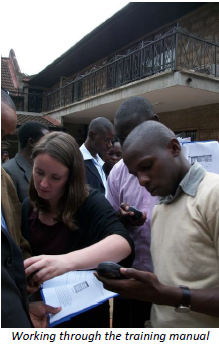
Map Kibera Trust recently facilitated a 3 day training to introduce participatory digital mapping to target staff at Plan Kenya. The participants in the workshop included programme staff and ICT staff from the Kenya Country office and regional offices around the country. Participants came from Homabay, Kisumu, Kilifi, Kwale, Tharaka, Machachos, Bondo, the Kenya Country Office and the Urban Programme (Nairobi). Their backgrounds ranged from ICT support staff, to Child Rights & Gender Advisor, to M&E Coordinator, to programme staff in 4 of Plan’s 5 focus areas (Protection and Inclusion, Health, Education and Governance).

The training was planned at the beginning of the implementation of the new Kenya country strategic plan (CSP) 2011-2015 for Plan Kenya. Building on the success of Plan Kenya’s work in Kwale on universal birth registration and also from digital mapping work with POIMapper and Map Kibera Trust, the new CSP highlights the importance of ICT in the improved efficacy of Plan’s work. Plan Kenya has chosen to place an explicit focus on participatory ICT in its work. This is in line with Plan International’s focus and leadership in ICT4D globally.

In this context, the workshop aimed to:

  • Introduce participatory digital mapping theories, techniques and tools that Map Kibera Trust employs in its work
  • Provide hands on experience in GPS data collection and data editing using Open Street Map
  • Learn more about how Plan Kenya programmes use information and communicate
  • Brainstorm ideas about how to integrate ICT into programme work

We began with an introduction to Information Communication Technology for Development (ICT4D) by exploring some questions to consider before introducing ICT into programme work. The questions were (and are) meant to stimulate discussion and encourage participants to think systematically about the integration of ICT into new and existing programmes. The questions identify the reasons why you would use ICT, assess what constraints and opportunities exist in the framework you are working in, and explore how people are communicating in order to design appropriate and sustainable systems to build upon existing channels of communication. The questions are modified from Linda Raftree’s post “7 or more questions to ask before adding ICTs,” so thanks to Linda for the inspiration!

  1. Why are you considering the use of ICT?

The Plan Kenya staff identified that using ICT, particularly mobile phones and the internet, has become a desired lifestyle choice that the majority of Kenyans around the country have embraced. This was an important point that the participants wished to build upon and capture in their use of ICT in various communities. The group generally agreed that ICTs are available and can be accessed by many Kenyans. The staff also mentioned that ICTs could improve communication and be used to easily mobilize communities (for example sending one SMS to many people to attend a meeting). ICTs are flexible and can improve accuracy and consistency in information, which can then be easily stored and shared. There was also mention of improved efficiency in programme work through the collection and processing of real-time information.

  1. What are the programme goals or programme framework you are working within?

Most of the participants identified the new country strategic plan for the organization as the overarching framework that Plan Kenya staff are working with. The country strategic plan identifies 5 areas of focus: Health, Livelihoods, Education, Protection & Inclusion and Governance.

  1. What are your specific information and communication needs?

The information needs of Plan Kenya staff members were largely related to programme work. The needs included collecting accurate data for baseline surveys for Monitoring and Evaluation and thus to assess programme impact. There were some suggestions of improving communication through digitizing information that can more easily be shared to large numbers of people. The group suggested that this could improve accountability to other staff members, donors and to beneficiaries in communities. ICT can also improve the ability of Plan Kenya staff to analyze information and make decisions.

  1. How are you already using information and communicating?

In order to integrate ICT into existing programmes within communities, it is important to know how staff members are already using information and communicating in their daily lives. The group came up with a long list of communication tools: email, internet, intranet, websites and social netoworks – namely Twitter, Facebook, Flickr, MySpace), applications (Skype, Yahoo Messenger), SMS and telephone calls, radio, and television. The group is using information during baseline data collection. Some are involved in a project that integrates SMS applications into the birth registration process in Kwale District.

  1. Who are the actors involved in the particular issue you are seeking to address with ICT?

 The Plan Kenya staff won’t be (and aren’t) using ICT in isolation. There are important stakeholders they work with on particular issues, programmes and projects. These include the general community – with a particular focus on youth and children. Important sub-sections of the community include teachers, school administration, Government of Kenya, civil society organizations, Plan Kenya partners (such as Childline Kenya, Community Cleaning Services), the media and private sector actors. Different groups of people use technology differently, and depending on the answer to question 1) and question 6 (below) the staff may need an ICT strategy that is diverse enough to reach the various stakeholders.

  1. How do people use ICT already?

This list of the ways in which Kenyans are already using ICT is a testament to the idea that the group tapped into when answering question 1. The use of ICT in Kenya, specifically mobile phone applications, has become a lifestyle choice. Kenyans use phones for mobile money transfer, SMS, calling, accessing the internet, paying their bills, paying for goods, calling toll-free lines (e.g. Childline call centre, police hot lines) and for data collection and dissemination. Kenyans also listen to the radio, use computers, blog, email, chat, shop online, bank online, join online discussions and news groups and use various forms of social media. They do this for work, but also for pleasure. These were the means identified by the group, however this is not an exhaustive list.

  1. How do people access technology already?

This was a sub-section of question 6 and the group answered: mobile phones (including GPS enabled and internet enabled phones), street phones, computer, internet connection in office and homes, internet modems, cyber cafés, radios, TVs, toll free lines, and resource centres.

  1. How will you close the feedback loop and manage expectations?

How do you make sure the information you are generating, no matter the medium or tool you are using, gets back to the community? How do you promote the use of technology without seemingly presenting a silver bullet solution (even if you don’t intend to do so)?

These questions were answered in several ways. One idea about both closing the feedback loop and managing expectation was to network  with other organizations and partners in the community to share information and raise awareness about the use of ICT and the opportunities and limitations of ICT4D projects.

Another option for closing the feedback loop was to both collect and disseminate information on popular social media sites such as Facebook and Twitter.

A third suggestion was to close the feedback loop and manage expectations through an informed resource person and/or resource centers and staff having sessions with the community.

Finally, there was the suggestion to start the integration of ICT in development work by outlining and communicating clear expectations and at the end have feedback sessions to monitor the whole process.

  1. What is your sustainability plan?

The final question, and likely the most difficult (we only had a one hour brainstorming session and did not expect participants to come up with final answers to this question but simply consider it as an important component to any project with an ICT component).

One idea was to equip community members, and particularly youth, with skills that will be applicable beyond the program (or project) timeline. The YETAM project (youth empowerment thorough arts and media) was designed in this way and the group agreed that this design was beneficial to the young people involved in the program.

Another suggestion was to involve the beneficiaries/community in the entire process of choosing/customizing appropriate ICT tools that suit their needs and for further development so that it is community owned process and will in theory continue beyond the project/program lifecycle. Other ideas included:

  •  Build partnership with Government and NGOs.
  • Integrate fund raising or income generating activities into the project.
  • Use affordable technology (free and open source)
  • Ensure follow-up mechanisms are built into the project

We discussed the use of mapping, open information and ICTs for development. We also used two of the three training days to focus on hands-on training and skills building. We facilitated training in handling the GPS devices, collecting data and using Java Open Street Map (JOSM) and Potlatch to record open spatial information into the OpenStreetMap databases. As we’ve found in the past, the hands on training is exciting and motivating. The theorietical discussions, combined with the practical field work inspired discussion and debate on ideas on how to integrate participatory digital mapping andICTs into programme work.

The following are ideas generated by the Plan Kenya staff:

  • Ushahidi could be useful for referral partners mapping and identifying the hot spots of child abuse
  • Use of SMS for communication with hearing and speech impaired within the community
  • Using reports and sharing the same information to various media channels. E.g. PPM, a in-house system that is used to track and monitor information and projects progress
  • In governance as a tool for enhancing social accountability, where ICT can be used to track projects
  • Digitization of data collection e.g. in sponsorship (especially photography), child abuse hotspots
  • Involving children in participatory community mapping by mapping schools using walking papers
  • Using blogging as a tool for youth to document governance issues in the new good governance project for the Urban Programme
  • In Kilifi the team is doing a 2 year study on Open Defecation Free villages and health outcomes. They could use mapping and spatial statistics to document findings.
  • Mapping and other ICT4D tools could be used to document and share participatory activities that Plan already undertakes, such  as transect walks and participatory situational analyses

The training ended with a note of caution – the team recognized the potential tension between the processes that are needed for ownership of a community map (and any other ICT4D project) and the haste of development partners to use the budget and report progress to donors. In this case, many projects (ICT4D, mapping and any other project) may “leave the community behind.”

It is thus important to ask the following questions and consider the answers carefully when designing projects:

  • For whom are we doing the mapping (or any project really)? And whose map is it?
  • Of what use is the (spatial) information, what will it compliment?

After another successful workshop with Plan Kenya, we look forward to building on the excitement and enthusiasm generated during the training! Let’s see some of the great ideas turned into reality!

Read Full Post »

Youth learning to use GPS in Pitoa, Cameroon (photo: Ernest Kunbega)

Last Monday I attended Africa Gathering London. The topic was ‘Social Media Revolutionizing Africa: How is new media changing Africa, giving voices to the voiceless, improving governance and transparency, and changing narratives?’

The event stimulated thinking and brought up some hot discussions around technology, traditional and social media, aid and development, participation and governance. (Big congratulations to Marieme Jamme  for curating a great line up that brought in an interesting and engaged group of participants and to William Perrin of Indigo Trust for keeping things on track and generating good debate!) See the program, the speaker bios and some short video interviews.

Some quotes, thoughts and debates from the day:

  • If your purpose is to bring more people into discussions, remember that radio, Facebook, and Twitter audiences are distinct and be sure you are thinking differently about how to engage them all. Remember that many people in Africa prefer to talk not write.  (from BBC’s Africa Have Your Say – @bbcafricahys‘s presentation)
  • You can’t resolve all of Africa’s issues with one approach. The countries are very different and local context really matters. But you also can’t design something for every tiny demographic. Where is the sweet spot between localized and scale? (discussion after the morning workshop)
  • People should not sit in the UK deciding and develop things for Africans. Develop things with Africans, or support Africans to develop things themselves. This idea got retweeted a lot, with lots of agreement. But H Taylor – @HFTaylor88 also commented via Twitter that this rhetoric has been around for ages within NGOs…. (discussion after morning workshop)
  • It’s great that the market has been able to bring mobile phones to so many people in Africa, but the market can’t do it on its own as many are still left out. There needs to be more incentive to reach remote areas. There needs to be education, cash transfers, government regulation if we want to really realize the potential of mobiles. Mika Valitalo – @vatamik commented that in many African countries, mobiles are still taxed as luxury items, making them more expensive than they should be. (Clare Melamed -ODI – @claremelamed‘s “Is the Mobile Phone Revolution Really for Everyone”.)
  • Any big story today on CNN has a social media component, yet there is still the idea that social media only breaks news and ‘it won’t make the history books until CNN or BBC report on it’. If CNN is not planning to do a story but sees everyone is talking about it on Facebook and Twitter, they will cover may rethink covering it. CNN finds good opinions and stories on social media, but their primary news source will continue to be their correspondents. Emrys Schoemaker – @emrys_s however questioned whether mass media use of citizen journalism is a broadening of voices or if it’s cheap content for big media – or both. (Faith Karimi/CNN/@faithCNN’s presentation and resulting discussions.)
  • Social media gives African youth an uncensored worldwide platform, letting them feel included in shaping Africa’s image, but the youth using social media in Africa are still the middle class and the rich. We need to find ways to include other youth. (Faith Karimi – @faithCNN’s presentation and resulting discussions.)
  • The Guardian’s Global Development Site and Poverty Matters blog are trying to get away from the vision of ‘poor Africa’ and have only been accused of ‘poverty porn’ once in 9 months (which Liz said irritated her to no end as they really try to avoid it). (I remember the case…) They stay away from the typical ‘flies in the eyes’ photos, but sometimes there really is starvation in Africa, and in those cases, a photo of a starving child might actually represent reality. (Someone countered that African newspapers should use photos of drunk, vomiting Brits to illustrate stories about parliament).  (Liz Ford/deputy editor/@lizford‘s talk and discussion)
  • Is the Guardian’s Global Development site one-sided, taking the view that aid is good rather than other ideas on how to best achieve development? Development is much larger than ‘aid’ and when talking about development we need to remember the bigger picture and the alternative views that maybe aid is not the best (or only) way to ‘do development’. The Guardian is quite open to new thoughts and ideas and invites anyone with ideas for blogs or stories to be in touch with them. They consider their site a ‘work in progress’. (Note: I like the Guardian’s site very much as it is one of the few media sources that discusses and seems to really promote and engage in the ‘#smartaid / @smart_aid‘ discussion). (Liz Ford’s talk and discussion)
  • Many African leaders, not to mention the public and the media, will listen when high level people call their attention to something, but problems can’t be solved by the same people who created them, especially if those people are considered morally bankrupt. Karen Attiah – @karennattiah  commented in from Twitter that a big part of development work should focus on rebuilding the broken social contract between governments and citizens in Africa. So how can we connect policy makers with ordinary Africans? How to bridge the gap between policy makers and grassroots approaches and implementation. (Panel with Alex Reid/@alreidy and Carolina Rodriguez /@caro_silborn – media heads at Gates Foundation and at Africa Progress Panel)
  • Not all sources are created equal – this is true for traditional and for social media. Social media is not about the technology, it’s about the human need to communicate. You can make traditional media more social also. Even those without access to social media will get around harsh barriers to tell their stories because of the urge to communicate. So the best thing is to create a social experience, not to worry so much about getting ‘jiggy’ with the technology. (from Kevin Anderson/@KevGlobal‘s presentation. See Putting the social in media.)
  • New technologies can impact on public debate, people’s political capabilities, citizen-state relations, relationships with other government actors. Frontline SMS Radio, for example, could be a very useful tool for this because radio is still the main way to communicate with the majority of Africa. Using Frontline SMS Radio, stations can sort through messages they get, understand them better, and use the information to orient their radio programs as well as other things. Radio can play a very strong and useful role in governance. (from Sharath Srinivasan/ @sharath_sri‘s presentation. See FrontlineSMS at Africa Gathering.)
  • Youth can have a big impact on community development if given space to influence. There is money (eg., in Cameroon, at local government level) but it needs to be better spent. Informed and involved youth can hold government accountable for spending it better. Local level advocacy has a greater impact on youths’ lives than global level initiatives because you can make as many laws as you like, but unless people are putting them into place and practice at a local level they don’t matter. Organizations should listen to young people but not make them dependent on NGOs because the real duty-bearers are family, community, government. NGOs need to be models of their own methodologies; eg., if an NGO is encouraging people to criticize the government, the NGO should be ready to receive the same scrutiny around its own work and behaviors. Social media can play a role in this process by showing what is happening at the local level to a global audience. (from my presentation and the resulting discussions. See Youth Empowerment through Technology, Arts and Media)
Julia Chandler (@juliac2) did a great round-up of the day’s presentations and discussions on her blog: Part 1 and Part 2. The Guardian continues the discussion here and of course the Africa Gathering website is a great place for more information.
.
Update – more posts about Africa Gathering:
Great perspective from Tony Burkson – @tonyballu – who I really enjoyed talking with at the post-event drinks: A Day at Africa Gathering.

Read Full Post »

This is a guest post by Joe Pavey who, along with Rebecca Tapscott, is interning with us in Cameroon for the next couple months. Rebecca wrote a first post about the what and the why of setting up an Ushahidi system in Cameroon to track violence against children. Here Joe goes more into depth about the technical side of setting the actual system up.

Our first major discussion about the VAC Cameroon site was in regards to how reports should pass through the system. For obvious reasons the information contained within these reports is extremely sensitive, so each step of the workflow process needs to be determined with the best interests of the children involved in mind.

The existing offline system for reporting violence against children was agreed upon through an exhaustive deliberation process with government, community, and local council members. In short, a lot of hard work has gone into making the existing offline system something that all parties agree on and it would not only be negligent, but counterproductive not to use this as a blueprint. For this reason the online system we are working on should respect, support and ultimately serve to expedite the current process, not replace it.

Under this current system Plan serves in the capacity of witness in cases of child abuse. Plan Cameroon has partnered with several governmental agencies to investigate and respond to reports they receive. Which agency this is depends upon the circumstances of the abuse.  Age, gender, and location are all factors in determining which agency will be responsible. For example, abuses taking place in the home are currently handled by the Ministry of Social Affairs, but cases involving female children are handled by the Ministry of Child and Women’s Empowerment.

The current policy also requires that all reports of violence against children received by Plan staff be forwarded to the sector office within 48 hours.

Existing community-level reporting flow

Following this, the report has 24 hours to reach the country office in Yaounde. This one of the processes we are hoping to expedite with the implementation of the digitized system.

Existing flow of next-level reporting - at Program Unit and Plan Country Office

If this sounds complicated, that’s because it is. As outsiders who are new not only to the culture, but also to the peculiarities of local bureaucracy, much of Rebecca’s and my first session was taken up with trying to understand the rules and regulations already in place. Thankfully we have Cameroonian colleagues in the local office to help us navigate and understand all of this.

The Ushahidi System

Ushahidi allows three methods for submitting reports: (1) Text Message, via Frontline SMS or another text messaging tool, (2) Email, and (3) Submitting a report directly through the site. These actions can be taken by individuals in the community or by Plan Staff if they are alerted of a particular incident. A fourth means of submitting reports to Ushahidi, via voice messaging, was previously available through a plug-in called Cloudvox. Unfortunately the company that created the Cloudvox plug-in was recently acquired and has suspended this product for the immediate future, and we haven’t identified an alternative voice messaging system. This is unfortunate as we were hoping to be able to offer voice messaging as a reporting method for non-literate youth — although bandwidth limitations may have rendered this impossible anyway.

Information workflow for Plan Cameroon VAC Crowdmap site (updated; this is version 2.)

Based on the information that needs to be tracked and reported on, our current plan is to separate reports into four categories, each with several subcategories as follows:

  1. Form of Violence
  • Physical
  • Sexual
  • Emotional/Psychological
  • Negligence
  1. Gender of Victim
  • Male
  • Female
  1. Age of Victim
  • 0-5
  • 6-12
  • 13-18
  1. Location of Incident
  • Home
  • Work
  • School
  • Community

Current Crowd Map set up with 4 main categories.

Creating these reporting categories (and each of their subsequent subcategories) will allow this information to be tracked separately, or to be looked at in terms of how categories overlap with each other. Since the Ushahidi platform allows users to choose more than one category or sub-category when submitting an incident report, no data need be lost in the effort to isolate and contextualize information.

For example, by tracking Gender and Location of Incident separately we will be able to more easily visualize how many incidents of abuse are taking place at schools in a certain community, how many of the victims are girls versus boys, and how each of those categories relates to reports from other regions. This will be especially important information to the government who has different agencies in place for tracking violence against children and youth depending on the circumstances. It will also be useful for Plan staff who can then tailor programs and awareness campaigns in a specific community towards the issues that are most prevalent there.

Plan Cameroon staff, partners and youth have create a detailed online map of each council area in which this project will take place, however, mapping of reports will be restricted to a less precise level described to us as the ‘community level’. It’s hard for Rebecca and me to conceptualize just how specific of an indicator this is, though once we are living in the community – a transition taking place this week – it should become easier to measure. The reason for mapping the location of incidents at the community level is privacy. If reports were mapped too precisely they could compromise the identity and safety of a child — a result that would be entirely unacceptable.

On the Ushahidi ‘back end’, each report of an incident will also contain a Description section that will allow information outside categorical parameters to be included in reports. This could be the body of a text message, a summary of a voicemail, or any other details that are deemed to fall outside the determined privacy boundaries (eg., this will allow us to keep identifying information and other details in the system, yet keep it from going public).

Over the course of our week in Yaounde, we engaged in many discussions regarding how we could make the online information workflow match that of the offline system. The conclusion seemed to be that involving community members and Plan staff in initial approval of reports might be possible, but that expecting all six of the varying government agencies that currently respond to such reports to use this digital system would be problematic. At this point we are hoping that the official agreement can be reworked slightly so that only MINAS, the Ministry of Social Affairs would need to be involved in the system.

By week’s end we had drafted an initial proposal for what the workflow for the system could be. It is by no means final and will likely go through numerous revisions over the course of our work here, but it will provide us a good base to build from in the future.

Unfortunately our progress on setting up the site itself has been handicapped by technical issues with the Crowdmap website that cause the site to crash when trying to create subcategories. We have engaged with members of the Ushahidi staff and they are currently working to fix the bug, but we don’t have a timeline as to when they will have the issue resolved.

We have now left Yaounde for Bamessing where we will be initiating our field work on the YETAM project, working with youth on creating short films, performing more community mapping, and we hope that the mobile Internet connection will allow us to continue to work remotely on the Crowdmap site.

Read Full Post »

« Newer Posts - Older Posts »