Feeds:
Posts
Comments

Bamboo shoots

Bamboo Shoots training manual

I like to share good training guides when I come across them, so here is a quick summary and a link to Bamboo Shoots. It was originally created by Plan in Cambodia.

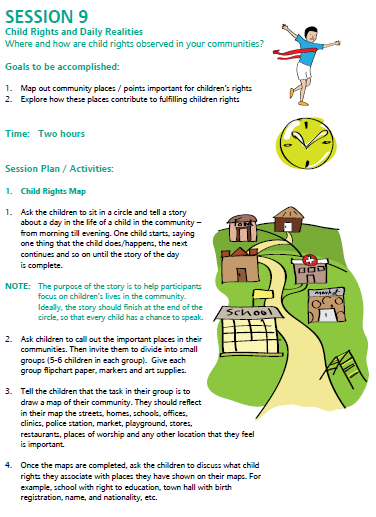
Bamboo Shoots is a training manual on child rights, child centered community development and child-led community actions for facilitators working with children and youth groups. You can download it here.

Bamboo Shoots was developed to: Increase children’s understanding of their rights as defined by the United Nations Convention on the Rights of the Child (UNCRC); raise children’s awareness of their rights and build their capacities to claim them; create opportunities for children to recognize, identify and prioritize issues and problems or gaps in relation to child rights violations; and provide opportunities for children to influence agendas and action regarding identified and prioritized child rights violations.

Bamboo Shoots takes complicated concepts and breaks them down into easy language and engaging, interactive sessions. It also offers good resources and background material for facilitators so that they can manage the sessions well.

Part One:

I like this manual because it starts off right in the first chapter with the importance of setting the tone and the context for good child and youth participation. It provides ideas on selecting participants and facilitators, and gives a description of a good facilitator. It provides recommendations on the setting and practical considerations for managing a workshop with children, as well as good paragraph to help think through when and when not to include other adults in the training.

The guideline goes through the 6 principles for making child participation a reality:

  1. Non-discrimination and inclusiveness
  2. Democracy and equality of opportunity
  3. Physical, emotional and psychological safety of participants
  4. Adult responsibility
  5. Voluntarism, informed consent and transparency
  6. Participation as an enjoyable and stimulating experience for children

It shares Plan’s code of ethics on child participation and important steps to follow in working with children, as well as tips on how to establish a good working relationship with children, how to help children learn and develop their potential, how to help children build self-confidence and self-esteem, and how to encourage children to develop a responsible attitude towards others and a sense of community. There is a section on how to keep children safe also and an explanation of a facilitator’s ‘duty of care’.

A last section of part one lists common facilitation techniques and tools, such as: role-play, working in pairs and groups, idea storming, whole group discussion, questioning, projects, buzz sessions, drawing, photographs, video, word association, recreating information and more; and gives ideas on when they are most useful.

Part Two:

Section 9 on community mapping

The next section has very complete sessions on:

  • the concept of rights
  • the history of human rights, and international treaties on rights
  • children’s rights as human rights
  • duties and responsibilities in relation to child rights
  • making sure children are involved
  • child rights and daily realities and making a child rights map
  • gaps in fulfilling child rights
  • setting priority problems and violations of child rights
  • creating an action agenda and proposed solutions to the gaps identified

Each session comes complete with a pre-training assessment, reading material for facilitators and handouts for participants.

Part Three:

The last section of the manual helps facilitators take children through the steps to child-led community action, including children’s participation in all the program and project cycles: assessment, planning, implementation, monitoring and evaluation.

Needs-based vs. Rights-based

It also explains Plan’s rights-based child-centered community development approach, the foundations of that approach, and the difference between needs-based approaches and rights-based approaches. It goes on to cover planning and supporting child-led community action.

The last section of the guide offers a list of resources and references.

For anyone working with children, or even anyone looking for an excellent comprehensive community training package on rights and community-led action, I really recommend checking out Bamboo Shoots. Whether you are working through media and ICTs or using more traditional means for engaging children, this is a great guide on how to do it well from start to finish. I’ll be referring to it often.

Additional Resources:

Minimum standards for child participation in national and regional consultation events

Protocols and documents to help ensure good quality child participation

United Nations Convention on the Rights of the Child

Insight Share’s rights-based approach to participatory video toolkit

Related posts on Wait… What?

Child participation at events: getting it right

Community based child protection

Child protection, the media and youth media programs

Water

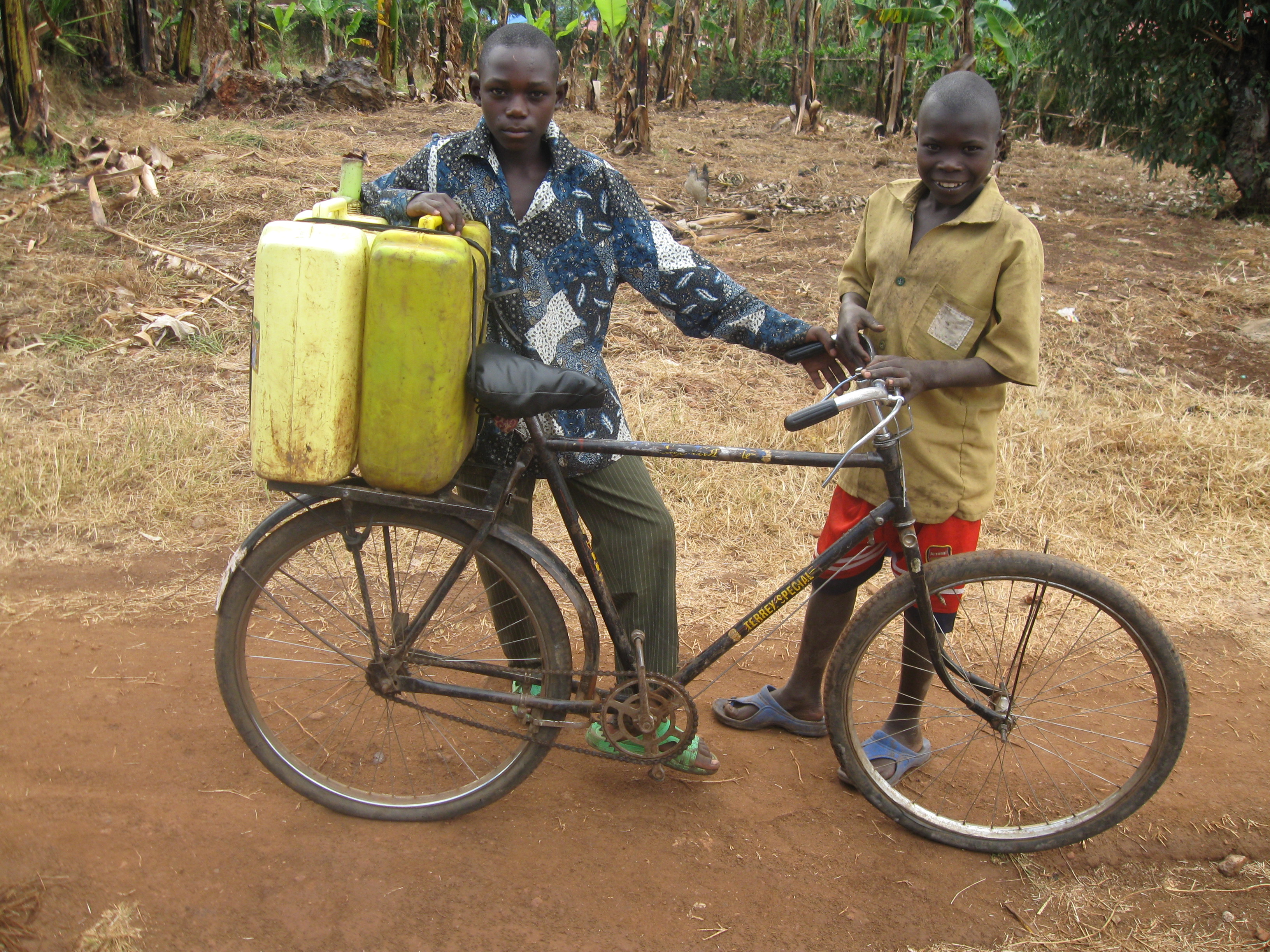
One of the main programs I support is a youth arts, technology and media program called ‘YETAM‘.  The program supports youth to identify and raise issues that they consider important, and then helps them engage their communities to resolve the issues they’ve raised. The youth have talked a lot about water in most of the places where I’ve been working in the past couple years, probably because children and youth tend to be the ones responsible for carrying water.

As part of the project in Okola District in Cameroon last year, youth mapped their community and prioritized their issues. One of their top issues was water. They made this film together about the water problem and shared it with the community adults and local authorities.

Probleme d’eau Potable – The Potable Water Problem (for subtitles, click on the arrow on the bottom right hand side of the video player and then click on the red ‘cc’ button)

Spurred on by the project and the organized youth, a few months later the community got to work fixing one of their water sources. They put in some resources and so did our local office.

La quete d’eau potable – Lack of Potable Water part 2.

Here are a couple other videos about water filmed by youth….

The Community Water Tank from El Salvador about what happens when water sources are not kept up (click on link as it’s not available on YouTube yet)

Djiko: l’eau potable a song youth wrote to remind communities about water scarcity in Mali

Water – Amazi where youth interview a rural family about water scarcity in Rwanda

Related posts on Wait… What?

A catalyst for positive change

Youth empowerment through tech, arts and media

Meeting in the middle

An example of youth-led community change in Mali

When my son was 15 or 16 we used to have go-arounds about selfishness and self-centered behavior. He was at the height of both.

One time he was explaining what he wanted to do with his life. ‘I want to do something like science or research, but I don’t want to have to help people with it. I just want to do it for me, because I want to learn it, but not to help anyone. Are there jobs like that? Like, where you don’t have to help people?’

‘One day you’ll mature,’ I remember saying sarcastically. ‘One day your brain will grow a little and you’ll develop some empathy, and then you won’t be so selfish with your brilliance.’

I wasn’t too worried that he’d stay selfish forever. I figured it would run its course.

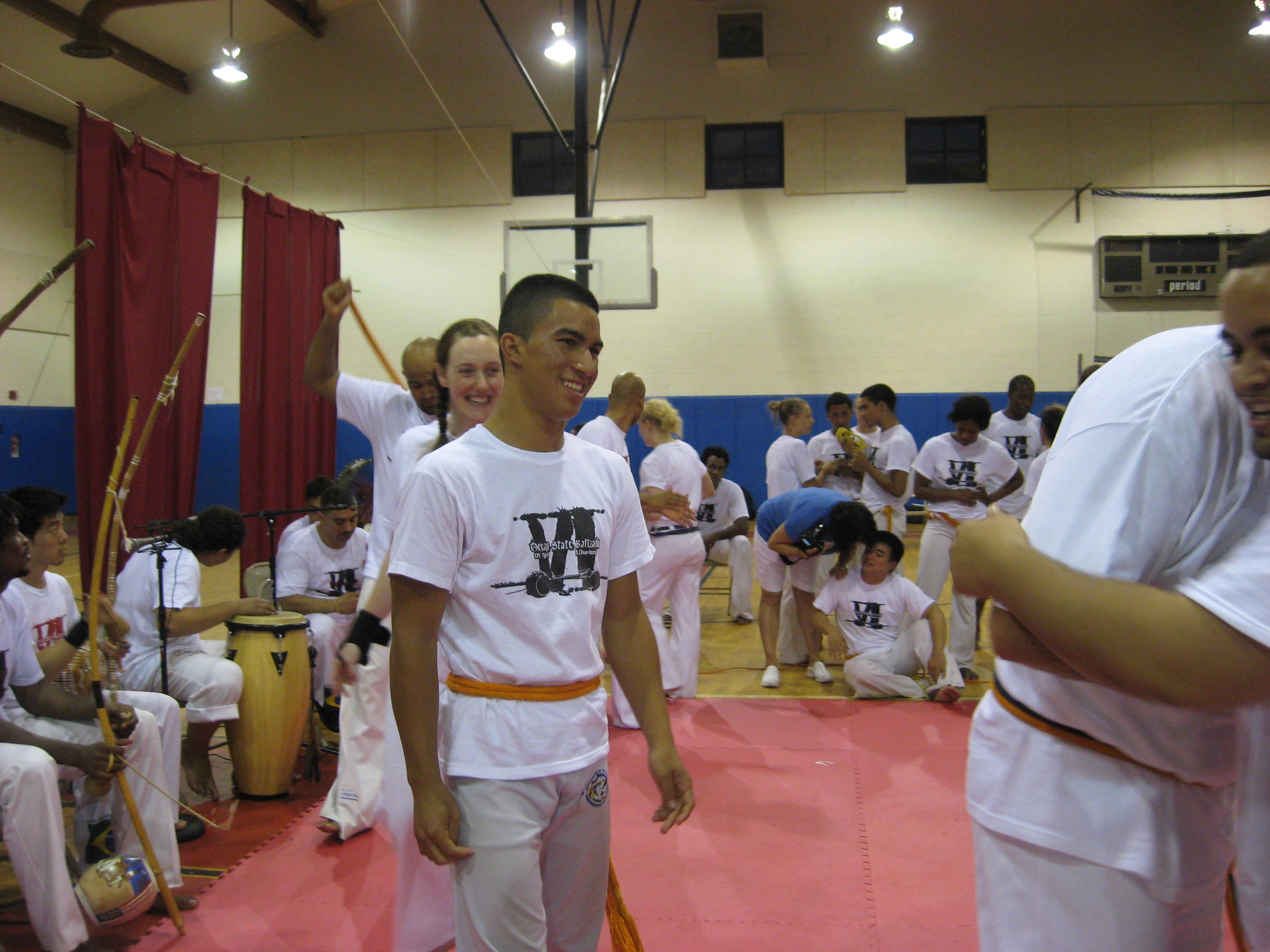
He and I both play a Brazilian martial art called capoeira.  (Read this old post for more about this beautiful game and life philosophy). Once a year we have a big event called a batizado where people get tested and they can advance a level. It’s a lot of work, the testing is nerve-wracking, and the celebrations afterwards are huge. Our capoeira group is a tightly knit social group, so it’s always a big deal and one of the best times of the year for us.

About 6 months after my son and I had our conversation about selfishness, it was batizado time. We saw one after the other of our friends go in for testing and get their cords. There was cheering, hugging, back slapping and congratulations galore.

Towards the end of the event, my son came over to me, his face all lit up in a huge smile. ‘Mom! Mom! Oh my god I’m so happy for everyone! And Mom, Mom, I got that thing! That thing you said I’d get.’

‘Huh?’ (confused look).

‘You know, that thing… Come on, Mom, that thing you said I’d get. That thing where you care about other people and you put yourself in their place and you feel what they feel? That thing… what’s it called? Because I have it now!’

Empathy.

Nice. I love being right. 🙂

Related posts on Wait… What?

A piece of capoeira in Cameroon

18 years

This is a cross-post of an article written by Shawn Hayward, who interns with Journalists for Human Rights (JHR) via the International Youth Internship Program (IYIP). You can read Shawn’s original post here.

It’s easy to get jaded seeing sign after sign in the streets of Accra pointing the way to one NGO or another. Despite the slew of development organizations here, people continue to live with poor drinking water, low incomes and lack of decent health care.

One NGO (besides jhr, of course) seems to be taking a step in the right direction. Plan Ghana has been working with children in the country since 1992. The goals, according to their website, are to provide quality education and teacher training, create awareness of children’s rights and ensure food security for children.

Anyone can state goals on a website. It’s much harder to find effective ways to achieve them. Plan Ghana held a forum this week as part of a week-long workshop on the status of children in the country. They flew in 80 youth delegates from all over West Africa. It had real results.

This wasn’t an event where adults tell kids what they should think. The young delegates posed questions to the forum guests, including the United Nations Representative for Violence Against Children, Marta Santos Pais, and the Ghanaian Minister of Sports and Youth, Akua Sena Dansua.

Most importantly, the kids got a chance to tell their stories to a wide audience, and the media and representatives from various NGOs had a rare opportunity to hear well-spoken, motivated youth describe their experiences with children’s rights abuses.

One girl from Cote D’Ivoire told us in her native French how girls in her country are beaten by child traffickers when they refuse to prostitute themselves, and how a three-year-old girl was sexually abused by a neighbour. Police jailed the man for 72 hours and released him.

Outside the auditorium, Plan Ghana displayed pictures made by West African children that illustrate the abuses they’ve seen during their young lives. There were images of people being beaten, stabbed, raped and murdered.

I remember drawing snowball fights and monster trucks when I was their age, maybe the occasional army tank. No one being murdered though, or raped—I was lucky enough to grow up far away from that.

The forum was effective because the kids were active participants, not mere objects to be educated. We learned as much as they did during the forum, if not more. These kids came away with the pride of knowing they played a role in shaping their future, and Plan Ghana distinguished itself as more than just another NGO with a bunch of goals posted on its website.

Related posts on Wait… What?

Tracking violence against children in Benin video

Breaking it down: violence against children

Fostering a new political consciousness on violence against children

7 (or more) questions to ask before adding ICTs

Finding some ICT answers in Benin

Tweaking SMS based violence reporting system in Benin

Community based child protection

Our Tracking Violence Against Children in Benin project won first prize for Most Innovative Use of Technology or Social Media in Plan’s internal Global Awards contest. The competition was fierce and we were up against some really great projects.

Here’s a nice video overview of the project and where we hope to take the initiative as we go forward.

We still have some kinks to work out and we are still in pilot phase, but we are pretty happy about the award in any case. It helps motivate us even further to improve on the idea until it’s fully functioning and sustainable and we know that it’s resulting in more reporting of violence, helping to track trends and cases of violence, and being used by local and national authorities for responding and following up on those cases that occur.

Many many thanks to everyone who has helped the project get where it is, including:  Henri da Silva, Carmen Johnson, Bell’Aube Houinato, Amelie Soukossi, Eleonore Soglohoun, Morel Azanhoue, Victoire Tidjani, Alfred Santos, Jean Sewanou, Michel Kanhonou, Paul Fagnon, Camille Ogounssan, Anastasie Koudoh, Mika Valitalo, Ken Banks, Josh Nesbit, Patrick Meier, Juliana Rodich, Henry Addo, David Kobia, James Bon Tempo, Stefanie Conrad, Theresa Carpenter, Penelope Chester, Shona Hamilton, and community leaders, parents, school directors, local authorities, children and youth in the 2 participating communities.

Related posts on Wait… What?

Fostering a new political consciousness on violence against children

7 (or more) questions to ask before adding ICTs

Finding some ICT answers in Benin

Tweaking SMS based violence reporting system in Benin

Community based child protection

New Plan report on ICT-enabled development

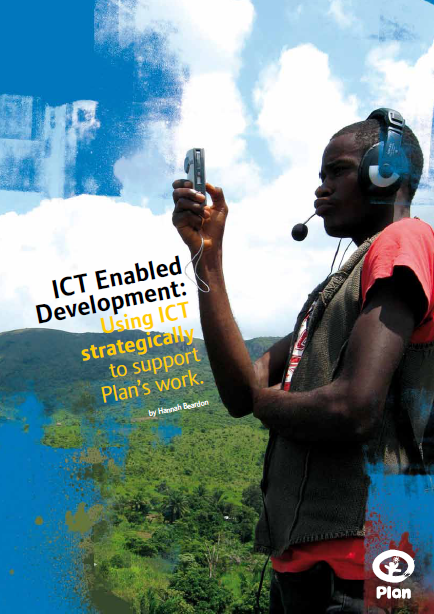
Plan just released a new report called ICT Enabled Development: Using ICT strategically to support Plan’s work. The report is part of an on-going process by Plan Finland (kudos to Mika Valitalo for leading the process) in collaboration with Plan USA to support Plan’s country offices in Africa to use ICTs strategically and effectively in their development work. It was written by Hannah Beardon and builds on the Mobiles for Development Guide that Plan Finland produced (also written by Hannah) in 2009.

The idea for the report came out of our work with staff and communities, and the sense that we needed to better understand and document the ICT4D context in the different countries where we are working. Country offices wanted to strengthen their capacities to strategically incorporate ICTs into their work and to ensure that any fund-raising efforts for ICTs were stemming from real needs and interest from the ground. Plan offices were also in the process of updating their long-term strategic plans and wanted to think through how and where they could incorporate ICTs in their work internally and with communities.

The process for creating the report included 2-day workshops with staff in 5 countries, using a methodology that Mika, Hannah and I put together. We created a set of ICT training materials and discussion questions and used a ‘distance-learning’ process, working with a point person in each office who planned and carried out the workshop. Mika and I supported via Skype and email.

Hannah researched existing reports and initiatives by participating offices to find evidence and examples of ICT use. She also held phone or skype conversations with key staff at the country and regional levels around their ICT use, needs and challenges, and pulled together information on the national ICT context for each country.

The first section of the report explains the concept of ‘ICT enabled development’ and why it is important for Plan and other development organizations to take on board. “With so many ICT tools and applications now available, the job of a development organization is no longer to compensate for lack of access but to find innovative and effective ways of putting the tools to development ends. This means not only developing separate projects to install ICTs in under-served communities, but looking at key development challenges and needs with an ICT eye, asking ‘how could ICTs help to overcome this problem’?

Drawing on the research, conversations, workshop input and feedback from staff, and documented experience using ICTs in Plan’s work, Hannah created a checklist with 10 key areas to think about when planning ICT-enabled development efforts.

  1. Context Analysis: what is happening with ICT (for development) in the country or region?
  2. Defining the need: what problems can ICT help overcome? what opportunities can it create?
  3. Choosing a strategy: what kind of ICT4D is needed? direct? internal? strategic?
  4. Undertaking a participatory communications assessment: who will benefit from this use of ICT and how?
  5. Choosing the technology: what ICTs/applications are available to meet this need or goal?
  6. Adjusting the content: can people understand and use the information provided for and by the ICTs?
  7. Building and using capacity: what kind of support will people need to use and benefit from the ICT, and to innovate around it?
  8. Monitoring progress: how do you know if the ICT is helping meet the development goal or need?
  9. Keeping it going: how can you manage risks and keep up with changes?
  10. Learning from each other: what has been done before, and what have you learned that others could use?

The checklist helps to ensure that ICT use is linked to real development needs and priorities and appropriate for those who are participating in an initiative or a project. The report elaborates on the 10 key areas with detailed observations, learning and examples to illustrate them and to help orient others who are working on similar initiatives. It places the checklist into a 4-stage process for ICT integration.

  1. Understanding the context for ICT work: includes external context and internal experience and capacity
  2. Finding a match between priorities and possibilities: rooting the system in local needs and priorities and finding good uses for tools and applications
  3. Planning and implementing concrete initiatives: carrying out participatory assessments, linking to other development processes and addressing technical issues and concerns
  4. Building a culture of systematic, sustained and strategic use of ICTs: linking ICTs with program work, transforming the role of ‘the ICT guy’, and building expertise on the cultural and social aspects of ICT use

Additional material and case studies, ICT country briefings, and an overview of Plan’s current work with ICT4D in Africa are offered at the end of the report.

The report includes input from Plan staff in Ghana, Mali, Mozambique, Senegal and Uganda who participated in the ICT4D workshops. It also draws heavily on some of the work that Mika has been doing in Finland and Kenya, and work that I’ve been involved in and have written about in Mali, Cameroon, Mozambique, Ghana, Benin and Kenya involving staff, community members and community youth. You can contact Mika to get the workshop methodology in French or English or to comment on the report (ict4d [at] plan [dot] fi).

There’s so much rich material in the report that I almost want to summarize the whole thing here on my blog, section by section, so that people will take the time to read it…  I think this is a really important and useful piece of work and we’re very excited that it’s now available! Download it here.

Related posts on Wait… What?

ICT4D in Uganda: ICT does not equal computers

Demystifying Internet (Ghana)

It’s all part of the ICT jigsaw: Plan Mozambique ICT4D workshops

A positively brilliant ICT4D workshop in Kwale, Kenya

7 or more questions to ask before adding ICTs (Benin)

A catalyst for positive change (Cameroon)

Salim’s ICT advice part 1: consider both process and passion (Kenya)

Salim’s ICT advice part 2: innovate but keep it real (Kenya)

Meeting in the middle

I and C, then T (US)

In her post ‘Prostitutes of God:’ Film Mocks, Belittles Sex Workers, Bebe Loff, explains that:

‘Last week,  four episodes of a film entitled Prostitutes of God were posted on VBS.TV, which is owned by Vice Magazine. Prostitutes of God producer Sarah Harris, spent time with members of Veshya Anyay Mukti Parishad (meaning ‘Prostitutes’ Freedom from Injustice’) or “VAMP,” [who] let her into their lives, their families and their workplace.  The result?  Films that are inaccurate and misrepresentative, and insulting to the people who agreed to participate and to the Hindu culture.’

The ‘Prostitutes of God’ film is part of the Vice Guide to Travel where ‘correspondents from VBS and Vice magazine are dispatched around the world to visit the planet’s most dangerous and weird destinations.’

This afternoon I didn’t have 30 minutes to watch the film that was being criticized in the post above. I did have 3 and a half minutes to watch the video response (below) from some of the sex workers and their family members who were part of the documentary.

Their reaction is one of anger and feelings of betrayal. They denounce the filmmaker (Sarah Harris) for laughing at them, making fun of them, disrespecting them, misinterpreting their stories and making public judgment calls on their religious practices.

They say ‘… Your analysis is wrong and we do not agree with it. Who is Sarah Harris? What is the research that informs her story?’‘ They ask ‘Who gave you the right to laugh?‘ They wonder ‘If I had come to your town and insulted your gods would you have liked it?

Tonight I watched the 30 minute film. To be honest, it doesn’t strike me as any worse than a lot of other stories told about people from developing communities or exotic or marginalized groups. We see these kinds of stories all the time, where people are held up to view with sensationalism, superiority and for purposeful shock value.

What is interesting about this case is that the community saw it and reacted publicly. It made me wonder, what is the back story? What steps were taken by the filmmaker to secure informed consent? What were members of the different communities expecting the film to be about? What about the local organization, what were they expecting? Where was the communication breakdown and what steps were taken to try to avoid it? What ownership of the content of the film and the storyline did the community members have? Did they expect to be paid? Were they put at high risk or otherwise threatened when the filmmaker released her film? Did the filmmaker think about the ramifications that her film would carry for the communities where she had filmed? What was the filmmaker’s purpose for telling this story?

I think we are going to see more and more of this type of scenario. I hope it will force media practices and ethics to be updated, more respectful and more legal when filming marginalized or disenfranchised groups in ‘developing countries’.

A third film about the Devadasi

I know of a third film about the Devadasi. I saw this one several years ago, and it was made by a group of Indian child journalists as part of a child media project. In that case, the children successfully used the film at the community level to press for compliance with established laws against the Devadasi practice and to discuss culturally appropriate alternatives.

I’m a big fan of local activists using media tools to push for social change on their own terms.

Here’s Insight Share’s great rights-based approach to participatory video guidebook.

Related posts on Wait… What

Good Job

Child protection, the media and youth media programs

I read Malcolm Gladwell’s piece on new media digital activism in the New Yorker and it made some sense to me at first. I’m as skeptical as the next person, and very tired of the ‘slacktivist’ social media campaigns that I come across in the US. However, I think it’s important to note that the problem isn’t in the tools being used by activists/’slacktivists’. The issue goes deeper, and it’s more about context and culture.

A few things that I’m mulling over are:

1) In a repressive environment, using social media tools to organize is just as dangerous and subversive as using ‘traditional’ ways of organizing. Organizers, activists and sympathizers use a combination of tools to participate and to reach specific goals. It doesn’t matter if the tools are digital or not. What matters is whether or not they are effective in the context where they are being employed. Lina over at Context, Culture and Collaboration has a good post on the use of tools to fit the goals.

2) The level of commitment to a cause is in direct proportion to the level of personal risk. i.e., the more committed you are, the higher the personal risk you are willing to take; the higher the personal risk, the more committed activists likely become. In the US context, unless perhaps you are gay or Muslim [update Aug 2014 — “or Black”], there is not a lot of personal risk in uniting or fighting for a cause, and most of the causes that are social media driven do not create any major personal risk to those who join them. I find a lot of US campaigns to be meaningless or misdirected compared to activism in many other places. US-based ‘activism’ campaigns are often more about cause marketing or branding an organization or collecting emails than they are about changing a serious social issue at home or abroad. This is not the fault of the social media tools or of ‘digital activism’, it’s a reflection of US culture, our current values, the organizers behind the causes, and the sociopolitical moment we are living in.

3) Some of the digital media evangelists in the US and in the US media don’t understand enough about grassroots organizing or the sociopolitical contexts in other places to see beneath the social media tools to the networks of engaged, involved people and the broader movements happening off-line. They see social media use and think it’s the core of a movement when in fact it is probably just the only piece of it that they have access to at the global level; it’s the shark’s fin. This comment from Esra’a really got me thinking about that.

When a t-shirt can get you in trouble

When I lived in El Salvador in the early 1990’s, (eg., before social media) political oppression was heavy. During the war, you could get arrested, tortured, or disappeared for something as simple as wearing a political t-shirt; criticizing someone from the ruling political party (ARENA); owning a cassette of Mercedes Sosa, Los Guaraguao, or Silvio Rodriguez; reading a book of poetry by Roque Dalton; or merely gathering in a group or having a meeting. That didn’t stop people from organizing though, both in hierarchical ways and loose networked ways.

In 1994, El Salvador held its first elections since the signing of the Peace Accords. It was the first time that the guerrilla group, the Frente Farabundo Martí para la Liberación Nacional (FMLN) was allowed to participate as a political party. It was a hopeful yet dangerous time. Only the bravest came out publicly to show their support for the FMLN, the past 14 years of repression still fresh in everyone’s minds. There were political assassinations of opposition candidates taking place, fears of widespread fraud, concerns from voters that their votes would not really be secret. ARENA had used every media channel it owned (all of them) to warn foreigners that any ‘interference’ in local political issues would get them deported.

I was working with an international organization that was hosting a group of Ecumenical Elections Observers.  One day, as part of the orientation program, I took a delegation of the observers to the office of the FMLN to meet with the head of the party, Facundo Guardado. (We had met with leaders from ARENA earlier in the week.) Facundo gave us all FLMN t-shirts.

That afternoon, coming home from work, I was walking down the alley way a couple blocks from my house, the t-shirt in my bag. I heard a couple of motorcycles come up behind me and the familiar ‘ch ch, sssss ssssss, mamacita‘. I was alone in the alleyway, so I quickened my pace to reach the little open area where the Barrio women would sit for a minute to catch their breath when coming back from the market with their heavy baskets and the older men would gather to play checkers under the trees in the afternoons. Before I could get there, one of the men pulled his motorcycle up in front of me and the other came up on my left side, cornering me. I saw that these were not just men harassing me, they were in military police uniforms and I got nervous.

They asked for my passport.

‘I don’t have my passport with me. I don’t carry it because I’m afraid it will get stolen.’

They didn’t like that answer. ‘Do you think we can go to your country and walk around without papers? No, we can’t, we’d be deported. Why do you think you can do that here?’

‘Let me look for my driver’s license. I’m sure it must be in my bag. Is that OK?’ They continued to scold me angrily.

I started digging around in my bag to try to find my local driver’s license but failed because my bag was so full of stuff. I was afraid that they were going to see the t-shirt which would lead to a lot of questions and make it look like I was getting involved in internal politics.

My neighbors started popping their heads out of their doorways and windows and watching as the military police questioned the gringa who lived in the Barrio. Just as I was going to be observing and standing witness to their upcoming elections, so they were observing and standing witness for me while I was being questioned by the authorities. Cautiously, one of them said in a respectful voice loud enough to reach the policemen ‘Ella es de aqui.’ She’s from here. Another one agreed. ‘Sí, ella vive aquí.’ The police ignored them and continued to question me. More and more people began standing around to watch from a distance.

My heart was beating loud and fast. The afternoon sun was hot. I started carefully removing things from my bag and placing them on the dirt road… the soda I was bringing home for my husband… my notebook… my sweater… hoping to make some space in my bag to find the driver’s license without the t-shirt coming out. I had no idea what was going to happen if I didn’t find my license. What if they took my bag and searched it and found that t-shirt? Would they seriously arrest me? Would I be deported?

After what seemed like hours, I saw my mother-in-law running towards us, carrying my son. Someone had alerted her that I was in trouble. Her eyes flashed like they did when she was worried, upset or angry. She was on fire. ‘Buenas tardes, oficiales. What’s the problem? What’s happening? Uh hunh, she is my daughter. My daughter-in-law. This is her son. She lives here with us, here in the Barrio.’

‘Sí, es verdad,’ it’s true, several of the neighbors called out. While they were speaking, I finally found my license. It had gotten caught up between the pages of my notebook. I showed the police and they lectured us all about the importance of carrying papers, got on their motorcycles and rode off. For a few days after the incident I felt nervous that they would follow me in the alleyway again, or find me someplace else and continue their questions, out of sight of the neighbors and far from my brave mother-in-law.

So what does that have to do with activism and ‘slacktivism’?

The simplest of things can get you in serious trouble in a repressive environment. Not carrying your identification. Listening to revolutionary songs. Discussing politics. Reading a book by someone who critiques the government. Wearing a political t-shirt. Standing on a street corner to watch a protest.

Would any of that be seen as subversive in the US? As deeply significant and meaningful? No. Most of us don’t have to carry identification. Teenagers listen to Bob Marley without even knowing what the songs are about. We critique politics openly all the time. Our kids read Marx in school. We make fun of our political leaders on TV and billboards and t-shirts. We join political campaigns and publicly demonstrate who we are voting for. These activities are all very low risk at this time in the US cultural and sociopolitical environment. Engaging in activism in the US, wearing t-shirts, joining on-line groups and the like is often seen as slacktivism because these are very easy things to do, don’t require a lot of effort or personal risk. We are not doing a great job of engaging people in real debates in the US, and I worry about some of the changes happening now in the US (think: Tea Party), but it’s hard to deny that we do enjoy an amount of freedom of expression that’s difficult to come by in many other places.

In 1994 in El Salvador, people were not using social media to organize. But if they had been, it would have been every bit as risky as wearing or owning an FMLN t-shirt and just as meaningful. Simply identifying with a cause was subversive, much more so if you actually spoke out or identified yourself publicly. Wearing a political t-shirt in that type of environment is not ‘slacktivism’. If social media had been around then, engaging in the movement digitally would have been dangerous and probably very effective considering both the hierarchical structure of the armed opposition and the networked structure of sympathizers across the country, the region, and the world. Activism is not about the tools, it’s about the movement, the cause, the social change, the level of commitment and the potential danger and risk that people place themselves in when publicly identifying with a cause and fighting for what they believe in. That is what gets people heart and soul into a movement, regardless of the tools that they are using.

I think there is a risk of a US-centric critique of all digital activism as ‘slacktivism’, when that is not always the case. Should we call out the US media and those people who are hyping up social media as the key factor in social and opposition movements such as recent ones in Iran or Moldova? Yes. Should we in the US take a closer look at and question what’s behind our shallowness and cultural propensity towards ‘slacktivism?’ Definitely.

But we should also be careful about projecting our weaknesses and cultural frameworks on all uses of social media tools in activism.

—–

Related posts on Wait… What?

11 concerns about ICTs and ‘social media for social good’

On Glenn Beck and ‘rooting out liberation theology’

It’s not a black and white photo

I spent the past week in New York City attending the UN Digital Media Lounge and Mobile Active’s mWomen Technology Salon. These 2 events happened alongside the Millennium Development Goals (MDG) Summit and the Clinton Global Initiative (CGI), where world leaders, corporations, movie stars/rock stars, innovators, and heads of big development organizations gather. There was a lot of talk about Technology and Innovation, Women and Girls, and Public-Private Partnerships, and, well, a lot of talk in general according to some, but I am not going to go there. Saundra put together a great compilation of MDG and CGI and UN Week posts over at Good Intents where you can read all about it.

My learning highlights for the week were in the area of m4D (mobiles for development) and ICT4D (information and communications technology for development):

  • World Bank Open Data. The Bank is really moving towards opening up their data. They currently have over 2000 websites and they are trying to consolidate them and make it easier for users to access the World Bank’s Data for their own purposes. The Bank has put more than 1,200 indicators, including the full World Development Indicators dataset, on the site. In addition, there are a variety of maps, dynamic graphs where you can compare data sets, and widgets for you to add information to your own website. Check the World Bank Open Data site for more.
  • UN Global Pulse. Over at Global Pulse the team is looking at existing indicators from UN agencies and others and trying to figure out how they can tap into human behavior patterns for early detection of crisis and as a way of quickly investigating and responding to such crises. In this age of real-time information, it’s somewhat bizarre that large development organizations are working based on extrapolations of data that are 2-3 years old.  Global Pulse hopes to change that by identifying and tracking a series of pulse points, such as satellite data, mobile phone and SMS trends, internet and search word trends, increase and decrease of doctor visits and medication sales, and other human behaviors; that can serve as early warning system for crises. Think Flu Trends but pulling in all kinds of data at the global level.  The UN plans to use their own data and the data of others, as well as “data exhaust” from a variety of sources to come up with a new way to predict, mitigate and manage global crises, such as the current food-fuel-finance crisis, and their impact on communities.
  • Civil Society 2.0 Initiative. The US State Department’s Civil Society 2.0 Initiative is working to address the chasm between what NGOs and local organizations need and what the tech community can provide. The idea is to bring the two sectors together and bridge the gap between them. The initiative would work to identify the local needs and local context, and then help with tools to meet the needs using the available technologies. They are also building toolkits for organizations on how to blog, set up SMS systems, and other common social media activities. The aim is to improve disaster response efforts by balancing between communication and ethical standards, operating procedures, alert systems, and technical capabilities and working in advance of disaster and emergencies so that civil society groups are prepared.
  • GSMA. I’m not sure where I’ve been hiding but I hadn’t heard about GSM Association before. GSMA represents the interests of the worldwide mobile operators. They have around 800 members from 219 countries. GSMA engages in policy debate with governments and regulators and advises mobile operators on ways to move their core business forward. GSMA has done a lot of research on women and how to market sales of mobile phones to women, especially in those countries where women are lagging behind in mobile phone ownership. They were part of the Women and Mobile: a Global Opportunity study.  GSMA is working with mobile operators on mobile banking in some 147 countries, which I find a bit mind-boggling, since I hadn’t heard of them before!
  • Pesinet. For just about $1/month, Pesinet provides families in Mali with a micro-insurance service. Healthcare agents visit the homes of children enrolled in the program to  check height and weight and for any signs of illness. If illness is detected, they arrange for a visit to a clinic. Pesinet covers half the price of medication if needed. Using the Pesinet mobile application, the healthcare agents record information about the patient and send it to a central data base at the clinic. By using mobiles and encouraging preventative healthcare, Pesinet is reaching more children and improving healthcare.
  • Souktel.  In developing countries, finding a job can be extremely difficult, and job boards are not prevalent. Using simple SMS, Souktel has created the JobMatch application which allows a person to create a mini-CV which is uploaded into a data base. Employers can also send out job notices which people can receive by text message, in order to connect to those jobs that match their skills.
  • Priyanka Matanhelia’s research on mobiles in Mumbai and Kanpur, India showed that young people in both the cities used cell phones for a variety of communication, news and entertainment needs. They used cell phones to negotiate independence from parents and to maintain friendships and create friendships with members of opposite sex. The young people in the two cities used mobiles differently due to the differences in their lifestyles and socio-cultural factors, however there were only a few gender differences in the use of cell phones.

I also had the opportunity to present some of the work that I’m involved in. You can see the live stream of the ICT4D, Innovations and the MDGs panel on Mashable TV, or check out my Ignite talk from Mobile Active’s mWomen event (download the power point if you want to see the notes). You can also download the new Because I am a Girl 2010 Report on Girls in a Changing Landscape: Digital and Urban Frontiers.

The best part of the week was meeting up with old friends, and tweeting up with people I have been conversing with for months, even years, on Twitter and through emails and blogs.  New York is like a real-life Twitter. There is always something happening, you meet brilliant, intelligent, creative and energized people from all fields and walks of life, and you learn and discuss and constantly broaden your horizons.

That 20 minute Friday afternoon nap in the sun at Sheep’s Meadow in Central Park wasn’t so bad either. I really do love New York….

Related posts on Wait… What?

On girls and ICTs

Revisiting the topic of girls and ICTS: Tech Salon Discussions

Being a girl in Cumbana

MDGs through a child rights lens

3 ways to integrate ICTs into development work

5 ways ICTs can support the MDGs

Because I am a Girl 2010

The urban and digital environments are the 21st century’s fastest-growing spheres. Both offer enormous potential for girls around the world, but prejudice and poverty exclude millions of girls from taking advantages of the transformative possibilities that cities and information and communication technologies (ICTs) can offer.  Exploitation and the threat of violence exist in both urban spaces and in cyberspace, especially for the most marginalized and vulnerable girls.

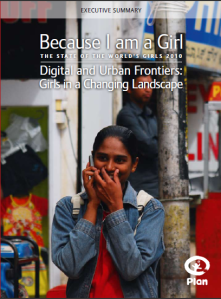
Since 2007, Plan has published annual reports on the state of the world’s girls. The 2010 ‘Because I am a Girl report’ is called Digital and Urban Frontiers: Girls in a Changing Landscape. It focuses on girls in these two rapidly expanding spaces: the urban and the digital.

The piece that I’m most interested is the segment on Girls and ICTs, since that’s the main area I currently work on. (Disclosure: I contributed to the development of the chapter). To give you a taste of what’s in the report, here’s a summary of Chapter 4: Adolescent girls and communications technologies – opportunity or exploitation. You can download the full report here.

Chapter 4’s introduction explains that online behaviors mimic offline behaviors.  Empowerment and abuse of girls reveals itself through technology as it does in other areas of girls’ lives.  Through girls own voices, expert opinion and original research, the report highlights the positive and negative consequences of ICTs, in particular mobile phones and the Internet. The authors talk about the positive ideas and new ways of thinking that ICTs open up for girls in terms of learning, networking, campaigning and personal development. They then discuss the darker side of technology  — how cyberspace makes it easier for sexual predators to operate with impunity, where girls are prime targets for abuse, and where girls are sometimes perpetrators themselves.

Section Two offers girl-related statistics on the digital revolution and the digital divide and highlights the enormous variation between and within countries in terms of digital access, and the gaps between rich and poor, male and female, urban and rural.  The report cautions that excluding girls from the digital revolution will have consequences on their growth and development. For additional global ICT statistics (1998-2009) see this post at ICT4D blog. Another resource on mobiles and women is the Cherie Blair study.

Section Three describes and provides statistics around 7 important reasons that ICTs are important to adolescent girls:

  1. To keep in touch with others and reduce isolation in countries where this is an issue
  2. To further their education and acquire new skills
  3. To take an active part in their communities and countries
  4. In order to have the skills to find work
  5. To build specific skills and knowledge on subjects they might otherwise not know about, such as HIV and AIDS
  6. Because evidence has shown that learning to use these technologies can build self-esteem
  7. In order to keep safe

Section Four goes in depth around ways that adolescent girls compete with adolescent boys for the most use of communications technologies such as mobiles and the Internet, but that often they are using them for different reasons and different purposes. Most of the available research for this chapter is from the ‘North’, yet the studies indicate that girls tend to use ICTs for communication and boys tend toward a focus on the technology itself. Studies on this from the ‘South’ are unavailable to date.

When girls are treated as real partners....

Section Five discusses the barriers that keep adolescent girls from accessing ICTs. In other words, if the importance of ICTs has been established, girls are willing and able and keen to use ICTs, then what prevents them from having equal access to ICTs? Some of the issues that the chapter discusses are those of power and control.

‘I can immediately call the wholesale market to inquire about prices and place direct orders. I am now recognized as a businesswoman, growing and selling sesame seeds, not just as somebody’s wife or sister,’ said a woman in India.

‘You’re a girl – a mobile can cause many problems, and so you don’t need it,’ said the father of a Palestinian girl.

Girls’ access to technology is limited by their societies, communities and families. In patriarchal societies where men control technology, girls and women simply have less access, because ICT’s confer power on the user. Even in educational settings, a study found that boys tend to hog available ICTs. Teachers have distinct expectations from boys vs. girls. Girls also don’t tend to go into the field of ICTs or want to have ICT careers, since the field is typically a male field. ‘Technology appears to be marketed by men for men. It’s time we started switching bright and talented girls on to science and technology,’ comments a British government official.

Women and girls in developing countries however are not receiving the basic education and training that they need to be ready technology adopters. They are seen as users and receivers of technology, not as innovators involved in technology design and development. Once they are computer literate, however, many young women see the computer industry as a route to independence. The report offers statistics on the numbers of young women in countries like South Africa, India, Malaysia and Brazil who are working in the ICT related industries and professions.

What stops girls from using technology?

There are seven key factors that prevent girls from taking advantage of technology:

  1. Discrimination – girls are still viewed as second-class citizens in many societies.
  2. Numbers – boys both outnumber girls and tend to dominate access to computers.
  3. Confidence – because they don’t have equal access at school, girls may be less confident than boys when it comes to going into IT jobs because they don’t feel they have the same skills and knowledge as the young men competing for the jobs.
  4. Language – in order to use these technologies, English is usually a requirement, and for girls with only basic literacy in their own language, this is a major barrier.
  5. Time – girls’ domestic roles, even at a young age, mean they have less free time than boys to explore and experiment with new technologies.
  6. Money – girls are less likely than their brothers to have the financial resources to pay for, say, a mobile phone and its running costs, or access to the web in an internet café.
  7. Freedom – boys are also more likely to be allowed to use internet cafés because parents are concerned about their daughters going out on their own.

Section Six digs into the dark side of cyberspace and the risks that adolescent are exposed to at a time of their lives when they are beginning to develop sexually. One in 5 women report having been sexually abused before the age of 15, according to the authors. The Internet by and large is simply a new medium for old kinds of bad behavior, however; and new technologies simply extend the possibility of abuse to new arenas. Girls who are not even using the Internet are still vulnerable, given that a photo of them can be taken and posted by someone else even if they have no computer access. Cyberbullying and cyberharrassment are other risks that girls face.

Many young people and youth organizations are active in facing these risks and protecting themselves, and various campaigns exist to help adolescent girls be more aware of how to protect themselves while using ICTs. New technology can itself also be a tool to help with counter-trafficking efforts. The chapter outlines some of the different efforts being made to protect girls online, and emphasizes the role of parents and schools in discussing on-line use and being supportive as girls begin exploring cyberspace.

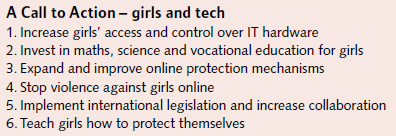
There is a quite broad set of recommendations for a wide array of actors at the end of Chapter 4 that could be taken up, contextualized and fleshed out by different parties or stakeholders into specific calls to action:

Brazilian girls in a digital world. As an annex to Chapter 4 on ICTs, new research with 49 boys and 44 girls, aged 10-14 examines adolescent girls’ rights and protection in Brazil within the context of ICTs. ICT use is growing exponentially in Brazil, particularly among 15-17 year olds, where between 2005 and 2008, ICT usage went from 33.7 to 62.9 percent. The study covers use pattern, links between on-line and off-line behavior, and on-line safety.

Conclusions. The report concludes by calling for greater knowledge about ICT-related sexual exploitation and violence against girls, more emphasis on prevention and stronger international standards. It also points out that girls need to be empowered to use new communications technologies safely, on their own terms, and in ways that promote their development and build their futures.

Call to action for September 22: As part of the launch of the Because I am a Girl Report, Plan is calling for International Day of the Girl to be established on September 22. You can sign the petition here.

Resources

Download the full report here: Digital and Urban Frontiers: Girls in a Changing Landscape

Download the Girl’s Cohort Study: Real Choices, Real Lives. Plan researchers follow 142 girls lives over a 9-year period.

Download past Because I am a Girl Reports (since 2007)

Related posts on Wait… What?

On girls and ICTs

Revisiting the topic of girls and ICTS: Tech Salon Discussions

Being a girl in Cumbana

MDGs through a child rights lens

3 ways to integrate ICTs into development work

5 ways ICTs can support the MDGs