Feeds:
Posts
Comments

Posts Tagged ‘data’

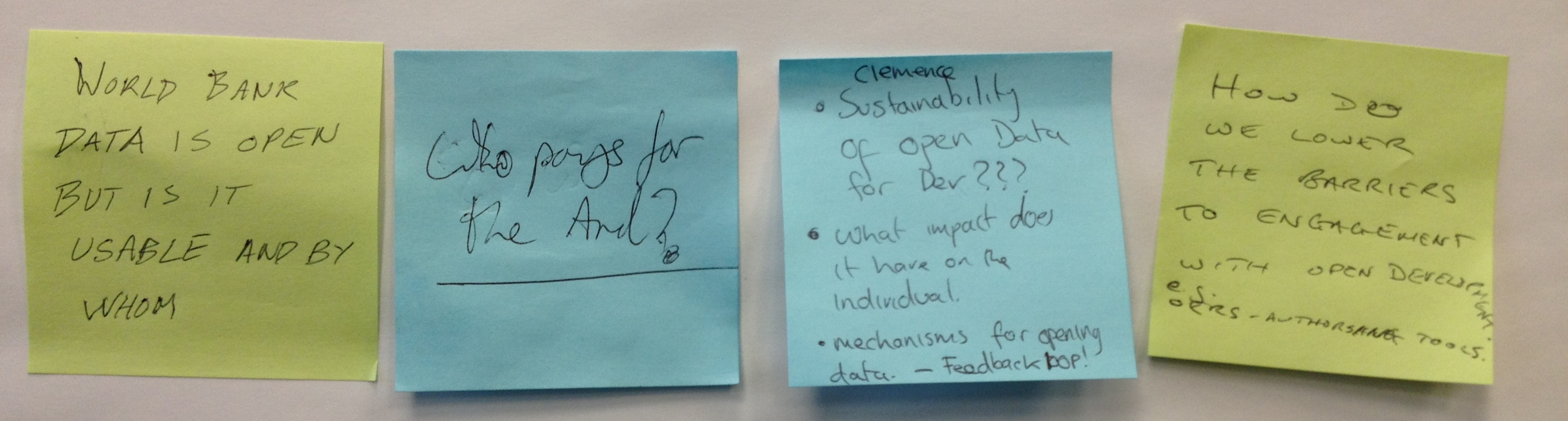
Does ‘openness’ enhance development?

This was the question explored in a packed Room 3 (and via livestream and Twitter) on the last day of the ICTD2012 Conference in Atlanta, GA.

Panelists included Matthew Smith from the International Development Research Center (IDRC), Soren Gigler from the World Bank, Varun Arora from the Open Curriculum Project and Ineke Buskens from Gender Research in Africa into ICTs for Empowerment (GRACE). The panel was organized by Tony Roberts and Caitlin Bentley, both pursuing PhD’s at ICT4D at Royal Holloway, University of London. I was involved as moderator.

As background for the session, Caitlin set up a wiki where we all contributed thoughts and ideas on the general topic.

“Open development” (sometimes referred to as “Open ICT4D“) is defined as:

“an emerging area of knowledge and practice that has converged around the idea that the opening up of information (e.g. open data), processes (e.g. crowdsourcing) and intellectual property (e.g. open source) has the potential to enhance development.”

Tony started off the session explaining that we’d come together as people interested in exploring the theoretical concepts and the realities of open development and probing some of the tensions therein. The wiki does a good job of outlining the different areas and tension points, and giving some background, additional links and resources.

[If you’re too short on time or attention to read this post, see the Storify version here.]

Matthew opened the panel giving an overview of ‘open development,’ including 3 key areas: open government, open access and open means of production. He noted that ICTs can be enablers of these and that within the concept of ‘openness’ we also can find a tendency towards sharing and collaborating. Matthew’s aspiration for open development is to see more experimentation and institutional incentives towards openness. Openness is not an end unto itself, but an element leading to better development outcomes.

Soren spoke second, noting that development is broken, there is a role for innovation in fixing it, and ‘open’ can contribute to that. Open is about people, not ICTs, he emphasized. It’s about inclusion, results and development outcomes. To help ensure that what is open is also inclusive, civil society can play an ‘infomediary‘ role between open data and citizens. Collaboration is important in open development, including co-creation and partnership with a variety of stakeholders. Soren gave examples of open development efforts including Open Aid Partnership; Open Data Initiative; and Kenya Open Government Portal.

Varun followed, with a focus on open educational resources (OER), asking how ordinary people benefit from “open”. He noted that more OER does not necessarily lead to better educational outcomes. Open resources produced in, say, the US are not necessarily culturally appropriate for use in other places. Open does not mean unbiased. Open can also mean that locally produced educational resources do not flourish. Varun noted that creative commons licenses that restrict to “non-commercial” use can demotivate local entrepreneurship. He also commented that resources like those from Khan Academy assume that end users have a computer in their home and a broadband connection.

Ineke spoke next, noting that ‘open’ doesn’t happen in a vacuum. Sometimes power relations become more apparent when things become open. She gave the example of a project that offered free computer use in a community, yet men dominated the computers, computers were available during hours when women could not take advantage of them, and women were physically pushed away from using the computers. ‘This only has to happen once or twice before all the women in the community get the message,’ she noted. The intent behind ‘open’ is important, and it’s difficult to equalize the playing field in one small area when working within a broader context that is not open and equalized. She spoke of openness as performance, and emphasized the importance of thinking through the questions: openness for whom? openness for what?

[Each of the presenters holds a wealth of knowledge on this topic and I’d encourage you to explore their work in more detail!]

Following the short comments from panelists, the room split into several groups for about 15 minutes to discuss points, tensions, and questions on the concept of open development. (See the bottom of the wiki page for the full list of questions.)

We came back together in plenary to discuss points from the room and those coming in from Twitter, including:

  • Should any research done with public funds be publicly open and available? This was a fundamental values question for some.
  • Can something be open and not public? Some said that no, if it’s open it needs to be public. Others countered that there is some information that should not be public because it can put people at risk or invade privacy. Others discussed that open goods are not necessarily public goods, rather they are “club” goods that are only open to certain members of society, in this case, those of a certain economic and education level. It was noted that public access does not equal universal availability, and we need to go beyond access in this discussion.
  • Is openness fundamentally decentralizing or does it lead to centralization? Some commented that the World Bank, for example, by making itself “open” it can dominate the development debate and silence voices that are not within that domain. Others felt that power inequalities exist whether there is open data or not. Another point of view was that the use of a particular technique can change people without it being the express intent. For example, some academic journals may have been opening up their articles from the beginning. This is probably not because they want to be ‘nice’ but because they want to keep their powerful position, however the net effect can still be positive.
  • How to ensure it’s not data for data’s sake? How do we broker it? How do we translate it into knowledge? How does it lead to change? ‘A farmer in Niger doesn’t care about the country’s GDP,’ commented one participant. It’s important to hold development principles true when looking at ‘openness’. Power relations, gender inequities, local ownership, all these aspects are still something to think about and look at in the context of ‘openness’.

The general consensus was that it is important to fight the good fight, yes, but don’t lose sight of the ultimate goal. Open for whom? Open for what?

As organizers of the session, we were all quite pleased at the turnout and the animated debate and high level of interest in the topic of ‘open development’. A huge thanks to the panelists and the participants. We are hoping to continue the discussions throughout the coming months and to secure a longer session (and a larger room) for the next ICTD conference!

Note: New Tactics is discussing “Strengthening Citizen Participation in Local Governance” this week. There are some great resources there that could help to ground the discussion on ‘open development’.

Visit the ‘does openness enhance development’ wiki for a ton of resources and background on ‘open development’!

Read Full Post »

I’ll be speaking on a panel called ICT4D, Innovations and the MDGs next week during UN Week in New York and another on Girls and Mobiles hosted by Mobile Active. So, I’ve been putting together my thoughts around girls, child rights, ICTs and the MDGs.  The angle I’m taking is not from the large donor, top down, huge institutional program side, but instead, looking at examples from the work I’ve been closest to over the past few years at the community and district level, mostly focused on child and youth participation in the development process. Check my MDGs through a child rights lens post for more background.

My last post (3 ways to integrate ICTs into your development organization) uses Hannah Beardon’s framework to discuss how organizations can integrate ICTs into their work. Hannah suggests that ICTs can be integrated directly(providing access to ICTs), strategically (using ICTs as tools to support development processes) and indirectly (using ICTs to improve efficiency and communication within the organization).

To complete that post, I’m listing below 5 ways that ICTs can facilitate accountability and transparency, citizen engagement, and public debate, all of which are necessary to bring about development improvements and achieve the MDGs. Obviously these are not the only ways ICTs can support the MDGs, but this post would have been miles long if I’d listed all the initiatives that are out there.

1) Engaging children and youth in the development process

An engaged and active population is a key ingredient for good development programs. Children and youth have much to offer, are directly targeted in the MDGs and many other development initiatives, offer valuable ideas and energy, and make up around half the population in many of the countries that are lagging in reaching the MDGs. ICTs can help children and youth engage in the development process and bring their ideas, opinions and voices alive at the community, district, national and global level. ‘Using new technology, new media, children and youth can claim a space that they didn’t have before. They can influence certain things, advocate on particular issues that are important to them, take ownership in communities and in leadership. ICTs excite them and encourage them to be more involved and engaged.’ Anthony Njoroge, Plan Kenya Community ICT Manager.

ICTs empower young people with skills that make them more confident and more involved at the community level.‘Using ICTs, children and youth have become more responsible because they are not waiting for adults to come in with something. Now they are designing it themselves, they are creating space for themselves and bringing their agenda to adult meetings instead of waiting to be invited in or having to work within the agenda of the adults. It used to be that you’d start working with 20 youth, you’d invite them into a community meeting. You’d see the number go down to 10, to 4, to 3, because they didn’t see any relation to themselves in the topics and the goings on. With integration of technology and the arts however, youth have a high level of interest. It’s really bringing in their opinions, their thoughts and ideas to join their voices with parents. Now they use arts and media to promote communication, dialogue on their issues and look for ways to resolve them. Before they were totally missing from the discussion, but now they are here.’ Judith Nkie, Plan Cameroon Youth Empowerment through Arts and Media Project Coordinator.

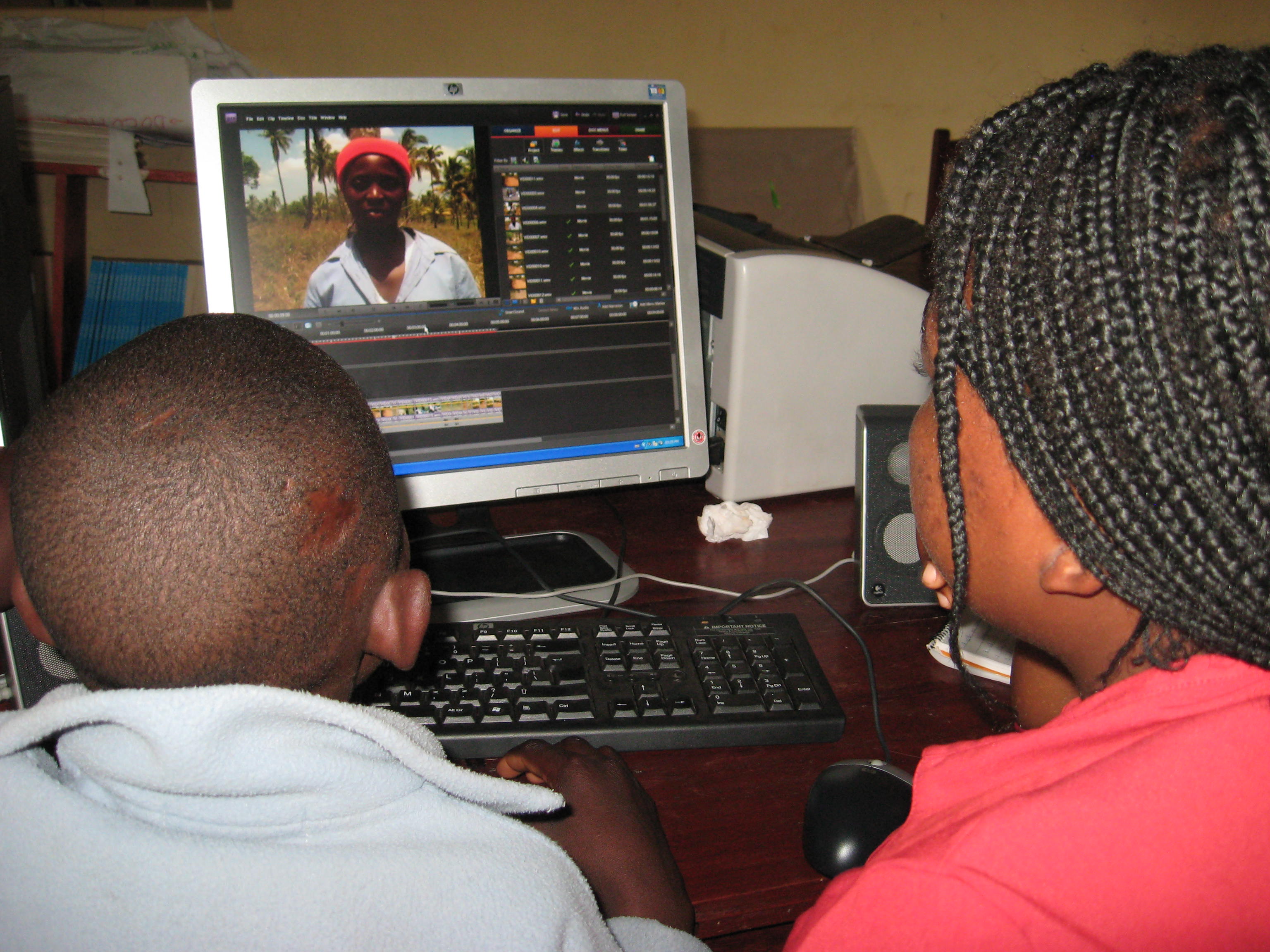
Arts and ICTs were used in the above-mentioned project as tools for youth engagement, mapping and prioritizing, research and community dialog. The media produced with the ICT tools was shared first within the community and then outside at the district, national and global levels as a way of engaging decision makers and the public in the youths’ agenda.  For more on how arts and ICTs are being used in the above-mentioned project, see this post. Watch 100 videos made by youth in 6 African countries on topics they are passionate about.

GPS work in Kwale, Kenya

2) Identifying resources and mapping patterns for better decision-making

Tracking and visualizing information is an excellent way to improve decision-making capacity. The advent of simpler and open source participatory digital mapping tools allows community members to map their communities digitally and to have more ownership of the information. Mapping helps identify patterns that may not have been visible before. Local maps shared on-line allow local people to provide their own information from their own perspective, and that information serves multiple purposes at the local level and beyond.

Digital mapping can be helpful when governments decentralize. Municipalities are mapping resources as well as projects and interventions. District authorities can track their own initiatives and those by local and international organizations to avoid duplication of efforts and wasted resources. When maps are public, the population can better demand answers about where resources are being allocated and why. Maps can help with disaster risk reduction and tools such as Ushahidi can help during emergency response. Mapping information is also useful for holding up a mirror to the population to ask them questions about themselves and their behaviors and for showing the direct consequences of actions; for example in a Community Total Led Sanitation mapping project, the community faces its realities about where their own waste is entering food and water sources.

Map Kibera is a good example of participatory digital mapping. mGEOS is a mobile mapping tool developed to help Plan Kenya staff to gather and share data needed for their daily work. Map Kibera and Plan Kenya are collaborating in Kwale on youth and governance work, and in Mathare to work on Community Total Led Sanitation using digital mapping tools (see July 27th entry). In this video, a district youth officer in Kenya talks about why digital mapping is useful for his community.

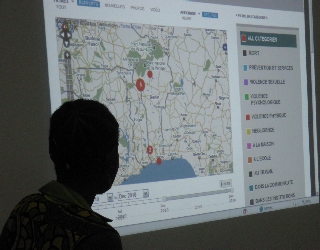
Mapping Violence against Children in Benin

3) Pulling in quick information to guide further investigation, response, or advocacy; pushing out information for targeted actions

ICTs can be used to gather quick information from a broad population. This can be useful in a variety of situations and themes, including those outlined in the MDGs. For example, SMS are being used to report on whether teachers are showing up at school, where violence against children and women is happening, where help is needed in the aftermath of a disaster, and for tracking endangered wildlife. Crowd sourced information can help governments and agencies get preliminary information so that further investigation and support can be provided in a particular area. Another example is the use of mobiles in different health initiatives, including:  child-birth care; HIV and AIDS prevention and treatment programs; support for volunteer community healthcare workers; and bed net treatment reminders. Most of the ICT and development world is also already familiar with the work of two organizations:  Ushahidi and FrontlineSMS who have been combining SMS with digital mapping.

A program that I’m closely involved with is SMS reporting of violence against children in Benin, where local communities, government agencies and NGOs are collaborating to improve the child protection system. This type of program shows promise if heed is paid to the pros and cons of collecting information by SMS, and if those implementing are clear about the type of information that will be gathered, privacy implications, and how the system will complement existing systems. (Here is one document that outlines some considerations). Increasing controls by governments and mobile phone companies, including SIM card registry and Mozambique’s recent government shut down of SMS services during the bread riots are good examples of how quickly the ICT landscape can change, and how flexible and agile those working in the area of ICTs need to be.

Checking info on constituency development fund

4) Supporting accountability and transparency

ICTs are useful to support accountability and transparency, necessary for attempts to track and ensure good use of funding for different efforts, including those related to the MDGs and other aid and development programs. Making information more available to the public by mobile is one such way.  SODNET’s budget tracking tool, for example, informs Kenyans of how much funding is allocated by the Constituency Development Fund to different municipalities in different categories. Combined with mapping, as outlined in this post, the budget information can help constituents to track where their funds are actually being spent.  Other interesting examples of how ICTs can be used for transparency and accountability can be found at TacticalTech’s Info Activism site and at Technology for Transparency.

Paper forms will soon be digitized….

5) Improving municipal services and information management

Civil registration documents, especially a birth certificate, are a precursor to demanding any number of rights or accessing a wide array of services. Without a birth certificate a child may not be able to sit for school exams, receive immunizations or free health care or claim rights to inheritance or legal protection in courts of law. Proof of age is critical in successfully prosecuting perpetrators of crimes against children such as child trafficking, sexual offenses, early recruitment into the armed forces, child marriage and child labor. ICTs are being used to digitize civil registry in Kenya, for example. Not only are records being digitized, but mobile phones are used to make it more convenient for the population to know when their documents are ready. This saves people time and money and means that more parents will register their children.

But wait, there’s more!

These are only a few examples of ways that ICTs are being used at the grassroots level to improve participation, transparency, accountability, debate and ownership of the development process.  The MDGs are lofty, but informed local community participation and ownership is key in efforts to reach them and in ensuring that marginalized populations can also be included.

Please add your examples of ways that ICTs can support development and ICTs in the comments section!

Related posts on Wait… What?

3 ways to integrate ICTs into development work

11 concerns about ICTs and ‘social media for social good’

I and C, then T

MDGs through a child rights lens

7 (or more) questions to ask before adding ICTs

A positively brilliant ICT4D workshop in Kwale, Kenya

The road to Wa is paved

Read Full Post »

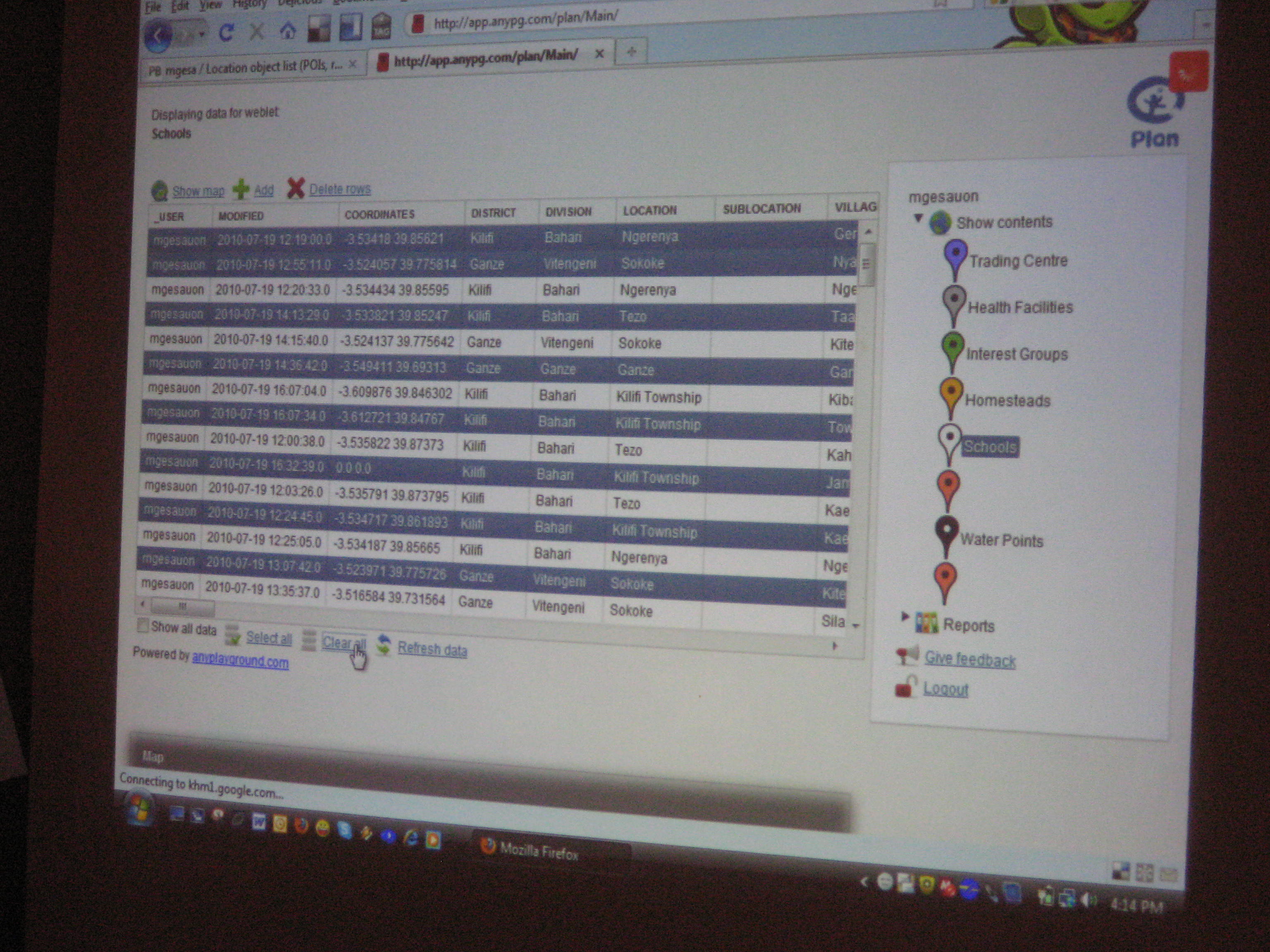
mGESA mobile mapping application

I wrote about a mobile mapping tool called mGEOS a few months ago, mentioning that I’d probably get a chance to try it myself in late July. Well that is just what happened.

I was at a workshop on ICT4D, including digital mapping, in Kwale, Kenya, and Peter Njuguna from Plan Kilifi’s District office came to share mGESA (aka Mobile Geographical Services for Africa) with us.

As far as I can tell, the difference between mGEOS and mGESA is that mGESA is a tailored application of mGEOS, designed together with Plan’s community based front-line staff for their specific information collecting and geo-visualization needs in Kenya.

Update: mGESA was the name for the pilot project. The final application is called PoiMapper (see www.pajatman.com). You can give it a try by downloading it and installing it on your mobile!

According to Njuguna, “the application is designed to run on simple mobile phones that have GPS capability and on which you can run applications.” It’s installed on the phone in the picture (update: the phone is a Nokia 6700 classic).

Njuguna explained “In Kilifi, we diverted from the route of going for applications that are there on the shelf or buying an application over the counter. We went the route of developing an application from scratch. We are working with various partners. We have Plan in Finland, we have Plan in Kenya, we have the University of Nairobi and we have the company Pajat in Finland. Plan Kilifi is the implementing office. So that is where we are coming from.”

The project has been on-going for 7 months. The first thing to define, according to Njuguna, was “Why do we need mapping? Why do we need GIS in the first place? Well, we need GIS to enhance the work we are doing and to try to answer some of the questions we are asking on a day to day basis. So that’s why we wanted to incorporate GIS into our work. Everything we’ve developed is towards helping us answer questions and make decisions in our program and sponsorship work. We wanted to build something that would suit our needs.”

The end users of mGESA are front-line staff in Plan Kilifi District office, and eventually in all of Plan Kenya’s district offices. “Kilifi front-line staff have all been involved in developing the application. The first step was developing a list of points of interest, for example, schools, hospitals and health centers, interest groups, water sources, trading centers, and the like; and outlining the kind of information that staff regularly collect about the points of interest for use in their work.

mGESA points of interest

“Developing the points of interest was a challenge,” said Njuguna. “It might look like we just sat down and listed them. But it has been a process. We had to go over and over it. We had to be sure the questions made sense, that the questions that we were asking were the right ones and made sense to people in the field.”

mGESA was tested in the field for the first time in mid-July. Njuguna and the team are hoping to kick off in another 3-4 weeks and start collecting the actual data. When the points are mapped out using the mobile application, then they are uploaded to a server that links with Google (or other) maps. The team is exploring the possibility of getting Kenya maps with administrative boundaries to use as the mapping platform. The data collected in mGESA can be exported into excel and .pdf files.

Peter let me try out mGESA while we were doing some GPS mapping in Kinango. He was using the opportunity to test accuracy, and whether mGESA was pulling in the same coordinates as the Garmin GPS units that we were using (it was). I found the data collection process to be quite simple. You basically arrive to your point of interest, take the point on the phone, and scroll through a menu to select pre-existing information (such as name of the district, type of point, etc.) or fill it in yourself. You can take a photo of the POI if your phone has photo capabilities (which most GPS enabled phones should have). I didn’t get a chance to upload data to the server or the web to see how easy that process is.

Peter Njuguna, ICT coordinator at Plan's Kilifi District Office

The group at the workshop had just been trained on several ICT different tools, so they had a lot of questions about mGESA for Njuguna:

What phones does it work on?
Any phone with GPS and capability to download an application will work.

Does it use up your airtime?

mGESA will work on the phone even without any airtime, but during testing, it seemed to work faster with about 10 shillings of credit (equivalent to about $.13).

Is mGESA free?

No. The application is in development and will eventually end up on the commercial market, via Pajat Management in Finland.

Can the application produce a base map or only points?

It can map points of interest only.  Later on it should be able to map out lines (roads) and areas.

mGESA data points on the web interface

Where do the points of interest go?

The points of interest that are collected on the phone are downloaded via a USB cable onto a computer, in the same way that you would download photographs from a camera. Then the points are uploaded to the on-line platform, and also then they will be visible on top of a Google map or other kind of map.

Is mGESA compatible with Open Street Maps?

Now that we know about OSM, this is something we shall look into, as it could be quite useful.

Will the information that you collect be public or private?

At this point the information will be closed, because the application is still in development.  Also for privacy reasons, some information will be shared and other information not shared. For example, if we are collecting personal information on individuals, or data that could put someone at risk, this will not be shared on the map.

What types of uses will the application be suitable for?

Plan can use mGESA when determining plans for phasing out of one area and moving into another area, for example. Instead of collecting data and indicators on paper, staff and managers can see this information on a map and the information that is collected can help us to know where to work.  Having the points of interest mapped out and linked with development information, and being able to select out different information layers on the map (on the internet) should make these decisions easier and more sound.

Will communities be involved and able to use mGESA for their own purposes?

Yes, communities will be able to use the information collected to make their own decisions. Communities can also purchase mGESA for their own use. We might also say to them, come and bring your phone and we will install this application so that you can use it for your own purposes.

Why are you developing a software from scratch and that costs money to the end user if there are existing tools available?

We know that GPS gadgets are expensive and so we thought – why not look into a mobile option. We also had very specific ideas and needs, and we had people willing to develop the idea from scratch. It’s a customized application based on our existing information needs and systems, and we can collect it by mobile rather than trying to find and purchase GPS units here in Kenya.

Update: see this post on Mobile Active for more information on the continued piloting of PoiMapper.

Related posts on Wait… What?

mGEOS: a mobile mapping tool

A positively brilliant ICT4D workshop in Kwale, Kenya

Youth mappers: from Kibera to Kinango

Salim’s ICT4D Advice Part 1: consider both process and passion

Salim’s ICT4D Advice Part 2: innovate but keep it real

Modernizing birth registration with mobile technology

Read Full Post »

Josh's FLSMS Ushahidi Diagram

Drawing by Josh Nesbit (Frontline SMS: Medic) and James Bon Tempo (Jhpiego) from an amazing brainstorming session in early Feb 2010.

When looking at integrating ICTs (Information and Communication Technology) into existing programs, or making an initiative go further or work better with ICTs, there is a lot to figure out before you even get started….

Over the past few months, I’ve been supporting the development of a mobile data gathering/ crowd sourcing and mapping workshop for youth in Benin.  The training is part of a broader initiative to reduce violence against children.  We’ve decided to use Frontline SMS and Ushahidi as tools in the project because we think (and want to test whether) mobile data collection/ crowd sourcing incidents of violence will allow for a better understanding of what is happening in this area.  We also think that geo-visualizing reports of violence against children may have an impact on decision makers and might allow them to better plan prevention and treatment programs and services.

At first I was most worried about whether we could get the technology itself set up and working, but as I started digging in, it was immediately apparent that the technology was the last thing to worry about.

The first thing to consider is probably:  Why are you doing this?

Well, we all have our different reasons…..  But even in a worst case scenario where someone wants you to use ICTs because they are cool or you have funding for them (*not the case in the project I’m writing about, but I’ve seen a lot of this going around) you might be able to salvage the project if you ask the right questions and get the right people involved in finding the answers.  Many of the questions I’m asking myself and my colleagues now will be asked again next week when we are all together on the ground with local staff, youth and community members. I expect there will be more questions added to this list, and that a lot of our current assumptions will change.  But here is the starting list that we’re working from (in no particular order, as answering one may alter answers to another one):

1) What are your specific information and communication needs and goals?

  • Why are you collecting the information?
  • What will be done with it?
  • Who will it be shared with and why?
  • What change will it contribute to?

For example: In our case, we want to gather information on the amount, types and location of violence happening in communities where we are working on a Violence against Children (VAC) project.  We want to know where the violence is happening most, and what kind of violence it is. The information will be used by the youth and project participants, staff, and relevant local or national authorities. We want to generate awareness, inform programmatic efforts, and advocate for more attention and services to prevent, respond to and treat violence against children.

2) Are you working within a particular framework or project/program already?

  • Do you have existing indicators that you want to meet or track using mobiles or mapping or specific information that needs to be gathered?  Does someone else have existing indicators or initiatives or information needs or formats that you should be linking in with/ following/ supporting?  If neither, you probably need to take a step back and think through your goals, purpose, and outline what your information needs are, and why you are gathering information or setting up a project in the first place.
  • Who are the target audiences/persons/decision makers/populations that you want to impact?
  • What information do you need to gather from and/or show to these groups in order to reach your established goals?

For example:  In our case, we are framing our whole project within the UN Study on Violence against Children (UNVAC).  The study identifies types of violence and contexts in which violence happens.  Our information gathering will be set up within that framework.  If possible, we’d also like to track the age and sex of those who experience violence, because that can help in designing prevention programs and services.

3) How is the issue you are working on currently dealt with?

  • Are there local structures that are involved or engaged with your topic/theme/project/initiative already?
  • What do they look like?
  • Who is involved in them?
  • Who currently provides solutions or responses?
  • How can they be involved/engaged?
  • What is the existing information and communications flow? Can you tap into it?
  • Will ICTs improve upon it? (if not, then stop here!)

For example:  In our case, we need to know more about the current community attitude towards violence. We need to know more about local mechanisms and whether they deal with violence as a crime or if those who are violent towards children are ever prosecuted (whether via local justice or national judicial systems)  We need to know which government services intervene or treat cases of violence.  Is there a Child Helpline that we can work with?  Who are the local allies?  How does this initiative fit into larger district or national initiatives and where are the connection points?  How can this initiative  enhance and/or improve what is already existing?  We will know more about this when we are on the ground next week.

4) What are the parameters for information collecting? What is the local use of ICTs?

  • Based on the broader framework of your project or initiative, what is the geographic range for information collecting? (1 community? One district? Nation-wide?)
  • Is there detailed geographical/map information for the area you want to work in? Do you actually need it?  If it doesn’t exist, what will you do about it?
  • How do people in the community use their phones? Are they individual phones? Family phones? Community phones? Who owns phones? Who has access to them?
  • Do people in the community have internet access? Who? How?
  • What is your set-up for collecting information and who will collect it/submit it?  Eg., do you expect a broad public to use SMS to send in information? Or will you do mobile data gathering where trained individuals go around collecting information using mobile based forms such as those on Frontline SMS Forms module?
  • How will people find out about your initiative?  How will you advertise the number to send information to — by radio, television, billboards, handmade posters, word of mouth, in schools?

For example:  In our case, we’ll work in only 2 districts to start.  Because we are concerned about privacy and protection (eg., retaliation against children who report violence) it may be OK to work without extremely detailed maps that could identify particular households or persons.  We are working with youth groups who are trained on violence, but we are afraid that they could be put at risk if they are going around collecting reports from individuals as a mobile survey.  We also feel that information might not be honestly shared if it were collected in survey form.  We assume that not all children own phones, but that phones are readily available.  We assume that if families own phones, they are controlled by one or the other parent.  In a school setting, we assume that children could borrow each other’s phones if some students have phones.

We are thinking that there will be adult allies, and that local community networks can spread the word that children can use SMS to send in violence reports.  We will need to get suggestions from youth and community members on how to ensure that SMSing information in doesn’t put children at further risk if they do not own their own phone.  We’ll have to find a way to remove/reduce the risk of being found out and retaliated against.  If we can’t do that, we won’t do the project.

5) What are the privacy and protection issues that you may run into? This is especially critical if you are collecting information from and/or about children under legal adult age or with sensitive or potentially dangerous areas such as conflicts, elections, health or human rights.

  • What are the risks to those who report information?
  • How can this be managed in the project structure/information gathering set up?
  • Will you have a private Ushahidi instance or public one? (eg. available to the public, or only available to those involved in the project?)  Who can access the RSS feed and the local alerts, and does this put anyone in particular at risk? If you have a public instance, who will have access to the information, and what will your parameters be for removing identifying information that could put people at risk.
  • How can you assure that information remains private both for individuals reporting and within the FLSMS/Ushahidi system once collected and that it’s treated confidentially by those managing the system?
  • Are you prepared to address any information/privacy breaches if they should happen? How? Who will be responsible?

For example:  In our case we are still concerned about privacy and protection, and potential retaliation against children who could be caught reporting violence.  We will discuss this in depth with staff and participating children and youth to be sure that they are aware of the implications of this type of project and information gathering.

Some potential risks that we are already aware of include: a child not deleting the SMS after reporting; a child reporting and expecting immediate help which may not be available; risk to the youth group that is promoting and leading this project; community rejection of the project.

Some possible ways of reducing risk include good promotion of how the project works and of how to delete an SMS after sending; not using an easily identifiable automatic text reply to those who report (eg., an auto reply SMS that says “thanks!” might be smarter than one that says “Thanks for reporting!”); openly raising awareness about the project and getting community support for it; ensuring adult allies and engaged adult decision makers; password protection for the website at first until we’re sure that privacy and protection are well managed and ensured.  Additional mechanisms will be discussed with local staff, local youth and engaged adult community members.

6) How will you close the circle and manage expectations?

  • Will there be a response to those that submit information? What? Who will respond? How? What is the plan?
  • How will you ensure that there are not expectations around the project or information gathering system that you cannot or are not set up to meet?
  • How will you return the information to the community/local district/those who provided so that they can use it for decision making or program intervention?
  • How will on-line/offline be managed and streamlined into an information gathering, communication and feedback system that works for the different levels of access of the populations you want to collect information from and share information with?
  • In your project design, how will you take into consideration and maximize local information sharing formats, customs, and opportunities?
  • And how will you ensure that the information remains in a protected/private state in order to avoid putting anyone at risk?

For example:  In our case, we are not sure yet what the local response mechanism is currently when violence is reported.  We will find out more when we are on the ground in the communities next week with local staff, and we see how we can link the initiative in with existing local systems.  However, we will likely not be able to provide any immediate support to those who report violence unless there is already a system in place that can be enhanced by better reporting through SMS.  We will probably need to be very clear that the point of the project is to collect information for future decisions, not for providing immediate help.  This may or may not have an effect on people’s interest and willingness to actually use an SMS based system to submit information.

We will discuss and agree with the community, youth, local staff and local organizations on how and when the information will available to the community in order to close the circle to be used for decision making and program design, etc.  Determining who has constant access to the information is also a part of this discussion.

7) What other questions come up based on the context of your initiative and your experience?

March 1:  Based on feedback to the post, I’ve added a couple more categories here:

7a)  How will you ensure that your project is sustainable?

  • What will the project look like in 5 years? Where will it be?
  • What happens when you leave? Who will manage and run the initiative? Will you or someone else be needed and available later on to support? How will this be managed?
  • What equipment are you basing your ICT system on? Who will own and care for it? How will it be maintained/upgraded and sustained? What capacities exist (or will you strengthen) at what levels to do this? What future costs are implied in maintaining the system? How will they be covered?
  • Who will own/manage any equipment? How will you ensure that it’s not commandeered by those with more power in the community?
  • What costs need to be considered for sustained functioning, and how will they be met?

7b)  What about scale? Is it something you are striving for and, if so, how will you get there?

  • Can the project set up/idea/initiative be replicated? Where and how?
  • Is scale something you are striving for? If so, is it do-able? How?
  • What sort of buy-in from local and/or national actors will you need to scale?  How will you involve those actors early on and get their input into the process?
  • How are you systematizing and sharing information and lessons learned?
  • How and when will you monitor and evaluate the project to know what outcomes, results, and impact you had?
  • How will you know you had an impact at all? And how will you measure the particular impact that your ICT tools or set up had in reaching those outcomes/results/impact?

**(would still love to hear other people’s key questions too – pls comment below….)

—————————–

So, now, after all that, finally…. What will your Frontline SMS, Ushahidi set up look like?

This part is very well covered by the different toolkits that have been developed (see links at the end of this post), but so as not to leave it hanging, here are some of our technology related tasks and questions that we will address when we arrive in Benin:

  • Setting up Frontline SMS and our Ushahidi page for the project
  • Setting up an automatic link between Frontline SMS and Ushahidi so that any SMS’s that come in will go automatically to Ushahidi for uploading onto our map
  • Determining how we will verify reports that come in
  • Determining how to manage auto-replies in a way that lets the person reporting an incident know that we received it, yet doesn’t put them at risk if the wrong person finds the auto-reply message on the phone.
  • Estimating budget for incoming text messages
  • Ensuring there are no legal issues around who is holding this type of data
  • Linking in with a local Child Helpline to involve them in the pilot and  see if we could integrate with them (and use their  short code eventually if they have one)
  • Reviewing on-going system management needs – verifying incidents, managing the back-end on Ushahidi; who will act as the local point person
  • Being sure that all the technology works on the ground….
    • Do we have the right equipment/phones?
    • Is the laptop/server working?
    • Are we able to connect with the phones?
    • Is the information linking back into Ushahidi properly?
    • Are key words / automated responses working?
    • Is verification working?
    • Can we export data?
    • Other things to consider?

Useful resources:

Ushahidi’s Community Resources for Non-Techies (including the Preliminary Practical Considerations guide, which is based on the above post!)

Mobiles for Development Guide by Hannah Beardon

Changemakers and Kiwanja collaboration:  SMS How To Guide

Frontline SMS:  Ning group for asking questions and learning and Frontline SMS site

RANET:  Utilizing Mobile: Installation and Use of Frontline SMS for basic data collection or outbound messaging (there are 3 parts to this series, and you can find it in French and Portuguese also)

Mobile Active: data about mobile use, mobile data communications costs, mobile coverage and operators by country and How to Set up an SMS System.

Mobiles-in-a-Box: Tools and Tactics for Mobile Advocacy

Ushahidi:  The Ushahidi Blog

iRevolution:  for broader discussions, thoughts, questions on crowdsourcing, crisis mapping, and the works.

New Tactics in Human Rights:  for practical tools and discussions around new technology in human rights work

Related posts on Wait… What?

3 ways to integrate ICTs in development work

Finding some ICT answers in Benin

Tweaking: SMS violence reporting system in Benin

Fostering a new political consciousness on violence against children

Breaking it Down: Violence against Children

It’s all part of the ICT jigsaw

I and C then T

5 ways ICTs can support the MDGs

11 concerns about ICTs and ‘social media for social good’

Read Full Post »
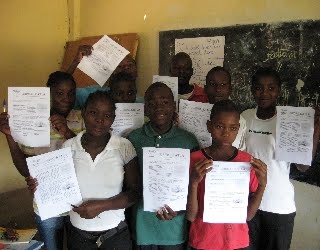
Saturday, was the last day of the 2-week Youth Empowerment through Arts and Media (YETAM) workshop with the youth.  Each of the sub-groups had the task of prioritizing 2-3 areas that they wanted to focus on over the next 6 months and developing a basic plan. The plans included their focus issues, analysis of the causes of the issue, what they would do about it using their reinforced media and arts skills, when they would do it, and how they would know that they had achieved their short term goals (indicators). Photo: members of one of the media teams.

Nathalia, age 18, presented for the theater group. “We are going to work more on the issue of devaluation of girls by their parents.  This is caused by the belief that men were made to dominate and women to serve, the idea that girls don’t bring any benefit to their parents, but bring only trouble, and the idea that girls are physically and mentally weak.”

The other 4 groups’ topics are:

· Music/Dance group: children’s rights in general, education as the key to a successful future, the value of local culture and traditions.

· Media group:  disaster risk reduction and risks to youth in the community such as the discotheque, alcohol and drugs, and violence.

· Painting group: child rights in general, drug abuse and protecting children from violence/risk.

· Journalism group: sanitation and hygiene, education.

Mobile data gathering?

The groups will prepare work on these topics and extend their messages out to the school community and the surrounding villages.  To track their progress, they plan to survey audiences that have seen their work (eg., their films, paintings, songs, theater, newsletters, etc).  This made us think about the idea of using mobile phones to do the surveys (Nokia Data Gathering or Frontline SMS Forms, depending on which is more feasible and cost effective).

The youth could create surveys on a few devices, and then go around to survey people who have attended their events or viewed their work and heard their messages.  The youth could then have immediate results by exporting the survey results into excel for analysis.  In the process, the youth can learn about statistics, charts and graphs.  Eventually they could also take surveying to another level, such as looking at behaviors and practices, and use the information to inform the outreach work that they are doing.  Photo:  Thinking about mobiles for more than calls and SMS.

“The kids see charts and graphs sometimes in their books, but they never have a chance to learn what actually goes into making a chart or graph, or to cover anything about statistics.  This would be a fabulous hand-on way to see how data is collected and used for decision making and to measure results,” said Lauren, the Peace Corps volunteer teacher at the school. “It would be great for them to get to see immediate feedback on their own work!”

Feedback from youth

Photo: journalism group shows their newsletter.

At the closing ceremony the youth were sad to go. “This is an opportunity that we had to participate in something that has never happened here at Cumbana,” said one girl.  “I encourage my fellow students here to show through their behavior, actions and their studies this coming year that they are now different.  That they are changed.”  (theater group)

“I never imagined that I could be a painter, but now I have the dream that I can do it.  I am happy because I showed what I’m capable of and I expressed my feelings through art.” (painting group)

“My favorite thing was making the big mural. I feel very proud and I can show my friends what I’m capable of.” (painting group)

“This initiative allowed us to show light on our reality. I also know now that I have talent in my mind and in my hands to express myself now and to build my future.” (journalism group)

“I really thank Plan and Nokia because with this workshop I saw myself transforming my life. I will become an artist and I will make something out of my life” (painting group)

“I liked helping to raise awareness in people and to change things in our community and in ourselves.  I want to share the success we’ve had in this project and our work, and to involve more people. There are many things we can achieve.” (media group)

“The best thing about the workshop was the way that they listened to us, they gave us courage to believe in ourselves. They reminded us that nothing comes from nothing and that only through education can we prepare for our futures.” (theater group)

“I liked working with equipment that I had never seen.  Now I know how to use it. I feel able to learn without fear.” (media group)

And facilitators?

“It was great to see the youth increase their knowledge about their culture, history, rights and the role they can play in their community as agents of change.  I loved seeing the youth apply the things that they learned and then do the work by themselves.  I would like to see more adults in the community participating in a workshop like this. There are many things that we can benefit from as well.” (Facilitator)

“I thought the workshop was fantastic.  The kids gained so much experience and confidence and really took advantage of these new opportunities.” (Facilitator)

Related posts:
On Girls and ICTs
Putting Cumbana on the Map

Read Full Post »

This is the ‘after-lunch’ part of my last blog about the cool geo-visualization tools I had the chance to learn about at the Google Partnership Exploration Workshop.  (See the Before Lunch portion here for some background).

The first things we saw after lunch were Google 3-D and Google Sketch-Up.  With Google Sketch-Up can make whole 3-D cities and lay them on top of Google Maps.  Sketch up comes in 14 languages and works off-line.  Aidan from Google has used it with autistic kids and made this cool video about it to get you started.  My first thought with this was how cool would it be to use something like this when we’re working with kids or communities to design infrastructure projects.

Next after Sketch-up we went through a whole gamut of Google Map applications:  My Maps, KML, Maps API, Map Maker and Google Earth.  It was so hard to keep all of them straight with their different features that we needed a chart (see below) to keep them straight.  I am a huge fan of maps, but I mostly work with communities using hand-drawn, participatory risk/resource maps.  I’d love to see all these community maps from around the world somehow uploaded and shared.

Anyway, there are at least a million (I am not even exaggerating) things that you can do with these maps alone, together, in conjunction with data and spreadsheets, mashing them up with photos, videos and all kinds of things.  For some of this you need to be a developer/coder, but for a lot of it you could figure it out yourself and just get on with it.

Map Maker for instance is a way to crowd source map making in places that are not mapped out yet.  (I’m really interested in this one).  174 countries so far are making their own maps here. There is a system for trusted users and verification to ensure the maps are correct.  The entire data set for Africa is fully available for download by non-profits, government agencies and individuals to create and enhance their own non-commercial map-related projects.

After the amazing mapping presentations, Ed from Google led a discussion on what they could do to support the needs and work of the agencies that were present.  He started by saying that the impact of today’s GIS stuff could be as big as the printing press in mapping terms. “What we do today used to be very very difficult…. The creation of enthusiastic communities that want to work together to achieve a goal they share has only recently been possible”

So Google asked us:  How can we help you make the most of this new world that we live in? How can our infrastructure be accessible to you so it works for what you want to do?

The responses included requests for:

  • Integrating mobiles and off-line use for those who don’t have electricity or internet
  • Getting layers of information onto maps that can be used by partners who don’t really have impetus to share information; keeping semi-private information so you won’t embarrass governments with it but it can still be shared with some to be useful.
  • Use the Flu Trends model to predict/track disaster trends
  • Improved Google Earth editing tools
  • Feature to add icons in bulk to maps
  • Bring up the concept and need for crowd sourcing and social media usage at the next higher ups emergency management meeting — many at the top levels don’t understand this, we need to lobby
  • List of developers who can help us to do some of this
  • Importance of crowd feeding as well as crowd sourcing — that information needs to get back out to people for local ownership, verification and management

Following that brainstorm, I did my own short presentation on how Plan is using mapping with community youth and media, and how some program offices have been using GPS and GIS to create local maps on which to base their program decisions.

We learned about Google Latitude, where you can track people (who allow you to) by the GPS on their phones.  And then we saw a short presentation on the GeoCam Disaster Response Toolkit which is being developed by Google and NASA. GeoCam is a mobile phone application that lets you take a photo, annotate the image, select an icon to go with the photo and save.  Upon saving, the data goes into a cue and uploads. It goes to a central server which has a maps like interface which shows where the photo was taken and from which direction.  This looked like another cool mobile data gathering option that could be used in disasters — it’s been tested during some of the recent California wildfires.

And on that note – Day 1 was over.  Day 2 was equally as educational. As my co-worker and I got schooled on coding for dummies, some of our more advanced colleagues were uploading data sets that would help them make real-world decisions when the returned to their offices on Monday.

Yes, I saw the future of geo-visualization!


Read Full Post »

I had a chance to meet with Plan Cameroon’s Program Technical Team today (including those that look at Monitoring and Evaluation, Health, Education, Sponsorship, Child Protection, Water and Sanitation, Gender and the overall Program Support Manager) to give a quick brief on the ICT4D research and training that Plan Finland is supporting with Plan offices in 8 countries in Africa (Mali, Senegal, Cameroon, Ghana, Togo, Mozambique, Kenya and Uganda).

We are working with Hannah Beardon, who wrote Plan’s Mobiles for Development guide (available in both English and French) and building on that towards some more focused and concrete ideas for ICT use in these 8 countries. We’ll share the research with staff during 2-day workshops to brainstorm and gather ideas on information and communications needs, as well as available tools that could be used or adapted to local situations.

The 2-day workshops are planned for Aug and Sept. Hannah, Mika (Plan Finland) and I are developing the methodology and will make a training DVD to send ahead of time to each country (apparently complete with our selves doing presentations!) since we don’t have funding to do face-to-face training. We’ll have a staff person in each country as the main facilitator, and 10-12 key staff, from management to frontline, will attend. Mika or I will beam in by skype to support if needed. We’ll use the Frontline SMS demo video that Mika and crew did also, (see my earlier post about this from a few months ago), show how Nokia Data Gathering Software works, share the Common Craft Social Media videos, among other things. Hannah’s methodology will also come in for thinking about how ICTs could enhance existing efforts.

The idea is to both learn about new tools as well as look at current programs and see if there are ways to use ICTs to improve impact, and how to begin tailoring them to the programs and local settings. We’re also doing research on government policies and how Plan’s work links there. I hope that we can also look at partnering with local developers and ICT4D innovators in each country….

The idea of ICT4D was a bit new to some of the Plan Cameroon staff and not at all new to others. One interesting idea they shared was using SMS in anti-malaria programs to periodically remind people to retreat their bednets. There was some concern about literacy rates if one relies on SMS, and interest in using voice response, but given the number of languages in Cameroon, voice could also be a bit of a challenge. I’ll have to try to find out if/how that’s overcome in other places. Another concern was ‘scamming’ and how to avoid that happening. But it seemed that the issue of scamming is not something that Plan alone would face, but something in general that is faced with mobile phones.

The program support manager was really keen on using mobiles for program monitoring as that is something that can always improve and be more efficient with ICT, he said, and wants to test some ideas. The ICT manager also said he wanted to write something up. The sponsorship manager suggested trying out some data collection or quicker communications tools for linking with community volunteers. And as mentioned earlier, child media and child protection are areas that can be greatly enhanced and supported via ICTs (help lines, SMS incident reporting, social media and mobile reporting).

After the 2-day workshop, we should have something really nice to go forward with.

Read Full Post »

As part of our mobiles for outreach and data gathering training last week, we went out to a community about 20 minutes away from the hotel today to hear Silla, the district civil registrar, talk about a project that Plan Kenya is supporting that aims to modernize the birth registration process. Plan Kenya is looking incorporating mobile data gathering and outreach into the project, so it was a good opportunity to test data gathering. We tested the Nokia Data Gathering Software using a form that the team had created earlier in the week based on the paper forms that the District Registrars office uses. It all worked just fine. Photo: Silas from Kwale District, and Petri, Director of the Nokia Research Center in Manaus, Brazil.

Silla is really an expert on birth registration and anything that has to do with it. He can quote you just about any law related to the subject in great detail. Currently, for registering births, people have to go to the sub-registrar/assistant chief’s office which can be quite far. Once there, sometimes there are not enough actual registration forms and they just give the registration information to someone who writes it in a school notebook. Later when they have more forms, the information is transposed to the official form, and sent along for processing. It can take awhile for processing, and people have to return to the sub-registrar’s office personally if they want to find out if it’s ready. The district is quite large, so they may have to travel up to 100 kms sometimes to go into check, and the certificate may not even be ready yet. Photo: Silla schools us on civil registration and explains why the district wants to modernize the process.

I talked to Ali M and Ali K (‘the Ali’s’ as we call them, since they are pretty much inseparable) who both work with Community Based Organizations (CBOs) that are participating in the birth registration project. (They were both at the video training with me last month here also). They explained some of the main reasons that not having a birth certificate makes life difficult:

If children don’t have birth certificates, they cannot get passports obviously, but that is the least of the issues. They cannot attend secondary school without one, nor can they benefit from any type of social service or insurance. Kwale district has a very high incidence of child marriages, yet if there is no birth certificate there is no way to prove in court that a girl is too young to be married. Other kinds of abuse also cannot be proved as child abuse. Without proper registration, the district does not get its fair share of the national budget because it’s not clear how many people are actually there. Photo: Ali K and Ali M – real leaders and innovators in community development.

As the Ali’s explained, if Kwale District is successful in incorporating SMS’s, mobile data gathering, and mobile outreach into the birth registration process, not only will they be the first district in Kenya to do it, but Kwale will be the first to even computerize the birth registration process. A couple ways they want to use mobiles are to provide a phone number that people could SMS their registration number to and find out if their certificates are ready or not, thus avoiding a long trip into the district office for nothing. They are also thinking of shifting the actual data gathering from hand written (carbon paper with several copies) to mobile data gathering and computerized data storage. In any case, a full project is being developed and piloted that will automate much of the current time consuming processes.

I remember when I lived in El Salvador and the municipality changed from hand written logs to computers. You used to have to go really early in the morning and wait in a huge line to get a number. Then you waited again till they called your number, went up and gave someone your information. That person would give your information to someone else who would look up the name/date, etc. and after an hour or 2, they’d call you and give you a little piece of paper with your record number on it. From there you would go wait in the cashier line to pay a fee for the copy of the certificate. Then you would go to another line at another window and give that number to someone else and sit down again for another few hours while that person would go into the archives books (bound books of hundreds of records) and find your certificate for you (birth, death, marriage, etc.). They’d make a copy and then it had to go to an official somewhere to authorize the copy before they’d give it to you. So basically you had to get there around 7 a.m. if you wanted to get it the same day, and it was a whole day affair.

Around 2000, they got a computer system in and modernized the process. I went in to get a copy of a document, and I clearly remember the security guard laughing at me because I looked at the certificate twice in shock when I paid my fee and was handed the actual certificate after about 30 minutes.

If the Ali’s and the Kwale District are able to get the equipment and set the project up, it could mean huge time savings for people and translate into greatly increased numbers of parents getting birth certificates for their children. The Ali’s have already taken the idea to a national level meeting and have other districts interested in their idea. Hopefully Kwale pulls it off and the model can be nationalized once any kinks are worked out! Photo: Mwenda and Ali, Kwale district CBO members.

Read Full Post »

Building on the last post, I wanted to share also some of the discussion at last week’s Kenya workshop about incorporating mobiles into our work. People in general were pretty excited. Even those people who were skeptical seemed to see mobiles as tools that could improve work we are already doing if well incorporated and done from ‘the bottom up’ in sustainable ways, based on program information and communication needs. Some great discussions came up and participants shared some potential solutions and good practices.

Issue: Access

We are working with children. How many children have phones? How do we get information from children? We work with communities who are the “poorest of the poor” – so how do we get info from them using FLSMS – do we expect them to have phones? Or people may have phones but no credit? How do you handle such circumstances?

Use a short code if you can get one

Credit is a very important issue. If organizations or institutions want to use SMS, then there is an investment cost unless you can acquire a short code. If you have a short code you deposit money to make this free or much lower cost for people.

Don’t assume that children don’t have access to mobiles

We should not assume children do not have access to phones. If the information is out there, children will find someone that is willing to help them make a call or text. Many children now call us (at the Child Help Line) even without a fixed line. They have a teacher, an auntie, a big sister who will allow them to borrow the phone. I’ve seen that almost everybody in the community has a SIM card. They do not have a handset, but when they need to make a call they borrow the handset for a few minutes and somehow they do it. We can’t make the argument that children can’t use technology. There are innovative ways of using the technology so let’s put the technology out there and stop assuming that people can’t access it. The issue is how can we make the technology reach as many as possible?

Give out SIM cards with a few minutes on them to protect privacy and confidentiality

We had a similar situation with a reproductive health project that was offering out information that most girls wanted to remain confidential. What we did was gave out 10 bo SIM cards. We passed them out in little boxes. Many of the girls had phones but wanted to send in anonymous questions so they used the SIM cards to send the SMS in, and then removed the card from the phone, put it in their pockets, and replaced their original SIM. It only costs 1 shilling via Orange. We found that normally the SMS conversation lasts for around 6 shillings. They can maintain anonymity this way. It’s cheap and they can just keep these SIMs in their pockets.

Issue: If mobiles begin to replace face-to-face contact and relationships with partner communities.

Using Frontline SMS for community outreach and communications has many advantages, particularly in terms of the information that we constantly need to gather. However, we should be careful though that it doesn’t substitute field visits. If people get used to getting information quickly they are likely to avoid going out and getting in touch with communities to see what is happening. If you just sit and wait for an SMS you will lose this face-to-face contact with the community.

Mobiles can be a tool, but must be integrated with other communication means

This point reminds us that we should not totally substitute it but use it as an additional tool in the toolbox to improve, cut costs, reduce, etc.

Issue: A text does not give enough space for full and clear information in health or other cases

We talked about using Frontline SMS for radio. In our participatory youth media programs, children bring out issues in video, in radio, etc. We are not always able to respond immediately to their concerns and issues. FLSMS could be a way to respond to these issues. Are there examples of how to pass on this type of technical information? If I’m a midwife and am too far from hospital, I need very clear information. How could this be done with SMS via an auto reply and only a short amount of text?

Use SMS to bring face to face help more quickly and to track/record incidents

SMS isn’t a solution for everything, but I know of an example of how that can work. There is another program called Ushahidi that is about crisis mapping. It’s a digitized map. Sometimes when a situation becomes extreme people are asked to share their locations using GPS and then you can send local people to these places on bicycles or through other means to help. This allows the professional help to arrive more quickly. Maybe SMS can’t solve it but it can bring help more quickly.

Use SMS as a supplement, not a replacement for human contact and long-term work

In the case of trying to change harmful practices and traditions, we need time and eye contact. If we are working with trying to make cultural changes, such as in the case of infanticide or something, you can’t just send a text that says “this is a bad practice”. You need to come close to people. I believe FLSMS can offer a secondary way or a supplement to a given community meeting, to strengthen a rapport with the community, but it’s not a replacement for our long term work and ongoing relationships with people.

Read Full Post »

I spent last week in Kwale, Kenya in the company of several colleagues learning about and discussing the use of mobiles in community development, both for outreach and communications and for mobile data gathering. There was a variety of people — from frontline staff to members of Community Based Organizations (CBO) in Kwale, to monitoring and evaluation (M&E) staff from Plan Kenya’s districts and central offices and Plan’s West Africa Regional office, to IT staff, to youth and those working with youth media, to partner organizations working on child help lines and social media outreach.

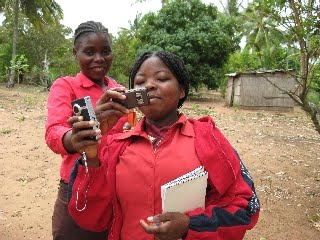
Photo: Anthony from Plan along with Mativo, a former Plan colleague, trained us on FLSMS

We looked closely at Frontline SMS (FLSMS) and Nokia’s new Data Gathering Software (NDGS) and brainstormed on ways that this type of tool might support the work that people are already doing. Really an interesting week!

In addition to the more common ideas of using mobiles for health campaigns, disaster/crisis situations and general communications and monitoring, people mentioned:

For youth media programs:

-Organizing weekly radio contests via Frontline SMS and allowing many more youth to participate in the radio program that way. Now for contests, they have to write a letter with their answer and bring it to radio station by foot. Using SMS many more could participate, increasing listeners and engagement.

-Assessing the radio show right after the recording. The youth and children could go in the audience and gather the data they normally do by hand using mobile data gathering software, thus easing the processing time and analysis of the information.

-Monitoring progress and changes made in relation to the show at a broader level — the participating youth could use mobile data gathering to monitor change related to the issues they are targeting in the radio shows and to see if youth organization and awareness building is impacting on the community over time.

Photo: people got really excited when their first forms appeared on their phones to be filled in!

For Child/Human Rights work and Global Child Rights Campaigns:

-Assessing the knowledge/awareness of the communities about rights issues and/or our global campaigns

-Receiving reports and sharing information about violations of rights (gathering info on whether children are being registered at birth, the incidence of school violence, girl’s or women’s rights violations, cases of child abuse) and offer short information on where to go for help.

-Monitoring child abuse cases, e.g. community members could text in key words such as ABUSE or MARRIAGE to report and track child abuse cases and early marriages happening in the community:

Birth Registration (UBR) implementation

-Tracking birth registration certificates and sharing information on the steps of the registration process. With auto SMS replies we could enhance information accessibility 24/7. We could provide instant feedback to people on the status of their birth registration. It would be a very quick way of sending information to many.

-Using mobile data gathering software, the birth registration process could be made paperless and computerized, thus saving time and effort for the population and increasing the number of children who are registered at birth.

Photo: Jackson and 3 other colleagues from Brazil trained us on the NDGS.

Monitor services

-Running a mobile survey or a rapid assessment to find out whether a service like Childline is reaching people and whether the service is known and being utilized in the field.

Communicating among Plan staff, CBOs, Communities

-Passing along information such as training dates, schedules, meetings, etc., to avoid making a trip out to the community to get information

-Surveying on health, school attendance, and school enrollment through a network of teachers

Communities communicating amongst themselves

-Communities have a lot of information they want to share among themselves, among the Community Health Workers (CHWs), with the other communities and other leaders – they could do this with FLSMS.

Managing Meetings and Decisions

-Inviting participants, confirming attendance, updating on the absentees when you’ve reached a decision they could be contacted this way. You could even involve those who are absent in voting by SMS if you don’t have quorum; eg., text in 1 for this candidate, 2 for this other one, or vote yes/no on something.

Photo: SMS was seen as a great way for communities and CBOs to communicate and organize.

Read Full Post »

« Newer Posts